
Vegetables
Before the beetroot: how barszcz lost its hogweed
Before beetroot, Polish barszcz was a soup of soured hogweed leaves. Herbals, menus and an old cookbook show how a rye sour and then the beet barrel took over its name.
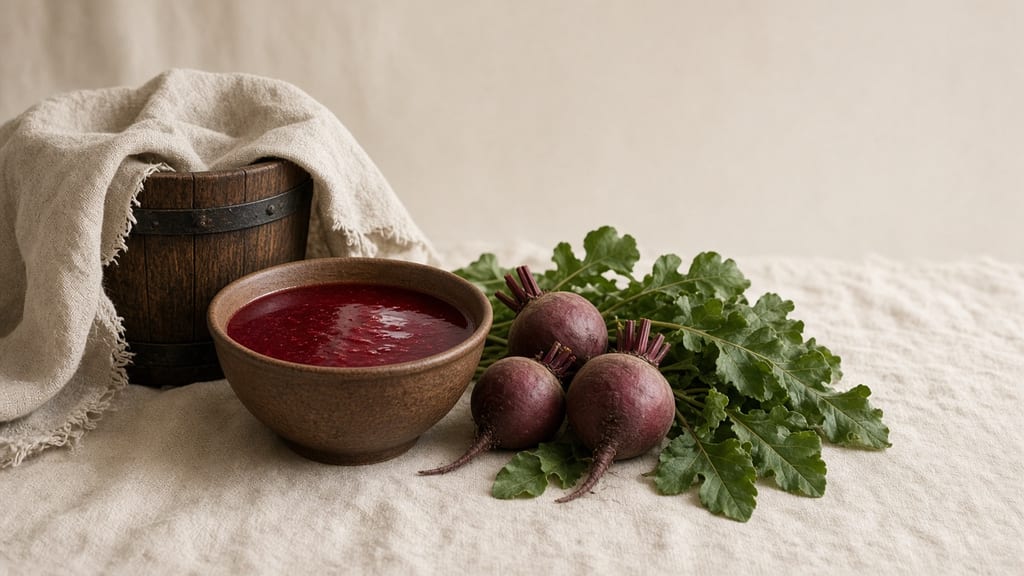
A linen-covered oak barrel, a bowl of beet barszcz and raw beetroots, a modern still life after the beet barrels Gloger saw in manor kitchens.
A wild beet in Rabka
In 1948 the ethnographer Józef Gajek started a census of the wild plants people ate in Poland. Correspondents of the Polish Folklore Society filled in questionnaires in 95 places and sent in pressed specimens. One answer came from Rabka Zdrój, in the Western Carpathians. It described a plant whose green parts had been eaten as a famine vegetable and cooked into soup before the First World War. The local names were borszczek and burak dziki, which means wild beet. When Łukasz Łuczaj worked through the archive, he identified the plant as common hogweed, Heracleum sphondylium.
The second name has the history backwards. Hogweed did not stand in for beetroot. For several centuries the sour soup of Poland, Lithuania and Ruthenia was made from hogweed, and the soup took its name from the plant. Barszcz was the plant first. Beetroot arrived in the pot later and took over the name, and in Rabka the plant that had named the soup ended up called a wild beet.
This is the story of that swap. It runs through two herbals printed in Kraków, a university's Lenten menu, a royal cookbook of 1682 and a nineteenth-century encyclopedia written by a man who remembered the beet barrel in a manor kitchen. Most of the work of collecting it was done by two botanists, Józef Rostafiński, who published a monograph on the names and uses of ćwikła, beets and barszcz in 1916, and Łuczaj, who has traced the soup through herbals, cookbooks and village archives.
The plant called barszcz
Common hogweed is a perennial of the carrot family. It grows on fertile meadows, on roadsides and around farmyards, and its range covers Europe, Asia and North America. It can reach 2 m, flowers in June and carries its flowers in compound umbels on furrowed stems.
The name is older than Polish. Aleksander Brückner's etymological dictionary of 1927 gives barszcz as the Proto-Slavic name for Heracleum, with cognates in Czech and Slovene that also name the plant. He traced it to a root for something bristly or pointed, after the sharp-lobed leaves, and compared German Borste, a bristle. Brückner also claimed that the Russian soup name borshch came from Polish usage. That is his view in a 1927 dictionary entry, and none of the other sources here discusses it.
What the sources agree on is that the soup was named after the plant. Gloger's Old Polish encyclopedia of 1900 says the Polish country people originally cooked barszcz from the herb called barszcz, Heracleum sphondylium, which grows tall on meadows and near villages and flowers in June. He saw a direct link between the two names. Łuczaj's 2007 review of Polish wild food plants calls hogweed soup the original barszcz.
Two herbals and an English witness
The first printed account in Polish comes from Marcin of Urzędów, whose herbal appeared in Kraków in 1595. Łuczaj's English translation gives the passage: "When they make it sour in the Polish way, it is good to drink in fevers, thirst, as it alleviates thirst and cholera and it induces greed for food with its spice." Marcin added that, garnished with egg and butter, it was good to eat on days when meat soup was not allowed.
Marcin also recorded a saying. People belittled quiet, harmless folk by comparing them to barszcz, which neither helps nor harms. Marcin accepted the second half, since barszcz certainly did no harm, but argued that it did help health, and a great deal.
Two years later the English herbalist Gerarde described the same habit from a distance. His herbal of 1597 says: "The people of Polonia and Lithuania use to make drinke with the decoction of this herbe and leuen or some other thing made of meal, which is used in stead of beere and other ordinary drinke." Gerarde heard of a drink. The Polish writers describe a soup. Both may be true of a ferment that could be drunk sour or boiled into a meal.
The fullest early description is Szymon Syreński's. He died in 1611 and his herbal was printed in Kraków in 1613. In Łuczaj's translation: "Hogweed is familiar to everyone in our country, in Ruthenia, Lithuania and Żmudź." Syreński said the root served as medicine and the leaves as food, and that the leaves were commonly gathered in May. The soup, as it was made in Poland, Lithuania and Ruthenia, was "tasty and graceful. Either cooked on its own or with chicken or other ingredients such as eggs, cream, millet."
Syreński also gave a warning. On another page of the herbal he wrote that people made things worse when they mixed a water-loving plant he called wodny barszcz with "our Polish" or Ruthenian barszcz and took them for one. Already in the early seventeenth century, a botanist warned that plants called barszcz were being confused.
Leaves, water and a warm stove
None of these writers gave a recipe. The method has to be pieced together from short descriptions spread over three centuries, and they agree with each other.
Łuczaj summarises it in his 2011 survey. Chopped stems, leaves and flower heads went into barrels or other vessels and were covered with water. After a while they fermented. The 2007 review adds that the water was warm and that the leaves and stalks stood for a few days to turn sour. The sour liquid and the softened greens were then cooked into soup.
In 1799 Jundziłł, in a botany printed in Vilnius, described the Lithuanian practice in similar terms. Łuczaj translates him: "they collect young leaves, ferment them in the same fashion as other vegetables and they are frequently eaten by village people. Or, dried in the shade like celery, they are kept for further use." The phrase about other vegetables places hogweed beside cabbage and the rest of the household's sours.
Łuczaj has tried the ferment himself. By a warm stove, he writes, it turns pleasantly sour in two days, and after a few more days it smells stronger than sauerkraut. Because the fermenting greens could hold a little alcohol, he describes the result as something between beer and pickled cabbage. That fits Gerarde's report of a drink that stood in for beer.
The last first-hand description from Poland is close to the oldest. Anna Tomiak, born in 1880, lived in Straconka, now part of Bielsko-Biała in the Beskid Mały. Her grandson, the botanist Adam Zając, told Łuczaj that she made the soup into the 1940s or 1950s. She put stalks and leaves in a jar, covered them with water, left them for a few days and then cooked soup with them.
Wednesdays in Lent
In the sixteenth and seventeenth centuries hogweed soup was ordinary food, and not only for peasants. Łuczaj writes that the seventeenth-century sources agree it was one of the main soups.
The clearest picture comes from the dinners of the professors of the Jagiellonian University in Kraków, which Karbowiak described in a book of 1900. According to the menus he published, through the whole of Lent barszcz was served as the soup on Wednesdays, with peppered fish, vegetables and carp. On the first day of Easter the meal began with szołdra and eggs, then barszcz, then pork, capons with honey cake, peas and lamb. The fasting soup and the feast soup were the same dish.
Rostafiński found a royal witness too. King Władysław Jagiellończyk, while he held the Hungarian throne, missed hogweed greens and ordered them to be prepared for him. The story survives through Rostafiński's monograph, and Łuczaj repeats it from there.
Marcin's remark about egg and butter belongs to the same calendar. On days without meat, the sour soup dressed with eggs and butter did the work of a meat soup.
Barszcz without the plant
While hogweed soup was still common, the word barszcz was already stretching to cover other sour soups. Their sourness came from grain.
In 1660 the writer Stanisław Kazimierz Hercius opened the third book of his Bankiet narodowi ludzkiemu with a chapter on barszcz. Gloger quotes it at length. Hercius said barszcz was healthy because it was made from the same material as bread, rye flour, soured with leaven and some added seeds. Bread filled the stomach and made it feel heavy, while barszcz left a person light and ready for other dishes. When ladies ordered it dressed with eggs, he added, it was nourishing.
Twenty-two years later Stanisław Czerniecki, whom Gloger calls the famous Polish master cook of the seventeenth century, printed Compendium ferculorum in Kraków. Its third chapter, on a hundred dairy dishes, pies, tarts and doughs, opens with four recipes called barszcz.
The first is Barszcz Królewski, royal barszcz. Czerniecki starts with plain thin barszcz made from rye bran. Into it go dried fish (pike, vimba, dried salmon, Danube carp, smoked or fresh beluga, dried sturgeon), a whole onion to be taken out before serving, soaked herrings from the Dunajec and from the sea, dried mushrooms, fine buckwheat groats and caraway. Salt goes in to taste. The second recipe whitens plain barszcz with egg yolks beaten into butter and serves it with stuffed eggs fried in hot butter. The third cooks herring and caraway in the barszcz and suggests ground blanched almonds to make it whiter.
The fourth, Barszcz Cytrynowy, has no fermented base at all. It is water boiled with parsley and butter, or capon broth, thickened with yolks and soured with lemon juice. By 1682 the name had come loose from both the plant and the barrel. A barszcz was any sour soup, and a wealthy kitchen could sour one with a lemon.
Hogweed does not appear in these recipes. The historian Jarosław Dumanowski found it in another court text a few years younger, Moda bardzo dobra smażenia różnych konfektów. There it is listed as zielony barszcz, green barszcz, among foods that have since vanished from Polish tables, beside the millet-like grass ber, wild manna grass, barberry and elder. His gloss describes it as the celery-family plant that was fermented to make the soup from which other sour soups later took their name.
A barrel of beets
The beet side of the story is harder to date, because the old word for beet was ćwikła. Gloger notes that Mączyński's dictionary of 1564 has only ćwikła. Botwa, botwina and boćwina came from the Latin beta and became the folk name for the commonest kind of beet. Both white and red beets were once called ćwikła.
Gloger links the beet directly to the end of the wild soup. As boćwina spread, he writes, the barszcz cooked from the wild plant went out of use. In Lithuania everyday barszcz was then cooked from beet tops, and in the Crown, the Polish lands proper, from the roots alone.
Brückner put a date on the shift in meaning. From the eighteenth century, he wrote, barszcz was the name of a sour soup of beets, and also of żur, called white barszcz, and these replaced the original barszcz. Łuczaj's 2007 review reads the evidence the same way. In the eighteenth century hogweed soup had become a rare food of poorer people, and beetroot soup took over the name.
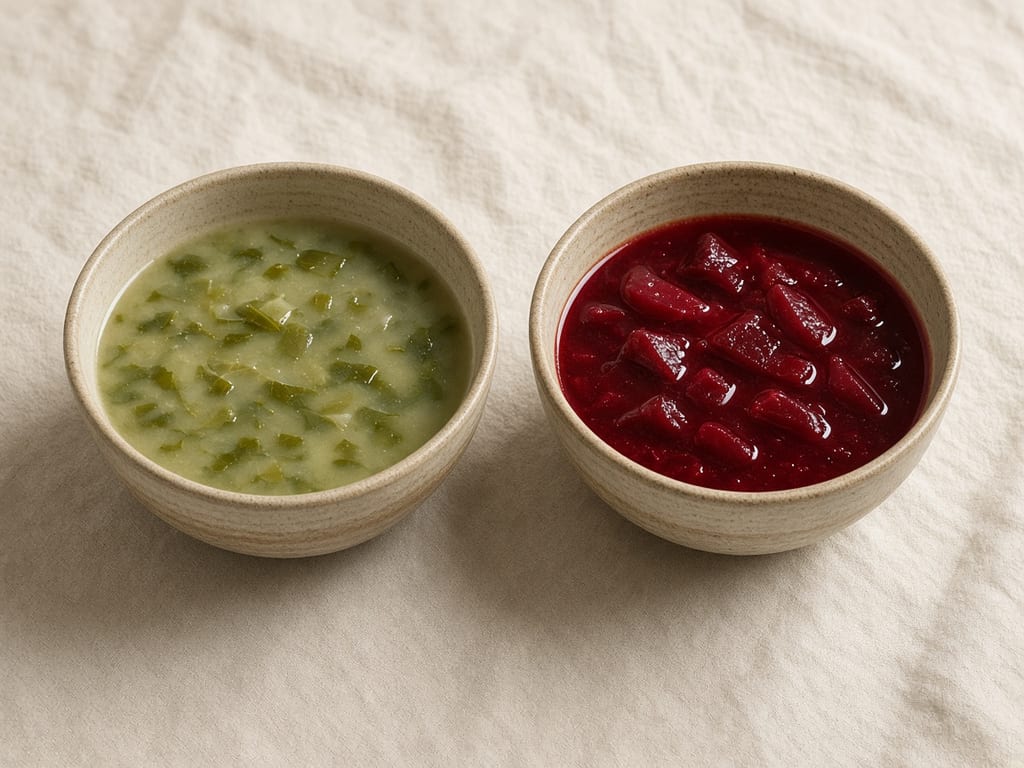
By Gloger's own time the beet sour was a household fixture. Every Polish country house, peasant or noble, kept a separate wooden vessel for beet kwas. In the manors it was usually a large oak barrel without a top, covered with linen, in which beets were soured continuously. The kitchen drew kwas from it for barszcz for the family and guests, for the servants, and for any villager who had no beets left for winter and came to the manor kitchen with a small pot. Gloger also remembered the kwas as medicine. In the manor, anyone with a sore throat was given beet kwas with honey to gargle.
Gloger listed the forms barszcz took in his day: red with small dumplings and a marrow bone, whitened with smoked meat, clear and meatless for breakfast after a night of dancing or as the only midday meal on Christmas Eve, and on fast days with groats and dried mushrooms. He added that people also made barszcz from dough-trough sour and from plums.
Dumanowski points to a wider change in taste. From the middle of the seventeenth century, he writes, cooks turned to stewing, reducing and thickening with fat and roux, and dropped sour, sharp and sweet additions. He ties this to the easing of the Catholic fast, which let more fat and dairy into the kitchen, and to the abandonment of humoral dietetics. The sources read here do not say whether this change pushed hogweed off grand tables. They do show that by 1682 the royal recipe for barszcz began with rye bran.
The botanists notice it has gone
By the late eighteenth century writers on plants were describing hogweed soup as something other people ate. Kluk's plant dictionary of 1786 to 1788 gives the plant only a sparse entry and does not mention the soup. Łuczaj reads that silence as evidence of a sudden decline.
Ładowski's natural history of 1783 says, in Łuczaj's translation, that "the vulgar people use hogweed to make a soup called Barszcz". Jundziłł in 1799 places the habit in Lithuania and some other northern countries. In 1845 Gerald Wyżycki, in a herbal printed in Vilnius, wrote that peasants gathered the leaves in spring, soured them and cooked a dish called barszcz that, in Łuczaj's translation, "substitutes for pickled cabbage very well".
Rostafiński concluded that hogweed soup stopped being made in Poland in the eighteenth or nineteenth century, and that the last record from Lithuania was Wyżycki's of 1845. The ethnographer Moszyński still saw it made in Russia in the twentieth century.
Where the old soup held on
Rostafiński was not content with books. In 1883 he sent a questionnaire on folk plant names and uses to correspondents across the Polish lands, and their letters show the hogweed soup still alive in places at the end of the nineteenth century.
Several letters came from Polesie, around Pińsk, now in Belarus. Correspondents from Secieszyn near Kleck, Rawonicze, Kuchcice and Kozmiatyna, and from Nowogródek, described barszcz made from the plant barszcz. A letter from Rawonicze listed the spring order of gathering: nettle and ground elder first, then sorrel, hogweed and plantain. Another, from Kuchcice, said people gathered the plant barszcz for soups. A manuscript on useful plants by Michał Fedorowski, rediscovered and published in 2013 after 130 years, records hogweed soup east of the Białowieża forest, around Słonim, Wołkowysk and Prużana, under the name borszcz. Only in Polesie, Łuczaj concludes, did the soup survive as a common dish.
Inside present-day Poland the records are few and late. The soup was known in the nineteenth century around Kościerzyna in northern Poland. In Łapsze Niże, in the Spisz area, hogweed went into mixed potherbs or into a sour soup until the 1920s. It was eaten in northern Podlasie into the first half of the twentieth century. There is the Rabka record of soup before the First World War, and Anna Tomiak's jar in Straconka.
The name kept moving after the plant had gone. Around Krosno, Łuczaj's home town, barszcznica is the usual name for ground elder, Aegopodium podagraria, another spring green of the same family. In Ukraine, Łuczaj notes, green borscht is still a living tradition, though it now uses only a narrow range of wild plants.
A plant that bites back
Hogweed can hurt anyone who handles it carelessly.
Its sap contains furocoumarins, including bergapten, which make skin react to sunlight. DermNet describes the typical result in people who cut it with a string trimmer, a streaked rash that can last for months. Giant hogweed, Heracleum mantegazzianum, can reach 5 m and carries high levels of the same compounds. The Royal Horticultural Society warns that its sap can cause severe photodermatitis, and that young giant hogweed plants can be mistaken for the common species.
The family also holds the hemlocks. Poison Control lists cow parsnip, angelica, wild chervil and wild carrot among the plants that foragers confuse with poison hemlock, whose poison, coniine, is present in every part of the plant. Syreński's complaint about people mixing up one barszcz with another still holds.
Burak dziki
The old soup left traces in the language before it left the kitchen. The word barszcz lived on in a beet soup, a rye soup and a lemon soup. Ground elder borrowed it near Krosno. In Rabka, by 1948, the plant itself had been renamed after the vegetable that replaced it.
Gloger's barrel of sour beets has its descendant in zakwas z kiszonych buraków, the beet leaven on Poland's official list of traditional products, which notes that good Christmas Eve barszcz was unthinkable without it. The hogweed still comes up on meadows and by village roads each May, under its first name.
Related
Discussed in this article
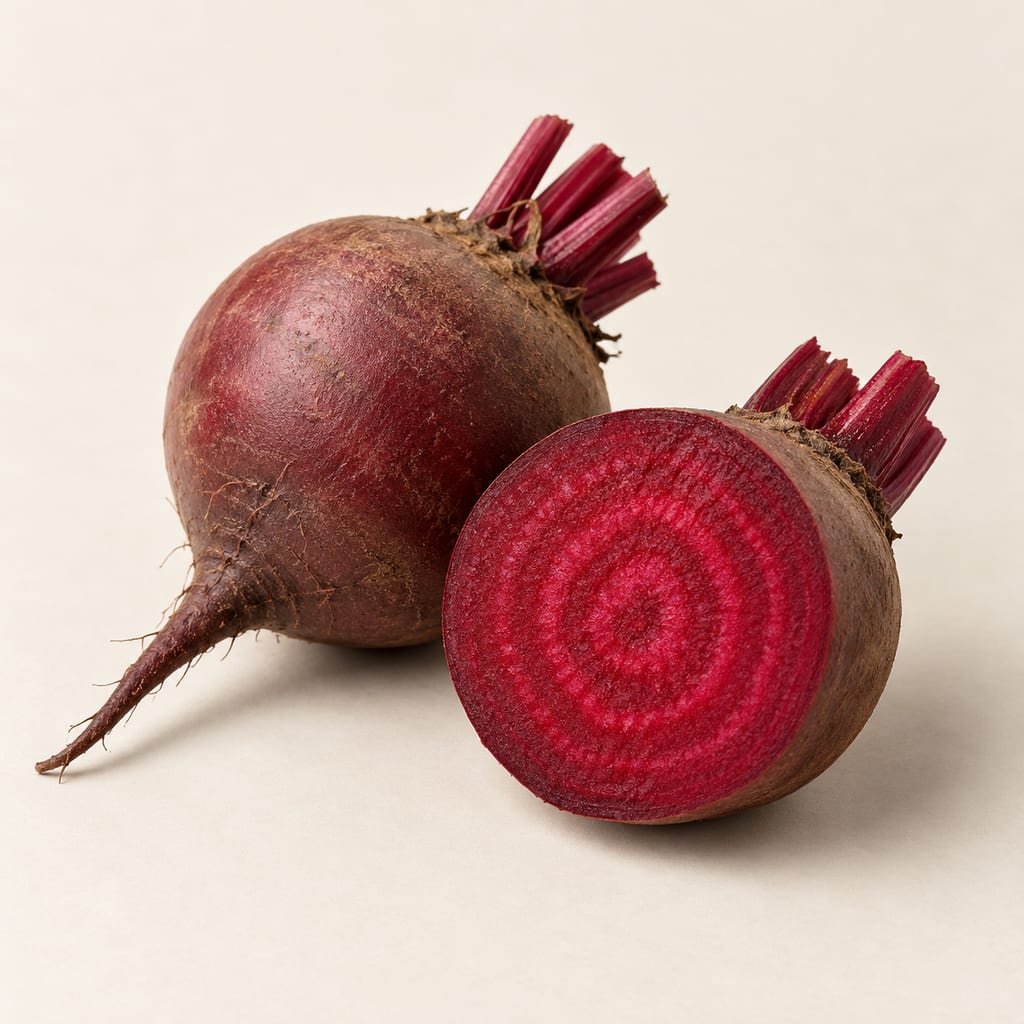
Beetroot
Beetroot is the red taproot of Beta vulgaris. In Poland its soured juice replaced hogweed as the base of barszcz from the eighteenth century, and beet leaven is still made for Christmas Eve.
Hogweed
Hogweed, Heracleum sphondylium, is the meadow plant of the carrot family that gave barszcz its name. Its young leaves were soured into soup; its sap burns skin in sunlight.
Hogweed barszcz
The original Polish barszcz: young hogweed leaves soured in warm water for a few days, then boiled into soup with egg, butter, cream or millet. Recorded from 1595, with warnings about the sap and lookalikes.
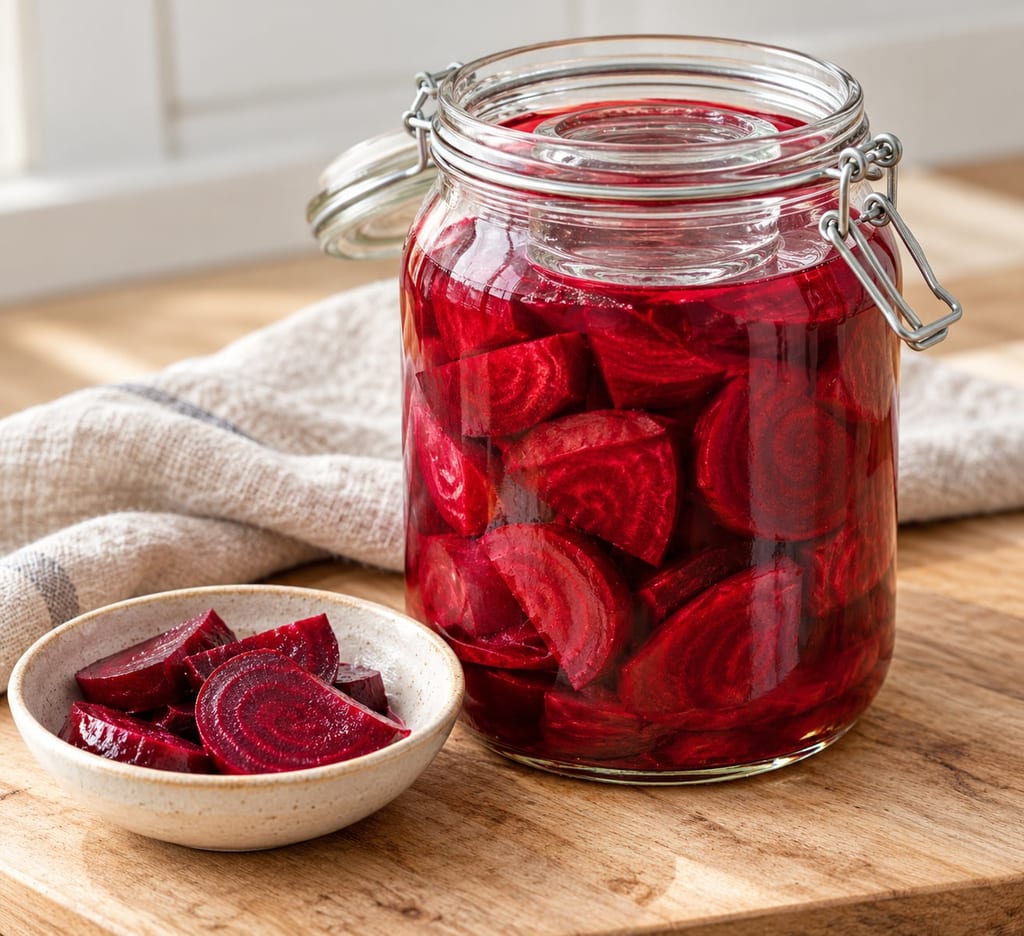
Lacto-fermented beets
Raw beetroot cut and packed into a jar under a salt-water brine, fermented until sour and deeply coloured; the batch weight is not recorded.
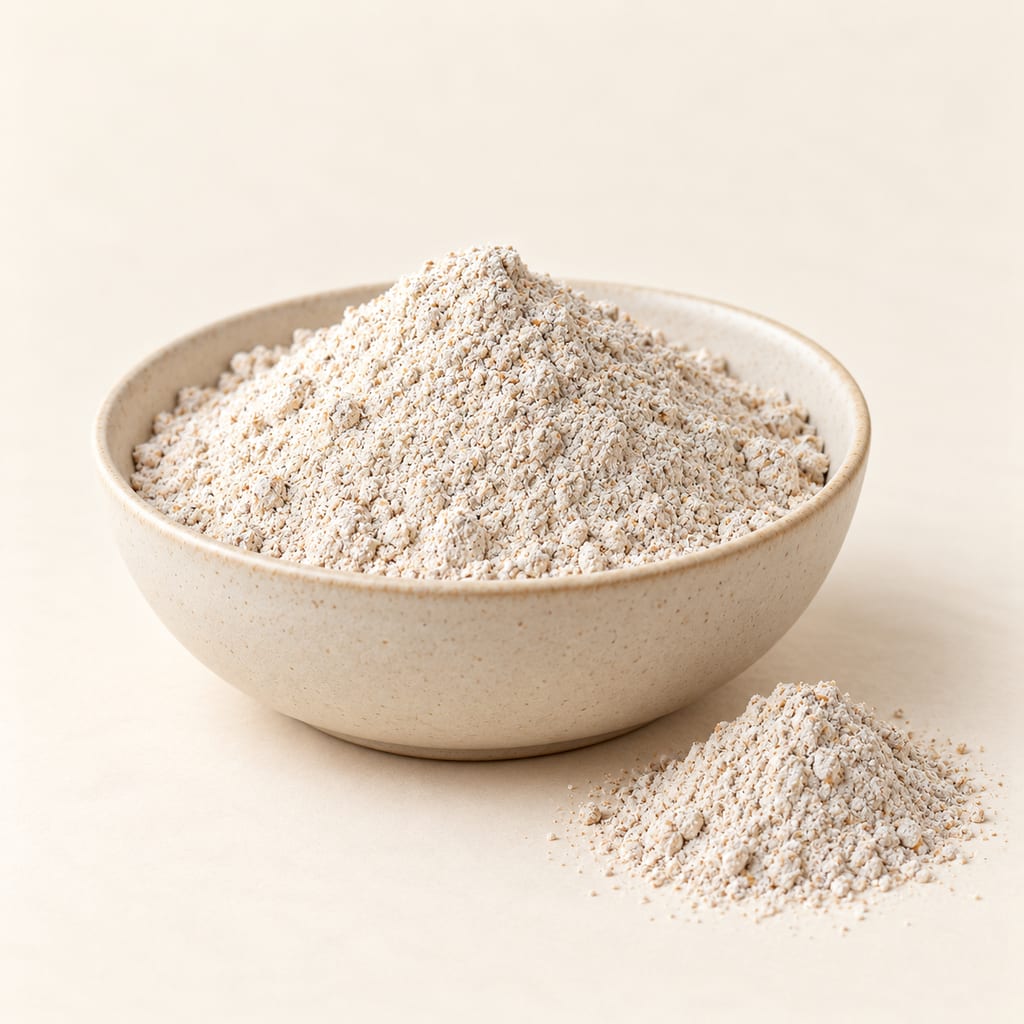
Rye flour
Rye flour is milled rye grain, sold as sifted, dark or wholemeal forms. Its starch and water-binding arabinoxylans shape rye breads, while its proteins do not form wheat's gas-trapping network.
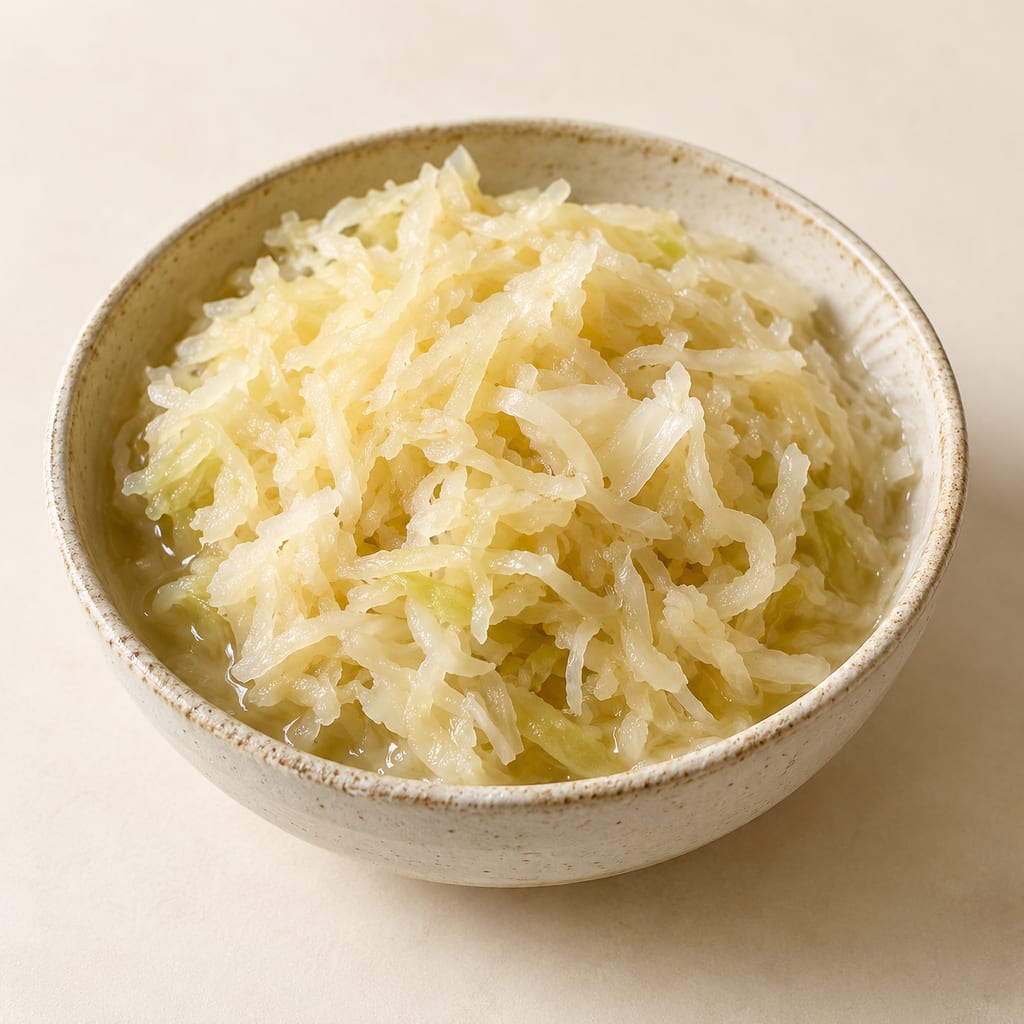
White cabbage sauerkraut
A Penn State Extension crock method mixes 5 lb of shredded cabbage with 3 tablespoons of canning or pickling salt, packs it under its own brine and ferments it in a covered container.
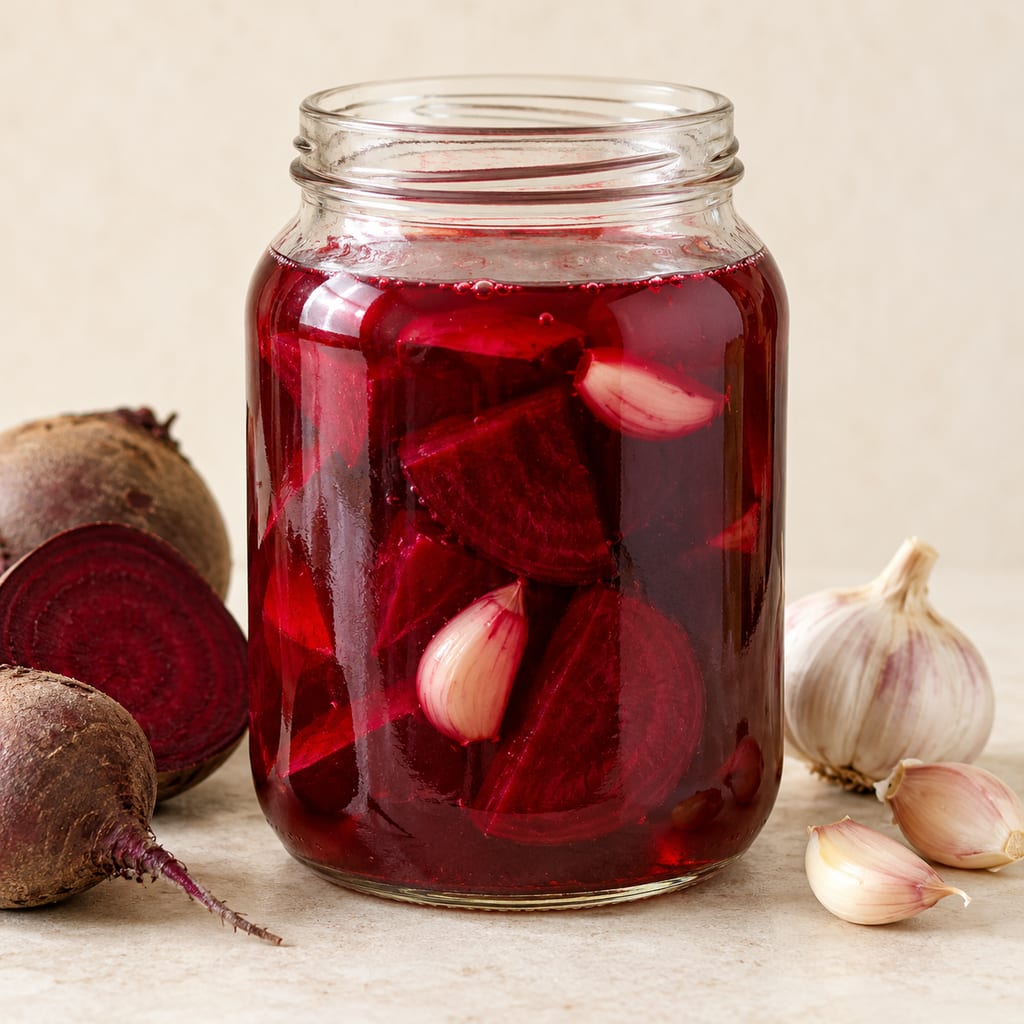
Zakwas buraczany
Zakwas buraczany is the fermented red-beet liquid used as the sour base for Polish beet barszcz. The liquid is made from beetroot, garlic, salt and water, and the official sources give no quantities.
Community
No community contributions have been published for this entry yet.
Share what you made
Sign in to contribute. Published comments and photos are free to read.
Sources
Łuczaj Ł. & Szymański W.M., Journal of Ethnobiology and Ethnomedicine 3:17, 2007
Wild vascular plants gathered for consumption in the Polish countryside: a reviewCited in: A wild beet in Rabka; The plant called barszcz; Two herbals and an English witness; Leaves, water and a warm stove; Wednesdays in Lent; A barrel of beets; The botanists notice it has gone; Where the old soup held on
Łuczaj Ł., Etnobiologia Polska 1:57–125, 2011 (Wikisource transcription)
Dziko rosnące rośliny jadalne użytkowane w Polsce od połowy XIX w. do czasów współczesnychCited in: A wild beet in Rabka; The plant called barszcz; Two herbals and an English witness; Leaves, water and a warm stove; Wednesdays in Lent; The botanists notice it has gone; Where the old soup held on; Burak dziki
Łukasz Łuczaj, The Wild Food, 1 July 2020
Hogweed, borscht and the food of people and bearsCited in: A wild beet in Rabka; The plant called barszcz; Two herbals and an English witness; Leaves, water and a warm stove; Wednesdays in Lent; The botanists notice it has gone; Where the old soup held on
Łuczaj Ł., Journal of Ethnobiology and Ethnomedicine 4:4, 2008
Archival data on wild food plants used in Poland in 1948Cited in: A wild beet in Rabka; Where the old soup held on; Burak dziki
Stanisław Czerniecki, Kraków 1682 (Wikisource transcription)
Compendium ferculorum albo Zebranie potraw, Rozdział IIICited in: Barszcz without the plant
Dumanowski J., Kwartalnik Historii Kultury Materialnej 62(4):527–540, 2014
Wiedza, narracja i smak. Staropolskie książki kucharskie i porady kulinarne jako źródło historyczneCited in: Barszcz without the plant; A barrel of beets
Zygmunt Gloger, Encyklopedia staropolska ilustrowana, t. I, 1900 (Wikisource)
BarszczCited in: The plant called barszcz; Two herbals and an English witness; Barszcz without the plant; A barrel of beets; Burak dziki
Zygmunt Gloger, Encyklopedia staropolska ilustrowana, t. I, 1900 (Wikisource)
BoćwinaCited in: A barrel of beets
Aleksander Brückner, Słownik etymologiczny języka polskiego, Kraków 1927 (Wikisource)
barszczCited in: The plant called barszcz; A barrel of beets
Elektroniczny Słownik Języka Polskiego XVII i XVIII wieku, Instytut Języka Polskiego PAN
BARSZCZCited in: Two herbals and an English witness; A plant that bites back
Ministerstwo Rolnictwa i Rozwoju Wsi, Lista produktów tradycyjnych
Zakwas z kiszonych burakówCited in: Burak dziki
Poison Control, National Capital Poison Center
Can poison hemlock be deadly?Cited in: A plant that bites back
Gaps
- Rostafiński's 1916 monograph O nazwach oraz użytkach ćwikły, buraków i barszczu was not read directly; the Rostafiński findings here come through Łuczaj 2007, 2011 and 2020.
- Karbowiak's 1900 reconstruction of the Jagiellonian professors' dinners was not read directly; the menu details come from Łuczaj's English translation.
- Moda bardzo dobra smażenia różnych konfektów was not read; its mention of zielony barszcz comes from Dumanowski 2014.
- Which King Władysław Jagiellończyk asked for hogweed greens in Hungary is not stated in the sources read.
- No source read here dates the first fermented beet sour in Poland or says when beet barszcz first outnumbered hogweed barszcz.
- The plant Syreński called wodny barszcz is not identified in the sources read.
- Brückner's claim that the Russian soup name came from Polish usage is reported as his view only.
- None of the sources read gives quantities, times or temperatures for the historical ferment, and none tests its safety.
- The sources read do not say how hogweed sour and rye sour were used side by side in the same households.
Updated 2026-11-04