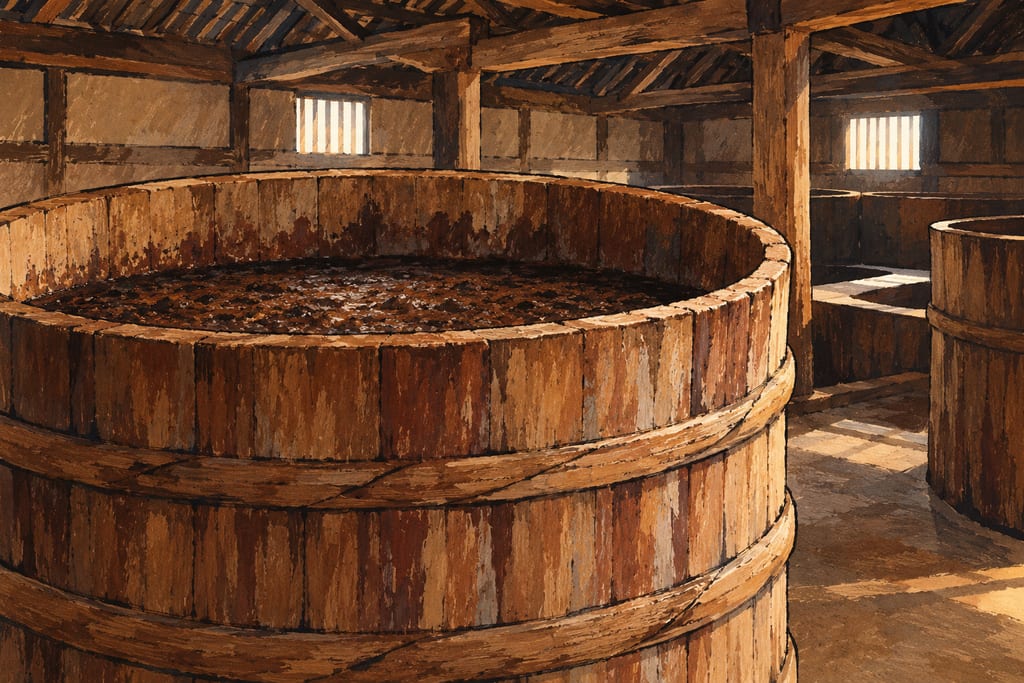
Shoyu kioke
A shoyu kioke is a very large upright wooden vat for fermenting and ageing soy-sauce mash; Japanese sources document cedar-stave examples held together by hoops.
 FermenteaWhere food goes to change
Equipment · Barrels and casks
An upright, open-topped stave vat used for fermenting sake mash. Terada Honke documents a current wooden-vat practice and a new Sanbu-sugi cedar vat completed in 2023.
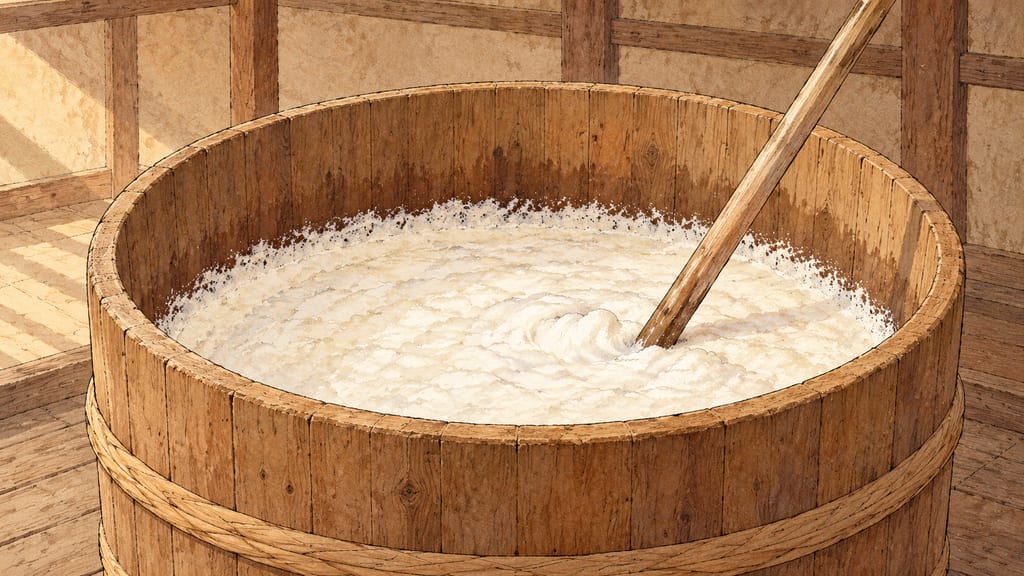
A wooden sake fermenting vat is a tall, upright vessel built from staves and held together by circumferential hoops. Its broad open mouth gives the brewer access to the mash. In the documented form, long kai paddles reach into a pale rice mash that may carry a foamy surface. That silhouette and working position distinguish it from a small barrel used to package or serve finished sake.
Terada Honke, a brewery in Kozaki, Chiba Prefecture, describes returning to handmade wooden vats as part of its present brewing practice. Its official page includes a close view inside an open vat with pale foaming mash and a long paddle. The image documents that brewery's working equipment; it does not identify a particular fermentation day or establish that all wooden-vat brewing looks exactly the same.
The vat is one part of a sequence that transforms rice into sake. Terada Honke explains that rice starch is not directly available to yeast as sugar. Koji mold supplies enzymes that convert starch into sugars, while yeast consumes sugars and produces alcohol and carbon dioxide; the brewery also describes lactic-acid bacteria as part of its microbial community. These biological roles explain why a fermentation vessel receives a mash whose ingredients and organisms have already been prepared through earlier stages.
Not every wooden vessel in the brewery is a fermentation vat. Terada Honke calls the large wooden vessel used for steaming rice a koshiki. Steaming prepares rice for koji cultivation and later mash; the vat in this entry holds fermenting sake mash. Keeping those jobs distinct matters when naming or depicting the equipment. Likewise, the small serving or packaging cask called taru belongs after brewing rather than standing in for the mash vat.
Terada Honke describes wood as porous, able to retain heat and moisture, and less affected by outside temperature changes. The producer presents the vat's pores and the brewery environment as a habitat for a diverse microbial community. Those observations are useful evidence for why this brewery values its wooden tools, but they are not a controlled comparison proving that every wooden vat produces a particular flavour or that all breweries share the same microorganisms.
A specific example anchors the material claim: Terada Honke reports that a vat made from Sanbu-sugi cedar was completed in February 2023 with help from forestry workers in Sanmu City and participants in the Shodoshima Kioke Craftsman Revival Project. The brewery says it used that vat for a kimoto sake product. This is a documented modern example, not a universal specification for sake vats; the consulted source gives no overall dimensions or capacity.
Terada Honke recounts a longer working life for wooden vats: a brewery might use a new vat for years or decades, then another producer could repair or resize it for soy sauce or miso, before it was made smaller again for pickling. The account shows how a coopered vessel could move between producers and uses as it aged. It does not mean the same microbial culture or cleaning practice continued unchanged across sake, soy sauce, miso and pickles.
Terada Honke says the reused vessel is eventually converted to firewood and describes the full reuse cycle as lasting over a century or two. This is a general historical account on the brewery's page, not a guaranteed lifespan for a particular item. The source does not provide a full maintenance manual, cleaning protocol, stave thickness, hoop material or lifting method, so those details are not given in the consulted pages.
The precise dimensions and capacity of the pictured and 2023 Terada Honke vats are not stated in the consulted sources; no standard capacity is assigned here.
Source →Terada Honke describes wood as breathable and heat-retaining and as a habitat for varied microorganisms. This is the producer's account of its equipment and brewery; it does not establish identical microbial communities or a guaranteed fermentation result in every wooden vat.
Source →A wooden koshiki is used to steam rice, while this item concerns the vat used for fermentation. These are distinct vessels and stages.
Source →The archive records Japan for this sake-vat form. This is a country-level traditional-use association, not a claim of origin.
The company documents wooden-vat brewing and locates its brewery at this address. This is a modern example, not the origin of the vessel tradition.
A shoyu kioke is a very large upright wooden vat for fermenting and ageing soy-sauce mash; Japanese sources document cedar-stave examples held together by hoops.
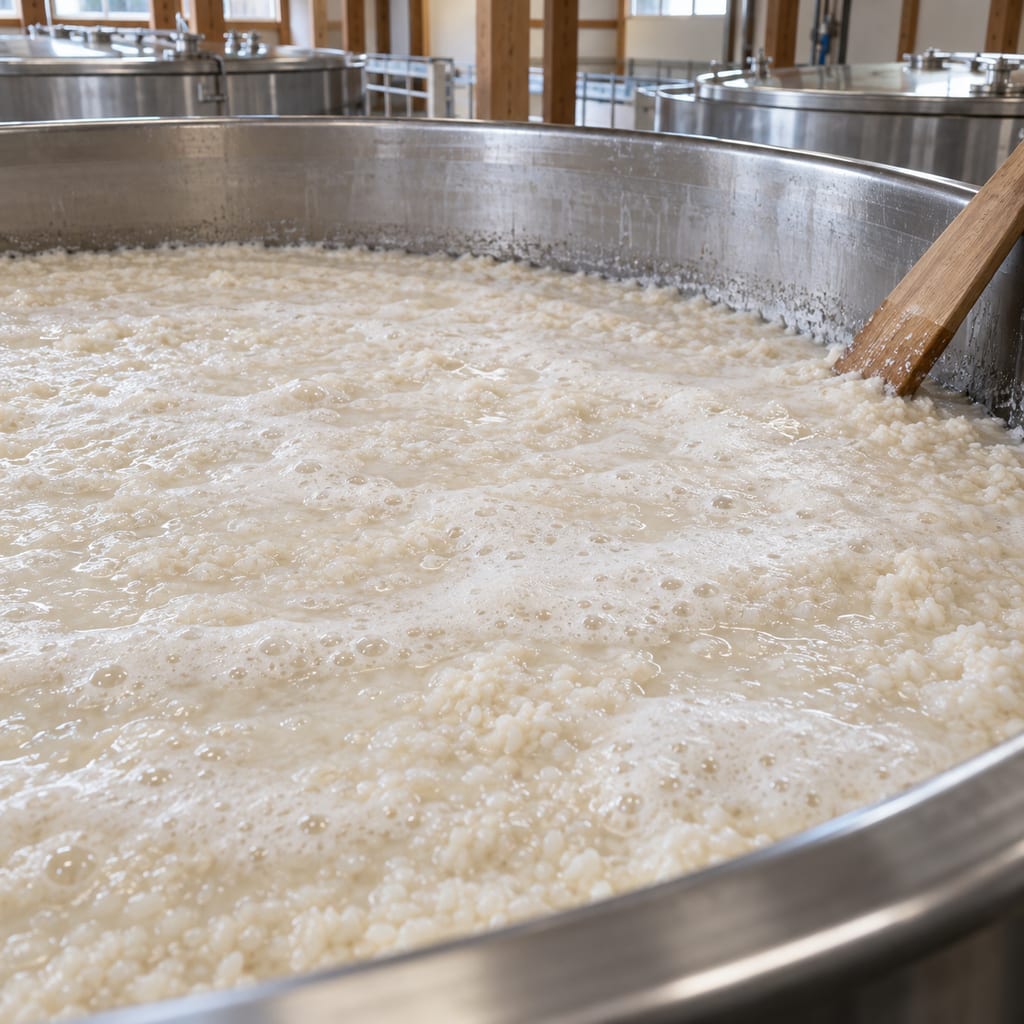
Nihonshu (日本酒), or seishu, is Japanese rice sake: steamed rice, rice koji, water and a yeast starter ferment together in one mash, which is then pressed and finished.

A small electric incubator holds jars at a selected temperature for yogurt and other documented warm food preparations. Controls, capacity and vessel arrangement vary by model.
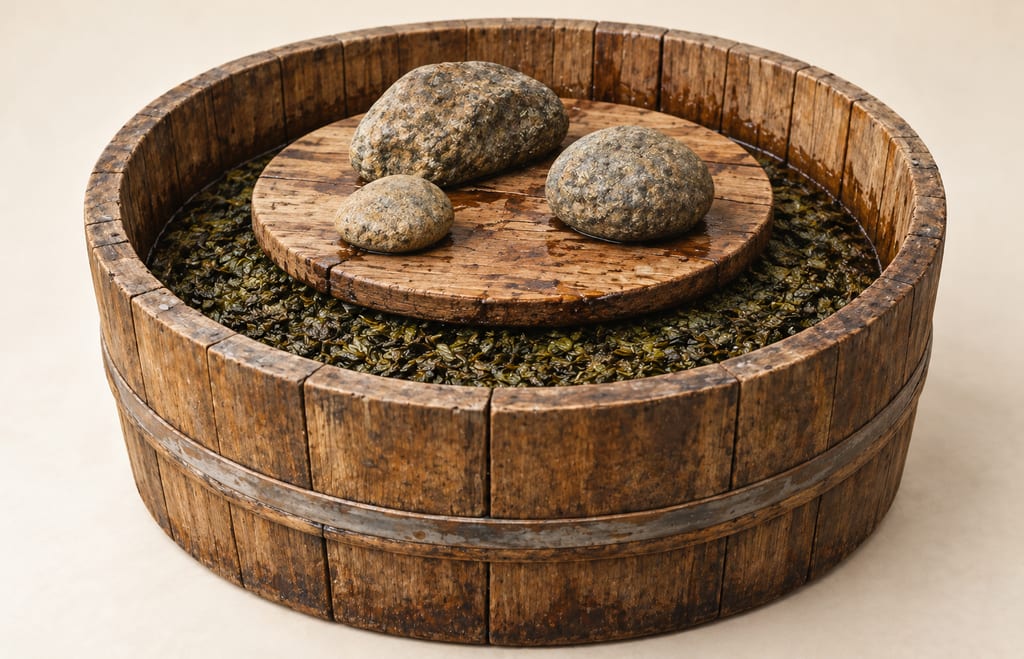
A large wooden tub used in Tokushima to ferment heated, worked Awabancha leaves with their cooking liquor. Its size and construction details are not specified in the sources.
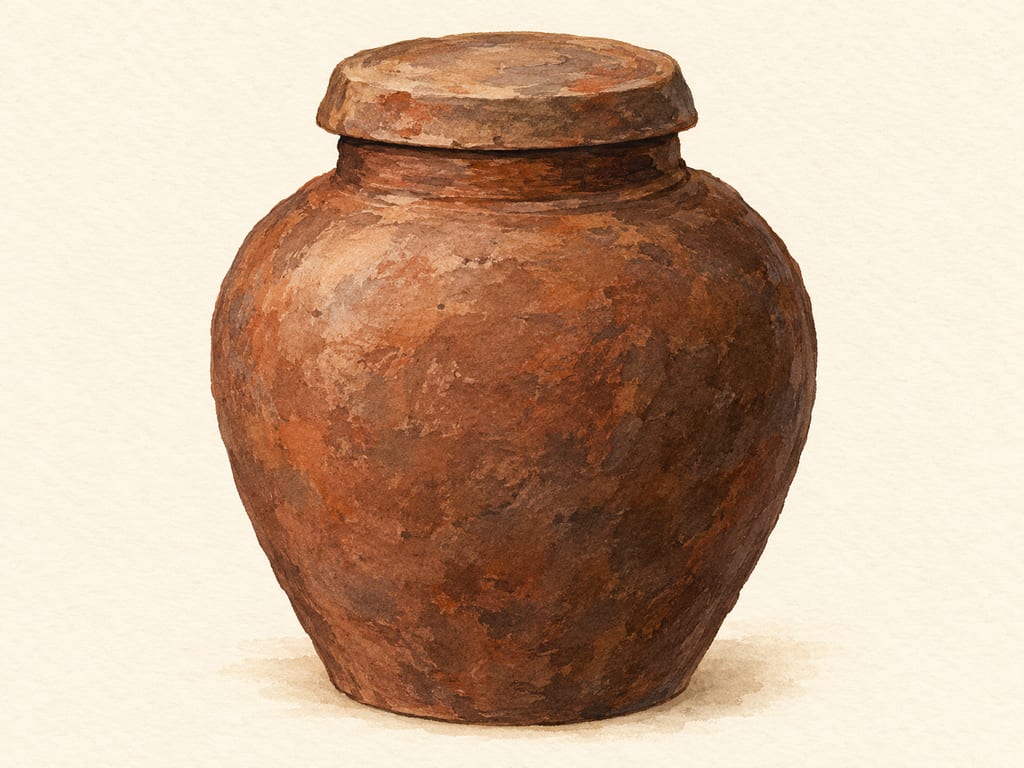
A ceramic jar used in Okinawa to store and mature distilled awamori into kusu; it holds the finished spirit after distillation rather than fermenting the rice mash.
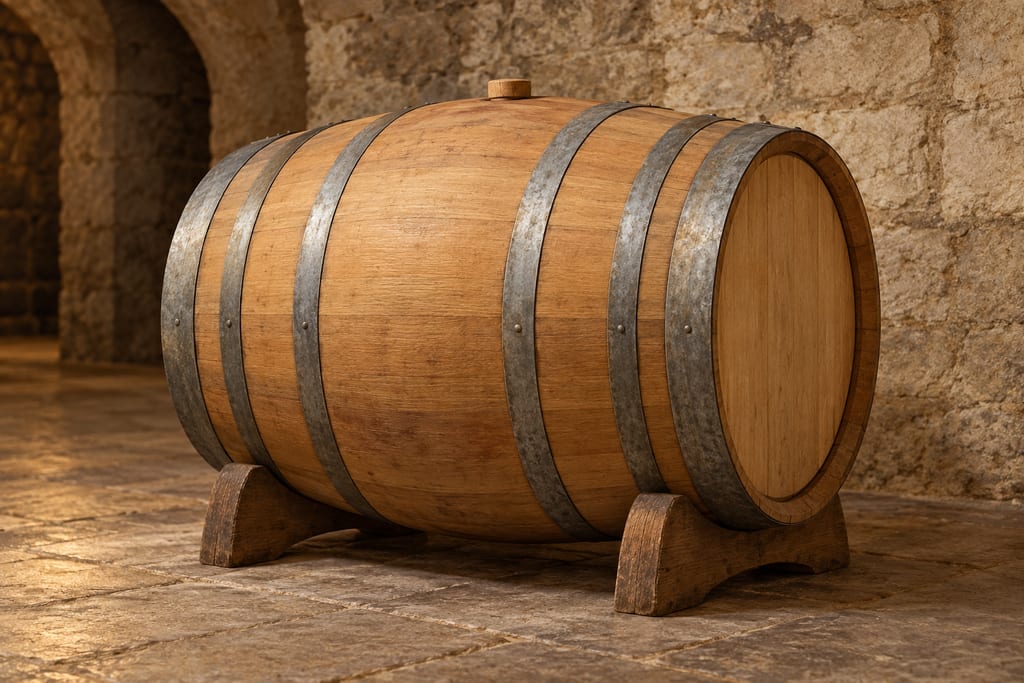
Coopered vessels use shaped staves and hoops, but portable barrels, large foeders and upright wooden vats serve different roles. Materials and uses vary by place and process.
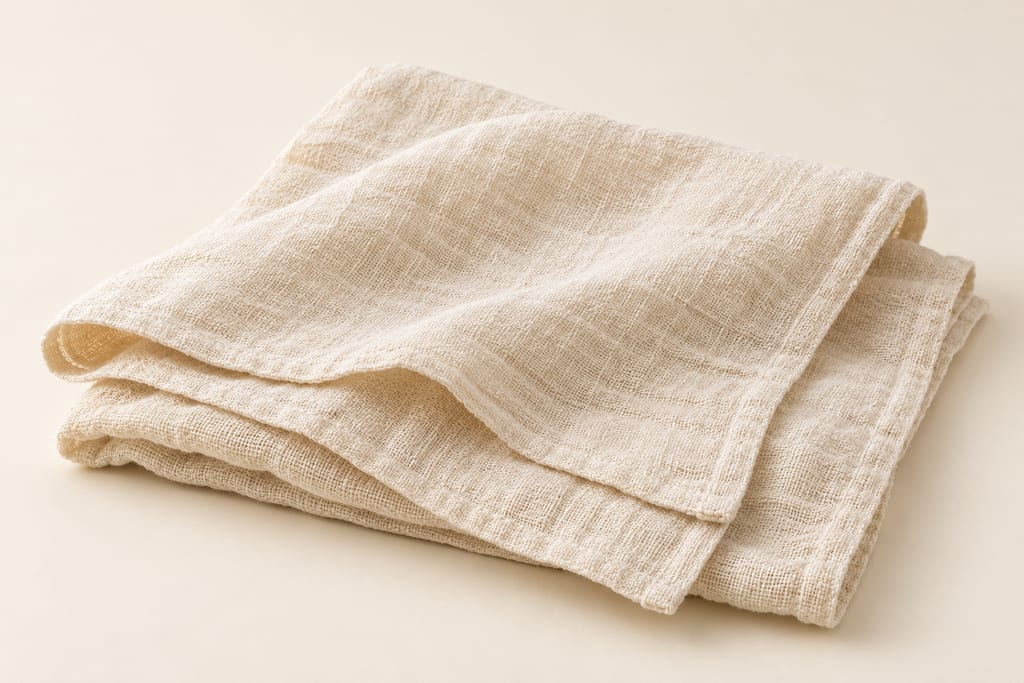
A cloth listed for steaming rice in a rice-koji method and identified as cloth for a koshiki in a brewery-museum caption; its fiber, weave, and size are not specified.
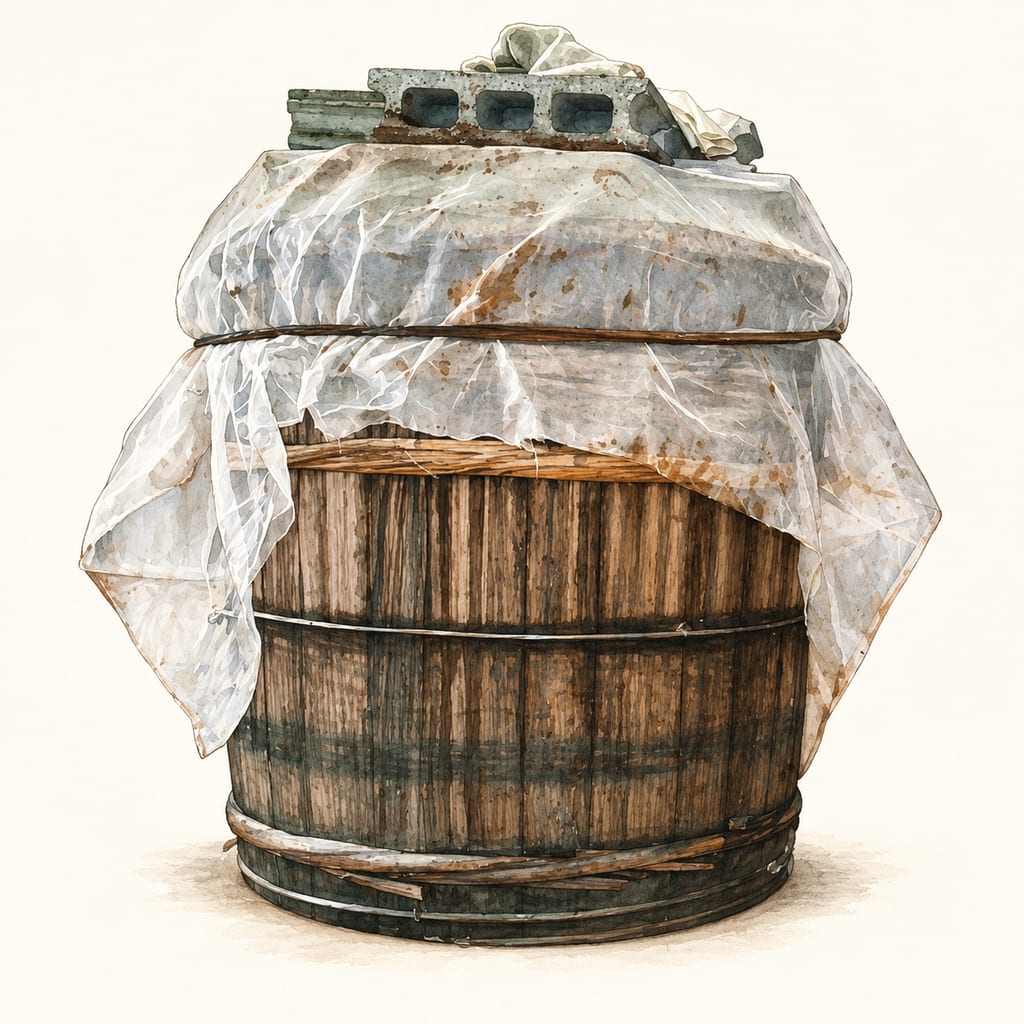
A Goishicha weighted tub holds tea leaves and steaming liquor during the second, wet fermentation stage in Ōtoyo, Kōchi. A current producer photograph documents one covered wooden tub under concrete-block weight.
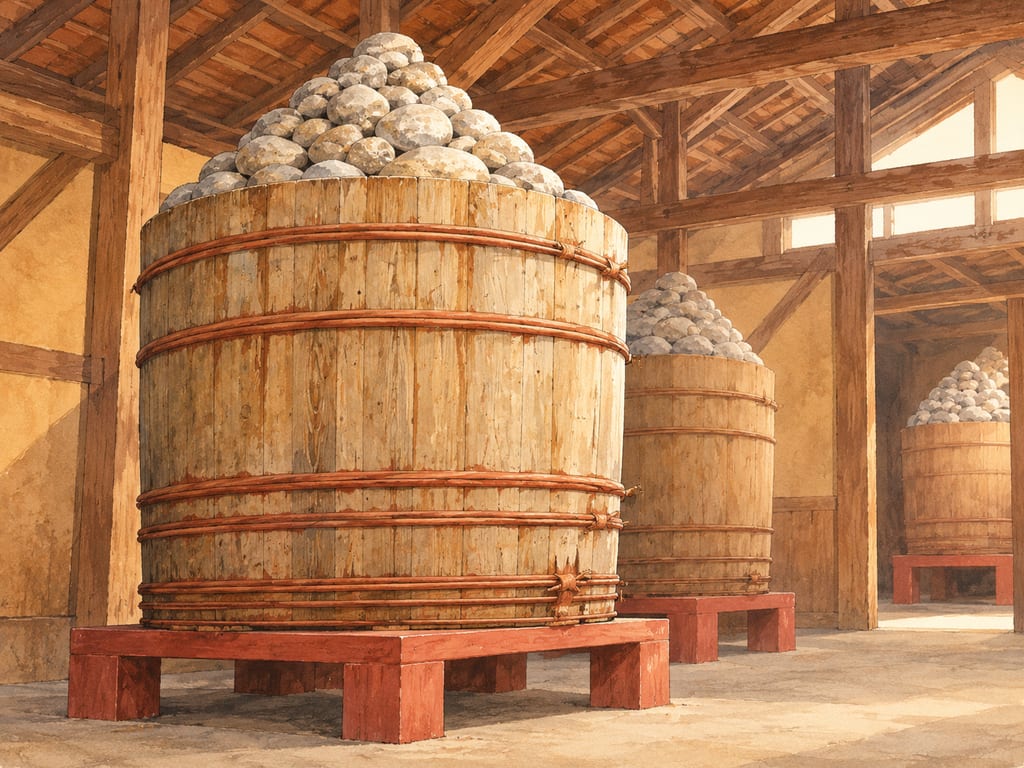
A coopered wooden kioke used by Kakukyu in Okazaki for Hatcho miso: a broad vat capped with a carefully stacked pyramid of river stones during maturation lasting more than two years.
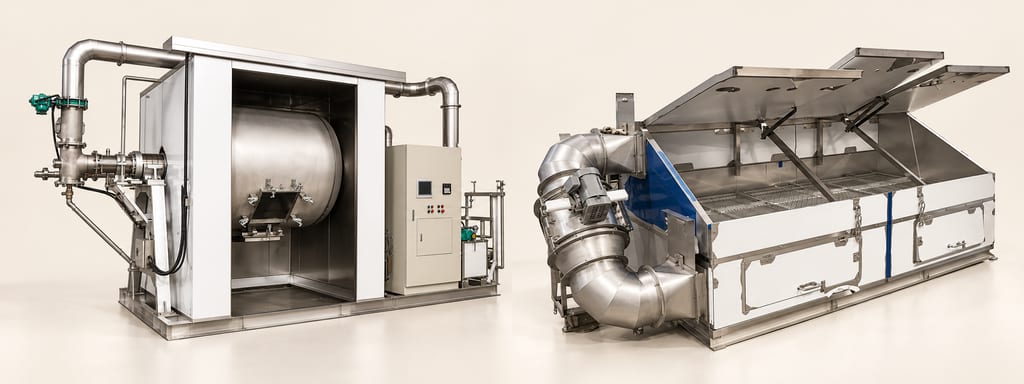
Industrial koji machines cultivate mold on prepared grain before sake, shochu, miso or soy-sauce production. Commercial designs include rotating drums and aerated beds.
No community contributions have been published for this entry yet.
Sign in to contribute. Published comments and photos are free to read.
Terada Honke Co., Ltd.Current use · Form · Materials · Microbial context · History · Reuse
Wooden-vat brewing at Terada HonkeTerada Honke describes its shift back toward handmade wooden vats for sake brewing.
The producer says wooden vats retain heat, are breathable and host a variety of microorganisms; these are its account of its equipment and brewery.
The page describes former reuse of old sake vats for soy sauce and miso, then for pickles, through repair or resizing.
Cited in: An open vat for sake mash; The vat within sake brewing; Wood, heat and a brewery's microorganisms; Repair and reuse
Terada Honke Co., Ltd.Process context · Vessel distinction
Our Sake BrewingThe page says koji converts rice starch into sugar for yeast fermentation.
It identifies the wooden koshiki as a rice-steaming vessel, distinguishing it from a fermentation vat.
Cited in: The vat within sake brewing
Terada Honke Co., Ltd.Materials · Contemporary use · Date
Kioke 720mlTerada Honke states a vat was completed in February 2023 from Sanbu cedar, with help from local forestry workers and participants in the Shodoshima Kioke Craftsman Revival Project.
The brewery says it used this vat to make a sake product by the kimoto method.
Cited in: Wood, heat and a brewery's microorganisms
Terada Honke Co., Ltd.Geography
Company profileThe company lists its address as 1964 Kozakihonshuku, Kozaki Town, Katori County, Chiba Prefecture, Japan.
Cited in: An open vat for sake mash