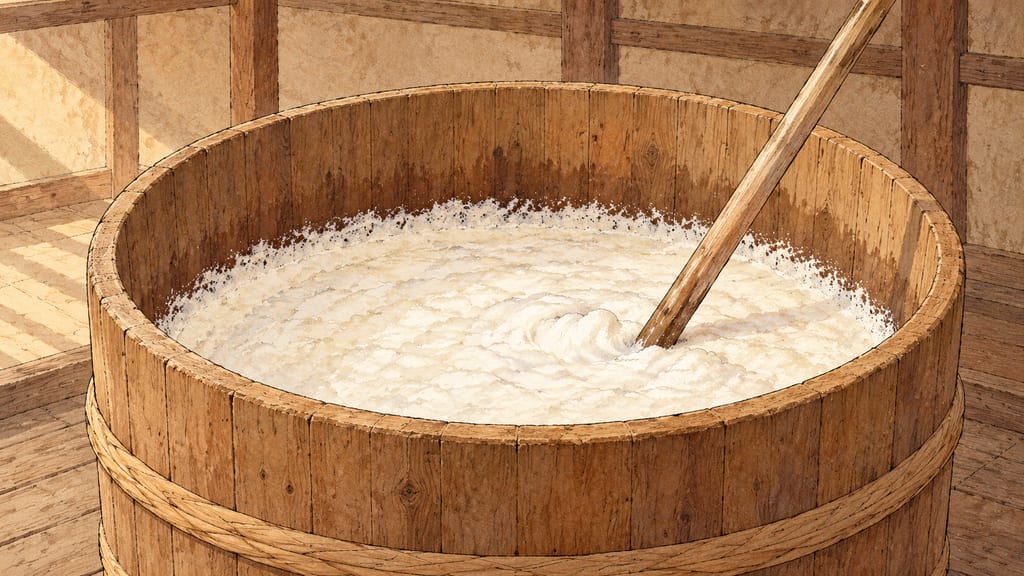
Wooden sake fermenting vat
An upright, open-topped stave vat used for fermenting sake mash. Terada Honke documents a current wooden-vat practice and a new Sanbu-sugi cedar vat completed in 2023.
 FermenteaWhere food goes to change
Equipment · Barrels and casks
醤油 木桶 · kioke · soy-sauce kioke · cedar soy-sauce vat · 小豆島桶 (Shodoshima koga)
A shoyu kioke is a very large upright wooden vat for fermenting and ageing soy-sauce mash; Japanese sources document cedar-stave examples held together by hoops.
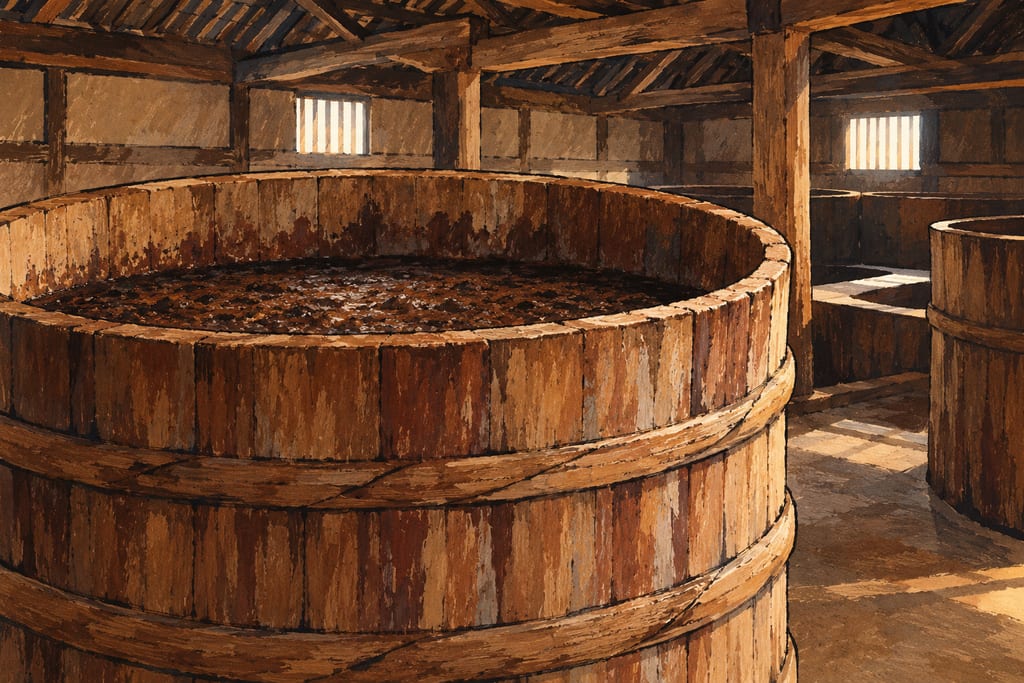
Kioke are huge upright wooden vats used to ferment and mature soy-sauce mash. Their silhouette is closer to a broad, tall cylinder than to a small barrel laid on its side. The body is made from long vertical staves. Hoops bind the staves around the outside; the vat has a bottom and an open working mouth. The open top gives access for stirring the brined moromi with long paddles.
Shodoshima Town calls the island’s traditional vat a koga (桶). Its official account describes a large cedar-board vat tightened with hoops, with an upper diameter of about 2.2 metres, a depth of about 1.7 metres and capacity near 5,800 litres. The town says older examples may have been used for more than a century and newer ones for at least decades. These measurements and ages belong to the town’s documented Shodoshima practice; they are not a template for every kioke.
Yamaroku Shoyu, a brewery on Shodoshima in Kagawa Prefecture, says all of its soy sauce is made in cedar kioke holding 3,000–6,000 litres. That large capacity distinguishes brewing vats from smaller wooden barrels used to transport or sell shoyu. The producer describes its vats as part of a working brewery rather than isolated containers.
Kikkoman’s food-culture exhibit explains the construction of shoyu barrels more broadly: wooden staves, a bottom and lid, and hoops that may be metal, bamboo or cord. It identifies Japanese cedar (Cryptomeria japonica) as the usual wood for historic shoyu and sake barrels, while noting that this is a general barrel account. The Shodoshima town description confirms cedar boards and hoops for koga but does not name the hoop material. A kioke illustration should therefore show the documented wooden stave body and hoops without insisting that every example has bamboo bindings.
At Yamaroku, kioke hold brined moromi through fermentation and ageing. The producer attributes part of the brewery’s character to yeasts and lactic-acid bacteria associated with the barrels and the storehouse. Shodoshima Town likewise describes long-used wooden vats and brewery environments as places where yeasts take part in fermentation. These are accounts of the producers’ practice and interpretation; they do not isolate the vat as the sole source of microbes or prove that cedar always produces a superior soy sauce.
The physical setting matters to the explanation: Yamaroku’s official page describes a moromi storehouse with timber beams, earthen walls and floor, alongside the wooden vessels. A vat is one part of that working environment. Kikkoman’s broader discussion of cedar compounds and microbial growth addresses a different general property of cedar barrels, so the sources do not support a single universal microbial claim for every wood, brewery or fermentation.
Kikkoman places shoyu barrels within a container tradition prominent from the Edo period onward, when wooden barrels became important for storing and moving soy sauce. That packaging history is related to, but not identical with, the story of the giant kioke used for fermentation. Shodoshima Town describes its island as a soy-sauce production area since the Edo period and documents present-day vat-brewed koikuchi and saishikomi soy sauce. Those sources establish a continuing regional practice; they do not date the first kioke or prove that every surviving vat descends from an Edo-period vessel.
The records give examples rather than a construction manual. They do not specify universal stave thickness, joinery dimensions, lifting points, structural load limits, or a full cleaning and repair procedure. The town’s approximate diameter and depth are the only dimensions recorded here, and they refer to its described Shodoshima koga. This entry is descriptive, not a build specification.
The 3,000–6,000 L capacity range is Yamaroku Shoyu's reported range, not a standard for all shoyu kioke.
Source →The Shodoshima Town dimensions and approximately 5,800 L capacity describe its local koga example; they should not be generalized to every vat.
Source →Cedar and brewery-resident microorganisms are described in different ways by the sources; they do not establish that every cedar vat develops the same microbial community or improves every sauce.
Source →Kikkoman documents shoyu barrels in Japan from the Edo period onward; this does not claim every brewery used large fermentation kioke.
Yamaroku and Shodoshima Town document large cedar vats in current Shodoshima soy-sauce production; the row describes a regional example, not the origin of all kioke.
An upright, open-topped stave vat used for fermenting sake mash. Terada Honke documents a current wooden-vat practice and a new Sanbu-sugi cedar vat completed in 2023.
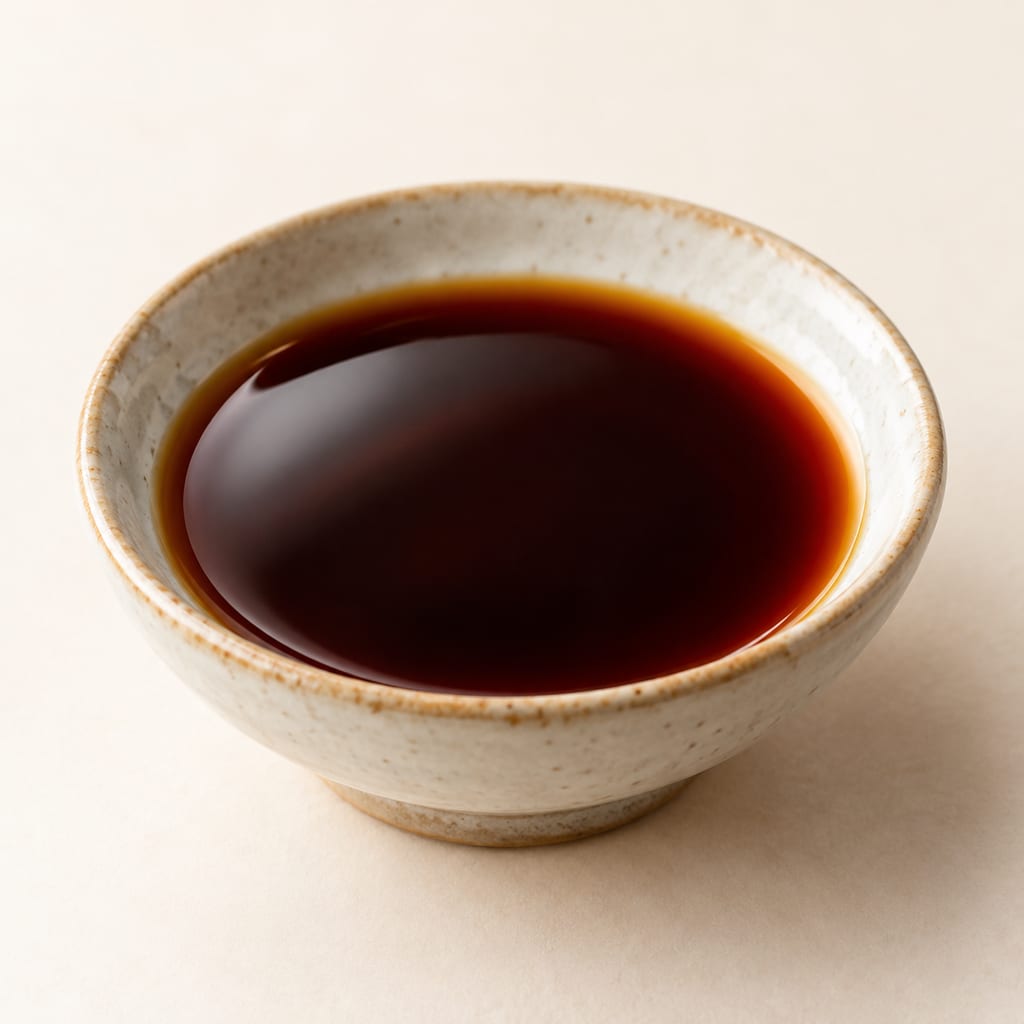
Japan's standard all-purpose soy sauce: soybeans and wheat grown over with koji mould, brined, fermented for months, pressed and usually heated into a reddish-brown, savoury liquid.
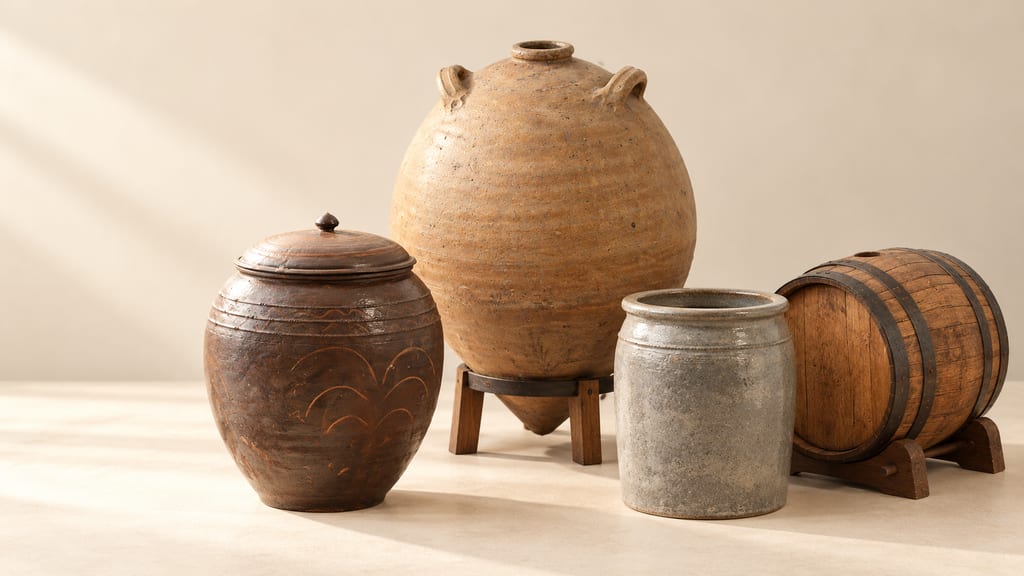
Jars, barrels, skins, leaves, pits and whole rooms decide much of what happens to fermented and cured food. This is how a container works on its contents, and how people in different places chose theirs.
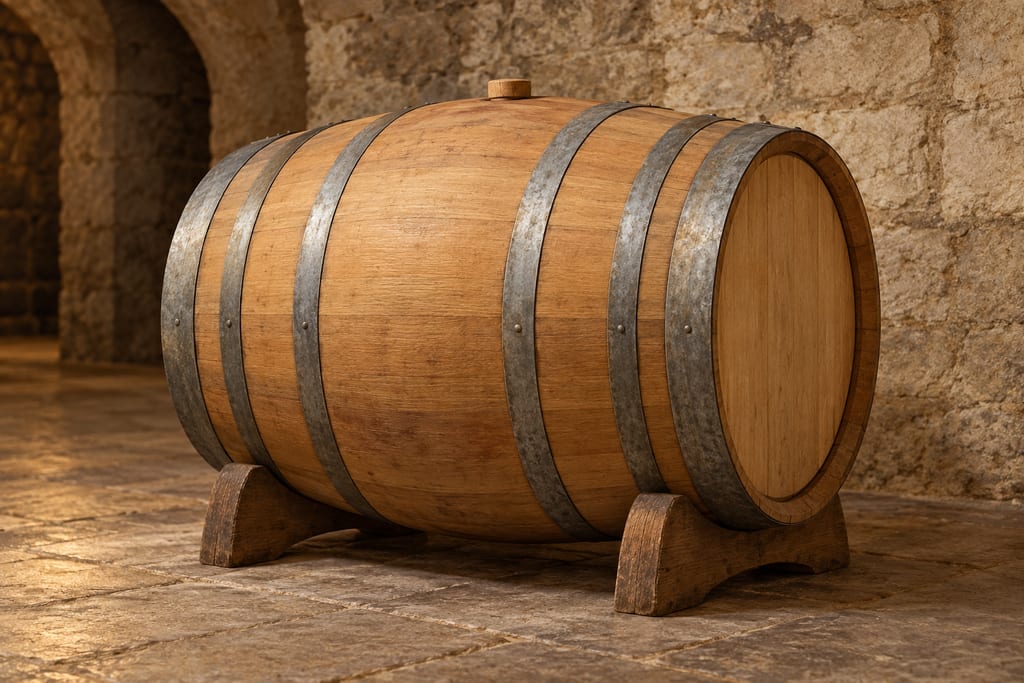
Coopered vessels use shaped staves and hoops, but portable barrels, large foeders and upright wooden vats serve different roles. Materials and uses vary by place and process.

A gelling polysaccharide extracted from red seaweeds, sold as kanten strips or powder; it sets firm at a low concentration and stays solid until about 85 °C.

A Dominican table and seasoning condiment of sour orange juice, mixed with lime and salt and bottled raw; garlic, oregano or a hot pepper may be added for meat or a spicier bottle.

Cicerbita alpina is an alpine perennial whose tender shoots and leaves have been eaten raw or cooked. Sámi milk preparations and modern Carnian dishes are distinct uses, with serious identification and preservation limits.

Japanese skipjack tuna cooked, then repeatedly smoked and dried over a wood fire by the hand-fired tebiyama method into a hard block for shaving into dashi: the first stage of katsuobushi.

A Swedish-style spirit vinegar made by fermenting neutral alcohol with live vinegar bacteria, with a separate guide to commercial ättika strengths.

A yeast-raised wheat ring shaped from a firm dough, briefly boiled and baked. This source-batch formula gives a gently malted crust and a chewy crumb.

A warm dip of garlic, anchovy and olive oil, often enriched with butter, that Piedmont serves over a flame with raw and cooked vegetables and bread.

Bechamel is a white sauce of milk thickened with a butter and flour roux, one of the French mother sauces, and the base from which Mornay and other cheese and cream sauces are made.
No community contributions have been published for this entry yet.
Sign in to contribute. Published comments and photos are free to read.
Yamaroku ShoyuCurrent use · Capacity · Geography · Brewery context
About YamarokuYamaroku produces its soy sauce in cedar kioke with stated capacities of 3,000–6,000 litres.
The brewery is on Shodoshima in Kagawa Prefecture.
The company describes microbial communities associated with its kioke and the surrounding storehouse.
Its storehouse is described as having an earthen floor and walls with timber beams.
Cited in: Scale and material; Fermentation in a brewery; A long history, with limits to the record
Kikkoman Institute for International Food CultureHistorical context · Materials · Form
Packages and Containers of Shoyu as Viewed from Food CultureShoyu barrels are described as typical containers from the Edo period onward; the institute says the precise origin of the barrel form is not clearly known.
The exhibit describes a barrel body made from staves, a bottom and lid, and hoops of metal, bamboo or cord.
Japanese cedar is described as the general material for shoyu and sake barrels.
Cited in: Scale and material; Fermentation in a brewery; A long history, with limits to the record
Shodoshima TownRegional use · Materials · Capacity · Dimensions · History
Shodoshima Town specialty: Shodoshima koga-brewed soy sauceThe town documents large koga vats assembled from cedar boards and tightened with hoops.
It reports about 2.2 metres upper diameter, 1.7 metres depth and 5,800 litres capacity for a described vat.
It describes old vats over 100 years old and newer vats used for at least 50 years, and traditional Shodoshima wooden-vat soy-sauce brewing.
The page describes long fermentation periods for certified vat-brewed koikuchi and saishikomi.
Cited in: A brewing vat, not a shipping barrel; Scale and material; A long history, with limits to the record