
Natto
Natto is a Japanese fermented soybean food with a sticky coat and long strings, made by steaming soybeans and inoculating them with a natto Bacillus starter, then keeping them warm.
 FermenteaWhere food goes to change
Equipment · Incubators and warm holds
bread proofing box · dough proofer · insulated proofing box
A bread proofer creates a warm, sheltered place for dough to rise. Purpose-built countertop proofers and insulated boxes with separately controlled heat are different designs; neither sets one temperature or proofing time for every dough.
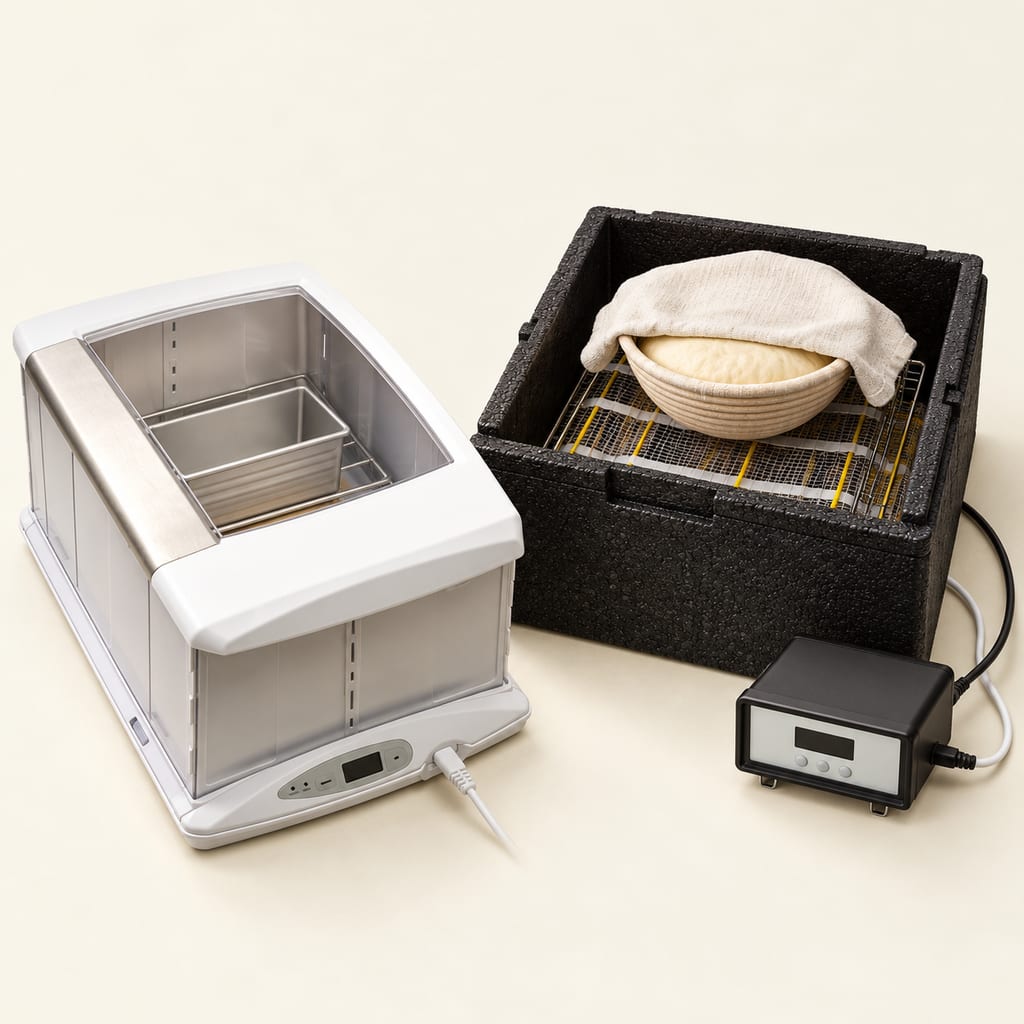
Proofing is the rest that lets shaped dough expand before baking; bread recipes may also call the earlier rise bulk fermentation. King Arthur Baking notes that both timing and temperature depend on the dough and its surroundings. For the bread discussed in its guide, its baking ambassador prefers the low-to-mid 70s Fahrenheit, but the page also lists ordinary household warm spots and a temperature-controlled proofing box as alternatives. A dedicated box is useful when the room is too variable; it is not a required part of bread making.
A cover matters as much as warmth. The dough should be kept from drying while it rises, and the proofer should be chosen or adjusted to the recipe rather than the other way around. A warm setting can speed a rise and change its timing, so dough readiness still needs to be judged by the method and the dough itself.
Purpose-built proofers are manufactured appliances. The Brød & Taylor Folding Proofer, for example, folds for storage and heats a plate beneath a removable rack; the maker describes how the plate warms containers and warns that its setting is calibrated to food in containers rather than the surrounding air. Its specified temperatures and modes apply to that model. The appliance has a separate Fermenta entry, so this page treats it only as one example of the broader class.
A separate insulated box can also be adapted into a warm chamber. In a 2011 account, Nordic Food Lab describes placing electric underfloor heating in a thermal box and connecting the heater to a separate PID controller. The lab used the setup for garum trials, solid-state vinegar and barley inoculated with mold; it did not describe this arrangement as a bread proofer. A later lab account describes yet another form: a switched-off upright refrigerator fitted with a heating mat and probe-controlled PID for koji. These cases show why “proofing box” does not name one standardized construction.
A controlled box supplies a local environment; its construction determines how heat reaches the food. In Brød & Taylor's plate-heated design, the maker says a container cover or the water tray changes food temperature, and the appliance only warms. That explanation cannot be transferred unchanged to a heating pad, a converted refrigerator or an unheated insulated box. A setting on one device is not a recipe for another.
For dough, follow the particular recipe's temperature and proof cues. For any other culture, use that culture's method and confirm what the specified sensor measures. This class-level record does not prescribe wiring, heater placement, temperatures or construction steps for an improvised box. The published fermentation-cabinets article compares proofers, adapted boxes and converted chambers in more detail.
The inspected sources do not establish a specific place of origin or a representative place of use for this equipment category. Manufacturer-specific examples do not establish the geography of the broader type.
Natto is a Japanese fermented soybean food with a sticky coat and long strings, made by steaming soybeans and inoculating them with a natto Bacillus starter, then keeping them warm.
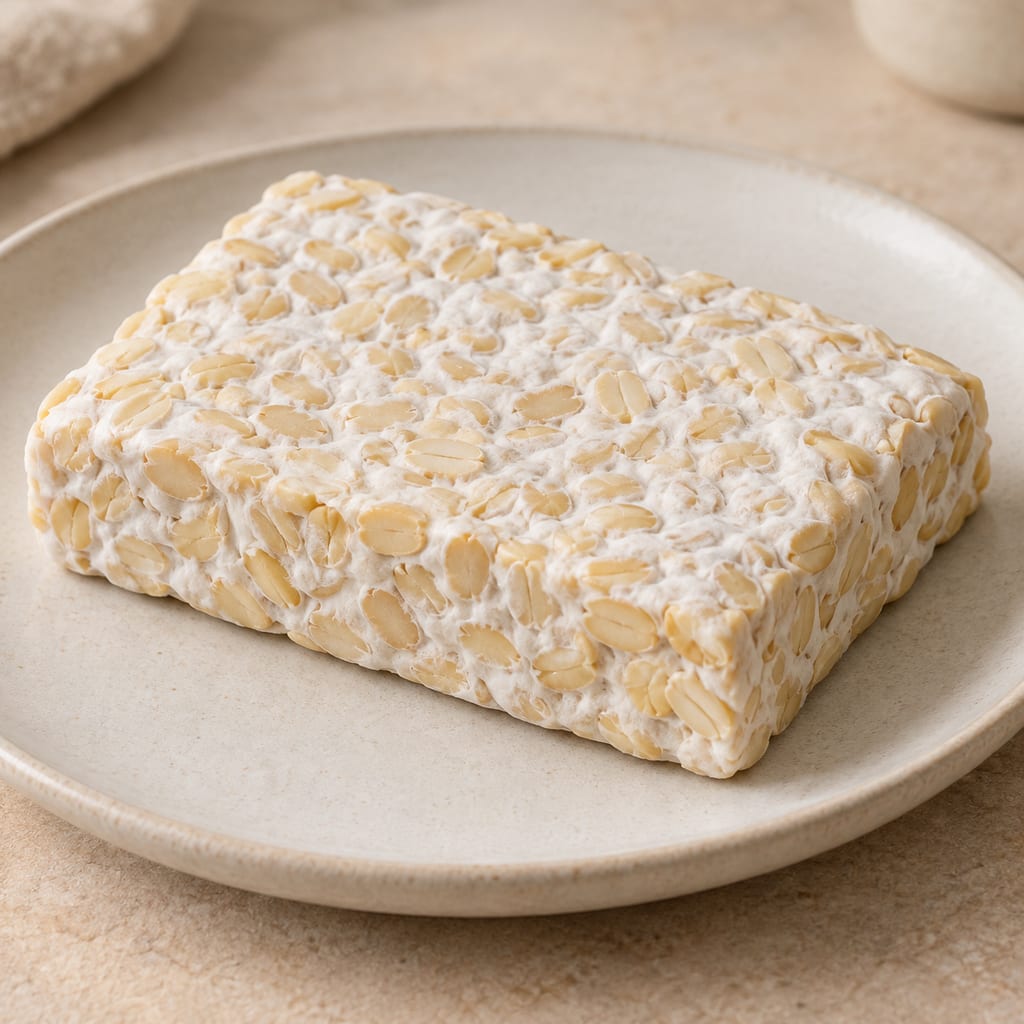
A two-cup soybean batch uses one Cultures for Health tempeh starter packet and vinegar. The supplier describes dehulling, a thin vented layer, controlled early incubation and attention to self-heating; it is not a validated home process.
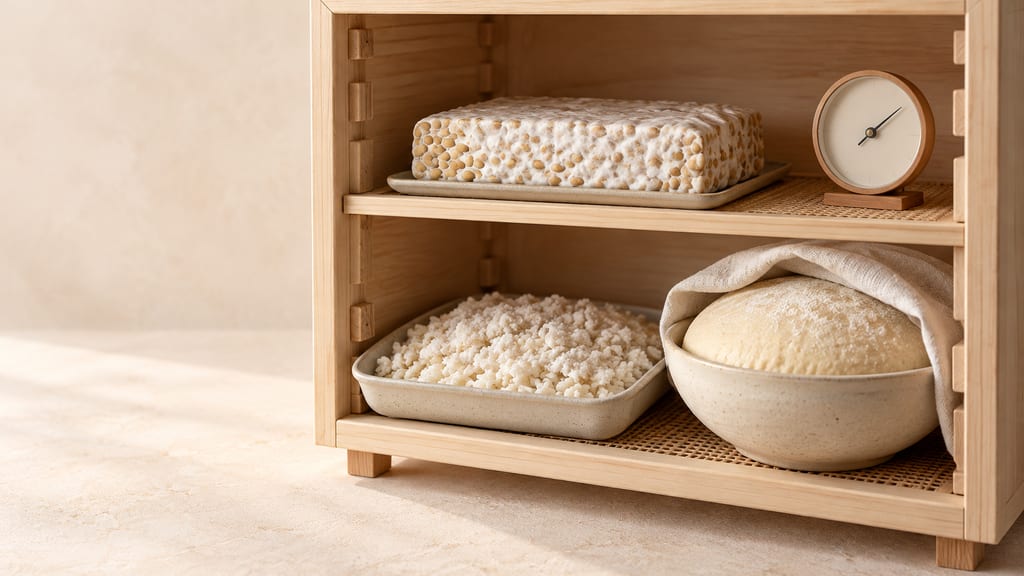
A proofer, a dehydrator with its trays out or an old fridge on a controller can keep cultures at a steady temperature. Whether it works depends on what sits inside: a lidded jar, a vented bag, a shallow tray or a crock.

Soft, spreadable Calabrian pork sausage made with a great deal of red chilli and fatty pork, stuffed into natural casings, sometimes smoked and matured while staying soft.

A way to add independent temperature logging to an existing food dehydrator without changing its built-in controls or protections. It is a monitoring method, not a rewiring plan.

Pleurotus cystidiosus is the abalone mushroom, a cultivated oyster-type fungus with dark brown caps that grows more slowly and is more demanding than other Pleurotus species.

A dark, balanced vinegar from Emilia-Romagna made by combining cooked or concentrated grape must with wine vinegar, then acetifying and refining it in wood under a protected specification.

A living dairy inoculum that starts controlled cream fermentation, developing acidity and aroma before sour cream or cultured butter is finished.

A small electric incubator holds jars at a selected temperature for yogurt and other documented warm food preparations. Controls, capacity and vessel arrangement vary by model.

Adygean salt is a seasoned table salt associated with Adygea and the wider North Caucasian culinary tradition. Salt is blended with garlic and a variable selection of herbs and spices; the exact mix depends on the named style and maker.

The African Caesar-group mushroom, Amanita masasiensis, is a wild ectomycorrhizal species of central and southern African woodlands, eaten locally. The genus contains deadly poisonous species, so identification needs care.
No community contributions have been published for this entry yet.
Sign in to contribute. Published comments and photos are free to read.
King Arthur BakingBread proofing · Temperature · Alternatives
What is proofing bread? And how do I get it right?King Arthur describes bulk fermentation and final proof as rests whose timing depends on the dough and environment.
The article lists a controlled proofing box among several warm places and gives 72–78 °F as its baker's preference for the dough discussed, not a universal setting.
Cited in: A warm place for dough; Use the method, not a borrowed dial setting
Nordic Food LabAdapted form · Temperature control
Home MadeA Nordic Food Lab post describes an insulated thermal box with electric underfloor heating connected to a separate Auber PID controller; it held garum, solid-state vinegar and barley trials.
The post documents an improvised fermentation setup, not a bread proofer model or a universal construction plan.
Cited in: Two distinct kinds of enclosure; Use the method, not a borrowed dial setting
Nordic Food LabConverted chamber · Limits
Koji – history and processThe lab describes a separate koji chamber made from an upright refrigerator switched off and fitted with a heating mat and probe on a PID controller; it is another distinct adapted chamber, not a bread proofer.
Cited in: Two distinct kinds of enclosure; Use the method, not a borrowed dial setting
Brød & TaylorProduct example · Limits · Heat transfer
Support: Folding Proofer & Slow Cooker specifications and FAQBrød & Taylor describes its folding proofer as plate-heated, calibrated to food in containers rather than air, and heater-only; those details are model-specific.
Cited in: Two distinct kinds of enclosure; Use the method, not a borrowed dial setting
Brød & Taylor UKProduct example · Form
Folding Proofer & Slow CookerThe manufacturer product page identifies a folding countertop proofer; the live linked photograph shows its form.
Cited in: Two distinct kinds of enclosure