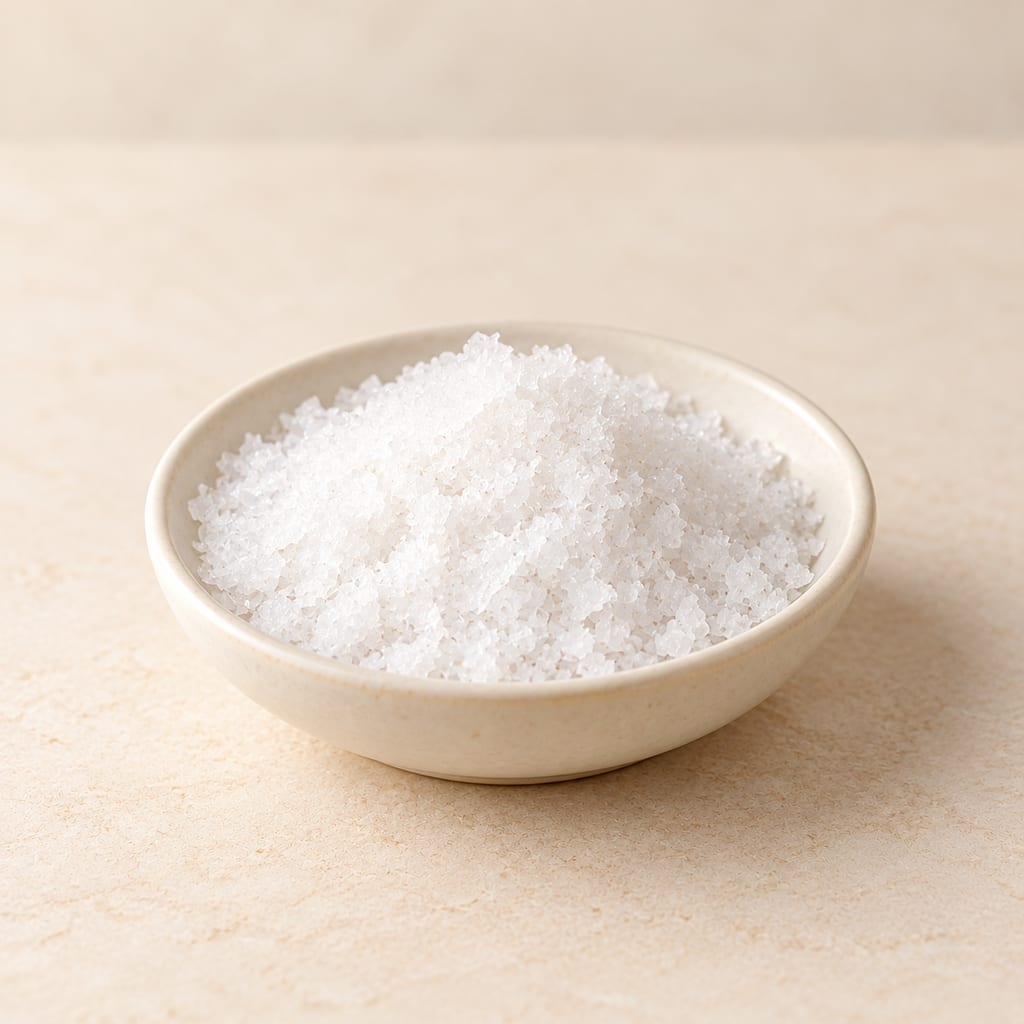
Kosher salt
Coarse cooking salt named for its use in koshering meat. Its flakes vary by maker, so crystal shape, additives and the recipe’s unit all matter.
 FermenteaWhere food goes to change
Mushrooms
A red-and-yellow bolete described from Michigan and also listed in Mexican fungal records. Historical sources classify it as food, but its species limits, Mexican range and safe food use need careful qualification.
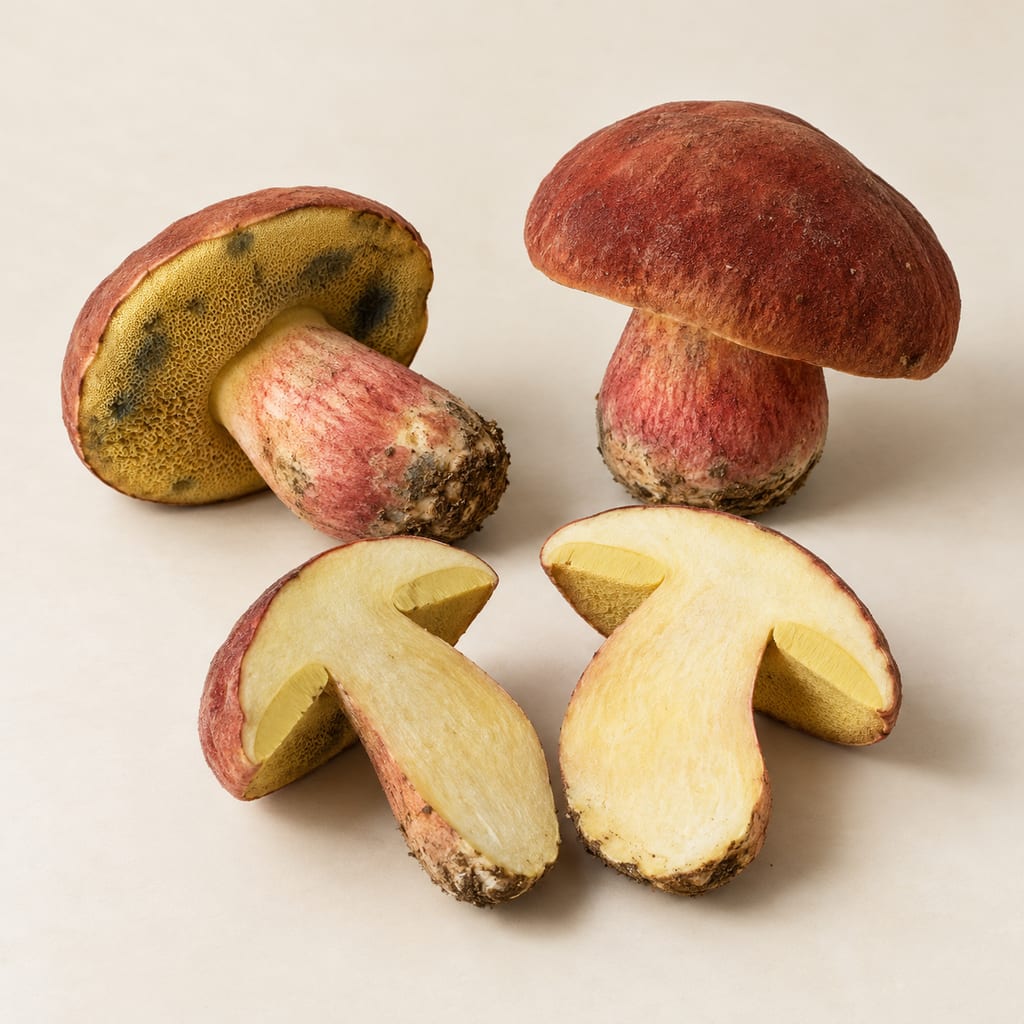
Boletus bicoloroides A.H. Sm. & Thiers was published in The Boletes of Michigan in 1971. Index Fungorum records that name as current and gives its type locality as Michigan. A contemporary North American bolete key distinguishes it from the similar B. bicolor by much larger, amyloid spores; field appearance alone may not reliably separate them. This distinction matters because older records sometimes use names broadly, and database appearances are not themselves proof that every collection has been correctly determined.
The Mexican biodiversity authority’s taxon account lists B. bicoloroides as native and reports literature distribution in Michoacán de Ocampo and San Luis Potosí. That is meaningful occurrence evidence, but the record does not explain whether Mexican collections were checked against the Michigan type concept or modern sequencing. A Mexican fauna study also carries the name in a species list. Those records should not be silently merged into the Michigan concept without examining the voucher material.
Descriptions of the North American taxon characterize a substantial bolete with a red cap and largely red stem, yellow pores and yellow flesh. The pores or exposed flesh can turn blue, sometimes slowly. Microscopic spore features, not a photograph or a single color reaction, carry much of the distinction from B. bicolor. A specialist East Coast account itself notes debate over whether all collections called bicoloroides represent a separate species, and records Michigan as the clearest locality. The mushroom’s common-name status is unsettled; using the scientific name avoids implying that “bicolor bolete” identifies it securely.
Eric Boa’s FAO global review lists B. bicoloroides as “food” in its worldwide list and includes a Mexico record in its country annex, attributed in that annex to a Mexican government information source. The FAO text explains that it distinguishes “food” from a literature source that only calls a species edible, while warning that its entries retain names as used in original sources and are not endorsements. UNAM’s Mexican wild-fungi site also includes B. bicoloroides in its list of fungi traditionally consumed in Mexico. Together these establish documented food classification and a Mexican cultural-food listing, but the sources here do not provide a preparation method, named local language, market chain, or state-specific dish for this taxon.
No evidence gathered supports using this mushroom in fermentation. No drying, preservation, storage or cooking protocol is established for B. bicoloroides itself in the reviewed sources, so this page does not invent one or borrow a recipe from another bolete.
A species-specific Mexican fruiting season was not established. MycoPortal preserves North American records identified as B. bicoloroides collected in Missouri on 3 August, 15 August and 6 October 2013; these are dated records, not a complete seasonal study and not evidence for Mexican phenology. The Mexican authority’s reported states are Michoacán de Ocampo and San Luis Potosí. The nomenclatural type locality is Michigan, and its specimen records include late-summer dates, but no precise state-by-state range should be inferred from those examples.
This is not an identification or foraging guide. Mexico’s federal health authority warns that lookalike wild mushrooms can cause serious and sometimes fatal poisonings, advises against gathering for consumption, and recommends obtaining wild mushrooms from expert community vendors. The UNAM species resource says it must not be used to identify mushrooms in the field for eating and directs consumers toward experienced local hongueros. These cautions apply regardless of historical food listings. A field photograph, app result or this page cannot establish a specimen’s identity.
Reported taxon distribution in CONABIO literature records; this does not independently establish local food use or reconcile the taxon concept with its Michigan type.
Reported taxon distribution in CONABIO literature records; this does not independently establish local food use or reconcile the taxon concept with its Michigan type.
FAO and UNAM list this name in food-use contexts; neither source here ties a specific preparation to the two CONABIO state records.
Nomenclatural type locality, not evidence that Michigan is the species’ complete range.
Coarse cooking salt named for its use in koshering meat. Its flakes vary by maker, so crystal shape, additives and the recipe’s unit all matter.
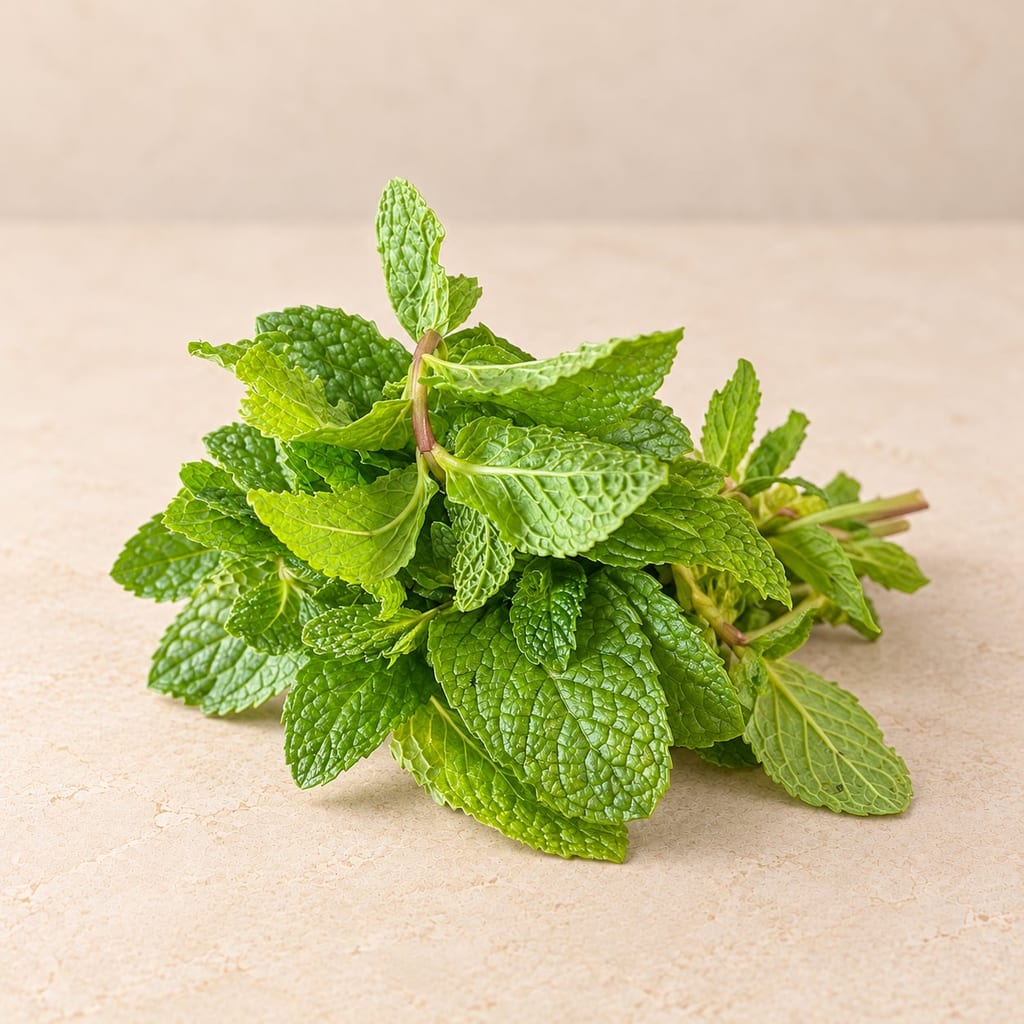
Mint is the fresh leaf of aromatic Mentha plants, chiefly spearmint and peppermint. It gives chutneys, yoghurt sauces and fermented drinks a cool, sweet, green note.
No community contributions have been published for this entry yet.
Sign in to contribute. Published comments and photos are free to read.
Index Fungorum / Royal Botanic Gardens, KewTaxonomy
Boletus bicoloroides A.H. Sm. & Thiers, name recordAccepted/current name; authority; publication reference and type locality Michigan.
Cited in: A named bolete with a narrow and unsettled identity; What the regional descriptions establish
CONABIO / EncicloVidaTaxonomy · Distribution
Boletus bicoloroides — taxon authority recordStatus listed as valid and native; literature distribution lists Michoacán de Ocampo and San Luis Potosí.
Cited in: A named bolete with a narrow and unsettled identity; Season, places and safe interpretation
Food and Agriculture Organization of the United NationsFood use
Wild edible fungi: A global overview — Annex 3Lists Boletus bicoloroides under the use category food; FAO explains that entries preserve source names and do not imply endorsement.
Cited in: Food records and their limits
Food and Agriculture Organization of the United NationsFood use
Wild edible fungi: A global overview — Annex 2 country recordsMexico list includes Boletus bicoloroides as food attributed to source 8; the record does not provide a species-specific dish or method.
Cited in: Food records and their limits
Instituto de Biología, Universidad Nacional Autónoma de MéxicoFood use · Safety
Hongos silvestres consumidos tradicionalmente en MéxicoLists Boletus bicoloroides among fungi traditionally consumed; linked site warns against using its information as field-identification advice and recommends expert community vendors.
Cited in: Food records and their limits
MushroomExpert.ComTaxonomy · Identification
Boletus, Page SixNorth American key distinguishes B. bicoloroides by amyloid 14–17 micrometre spores and identifies it as rare, recorded from Michigan.
Cited in: A named bolete with a narrow and unsettled identity; What the regional descriptions establish
Boston Mycological Club Bulletin 71(2)Taxonomy · Identification
Baorangia/Boletus bicolor and Look-Alikes: A Study of East Coast SpeciesSpecialist account describes bicoloroides and reports debate over whether it is distinct; notes Michigan as core locality and possible New England records.
Cited in: What the regional descriptions establish
Mycology Collections PortalSeason · Distribution · Image source
Boletus bicoloroides taxon media and occurrence portalTaxon page links 24 media and observation/collection records; profiles include dated Missouri observations on 3 August, 15 August and 6 October 2013.
Cited in: Season, places and safe interpretation
Secretaría de Salud, Gobierno de MéxicoSafety
Riesgo de recolectar y consumir hongos silvestresGeneral wild-mushroom advice: avoid gathering for consumption; buy from expert community vendors; lookalike errors can cause severe or fatal poisonings.
Cited in: Season, places and safe interpretation
Universidad Nacional Autónoma de MéxicoTaxonomy · Distribution
Los hongos de la familia Boletaceae sensu stricto de MorelosMexican bolete thesis includes B. bicoloroides in its taxon list and illustrates microscopic structures from a cited collection.
Cited in: A named bolete with a narrow and unsettled identity
Instituto de Biología, Universidad Nacional Autónoma de MéxicoSafety
Hongos silvestres comestibles y tóxicos de MéxicoSite-level warning says it is not for field identification and recommends expert community vendors for safe consumption.
Cited in: Season, places and safe interpretation