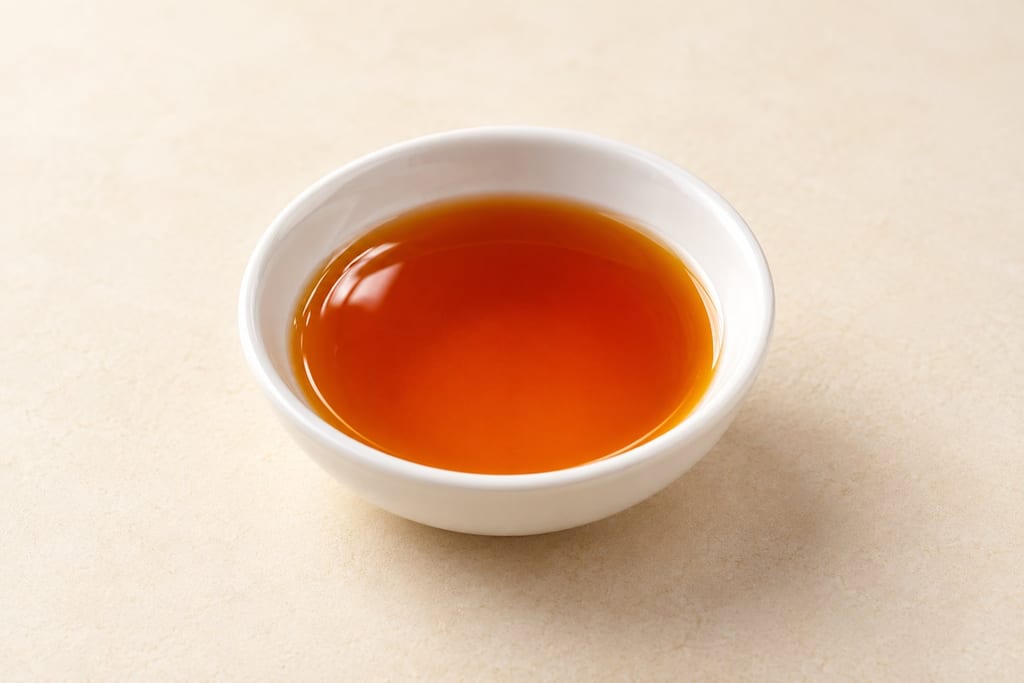
Fish sauce
Fish sauce is a clear, salty seasoning made by maturing fish with salt and drawing off the liquid. The broad family includes distinct regional sauces rather than one interchangeable method.
 FermenteaWhere food goes to change
Traditional method
Kimchi
Summer water kimchi of young radish, seasoned with fish sauce and chiles, brined in salted water with cooked flour.
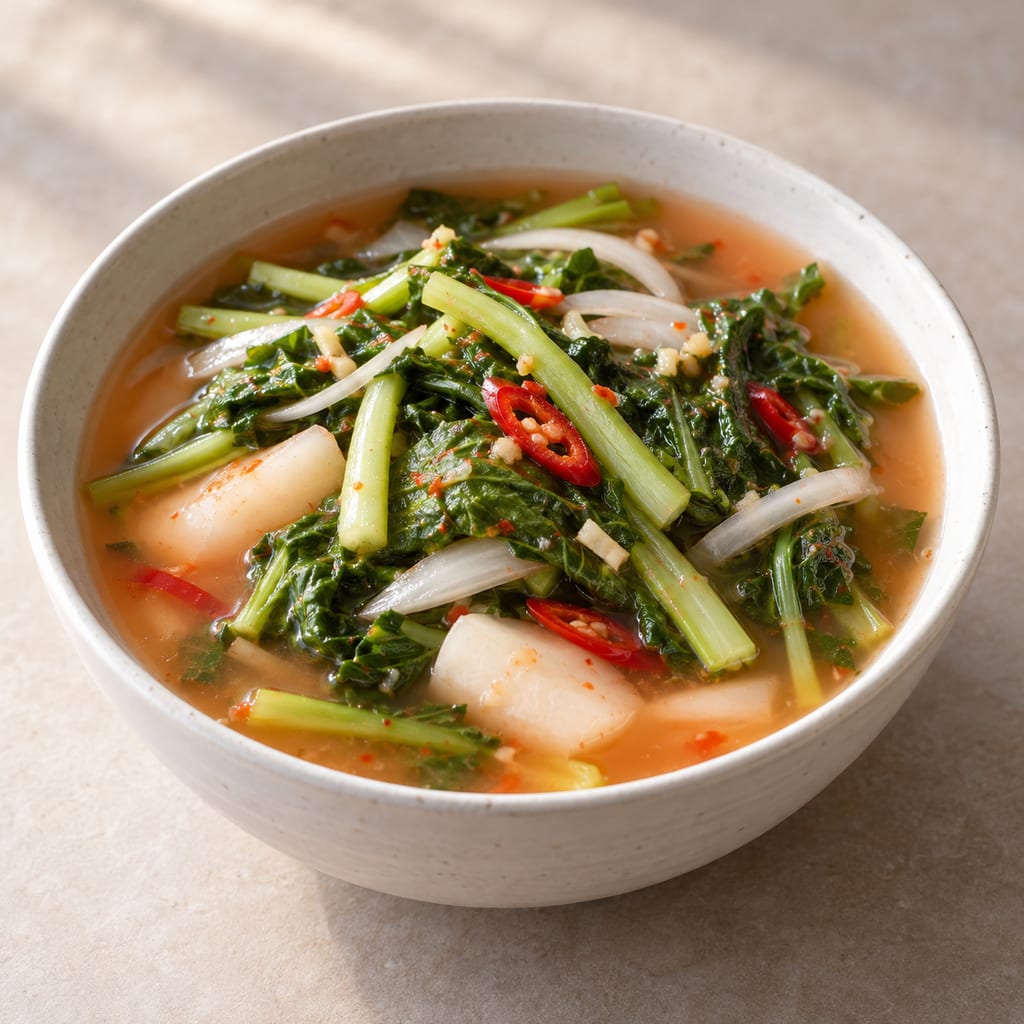
Yeolmu mulkimchi is a Korean water kimchi made with tender young radishes and their leafy tops. Unlike thickly seasoned cabbage kimchi, it contains a generous amount of lightly seasoned liquid that becomes an essential part of the finished dish.
The name combines yeolmu, young summer radish, with mul, water, and kimchi.
The plant is a young form of cultivated radish, Raphanus sativus. Depending on the cultivar and growing conditions, the edible root may be small while the leaves and stems remain relatively tender.
Yeolmu is harvested before the plant develops the large, mature storage root associated with ordinary Korean radish, or mu.
The leaves, stems and small roots are used together.
The dish has a refreshing, lightly spicy character. Its broth can be clear, cloudy or reddish depending on the seasonings and preparation.
At the table, the vegetable and its liquid may be served together, often chilled. It is particularly popular in summer, when a cold, sour vegetable dish offers contrast to hot weather and richer cooked foods.
The batch presented here uses fish sauce, fresh chilies, a little gochugaru, garlic, ginger, onion and a cooked flour porridge.
The result differs significantly from dry-packed kimchi. Most of the seasoning is distributed through the liquid instead of remaining only on the vegetable surfaces.
Water kimchi belongs to a long Korean tradition of preserving vegetables in salted liquid.
Historical Korean vegetable-preservation practices preceded today's familiar chili-rich kimchi, and not every kimchi variety has always contained red pepper.
However, the existence of early salted vegetables does not establish a precise origin date for the contemporary dish known as yeolmu mulkimchi.
The modern form is documented in Korean household cooking and culinary publications, and a complete measured recipe was published online in 2008.
Yeolmu is particularly associated with summer because young radish greens can be harvested and used before the crop develops tougher leaves and large roots.
The dish is strongly connected with everyday meals, especially barley-rice preparations and cold noodle dishes.
Different families prepare versions that are comparatively clear and mild or darker and hotter from chili seasoning.
There is no basis for assigning the entire tradition to one Korean province. The current record correctly identifies Korea without making a narrower geographical claim.
Main ingredient — 4 lb young summer radish
Salting — 1 hour, turning after 30 minutes
Vegetable cutting length — About 5 cm
Porridge — 1 tbsp flour in 1 cup water
Seasoned water — 8 cups water, 2–3 tbsp kosher salt
Fermentation — Optional couple of days at room temperature
Finished yield — Not given
Exact fermentation temperature — Not given
The recipe may be eaten immediately. Fermentation is optional rather than a necessary preliminary stage before consumption.
Young summer radish (yeolmu) — 4 lb — Cleaned, roots and leaves retained
Kosher salt for preliminary salting — ½ cup — Distributed through vegetables
Plain flour — 1 tbsp — For porridge
Water for porridge — 1 cup — Heated with flour
Sugar — 1 tbsp — Added to porridge
Onion — 1 cup — Thinly sliced
Ginger — ½ tbsp — Minced
Garlic — 4 cloves — Minced
Red chili peppers — 2–3 — Chopped
Green chili peppers — 2–3 — Chopped
Gochugaru — 2 tbsp — Korean red-pepper flakes
Fish sauce — ¼ cup — For seasoning
Purified water — 8 cups — For kimchi liquid
Kosher salt for liquid — 2–3 tbsp — Dissolved into water
The existing record lists the chili quantity as unspecified. The full original recipe supplies the 2–3 red and 2–3 green peppers, together with 2 tablespoons gochugaru.
It also distinguishes the preliminary salting from the salt subsequently added to the water. These must not be merged into a single unqualified quantity.
Young radish provides the characteristic combination of tender leaf tissue, slightly crisp stems and mild radish pungency.
Radish flavor comes partly from glucosinolates and the compounds formed when plant enzymes act on them after tissue damage.
Mustard- and radish-family plants contain these compounds in different proportions, helping explain why young radish kimchi has a different flavor from cucumber or cabbage kimchi.
Salt serves two roles.
During the preliminary salting stage, it draws some moisture from the vegetable tissue and changes its texture. The excess is subsequently rinsed away.
Salt added to the final liquid contributes to the fermentation environment and to the taste of the broth.
The flour porridge thickens the liquid slightly. Gelatinized starch also affects mouthfeel and can provide additional carbohydrate to the fermentation system.
Sugar contributes immediate sweetness and may provide fermentable substrate.
Fish sauce supplies salt and soluble savory compounds. In this relatively dilute form of kimchi, it helps prevent the broth from tasting like plain salty water.
Garlic, ginger, onion and chili build aroma.
Their role is not exclusively culinary. Vegetable and aromatic ingredients carry different microbial populations, and their inclusion can influence the fermentation community.
The water itself must be suitable for consumption and preparation.
Since the final broth is drunk or spooned directly, poor-quality water cannot be corrected by later cooking.
Use a large washing bowl, a colander, a saucepan, a mixing bowl and a clean food-grade container large enough to hold both the vegetables and the substantial liquid volume.
A ladle is useful for serving.
The container should accommodate gas produced during fermentation. An appropriate fermentation lid or other safe venting arrangement helps avoid pressure buildup.
Use a calibrated food pH meter for process monitoring if the intention is to ferment rather than serve immediately.
1. Clean and sort the radish.
Remove damaged leaves, soil and deteriorated plant material. Trim the roots as required, but retain the edible small radish portions.
Wash gently because young radish leaves bruise easily.
Excessive rough handling can break the stems and produce a less attractive finished texture.
2. Cut into pieces.
Cut the plants into approximately 5 cm lengths, keeping sections of leaf, stem and root together where practical.
Place them in a large bowl with cold water, loosen remaining dirt, then drain.
3. Salt the vegetables.
Distribute ½ cup kosher salt over the prepared radish.
Leave for 30 minutes, then carefully turn the vegetables.
Continue salting for another 30 minutes, making 1 hour in total.
Avoid crushing the leaves during turning.
4. Rinse and drain.
Rinse the salted radish thoroughly to remove grit and excess salt.
Drain in a colander.
This stage makes the subsequent broth calculation more complicated than simply adding all of the listed salt together, because an unmeasured portion of the first salt addition leaves with the rinse water.
5. Cook the flour porridge.
Combine 1 tablespoon flour and 1 cup water in a saucepan.
Heat over medium heat, stirring occasionally until the mixture thickens.
Add 1 tablespoon sugar, remove from the heat and cool.
No exact heating duration is given for this particular recipe.
6. Prepare the aromatics.
Thinly slice 1 cup onion.
Mince ½ tablespoon ginger and 4 garlic cloves.
Chop 2–3 red and 2–3 green chili peppers.
Keep the ingredients in a large mixing bowl.
7. Make the first seasoning.
Add 2 tablespoons gochugaru, the cooled flour porridge and ¼ cup fish sauce to the aromatics.
Mix until the ingredients are evenly distributed.
This preparation provides flavor throughout the radish before the additional liquid is introduced.
8. Coat and pack the radish.
Add the drained vegetables and mix gently.
Transfer the seasoned radish to a suitable food-grade container.
Avoid excessive compression: the finished dish is intended to contain ample liquid and recognizable vegetable pieces.
9. Prepare the water seasoning.
Mix 8 cups purified water with 2–3 tablespoons kosher salt.
Alternatively, boiled water may be used after it has cooled.
Stir until the salt dissolves, then pour over the radish and mix.
Do not assume that the two stated salt quantities are interchangeable; the second is added after the earlier salting and rinsing.
10. Serve or ferment.
The water kimchi can be served immediately.
Alternatively, the recipe permits a couple of days at room temperature for fermentation before refrigeration.
No numerical temperature is provided, and the fermentation duration is approximate. A controlled ferment should be monitored for acidity rather than relying on time or bubbles alone.
11. Chill and serve.
Refrigerate after preparation or when the intended fermentation stage has been achieved under appropriate controls.
Serve the vegetables with their seasoned liquid.
Ice cubes may be added to individual bowls when a particularly cold serving is wanted.
The underlying process is lactic-acid fermentation.
Microorganisms on radish leaves, garlic and other ingredients can metabolize the available sugars and produce organic acids.
Important kimchi-associated bacterial groups include Leuconostoc, Weissella and lactobacilli.
The specific species and their proportions depend on the original ingredients and conditions.
During successful fermentation, acid production changes the taste of the broth and makes the overall mixture less hospitable to many undesirable microorganisms.
Because water kimchi contains a large liquid fraction, the fermentation environment differs from a thickly seasoned paste.
Substances released from the vegetables can diffuse through the liquid.
Salt also distributes through the broth, although its concentration may continue to change as vegetable water and dissolved components equilibrate.
Fermentation can produce carbon dioxide, contributing slight effervescence.
Some microorganisms produce additional aroma compounds, which explain why fermented kimchi liquid tastes different from water seasoned with vinegar and chili.
The sourness is generated biologically from vegetable and added carbohydrates.
A vinegar pickle can imitate acidity but does not reproduce the same fermentation process.
The porridge contains starch that swells and gelatinizes during heating.
This changes the viscosity of the liquid and helps prevent every seasoning particle from separating immediately.
However, the final kimchi contains enough water that it remains a broth rather than a thick sauce.
The cooked starch may be broken down gradually by enzymes and microbial activity, although the precise contribution of this one tablespoon of flour has not been measured in the recipe.
It would be inaccurate to claim that adding flour guarantees acidification or makes the ferment safe.
Its primary documented role is in the traditional seasoning method.
Yeolmu mulkimchi can be comparatively mild or strongly colored with red chili.
Some versions rely more on fresh chilies and less on dried chili flakes.
Other household versions use rice porridge in place of wheat flour.
The presence or absence of fish sauce changes the flavor and dietary classification.
That substitution changes both salt delivery and umami character.
The water kimchi may also contain different proportions of onion and other vegetables, but the current batch preserves the measured original formulation.
Regional versions vary in broth color, acidity and the degree to which the young radish is softened.
There is no single historical recipe that can be used to judge every household's version.
Yeolmu mulkimchi is closely associated with summer meals.
Its bright sourness and cool liquid work particularly well alongside barley rice, or bori-bap.
A common serving combines barley rice, yeolmu kimchi, sesame oil and gochujang, often accompanied by doenjang stew.
The fermented vegetable can also be used with noodles.
Chilled yeolmu kimchi broth provides acidity and seasoning, while the leaves offer texture.
Unlike a densely packed cabbage kimchi that is served mostly as solid vegetables, the liquid should not be discarded automatically.
It is a deliberate part of the dish.
The flavor will change with fermentation. Fresh mulkimchi tastes brighter and more vegetal; fermented mulkimchi tastes sharper and more integrated.
The vegetables should retain recognizable stems and leaves rather than collapsing immediately into indistinct pulp.
Fresh batches may remain relatively green, although color changes naturally during salting and acidification.
The broth can develop mild cloudiness and gentle fermentation bubbles.
Increasing acidity is a more reliable process indicator than cloudiness or bubbling alone.
Excessive sliminess, obvious decay odor, uncontrolled surface growth or visible contamination are undesirable.
A liquid that simply tastes salty without developing adequate acidity should not be presumed safely fermented.
Because different amounts of salt are rinsed away during preparation, the final salt percentage cannot be calculated accurately from the ingredient list alone.
Fresh water kimchi should be refrigerated as a prepared vegetable dish.
For fermentation, use clean containers, safe water, appropriate vegetable handling and an established acidification process.
University of Minnesota Extension identifies pH 4.60 or lower as a general endpoint for completed produce fermentation, with bubbling stopped. This is a general fermentation criterion, not a validated process specification for this particular fish-sauce-containing recipe.
The original room-temperature method does not supply a numeric temperature or validated endpoint.
The kimchi is not a shelf-stable canned product.
Fish sauce creates an allergen concern; a vegetarian salt substitution must be assessed as a separate formulation.
Do not keep a failed batch merely because the liquid appears clear or tastes mildly sour.
Summer Korean water kimchi.
Scaling: source batch only
Poor brine coverage or inadequate acidity monitoring can allow spoilage; recipe-specific validated limits are not established.
Hazard sourceUse clean food-grade equipment, keep produce submerged and monitor acidity; no universal endpoint is supplied for this recipe.
Control sourceThe source supports this broad area and no precise location.
Fish sauce is a clear, salty seasoning made by maturing fish with salt and drawing off the liquid. The broad family includes distinct regional sauces rather than one interchangeable method.
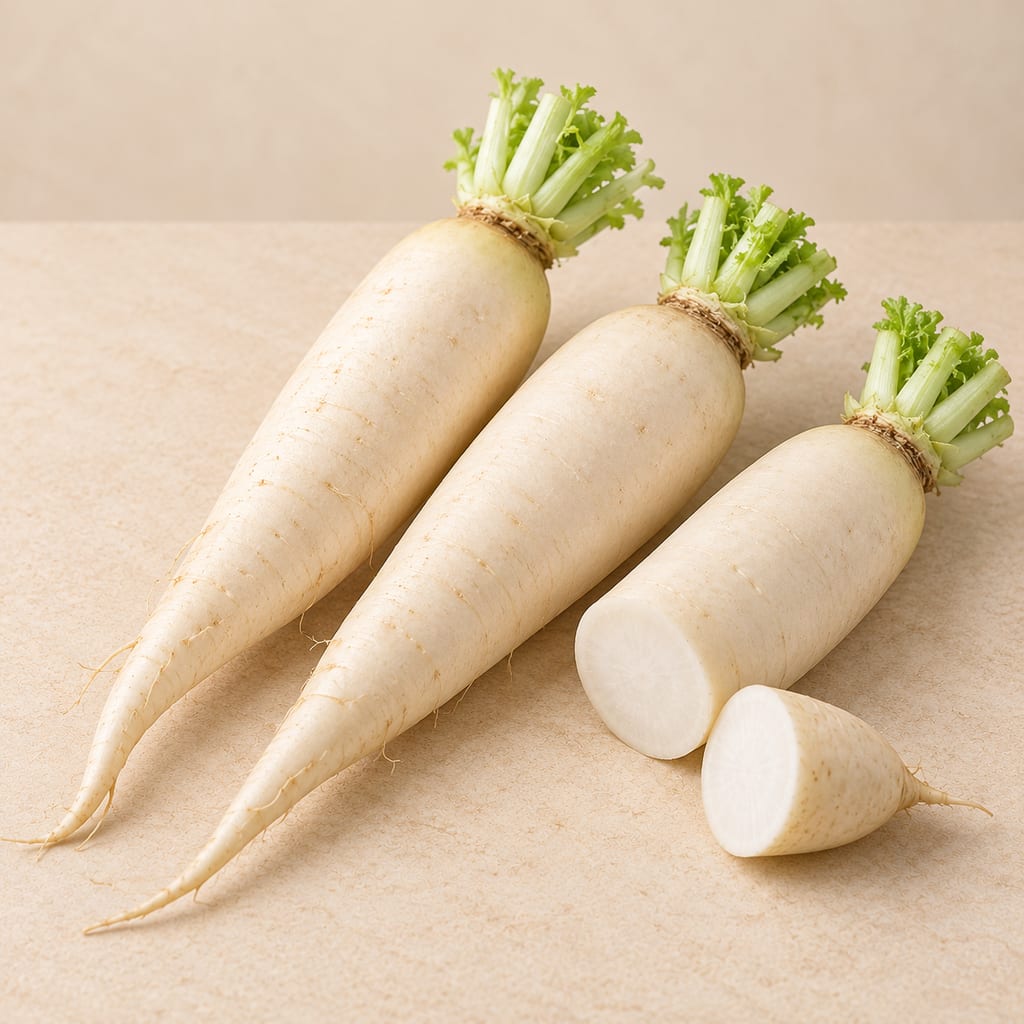
Radish and daikon are the crisp, peppery roots, leaves and seed pods of Raphanus sativus, fermented as kimchi, takuan and sinki and eaten raw across Asia and Europe.
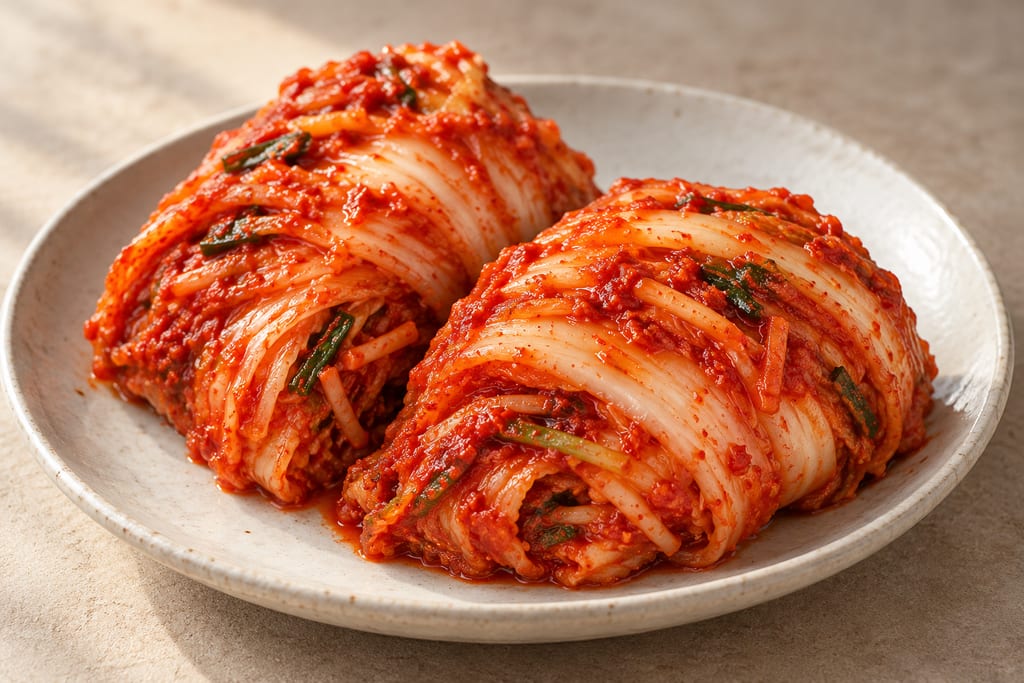
Napa cabbage salted, seasoned with a paste of gochugaru, garlic, ginger and salted seafood, and left to sour through lactic fermentation; Korea's everyday winter preserve.
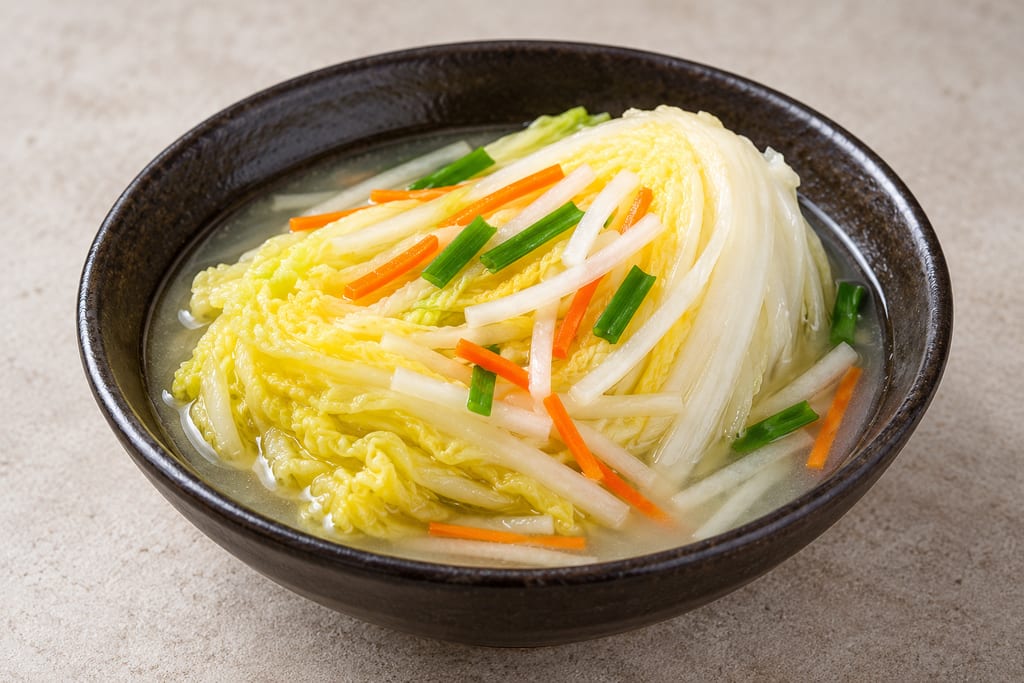
Napa cabbage is brined and filled with pear, radish, alliums, chives and fruit; this Korean kimchi omits red pepper flakes.
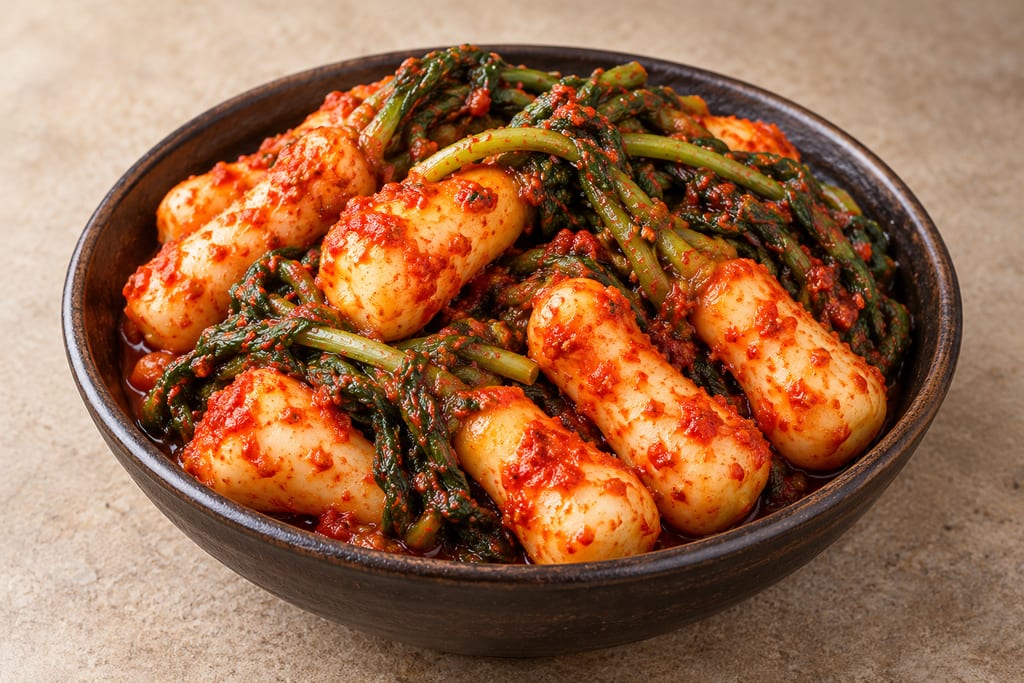
Small ponytail radishes keep their greens attached and ferment in a flour-and-chile seasoning paste.
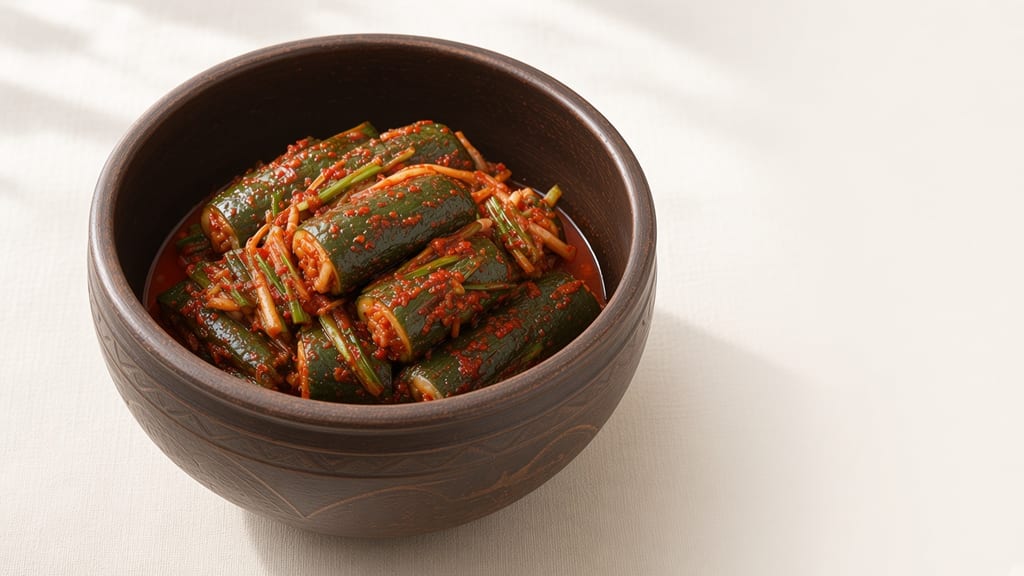
Hwanggwa damjeo is a cucumber kimchi from Yu Jung-rim's Jeungbo sallim gyeongje of 1766. Slit cucumbers are packed with chilli powder and garlic, scalded with hot salted water and sealed overnight.
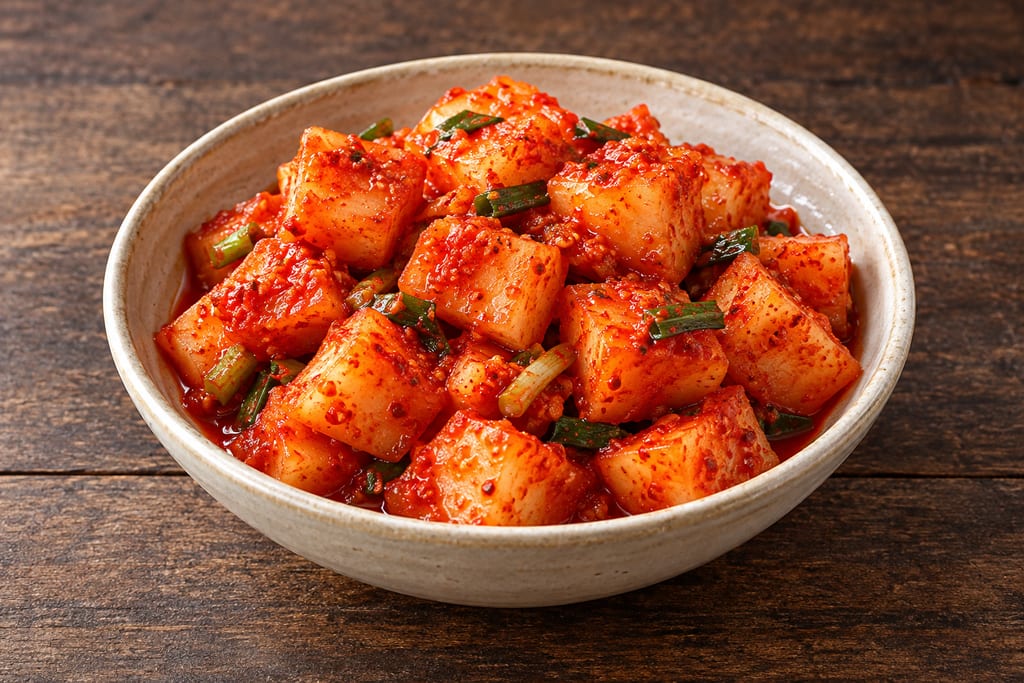
A radish kimchi cut into cubes and seasoned with gochugaru, fish sauce, garlic and ginger, eaten fresh or fermented a few days at room temperature.
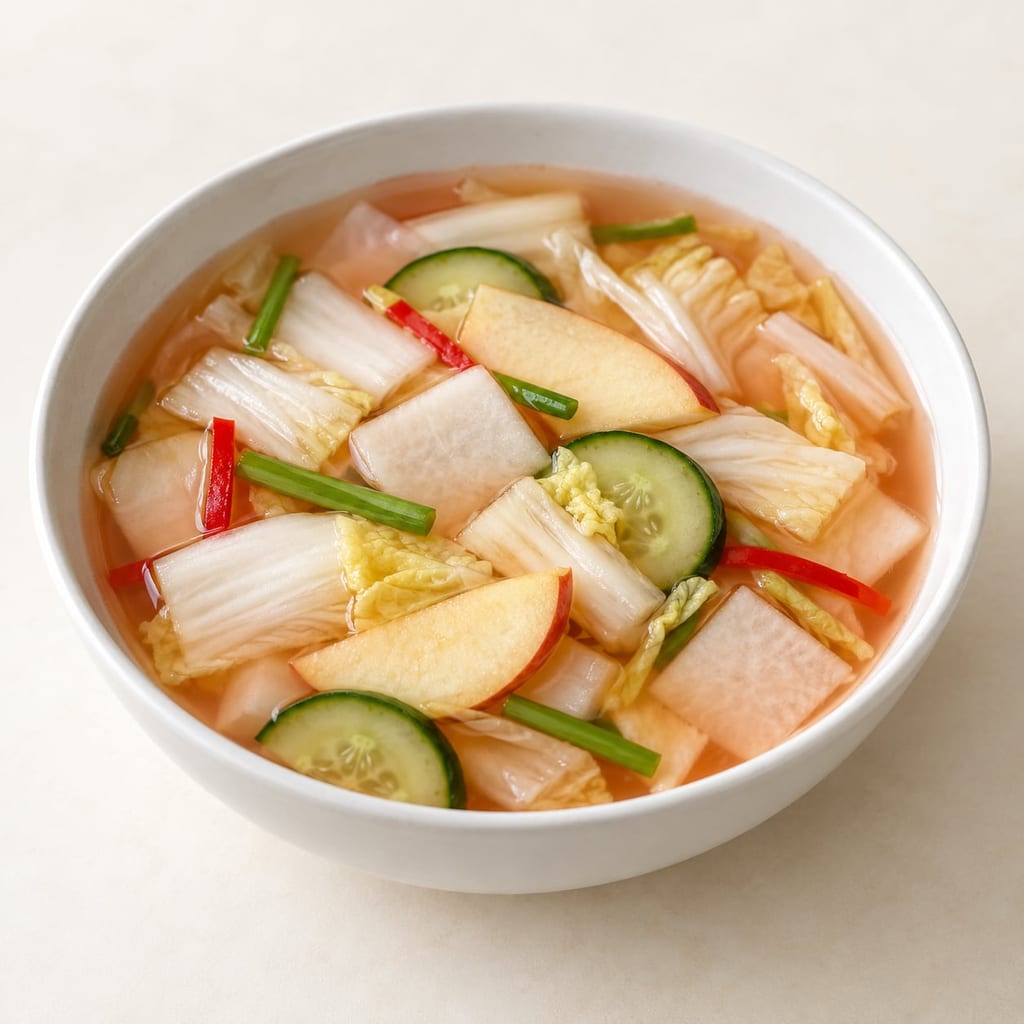
Napa cabbage and radish ferment in a rose-coloured broth with cucumber, apple, pear, alliums and chile.
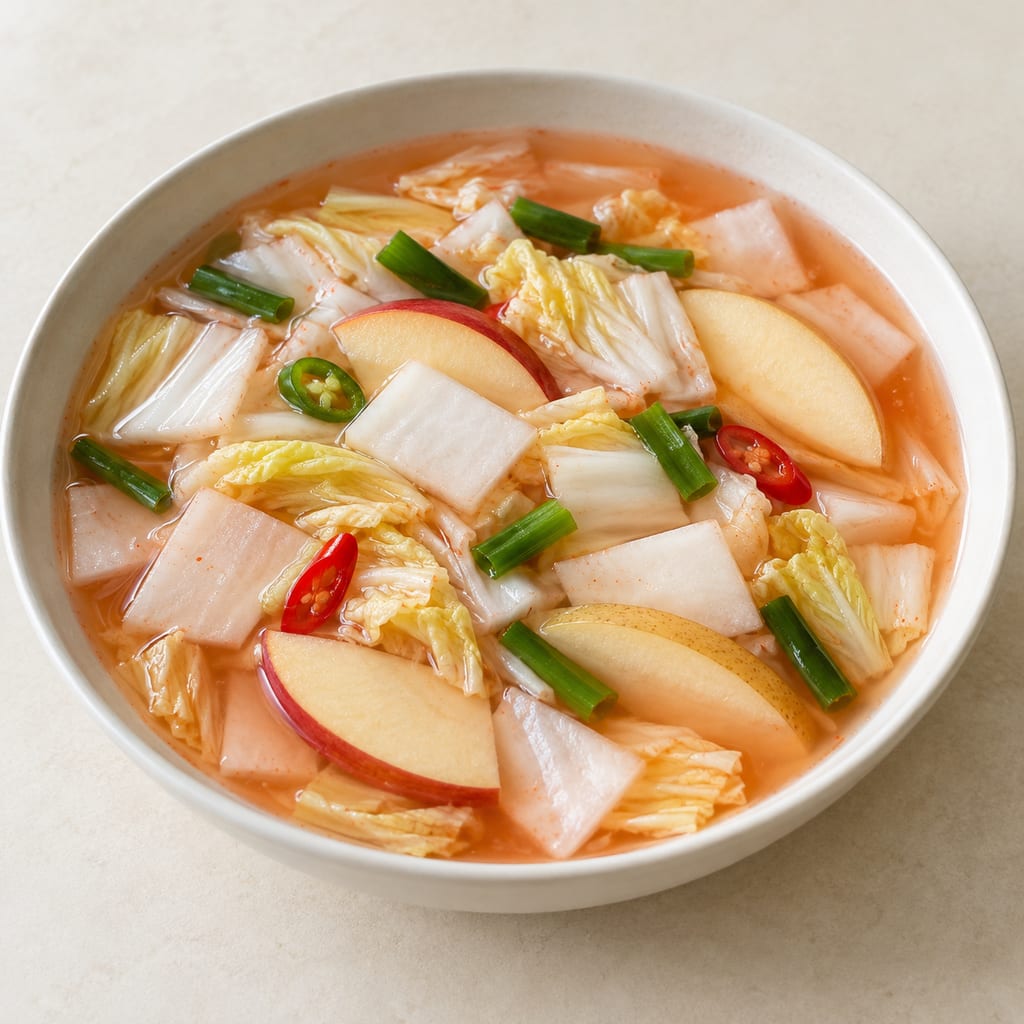
Cabbage-and-radish water kimchi with pear, apple and strained chili broth, following one Korean creator’s batch.
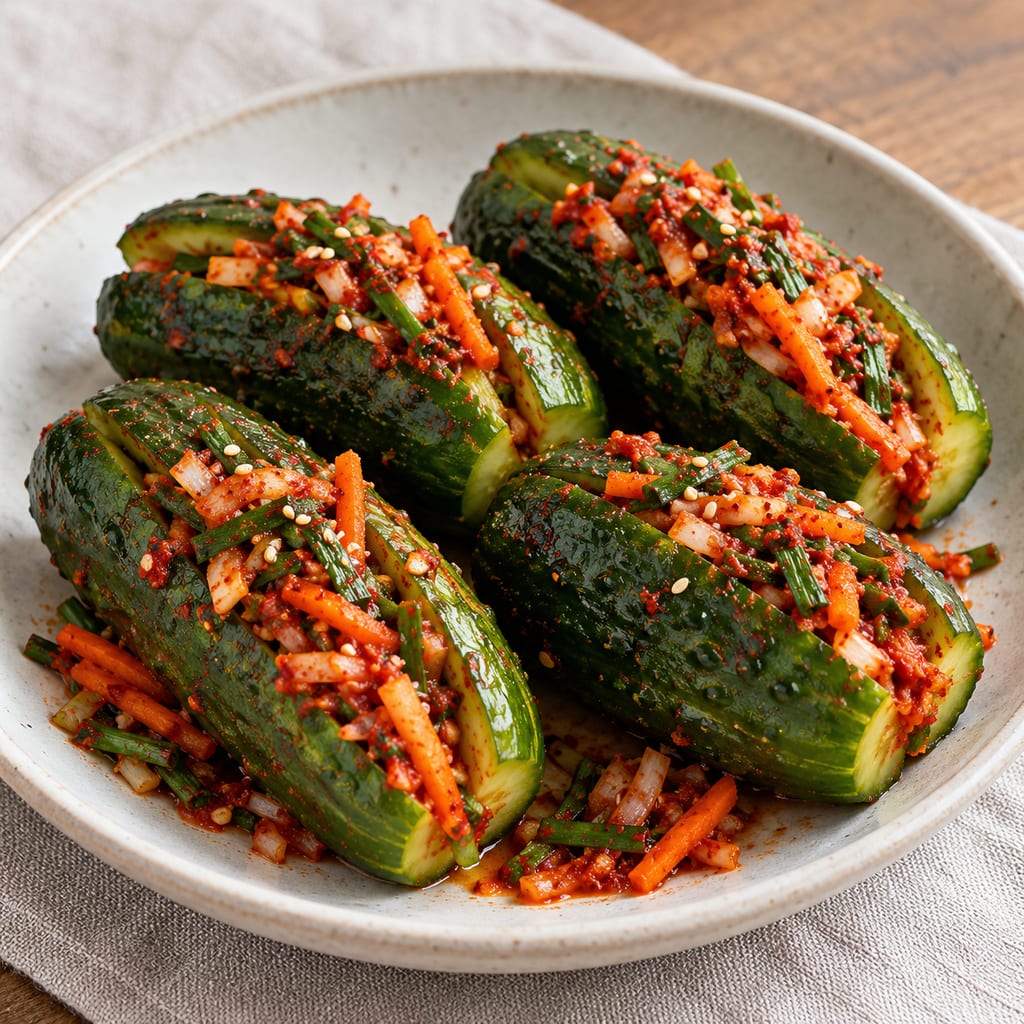
Oi-sobagi is a Korean stuffed cucumber kimchi: salted cucumbers slit and filled with a chive-and-chilli seasoning, eaten fresh or left to ferment.
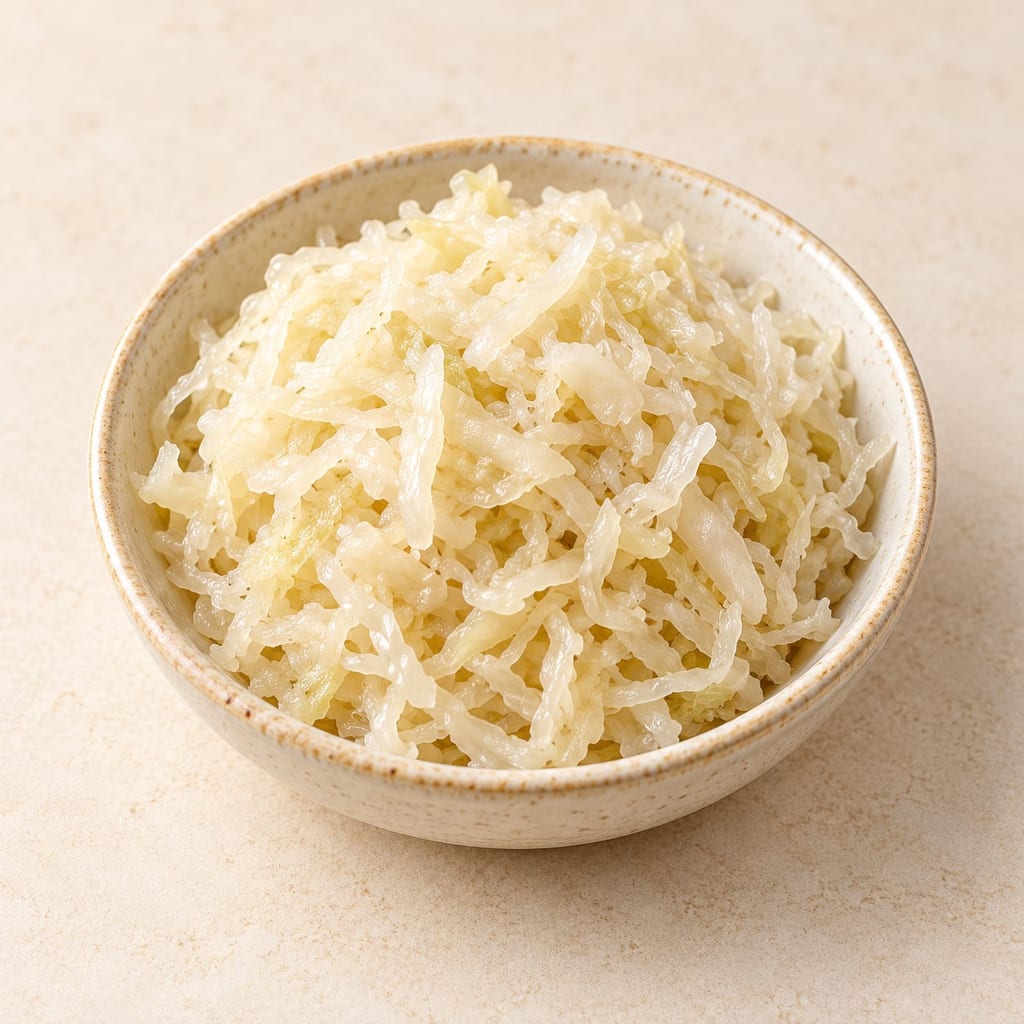
Finely cut cabbage fermented with salt in vats by natural lactic fermentation, a protected Alsatian product sold raw or cooked after fermentation.
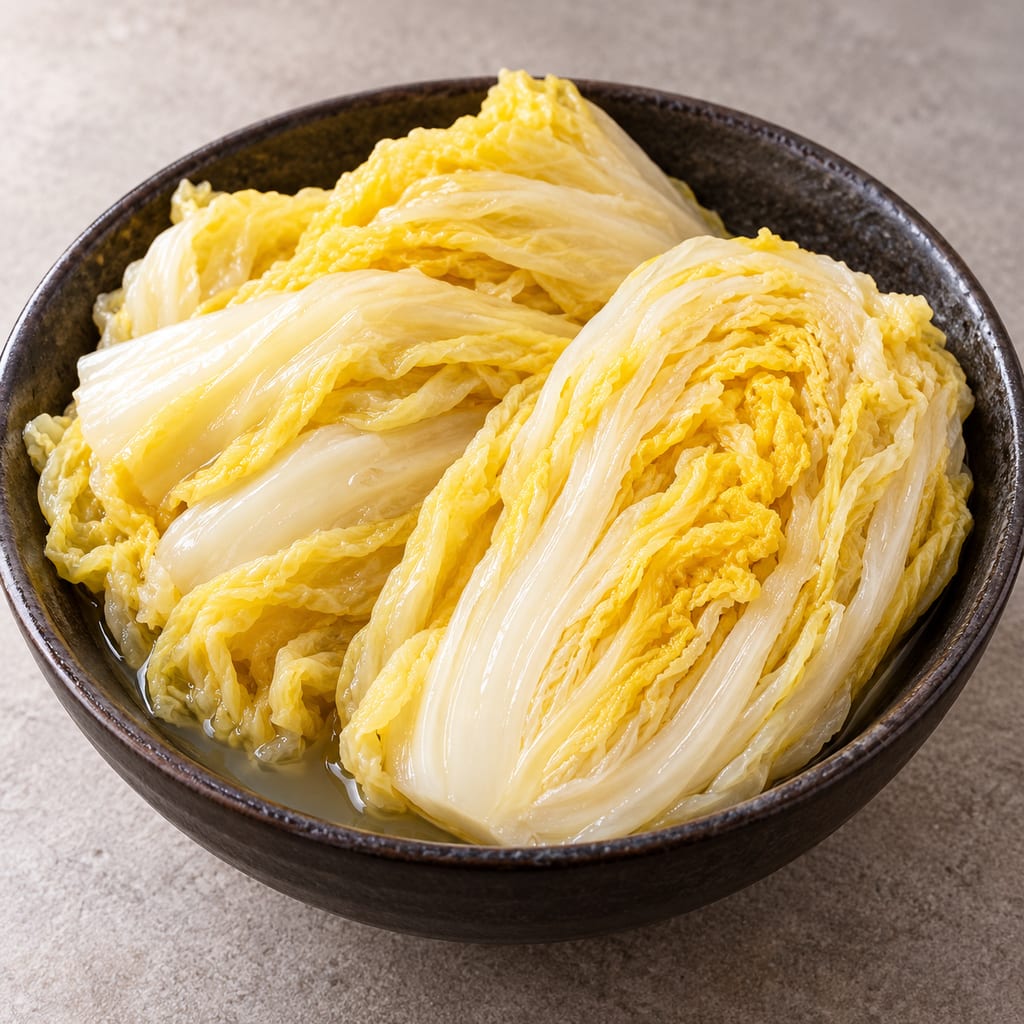
Napa cabbage fermented in a salt brine in Northeast China, traditionally in large ceramic or glass jars, until it turns sour.
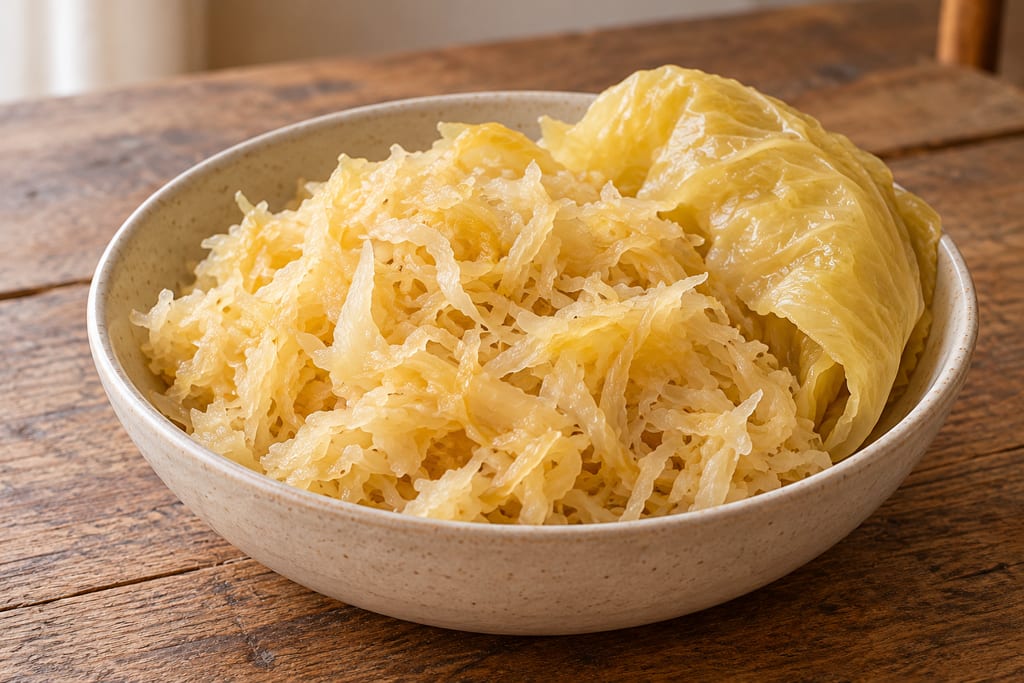
Serbian sour cabbage from the Futog area, made from the autochthonous Futoški cabbage population and registered as a protected product in 2008. It is a subset of general Serbian kiseli kupus.
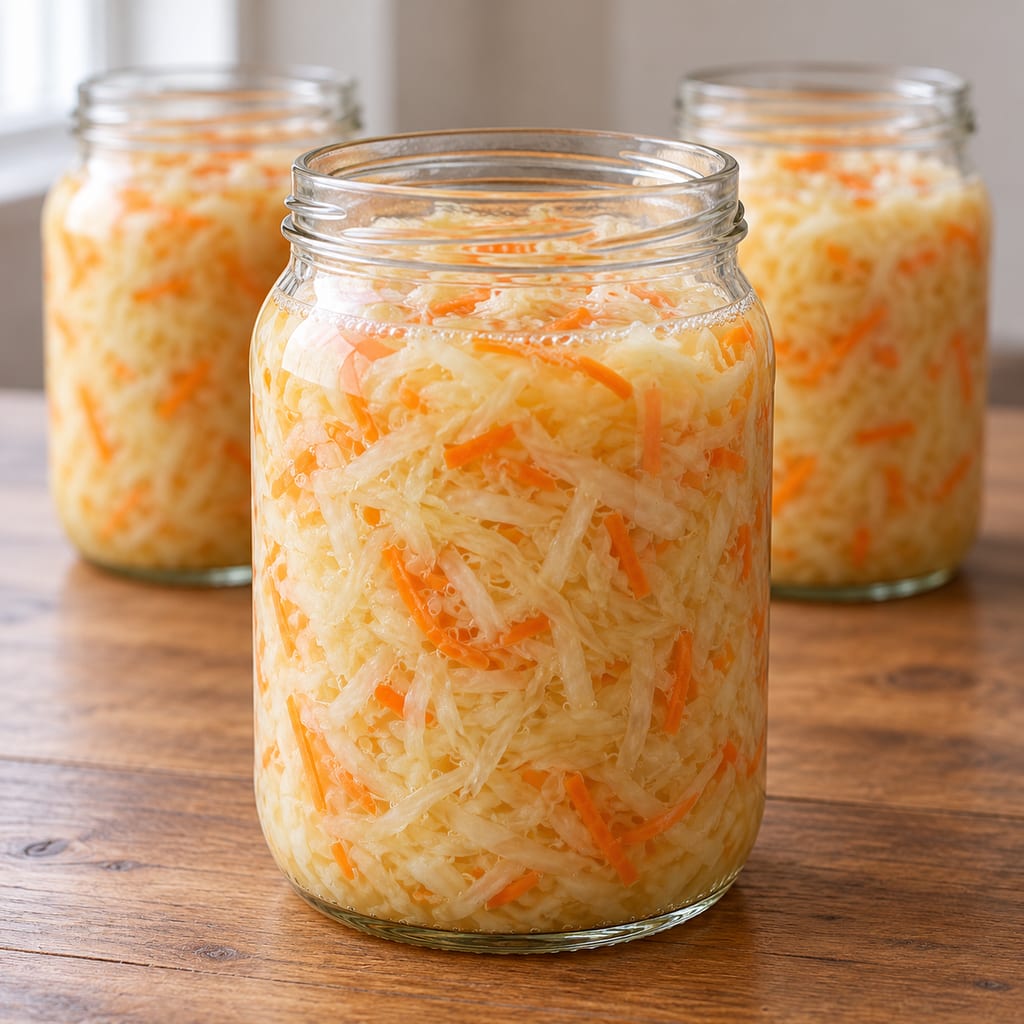
Shredded cabbage and grated carrot are salted to 20 g/kg, rested, packed into three jars and monitored during a creator-reported eight-day fermentation; measured temperature is not given.
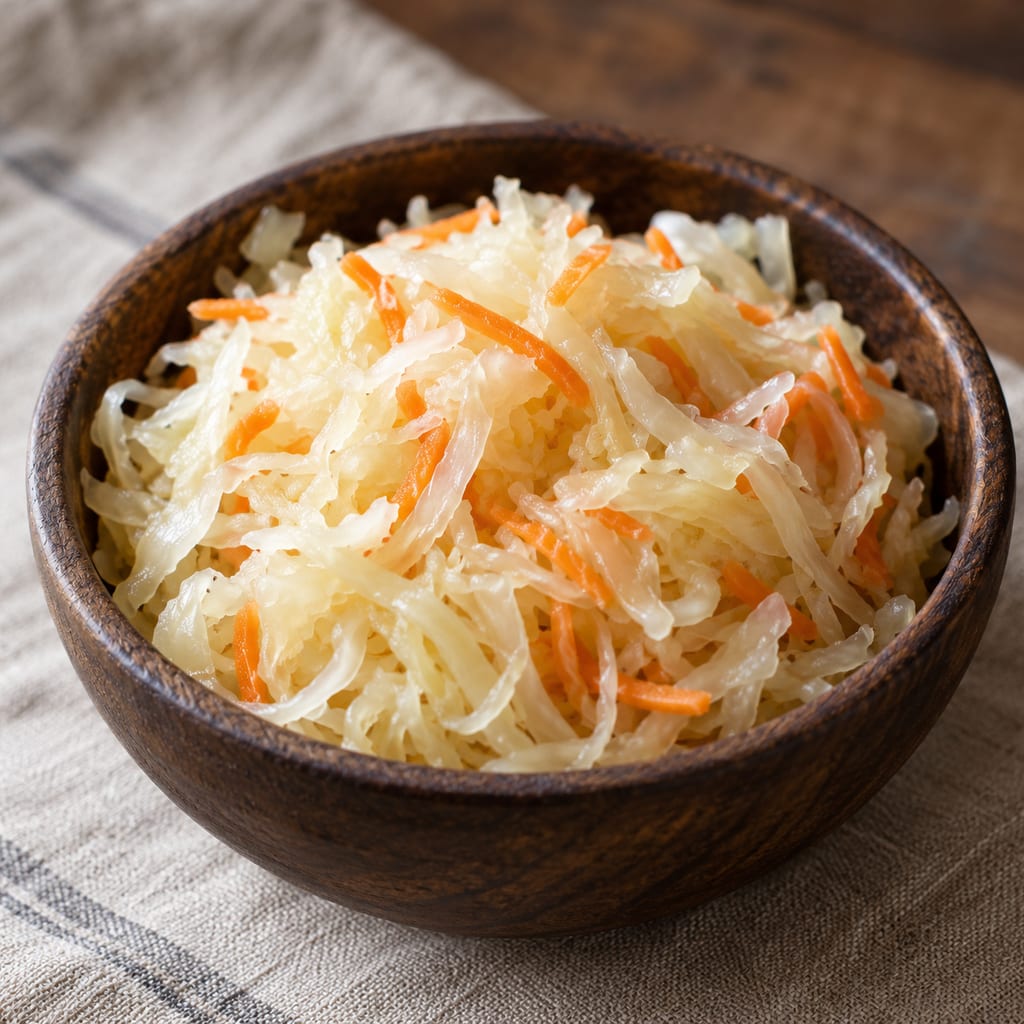
Kapusta kiszona z beczki is barrel-fermented cabbage from the Kołobrzeg area, entered on Poland’s List of Traditional Products in 2008. It is salted and fermented, with raw grated carrot added after souring.
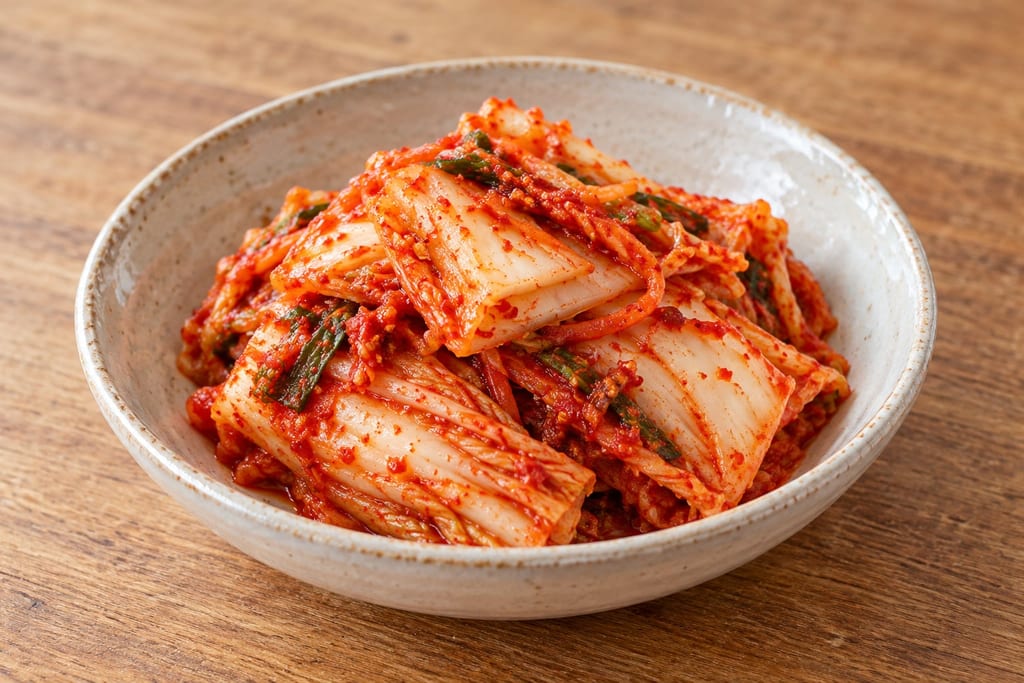
Kimchi is a Korean preserved vegetable food, most often cabbage, salted and seasoned, then fermented by the lactic acid bacteria that arrive with the vegetables. Some studies test added starter cultures, but a home jar is usually spontaneous.
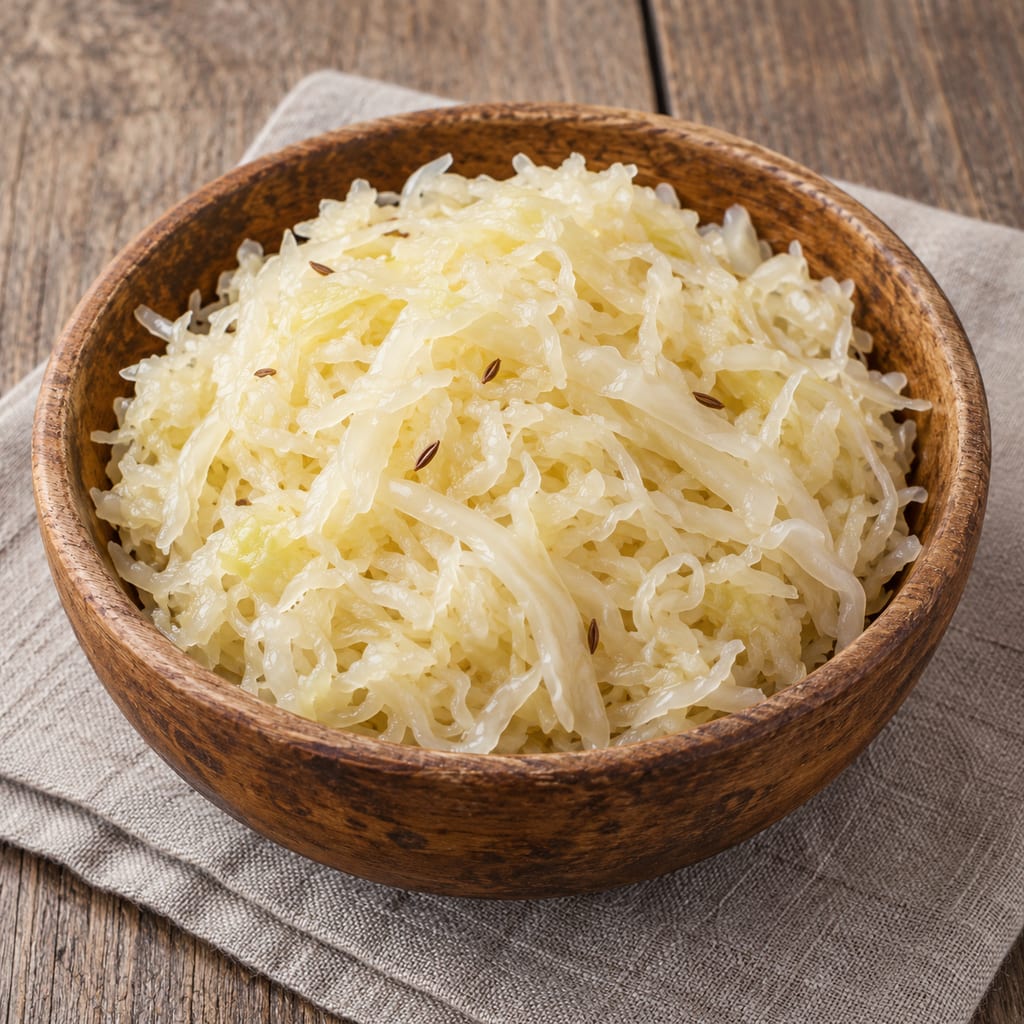
Kysané zeľí is Czech sour cabbage: shredded cabbage layered with salt and caraway and pressed in a wooden barrel. The regional account is descriptive and gives no validated salt ratio or endpoint.
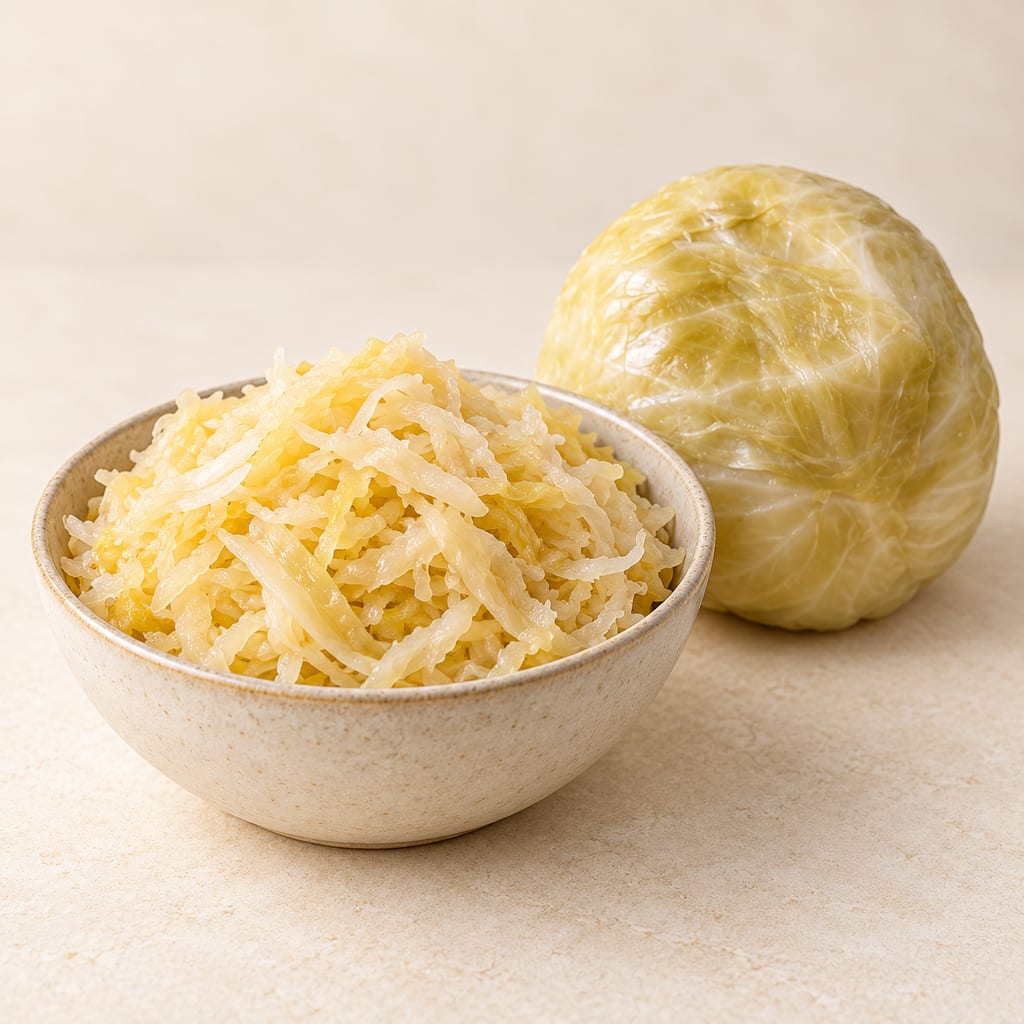
Protected Croatian sauerkraut from the Ogulin area: fresh white cabbage naturally lactic-fermented without preservatives, sold whole or shredded, from registered establishments.
No community contributions have been published for this entry yet.
Sign in to contribute. Published comments and photos are free to read.
MaangchiInspiration
Yeolmu mulkimchimeasured young radish water kimchi
Cited in: A kimchi made to eat cold; Background and history; Recipe overview; Ingredients; Why these ingredients are used; Equipment; Method; Regional and household variations; Eating and serving
University of Minnesota ExtensionSafety
Preserving food at home: FermentationProduce fermentation equipment, acidity monitoring and submersion controls.
Cited in: Recipe overview; Ingredients; Why these ingredients are used; Equipment; Method; Regional and household variations; Eating and serving; How to recognize a good result; Safety
Frontiers in MicrobiologyReference
Frontiers in Microbiology — Korean fermented-food microbiologyCited by the written account of this record.
Cited in: Why these ingredients are used; The microbiology of water kimchi; Why the porridge matters
National Center for Home Food PreservationReference
National Center for Home Food Preservation — General Information on FermentingNational Center for Home Food Preservation
Cited in: Recipe overview; Ingredients; Why these ingredients are used; Equipment; Method; Regional and household variations; Eating and serving