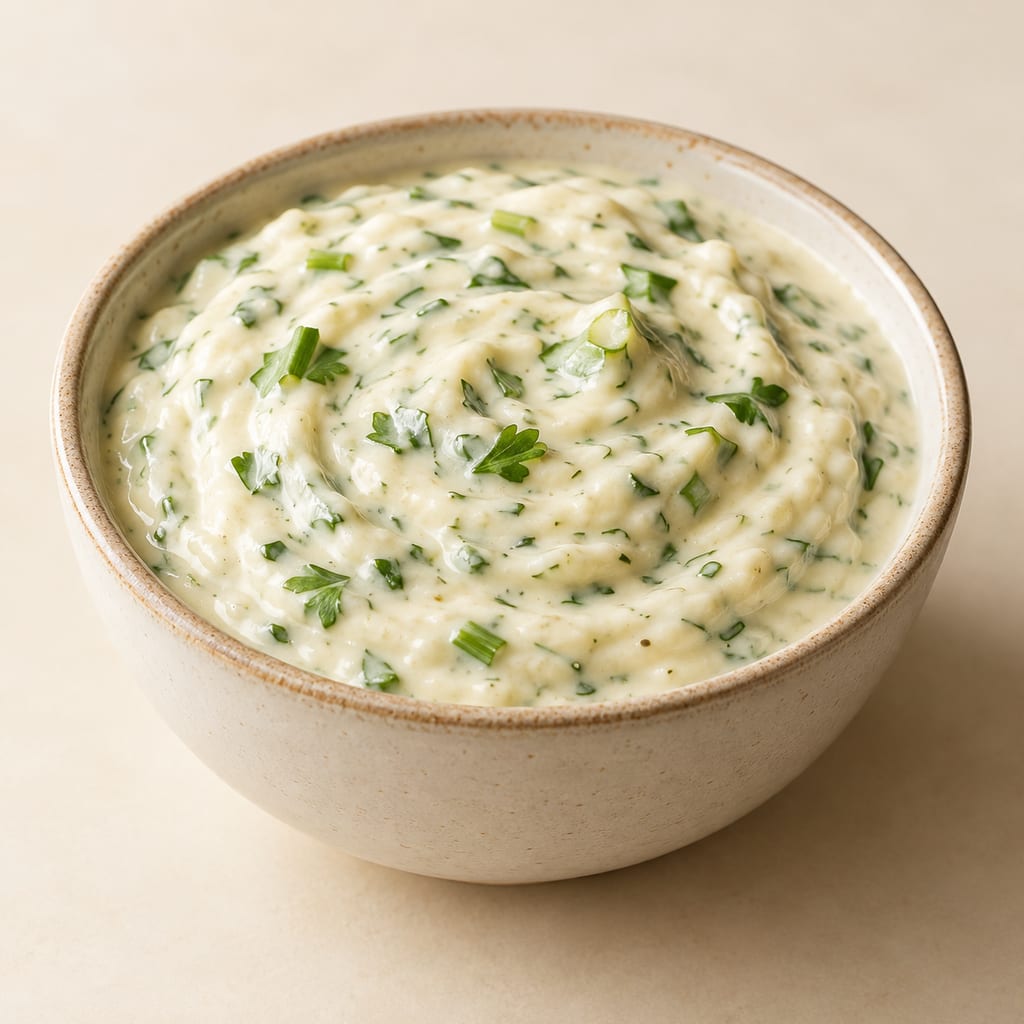
Salsa de ajo (Venezuelan garlic sauce)
Salsa de ajo is a creamy Venezuelan garlic sauce made from mayonnaise blended with fresh garlic, herbs, green onion and vinegar. It is served with empanadas, arepas and grilled meat.
 FermenteaWhere food goes to change
Wasakaka · Wasakaca · Venezuelan guasacaca
Guasacaca is a Venezuelan green sauce of avocado, herbs, sweet pepper and onion, sharpened with vinegar or lime. It is served with grilled meat, arepas and empanadas.
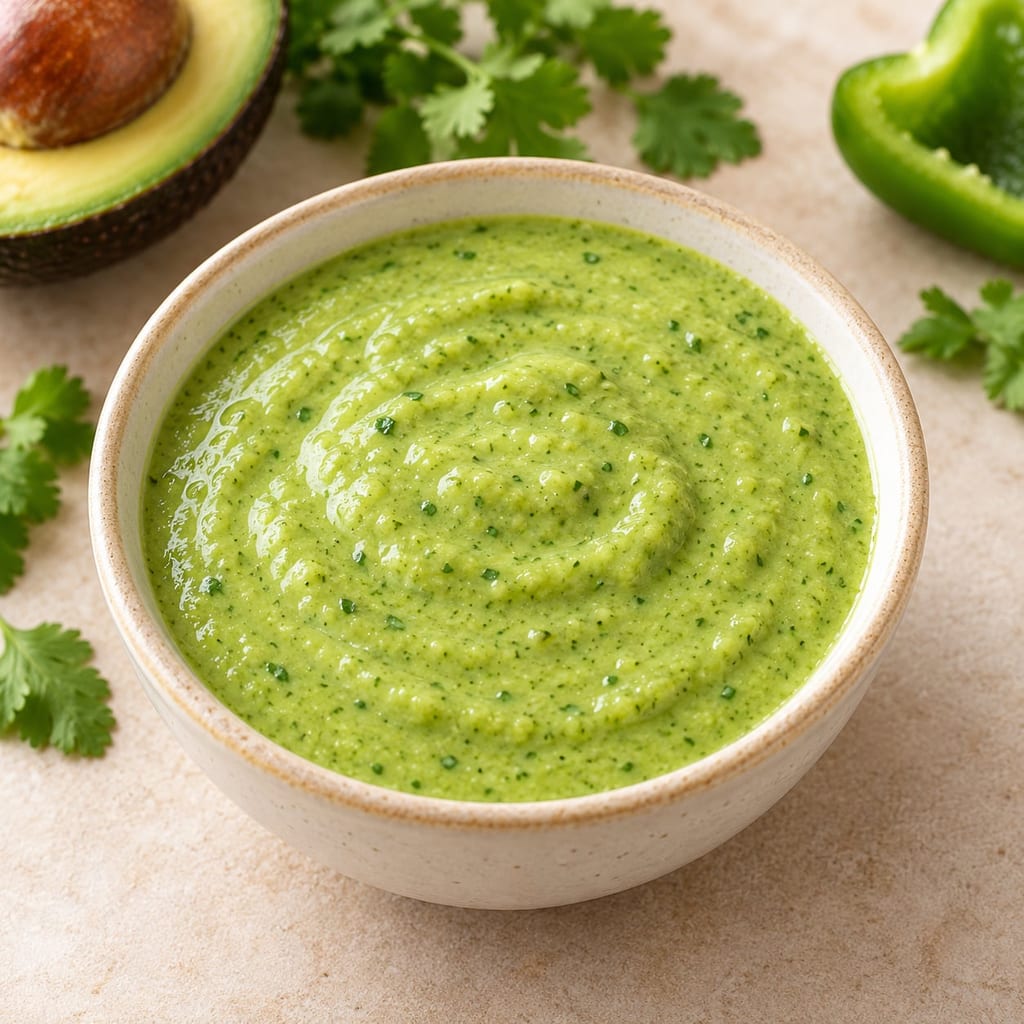
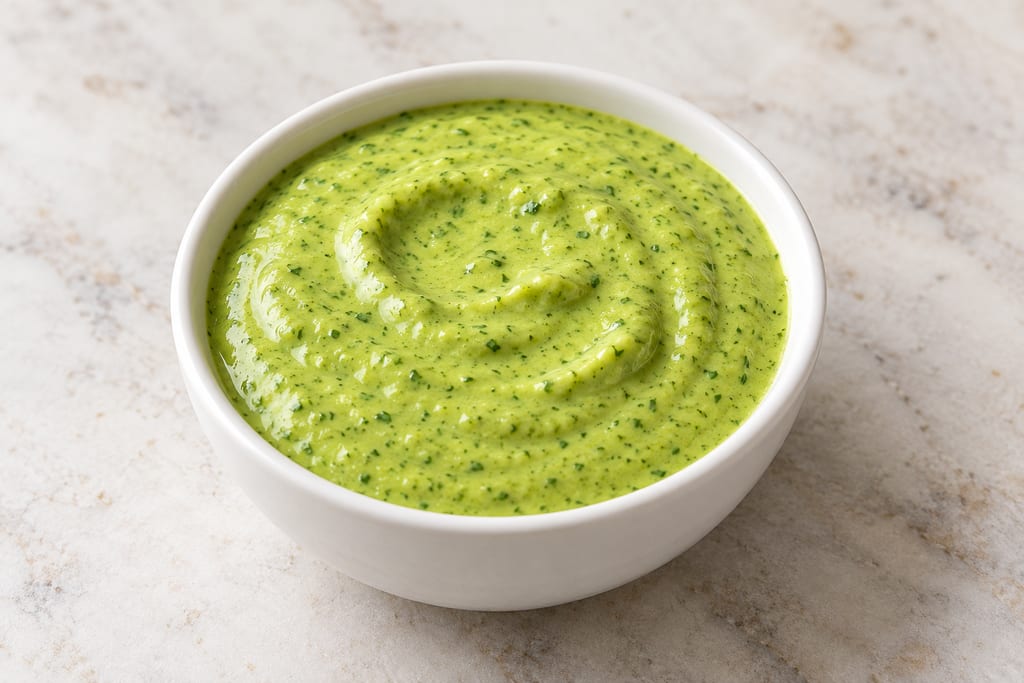
Guasacaca is a savoury green sauce from Venezuela. Its base is avocado, blended or mashed with herbs, sweet green pepper, onion and garlic, and sharpened with lime juice or vinegar. The result is thick and creamy when made smooth, and chunkier when the aromatics are only chopped. Wikipedia compares it with Mexican guacamole, though the PANNA article notes that the two share little beyond the avocado and the green colour.
Venezuelan cooks use it as a table sauce for grilled meats, for chicken, and for arepas and empanadas. The Wikipedia article says it is served over parrillas, the mixed grilled meats, as well as arepas and empanadas.
The word is related to guacamole and to aguacate, the Spanish word for avocado. The PANNA article notes that the three may share an indigenous root, but that the sauce's true origin is described as a mystery. Other sources give a Quechua or Qhichua derivation for the name; this page does not confirm it.
Two theories have been put forward. Rafael Cartay links the sauce to the Congolese sauce kasaka, pointing to an Afro-Venezuelan line of descent. Miro Popic suggests the sauce began as a raw version of sofrito, with avocado added for creaminess. Neither theory is documented. The article also notes that some traditional Llanos versions used suero, whey, as a dip for grilled meats.
Venezuelan guasacaca is avocado-based. The Dominican wasakaka, spelled the same way and pronounced the same, is a different sauce with no avocado. It is made from garlic, parsley, lime or sour orange juice, salt, pepper and olive oil, and is boiled with plenty of water until it reduces by about half. It is served with roasted chicken and boiled cassava.
Some writers connect the Dominican sauce to the Canary Islands mojo, which travelled to the Caribbean. The sources read do not settle that link, and this page records it only as a claim.
The sources agree on a shared core of onion, bell pepper, oil, vinegar and salt. Beyond that, avocado, cilantro, parsley and mayonnaise vary, and so does the texture, which may be coarse or smooth. Cooks who want a hotter sauce add a chilli or a little hot sauce.
The sources give no tested storage advice for guasacaca. Because it is an uncooked avocado sauce, it should be kept cold, and its colour darkens as the avocado oxidises. The source has no shelf-life figure, and this page gives none.
The origin of guasacaca is unknown. The Wikipedia article gives Venezuela as its origin and records no historical account. The PANNA store article calls the origin a mystery and offers two untested theories: an Afro-Venezuelan link to the Congolese sauce kasaka, put forward by Rafael Cartay, and a raw form of sofrito with avocado added, put forward by Miro Popic.
The sources give no tested preservation method or storage duration for guasacaca. Avocado darkens after cutting; the sources do not say how long the sauce keeps.
Both sources place the sauce in Venezuela; neither gives a dated or local origin.
Salsa de ajo is a creamy Venezuelan garlic sauce made from mayonnaise blended with fresh garlic, herbs, green onion and vinegar. It is served with empanadas, arepas and grilled meat.
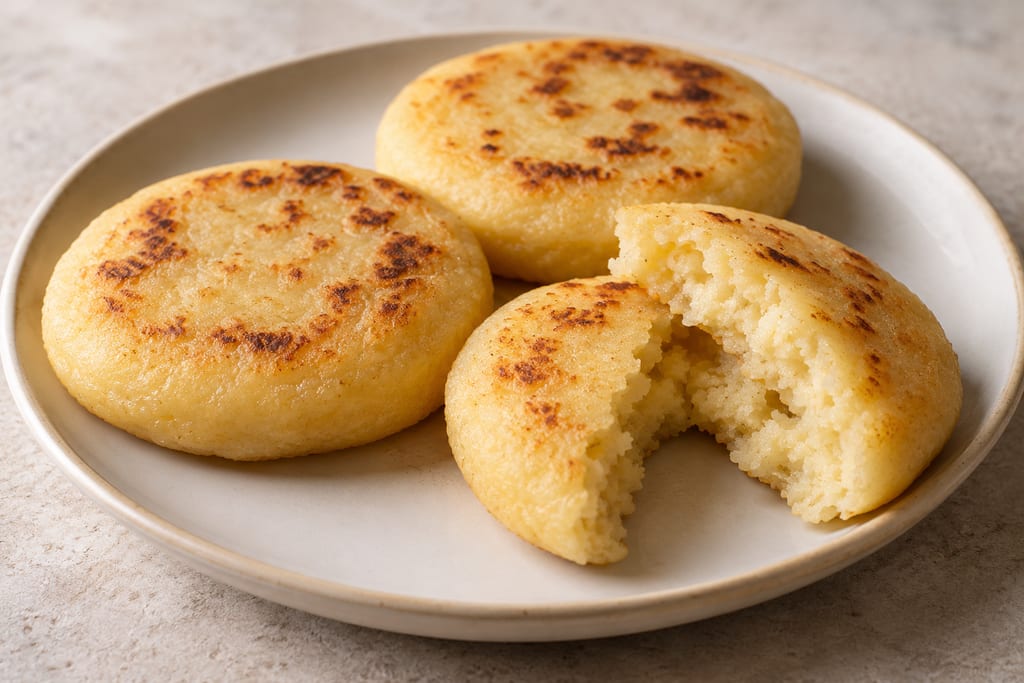
This household version combines precooked corn flour, warm water and salt, then cooks thick rounds on a lightly oiled skillet or griddle. It is one source-specific arepa method, not a universal Colombian or Venezuelan formula.
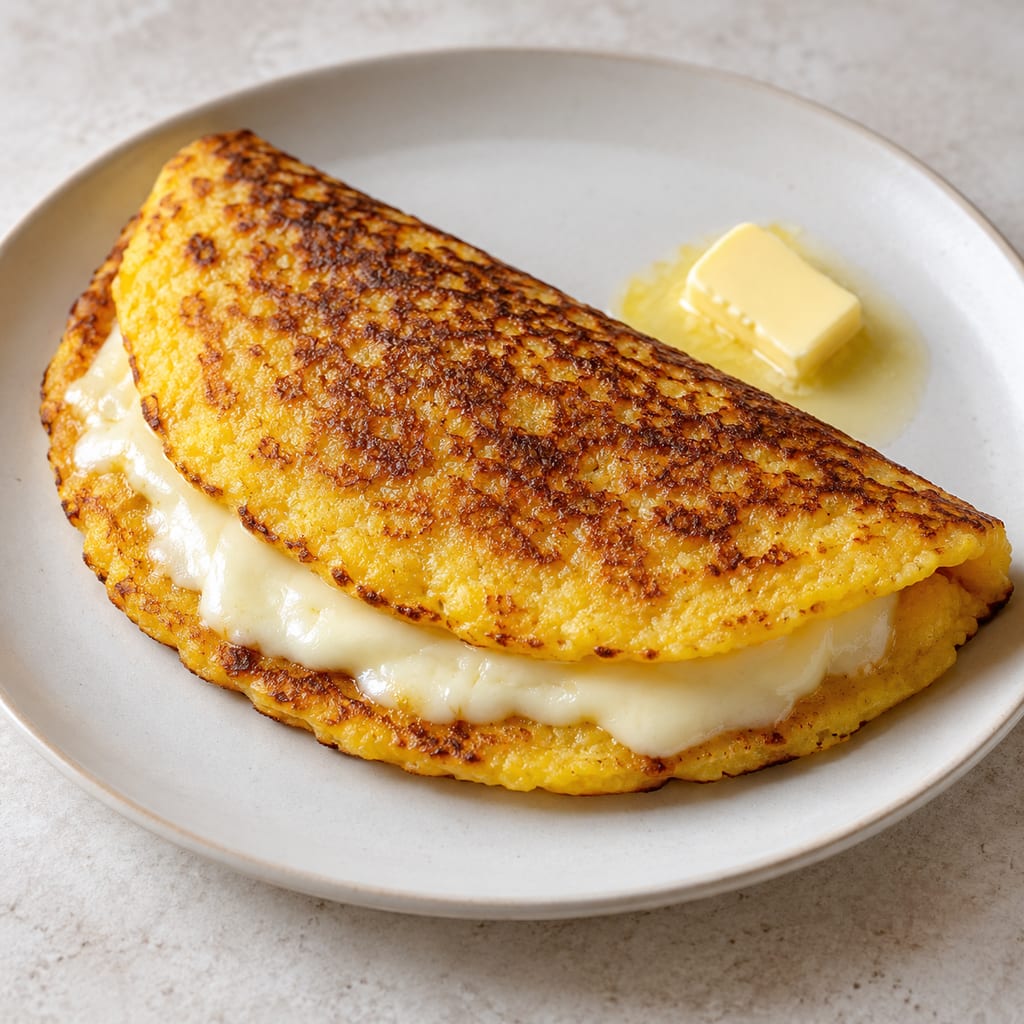
Two thick, tender Venezuelan griddle cakes made from fresh corn batter with milk, egg, cornstarch and sugar, then folded around white cheese and butter.
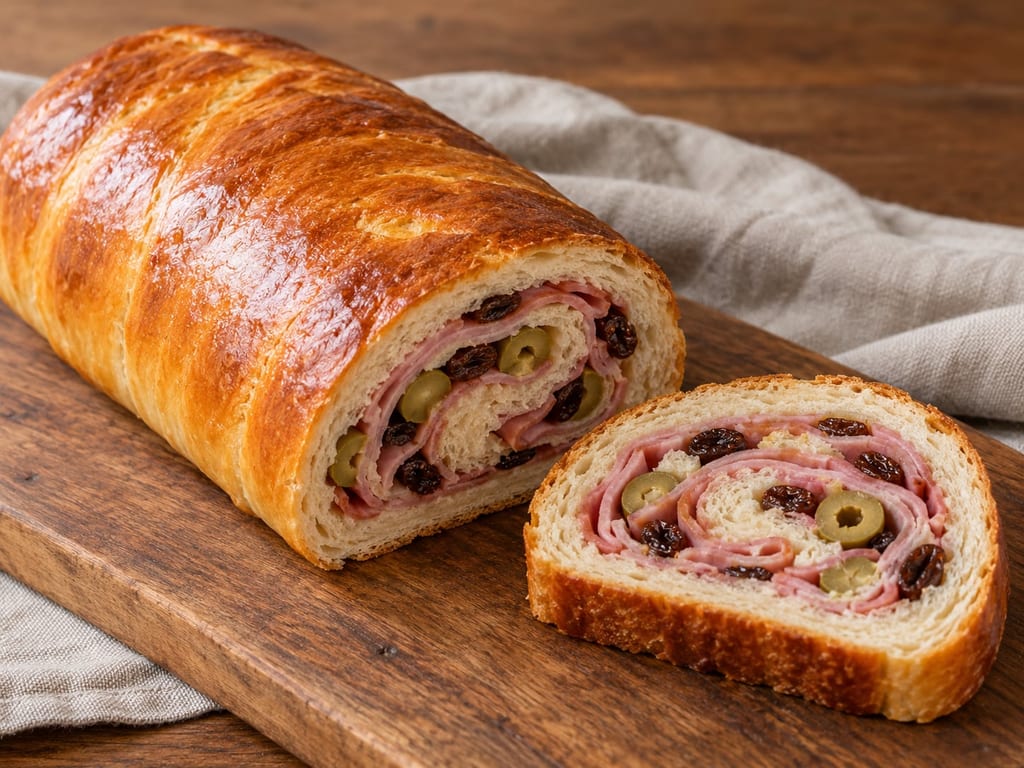
Pan de jamón is a Venezuelan Christmas bread: soft yeast dough rolled around ham, olives and raisins, then baked as a filled loaf.
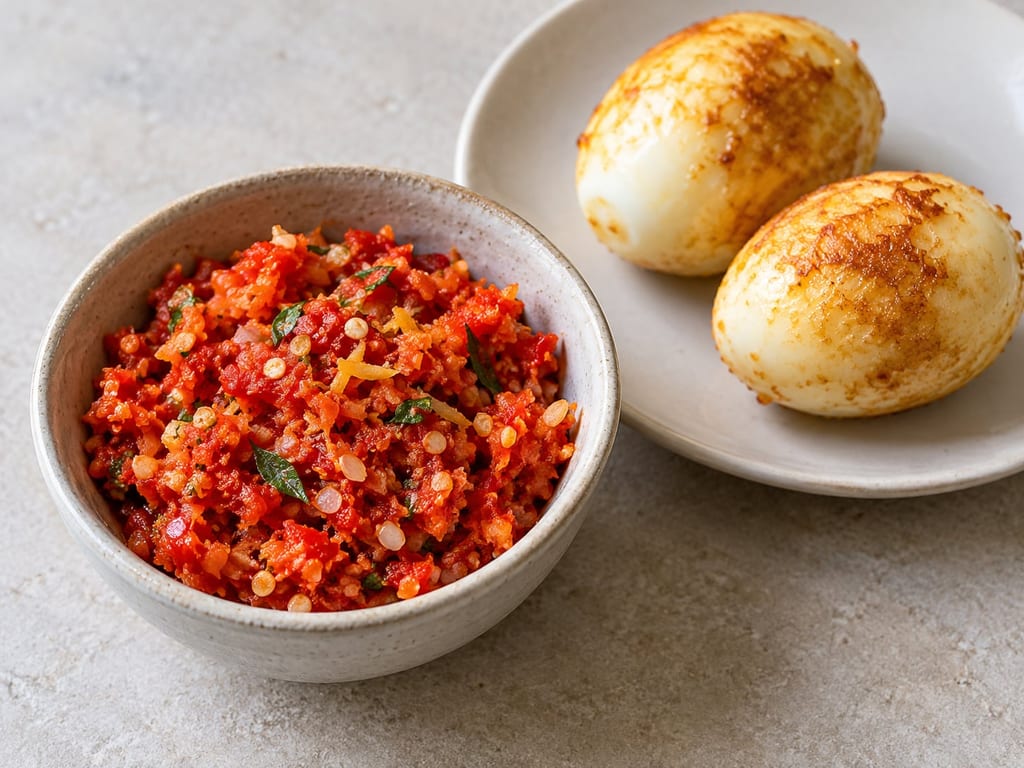
Ai-manas is described as a very hot chilli paste served with Timorese meals. One published version blends fresh chillies, shallots, garlic, Thai basil, ginger, lemon and salt, and serves it with eggs. Sources do not establish a standard formula, precise birthplace or earliest date.
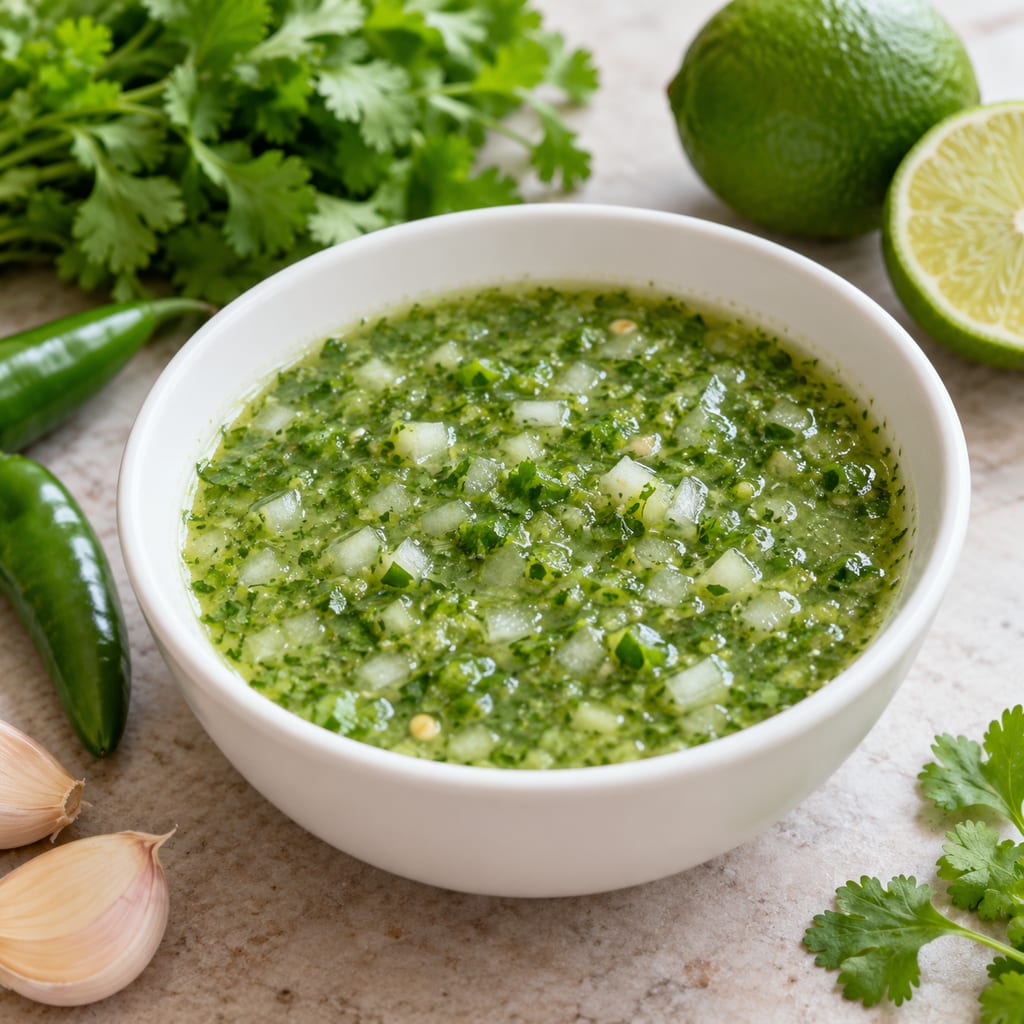
A fresh, uncooked Ecuadorian table sauce of hot pepper, cilantro, garlic and lime, served with most everyday dishes.
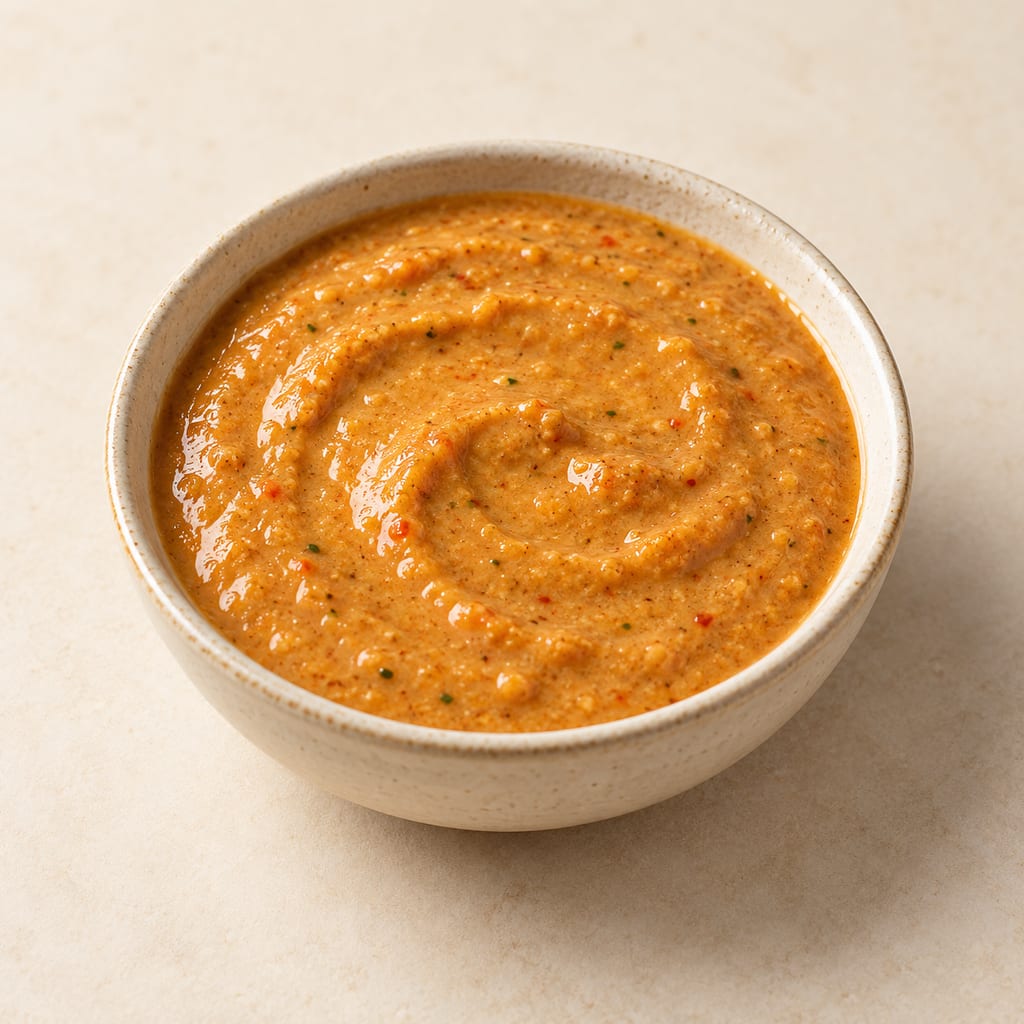
A spicy peanut hot sauce from the Popayán and Cauca region of Colombia, traditionally served with pipián empanadas and tamales.
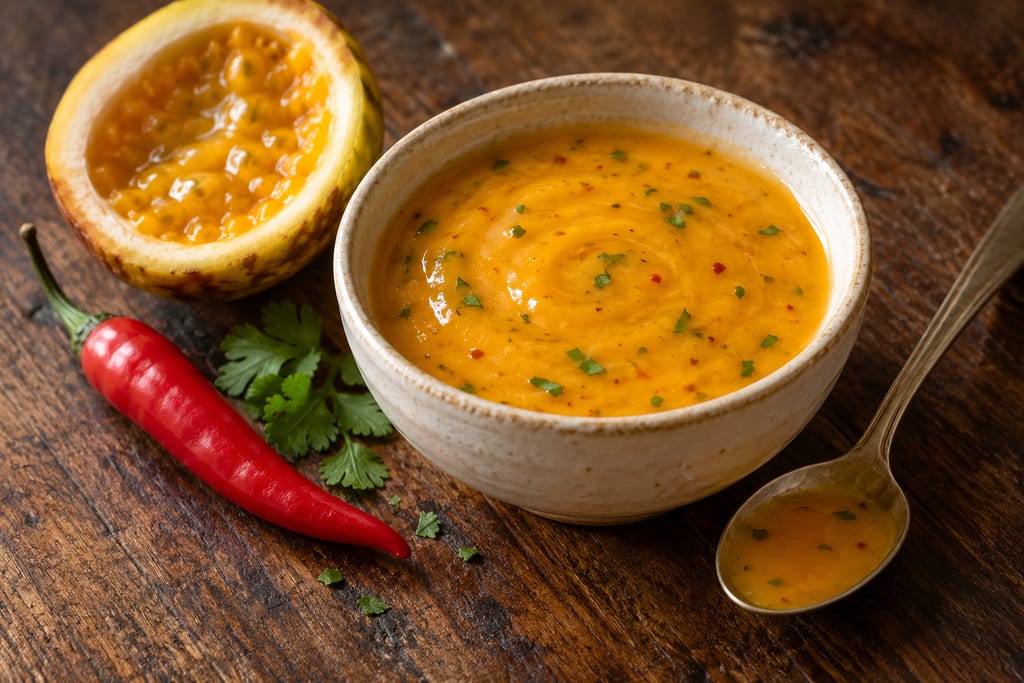
A contemporary Ecuadorian hot sauce that pairs passion fruit juice with boiled chile peppers, oil and lime.
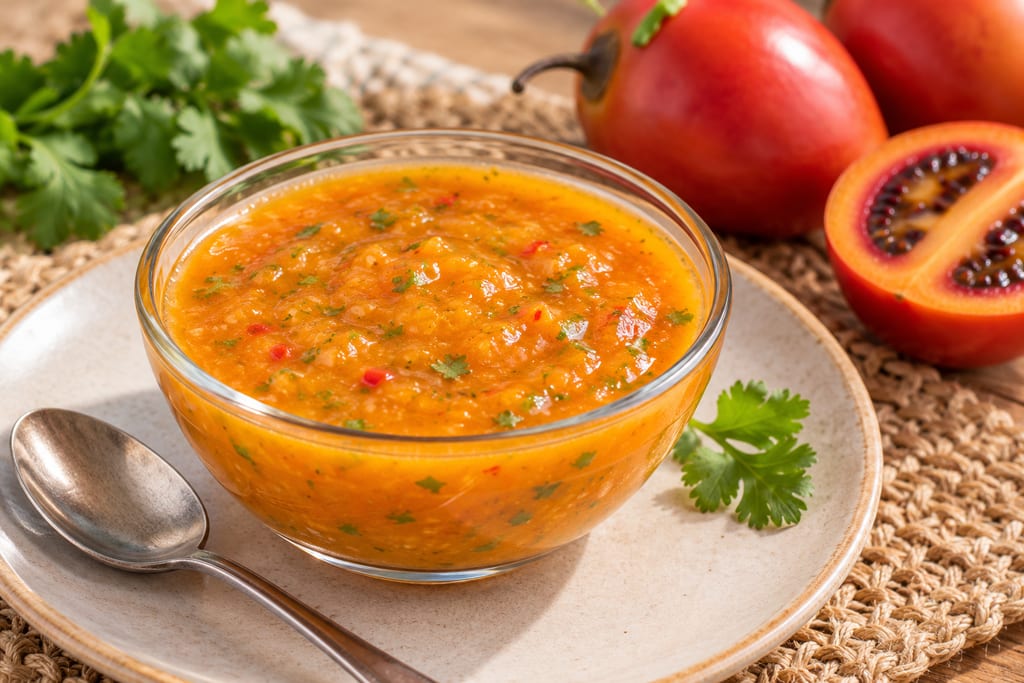
An Ecuadorian hot sauce built on tamarillo, a tart fruit that gives a sharper, fleshier base than ordinary tomato salsa.
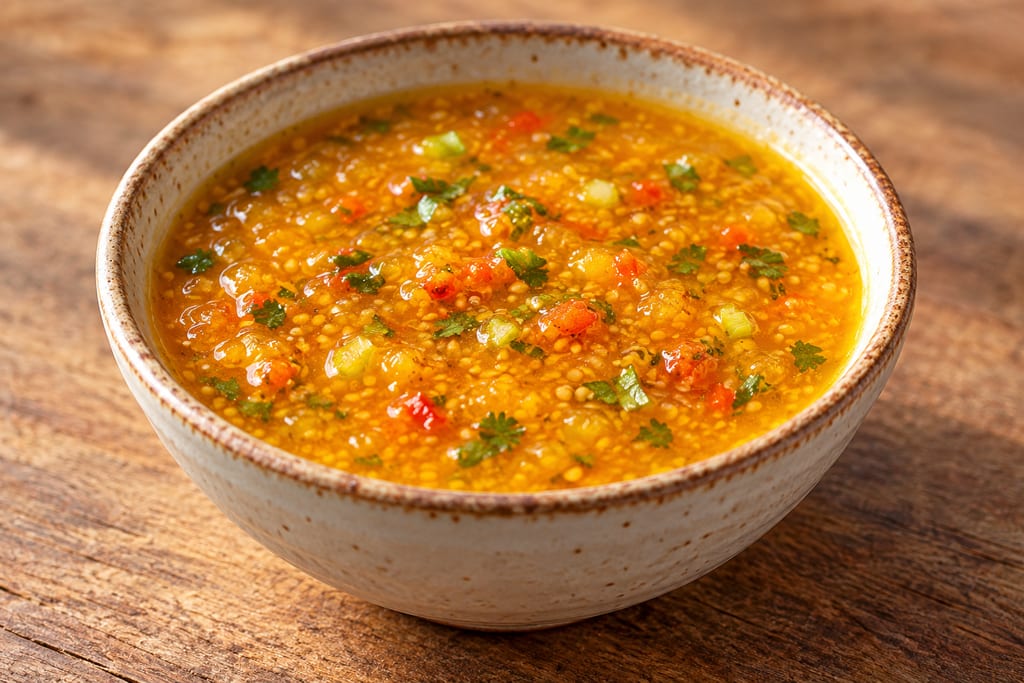
A sweet, tart and spicy Colombian sauce of uchuva, the yellow physalis fruit, with hot pepper, scallion, cilantro and lime.
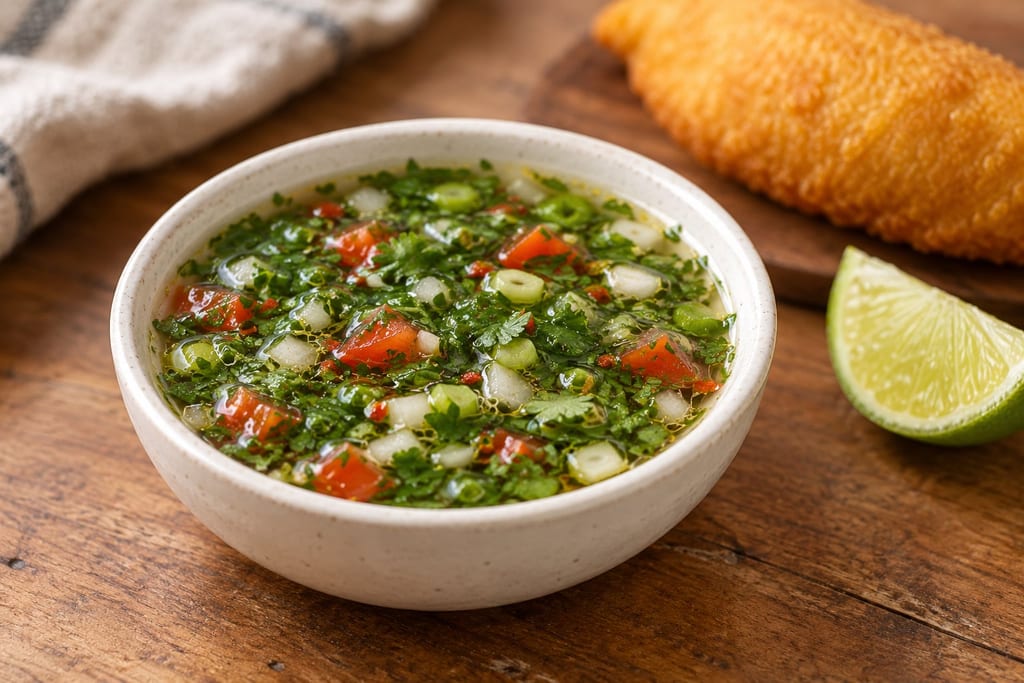
A fresh Colombian table condiment of chopped herbs, scallion and tomato in a vinegar and chile base, served beside fried and filled dishes.
Ají verde is a Peruvian green sauce of coriander, chilli, onion and garlic in a mayonnaise or cheese base. It is best known through Peruvian restaurant cooking abroad.
No community contributions have been published for this entry yet.
Sign in to contribute. Published comments and photos are free to read.
WikipediaIdentity · Ingredients · Variants · Uses · Origin
GuasacacaSavoury sauce in Dominican and Venezuelan cuisine; also spelled wasakaka; often used with chicken.
Venezuelan ingredients: avocado, olive oil, salt, pepper, lime juice or vinegar, cilantro, parsley, green bell pepper, onion, Worcestershire sauce, garlic and chili peppers (Cotner, 2012).
Dominican version: lime or sour orange juice, garlic, parsley, salt, pepper and olive oil; boiled with water until reduced by about half; served with roasted chicken and boiled cassava (Allen, 2019; Dominican Cooking, 2021).
Venezuelan guasacaca served over parrillas, arepas and empanadas.
Cited in: An avocado sauce from Venezuela; Where the name and the sauce come from; Venezuelan and Dominican versions; Making it and keeping it
PANNA StoresOrigin · Ingredients · Uses
Guasacaca: The Soul of Venezuelan FlavorOrigin described as a mystery; Rafael Cartay's Afro-Venezuelan link to kasaka; Miro Popic's raw sofrito theory.
Common to all versions: onion, bell pepper, oil, vinegar and salt; often ají dulce; variable avocado, cilantro, parsley and mayonnaise.
Served with grilled meats, chicken, empanadas and arepas.
Cited in: An avocado sauce from Venezuela; Where the name and the sauce come from; Making it and keeping it