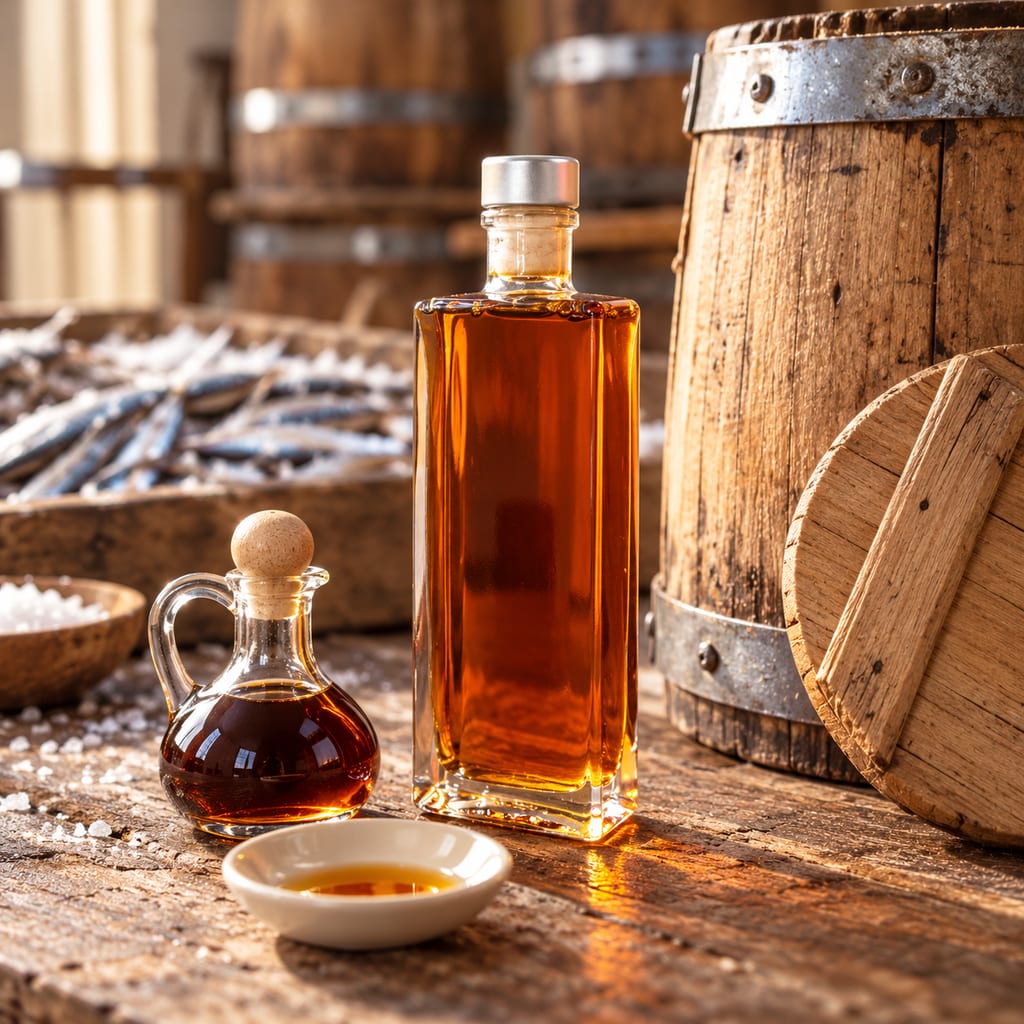
Colatura di alici di Cetara
Colatura di alici is the amber liquid drained from salted anchovies matured in wooden containers in Cetara, on the Amalfi coast of Campania, and sold under a protected designation of origin.
 FermenteaWhere food goes to change
Salsa alla marinara · Marinara sauce · Arrabbiata sauce · All arrabbiata · Sugo finto · Alla marinara
Marinara is a quick Italian-American tomato sauce; arrabbiata is a distinct Roman tomato sauce with red chilli. They share a simple cooked tomato-and-garlic base but are not the same sauce.
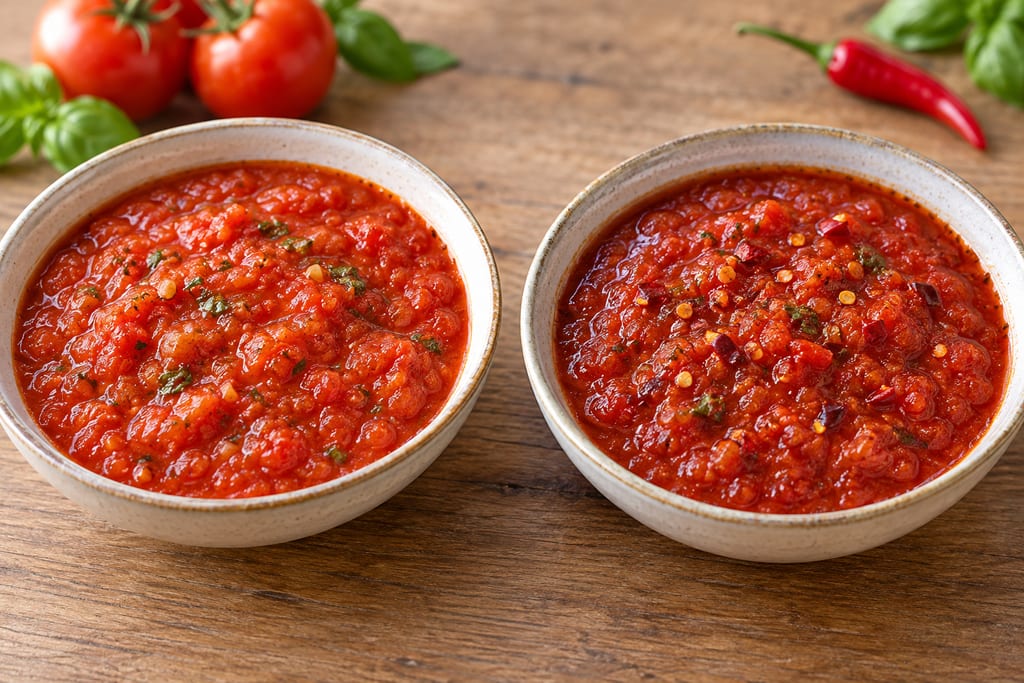
In this entry, marinara means the quick Italian-American tomato sauce. Food writer John Mariani describes the sauce name as Italian-American usage, rather than a common Italian name for that sauce. The phrase alla marinara means sailor-style, but it should not be treated as an exact synonym for the U.S. marinara sauce.
Arrabbiata is a distinct Roman tomato sauce with garlic, oil and a pronounced chilli heat. In Romanesco, arrabbiato describes a burning or extreme flavour. It is not simply chilli added to one fixed marinara base.
Folk accounts say Neapolitan ships' cooks, returning from the Americas after tomatoes reached Europe, invented the sauce in the mid-1500s; other accounts credit the wives of Neapolitan sailors. These accounts are uncertain.
The earliest documented recipe is Antonio Latini's Lo Scalco alla Moderna, in two volumes of 1692 and 1694. It is described as the first Italian cookbook to include tomato sauce, and its sauce was closer to a modern tomato salsa.
Arrabbiata is linked to Lazio and to Rome, where it is dated only approximately to the 1950s and 1960s, when spicy food was fashionable in Roman cooking. No inventor or restaurant is named. In Rome, food cooked with a lot of oil, garlic and peperoncino is called arrabbiato, as in broccoli arrabbiati.
The main ingredients are tomatoes, garlic, peperoncino, parsley and extra virgin olive oil. Grated Parmesan or pecorino romano can be added at the table. The sources give no quantities or method.
The marinara base is tomatoes, garlic, onion and herbs, with variations that add capers, olives, spices or a dash of wine. The sources give no cooking times or quantities, so a cook judges the thickness by sight.
In Italy, a sauce called sugo finto, or fake sauce, is similar to the Italian-American version. Spaghetti marinara is a separate dish in Australia, New Zealand, Spain and South Africa, with seafood in tomato sauce; in Italy seafood pasta sauces are usually called alla pescatora.
The sources give no storage, canning or acidity advice. A tomato sauce is not always acid enough for the same canning process, and one with onion, oil or other vegetables may need its own tested method before it is stored at room temperature.
Refrigerate or freeze leftovers, and do not treat this page as a shelf-stable method.
Folk accounts credit Neapolitan sailors' cooks, or their wives, with inventing the sauce in the mid-1500s, after tomatoes reached Europe. These accounts are uncertain.
The arrabbiata dish is dated only approximately to the 1950s and 1960s in Rome, with no named inventor. It appears in the films Roma (1972) and La Grande Bouffe (1973).
Scaling: source batch only
A tomato-and-garlic sauce with added onion, oil or vegetables may not be acid enough for the same canning process as a plain tomato sauce, and the sources give no canning or acidity advice.
Hazard sourceRefrigerate or freeze leftover sauce; use a tested canning process before storing any version at room temperature
Control sourceThe sources give no canning or storage advice. A tomato sauce with vegetables or oil is not automatically acid enough for a shelf-stable jar.
Folk accounts place the sauce on Neapolitan ships in the mid-1500s; they are uncertain.
The sources dates the arrabbiata dish approximately to the 1950s and 1960s and names no inventor.
Colatura di alici is the amber liquid drained from salted anchovies matured in wooden containers in Cetara, on the Amalfi coast of Campania, and sold under a protected designation of origin.
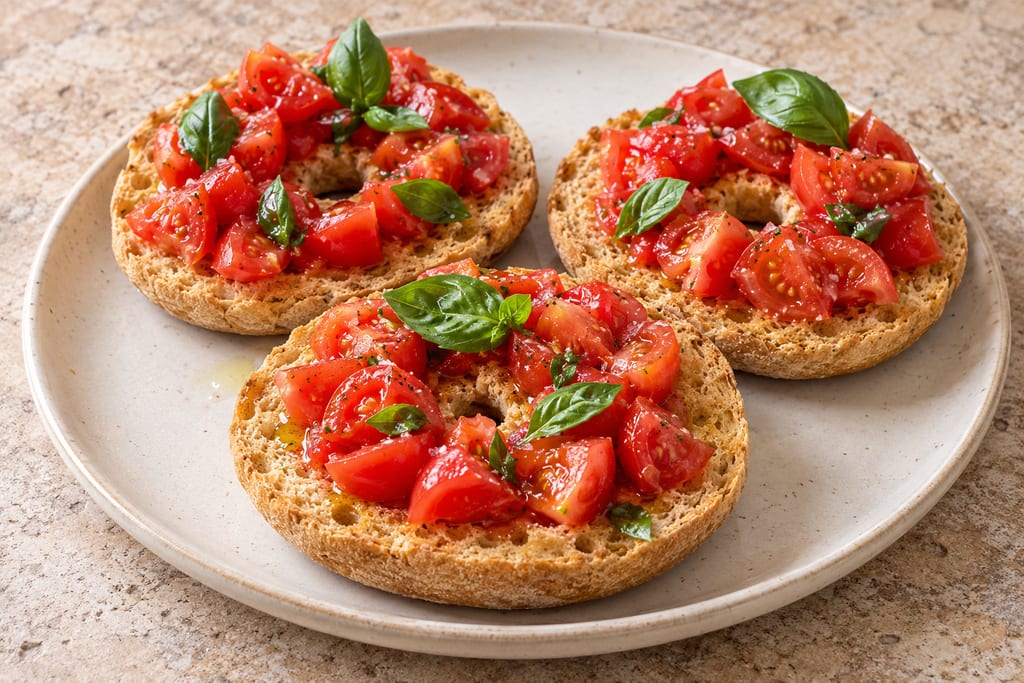
Puglian wheat-and-semolina bread rings are baked, split, then dried in a second bake; briefly moisten and top them before serving.
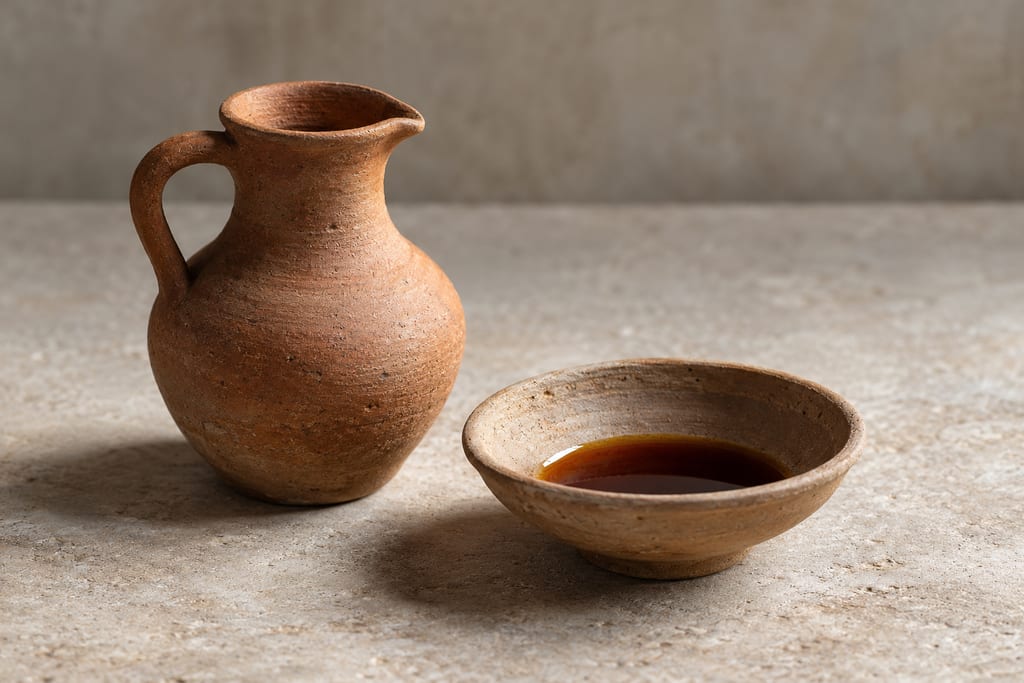
Garum, Greek garos and Latin liquamen, was the fish sauce of the ancient Mediterranean: fish and viscera salted and left in the sun, then drained off as a savoury liquid.
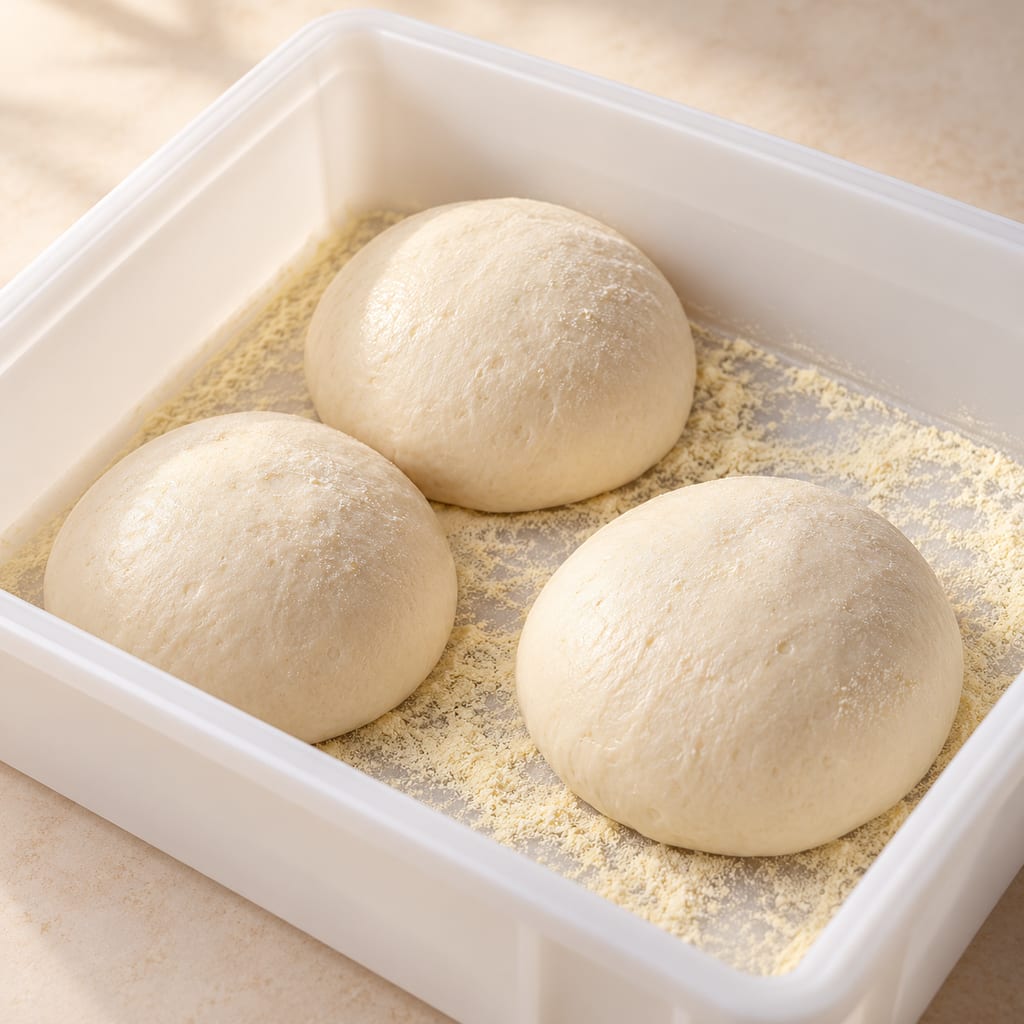
An AVPN regulation formula for Neapolitan pizza dough uses wheat flour, water, salt and fresh brewer’s yeast. Flour absorption and proofing conditions determine the exact dough point and yeast dose.
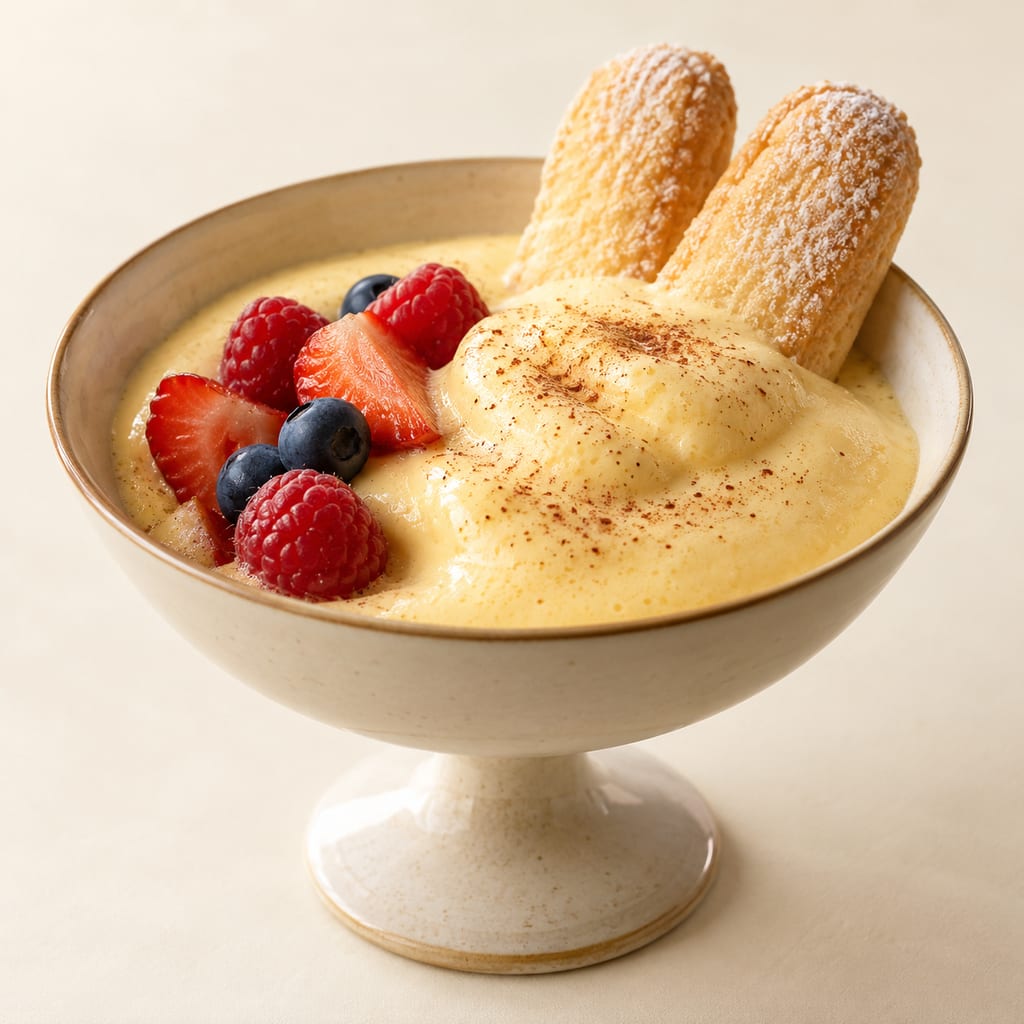
A warm foam of egg yolks, sugar and sweet wine, whisked over gentle heat in a double boiler until light, served at once with fruit or biscuits.
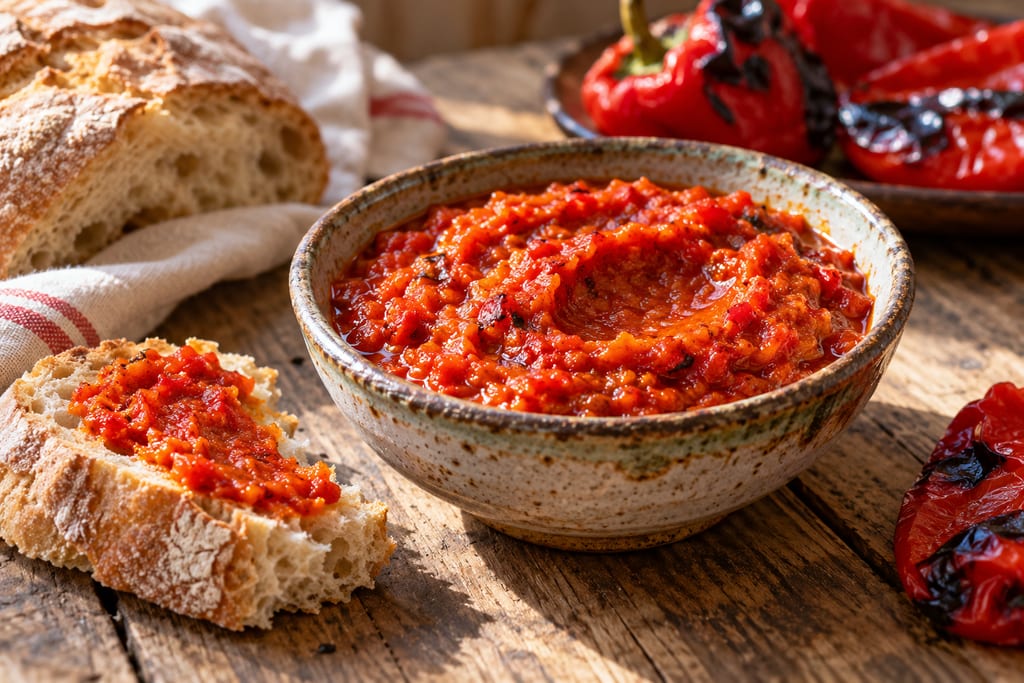
Ajvar is a cooked Balkan pepper preserve built around roasted red peppers, peeled, drained, ground and slowly fried with oil and seasoning. Leskovac’s protected version is a pepper specialty; regional versions vary.
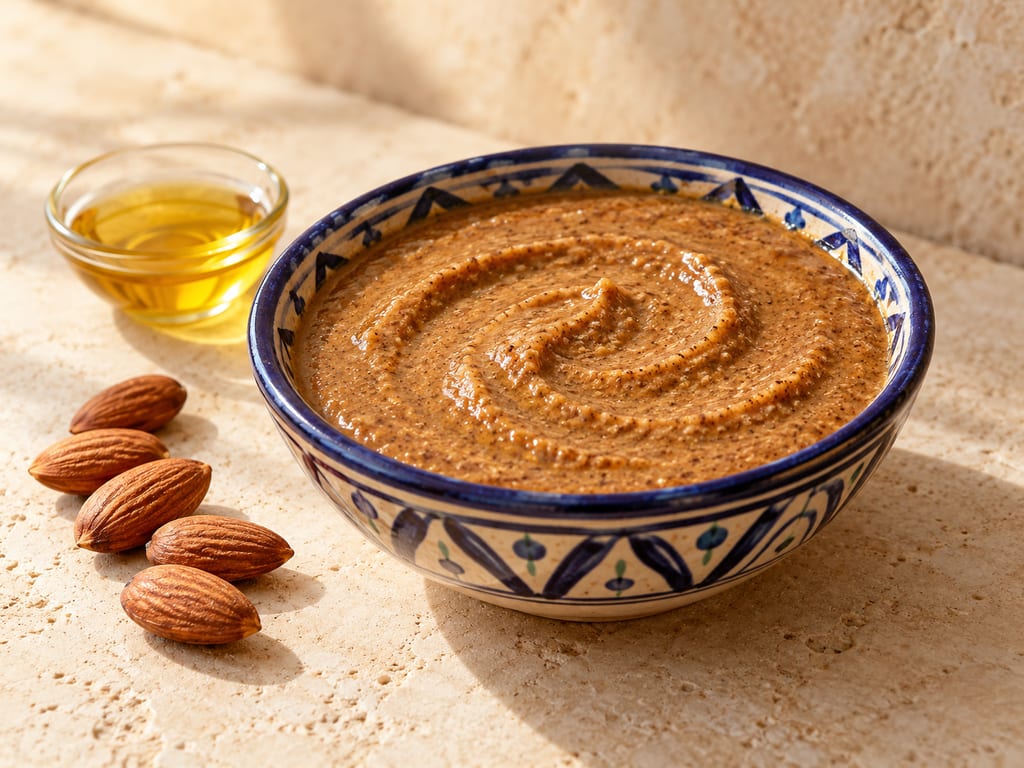
Amlou is a nutty, lightly sweet Moroccan spread of roasted almonds, culinary argan oil and honey. The almonds are ground first, then loosened with oil and sweetened; the balance can range from a thick spread to a dip.
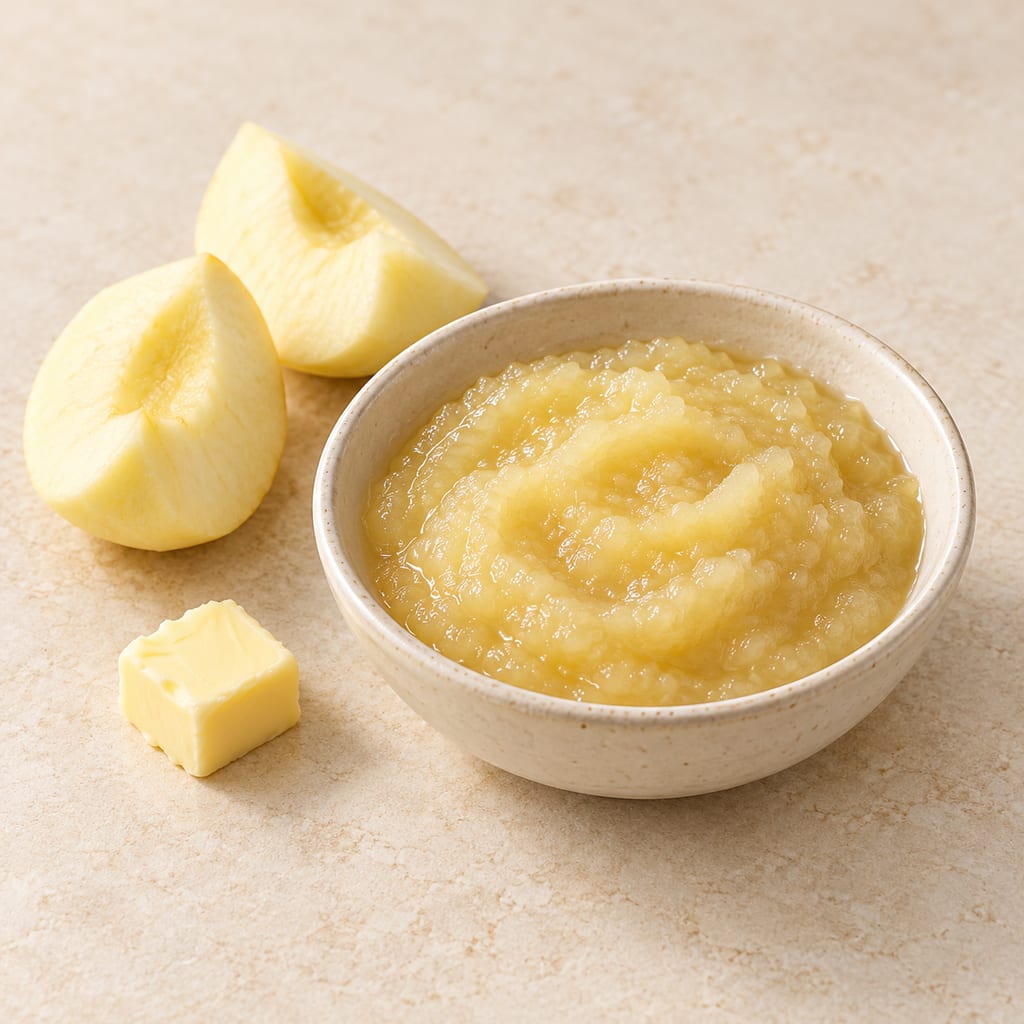
Apple sauce for goose and pork is a plain English accompaniment: cooked apples pulped with water, then sweetened with sugar and finished with a little butter.

A warm dip of garlic, anchovy and olive oil, often enriched with butter, that Piedmont serves over a flame with raw and cooked vegetables and bread.
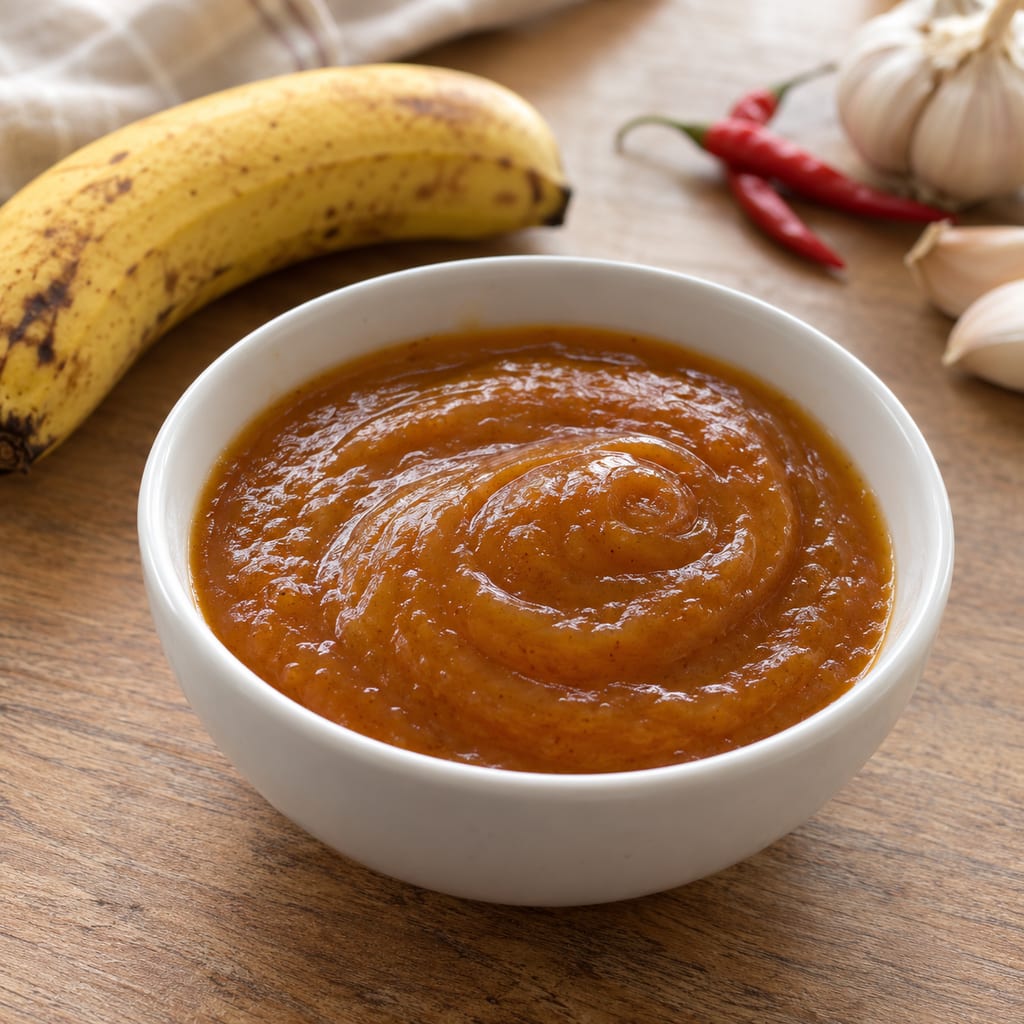
A sweet-hot table sauce of ripe banana simmered with vinegar, sugar, onion, garlic and fresh chilli, in the manner of Philippine banana ketchup. An untested development batch of about 500 g.
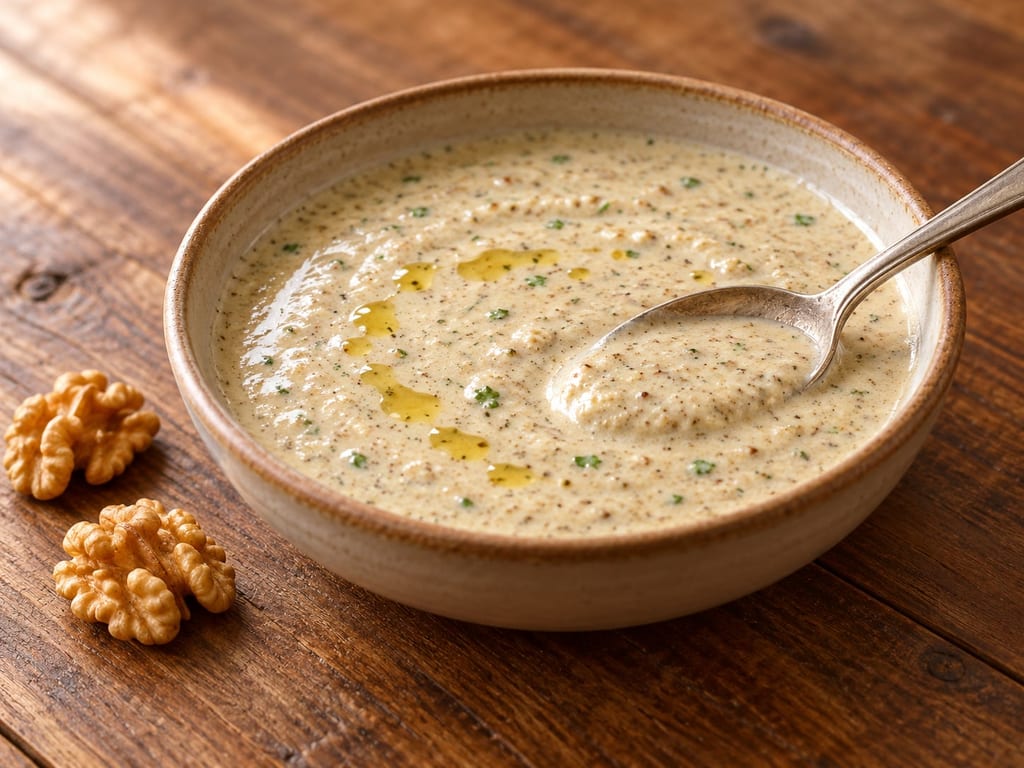
A Georgian walnut sauce of ground walnuts, garlic, vinegar and spices, thinned with water or broth. It is served with poultry, vegetables and bread, and is the sauce of the dish satsivi.
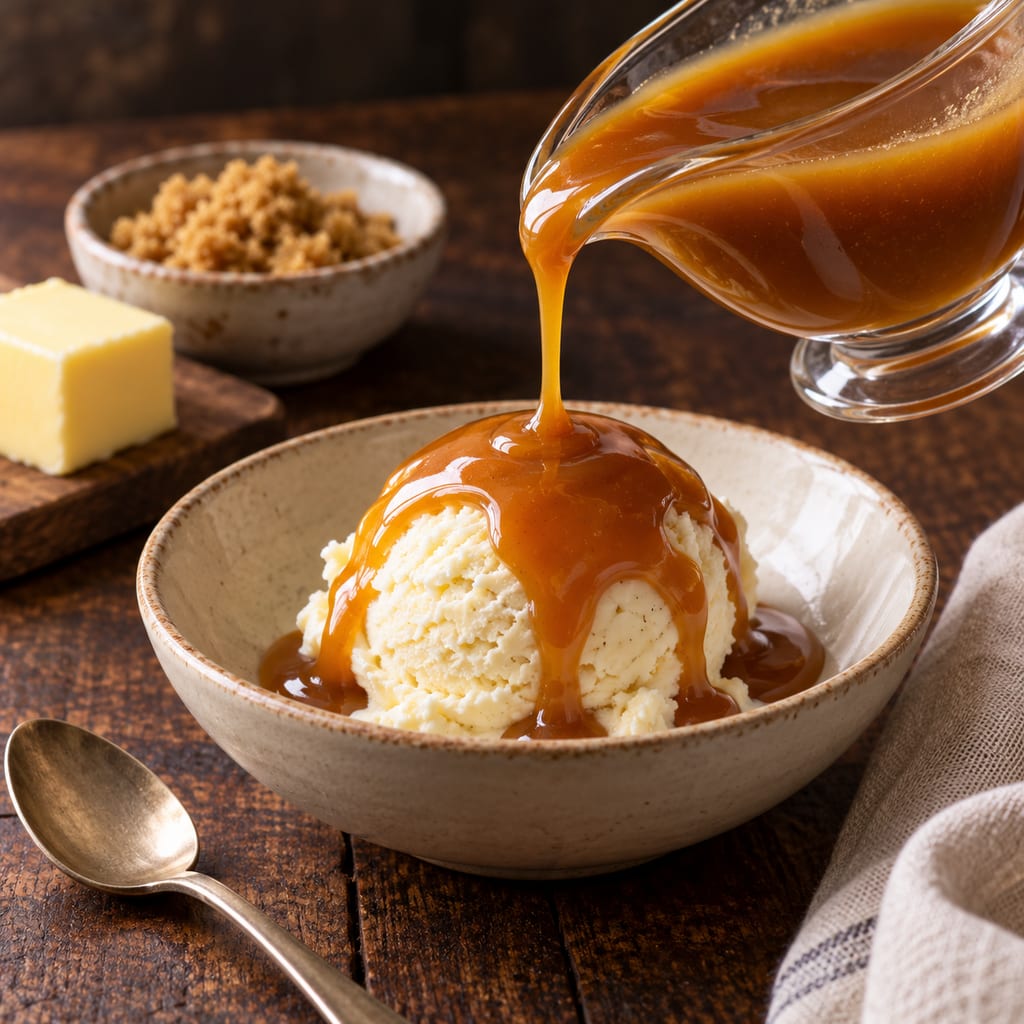
A pourable dessert sauce of brown sugar, butter and cream, with a little corn syrup and salt. It is the sauce form of the butterscotch confection and is made without water, unlike caramel.
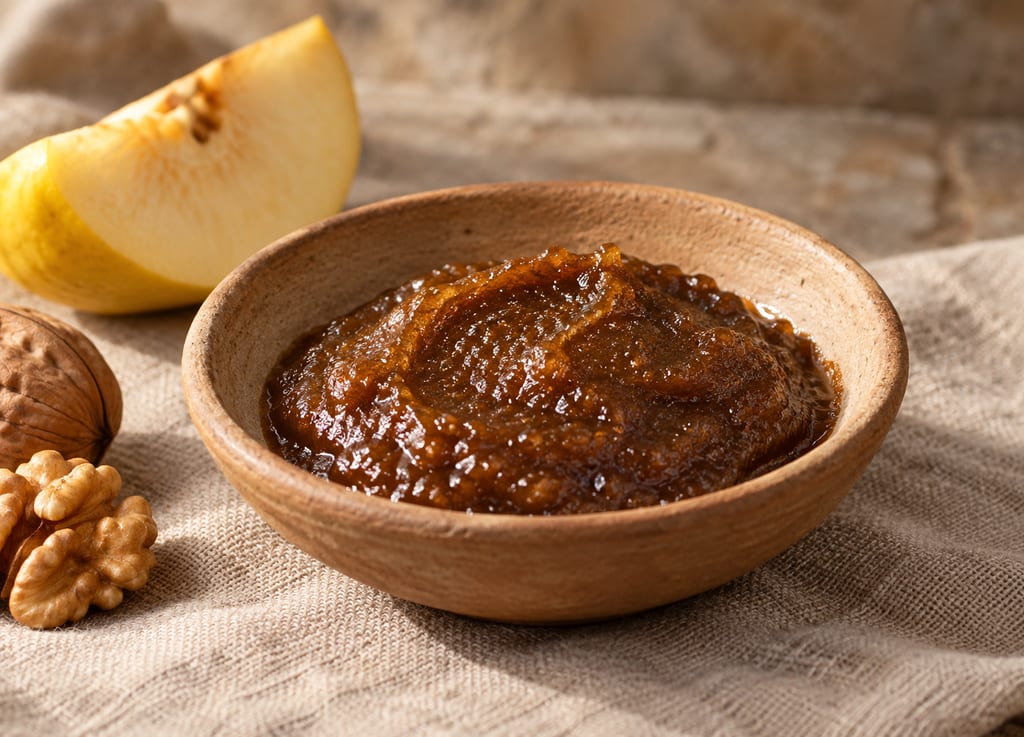
Byzantine murrī is a cooked imitation of murrī from the medieval Arabic repertoire, made from scorched honey, toasted bread, walnuts, quince, carob and spices rather than from a long grain fermentation.

A gelling polysaccharide extracted from red seaweeds, sold as kanten strips or powder; it sets firm at a low concentration and stays solid until about 85 °C.

A Dominican table and seasoning condiment of sour orange juice, mixed with lime and salt and bottled raw; garlic, oregano or a hot pepper may be added for meat or a spicier bottle.

Cicerbita alpina is an alpine perennial whose tender shoots and leaves have been eaten raw or cooked. Sámi milk preparations and modern Carnian dishes are distinct uses, with serious identification and preservation limits.

Japanese skipjack tuna cooked, then repeatedly smoked and dried over a wood fire by the hand-fired tebiyama method into a hard block for shaving into dashi: the first stage of katsuobushi.

A Swedish-style spirit vinegar made by fermenting neutral alcohol with live vinegar bacteria, with a separate guide to commercial ättika strengths.

A yeast-raised wheat ring shaped from a firm dough, briefly boiled and baked. This source-batch formula gives a gently malted crust and a chewy crumb.

Bechamel is a white sauce of milk thickened with a butter and flour roux, one of the French mother sauces, and the base from which Mornay and other cheese and cream sauces are made.
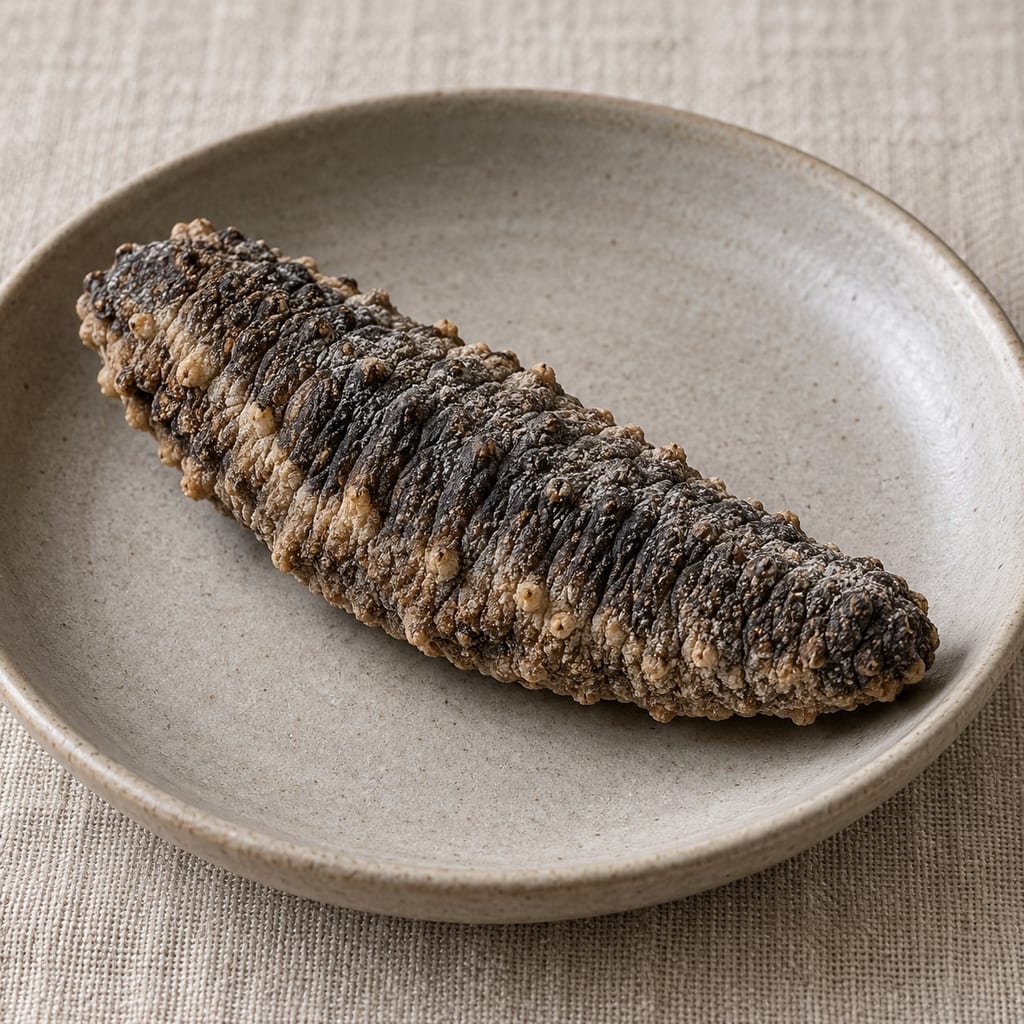
Sea cucumber cleaned, boiled and dried, sometimes with smoke, into a long-keeping trade product; Makassan processing in Arnhem Land is documented from at least the eighteenth century.
No community contributions have been published for this entry yet.
Sign in to contribute. Published comments and photos are free to read.
WikipediaHistory · Method · Variants
Marinara sauceFolk origins mid-1500s; Latini 1692 and 1694; base ingredients; alla marinara; sugo finto; spaghetti marinara; no canning advice
Cited in: Two tomato sauces with one base; Origins of the tomato sauce; Making and serving the sauce; Storage and acidity
WikipediaHistory · Method
Arrabbiata sauceRome, 1950s and 1960s approximate; films Roma (1972) and La Grande Bouffe (1973); name meaning; ingredients; Parmesan or pecorino
Cited in: Two tomato sauces with one base; The arrabbiata dish; Storage and acidity
NPR / Fresh Air, republished by North Country Public RadioHistory · Variants
How 'Italian Food' Became A Global SensationJohn Mariani identifies marinara as Italian-American usage for a quick tomato sauce and distinguishes that name from Italian usage.
The interview discusses the sailor-origin stories as uncertain folk explanations, not established history.
Cited in: Two tomato sauces with one base
La Cucina ItalianaMethod · Geography · Variants
Tutto quello che non sapete sulle penne all’arrabbiataThe article traces arrabbiata as a Romanesco expression for spicy or burning preparations and documents Roman tomato-and-chilli recipes in Italian cookbooks.
Historical versions vary in pasta, herbs and additional ingredients; arrabbiata should not be presented as only a chilli variant of one fixed marinara sauce.
Cited in: Two tomato sauces with one base; The arrabbiata dish