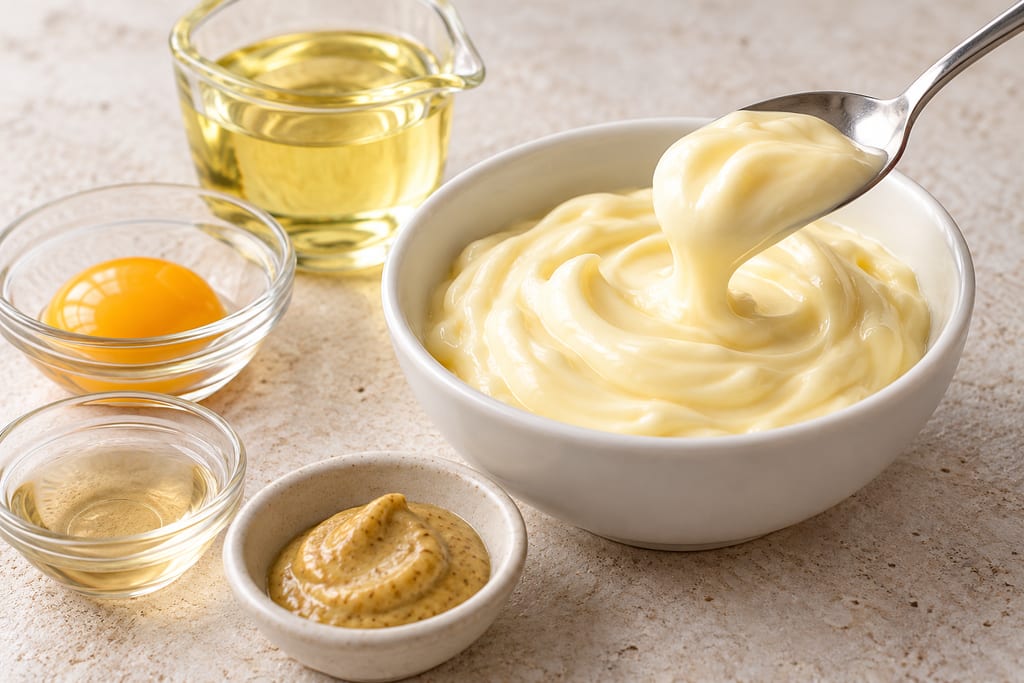
Neutral classic mayonnaise
A plain mayonnaise of 200 g refined neutral oil emulsified into pasteurised yolk, vinegar, water and a little Dijon mustard: a clean base for tasting, comparing and flavouring.
 FermenteaWhere food goes to change
Sauce tartare · Tartar sauce · Tatarska omacka
A mayonnaise sauce with chopped gherkins or capers, herbs and lemon, served with fried and grilled fish. It was named in nineteenth-century France alongside steak tartare.

Tartare sauce is mayonnaise with chopped pickles, capers and herbs. Its sharp, briny character comes from the gherkins and capers, and it is served with fish, especially fried or grilled fish. It is a composite cold sauce built on an egg emulsion, not a fermented or preserved product, although its pickles are preserved.
The sauce is one of the most widely known mayonnaise derivatives. The site's mayonnaise record covers the base; this record covers the sauce made from it.
The cited entry lists France as the place of origin and says the sauce is known as sauce tartare there. Its name comes from steak tartare, with which it was commonly served in nineteenth-century France. The entry says the name is ultimately linked to the Tatars, but that is a name association. It does not show that the Tatars made the sauce.
English recipes appear in the mid-nineteenth century, and Eliza Acton's Modern Cookery for Private Families of 1860 is named as one. The sauce was also popular in late nineteenth-century Hungary, where a 1892 cookbook is cited. Today it is widely used across Central and Eastern Europe.
Mayonnaise or aioli is the base. Gherkins or other pickles give the sharp, salty note, and capers add a second briny element. Lemon juice brightens the sauce. Soft herbs such as dill, parsley and chives are common, and tarragon appears in some versions. Chopped hard-boiled egg and olives are added in some US versions, along with Dijon mustard and cocktail onions.
The British version is typically made with capers, gherkins, lemon juice and dill. Hungarian variants may include sour cream or cream, a little sugar, white pepper and white wine.
The mayonnaise is made first or bought, then the pickles, capers and herbs are chopped fine and folded in with lemon juice. The sauce is adjusted for acid and salt before service. The cited entry gives no quantities or steps, so proportions are a matter for the cook and the local recipe.
Tartare sauce is typically served with breaded and fried seafood. In Europe it is also served with meats such as Wiener schnitzel, and with cold meat and seafood dishes, according to the cited entry.
The cited entry gives no storage or food-safety guidance. An egg-based sauce is a food-safety concern if it is kept warm or left at room temperature, and the pickles, though preserved, do not make the finished sauce shelf-stable. Refrigeration is the control recorded here. Published accounts set no keeping time for a homemade sauce.
Commercial tartare sauces are acidified and have their own pH and shelf life, which do not transfer to a sauce made at home.
The exact date of the first tartare recipe, the pickle and herb proportions, and the keeping time of the homemade sauce are not established by the entry read. A French culinary history source and a tested storage study would be the next research steps.
Tartare sauce is a mayonnaise derivative in which chopped pickles and herbs are added. The cited entry places its origin in France and says the name comes from steak tartare, which the sauce was commonly served with in nineteenth-century France. The Tatar connection is described as ultimately the origin of the steak name, not as proof that the Tatars made the sauce. Recipes appear in English books of the mid-nineteenth century and in late nineteenth-century Hungary.
Scaling: source batch only
The base is an egg-yolk emulsion, which is a food-safety concern if raw egg is used or the sauce is kept warm. The cited entry gives no safety control.
Hazard sourceRefrigerate the sauce and use a pasteurised or cooked-egg base
Control sourceKeep refrigerated. The cited entry gives no storage time.
The place of origin is given as France in the cited entry. Its name is linked to steak tartare.
The British version is spelled tartare or tartar and typically adds capers, gherkins, lemon juice and dill.
The cited entry says the sauce was popular in late nineteenth-century Hungary, citing a 1892 cookbook.
A plain mayonnaise of 200 g refined neutral oil emulsified into pasteurised yolk, vinegar, water and a little Dijon mustard: a clean base for tasting, comparing and flavouring.
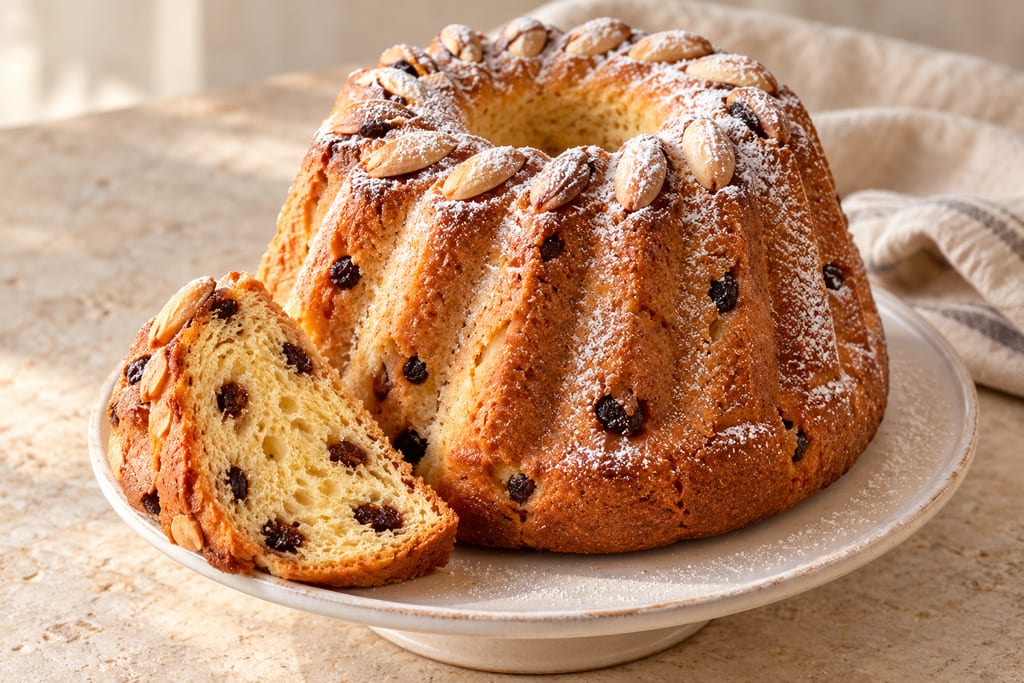
An enriched Alsatian yeast ring with raisins and almonds, kneaded with butter, proofed in a fluted mould and baked until browned.
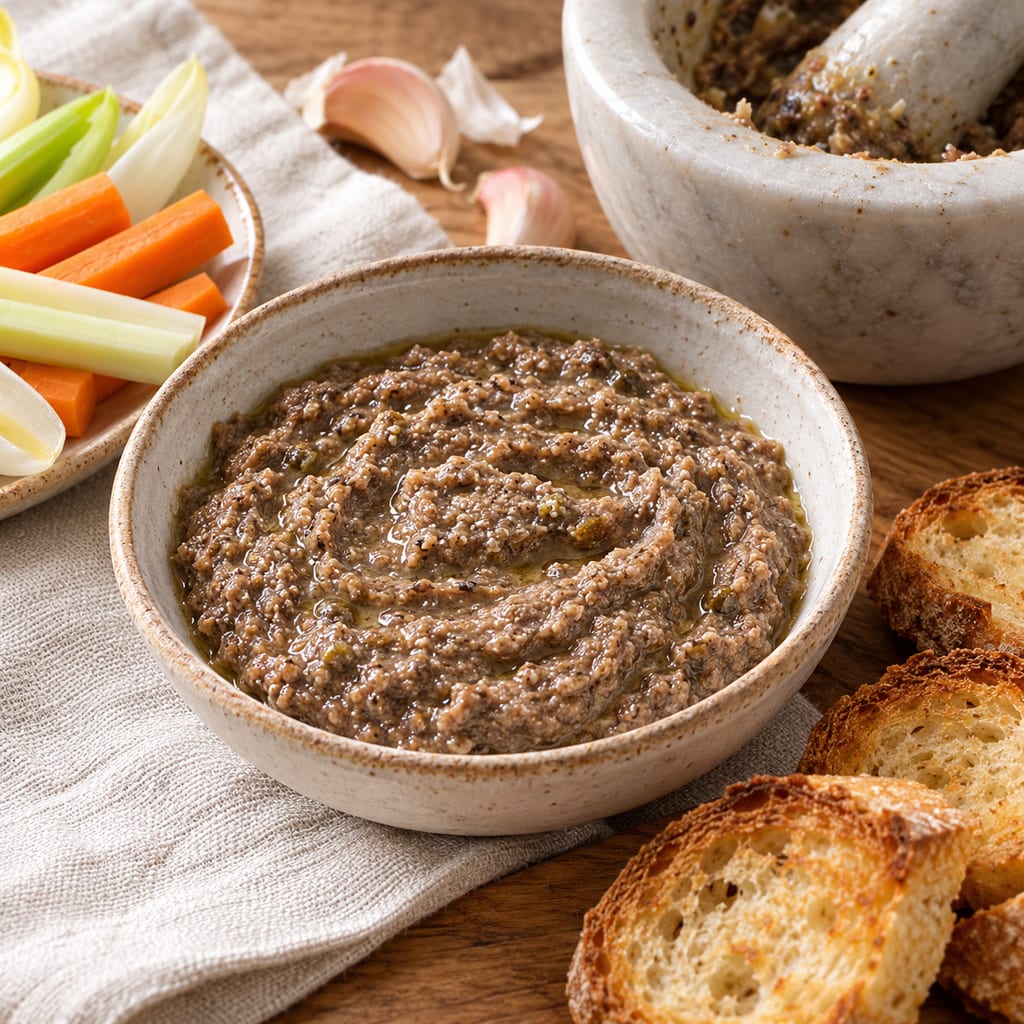
A Provencal dip of anchovies, garlic, capers and olive oil, pounded or blended to a creamy paste and served with raw vegetables, bread and eggs.

A warm dip of garlic, anchovy and olive oil, often enriched with butter, that Piedmont serves over a flame with raw and cooked vegetables and bread.
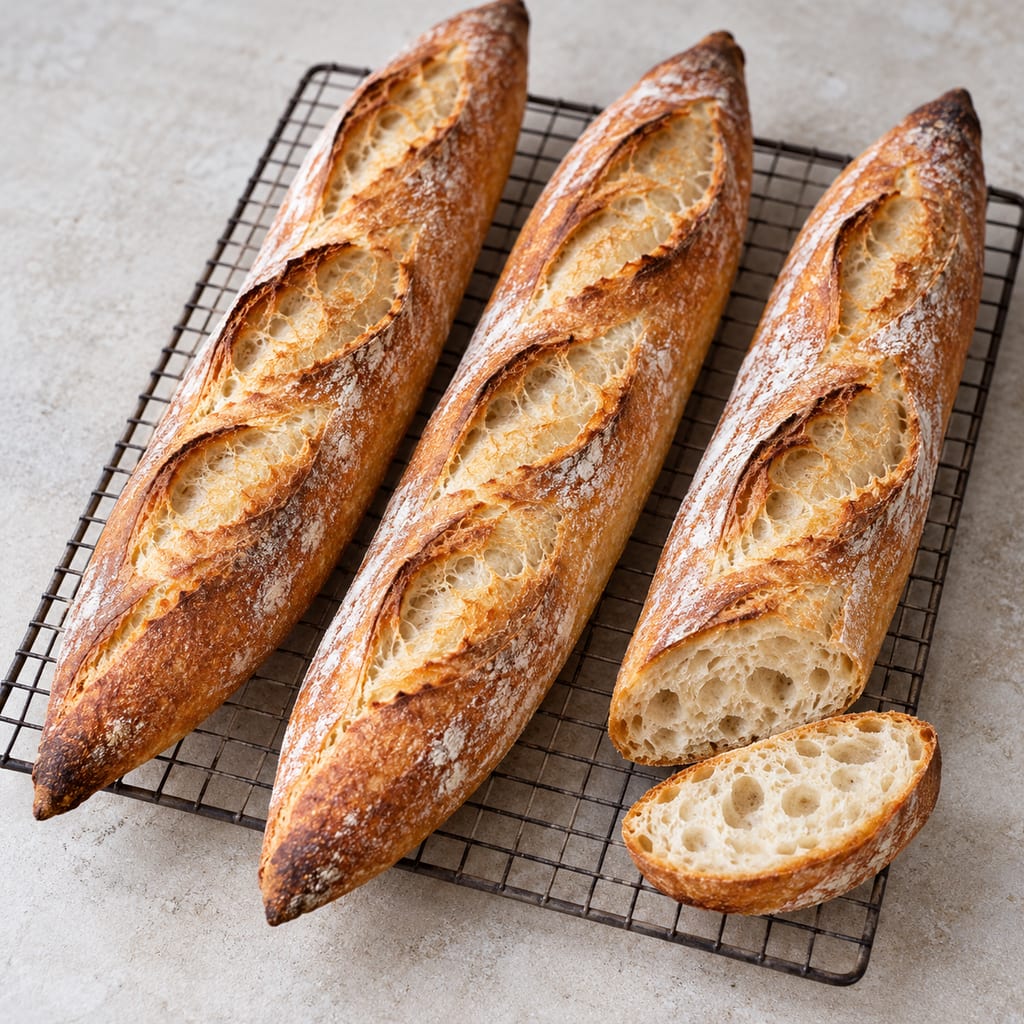
Three long, crusty wheat loaves made with an overnight yeast poolish, shaped by hand and baked with steam for a crisp crust.

Bechamel is a white sauce of milk thickened with a butter and flour roux, one of the French mother sauces, and the base from which Mornay and other cheese and cream sauces are made.
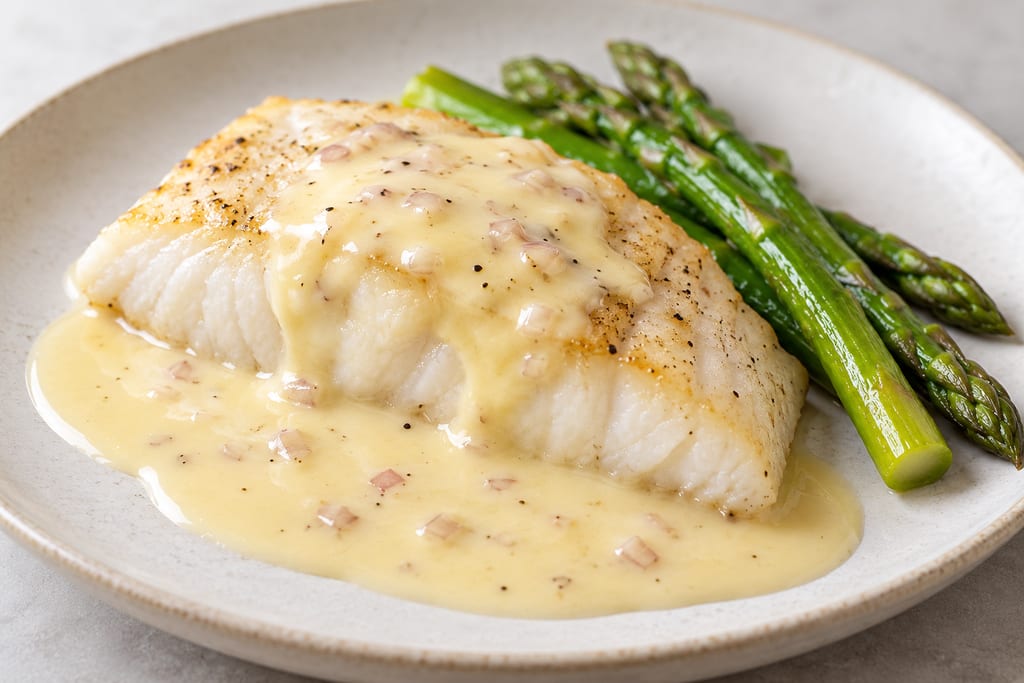
Beurre blanc is a warm emulsion of cold butter whisked into a reduction of white wine, vinegar or lemon juice and shallot, a sauce from the Loire Valley and its red-wine version, beurre rouge.
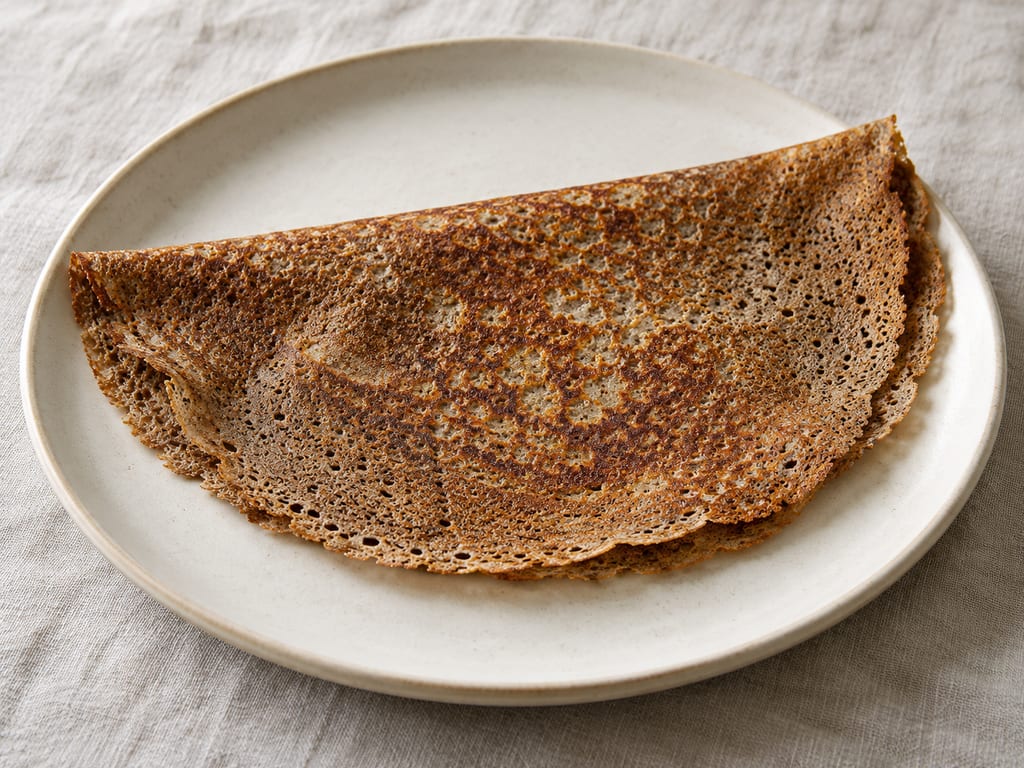
A thin Brittany galette made from buckwheat flour, water and Guérande salt. This Atelier de la Crêpe method rests the batter in a refrigerator before cooking it on a hot crêpière.
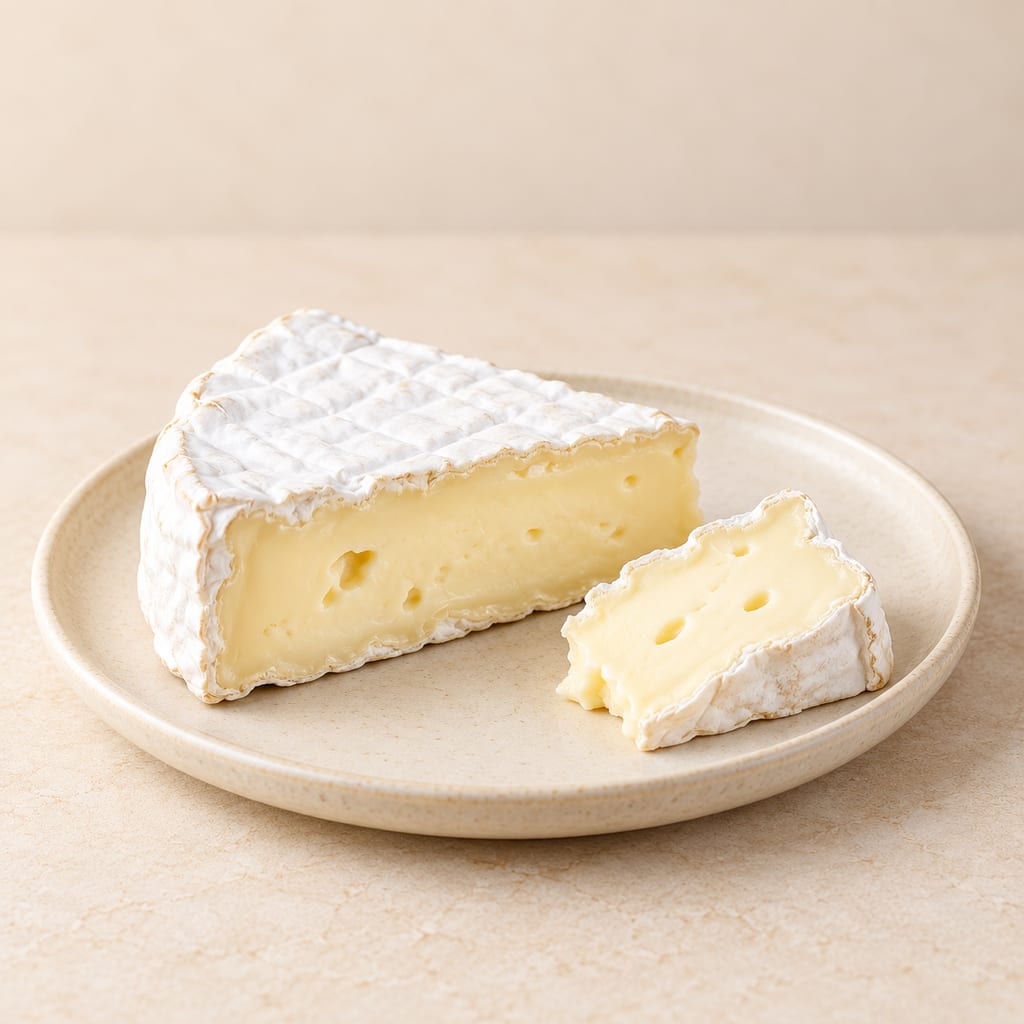
A cream-enriched Brie with a white bloomy rind and a softening center, made from pasteurized milk with lactic and surface cultures.

A Cap-Pelé boucanière is an Acadian herring-smoking building. The documented Willie Niles example is a one-storey wood-frame structure with a ridge smoke vent and interior bays for hanging fish-bearing cannes.

Achcharu is a family of Sri Lankan vinegar pickles made with mixed vegetables or seasonal fruit and a piquant spice dressing. This version is a quick, refrigerated, non-fermented mixed-vegetable pickle.

The acocote is a long, hollowed and dried gourd used to draw aguamiel from a mature maguey. It is a harvesting tool: the sap is transferred to a separate vessel before it ferments into pulque.

Adrak murabba preserves young ginger in sugar syrup, a sweet South Asian preparation recorded in Indian cookery and food-processing sources.

Parkia biglobosa seeds are fermented into regional West African seasonings, including nététou, iru, dawadawa and soumbala. The yellow fruit pulp is a separate food, and names and methods vary by place.

Japanese reddish-brown vinegar from sake lees matured about three years, turned to vinegar by acetic bacteria; the vinegar of Handa and Edomae sushi rice.

A refined common-wheat flour blended for a broad range of baking; its protein and behavior vary with wheat, milling and market.

The almond mushroom, Agaricus subrufescens, was cultivated in eastern North America in the 1800s, lost its market, and returned as a cultivated mushroom from Brazil, where it is grown under several names.
No community contributions have been published for this entry yet.
Sign in to contribute. Published comments and photos are free to read.
WikipediaHistory · Method · Serving
Tartar saucePlace of origin France; name from steak tartare served with it in nineteenth-century France; Tatar link as a name association
Mid-nineteenth-century English recipes including Eliza Acton (1860); popular in late nineteenth-century Hungary citing a 1892 cookbook
Base of mayonnaise or aioli with gherkins, lemon, capers, dill, parsley, chives or tarragon; served with fried seafood, Wiener schnitzel and cold meat
Cited in: Overview; Name and history; Ingredients and their roles; Method; Serving; Storage and safety; Unknowns