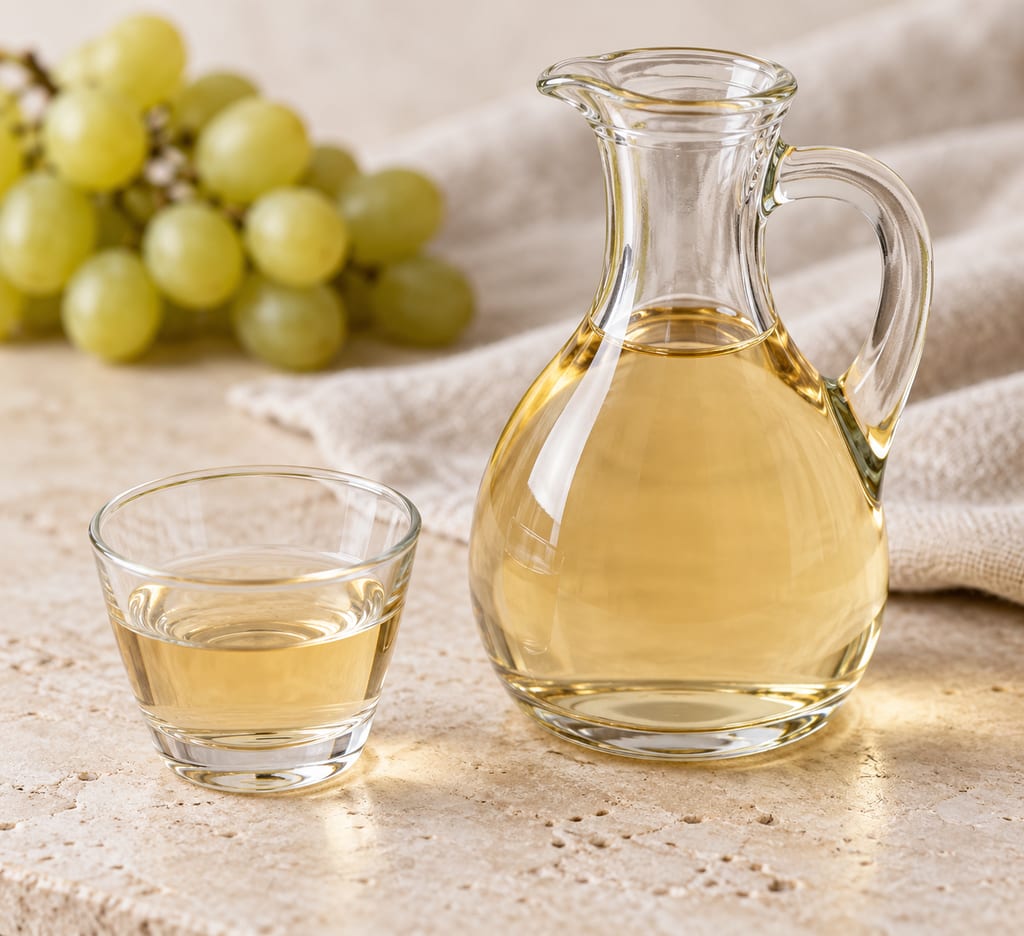
White-wine vinegar
White-wine vinegar is made when acetic acid bacteria oxidise the alcohol in finished white grape wine, yielding a pale, wine-derived souring condiment for dressings, sauces and cooking.
 FermenteaWhere food goes to change
Sauce ravigote · Ravigotte · White ravigotte sauce
A French cold sauce, in its modern sense a vinaigrette with capers, parsley, chervil, tarragon and shallot or onion, served with fish, shellfish, meat and celeriac.
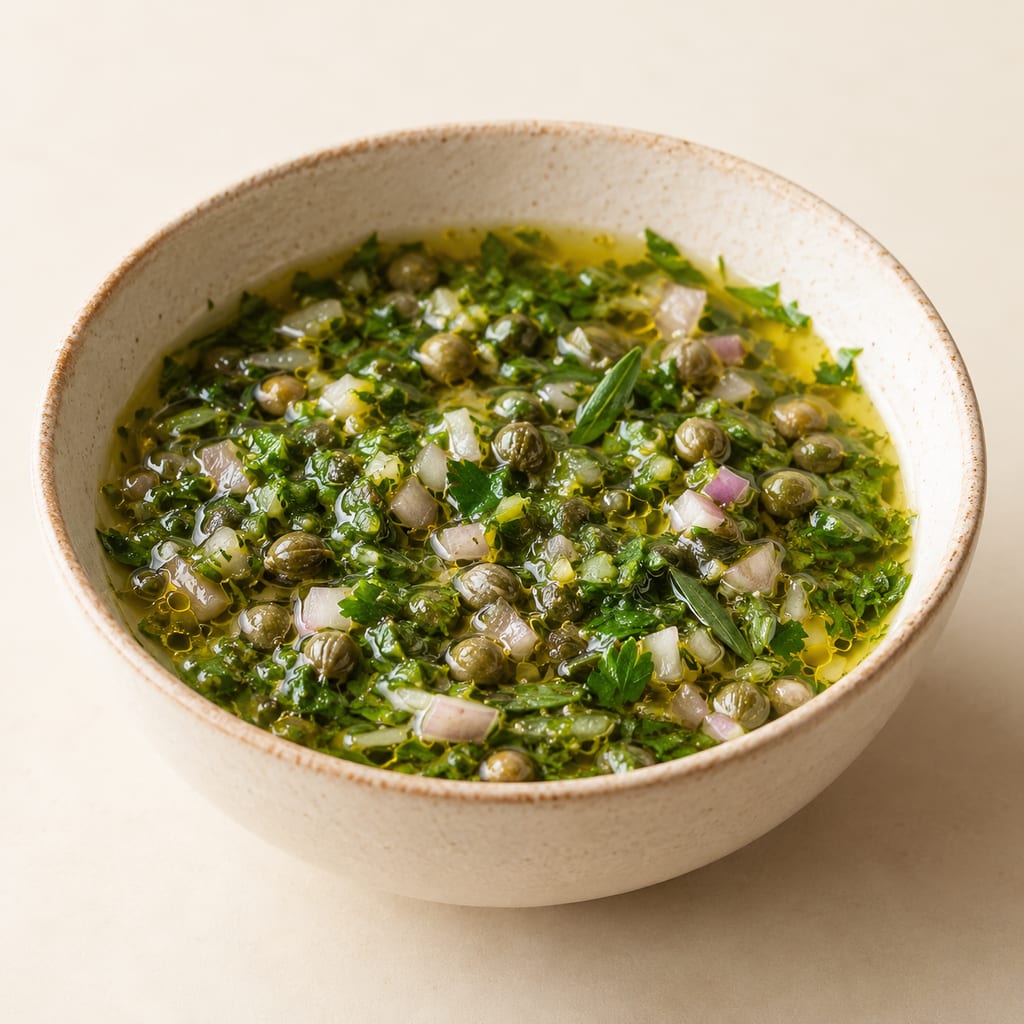
Ravigote is a French cold sauce whose modern meaning is a vinaigrette finished with chopped herbs and a sharp garnish. The classic herbs are parsley, chervil and tarragon, with capers, cornichons, and chopped shallot or onion. The vinaigrette base is an oil and vinegar dressing, and the herbs give the sauce its colour and aroma.
The sauce is typical of French cuisine. The French article describes it as served cold and accompanies celery, fish, shellfish and meats, so its use is closer to a garnish for cooked food than to a salad dressing.
The name is an alteration of the French verb ravigoter, from revigoter, to revive or invigorate, and is attested from 1712. The Brachet dictionary of 1868 traces it to the old verb ravigorer, to restore to vigour.
The French article notes that in the seventeenth century the ravigote belonged to a group of piquant sauces alongside rémoulade. Earlier forms of the sauce were served hot as well as cold, a point that separates the older sauce from the modern cold one.
In English the older spelling ravigotte is kept, and the sauces are called white ravigotte or green ravigotte, names that the French article records without dates. It cites a 1827 use for fillets of sole à la ravigotte.
The French article records that Dijon mustard appears in recent versions of the English ravigotte sauce, dated to 2007. The sources read give no quantities, no shelf life and no safe holding time for the cold sauce.
The name comes from ravigoter, a verb meaning to revive or strengthen, which is attested in French from 1712. The French article places the sauce among the sharp sauces of seventeenth-century cookery, alongside rémoulade.
Typical of French cuisine; the source gives no locality.
White-wine vinegar is made when acetic acid bacteria oxidise the alcohol in finished white grape wine, yielding a pale, wine-derived souring condiment for dressings, sauces and cooking.

A warm dip of garlic, anchovy and olive oil, often enriched with butter, that Piedmont serves over a flame with raw and cooked vegetables and bread.

Bechamel is a white sauce of milk thickened with a butter and flour roux, one of the French mother sauces, and the base from which Mornay and other cheese and cream sauces are made.
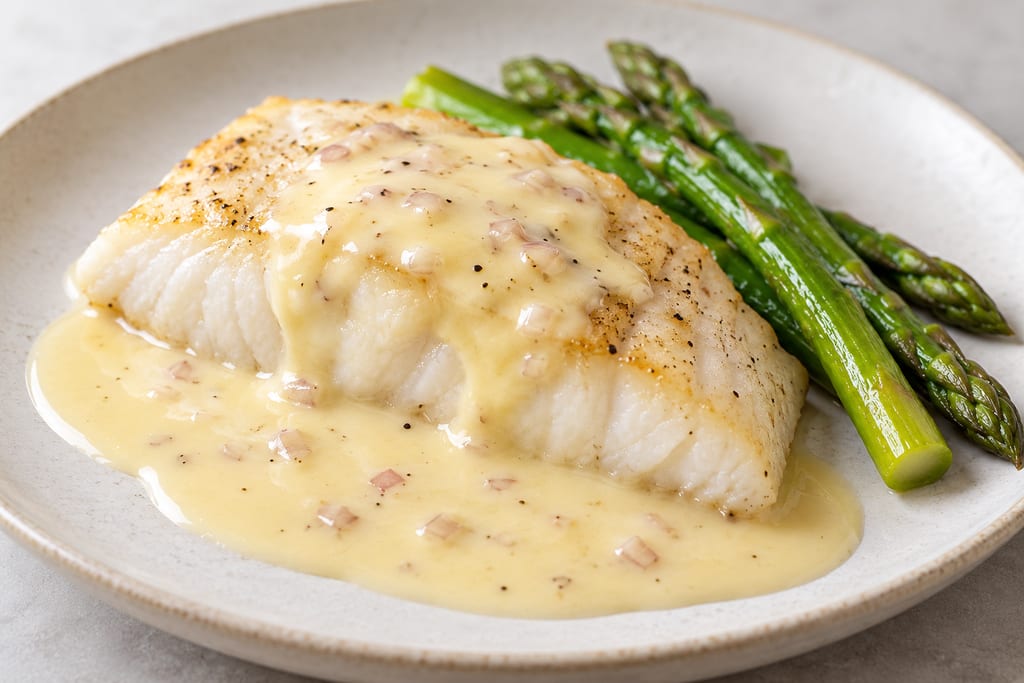
Beurre blanc is a warm emulsion of cold butter whisked into a reduction of white wine, vinegar or lemon juice and shallot, a sauce from the Loire Valley and its red-wine version, beurre rouge.
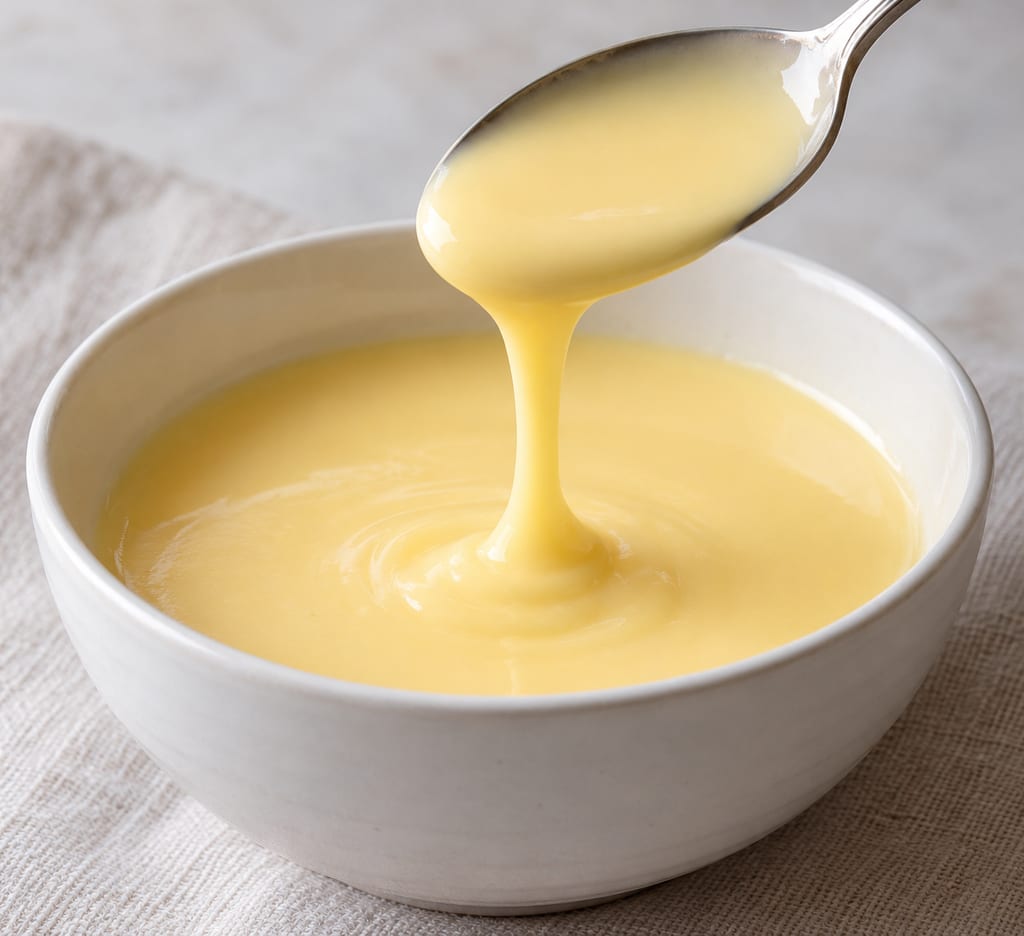
A thin, pourable custard sauce of egg yolks, sugar and hot milk or cream, cooked gently until it coats a spoon and no further.
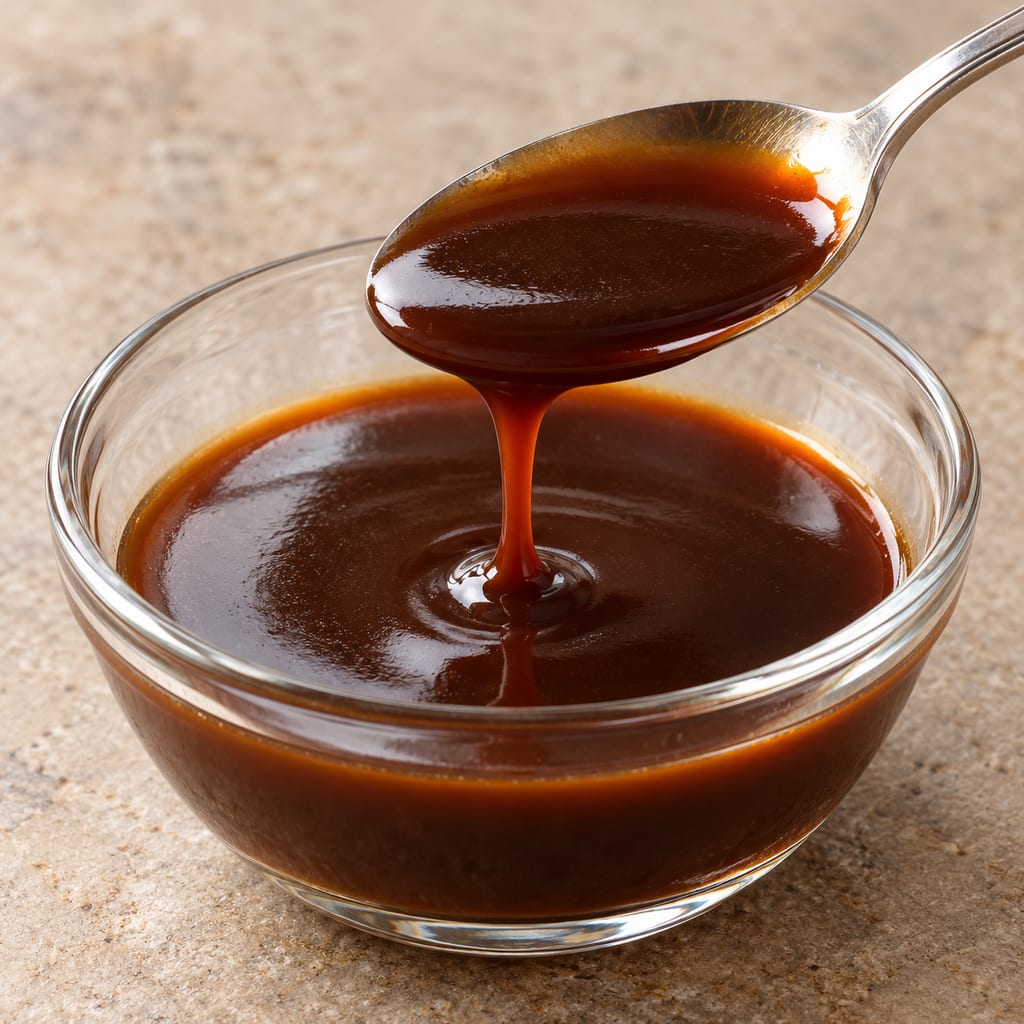
Demi-glace is a rich brown sauce of French cookery, classically made by reducing equal parts espagnole sauce and brown stock by half. It is used on its own or as a base for other sauces.
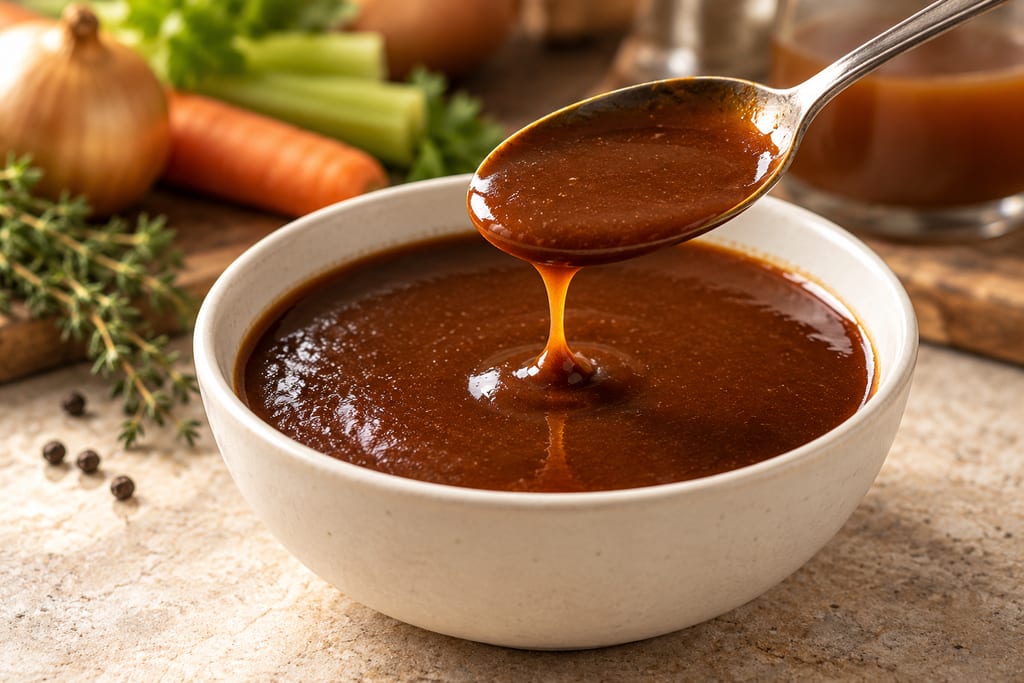
Espagnole is a brown mother sauce built on a dark roux, brown veal or beef stock and tomato, the base from which demi-glace and many brown sauces are made.
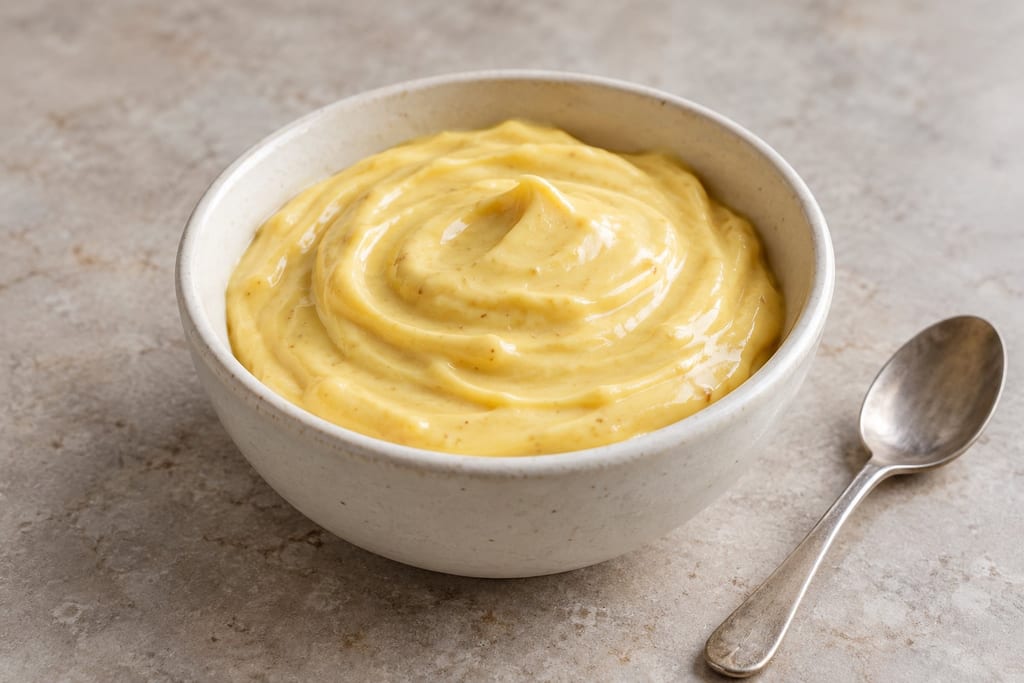
An untested home mayonnaise development formula with more Dijon mustard and no added sugar. A current French-market Dijon mayonnaise informs its flavor direction; this is not that product’s formula.
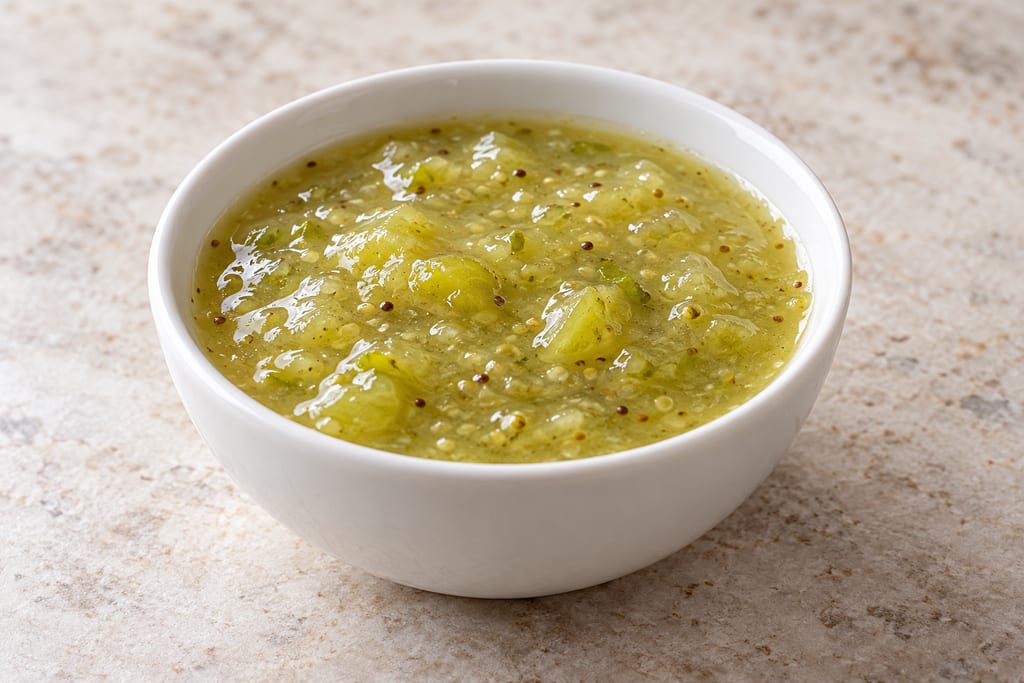
Gooseberry sauce is a soft, tart sauce of cooked green gooseberries, sharpened with wine or vinegar and lightly sweetened, traditionally served with mackerel.
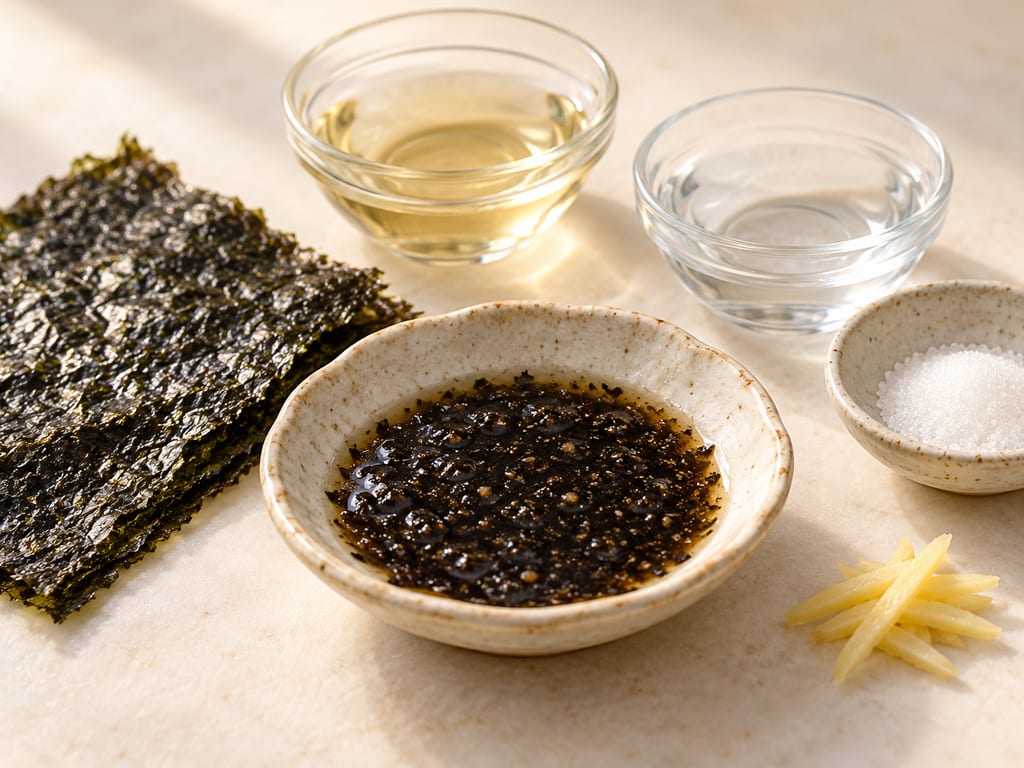
A fresh condiment in which crumbled nori softens in lightly sweetened vinegar and water. It is not vinegar fermented from seaweed.
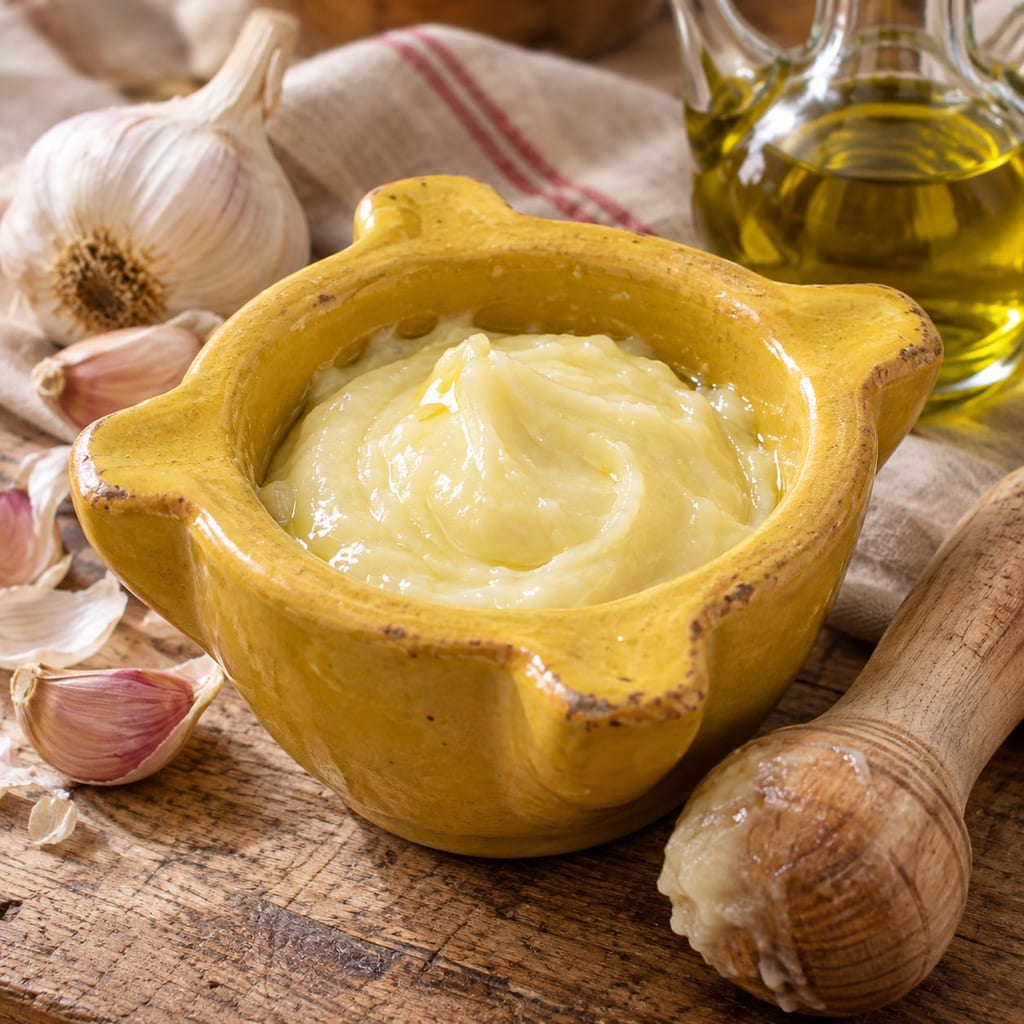
Traditional Catalan allioli is a dense emulsion of garlic, olive oil and salt made slowly in a mortar. This measured Barcelona-style version keeps egg-based garlic mayonnaise distinct.
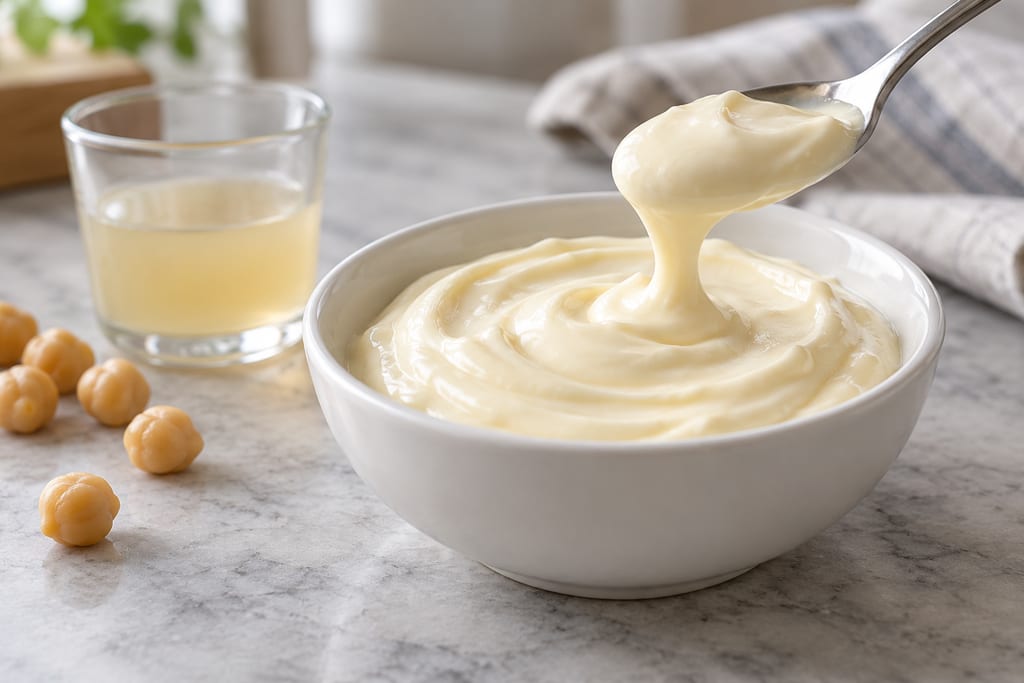
An eggless, untested emulsion made with canned chickpea liquid. Nominal yield 255 g.
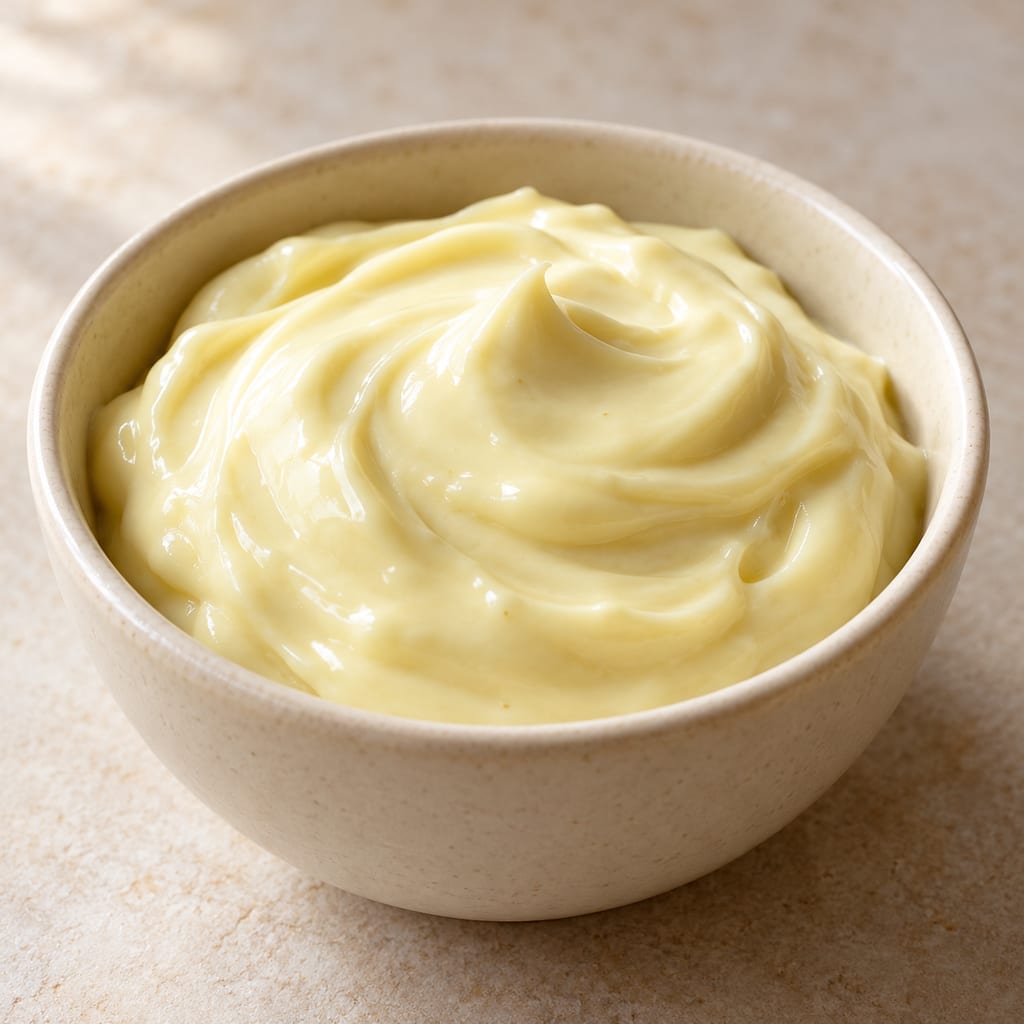
Avocado-oil mayonnaise is an ordinary egg-and-oil emulsion in which avocado oil supplies the oil phase. The oil changes flavour and colour, and it does not preserve the sauce.
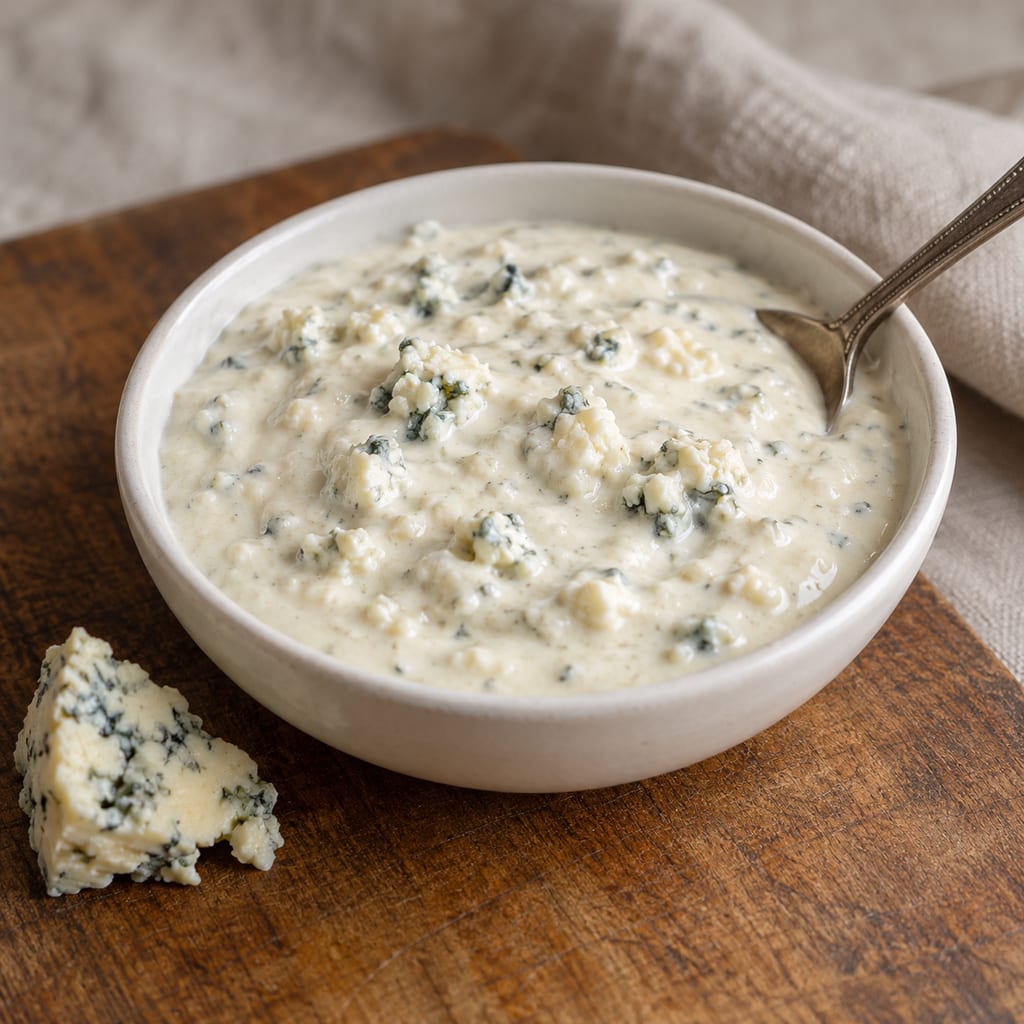
Blue cheese dressing is a creamy dressing built on crumbled blue cheese mashed into buttermilk, with sour cream, mayonnaise, vinegar and seasoning, and kept cold for up to two weeks.
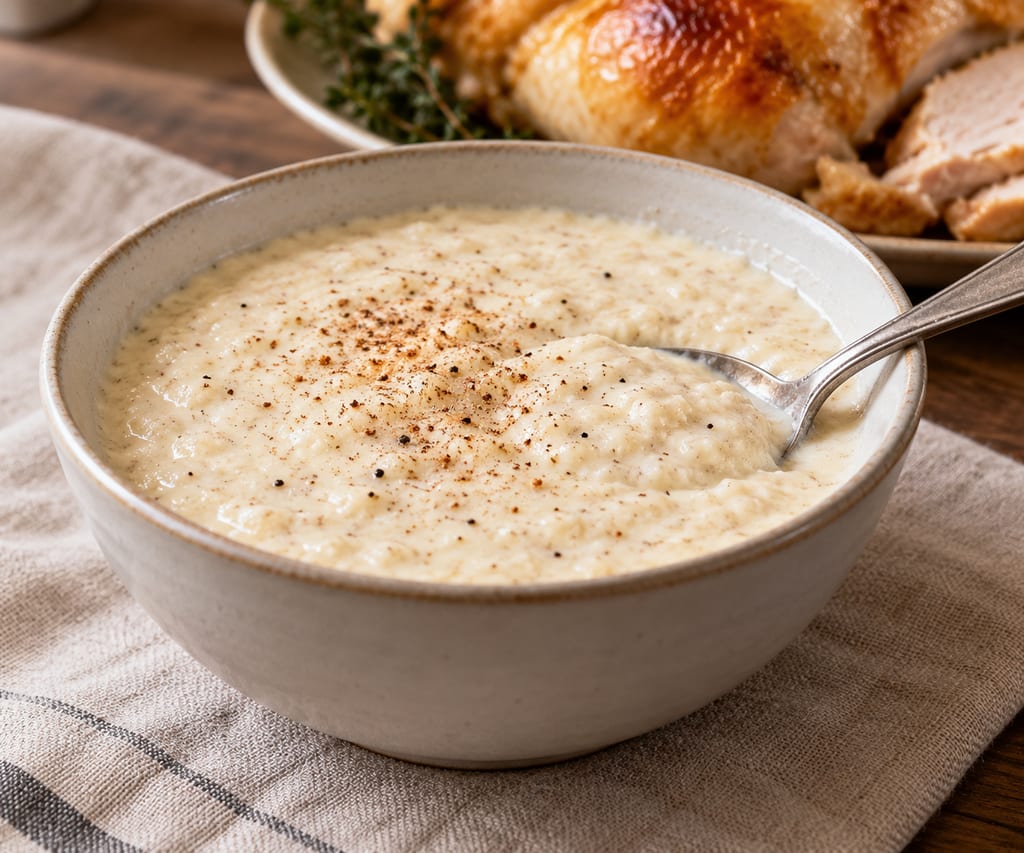
Bread sauce is a British sauce of milk infused with onion, clove and bay, thickened with stale breadcrumbs and finished with butter, served with roast chicken or turkey.
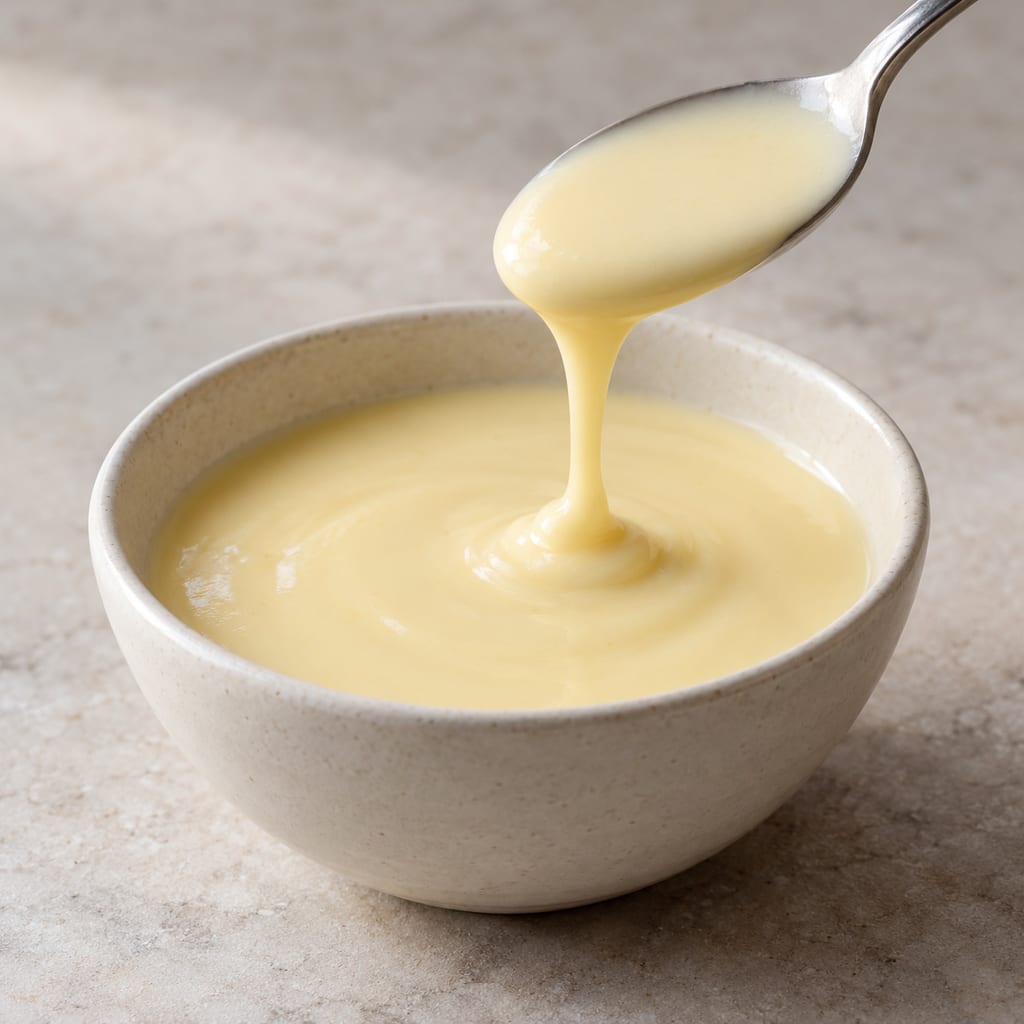
Starch-thickened salad-cream prototype with pasteurised yolk added after cooling; not a Heinz copy. Approximate yield 300 g.
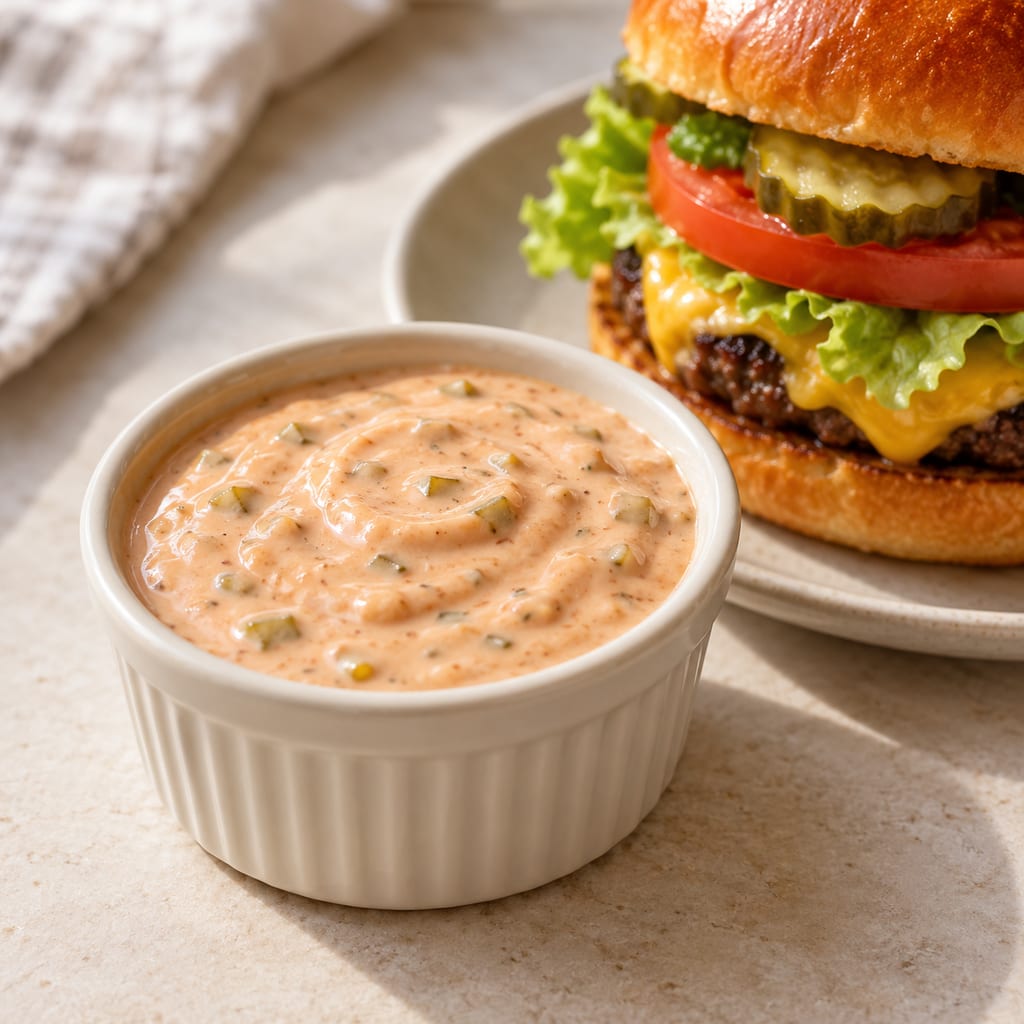
Mayonnaise mixed with ketchup, drained pickle relish and yellow mustard makes a tangy, pickle-flecked sauce for burgers; these proportions are an untested starting point.

A gelling polysaccharide extracted from red seaweeds, sold as kanten strips or powder; it sets firm at a low concentration and stays solid until about 85 °C.

A Dominican table and seasoning condiment of sour orange juice, mixed with lime and salt and bottled raw; garlic, oregano or a hot pepper may be added for meat or a spicier bottle.

Cicerbita alpina is an alpine perennial whose tender shoots and leaves have been eaten raw or cooked. Sámi milk preparations and modern Carnian dishes are distinct uses, with serious identification and preservation limits.

Japanese skipjack tuna cooked, then repeatedly smoked and dried over a wood fire by the hand-fired tebiyama method into a hard block for shaving into dashi: the first stage of katsuobushi.

A Swedish-style spirit vinegar made by fermenting neutral alcohol with live vinegar bacteria, with a separate guide to commercial ättika strengths.

A yeast-raised wheat ring shaped from a firm dough, briefly boiled and baked. This source-batch formula gives a gently malted crust and a chewy crumb.
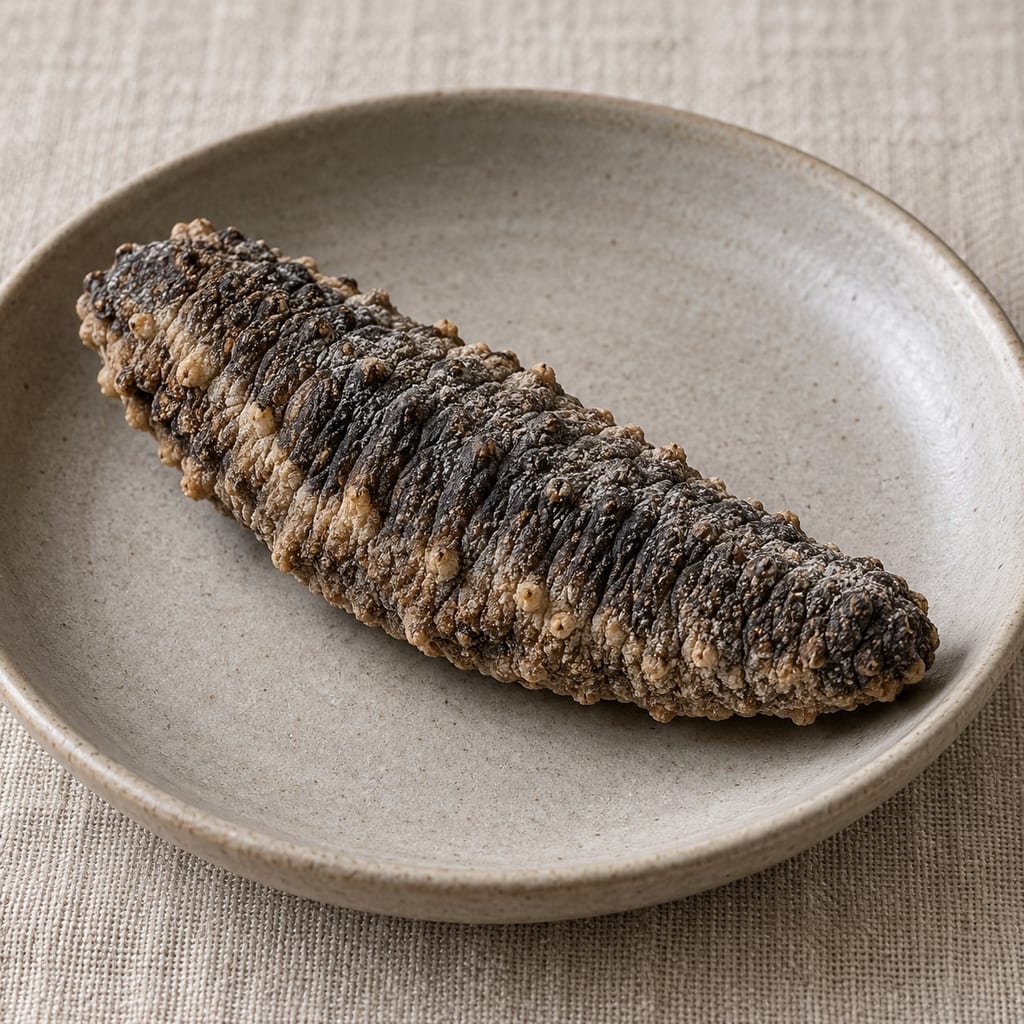
Sea cucumber cleaned, boiled and dried, sometimes with smoke, into a long-keeping trade product; Makassan processing in Arnhem Land is documented from at least the eighteenth century.
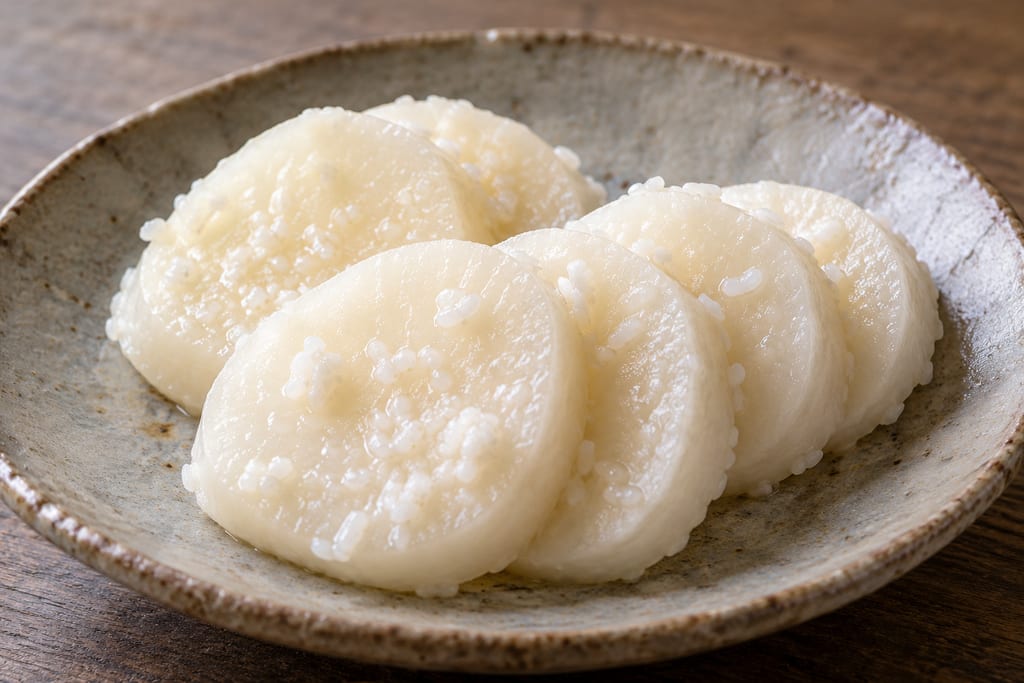
A sweet, crisp Japanese daikon pickle from Tokyo's Nihonbashi district, made by salting fresh radish and dressing it in rice koji, sugar or koji amazake without the heavy drying used for takuan.
No community contributions have been published for this entry yet.
Sign in to contribute. Published comments and photos are free to read.
Wikipédia (français)Identity · History · Method · Serving
Sauce ravigoteModern sense: a cold vinaigrette with capers, parsley, chervil, tarragon, chopped shallot or onion; served cold, formerly hot and cold; accompanies celery, fish, shellfish and meats; name from revigoter, ravigoter (1712); sauce among the piquant sauces of 17th-century cookery with rémoulade; English spellings ravigotte, white ravigotte and green ravigotte; Dijon mustard in 2007 versions of ravigotte sauce
Cited in: A vinaigrette with herbs and capers; A name from the verb to revive; Variants and English names