
Bagna cauda
A warm dip of garlic, anchovy and olive oil, often enriched with butter, that Piedmont serves over a flame with raw and cooked vegetables and bread.
 FermenteaWhere food goes to change
demi-glace (French, half-glaze) · Demi glace · Demi-glaze · Half-glaze · Demi-glace classique · Demi-glace au boeuf · Demi-glace au poulet
Demi-glace is a rich brown sauce of French cookery, classically made by reducing equal parts espagnole sauce and brown stock by half. It is used on its own or as a base for other sauces.
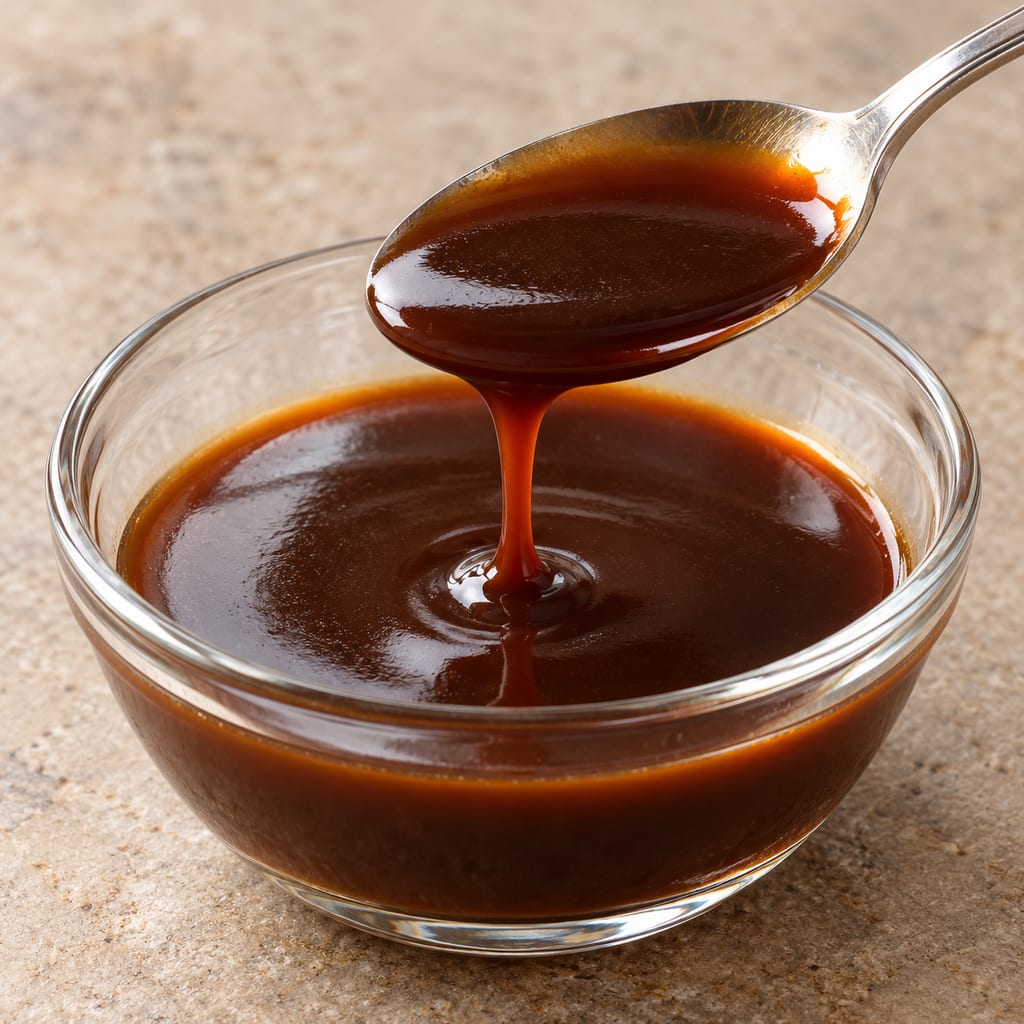
Demi-glace is a rich brown sauce in French cookery, used on its own or as the base for other sauces. The name means half-glaze, and in sauce terms glace means icing or glaze. The sauce is a reduction of a brown sauce, not a cream or emulsion.
Common variants mix beef or chicken stock 1:1 with espagnole. These are called demi-glace au boeuf or demi-glace au poulet.
The classical method combines equal parts espagnole sauce and brown stock. The mixture is reduced by half, strained of impurities, and finished with sherry.
The espagnole used in this method is a separate sauce with its own record. The source does not give a volume or a reduction time.
The traditional method takes considerable effort, so chefs often use a simpler jus lie made from veal stock instead of the full espagnole route. Julia Child called the espagnole-free version a semi-demi-glace. The source gives no date for her usage.
A reduced brown stock is not the same as the classical sauce. The classical demi-glace is built on espagnole, a thickened base, and the reduction of that base with stock. A reduced jus has no roux and is reduced from stock alone.
The difference matters for storage research. A concentrated sauce is not thereby a safe ambient product. Any preservation of demi-glace needs its own tested method.
The origin of the classical method is not firmly dated in the source. The attribution to Escoffier rests on his 1907 book, and the claim that he first systematised the sauce is not supported by the source.
The source gives no origin date for demi-glace. Its only dated reference is Auguste Escoffier's A Guide to Modern Cookery (1907), cited for a half-glaze recipe. The source does not say Escoffier codified the sauce.
Scaling: source batch only
A stock reduced by half is a hot, concentrated liquid.
Hazard sourceStrain the sauce before finishing
Control sourceConcentration adds flavour. It does not establish safe room temperature storage, and no shelf life is recorded in the source.
The name and classical method are French. No dated origin is established.
A warm dip of garlic, anchovy and olive oil, often enriched with butter, that Piedmont serves over a flame with raw and cooked vegetables and bread.

Bechamel is a white sauce of milk thickened with a butter and flour roux, one of the French mother sauces, and the base from which Mornay and other cheese and cream sauces are made.
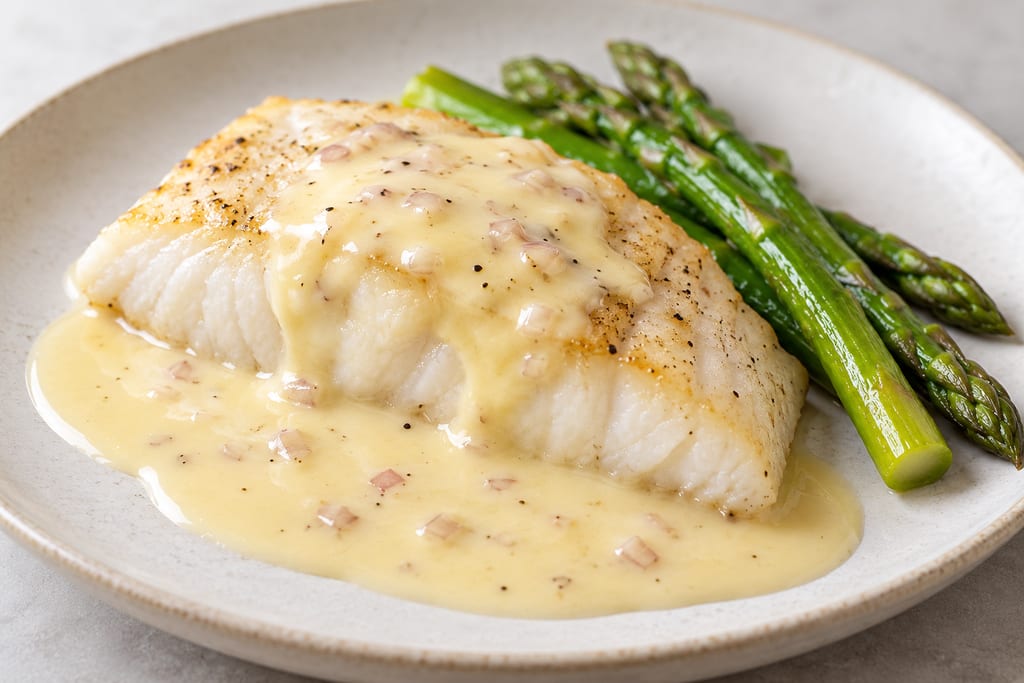
Beurre blanc is a warm emulsion of cold butter whisked into a reduction of white wine, vinegar or lemon juice and shallot, a sauce from the Loire Valley and its red-wine version, beurre rouge.

A thin, pourable custard sauce of egg yolks, sugar and hot milk or cream, cooked gently until it coats a spoon and no further.
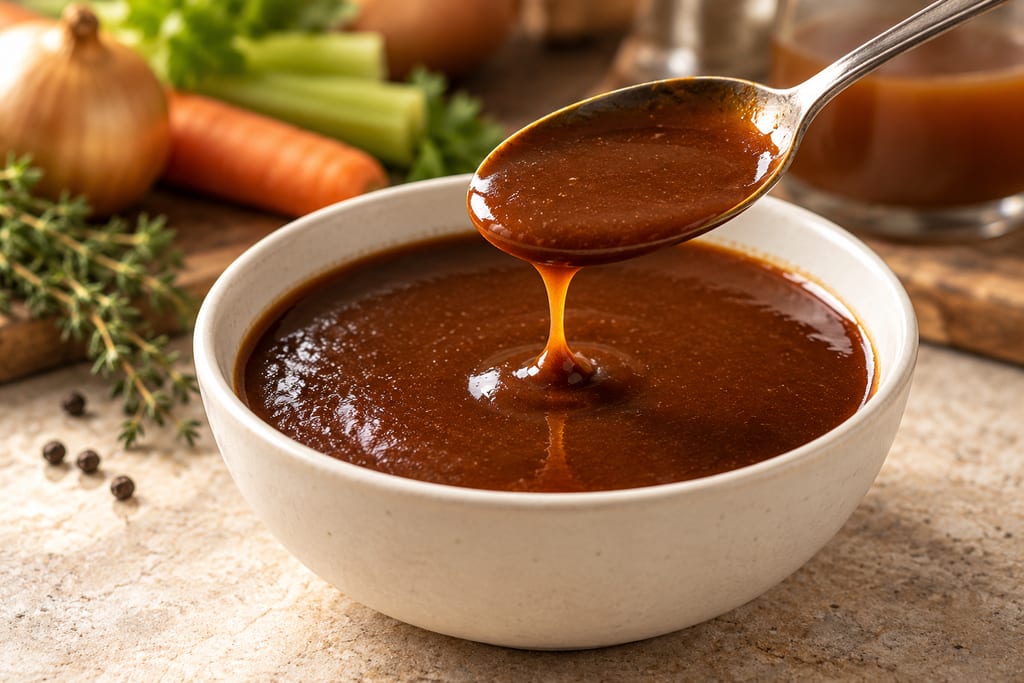
Espagnole is a brown mother sauce built on a dark roux, brown veal or beef stock and tomato, the base from which demi-glace and many brown sauces are made.
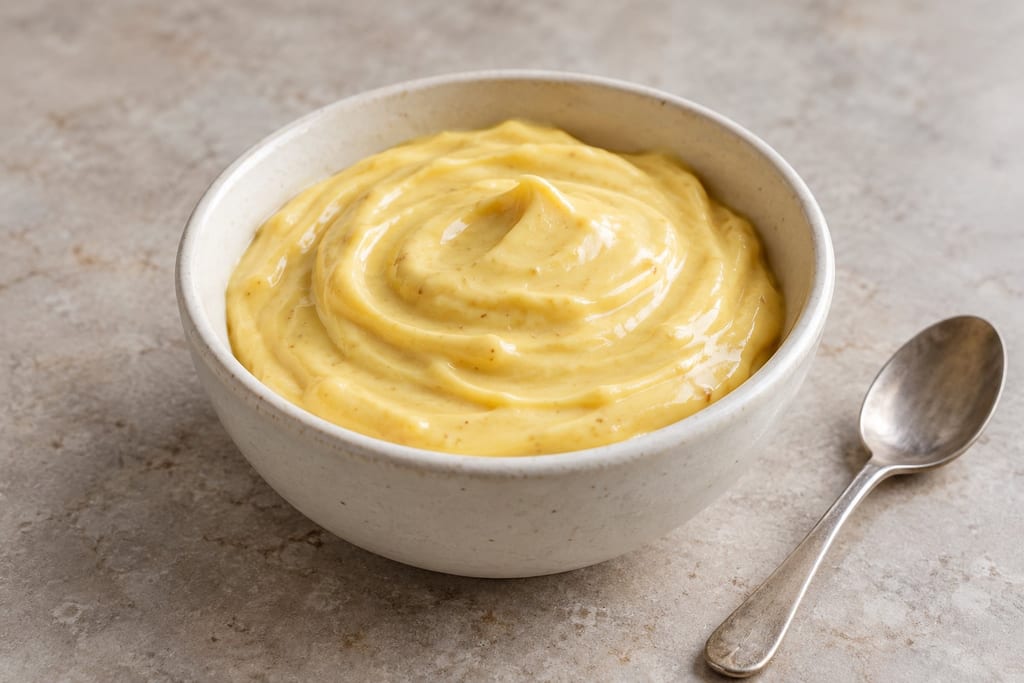
An untested home mayonnaise development formula with more Dijon mustard and no added sugar. A current French-market Dijon mayonnaise informs its flavor direction; this is not that product’s formula.
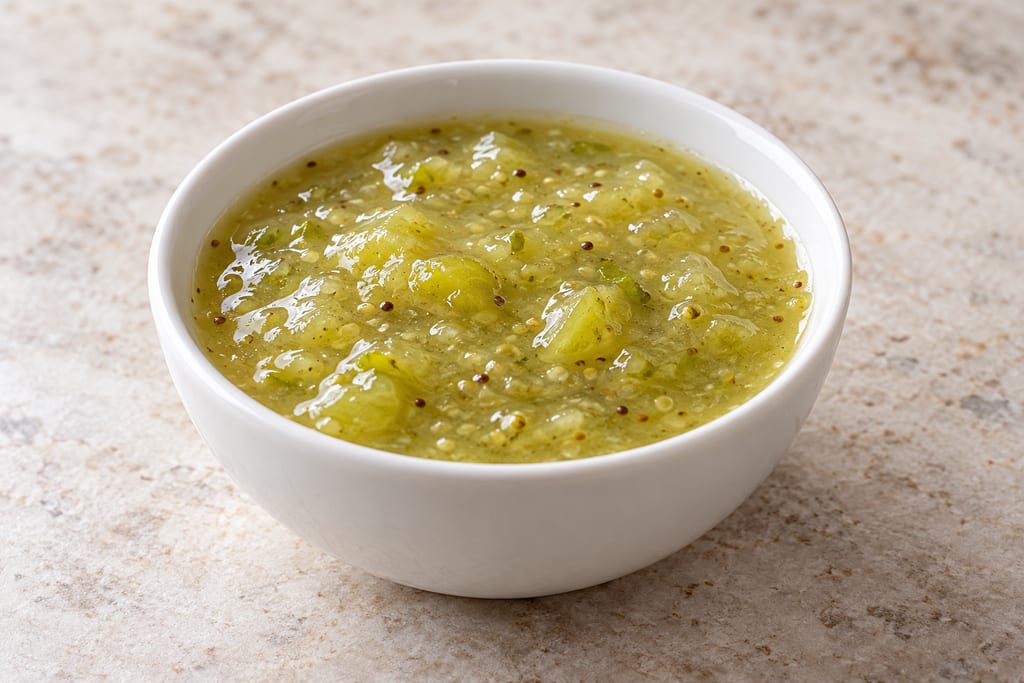
Gooseberry sauce is a soft, tart sauce of cooked green gooseberries, sharpened with wine or vinegar and lightly sweetened, traditionally served with mackerel.
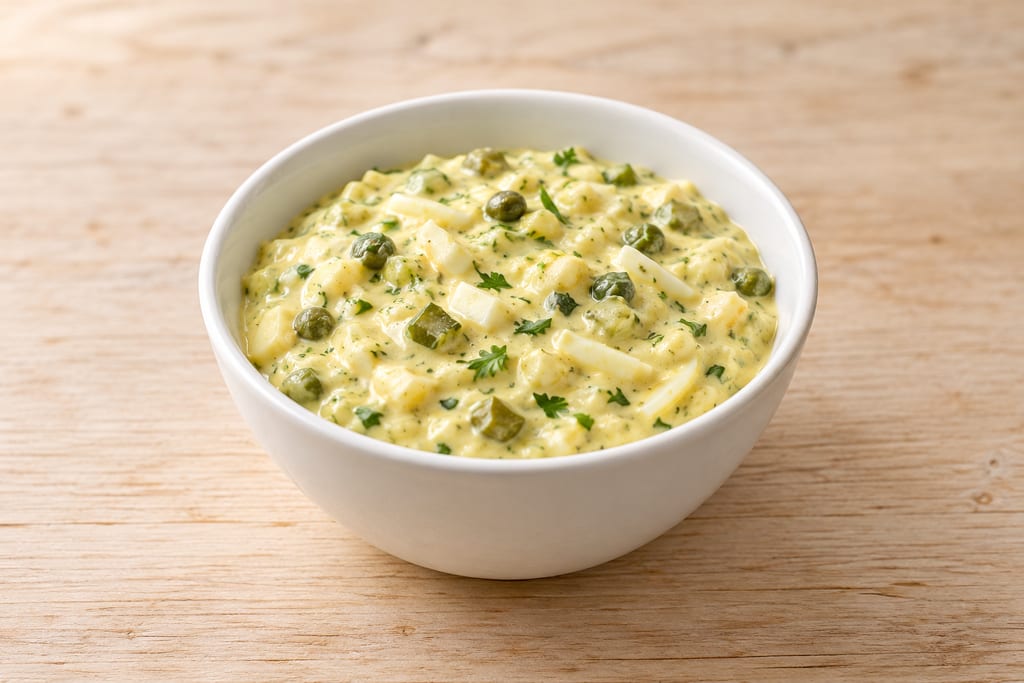
A cold French sauce of emulsified hard-boiled egg yolk and mustard, finished with chopped pickled cucumber, capers and herbs and julienned egg white.
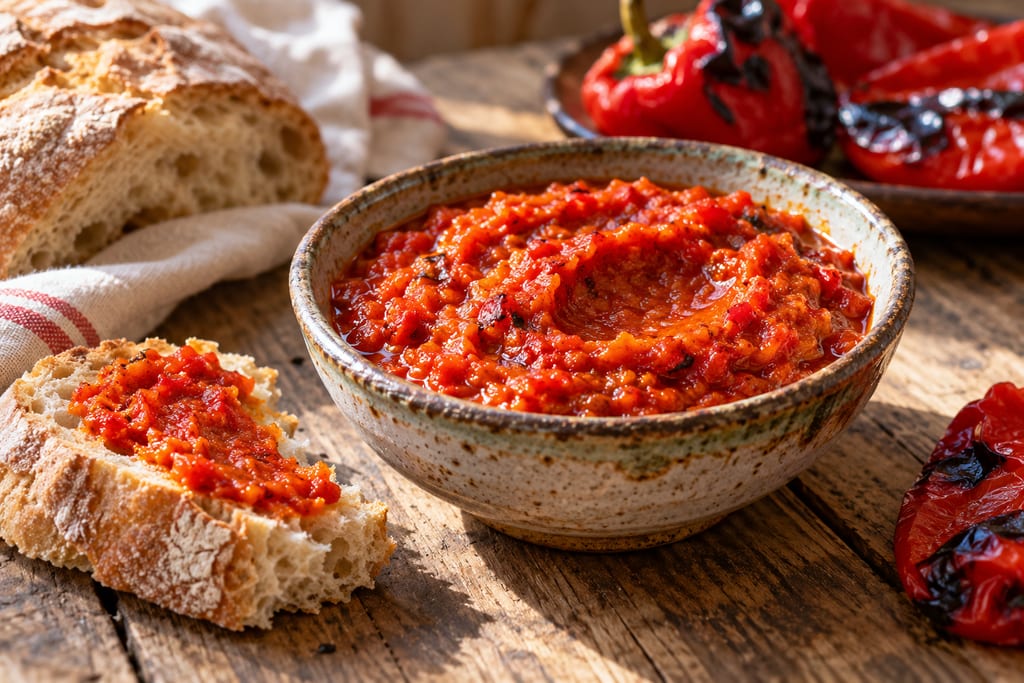
Ajvar is a cooked Balkan pepper preserve built around roasted red peppers, peeled, drained, ground and slowly fried with oil and seasoning. Leskovac’s protected version is a pepper specialty; regional versions vary.
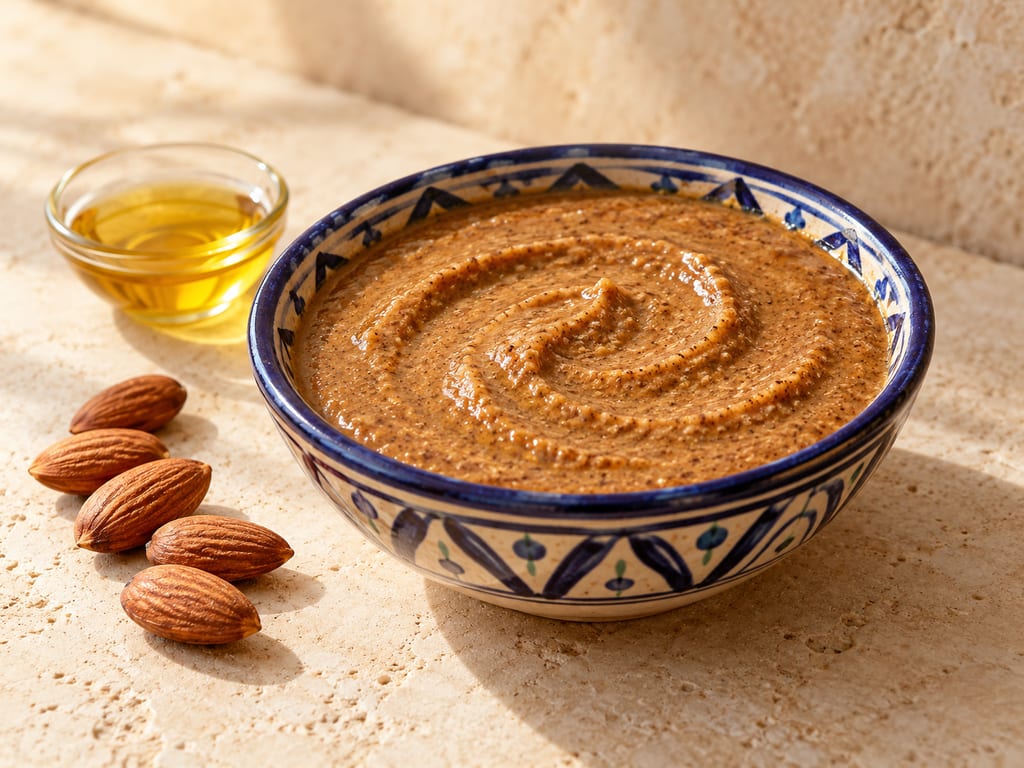
Amlou is a nutty, lightly sweet Moroccan spread of roasted almonds, culinary argan oil and honey. The almonds are ground first, then loosened with oil and sweetened; the balance can range from a thick spread to a dip.
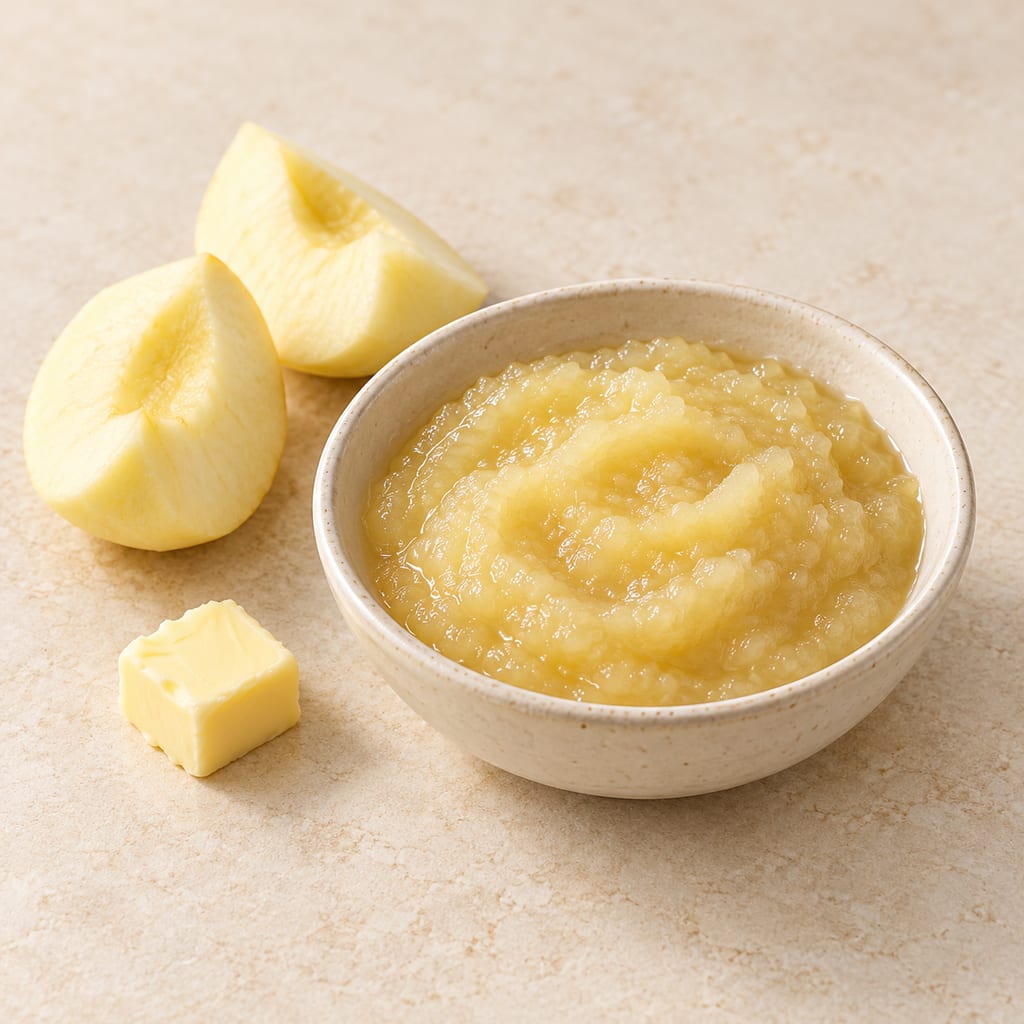
Apple sauce for goose and pork is a plain English accompaniment: cooked apples pulped with water, then sweetened with sugar and finished with a little butter.
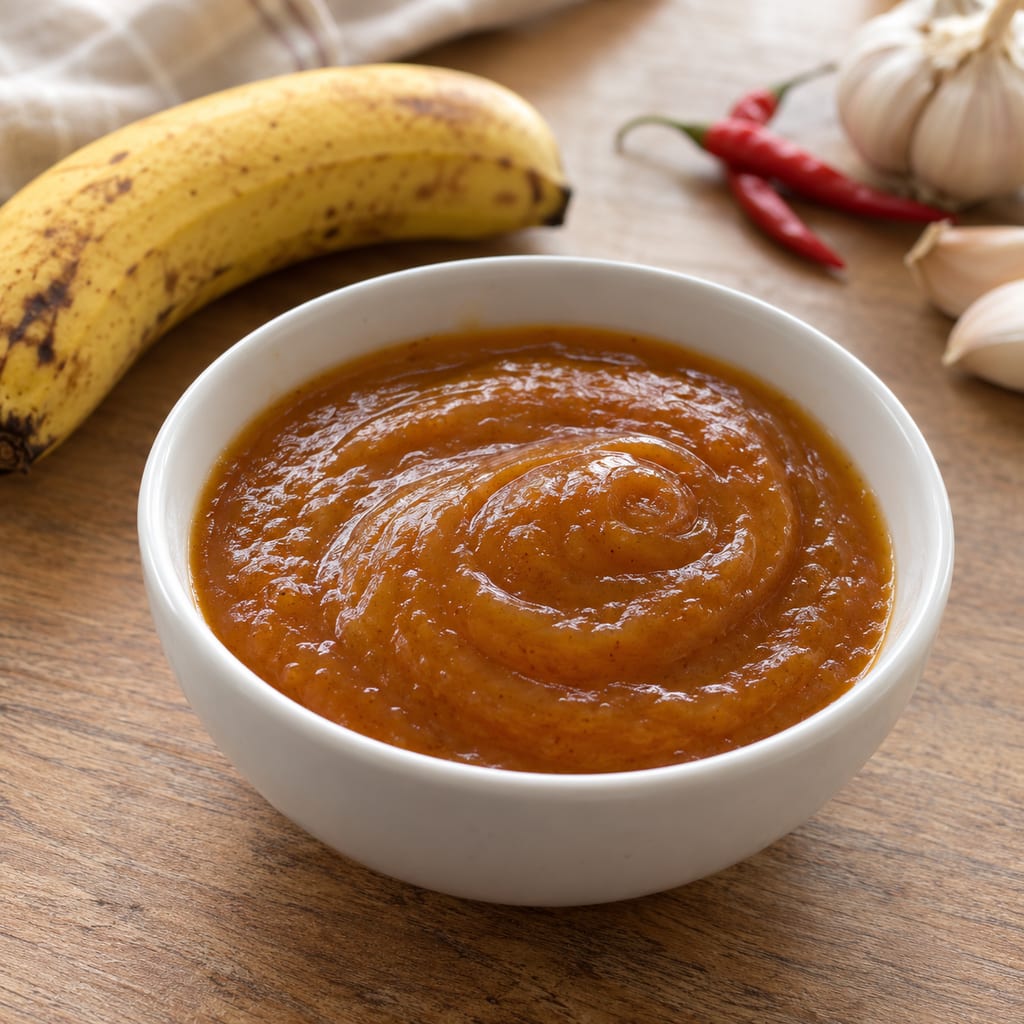
A sweet-hot table sauce of ripe banana simmered with vinegar, sugar, onion, garlic and fresh chilli, in the manner of Philippine banana ketchup. An untested development batch of about 500 g.
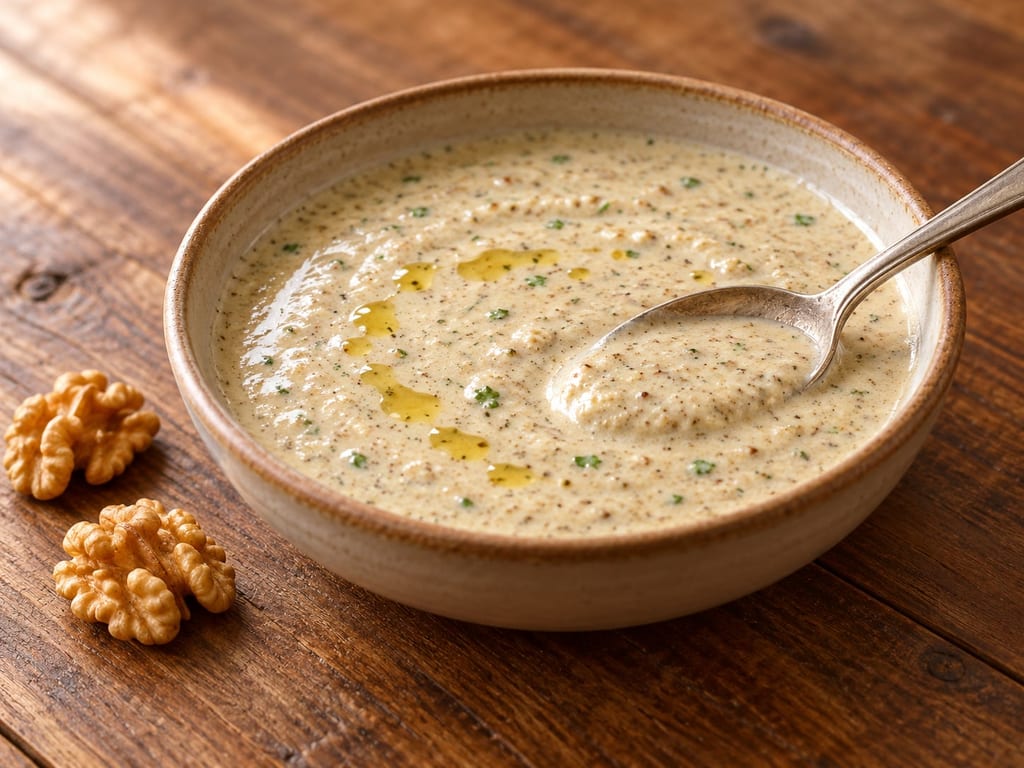
A Georgian walnut sauce of ground walnuts, garlic, vinegar and spices, thinned with water or broth. It is served with poultry, vegetables and bread, and is the sauce of the dish satsivi.
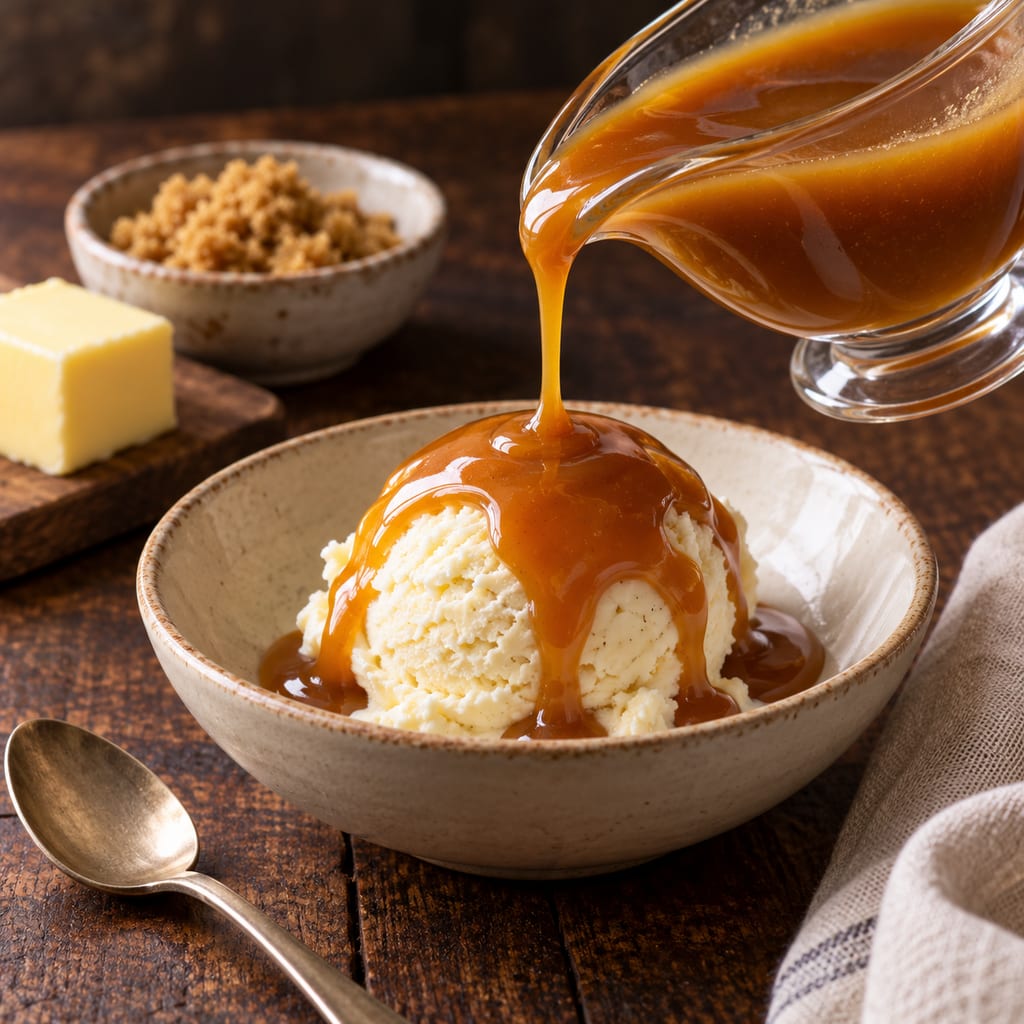
A pourable dessert sauce of brown sugar, butter and cream, with a little corn syrup and salt. It is the sauce form of the butterscotch confection and is made without water, unlike caramel.
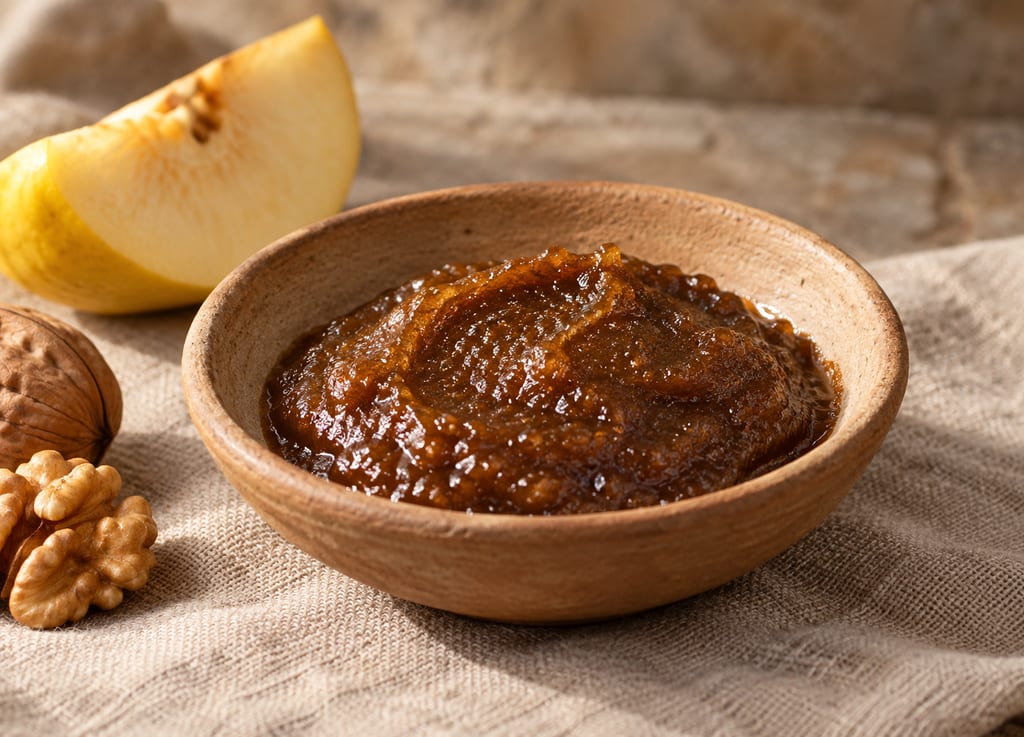
Byzantine murrī is a cooked imitation of murrī from the medieval Arabic repertoire, made from scorched honey, toasted bread, walnuts, quince, carob and spices rather than from a long grain fermentation.
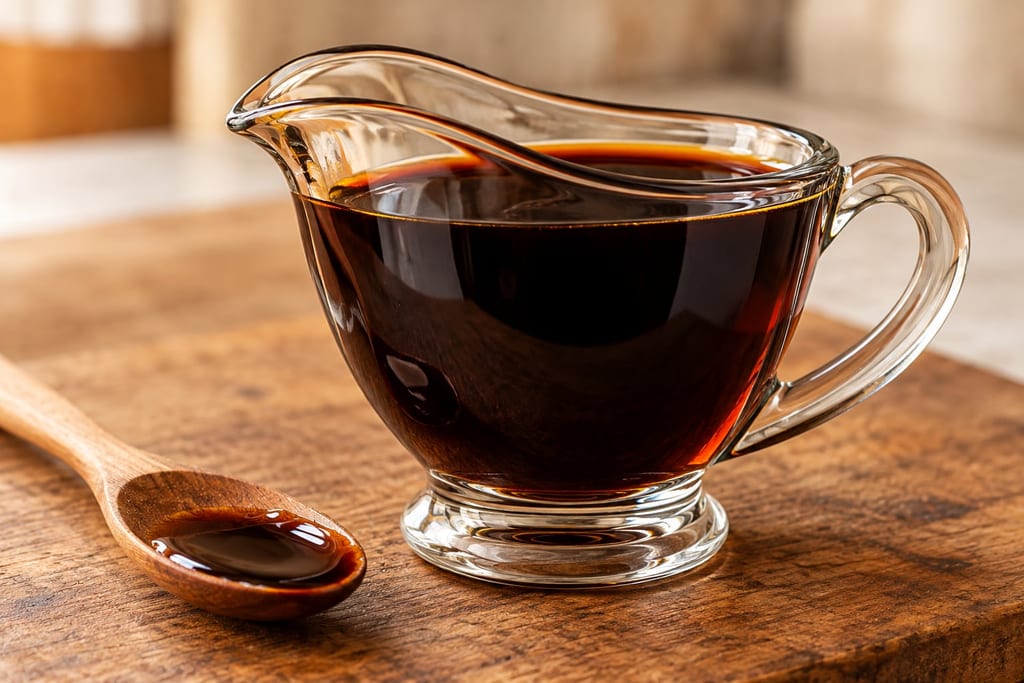
Caribbean browning is a dark liquid of deeply caramelised sugar, used in small amounts for colour and a smoky, bitter-sweet flavour in stews and black cake.
No community contributions have been published for this entry yet.
Sign in to contribute. Published comments and photos are free to read.
WikipediaHistory · Method · Safety
Demi-glaceDemi-glace (half-glaze) is a rich brown sauce in French cuisine, used on its own or as a base for other sauces.
Classical recipe: equal parts espagnole sauce and brown stock, reduced by half, strained, and finished with sherry.
Variants mix beef or chicken stock 1:1 with espagnole (demi-glace au boeuf, demi-glace au poulet).
Only dated attribution: Auguste Escoffier, A Guide to Modern Cookery (1907), cited for a half-glaze recipe; the page does not say Escoffier codified the sauce.
Chefs often substitute a jus lie made from veal stock; Julia Child called it semi-demi-glace (no date given).
Cited in: What demi-glace is; The classical method; Modern practice; Demi-glace and a reduced jus; Uncertainty