
Bagna cauda
A warm dip of garlic, anchovy and olive oil, often enriched with butter, that Piedmont serves over a flame with raw and cooked vegetables and bread.
 FermenteaWhere food goes to change
Sauce espagnole · Spanish sauce · brown sauce · demi-glace (derived)
Espagnole is a brown mother sauce built on a dark roux, brown veal or beef stock and tomato, the base from which demi-glace and many brown sauces are made.
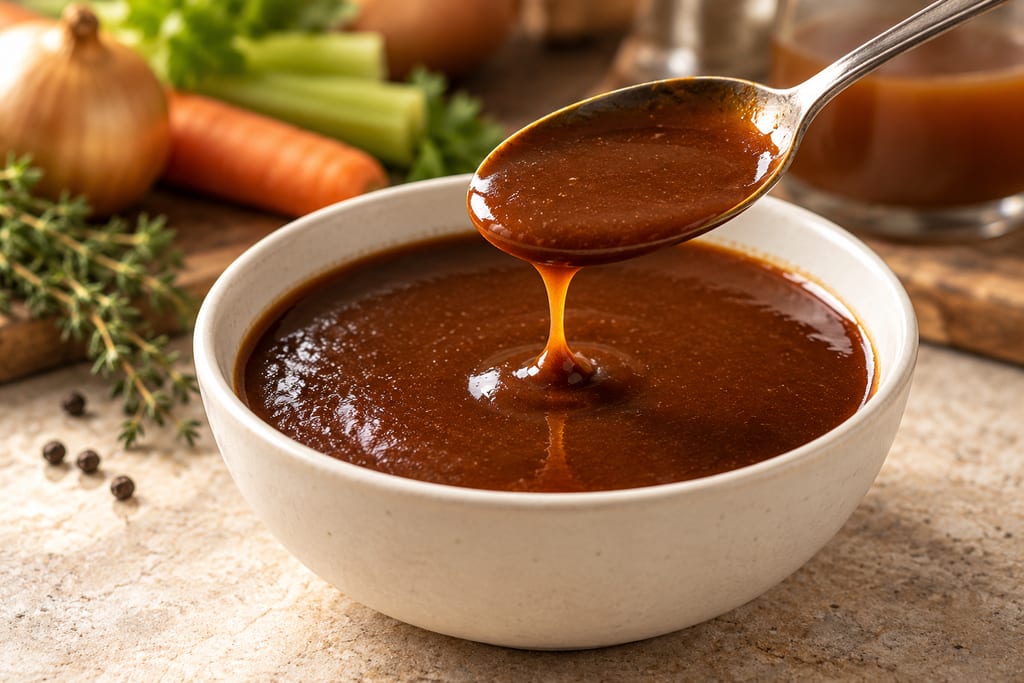
Espagnole is a basic brown sauce and one of the French mother sauces. It is made from a dark brown roux and brown stock, usually veal or beef, with tomatoes or tomato paste. It is the base for many brown sauces and for demi-glace.
A Spanish sauce for pheasant appears in Vincent La Chapelle's cookbook of 1733. Marie-Antoine Careme printed a detailed recipe in 1815, and Auguste Escoffier included it in his 1903 classification of five mother sauces.
The origin of the name is unclear. One theory links it to the reddish colour of the sauce, associated with Spain. Stories of Spanish cooks brought to the French court are baseless, because no records of such cooks exist.
Another theory holds that Spanish bacon and ham replaced beef in the stock in the seventeenth century, which would connect the sauce to its name through its ingredients rather than its place.
The roux is dark brown, cooked longer than the roux for a velouté. The brown stock is made from veal, beef and ham. Careme braised ham, veal and partridges in water for two hours before adding the roux.
Escoffier's 1903 version adds tomatoes and a mirepoix of onion, carrot and celery, with ham or lightly salted pork belly, and simmers the sauce for up to eight hours. La Chapelle added liver at the end of cooking. Browning bones or vegetables first, reduction and straining are not set out here.
Derivatives include africaine, bigarade, bordelaise, bourguignonne, chasseur, charcutiere, Robert and venaison. Demi-glace is named only as a see-also link and is not described.
A concentrated brown jus is a reduction of stock and is a different thing from a classical roux-thickened base. Concentration adds flavour; it does not by itself make a safe ambient storage product, so a reduction needs its own tested storage method.
The name's origin is unclear. One theory links it to the sauce's reddish colour, which is associated with Spain. Stories about Spanish cooks at the French court are described as baseless. Another theory holds that Spanish bacon and ham replaced beef in the stock in the seventeenth century.
Scaling: source batch only
A meat-stock sauce with ham or meat is a protein-rich liquid that supports bacterial growth if it is held warm or cooled slowly.
Hazard sourceUse a tested cooling and reheating method for any batch that will be stored
Control sourceLong reduction is a flavour method, not a preservation method. The sources give no holding, storage or reheating advice for espagnole, and this page does not supply any.
A Spanish sauce is recorded in La Chapelle's 1733 cookbook; the name's origin is unclear.
A warm dip of garlic, anchovy and olive oil, often enriched with butter, that Piedmont serves over a flame with raw and cooked vegetables and bread.

Bechamel is a white sauce of milk thickened with a butter and flour roux, one of the French mother sauces, and the base from which Mornay and other cheese and cream sauces are made.
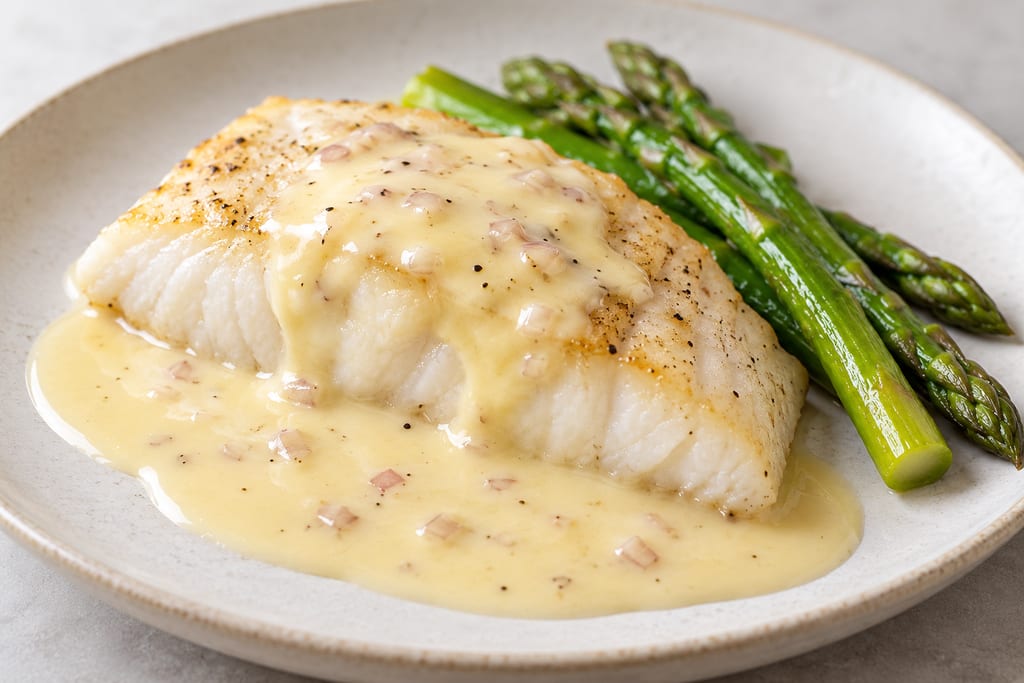
Beurre blanc is a warm emulsion of cold butter whisked into a reduction of white wine, vinegar or lemon juice and shallot, a sauce from the Loire Valley and its red-wine version, beurre rouge.

A thin, pourable custard sauce of egg yolks, sugar and hot milk or cream, cooked gently until it coats a spoon and no further.
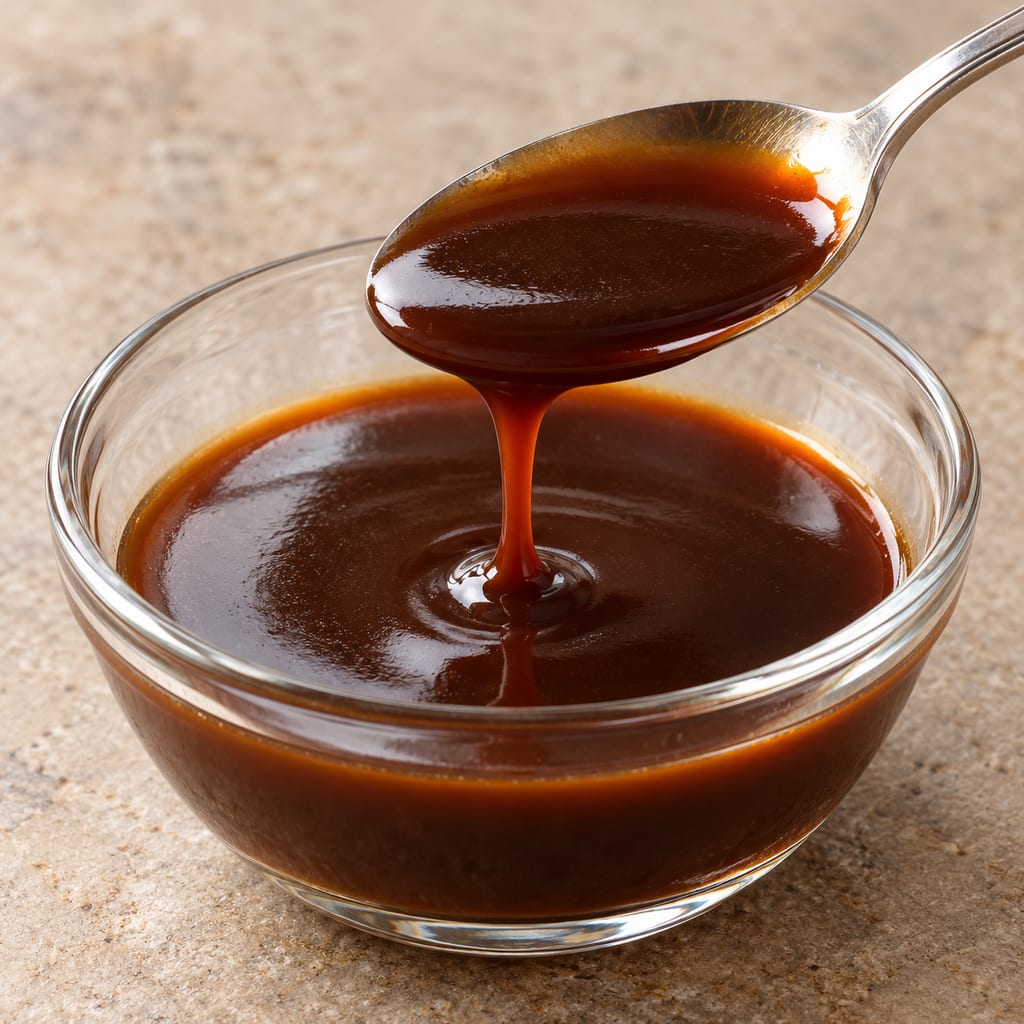
Demi-glace is a rich brown sauce of French cookery, classically made by reducing equal parts espagnole sauce and brown stock by half. It is used on its own or as a base for other sauces.
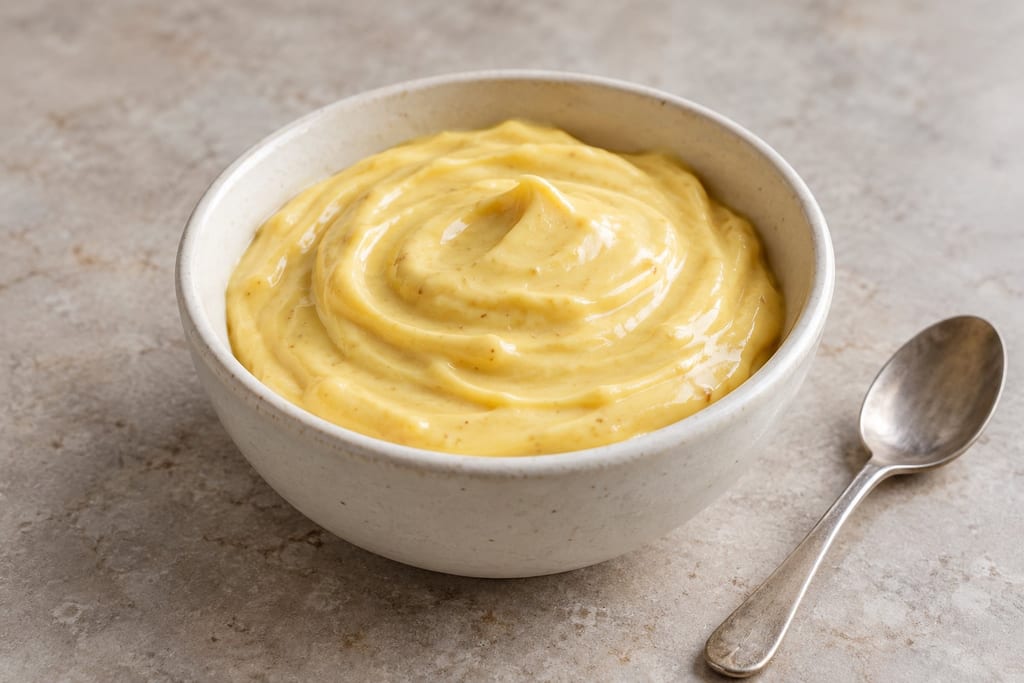
An untested home mayonnaise development formula with more Dijon mustard and no added sugar. A current French-market Dijon mayonnaise informs its flavor direction; this is not that product’s formula.
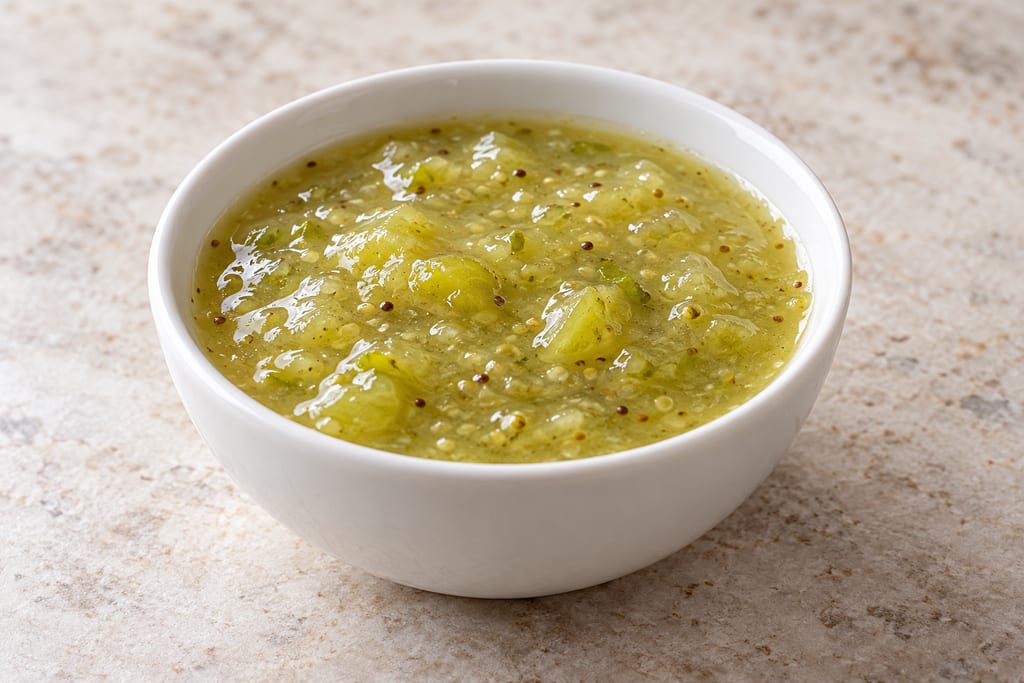
Gooseberry sauce is a soft, tart sauce of cooked green gooseberries, sharpened with wine or vinegar and lightly sweetened, traditionally served with mackerel.
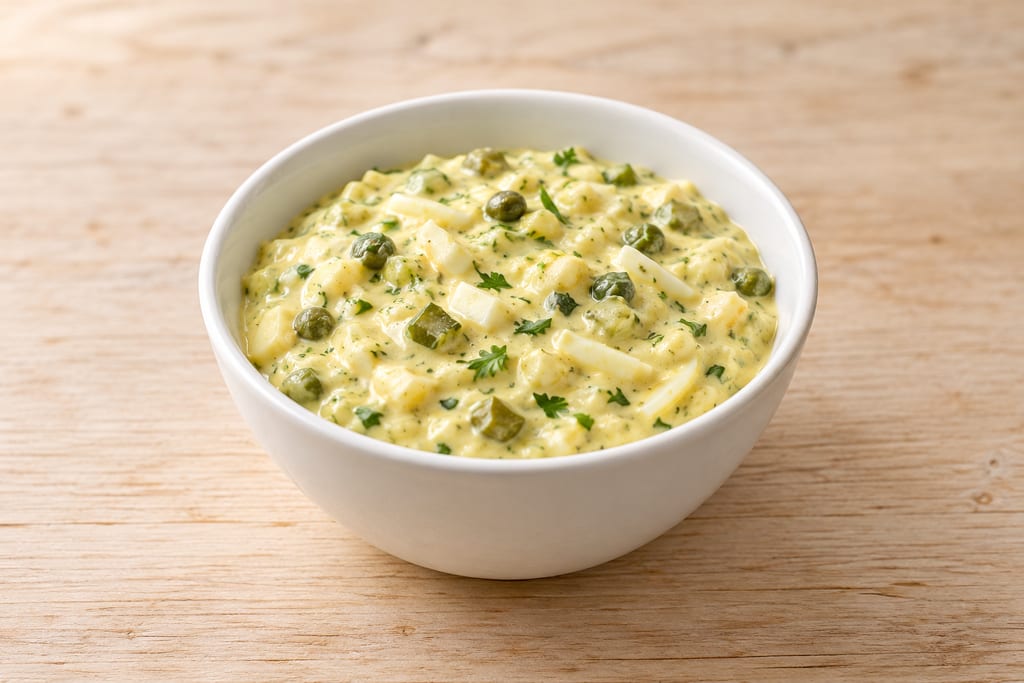
A cold French sauce of emulsified hard-boiled egg yolk and mustard, finished with chopped pickled cucumber, capers and herbs and julienned egg white.
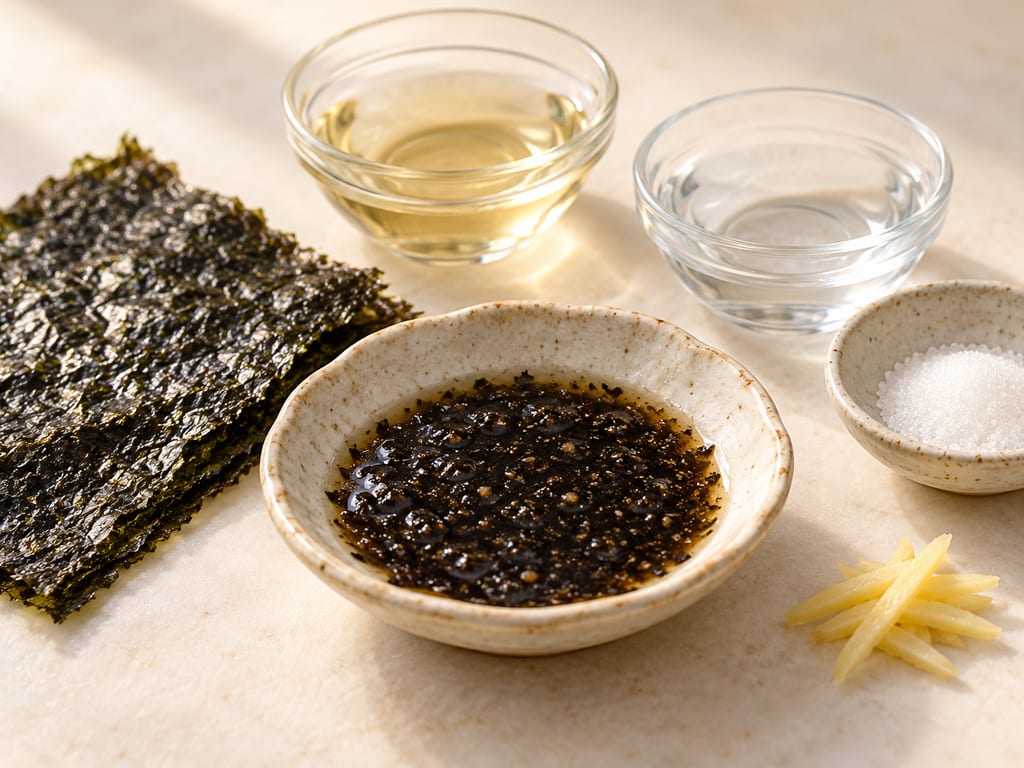
A fresh condiment in which crumbled nori softens in lightly sweetened vinegar and water. It is not vinegar fermented from seaweed.
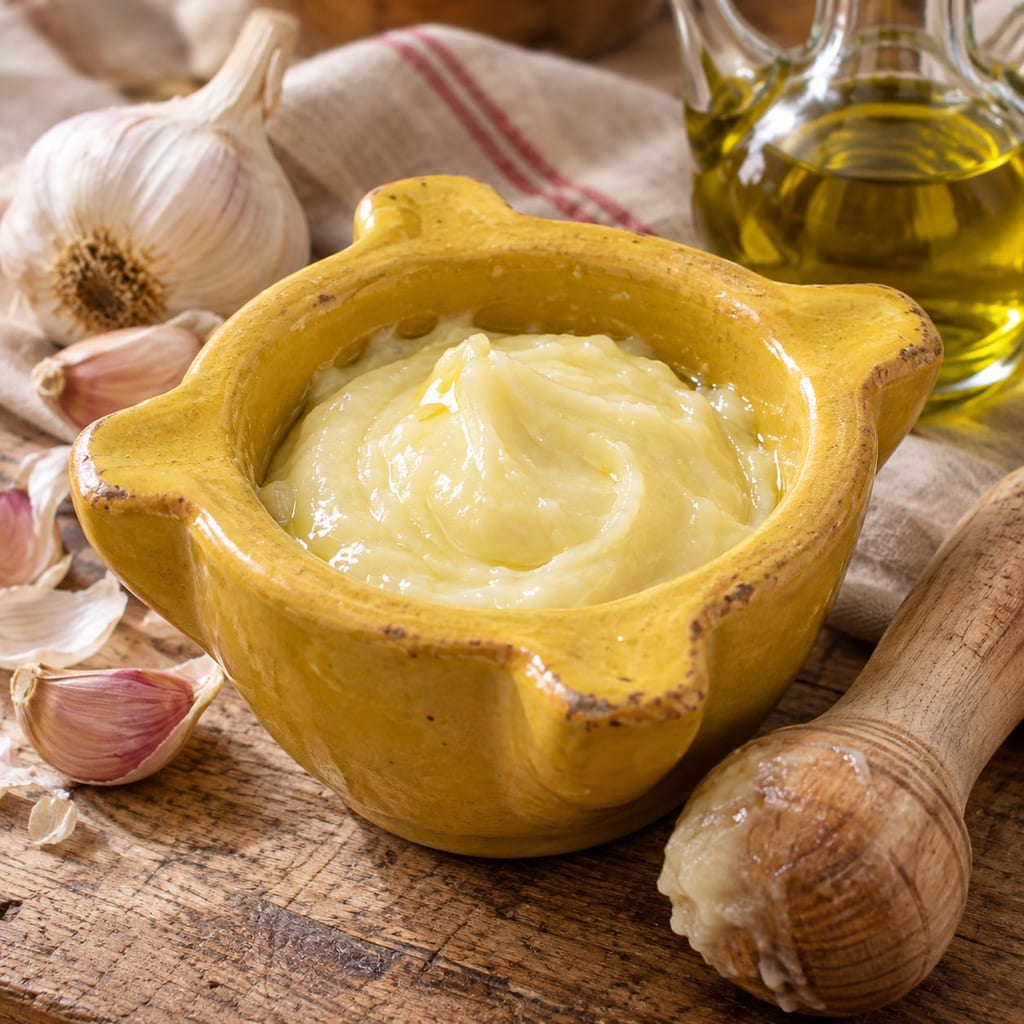
Traditional Catalan allioli is a dense emulsion of garlic, olive oil and salt made slowly in a mortar. This measured Barcelona-style version keeps egg-based garlic mayonnaise distinct.
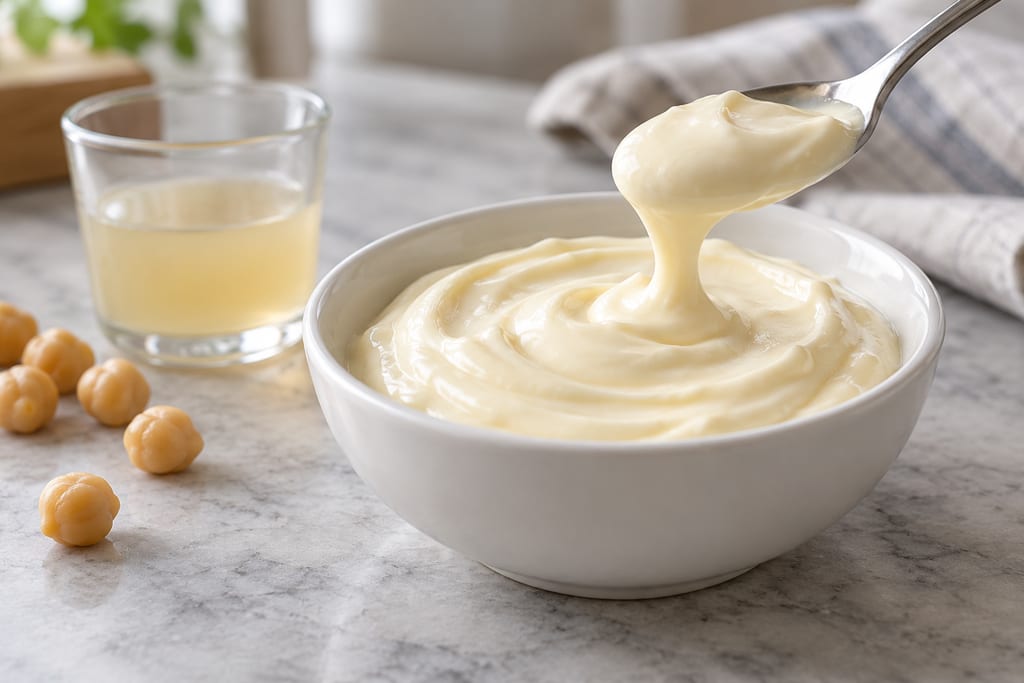
An eggless, untested emulsion made with canned chickpea liquid. Nominal yield 255 g.
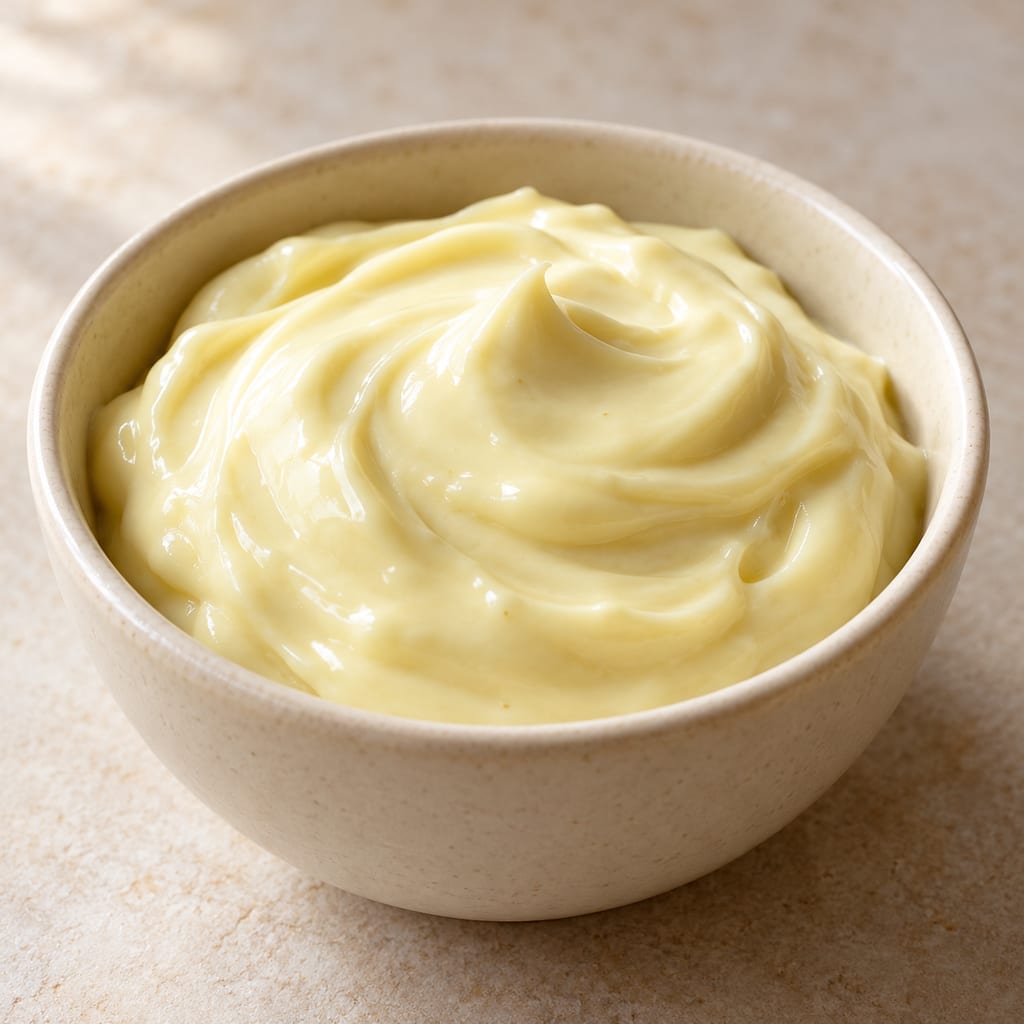
Avocado-oil mayonnaise is an ordinary egg-and-oil emulsion in which avocado oil supplies the oil phase. The oil changes flavour and colour, and it does not preserve the sauce.
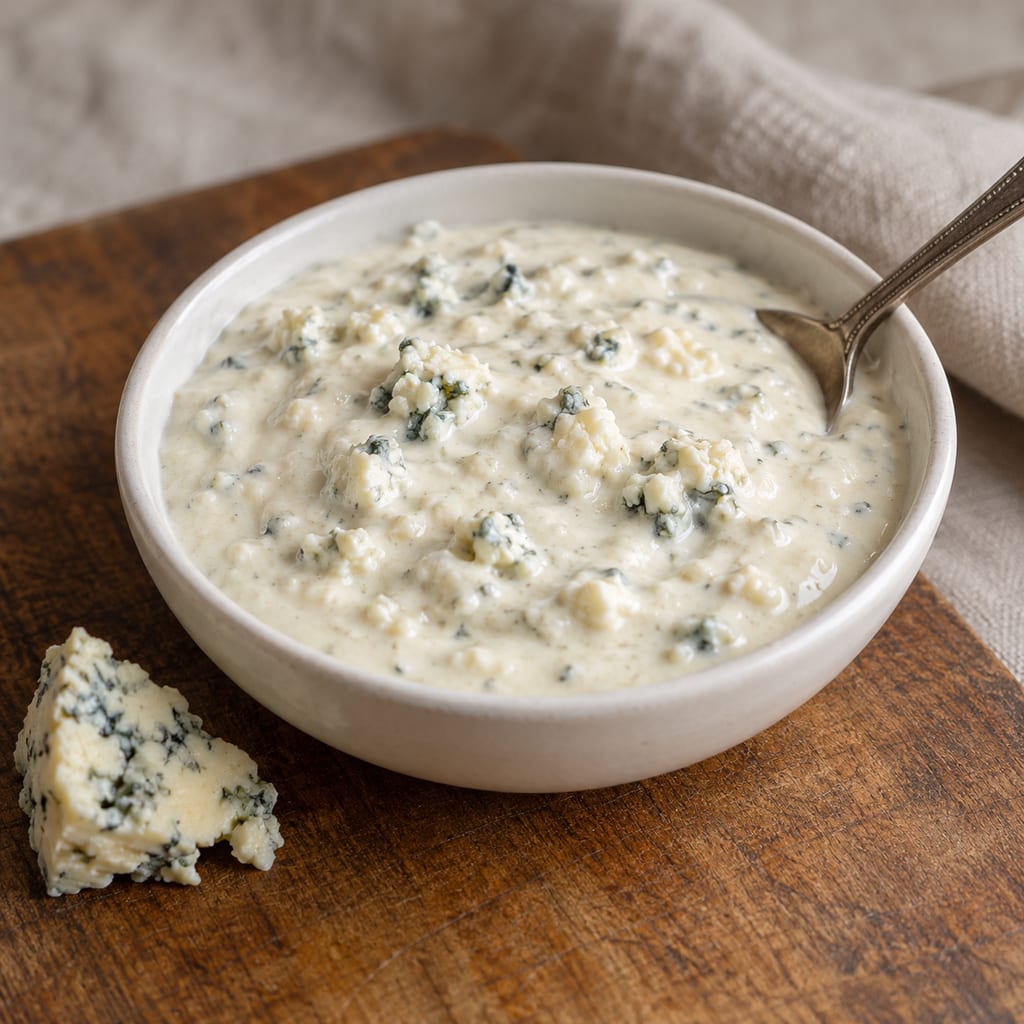
Blue cheese dressing is a creamy dressing built on crumbled blue cheese mashed into buttermilk, with sour cream, mayonnaise, vinegar and seasoning, and kept cold for up to two weeks.
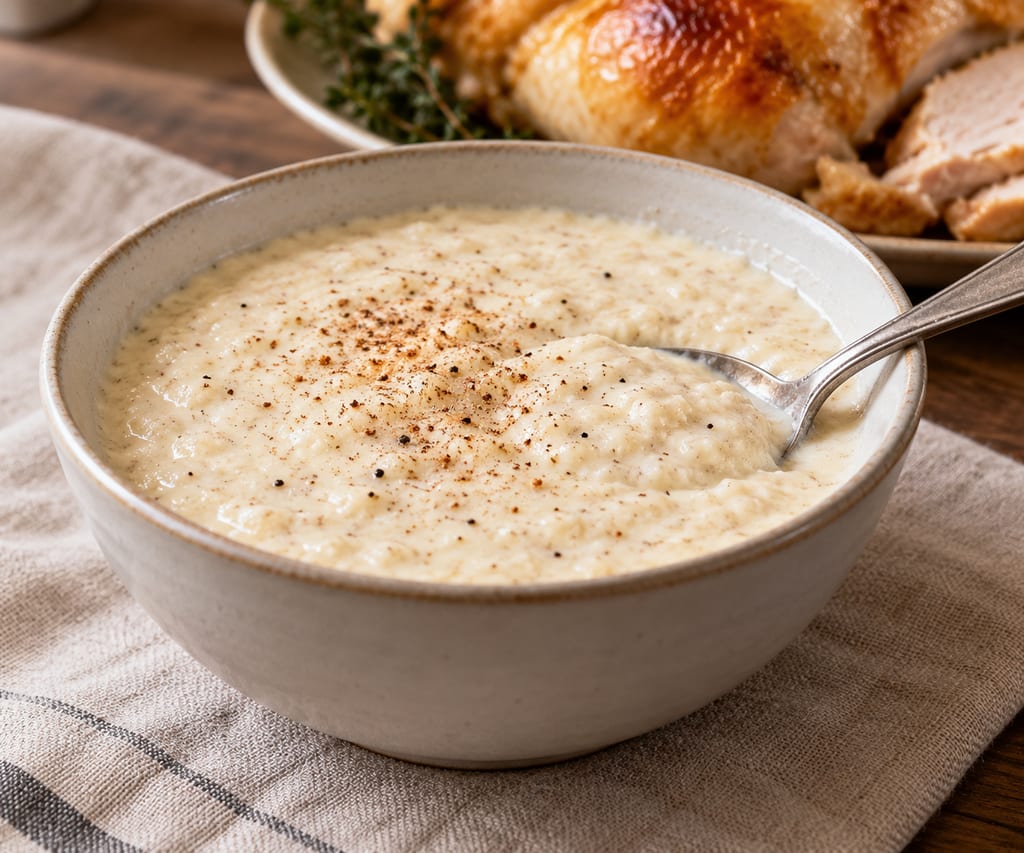
Bread sauce is a British sauce of milk infused with onion, clove and bay, thickened with stale breadcrumbs and finished with butter, served with roast chicken or turkey.
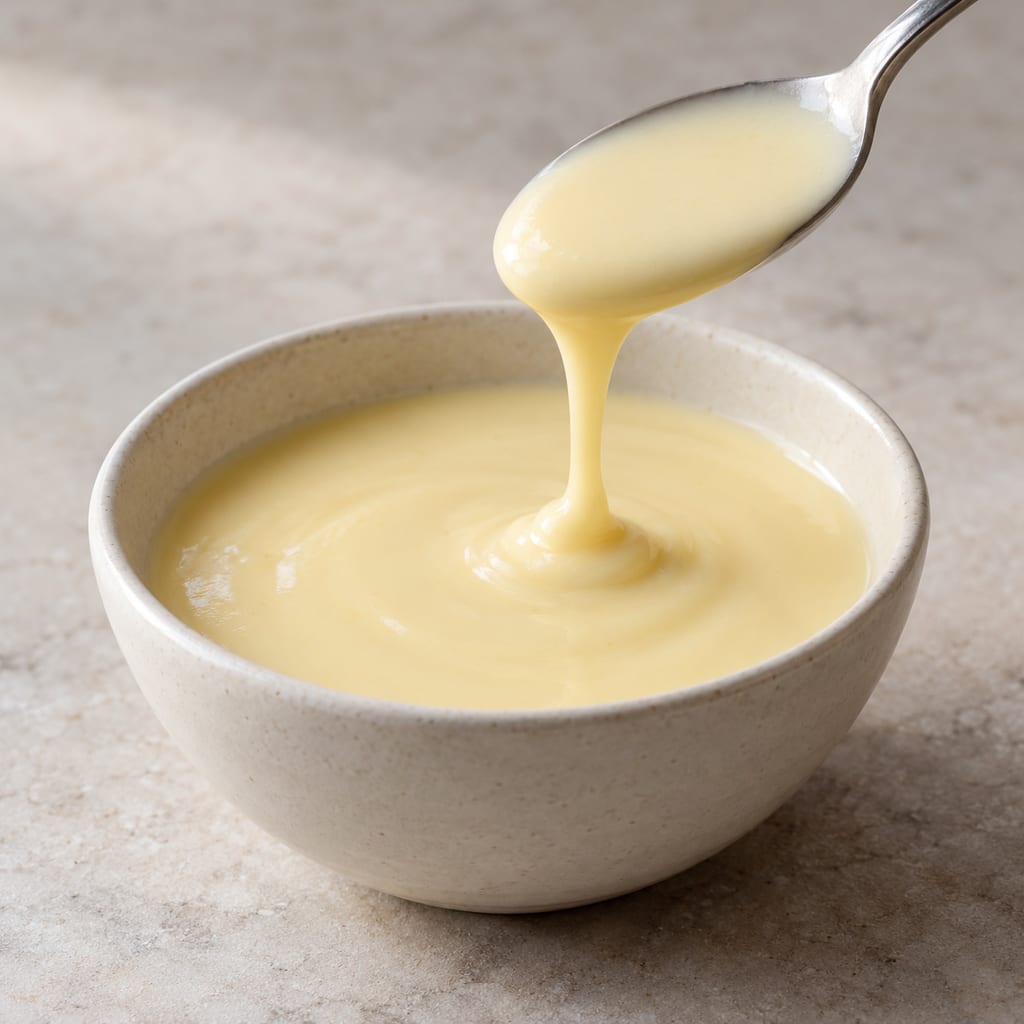
Starch-thickened salad-cream prototype with pasteurised yolk added after cooling; not a Heinz copy. Approximate yield 300 g.
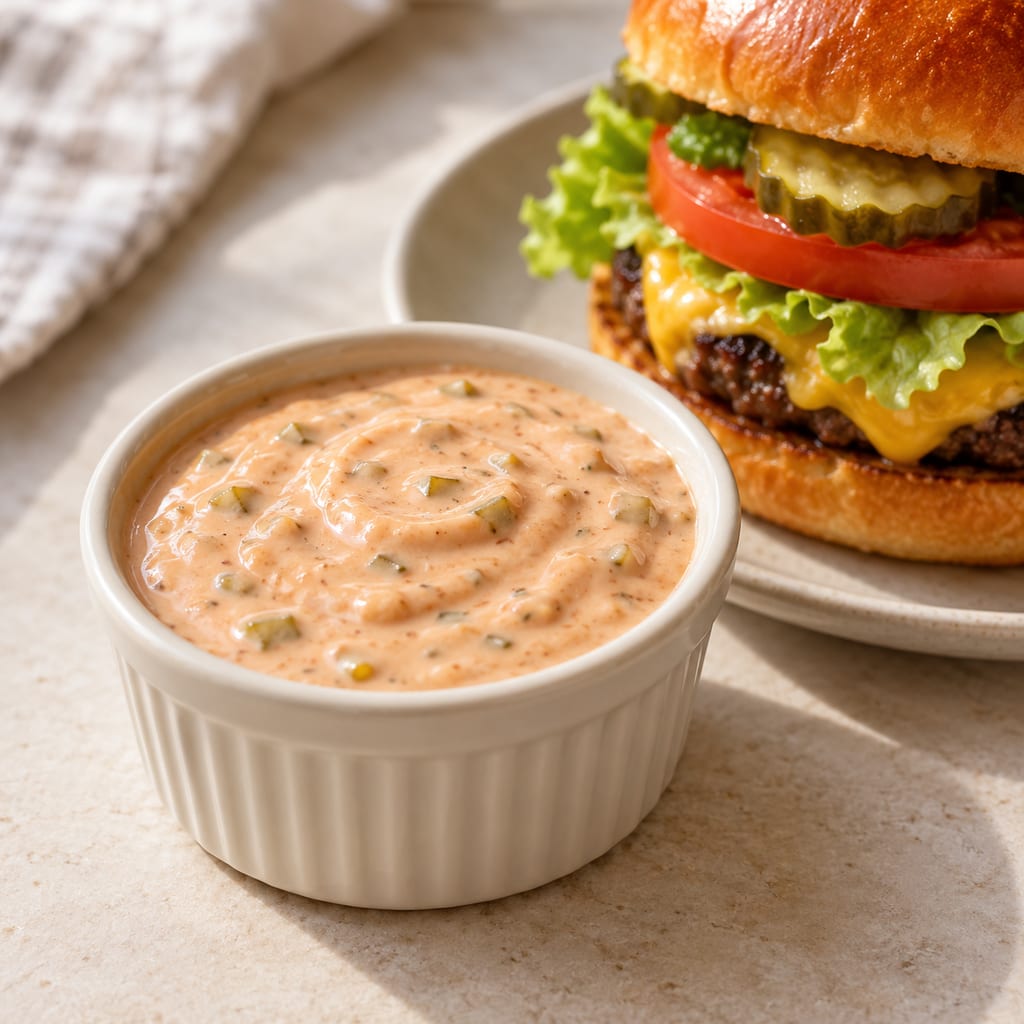
Mayonnaise mixed with ketchup, drained pickle relish and yellow mustard makes a tangy, pickle-flecked sauce for burgers; these proportions are an untested starting point.

A gelling polysaccharide extracted from red seaweeds, sold as kanten strips or powder; it sets firm at a low concentration and stays solid until about 85 °C.

A Dominican table and seasoning condiment of sour orange juice, mixed with lime and salt and bottled raw; garlic, oregano or a hot pepper may be added for meat or a spicier bottle.

Cicerbita alpina is an alpine perennial whose tender shoots and leaves have been eaten raw or cooked. Sámi milk preparations and modern Carnian dishes are distinct uses, with serious identification and preservation limits.

Japanese skipjack tuna cooked, then repeatedly smoked and dried over a wood fire by the hand-fired tebiyama method into a hard block for shaving into dashi: the first stage of katsuobushi.

A Swedish-style spirit vinegar made by fermenting neutral alcohol with live vinegar bacteria, with a separate guide to commercial ättika strengths.

A yeast-raised wheat ring shaped from a firm dough, briefly boiled and baked. This source-batch formula gives a gently malted crust and a chewy crumb.
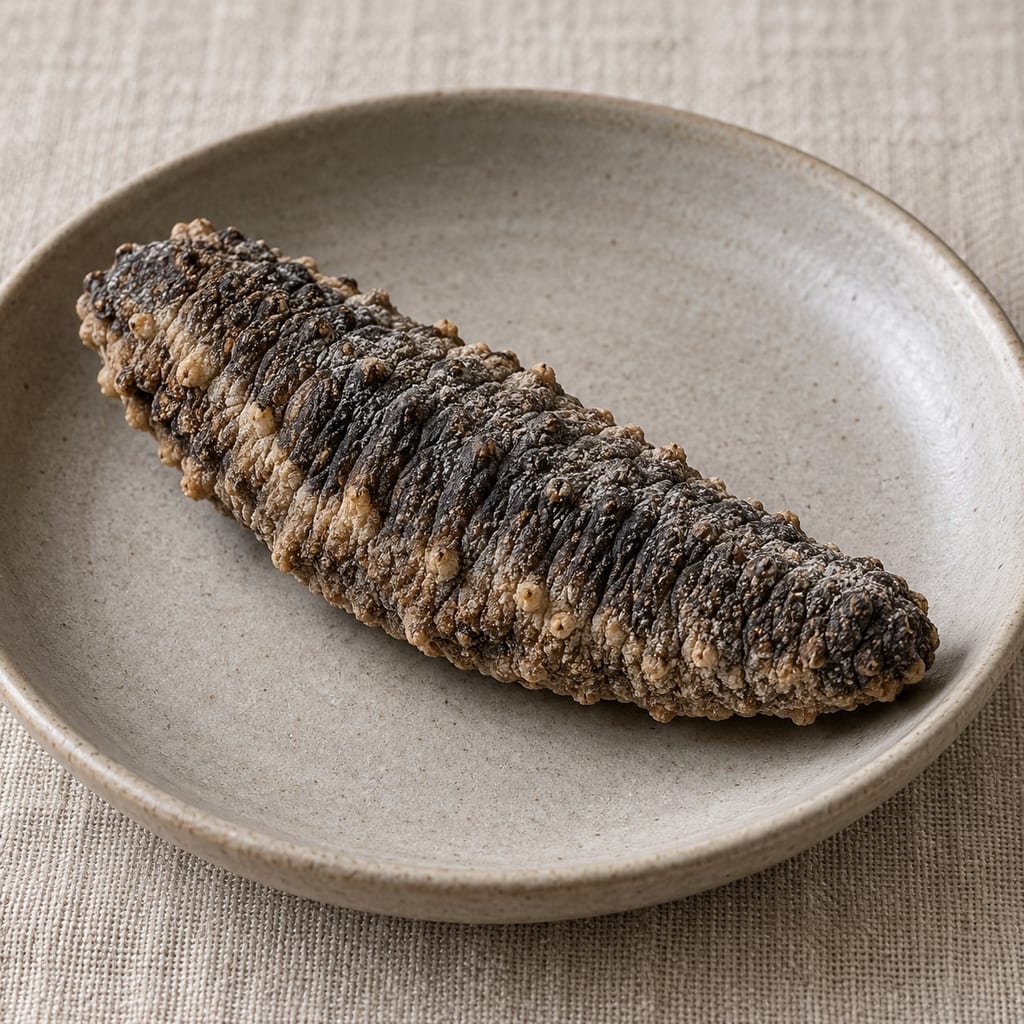
Sea cucumber cleaned, boiled and dried, sometimes with smoke, into a long-keeping trade product; Makassan processing in Arnhem Land is documented from at least the eighteenth century.
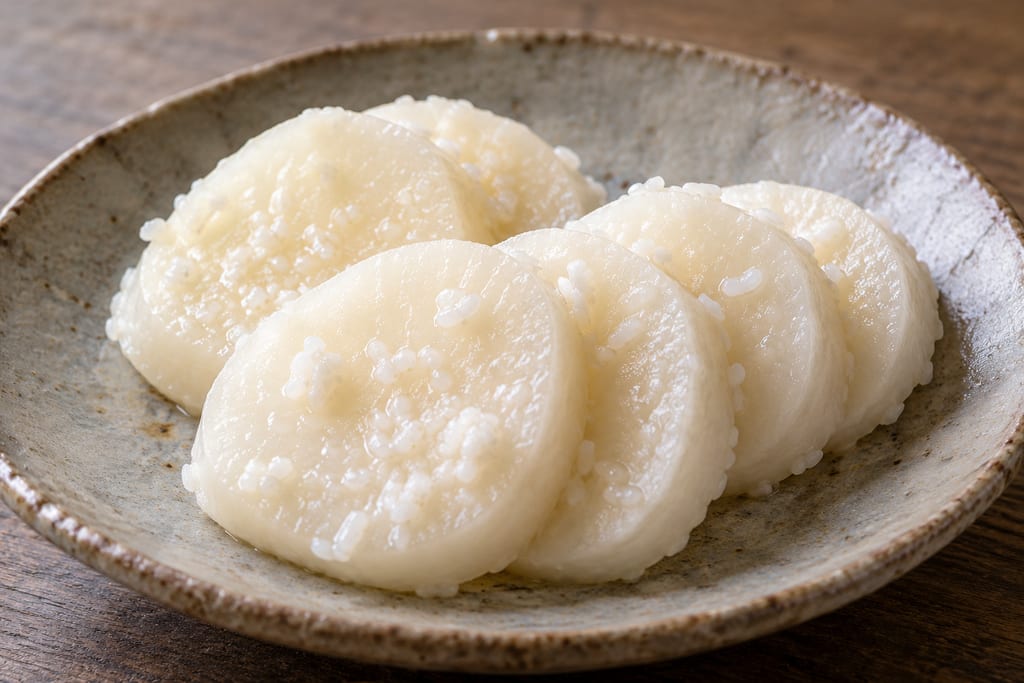
A sweet, crisp Japanese daikon pickle from Tokyo's Nihonbashi district, made by salting fresh radish and dressing it in rice koji, sugar or koji amazake without the heavy drying used for takuan.
No community contributions have been published for this entry yet.
Sign in to contribute. Published comments and photos are free to read.
WikipediaHistory · Method · Variants
Espagnole sauceBrown roux and brown stock; La Chapelle 1733; Careme 1815; Escoffier 1903; tomato and mirepoix; eight-hour simmer; derivatives; no storage advice
Cited in: A brown sauce and a mother sauce; Where the name comes from; Roux, stock and reduction; Derived sauces and reduced jus