
Bagna cauda
A warm dip of garlic, anchovy and olive oil, often enriched with butter, that Piedmont serves over a flame with raw and cooked vegetables and bread.
 FermenteaWhere food goes to change
A thin, pourable custard sauce of egg yolks, sugar and hot milk or cream, cooked gently until it coats a spoon and no further.

Crème anglaise is custard without the set. The same egg-and-milk thickening that makes a baked custard firm is used here in a smaller amount, so the sauce stays pourable. Wikipedia describes custard as a family running from a thin pouring sauce, crème anglaise, to thick pastry cream, and notes that in French cookery custard technically means only the egg-thickened form.
Egg proteins coagulate as the sauce heats, and that coagulation is what thickens it. The sauce also thickens a little more as it cools, which is why the cook stops it slightly thinner than the final texture.
Heat is the whole method. Valrhona puts the working range at 180 to 185 °F (82 to 84 °C), with constant stirring. Below the range the sauce has not thickened, and the account says it can still be fixed by checking the cooking temperature. Above 185 °F (84 °C) the lecithin in the yolks can clot and form lumps, so the cook must watch the thermometer and not the clock.
Wikipedia gives a general caution for custards: a temperature rise of 3 to 6 °C can overcook and curdle an egg custard, and excess heat causes syneresis, where the sauce weeps liquid. Stabilisers such as a little cornflour help to prevent curdling, according to the same source.
Valrhona's fixes are practical. Yolks mixed with sugar in advance are less heat-sensitive, and the account says not to blanch them. Lumps are whisked, strained or blended out. A sauce that is too thick but has not curdled is thinned with milk reheated to the same window. A sauce that has curdled is a different case, and the account's advice there is to add an extra yolk and start again.
Custard is an old family of egg-thickened dishes. Crème anglaise is the thin, pourable end of that family. Wikipedia notes that the name 'custard' traces through French and Italian words for a tart crust, and that custards appear in The Forme of Cury under names such as Crustardes and Creme Boylede.
Scaling: source batch only
Wikipedia names crème anglaise as the thin pouring end of the custard range and notes that in French cookery custard means the egg-thickened version. The place is a naming association, not a documented origin.
A warm dip of garlic, anchovy and olive oil, often enriched with butter, that Piedmont serves over a flame with raw and cooked vegetables and bread.

Bechamel is a white sauce of milk thickened with a butter and flour roux, one of the French mother sauces, and the base from which Mornay and other cheese and cream sauces are made.
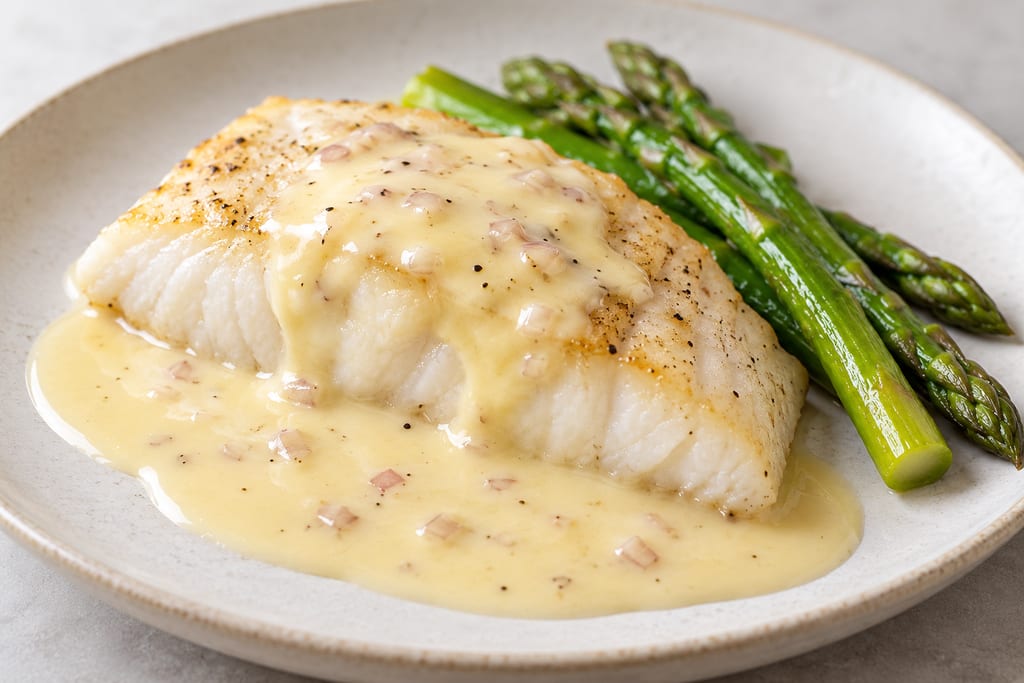
Beurre blanc is a warm emulsion of cold butter whisked into a reduction of white wine, vinegar or lemon juice and shallot, a sauce from the Loire Valley and its red-wine version, beurre rouge.
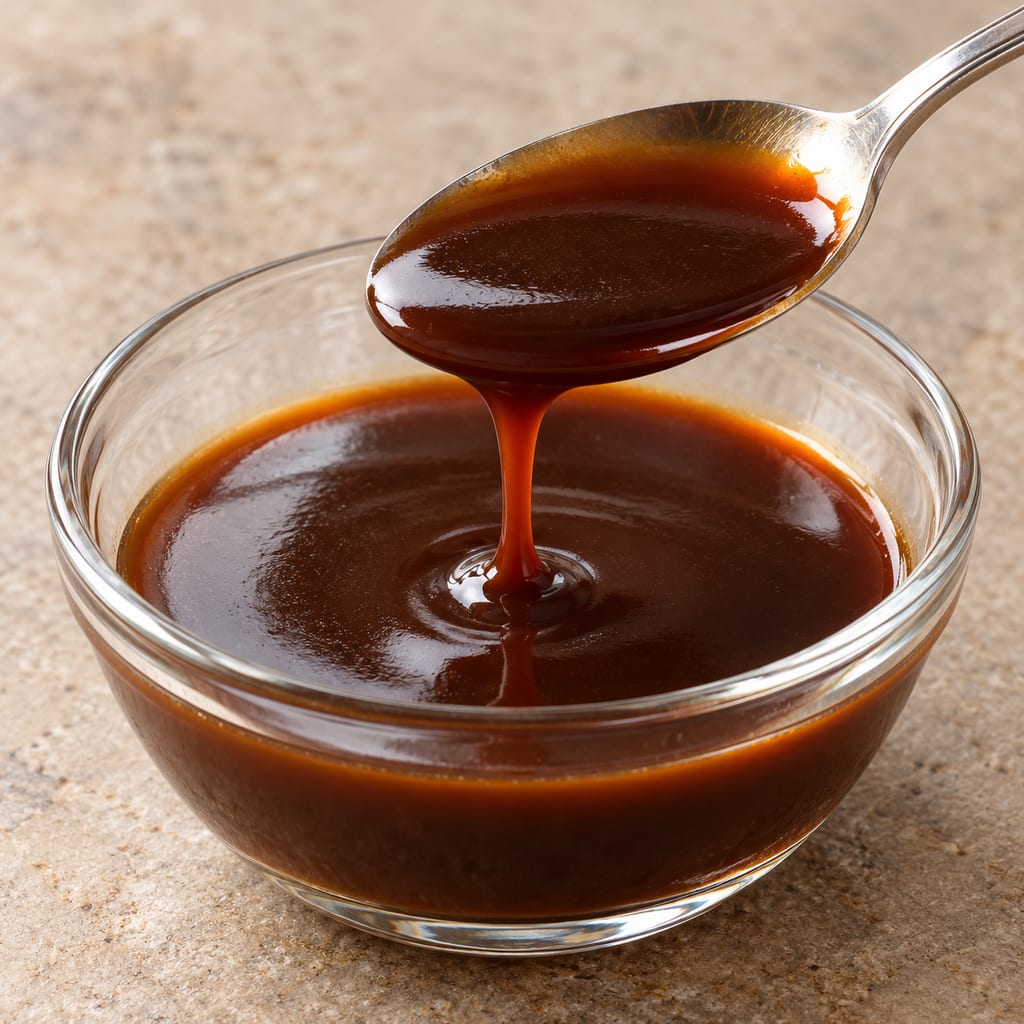
Demi-glace is a rich brown sauce of French cookery, classically made by reducing equal parts espagnole sauce and brown stock by half. It is used on its own or as a base for other sauces.
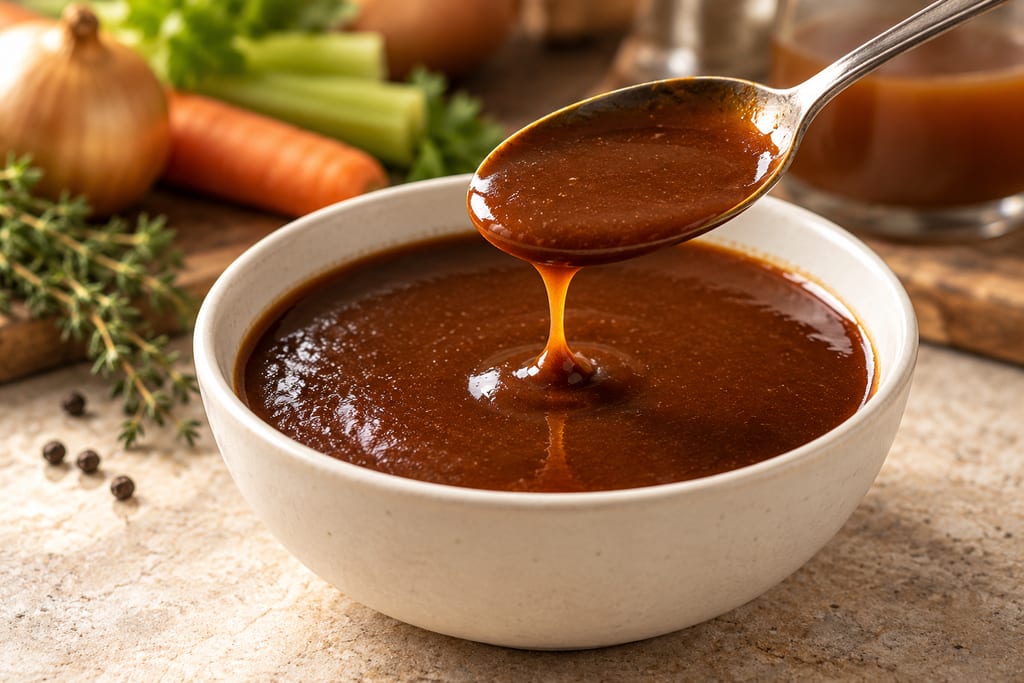
Espagnole is a brown mother sauce built on a dark roux, brown veal or beef stock and tomato, the base from which demi-glace and many brown sauces are made.
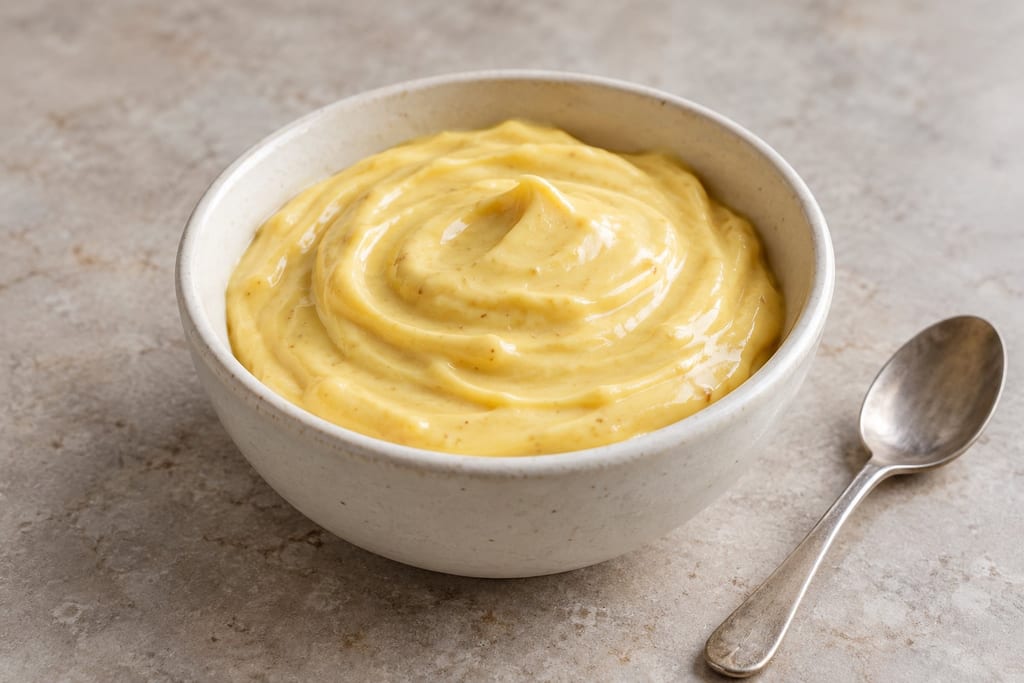
An untested home mayonnaise development formula with more Dijon mustard and no added sugar. A current French-market Dijon mayonnaise informs its flavor direction; this is not that product’s formula.
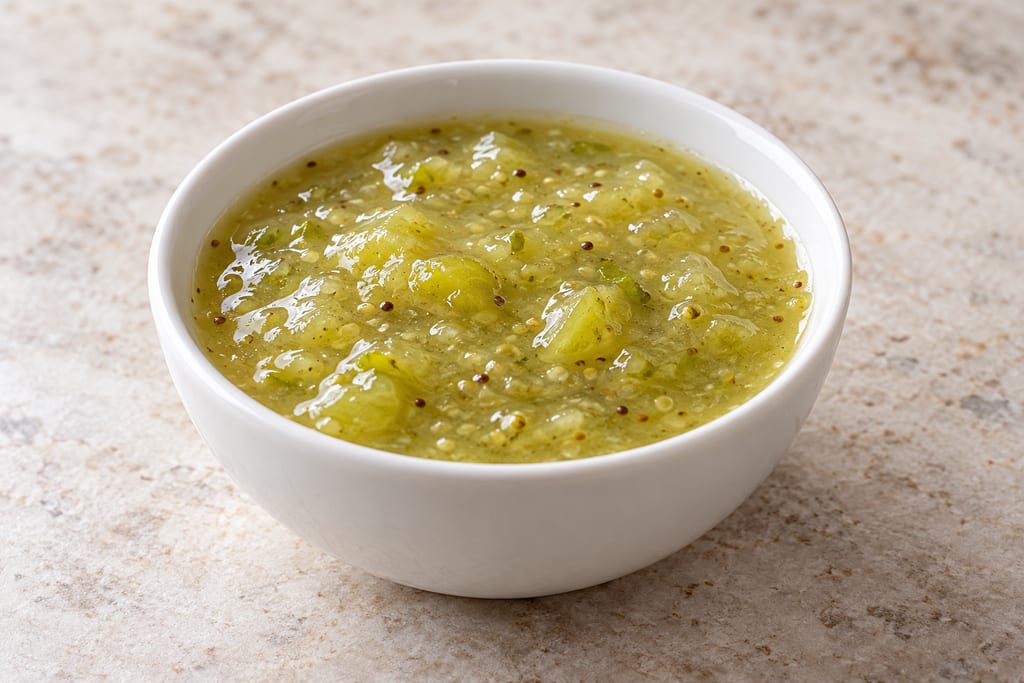
Gooseberry sauce is a soft, tart sauce of cooked green gooseberries, sharpened with wine or vinegar and lightly sweetened, traditionally served with mackerel.
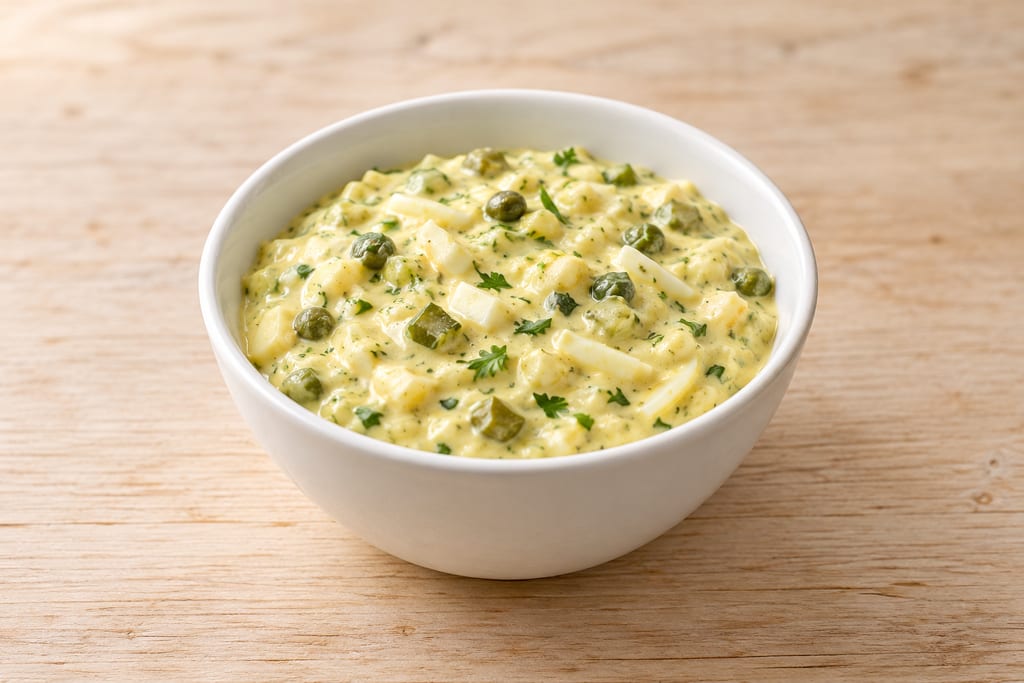
A cold French sauce of emulsified hard-boiled egg yolk and mustard, finished with chopped pickled cucumber, capers and herbs and julienned egg white.
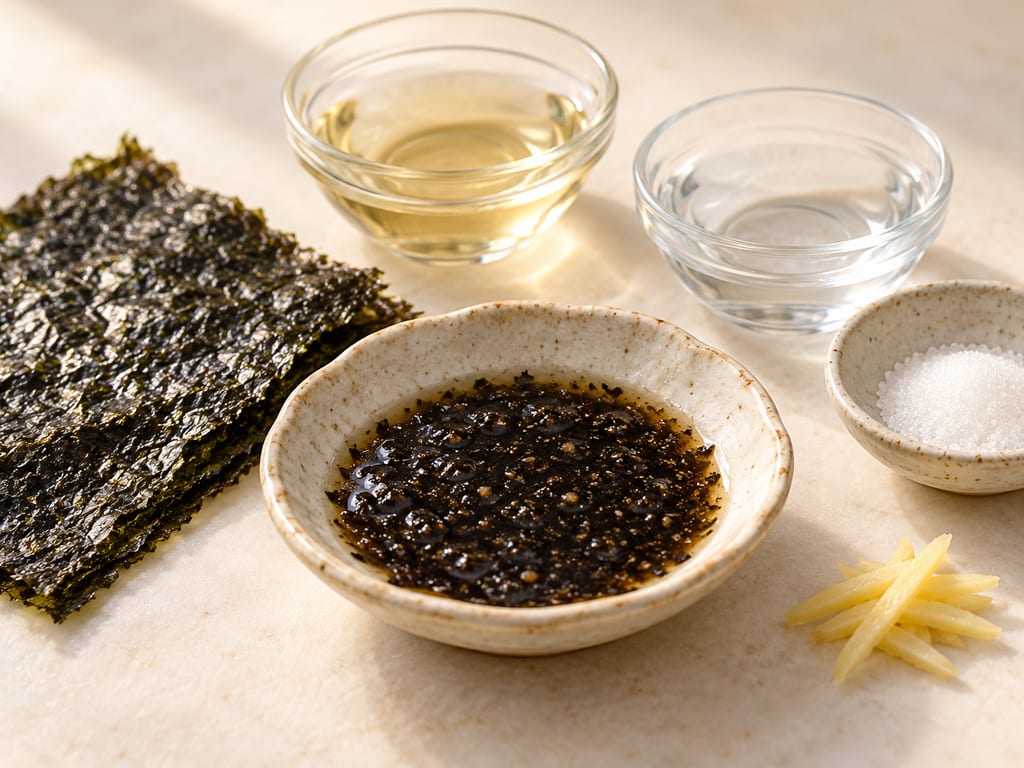
A fresh condiment in which crumbled nori softens in lightly sweetened vinegar and water. It is not vinegar fermented from seaweed.
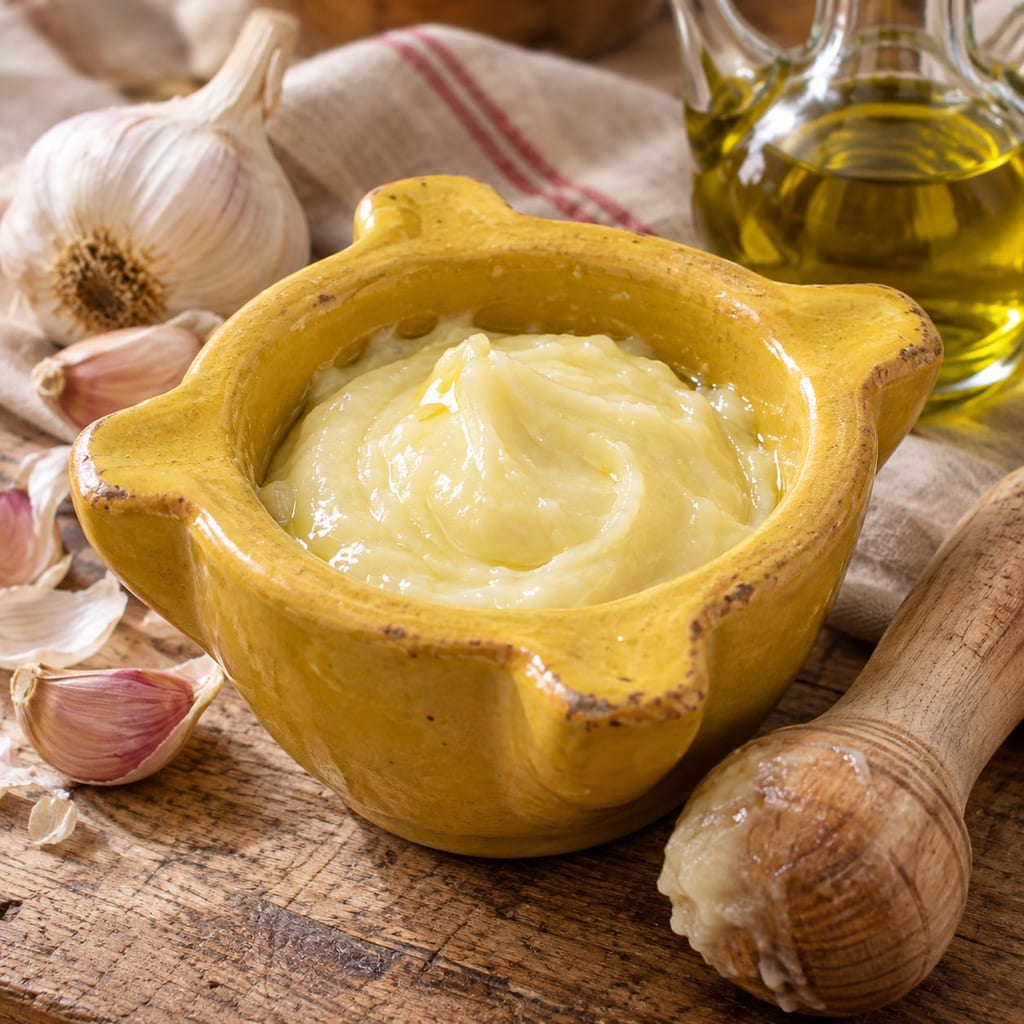
Traditional Catalan allioli is a dense emulsion of garlic, olive oil and salt made slowly in a mortar. This measured Barcelona-style version keeps egg-based garlic mayonnaise distinct.
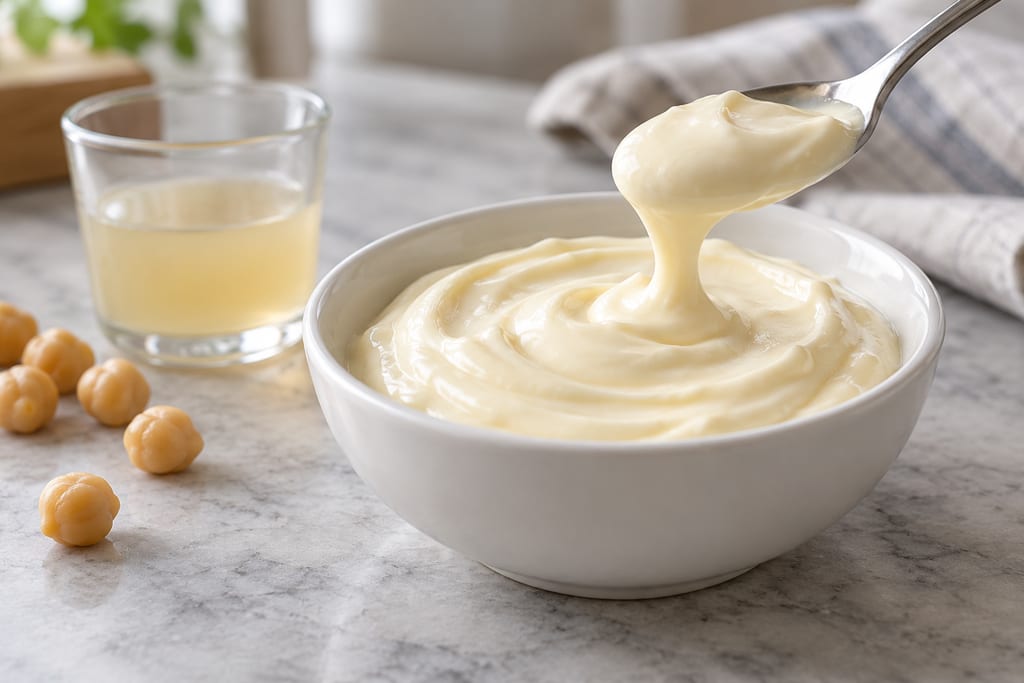
An eggless, untested emulsion made with canned chickpea liquid. Nominal yield 255 g.
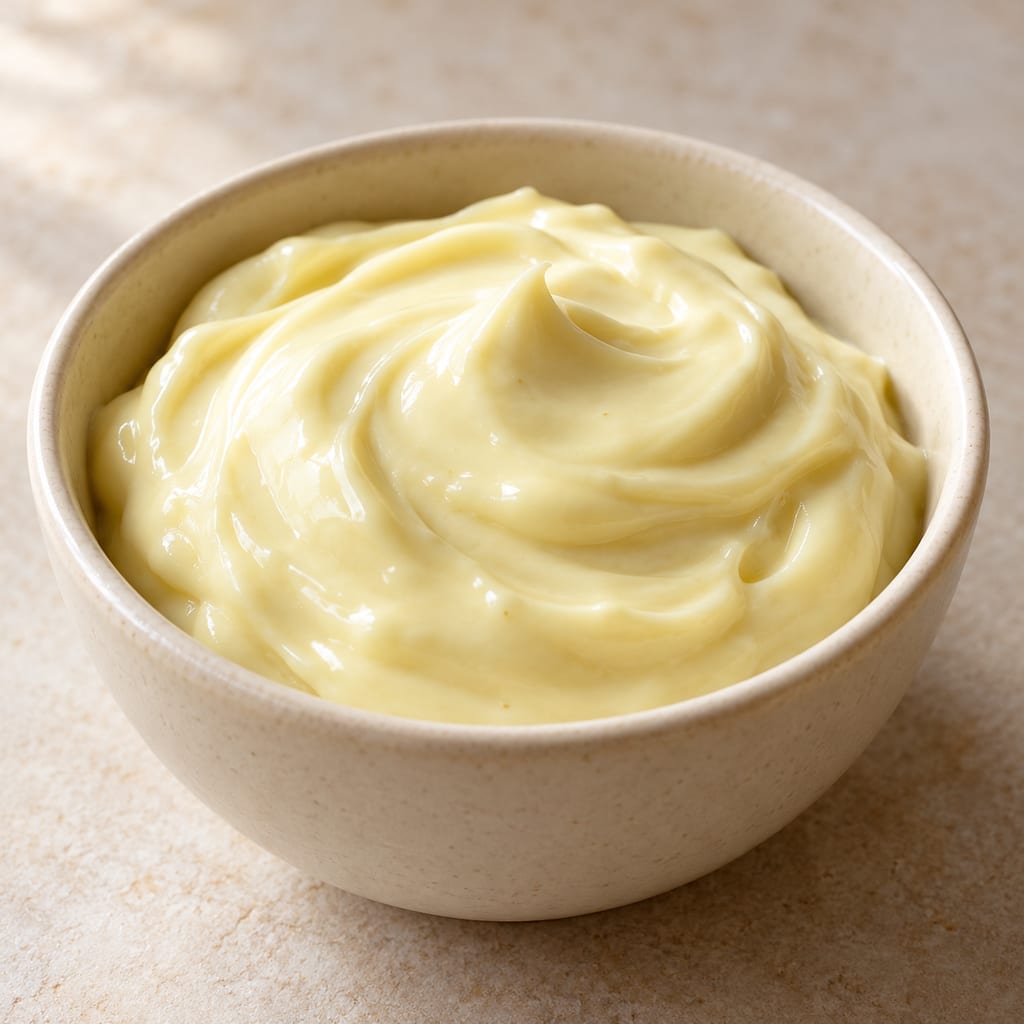
Avocado-oil mayonnaise is an ordinary egg-and-oil emulsion in which avocado oil supplies the oil phase. The oil changes flavour and colour, and it does not preserve the sauce.
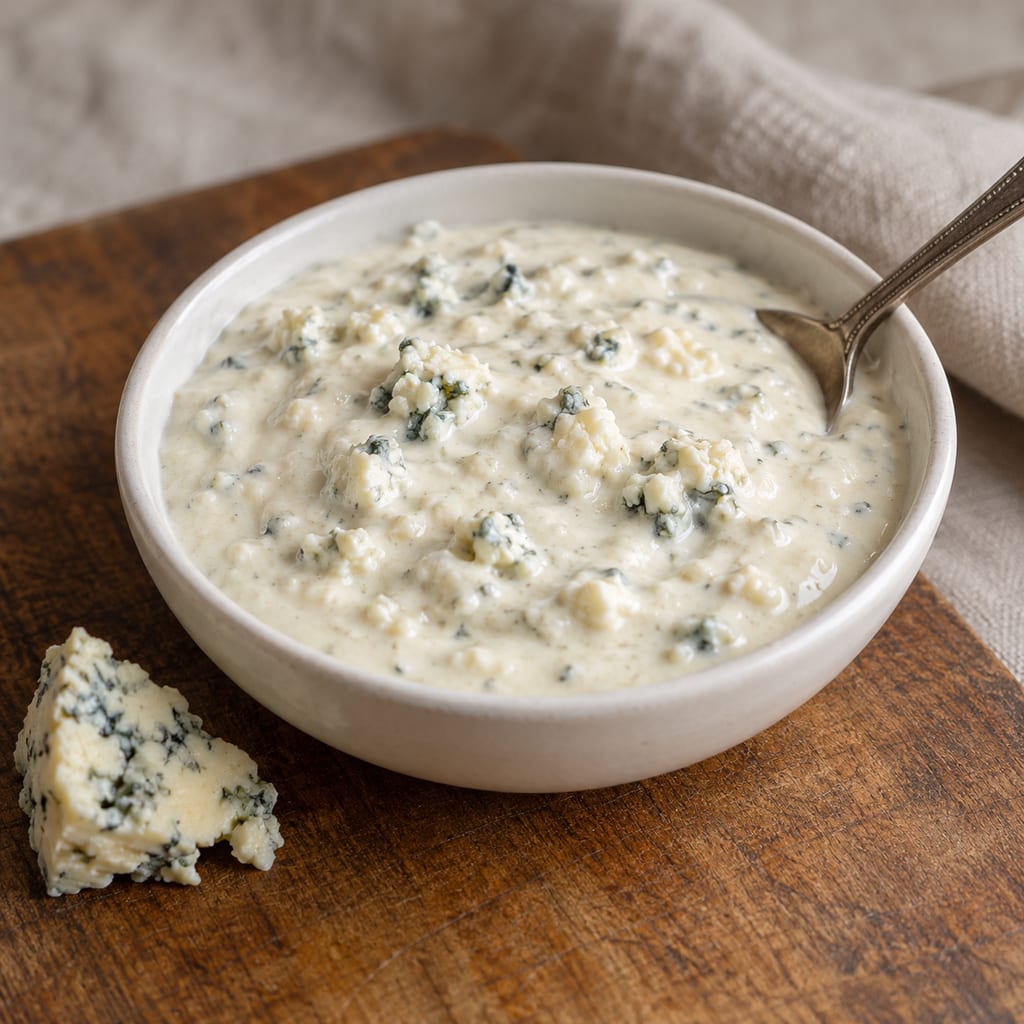
Blue cheese dressing is a creamy dressing built on crumbled blue cheese mashed into buttermilk, with sour cream, mayonnaise, vinegar and seasoning, and kept cold for up to two weeks.
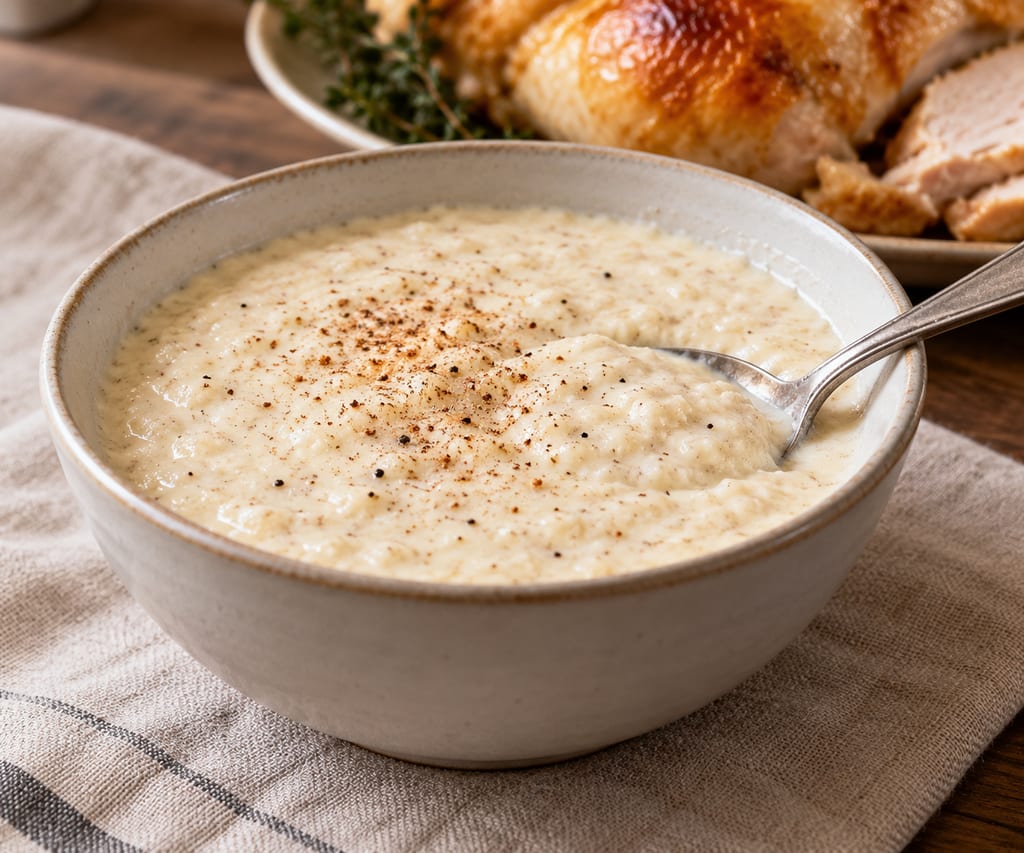
Bread sauce is a British sauce of milk infused with onion, clove and bay, thickened with stale breadcrumbs and finished with butter, served with roast chicken or turkey.
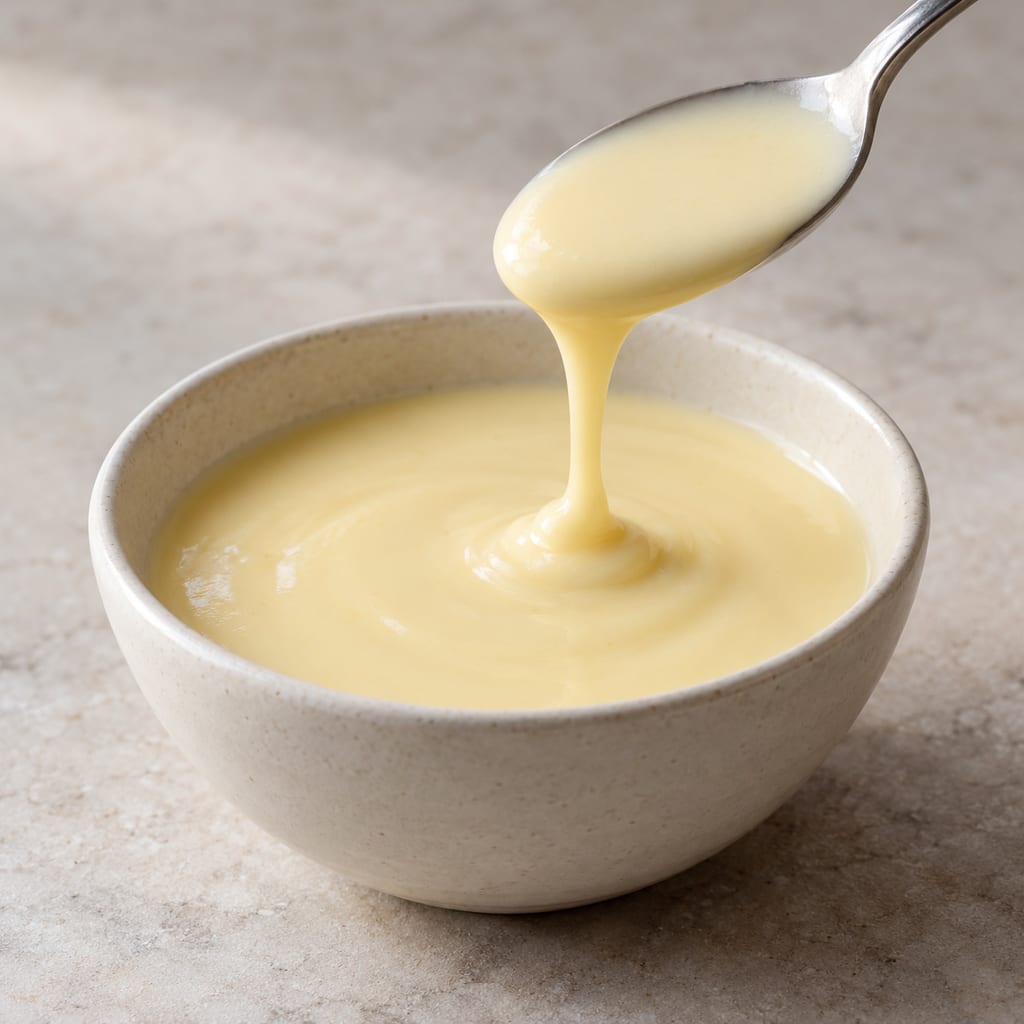
Starch-thickened salad-cream prototype with pasteurised yolk added after cooling; not a Heinz copy. Approximate yield 300 g.
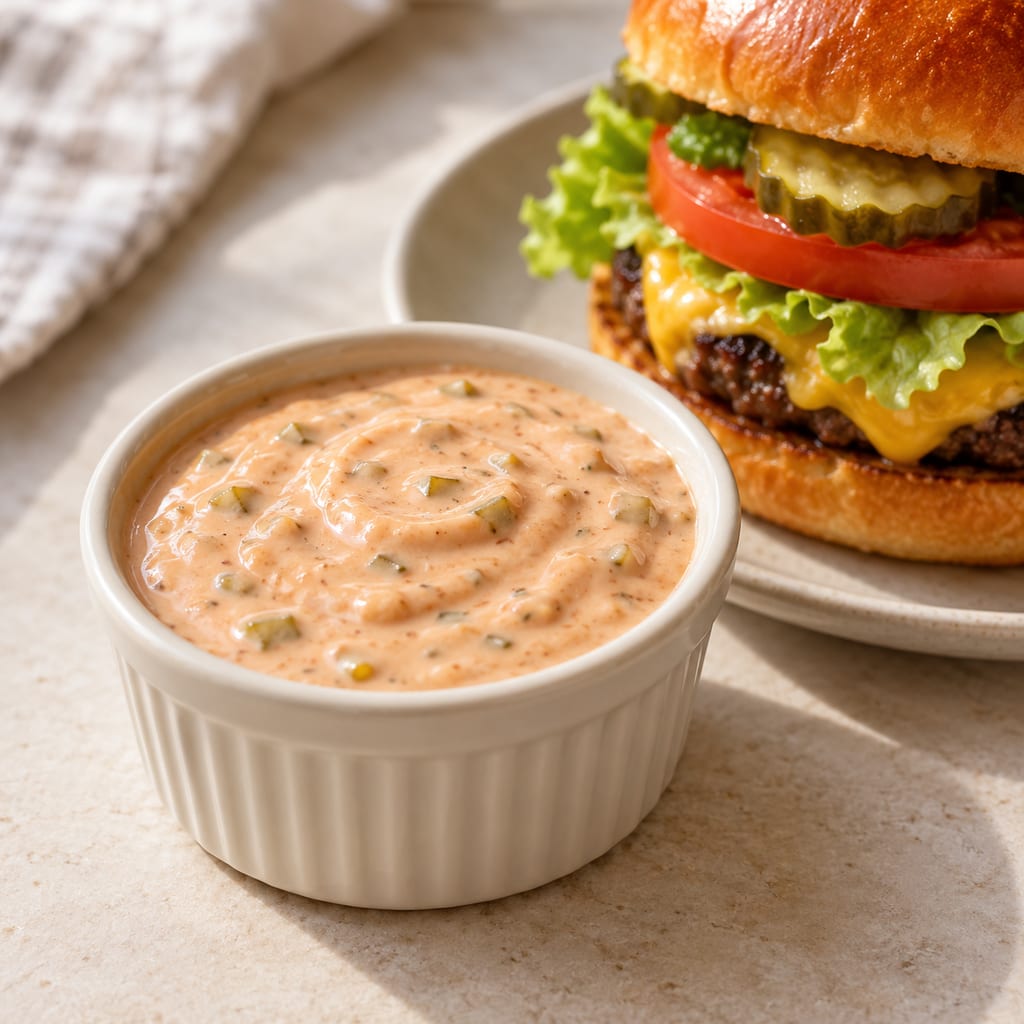
Mayonnaise mixed with ketchup, drained pickle relish and yellow mustard makes a tangy, pickle-flecked sauce for burgers; these proportions are an untested starting point.

Protected Italian vinegar made only from cooked grape must, fermented and aged in a battery of wooden barrels for at least 12 years: sweet, sharp and syrupy.

Airag is Mongolia’s fermented mare’s-milk drink, traditionally churned with saved starter in a reusable cowhide khokhuur.

Appam, or hoppers, are South Indian and Sri Lankan rice pancakes made from a fermented coconut-and-rice batter and cooked in a curved pan to a crisp lacy rim and a soft, spongy centre.

Auricularia tremellosa is a wood ear fungus of the genus that supplies most dried wood ear sold in China; its own food record is thin, and the culinary practice described here comes from the closely related wood ear species.

Ayran is Turkey’s cold, savoury yogurt drink: plain yogurt is loosened with water and lightly salted, then whisked smooth or aerated into a soft cap of foam.
A thin stone griddle used over an open hearth. Norwegian archaeology documents the established tradition from the early Middle Ages; a Viking-period origin is only a cautious suggestion linked to Shetland.

Crushed or milled barley cooked in water until the starch softens and the mixture thickens, the plainest way a northern household turned stored grain into a meal, here with apple and hazelnut.

Black carrot is the anthocyanin-pigmented Eastern carrot (Daucus carota var. atrorubens), the purple root that preceded orange types and still colours kanji and şalgam.
No community contributions have been published for this entry yet.
Sign in to contribute. Published comments and photos are free to read.
Valrhona, L'École ValrhonaMethod · Safety
Crème anglaiseCook to 180 to 185 °F (82 to 84 °C) stirring constantly
Above 185 °F (84 °C) the yolk lecithin can clot
Mixing yolks with sugar three to four hours ahead; thinning with reheated milk; curdling fix
Cited in: A sauce that stays liquid; The temperature window; Fixing a sauce that goes wrong
WikipediaHistory · Method
CustardCustard family and crème anglaise as the pourable end
Cooking temperature and syneresis; cornflour as a stabiliser
The Forme of Cury custard dishes; name origin
Cited in: A sauce that stays liquid; The temperature window