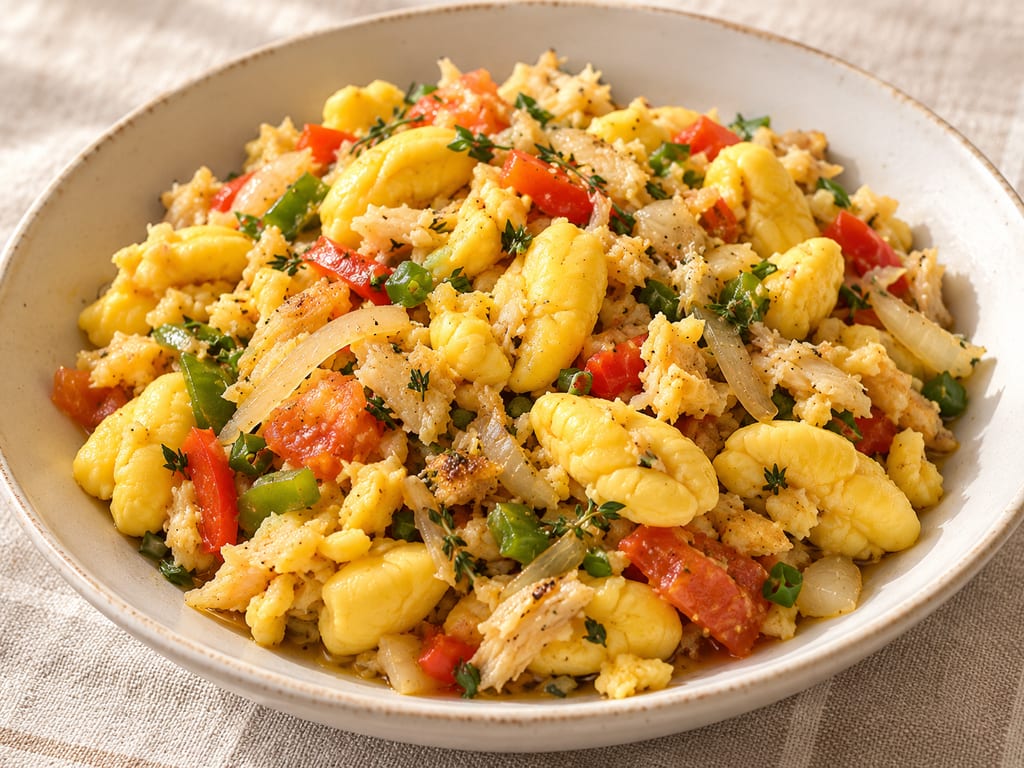
Ackee and saltfish
Jamaica's best-known dish: salt-cured cod desalted and flaked, then folded through ackee arils with onion, tomato, sweet pepper, thyme and Scotch bonnet.
 FermenteaWhere food goes to change
Spices and aromatics
The Scotch bonnet is the squat, fiercely hot, fruity chilli of Jamaican jerk and Caribbean pepper sauces, a Capsicum chinense cousin of the habanero.
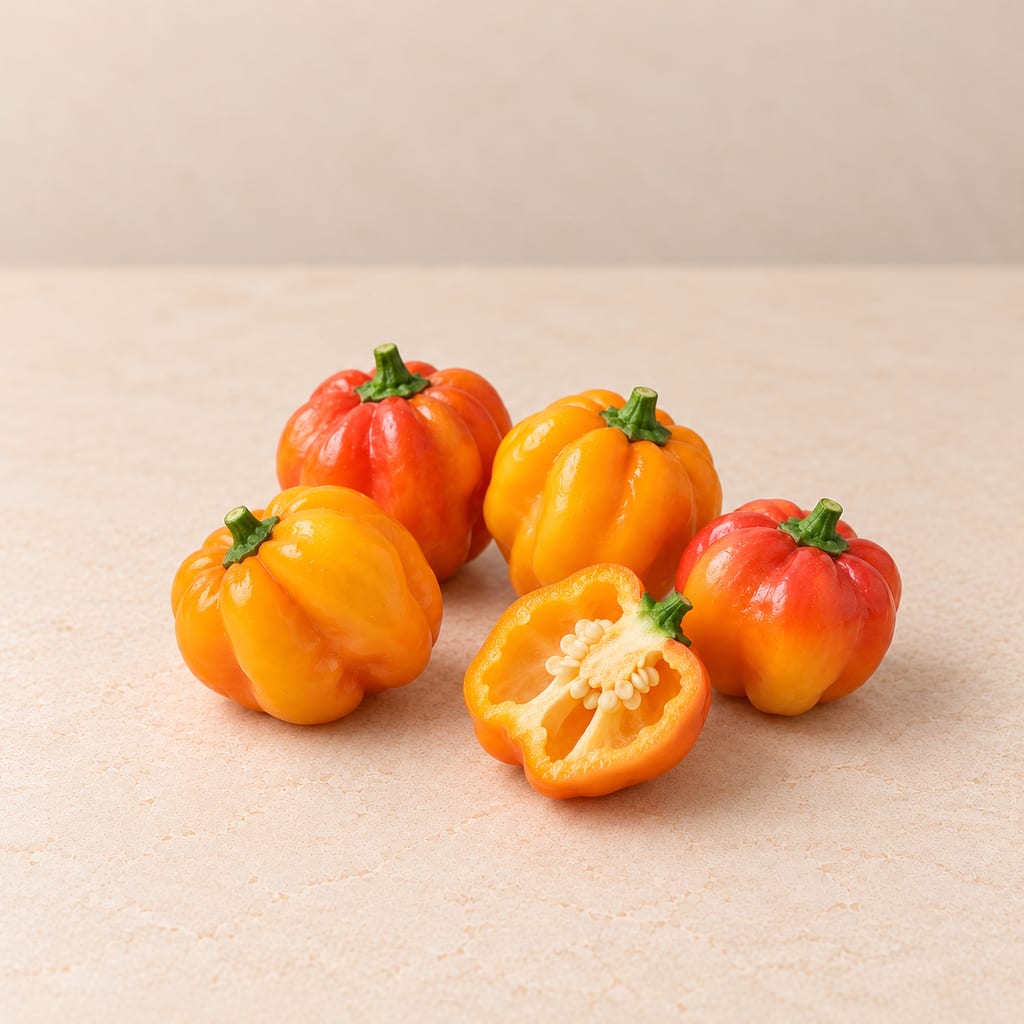
The Scotch bonnet is a cultivar of Capsicum chinense, the species that also gives the habanero. It takes its name from a supposed resemblance between the squat, wrinkled, lobed pod and the tam o' shanter, the flat Scottish bonnet. Ripe pods are yellow, orange or red, and a chocolate-brown form is usually described as slightly hotter and more earthy. Elsewhere it is called Bonney pepper or Caribbean red pepper, and in parts of Central America Panamanian pepper. The cultivar is usually rated at 100,000 to 350,000 Scoville heat units, against roughly 4,000 to 8,500 for a typical jalapeño, which puts it among the hottest chillies in ordinary kitchen use.
Heat is only half of the character. Compared with the habanero, which has the same species and similar heat, the Scotch bonnet is described as sweeter, often fruity or citrus-like, and stouter in shape. That fruitiness has a chemical basis. A research group at Kindai University in Japan showed that Capsicum chinense fruit, among them Scotch bonnet, habanero and bhut jolokia, release many more volatile esters than Capsicum annuum varieties, and proposed that the esters are the major contributors to the fruity, exotic aroma of the species. Esters are aroma compounds built from alcohols and acyl-CoA, and the enzyme AAT1, which makes them, is more strongly expressed in Capsicum chinense than in annuum. Pun1, the key enzyme for the pungent capsaicinoids, shares the same acyl-CoA precursor, which is why the fruit's heat and its aroma are chemically related but are separate traits. The Scotch bonnet's roughly 100,000 to 350,000 units are matched by the habanero, so the two chillies are alike in heat and differ chiefly in shape and aroma.
Botanically, Capsicum chinense is distinguished from the commoner Capsicum annuum by flowers and fruit carried two or more to a node instead of one, and by a calyx with a ring-like constriction where it meets the stalk. Both traits are useful but not fully reliable, and some taxonomists place the species within the annuum complex. Seedlings sold as Scotch bonnet are sometimes mislabelled, and growers may not notice until the plant fruits.
Capsicum chinense has an odd name for a New World plant. Nikolaus Joseph von Jacquin described the species in 1776 and, believing it came from China, called it chinense; the name is a misnomer, because every Capsicum originated in the Americas, and the species reached Chinese cooking only after the European voyages. Its native centre is generally placed in the lowlands of the northern Amazon basin. Barbara Pickersgill's study of chilli remains from the Peruvian coast concluded in 1969 that Capsicum chinense was probably domesticated in the Amazon lowlands and arrived on the coast around the same time as pottery, in the Initial period, long after Capsicum baccatum. A later archaeobotanical report from the University of California, Berkeley, likewise places Capsicum chinense and frutescens in the northeastern Amazon and records Capsicum chinense seeds scattered through the Preceramic sites of Huaca Prieta and Paredones, mainly in the civic areas of Paredones.
From the mainland the chilli moved north. The Arawakan peoples originated in the Orinoco valley in present-day Venezuela, and the Taíno and Carib carried chillies and staples such as cassava across the Caribbean by canoe. Spanish and Portuguese colonists then spread chillies to other continents during the Columbian exchange of the fifteenth and sixteenth centuries. A fully sweet variety called cachucha is grown on some Caribbean islands, a reminder that the same species also includes cultivars with almost no heat. Chillies became so popular in Asia and Africa that many consumers there are unaware of their American origin, and the Scotch bonnet is now a staple not only in the Caribbean but in West African, Sri Lankan and Maldivian cooking.
Plants of Capsicum chinense vary widely, but the habanero-type bushes are compact perennials about half a metre tall, with small white five-petalled flowers and shallow roots. In warm climates the plant is perennial and lives for several years; in cooler climates it usually does not survive the winter but regrows readily from seed. Ripe fruit is most often red, orange or yellow, though brown and purple forms exist.
The species is crowded with famous names. Beside the Scotch bonnet it holds the habanero, whose name points to Havana, from where peppers of this species were exported, the bhut jolokia of Assam, the Trinidad scorpion, the Carolina Reaper and the 7-Pot, the Datil of Florida, the Fatalii of south-central Africa, the Adjuma and Madame Jeanette of Suriname, and the mild ají dulce. A cultivar called Pepper X measured 2.69 million Scoville units in 2023. Against that, the Scotch bonnet's 100,000 to 350,000 places it in the hot middle of its own family rather than at the extreme, a useful correction for anyone who treats the name as shorthand for the hottest chilli there is. The species can hybridise with Capsicum annuum and Capsicum frutescens, so named types are not always cleanly separate.
Hot pepper grows best in tropical countries, and in Jamaica the Scotch bonnet is one of only two varieties cultivated commercially, the other being the West Indian Red. According to the island's agriculture ministry, the Scotch bonnet is the one preferred for the fresh and export markets, while the West Indian Red is mainly wanted by processors for sauces and jerk seasoning. National hot pepper production rose by about a quarter between 2018 and 2022, from 15,998 to 20,120 tonnes, on 1,429 hectares in the last year, and about 70 percent of the crop comes from the parishes of St. Elizabeth, Clarendon, Portland, St. Ann and Manchester.
Supply has not kept up with demand: in 2022 growers met only 45 percent of what agro-processors wanted. Jamaican-branded pepper products command strong demand and good prices, with hot pepper sauce exports of 841 tonnes in 2022 going mainly to the United States, Canada and the United Kingdom, and fresh peppers are also exported, largely for the diaspora. In 2021 hot pepper products were worth about US$5.42 million, and Jamaican hot peppers are among the horticultural crops cleared for pre-clearance to the United States, a procedure meant to speed their export.
Jamaican jerk is the dish most closely tied to the Scotch bonnet. Jerk is a cooking style in which meat, most often chicken or pork, is dry-rubbed or wet-marinated with a hot spice mixture and cooked slowly with smoke. The main spice is allspice, which Jamaicans call pimento, the dried unripe fruit of Pimenta dioica, and the Scotch bonnet supplies most of the heat. Other common ingredients are cloves, cinnamon, scallions, nutmeg, thyme, garlic, brown sugar, ginger, soy sauce, vinegar and salt.
The history of the technique runs through three groups. The Taíno are credited with first cooking meat and fish on the barbacoa, a framework of sticks, and accounts of the Spanish chronicler Gonzalo Fernández de Oviedo in 1516 describe such cooking with chilli and pimento seasoning. During the invasion of Jamaica in 1655, Spanish colonists freed enslaved Africans, some of whom fled to the hills and became the first Maroons; they mixed with remaining Taíno and took up jerking, and the jerk sauce is believed to have been developed mainly by the Maroons, who slow-cooked wild hogs over pimento wood. Since the 1960s the pit has often been replaced by oil barrels cut lengthwise with ventilation holes and lids, charcoal-fired, a form now common in Jamaica. In September 2015 the Jamaican government trademarked Jamaica Jerk as a geographical indication.
Historically jerked foods included wild game such as hutia, iguana and wild hog, and seafood such as parrotfish and lobster, and papaya leaves were sometimes used to tenderise the meat. Today jerk also flavours fish, shrimp, lobster, beef, lamb, goat, tofu and vegetables. Street-side jerk stands, or jerk centres, are common in Jamaica, the Cayman Islands and San Andrés, and typically serve jerked meat with hard dough bread, bammy, johnnycake and festival. Jerk is found wherever there are significant Caribbean-descended populations, including the United Kingdom, Canada, the United States and coastal Panama, Costa Rica, Honduras and Nicaragua, and the poulet boucané of Martinique and Guadeloupe resembles jerk chicken.
Beyond jerk, the Scotch bonnet is used in Caribbean, West African, Sri Lankan and Maldivian cooking. Dishes named for it include jerk chicken, curry goat, escovitch fish, peppered shrimp, rice and peas, rondón, beef patties, sous and ceviche, and it appears in pepper sauces, soups, stews and curries. Along the coasts of Nicaragua, Costa Rica, Honduras and Panama and on San Andrés, the chilli turns up in dishes of Jamaican origin.
In Haiti the Scotch bonnet is the core of pikliz, a pickled condiment whose name blends the English word pickle with the French piquer, to sting. Pikliz is made with Scotch bonnets, cabbage, carrots, onions, bell peppers and garlic, pickled in white vinegar, citrus juice or both. It is served beside fried foods such as griot, fried pork, tassot, fried beef, and bannann peze, fried plantains, and with rice and beans, and it can be eaten fresh or after fermentation. It is traditionally made at home, and as more Haitians live abroad it is increasingly produced industrially. Variants add shallots, beetroot, habanero or chicken stock.
A Scotch bonnet brings three things to a pickle or sauce: heat from capsaicinoids, a colour from carotenoids, and the volatile esters that give the fruity top note. The colour pigments of chillies, mainly capsanthin and capsorubin, are described as highly stable, while the volatile esters, which come from the same acyl-CoA precursor pool as the capsaicinoids, are the aromatic part of the flavour.
The Caribbean preparations built on it are mostly acidified and not fermented. Haitian pikliz is pickled in white vinegar, citrus juice or both, which flavours and preserves it without any microbial fermentation, and it can also be left to ferment, in which case it is eaten after fermentation and not fresh. The jerk marinade likewise carries vinegar among its ingredients.
Ripe Scotch bonnets are yellow, orange or red, and the brown form is hotter and more earthy. A Jamaican strain promoted by the Ministry of Agriculture and sold as MoA is widely grown, and a fully sweet cachucha is grown on some islands, so the same name can describe pods of quite different heat. Tasting a very small piece first is the dependable guide.
The pods are hot enough to irritate the mouth and throat, because capsaicinoids bind to pain receptors there, and sensitivity varies between people. Cutting out the placenta that carries the seeds removes much of the heat.
The place and date of first domestication of Capsicum chinense are given differently in different references, and the Amazon lowlands are the best-supported area. The fruity aroma of the species has been explained at the level of esters and the enzyme that makes them, but not measured for the Scotch bonnet cultivar in a ferment. No tested procedure for fermenting the pods has been published.
Main commercial producer and home of jerk; the parishes listed give about 70 percent of the national crop.
Scotch bonnet is the core of pikliz; the row says nothing about where the chilli was first grown in Haiti.
The species is thought to have been domesticated in this region; the row does not locate the Scotch bonnet cultivar itself.
Jamaica's best-known dish: salt-cured cod desalted and flaked, then folded through ackee arils with onion, tomato, sweet pepper, thyme and Scotch bonnet.
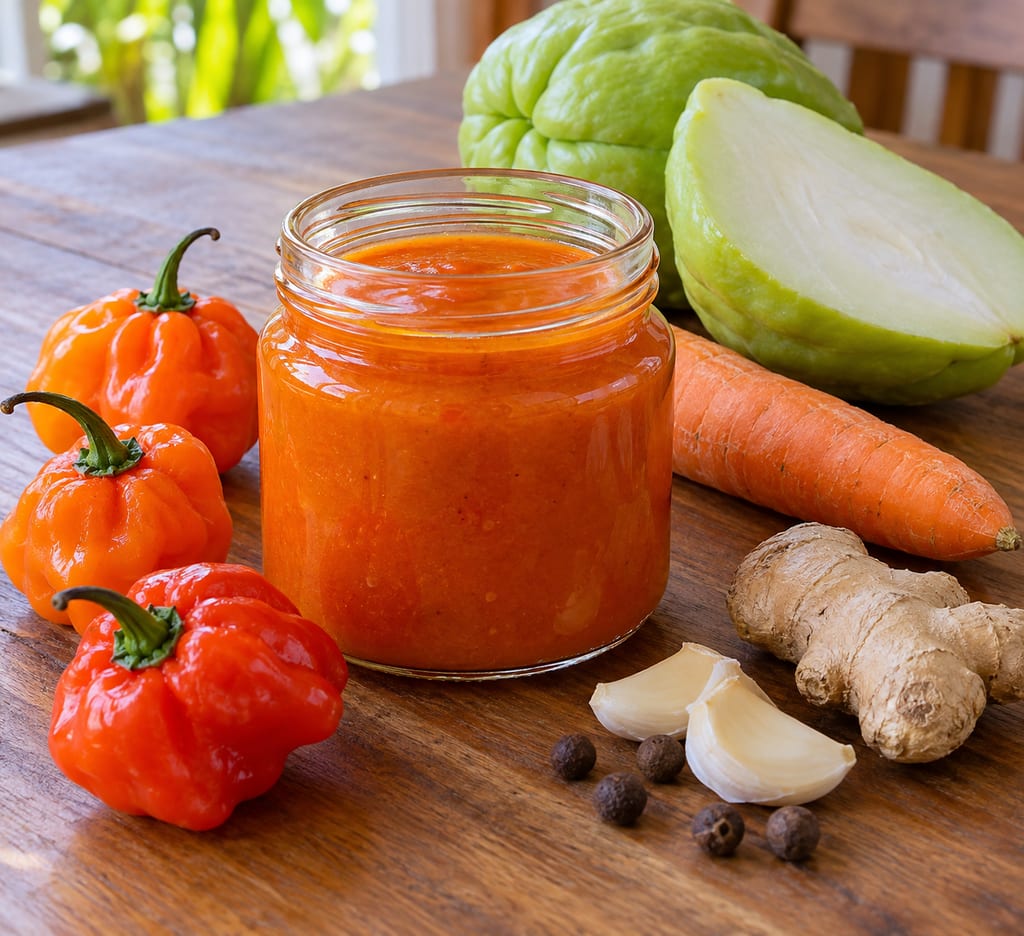
This Jamaican recipe cooks Scotch bonnet peppers with carrot, cho cho, onion, garlic, ginger, allspice and vinegar, then blends and strains the mixture.

Pikliz is a Haitian cabbage-and-vegetable condiment pickled with vinegar, citrus and hot peppers. It brings sharp acidity and chilli heat to rich fried foods; its history and shelf life remain unestablished here.
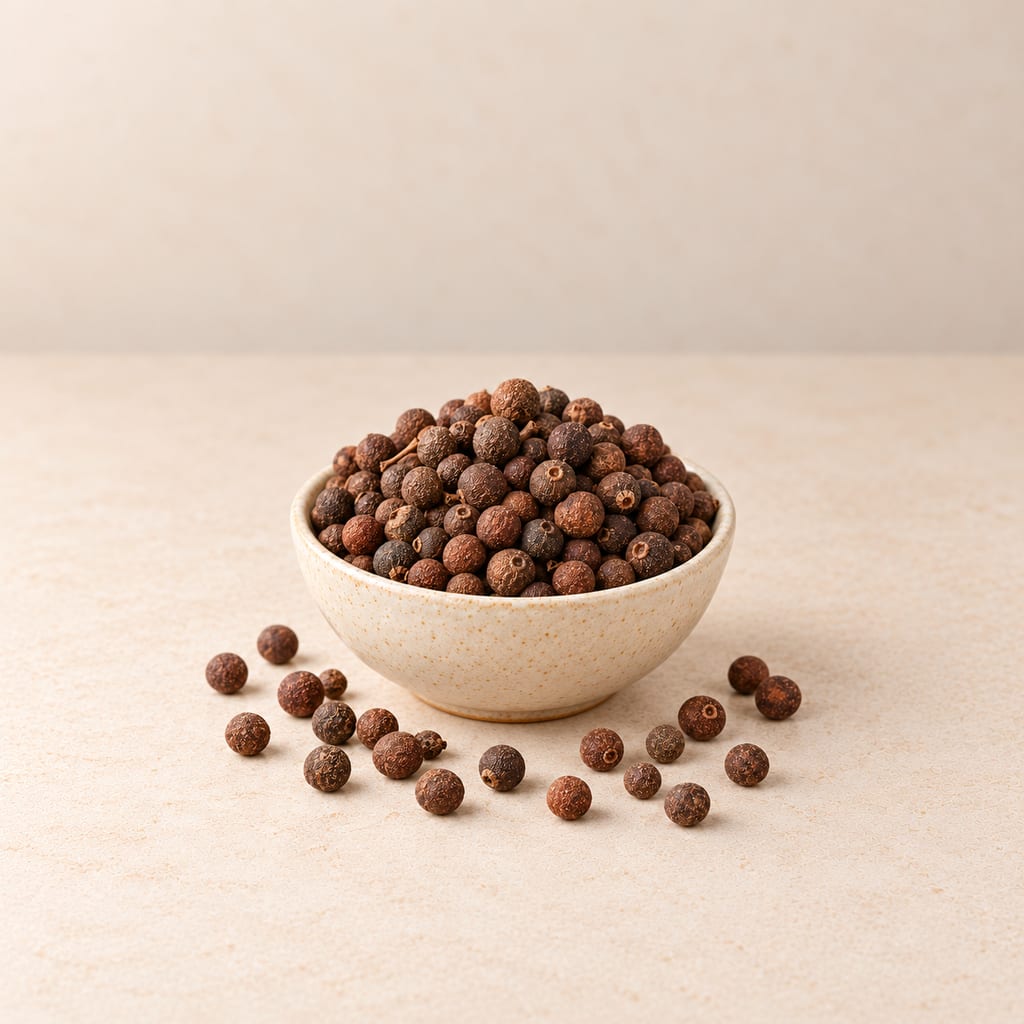
Pimienta de dulce is the Ecuadorian culinary name for allspice (Pimenta dioica), a dried tropical berry. Distinct from true peppers, it offers a complex aroma of clove, cinnamon, and nutmeg, and is used whole in chicha de jora.
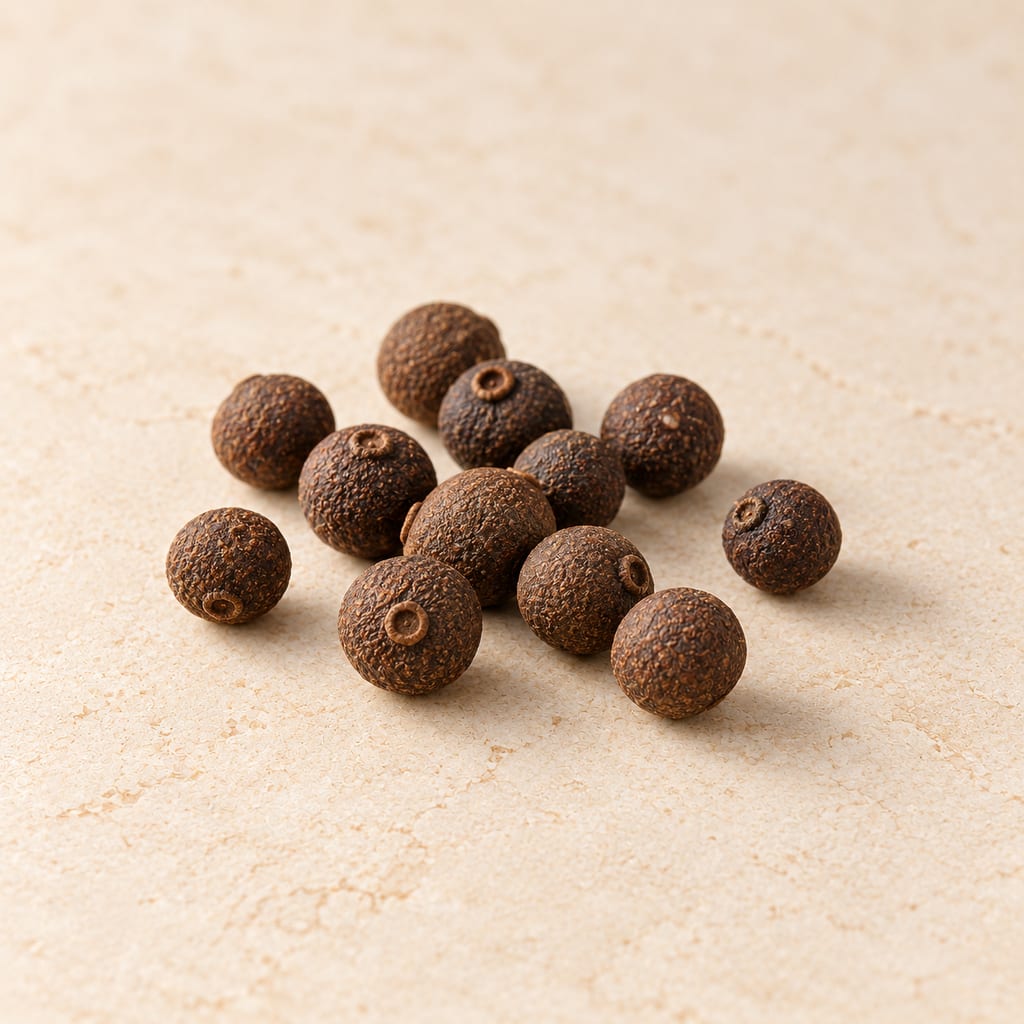
Allspice is the dried unripe berry of Pimenta dioica, a Caribbean and Central American tree, used whole or ground in jerk seasoning, sauces, pickles, sausages and baking.
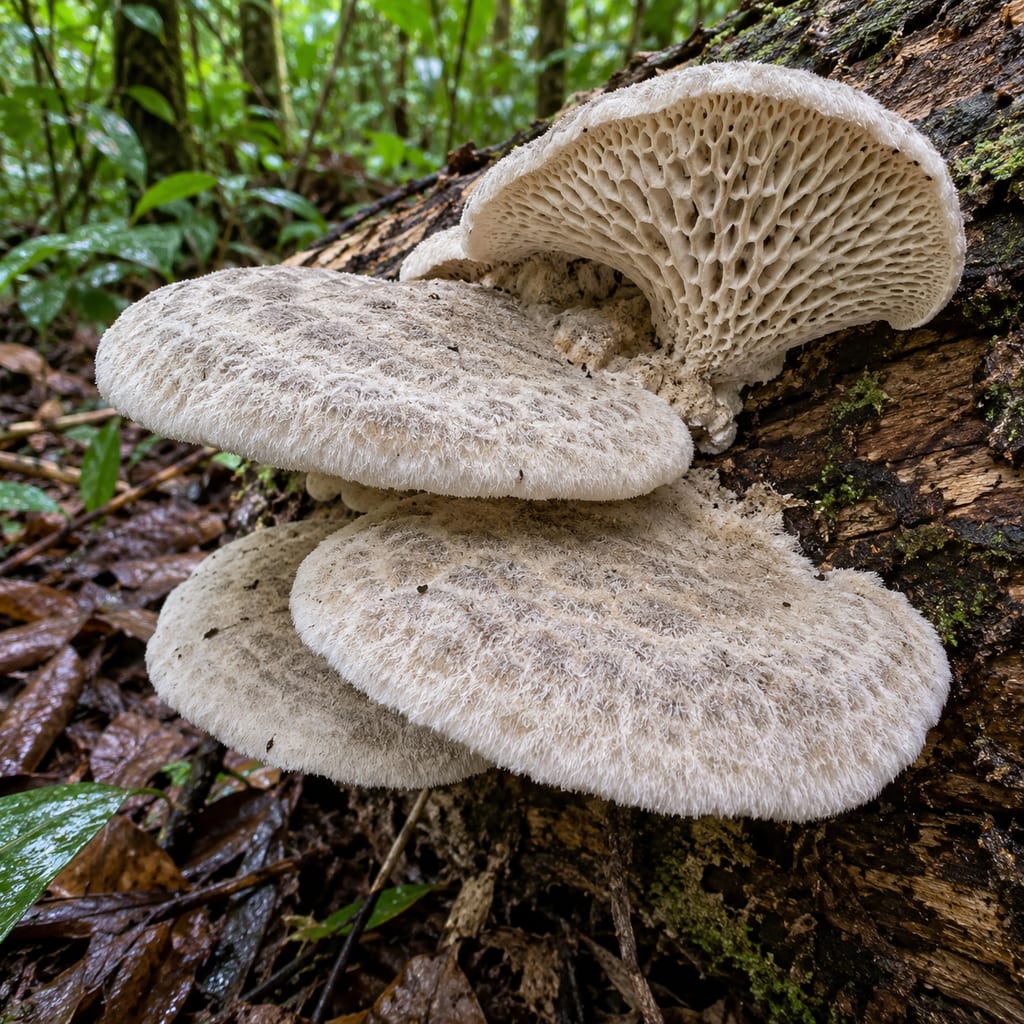
Favolus tessellatus is a tropical wood-decaying polypore with a tessellated cap and honeycomb pores. Brazilian sources record it as food, but the evidence does not establish one traditional recipe or a universal harvest season.
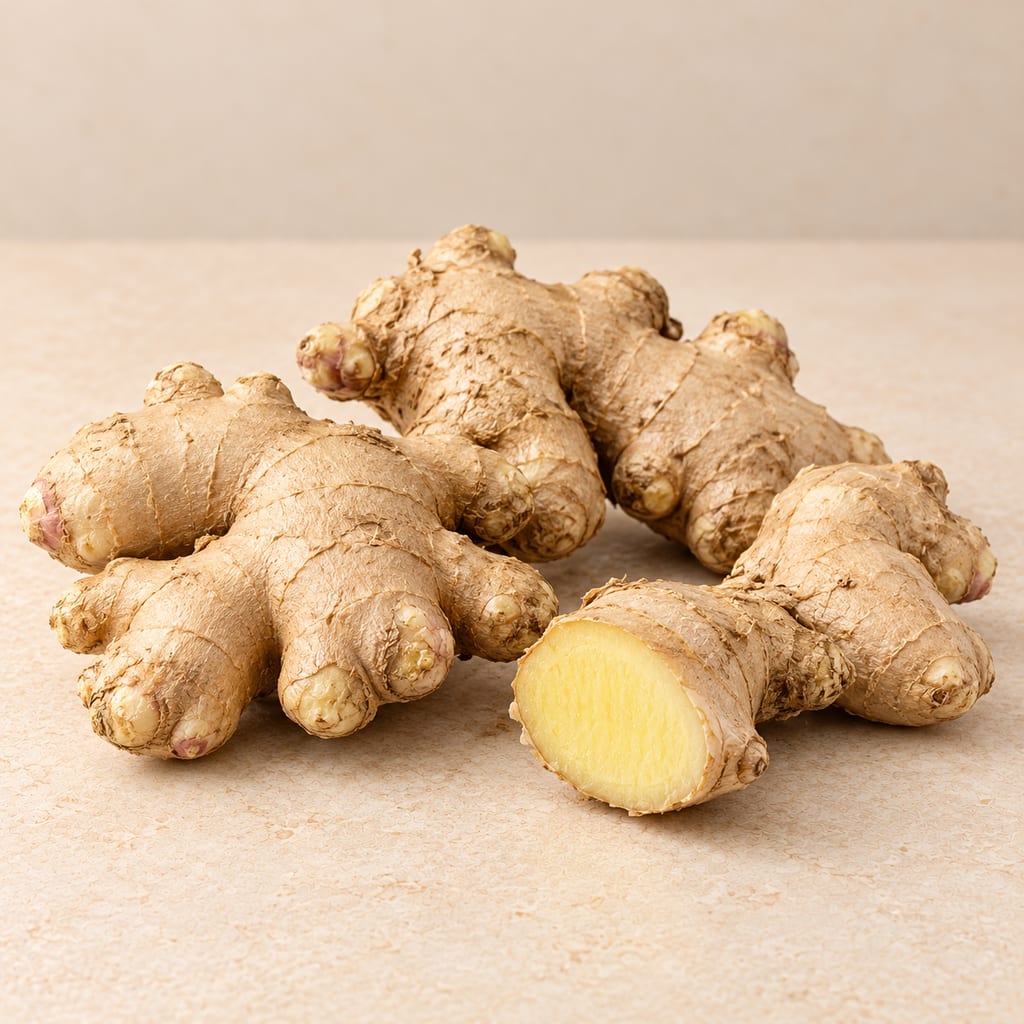
Ginger is the aromatic rhizome of Zingiber officinale, used fresh, dried and preserved. Historical ginger wines sliced or bruised it to flavour a sugar-based ferment.
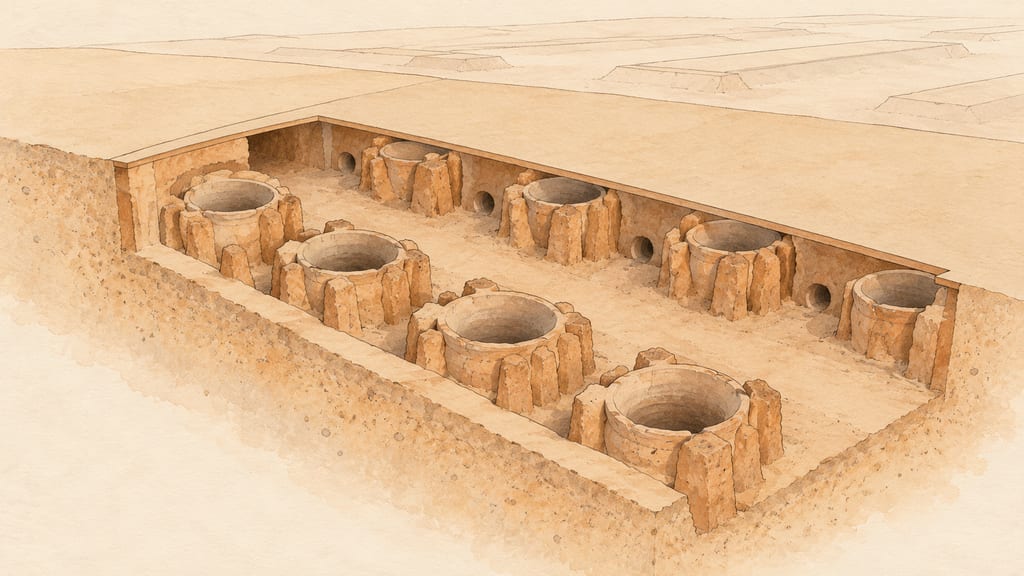
At North Abydos in Egypt, a fixed early Dynastic brewery comprised parallel semi-subterranean installations with rows of ceramic mash vats; excavation reports revise their number, scale and estimated batch capacity.
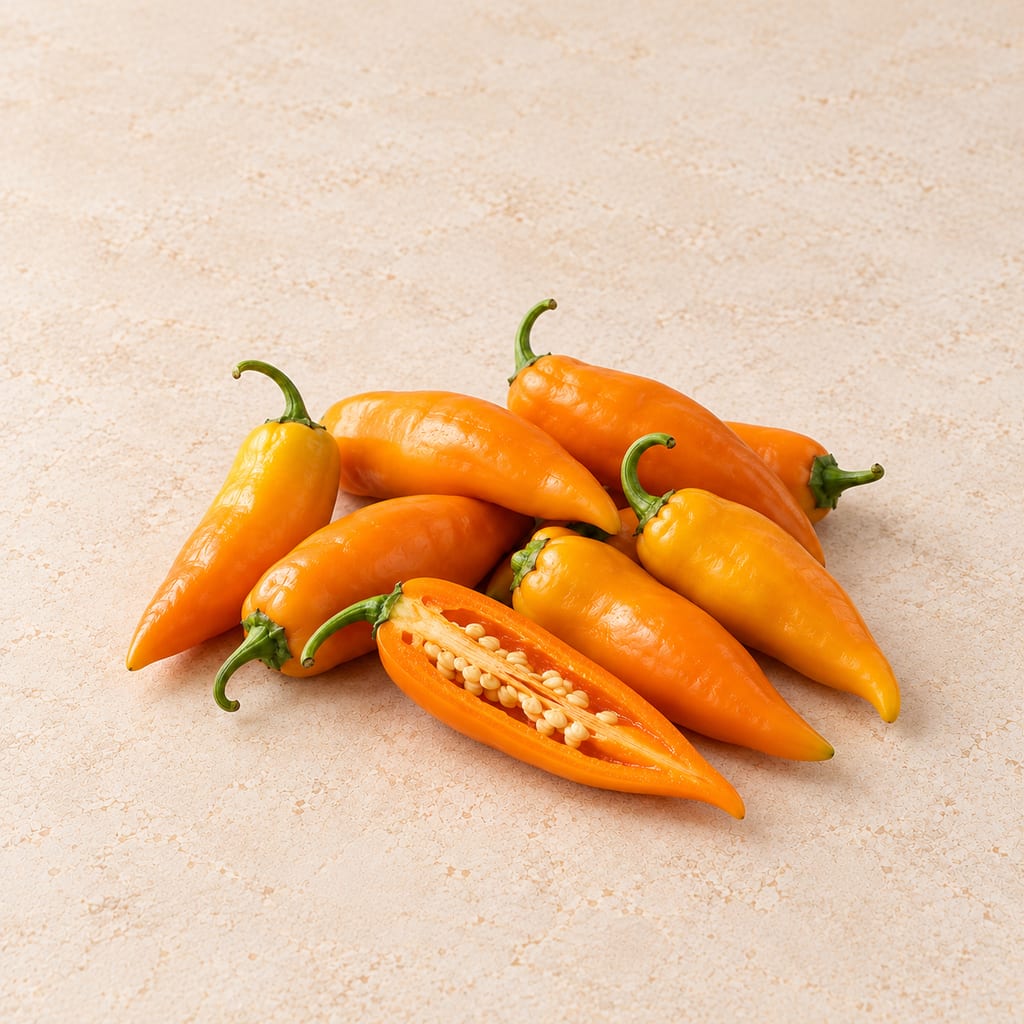
Ají amarillo is the orange-yellow Peruvian chilli cultivar group of Capsicum baccatum, used to colour and season huancaína sauce and ají de gallina. Published heat estimates do not establish one range for the named cultivar.

Toasted almonds are whole sweet almond kernels dry-roasted until golden to brown. Heat replaces their marzipan note with a roasted, nutty one; they thicken and flavour romesco.

Kodiak salmon, halibut and cod cut as seg'aq and hung on an initaq rack to become tamuuq, with kac'amaasaq and kupcuunaq named as different results.
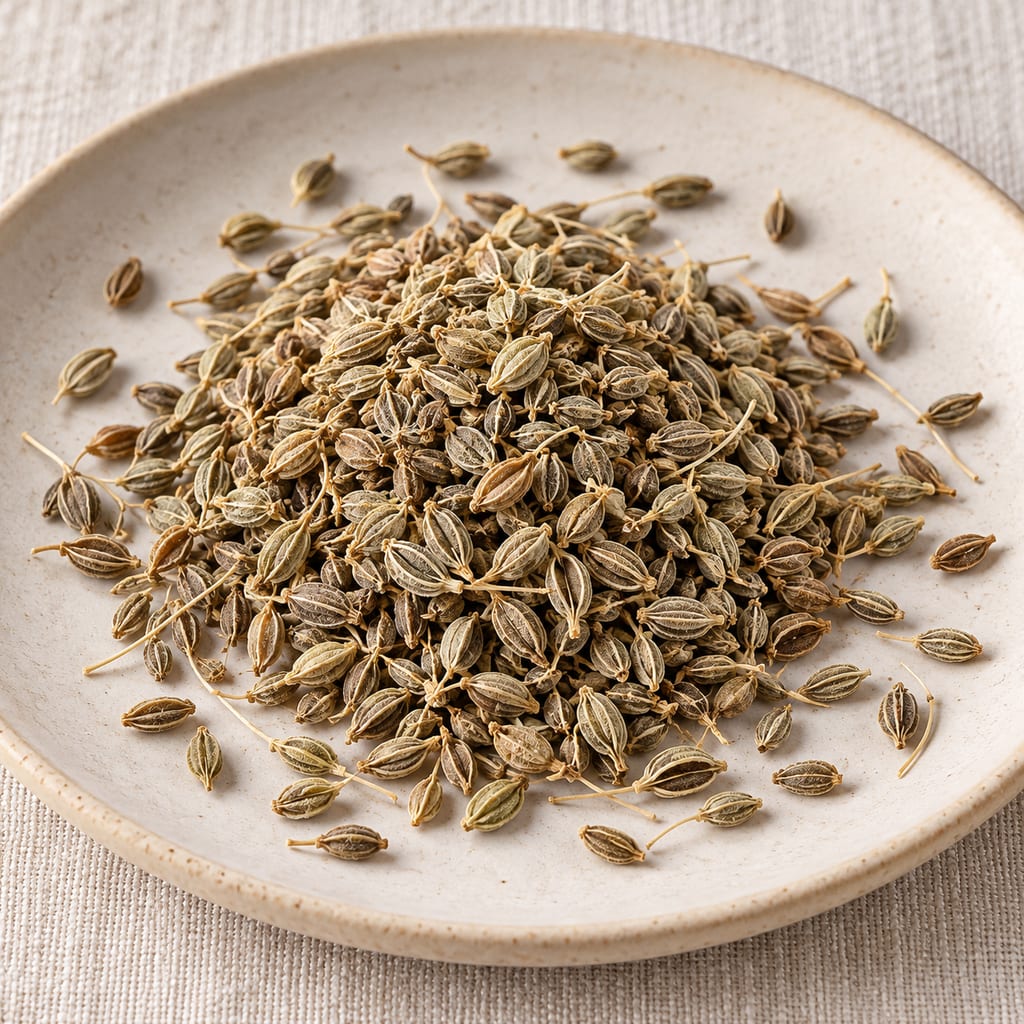
Aniseed is the dried ripe fruit of Pimpinella anisum, an aromatic Apiaceae spice commonly called a seed. It adds a sweet, warm aroma to breads such as Moroccan krachel and South African mosbolletjies, and is distinct from star anise.
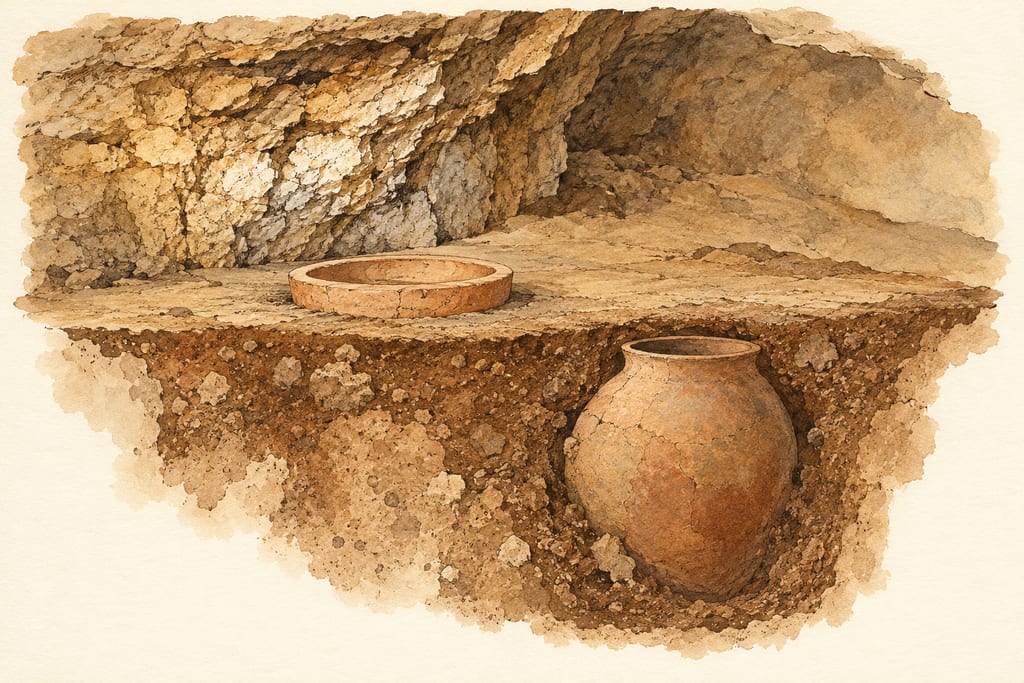
A fixed Late Chalcolithic installation in Areni-1 cave combined a shallow clay pressing basin with a large jar set into the cave floor and storage vessels nearby.

Ripe avocado flesh is the soft, buttery, fat-rich pulp of Persea americana, eaten raw. It is low in acid, so it is a fresh ingredient that needs care in chilled dishes.
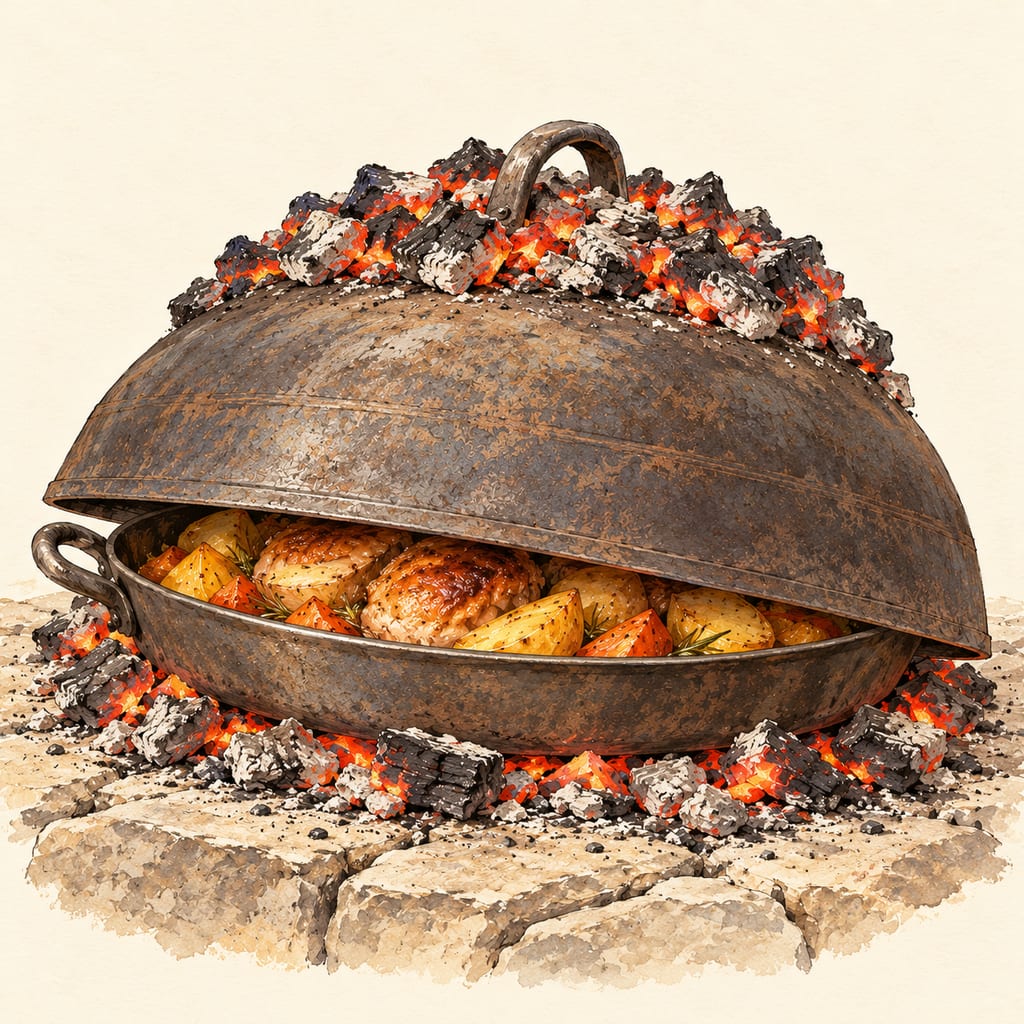
A portable dome and pan used over a hearth, with embers on the lid and heat from below. Regional peka and saç forms share this principle while differing in materials, pan shape and how the food is cooked.
No community contributions have been published for this entry yet.
Sign in to contribute. Published comments and photos are free to read.
WikipediaIdentity · Use · History
Scotch bonnetCultivar of Capsicum chinense, name origin, colours and heat range
Comparison with habanero
Dishes and regions of use
Taíno and Carib movement of chillies
Cited in: A hot chilli with a fruity smell; From the Amazon to the Caribbean; The plant and its relatives; Jerk and the Taíno inheritance; In sauces, pickles and everyday cooking; Choosing and handling
WikipediaIdentity · History
Capsicum chinenseName given by Jacquin in 1776 and the misnomer
Flowers per node and calyx constriction
Northern Amazon centre of origin
Cited in: A hot chilli with a fruity smell; From the Amazon to the Caribbean; The plant and its relatives; Open questions
American Antiquity (Cambridge University Press)History
The Archaeological Record of Chili Peppers (Capsicum spp.) and the Sequence of Plant Domestication in PeruC. chinense domesticated in the Amazon lowlands and reaching the Peruvian coast with pottery in the Initial period
Cited in: From the Amazon to the Caribbean
University of California, Berkeley Archaeobotany LaboratoryHistory
Capsicum spp. at the Preceramic Sites of Huaca Prieta and Paredones, Chicama Valley, Peru (UCB Archaeobotany Laboratory Report 74)C. chinense and frutescens thought to have tropical roots in the northeastern Amazon
C. chinense seeds spread through Preceramic contexts, mainly civic areas of Paredones
Cited in: From the Amazon to the Caribbean
Science Japan (Japan Science and Technology Agency)Science
Researchers identify genes behind the fruity aroma of peppersScotch bonnet and other C. chinense release many more esters than C. annuum
AAT1 makes esters; Pun1 makes capsaicinoids from the same precursor
Cited in: A hot chilli with a fruity smell; What it does in pickles and sauces; Open questions
Ministry of Agriculture, Fisheries and Mining, JamaicaProduction
Pepper Investment Portfolio (hot pepper in Jamaica)Two commercial varieties, Scotch Bonnet and West Indian Red
Production 2018 to 2022, regions, processor demand
Sauce and fresh exports and values
Cited in: Jamaica's pepper crop
WikipediaHistory · Use
Jerk (cooking)Jerk ingredients and the role of Scotch bonnet
Taíno and Maroon history, 1516 and 1655
Jamaica Jerk geographical indication of 2015
Cited in: Jerk and the Taíno inheritance; What it does in pickles and sauces
WikipediaUse · Fermentation
PiklizHaitian pickled condiment built on Scotch bonnet
Vinegar and citrus pickle, eaten fresh or fermented
Name from pickle and piquer
Cited in: In sauces, pickles and everyday cooking; What it does in pickles and sauces
HortiDailyScience
NMSU researchers investigate how super hot peppers pack their powerful punchCapsaicinoid vesicles on the placenta; on the fruit wall in super-hots
Cited in: Choosing and handling
Antioxidants (Basel), via PubMedScience
Carotenoids of Capsicum Fruits: Pigment Profile and Health-Promoting Functional AttributesCapsanthin and capsorubin described as highly stable
Cited in: What it does in pickles and sauces
WikipediaGeneral
Chili pepperCapsaicinoids bind to pain receptors in the mouth and throat
Cited in: Choosing and handling