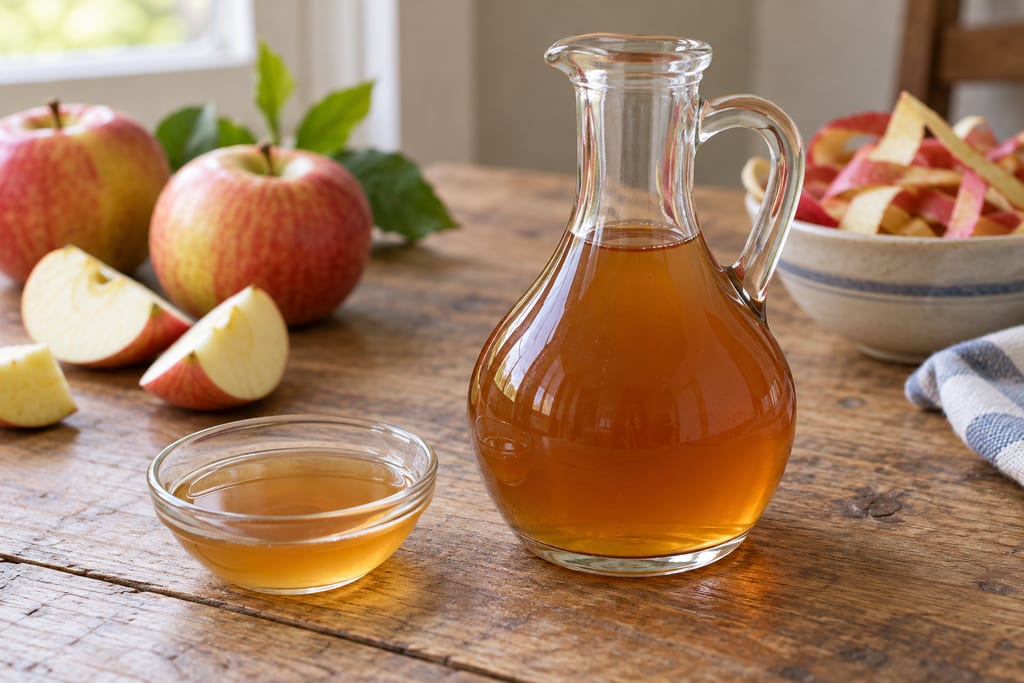
Sugar-based apple cider vinegar
Apple vinegar made at home from whole fruit or peelings and cores, sugared and fermented first to alcohol by yeast and then to acetic acid by bacteria in open air.
 FermenteaWhere food goes to change
Traditional method
柿酢 · Kaki-su · かきす · Persimmon vinegar · Japanese persimmon vinegar · 柿の酢 · 熟成柿酢 · Kaki fruit vinegar
Japanese vinegar from ripe persimmons: yeast turns the fruit sugar to alcohol and acetic bacteria turn that to acid; made at home in a month and by makers in Wakayama and Nagasaki over several years.

Kakisu, 柿酢, is Japanese vinegar brewed from persimmons. Yeast turns the fruit's sugar into alcohol and acetic acid bacteria then oxidise the alcohol to acetic acid. The vinegar may be pale gold, amber or dark brown, depending on the persimmon, the fermentation, the clarifying and the ageing. It tastes of plain vinegar acidity with some fruit sweetness and tannin-like notes.
The fruit is the Japanese persimmon, Diospyros kaki, either sweet (甘柿, amagaki) or astringent (渋柿, shibugaki). Astringent types hold more soluble tannin before ripening or de-astringency treatment. Some makers use fully soft fruit and others crush, press or treat it with enzymes, and no cultivar is required for all kakisu.
No saccharification step is needed, unlike rice vinegar, because ripe persimmons already contain glucose and fructose. Traditional household batches may rely on microbes from the fruit and the room. Controlled makers use selected yeasts, prepared acetic acid bacteria, managed aeration and measured acidity, which are two ways of doing the same two changes.
Tamura Zosu in Wakayama makes Miyono Hana kakisu from local astringent Hiratanenashi persimmons with no added water, commercial alcohol or synthetic acetic acid. It crushes the fruit, ferments the mash into persimmon wine, presses it, acetifies it by a static surface method and matures it for at least two years. Nakamura in Nagasaki makes a fruit-only vinegar from a local cultivar in ceramic jars and ages it for at least three years.
Japan's agriculture ministry lists persimmon vinegar within the fruit vinegars. JAS 0801:2024 gives fruit vinegar its own minimum fruit juice and acidity, though a homemade kakisu need not comply and no protected geographical designation covers all persimmon vinegar. Kakisu is also not persimmon steeped in finished vinegar, persimmon syrup, or kakishibu (柿渋), the tannin-rich liquid used for waterproofing and other non-food purposes.
Persimmons have long been grown, eaten fresh, dried and processed into astringent tannin preparations in Japan. That does not date kakisu: a two-stage alcohol and acetic process needs dated evidence for the vinegar itself.
Japan's National Diet Library reference network gives bibliographic proof. In a reference answer first recorded in 2004, Kagawa Prefectural Library identifies a March 1992 publication on the food heritage of the Shishi area, with the former Tonbara Town in Shimane, containing a short persimmon-vinegar method, and the 1993 Japanese Food Life Encyclopaedia with regional kakisu recipes from Fukushima, Hyogo and Saga.
Tamura Zosu's own history separates the vinegar house from the persimmon product. The company was founded in Katsuragi, Wakayama, in 1808, first making rice and grain vinegars, and Wakayama Prefecture documents that start. Its sixth-generation maker began developing persimmon vinegar in 1938, when rice shortages encouraged other raw materials. It was dropped because it cost more than rice vinegar, research resumed in 1983, and the company reports commercial release in 1986.
Independent technical work followed in the 1980s. In 1987 researchers at the Toyama Food Research Institute published experiments with the astringent Sanja persimmon and acetic acid bacteria isolated from the fruit, and in 1989 Shimane Prefecture's industrial institute compared static fermentation with a continuous membrane-filtration reactor, partly to use inferior fruit.
Yamaguchi Prefecture's industrial technology centre developed a system linking alcoholic and acetic fermentation with Yamaka Shoyu and launched Kenko Kakisu in May 1993. In Minamishimabara, Nagasaki, Nakamura started experiments in 1989 and took about twenty years to reach a product it launched in 2009, and it also mentions a short-lived local practice inherited from earlier generations. Together they show scattered household traditions and several modern processes and no single national recipe.
Ripe persimmons supply glucose and fructose, and yeast takes them through glycolysis, pyruvate decarboxylase and alcohol dehydrogenase to ethanol and carbon dioxide. The alcoholic liquid is often called persimmon wine, 柿ワイン, even when it is only an intermediate.
Saccharomyces cerevisiae takes part in persimmon fermentation. A 2012 Spanish study of spontaneous and inoculated persimmon fermentations found non-Saccharomyces yeasts, among them Pichia guilliermondii, Hanseniaspora uvarum, Zygosaccharomyces florentinus and Cryptococcus, plentiful at the start and middle and S. cerevisiae dominant by the end. It describes persimmon fermentation in general and not the species of any Japanese maker.
Acetification depends on acetic acid bacteria. Membrane alcohol dehydrogenase takes ethanol to acetaldehyde and aldehyde dehydrogenase to acetic acid, with oxygen as the final electron acceptor: C2H5OH + O2 giving CH3COOH + H2O. Unlike the alcoholic stage this needs air. Traditional static fermentation lets the bacteria grow near the surface, and submerged fermentation uses aeration and mixing.
Japanese researchers have isolated useful bacteria from persimmons. The 1987 Toyama work compared two Acetobacter strains from Sanja persimmons, A-33 and A-114, with Acetobacter aceti IFO-3281, and all three gave persimmon vinegar of at least 4.7 percent acid, with different turbidity. The 2012 study saw succession among acetic bacteria including Acetobacter malorum, A. pasteurianus, A. syzygii and organisms then placed in Gluconacetobacter, now partly moved to Komagataeibacter, and a 2023 European experiment compared Acetobacter aceti, Gluconobacter oxydans and another acetic culture with different wine yeasts.
Persimmons also hold pectin, tannins, carotenoids and organic acids that affect fermentation. Pectolytic enzymes loosen fruit tissue and improve juice recovery. Soluble tannins give astringency, which fades with ripening, de-astringency treatment and fermentation, though fermentation does not remove every tannin.
The acetic stage changes more than ethanol. The Toyama study saw lactic, succinic and malic acids fall, acetoin and diacetyl rise, and free amino acids and soluble tannins fall, and the Shimane study found that some methods kept more malic, citric and succinic acids. Later work reports differences in esters, higher alcohols, aldehydes, polyphenols and carotenoids, so fruit, microbes and conditions all shape the final vinegar.
Production starts with persimmons suited to fermentation. Fully ripe fruit gives sugar and soft pulp. Makers use sweet cultivars, or astringent ones that have ripened or been de-astringed. Damaged or undersized fruit is useful, but fruit with unacceptable mould or rot is not.
Tamura Zosu uses Hiratanenashi grown along the Kinokawa River in northern Wakayama, whole fruit with peel and flesh, no water, commercial alcohol or synthetic acetic acid. The fruit is crushed into a paste in fermentation tanks, and a persimmon-wine aroma develops after about one to two months. The alcoholic mash is pressed and filtered, and the wine goes to a static acetic fermentation vessel where a surface growth forms, watched by the maker and not run by a fixed number of days. The vinegar is matured at least two years, and the pressed residue goes back to the orchard as fertiliser.
Nakamura uses the local Kitadani persimmon and wild yeasts on the fruit, with no water or alcohol added. The fruit ferments in ceramic jars for about six months, is strained through cotton cloth and matures for at least three years.
Laboratory methods are shorter. In 1987 Toyama researchers took alcoholic persimmon juice adjusted to 5 percent ethanol, inoculated selected Acetobacter and fermented it statically at 28 degrees C, reaching at least 4.7 percent acid in 18 to 24 days. The 1989 Shimane study of crushed persimmons with yeast reached 58.3 g/L acetic acid after thirty days in one treatment and 62.2 g/L after 120 days in another.
A 2017 study fermented ten kilograms of persimmons with four litres of water and wine yeast and acetified with Acetobacter pasteurianus. A 2023 European study used twelve kilograms of fruit with a pectolytic enzyme, nitrogen supplement, selected yeasts and acetic bacteria, with seven days of alcoholic fermentation at 22 degrees C and forty-five days of acetification at 30 degrees C. They are research formulations and not traditional recipes.
A household recipe from the Japanese consumer cooperative Seikatsu Club (2021) uses ripe persimmons only, with no sugar, water or starter. Dirt is removed and calyxes cut off without washing the fruit, and the crushed fruit goes into a jar disinfected with boiling water. The jar is covered with a cloth and kept cool and out of direct sun, bubbling starts in two to three days, and the mash is stirred at least daily once it does. An alcoholic smell comes first and a vinegar smell after about ten days. After about a month it is strained through a sieve and then kitchen paper into a clean bottle. Five persimmons yield about 150 mL, and a black mould means discarding the batch. It gives no measured acidity.
Whatever the route, the aim is enough ethanol and then enough acetic acid. Crushing exposes sugar, yeast makes alcohol, pressing removes solids, and air lets the bacteria work. Ageing changes flavour after the main acid is made.
Kakisu is a family of Japanese persimmon vinegars and not one protected regional recipe. They differ in cultivar and ripeness, spontaneous or inoculated fermentation, whether the fruit is pressed before acetification, and the length of maturation. The word does not show that every producer uses the same organisms or that all products contain only persimmons.
Wakayama has a documented commercial tradition built on its persimmon harvest. Tamura Zosu's Miyono Hana is made from crushed whole Hiratanenashi by static acetification and aged two years or more. It builds on the company's older vinegar skill and does not show that persimmon vinegar has been made there since 1808.
Nagasaki offers a different example. Nakamura's Kitadani vinegar is fermented with wild yeast for about six months and matured three years or more, began as a development in 1989, and was introduced in 2009. The company also records an earlier homemade preparation with a short storage life.
Other regions have documents and no continuous record. The Diet Library network points to the 1992 Shishi-area collection and the 1993 encyclopaedia for Fukushima, Hyogo and Saga, but the original recipes' fruit treatment, quantities and times were not extracted.
Toyama's 1987 work used the astringent Sanja, Shimane's 1989 work compared static acetification with a pure-oxygen membrane reactor on substandard fruit, and Yamaguchi developed a linked fermentation system with a product launched in May 1993. They are separate technical answers to processing fruit and not versions of one household formula. International work adds pectinase-treated mash, selected Saccharomyces or Torulaspora yeasts and Acetobacter or Gluconobacter cultures.
Dried persimmons, persimmon syrup, persimmon in bought vinegar and persimmon wine each have other methods. Kakishibu is a tannin extract for treating materials and not a food vinegar. Korean gam-sikcho (감식초) is its own persimmon vinegar tradition and merits its own record and not a place as a Japanese alias.
Kakisu is a fruit-based alternative to rice vinegar and other Japanese cooking vinegars. Good examples taste of acetic sourness with a softer fruit character, and it seasons vegetables, rice, fish and meat and goes into dressings and sauces. The amount depends on the actual acidity and not the name.
Tamura Zosu publishes a sushi rice recipe, 塩鮭の混ぜ寿司 (salted salmon mixed sushi), with four Japanese rice cups of uncooked rice dressed with five tablespoons of kakisu, two and a half tablespoons of sugar and half a tablespoon of salt, plus cooked salmon, sesame, shiso and egg. These are that producer's proportions and not evidence that sushi was historically seasoned with persimmon vinegar.
Its namasu (なます) uses shredded daikon and carrot, salted and squeezed, with three tablespoons of kakisu and a teaspoon of another vinegar, finished with yuzu peel and sesame. The producer also suggests pickled peppers, cucumber and onion left two to three days in the vinegar, with honey if wanted. That is a cooking suggestion and not a tested canning process.
Kakisu goes into sauces and dressings, where a small amount adds fruit acidity without the grain character of rice vinegar, and as a finishing seasoning it keeps more aroma than long boiling.
Some makers sell kakisu as a drink. Tamura recommends diluting its product fivefold with water, sparkling water or juice, which belongs to that product, since kakisu strength varies. Vinegar drinks are acidic and are not medicines because they contain persimmon compounds.
Persimmon soaked in existing vinegar gives fruit-flavoured acid but involves no alcohol or acetification, and a persimmon sauce cooked with sugar is not kakisu.
Judge alcohol and acid separately. Bubbling, collapsing fruit and an alcoholic smell show yeast at work and not enough ethanol, and a sour smell or surface film later is consistent with acetification but does not show the microbes or the acid made. Ethanol, titratable acidity and pH tell different things.
The fruit varies. Cultivar, ripeness, sugar and tannin affect fermentation, and an astringent type that is not ripe or de-astringed gives a harsh intermediate. Pulpy fruit is hard to press and clarify, and Tamura describes starting with a thick paste that needs care to keep moving. Added water or large amounts change ethanol yield and taste.
Bacterial strain matters. In the 1987 Toyama study two Acetobacter from persimmons were compared with A. aceti IFO-3281 at 28 degrees C, giving at least 4.7 percent acid in 18 to 24 days, with one strain giving a clearer liquid and the others more turbidity and different acetoin, diacetyl, amino acid and acid changes. The 1989 Shimane study reached 58.3 g/L acetic acid in thirty days by one method and 62.2 g/L in 120 days by another, so neither is a standard time for household kakisu.
A 2022 Japanese school investigation compared a spontaneous persimmon batch with one inoculated with dry baker's yeast. The spontaneous batch reportedly reached 4 percent acidity, while the baker's yeast batch did not acidify as expected, so good yeast fermentation does not guarantee that acetic acid bacteria will establish. It was an educational experiment and not a validated process.
JAS 0801:2024 requires fruit vinegar to contain at least 300 g fruit juice per litre and to have an acidity of at least 4.5 percent. A homemade batch may taste sour and still fail that, and meeting it does not by itself show microbiological safety or preservation performance.
Spontaneous fermentation has its own risks from damaged fruit, dirty equipment and an exposed surface. Fuzzy or coloured mould, a putrid smell or obvious spoilage are not vinegar mother, the cooperative recipe warns against black mould, and appearance and smell do not show a batch is safe.
A commercial fruit vinegar that meets the JAS minimum may still differ in acidity from the vinegar a tested canning recipe specifies, and homemade kakisu of unknown acidity must not replace commercial vinegar of stated strength in shelf-stable preserving. In Japan the alcoholic intermediate can also raise questions under the Liquor Tax Act, so a proposed process should be checked with the tax office.
For an experimental batch record the fruit cultivar, origin, ripeness and sugar, any water or sugar added, the yeast, ethanol development, the acetic culture, oxygen management, total acidity, pH and finishing. A batch that is not tested has no known acidity or shelf life, and time alone does not make an unsuccessful fermentation safe.
Japanese library records identify persimmon vinegar methods in a 1992 collection from the Shishi area and in the 1993 Japanese Food Life Encyclopaedia, with recipes from Fukushima, Hyogo and Saga. They record the practice and do not date its origin.
The Wakayama vinegar house Tamura Zosu, founded in 1808, began developing persimmon vinegar in 1938 and released it in 1986. Research on persimmon vinegar appeared in Toyama in 1987 and in Shimane in 1989, Yamaguchi launched Kenko Kakisu in May 1993, and Nakamura in Nagasaki launched its aged vinegar in 2009.
Yield 150 mL
Wild microbes can give an unsuccessful batch, and the school experiment found baker's yeast alone did not lead to acetification.
Hazard sourceDamaged fruit and dirty equipment let mould grow; black mould means discarding the batch.
Hazard sourceA sour smell or taste does not show the acid; the JAS minimum for fruit vinegar is 4.5% acidity.
Hazard sourceWithout enough oxygen and the right bacteria the alcohol is not converted.
Hazard sourceHomemade vinegar of unknown strength can leave food under-acidified.
Hazard sourceInspect for mould and spoilage throughout.
Control sourceDisinfect jar and utensils with boiling water.
Control sourceMeasure acidity if a product is to be called fruit vinegar.
Control sourceFor canning use vinegar of the acidity a tested recipe specifies.
Control sourceA sour smell or taste does not show enough acid. Measure total acidity; JAS fruit vinegar needs at least 4.5%.
Discard a batch with black mould, fuzzy or coloured mould, a putrid smell or other spoilage, and do not rescue it by lifting off mould or adding bought vinegar.
Do not use homemade kakisu of unknown acidity in canning or pickling; use commercial vinegar of the stated acidity.
Vinegar drinks are acidic and should be diluted, and persimmon vinegar is not a medicine.
In Japan the alcoholic intermediate can raise questions under the Liquor Tax Act; check with the tax office.
A country-level association.
Tamura Zosu, founded 1808 as a vinegar maker.
Nakamura, using the local Kitadani persimmon.
Apple vinegar made at home from whole fruit or peelings and cores, sugared and fermented first to alcohol by yeast and then to acetic acid by bacteria in open air.

Japanese reddish-brown vinegar from sake lees matured about three years, turned to vinegar by acetic bacteria; the vinegar of Handa and Edomae sushi rice.

A thick, naturally sweet rice-and-koji preparation used to add body and sweetness to marinades, dressings and sauces. This method follows a published Marukome home recipe and is an enzyme-conversion hold, not a way to grow koji mould.
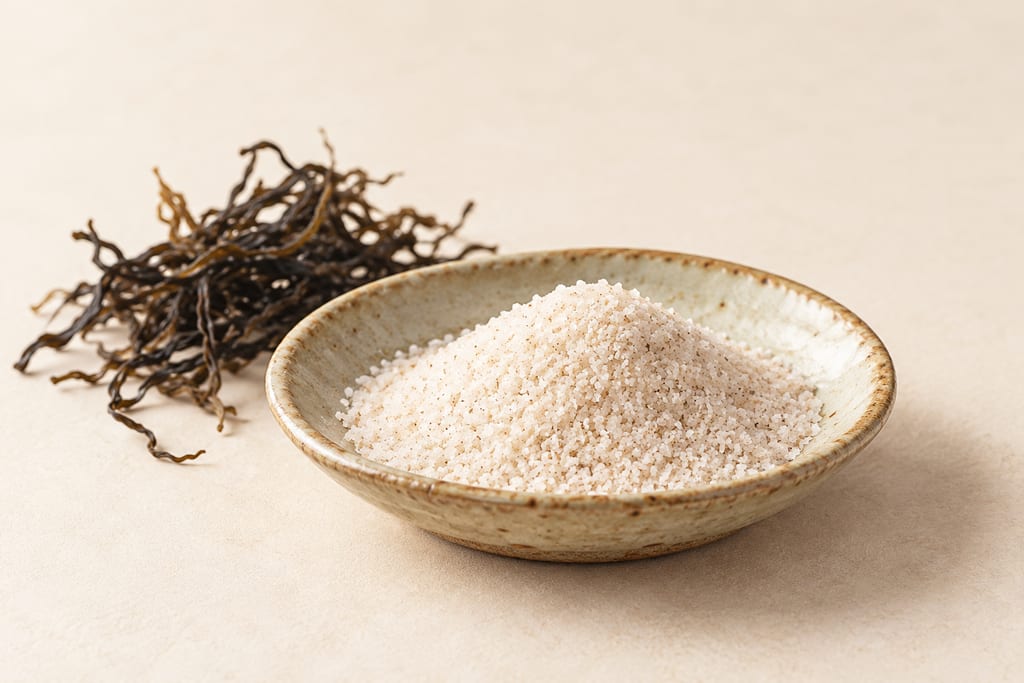
Amabito no Moshio is a modern, pale beige Japanese seaweed salt made from Seto Inland Sea water and hondawara seaweed. Its documented factory method concentrates filtered brine in kettles, then separates and dries the salt.
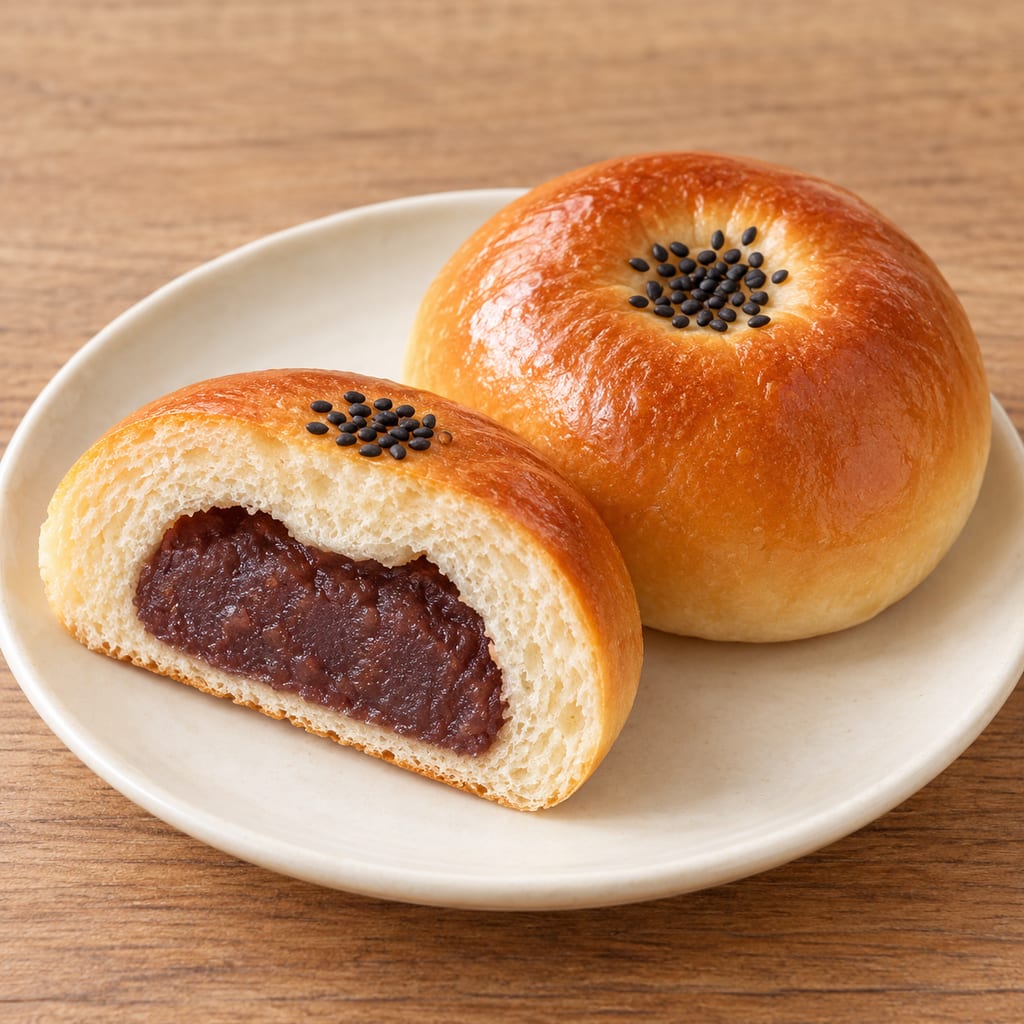
Anpan is a soft wheat bun filled with sweet red-bean paste and finished with egg wash and black sesame. This dough rises with commercial instant yeast.

Japanese skipjack tuna cooked, then repeatedly smoked and dried over a wood fire by the hand-fired tebiyama method into a hard block for shaving into dashi: the first stage of katsuobushi.
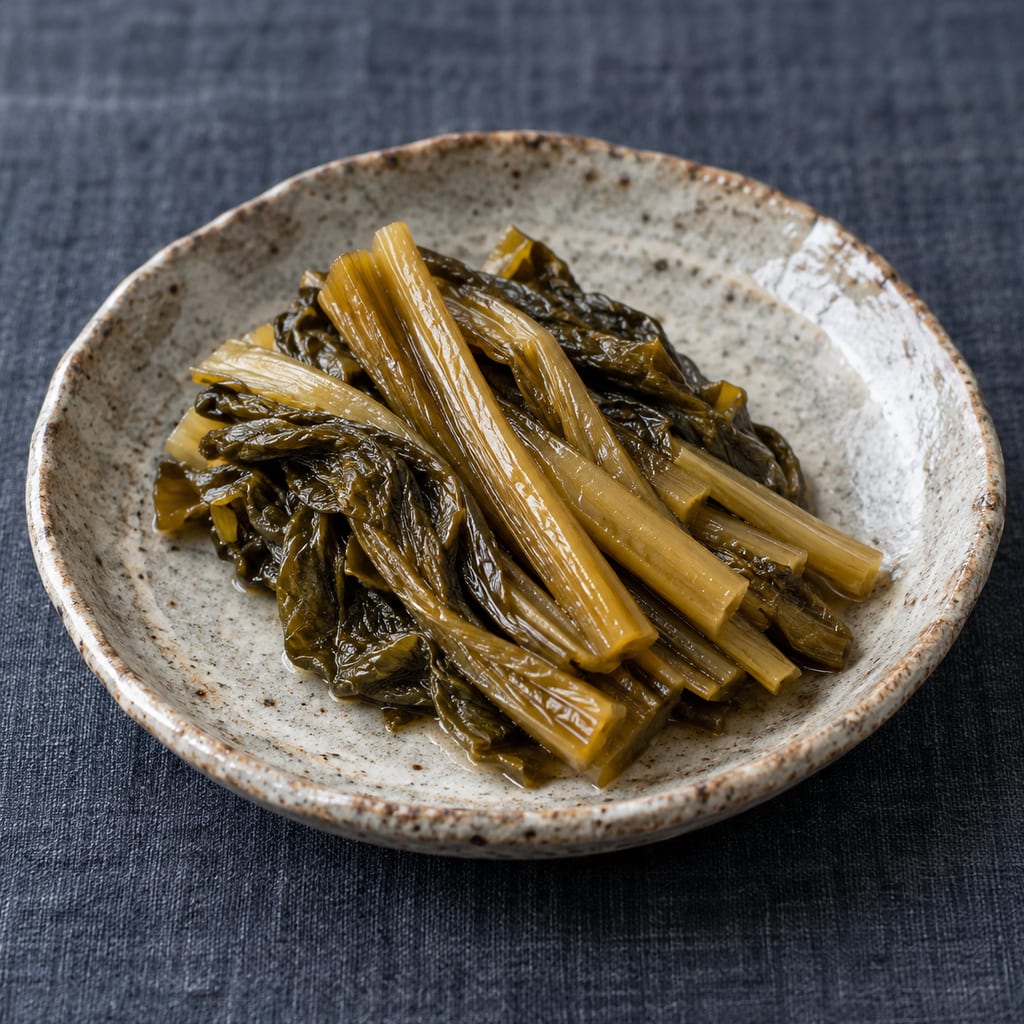
Takana mustard greens from Aso in Kumamoto are salted and pressed into a fresh spring pickle, or aged into a sour furuzuke that is fried and mixed into takana rice.
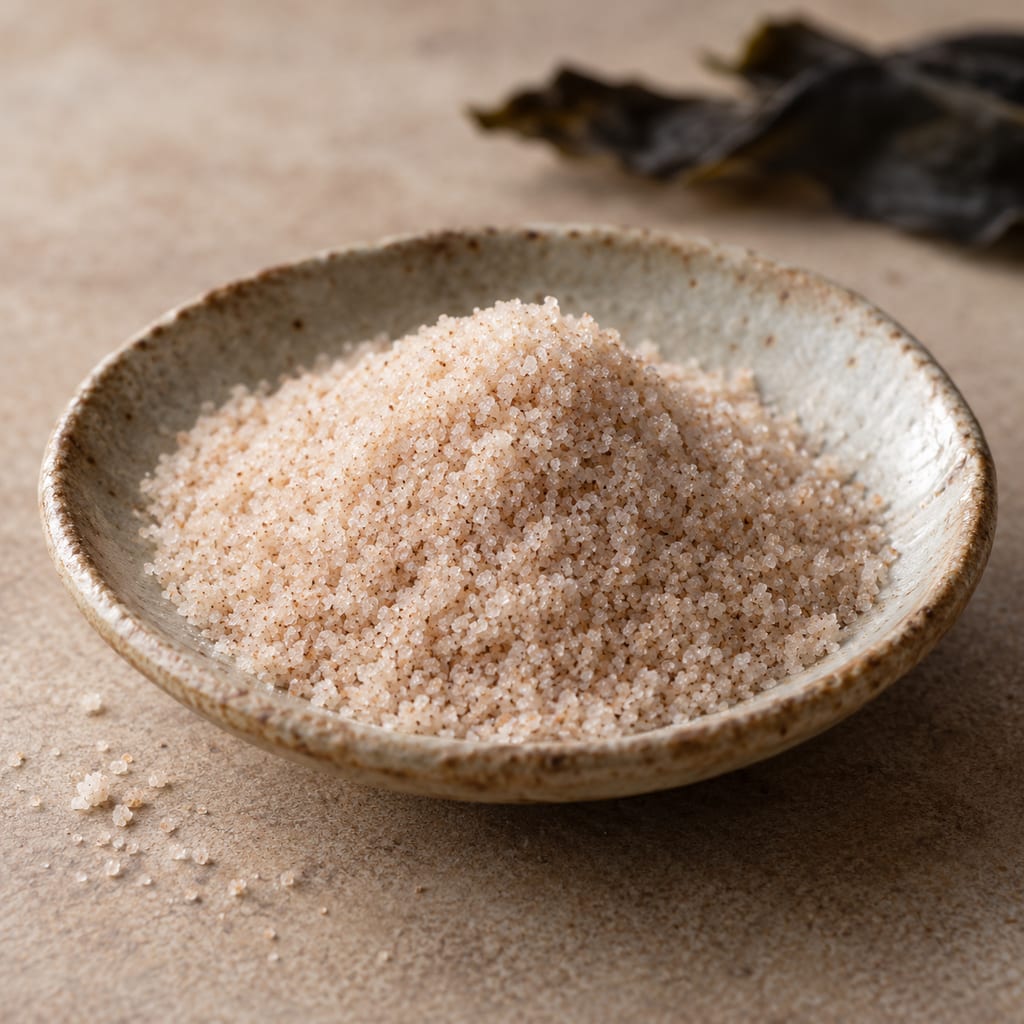
Awaji moshio is a modern Japanese seaweed salt made by TaDa PHILOSOPHY from Awaji Island seawater and seaweed. Its premium process concentrates brine, extracts seaweed flavor, then crystallizes, separates, dries and grades the salt.
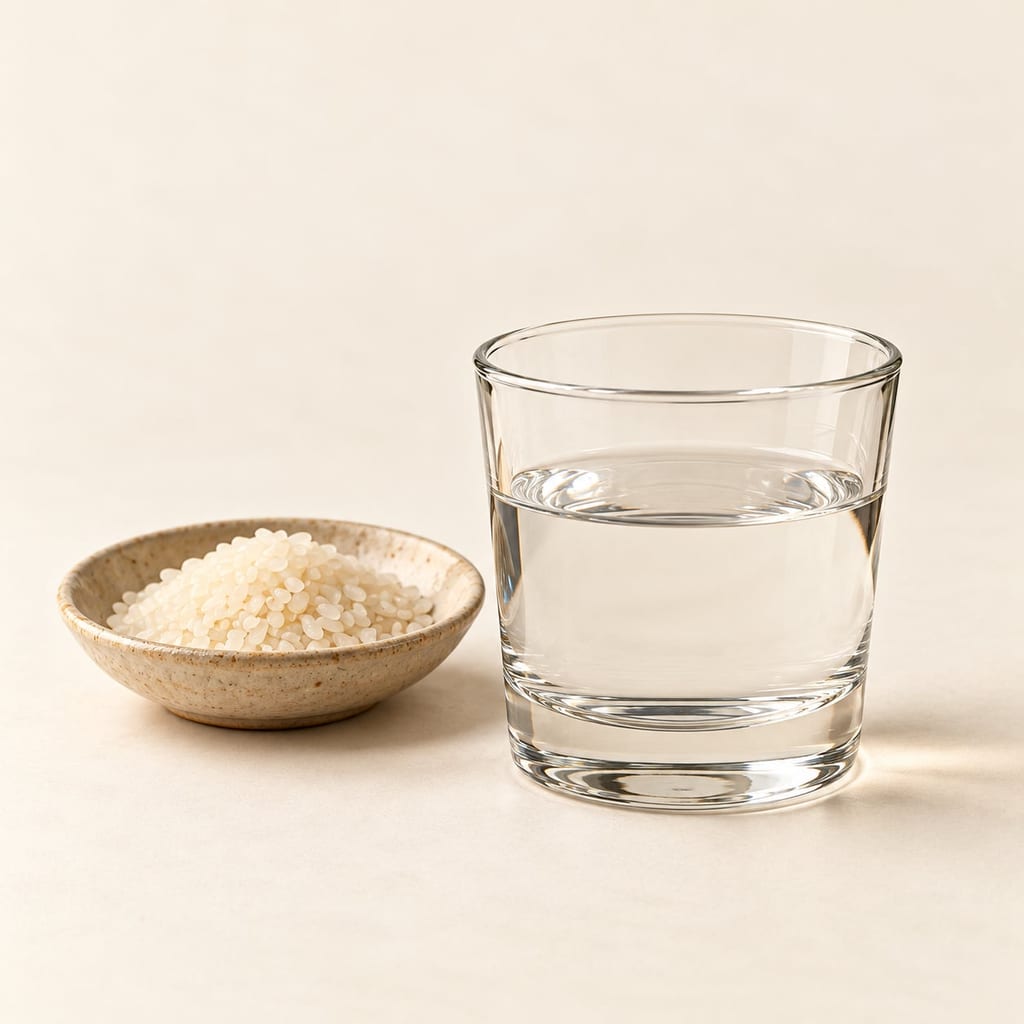
An Okinawan rice spirit made by turning all the rice into black koji, fermenting it with water and yeast, then pot-distilling and maturing the spirit.

A dark, balanced vinegar from Emilia-Romagna made by combining cooked or concentrated grape must with wine vinegar, then acetifying and refining it in wood under a protected specification.
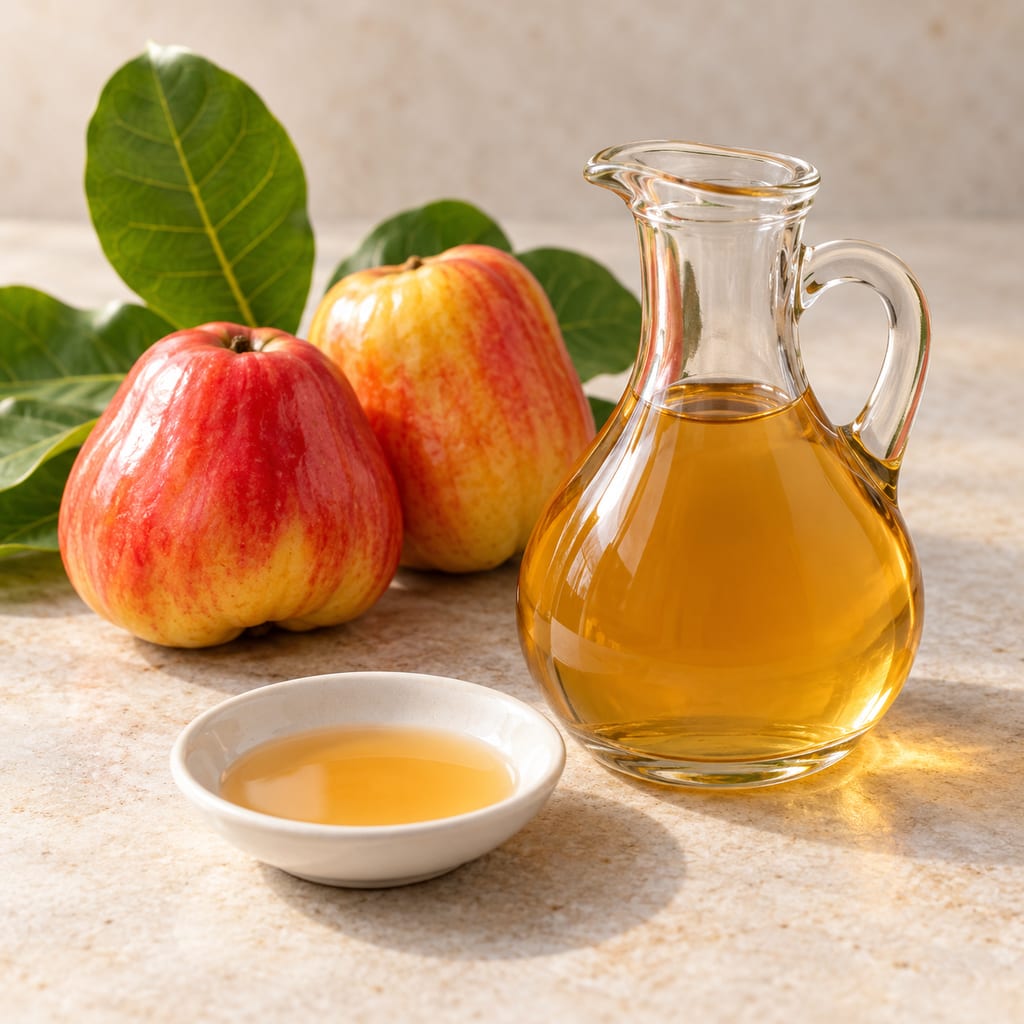
Vinagre de caju is made by fermenting cashew-apple juice into an alcoholic base, then aerating it so acetic bacteria can convert ethanol into acid. Brazilian guidance records the sequence, but not a complete home-scale formula.
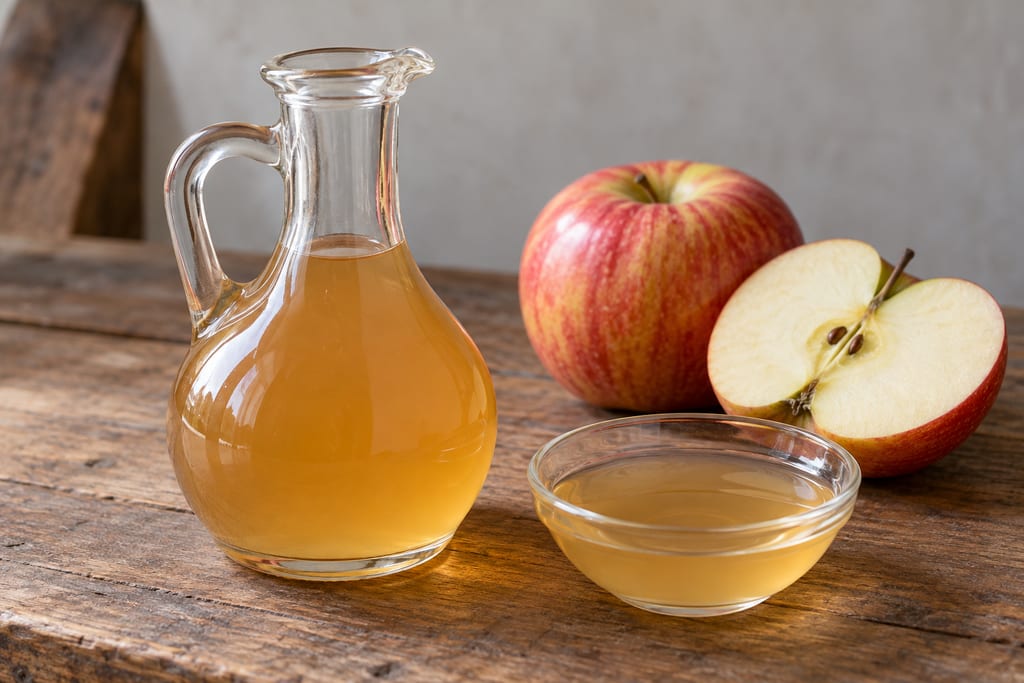
Cider vinegar is made when acetic-acid bacteria use oxygen to turn the alcohol in dry apple cider into acetic acid. This historical cask method begins with fermented cider and differs from apple-scrap vinegar made with sugar and water.
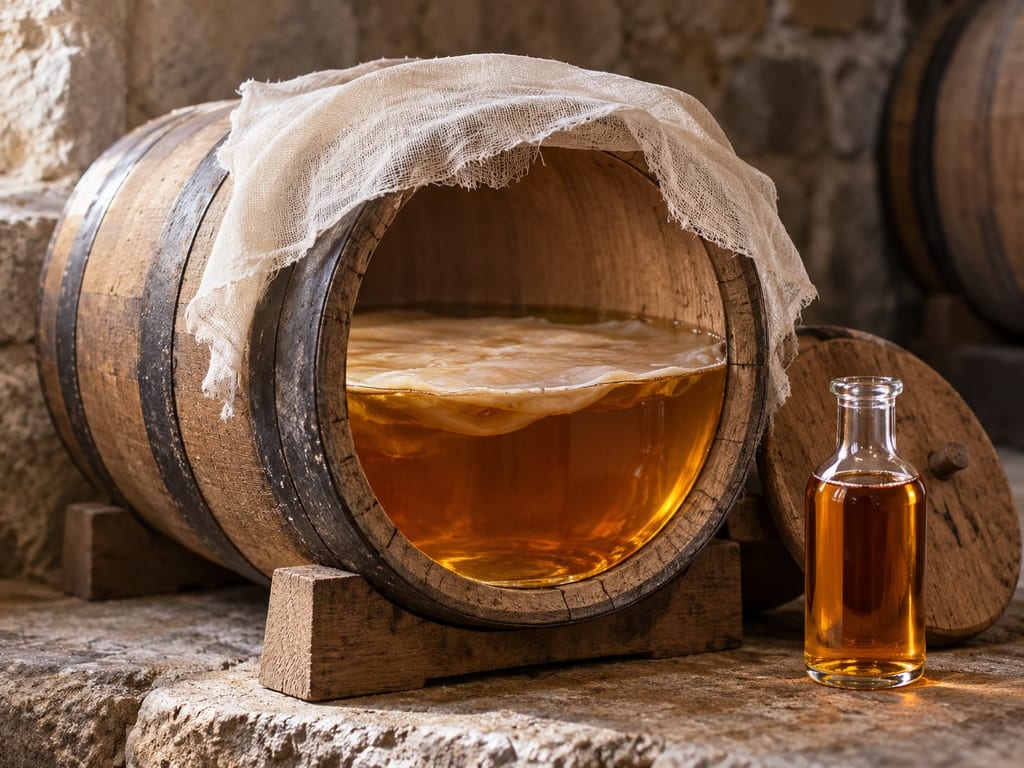
Fruit wine turned into vinegar by acetic acid bacteria at the surface of a half-filled, air-vented vessel. The Orleans method takes one to three months for a 9% wine.

Soft, spreadable Calabrian pork sausage made with a great deal of red chilli and fatty pork, stuffed into natural casings, sometimes smoked and matured while staying soft.

A way to add independent temperature logging to an existing food dehydrator without changing its built-in controls or protections. It is a monitoring method, not a rewiring plan.

Pleurotus cystidiosus is the abalone mushroom, a cultivated oyster-type fungus with dark brown caps that grows more slowly and is more demanding than other Pleurotus species.

A living dairy inoculum that starts controlled cream fermentation, developing acidity and aroma before sour cream or cultured butter is finished.

A small electric incubator holds jars at a selected temperature for yogurt and other documented warm food preparations. Controls, capacity and vessel arrangement vary by model.

Adygean salt is a seasoned table salt associated with Adygea and the wider North Caucasian culinary tradition. Salt is blended with garlic and a variable selection of herbs and spices; the exact mix depends on the named style and maker.

The African Caesar-group mushroom, Amanita masasiensis, is a wild ectomycorrhizal species of central and southern African woodlands, eaten locally. The genus contains deadly poisonous species, so identification needs care.
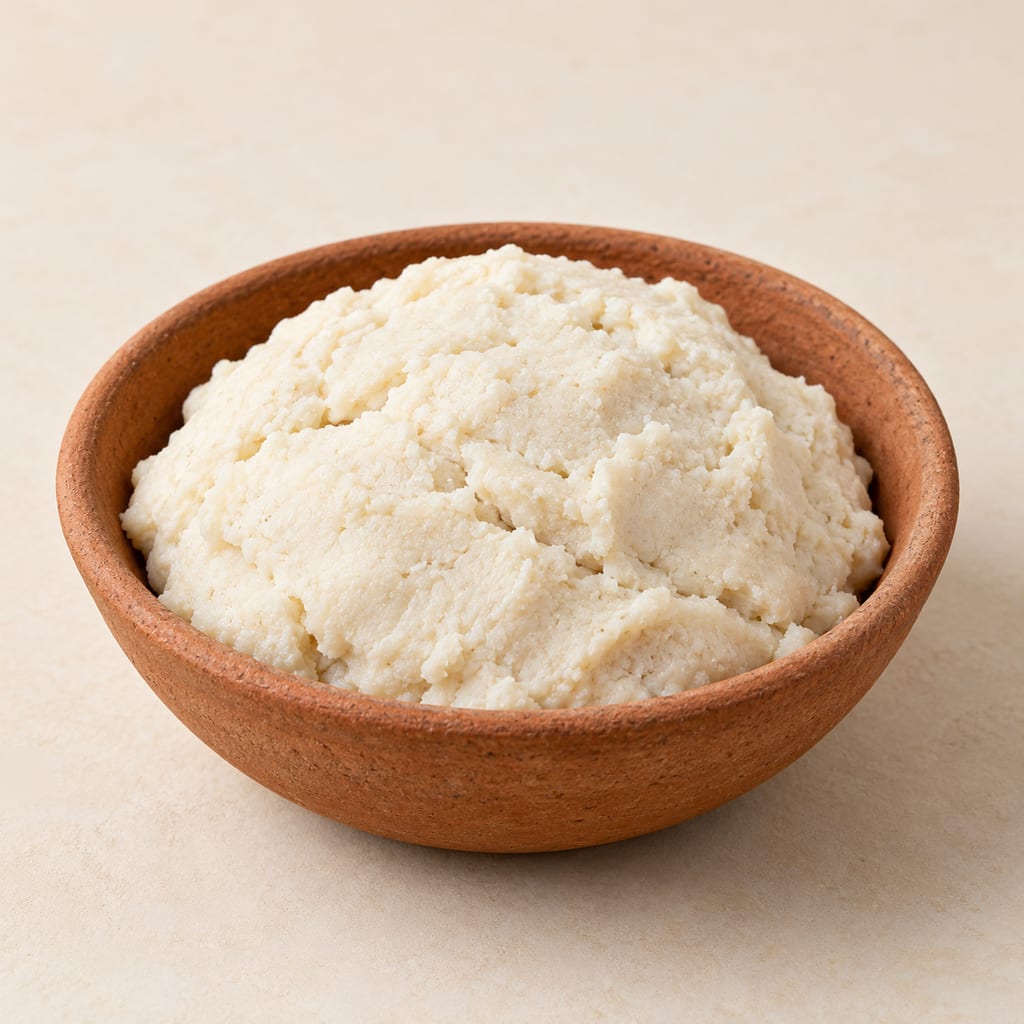
Ghanaian sour cassava dough fermented with traditional inoculum and drained during fermentation. It is used as a base for cooked foods such as banku and akple; process variants and safety outcomes differ.
No community contributions have been published for this entry yet.
Sign in to contribute. Published comments and photos are free to read.
Seikatsu Club Consumer CooperativeMethod
柿酢 (Homemade persimmon vinegar)Household recipe: ripe persimmons only, about one month, 150 mL from five persimmons
Cited in: How it is made; Reading results and problems
Ministry of Agriculture, Forestry and Fisheries, JapanIdentity · Safety
JAS 0801:2024 Brewed vinegarFruit vinegar: at least 300 g juice per litre and 4.5% acidity
Cited in: What it is; Reading results and problems
Ministry of Agriculture, Forestry and Fisheries, JapanIdentity
Types of vinegarPersimmon vinegar within fruit vinegars
Cited in: What it is
National Diet Library Collaborative Reference DatabaseHistory
How to make persimmon vinegar: reference inquiry1992 Shishi-area collection; 1993 Japanese Food Life Encyclopaedia
Cited in: History; Variations
Tamura Zosu, WakayamaHistory
History and achievements1808 founding; persimmon vinegar from 1938, 1983, 1986
Cited in: History; Variations
Tamura Zosu, WakayamaMethod
Tamura's persimmon vinegar productionHiratanenashi, crushed whole fruit, static acetification, two years
Cited in: What it is; How it is made; Variations; How it is eaten and used
Tamura Zosu, WakayamaMethod · Use
Miyono Hana persimmon vinegarProcess, recipes and dilution
Cited in: What it is; How it is made; How it is eaten and used
Nakamura, MinamishimabaraMethod · History
Persimmon vinegar makingKitadani, wild yeast, six months in jars, three years of ageing; 1989 and 2009
Cited in: What it is; History; How it is made; Variations; How it is eaten and used
Nippon Shokuhin Kogyo GakkaishiMicrobiology · Method
Changes in the composition of Japanese persimmon Sanja during vinegar fermentation (1987)Acetobacter A-33 and A-114; 5% ethanol; 28 C; at least 4.7% acid in 18 to 24 days
Cited in: History; How it works: yeast and acetic bacteria; How it is made; Variations; Reading results and problems
Nippon Shokuhin Kogyo GakkaishiChemistry
Changes in the composition of persimmon vinegar induced by acetic bacteria (1987)Organic acid, acetoin and tannin changes
Cited in: How it works: yeast and acetic bacteria
Journal of the Brewing Society of JapanMethod
Production of persimmon vinegar by stationary fermentation and a membrane reactor (1989)58.3 g/L in 30 days; 62.2 g/L in 120 days
Cited in: History; How it works: yeast and acetic bacteria; How it is made; Variations; Reading results and problems
Food Microbiology, 2012Microbiology
Identification of yeast and acetic acid bacteria isolated from persimmon fermentationYeast and acetic bacteria succession
Cited in: How it works: yeast and acetic bacteria
Food Bioscience, 2023Method
Characterisation of Diospyros kaki (persimmon) vinegars12 kg fruit, 7 days at 22 C, 45 days at 30 C
Cited in: How it works: yeast and acetic bacteria; How it is made; Variations
Food Microbiology, 2024Microbiology
Changes of microbial communities and metabolites in persimmon vinegar fermentationCommunity and metabolite changes
Resol no Mori, WELLSOLMethod
Handmade persimmon vinegar and the value of fermented foodSchool investigation of spontaneous and baker's yeast persimmon batches
Cited in: Reading results and problems
Penn State ExtensionSafety
Acidifying canned products for safetyAcidity in canned products
Cited in: Reading results and problems
Penn State ExtensionSafety
Canning and freezing questions and answersVinegar of stated acidity in tested recipes
Cited in: Reading results and problems