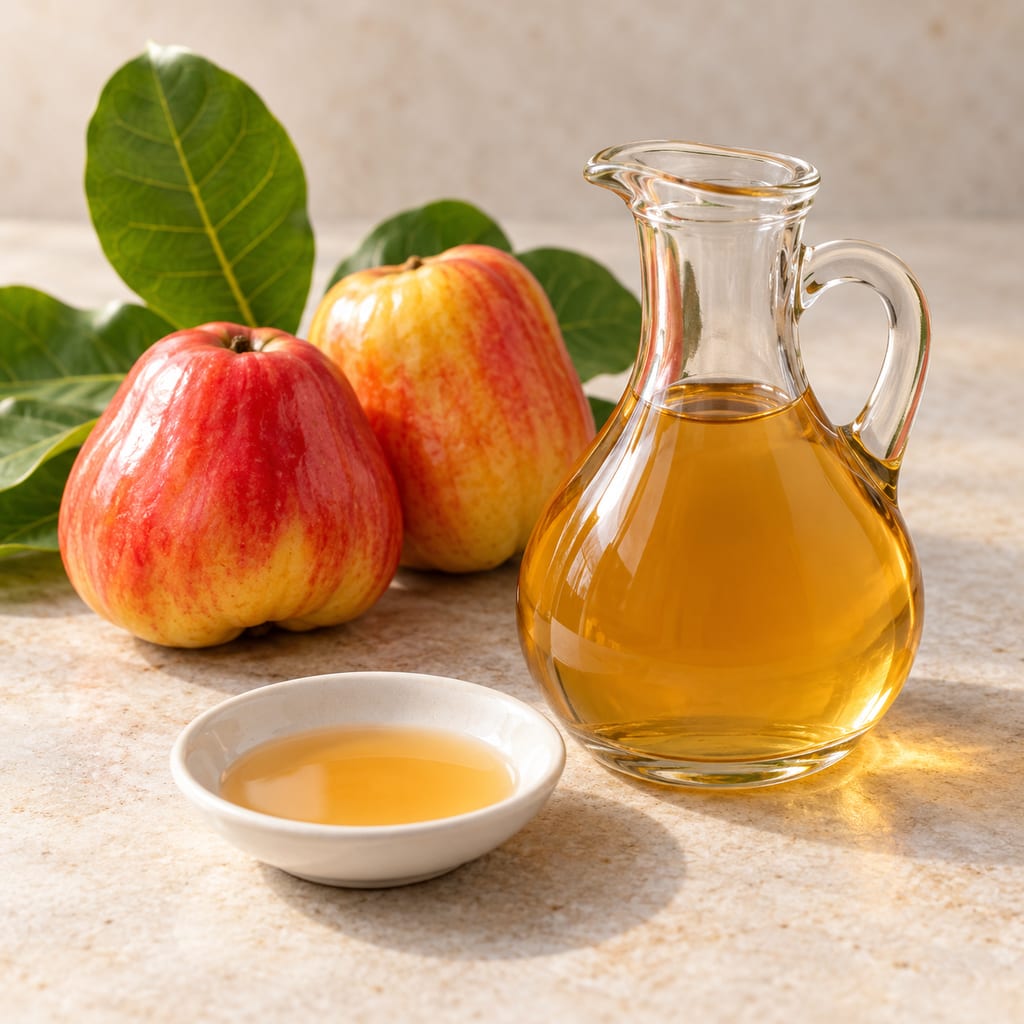
Cashew-apple vinegar
Vinagre de caju is made by fermenting cashew-apple juice into an alcoholic base, then aerating it so acetic bacteria can convert ethanol into acid. Brazilian guidance records the sequence, but not a complete home-scale formula.
 FermenteaWhere food goes to change
Vinho de caju · Cashew wine · vinho de caju
Vinho de caju is a seasonal alcoholic drink made from expressed cashew-apple juice. In southern Guinea-Bissau, an ethnographic account records a simple press-and-strain method, while harvest timing and local trade shape its place.
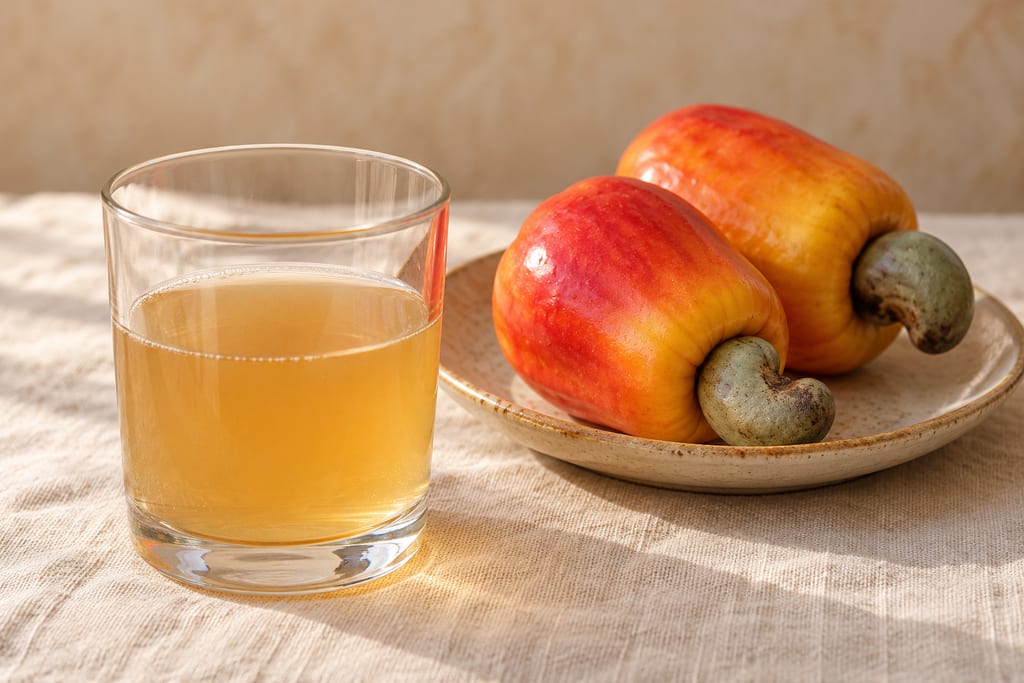
Vinho de caju is an alcoholic drink made from the juice of the cashew apple. The cashew apple is the swollen, fleshy fruit stalk that hangs beneath the hard kidney-shaped cashew nut. It is a seasonal, juicy material with several possible uses; it is not the edible kernel. The wine begins with the expressed juice of the fleshy part, while the nut is separated for a different stream of food and trade.
The name is often translated simply as cashew wine, but that phrase can hide distinct products. In Guinea-Bissau, the field account describes juice strained and left to ferment, while freshly expressed juice could be drunk without that fermentation. Brazilian sources also document cajuína, a non-alcoholic cashew-apple juice preparation. The fresh juice, the fermented drink, and distilled cashew spirit are separate products at different stages; a shared fruit does not make them interchangeable.
The surviving evidence used here gives no reliable universal strength, sweetness, color, or acidity for Guinea-Bissau vinho de caju. Each of those depends on fruit and process, and the village observation did not measure them. The defining feature in this account is the transformation of expressed seasonal fruit juice into an alcoholic drink through a short spontaneous fermentation, rather than a prescribed commercial formula.
The fruit itself is not uniform. Catarino and colleagues distinguish red local cashew, called caju-di-terra, from yellow caju-di-Moçambique in Guinea-Bissau. Their account describes the former as carrying sweet juice used for juice and fermented drinks, while the yellow fruit is larger and more fibrous, with juice less appreciated. These observations show why “cashew apple” does not describe one identical raw material. They do not provide a controlled wine comparison or prove that every wine maker selects one color; the local preference is evidence about the wider fruit economy, not a fixed rule for this preparation.
Cashew cultivation has a layered history in Guinea-Bissau. The crop was introduced during Portuguese rule in the nineteenth century, but the broad expansion that made it central to the national economy happened much later. By the mid-1980s, cashew had become a powerful cash crop. Smallholder groves spread around villages, alongside more commercial plantations, and the trees became part of how families worked land and planned future claims to it.
The crop ties a local harvest to a long chain of trade. The nut travels well and enters international processing and export markets. The apple is much more perishable, so its value is concentrated close to the harvest and the people who can use it quickly. In Catarino and colleagues’ account, the fruit is often left uncollected or used locally; juice storage limits larger-scale use. That difference helps explain why nut commerce and fruit-based drinks can coexist around the same tree without sharing the same market.
Cashew wine belongs to the short interval when ripe fruit is available. The period of harvest brings fresh juice, local exchange and activity around orchards. A later account of the sector describes rapid fermentation after harvest in the local heat. That speed is not a clock for every batch; it is a reason the fresh juice is difficult to store and why household use, rapid processing and fermentation become connected.
The crop’s expansion has consequences beyond the orchards and the beverage. Catarino and colleagues note that the effects on habitat fragmentation, fire regimes and biodiversity still require assessment, while pests and diseases are becoming concerns and dependence on a single export crop leaves producers exposed to market shifts. Those uncertainties matter to the story of vinho de caju because the drink sits inside a changing agricultural system. It uses fruit that can be difficult to market far from harvest, but it does not resolve the wider risks of concentrating livelihoods on one crop.
In southern Guinea-Bissau, cashew fruit was gathered after falling. The nut was separated and moved into a trade network, while the fruit remained a local resource. Nalú orchard owners and Balanta women are described working in the orchards, with fruit exchanged for labour and then made into wine. This is a specific observed arrangement, not a rule about all Nalú or Balanta households.
Seasonal wine moved through household consumption and local sale. The observed account records a price per litre for that period and describes some wine being distilled into cana. Those details show the product’s place in a livelihood system, but they are not a current price or a fixed ritual use. It also notes different religious relationships to alcohol among the communities encountered. That local variation should not be generalized to the whole country.
This local exchange helps explain why a fruit that is often considered secondary to the nut has its own value. It can compensate work, supply a drink, and form an input for a separate distilled product. The nut, the fresh juice, the fermented wine and cana are linked by the tree but have different handling, uses and meanings. The field account is especially valuable because it follows those materials through actual relationships rather than treating “cashew” as one commodity.
The method recorded in Guinea-Bissau is direct. Fallen fruits are collected, the nuts separated, and the fleshy apples crushed to release juice. Lundy describes a large wooden press shaped like a canoe, fixed so juice could run through an outlet into buckets or tanks. The juice could be drunk fresh or strained and fermented for about three days. The account does not give fruit weights, juice volume, starter culture, temperature, closure, or a measured end point.
Fermentation changes the juice biologically. In alcoholic fermentation, yeasts use fermentable sugars and produce ethanol and carbon dioxide, along with other compounds that can influence aroma and flavor. This general mechanism explains why a sugary fruit juice can become an alcoholic beverage, but the field account does not identify the organisms active in its particular batches. It would be inaccurate to attribute a specific yeast species or a measured alcohol strength to the Guinea-Bissau method.
Modern research on cashew juice shows that researchers can control the process differently. A Ghanaian study used Saccharomyces cerevisiae for a research wine and then investigated vinegar production. That is evidence for one laboratory or technical route, not proof that the same yeast was used in the village account. In Brazil, technical sources also distinguish alcoholic fermentado de caju from non-alcoholic juice products. These examples clarify the range of cashew-apple processing without turning one region’s formulation into a universal recipe.
The fruit and nut are two different parts of one harvest, and they separate into two use chains. The nut was cleaned and sold into trade; the apple was crushed close to where it grew. A large wooden canoe-like press near the orchards applied pressure and gave the juice a channel into collection buckets. Its local form suited on-site processing, but no capacity or sanitation detail is recorded. Straining removed crushed fruit solids before the approximate three-day ferment; no filter material or clarity target is specified.
Crushing releases liquid held in the pulpy fruit. The wooden canoe-like press in the ethnographic description is a locally adapted way to concentrate pressure and direct the juice toward a collection point. It is not a modern vessel specification and the source does not describe its capacity or sanitation. Straining then separates juice from fruit solids before the reported fermentation. No particular filter material or clarity target is stated.
The choice to drink juice immediately or ferment it creates two branches. Fresh cashew-apple juice is not wine simply because it is sweet or begins changing quickly. The wine stage is the alcoholic fermentation that follows. The source also records distillation after wine as a distinct later operation. Fermentation and distillation should not be merged into a single step: distillation concentrates volatile alcohols and compounds, while the fermented juice itself remains a different beverage.
The best-described traditional preparation here is from Guinea-Bissau. It should remain distinct from cashew-wine references elsewhere. Mozambique has agronomic documentation of vinho de caju and subsequent cashew spirit, but the account does not establish a universal strength or a single detailed recipe. The spirit is a separate distillate, not another name for the fermented wine.
Brazilian work often uses the term fermentado de caju for the alcoholic juice product, while cajuína refers to a non-alcoholic preparation. The nomenclature reflects local technical and regulatory context. Ghanaian research has tested an inoculated wine route and vinegar production. Each is a useful comparison because it shows that cashew apples can support different products, but neither should be used to fill missing quantities or controls in the Guinea-Bissau method.
A modern development in Guinea-Bissau makes the contrast especially clear. In July 2025, RTP África reported the launch of DAUTARIN, described as the first cashew wine produced entirely in the country. The report presents it as an effort to add value locally and encourage industrialization. That is a contemporary commercial development, not evidence that household or artisanal vinho de caju is new, and it does not specify that the new wine follows the older village pressing method.
The documented use is as a drink. In the village setting described, vinho de caju was consumed in households and sold locally; the evidence does not establish a single customary meal pairing or ceremonial role for the wine itself. Where cashew spirit appears, it is a separate distilled product with its own local use. The careful way to serve or describe vinho de caju is to name the beverage and place it in the harvest economy without adding unsupported accompaniments.
Fresh juice and fermented wine can both be valued, but they answer different needs. Fresh juice preserves the fruit’s immediate use; fermentation makes an alcoholic beverage from a juice that is difficult to store. The fruit’s perishability and the season’s short window shape the process more than a standardized kitchen schedule. That is why local practice cannot be reduced to a list of ingredients and a fixed number of hours.
The drink also offers a way to read the crop’s larger story. The exported nut is durable and globally traded, while the apple is more likely to be eaten, pressed or fermented near the orchard. Wine makes a perishable by-product into a local resource, but it is only one of the documented routes. Cajuína, fresh juice, animal feed and other processing options show that communities and producers make different choices according to equipment, market access, beliefs and demand.
The village description records practice, but it does not supply a validated home-winemaking protocol. It reports the stages and an approximate fermentation duration, not sanitation, fermentation temperature, vessel closure, microbial culture, sugar or acidity measurements, alcohol content, or storage conditions. No yield or scaling ratio is available. The method is presented as a documented preparation outline rather than a guarantee that any batch made in the same broad way will be safe or consistent.
Fruit handling and fermentation can affect quality, but the sources do not establish a sensory test or home safety endpoint for this preparation. Smell, taste, cloudiness, or visible bubbles cannot confirm safe fermentation or completion. No shelf life is reported, so this account makes no storage promise. A modern, controlled wine made in a research setting may use measurements or equipment absent from the village report; those controls cannot be silently retrofitted as if they were traditional details.
The strongest interpretation is modest: a seasonal fruit juice is expressed, strained and fermented in a named field account, with about three days reported. Beyond that, the specific organism, composition and final strength remain unknown. The absence of those measurements is not a defect in the ethnography; it marks the boundary between a record of lived practice and a tested production specification.
Cashew wine is documented in fieldwork in southern Guinea-Bissau published in 2009. Luís Catarino, Yusufo Menezes and Raul Sardinha describe the wider cashew sector: Portuguese introduction in the nineteenth century, limited early cultivation, and much later expansion as a cash crop. These records date the evidence and agricultural context, not the invention of the drink.
Scaling: source batch only
The available Guinea-Bissau field account is an ethnographic description, not a validated home-winemaking process. It gives no sanitation procedure, fermentation control, alcohol measurement, or storage validation. Do not use appearance, smell, taste, or bubbles as proof of safety or completion.
The sources document cashew wine in Guinea-Bissau and a specific village field account; this country-level row does not claim a single birthplace or uniform national method.
Vinagre de caju is made by fermenting cashew-apple juice into an alcoholic base, then aerating it so acetic bacteria can convert ethanol into acid. Brazilian guidance records the sequence, but not a complete home-scale formula.
From sour breads and milk to savoury seeds, cassava staples and living beers, African fermentation follows the crop, the community and the work of transformation.
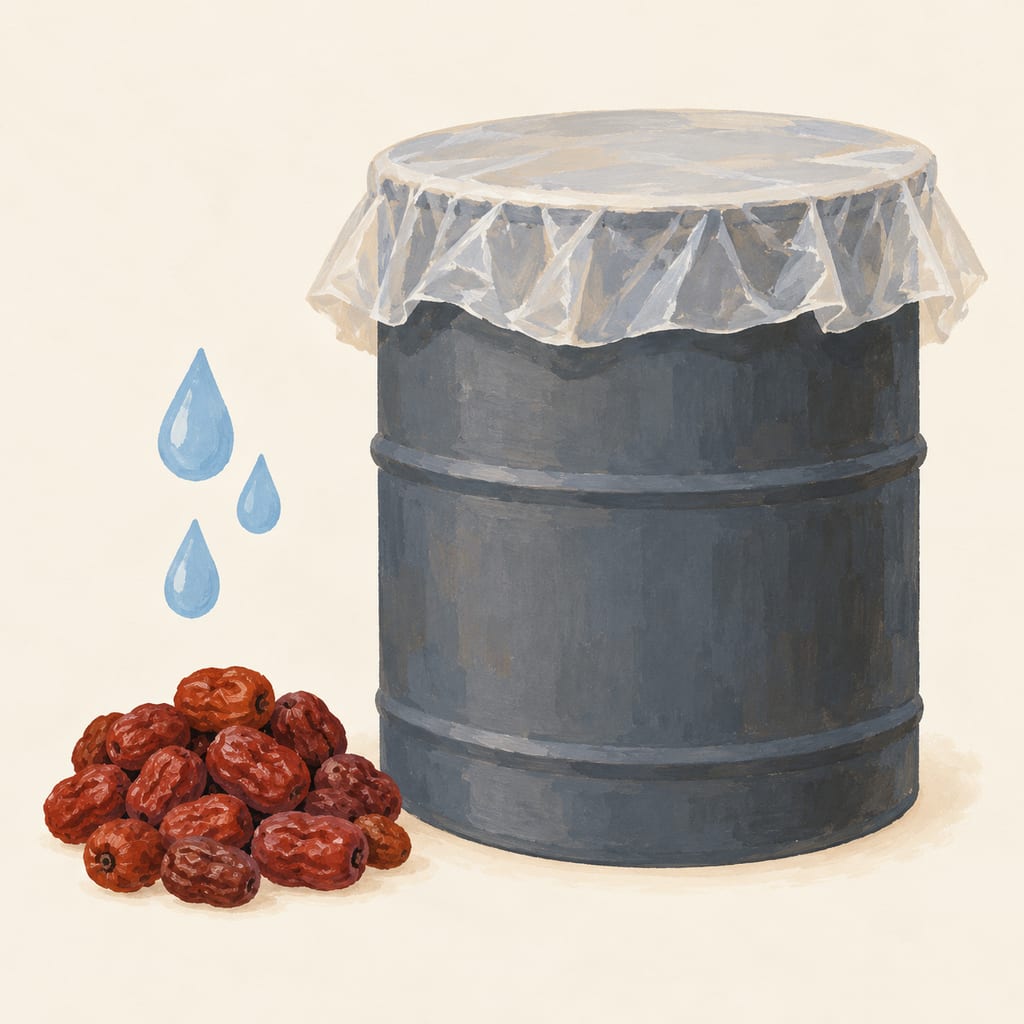
A Zimbabwean spontaneous ferment of dried masau fruit pulp used as a kachasu distillation base; the fermented pulp itself is not consumed.
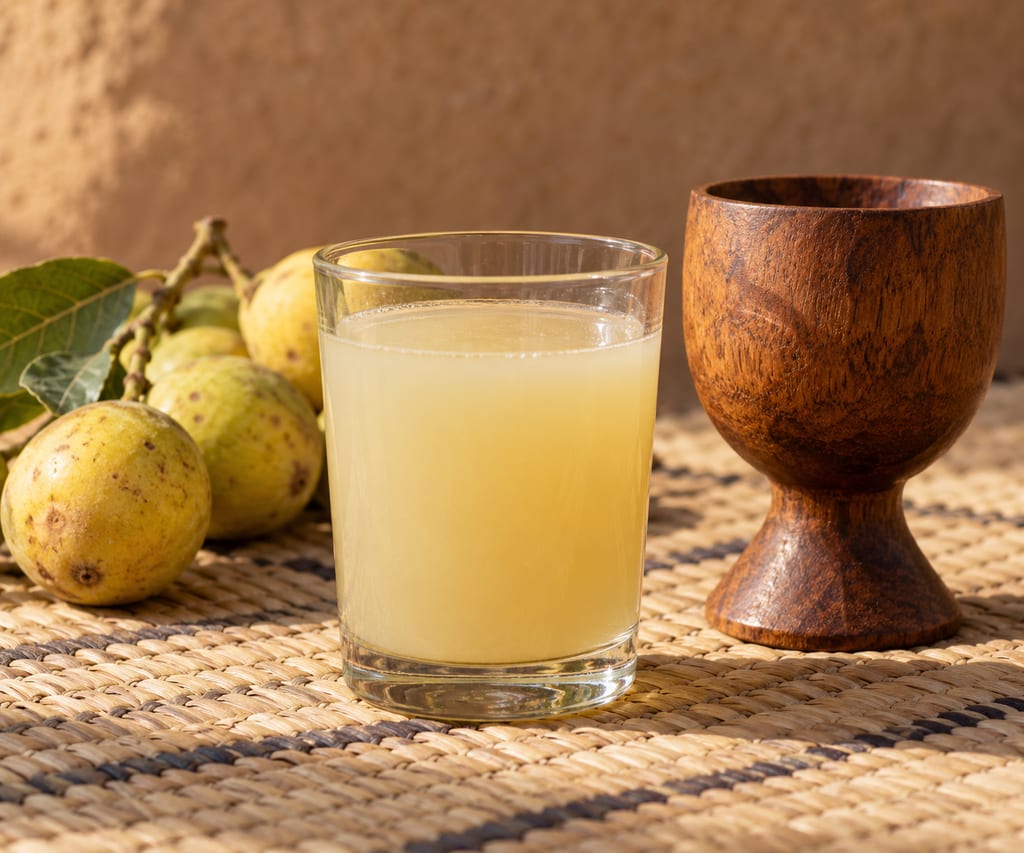
The fermented marula drink of northern Namibia's Aawambo communities, pressed from ripe Sclerocarya birrea fruit and left to the yeasts already on it, and drunk at the Oshituthi shomagongo festival.
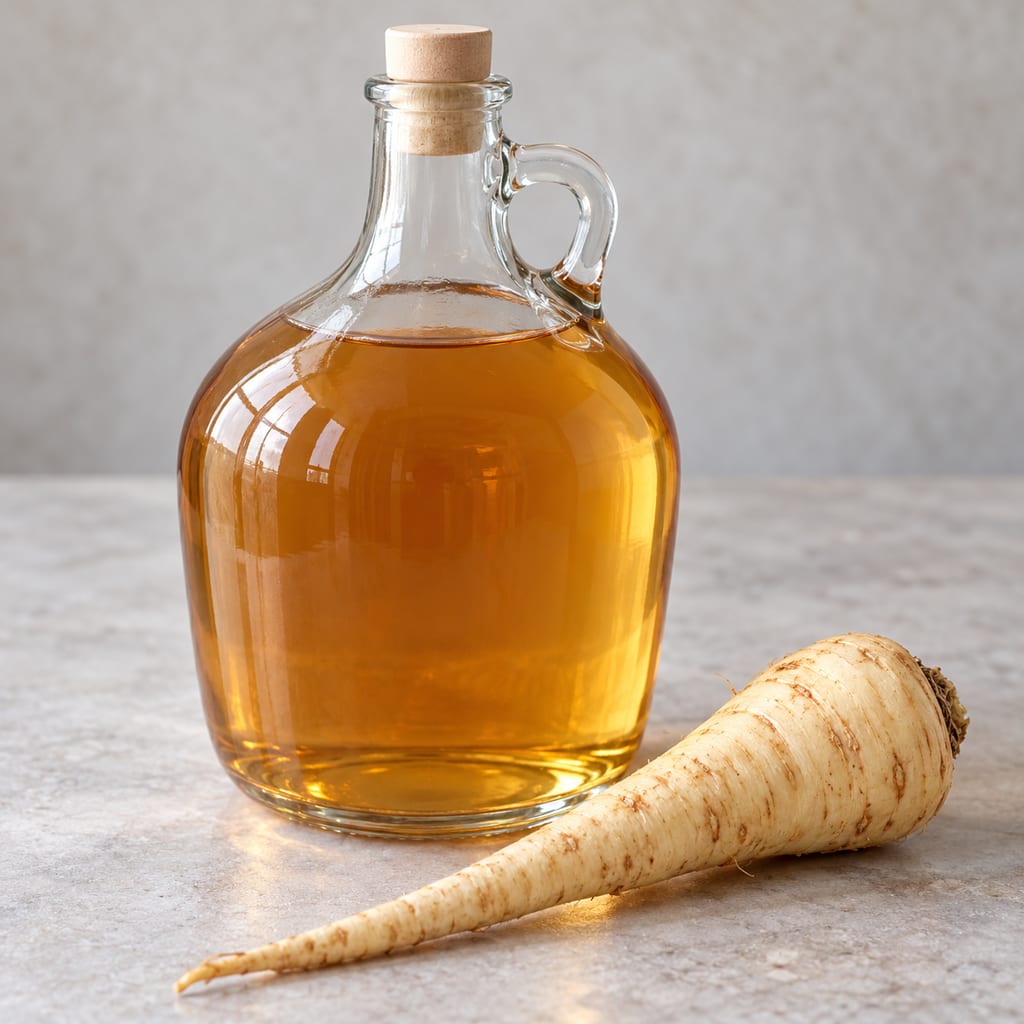
A root wine made from boiled parsnip liquor and lump sugar, fermented with yeast and finished with brandy before bottling.
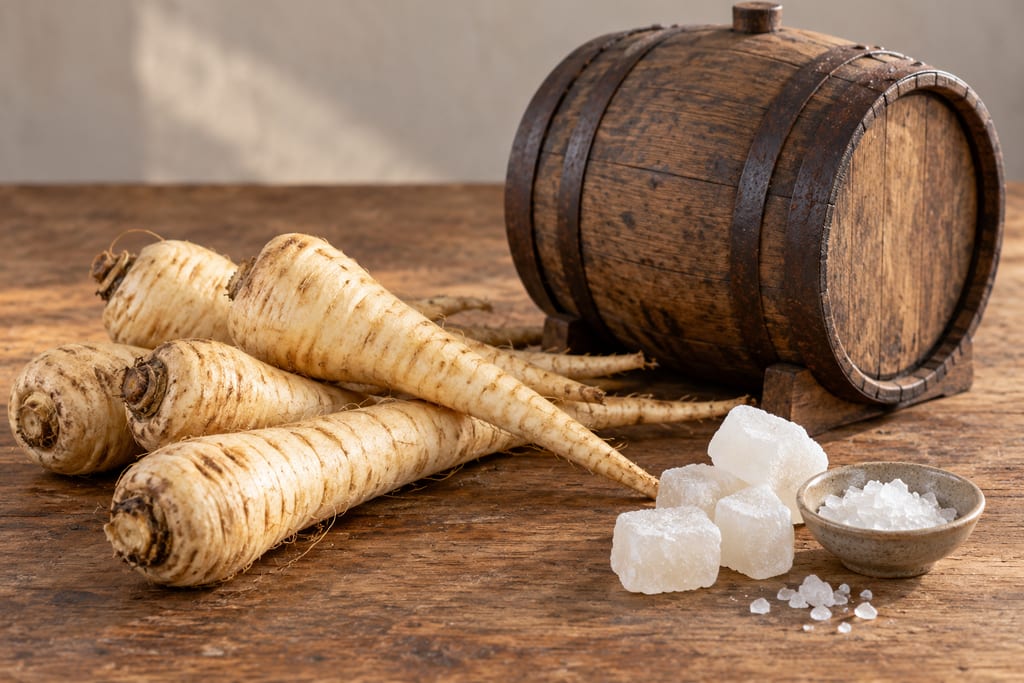
Parsnip liquor ferments with loaf sugar, crude tartar and fresh yeast, then matures in a cask for twelve months before bottling.

Soft, spreadable Calabrian pork sausage made with a great deal of red chilli and fatty pork, stuffed into natural casings, sometimes smoked and matured while staying soft.

A way to add independent temperature logging to an existing food dehydrator without changing its built-in controls or protections. It is a monitoring method, not a rewiring plan.

Pleurotus cystidiosus is the abalone mushroom, a cultivated oyster-type fungus with dark brown caps that grows more slowly and is more demanding than other Pleurotus species.

A dark, balanced vinegar from Emilia-Romagna made by combining cooked or concentrated grape must with wine vinegar, then acetifying and refining it in wood under a protected specification.

A living dairy inoculum that starts controlled cream fermentation, developing acidity and aroma before sour cream or cultured butter is finished.

A small electric incubator holds jars at a selected temperature for yogurt and other documented warm food preparations. Controls, capacity and vessel arrangement vary by model.

Adygean salt is a seasoned table salt associated with Adygea and the wider North Caucasian culinary tradition. Salt is blended with garlic and a variable selection of herbs and spices; the exact mix depends on the named style and maker.

The African Caesar-group mushroom, Amanita masasiensis, is a wild ectomycorrhizal species of central and southern African woodlands, eaten locally. The genus contains deadly poisonous species, so identification needs care.
No community contributions have been published for this entry yet.
Sign in to contribute. Published comments and photos are free to read.
Université Lille 1Method · History · Geography · Use
Making a living in Kassumba, Guinea-BissauFieldwork account: fallen cashew fruit was collected, the nut separated, fruit smashed in a canoe-like wooden press, juice collected, and either drunk fresh or strained and fermented over three days.
The account describes exchange between Nalú orchard owners and Balanta women harvesters, household consumption and sale of the wine, and some wine being distilled separately into cana.
The described practice belongs to a specific village setting and is not evidence of a single national recipe.
Cited in: The fruit and the drink; Cashew arrives as crop, then reshapes the season; A field account of people, orchards and exchange; From fruit to ferment; Why separation, pressing and straining matter; A seasonal drink with more than one regional story; Serving and understanding the result; What the recorded method does not establish
Scientia Agricola, University of São PauloHistory · Geography · Ingredients · Use
Cashew cultivation in Guinea-Bissau – risks and challenges of the success of a cash cropThe authors date Portuguese introduction of cashew into Guinea-Bissau to the nineteenth century and describe its expansion as a major crop from the mid-1980s.
The paper documents smallholder and commercial cultivation, country-level cashew economy and land-tenure ties to tree planting.
The authors describe the cashew apple as a perishable and underused food resource, its rapid fermentation after harvest, and fresh, non-alcoholic and alcoholic uses; it distinguishes cajuína from alcoholic wine.
Cited in: The fruit and the drink; Cashew arrives as crop, then reshapes the season; A field account of people, orchards and exchange; From fruit to ferment; Why separation, pressing and straining matter; A seasonal drink with more than one regional story; Serving and understanding the result
Frontiers in Sustainable Food SystemsHistory · Geography · Ingredients · Use
Insights into the cashew production system in Guinea-Bissau: implications for agroecosystem sustainabilityThe review of Guinea-Bissau’s cashew system discusses high perishability and technical and market constraints on use of the cashew apple.
The article reports that local fresh juice can ferment rapidly in the harvest heat, and that religious practice affects whether households use fruit for alcoholic beverages.
Cited in: Cashew arrives as crop, then reshapes the season; A seasonal drink with more than one regional story; What the recorded method does not establish
Biotechnology Journal InternationalMethod · Variation
Production of Wine and Vinegar from Cashew (Anacardium occidentale) “Apple”A Ghanaian research preparation fermented cashew-apple juice using Saccharomyces cerevisiae; this controlled study is a separate modern process and does not establish the organism or method in Guinea-Bissau.
Cited in: From fruit to ferment; What the recorded method does not establish
RTP ÁfricaModern use · Variation
Guiné-Bissau – Lançado o primeiro vinho de caju produzido integralmente no paísA 3 July 2025 report describes the launch of DAUTARIN as a cashew wine produced entirely in Guinea-Bissau and frames the initiative as local value addition and industrialization.
Cited in: A seasonal drink with more than one regional story
Embrapa Agroindústria TropicalIngredients · Variation
Processamento do pedúnculo – CajuEmbrapa documents multiple processing routes for cashew peduncle, including non-alcoholic juice products and fermented cashew beverages; these products should not be conflated.
Cited in: The fruit and the drink; Why separation, pressing and straining matter