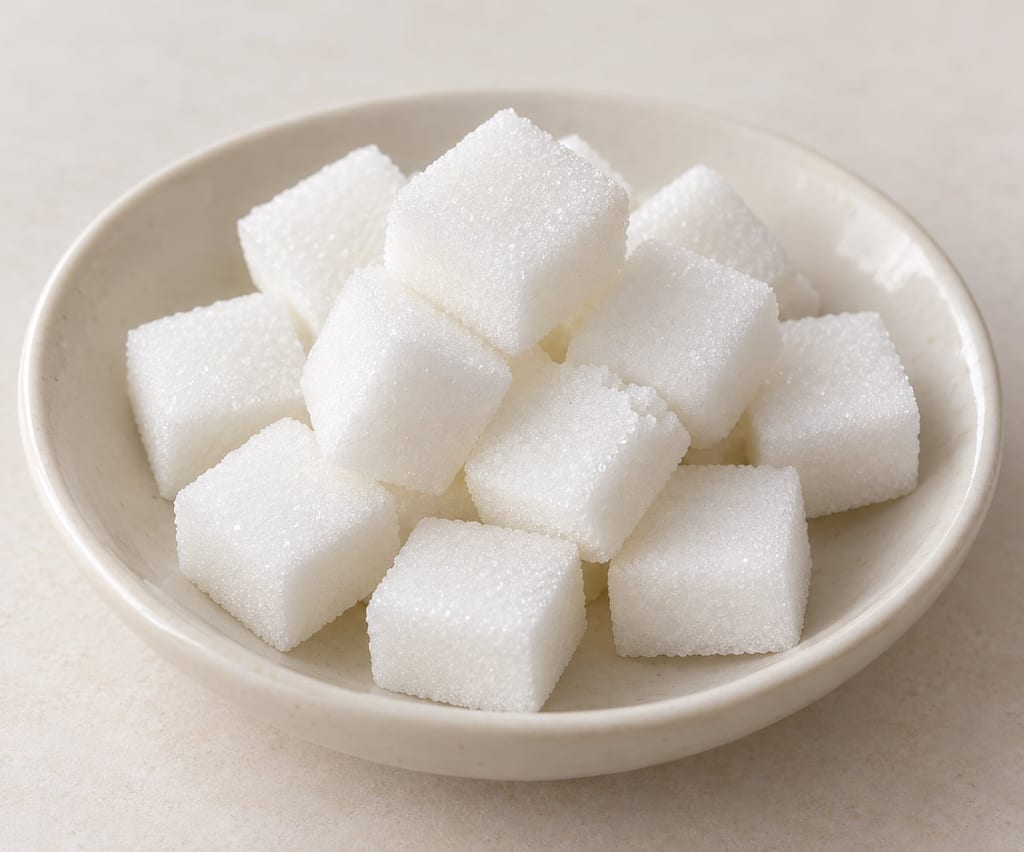
Lump sugar
A historical refined-sugar form whose name has covered truncated cones and, in later usage, smaller pressed or cast pieces.
 FermenteaWhere food goes to change
Historical attestation
Parsnip Wine
A root wine made from boiled parsnip liquor and lump sugar, fermented with yeast and finished with brandy before bottling.
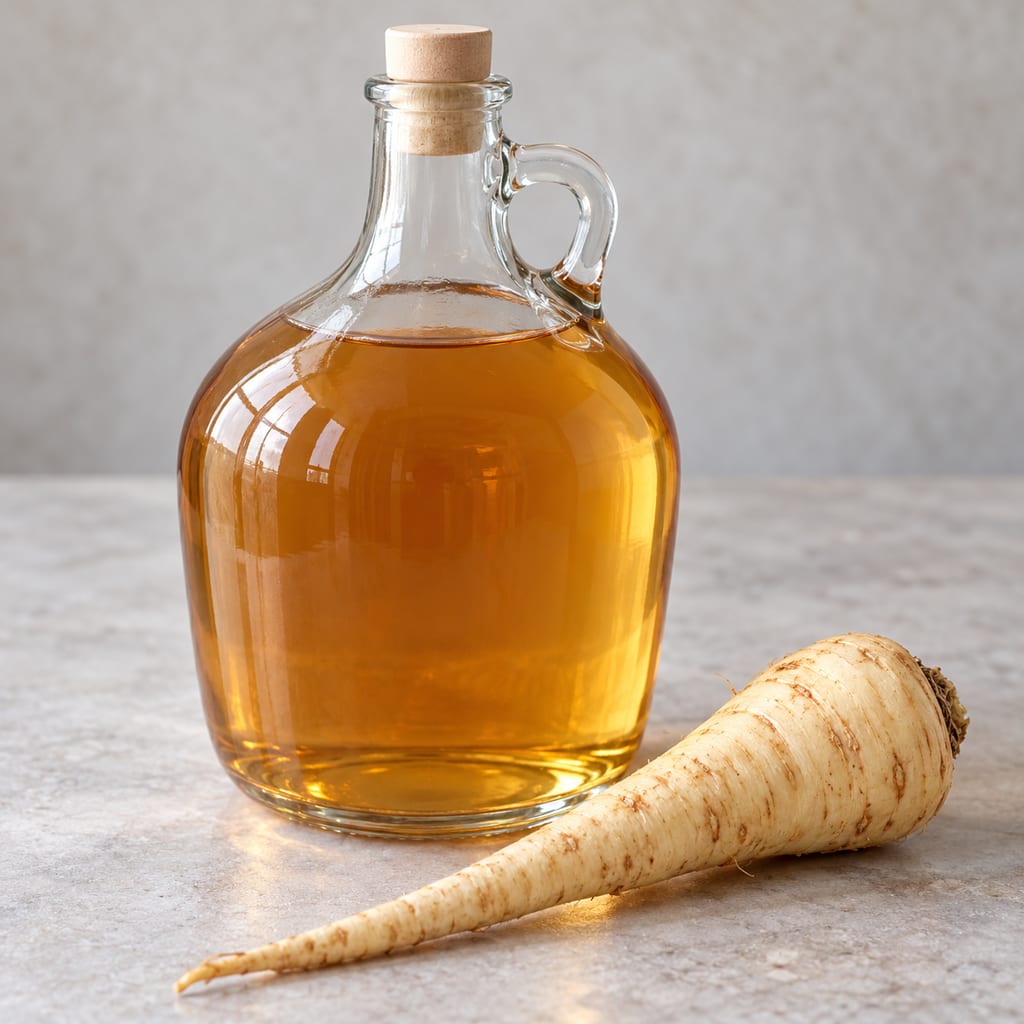
Parsnip wine begins with a vegetable and ends with a drink intended for the bottle. The roots supply the material steeped and boiled into water; lump sugar and yeast make that liquor the basis of an alcoholic fermentation. In this version, brandy enters at the end. It is a garden-root wine with a separate spirit addition, rather than grape wine flavoured with parsnip or a brandy infusion of raw roots.
The defining feature is the order of the work. Sliced roots are boiled, the liquid is separated from them, and sugar is boiled into that liquid before yeast is introduced. The roots are therefore absent from the ferment as described. This is a useful distinction from recipes in which crushed fruit remains in a fermenting vessel for part of the fermentation, and from a cordial in which alcohol extracts flavour without a new fermentation.
Anne Cobbett placed this wine among the English wines and cordials in her household manual. The group brings garden produce, flowers, dried fruit, sugar, yeast and purchased spirit into the same domestic repertoire. Parsnip wine belongs in that company: its identity comes from what the household does to the root and its liquor, rather than from an imitation of the vineyard's raw material.
Cultivated parsnip, Pastinaca sativa, has sweet, aromatic, cream-yellow flesh. Around the first frost, some stored starch converts to sugar. These are characteristics of the vegetable, rather than a measured description of the finished wine or its cooking liquor.
Cobbett knew the root as part of ordinary kitchen work too. In her vegetable chapter she boils parsnips, allowing longer according to their size and quality, and includes them with other roots in preparations using broth, butter and seasonings. Her seasonal list places their arrival in October and values roots touched by frost. The cellar recipe gives a familiar food another destination: the strained cooking liquid is carried forward to a sweetened ferment instead of finishing with the roots on a plate.
The English Housekeeper appeared in a sixth edition in London in 1851. Its title promised advice across the store-room, pantry, larder, kitchen, cellar and dairy, and named young women supervising their own households as its intended readers. Wine-making occupied one part of a much larger system of provision. A reader might meet a wine recipe after chapters on ordinary cooking and preservation, rather than in a separate brewer's handbook.
Cobbett described her selection as suitable for a family living in a moderate style. She did not claim to have invented all its dishes or to be offering discoveries in cookery. The distinction matters here: publication supplies a dated setting for the parsnip wine, but does not identify the first person to make it. A recipe's place in a successful household manual is evidence of its printed circulation, not a certificate of origin.
Her introduction also makes the labour visible. Preserving, pickling and making wine required skill and work, which might fall to the mistress when nobody else in the household could be trusted with it. That is the author's account of domestic responsibility, framed by her own expectations about women's education and household authority. It should not be mistaken for a description of every woman's life, or for evidence that every reader actually brewed this wine.
The quantities give the brief receipt its practical scale. One bushel of sliced parsnips and sixty quarts of water precede forty-five pounds of lump sugar. Two separate boiling stages require handling a substantial amount of hot material. The few lines on the page assume considerable confidence around straining, cooling, fermentation and bottling. Brevity compresses that work; it does not make the work disappear.
The first hour's boil acts on the sliced roots in water. Its place before straining makes the root liquor the part carried forward into the wine. The next stage begins with that separated liquid, not with a pot still full of parsnip pieces. Keeping that distinction in mind helps the reader follow an old recipe whose instructions move quickly between a solid ingredient, its cooking water and the eventual drink.
Straining is a physical separation. It takes the root pieces out of the liquor that will receive the sugar. It is not fermentation, and it does not tell us that the liquid is clear enough to bottle or free of suspended material. The recipe gives no further pressing, settling or fining stage for this version. Its unbrandied companion treats clarity differently, warning the cook not to bruise the boiled roots while draining them.
The second hour's boil has a different starting material: strained liquor with lump sugar added. Sugar becomes part of the liquid rather than remaining as a garnish or a sweetener offered at the table. The repeated heating is a real feature of this method, not a detail that can be replaced by the tender-root instruction in the other alternative. The two methods allocate their heat treatment differently.
The printed water quantity is an input, not a measured yield. Some liquid may remain with the roots or be lost during boiling and handling, but the book does not measure those changes. Dividing the sugar by an assumed finished volume would give a precision the recipe never supplied. Its historical quart and bushel are retained as written, while the separate weight of sugar remains a weight rather than a reconstructed concentration.
Cobbett's ingredient list makes added sugar central to the wine. The description does not ask yeast to work on a heap of uncooked vegetable, and it does not introduce a malt or a rice-koji stage. It prepares a sweetened liquid first. This is the point at which the drink moves from cooking into a biological process: the cooled liquor receives yeast and is allowed to ferment.
In present-day wine microbiology, Saccharomyces cerevisiae is a common alcoholic-fermentation yeast. It uses sugar and releases ethanol, carbon dioxide and heat. That explains the broad distinction between dissolving sugar and fermenting it: the former distributes an ingredient through liquid; the latter changes it through microbial metabolism. Cobbett's unspecified yeast is not thereby identified as that species, or as a modern commercial wine strain.
The root and the sugar also have different roles in the written recipe. Parsnip gives the wine its name and supplies the material used to make its liquor. Lump sugar is a separately weighed addition to that liquor. The book does not supply a chemical analysis of either the roots or their extract, so the amount of fermentable material contributed by the vegetable should not be calculated from an ordinary food-composition table.
The brandy addition distinguishes this preparation from the alternative beside it. Cobbett puts a quart of brandy after the instruction to ferment with yeast and immediately before bottling. Its position is clear even though its technical purpose is not explained. The wine is therefore neither a root infusion made entirely in brandy nor the unbrandied cask-aged wine that follows it on the page.
There is a wider context for that choice within the same chapter. Cobbett opens her English-wine section with the opinion that a little brandy improves homemade wines, while acknowledging that some people never add it. Brandy also appears in her raisin, gooseberry, elder, ginger and other wines. The parsnip addition sits within an expressed household preference, rather than appearing as an isolated invention whose meaning has to be guessed.
Those neighbouring recipes do not all use spirit in the same way. The raisin wine introduces brandy as fermentation subsides and adds more later; other preparations place it among additional ingredients before a period in cask. The chapter contains several sequences, not one universally repeated rule. The first parsnip formula's own order remains the relevant one for this preparation.
Adding a spirit and establishing that a wine is stable in a closed bottle are different questions. The quart is a documented ingredient amount, not a tested stabilising dose. Without the brandy's strength, a measured finished volume and a defined fermentation state, the recipe does not support a calculation of the final alcohol or a claim that the addition stopped further fermentation. The recipe leaves those particulars unspecified.
Cobbett separates the preparations with an 'Or'. Her second wine starts with washed, peeled roots and uses four pounds for each gallon of starting water. It boils them until tender, drains them without bruising, and measures sugar and crude tartar against the drained liquor. It then has a four-day tub stage and twelve months in cask before bottling. No brandy appears in that alternative.
This is more than a choice of garnish. The root preparation, way of measuring the batch, heating instructions, added tartar and maturation schedule differ. Moving the second method's year in cask into the brandied method would make a third recipe that the book does not print. The same is true of transferring its cooling figure, preferred months or cask-closing instruction merely because both drinks are called parsnip wine.
Helen S. Wright's Old-Time Recipes for Home Made Wines, Cordials and Liqueurs, published in Boston in 1909, prints three parsnip wines. One boils sliced roots until soft, extracts their liquid and adds sugar by the gallon before a tub fermentation and a long period in cask. Another includes hops and discusses a paper covering that may burst as the wine works. A third uses yeast on toast and calls for topping up the cask as fermentation carries liquid over.
These are distinct printed methods, not later stages missing from Cobbett's first alternative. Their interest is the range of domestic practices they preserve: extracting root liquor, choosing a sugar measure, introducing yeast, managing an active vessel and deciding when to move wine into a different container. The bottles at the end of the work conceal a succession of choices made much earlier.
Wright's collection also cautions against imagining a single, universally agreed parsnip wine. A name can persist while its recipe changes. Differences in draining, added ingredients and the handling of fermentation matter to what a maker actually does, even when the books give no measured comparison of the resulting wines. The later examples belong in the drink's story and its variant links; they do not amend this particular ingredient list.
The first Cobbett formula finishes quickly on paper: ferment with yeast, add brandy, bottle. The speed of that sentence is literary compression, not a measured fermentation timetable. A modern reader should keep the documented order while recognising that the book gives no test for packaging stability. Supplying one from a different formula would hide the historical recipe's actual limits.
Continued fermentation in a sealed bottle can trap carbon dioxide and break the glass. Contemporary extension guidance identifies that packaging hazard; it does not validate this parsnip liquor or establish the effect of its brandy addition. It is the reason the safety information accompanies the historical method, rather than a reason to invent a fermentation endpoint or turn a long wait into a guarantee.
A Canadian agricultural guide, revised in 1975 and printed again in 1976, still included parsnip wine among home preparations. Its version adds citrus, yeast nutrient and Campden tablets and handles the pulp differently before racking. The vegetable had remained a wine ingredient, while the practical framework had changed. That later preparation belongs alongside Cobbett's as another documented method, rather than as a list of corrections to be slipped into the older one.
Parsnip wine belongs to the English household tradition of making wine from garden produce and sugar. Anne Cobbett printed two methods in the 1851 sixth edition of The English Housekeeper. This version boils sliced roots, boils the strained liquor again with lump sugar, then adds yeast and finishes with brandy. The other method uses crude tartar and a long cask maturation instead.
Scaling: source batch only
Yeast can restart fermentation during storage and release carbon dioxide that cannot escape a sealed bottle.
Hazard sourceDo not bottle wine while fermentation continues or can restart; establish packaging stability before closing bottles.
Control sourceFermentation in a closed bottle can build pressure and shatter the glass. Do not bottle wine that is still fermenting or can ferment again.
Publication place of the 1851 sixth edition; the recipe’s birthplace is not established.
A historical refined-sugar form whose name has covered truncated cones and, in later usage, smaller pressed or cast pieces.
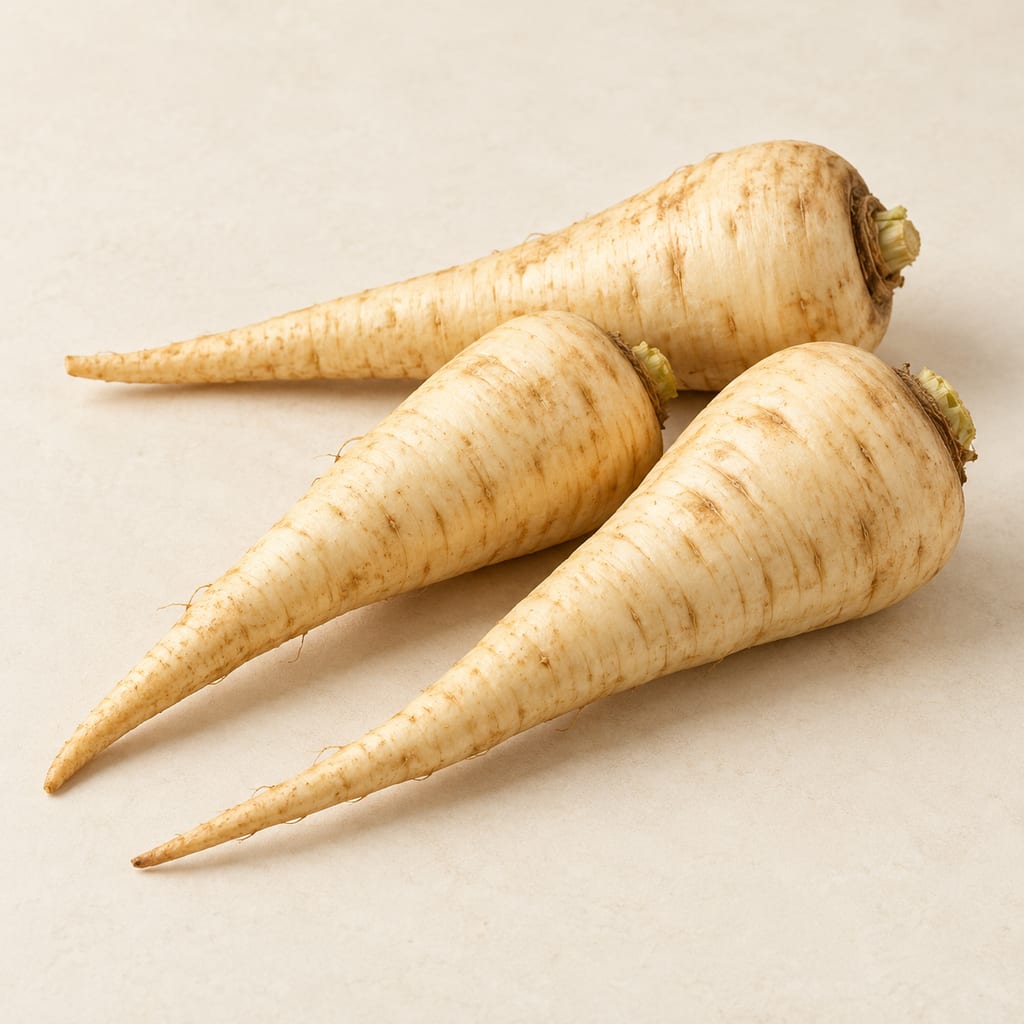
Sweet, aromatic storage roots used as a cooked vegetable and in household wines, with starch and soluble sugars that change as the roots grow and are stored.
Water carries dissolved ingredients, transfers heat and forms the liquid environment of many ferments; its minerals and treatment influence how it behaves.
Yeast named by a recipe without an identified species, strain or commercial form, used to begin a fermentation.
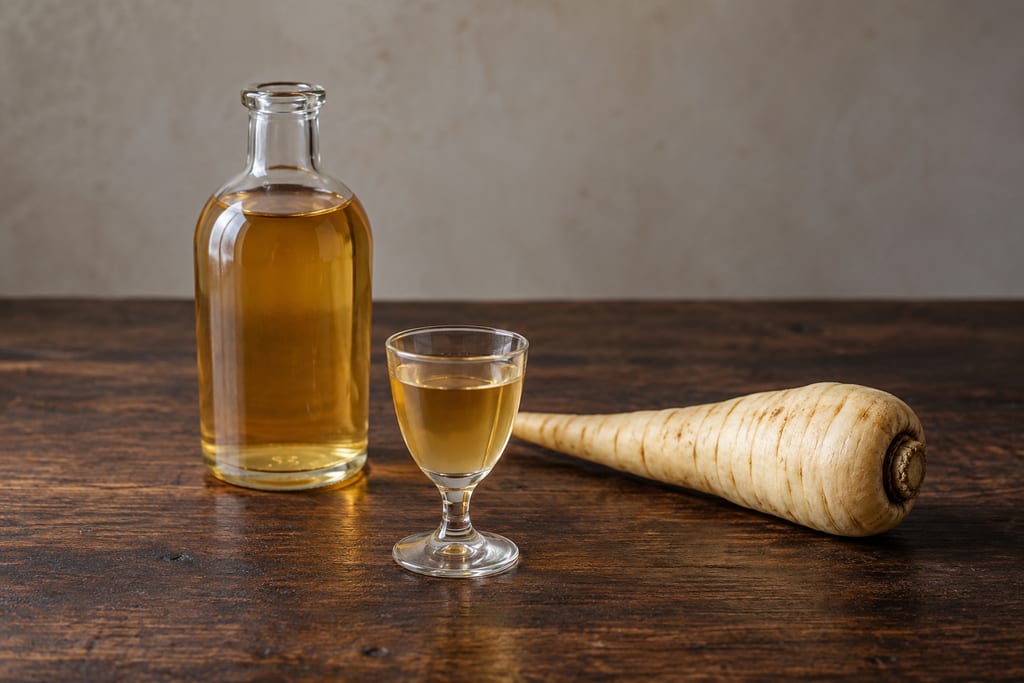
Wright's 1909 compilation records a parsnip wine made from boiled roots, sugar and a little yeast. The liquor spends ten days in a tub, then twelve months in a cask topped up daily only while the wine works over.
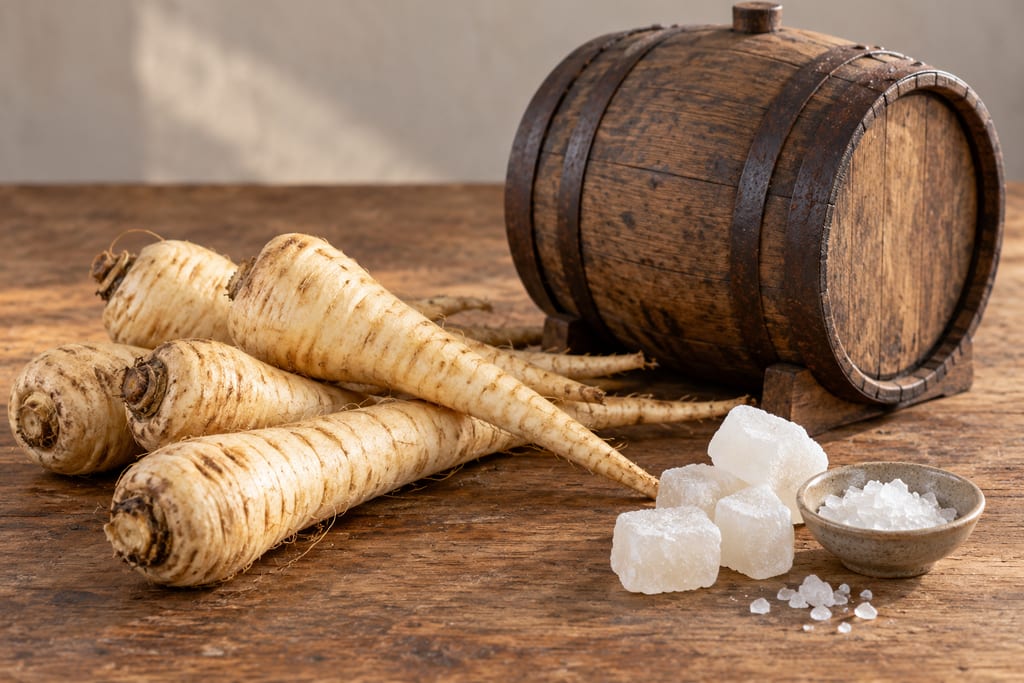
Parsnip liquor ferments with loaf sugar, crude tartar and fresh yeast, then matures in a cask for twelve months before bottling.
Cider vinegar is made when acetic-acid bacteria use oxygen to turn the alcohol in dry apple cider into acetic acid. This historical cask method begins with fermented cider and differs from apple-scrap vinegar made with sugar and water.
Cumberland sauce is a British condiment of redcurrant jelly, mustard, blanched orange peel and port, traditionally served cold with ham, game and cold meats.
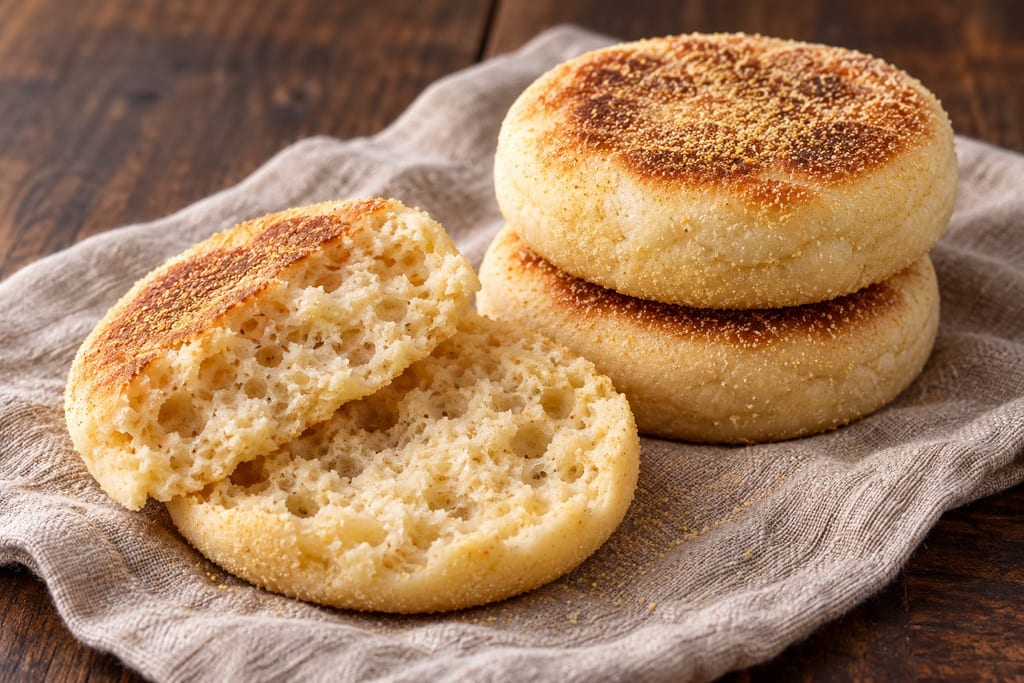
King Arthur’s six-piece English muffin batch uses a yeast preferment, two folds and a skillet or electric griddle; it is distinct from the sourdough-and-yeast version already catalogued.
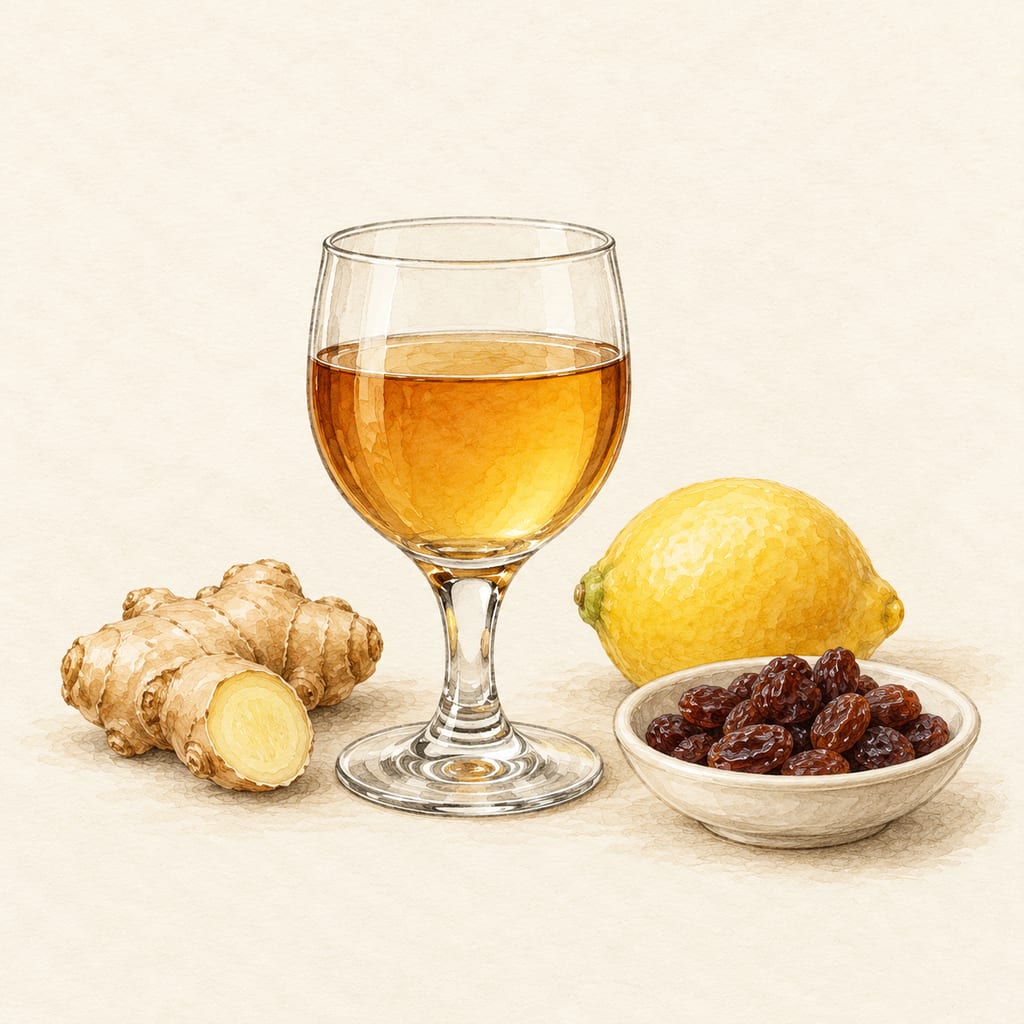
A Victorian household wine of boiled sugar, lemon and bruised ginger, worked on raisins in a cask for a fortnight and finished with brandy, made nine gallons at a time.
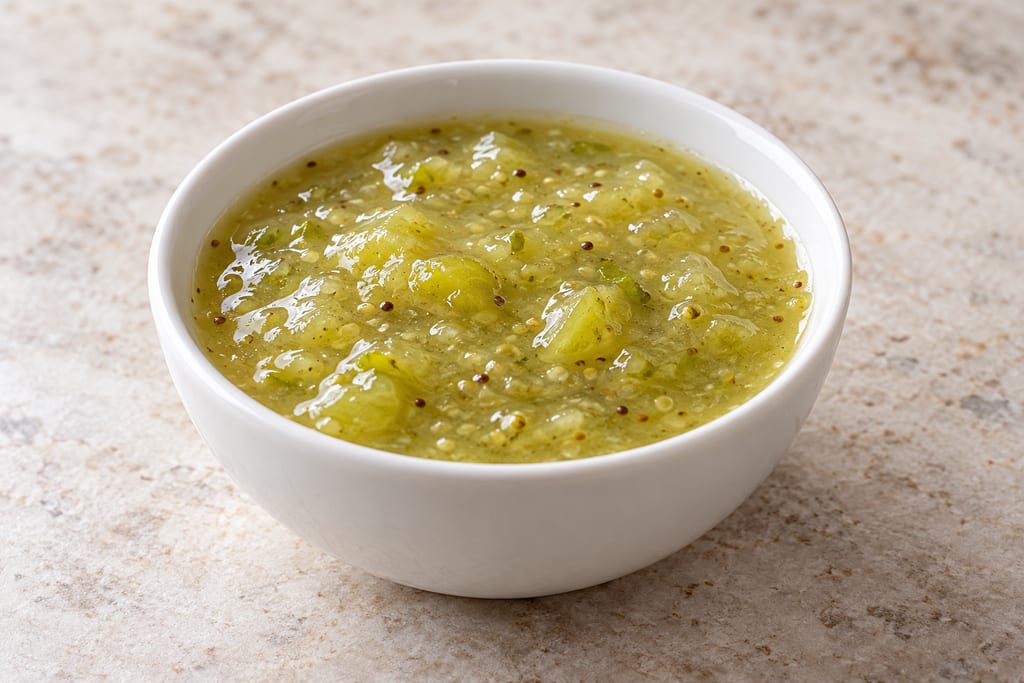
Gooseberry sauce is a soft, tart sauce of cooked green gooseberries, sharpened with wine or vinegar and lightly sweetened, traditionally served with mackerel.
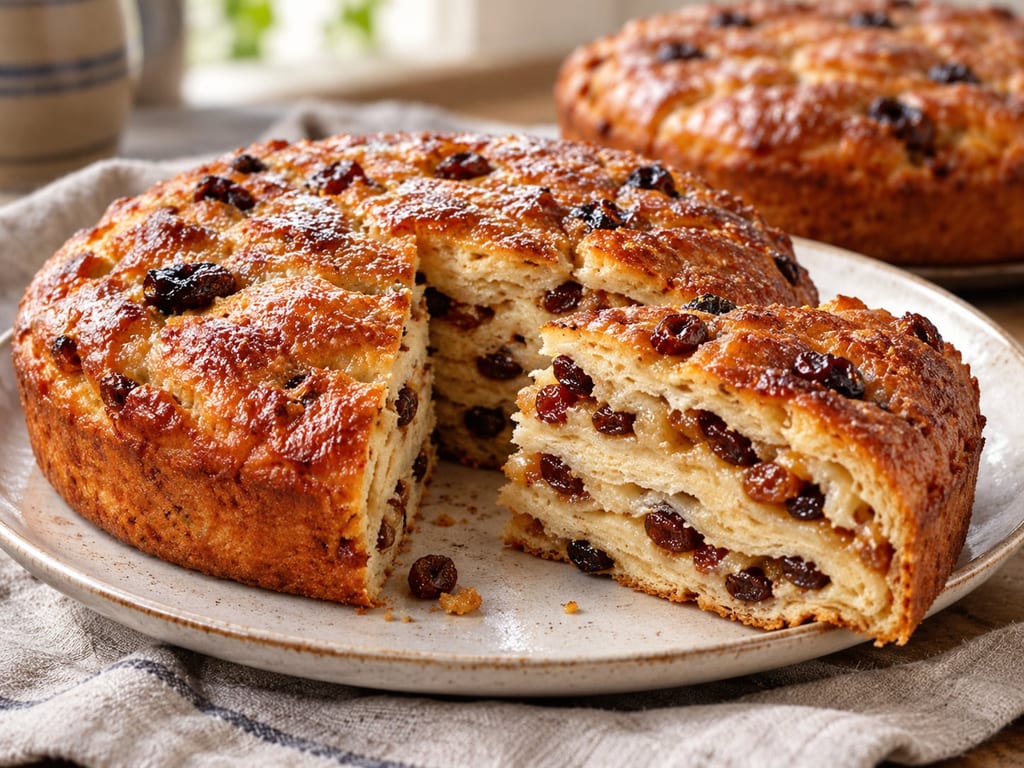
A yeast dough is folded around sweetened lard and dried fruit, then baked in tins until the bottom caramelizes.
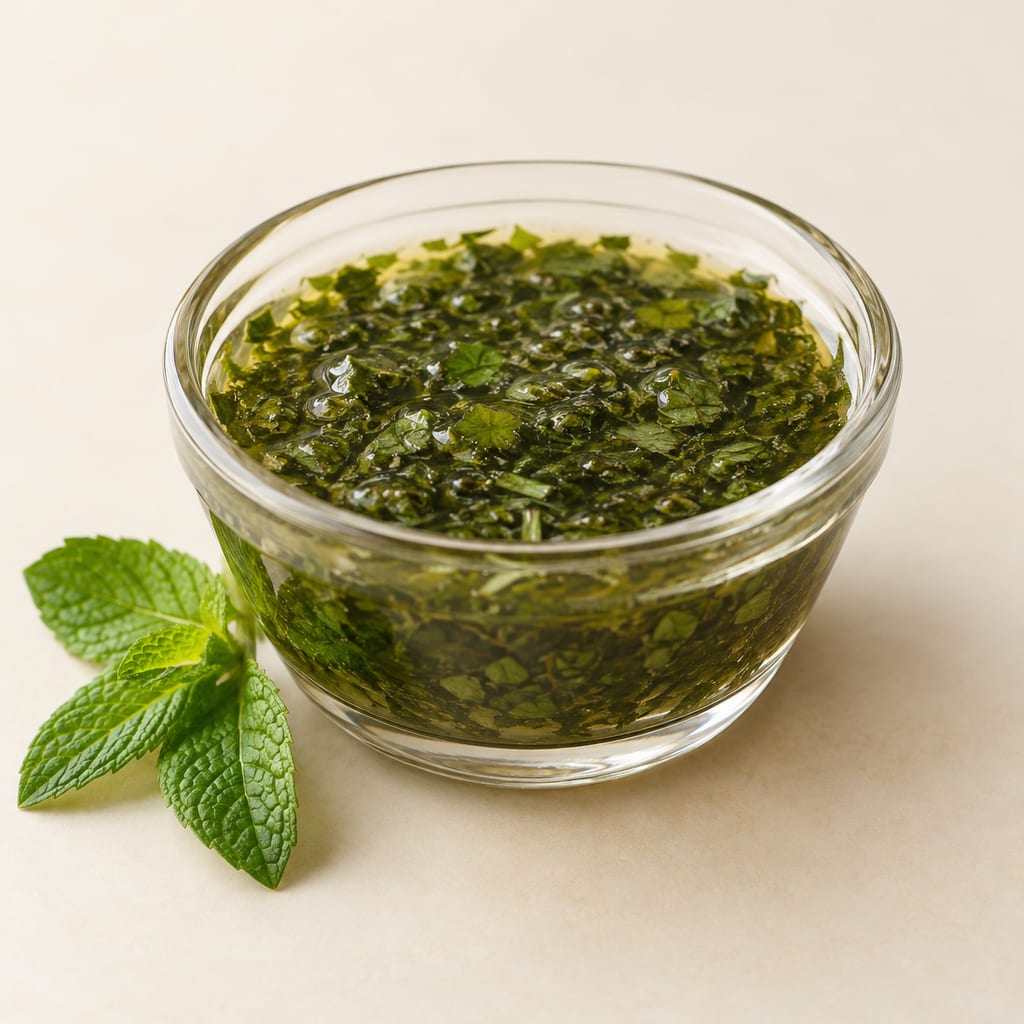
Finely chopped fresh mint steeped in a sweet and sharp liquid of white wine vinegar, sugar and water, the sauce traditionally served with roast lamb in Britain.
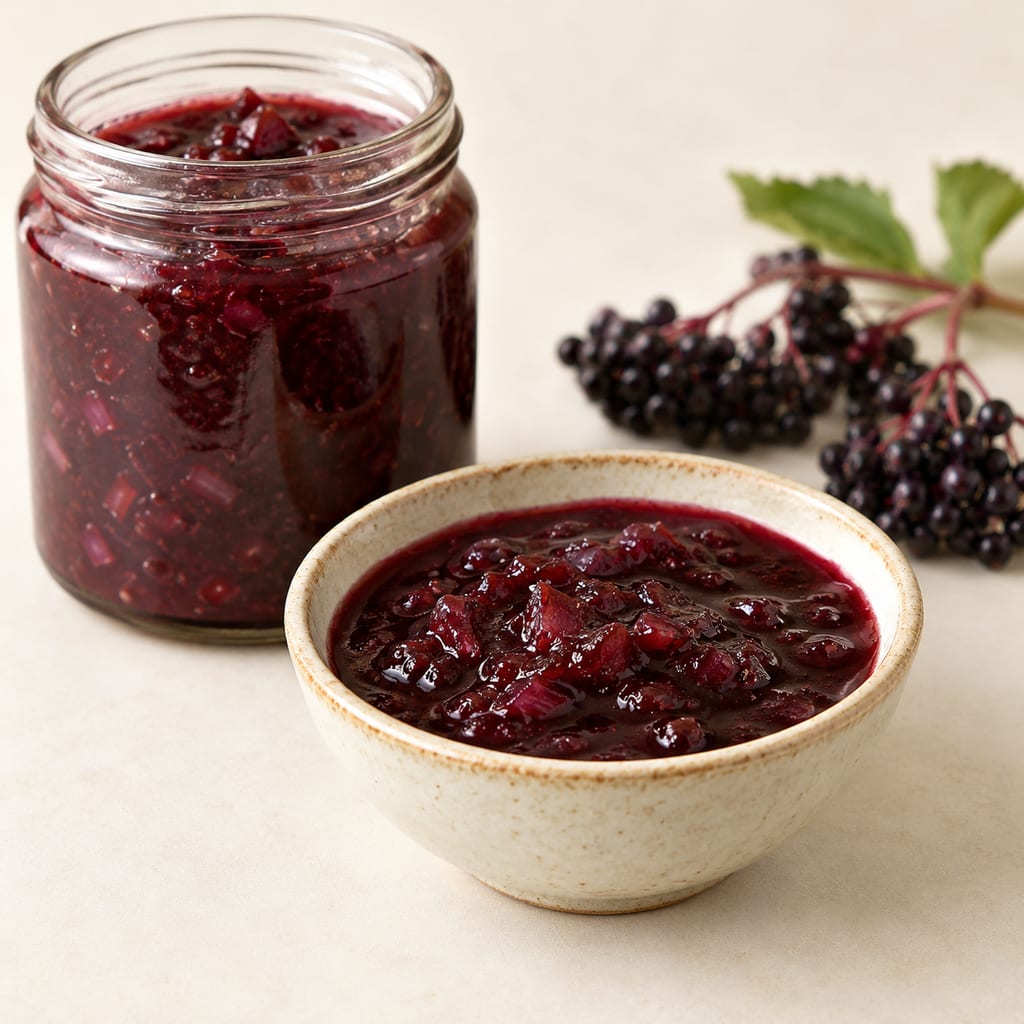
An English elderberry condiment of vinegar, shallots and warm spices, historically called a catsup and tied to Pontac's Head tavern in London.
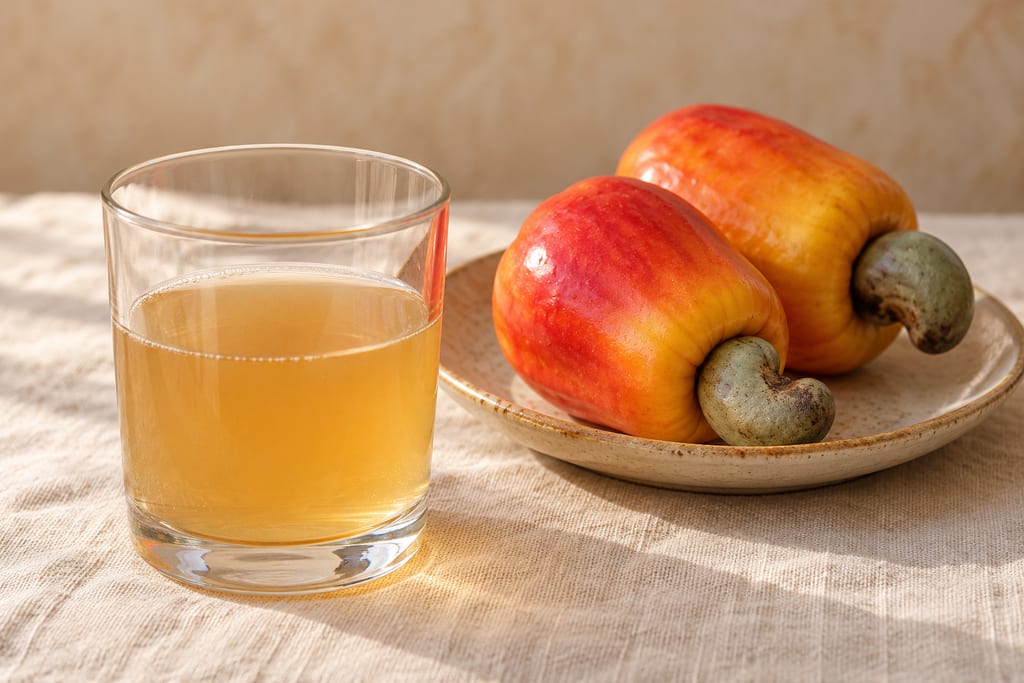
Vinho de caju is a seasonal alcoholic drink made from expressed cashew-apple juice. In southern Guinea-Bissau, an ethnographic account records a simple press-and-strain method, while harvest timing and local trade shape its place.
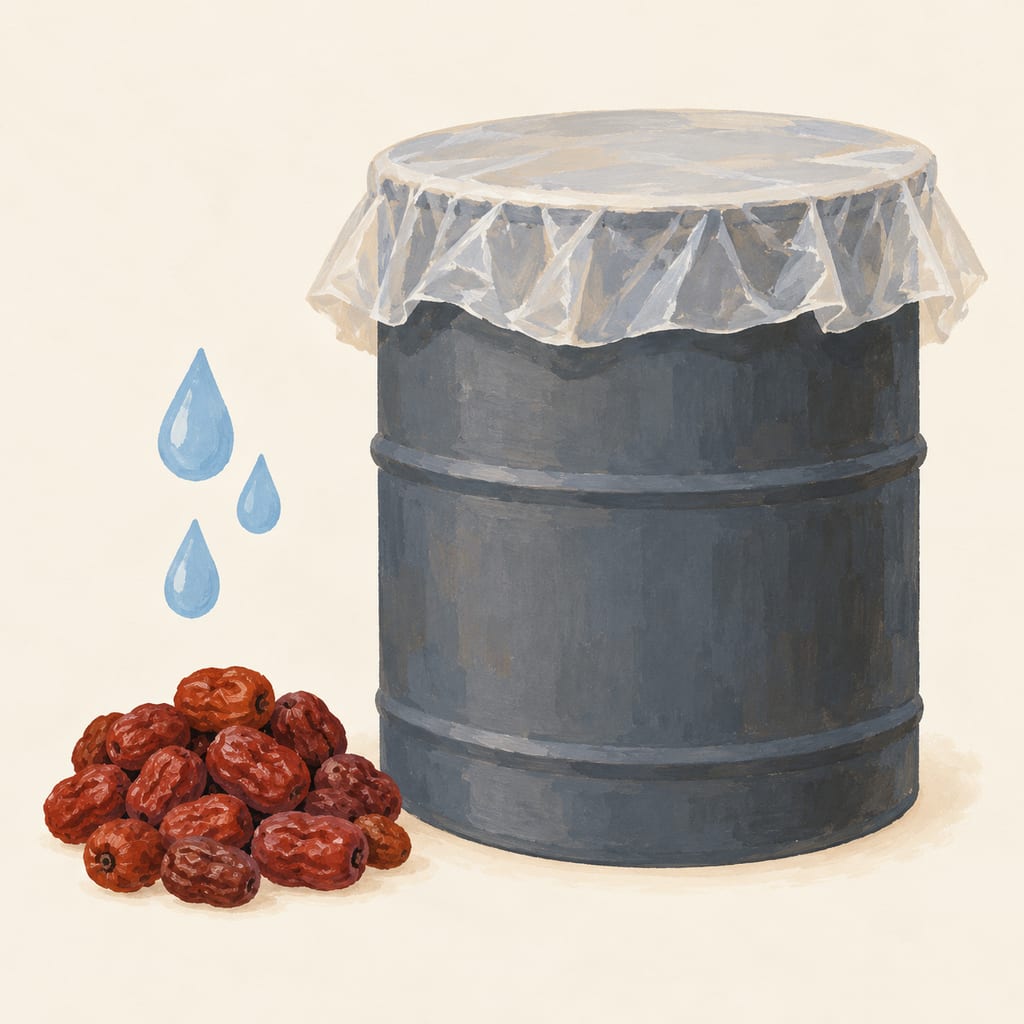
A Zimbabwean spontaneous ferment of dried masau fruit pulp used as a kachasu distillation base; the fermented pulp itself is not consumed.
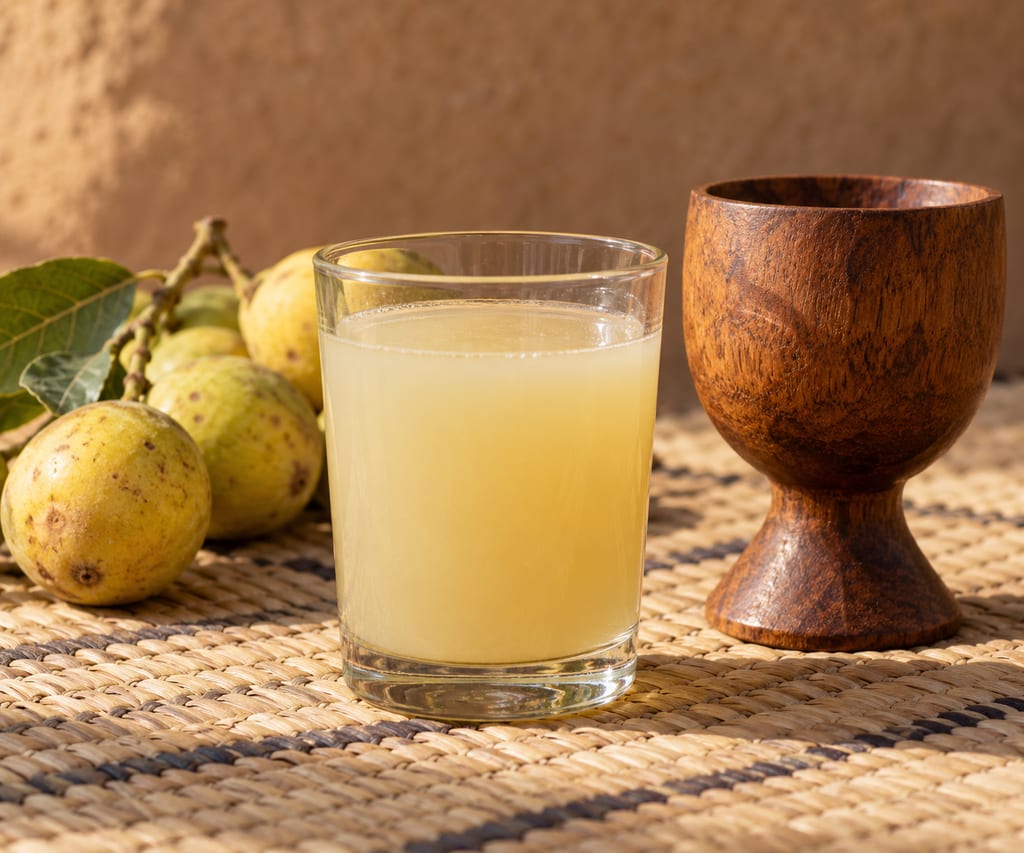
The fermented marula drink of northern Namibia's Aawambo communities, pressed from ripe Sclerocarya birrea fruit and left to the yeasts already on it, and drunk at the Oshituthi shomagongo festival.

A Cap-Pelé boucanière is an Acadian herring-smoking building. The documented Willie Niles example is a one-storey wood-frame structure with a ridge smoke vent and interior bays for hanging fish-bearing cannes.

Achcharu is a family of Sri Lankan vinegar pickles made with mixed vegetables or seasonal fruit and a piquant spice dressing. This version is a quick, refrigerated, non-fermented mixed-vegetable pickle.

The acocote is a long, hollowed and dried gourd used to draw aguamiel from a mature maguey. It is a harvesting tool: the sap is transferred to a separate vessel before it ferments into pulque.

Adrak murabba preserves young ginger in sugar syrup, a sweet South Asian preparation recorded in Indian cookery and food-processing sources.

Parkia biglobosa seeds are fermented into regional West African seasonings, including nététou, iru, dawadawa and soumbala. The yellow fruit pulp is a separate food, and names and methods vary by place.

Japanese reddish-brown vinegar from sake lees matured about three years, turned to vinegar by acetic bacteria; the vinegar of Handa and Edomae sushi rice.

A refined common-wheat flour blended for a broad range of baking; its protein and behavior vary with wheat, milling and market.

The almond mushroom, Agaricus subrufescens, was cultivated in eastern North America in the 1800s, lost its market, and returned as a cultivated mushroom from Brazil, where it is grown under several names.
No community contributions have been published for this entry yet.
Sign in to contribute. Published comments and photos are free to read.
A. Cobbett, LondonIngredients · Method · History
Anne Cobbett, The English Housekeeper, sixth edition (1851), printed page 341, first Parsnip Wine alternativeFirst alternative on printed page 341: one bushel of sliced roots, 60 quarts of water, 45 lb lump sugar, unspecified yeast and one quart of brandy.
Two separate one-hour boils; no fermentation duration, endpoint or final yield.
Project Gutenberg eBook 55314Method · History · Safety
The English Housekeeper (transcription of the sixth edition), Parsnip Wine, pp. 341-342Checks the wording of the first alternative against a second transcription.
Second alternative: 4 lb parsnips and, to each gallon of liquor, 3 lb loaf sugar and half an ounce of crude tartar; yeast at 75 degrees; four days in a warm room; bung up when fermentation has ceased; twelve months in the cask; no brandy.
Title, stated audience and household-management introduction; English wines and cordials chapter and adjacent wines; both Parsnip Wine alternatives, printed pp.341–342; seasonal vegetable list and parsnip cookery p.219.
Cited in: A wine built from roots; The root before it becomes a drink; The work behind a short household receipt; Water first, then the sweetened liquor; Sugar and the living stage; Why the brandy belongs at the end; Two parsnip wines on the same page; Reading the bottle as the end of a process
The Page Company, Boston, 1909; Project Gutenberg eBook 75708History · Safety
Helen S. Wright, Old-Time Recipes for Home Made Wines, Cordials and Liqueurs, Parsnip Wine, Nos. 1 to 3, pp. 83-84Three parsnip wines: two kept a year in the cask and topped up daily; No. 2 uses 14 lb sugar and 1.5 oz hops, needs no brandy and is likely to burst the paper pasted over the cask.
The three distinct parsnip wines, printed pp.83–84; stirring, extraction, cask topping and paper-cover fermentation in their own methods.
Cited in: Later wine books kept several routes alive
Clemson Cooperative Extension, Home & Garden Information CenterSafety
Basics of Home WinemakingStep 5: fermentation can restart during storage and carbon dioxide trapped in bottles can shatter them. General wine-packaging hazard; no parsnip-specific endpoint or validation of the historical formula.
Step5: renewed fermentation may trap carbon dioxide and shatter sealed bottles.
Cited in: Reading the bottle as the end of a process
University of Oxford, Department of Biology
Oxford University Plants400: Pastinaca sativa L. (Apiaceae)Cultivated parsnip identity, root appearance and aroma, harvest after frost and starch-to-sugar change.
Cited in: The root before it becomes a drink
University of California, Davis, Department of Viticulture and Enology
Saccharomyces cerevisiaeCommon role in wine alcoholic fermentation; sugar substrate and ethanol/carbon dioxide/heat products.
Cited in: Sugar and the living stage
Canada Department of Agriculture, Summerland Research Station
Home Preparation of Juices, Wines, and Cider, publication1406, revised1975, 1976 printingTitle/revision/printing metadata; printed p.22 parsnip wine includes citrus, nutrient and Campden tablets, subsequent pulp separation and racking.
Cited in: The name outlasted one household formula