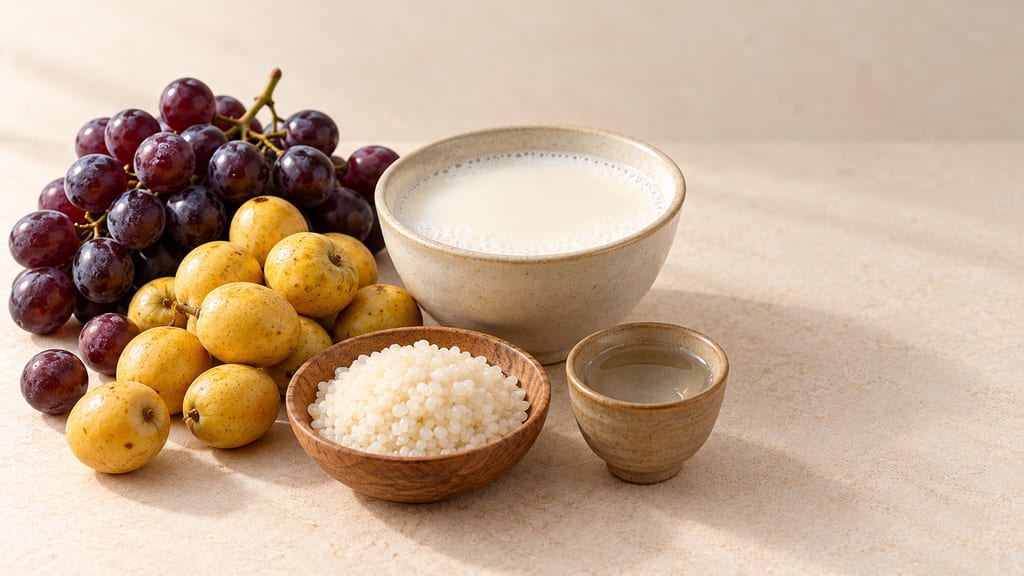
Harvests into drinks: fruit, grain and milk
A marula harvest, a rice mash and a bowl of fermented mare’s milk reveal different ways to make alcohol, and different kinds of knowledge behind the drink.
 FermenteaWhere food goes to change
Traditional method
Oshituthi shomagongo
The fermented marula drink of northern Namibia's Aawambo communities, pressed from ripe Sclerocarya birrea fruit and left to the yeasts already on it, and drunk at the Oshituthi shomagongo festival.
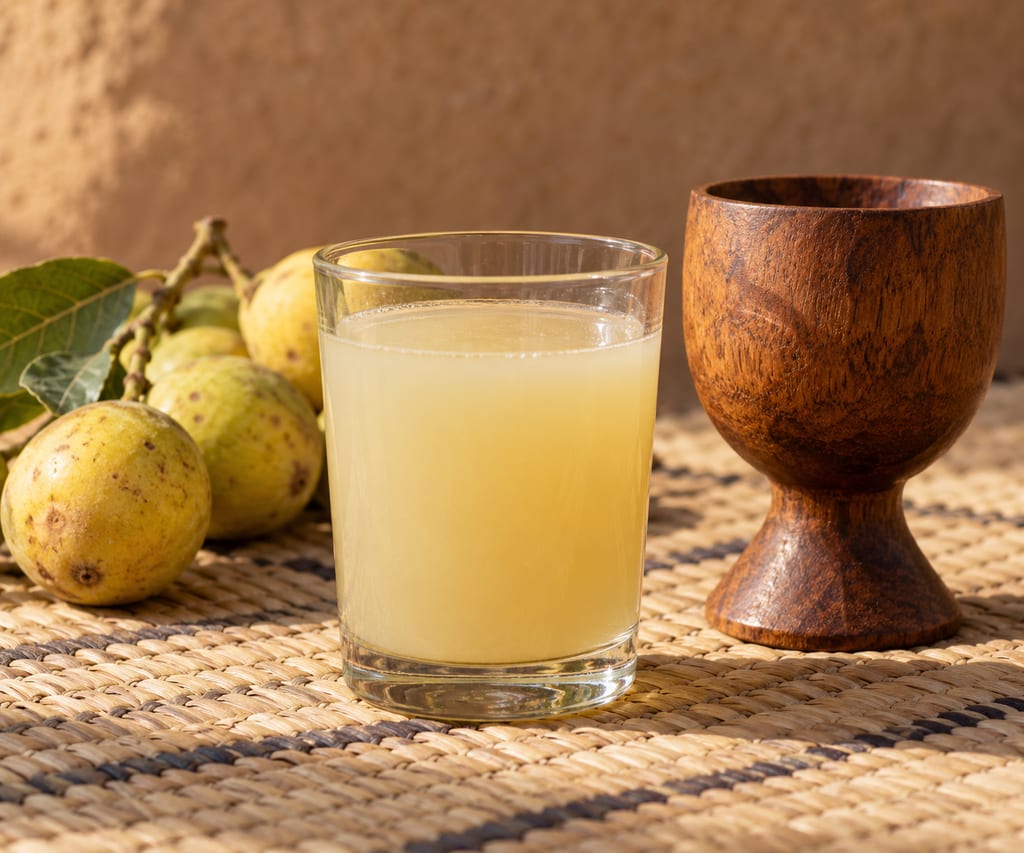
Omagongo is a traditional fermented beverage made from the juice of ripe marula fruits in northern Namibia. It is closely associated with the eight Aawambo communities and their annual Oshituthi shomagongo celebration, during which the seasonal marula harvest becomes an occasion for hospitality, collective work, singing, storytelling and the renewal of relationships between communities.
The drink is pale yellow to cloudy, with a fruit-derived acidity and a changing balance of sweetness and alcohol. It is made by extracting juice from marula fruits and allowing naturally occurring microorganisms to ferment the liquid.
The principal ingredient is the fruit of Sclerocarya birrea, particularly the southern African subspecies Sclerocarya birrea subsp. caffra. The tree belongs to the Anacardiaceae family, which also contains mangoes and cashews.
In Oshiwambo, omagongo refers to the beverage, while omugongo is a name for the marula tree. The festival name, Oshituthi shomagongo, identifies the celebration associated with the drink. Oshiwambo uses the Latin writing system.
Related marula beverages occur across southern Africa. Names include buganu in siSwati-speaking communities, mukumbi in Tshivenda, vukanyi in Xitsonga, and bojalwa jwa morula in Setswana. These should not automatically be treated as alternative names for an identical recipe. They belong to a wider regional family of marula fermentations whose methods, ingredients and drinking customs differ.
Omagongo is not the same as Amarula cream liqueur, a commercially manufactured product incorporating marula fruit with other ingredients.
The importance of marula trees extends beyond alcoholic beverages. Their fruits are eaten, their kernels provide edible oil, and parts of the tree have practical and cultural uses. Seasonal collection and processing create a local economy involving knowledge of trees, fruit maturity, storage, craftwork and hospitality.
The most securely documented ceremonial tradition is Oshituthi shomagongo. The celebration takes place between March and April and generally lasts two to three days.
Traditionally, the participating communities organised their own celebrations. In the period following Namibian independence in 1990, the festival developed into a more inclusive, rotating celebration involving all eight Aawambo communities.
Its importance is not confined to drinking. Men prepare wooden drinking vessels, small serving gourds and implements made from cattle horns. Women manufacture or maintain the baskets and clay pots used for collecting and processing fruits. Younger community members participate in harvesting and learn the necessary techniques through observation and practical work.
Juice extraction becomes an opportunity for exchanging news, discussing family matters and transmitting songs, poems and social knowledge. Men also recite historical narratives during the festival.
An important symbolic element is the emphasis on peaceful assembly. The communal celebration represents cooperation and social unity between participating groups.
In 2015, UNESCO inscribed Oshituthi shomagongo on its Representative List of the Intangible Cultural Heritage of Humanity.
That date documents international recognition, not the origin of omagongo. There is no securely established archaeological date for the first preparation of this particular named beverage. Claims that modern omagongo has followed an unchanged recipe for thousands of years go beyond the evidence.
Marula produces fleshy, aromatic fruits containing a relatively large, hard stone. The edible flesh surrounds this stone rather than forming a large continuous pulp like that of a mango.
Fruit development and ripening determine the quality of the eventual beverage.
Ripe marula provides water, organic acids, volatile aroma compounds and soluble sugars. The sugar composition is important because fermentation organisms require accessible carbohydrates.
Research into marula fruits has reported sugar concentrations reaching approximately 16 °Brix, depending on season and growing conditions. This is a measurement of soluble solids, not a guarantee that every marula harvest contains 16% fermentable sugar.
The fruit's acidity, sugar concentration and natural microbial population vary with growing conditions, ripeness and handling.
Marula juice fermentation is therefore influenced by the particular harvest rather than being completely predictable from the fruit's identity alone.
Different fruit trees also carry different microbial communities. The yeasts present on mature fruit can enter the juice during harvesting, peeling and extraction.
The clay vessel, processing implements and surrounding environment can contribute further microorganisms.
Omagongo is principally an alcoholic fruit fermentation.
Yeasts use sugars in the juice to produce ethanol and carbon dioxide. A simplified representation of the principal reaction is:
C_6H_{12O_6 -> 2C_2H_5OH + 2CO_2}
This reaction alone does not describe the whole process.
Studies of naturally fermenting marula fruit have identified several yeast genera, including Saccharomyces, Pichia, Hanseniaspora, Brettanomyces and related organisms.
Individual species differ in sugar metabolism, tolerance of acidity, fermentation speed and production of volatile compounds. Some dominate early fermentation; others become more important as the environment changes.
Investigations of marula wine in South Africa have identified Saccharomyces cerevisiae, several non-Saccharomyces yeasts, lactic acid bacteria and acetic acid bacteria.
These organisms can produce lactic acid, acetic acid, higher alcohols and esters. Such compounds contribute acidity and aroma, although excessive acetic acid production can lead to spoilage.
The balance between organisms changes as fermentable sugars are consumed, ethanol accumulates and the juice becomes more acidic.
Oxygen availability matters. Yeasts can produce ethanol in relatively oxygen-limited conditions, while acetic acid bacteria use oxygen to oxidise ethanol into acetic acid.
An uncovered or repeatedly aerated vessel can therefore develop a different flavour trajectory from a vessel in which oxygen exposure is limited.
The clay pot also plays a practical role. Its size and geometry influence handling, surface exposure and the ease with which fermenting material can be collected or served. Clay is not inherently sterile, and its traditional use does not remove the need to clean the vessel.
The frequently repeated claim that traditional marula beer always reaches approximately 15% alcohol should be treated with caution. Alcohol concentrations differ dramatically between documented regional fermentations, and some published figures refer to different products or experimental conditions.
Omagongo is alcoholic, but its exact strength cannot be deduced reliably from a customary fermentation period alone.
The documented production process is straightforward in its essential ingredients but demands considerable labour and judgement.
Marula fruits are gathered during the seasonal harvest.
Fruit selection matters because immature fruit offers a different sugar-acid balance, while decomposing fruit can contribute unwanted microorganisms and off-flavours.
Fruits showing extensive rot, obvious mould or contamination are unsuitable.
Traditional equipment includes baskets, clay pots, carved drinking vessels and tools used to pierce or open the fruits.
Some tools are made using cattle horn, while knives or equivalent implements can be used for peeling.
The processing vessel must be fit for food contact and free from accumulated rotten residues.
The skin is pierced or removed, exposing the flesh surrounding the hard stone.
Juice is squeezed or pressed into a collecting vessel. Residual pulp may be worked to recover additional liquid.
The exact extraction technique depends on the household and equipment available.
The important distinction is that omagongo is made from the fruit juice and pulp, not by fermenting the hard kernels.
The kernels may be collected for other uses, particularly oil production.
The collected juice is transferred to a clay pot.
Traditional preparation relies on the microorganisms already associated with the fruit and processing environment. A standard commercial yeast addition is not required in the documented customary method.
Neither a universal fruit-to-water ratio nor a universally prescribed amount of added sugar is established in the UNESCO description.
Those quantities should not be invented merely to produce a convenient modern recipe.
The documented Aawambo process allows the juice to ferment for two to seven days.
This is a range describing traditional community practice, not a validated safety schedule for every batch.
Fermentation rate will depend on temperature, sugar concentration, fruit microbiota and vessel conditions.
During active fermentation, carbon dioxide may form bubbles, and the juice progressively loses sweetness.
Coarse fruit residue can be removed or separated before drinking.
The finished beverage is served in traditional vessels during the festival and shared with guests alongside food.
Omagongo is ordinarily associated with fresh, seasonal consumption rather than prolonged bottle conditioning.
The cited community account does not specify a standard final pH, exact alcohol content, ideal fermentation temperature or shelf life.
Marula fermentation is not confined to Namibia.
In Eswatini, buganu is associated with traditional marula celebrations, including the broader cultural practices surrounding the first seasonal fruits.
In South Africa, marula preparations include mukumbi and vukanyi. Local methods can differ in the handling of fruit pulp, juice extraction, dilution, duration of fermentation and preferred drinking stage.
Botswana also has traditions of fermenting marula juice, often identified by names incorporating morula, the Setswana name for the fruit.
The microbiology of these related beverages can overlap without their production systems being identical.
Some contemporary preparations use added sugar or deliberately selected yeasts. These additions can increase consistency or modify alcohol production, but they should be identified as contemporary variations rather than retroactively assigned to historical household recipes.
Likewise, industrial marula wines and spirits may employ pasteurisation, controlled fermentation or distillation. They are related uses of marula but not the same product as festival omagongo.
Omagongo is principally a communal drink.
Its best-documented setting is the marula festival, when participants gather to drink, eat, sing and celebrate.
Serving vessels are an important part of the experience. Carved cups, gourds and clay pots represent specialised material culture rather than interchangeable decoration.
The beverage may be served with traditional foods prepared for community gatherings, although the principal UNESCO account does not prescribe a single obligatory dish.
It would therefore be misleading to invent a fixed omagongo-and-food pairing.
The association between harvesting, drinking and social interaction helps explain why the beverage remains culturally important even when commercially produced alcoholic drinks are available.
A successful batch is expected to change from freshly expressed fruit juice into an acidic, lightly or more substantially alcoholic drink.
Observable signs can include the formation of bubbles, a change in aroma, reduced sweetness and suspended pulp or sediment.
The rate and intensity of these changes are variable.
A marula beverage can naturally possess strong fruity and acidic notes. Acidity alone does not establish spoilage.
However, visible fuzzy mould, obvious putrefaction, contamination by insects or other animals, or a distinctly abnormal chemical or rotten odour should lead to rejection.
A surface film cannot be identified reliably as harmless yeast growth by appearance alone.
Excessive exposure to oxygen can encourage acetic acid bacteria and make the drink increasingly vinegar-like.
Fermentation that produces little apparent activity may reflect low yeast activity, insufficient accessible sugar, unsuitable conditions or other problems. It is not evidence that the juice is safe.
Traditional fruit fermentation does not automatically eliminate every foodborne hazard.
The initial quality of the fruit, water and equipment remains important. Fruit that is already decomposing should not be treated as desirable fermentation material.
A modern controlled preparation should use clean food-contact vessels, potable water and properly handled fruit.
Alcohol content, acidity and residual sugar should be measured when reliable characterisation is required.
The traditional two-to-seven-day range is not a substitute for pH measurement or microbiological assessment.
Because fermentation can continue after serving or bottling, closed containers may accumulate carbon dioxide pressure. Traditional omagongo should not be sealed in ordinary bottles for prolonged storage without an appropriate validated packaging and stabilisation process.
Fresh omagongo can also change rapidly in flavour and alcohol content. A reliable ambient-temperature shelf life has not been established by the community description.
For commercial production, microbiological testing and a validated process are necessary.
The marula tree matters to these communities well beyond the drink: the fruits are eaten, the kernels give edible oil, and other parts have practical and cultural uses, so the seasonal collection and processing supports a local economy of tree knowledge, fruit maturity, storage, craftwork and hospitality. The best-documented ceremonial tradition is Oshituthi shomagongo, held between March and April over two or three days. The participating communities once organised their own celebrations; after Namibian independence in 1990 the festival became a more inclusive, rotating event involving all eight Aawambo communities. Its importance is not confined to drinking: men prepare wooden drinking vessels, serving gourds and cattle-horn implements, women make and maintain the baskets and clay pots for collecting and processing fruit, and younger members harvest and learn the techniques by observation and work. Juice extraction becomes an occasion for exchanging news, discussing family matters and passing on songs, poems and social knowledge, and the emphasis on peaceful assembly makes the celebration a statement of cooperation between groups.
Scaling: source batch only
Fruit that is already rotting contributes unwanted microorganisms and off-flavours, and traditional fruit fermentation does not automatically eliminate every foodborne hazard.
Hazard sourceFermentation can continue after serving or bottling, so closed containers may accumulate carbon dioxide pressure.
Hazard sourceAcetic acid bacteria use oxygen to oxidise ethanol into acetic acid, and excessive exposure makes the drink increasingly vinegar-like.
Hazard sourceUse sound ripe fruit, clean food-contact vessels and potable water
Control sourceMeasure alcohol content, acidity and residual sugar where reliable characterisation is needed
Control sourceThe traditional two-to-seven-day range is not a substitute for pH measurement or microbiological assessment.
Omagongo should not be sealed in ordinary bottles for prolonged storage without a validated packaging and stabilisation process.
A marula drink naturally carries strong fruity and acidic notes, so acidity alone does not establish spoilage; but visible fuzzy mould, obvious putrefaction, contamination by insects or animals, or a distinctly abnormal chemical or rotten odour mean it should be rejected.
A surface film cannot be identified as harmless yeast growth by appearance alone.
Little apparent fermentation activity is not evidence that the juice is safe.
The frequently repeated claim that traditional marula beer always reaches about 15% alcohol should be treated with caution: documented regional fermentations differ dramatically and some published figures refer to different products or experimental conditions.
A regional association with the eight Aawambo communities of northern Namibia, as the UNESCO inscription records them. No locality is claimed, and the related marula drinks of Eswatini, South Africa and Botswana are separate traditions rather than the same recipe.
Buganu is associated with traditional marula celebrations in siSwati-speaking communities. It belongs to the wider regional family of marula fermentations and is not an alternative name for omagongo.
Mukumbi in Tshivenda and vukanyi in Xitsonga are documented marula preparations whose handling of pulp, extraction, dilution and preferred drinking stage can differ from omagongo.
A marula harvest, a rice mash and a bowl of fermented mare’s milk reveal different ways to make alcohol, and different kinds of knowledge behind the drink.
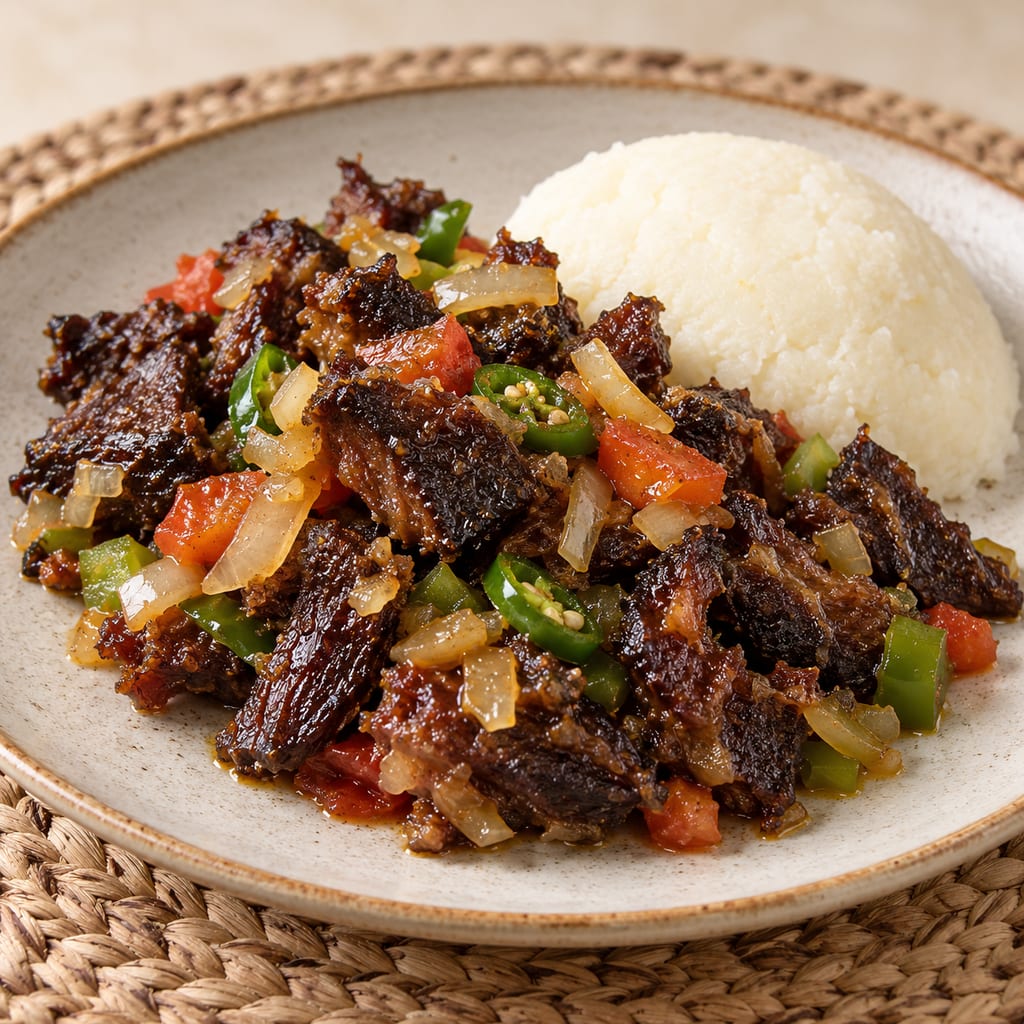
Alina Magano Johannes’s Oondhingu is a family dish from Onyaanya, Oshikoto, in northern Namibia: softened dried beef fried with vegetables and served with pap.
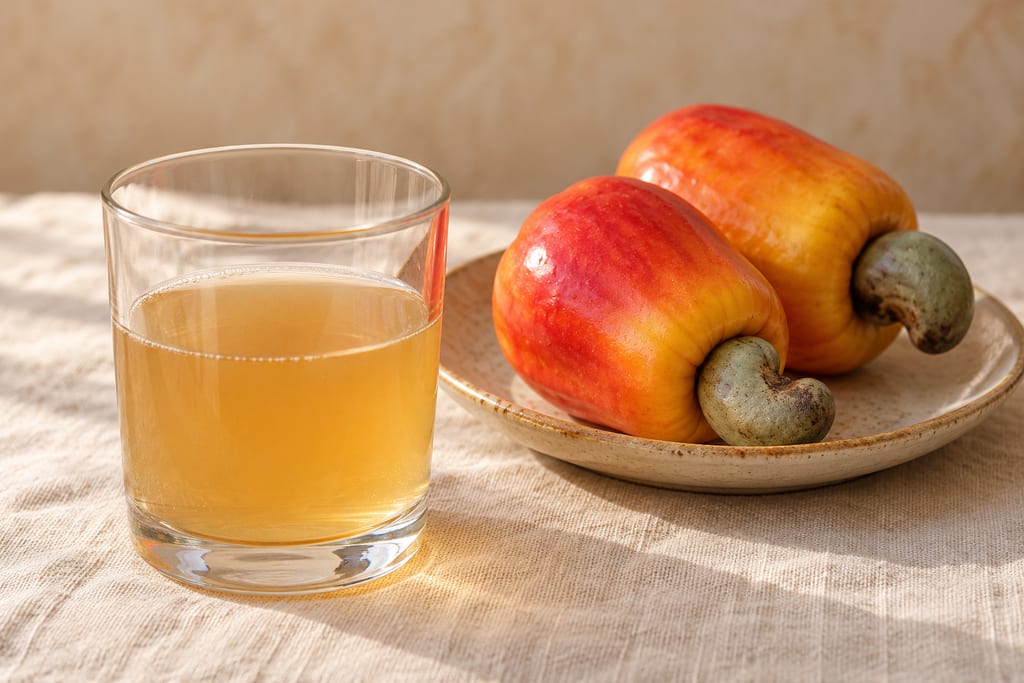
Vinho de caju is a seasonal alcoholic drink made from expressed cashew-apple juice. In southern Guinea-Bissau, an ethnographic account records a simple press-and-strain method, while harvest timing and local trade shape its place.
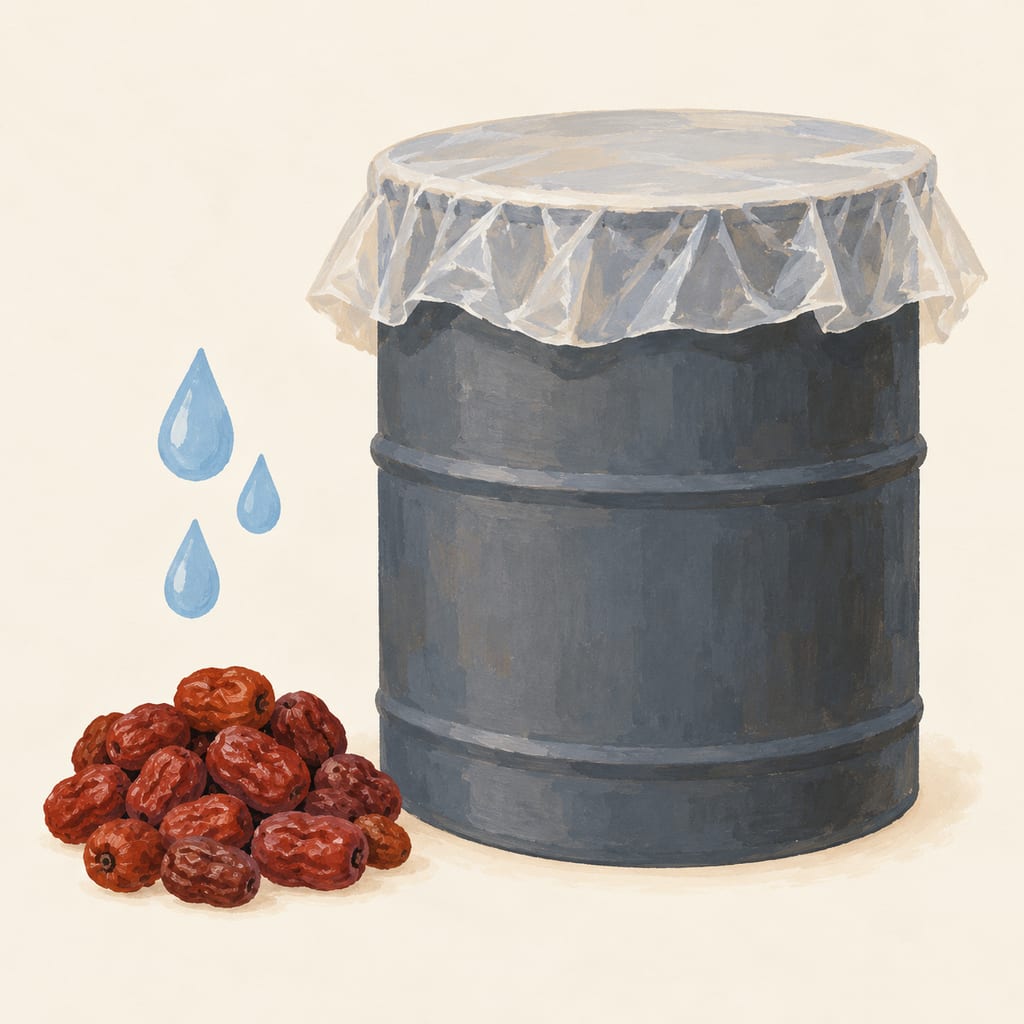
A Zimbabwean spontaneous ferment of dried masau fruit pulp used as a kachasu distillation base; the fermented pulp itself is not consumed.
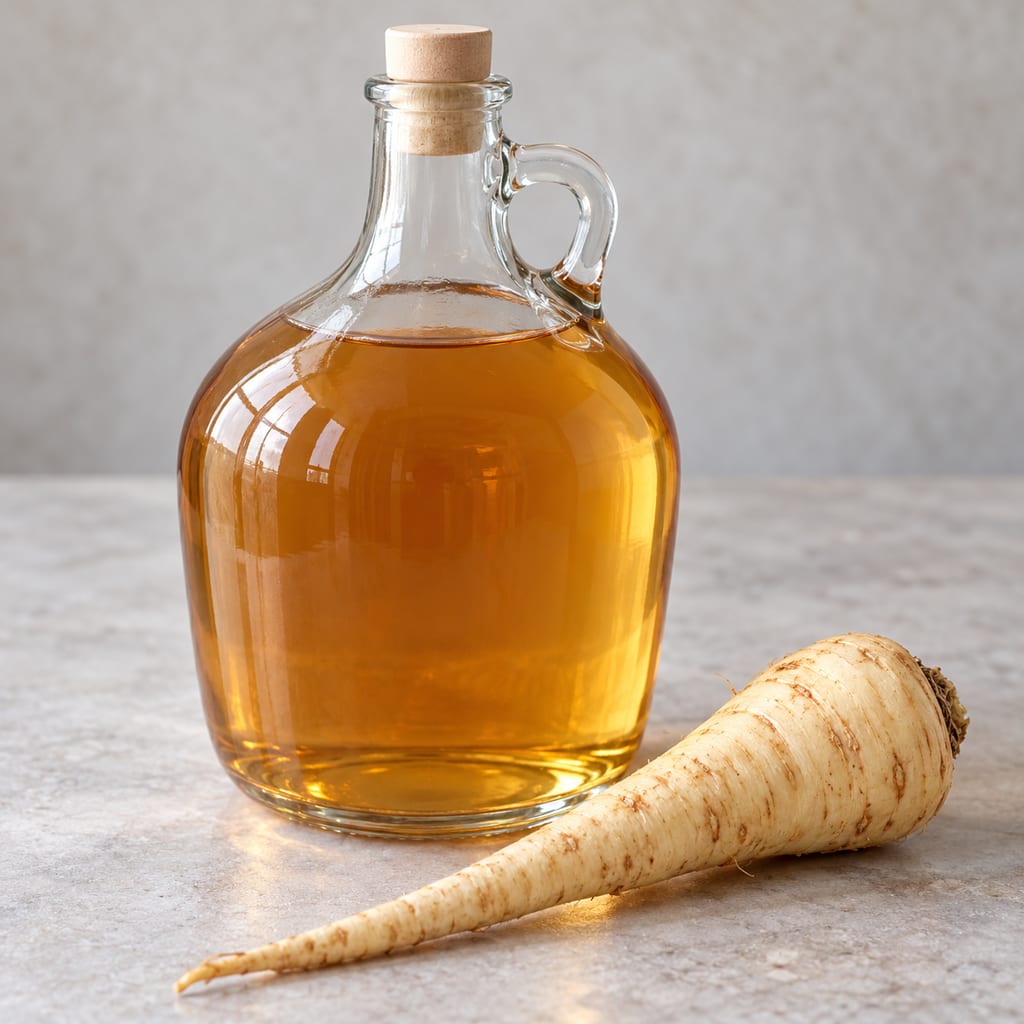
A root wine made from boiled parsnip liquor and lump sugar, fermented with yeast and finished with brandy before bottling.
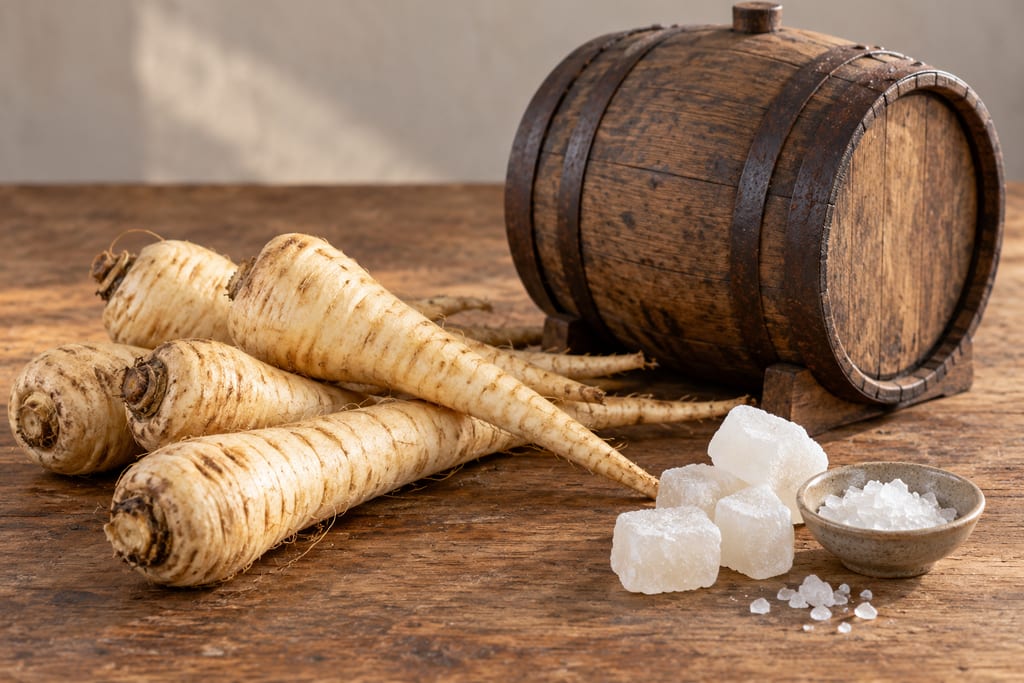
Parsnip liquor ferments with loaf sugar, crude tartar and fresh yeast, then matures in a cask for twelve months before bottling.
No community contributions have been published for this entry yet.
Sign in to contribute. Published comments and photos are free to read.
UNESCOHistory · Method
Oshituthi shomagongo, marula fruit festivalOshituthi shomagongo takes place between March and April and generally lasts two to three days; after Namibian independence in 1990 it developed into a more inclusive rotating celebration involving all eight Aawambo communities, and UNESCO inscribed it on the Representative List of the Intangible Cultural Heritage of Humanity in 2015.
Men prepare wooden drinking vessels, small serving gourds and implements made from cattle horns; women make or maintain the baskets and clay pots used for collecting and processing fruit; younger members harvest and learn by observation. Juice extraction is an occasion for exchanging news and transmitting songs, poems and social knowledge, and men recite historical narratives.
The documented Aawambo process ferments the juice for two to seven days. The account specifies no fruit-to-water ratio, added sugar, final pH, alcohol content, fermentation temperature or shelf life.
Cited in: What is omagongo?; History and cultural significance; Traditional preparation; Collect ripe fruit; Prepare the processing equipment; Open the fruit and extract the juice; Transfer the juice to the fermenting vessel; Allow fermentation; Separate and serve; Regional variations; How omagongo is consumed
Namibia National Heritage CouncilHistory
Intangible heritageNamibian heritage recognition and context for the marula festival.
Cited in: History and cultural significance
Journal of Ethnic FoodsScience · History
Traditional fermented foods and beverages of NamibiaTraditional fermented foods and beverages of Namibia, 2017: regional production and the limits of the existing research.
Cited in: Regional variations; Safety and storage
ScienceDirectScience
The effect of temperature and time on the quality of naturally fermented marula juiceThe effect of temperature and time on the quality of naturally fermented marula juice: fermentation duration and the wide variation in alcohol produced.
Cited in: How the fermentation works; Recognising fermentation and identifying problems; Safety and storage
FEMS MicrobesScience
The marula and elephant intoxication myth: assessing the biodiversity of fermenting yeasts associated with marula fruitsYeast genera identified on naturally fermenting marula fruit include Saccharomyces, Pichia, Hanseniaspora and Brettanomyces; different fruit trees carry different microbial communities, and yeasts on mature fruit enter the juice during harvesting, peeling and extraction.
Cited in: The fruit and its biology; How the fermentation works
University of LimpopoScience
Characterisation of the microorganisms and determination of the chemical constituents of Marula brews during fermentationMicrobial succession and fermentation chemistry of marula brews, 2019: Saccharomyces cerevisiae, several non-Saccharomyces yeasts, lactic acid bacteria and acetic acid bacteria, producing lactic acid, acetic acid, higher alcohols and esters.
Reported sugar concentrations in marula fruit reaching approximately 16 degrees Brix depending on season and growing conditions, which measures soluble solids rather than guaranteeing 16% fermentable sugar.
Cited in: The fruit and its biology; How the fermentation works; Recognising fermentation and identifying problems