A reading and a record answer different questions
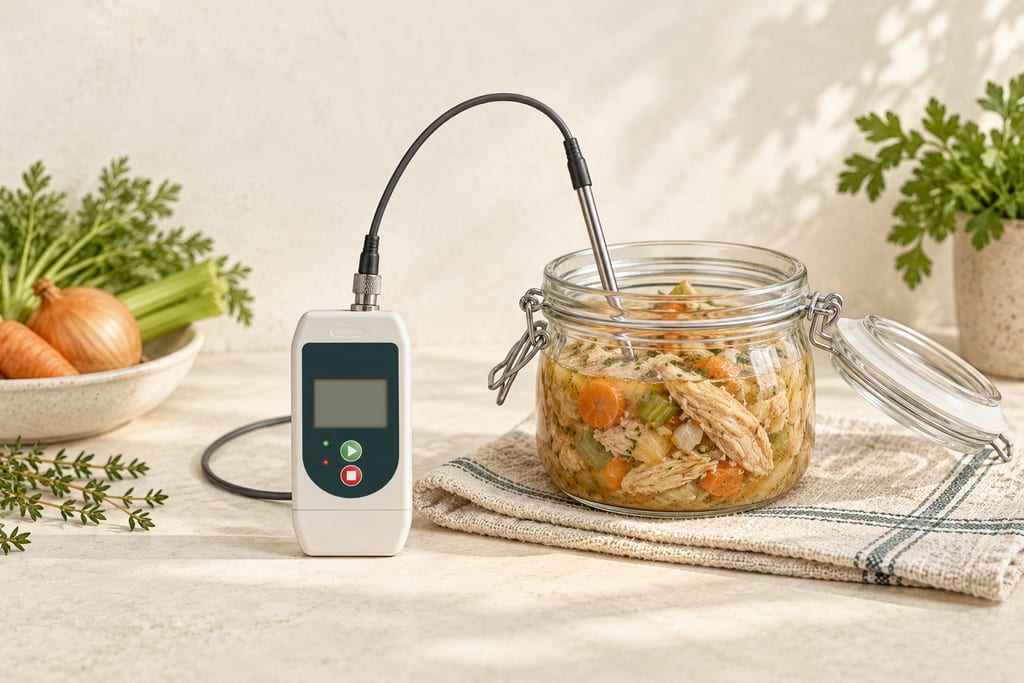
A food thermometer reports temperature at its sensing point. A data logger takes readings at intervals and stores them with time information, creating a trace of conditions during storage, transport, heating or cooling. Some devices combine a display, probe and recorder; others log ambient temperature or require later download. The name alone does not tell you what the sensor measures or how often it records.
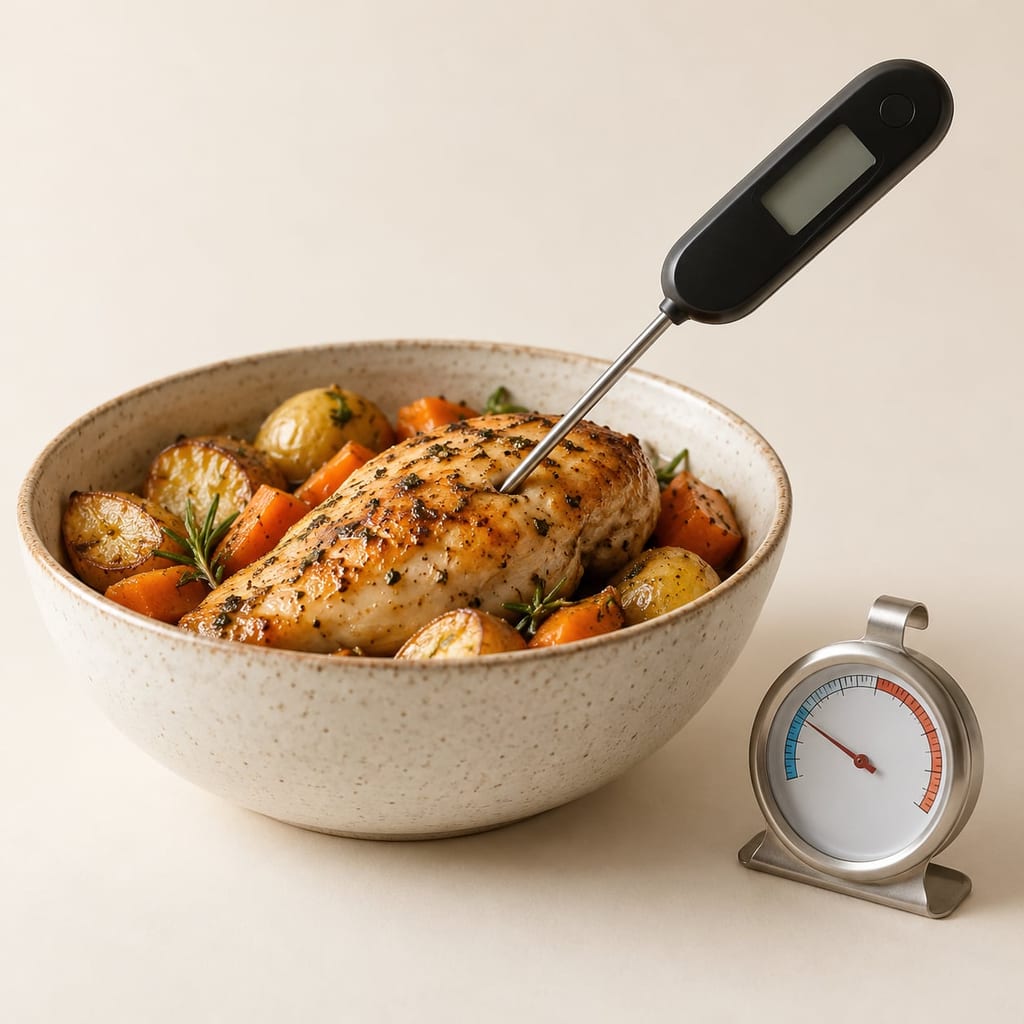
This page focuses on the logger’s time series. A separate [food thermometer and refrigerator thermometer page](/equipment/food-thermometer-refrigerator-thermometer) explains spot readings in food and appliance air. A logger supplements such checks when a process requires a record over time; it does not automatically replace a probe thermometer used to check the centre of a particular food.
Sources for this section
Where the sensor sits matters
A record is meaningful only if the sensor represents the condition being evaluated. Air in a refrigerator or cooler can change faster than the temperature inside a food, and the centre of a thick product may heat or cool at a different rate from its surface. A logger placed on a shelf records conditions at that point; a probe placed in a product records the probe’s local temperature. The monitoring plan should specify the location, product or surrogate, interval and response when readings fall outside the established limits.
FDA’s seafood-processing guidance describes thermometers and continuous temperature recorders, including data loggers, as possible ways to monitor a cooling process. It presents these as options within a processor’s established hazard-control plan, not as a universal recipe. Its example limits and schedules apply to their stated context and should not be copied to unrelated foods or home preservation.
Sources for this section
Accuracy, records and limits
Before relying on a device, establish that its range and probe suit the intended conditions, and check its accuracy using the manufacturer’s instructions and a suitable reference. FDA guidance calls for checking temperature-indicating and recording devices before service and describes calibration against a known accurate reference; the exact procedure and frequency depend on the device and its use. A logger’s timestamp, interval, memory, battery, alarms and download method also affect whether the record is complete and interpretable.
A trace can reveal excursions that a single reading misses, but it cannot show an unmeasured product’s exact core temperature unless the sensing arrangement supports that inference. It does not prove a product is safe, establish pH or water activity, or validate a preservation process by itself. NIST’s cited logger study concerns vaccine monitoring, not food; it is useful here only as a reminder that instrument calibration stability is a measured, application-specific question.
Sources for this section
History
Current government food-safety guidance documents thermometers and continuous temperature-recording devices. These sources establish present use, not an invention date or single design.
Equipment details
CapacityNot applicable to a measuring instrument; sampling capacity varies by logger model.
SizeNo standard dimensions apply across thermometer and logger designs.
PowerElectric Electronic loggers use battery or mains electricity depending on model; exact power and recording duration vary.
How you get oneBought, manufactured Commercially manufactured instruments; selection, calibration and suitability depend on intended food and operating conditions.
Made of
- Temperature sensor and probe or housing — Detect temperature
Sensor design and probe configuration vary by model; some loggers measure ambient air while others use an external probe. - Electronic recorder, clock and memory — Store readings over time
Digital logger functions and export methods vary; not every logger displays readings or has an alarm.
Places
United States
Documented use · Country evidenceCountry-level association reflects federal FDA guidance describing continuous time-temperature data loggers in specified food-process monitoring examples; it does not claim invention or exclusive use.