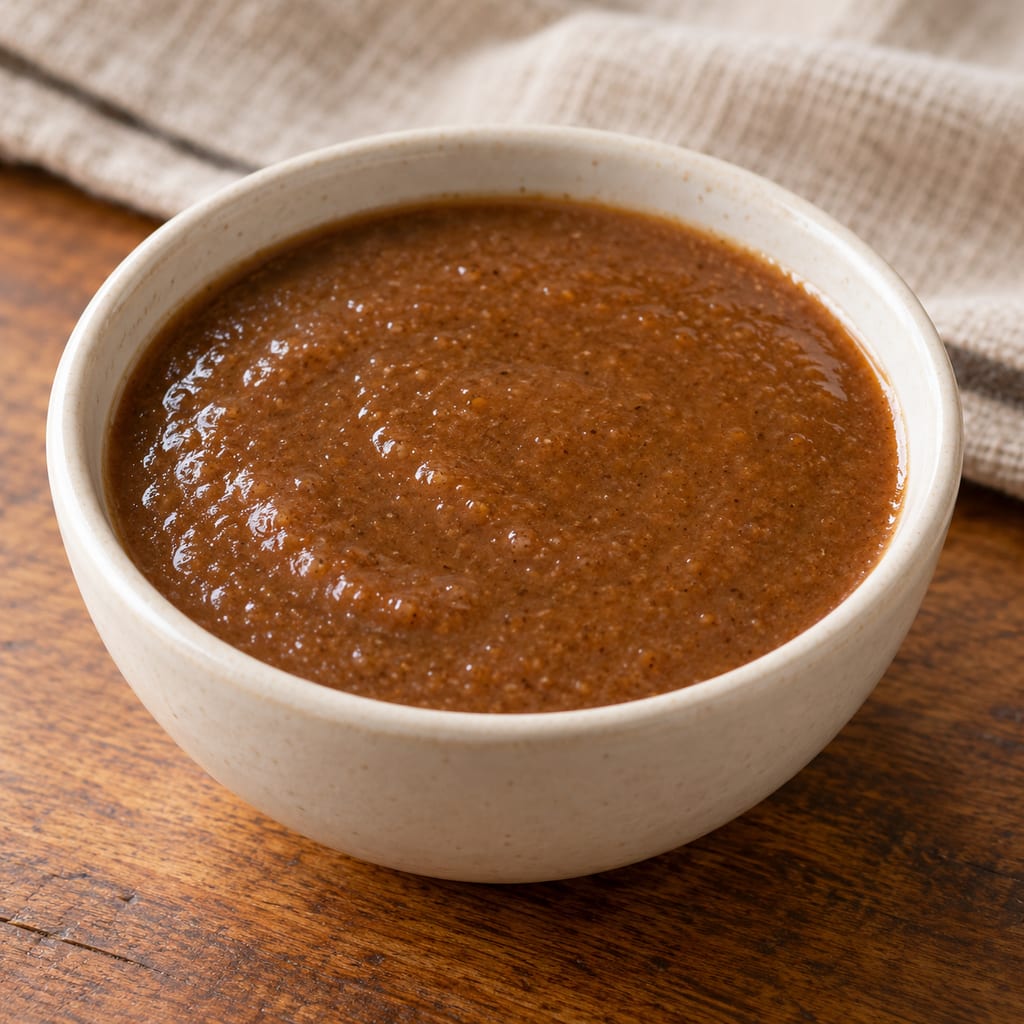
Lechon sauce, often called sarsa ng lechon in Filipino, is a sweet, sour and savoury sauce associated with roasted pork. A characteristic version combines liver, vinegar, sugar, breadcrumbs and aromatics into a thick brown gravy-like accompaniment.
The recipe here uses canned liver pâté or liver spread rather than fresh liver.
That makes the preparation simpler, because the canned product has already been processed and can be mixed directly into the sauce.
The principal process is cooking and thickening. The finished sauce is not fermented.
It combines browned garlic and softened onion with a liquid mixture containing liver spread, vinegar, water, sugar and breadcrumbs.
The resulting texture should be smooth enough to spoon or pour, but substantial enough to coat roast meat.
Cebu lechon is famous for seasoning the pig itself with aromatics.
Lemongrass, garlic, scallions, salt and other ingredients may be used during roasting.
The result is often eaten without a thick liver sauce.
A vinegar-based dipping condiment may be preferred instead.
This creates a meaningful regional distinction.
The Luzon liver-sauce tradition emphasises a rich brown accompaniment.
The Cebu style often allows the strongly seasoned roasted meat to remain the centre of attention.
Neither practice is universal across all households.
Different producers and families combine elements of both traditions.
For the Fermentea database, the present recipe should be geographically associated with Filipino lechon sauce generally, while recognising its particularly strong association with Luzon-style serving.
Traditional homemade versions may use fresh pork or chicken liver.
Those versions require appropriate cooking and blending.
The canned-spread recipe avoids that separate raw-liver preparation.
It should not be casually rewritten to use raw liver without adding suitable validated cooking instructions.
Raw liver can carry foodborne pathogens.
The canned product has already undergone a manufacturer's preservation process, but the finished sauce becomes a new perishable mixture when the can is opened and combined with other ingredients.
The canned status of one ingredient does not make the entire homemade sauce shelf-stable.
1. Prepare the liver mixture. Open one 4 oz can of liver pâté or spread.
2. Add the liquids. Mix the liver spread with ⅓ cup vinegar and 1 cup water.
3. Add the dry ingredients. Incorporate ⅓ cup sugar, ⅓ cup breadcrumbs, 1 teaspoon salt and ⅓ teaspoon black pepper.
4. Prepare the aromatics. Mince the garlic and finely chop the onion to provide 1 tablespoon garlic and 2 tablespoons onion.
5. Heat the oil. Place 2 tablespoons cooking oil in a small saucepan.
6. Brown the garlic. Sauté until the source's desired browned stage is reached, avoiding uncontrolled burning.
7. Soften the onion. Add the onion and cook until translucent.
8. Add the liver mixture. Transfer the prepared liquid and breadcrumb mixture into the saucepan.
9. Bring to the boil. Stir appropriately to distribute the ingredients and prevent sticking.
10. Simmer until thickened. Reduce the heat and continue until the desired sauce consistency is reached. The source does not specify a numerical simmer duration.
11. Serve. The source recommends the sauce with roast pork or beef.
The original recipe provides no measured final yield or shelf-life guidance.
The consulate page presents lechon sauce as a Filipino accompaniment for roast pork and says its example sauce is made with liver, vinegar and sugar. The cited recipe specifically uses canned liver pâté or spread; the page does not date this formula.
The source gives no simmer duration, measured endpoint or storage guidance; do not treat thickening as a preservation control.
Prepare the liver mixture. Open one 4 oz can of liver pâté or spread.
Add the liquids. Mix the liver spread with ⅓ cup vinegar and 1 cup water.
Add the dry ingredients. Incorporate ⅓ cup sugar, ⅓ cup breadcrumbs, 1 teaspoon salt and ⅓ teaspoon black pepper.
Prepare the aromatics. Mince the garlic and finely chop the onion to provide 1 tablespoon garlic and 2 tablespoons onion.
Heat the oil. Place 2 tablespoons cooking oil in a small saucepan.
Brown the garlic. Sauté until the source's desired browned stage is reached, avoiding uncontrolled burning.
Soften the onion. Add the onion and cook until translucent.
Add the liver mixture. Transfer the prepared liquid and breadcrumb mixture into the saucepan.
Bring to the boil. Stir appropriately to distribute the ingredients and prevent sticking.
Simmer until thickened. Reduce the heat and continue until the desired sauce consistency is reached. The source does not specify a numerical simmer duration.
Serve. The source recommends the sauce with roast pork or beef.
Places
Philippines
Documented preparation · Country evidence
The consulate page places lechon sauce in its Filipino sauces section and pairs it with roast pork or beef; this is not an origin claim for the exact formula.
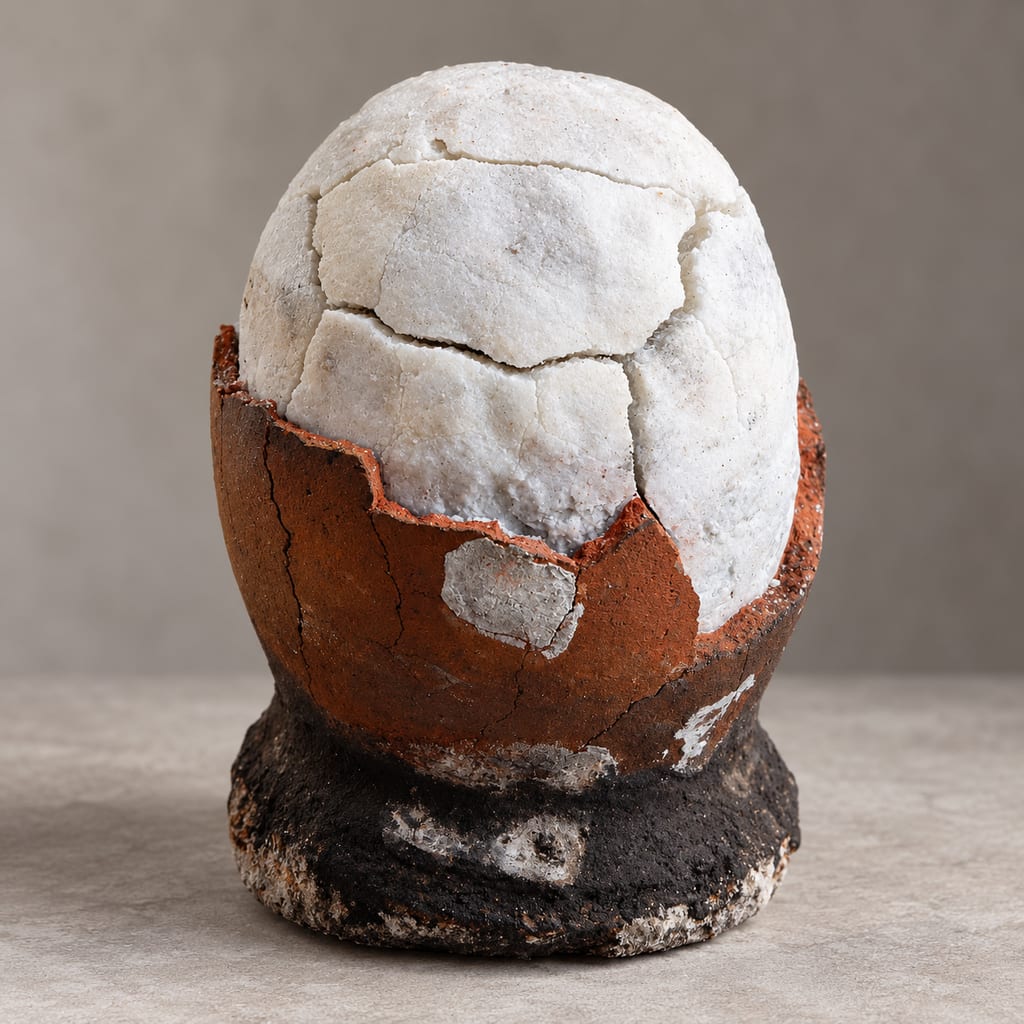
Asin tibuok is a Boholano salt-making craft that turns seawater-soaked coconut husks into a salt-rich ash, brine and formed sea salt in specialized clay pots. This record follows one published account of the community process; it is not a validated household formula.
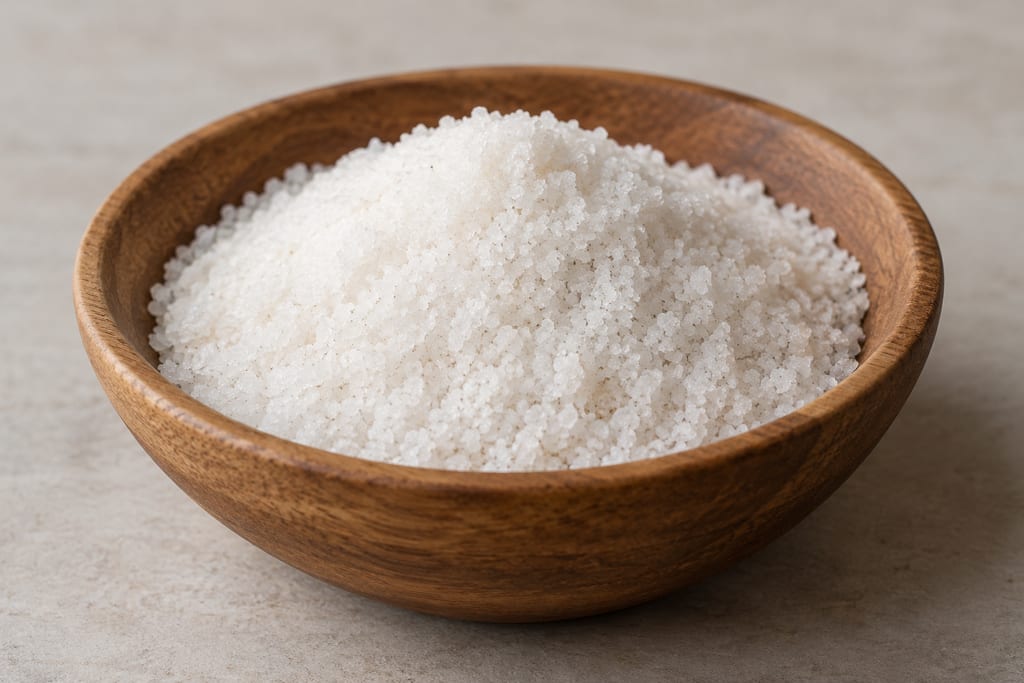
Asin sa buy-o is a fine sea salt made in Panayunan, Botolan, and packed in a woven nipa pouch called a buy-o. Salt-bearing coastal earth is leached with seawater, and the brine is boiled to crystals.
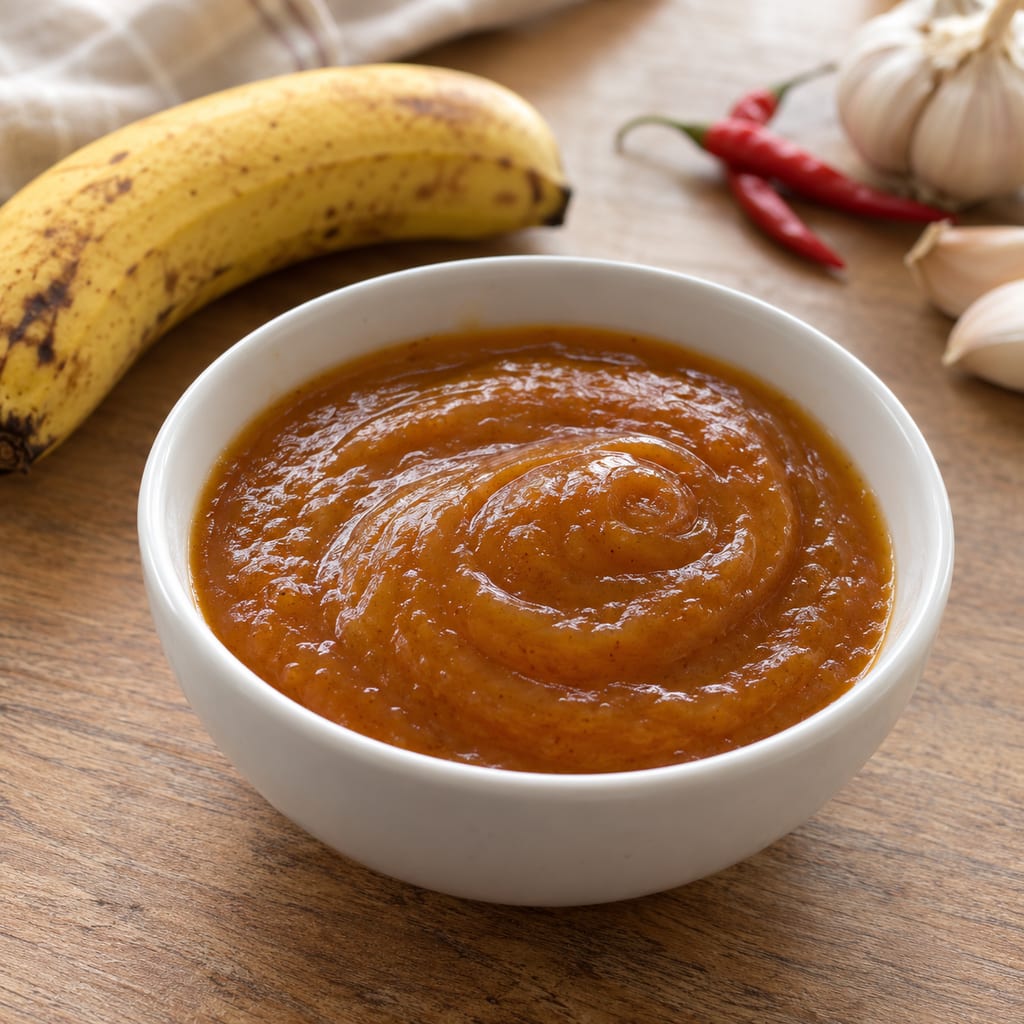
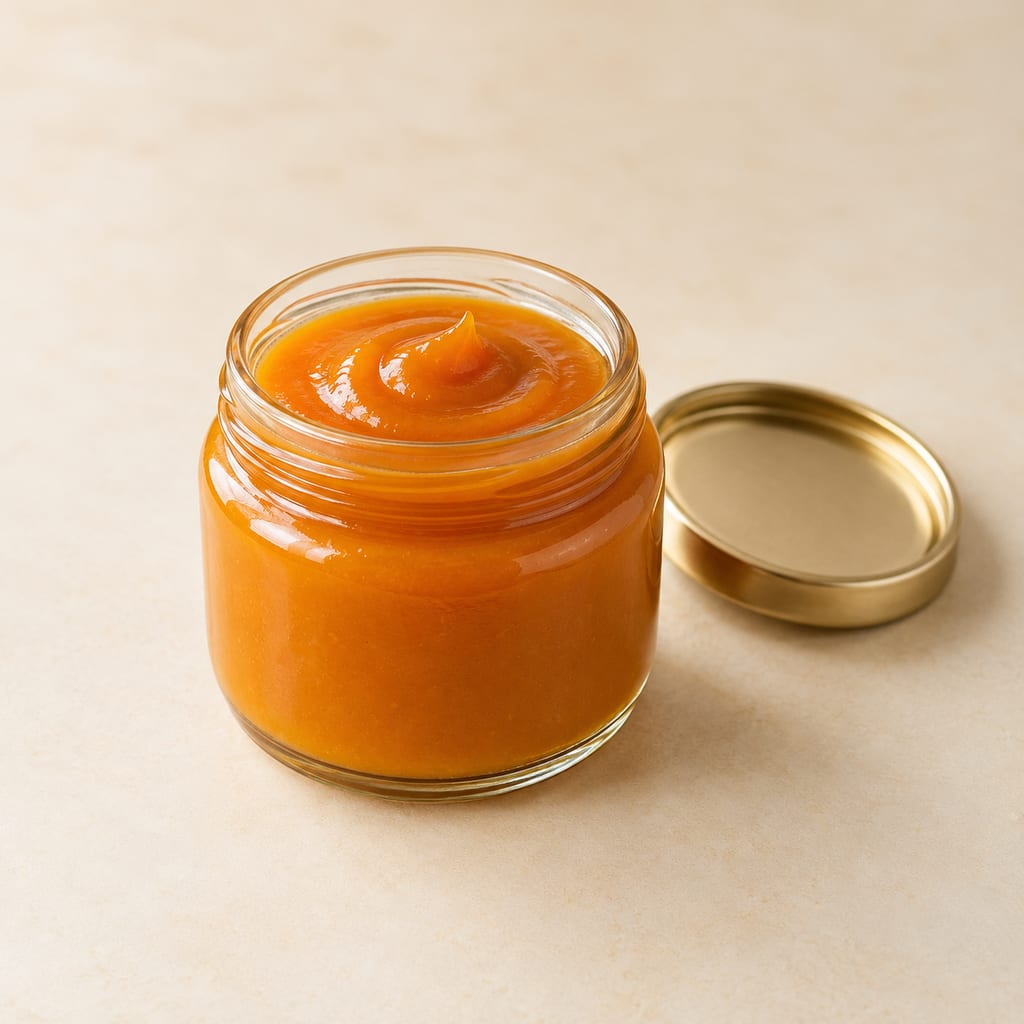
A sweet-hot table sauce of ripe banana simmered with vinegar, sugar, onion, garlic and fresh chilli, in the manner of Philippine banana ketchup. An untested development batch of about 500 g.
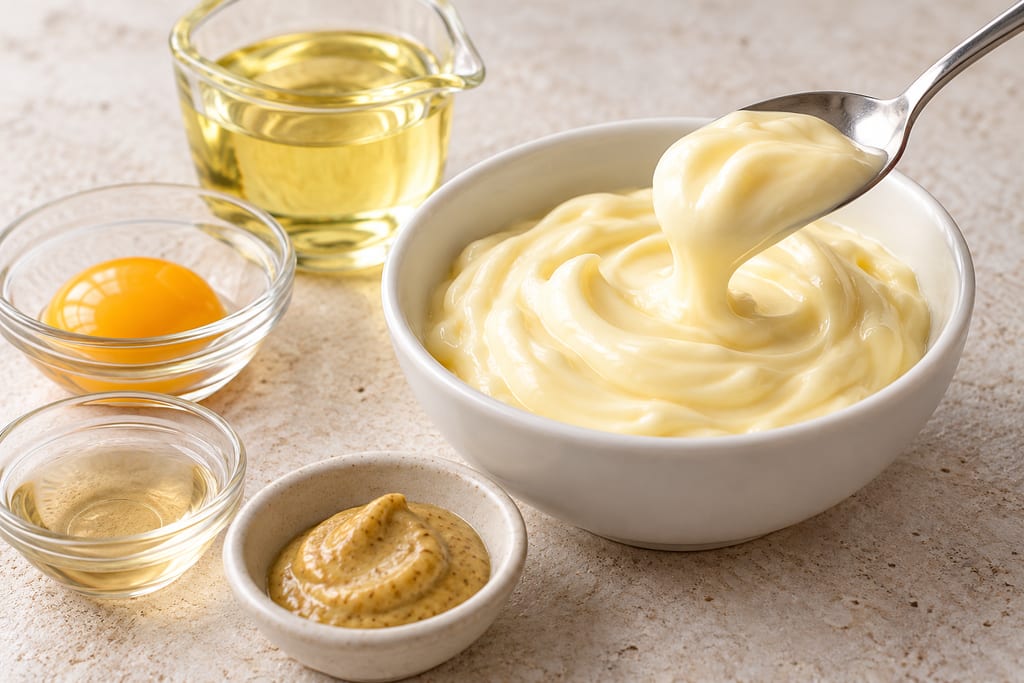
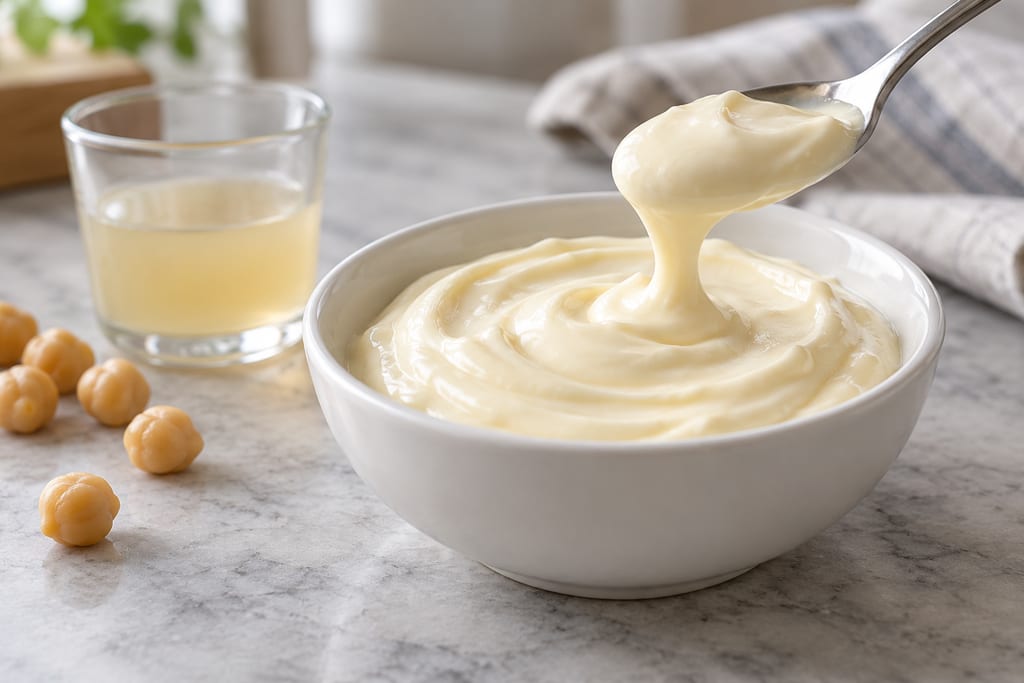
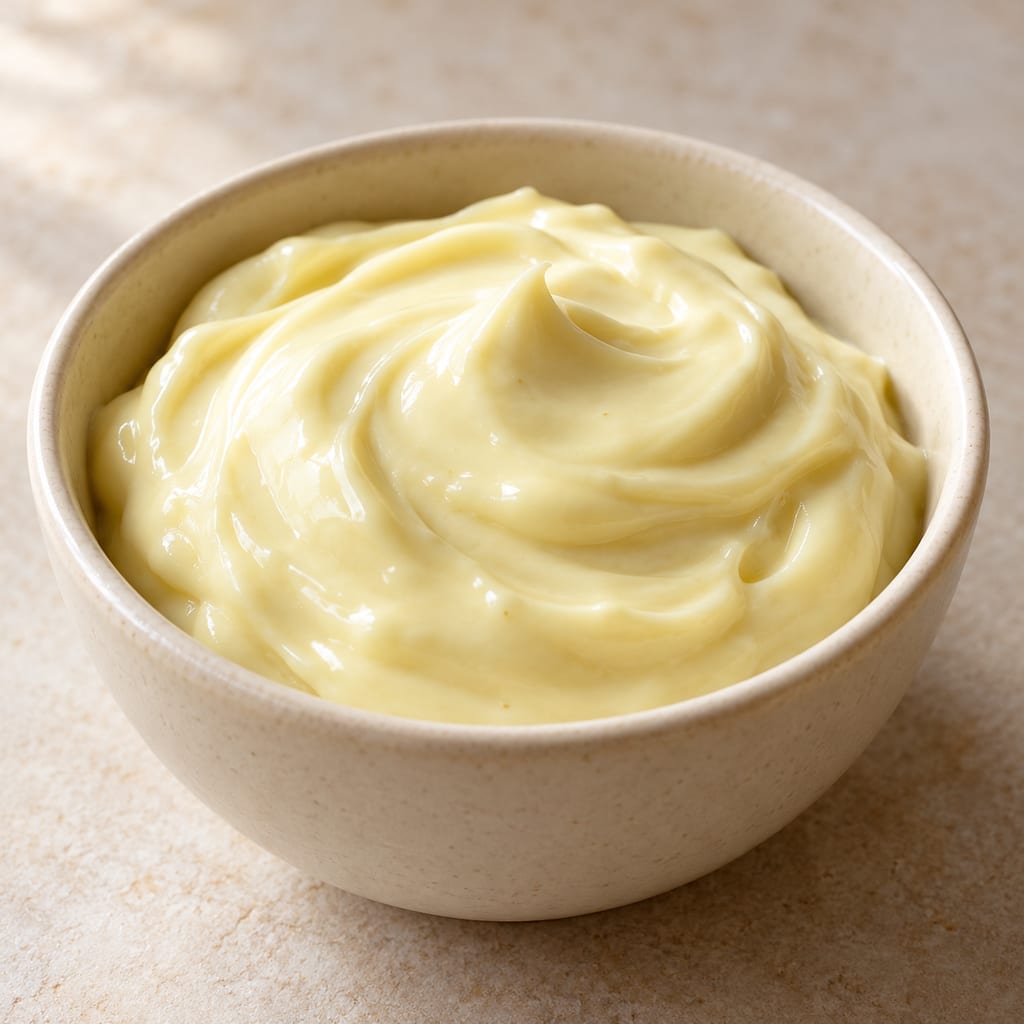
A plain mayonnaise of 200 g refined neutral oil emulsified into pasteurised yolk, vinegar, water and a little Dijon mustard: a clean base for tasting, comparing and flavouring.
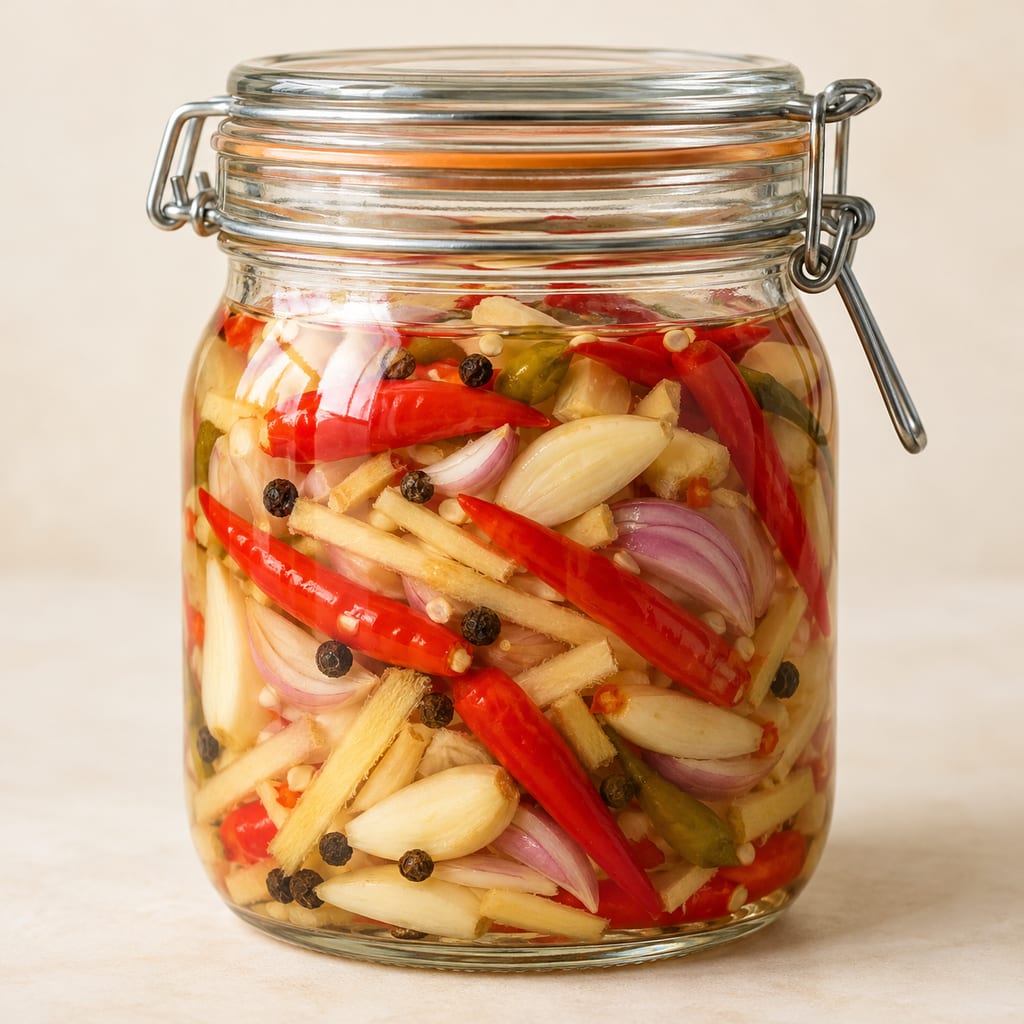
Sinamak is a Philippine spiced vinegar: white, cane or coconut vinegar steeped with chilies, ginger, garlic, onion and peppercorns for days or weeks until it is ready to use as a condiment.
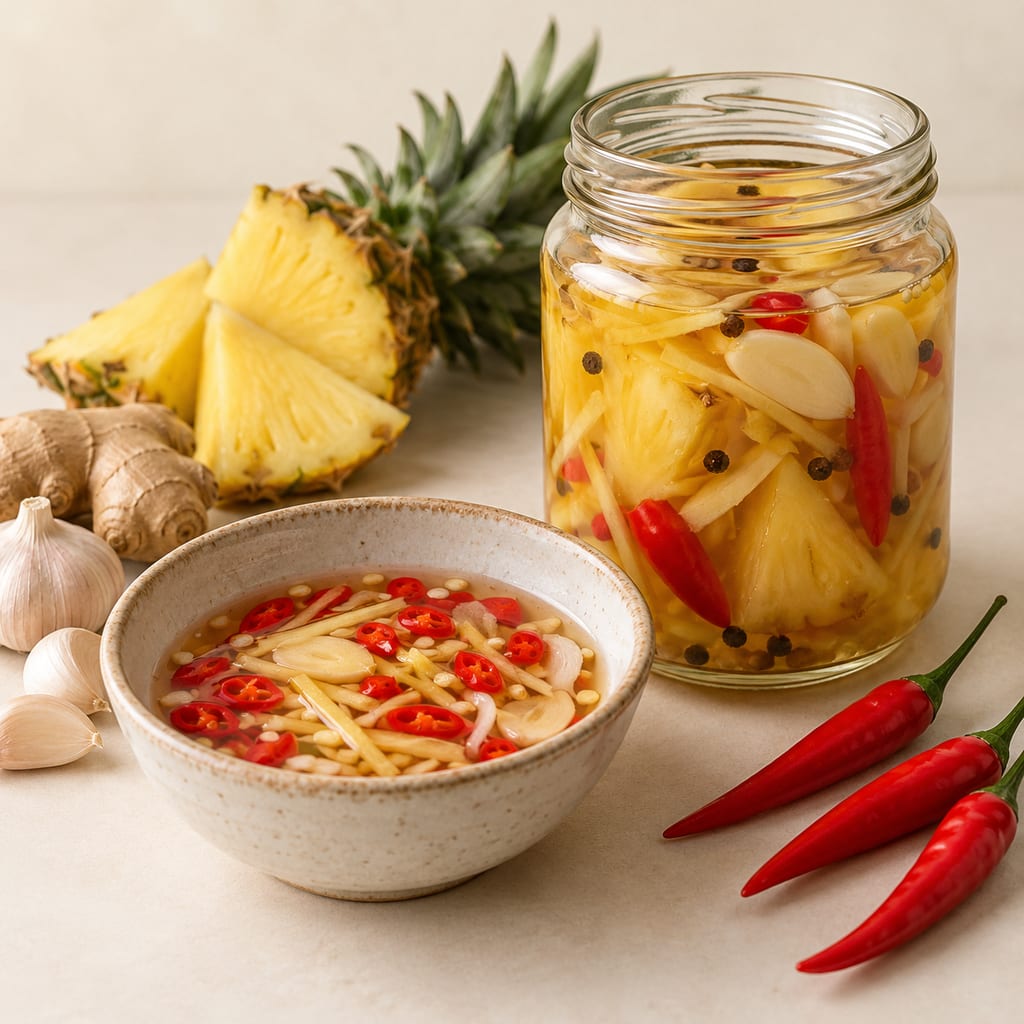
Filipino vinegar dips: vinegar steeped or mixed with chilli, garlic, ginger and other aromatics, from the pineapple sinamak of Iloilo to coconut-vinegar sawsawan. Not a single formula.
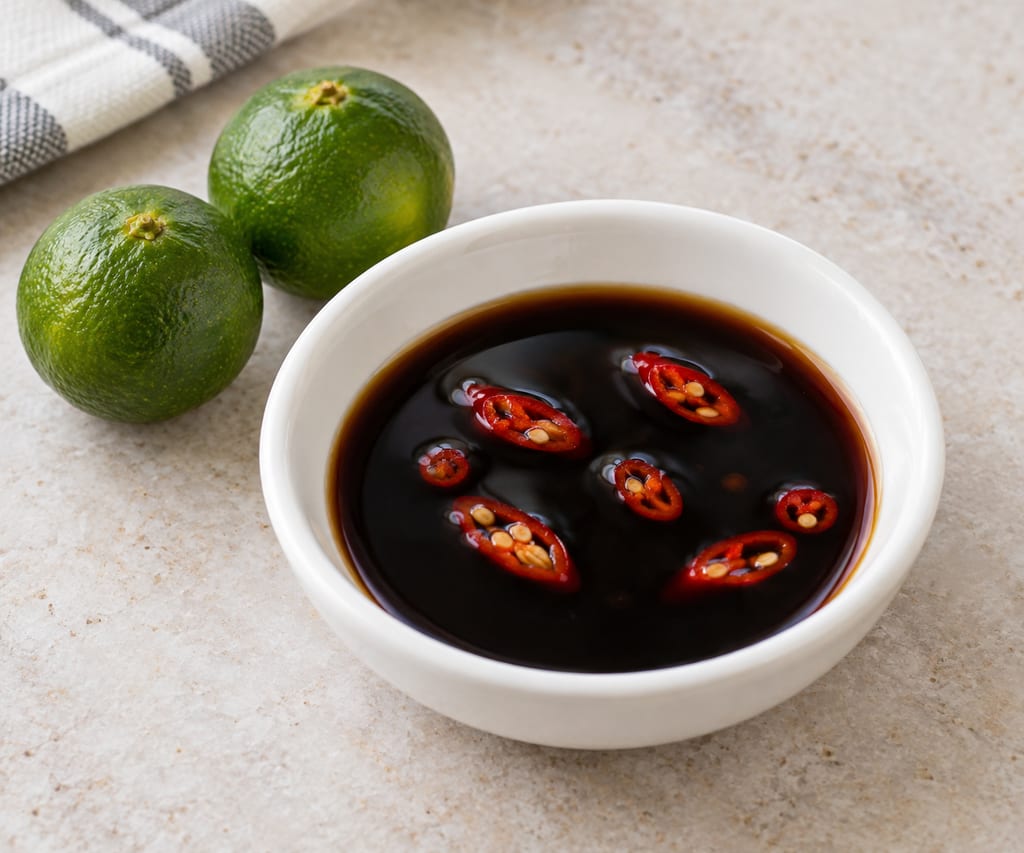
Toyomansi is a Filipino table dip of soy sauce and calamansi juice, served with grilled or fried foods; this version adds sliced chilli and optional sugar.
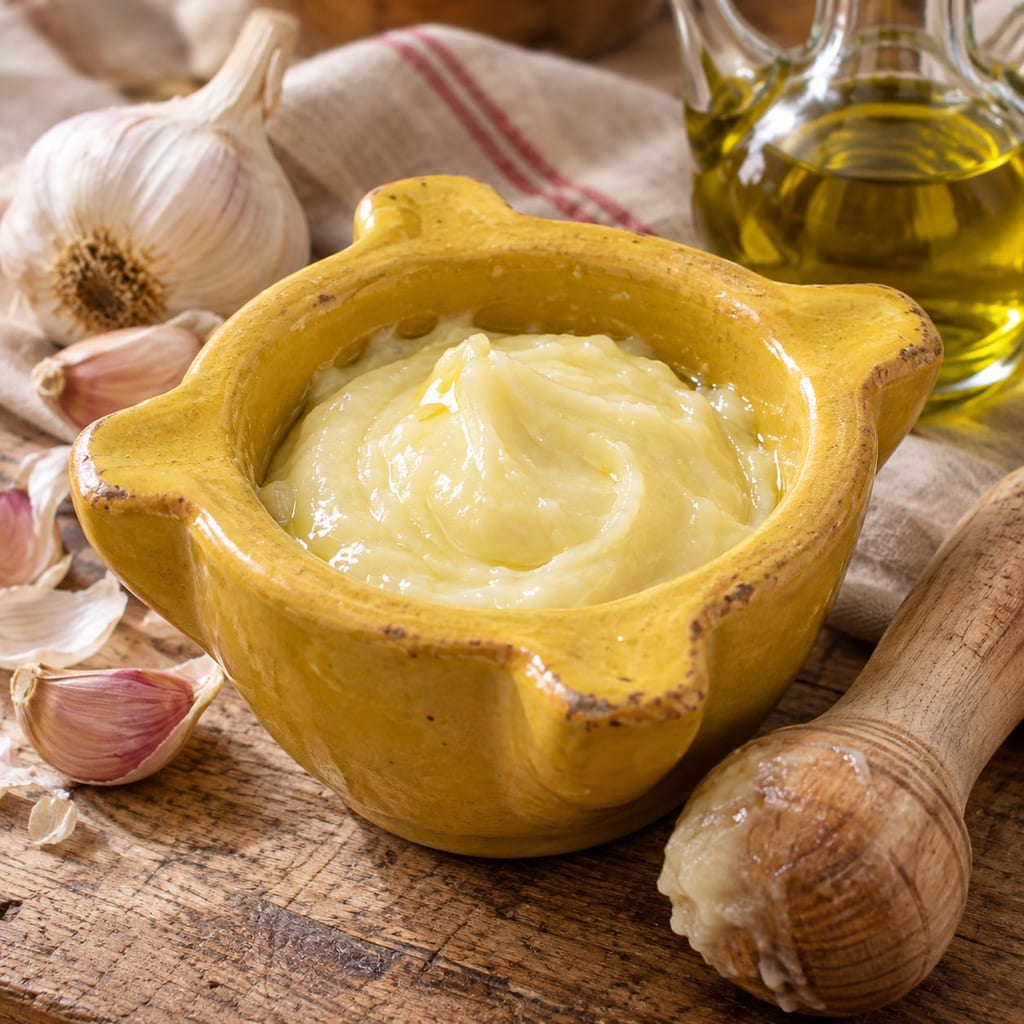
Traditional Catalan allioli is a dense emulsion of garlic, olive oil and salt made slowly in a mortar. This measured Barcelona-style version keeps egg-based garlic mayonnaise distinct.
Avocado-oil mayonnaise is an ordinary egg-and-oil emulsion in which avocado oil supplies the oil phase. The oil changes flavour and colour, and it does not preserve the sauce.
Bechamel is a white sauce of milk thickened with a butter and flour roux, one of the French mother sauces, and the base from which Mornay and other cheese and cream sauces are made.
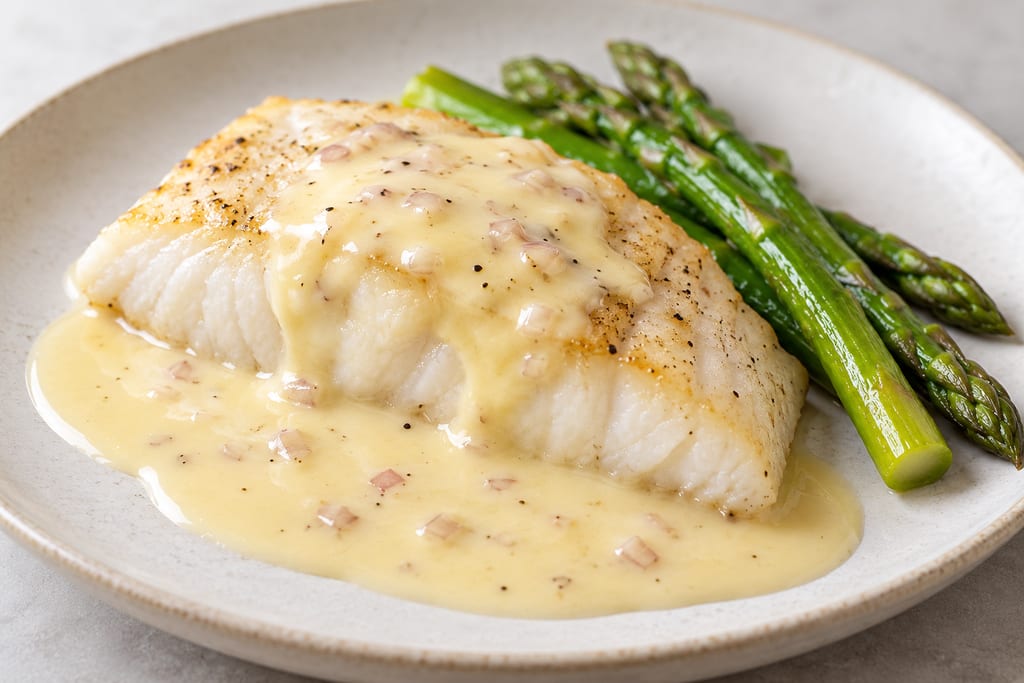
Beurre blanc is a warm emulsion of cold butter whisked into a reduction of white wine, vinegar or lemon juice and shallot, a sauce from the Loire Valley and its red-wine version, beurre rouge.
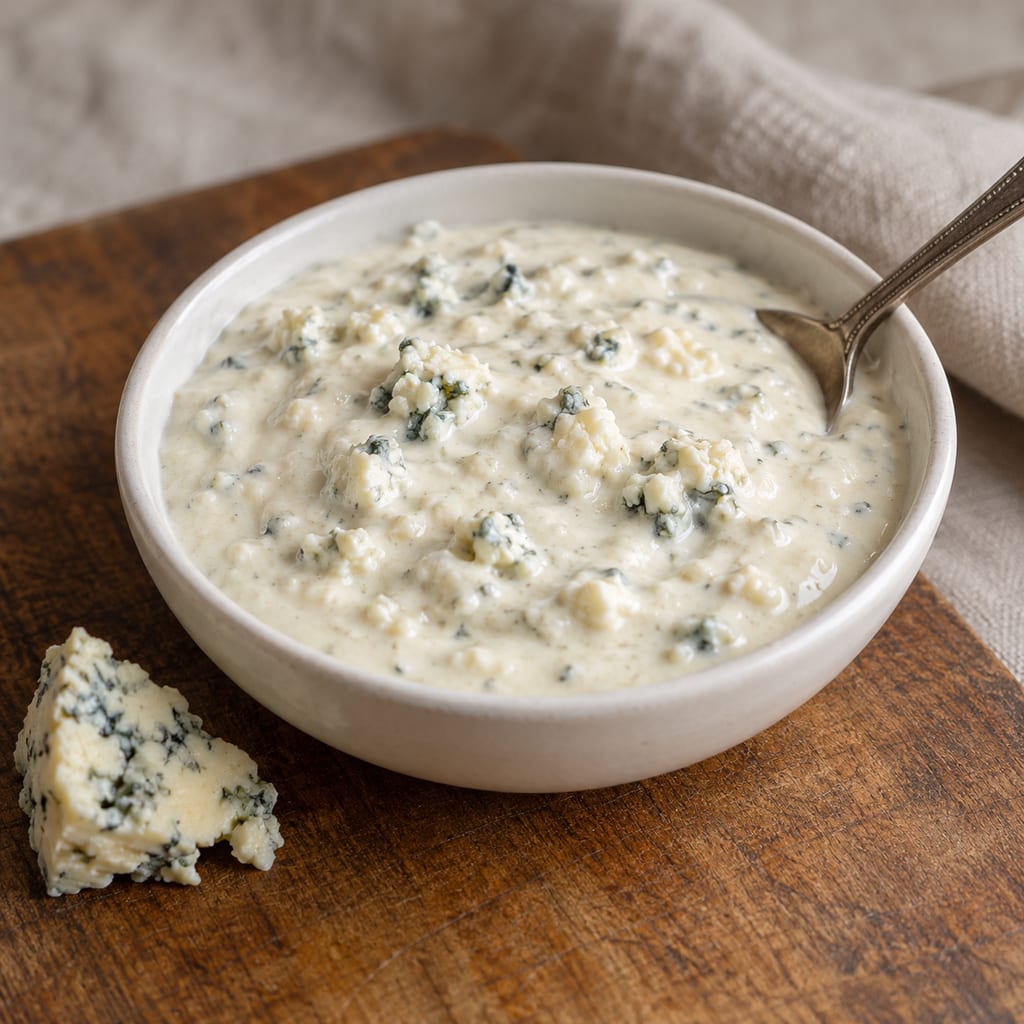
Blue cheese dressing is a creamy dressing built on crumbled blue cheese mashed into buttermilk, with sour cream, mayonnaise, vinegar and seasoning, and kept cold for up to two weeks.
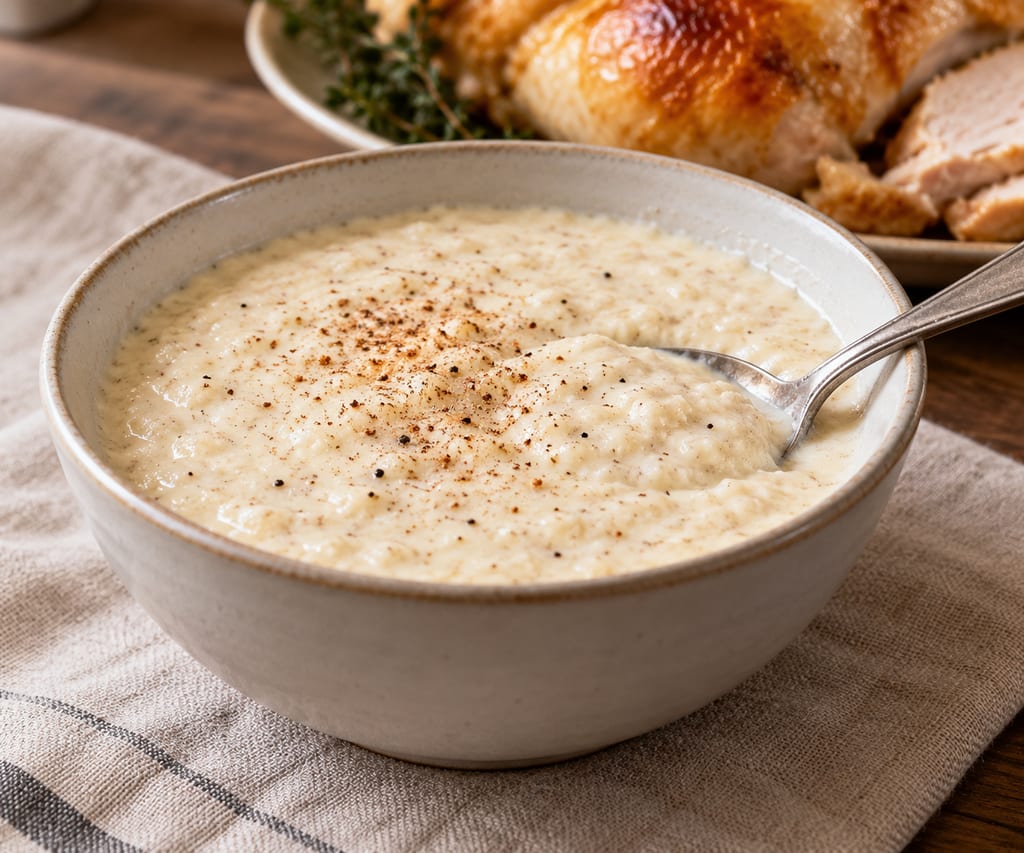
Bread sauce is a British sauce of milk infused with onion, clove and bay, thickened with stale breadcrumbs and finished with butter, served with roast chicken or turkey.
Community
No community contributions have been published for this entry yet.
Share what you made
Sign in to contribute. Published comments and photos are free to read.
Current page lines 89–113: lechon context, stated accompaniment, ten ingredient quantities and the complete mix/sauté/boil/simmer method. Footer lines 243 identifies 2020 copyright, not recipe publication date. No time, yield, measured temperature or storage is stated.
Cited in: Overview; The place of lechon in Filipino food culture; Luzon and the liver-sauce tradition; The history of Mang Tomas; Cebu and different serving traditions; Ingredients — official consulate recipe; Why liver is used; Canned liver spread versus fresh liver; The role of vinegar; Why sugar is prominent; Breadcrumbs as a thickener; Aromatic foundation: garlic and onion; The documented cooking method; How the sauce thickens; How it is eaten; Lechon paksiw; Variations; Quality and troubleshooting; Safety and storage