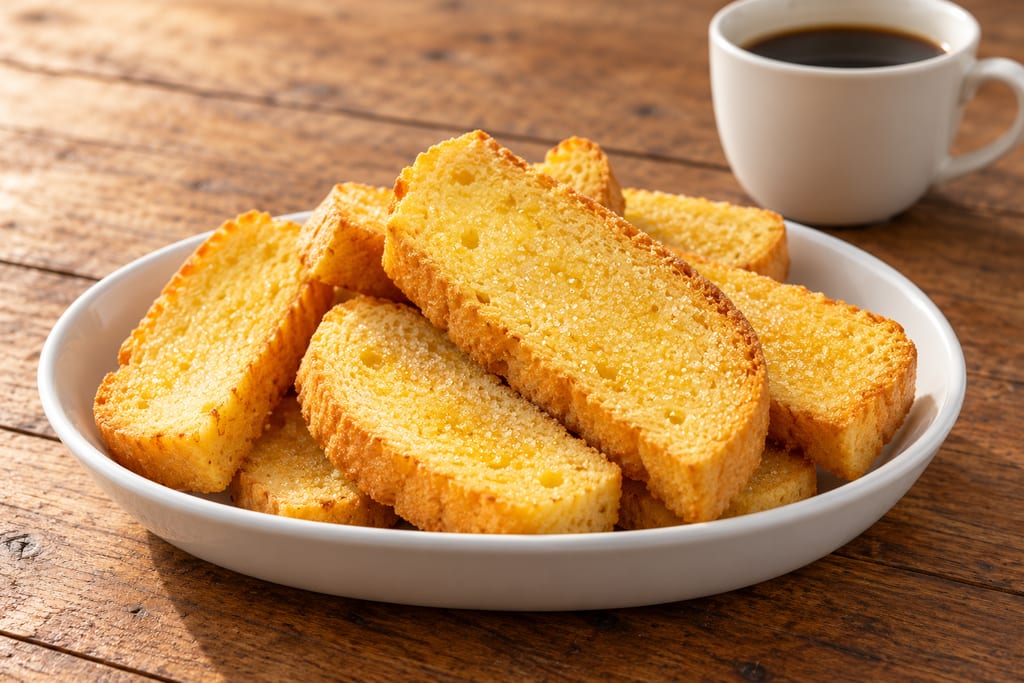
Biscocho de Iloilo: butter-and-sugar PagkainPinoy version
PagkainPinoy’s 24–30 piece version twice-bakes day-old soft bread with a thin butter-and-sugar coating.
 FermenteaWhere food goes to change
Traditional method
Suka at sawsawan · Sinamak · Sukang sawsawan · Sinamak nga pinya · Spiced vinegar dip
Filipino vinegar dips: vinegar steeped or mixed with chilli, garlic, ginger and other aromatics, from the pineapple sinamak of Iloilo to coconut-vinegar sawsawan. Not a single formula.
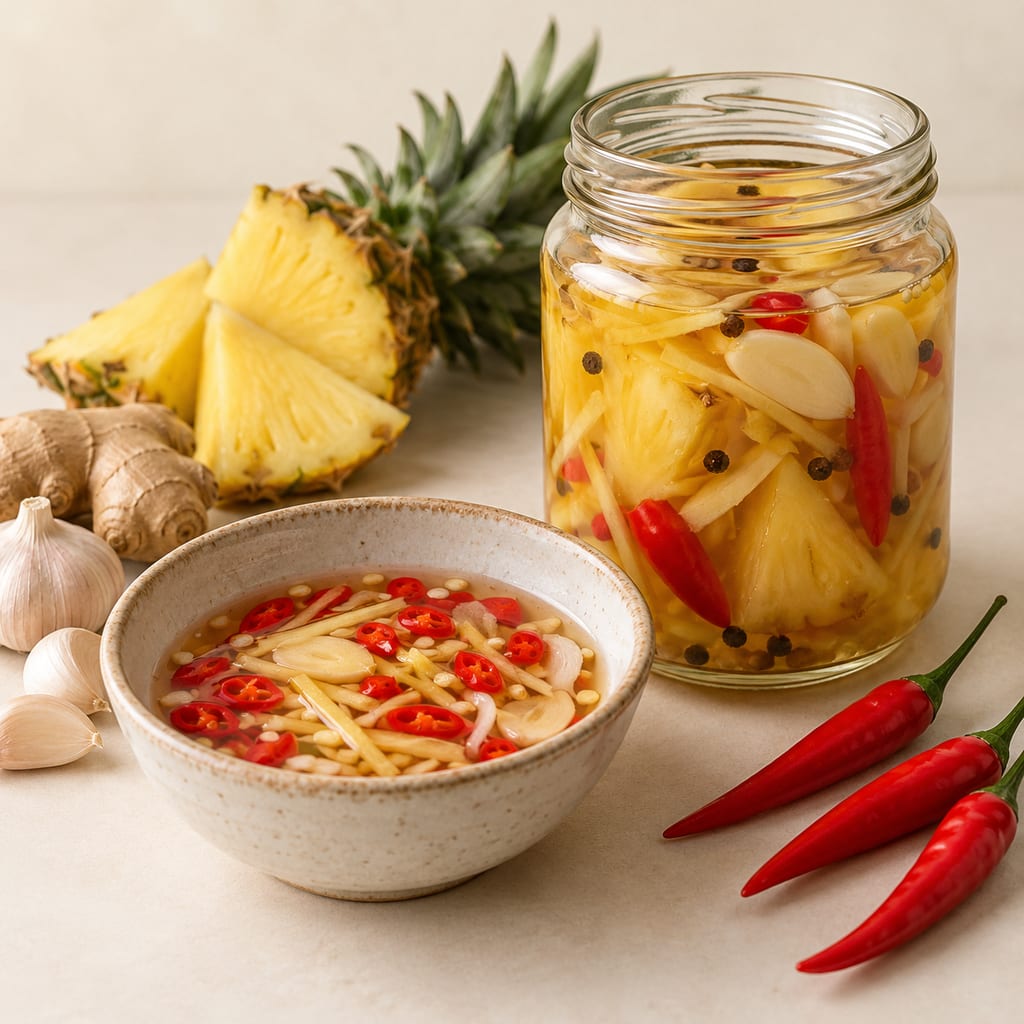
Suka is the Filipino word for vinegar, and sawsawan is the dipping condiment or table practice that uses it. The two words are not one dish. A sawsawan can be vinegar with chilli, garlic and ginger mixed in at the table, or vinegar that has been steeped with those aromatics for a longer time. This record covers the spiced vinegar family and the dip-making that follows from it, and treats the vinegar itself as an upstream product.
The evidence does not support one national sinamak formula. Wikipedia describes sinamak as a Visayan spiced vinegar pickled with chillies, langkawas, garlic, peppercorns and white onion for at least three days. The same entry lists the simplest dips as vinegar with chilli (sukang may sili) or with soy sauce (sukang may toyo). Those are the household baseline. The regional names and ingredient lists below show how far the family varies.
The most specific documented variant is sinamak nga pinya, a pineapple-infused vinegar made in Barangay Agtambo, Passi City, Iloilo. The Cultural Mapping of Panay and Guimaras project describes pineapple, garlic, ginger and chilli added to vinegar, with the mixture kept in reused glass bottles. Local residents tie the practice to pineapple growing, and the mapping describes it as learned by observation across generations. The mapping gives the origin as a local association dating to the 1930s, not a verified first batch.
The source gives no amounts, no vinegar type or acidity, no pineapple preparation, no infusion time and no endpoint. It cannot be turned into a measured recipe. A local practitioner or a documented household batch would be needed to set quantities and holding practice. Until then this page describes the variant without a proportion.
The DOST-FNRI ethnic-food brochure describes an instant sinamak sauce made by soaking chilli, ground pepper, garlic and onion in native palm vinegar. The brochure presents the sourness as the vinegar's own acid, not as a new fermentation in the finished dip. The description is of a packaged product and does not establish that every local sinamak uses palm vinegar or the same spices.
Coconut vinegar is the common base in the home versions. Panlasang Pinoy gives three coconut-vinegar sawsawan. Its sinamak uses one cup of vinegar, half a cup of Thai chilli, four thumbs of julienned ginger and a whole head of crushed garlic. Its tokwat baboy style uses one and a half cups of vinegar with soy sauce, sugar, garlic, onion, black pepper, chillies, siling pansigang, green onion and salt, and that page advises storing it in the fridge to keep it fresh. A Negros Occidental langkawas variant from the Slow Food Ark of Taste covers galangal, garlic and chillies in coconut vinegar and gives a one-week fermentation period in its heritage entry.
Two processes are easy to confuse. Making the vinegar is an alcoholic fermentation followed by an acetic fermentation, and it belongs upstream of any dip. Steeping spices in a finished vinegar is a separate step. The Agtambo and Panlasang Pinoy sauces are infusions and fresh mixes, not fermentations of the aromatics.
A 2026 study from Iloilo tested herb and spice powders in sugarcane vinegar. Its base was 250 ml, with four treatment labels at 1, 2, 3 and 5 g of powder. The 2 g treatment read about pH 2.6 by commercial test strips and was preferred in a student sensory panel. No shelf-life or chemical-stability test appears in the study, and its abstract and methods list different botanicals. Its numbers are study results, not a household safety threshold.
Sinamak is a table sauce. The Agtambo listing associates the pineapple variant with household meals, especially dried fish. The packaged DOST-FNRI sauce is served with chicharon, ukoy and lumpiang Shanghai. A 2024 Iloilo city food-culture feature pairs sinamak with grilled fish, chicken, pork and oysters. Wikipedia notes that sinamak is typically served with fried and grilled food, and sukang may sili with grilled dishes such as barbecue.
The bibliometric study treats sawsawan as shared across the country, but the sources do not say which dip is used with which dish outside these named contexts.
No source here gives a verified shelf life for a home sinamak or a room-temperature holding period. The Slow Food one-week period describes a heritage process, not a tested product. The Panlasang Pinoy storage advice covers one sauce only. Sediment, aroma and sourness are not safety endpoints, and the acidity figures in the 2026 study were taken with test strips.
The next research questions are the Agtambo batch itself, measured with the vinegar type and acidity, the infusion time and the holding practice, and a standard for household spiced vinegars. Until those are documented, this record describes the sauces and their sources without giving a proportion or a storage period.
Sinamak and sawsawan are documented in Philippine food writing and heritage mapping. The sources do not establish a single origin.
Scaling: source batch only
Sawsawan is a national table practice; sources give no single origin.
Pineapple-infused sinamak only; a local heritage mapping, not a verified first date.
PagkainPinoy’s 24–30 piece version twice-bakes day-old soft bread with a thin butter-and-sugar coating.

Protected Italian vinegar made only from cooked grape must, fermented and aged in a battery of wooden barrels for at least 12 years: sweet, sharp and syrupy.

A Dominican table and seasoning condiment of sour orange juice, mixed with lime and salt and bottled raw; garlic, oregano or a hot pepper may be added for meat or a spicier bottle.

Japanese reddish-brown vinegar from sake lees matured about three years, turned to vinegar by acetic bacteria; the vinegar of Handa and Edomae sushi rice.

A Swedish-style spirit vinegar made by fermenting neutral alcohol with live vinegar bacteria, with a separate guide to commercial ättika strengths.
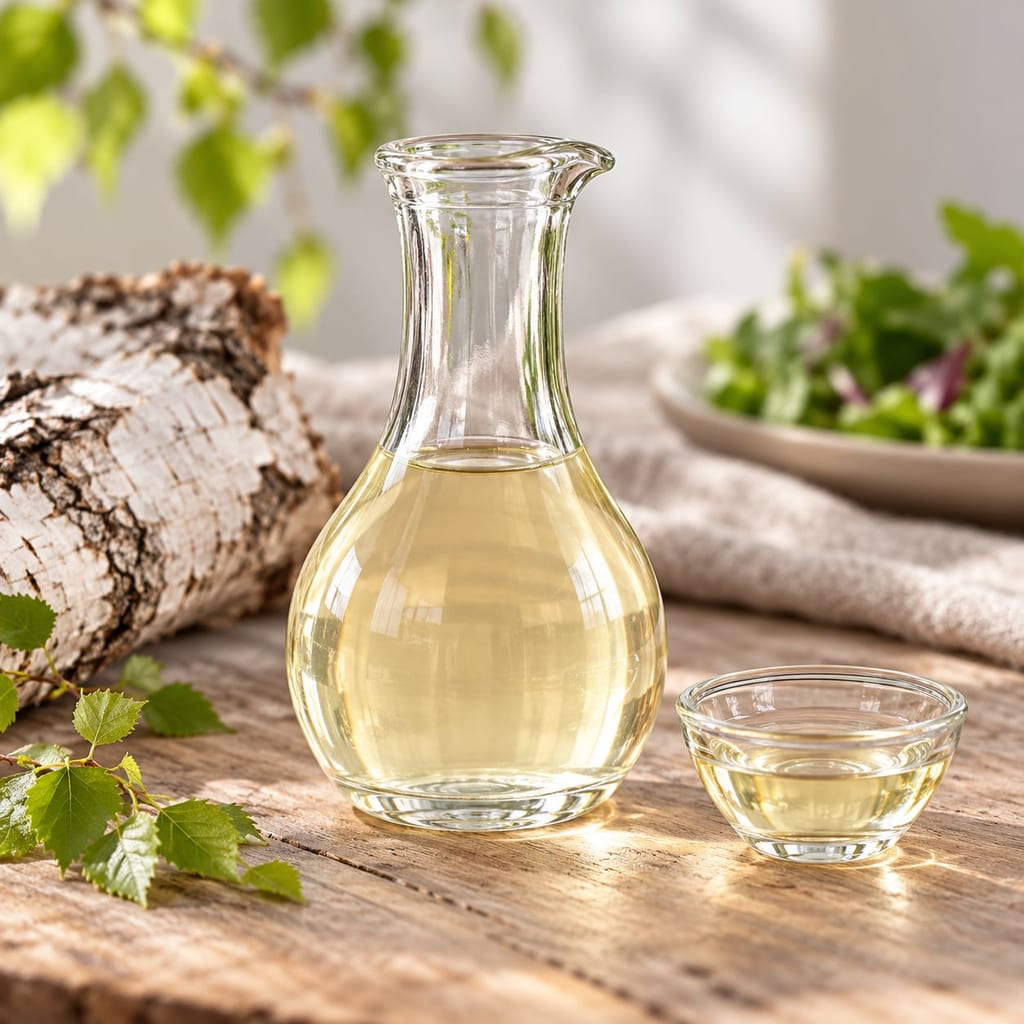
Vinegar from spring birch sap fermented to alcohol and then acetic acid, usually with added sugar or honey because the sap is so dilute; made in Sweden and described in older eastern European accounts.
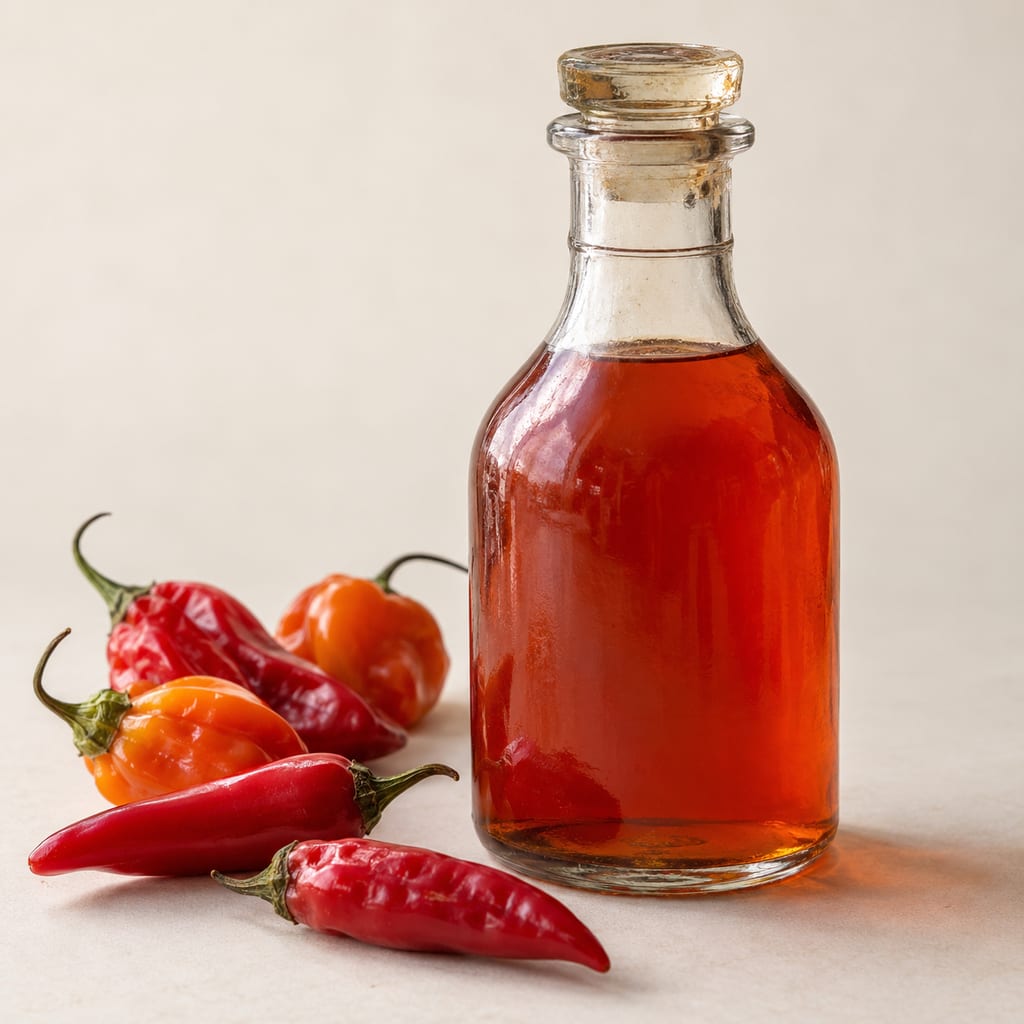
Mary Randolph's pepper vinegar: ripe pepper pods simmered in vinegar until the liquid is reduced to one quart, then strained for use in gravies and catsups. From The Virginia Housewife.
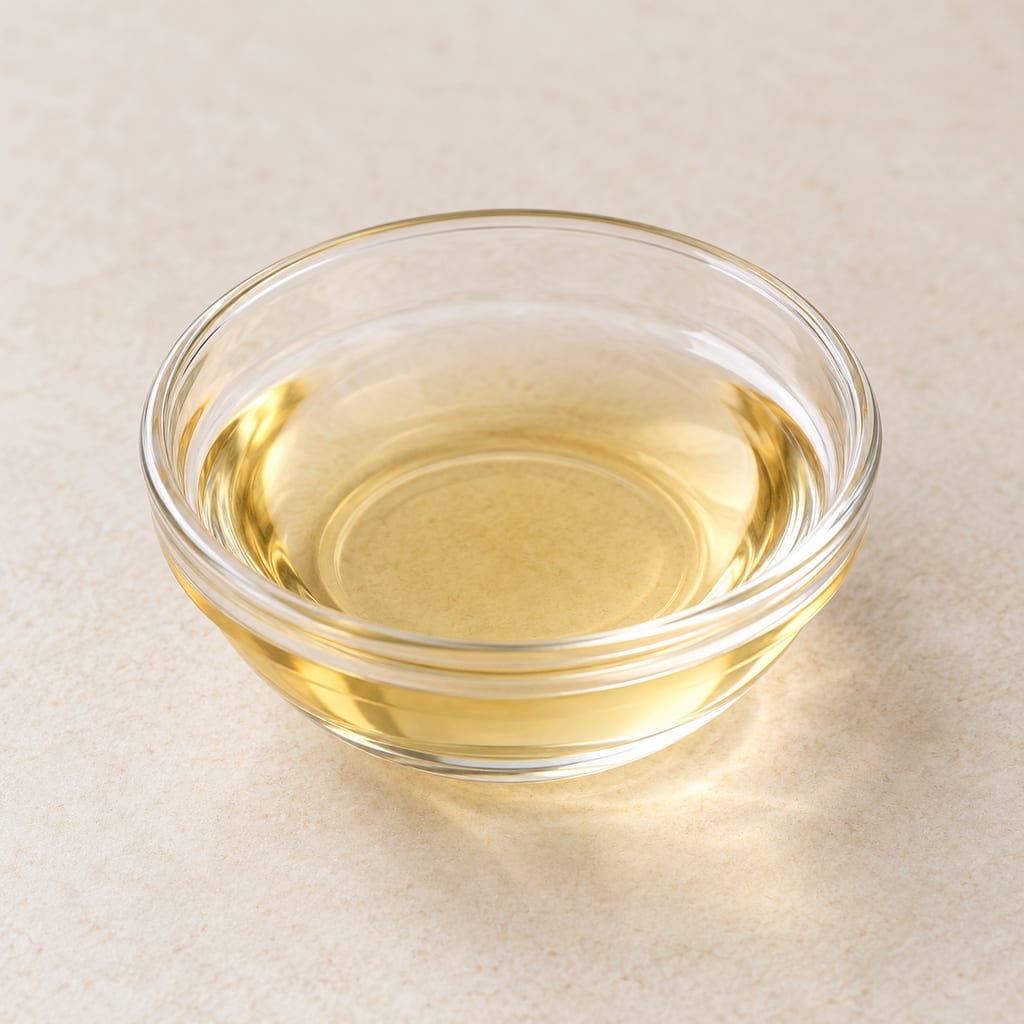
A Japanese mixed seasoning of vinegar, sugar and salt for sushi rice. Ratios vary with the rice batch and style; this version follows Marukan Vinegar's formula for two go of rice.
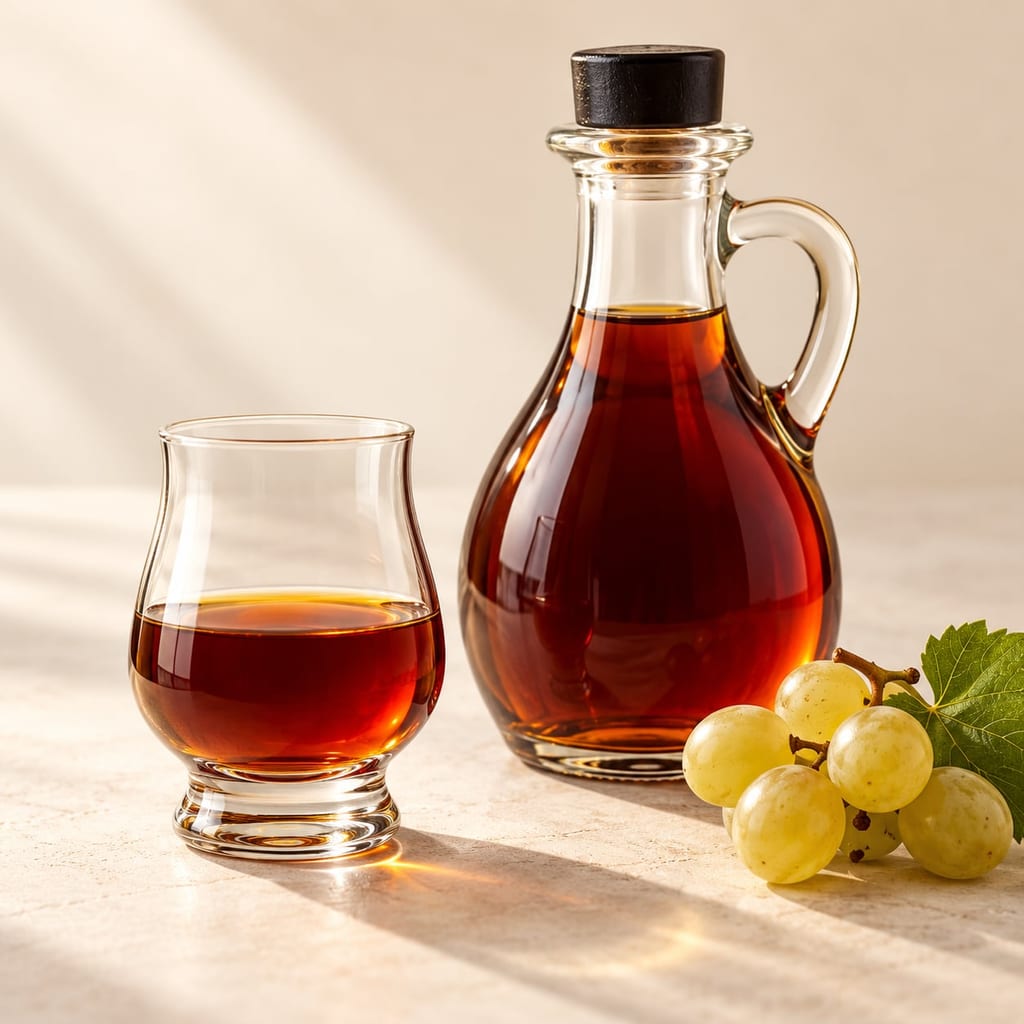
Vinagre de Jerez is made by acetifying eligible Jerez wines and ageing the vinegar in wood. Its protected name belongs to a defined Andalusian zone and a cellar tradition joining wine, oxygen, acetic bacteria and long ageing.
No community contributions have been published for this entry yet.
Sign in to contribute. Published comments and photos are free to read.
Cultural Mapping of Panay and Guimaras (University of the Philippines Visayas)Identity · Method · History
Sinamak nga pinyaPineapple-infused sinamak from Barangay Agtambo, Passi City, Iloilo; pineapple, garlic, ginger and chili in vinegar; reused glass bottles; no amounts given
Cited in: The Agtambo pineapple sinamak; How it is used
Department of Science and Technology, Food and Nutrition Research InstituteUses · Ingredients
Ethnic Foods (DOST-FNRI brochure)Instant sinamak sauce: chili, ground pepper, garlic and onion soaked in native palm vinegar; served with chicharon, ukoy and lumpiang Shanghai
Cited in: Packaged and coconut-vinegar versions
Journal of Ethnic FoodsIdentity · Uses
Sawsawan: explicating the culinary heritage significance of Philippine condiments using bibliometrics (1972-2018)Lists Iloilo vinegars baak, langgaw and sukang sinamak; sawsawan treated as a shared mixed table practice; bibliometric method
Cited in: What suka and sawsawan cover
Philippine Journal of Interdisciplinary Research, Colegio de la Purisima ConcepcionMethod · Science
Product Development of Ilonggo Sinamak Vinegar Using Sugarcane Vinegar Infused with Indigenous Herbs and Spices Powder of Sipalay City, Negros Occidental250 ml sugarcane vinegar base; four herb and spice powder treatments; approximate pH 2.6 by commercial strips for the 2 g treatment; no shelf-life test
Cited in: Vinegar versus infusion; What the sources do not say
Slow Food Foundation for Biodiversity, Ark of TasteVariants · Method
Langkawas Spiced VinegarNegros Occidental langkawas variant: sun-dried galangal, garlic and chilies covered in coconut vinegar; entry says it ferments for a week
Cited in: Packaged and coconut-vinegar versions; What the sources do not say
Daily GuardianUses · Ingredients
Technique and Technology: The Blending of Heritage and ModernityIloilo sinamak: vinegar mixed with garlic, ginger, chili and langkawas; served with grilled fish, chicken, pork and oysters
Cited in: How it is used
Department of Agriculture, KADIWAHistory · Production
Honoring Lola Emak: sinamak food processing and productionFamily sinamak enterprise profile in Canlaon; enterprise context only, no batch quantities
Panlasang PinoyMethod · Ingredients · Storage
Filipino Vinegar Dipping Sauce (Sukang Sawsawan)Coconut vinegar base for three sawsawan: sinamak (1 cup vinegar, 1/2 cup Thai chili, 4 thumbs ginger, 1 head garlic), a tokwat baboy style vinegar, and a spicy vinegar
Tokwat baboy style sauce: store inside the fridge to maintain freshness; no storage note for the other two
Cited in: Packaged and coconut-vinegar versions; What the sources do not say
WikipediaContext · Lead
Philippine condimentsSinamak as a Visayan spiced vinegar pickled with chilis, langkawas, garlic, peppercorns and white onion for at least three days; sukang may sili and sukang may toyo as simplest vinegar dips
Cited in: What suka and sawsawan cover; Vinegar versus infusion; How it is used