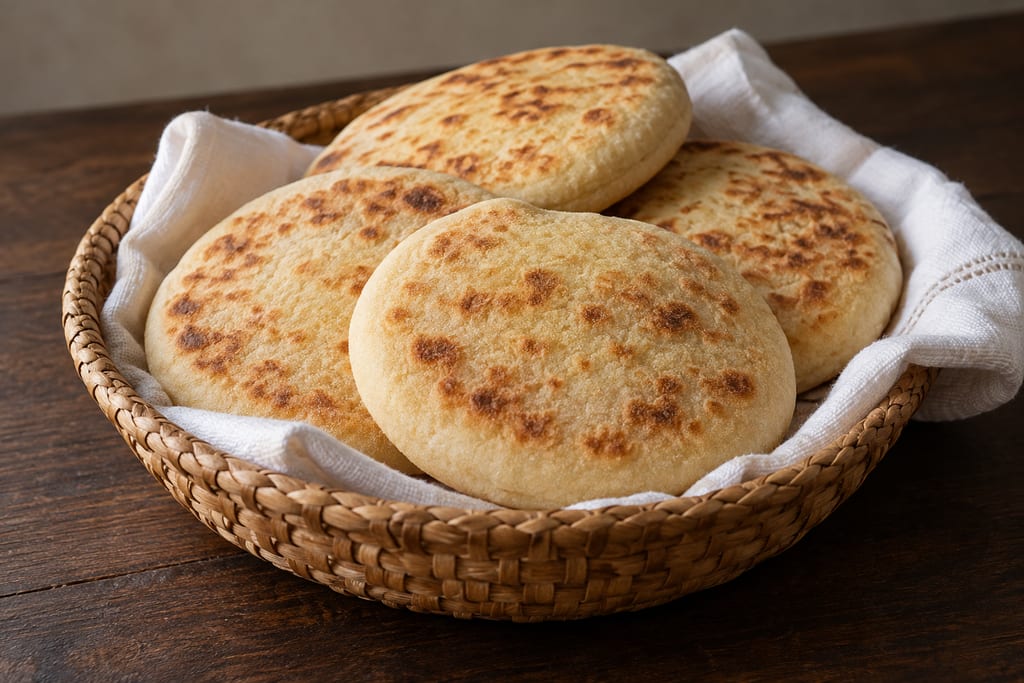
Batbout
A Moroccan yeast-raised semolina pocket bread cooked on a dry pan or griddle; this measured batch makes about twenty 4-inch rounds.
 FermenteaWhere food goes to change
malawi
A Moroccan round laminated griddle bread; thin sheets of a lightly yeasted semolina dough are buttered, rolled into layered coils, sliced and flattened.
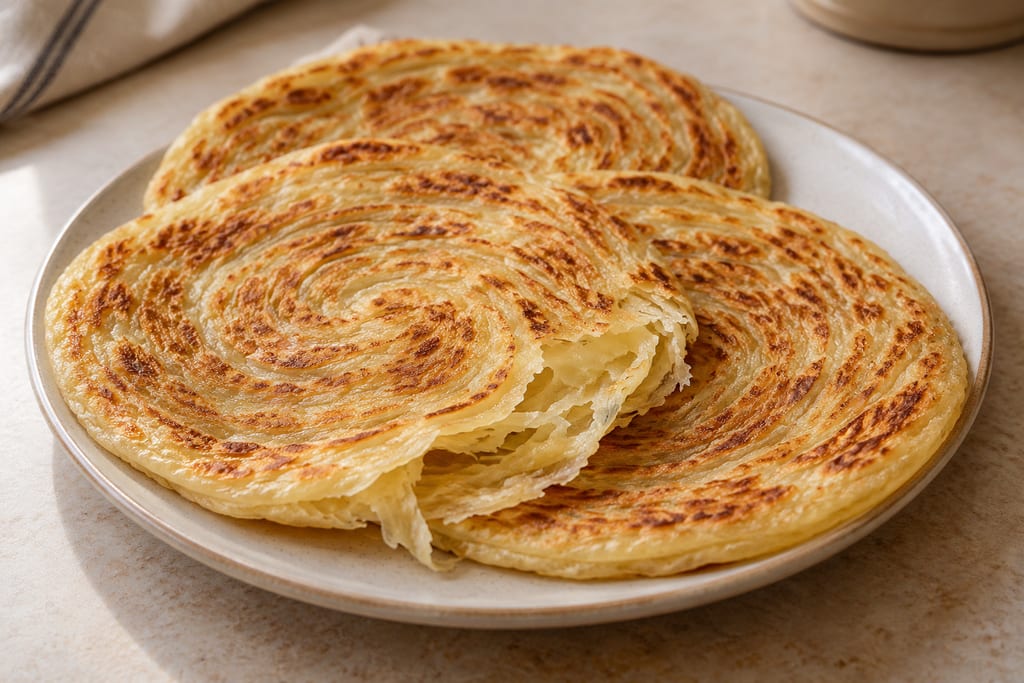
Meloui is a round Moroccan laminated bread shaped by rolling thin dough sheets into a coil before flattening and griddle cooking. Christine Benlafquih writes that the name relates to rolling; she uses `malawi` for the plural. Butter and semolina separate the thin sheets, leaving layers that can be pulled apart after cooking.
Meloui is related to msemen, but this formula makes round coiled breads rather than square folded ones. Benlafquih's page describes a newer, shorter-workspace method in which one rolled strip is wrapped inside another square before the dough is sliced into rounds. This page is identified as Moroccan; similarly named Tunisian Mlewi remains a separate archive candidate and is not treated here as the same recipe.
The dough uses fine semolina or durum flour, white flour, a little whole-wheat flour, sugar, salt and a very small amount of dry yeast. Whole-wheat flour is optional; the page says it can be replaced with white flour. Add warm water until the dough is soft and pliable but not sticky, then knead by hand for about 10 minutes or by mixer for about 5 minutes.
Divide the dough into about 16 smooth plum-sized balls. Oil the tray and tops, cover loosely, and rest for 20–30 minutes. Prepare a clean work area at least 12 inches square, with oil, softened butter and semolina close by. The source gives no numeric water or dough temperature.
Stretch one ball into a paper-thin square and coat it with softened butter and semolina. Roll it snugly from the top edge toward you. Stretch a second ball the same way, butter and dust it, then wrap the first roll inside it. Continue until half the dough balls form one layered roll; repeat with the remaining balls to make a second.
Cut each long roll into eight even pieces. Stand them cut-side up, cover loosely and rest 15–20 minutes. Snug wrapping helps keep the visible coils together. Flatten each piece firmly to about 1/8 inch and cook in batches, turning several times on a medium griddle or large pan until golden and crisp outside. Avoid excessive heat so the center can cook through.
Serve the breads warm with butter, honey, jam or soft cheese. The page also describes a butter-and-honey dipping syrup, but that accompaniment is not included in this recipe's ingredient list. Cool the breads completely before freezing. The author says they do not keep well at room temperature for more than a day; this is a freshness observation, not a food-safety limit.
Flour is raw and may contain harmful bacteria. Do not taste raw dough. Keep it away from ready-to-eat foods, then wash hands and clean tools and surfaces after handling. Use care when transferring and turning the oiled dough on the hot griddle.
The measured batch makes 16 rounds about 5 inches across. Shaping fats are approximate, and no tested scaling ratio is supplied. The page establishes the Moroccan form and describes the coil method, but does not date the bread's first attestation or establish identity with Tunisian breads that have similar names.
Christine Benlafquih explains that Moroccan meloui (malawi in plural) takes its name from a Moroccan Arabic word meaning rolled, describing the coiled dough shape. The page distinguishes this round coil from square msemen and supplies a contemporary home method. It does not date a first attestation or establish that similarly named Tunisian Mlewi is the same preparation.
Yield 16 5-inch meloui · Scaling: source batch only
Uncooked flour may carry harmful bacteria.
Hazard sourceThe method transfers oiled dough to a hot griddle or frying pan in several batches.
Hazard sourceCook the dough before eating; keep raw flour and dough away from ready-to-eat foods, then wash hands and clean utensils and work surfaces.
Control sourceUse care when placing and turning the dough on the hot griddle or frying pan.
Control sourceDo not taste raw dough. Use care around the hot griddle and oily work area.
Christine Benlafquih identifies this round coiled griddle recipe as Moroccan meloui (malawi in plural). This record is limited to her Moroccan method; similarly named breads elsewhere are not assumed to be identical.
A Moroccan yeast-raised semolina pocket bread cooked on a dry pan or griddle; this measured batch makes about twenty 4-inch rounds.
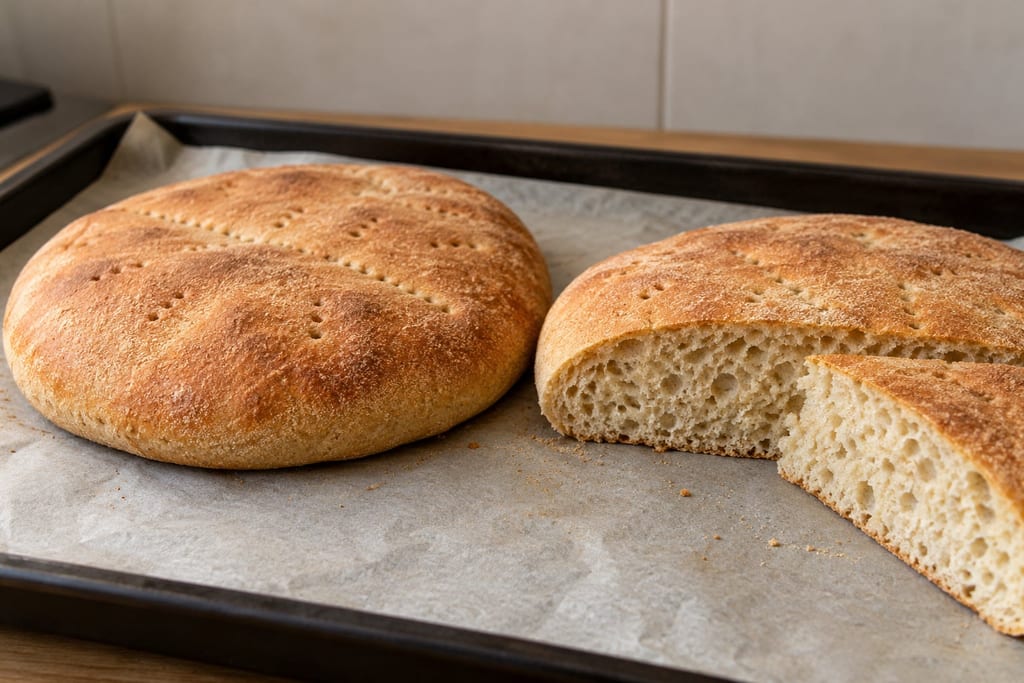
A Moroccan round wheat bread with a firm crust and coarse interior; this home formula makes two 8-inch loaves for serving with meals.
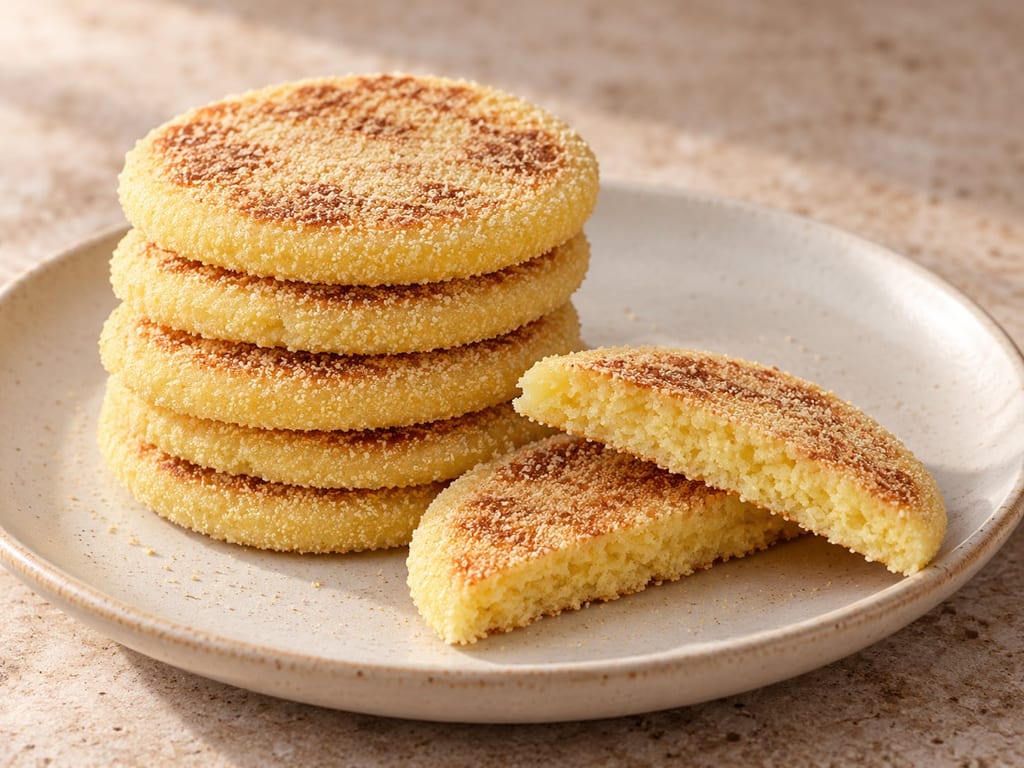
Harcha is a Moroccan semolina griddle bread with olive oil and butter rubbed into the grain, then shaped into thin rounds and cooked until golden. This family formula uses both dry yeast and baking powder.
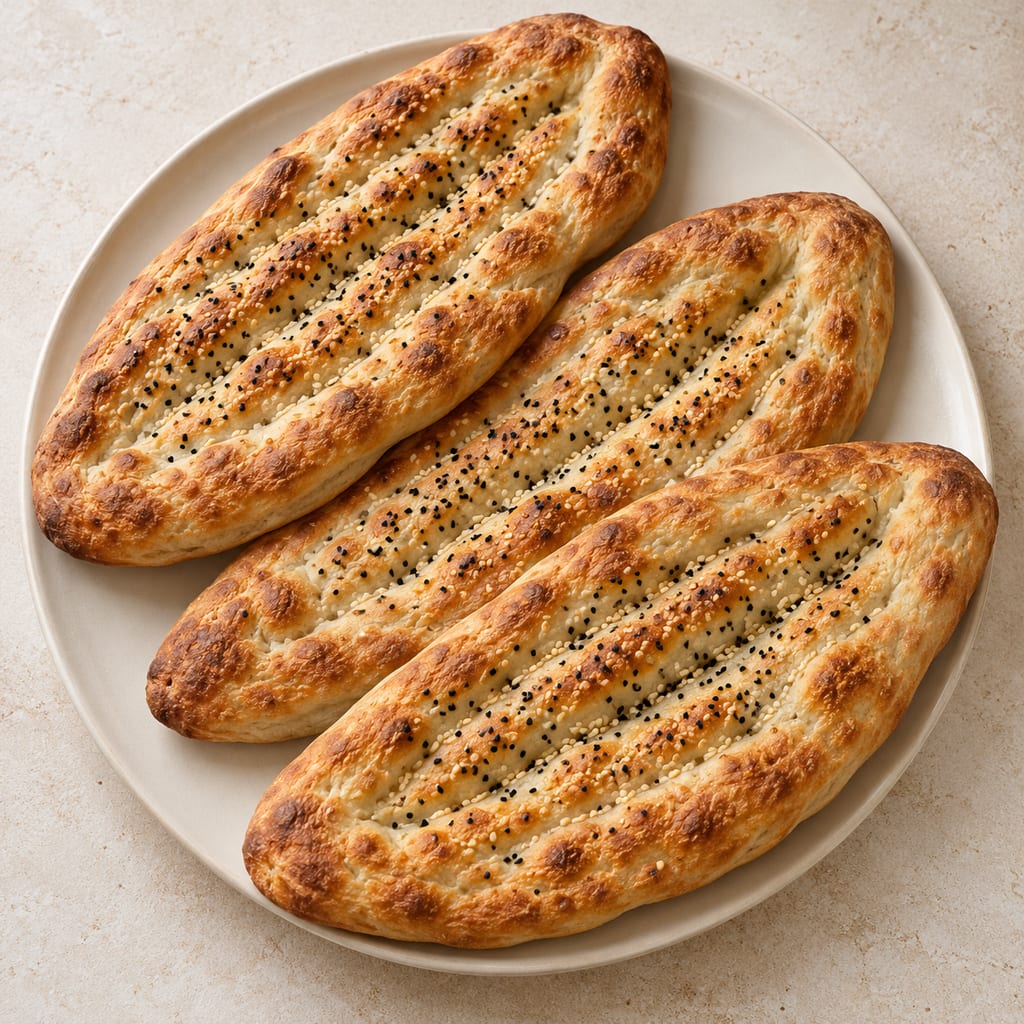
A long oval Afghan wheat bread, leavened with yeast, grooved along its length and baked until crisp outside and chewy within.
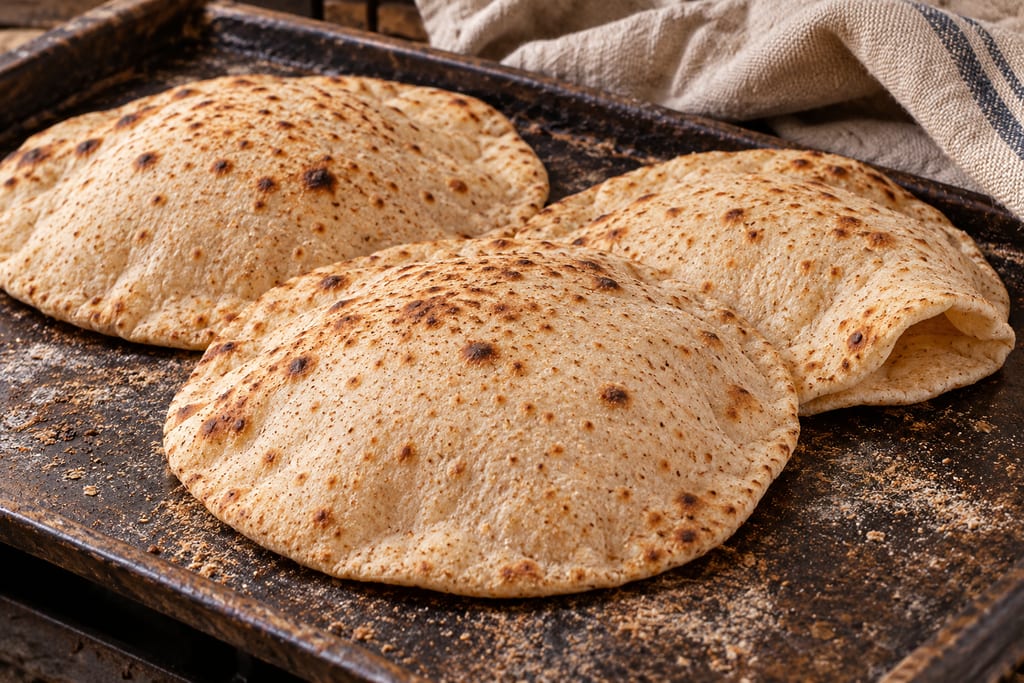
This home adaptation of Egyptian aish baladi uses a refrigerated yeast biga, whole-wheat dough, bran dusting and a very hot baking surface to make 16 pocketed rounds.
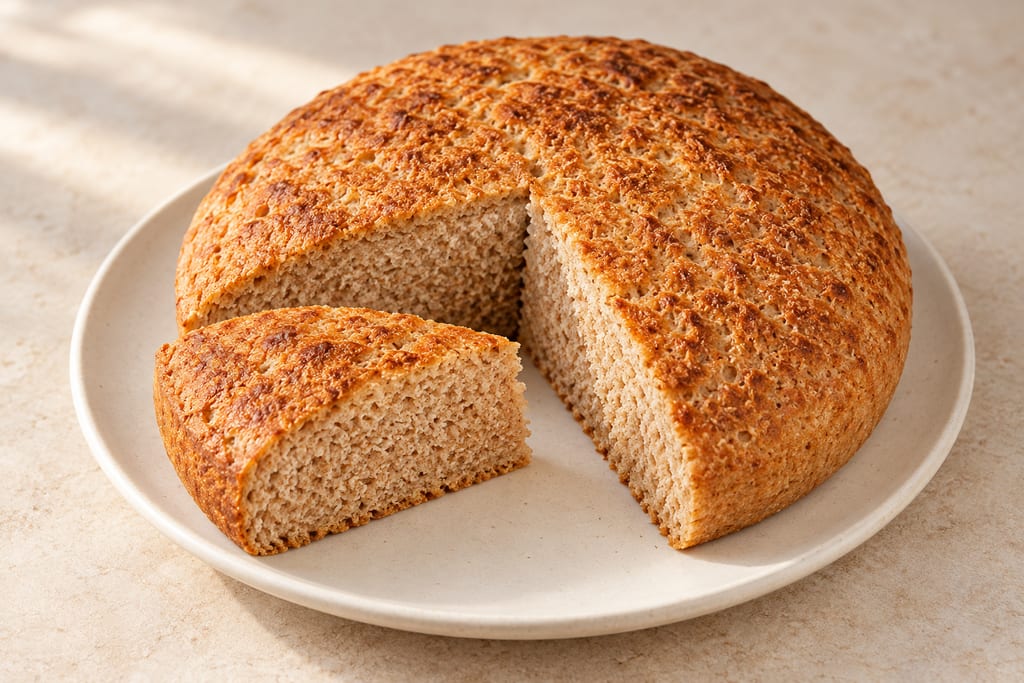
This oven-baked Amdo balep uses yeast, whole-wheat and white flour, a long covered rise and a two-sided bake in a heavy oven-safe pot.
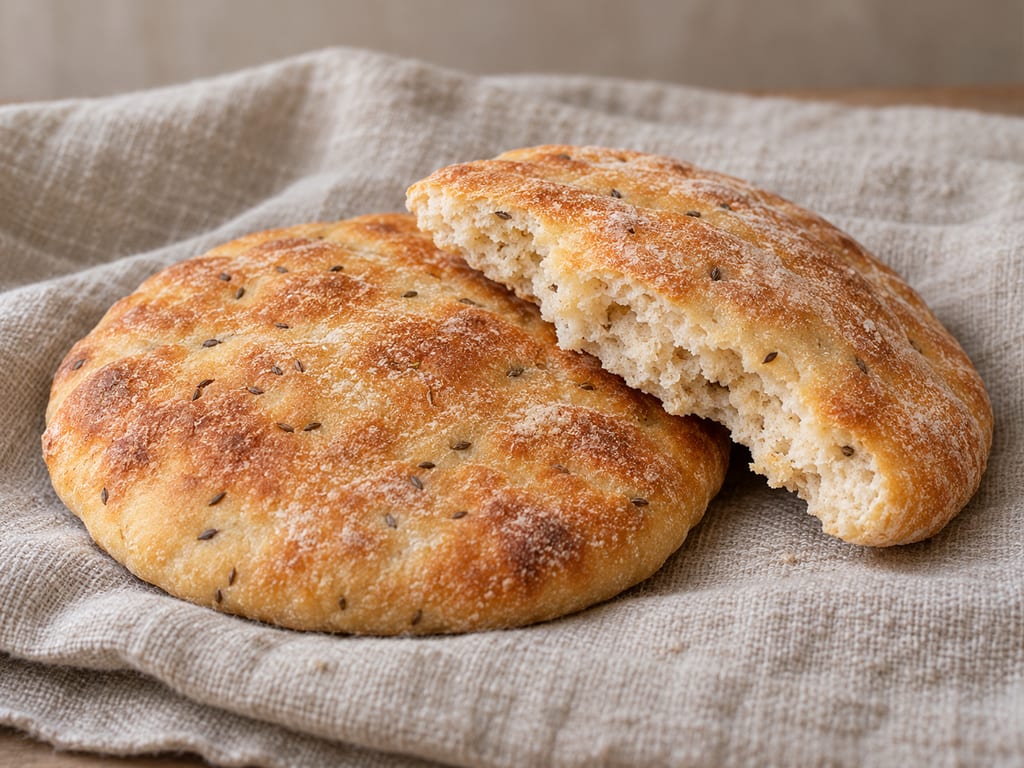
A measured, yeast-raised Ayacucho chapla home method shared by Thermomix Peru presenter Roxanna Salaverry. It makes thin, anise-scented rounds baked at 240°C; the historic qunchu-leavened form is documented separately.
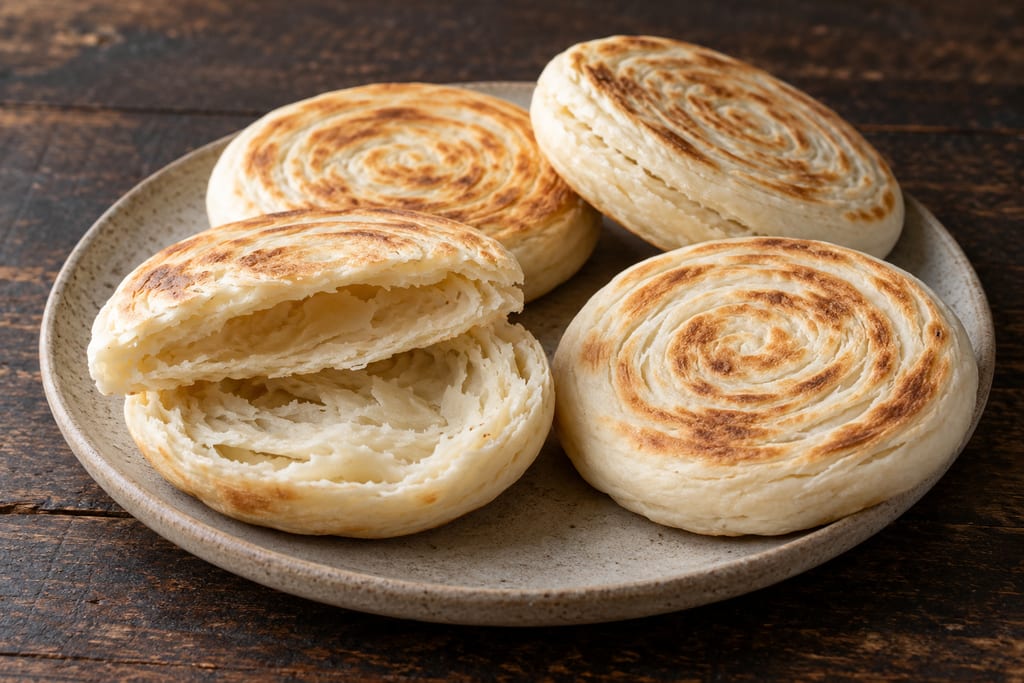
This Shaanxi-associated yeast flatbread uses a simple water dough, coiled shaping and a skillet bake. It is the bread used in roujiamo, not the filled meat dish.
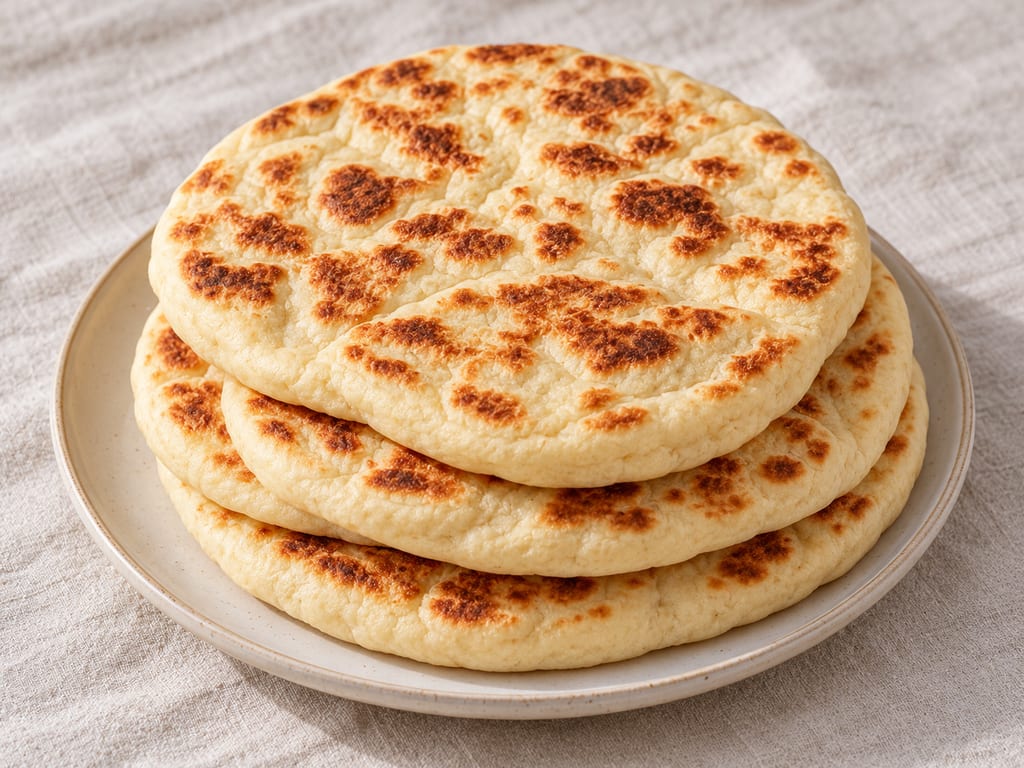
This Turkish bazlama uses yeast, plain yogurt and olive oil for a soft dough cooked in a skillet. Shape it into twelve small or six larger rounds, flip as bubbles appear, and wrap the breads to keep them soft.
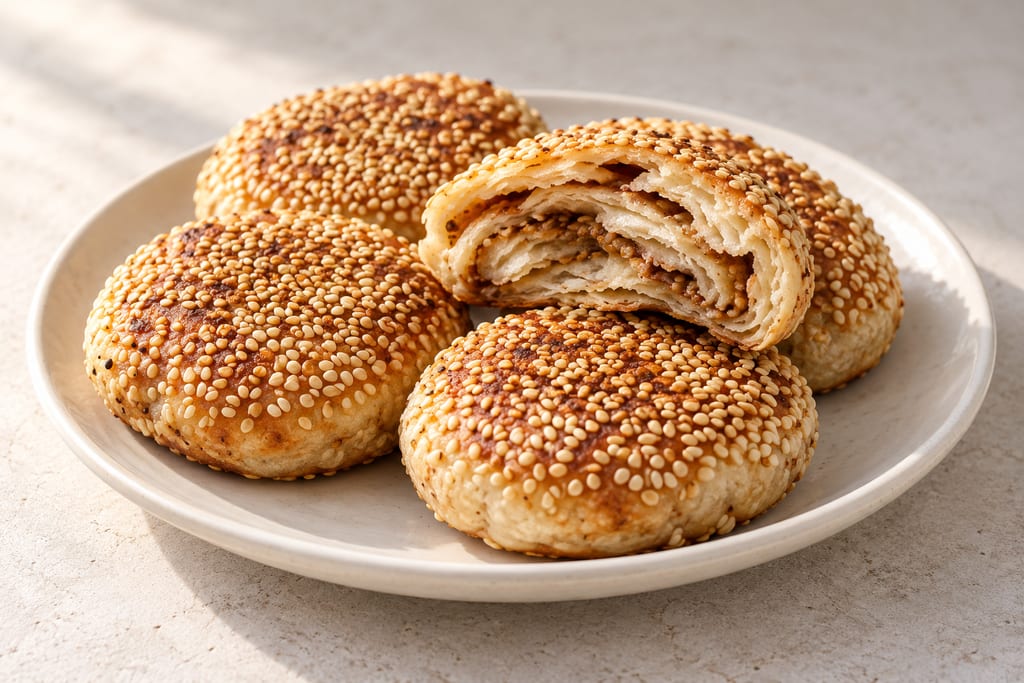
A Beijing-style yeast dough is layered with seasoned sesame paste, sealed into small buns, briefly pan-fried, seeded, and baked.
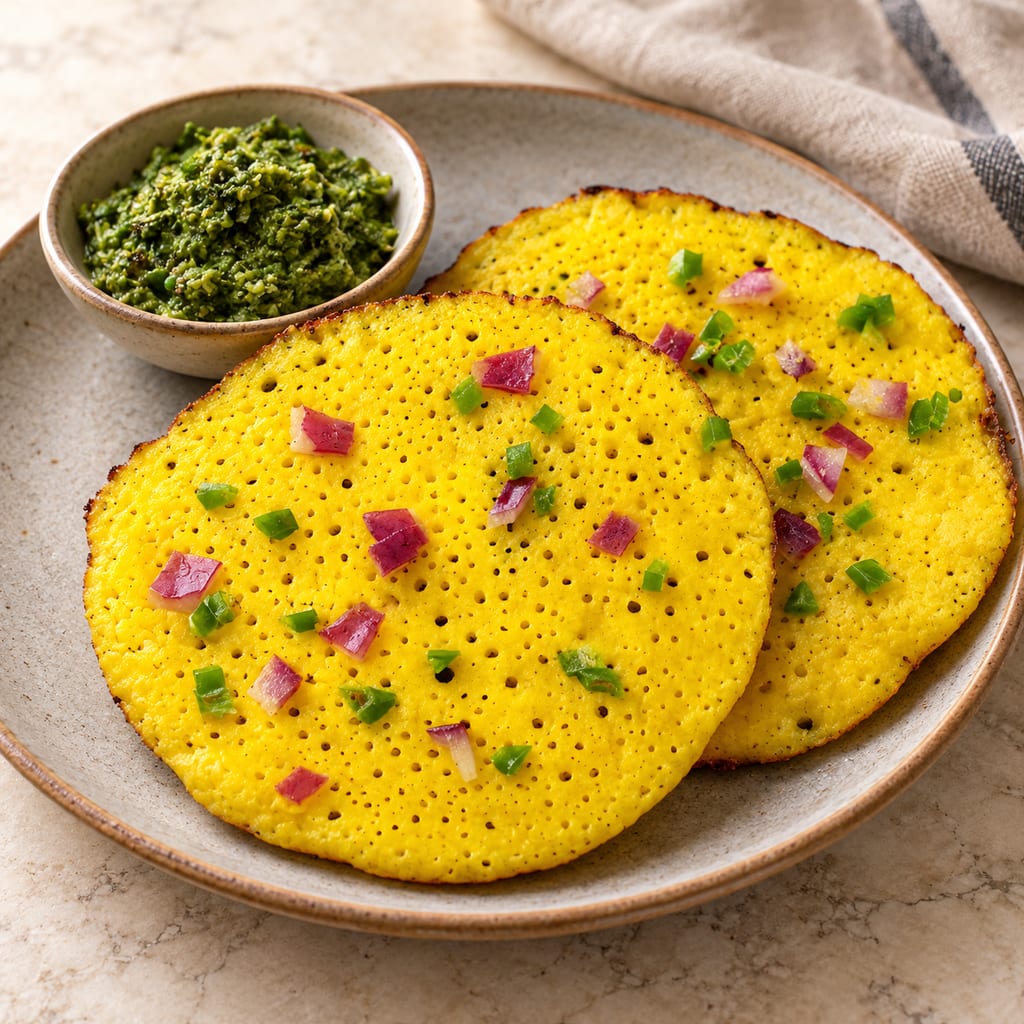
Spongy rice-and-coconut pancakes associated with Goa, cooked on one side from a batter that a multicooker's yogurt programme lets rise overnight.
No community contributions have been published for this entry yet.
Sign in to contribute. Published comments and photos are free to read.
Taste of MarocInspiration · Method · Geography
Moroccan Meloui Recipe - Round Laminated Moroccan Pancakes or CrepesMoroccan identification and meloui/malawi name; round coiled form distinguished from square msemen; 16-piece formula, ingredient quantities and approximate shaping fats; kneading, resting, coiling, slicing, flattening and griddle method; storage and reheating information.
Cited in: A Moroccan coiled griddle bread; Dough and first rest; Layer, coil and cut; Serving, storage and handling; Evidence limits
U.S. Food and Drug AdministrationSafety
Handling Flour Safely: What You Need to KnowFlour is raw and may carry harmful bacteria; do not taste raw flour or dough; cook and clean hands, utensils and surfaces after handling.
Cited in: Serving, storage and handling