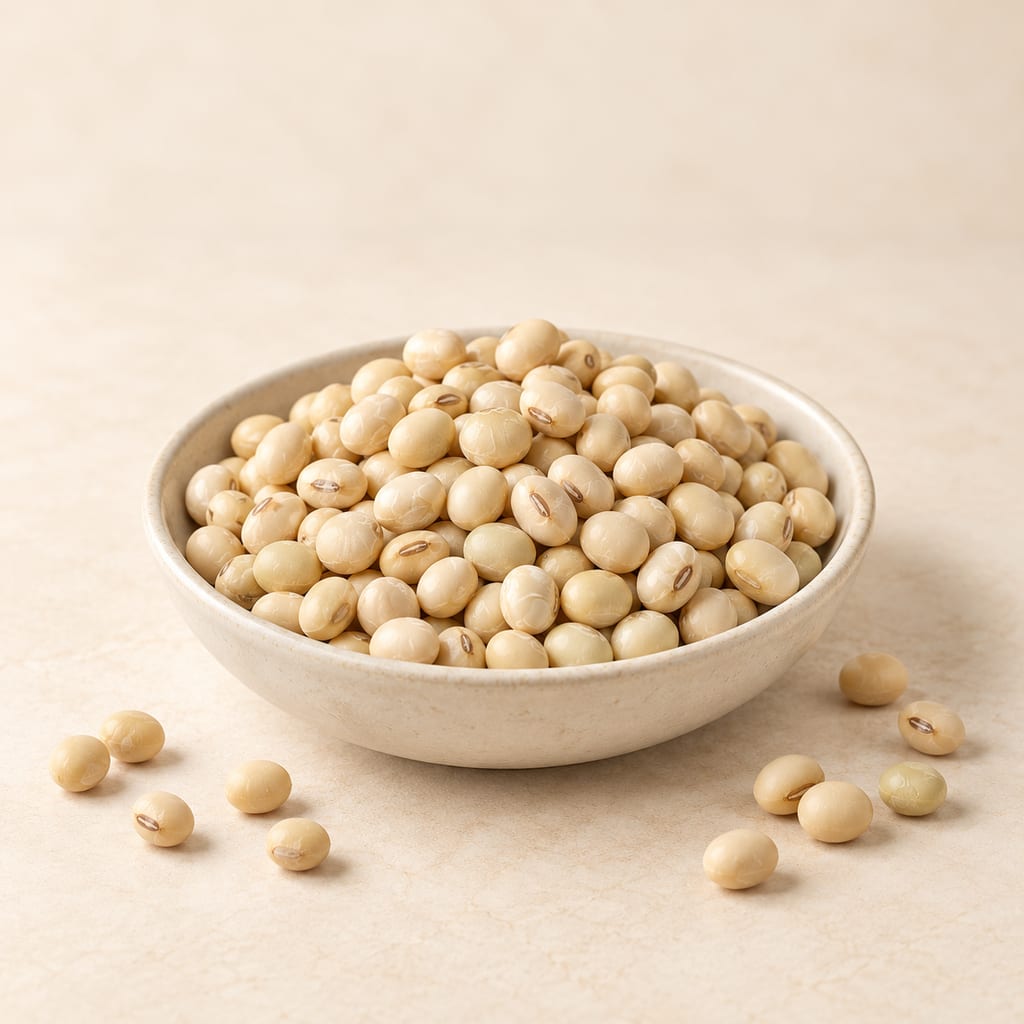
Soybeans
Soybeans are the mature dry seeds of Glycine max, about 40 percent protein and 20 percent oil, the substrate of tempeh, natto, miso, soy sauce and many other fermented foods.
 FermenteaWhere food goes to change
Traditional method
醤油 (shōyu) · Shoyu · Shōyu · Koikuchi shoyu · Tamari
Soy sauce is a salted liquid seasoning made by growing koji mould on soybeans and grain, maturing the mash in brine and pressing out the liquid. Japan's shoyu is the best-documented form.
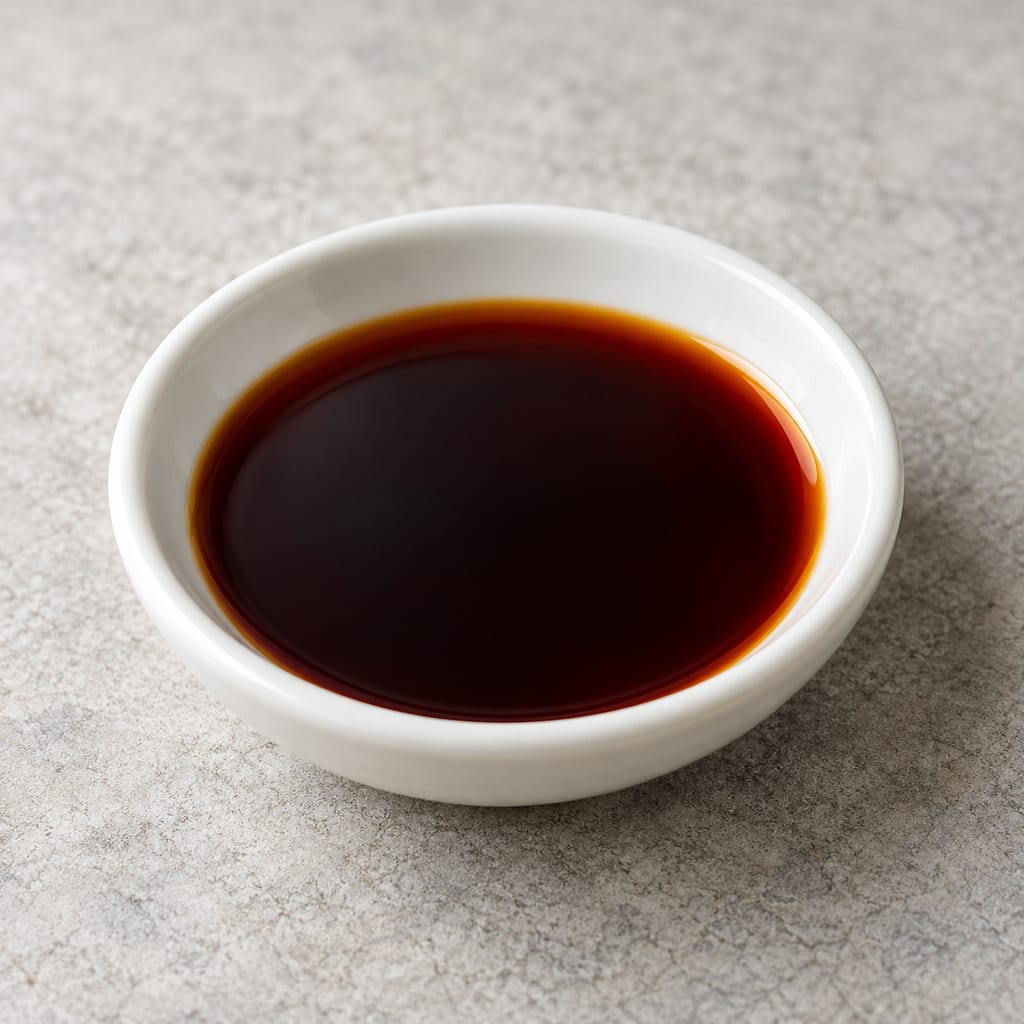
Soy sauce belongs to a family of salted seasonings that Japan has made for centuries. The earliest written record that the sources here use is the Taihō Code of 701 CE, which includes provisions for hishio, an early salted seasoning. That record shows an early seasoning tradition. It does not show that every style of soy sauce known today already existed in 701.
Shoyu, the Japanese name for soy sauce, is the form most readers meet. Its modern production differs from that of miso, which keeps its paste, and from tamari, which is closely related to the liquid that comes from miso-paste production.
The grains and beans are steamed. Koji mould is grown on them, and the koji supplies the enzymes for the rest of the process. Koji and salt water are then added to the steamed grain. The mixture is fermented and aged, and the liquid is separated from the solids by pressing.
The enzymes come from the mould grown on the grain. The mash is left to mature for a long period. For koikuchi, the most common style, the source gives about eight months of fermentation and ageing.
Koikuchi uses equal amounts of soybeans and wheat for its koji. Tamari uses soybeans and only a small amount of wheat. In tamari the soybeans are crushed and made into miso-koji balls, which ferment with a small amount of salt water. Tamari ages for longer than koikuchi, and the sources give no duration for that ageing.
Tamari is, by the account of the same ministry, the soy sauce is the soy sauce closest to the old soy-based seasonings of Japan.
Soy sauce and miso come from the same broad family of soybean and koji ferments. Miso is cooked soybeans, salt and koji that mature while the paste is kept. Soy sauce is the liquid that the same kind of process produces when it is pressed out. The two products therefore split one fermented mass into a liquid and a paste, as fish sauce and fish paste do.
That comparison is about the process, not a claim of descent. The sources here do not show that one tradition gave rise to the other.
The sources do not give the mash ratio, the salt concentration, the pressing method or the koji-ball dimensions for tamari. They do not give a yield. The pages of this record do not supply these figures.
Hishio is recorded in the Taihō Code of 701 CE. The modern processes of shoyu, miso and tamari differ in their raw materials and in whether the paste is kept. Shoyu production in its modern form is documented in later and modern sources, not the Taihō Code.
Scaling: source batch only
Soy sauce made with wheat contains gluten. The tamari description says it uses only a small share of wheat, and the sources do not establish that commercial tamari is wheat-free.
Hazard sourceTamari is not wheat-free by the sources. Check the label before serving it to someone who must avoid gluten.
Salt content is high. The sources give no salt figure, so this page supplies none.
The Ministry of Agriculture, Forestry and Fisheries describes the categories of soy sauce and the production method. The record names the country, not a place of origin.
Soybeans are the mature dry seeds of Glycine max, about 40 percent protein and 20 percent oil, the substrate of tempeh, natto, miso, soy sauce and many other fermented foods.
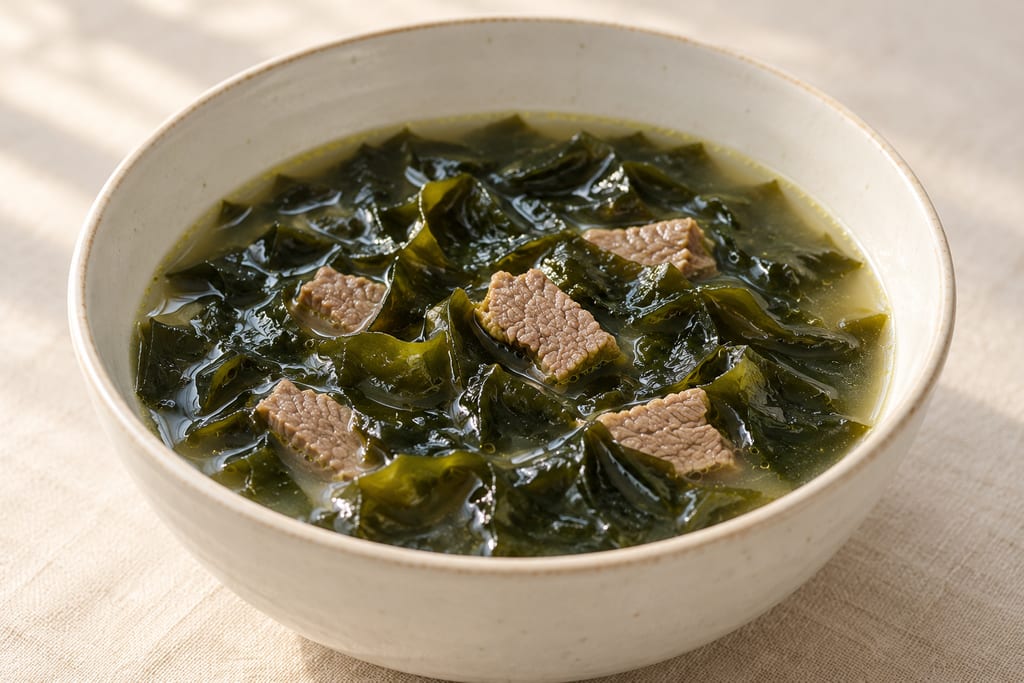
A Korean soup of rehydrated brown seaweed simmered with beef, seafood or a plain seasoned broth, traditionally served after childbirth, on birthdays and as an everyday meal.
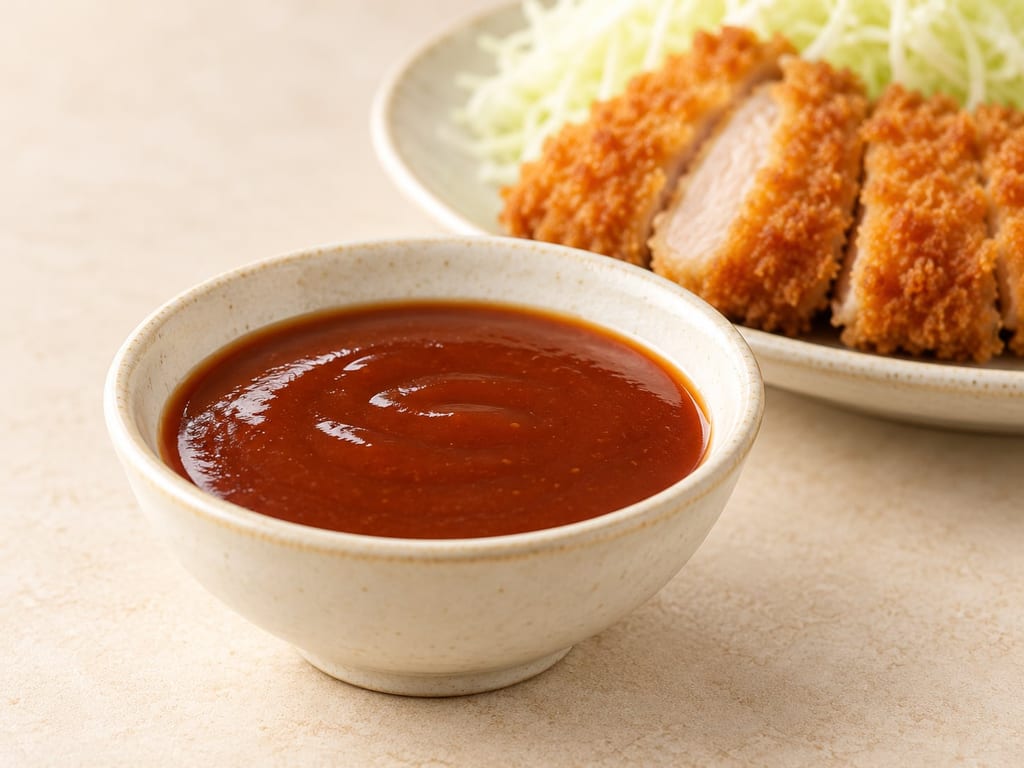
A small-batch, non-fermented tomato, fruit and savoury sauce assembled for crisp tonkatsu and cabbage, inspired by Japanese yoshoku serving traditions.
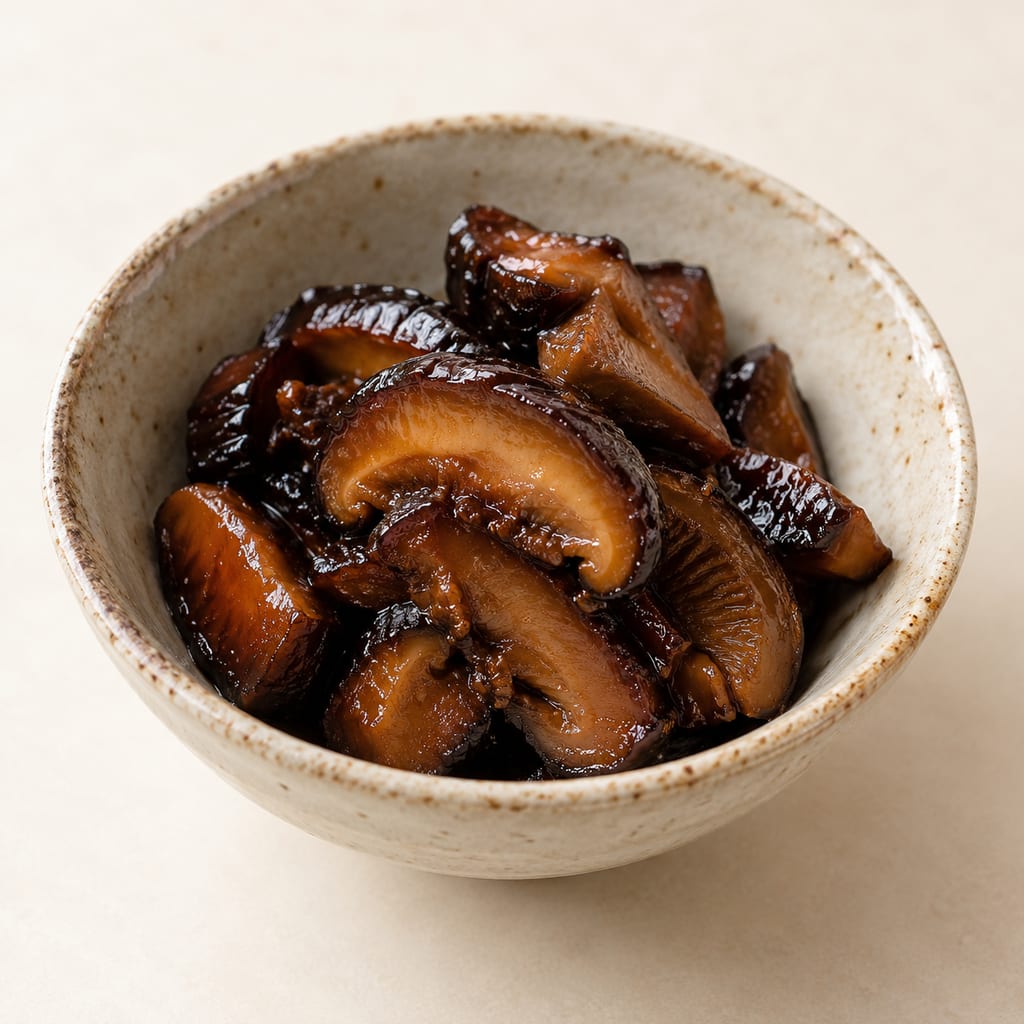
Japanese seasoned reduction in which ingredients such as shiitake or fish are simmered in soy sauce and sweeteners until the liquid is absorbed and a concentrated, storable condiment remains.
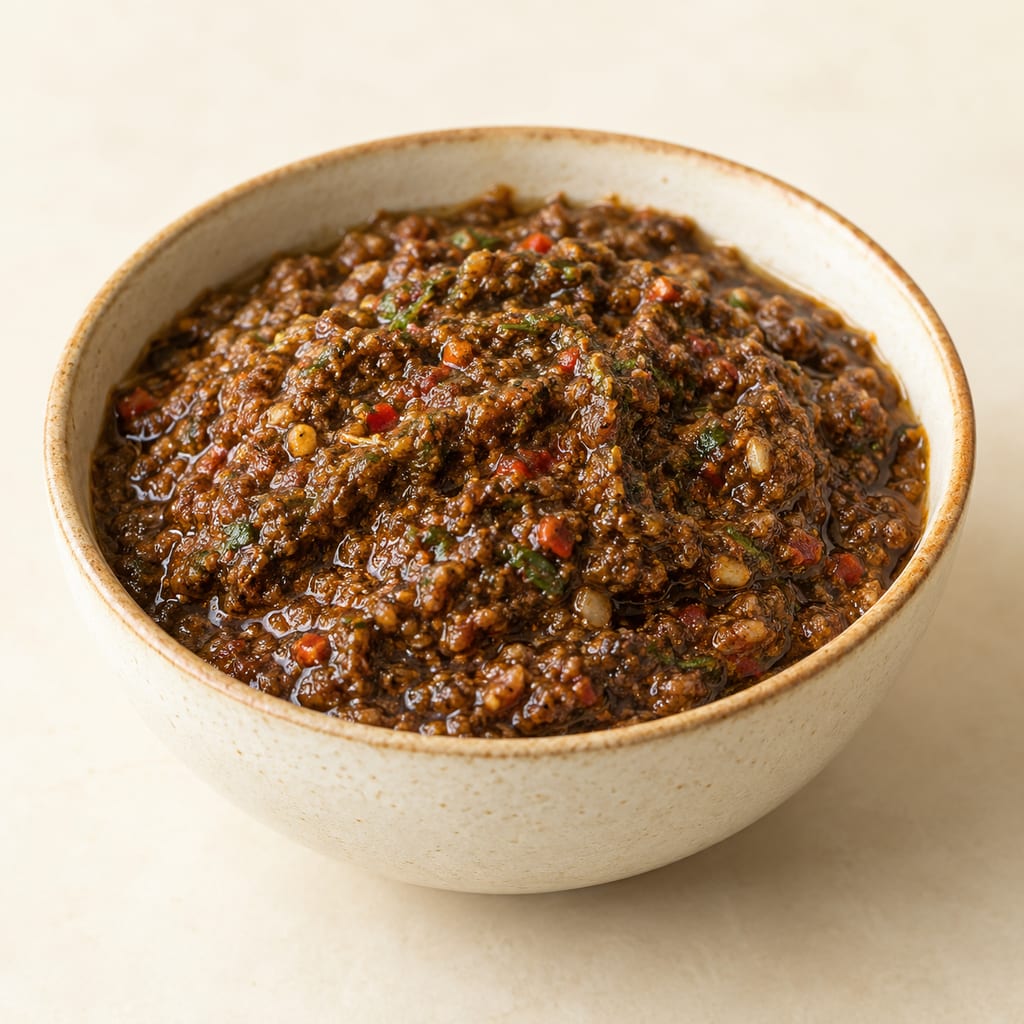
A Jamaican wet jerk paste of ground allspice, Scotch bonnet pepper, thyme, scallion, garlic, ginger and nutmeg, loosened with soy sauce, oil, vinegar and lime, used to marinate meat, fish or tofu before cooking.
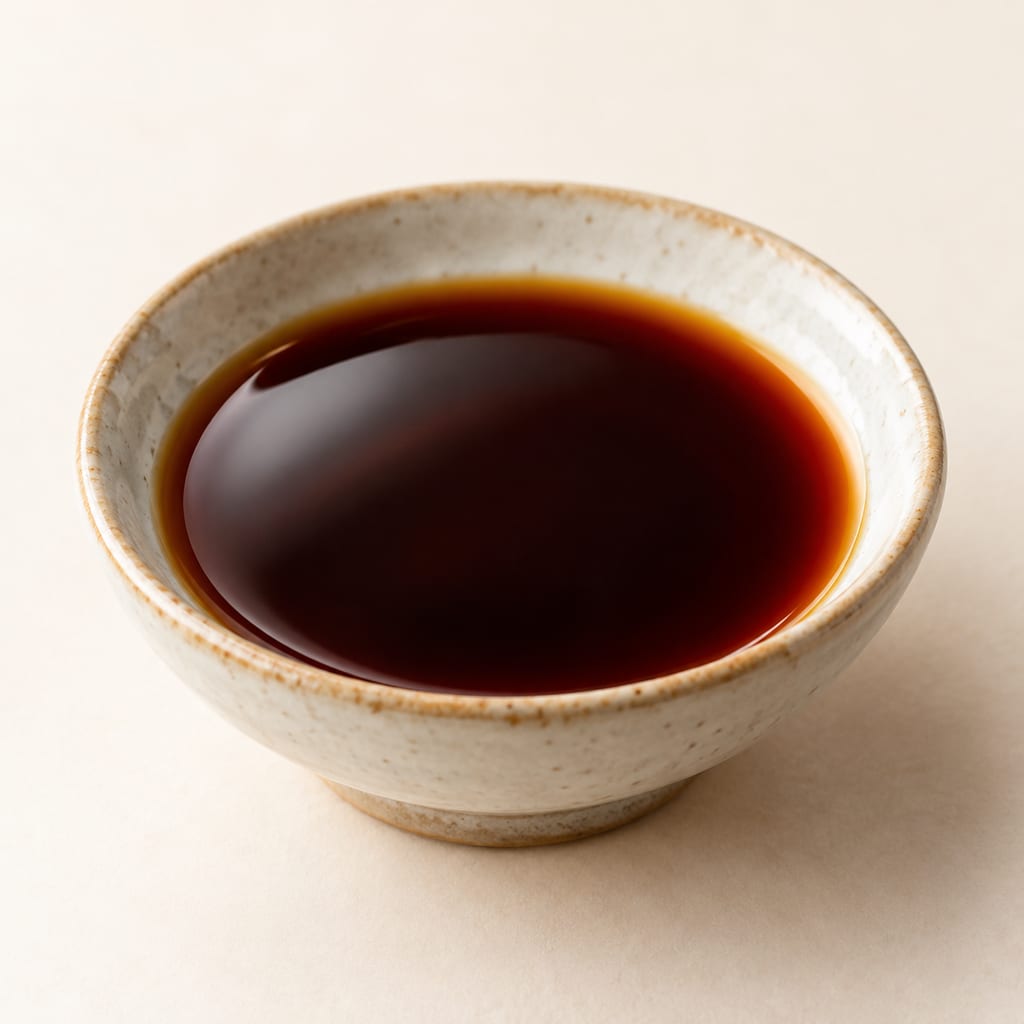
Japan's standard all-purpose soy sauce: soybeans and wheat grown over with koji mould, brined, fermented for months, pressed and usually heated into a reddish-brown, savoury liquid.
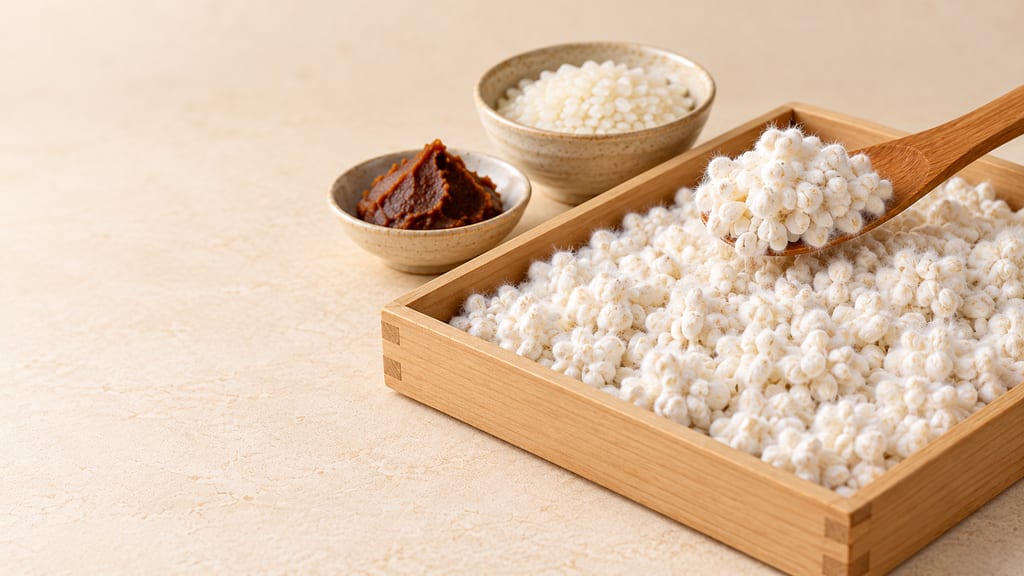
Koji is grain or beans grown with a mould whose enzymes break food down. This guide separates the mould, the starter and the finished koji, and follows them into sake, amazake, miso, soy sauce and shio-koji.
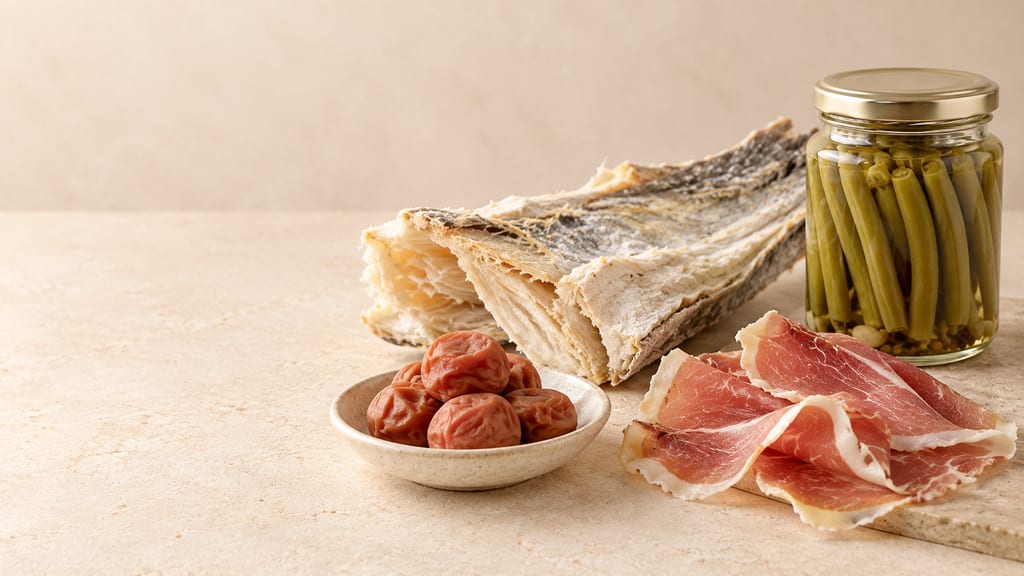
Every preserved food is a stack of barriers against microbes, enzymes, air and time. This is how they work, what a recipe's numbers measure, and how cooks worldwide build them.
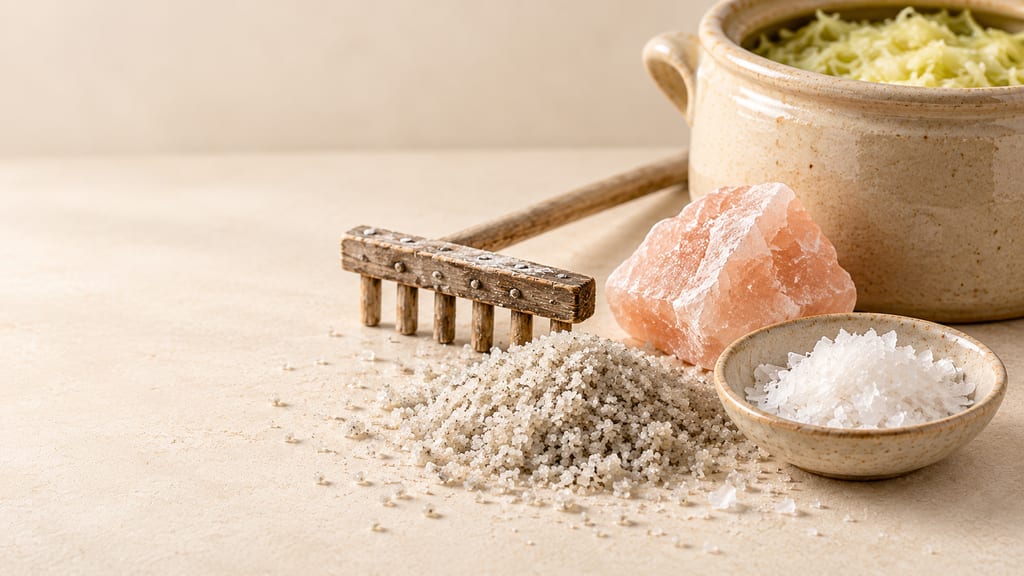
Salt seasons a meal, shapes fermentation and preserves food. Its history follows the people who mine, harvest, trade and transform it, and the choices hidden inside an ordinary packet.

Japanese reddish-brown vinegar from sake lees matured about three years, turned to vinegar by acetic bacteria; the vinegar of Handa and Edomae sushi rice.
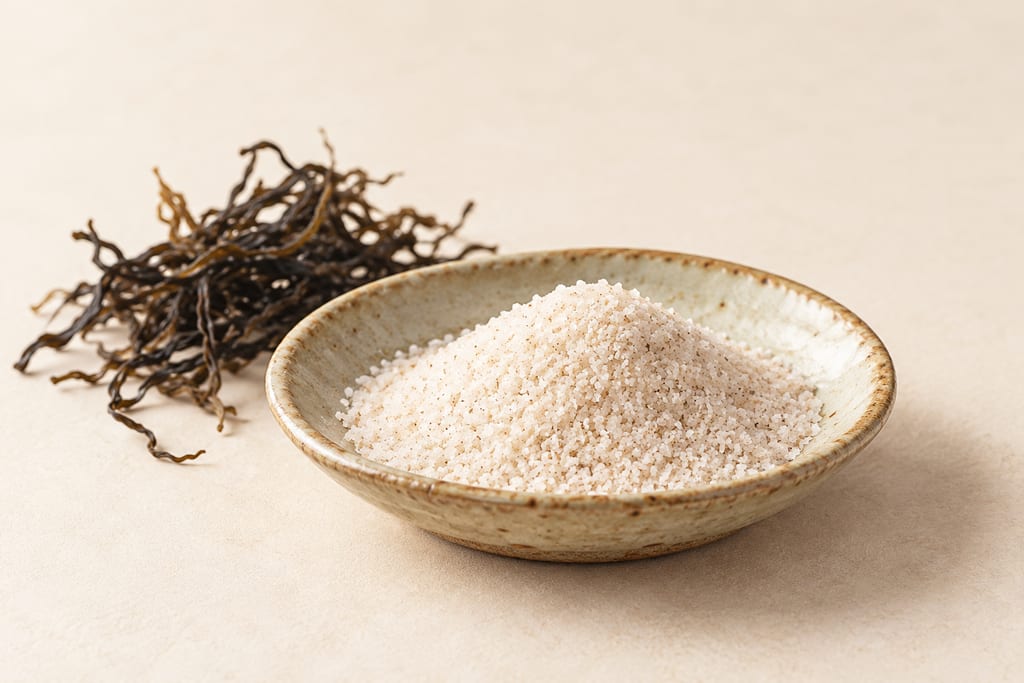
Amabito no Moshio is a modern, pale beige Japanese seaweed salt made from Seto Inland Sea water and hondawara seaweed. Its documented factory method concentrates filtered brine in kettles, then separates and dries the salt.
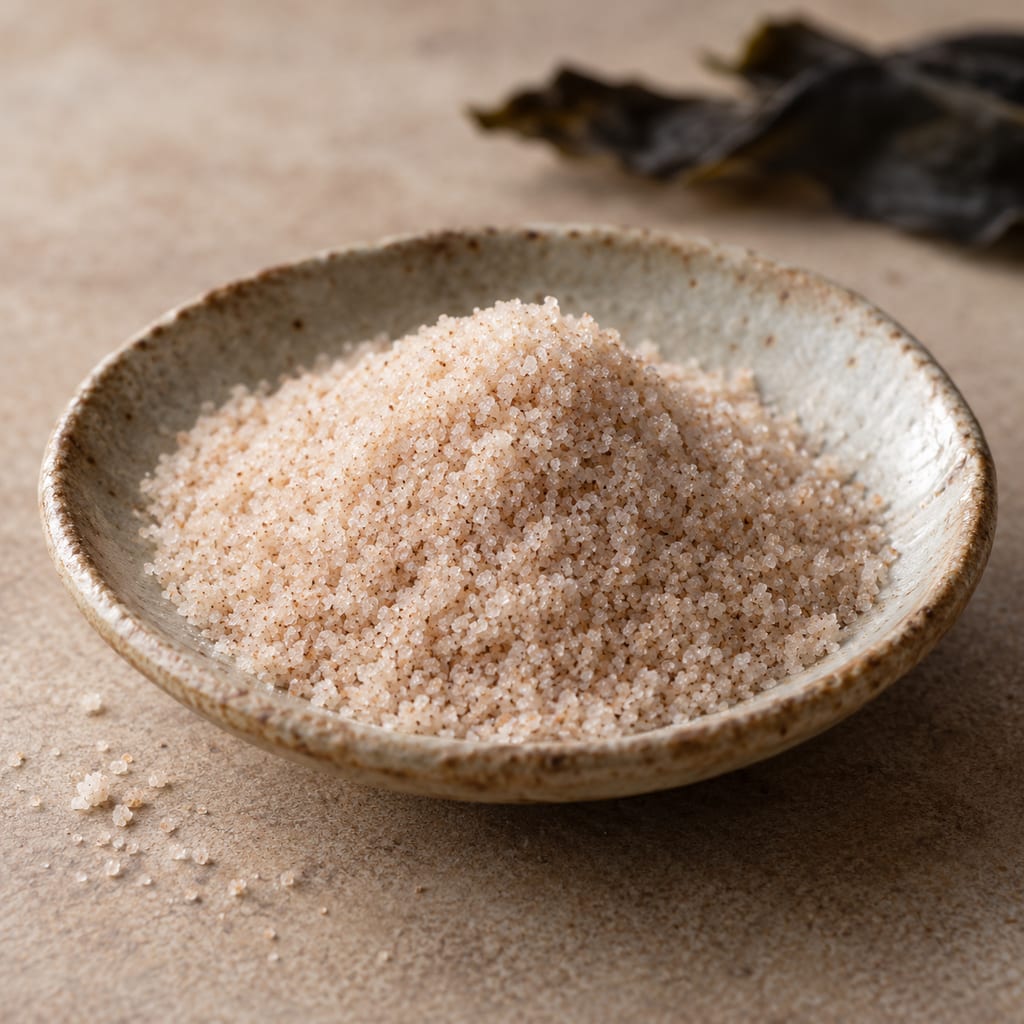
Awaji moshio is a modern Japanese seaweed salt made by TaDa PHILOSOPHY from Awaji Island seawater and seaweed. Its premium process concentrates brine, extracts seaweed flavor, then crystallizes, separates, dries and grades the salt.
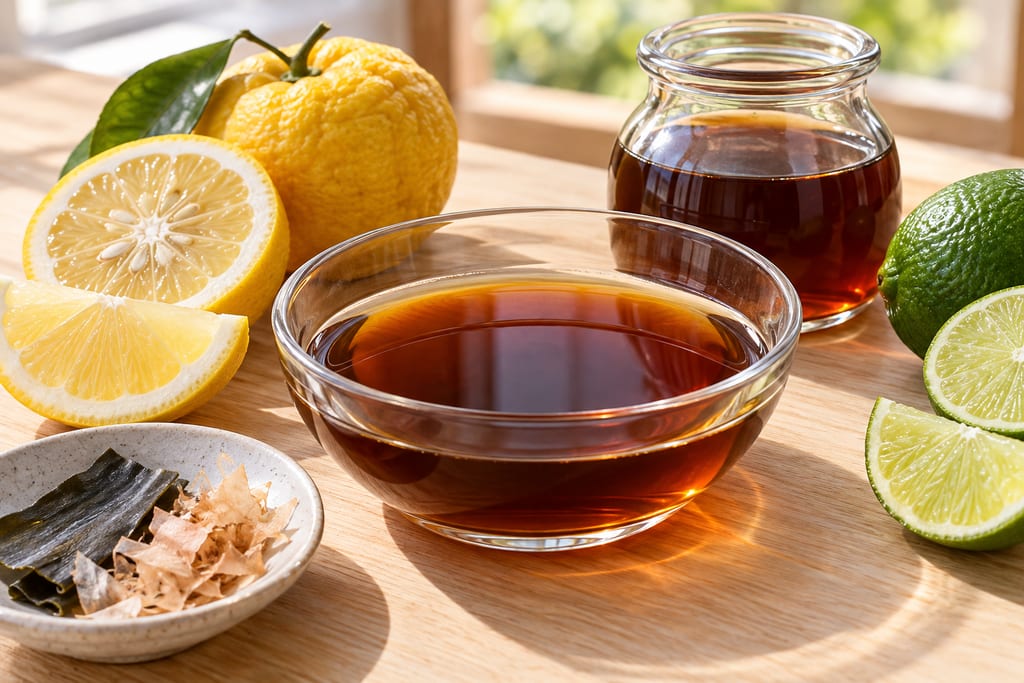
This fresh ponzu-shoyu mixes Japanese koikuchi soy sauce with yuzu or a lemon-lime blend, rice vinegar, water and sugar; optional kombu and bonito give a short chilled infusion.
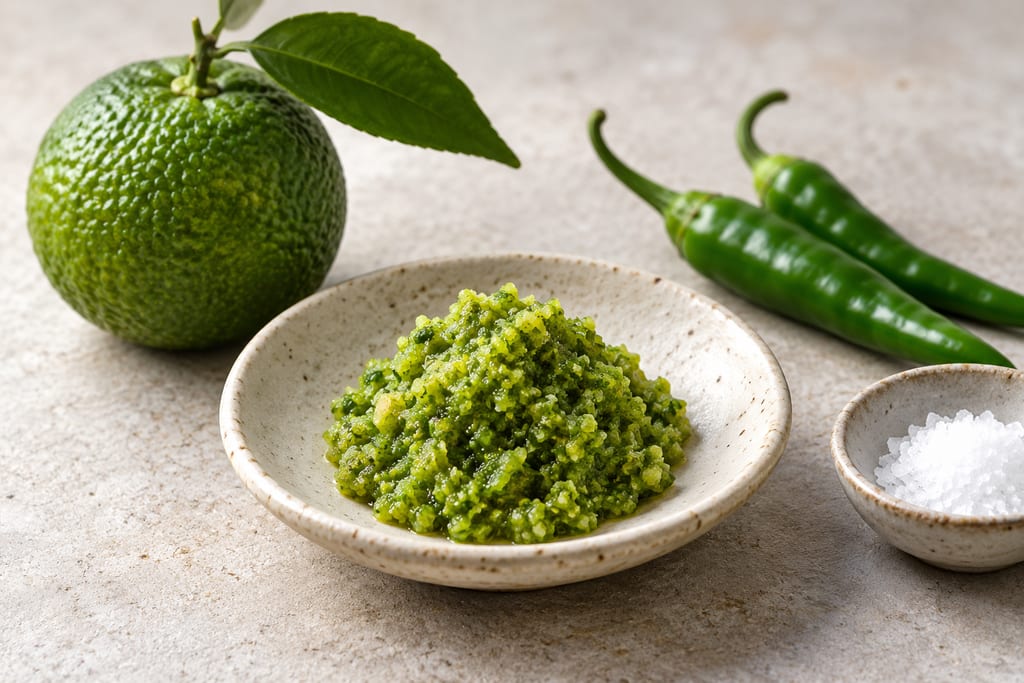
A fresh, uncooked yuzu and green chilli paste inspired by Kyushu’s yuzu kosho, made here as an untested small-batch seasoning rather than a preservation formula.
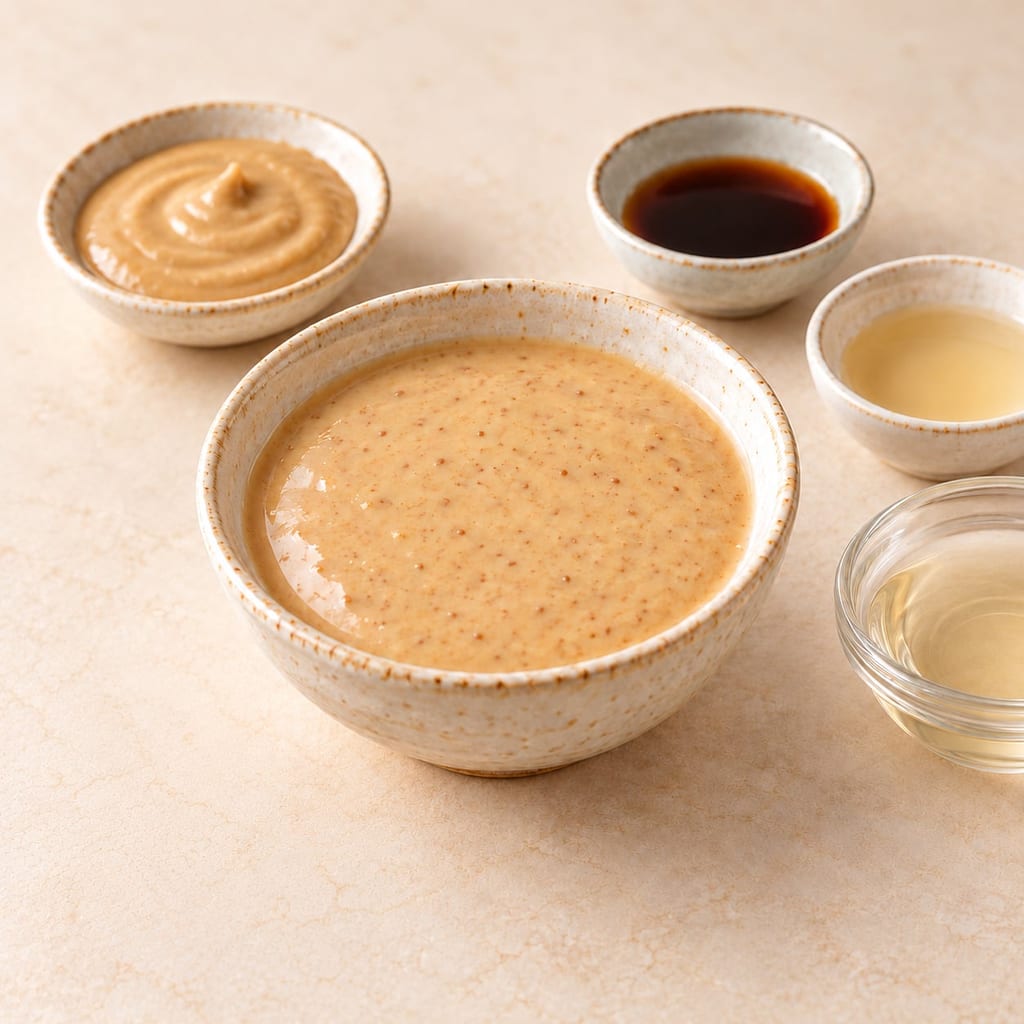
A creamy Japanese sesame dipping sauce with soy, rice vinegar and dashi. Gradual mixing turns the thick sesame paste into a smooth sauce.
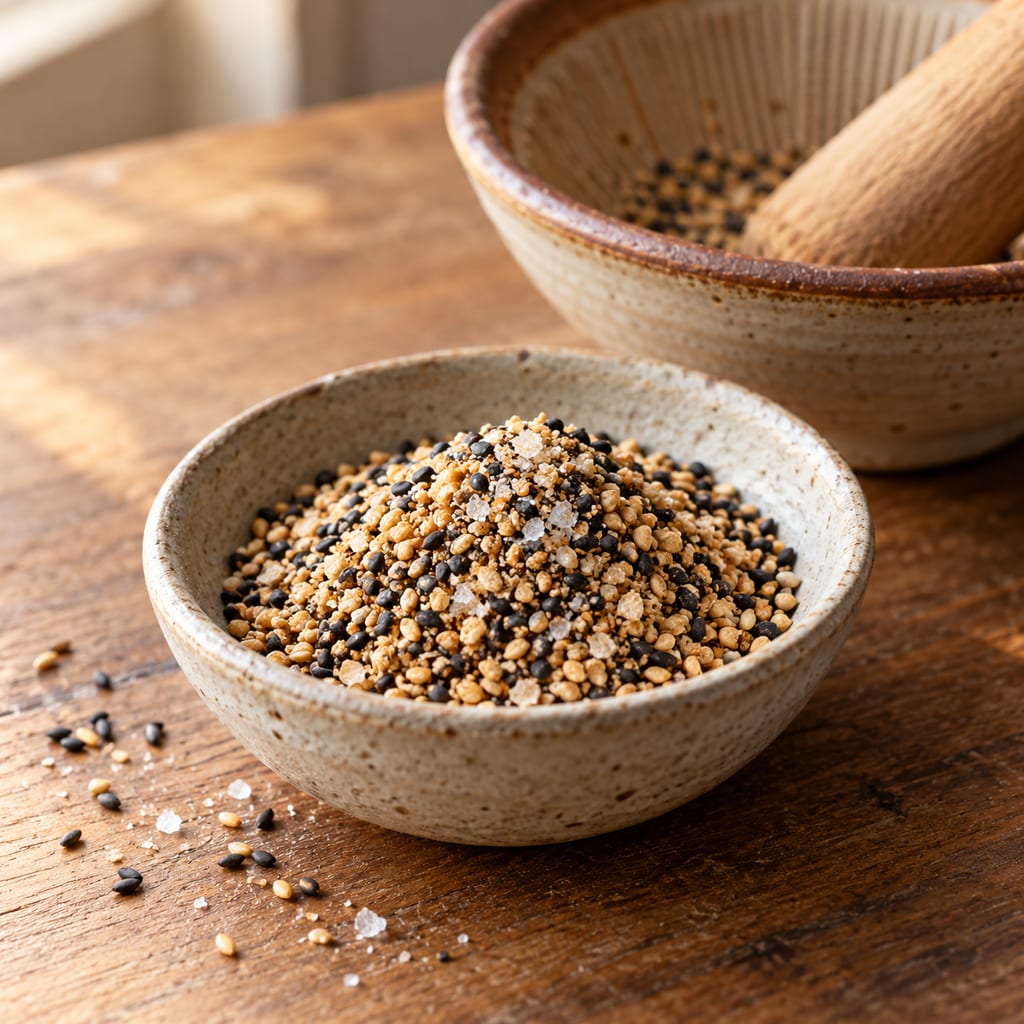
Toasted sesame seeds and sea salt are ground together into a coarse seasoning for rice. This small pan-roasted batch keeps most of the seed texture.
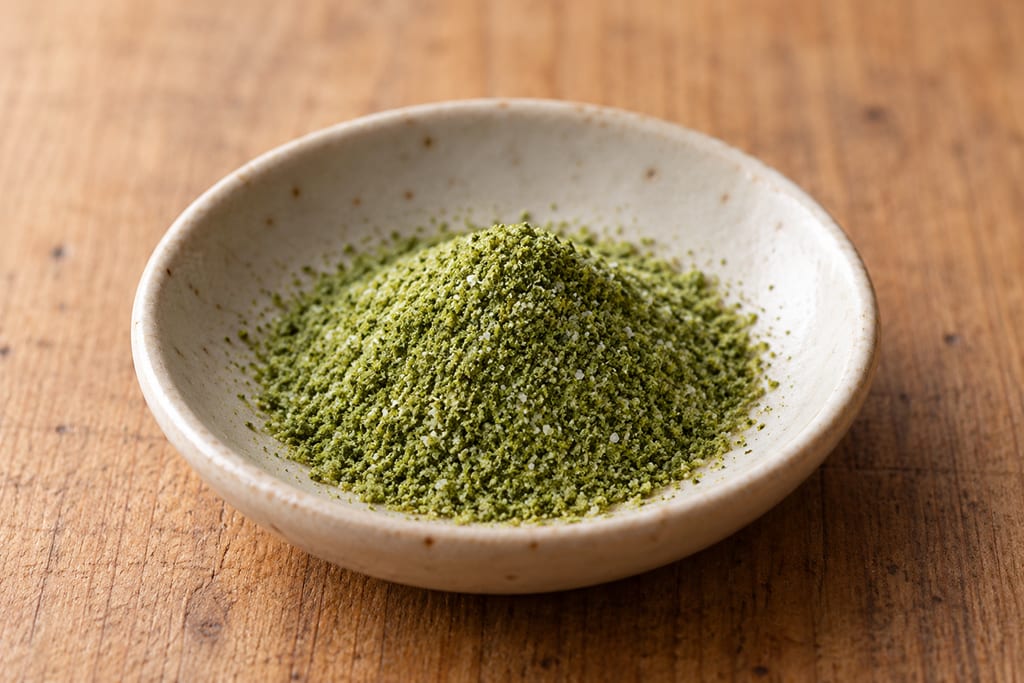
Green tea leaf salt is a dry seasoning made by grinding tea leaves, sieving them and mixing the powder with fine salt. This Japanese-style version follows a documented equal-parts method.
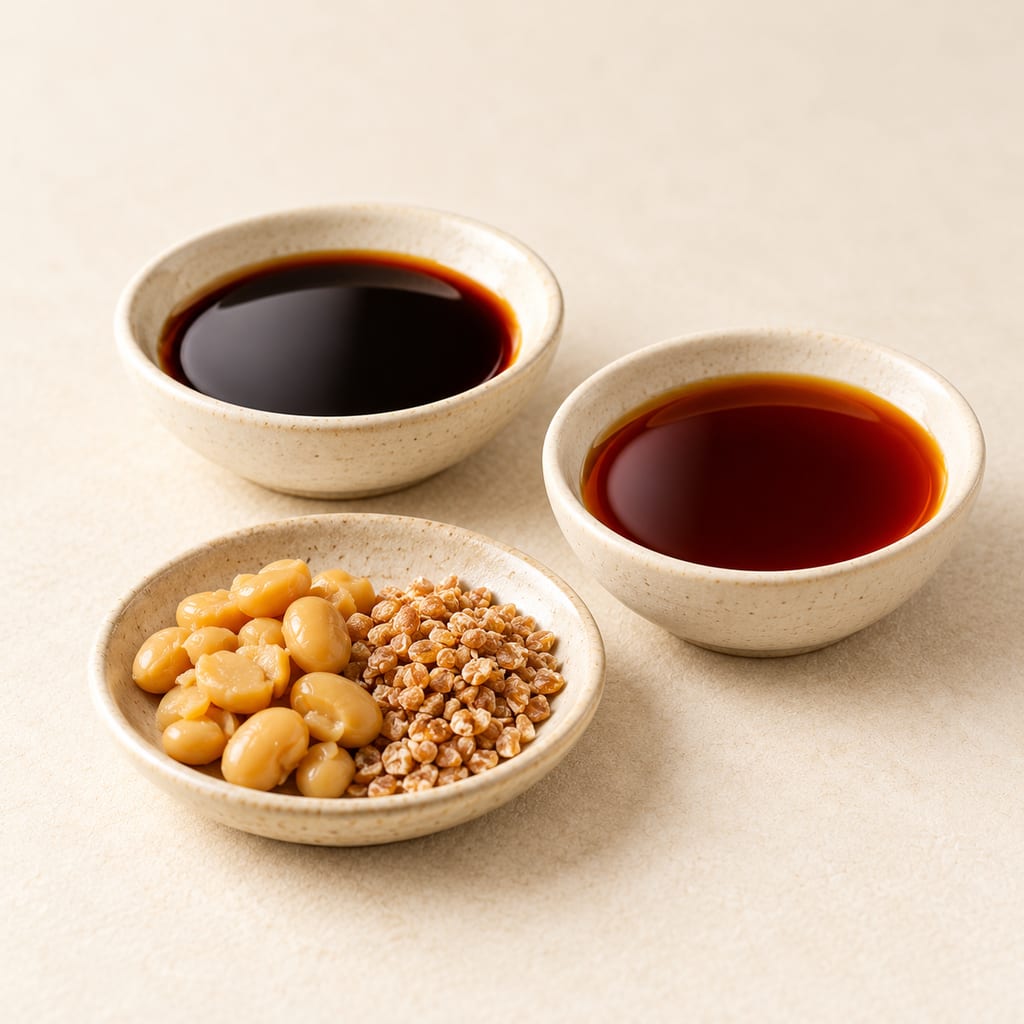
Jiangyou is the Chinese soy sauce family, an umbrella term for light, dark and seasoned sauces made by two main process families: high-salt liquid-state and low-salt solid-state brewing.
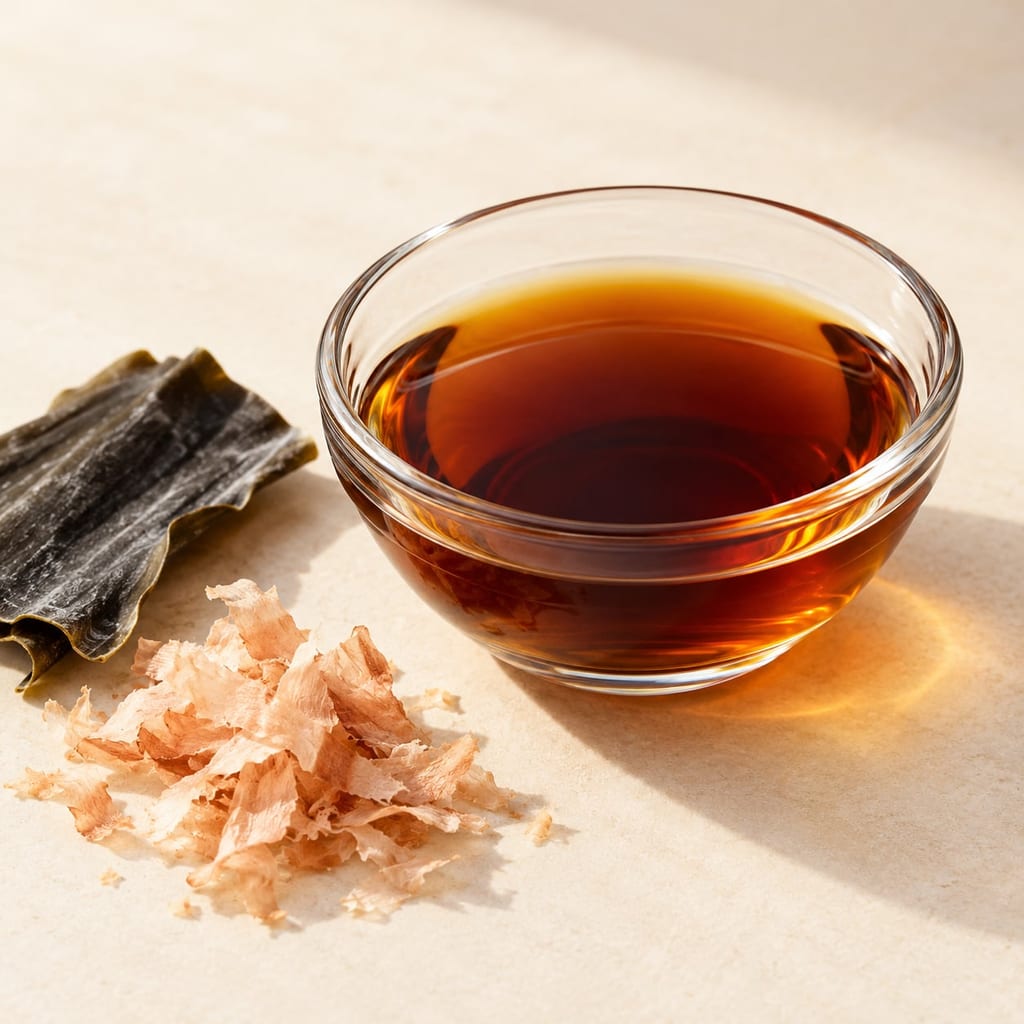
Mentsuyu seasons Japanese noodles with dashi, soy sauce and mirin. Two home formulas are recorded here: a 2012 light-soy and bonito sauce, and a concentrate diluted 1:2 for dipping or 1:4 for hot soup.
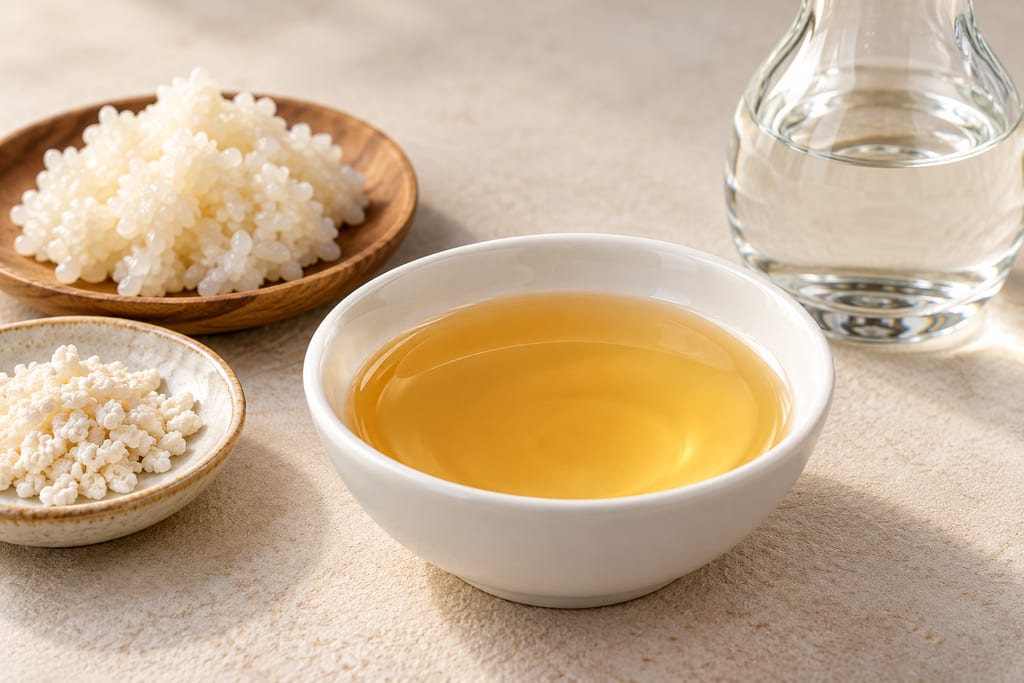
Hon-mirin is a Japanese rice seasoning made by saccharifying glutinous rice with rice koji in shochu, then pressing and usually heating the mash.
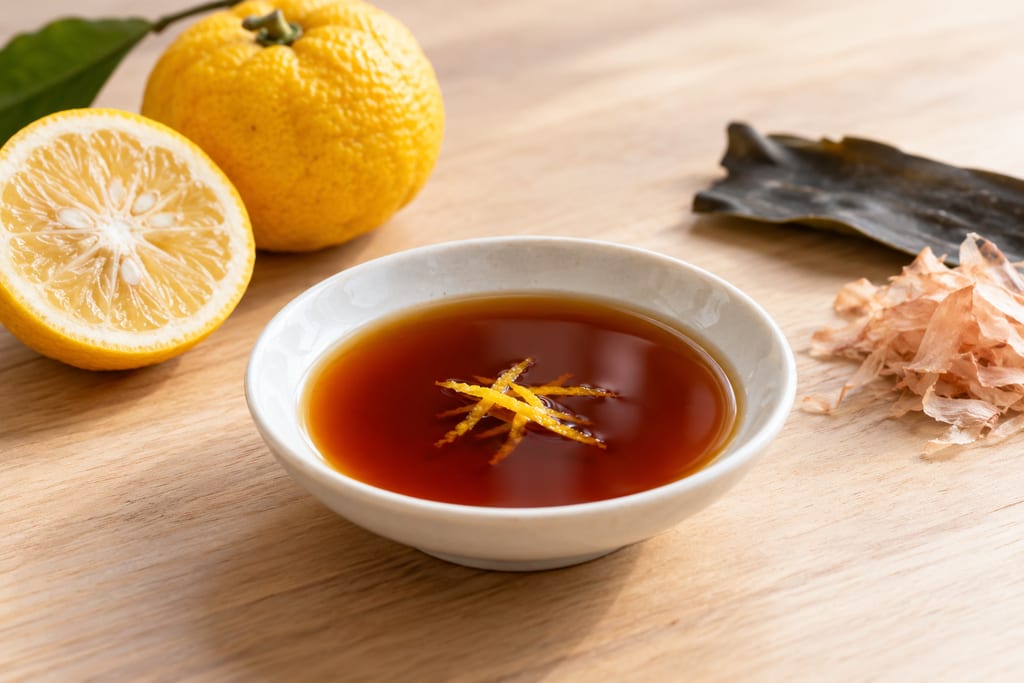
This quick ponzu combines soy sauce, vinegar, hon mirin, kombu, dried bonito and yuzu juice after a brief boil and a warm extraction; the recipe serves five.
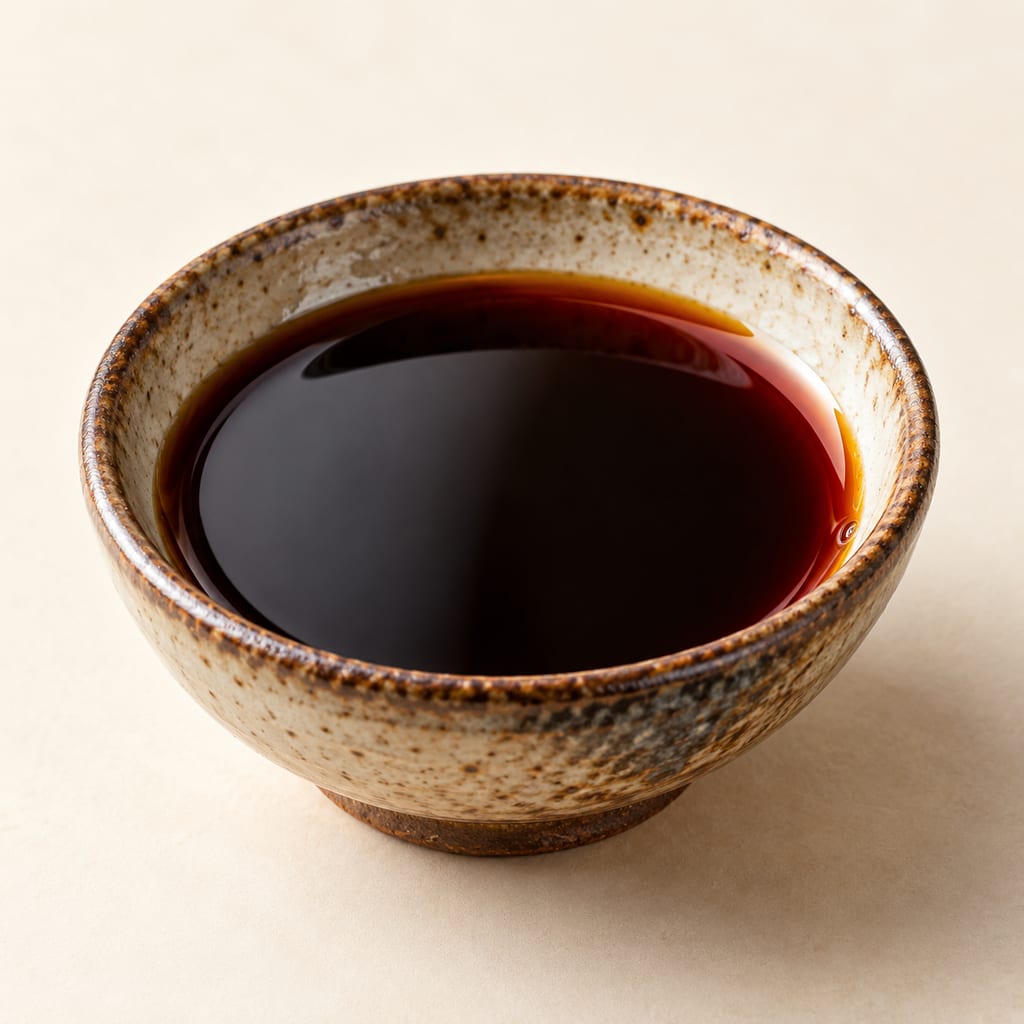
Saishikomi shoyu is a double-brewed soy sauce: a second moromi is made with a finished soy sauce in place of salt water, which makes a dark, concentrated sauce with softer salt.
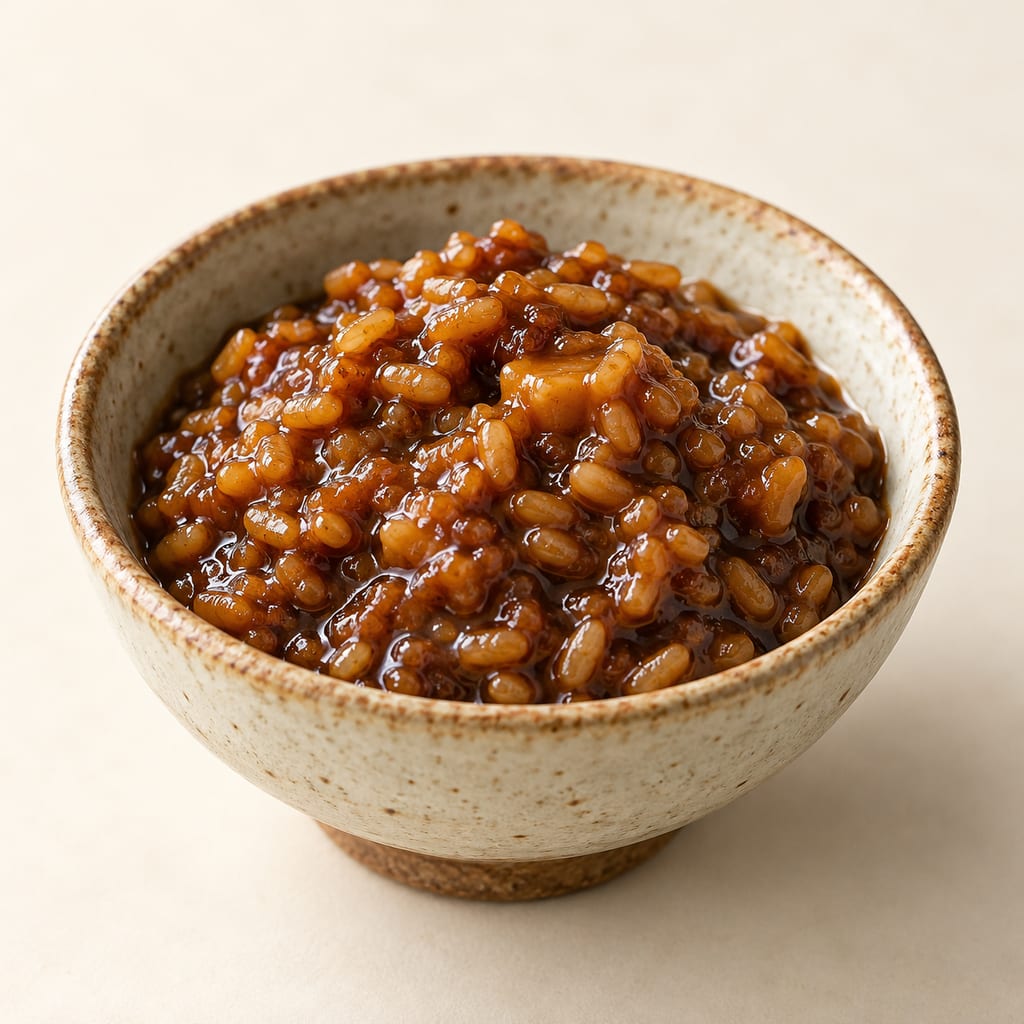
A Japanese kitchen condiment of rice koji matured in soy sauce until the grains turn soft and sweet. The same name also means the mould-grown soybean and wheat used to brew soy sauce.
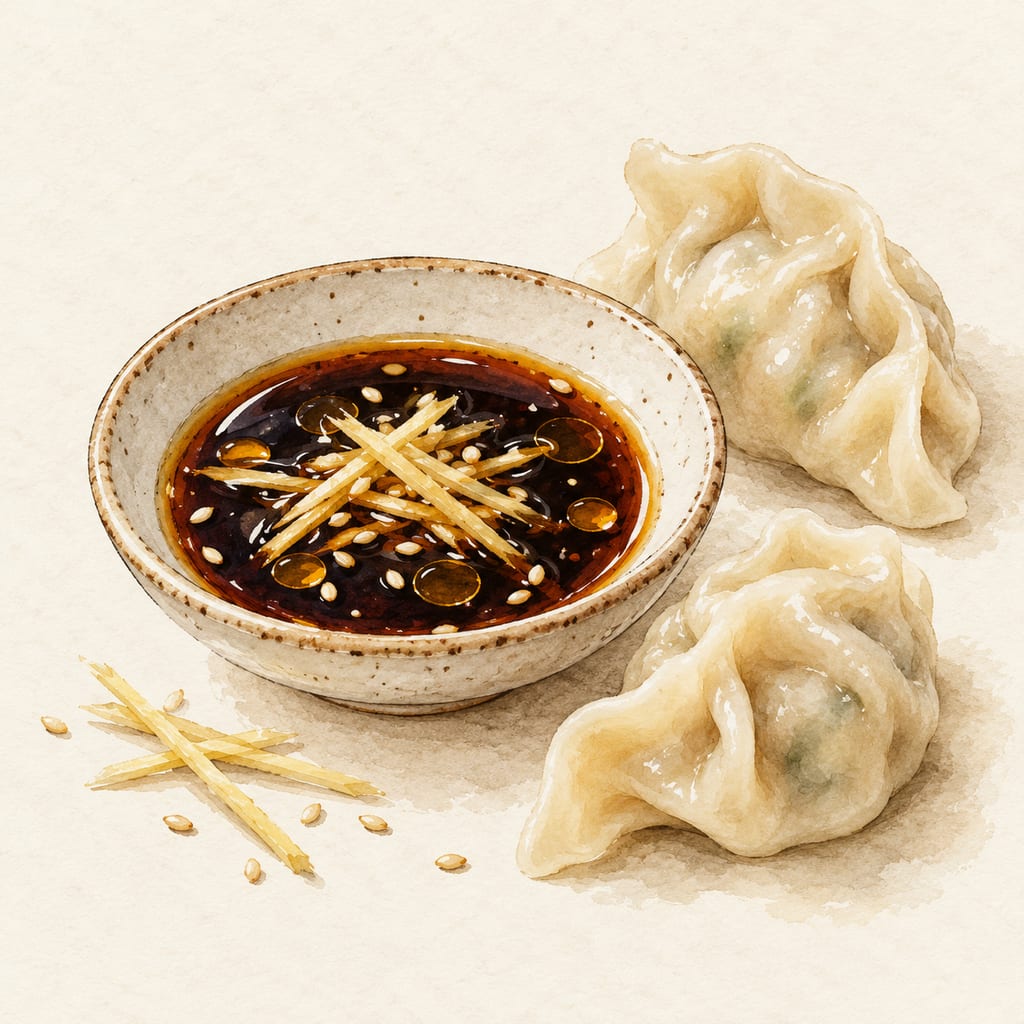
An untested small-batch soy and Zhenjiang black-vinegar dip with ginger and sesame oil, adapted as a modern accompaniment for dumplings or cooked vegetables.
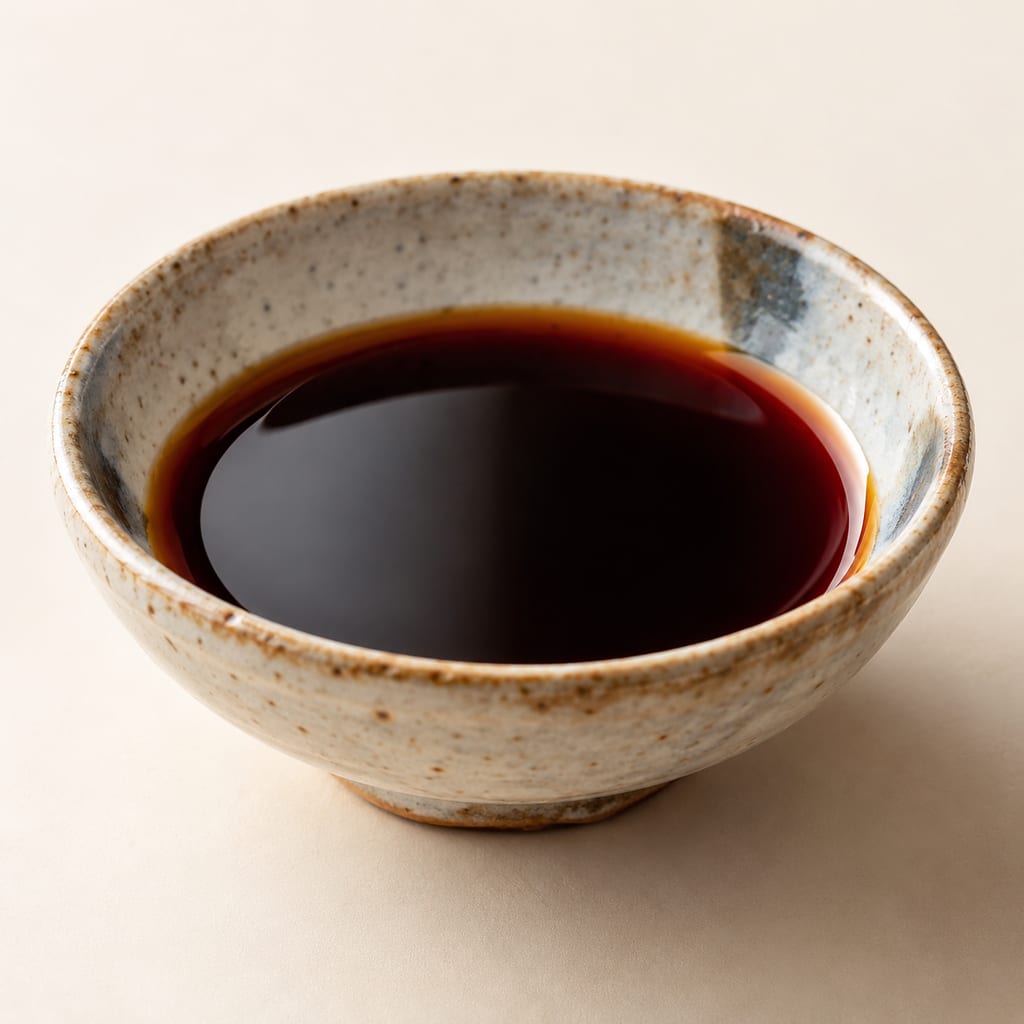
Tamari is the soybean-dominant Japanese soy sauce of the Tokai region, made with little wheat and little brine, and aged longer than koikuchi.

Protected Italian vinegar made only from cooked grape must, fermented and aged in a battery of wooden barrels for at least 12 years: sweet, sharp and syrupy.

Airag is Mongolia’s fermented mare’s-milk drink, traditionally churned with saved starter in a reusable cowhide khokhuur.

Appam, or hoppers, are South Indian and Sri Lankan rice pancakes made from a fermented coconut-and-rice batter and cooked in a curved pan to a crisp lacy rim and a soft, spongy centre.
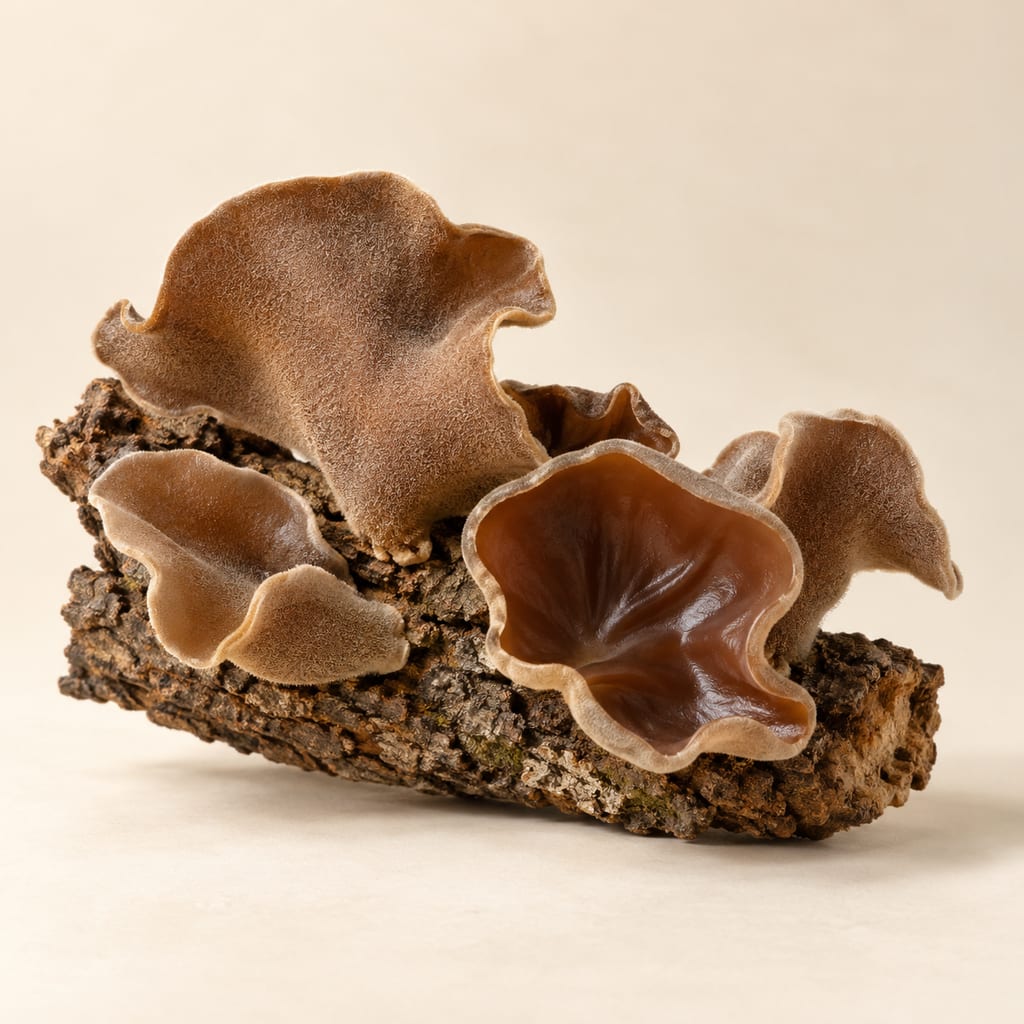
Auricularia tremellosa is a wood ear fungus of the genus that supplies most dried wood ear sold in China; its own food record is thin, and the culinary practice described here comes from the closely related wood ear species.

Ayran is Turkey’s cold, savoury yogurt drink: plain yogurt is loosened with water and lightly salted, then whisked smooth or aerated into a soft cap of foam.
A thin stone griddle used over an open hearth. Norwegian archaeology documents the established tradition from the early Middle Ages; a Viking-period origin is only a cautious suggestion linked to Shetland.

Crushed or milled barley cooked in water until the starch softens and the mixture thickens, the plainest way a northern household turned stored grain into a meal, here with apple and hazelnut.
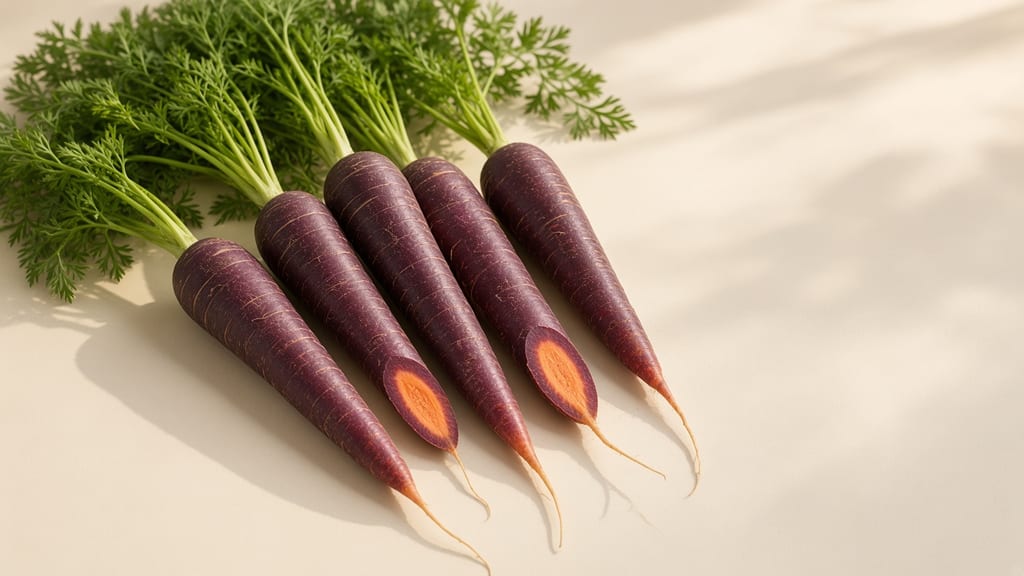
Black carrot is the anthocyanin-pigmented Eastern carrot (Daucus carota var. atrorubens), the purple root that preceded orange types and still colours kanji and şalgam.
No community contributions have been published for this entry yet.
Sign in to contribute. Published comments and photos are free to read.
Ministry of Agriculture, Forestry and Fisheries (Japan)Method · History · Safety
Soy sauce and miso: categories and productionSoy sauce production: soybean, rice, barley and other grains are used; koji and salt water are added to the steamed grains; the mixture is fermented and aged.
Koikuchi koji uses equal amounts of soybeans and wheat; fermentation and ageing take about 8 months.
Tamari uses soybeans and a small amount of wheat; soybeans are crushed into miso-koji balls; the balls ferment with a small amount of salt water; tamari ages longer than koikuchi.
Tamari is one of the five categories of soy sauce.
Cited in: An old seasoning; How shoyu is made; Koikuchi and tamari; Where soy sauce sits among fermented pastes; Notes