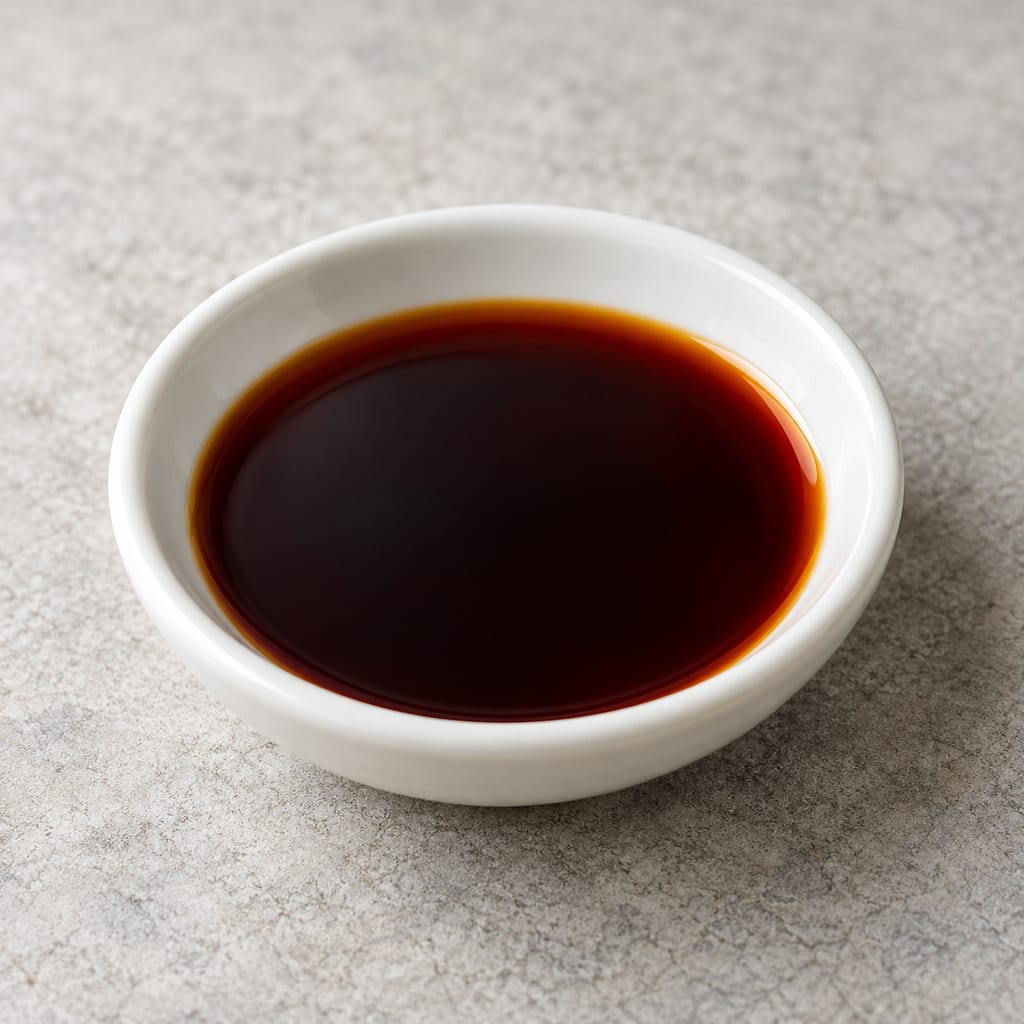
Soy sauce
Soy sauce is a salted liquid seasoning made by growing koji mould on soybeans and grain, maturing the mash in brine and pressing out the liquid. Japan's shoyu is the best-documented form.
 FermenteaWhere food goes to change
Shiitake tsukudani · Tsukudani-style seasoned reduction
Japanese seasoned reduction in which ingredients such as shiitake or fish are simmered in soy sauce and sweeteners until the liquid is absorbed and a concentrated, storable condiment remains.
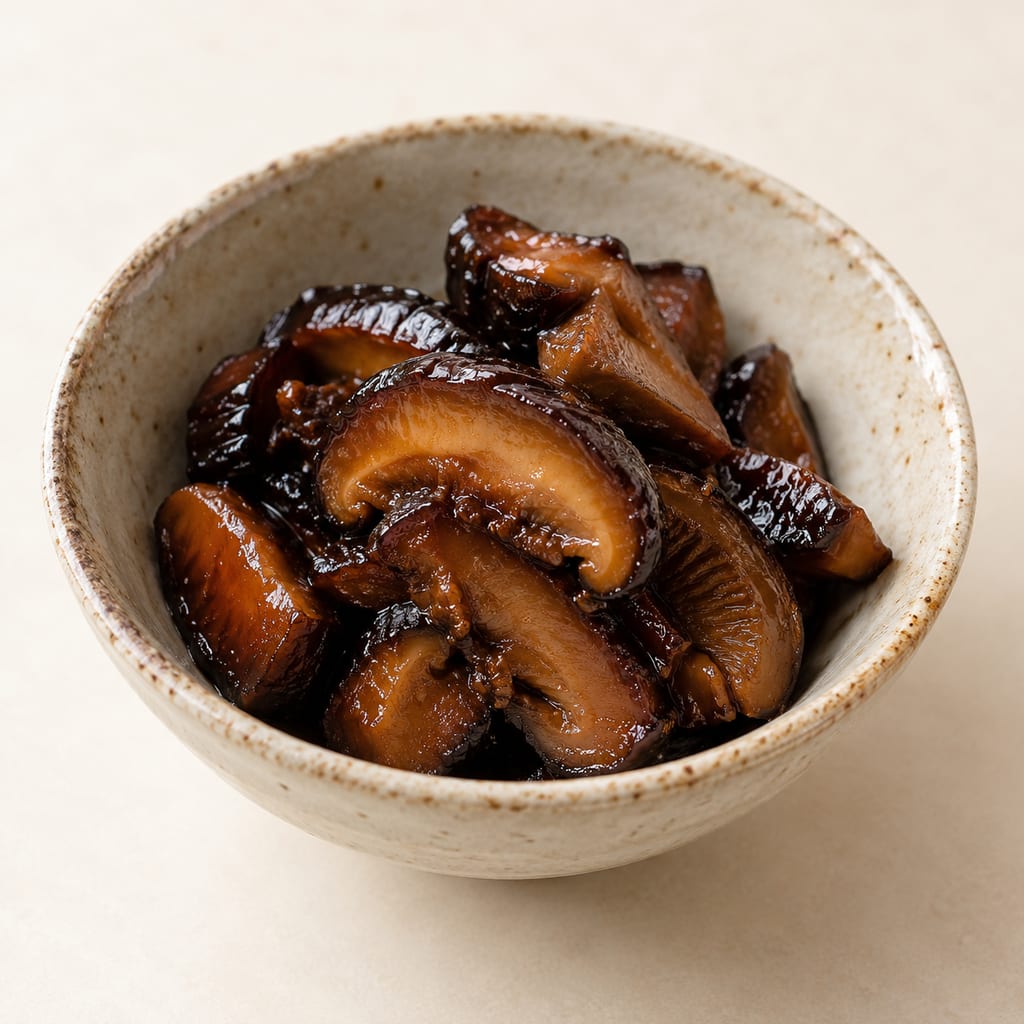
Tsukudani is a Japanese seasoned reduction. Ingredients are simmered in soy sauce with sweet seasonings until the liquid is absorbed, leaving a thick, concentrated condiment that keeps well and is eaten with rice.
The word covers a family of preparations rather than one fixed recipe. The best-known form is fish, and mushroom versions, mainly shiitake, are documented as regional products.
Official Japanese food-culture records date tsukudani to the Edo period (1603 to 1868) and name it after Tsukuda Island in present-day Chuo-ku, Tokyo. Tokugawa Ieyasu moved fishermen from Tsukuda Village in Settsu Province to the island at the mouth of the Sumida River when the shogunate was founded, and the island became a fishing centre.
The records say that the fish were preserved in a thick seasoning of soy sauce brought from Kishu (Wakayama), which made them storable in a way that plain salting or pickling did not.
The base ingredients are simmered in a saucepan with the seasonings over medium heat until they boil, then at a lower heat until all the liquid is absorbed. The official description calls the result sweet and spicy.
For seaweed, the sheets are torn, soaked until soft and broken up during cooking so they do not form a solid mass. Recipes vary by region and by household.
The Kunisaki-Usa heritage programme lists dried shiitake simmered in soy sauce as a local tsukudani product, within the Kunisaki Peninsula and Usa agricultural-heritage designation. The record names soy sauce as the only seasoning and gives no quantities, no storage conditions and no history specific to this product.
Tsukudani is a common topping for white rice and is eaten with ocha-zuke (rice in tea or broth) and onigiri (rice balls). It is eaten through the year and as a strong accompaniment to main dishes.
The shiitake record gives no formulation, moisture target or storage system, and the reduction stage determines how long the product keeps. The sources do not supply a shelf life, so none is given here.
The soy sauce in the product is fermented; the mushroom is not fermented by that. The fermentation_type for this recipe is therefore non-fermented.
Tsukudani is recorded as a preserved food since the Edo period (1603 to 1868), named after Tsukuda Island in present-day Chuo-ku, Tokyo. The original seasoned product was a fish dish; the island was a fishing centre after Tokugawa Ieyasu moved fishermen there from Settsu Province. Thick soy sauce from Kishu (Wakayama) made the fish more storable than simple salting or pickling.
Storage and moisture determine stability; the sources do not give a storage time for the shiitake product.
Fermented soy sauce does not mean the mushroom itself is fermented.
Country-level source for the technique and its history; the Edo-period origin is recorded for the fish form on Tsukuda Island, Tokyo.
Official heritage-product record for dried shiitake simmered in soy sauce as tsukudani.
Soy sauce is a salted liquid seasoning made by growing koji mould on soybeans and grain, maturing the mash in brine and pressing out the liquid. Japan's shoyu is the best-documented form.

Japanese reddish-brown vinegar from sake lees matured about three years, turned to vinegar by acetic bacteria; the vinegar of Handa and Edomae sushi rice.
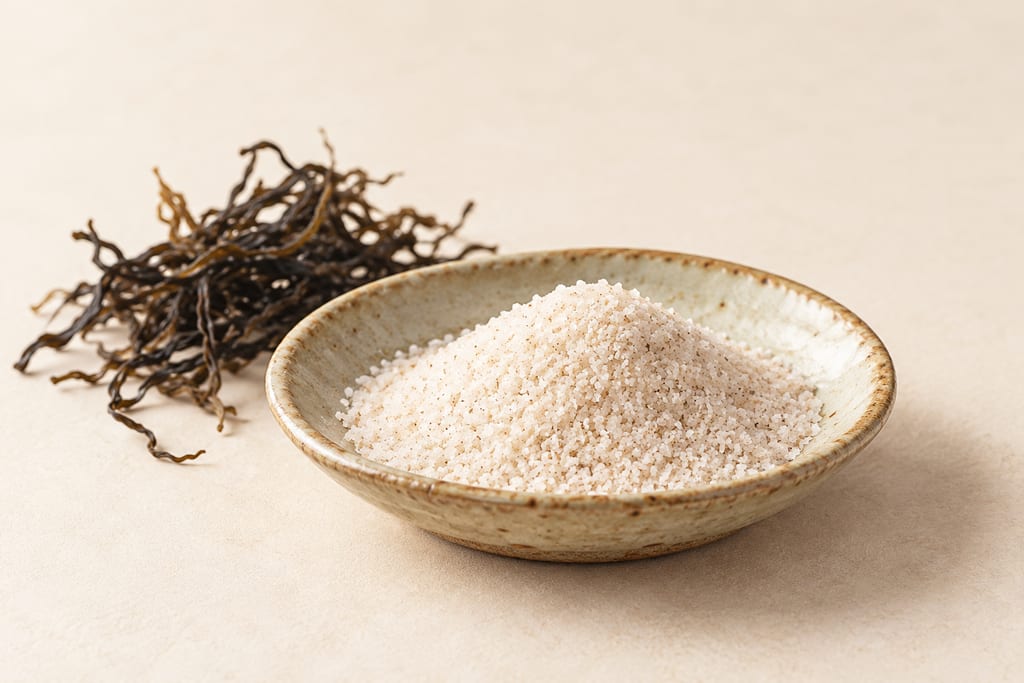
Amabito no Moshio is a modern, pale beige Japanese seaweed salt made from Seto Inland Sea water and hondawara seaweed. Its documented factory method concentrates filtered brine in kettles, then separates and dries the salt.
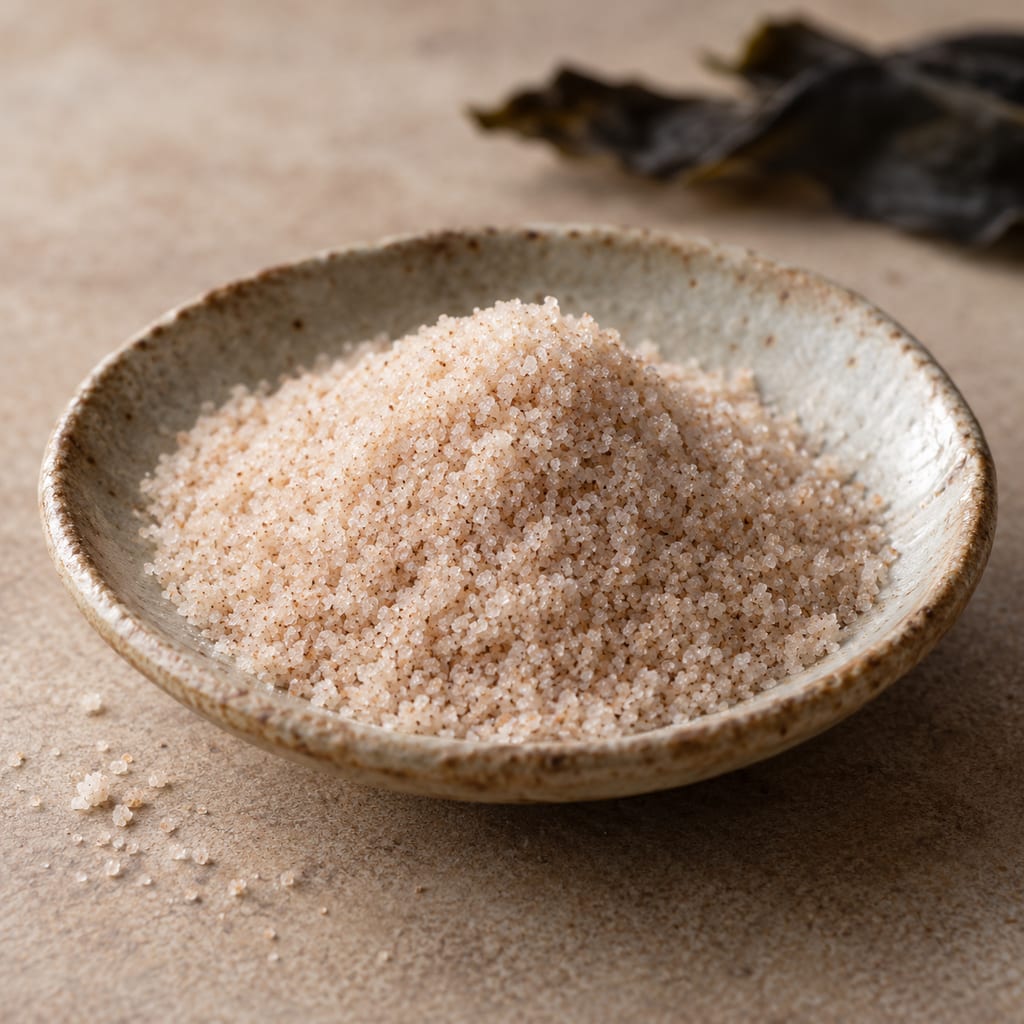
Awaji moshio is a modern Japanese seaweed salt made by TaDa PHILOSOPHY from Awaji Island seawater and seaweed. Its premium process concentrates brine, extracts seaweed flavor, then crystallizes, separates, dries and grades the salt.
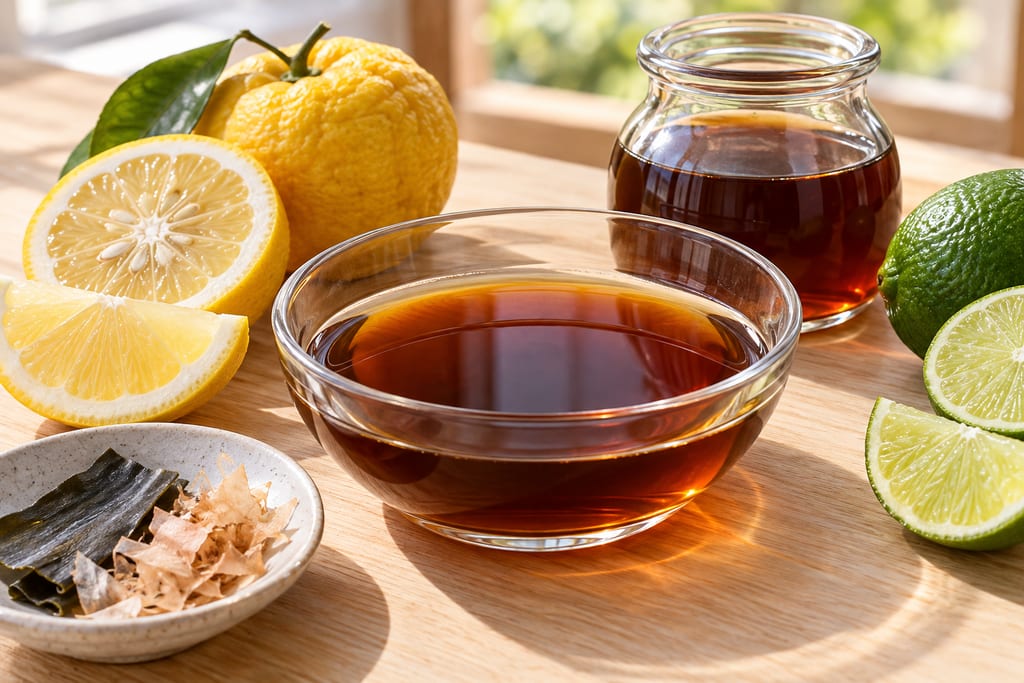
This fresh ponzu-shoyu mixes Japanese koikuchi soy sauce with yuzu or a lemon-lime blend, rice vinegar, water and sugar; optional kombu and bonito give a short chilled infusion.
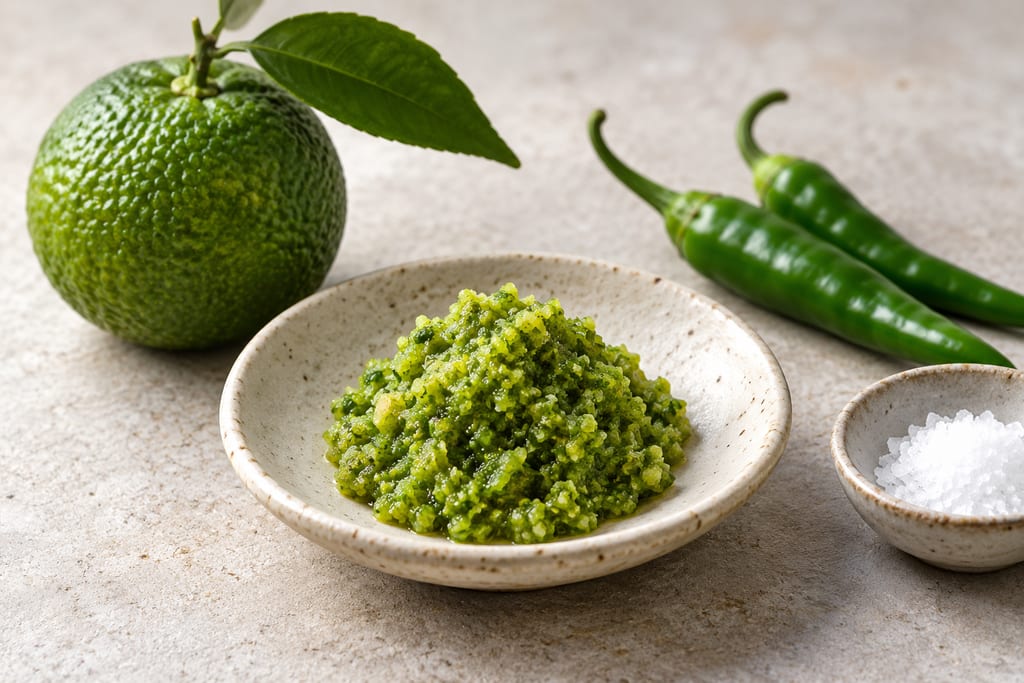
A fresh, uncooked yuzu and green chilli paste inspired by Kyushu’s yuzu kosho, made here as an untested small-batch seasoning rather than a preservation formula.
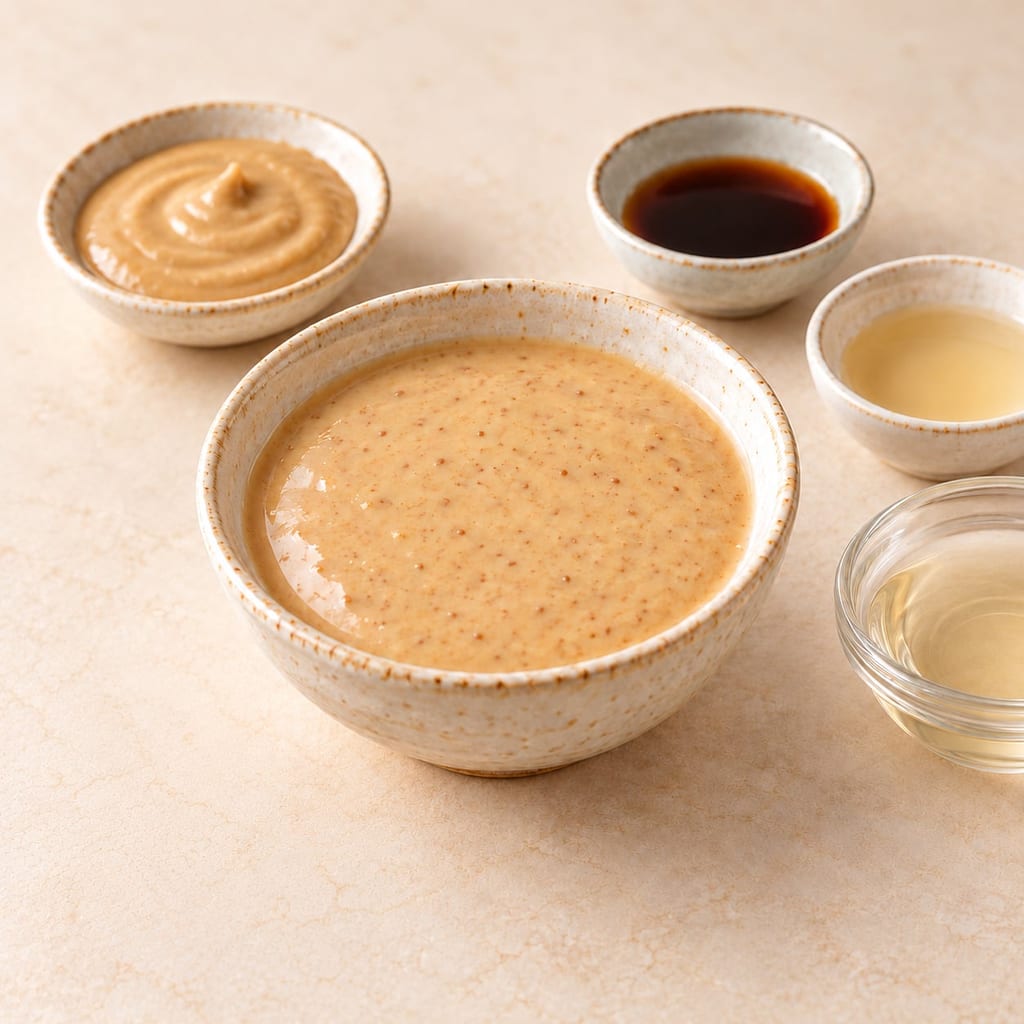
A creamy Japanese sesame dipping sauce with soy, rice vinegar and dashi. Gradual mixing turns the thick sesame paste into a smooth sauce.
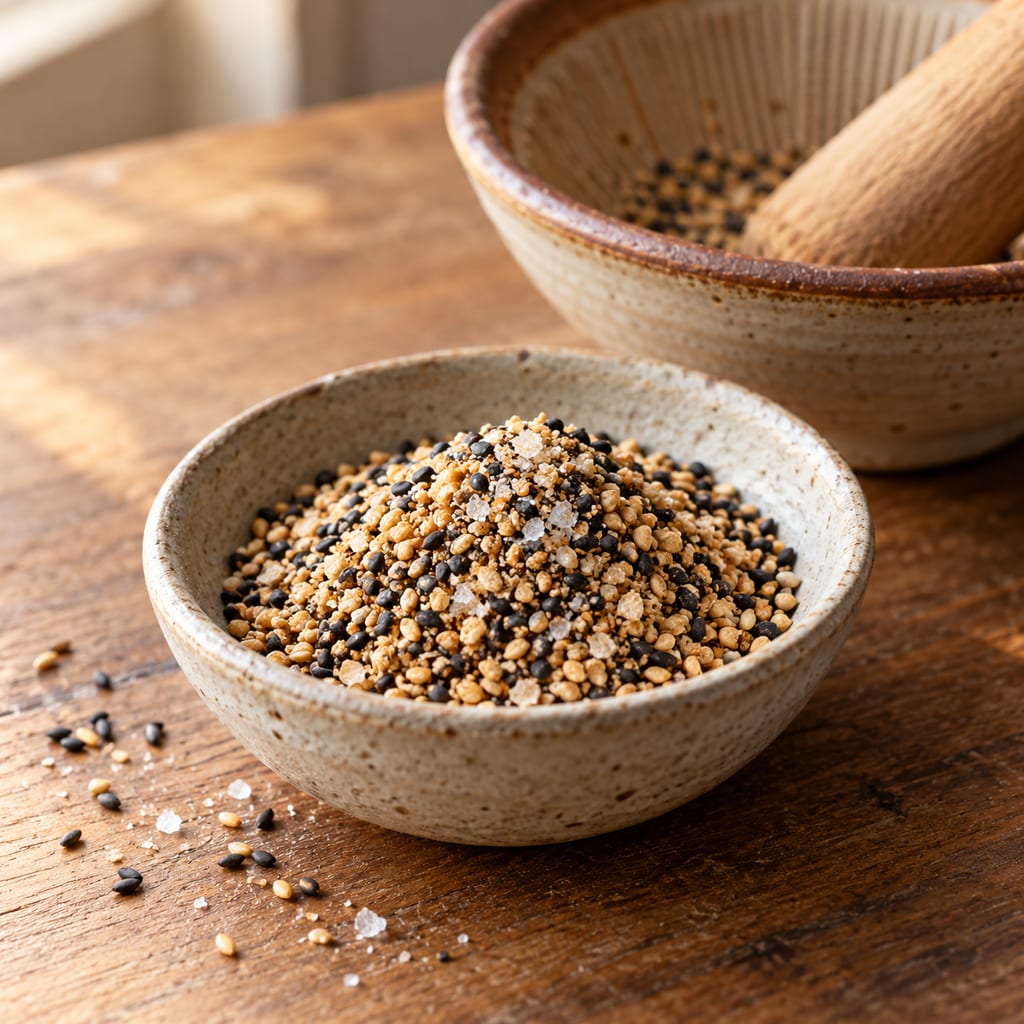
Toasted sesame seeds and sea salt are ground together into a coarse seasoning for rice. This small pan-roasted batch keeps most of the seed texture.
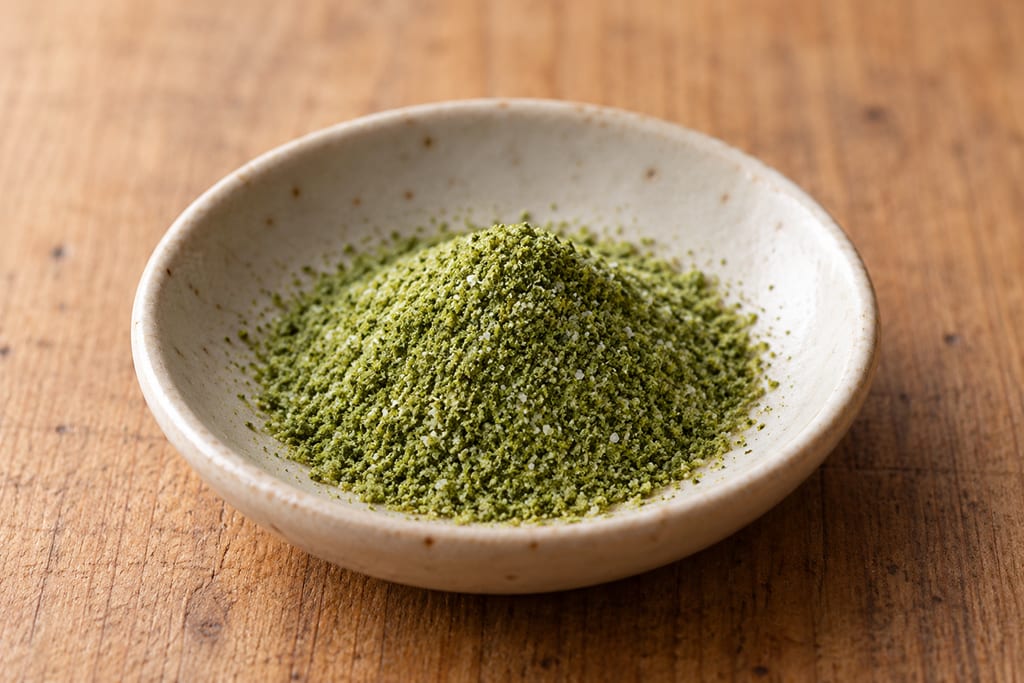
Green tea leaf salt is a dry seasoning made by grinding tea leaves, sieving them and mixing the powder with fine salt. This Japanese-style version follows a documented equal-parts method.
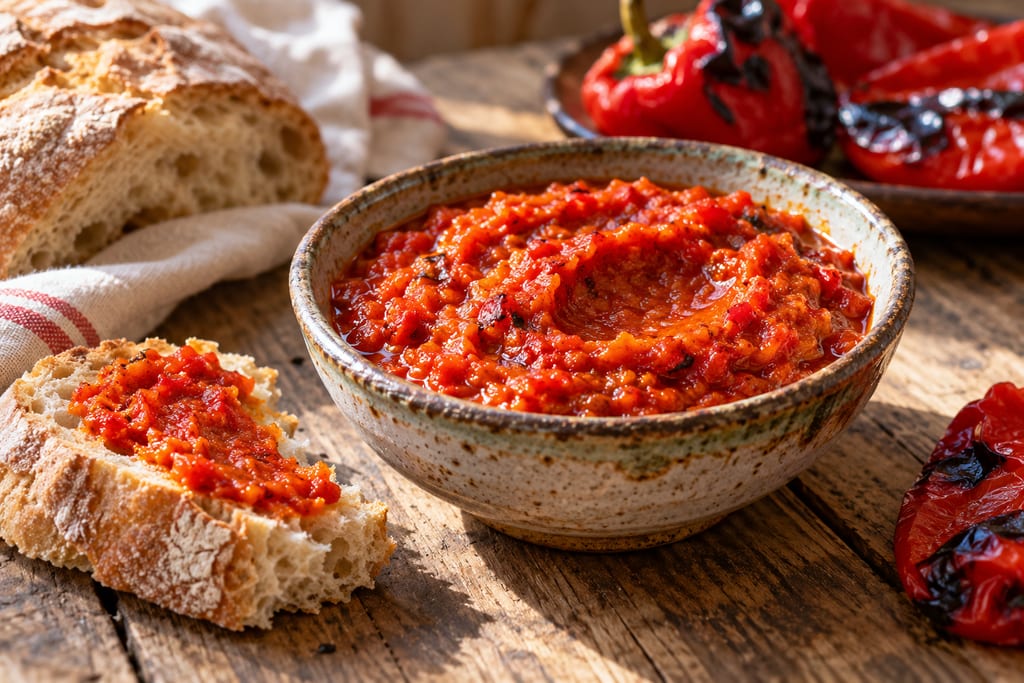
Ajvar is a cooked Balkan pepper preserve built around roasted red peppers, peeled, drained, ground and slowly fried with oil and seasoning. Leskovac’s protected version is a pepper specialty; regional versions vary.
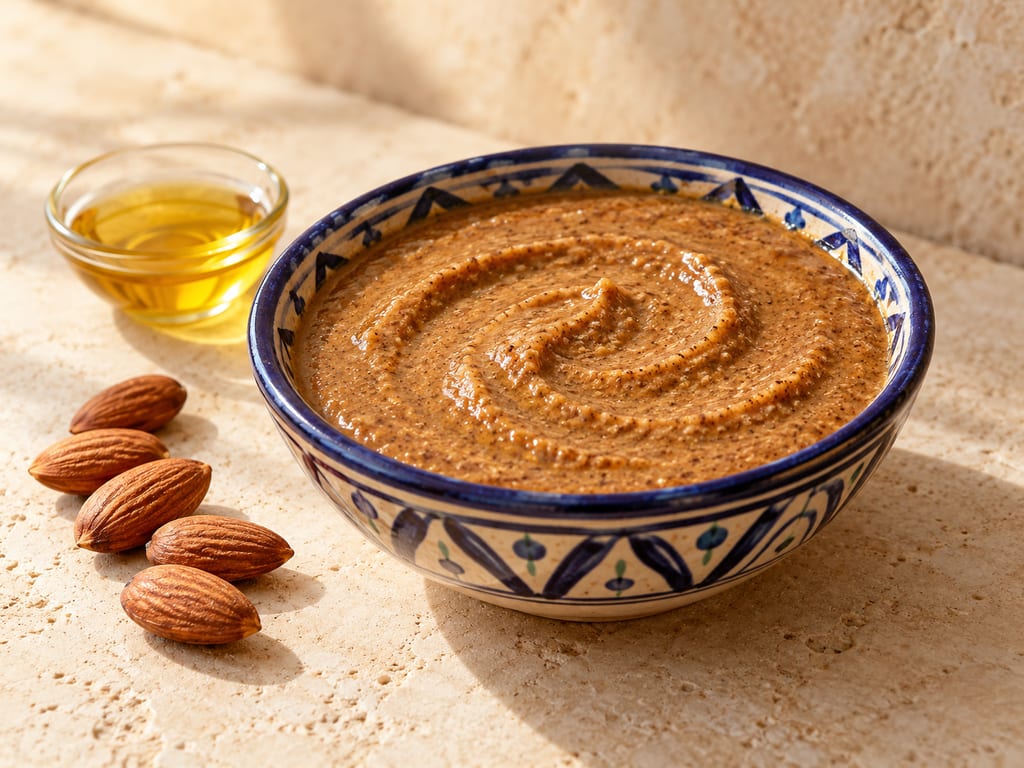
Amlou is a nutty, lightly sweet Moroccan spread of roasted almonds, culinary argan oil and honey. The almonds are ground first, then loosened with oil and sweetened; the balance can range from a thick spread to a dip.
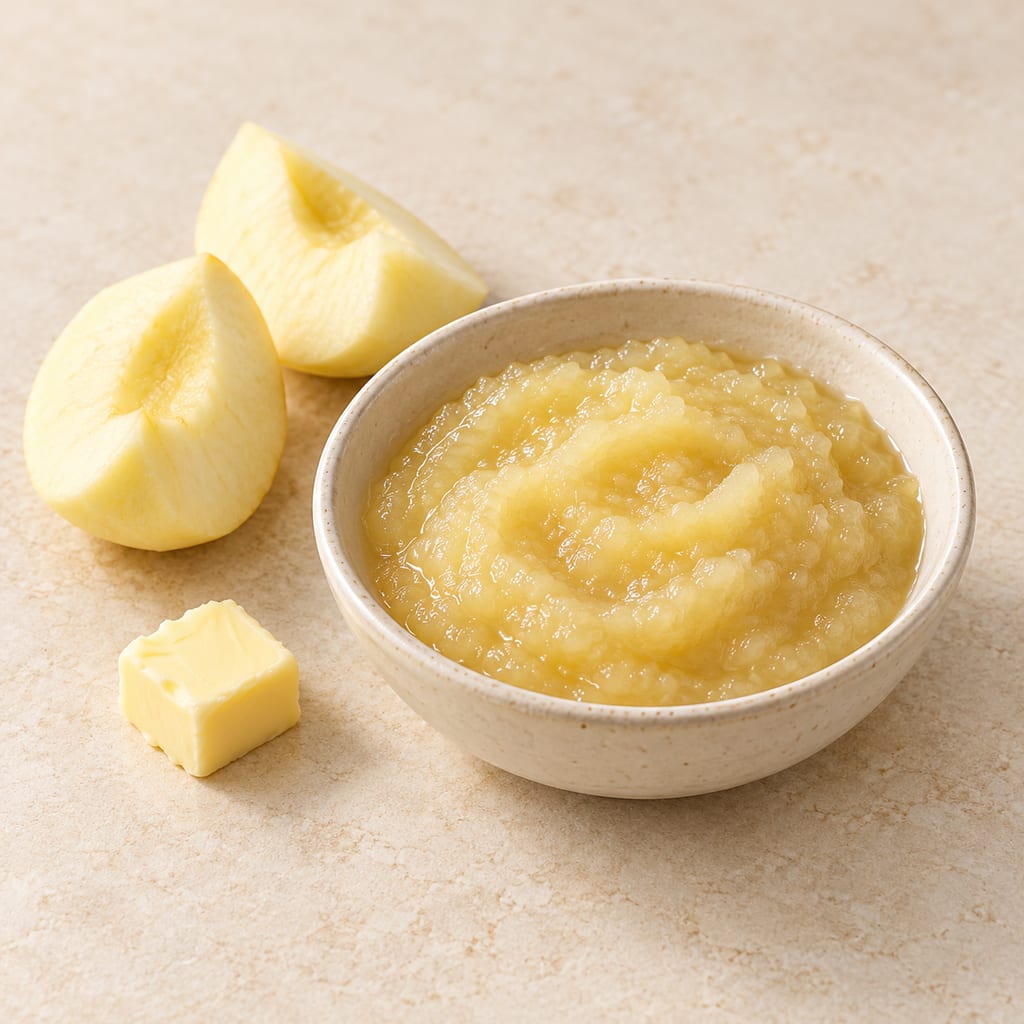
Apple sauce for goose and pork is a plain English accompaniment: cooked apples pulped with water, then sweetened with sugar and finished with a little butter.

A warm dip of garlic, anchovy and olive oil, often enriched with butter, that Piedmont serves over a flame with raw and cooked vegetables and bread.
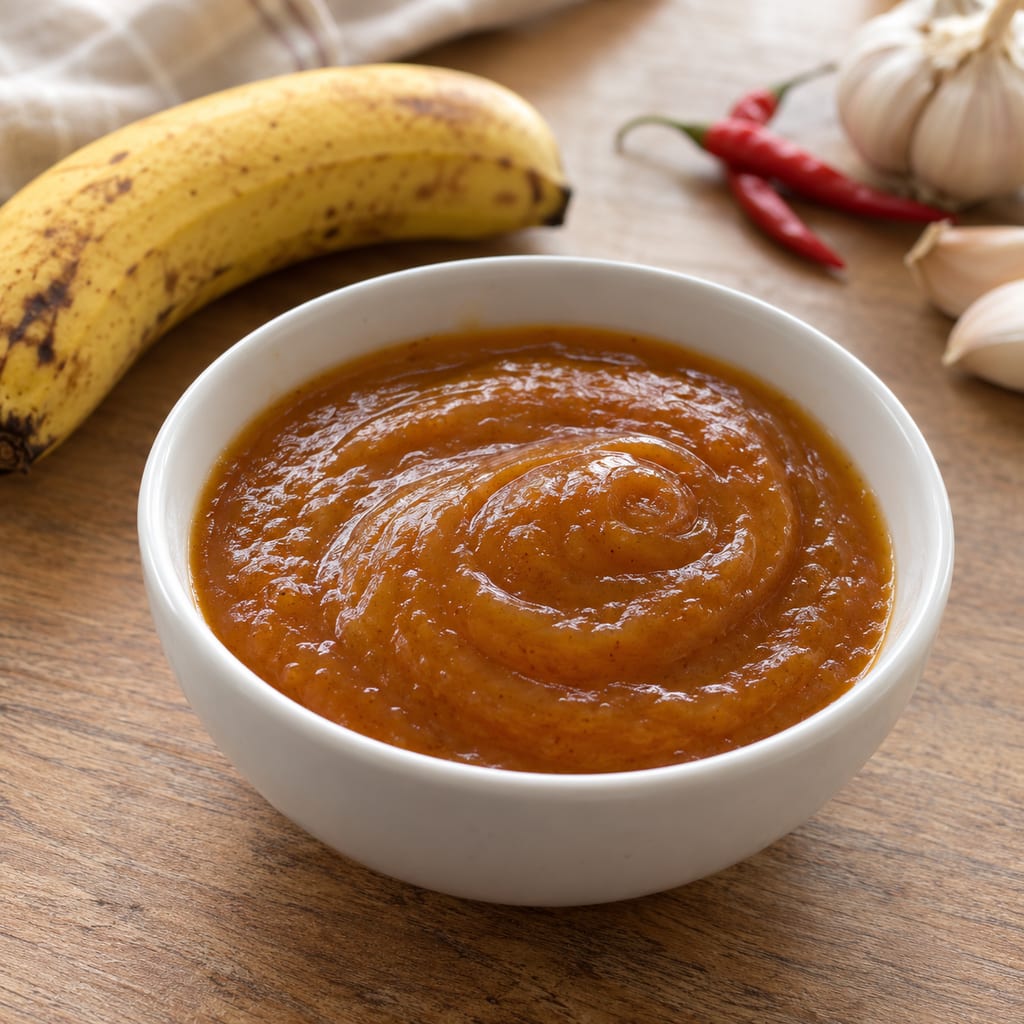
A sweet-hot table sauce of ripe banana simmered with vinegar, sugar, onion, garlic and fresh chilli, in the manner of Philippine banana ketchup. An untested development batch of about 500 g.
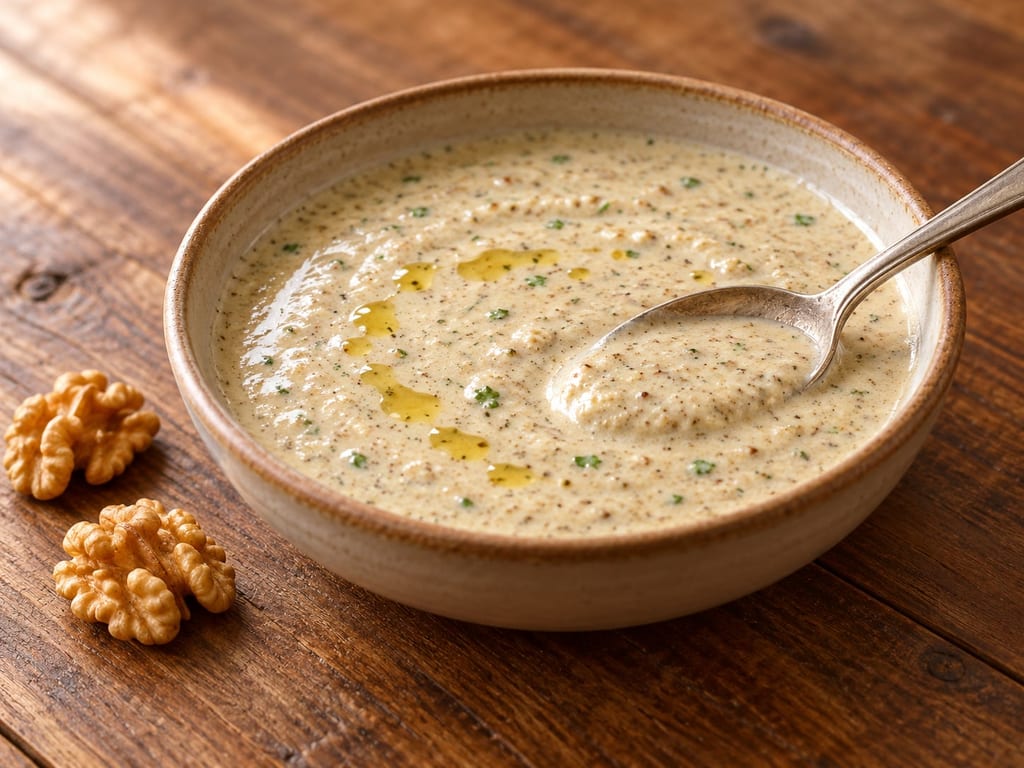
A Georgian walnut sauce of ground walnuts, garlic, vinegar and spices, thinned with water or broth. It is served with poultry, vegetables and bread, and is the sauce of the dish satsivi.
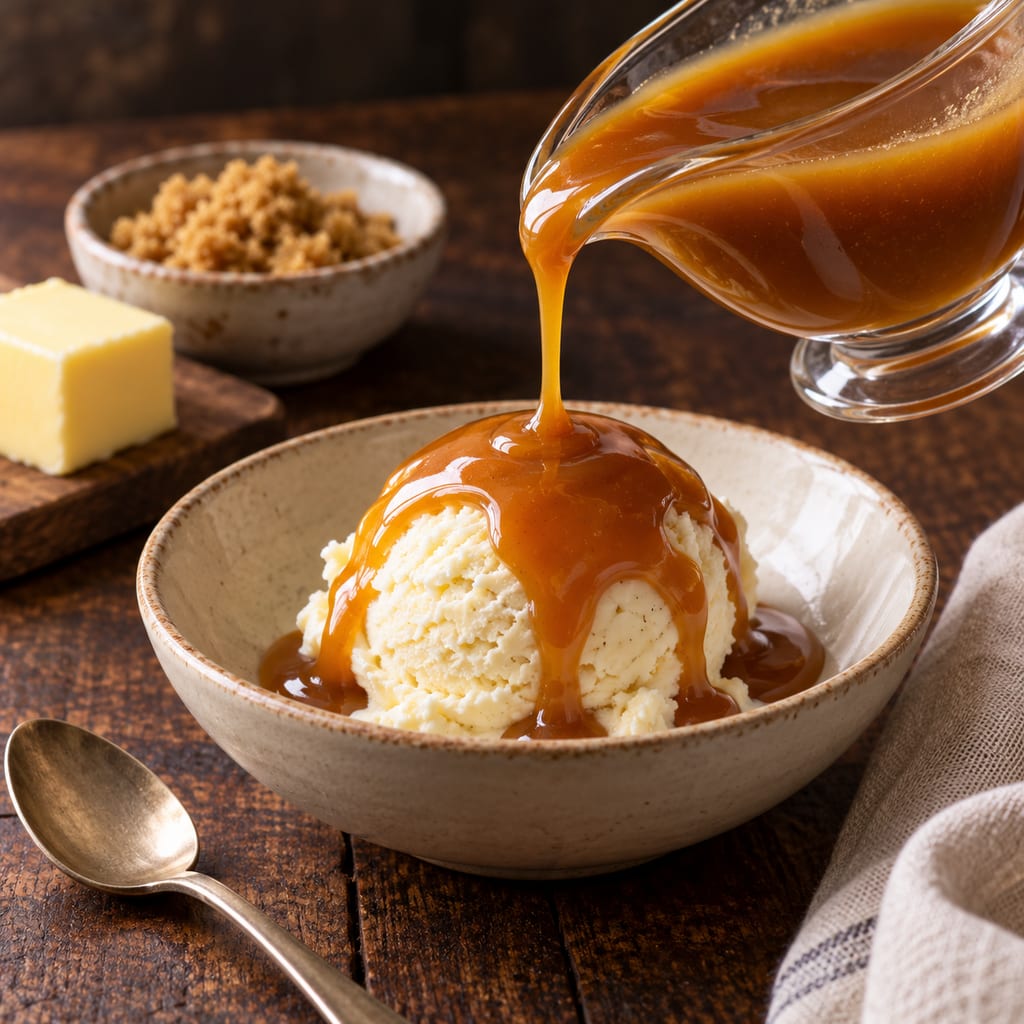
A pourable dessert sauce of brown sugar, butter and cream, with a little corn syrup and salt. It is the sauce form of the butterscotch confection and is made without water, unlike caramel.
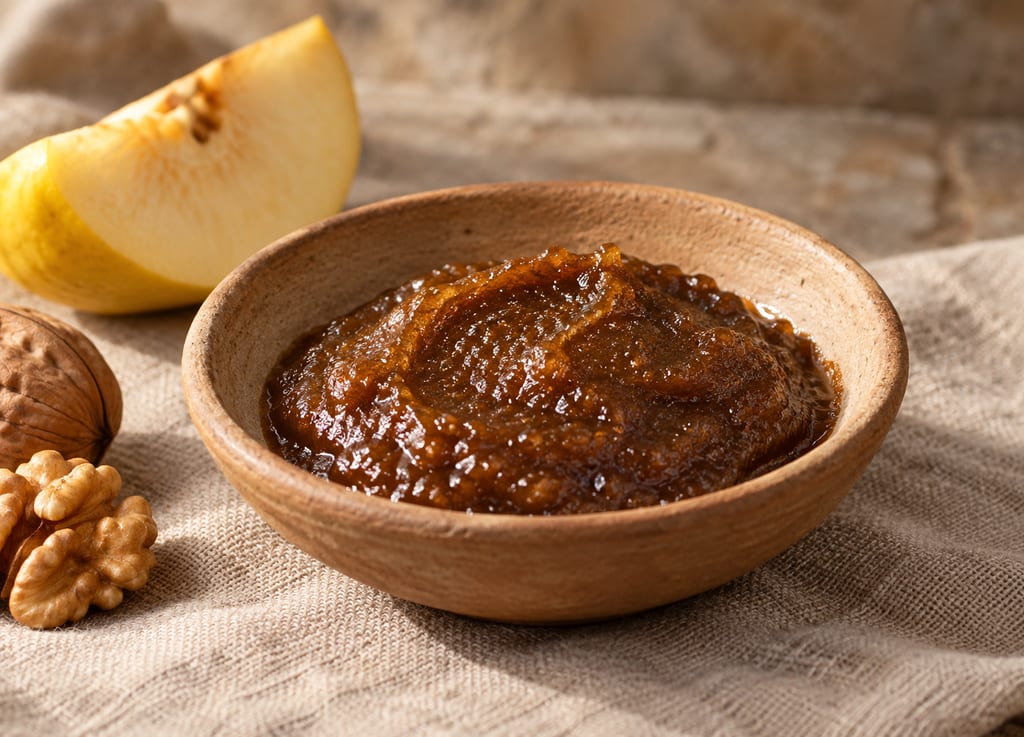
Byzantine murrī is a cooked imitation of murrī from the medieval Arabic repertoire, made from scorched honey, toasted bread, walnuts, quince, carob and spices rather than from a long grain fermentation.
No community contributions have been published for this entry yet.
Sign in to contribute. Published comments and photos are free to read.
Ministry of Agriculture, Forestry and Fisheries, JapanMethod · History
Tsukudani (MAFF)Simmer in soy sauce, mirin, sugar and sake until the liquid is absorbed; served with rice, ocha-zuke and onigiri; Edo-period origin on Tsukuda Island
Kunisaki-Usa GIAHSMethod · Inspiration
Shiitake mushroom tsukudani (Kunisaki-Usa GIAHS)Dried shiitake mushrooms simmered in soy sauce; soy sauce as the only seasoning named