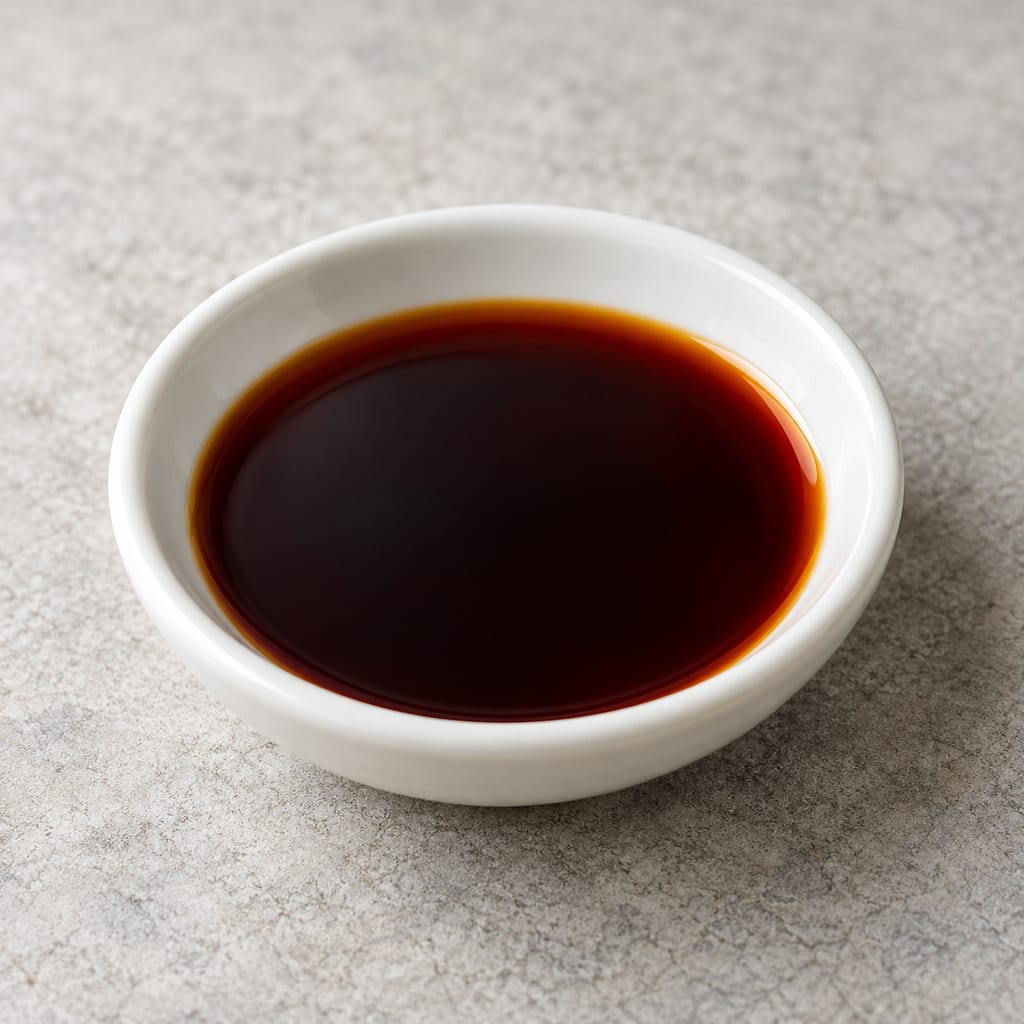
Soy sauce
Soy sauce is a salted liquid seasoning made by growing koji mould on soybeans and grain, maturing the mash in brine and pressing out the liquid. Japan's shoyu is the best-documented form.
 FermenteaWhere food goes to change
Modern adaptation
A small-batch, non-fermented tomato, fruit and savoury sauce assembled for crisp tonkatsu and cabbage, inspired by Japanese yoshoku serving traditions.
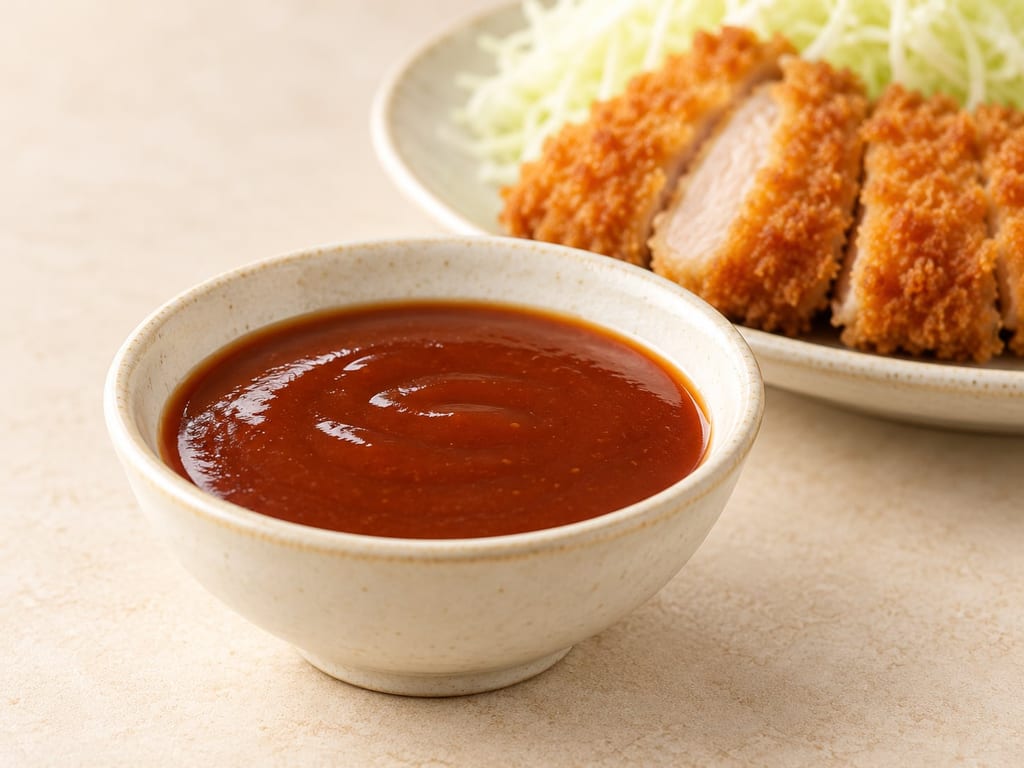
This recipe is a quick assembled condiment intended for crisp tonkatsu: breaded pork cutlet served with finely shredded cabbage. It starts with commercially prepared ketchup and Worcestershire sauce, then adds apple purée, sugar, soy sauce and water. Those ingredients make an immediately usable sweet-savoury table sauce; they do not ferment or recreate the cooked, aged, blended and quality-controlled processes of a sauce factory.
The name is deliberately qualified. Japanese sauce families include distinct products sold as Worcester, chūno and tonkatsu sauces. Manufacturers also sell specific okonomiyaki sauces. This home mixture is merely tonkatsu-style in its serving context and flavour direction. It should not be presented as a Bull-Dog recipe, a standard Japanese formula, or a substitute for every regional sauce.
Tonkatsu belongs to yoshoku, the broad tradition of Japanese dishes adapted from Western cooking. The Government of Japan account traces a famous Tokyo restaurant's opening to 1895 and pork cutlet to 1899. The dish changed as cooks made it their own: pork replaced veal, Japanese panko gave a lighter coating, deep frying became the practical cooking method, and shredded cabbage took its place as a familiar accompaniment. A Worcestershire-derived sauce was part of the early restaurant story.
That history helps explain why tonkatsu sauce is not simply a foreign condiment poured unchanged onto a cutlet. The dish and its accompaniments developed together in Japanese restaurant cooking. Modern regional dishes show further branching: miso katsu and sauce katsudon use different sauce ideas and serving forms. They are related by the broader yoshoku table, but they are not interchangeable recipes.
The ketchup supplies tomato, acidity, sweetness and body. Worcestershire brings vinegar, spice and a concentrated savoury profile; the amount is intentionally modest because some British versions taste much sharper than the Japanese-style table sauces a cook may have in mind. Apple purée rounds the mixture with fruit and softens its texture. Light brown sugar increases sweetness and contributes a faint molasses note. Soy sauce adds salt and a deeper savoury edge. Water loosens the blend so a small spoonful can be served easily.
These are functional observations about this ingredient combination, not claims that commercial sauce makers use the same ratio or sequence. Bull-Dog describes its own products as drawing on fruit, vegetables and spices, and lists several sauce styles separately. The official information is useful context for a broad family of sauces, not evidence for this recipe's formula. This batch is explicitly an untested development idea from the supplied archive.
Weighing the ingredients gives a repeatable starting point, especially because ketchup and Worcestershire vary in thickness and saltiness. Whisk first, then warm gently for only two or three minutes to dissolve the sugar. The brief warming is a texture step, not a preservation step: it does not establish a safe canning process, a room-temperature shelf life, or a target acidity.
Taste with the actual food. A sauce can seem balanced from a spoon and then turn too sharp or salty beside hot cutlet. Begin with 20 g Worcestershire if your bottle is assertive, then add the remaining amount a little at a time. The cabbage and crisp coating temper the perceived intensity, so taste the finished pairing rather than judging the sauce alone. A brief blend after cooling can remove small apple-purée lumps, but it is optional.
Serve the sauce in a small dish beside freshly fried cutlet, with shredded cabbage alongside. This keeps the breading crisp and lets each diner choose how much sauce to use. Bull-Dog's own basic tonkatsu serving page likewise presents tonkatsu with a purchased tonkatsu sauce, illustrating the familiar pairing without validating this shortcut.
An okonomiyaki-inspired variation in the supplied development archive reduces Worcestershire to 20 g, increases water to 15 g and adds 20 g smooth date purée while leaving the other quantities unchanged. The change pushes the mixture toward sweeter fruit. Otafuku's account says dates were added to its okonomiyaki-sauce recipe in 1975, and its product information lists a broader ingredient set. This variation borrows a date-led direction only; it does not reproduce Otafuku's extracts, fruit blend or thickening system.
For a milder result, use less Worcestershire and adjust only after tasting. For more fruit, small additions of unsweetened apple purée are preferable to assuming that any named commercial tonkatsu or okonomiyaki sauce has the same composition. Record the exact brands and changes if you are trying to make a repeatable house version.
The archive assigns this experimental batch a conservative 48-hour refrigerated working window, while explicitly saying it is not a measured shelf life. Chill it promptly in a clean covered container and keep it at refrigerator temperature. General UK food-safety guidance recommends a fridge between 0°C and 5°C and keeping chilled food out for the shortest time possible; it does not test or certify this particular sauce. Do not can it or store it at room temperature.
Expect variation from brand to brand. Ketchup sweetness, Worcestershire sharpness, soy-sauce salt and apple-purée thickness all affect the result. If the sauce is too sharp, lower the Worcestershire on the next trial; if it is too thick, a measured splash of water loosens it; if it tastes flat, first compare the salt and acidity of the actual purchased products rather than assuming a missing ingredient. Those are cautious serving adjustments, not experimentally validated corrections.
This recipe contains previously manufactured sauces, some of which may themselves contain fermented ingredients. The assembled sauce has no fermentation stage and is classified as non-fermented. Its convenience is the point: it is a quick table condiment for a familiar cutlet, not a guide to manufacturing Japanese fruit-and-vegetable sauces.
This is a modern home shortcut for a sauce served with tonkatsu, not a historical recipe or a reconstruction of a Japanese manufacturer's formula. Tonkatsu emerged within Japanese yōshoku cooking around the turn of the twentieth century.
Yield 160 g · Scaling: source batch only
Worcestershire and soy sauce may contain fish, wheat or soy depending on brand and formulation.
Hazard sourceCheck the ingredient and allergen statements on every purchased sauce; use an explicitly vegetarian Worcestershire if required.
Control sourceRefrigerate promptly in a clean covered container and keep the sauce cold; use within 48 hours as a conservative working window, not a validated shelf-life claim.
Control sourceThis is an original, untested development formulation, not a reproduction of any manufacturer's product.
Not validated for room-temperature storage or home canning.
Brand-specific Worcestershire can make the first batch too sharp; start with 20 g if using an assertive British-style sauce.
Japanese tonkatsu/yoshoku serving context; this home shortcut is not claimed as a traditional or commercial formula.
Soy sauce is a salted liquid seasoning made by growing koji mould on soybeans and grain, maturing the mash in brine and pressing out the liquid. Japan's shoyu is the best-documented form.
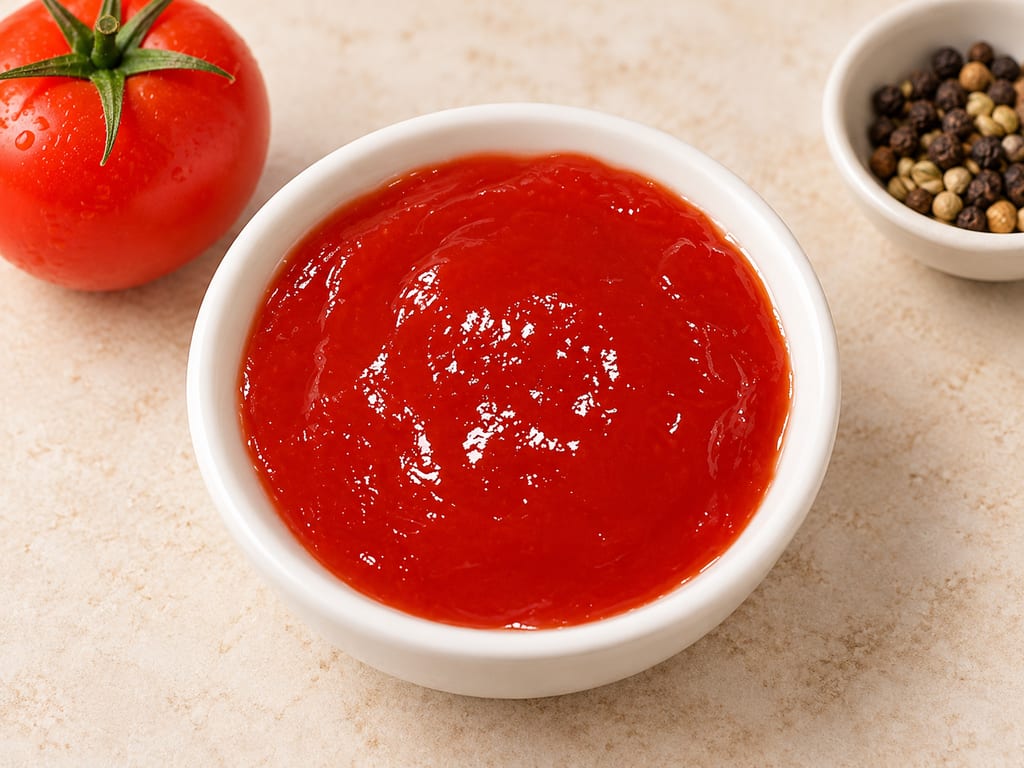
Tomato ketchup is a smooth, sweet-sour tomato sauce whose modern form grew from an older family of savoury ketchups; this version follows a tested home-canning recipe.
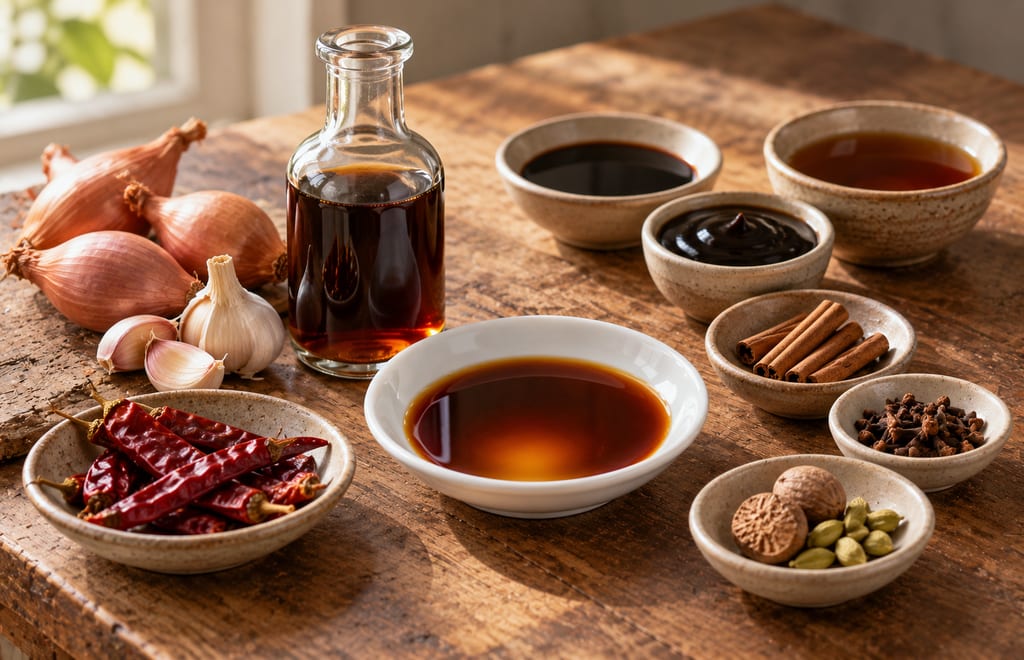
A thin, dark, sharply savoury table sauce associated with Worcester, England. This recipe preserves one historical formula printed in 1932 and distinguishes it from modern proprietary Worcestershire sauces.

Japanese reddish-brown vinegar from sake lees matured about three years, turned to vinegar by acetic bacteria; the vinegar of Handa and Edomae sushi rice.
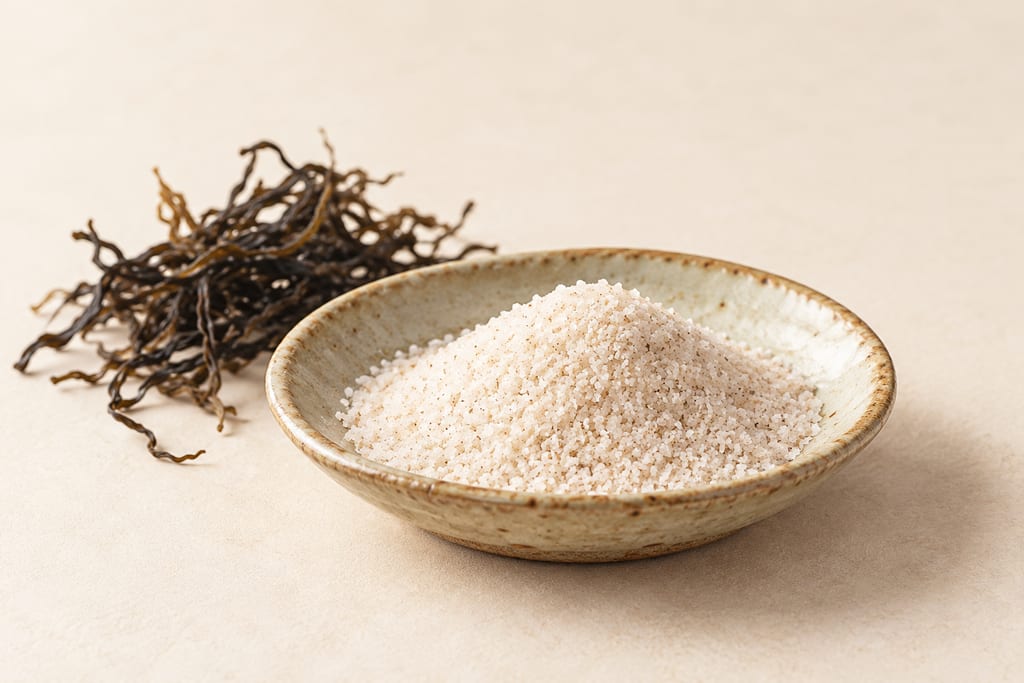
Amabito no Moshio is a modern, pale beige Japanese seaweed salt made from Seto Inland Sea water and hondawara seaweed. Its documented factory method concentrates filtered brine in kettles, then separates and dries the salt.
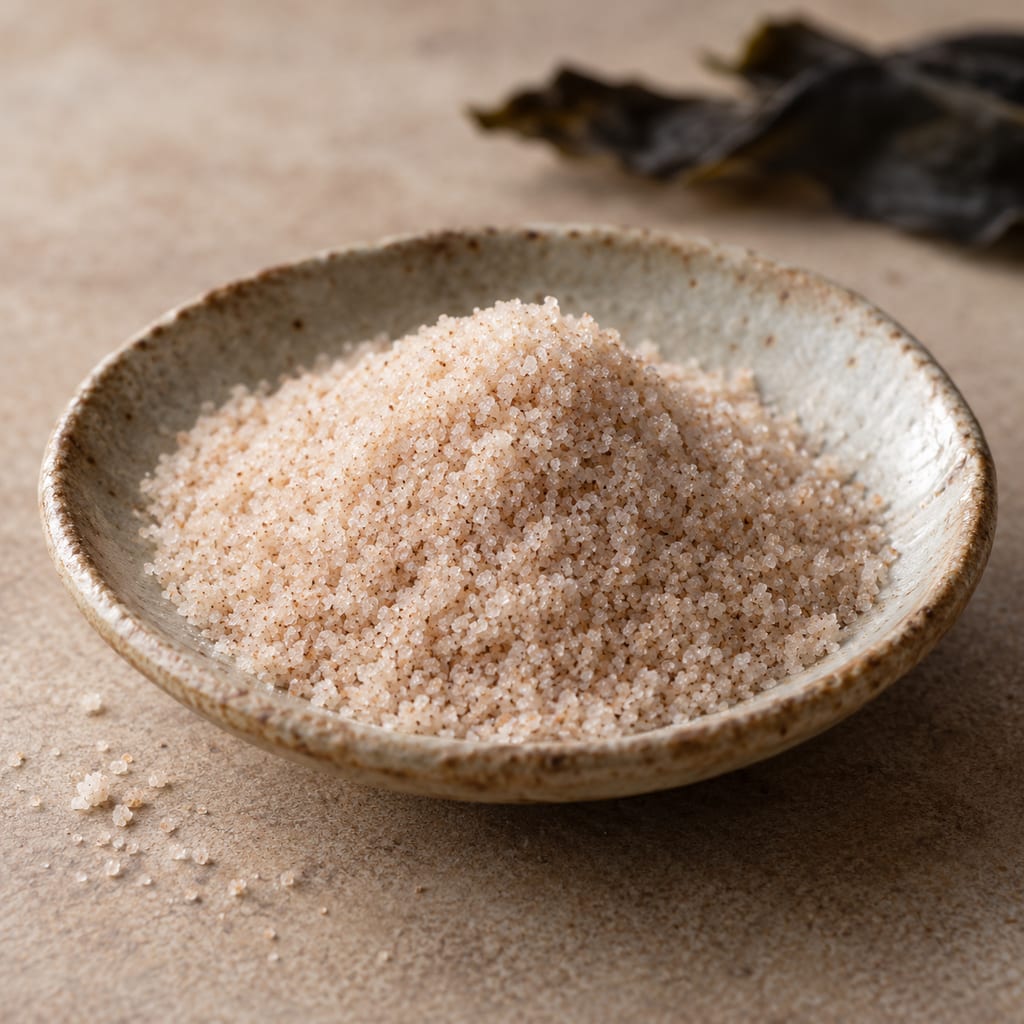
Awaji moshio is a modern Japanese seaweed salt made by TaDa PHILOSOPHY from Awaji Island seawater and seaweed. Its premium process concentrates brine, extracts seaweed flavor, then crystallizes, separates, dries and grades the salt.
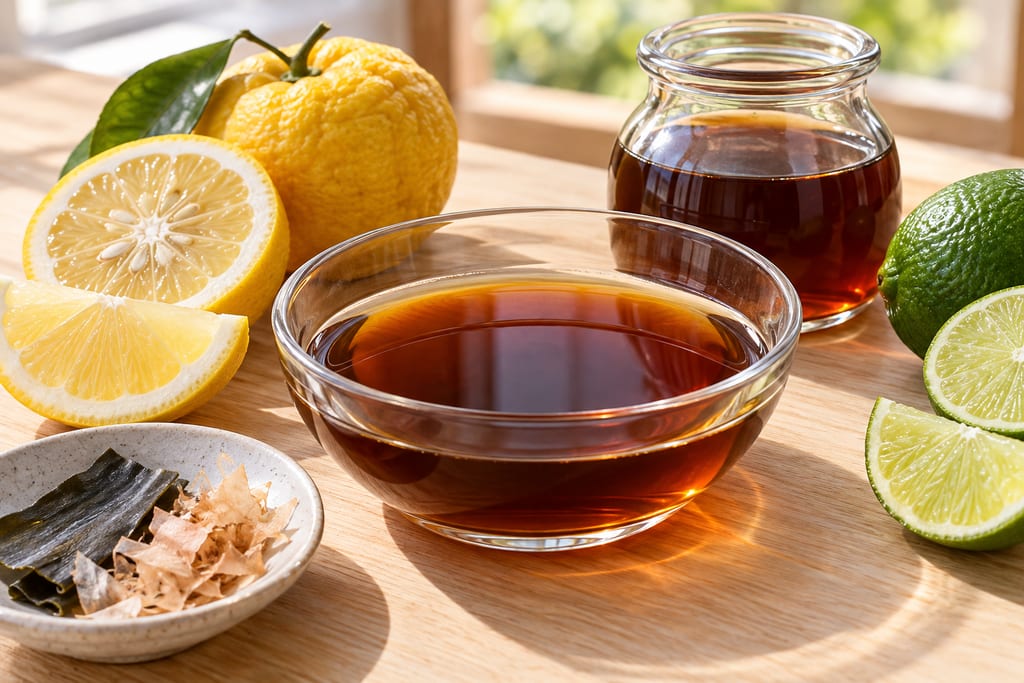
This fresh ponzu-shoyu mixes Japanese koikuchi soy sauce with yuzu or a lemon-lime blend, rice vinegar, water and sugar; optional kombu and bonito give a short chilled infusion.
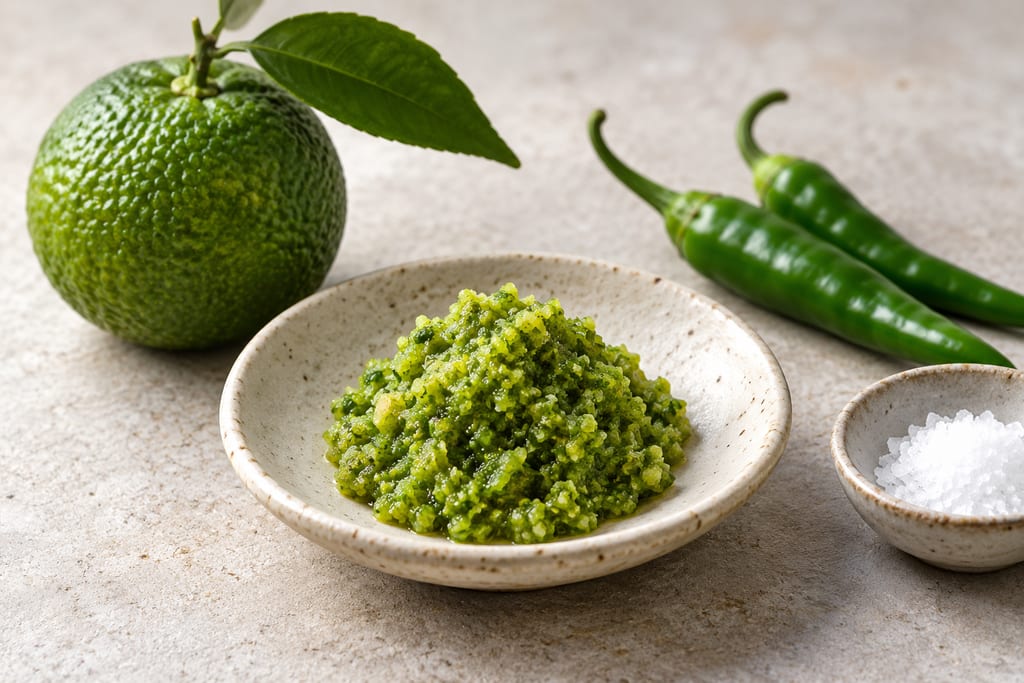
A fresh, uncooked yuzu and green chilli paste inspired by Kyushu’s yuzu kosho, made here as an untested small-batch seasoning rather than a preservation formula.
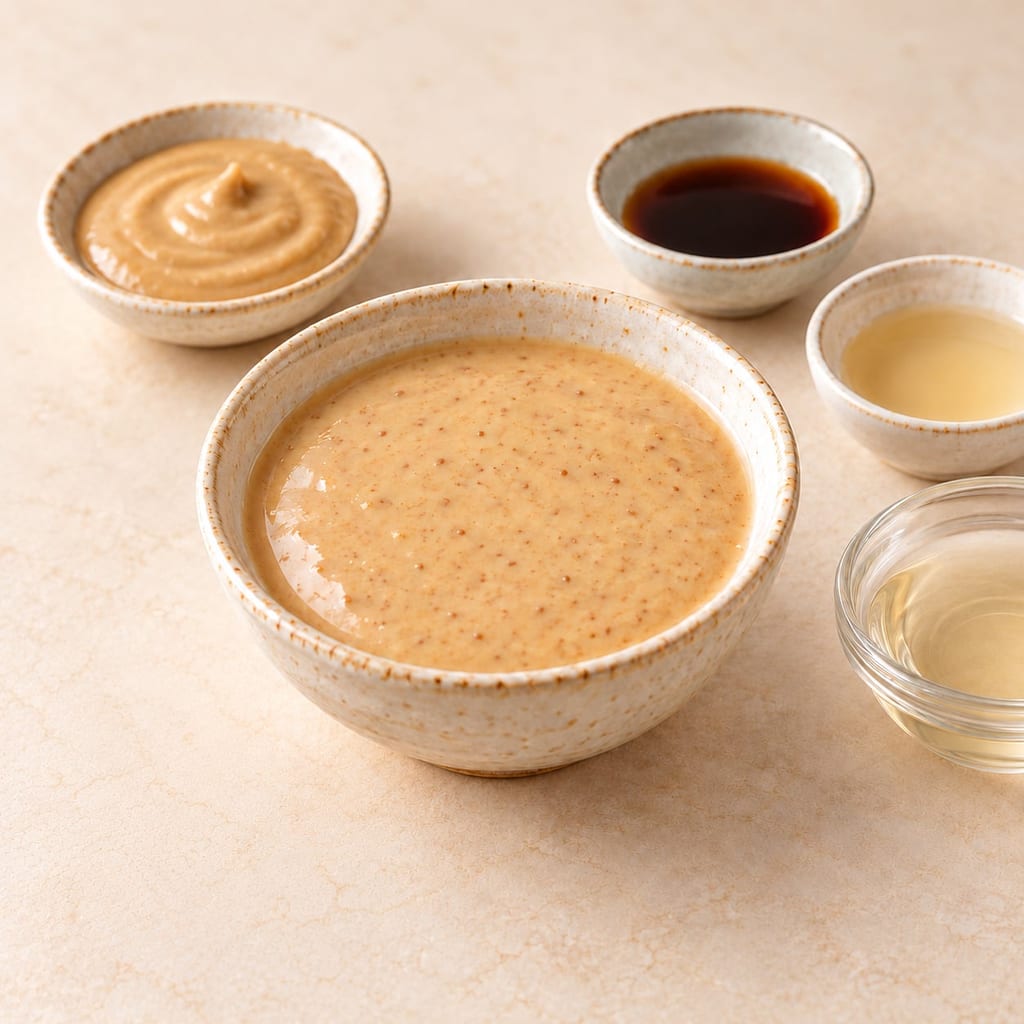
A creamy Japanese sesame dipping sauce with soy, rice vinegar and dashi. Gradual mixing turns the thick sesame paste into a smooth sauce.
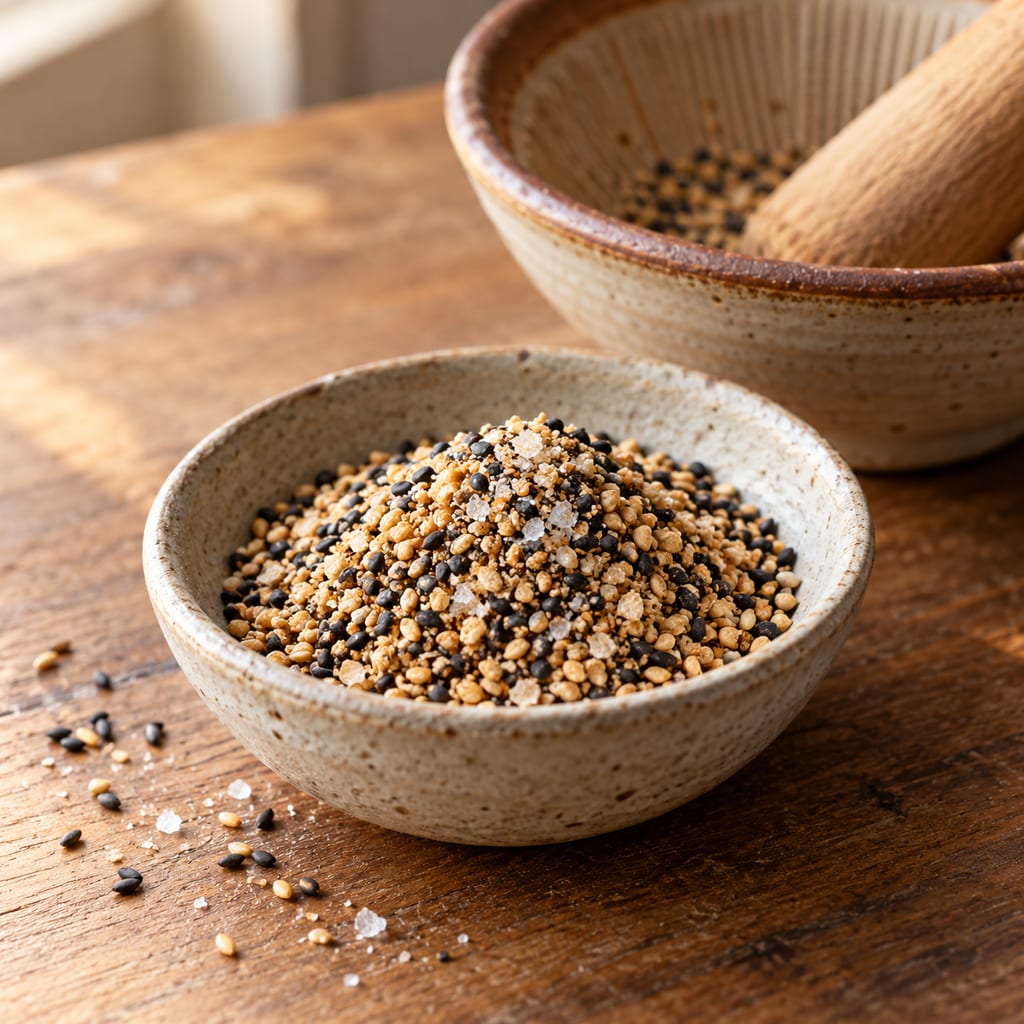
Toasted sesame seeds and sea salt are ground together into a coarse seasoning for rice. This small pan-roasted batch keeps most of the seed texture.
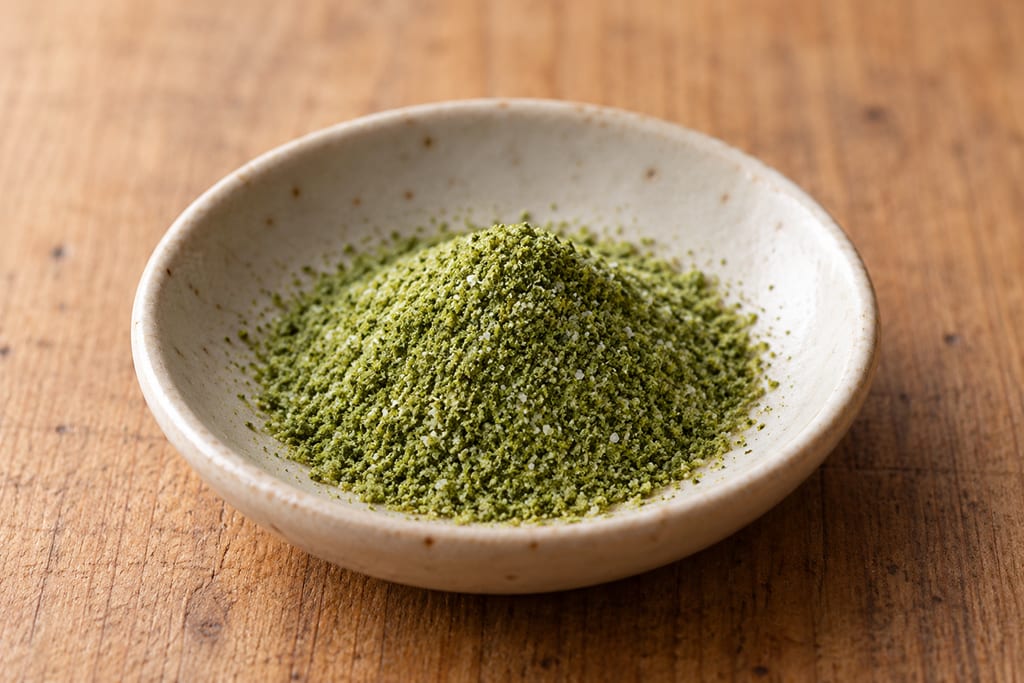
Green tea leaf salt is a dry seasoning made by grinding tea leaves, sieving them and mixing the powder with fine salt. This Japanese-style version follows a documented equal-parts method.
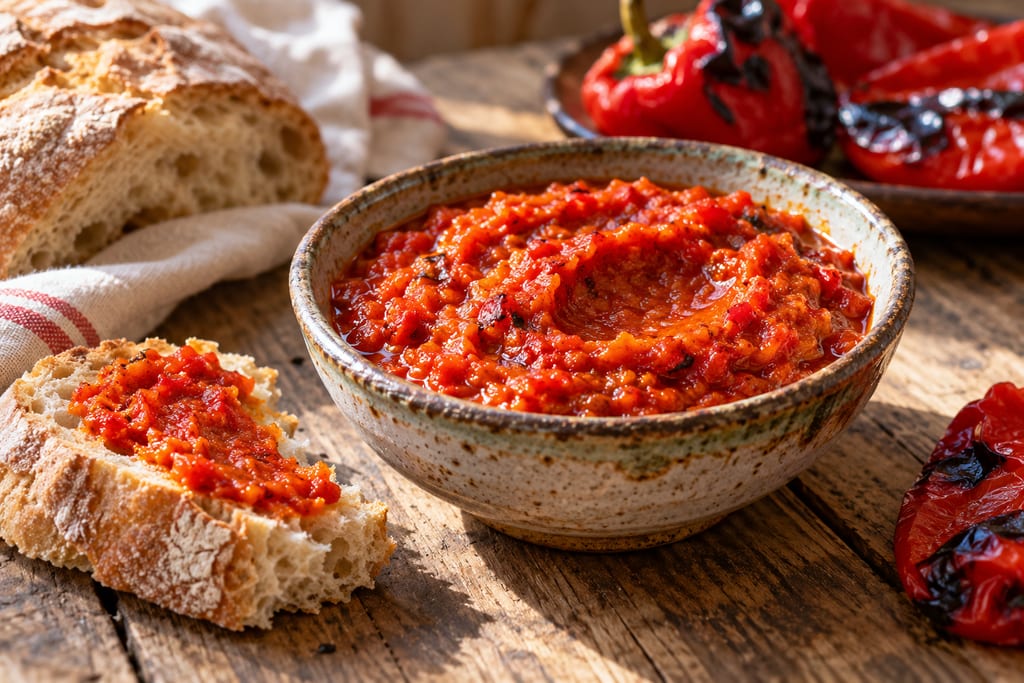
Ajvar is a cooked Balkan pepper preserve built around roasted red peppers, peeled, drained, ground and slowly fried with oil and seasoning. Leskovac’s protected version is a pepper specialty; regional versions vary.
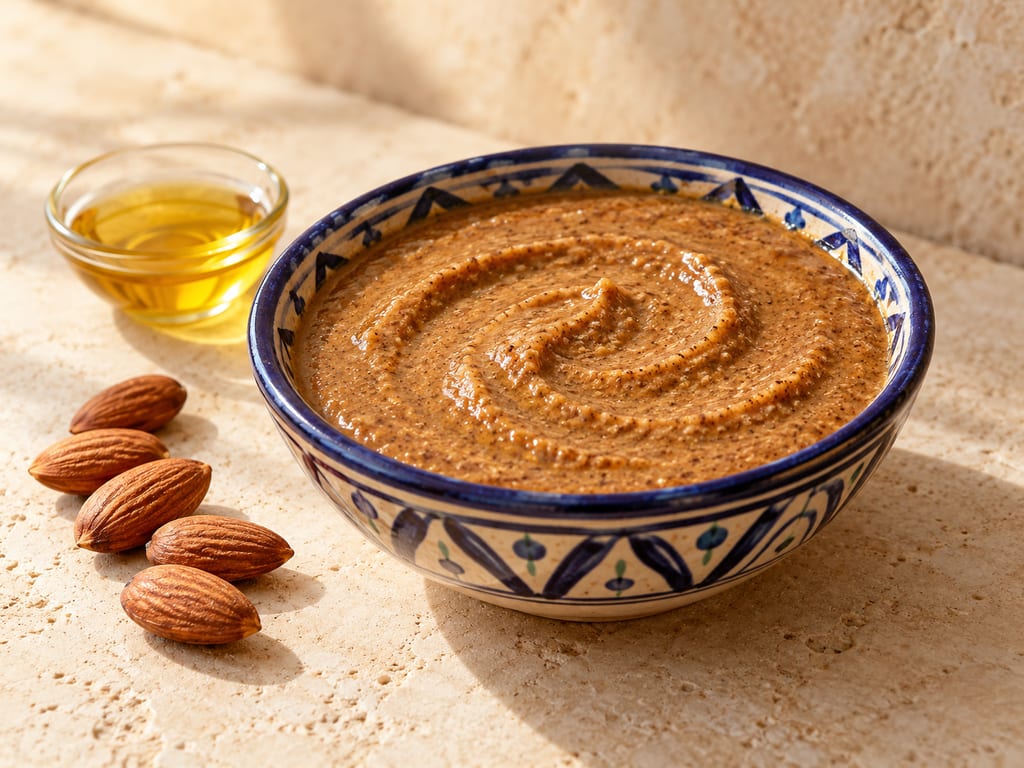
Amlou is a nutty, lightly sweet Moroccan spread of roasted almonds, culinary argan oil and honey. The almonds are ground first, then loosened with oil and sweetened; the balance can range from a thick spread to a dip.
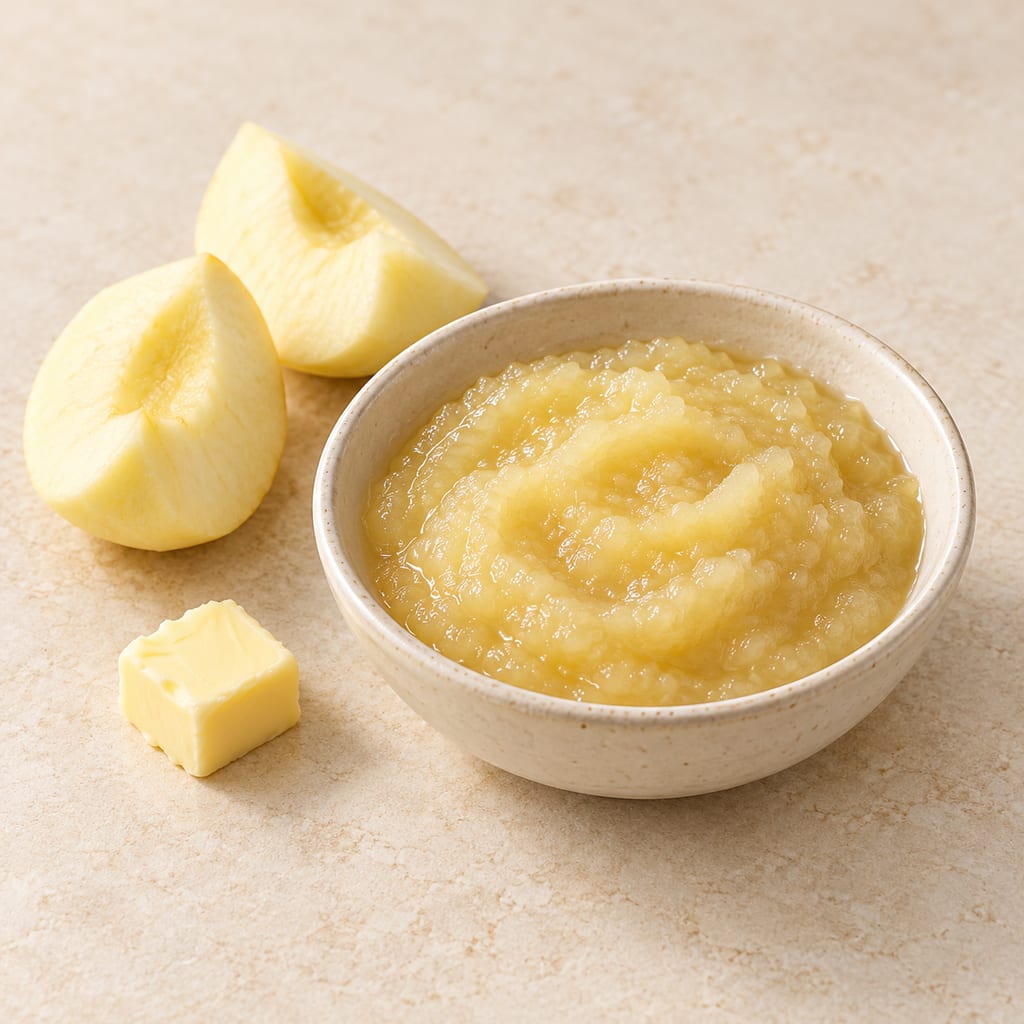
Apple sauce for goose and pork is a plain English accompaniment: cooked apples pulped with water, then sweetened with sugar and finished with a little butter.

A warm dip of garlic, anchovy and olive oil, often enriched with butter, that Piedmont serves over a flame with raw and cooked vegetables and bread.
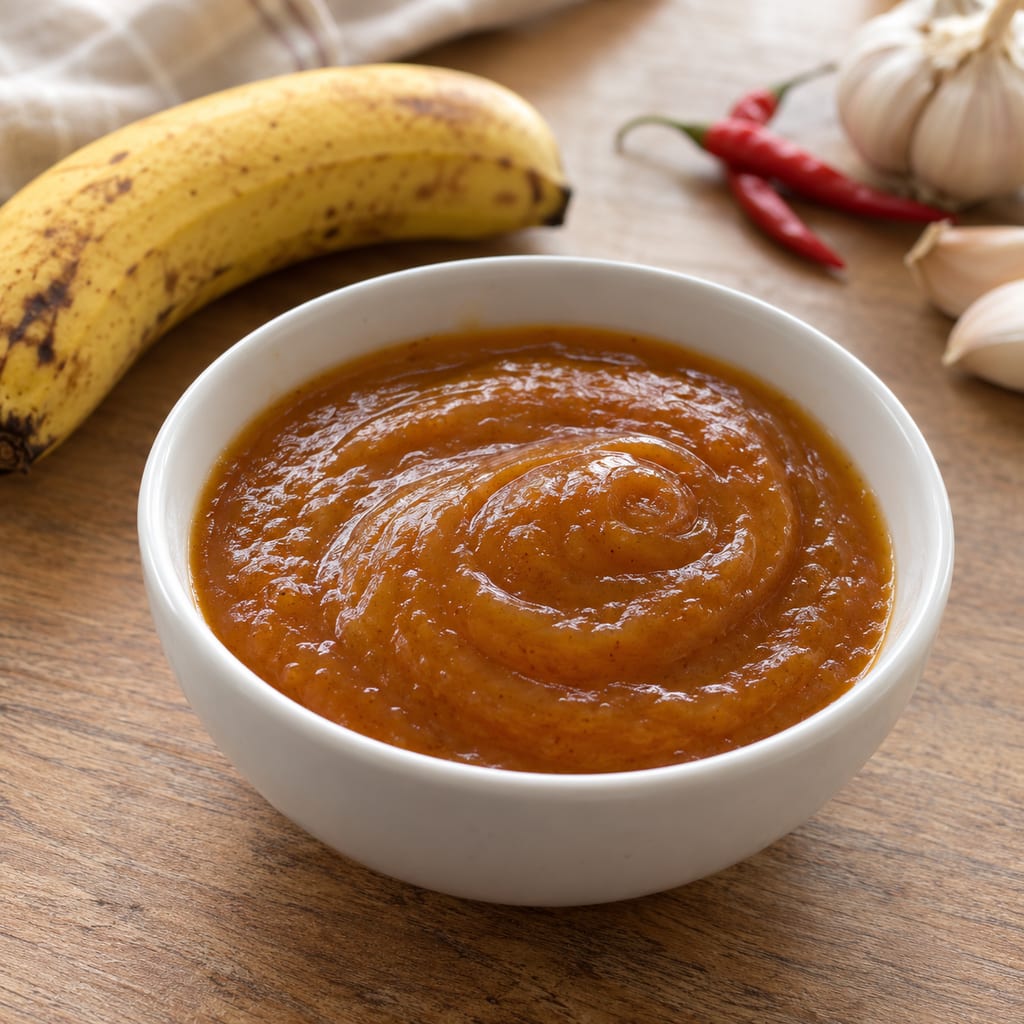
A sweet-hot table sauce of ripe banana simmered with vinegar, sugar, onion, garlic and fresh chilli, in the manner of Philippine banana ketchup. An untested development batch of about 500 g.
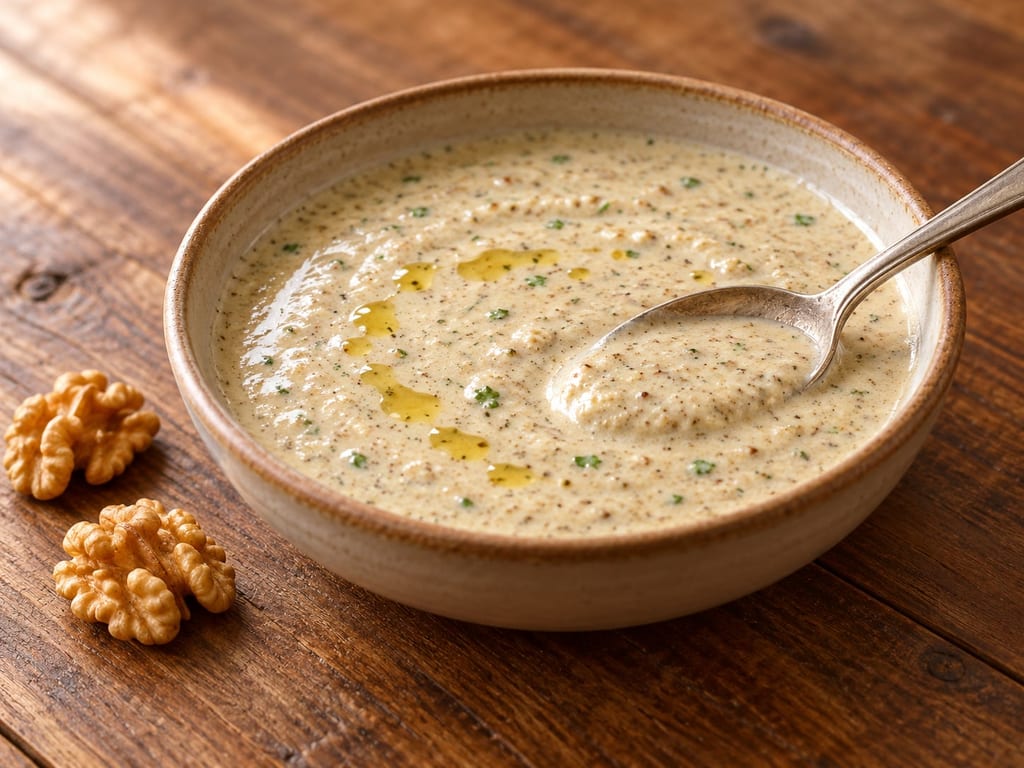
A Georgian walnut sauce of ground walnuts, garlic, vinegar and spices, thinned with water or broth. It is served with poultry, vegetables and bread, and is the sauce of the dish satsivi.
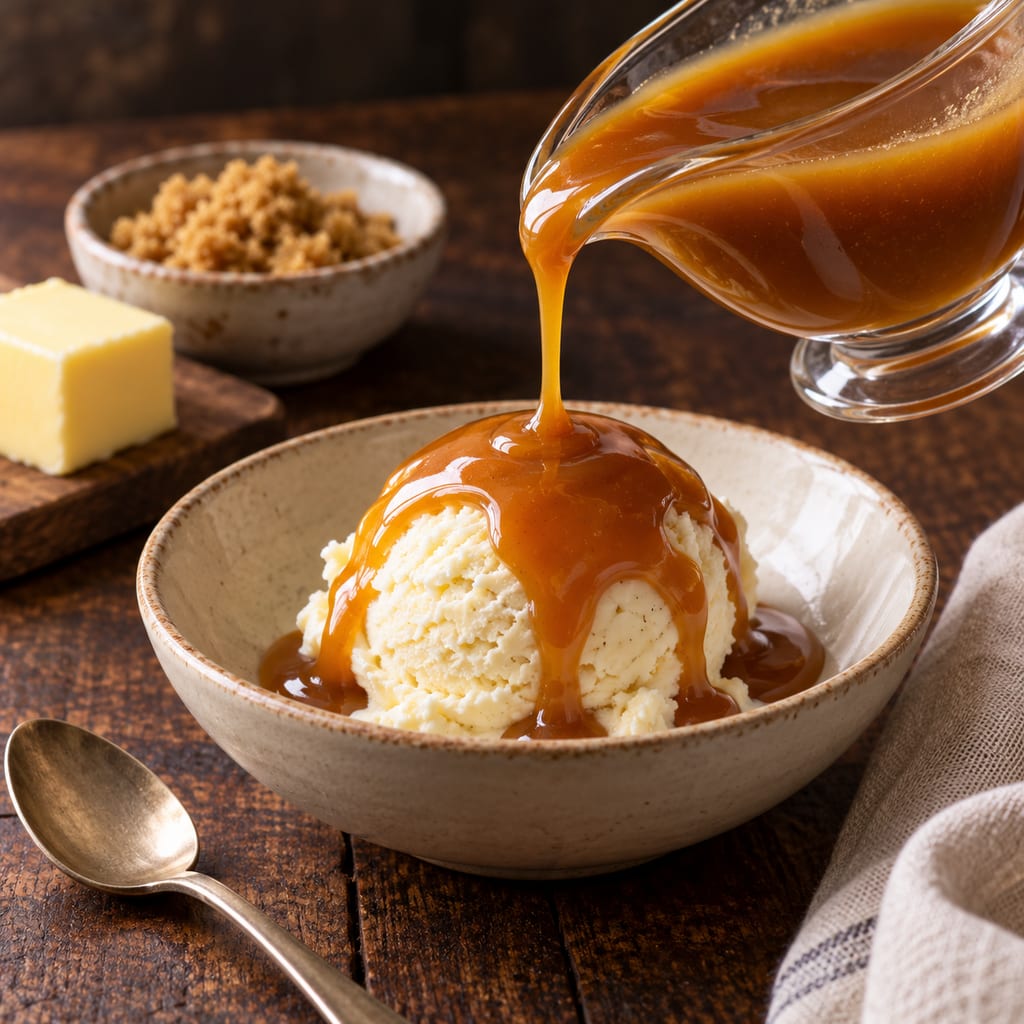
A pourable dessert sauce of brown sugar, butter and cream, with a little corn syrup and salt. It is the sauce form of the butterscotch confection and is made without water, unlike caramel.
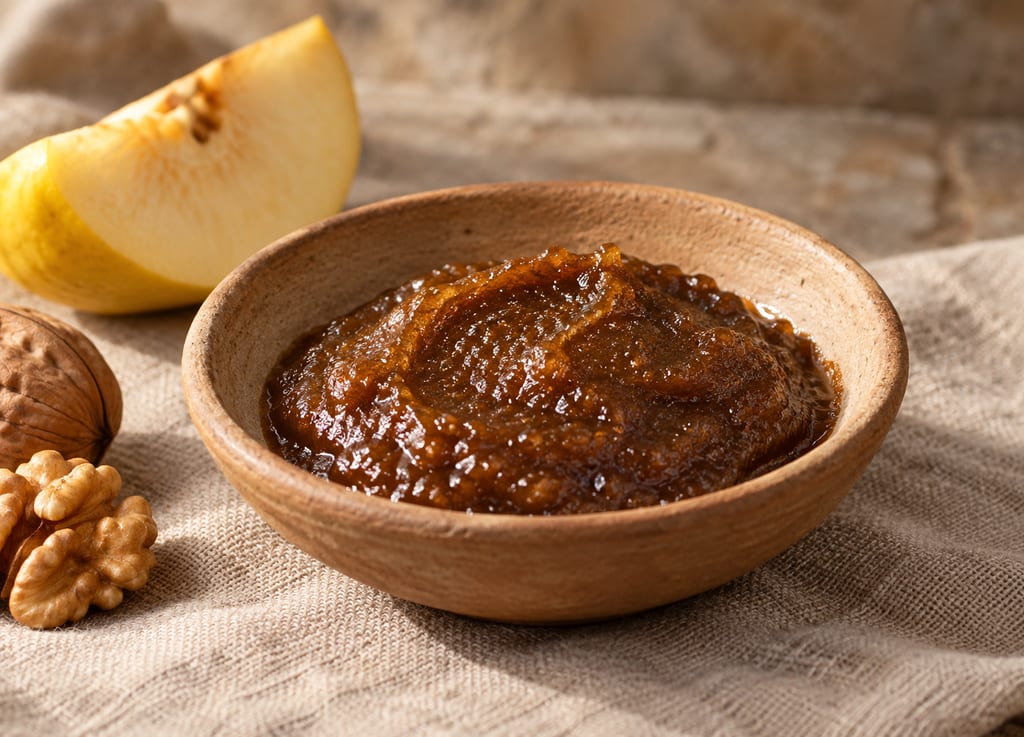
Byzantine murrī is a cooked imitation of murrī from the medieval Arabic repertoire, made from scorched honey, toasted bread, walnuts, quince, carob and spices rather than from a long grain fermentation.
No community contributions have been published for this entry yet.
Sign in to contribute. Published comments and photos are free to read.
Government of Japan, Public Relations OfficeHistory · Use
The Roots of TonkatsuRengatei opened in 1895; pork cutlet appeared in 1899.
Tonkatsu developed as a Japanese yōshoku adaptation of a European cutlet, using pork, panko, deep frying and shredded cabbage.
The restaurant used an imported Worcestershire-based sauce blend.
Cited in: Tonkatsu and the yoshoku table
Government of Japan, Public Relations OfficeHistory · Regional variation
The Birth of YoshokuYōshoku describes Japanese adaptations of Western-influenced dishes.
The page describes regional forms including miso katsu and sauce katsudon.
Cited in: Tonkatsu and the yoshoku table
Bull-Dog Sauce Co., Ltd.Context · Product distinction
Standard sauces for home useThe manufacturer lists distinct Worcester, chūno and tonkatsu sauce products.
Cited in: A serving sauce for a Japanese yoshoku dish; What this shortcut borrows—and what it cannot claim; Method and tasting
Bull-Dog Sauce Co., Ltd.Context · Ingredients
What is sauce made of?Bull-Dog describes its own sauce family as using fruits, vegetables and spices; this is not a formula for this home shortcut.
Cited in: A serving sauce for a Japanese yoshoku dish; What this shortcut borrows—and what it cannot claim; Storage, limitations and reading the result
Bull-Dog Sauce Co., Ltd.Serving
Basic TonkatsuThe official serving recipe pairs pork cutlet with purchased tonkatsu sauce.
Cited in: Method and tasting; Ways to serve and vary it
Otafuku Sauce Co., Ltd.History · Variation
About Otafuku Sauce: History and ActivityOtafuku dates its founding to 1922 and okonomiyaki sauce sales to 1952; its history notes dates were added in 1975.
Cited in: Ways to serve and vary it
Otafuku Sauce Co., Ltd.Variation · Ingredients
Okonomi SauceThis product label lists fruit and vegetable ingredients, soy, vinegar, spices and other product-specific ingredients; it does not specify the formula of this recipe.
Cited in: Ways to serve and vary it
UK Food Standards AgencySafety
How to chill, freeze and defrost food safelyThe guidance recommends a fridge between 0°C and 5°C and advises keeping chilled food out of refrigeration for the shortest time possible.
Cited in: Storage, limitations and reading the result