
Rice koji
Rice koji is steamed white rice through which koji mold has grown. It carries the enzymes that turn rice starch into sugar, and it is the starting point of sake, sweet miso, amazake and shio koji.
 FermenteaWhere food goes to change
Shio-koji is a Japanese seasoning of rice koji, salt and water, left at room temperature until the grains soften and turn sweet and the mixture thickens.
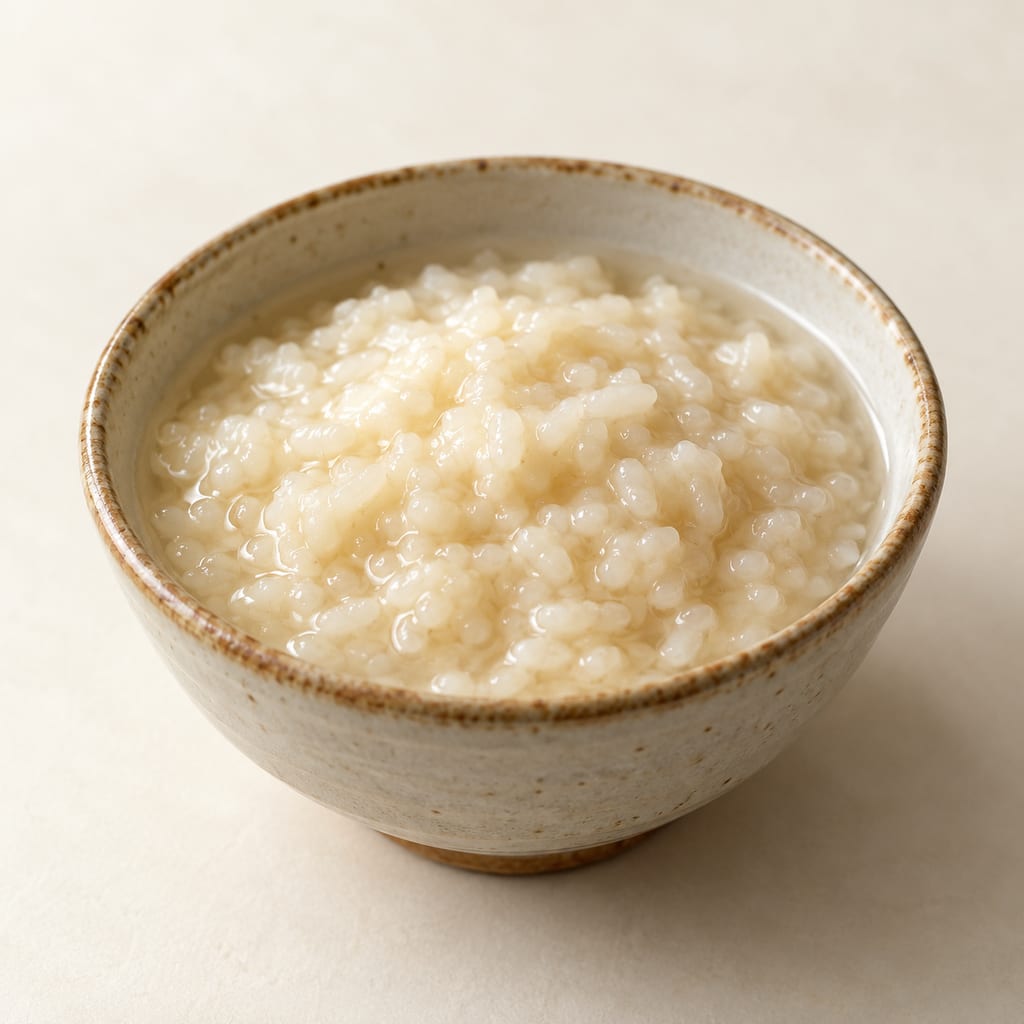
Shio-koji is a seasoning made from rice koji, salt and water. The sources use the same three ingredients, but they differ in proportions, in the form of koji they assume and in how long they mature the mixture.
Creators describe the result as a loose mixture close to a porridge in texture. It can be eaten as a condiment, used as a marinade or blended into a salty-sweet sauce. The captions do not establish a single formula or a historical origin.
The formulas do not agree on water because they do not use the same koji. Marukome uses 100 g rice koji, 35 g salt and 120 ml water. AKOMEYA TOKYO, in a recipe by Misasa Enomoto, uses 200 g fresh rice koji, 60 g salt and 200–250 ml water, and gives 250–300 ml water when dry koji is used.
Meitou Miso Honpo lists two formulas. Its fresh-koji formula is 300 g koji, 300 ml water and 60 g salt. Its dried brown-rice-koji formula is 500 g koji, 750 ml water and 120 g salt.
Marukome advises reducing the water by about 20 per cent when fresh rice koji is used with its own product instructions. Its FAQ tells users of other makers koji to follow those makers directions.
These statements are specific to their producers and do not give a conversion rule for every koji. The W2 KITCHEN caption uses about 200 g rice koji, salt equal to one third of the koji weight and about 350 ml water. It does not say whether the koji is fresh or dried.
The Marukome method rubs the salt into the koji for at least three minutes, adds the water, and moves the mixture into a clean lidded vessel held at room temperature away from direct sunlight. The mixture is stirred daily.
The Meitou page describes working dried koji by hand. The mixture is transferred once a milky liquid just covers the koji. If the level falls after the koji absorbs the liquid, the page says to add water by the second day, without an amount. A loose lid or a light wrap keeps the container covered.
East Meets Kitchen describes inoculated rice koji, water and salt, stirred daily for five to ten days, without amounts or an inoculum dose.
Marukome and Meitou both stir the mixture for one to two weeks. The W2 KITCHEN caption describes about a week of daily stirring and refrigeration after seven days. None of the inspected captions gives a numeric room temperature.
The sources read the batch by its cues: a sweet aroma, a balance of saltiness, grains that crush between the fingers and a thicker texture. Those cues are the endpoints the producers set, not a measured acidity or salt limit.
The sources differ on what follows maturing. Meitou advises refrigeration and use within a few days, and mentions refrigeration for long-term keeping without a duration. The W2 caption describes refrigeration after seven days. The Marukome page does not say how to store the homemade batch once it has matured.
None of these statements is a validated shelf life, and each should be read as the publisher advice for its own batch.
The W2 KITCHEN video presents shio-koji as a marinade for meat, fish and vegetables. The East Meets Kitchen video uses it as a salty-sweet base for sauce. Dishes made with it, such as shio-koji chicken and shio-koji-marinated tofu, are separate recipes and are not described here.
No source gives a validated endpoint, a salt threshold or a control for the room-temperature hold. Sensory cues such as aroma and texture do not establish that a batch is safe, and no source here supports tasting a suspect batch to decide.
The Marukome method's lidded container, shade and daily stirring are the only controls described for this batch. A homemade batch has no measured process behind it.
The Marukome, AKOMEYA TOKYO and Meitou pages are producer and retailer sources, and the Marukome FAQ is a product support page. The two captions are contemporary creator videos. The inspected material does not date the seasoning or establish where it began.
The inspected sources describe present-day home and producer methods. None dates the seasoning or says where it began.
Scaling: source batch only
The mixture stays open at room temperature for one to two weeks, so an unclean container or utensil gives unwanted organisms a route in.
Hazard sourceUse a clean lidded container, keep it out of direct sunlight and stir it daily, as the Marukome method directs.
Control sourceA sweet aroma, balanced saltiness and a thick texture are the endpoints the producers set. They do not establish safety.
The Meitou page advises refrigeration and use within a few days after its dried-koji batch finishes. It gives no duration for long-term keeping.
The producer and retailer pages are Japanese; the place of origin is not established.
Rice koji is steamed white rice through which koji mold has grown. It carries the enzymes that turn rice starch into sugar, and it is the starting point of sake, sweet miso, amazake and shio koji.

A small electric incubator holds jars at a selected temperature for yogurt and other documented warm food preparations. Controls, capacity and vessel arrangement vary by model.
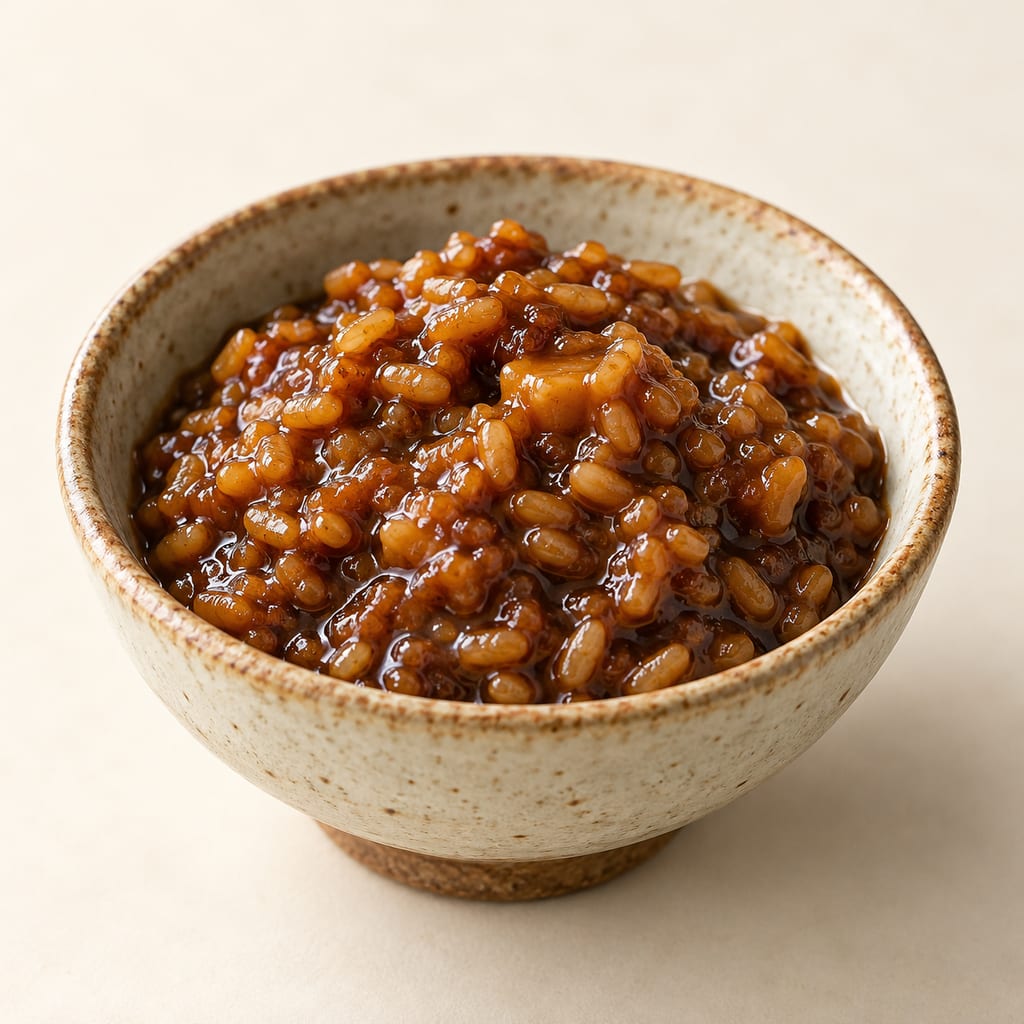
A Japanese kitchen condiment of rice koji matured in soy sauce until the grains turn soft and sweet. The same name also means the mould-grown soybean and wheat used to brew soy sauce.
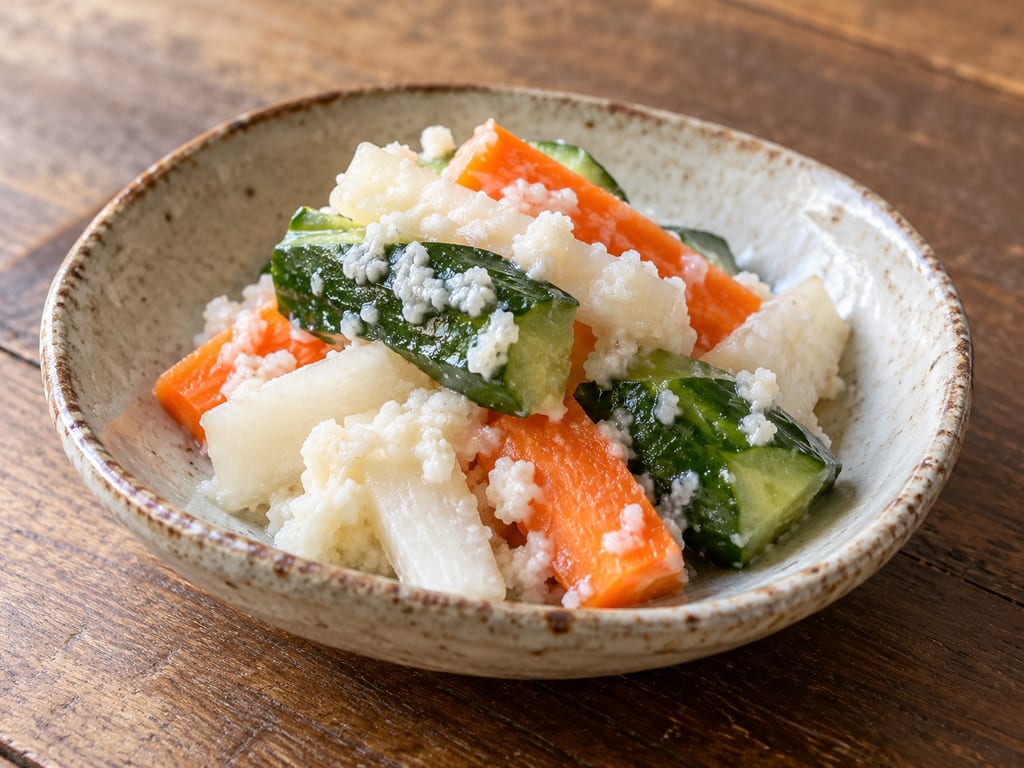
A traditional Japanese koji pickle from the Tohoku region: vegetables pickled in a matured bed of cooked rice, rice koji and salt, where koji enzymes bring sweetness alongside the salt.
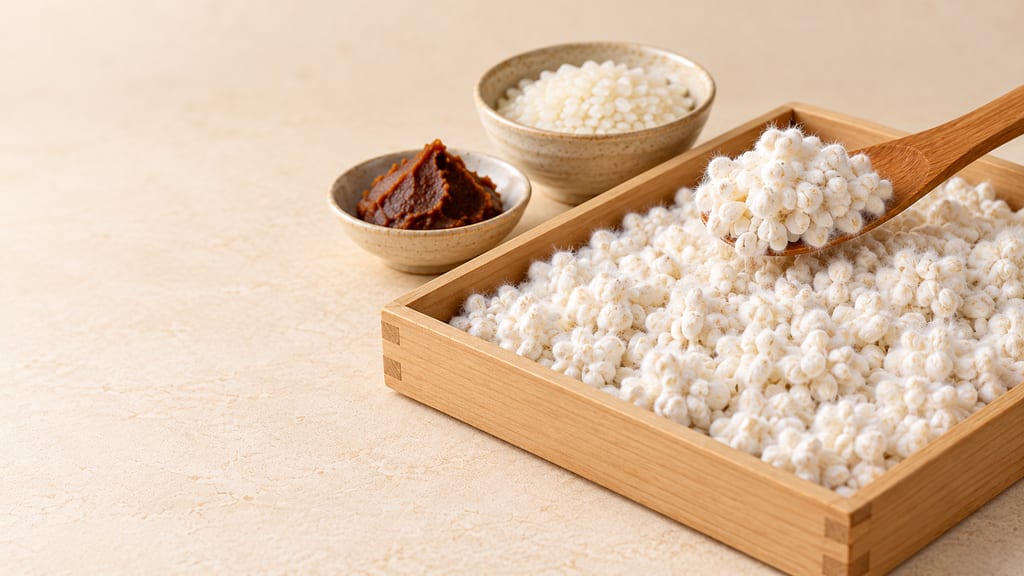
Koji is grain or beans grown with a mould whose enzymes break food down. This guide separates the mould, the starter and the finished koji, and follows them into sake, amazake, miso, soy sauce and shio-koji.
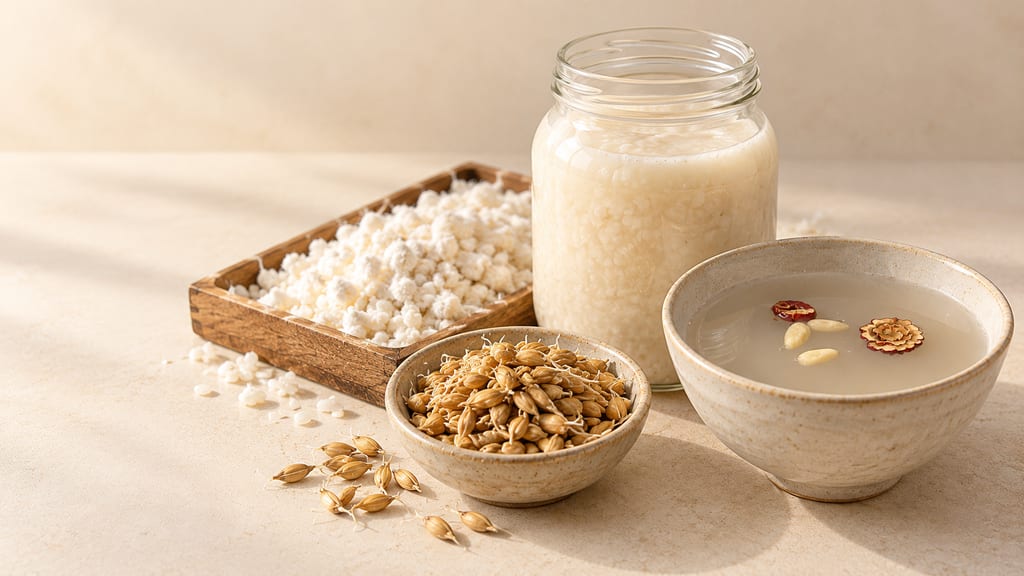
Amazake, sikhye and rice syrup turn cooked rice sweet with enzymes from koji or barley malt, held at the right warmth. Jiu niang and idli batter look similar but depend on living microbes, at very different temperatures.
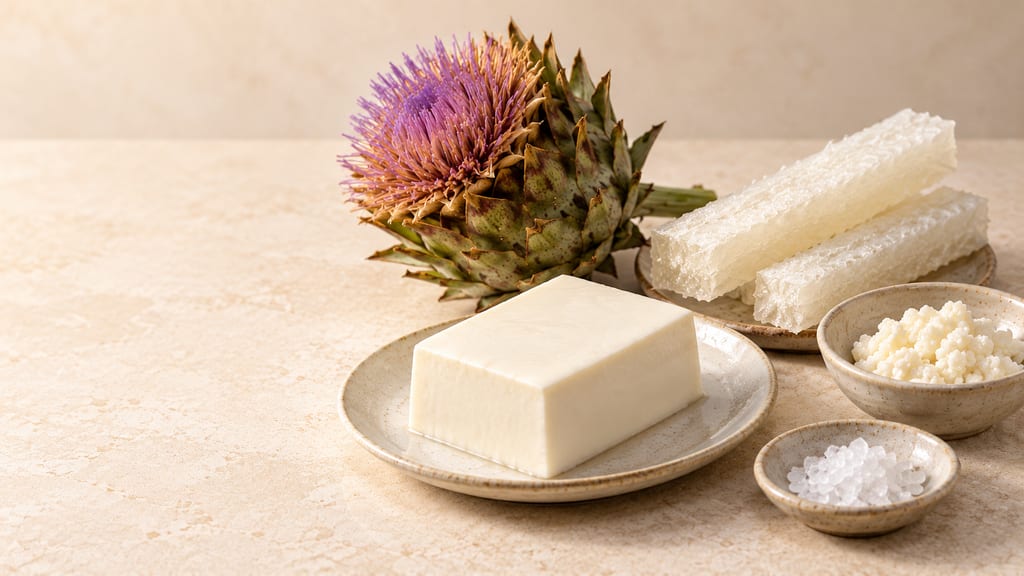
Cheese, tofu, agar, nixtamal and cured ham all begin with a liquid or soft food made to set, sour or keep. Rennet is one branch of that history, beside plant enzymes, acids, minerals, alkalis, gels, finings and curing salts.

A thick, naturally sweet rice-and-koji preparation used to add body and sweetness to marinades, dressings and sauces. This method follows a published Marukome home recipe and is an enzyme-conversion hold, not a way to grow koji mould.
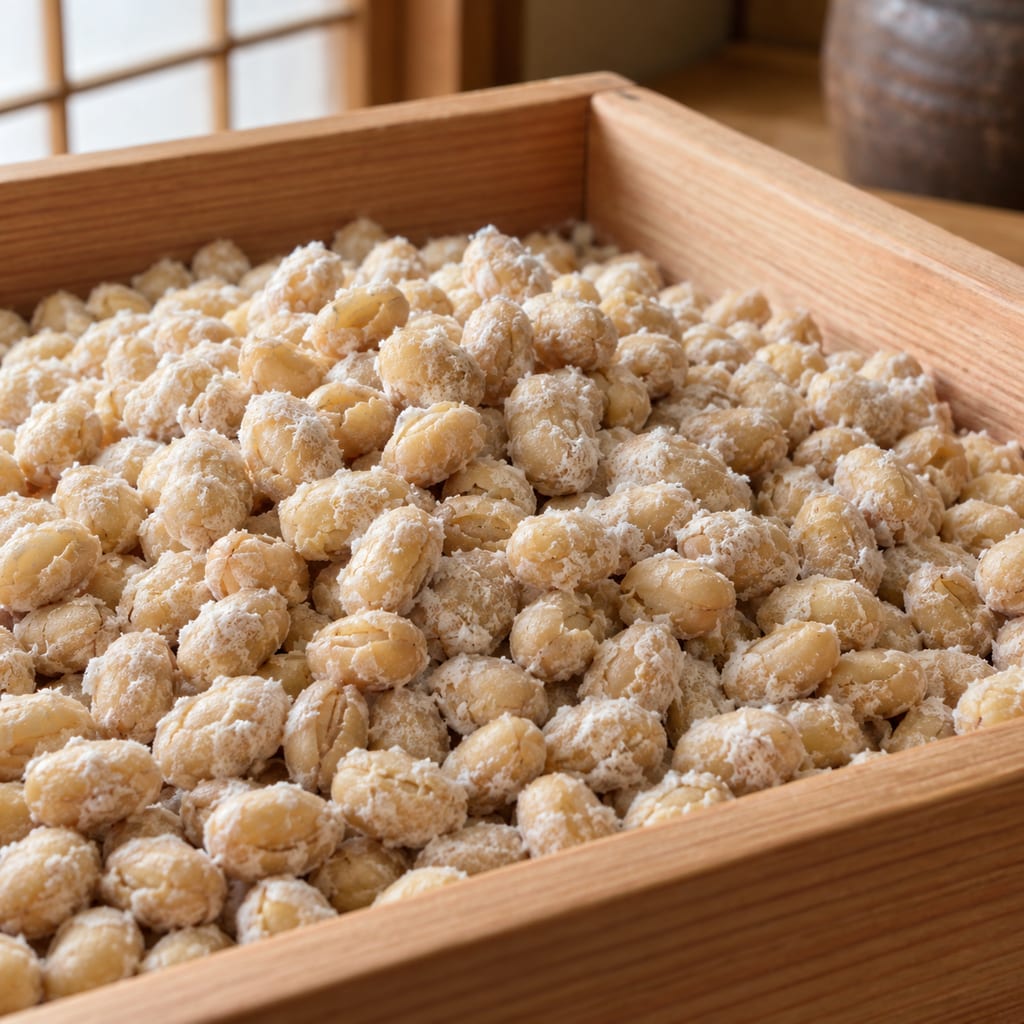
Japanese soybean koji: steamed soybeans, loose or formed into balls, grown over with Aspergillus mould to make the enzymes for mame-miso, tamari and regional soybean condiments.
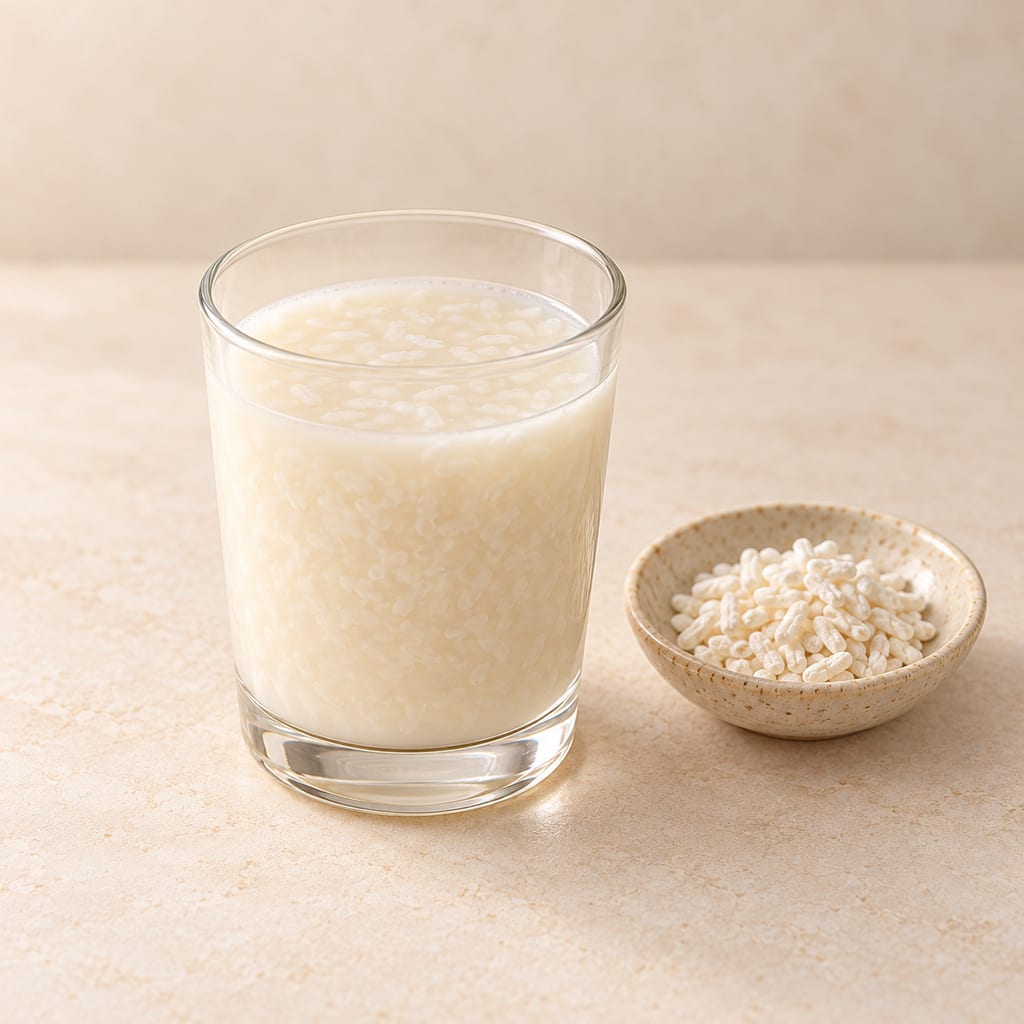
Cooked rice, rice koji and water are held warm for hours so koji enzymes turn the rice starch to sugars, giving a naturally sweet Japanese drink with no added sugar and no second fermentation.
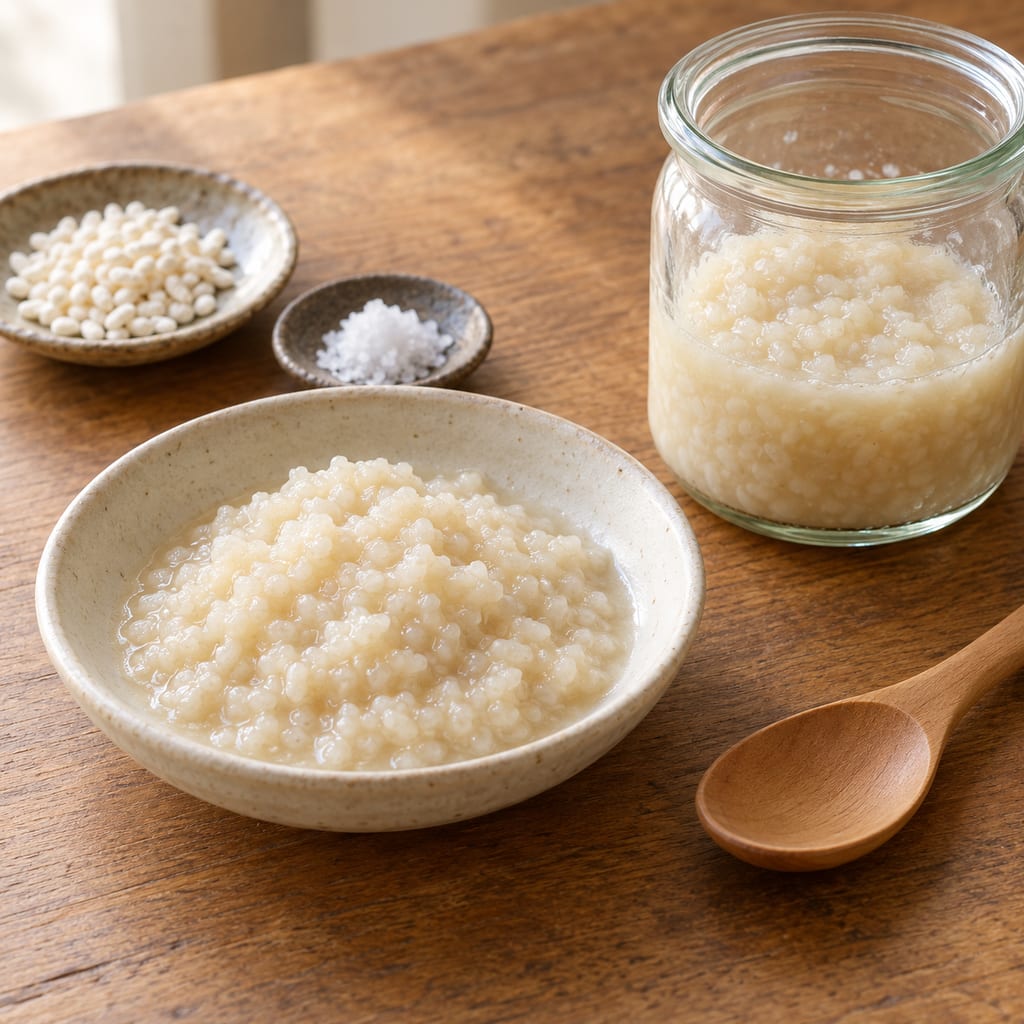
A Japanese seasoning of rice koji, salt and water, left at room temperature until the koji's enzymes and its microbes turn it into a savoury, salty paste for marinades and dressings.

An Okinawan fermented tofu: dried tofu cubes matured in rice koji, awamori and salt, traditionally with red Monascus koji, until the curd turns smooth and intensely savoury.

Japanese reddish-brown vinegar from sake lees matured about three years, turned to vinegar by acetic bacteria; the vinegar of Handa and Edomae sushi rice.
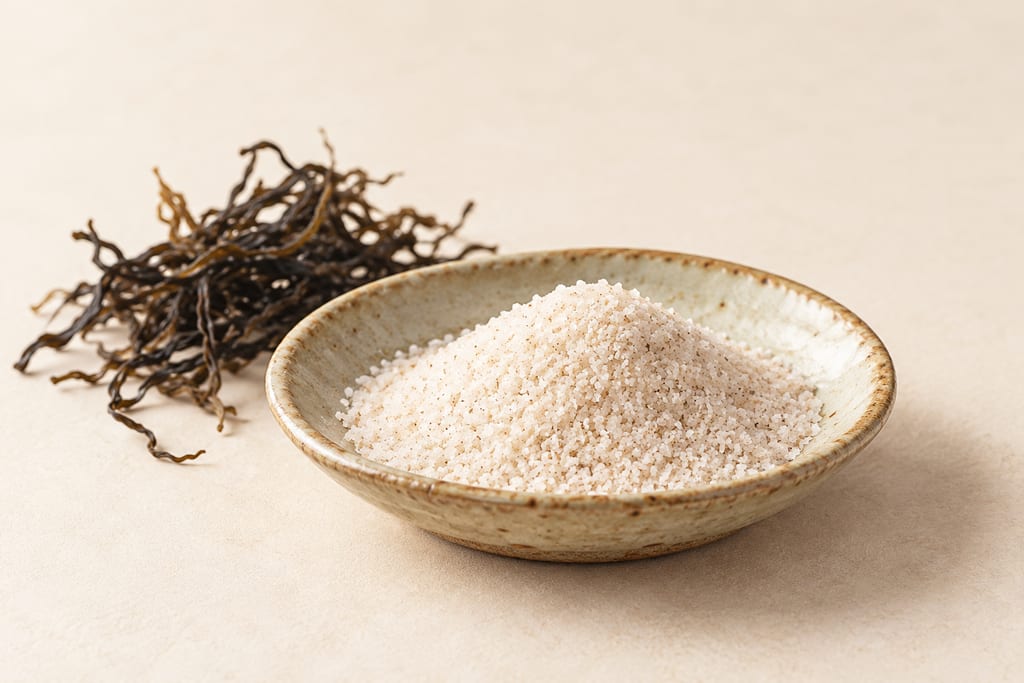
Amabito no Moshio is a modern, pale beige Japanese seaweed salt made from Seto Inland Sea water and hondawara seaweed. Its documented factory method concentrates filtered brine in kettles, then separates and dries the salt.
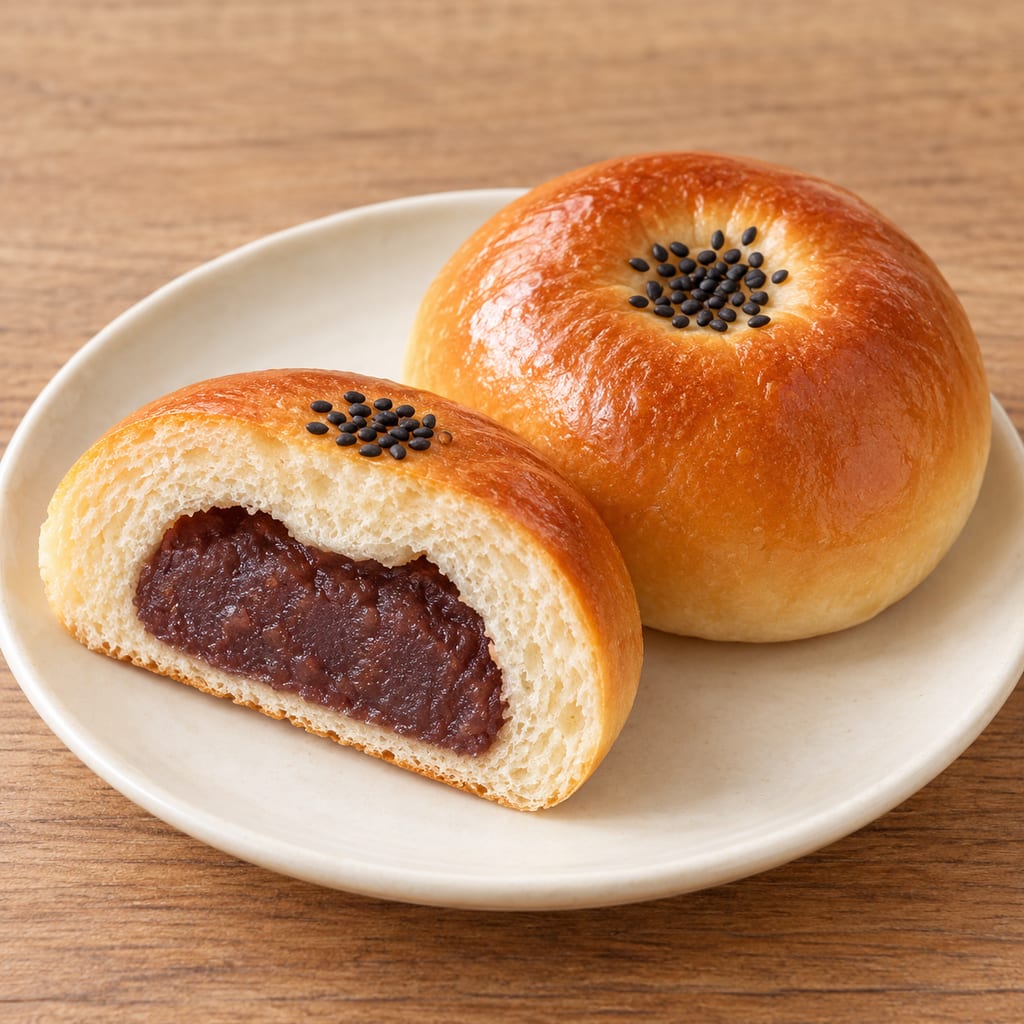
Anpan is a soft wheat bun filled with sweet red-bean paste and finished with egg wash and black sesame. This dough rises with commercial instant yeast.
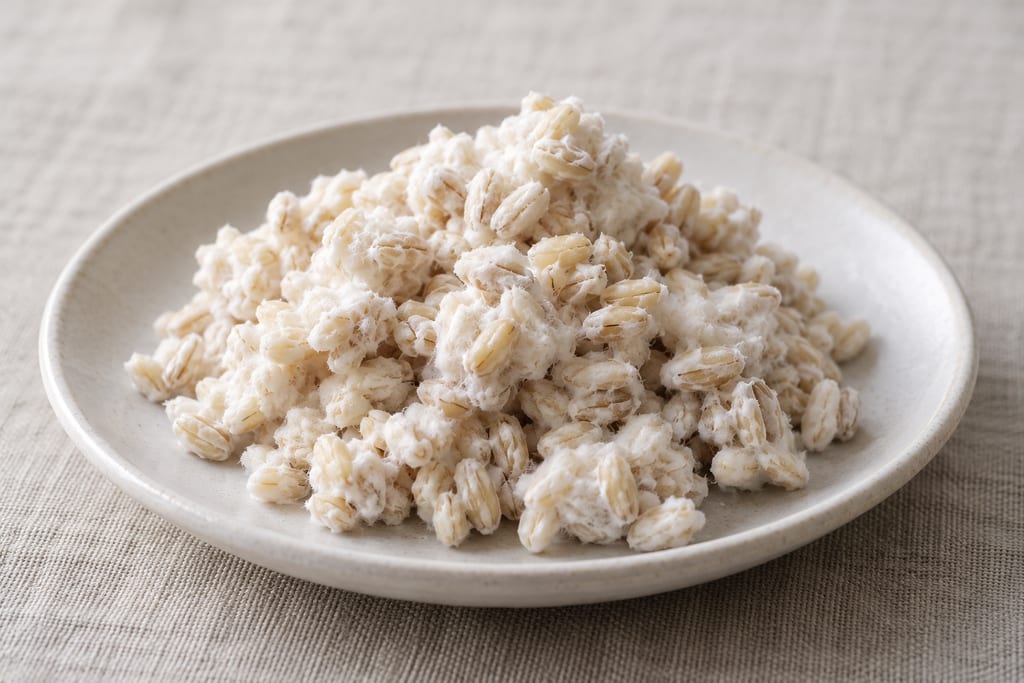
Steamed pearled barley grown into a white koji cake with Aspergillus oryzae over about 36 hours in a 30 °C chamber, turned three times under a damp cloth.
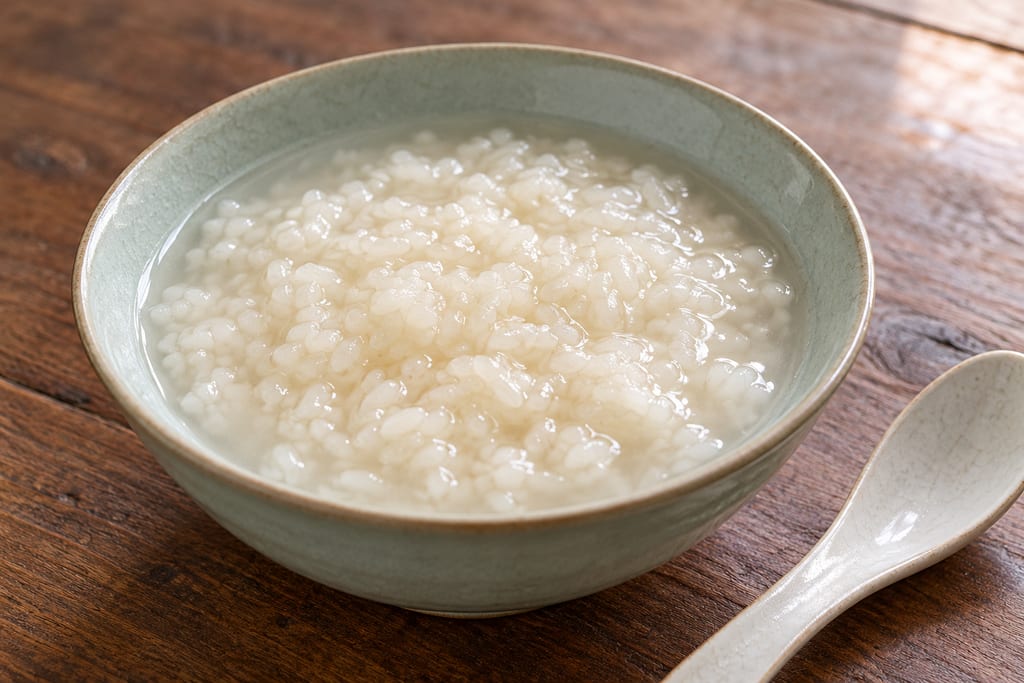
Chinese sweet fermented glutinous rice: steamed rice and a mixed jiuqu starter, where mould enzymes release sugar and yeast makes a little alcohol, eaten with its sweet liquid.

An ethnographic record of marcha (murcha), a dry starter cake used in Eastern Himalayan cereal fermentations. This page documents source-specific community knowledge and is not a recipe for making or storing starter.
No community contributions have been published for this entry yet.
Sign in to contribute. Published comments and photos are free to read.
MarukomeMethod
Make koji seasonings at homeMarukome small batch: 100 g rice koji, 35 g salt, 120 ml water; rub salt in at least three minutes; clean lidded vessel at room temperature away from direct sunlight; stir daily; one to two weeks to sweet aroma, balanced saltiness, crushable grains and thicker texture; no koji form or homemade storage stated.
Cited in: Why the water changes with the koji; Mixing and the first days; Maturing and reading the batch; Storage after maturing; Safety and the limits of the evidence; Where the sources come from
Meitou Miso HonpoMethod · Storage
素材を柔らかく旨味を引き出す塩麹Meitou Miso Honpo: fresh-koji formula 300 g koji, 300 ml water, 60 g salt; dried brown-rice-koji formula 500 g, 750 ml water, 120 g salt; dried-koji steps: hand mixing, add water on day two if the level falls, one to two weeks; refrigerate and use within a few days, long-term refrigeration mentioned without duration.
Cited in: Why the water changes with the koji; Mixing and the first days; Maturing and reading the batch; Storage after maturing; Where the sources come from
AKOMEYA TOKYO; recipe by Misasa EnomotoMethod
混ぜるだけ!自家製塩麹AKOMEYA TOKYO recipe by Misasa Enomoto: 200 g fresh rice koji, 60 g salt, 200–250 ml water; 250–300 ml water when dry koji is used.
Cited in: Why the water changes with the koji; Where the sources come from
Marukome FAQMethod
生の米糀を使って塩糀を作る場合の水加減は?Marukome FAQ: with fresh rice koji, reduce water by about 20 per cent for its product-specific instructions; users of other makers koji should follow those makers directions.
Cited in: A producer adjustment, and no general rule
W2 KITCHENMethod
How to Make Shio Koji – 3-Ingredient Koji-Rice Marinade for Meat, Fish & VegW2 KITCHEN caption: about 200 g rice koji, salt one-third of the koji weight, about 350 ml water, daily stirring for about a week, refrigeration after seven days; koji form, room temperature and storage duration not given.
Cited in: What shio-koji is; A producer adjustment, and no general rule; Maturing and reading the batch; Storage after maturing; Uses; Where the sources come from
East Meets KitchenMethod
2 MASTER JAPANESE CONDIMENTS: SHIO & SHOYU KOJI | 塩麹と醤油麹の作り方East Meets Kitchen caption: inoculated rice koji, water and salt, daily stirring for five to ten days; no amounts, inoculum dose or finished storage.
Cited in: What shio-koji is; Mixing and the first days; Uses; Where the sources come from