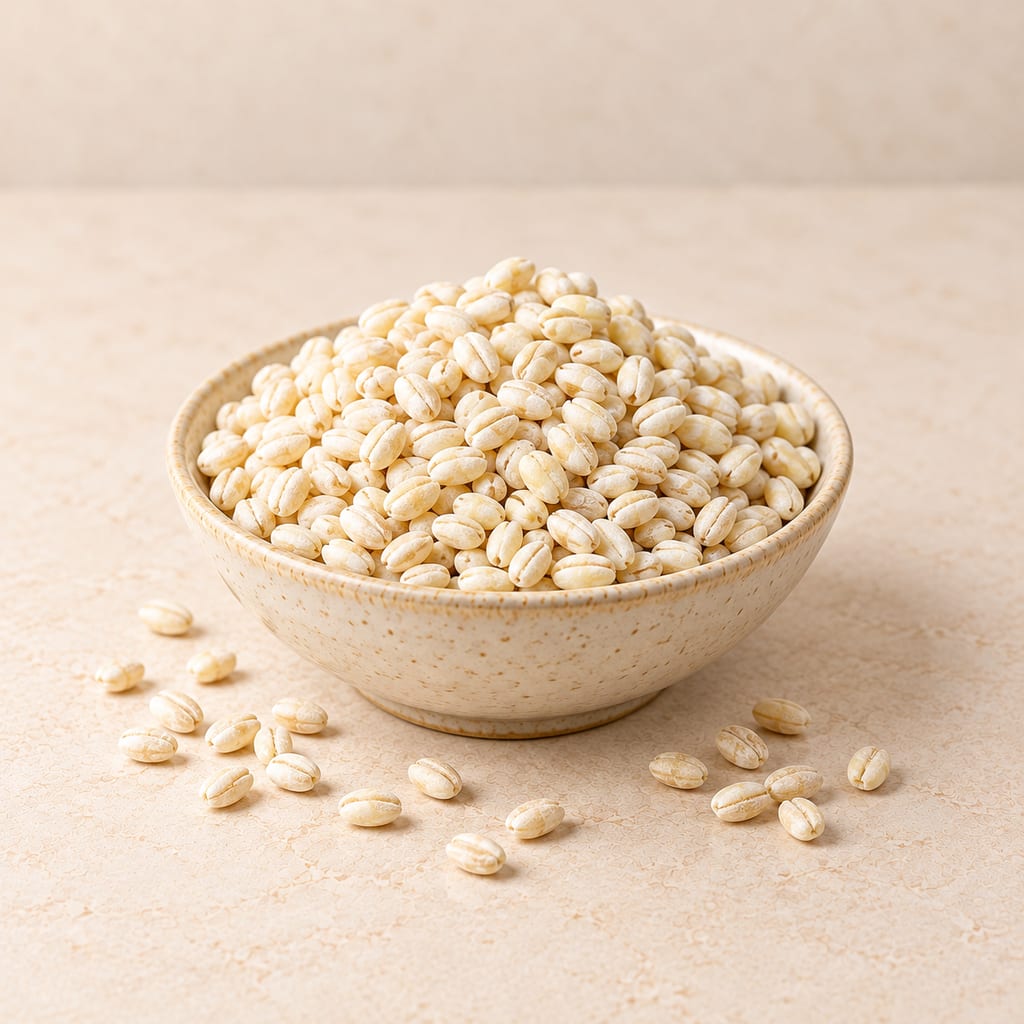
Barley
Barley is a hardy cereal, domesticated in the Middle East over 10,000 years ago, eaten whole, pearled or milled, malted for brewing, and grown with koji mold for barley miso.
 FermenteaWhere food goes to change
Modern adaptation
Nordic Food Lab barley koji
Steamed pearled barley grown into a white koji cake with Aspergillus oryzae over about 36 hours in a 30 °C chamber, turned three times under a damp cloth.
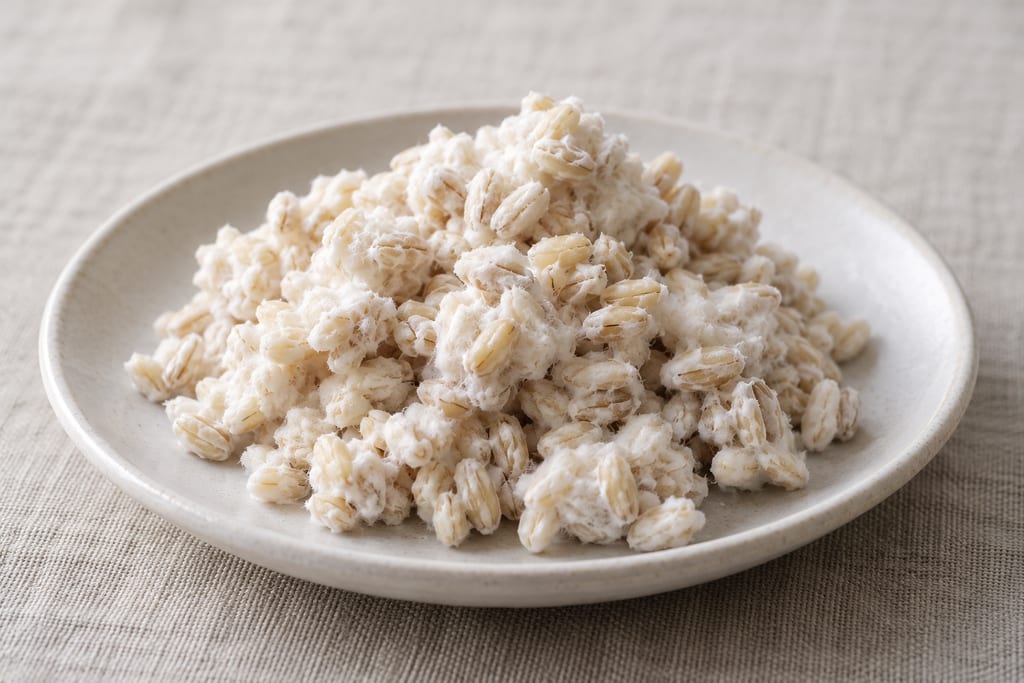
Koji is a grain grown with an Aspergillus oryzae culture. The Nordic Food Lab grew it on pearled barley, its mainstay substrate. The barley is soaked overnight, steamed for 90 minutes, cooled and inoculated at 35 °C with powdered spores, then incubated at 30 °C for about 36 hours.
The grain is turned and furrowed at 18, 24 and 30 hours to shed heat and let air in. The lab's cake is ready when the mycelium binds the grain into a spongy white mass. Its yield is about 1,450 g from 1 kg of dry barley.
The lab set the grain between 25 and 30 °C after the first turn and treated anything above 38 °C as fatal to the mould. Overheated koji smells of ammonia and sour bananas and is discarded. BCCDC gives 40 °C as the commercial ceiling for enzyme production.
Spores should be bought for each batch. BCCDC advises against saving spores from a koji, because wild Aspergillus strains can make aflatoxin. The sources give about 20 g of spores per kilogram of cooked barley in the method and about 30 g in the lab's equipment list.
The lab's chamber was a switched-off upright fridge fitted with a heating mat and a probe on a PID controller. This is the documented route. A proofer or a controlled cabinet is an adaptation. The electrical arrangement is a historical research-kitchen build and is not a specification.
The Nordic Food Lab published this method in 2013, with its own chamber. The history of barley koji is not researched beyond the lab post.
Yield 1450 g · Scaling: source batch only
Sticky koji that smells of ammonia and sour bananas means the mould died from excess heat and B. subtilis took over. Discard it.
Hazard sourceThe lab post describes letting koji sporulate to save spores. BCCDC advises against back-slopping, because wild Aspergillus strains can make aflatoxin.
Hazard sourceProbe the grain; turn and furrow it to shed heat.
Control sourceBuy commercial spores for each batch.
Control sourceDiscard koji that turns sticky and ammoniated.
The lab's fridge, mat and controller are a historical research-kitchen build. Use enclosed, rated equipment.
The Nordic Food Lab research kitchen, where barley was the mainstay substrate.
Barley is a hardy cereal, domesticated in the Middle East over 10,000 years ago, eaten whole, pearled or milled, malted for brewing, and grown with koji mold for barley miso.
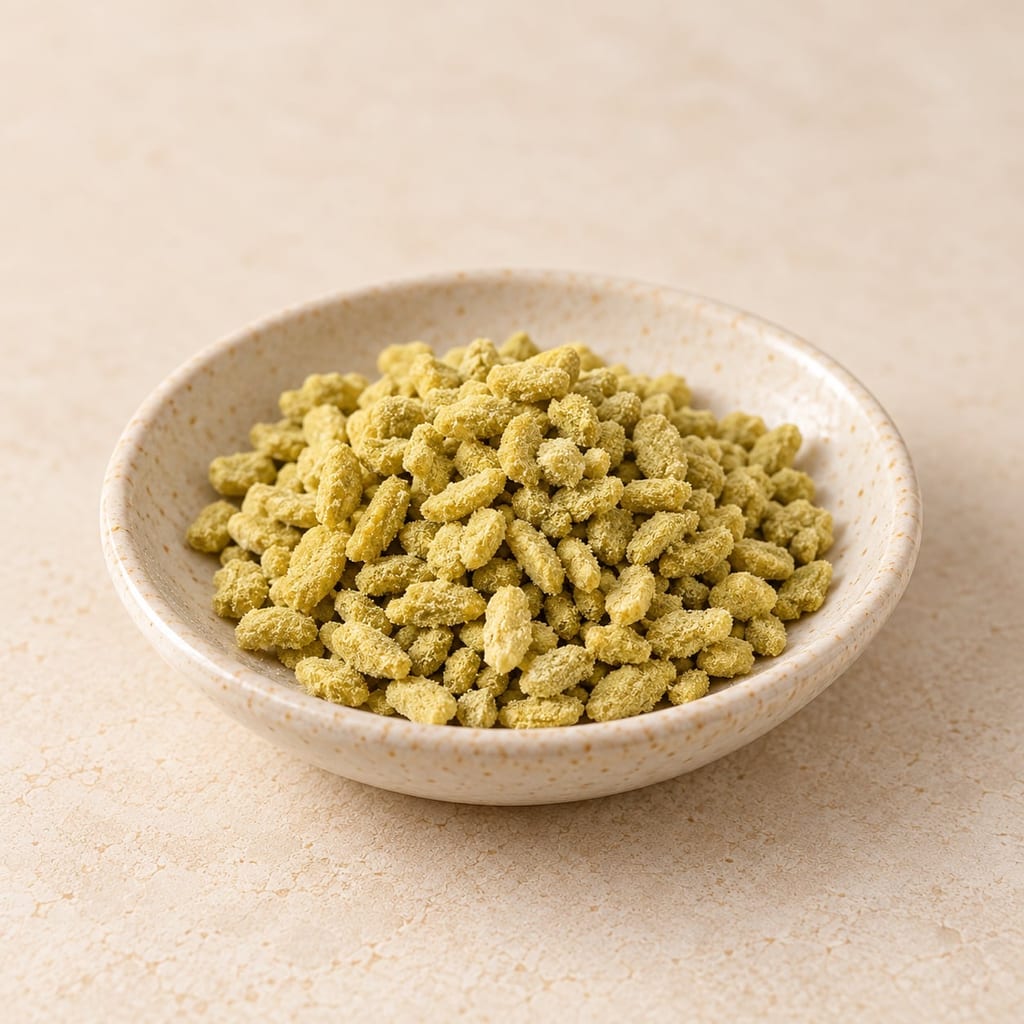
Yellow-koji starter is the spore inoculum of the yellow koji mold — Aspergillus oryzae and the related A. sojae — sold by specialist tane-kōji houses to grow koji for sake, miso and soy sauce.
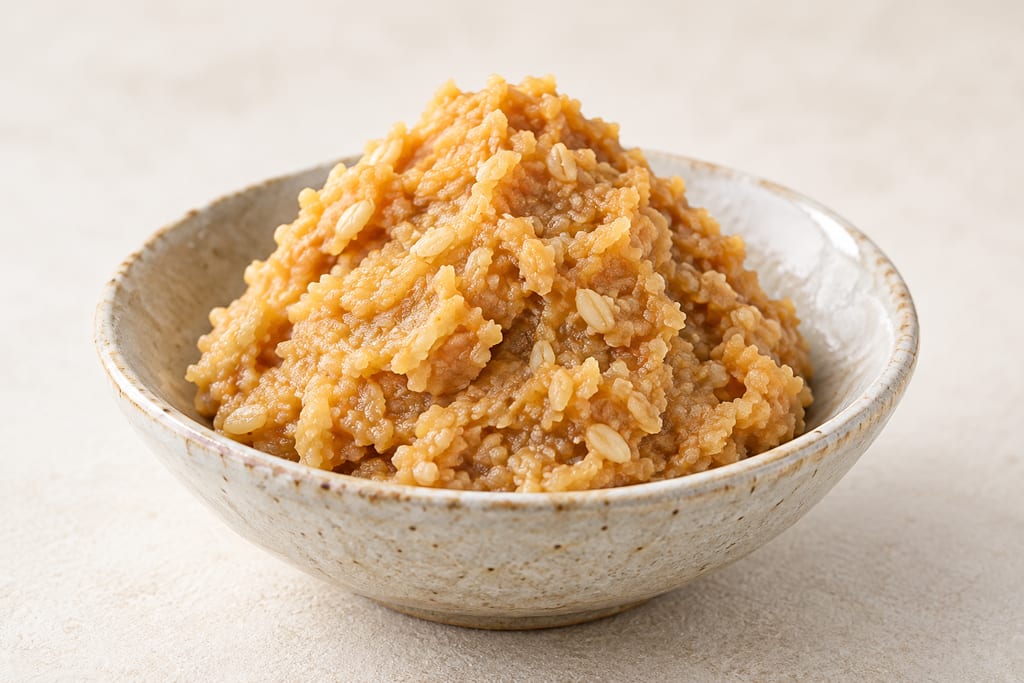
A Japanese soybean paste fermented with barley koji and salt, made mostly in Kyushu, Shikoku and western Japan. It is sweet, savoury and grainy.

Rice koji is steamed white rice through which koji mold has grown. It carries the enzymes that turn rice starch into sugar, and it is the starting point of sake, sweet miso, amazake and shio koji.

A plug-in controller reads a wired probe and switches compatible heating or cooling appliances around a setpoint. It adds feedback; it is not itself a heater, cooler or validated food process.
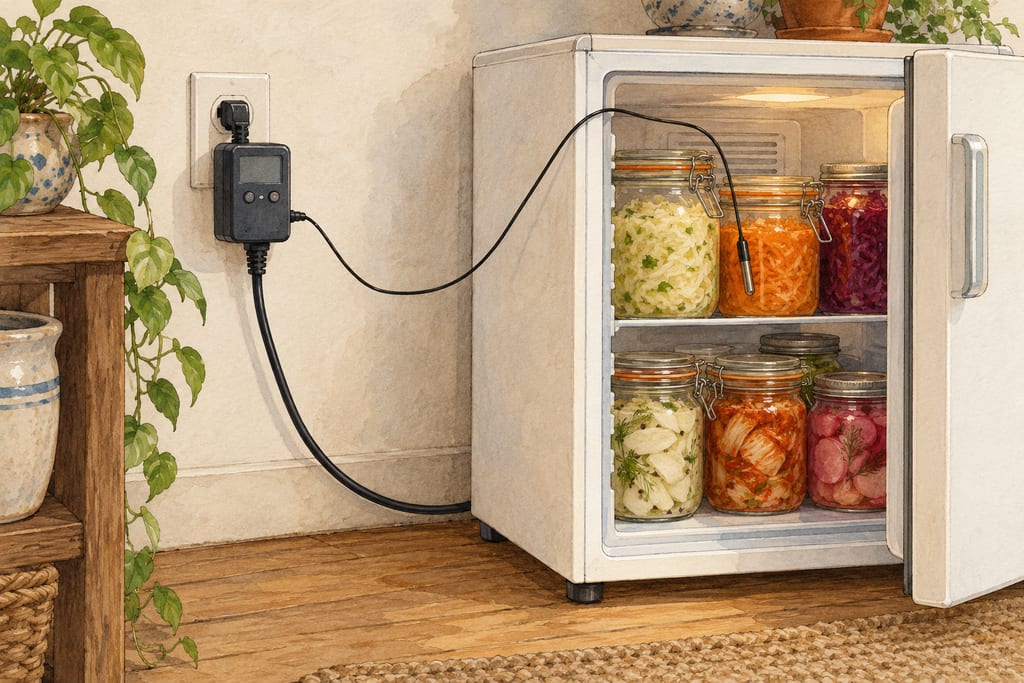
An appliance plugged into an external controller so a probe, rather than the appliance's own dial, decides when it heats or cools.
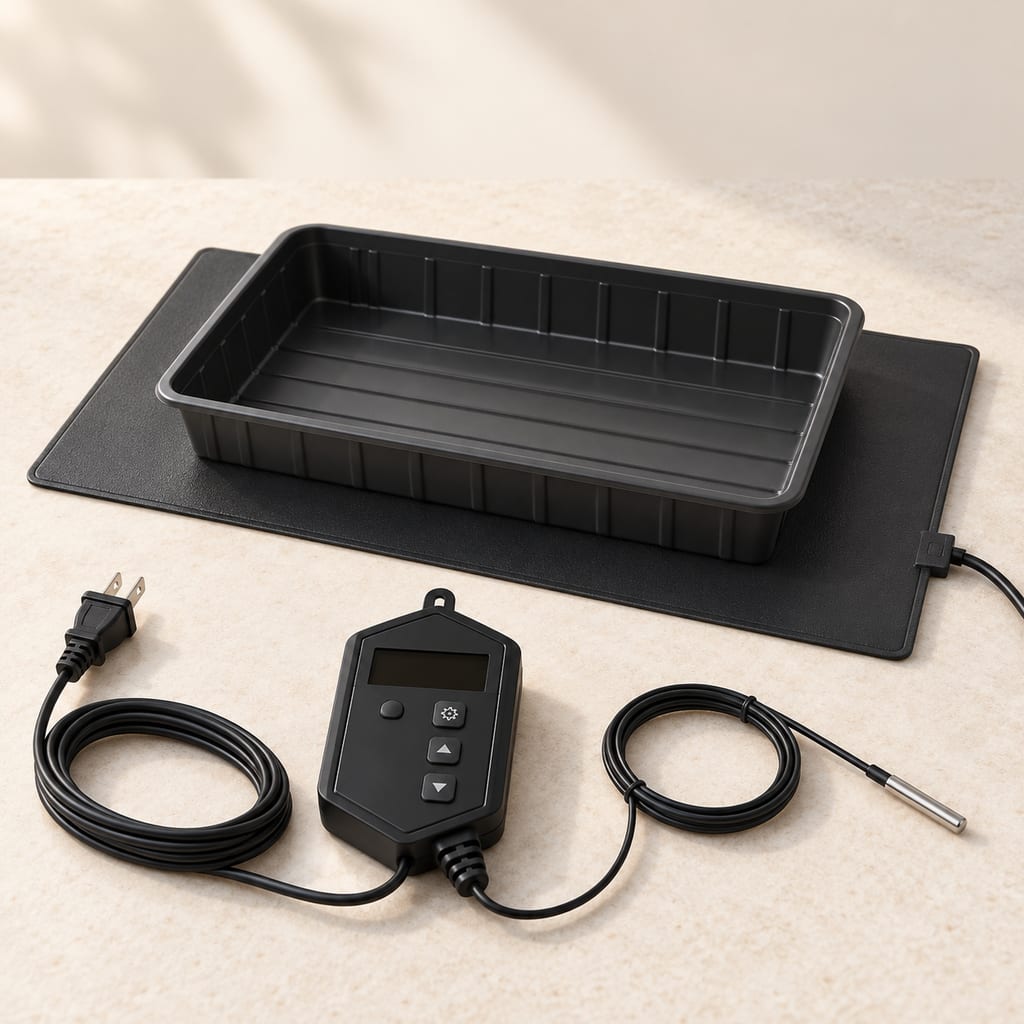
A thin electric mat warms a propagation tray from below; some models use a separate thermostat and probe. One Vivosun manual also gives generic fermentation-heater instructions, but does not validate a particular fermented food or process.
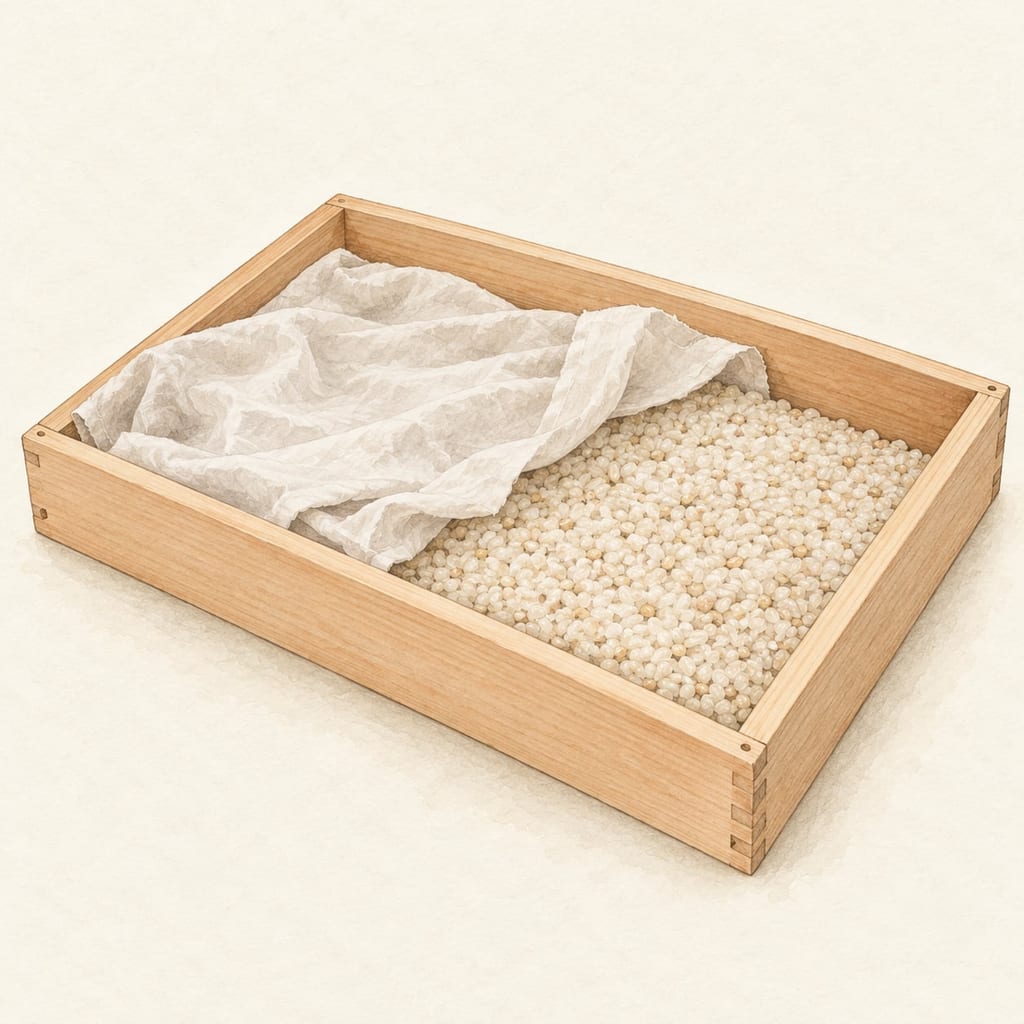
A koji-buta is a shallow wooden tray for spreading grain as it grows into koji. Japanese sources document a traditional form, while modern methods also use cloth-lined or steel trays; size and construction vary.
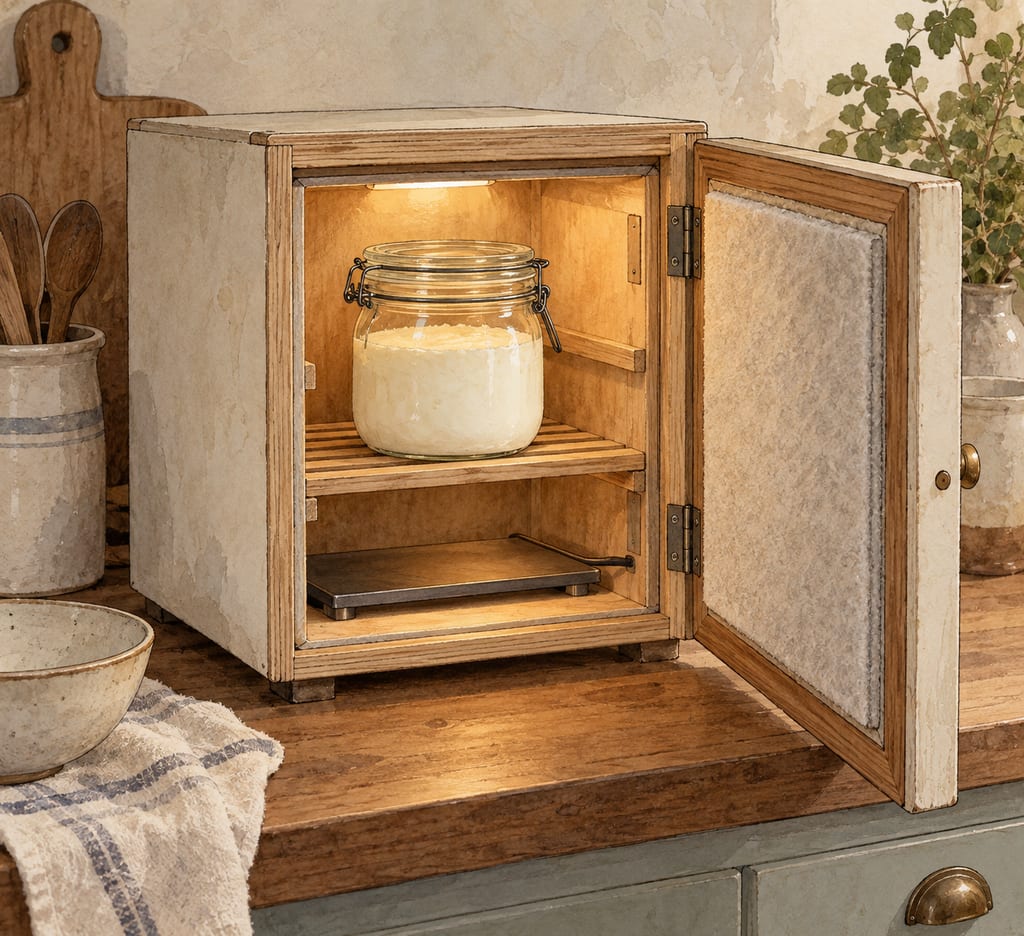
Any warm box, proofer, dehydrator cabinet or adapted fridge whose conditions reach the food through a separate container chosen for that culture.
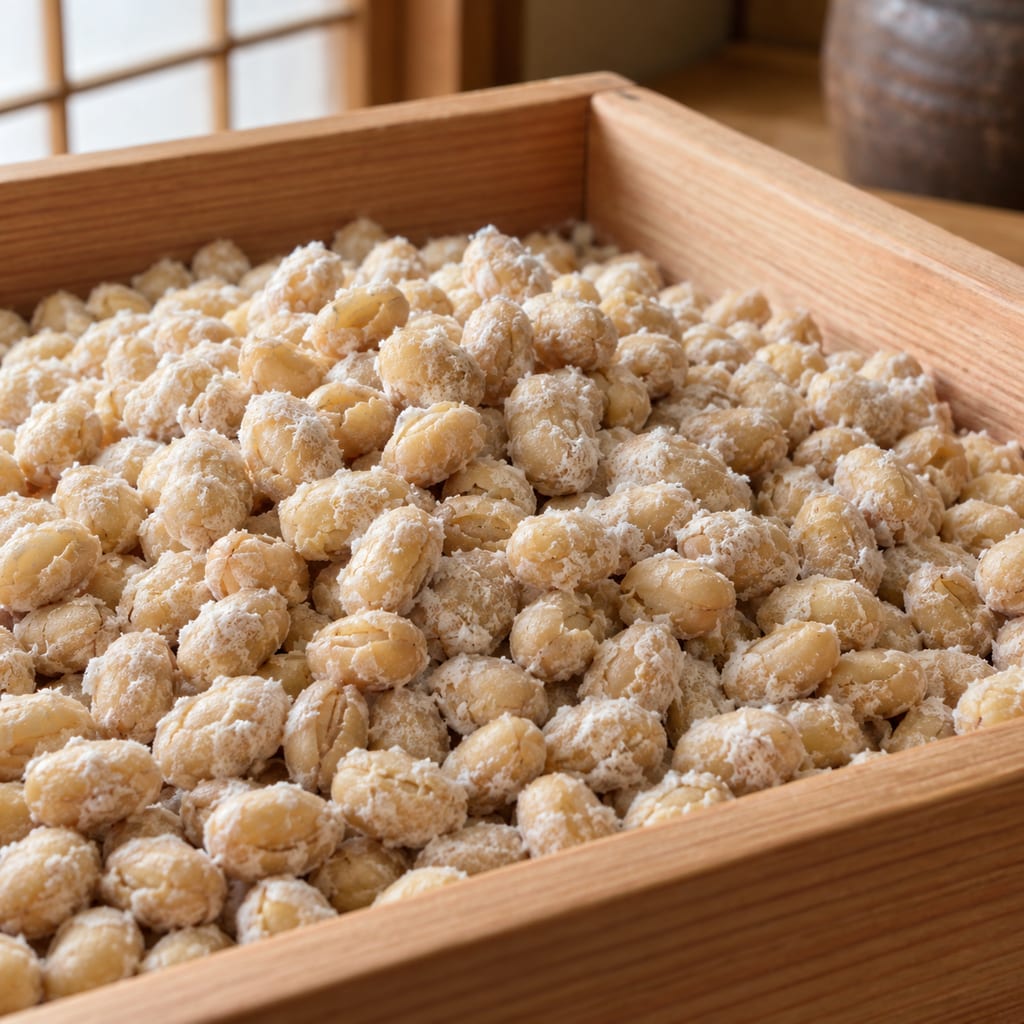
Japanese soybean koji: steamed soybeans, loose or formed into balls, grown over with Aspergillus mould to make the enzymes for mame-miso, tamari and regional soybean condiments.
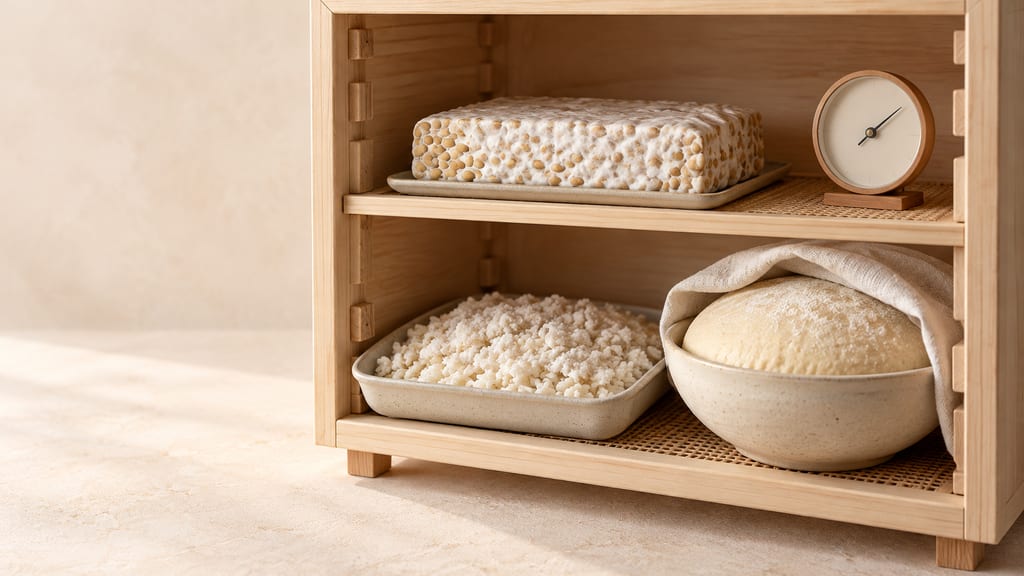
A proofer, a dehydrator with its trays out or an old fridge on a controller can keep cultures at a steady temperature. Whether it works depends on what sits inside: a lidded jar, a vented bag, a shallow tray or a crock.

Crushed or milled barley cooked in water until the starch softens and the mixture thickens, the plainest way a northern household turned stored grain into a meal, here with apple and hazelnut.
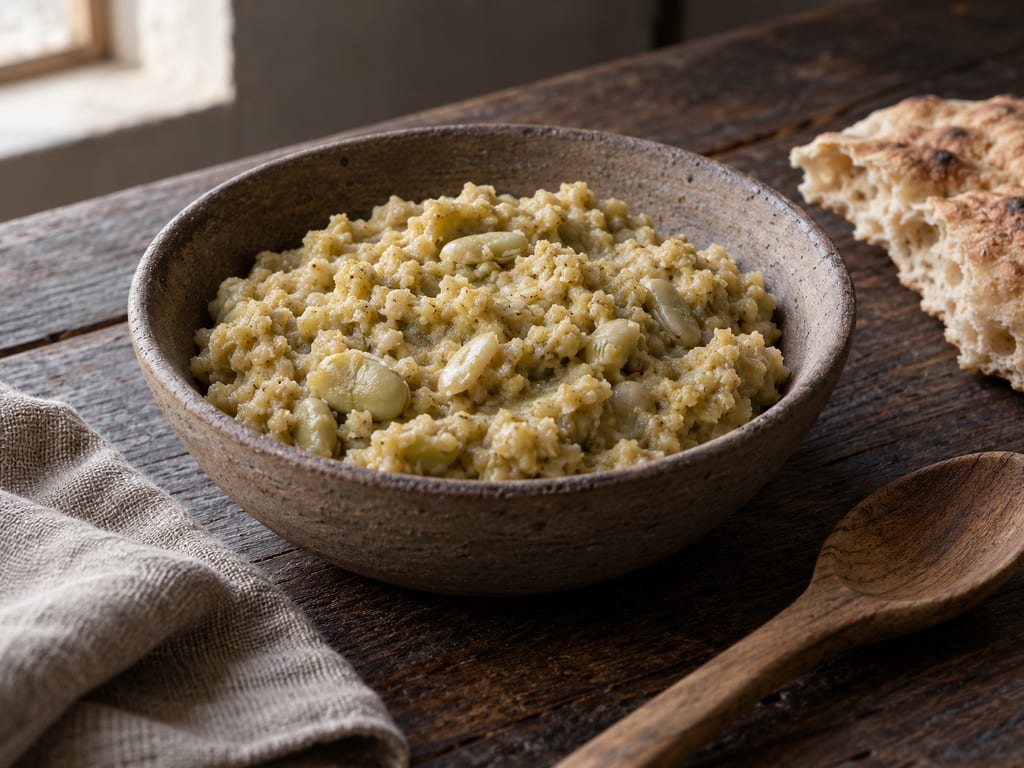
Cooked broad beans crushed to a thick paste with garlic and salt, a museum preparation built on the one European pulse that was already old when the Viking Age began.
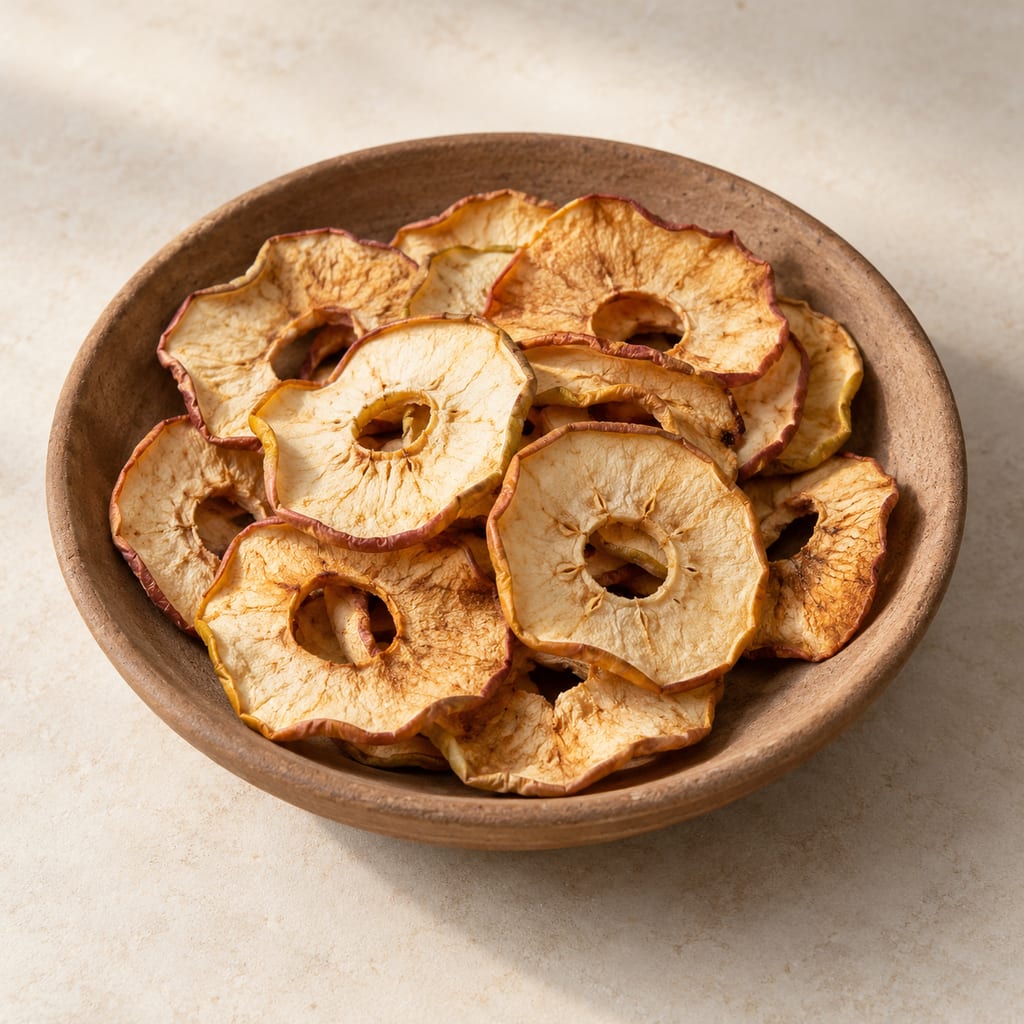
Apple slices dried until most of their water has gone, shrinking and concentrating into leathery or crisp rings, with the modern controls that a plausible old technique turns out to need.

Trout or salmon poached at the end of a simmered broth of onion and root vegetables, a present-day reconstruction of coastal cooking built on excavated fish bones and a boiling pot.
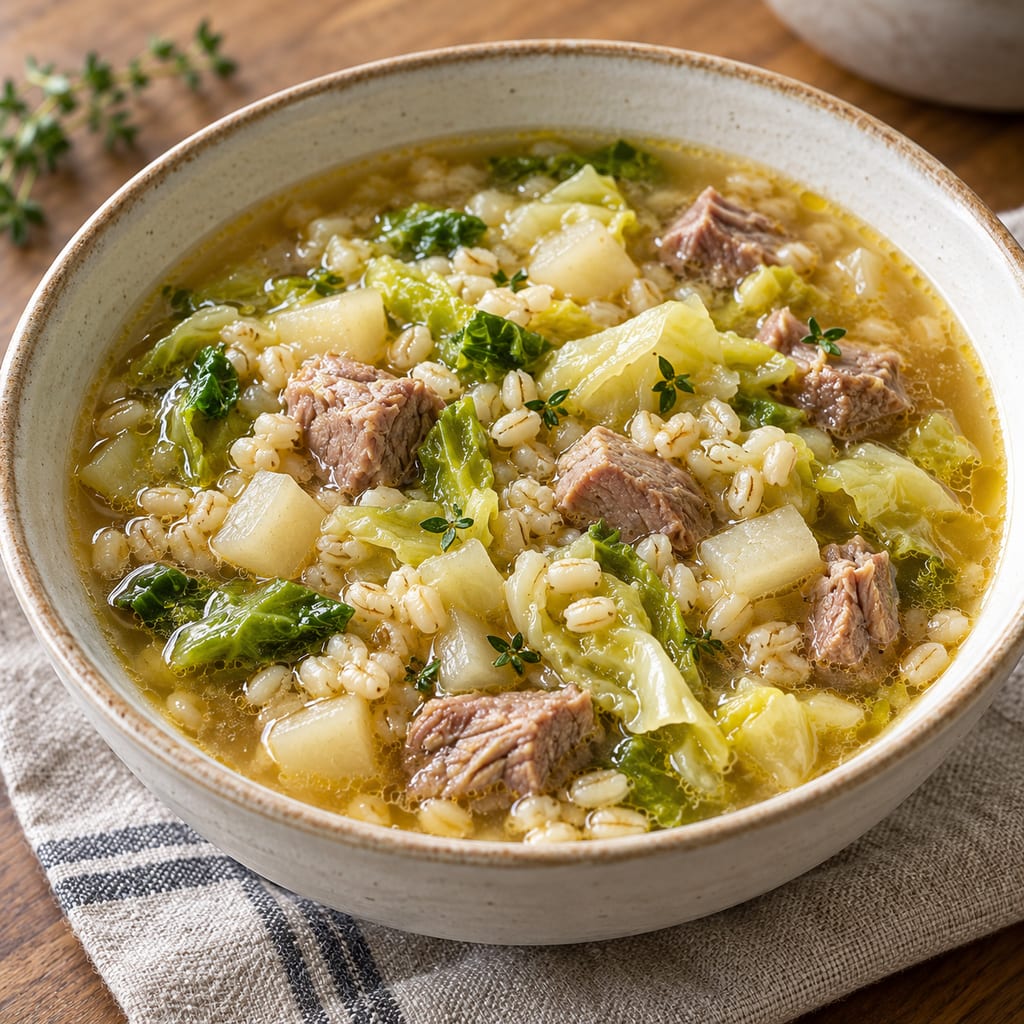
Lamb shoulder simmered with pearl barley, turnip and leafy cabbage in one pot, a present-day reconstruction built from the animals, grains and vegetables of northern European farming.
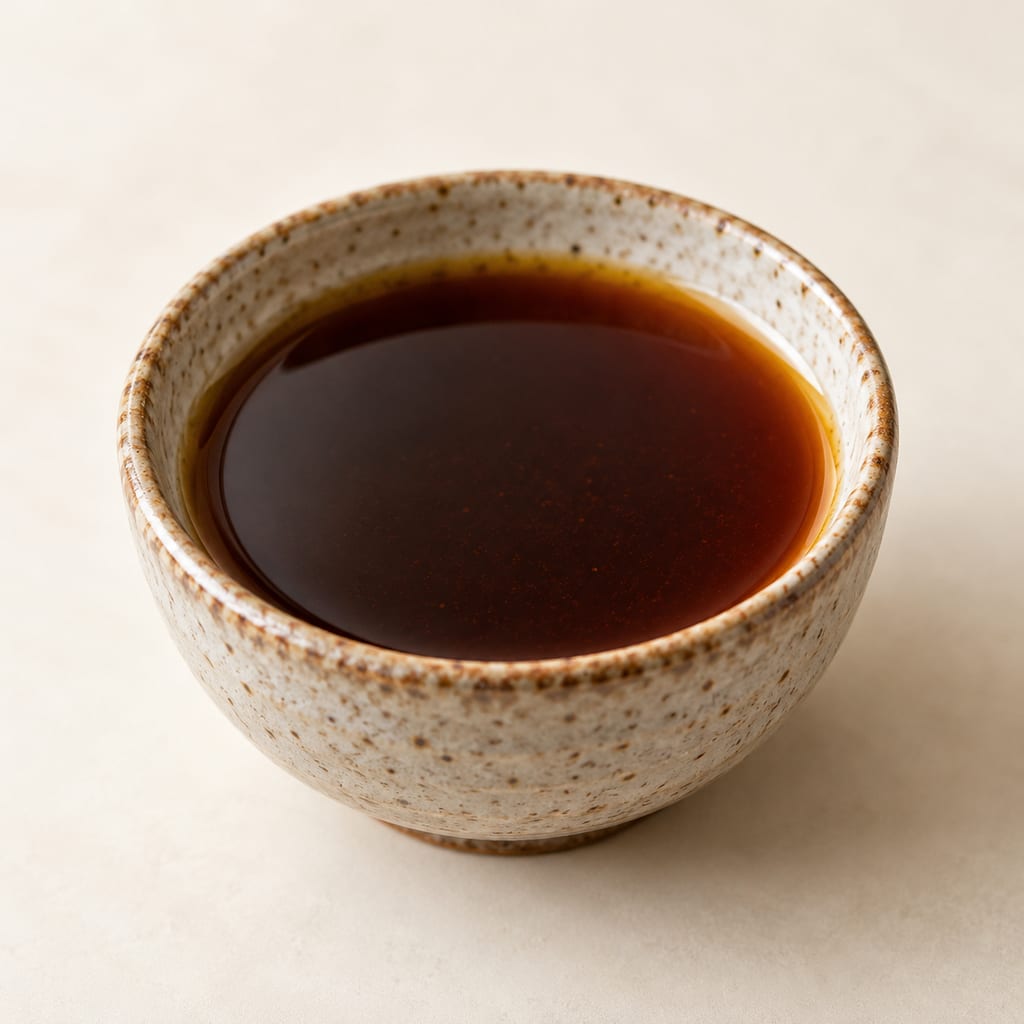
Mushroom garum is a savoury, smoked sauce made by crushing mushrooms with salt and rice koji and letting the mixture brew for months, a modern use of the garum method without fish.
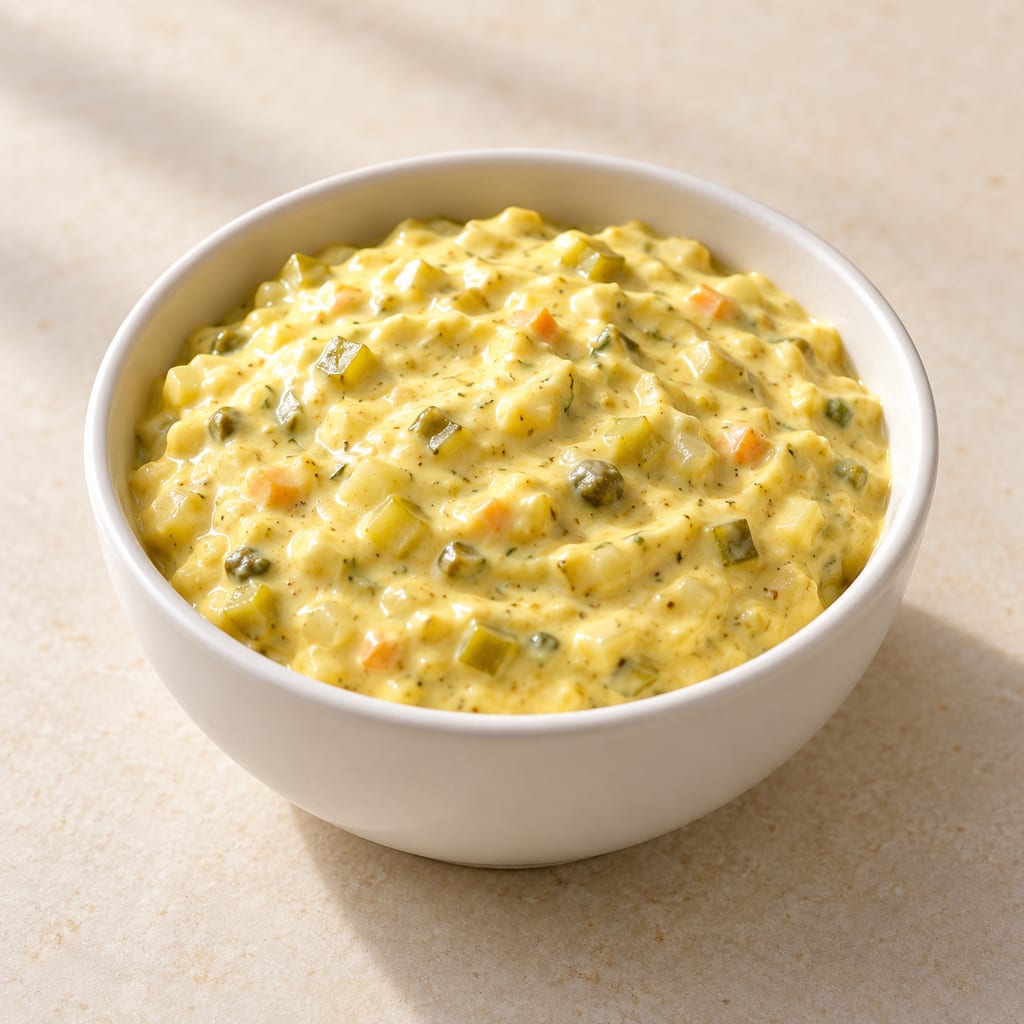
Danish remoulade is a thick, yellow, mayonnaise-based sauce flecked with finely chopped pickled vegetables. Arla’s quick home version stirs piccalilli remoulade purée with mayonnaise, crème fraîche, diced apple and capers.
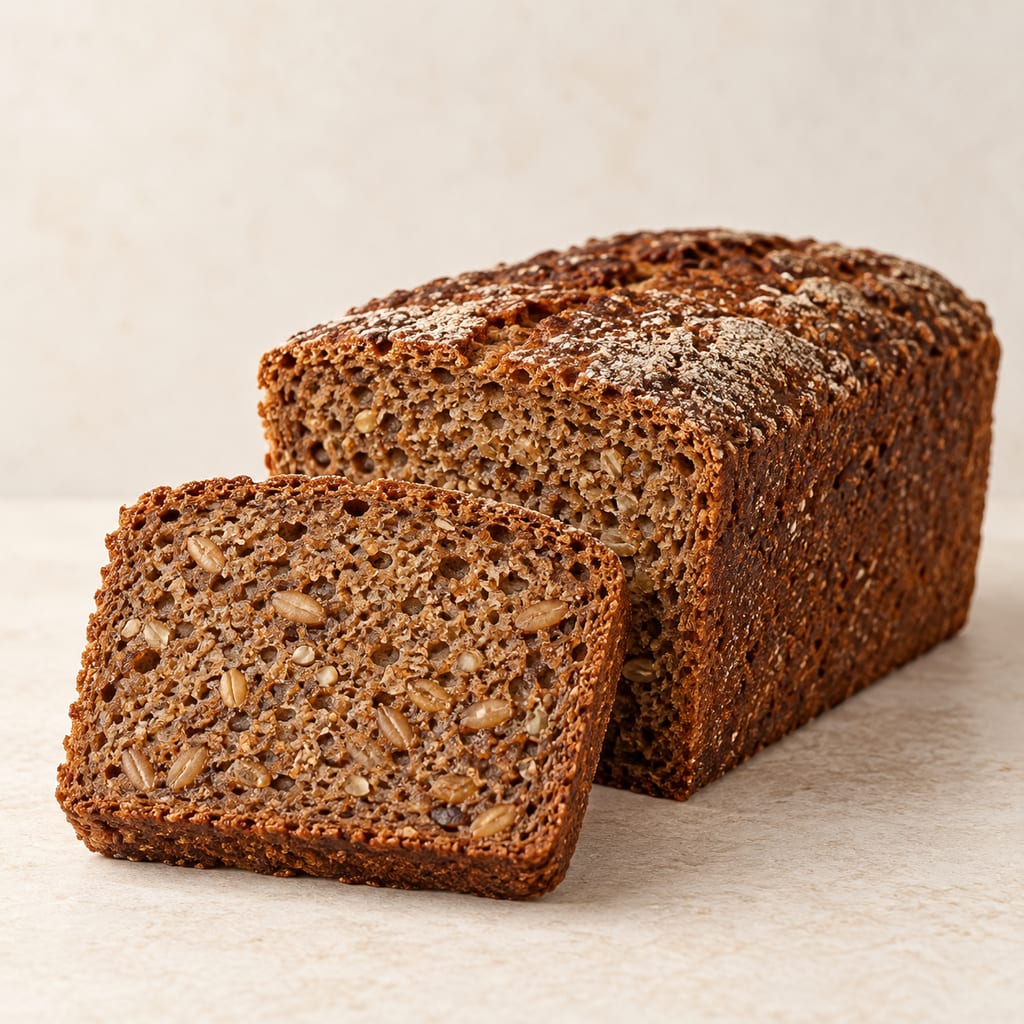
This Danish sourdough loaf combines wheat flour and kernels with rye flour and cracked rye, then rises in three tins before a long, low finishing bake.

A thick, naturally sweet rice-and-koji preparation used to add body and sweetness to marinades, dressings and sauces. This method follows a published Marukome home recipe and is an enzyme-conversion hold, not a way to grow koji mould.
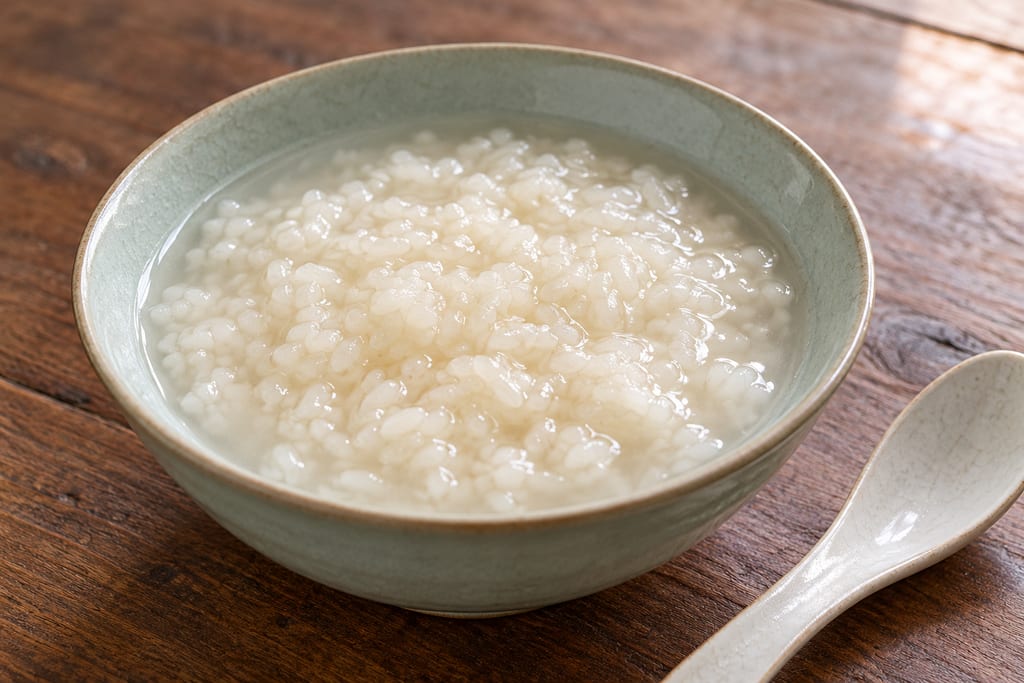
Chinese sweet fermented glutinous rice: steamed rice and a mixed jiuqu starter, where mould enzymes release sugar and yeast makes a little alcohol, eaten with its sweet liquid.

An ethnographic record of marcha (murcha), a dry starter cake used in Eastern Himalayan cereal fermentations. This page documents source-specific community knowledge and is not a recipe for making or storing starter.
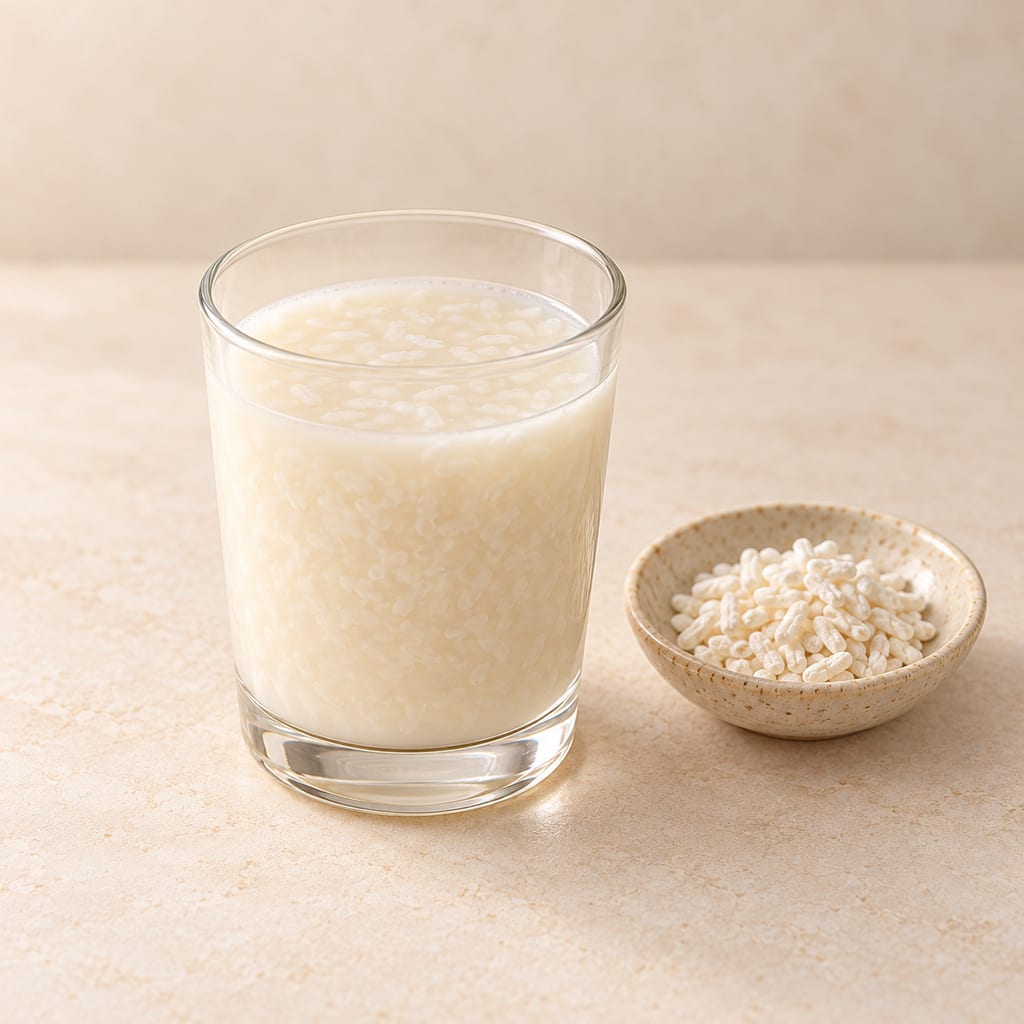
Cooked rice, rice koji and water are held warm for hours so koji enzymes turn the rice starch to sugars, giving a naturally sweet Japanese drink with no added sugar and no second fermentation.
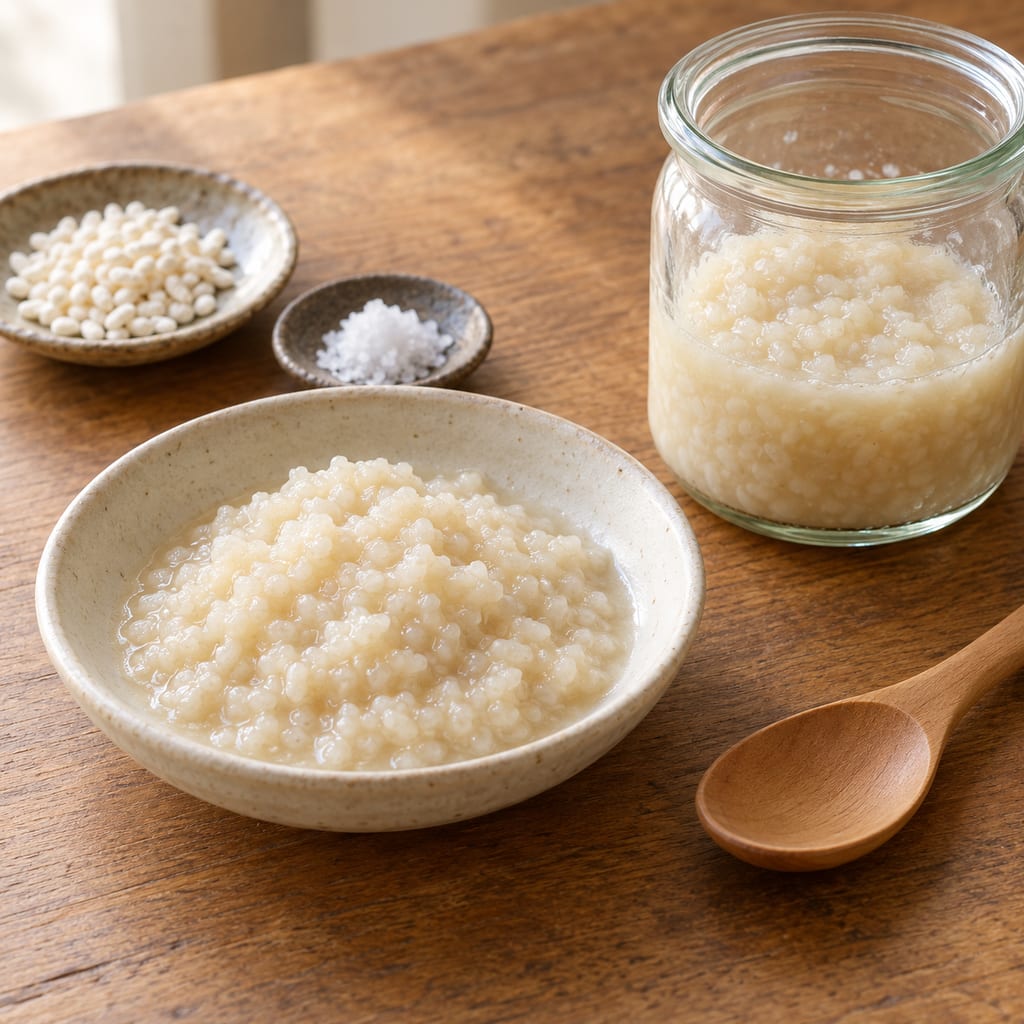
A Japanese seasoning of rice koji, salt and water, left at room temperature until the koji's enzymes and its microbes turn it into a savoury, salty paste for marinades and dressings.
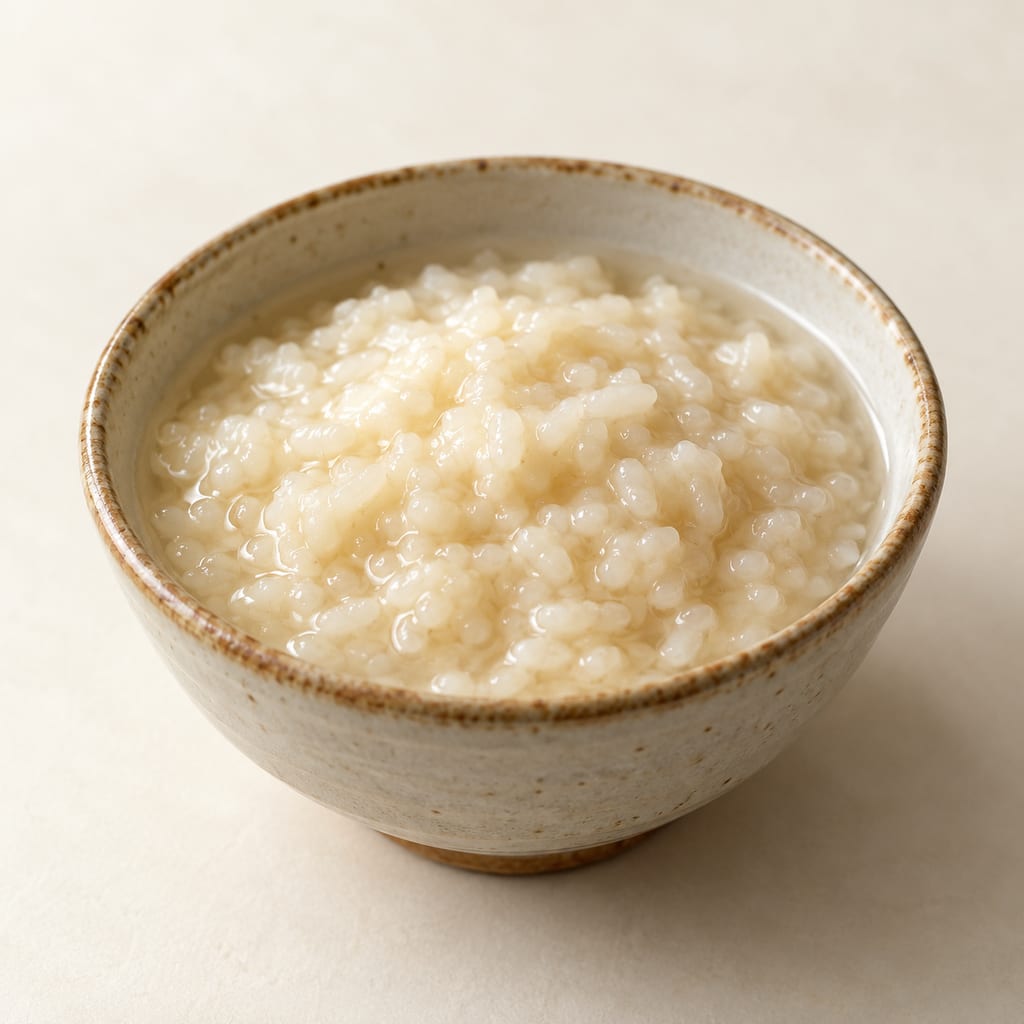
Shio-koji is a Japanese seasoning of rice koji, salt and water, left at room temperature until the grains soften and turn sweet and the mixture thickens.
No community contributions have been published for this entry yet.
Sign in to contribute. Published comments and photos are free to read.
Nordic Food LabMethod · Equipment · History
Koji – history and processfull method and timings
chamber description
yield 1,450 g
troubleshooting
Cited in: Growing koji on barley; Heat, spores and what goes wrong; Equipment
BC Centre for Disease Control, Fermented Foods Working GroupSafety
Fermented Foods Guideline – Section 3.10 Koji and Misono back-slopping; commercial spores
40 °C commercial ceiling
storage
Cited in: Heat, spores and what goes wrong