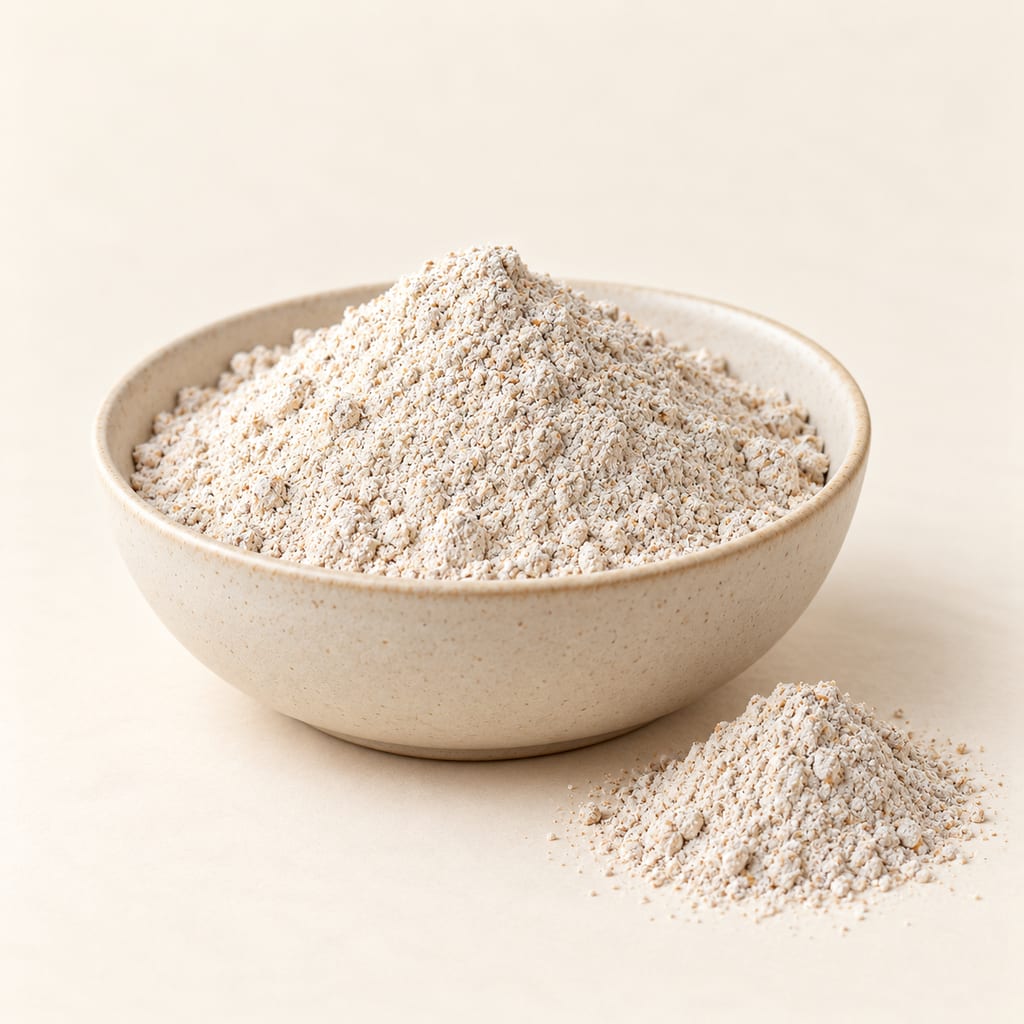
Rye flour
Rye flour is milled rye grain, sold as sifted, dark or wholemeal forms. Its starch and water-binding arabinoxylans shape rye breads, while its proteins do not form wheat's gas-trapping network.
 FermenteaWhere food goes to change
Danish sourdough rye bread
This Danish sourdough loaf combines wheat flour and kernels with rye flour and cracked rye, then rises in three tins before a long, low finishing bake.
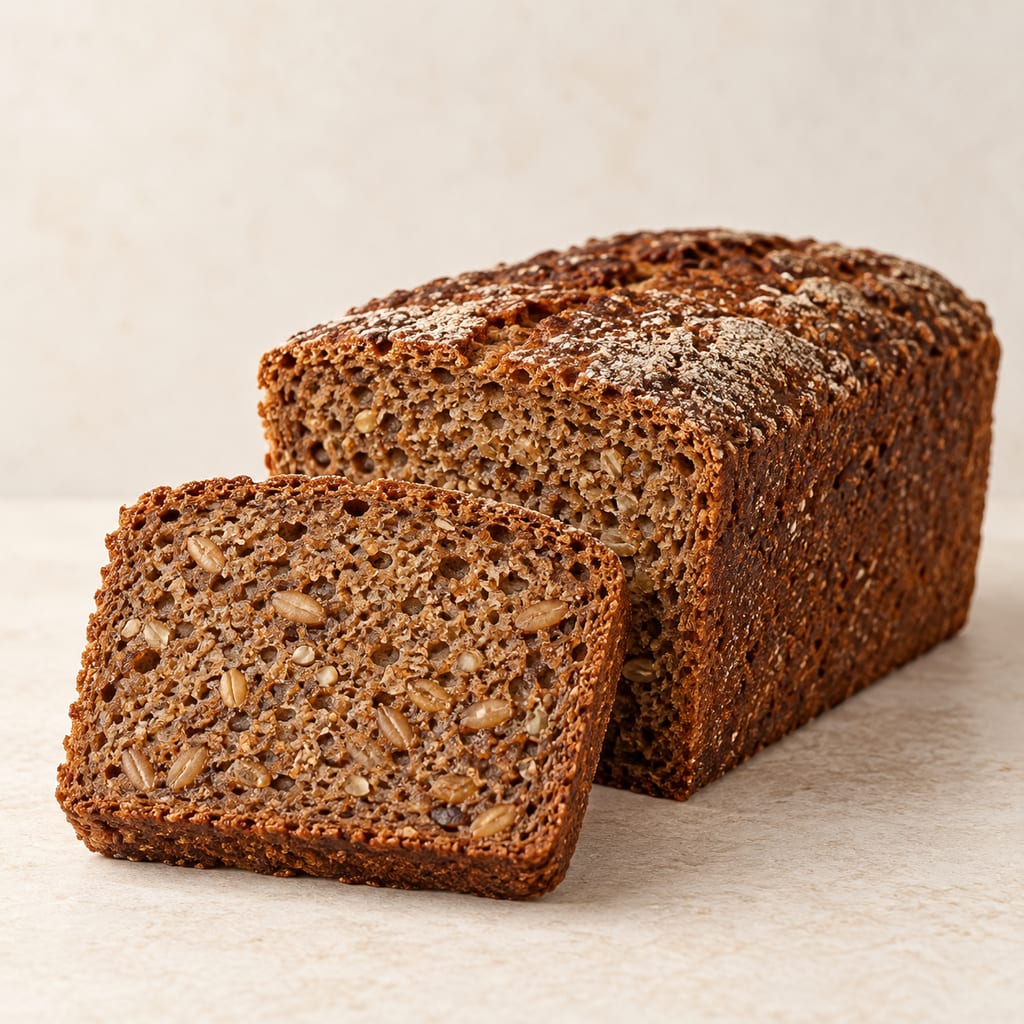
The National Museum of Denmark presents this sourdough rugbrød as a recipe received by museum curator Lykke Pedersen in 1995 from her children's preschool teacher. Pedersen describes returning to it for its mildly sour taste and firm crumb, which she finds easy to slice. That account documents this particular household formula and its recent history; it does not make the recipe an unchanged medieval bread.
The museum traces the starter Pedersen used through a colleague and stepmother to relatives in Jutland. It does not date that culture or provide a separate starter-maintenance method beyond reserving dough from the bake and refrigerating it. This recipe therefore begins with an existing sourdough culture.
The first-day mixture combines sourdough, lukewarm water, wheat flour, wheat kernels and a smaller amount of rye flour. It stands covered until the following day. The second-day mixture adds cut rye kernels and more rye flour, along with syrup, salt and lukewarm water. The museum calls the final dough porridge-like and directs the baker to reserve a portion for the next batch before filling three greased bread tins.
The source gives a 3–5 hour rise under a tea towel, followed by about 1½ hours at about 170°C on the oven's lowest shelf. The loaves then leave their tins for another half hour at 90°C. These are approximate settings from this published recipe, not a validated doneness limit. The formula gives no dough-temperature target or tin capacity. The museum recommends covering the baked bread and says it freezes well.
Danish rye bread is commonly served as the base for open-faced sandwiches called smørrebrød. The Ministry of Foreign Affairs of Denmark describes that serving role and publishes a separate yeast-raised formula with different proportions and ingredients. That contrast is useful: rugbrød names a bread family, while this page records one sourdough recipe from the National Museum. Neither formula should be treated as the single universal version.
The National Museum's recipe includes both wheat and rye, plus whole wheat kernels and cut rye kernels. Its sourdough and long rise are defining features of this particular formula. Other Danish rye breads may use different grains, seeds, leavening or bake schedules.
The National Museum of Denmark says its bread curator received this household formula from a preschool teacher in 1995 and describes the starter's family line as reaching relatives in Jutland. This documents a recent recipe and a reported starter lineage; it does not establish the age of the bread tradition or a birthplace.
Yield 3 loaves · Scaling: source batch only
Flour is a raw agricultural product and may carry harmful bacteria; uncooked dough should not be eaten.
Hazard sourceBake the dough through both stages described by the museum and do not taste it raw; wash hands, tools and surfaces after handling raw flour and dough.
Control sourceDo not taste the raw dough: flour can carry harmful bacteria. This recipe gives approximate oven settings and times but no validated internal-temperature endpoint.
The National Museum of Denmark publishes this formula as rugbrød; the country association describes the documented preparation and does not claim a precise birthplace.
Rye flour is milled rye grain, sold as sifted, dark or wholemeal forms. Its starch and water-binding arabinoxylans shape rye breads, while its proteins do not form wheat's gas-trapping network.
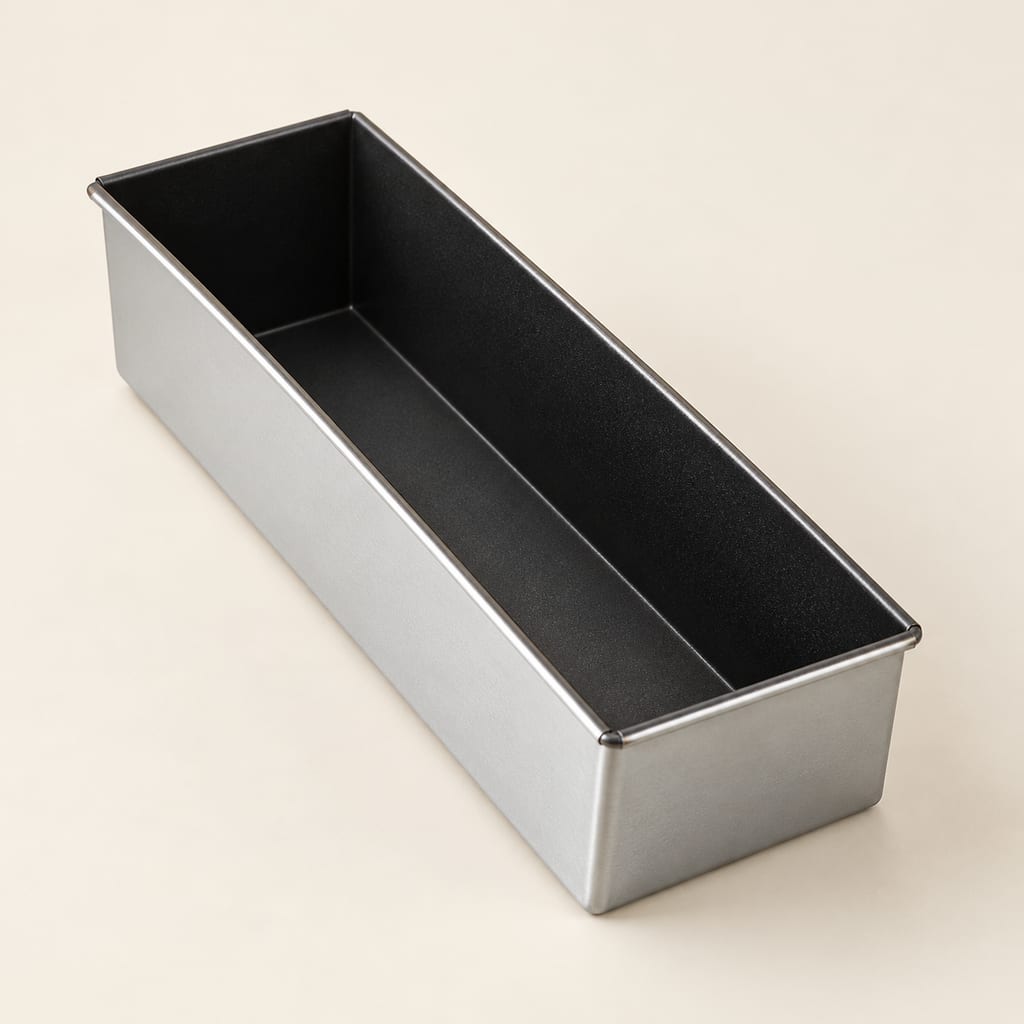
A greased rye-bread tin holds rugbrød dough while it proofs and bakes. Denmark’s National Museum documents a family recipe using three tins, but does not specify their material, shape or capacity.

Crushed or milled barley cooked in water until the starch softens and the mixture thickens, the plainest way a northern household turned stored grain into a meal, here with apple and hazelnut.
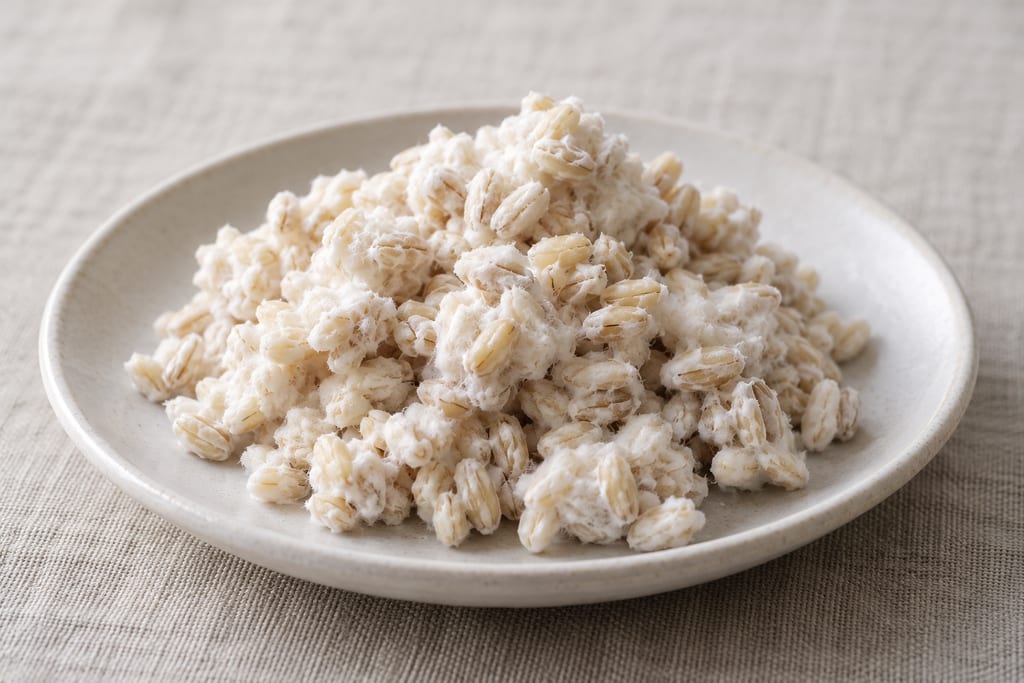
Steamed pearled barley grown into a white koji cake with Aspergillus oryzae over about 36 hours in a 30 °C chamber, turned three times under a damp cloth.
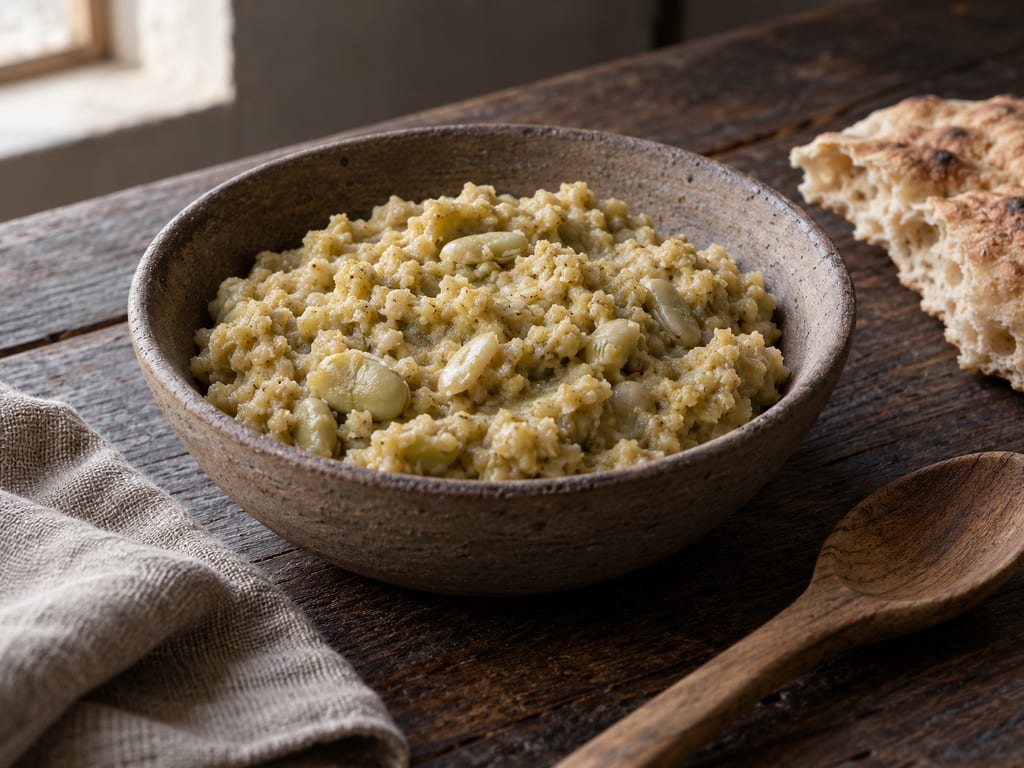
Cooked broad beans crushed to a thick paste with garlic and salt, a museum preparation built on the one European pulse that was already old when the Viking Age began.
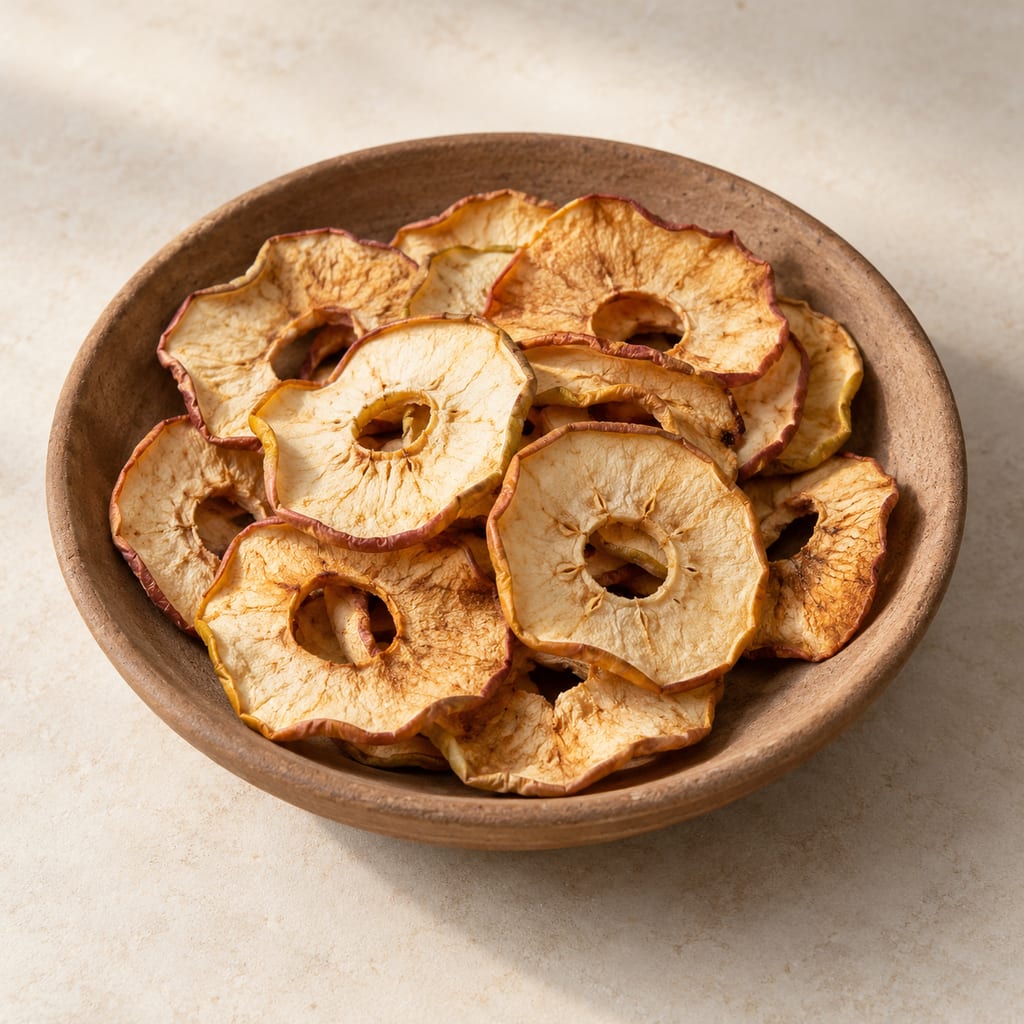
Apple slices dried until most of their water has gone, shrinking and concentrating into leathery or crisp rings, with the modern controls that a plausible old technique turns out to need.
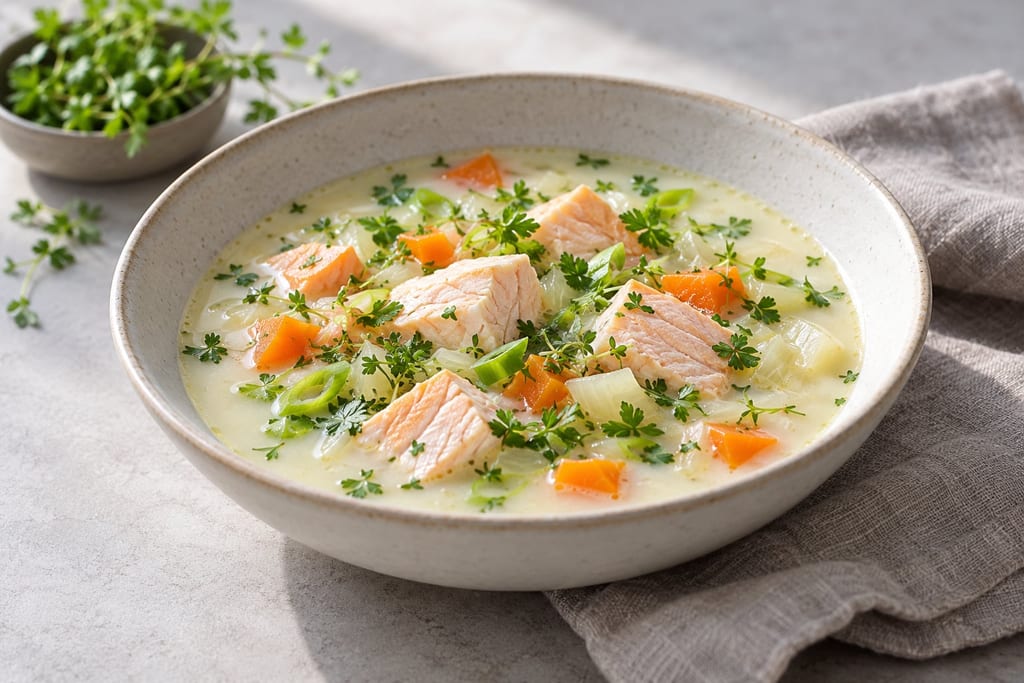
Trout or salmon poached at the end of a simmered broth of onion and root vegetables, a present-day reconstruction of coastal cooking built on excavated fish bones and a boiling pot.
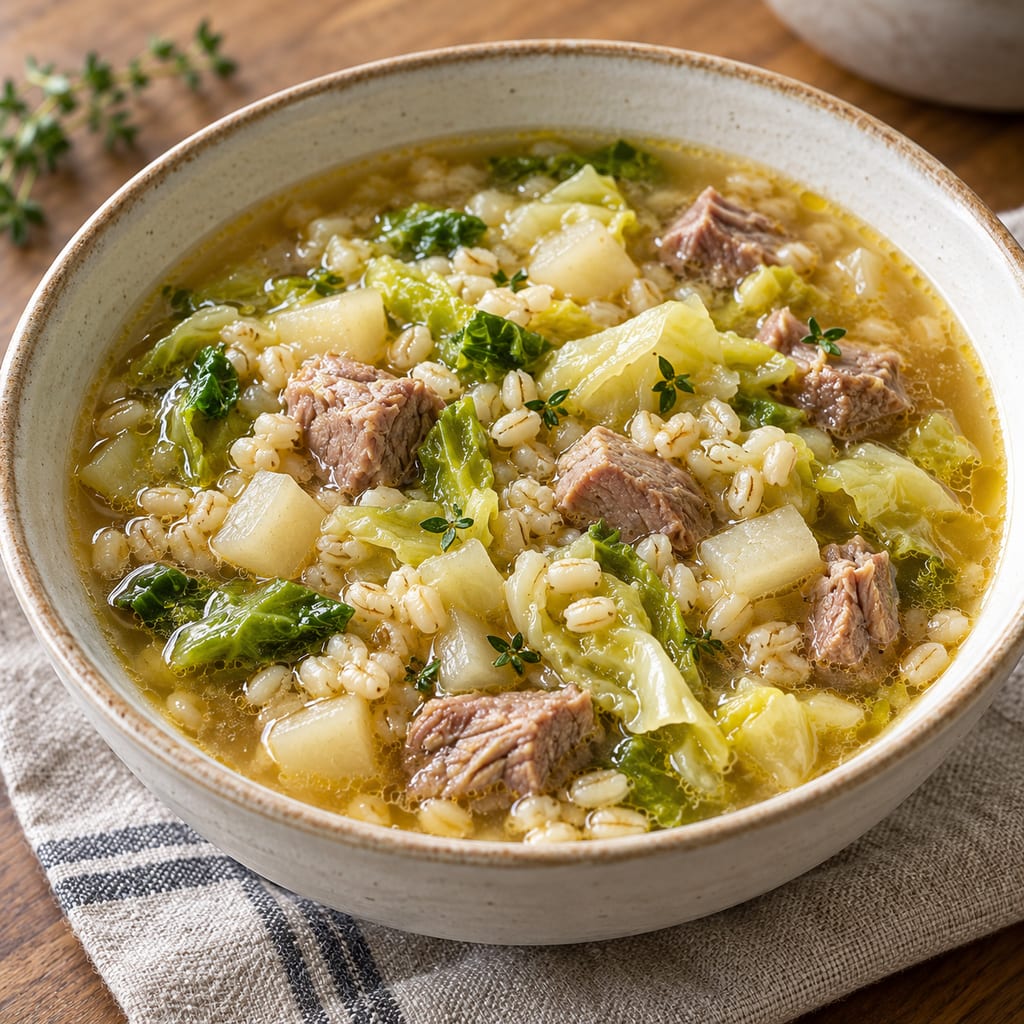
Lamb shoulder simmered with pearl barley, turnip and leafy cabbage in one pot, a present-day reconstruction built from the animals, grains and vegetables of northern European farming.
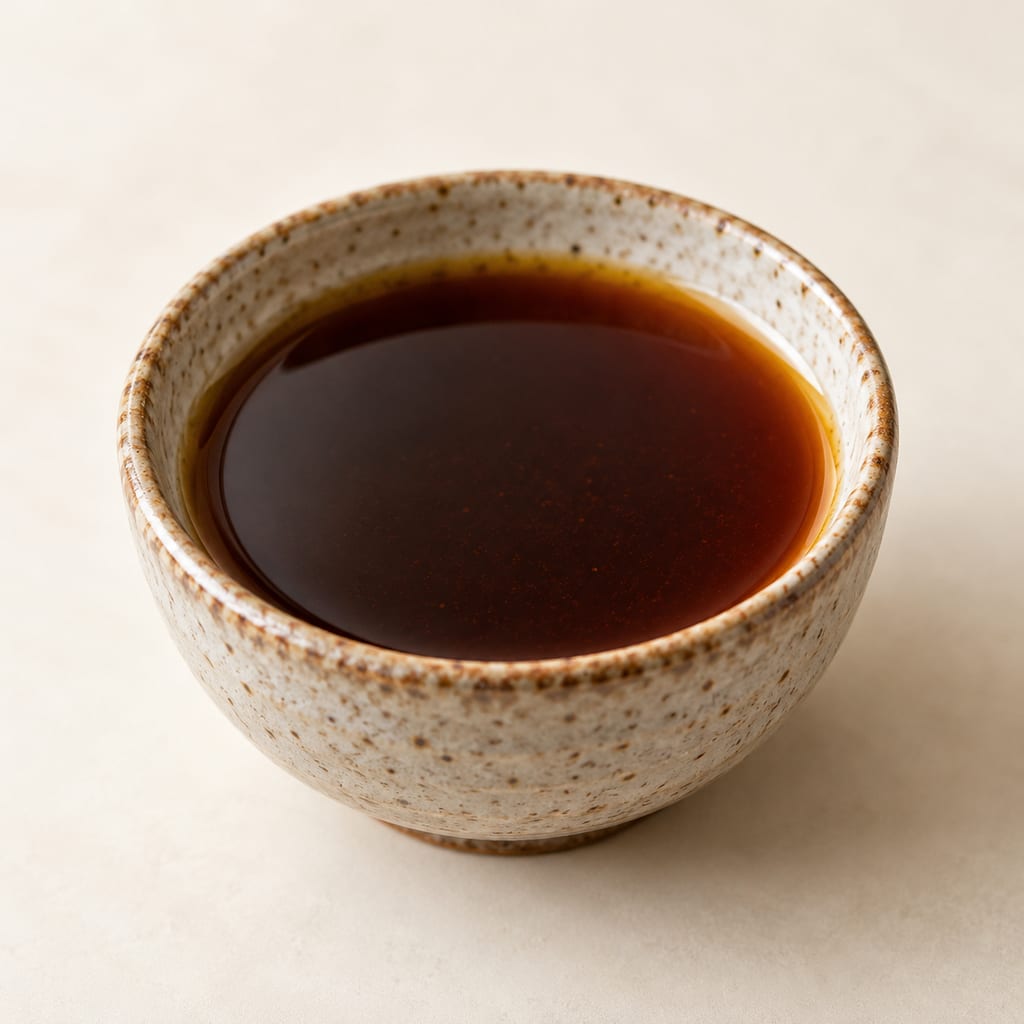
Mushroom garum is a savoury, smoked sauce made by crushing mushrooms with salt and rice koji and letting the mixture brew for months, a modern use of the garum method without fish.
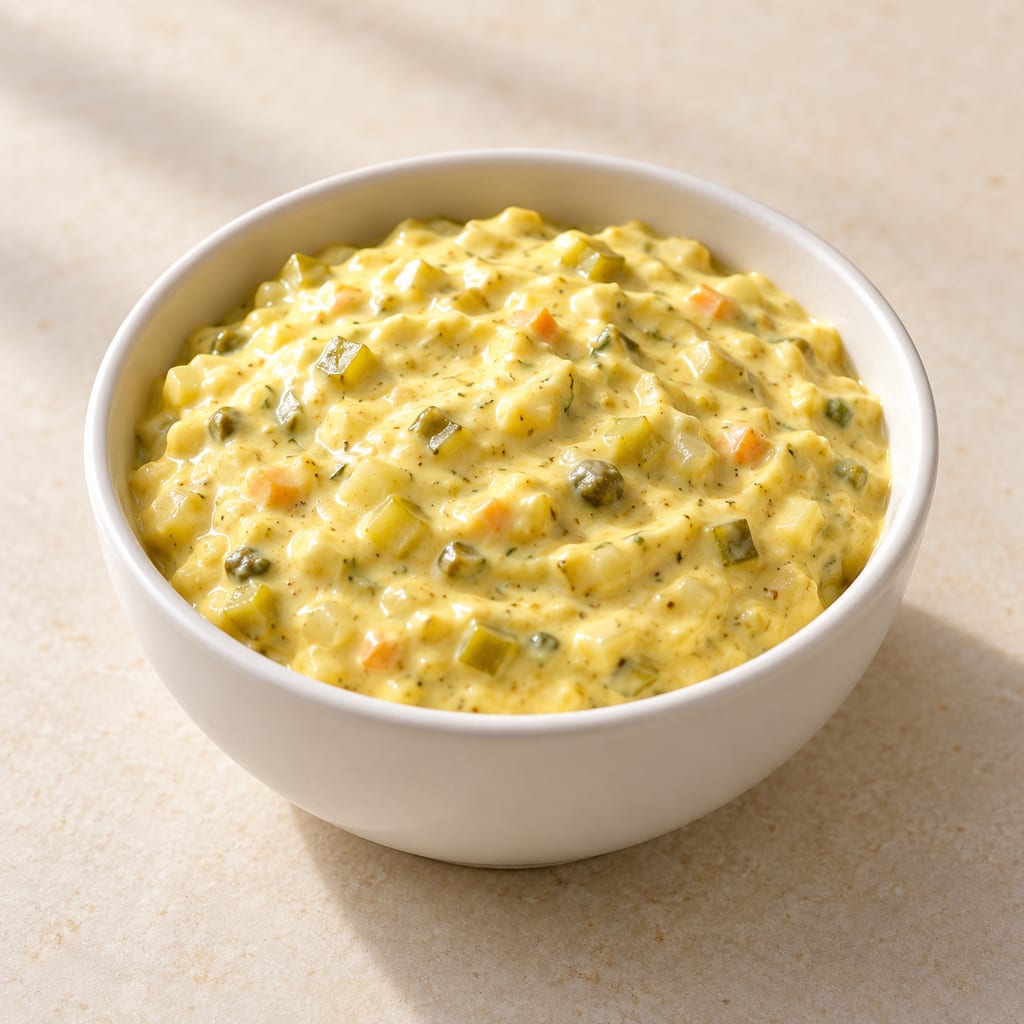
Danish remoulade is a thick, yellow, mayonnaise-based sauce flecked with finely chopped pickled vegetables. Arla’s quick home version stirs piccalilli remoulade purée with mayonnaise, crème fraîche, diced apple and capers.
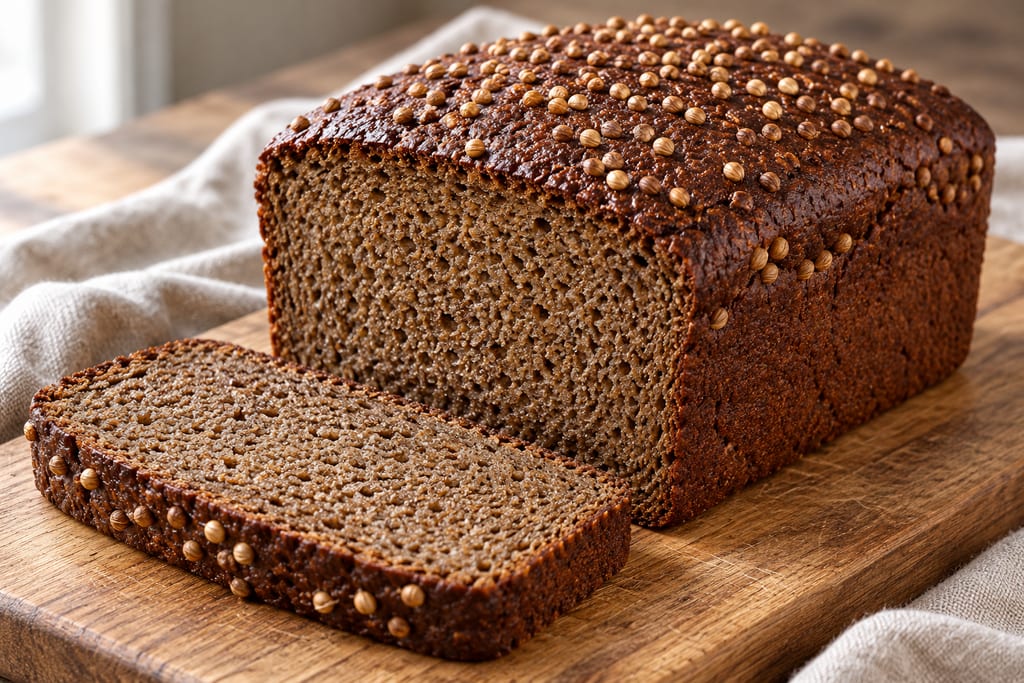
A dark rye sourdough with coriander and roasted barley-malt scald, based on Lily McCann's measured Borodinsk-ish home formula.
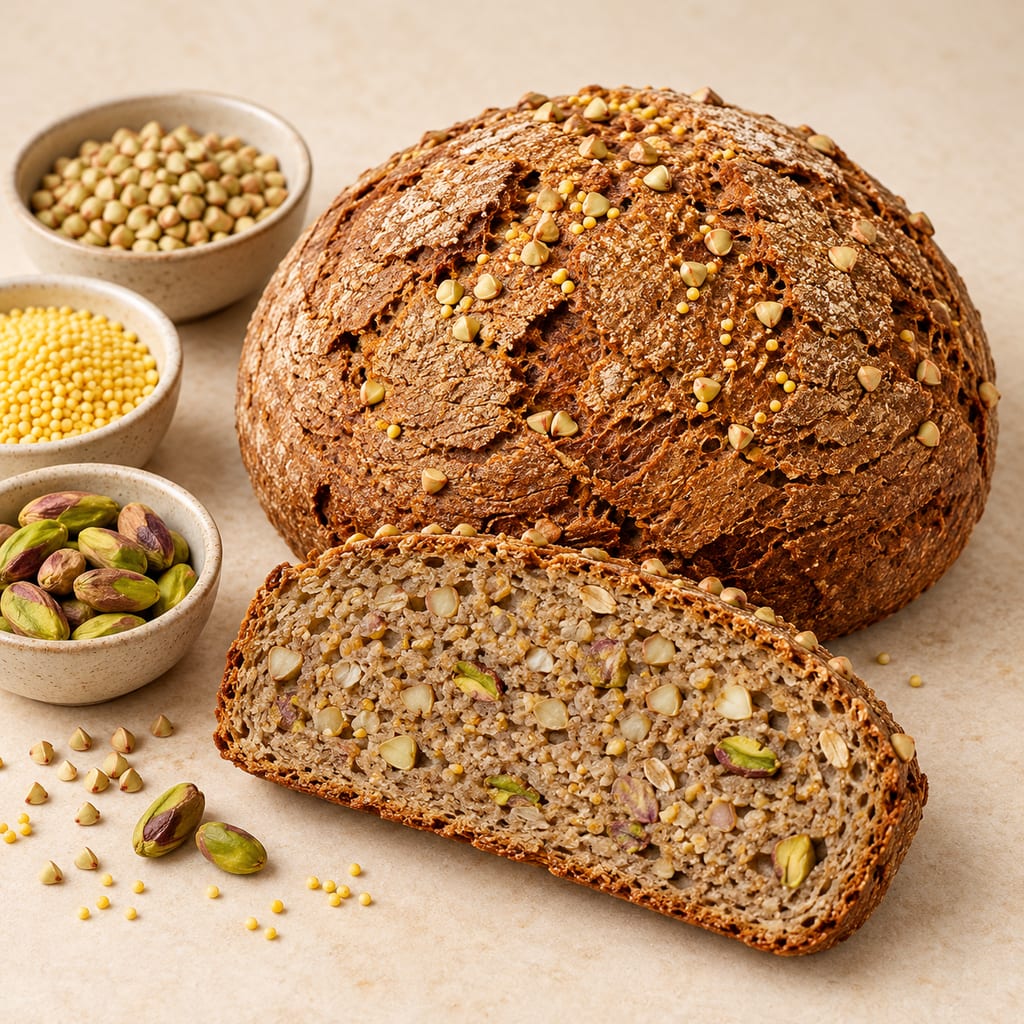
A gluten-free sourdough loaf of about 1 kg. A buckwheat and quinoa starter leavens a dough with cooked whole buckwheat groats, millet and a dark gluten-free bread mix, baked in a lidded pot.
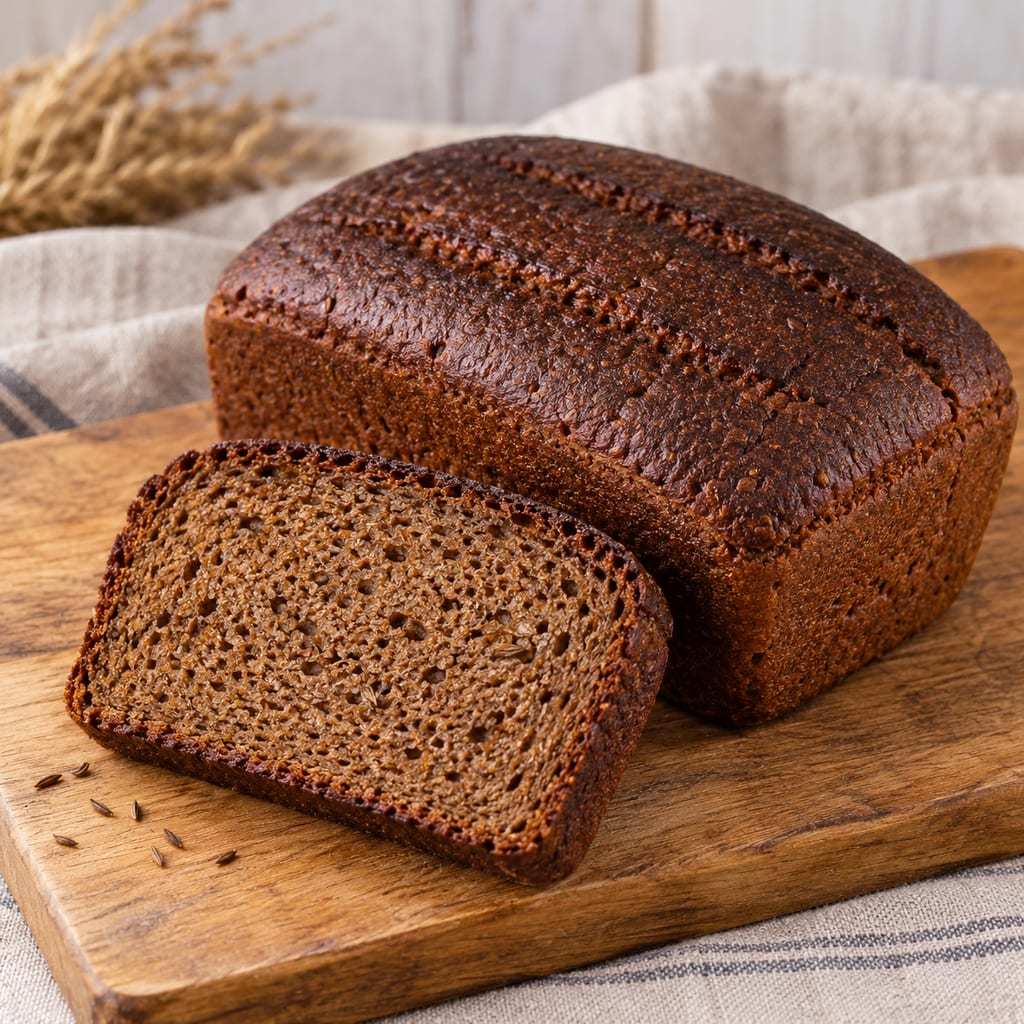
A Lithuanian dark rye loaf made with an overnight rye preferment, caraway, honey and sugar, then proofed in a loaf pan and baked in two stages.
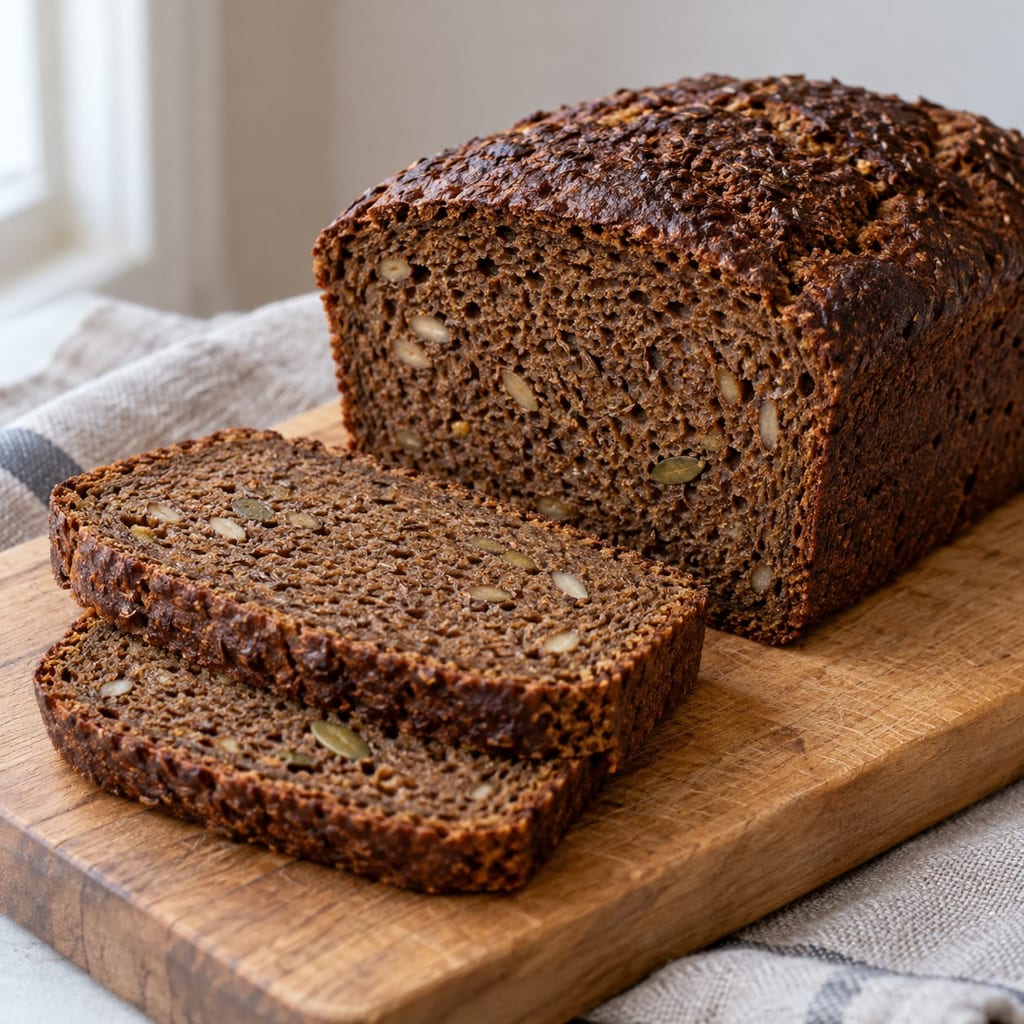
This Estonian rye loaf uses a sourdough preferment, a rye scald and soaked seeds, with a small amount of baker’s yeast. Two tins bake through a staged hot-to-moderate oven schedule.
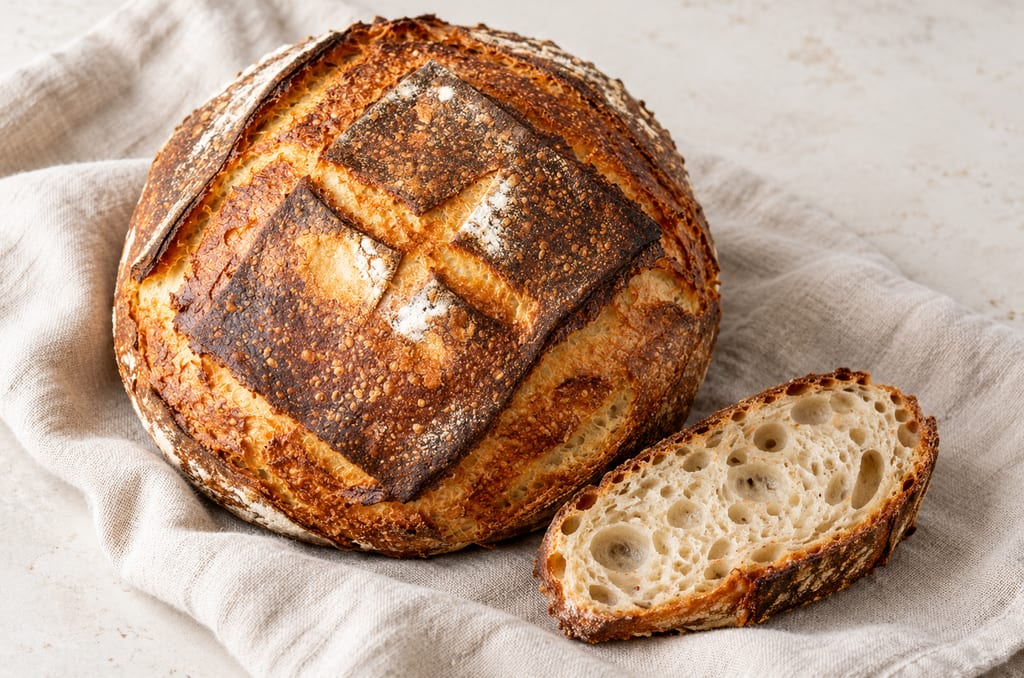
A ripe sourdough starter leavens this modern low-handling loaf. Three hourly folds organize the sticky dough before a long refrigerator rest, final proof and covered bake.
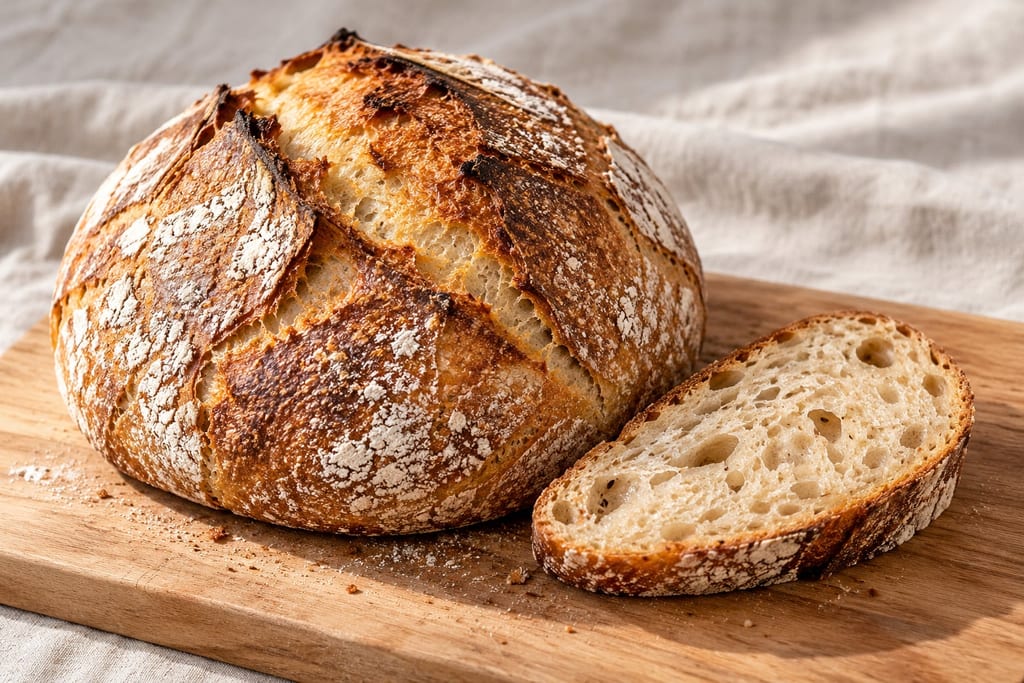
Two large French-style wheat loaves use unfed sourdough starter, whole-wheat flour, long room-temperature fermentation and a covered-pot bake.
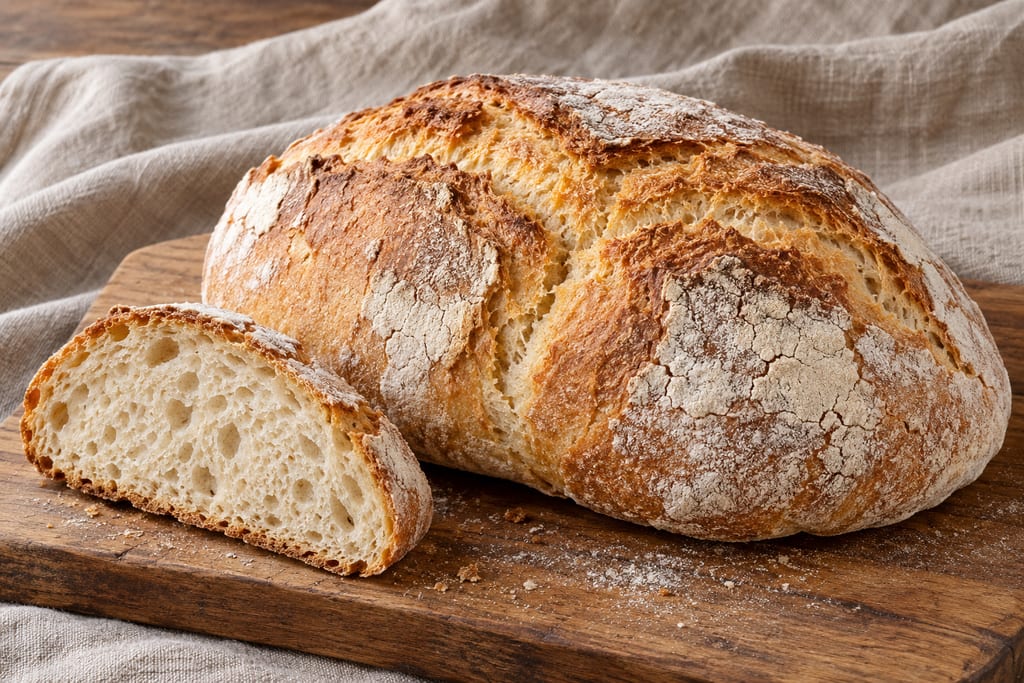
This home sourdough adaptation borrows Pan de Cea’s wheat-forward loaf and central fenda while using a domestic oven and a separately documented modern formula.
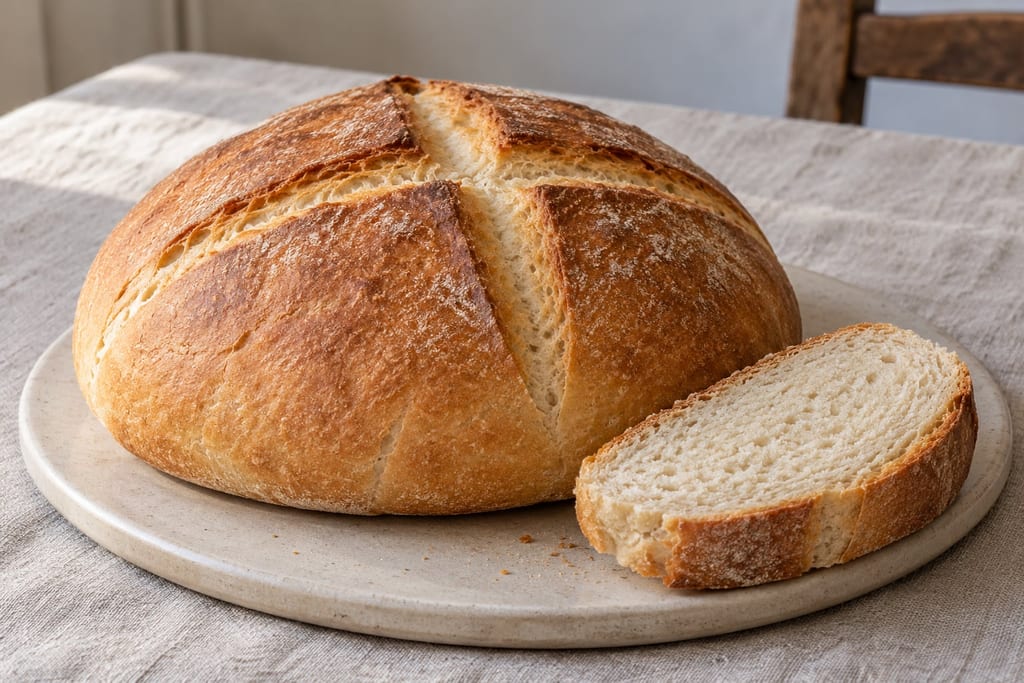
This household Pan de Cruz adaptation uses sourdough and a folded, tight-crumb wheat dough, marked with a cross and baked in a home oven.

Soft, spreadable Calabrian pork sausage made with a great deal of red chilli and fatty pork, stuffed into natural casings, sometimes smoked and matured while staying soft.

A way to add independent temperature logging to an existing food dehydrator without changing its built-in controls or protections. It is a monitoring method, not a rewiring plan.

Pleurotus cystidiosus is the abalone mushroom, a cultivated oyster-type fungus with dark brown caps that grows more slowly and is more demanding than other Pleurotus species.

A dark, balanced vinegar from Emilia-Romagna made by combining cooked or concentrated grape must with wine vinegar, then acetifying and refining it in wood under a protected specification.

A living dairy inoculum that starts controlled cream fermentation, developing acidity and aroma before sour cream or cultured butter is finished.

A small electric incubator holds jars at a selected temperature for yogurt and other documented warm food preparations. Controls, capacity and vessel arrangement vary by model.

Adygean salt is a seasoned table salt associated with Adygea and the wider North Caucasian culinary tradition. Salt is blended with garlic and a variable selection of herbs and spices; the exact mix depends on the named style and maker.

The African Caesar-group mushroom, Amanita masasiensis, is a wild ectomycorrhizal species of central and southern African woodlands, eaten locally. The genus contains deadly poisonous species, so identification needs care.
No community contributions have been published for this entry yet.
Sign in to contribute. Published comments and photos are free to read.
National Museum of DenmarkInspiration · Method · History · Geography
Rugbrød med surdejThe museum publishes a two-day sourdough rugbrød formula yielding three loaves, with wheat flour and kernels, rye flour and cut rye kernels, syrup, salt, reserved dough, a 3–5 hour proof and two-stage bake.
The curator says she received the household recipe in 1995 from a preschool teacher and describes the reported family lineage of her sourdough as reaching relatives in Jutland.
Cited in: A household recipe at the National Museum; Two-day mixing and a three-tin bake; Rye bread and Danish open sandwiches
Ministry of Foreign Affairs of DenmarkFood use
Danish Rye BreadThe ministry describes Danish rye bread as a base for open-faced sandwiches; its separate yeast-raised formula differs from the National Museum's sourdough recipe.
Cited in: Rye bread and Danish open sandwiches
U.S. Food and Drug AdministrationSafety
Handling Flour Safely: What You Need to KnowFDA says raw flour can carry harmful bacteria, baking is needed before consumption, raw dough should not be tasted, and hands, utensils and surfaces should be cleaned after handling raw flour.