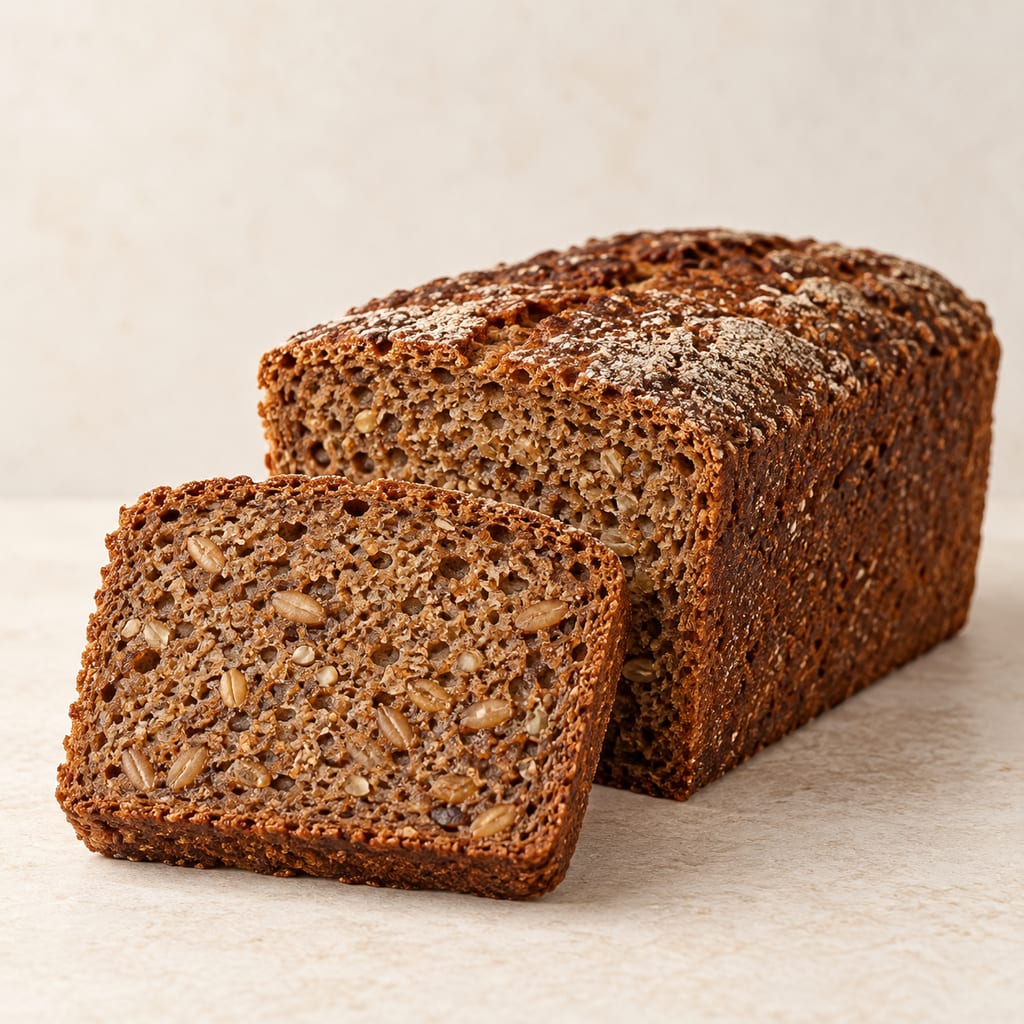
Rugbrød
This Danish sourdough loaf combines wheat flour and kernels with rye flour and cracked rye, then rises in three tins before a long, low finishing bake.
 FermenteaWhere food goes to change
Equipment · Baking pans and tins
Rye-bread tin
A greased rye-bread tin holds rugbrød dough while it proofs and bakes. Denmark’s National Museum documents a family recipe using three tins, but does not specify their material, shape or capacity.
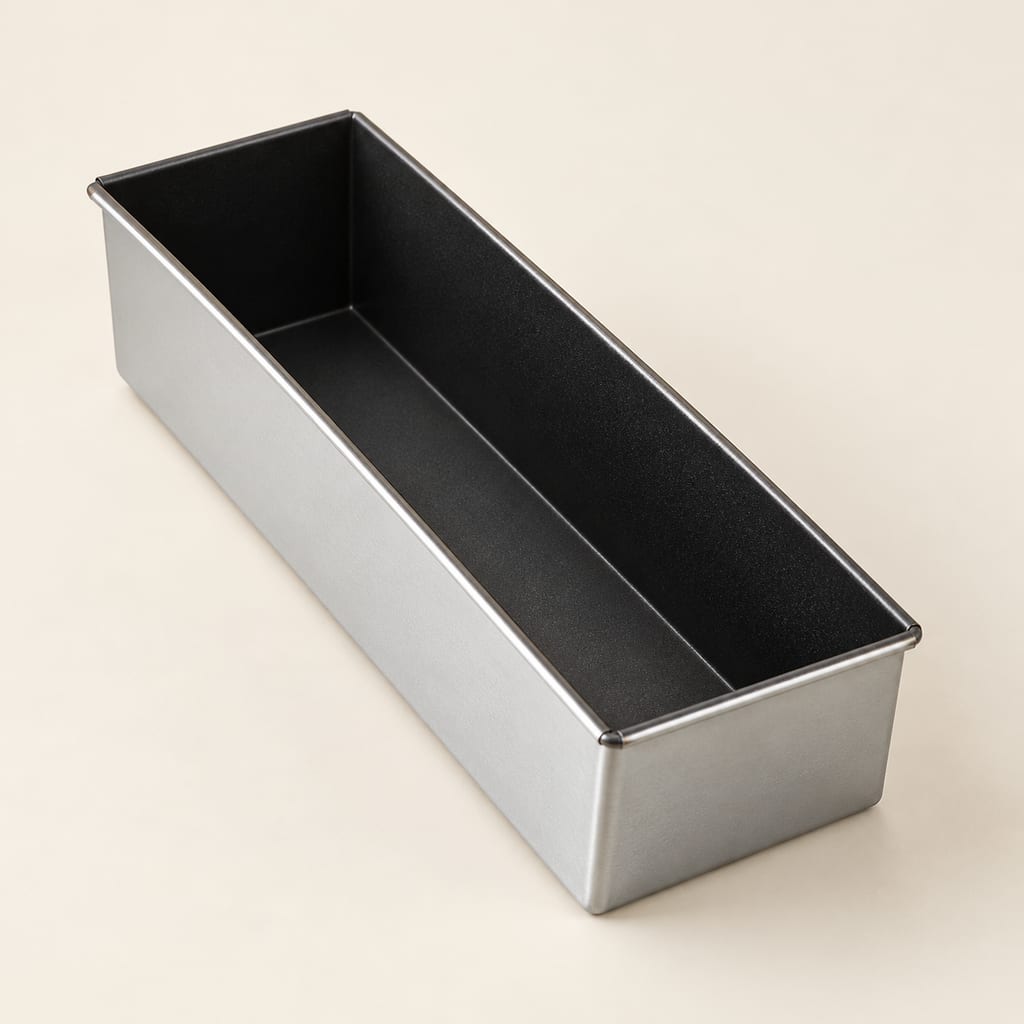
A rye-bread tin is a loaf pan that supports dough during proofing and baking. In a family rugbrød recipe recorded by the National Museum of Denmark, the mixed dough is described as having a porridge-like consistency and is divided among three greased rye-bread forms. The recipe asks for a covered rise of three to five hours, followed by about an hour and a half in the oven at roughly 170°C. It then directs the baker to remove the loaves from their forms and bake them for another half-hour at 90°C. The tin therefore shapes the loaf during the first bake, and it is removed before the second, lower-temperature bake.
The museum source identifies the function and number of pans, not their construction. It gives no material, dimensions, capacity, lid, coating or maker for the family's tins. The recipe is dated through its transmission: curator Lykke Pedersen received it in 1995 from her children's preschool teacher at a Copenhagen school. That is a date for the recorded family recipe, not for the origin of the tin or of rugbrød baking in Denmark.
A present-day Danish retail listing provides one modern comparison: Byens Landhandel sells a 3 L coated-metal rye-bread form made by Århus Isenkram. It shows that a purpose-named form is currently available, but does not establish that the 1995 household used this product or that all Danish rye-bread tins share its shape, material or size. Greasing is supported by the museum recipe; the sources give no general maintenance instructions.
The National Museum of Denmark says curator Lykke Pedersen received the rugbrød recipe in 1995 from her children's preschool teacher at Skolen ved Bülowsvej. It specifies three greased rye-bread tins. The source does not date the tins themselves or describe their construction.
This is a country-level association for the documented recipe. It does not establish where the tins were made or that the practice is exclusive to Denmark.
This Danish sourdough loaf combines wheat flour and kernels with rye flour and cracked rye, then rises in three tins before a long, low finishing bake.
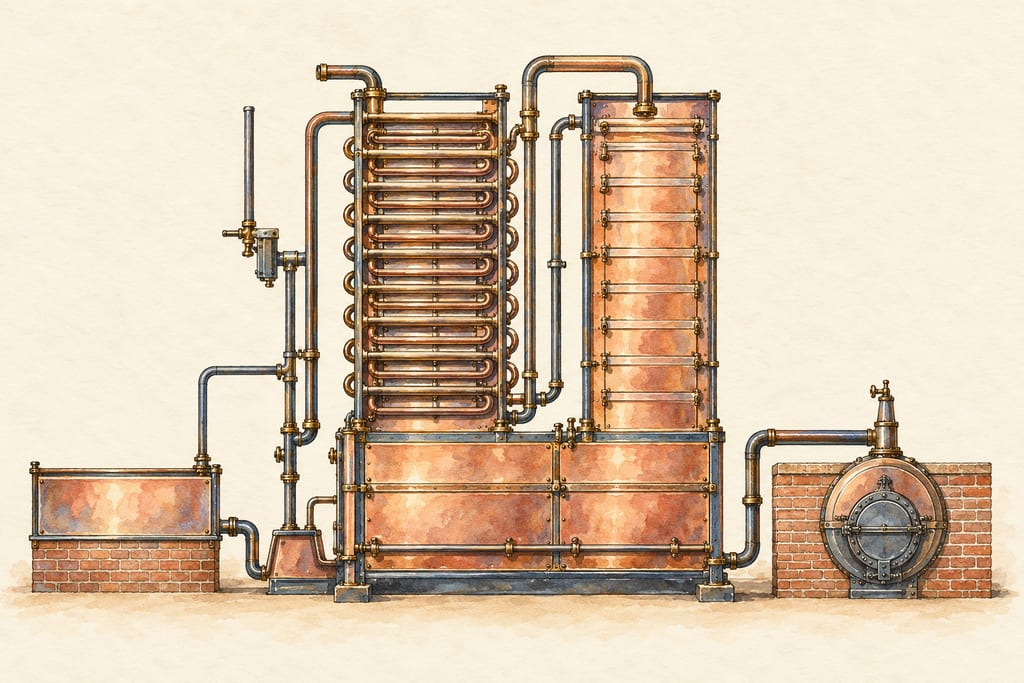
A column still is a distillation apparatus built around one or more vertical columns. Its continuous and rectifying designs appear in several spirits traditions, but materials and product character vary by installation.
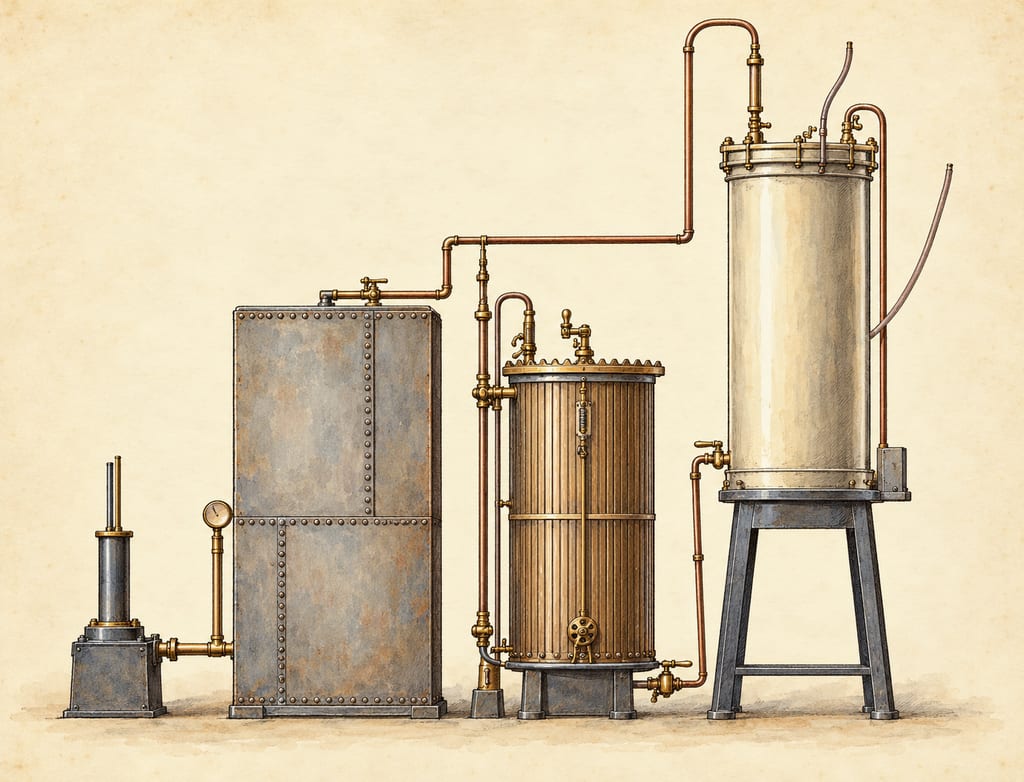
The Hansen–Kühle apparatus was late-nineteenth-century brewery plant for scaling up selected yeast cultures, distinct from Emil Christian Hansen’s method of isolating yeast from a single cell.
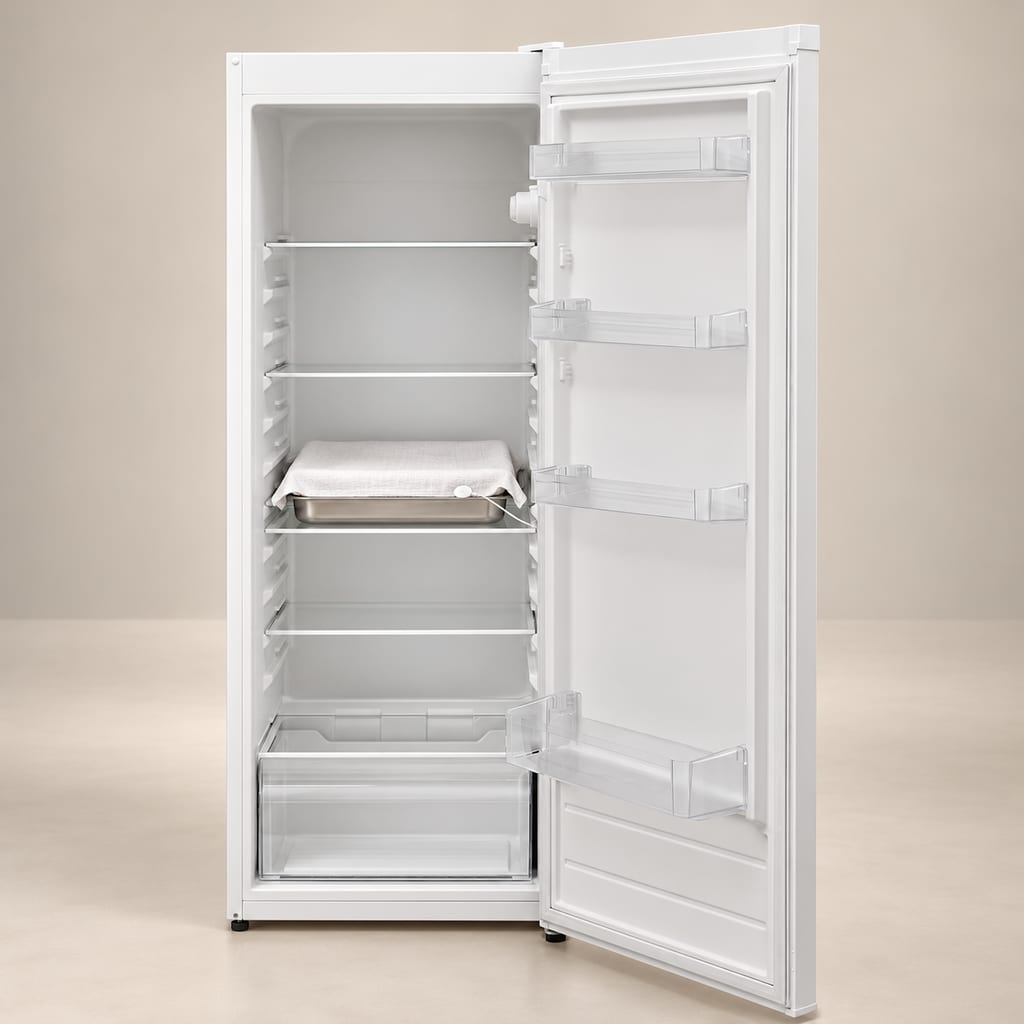
A modified cabinet or switched-off fridge can enclose growing koji. One source documents a heating mat and probe with a PID controller. This modern setup needs monitoring of grain temperature, airflow, condensation and cleanliness.
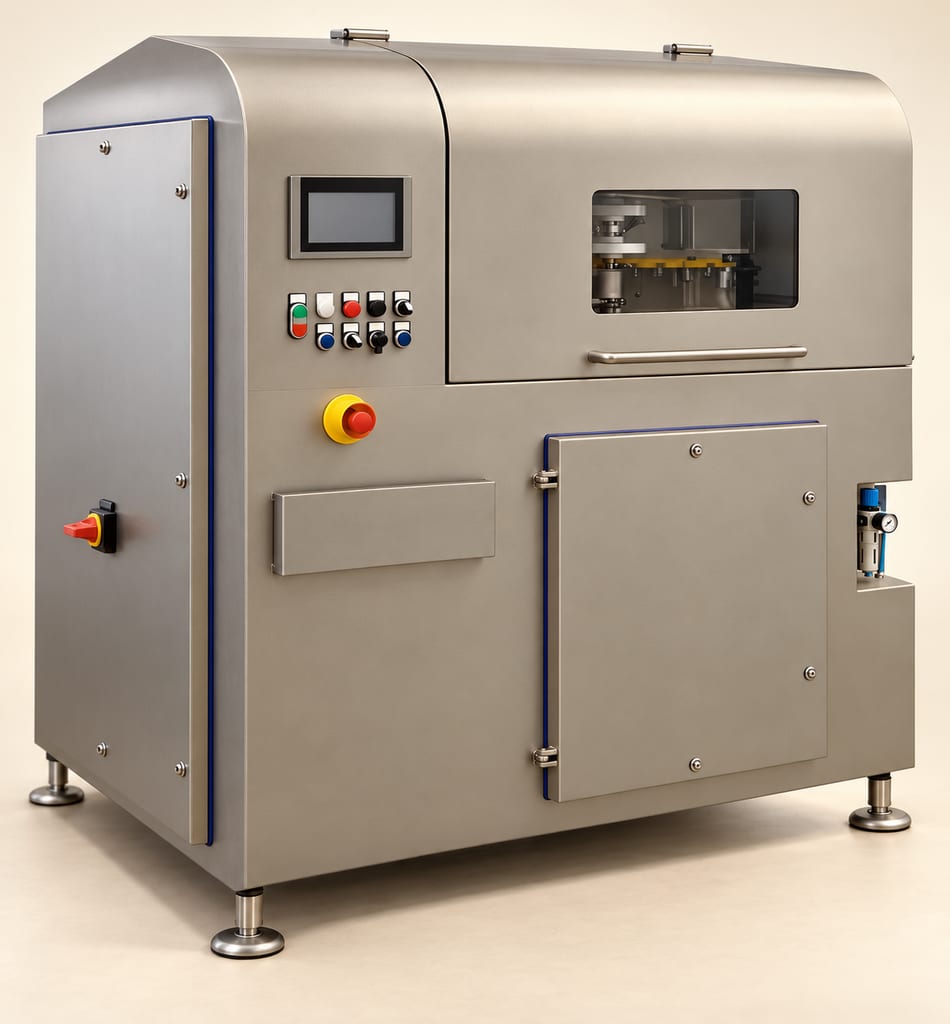
A pulsed electric field (PEF) unit sends brief high-voltage pulses through food in a treatment zone. Systems may treat flowing liquids or batches; the result depends on the food, equipment and validated process.

Soft, spreadable Calabrian pork sausage made with a great deal of red chilli and fatty pork, stuffed into natural casings, sometimes smoked and matured while staying soft.

A way to add independent temperature logging to an existing food dehydrator without changing its built-in controls or protections. It is a monitoring method, not a rewiring plan.

Pleurotus cystidiosus is the abalone mushroom, a cultivated oyster-type fungus with dark brown caps that grows more slowly and is more demanding than other Pleurotus species.

A dark, balanced vinegar from Emilia-Romagna made by combining cooked or concentrated grape must with wine vinegar, then acetifying and refining it in wood under a protected specification.

A living dairy inoculum that starts controlled cream fermentation, developing acidity and aroma before sour cream or cultured butter is finished.

A small electric incubator holds jars at a selected temperature for yogurt and other documented warm food preparations. Controls, capacity and vessel arrangement vary by model.

Adygean salt is a seasoned table salt associated with Adygea and the wider North Caucasian culinary tradition. Salt is blended with garlic and a variable selection of herbs and spices; the exact mix depends on the named style and maker.

The African Caesar-group mushroom, Amanita masasiensis, is a wild ectomycorrhizal species of central and southern African woodlands, eaten locally. The genus contains deadly poisonous species, so identification needs care.
No community contributions have been published for this entry yet.
Sign in to contribute. Published comments and photos are free to read.
National Museum of DenmarkDocumented use · History · Method
Rugbrød med surdejThe recipe came to museum curator Lykke Pedersen in 1995 from her children's preschool teacher at Skolen ved Bülowsvej.
The dough is described as porridge-like and divided among three greased rye-bread forms.
The forms hold the dough through 3–5 hours of proofing and the first bake at about 170°C for 1.5 hours; the loaves are then removed and baked another 30 minutes at 90°C.
Cited in: The pan in a recorded Danish recipe; What is established about its form
Byens LandhandelContemporary form · Materials · Capacity · Acquisition
Rugbrød - stor formThe retailer lists a current 3 L metal rye-bread form with a coating, manufactured by Århus Isenkram.
This commercial product is a contemporary example; the National Museum recipe does not identify it or specify the three family-recipe forms' material or capacity.
Cited in: What is established about its form