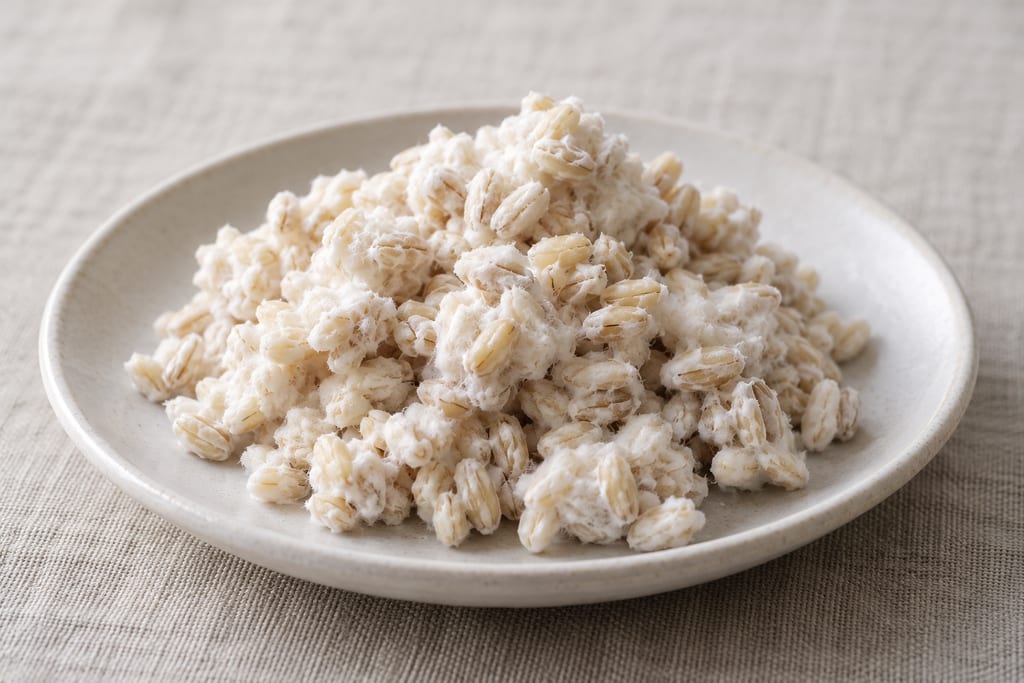
Barley koji
Steamed pearled barley grown into a white koji cake with Aspergillus oryzae over about 36 hours in a 30 °C chamber, turned three times under a damp cloth.
 FermenteaWhere food goes to change
Built structures · Incubators and warm holds
Any warm box, proofer, dehydrator cabinet or adapted fridge whose conditions reach the food through a separate container chosen for that culture.
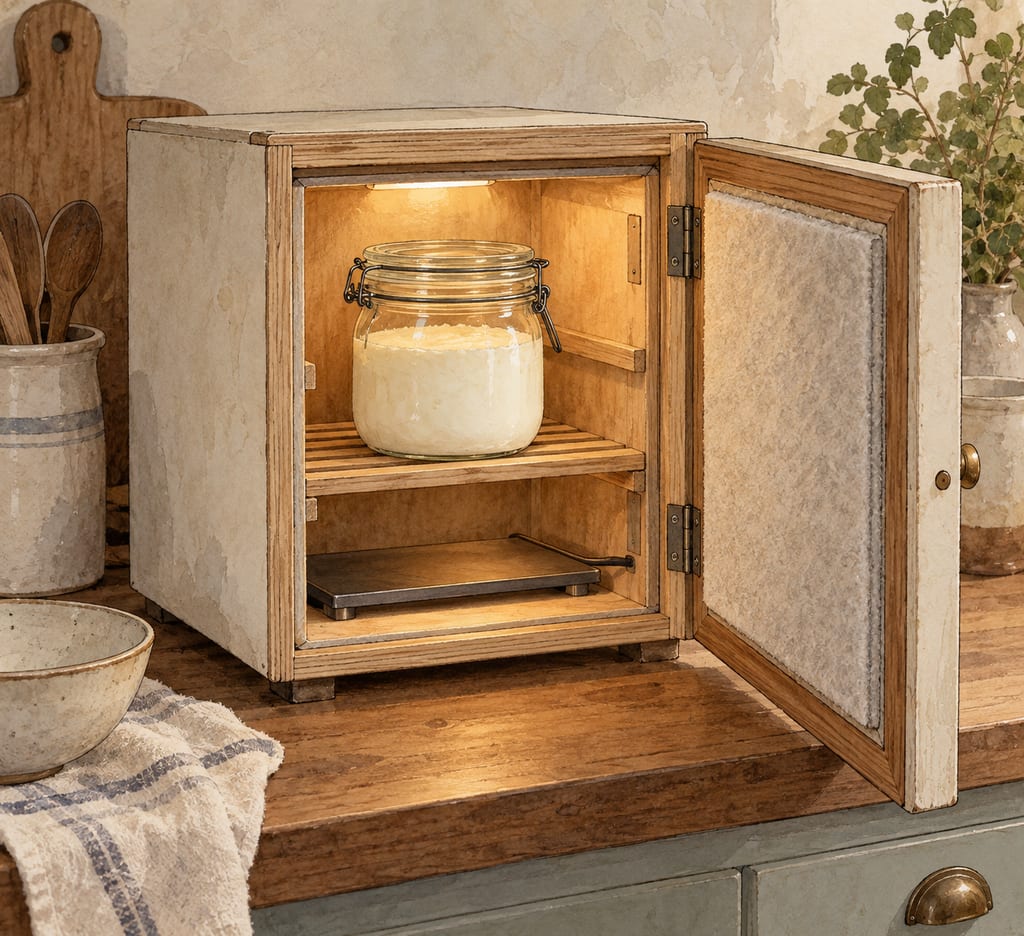
The cabinet separates the climate from the food's microclimate. The cabinet sets the air, and the container sets what the food feels: a lid for wet dairy, a pierced bag for tempeh, a cloth-covered tray for koji.
Lidded jars keep moisture and are not cooled by evaporation. Aerobic moulds need gas exchange and moisture, without a fan drying them.
Documented forms include the Nordic Food Lab's switched-off fridge with a heating mat and PID controller at 30 °C, humid, with room for airflow. Fermentation Culture's cabinet is heated by a controlled dehydrator. The Brød & Taylor proofer runs with its rack and containers.
Barley koji: a fridge chamber with trays.
Rice koji: a cabinet heated by a dehydrator.
Tempeh: a proofer with bags.
Tarhana: a closed jar at 35 °C in a proofer, proposed.
Measure the food temperature in each container type, and record the container closure.
A heat-only cabinet cannot cool a self-heating culture.
Shared cabinets share one temperature, so cultures that need different temperatures cannot run together.
The Nordic Food Lab, Fermentation Culture and Brød & Taylor forms are documented. The tarhana use is a proposed adaptation from a Brazilian study.
A build is made where it stands: moving it means building it again.
Fermentation Culture's heating wire melted its insulation in an improvised build.
Hazard sourceUse enclosed, ready-made heat sources on a controller, not improvised wiring.
Control sourceDocumented for international use, with no single place of origin assigned.
Steamed pearled barley grown into a white koji cake with Aspergillus oryzae over about 36 hours in a 30 °C chamber, turned three times under a damp cloth.

Rice koji is steamed white rice through which koji mold has grown. It carries the enzymes that turn rice starch into sugar, and it is the starting point of sake, sweet miso, amazake and shio koji.
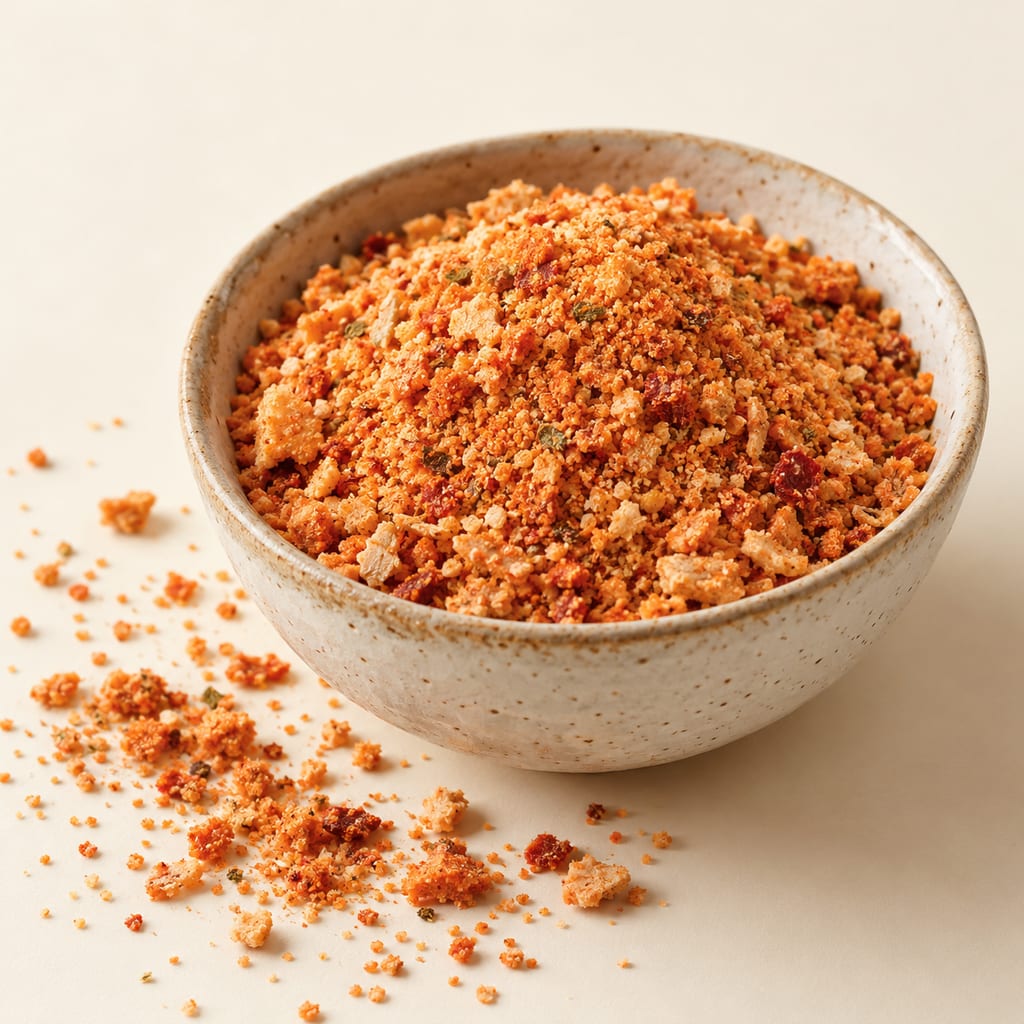
Tarhana is a Turkish soup base: yoghurt, flour or semolina and usually onion, tomato and red pepper, fermented as a dough for days, rubbed into grains and dried.
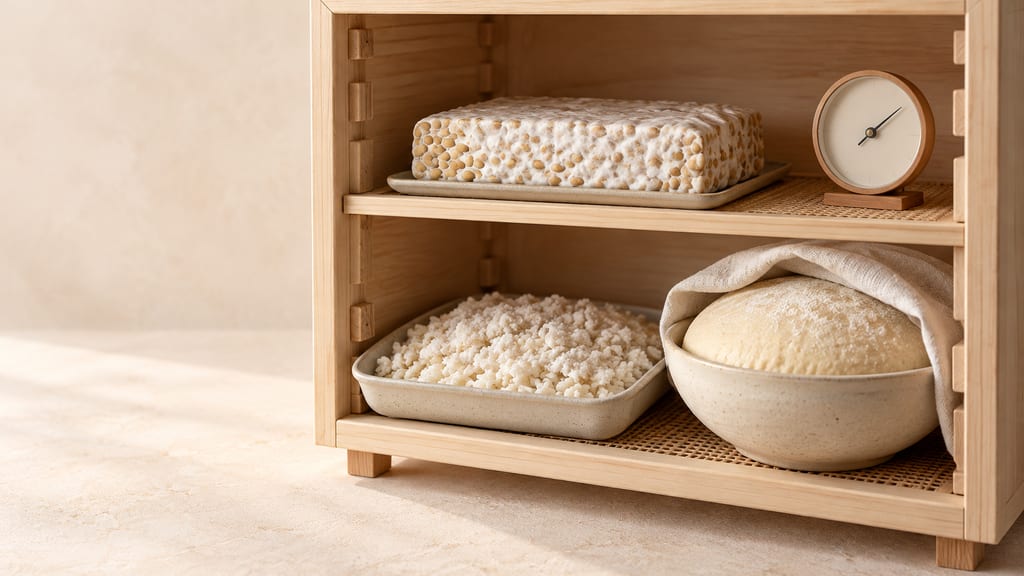
A proofer, a dehydrator with its trays out or an old fridge on a controller can keep cultures at a steady temperature. Whether it works depends on what sits inside: a lidded jar, a vented bag, a shallow tray or a crock.
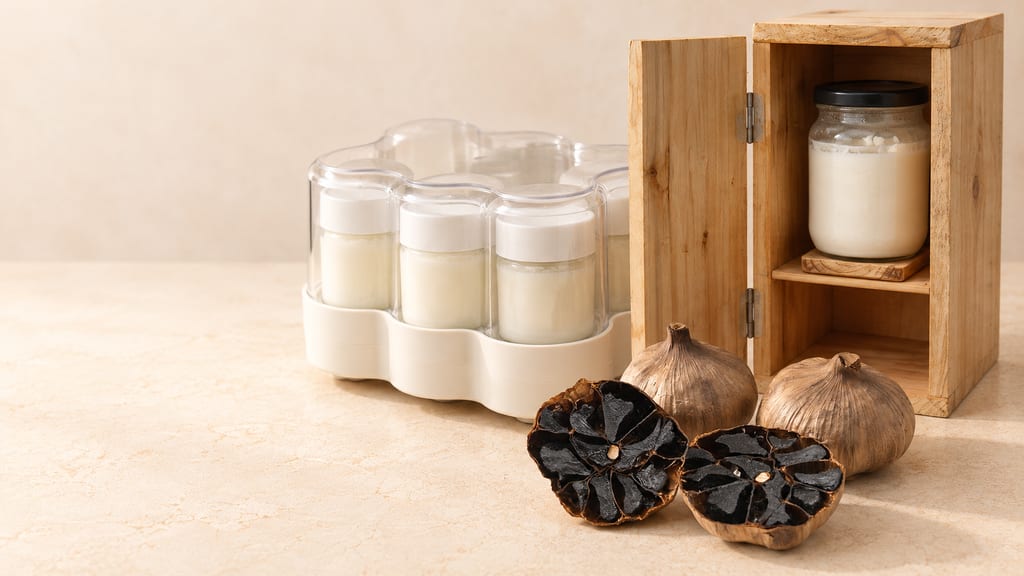
A slow cooker, a brewing kettle or a dehydrator can take over the hard part of many old food crafts, once you see each appliance as a set of physical functions and give it the right container.

Soft, spreadable Calabrian pork sausage made with a great deal of red chilli and fatty pork, stuffed into natural casings, sometimes smoked and matured while staying soft.

A way to add independent temperature logging to an existing food dehydrator without changing its built-in controls or protections. It is a monitoring method, not a rewiring plan.

Pleurotus cystidiosus is the abalone mushroom, a cultivated oyster-type fungus with dark brown caps that grows more slowly and is more demanding than other Pleurotus species.

A dark, balanced vinegar from Emilia-Romagna made by combining cooked or concentrated grape must with wine vinegar, then acetifying and refining it in wood under a protected specification.

A living dairy inoculum that starts controlled cream fermentation, developing acidity and aroma before sour cream or cultured butter is finished.

A small electric incubator holds jars at a selected temperature for yogurt and other documented warm food preparations. Controls, capacity and vessel arrangement vary by model.

Adygean salt is a seasoned table salt associated with Adygea and the wider North Caucasian culinary tradition. Salt is blended with garlic and a variable selection of herbs and spices; the exact mix depends on the named style and maker.

The African Caesar-group mushroom, Amanita masasiensis, is a wild ectomycorrhizal species of central and southern African woodlands, eaten locally. The genus contains deadly poisonous species, so identification needs care.
No community contributions have been published for this entry yet.
Sign in to contribute. Published comments and photos are free to read.
Fermentation Culture (fermentationculture.eu, LUVI Fermente GmbH, Lenzing, Austria)Method
What Koji needs to grow and how to provide for its needsCited in: How it works; Documented uses; Measuring; Limits
Food Science and Technology, SciELOMethod
A functional food: a traditional Tarhana fermentation (Food Science and Technology (Campinas) 37(2), 2017)Cited in: Documented uses