Barley koji
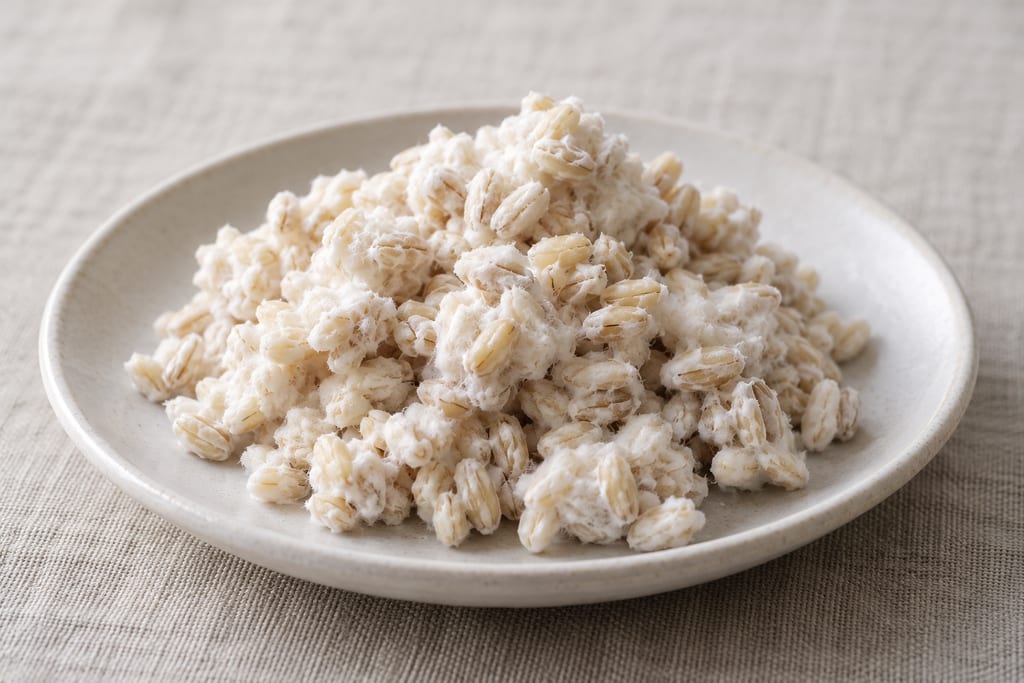
Steamed pearled barley grown into a white koji cake with Aspergillus oryzae over about 36 hours in a 30 °C chamber, turned three times under a damp cloth.
 FermenteaWhere food goes to change
Equipment · Auxiliary fermentation heaters
A thin electric mat warms a propagation tray from below; some models use a separate thermostat and probe. One Vivosun manual also gives generic fermentation-heater instructions, but does not validate a particular fermented food or process.
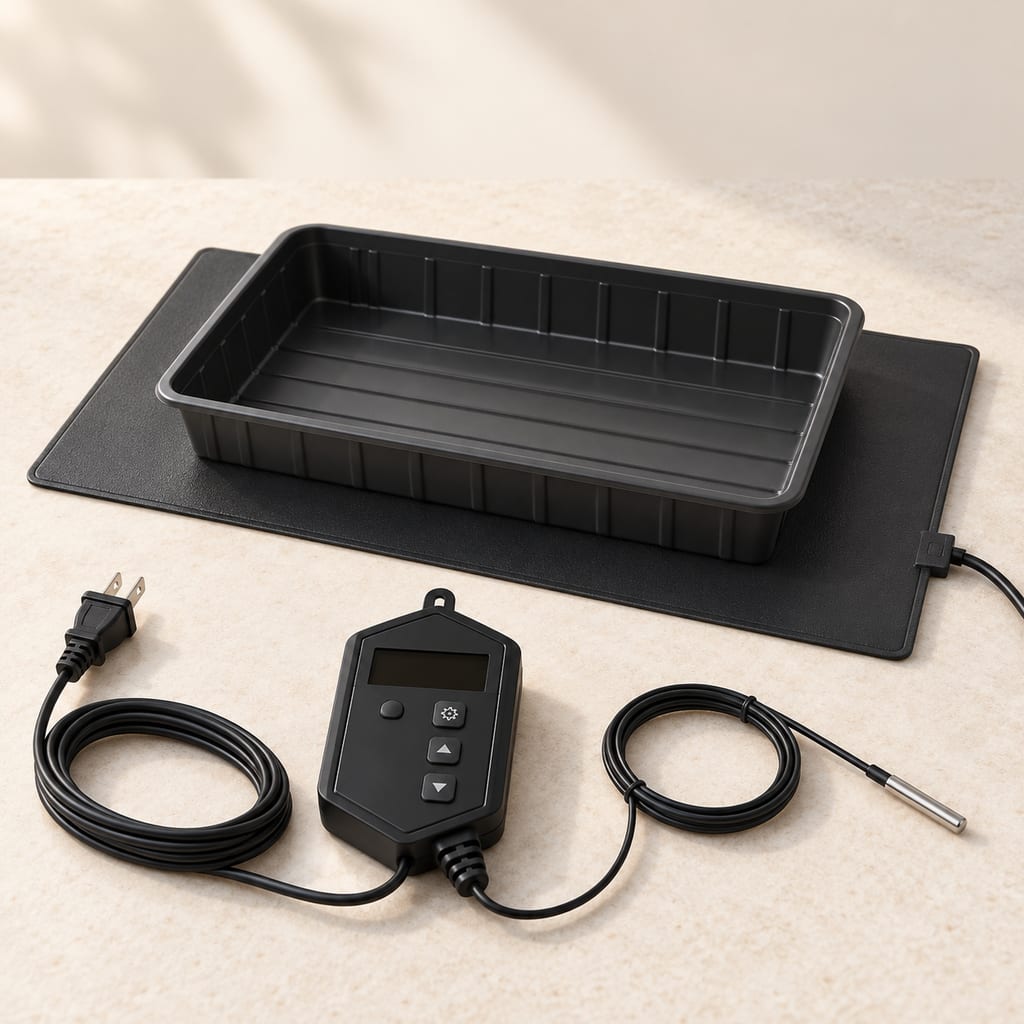
A seedling heat mat is a flexible electric pad laid flat beneath a propagation tray. It warms from below rather than surrounding a jar or heating the contents directly. Vivosun's product listing shows a 10 × 20.75-inch mat sold with a separate digital controller and temperature probe. Its manual for the basic mat says the mat itself has no controller: once plugged in, it runs continuously at 20 watts. The controller and probe are separate components in the combo set, not a feature to assume on every mat.
The manufacturer's horticultural instructions put the tray on top of a flat mat on a stable, dry surface. For seedlings, it describes raising the root area above ambient temperature. That is a different measurement from a fermentation liquid's temperature: the mat warms the tray or vessel base, and the temperature at that surface does not by itself tell a reader the temperature of the food inside.
The Vivosun manual includes a section headed “Use instructions as fermentation heater.” For the cited 20-watt mat, it says to check the temperature needed for the intended use; if the mat makes the container too warm, use spacers to increase the gap or add the separately sold temperature controller. It also says never to wrap the mat in insulating material because that can cause overheating. This is a generic equipment instruction, not a recipe or proof that a particular ferment reaches an even temperature.
The inspected sources do not test the mat under kombucha, kefir or vinegar, or establish performance for any particular vessel size or material. If someone adapts this horticultural heater to a fermentation vessel, the mat's own setting or surface reading is not a substitute for an independent check of the ferment itself. The record makes no claim that a seedling mat is food-contact equipment or that the manufacturer has validated a food-safety process.
Seedling mats look similar but their electrical ratings and controls differ. The Vivosun manual describes a 10 × 20.75-inch, 120-volt, 20-watt mat. HydroFarm lists a Jump Start model measuring 8.875 × 19.5 inches at 17 watts and 120 volts. Vivosun's combo listing adds a separate controller and probe; its basic mat manual says the mat is always on without that accessory. These figures identify the cited examples, not a standard specification for all mats.
The Vivosun manual restricts its cited mat to indoor use, says not to immerse it, and warns against insulating it. It also says to unplug before moving or maintaining the mat and to avoid damaging its surface. Follow each model's full instructions, especially around water and electrical components; “waterproof” or “water-resistant” product language does not make a controller or probe submersible. The manual identifies the Vivosun example as designed in California and made in China, while the current listings show the wider product class in several markets; this does not establish a single origin for all seedling mats.
Current manufacturer product pages and manuals describe manufactured electric propagation mats; the inspected sources do not establish the invention date of the equipment class.
Vivosun warns against immersion, outdoor use and covering the mat with insulating materials; its manual also warns to check the intended temperature because the basic mat runs continuously.
Hazard sourceFollow the exact product's voltage and placement instructions; keep the mat, controller and plug dry; use a separate thermometer to check the ferment itself rather than relying on the mat or controller's surface reading.
Control sourceThe manufacturer includes a generic fermentation-heater section, but the inspected material does not validate this mat with a specific recipe, food vessel, batch size or fermentation process.
The cited Vivosun basic mat has no temperature controller and runs continuously at 20 W; its instructions say to check the intended temperature and use spacers or a separately sold controller if it gets too warm.
Source →Vivosun prohibits immersing or wrapping its mat in insulation and restricts the cited model to indoor use; its rules are model-specific.
Source →No inspected source validates a seedling mat with a particular fermentation recipe, vessel geometry, or batch size.
Source →The manufacturer and horticultural product references document contemporary models and a generic fermentation-heater use, but do not establish the equipment class's origin, manufacture or geographic reach.
Steamed pearled barley grown into a white koji cake with Aspergillus oryzae over about 36 hours in a 30 °C chamber, turned three times under a damp cloth.
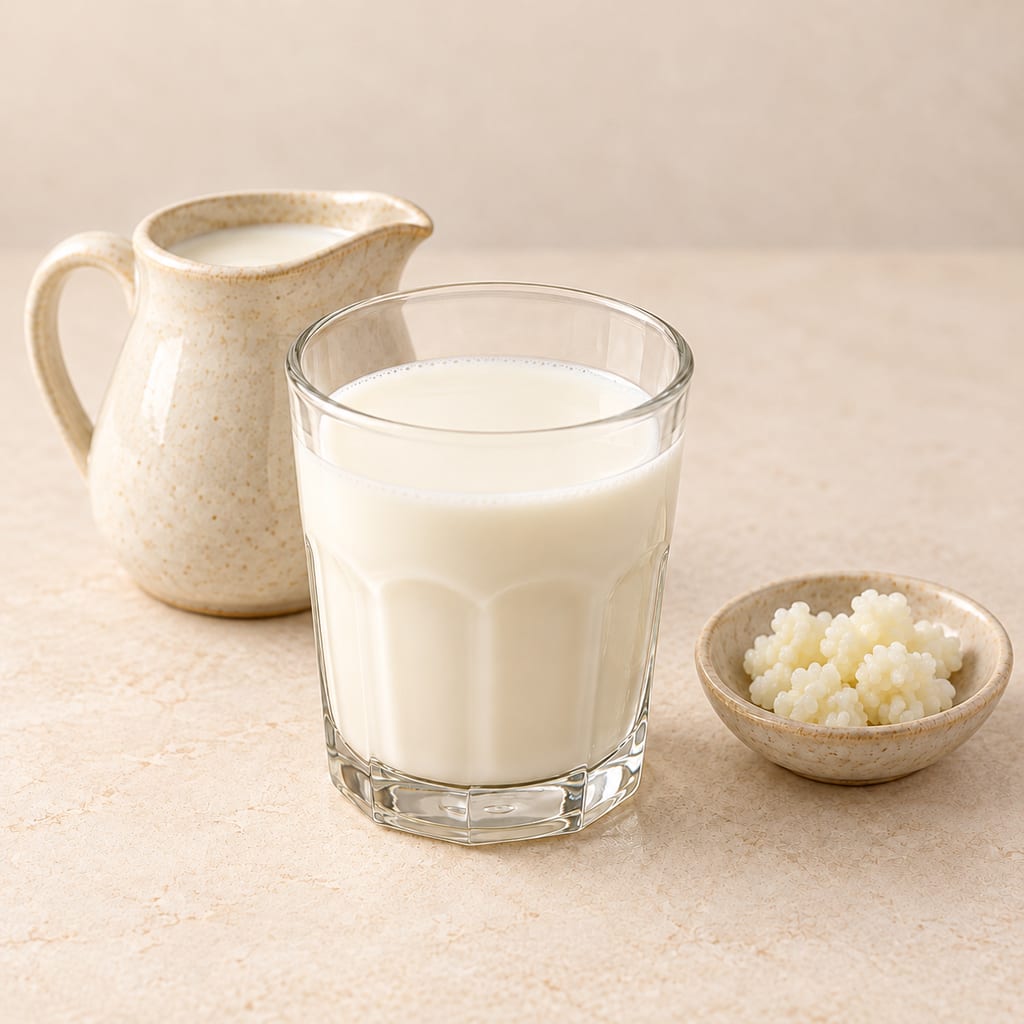
Milk kefir is a tangy fermented drink made with reusable grains of bacteria and yeasts. Grain fermentation can give the milk a light fizz and some alcohol.

Soft, spreadable Calabrian pork sausage made with a great deal of red chilli and fatty pork, stuffed into natural casings, sometimes smoked and matured while staying soft.

A way to add independent temperature logging to an existing food dehydrator without changing its built-in controls or protections. It is a monitoring method, not a rewiring plan.

Pleurotus cystidiosus is the abalone mushroom, a cultivated oyster-type fungus with dark brown caps that grows more slowly and is more demanding than other Pleurotus species.

A dark, balanced vinegar from Emilia-Romagna made by combining cooked or concentrated grape must with wine vinegar, then acetifying and refining it in wood under a protected specification.

A living dairy inoculum that starts controlled cream fermentation, developing acidity and aroma before sour cream or cultured butter is finished.

A small electric incubator holds jars at a selected temperature for yogurt and other documented warm food preparations. Controls, capacity and vessel arrangement vary by model.

Adygean salt is a seasoned table salt associated with Adygea and the wider North Caucasian culinary tradition. Salt is blended with garlic and a variable selection of herbs and spices; the exact mix depends on the named style and maker.

The African Caesar-group mushroom, Amanita masasiensis, is a wild ectomycorrhizal species of central and southern African woodlands, eaten locally. The genus contains deadly poisonous species, so identification needs care.
No community contributions have been published for this entry yet.
Sign in to contribute. Published comments and photos are free to read.
VivosunProduct form · Materials · Thermostat configuration
10″ × 20.75″ Seedling Heat Mat and Digital Thermostat Combo Set MET StandardThe product listing presents a 10 × 20.75-inch flexible seedling mat with a separate digital thermostat and probe in the combo set.
The product is described for seed starting and cutting propagation; features and claims are manufacturer statements.
Cited in: A flat heater under the tray; Models are not interchangeable
VivosunModel specifications · Fermentation heater instructions · Safety
10″ × 20.75″ Seedling Heat Mat: Instruction ManualManual includes a section titled use instructions as fermentation heater.
The basic mat runs continuously at 20 W and does not include a temperature controller; a separate controller is suggested if the mat gets too warm.
Instructions say not to immerse the mat, use it outdoors or wrap it in insulating material; check intended temperature and use spacers or a separate controller if necessary.
The manual specifies 120 V AC, 20 W, 10 × 20.75 inches and says the example was designed in California and made in China.
Cited in: A flat heater under the tray; A generic fermentation-heater use, with limits; Models are not interchangeable
HydroFarmComparison model specifications
Jump Start Seedling Heat Mat, 8.875″ × 19.5″, 17WHydroFarm lists a different mat as 17 W, 120 V and 8.875 × 19.5 inches, illustrating model-specific dimensions and rating.
Cited in: Models are not interchangeable