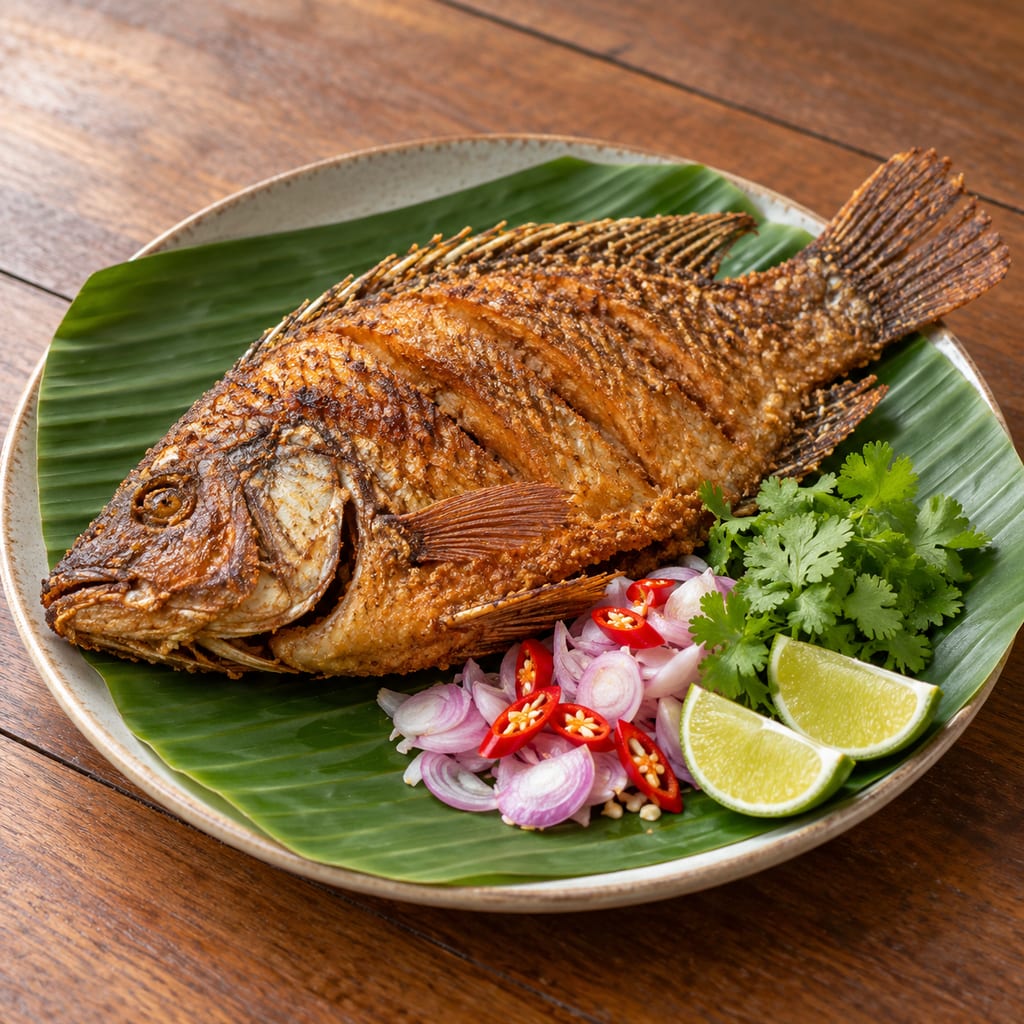
Pla som, tilapia batch
Thai pla som made from tilapia salted, filled with sticky rice and garlic, bagged and held at room temperature for about three to four days.
 FermenteaWhere food goes to change
ปลาส้ม · pla som · plaa-som · plaa-khao-suk · plaa-prieo
Plaa-som is a Thai sour fish: freshwater fish salted overnight, then mixed with cooked rice and garlic and fermented for about five to seven days at ambient temperature.
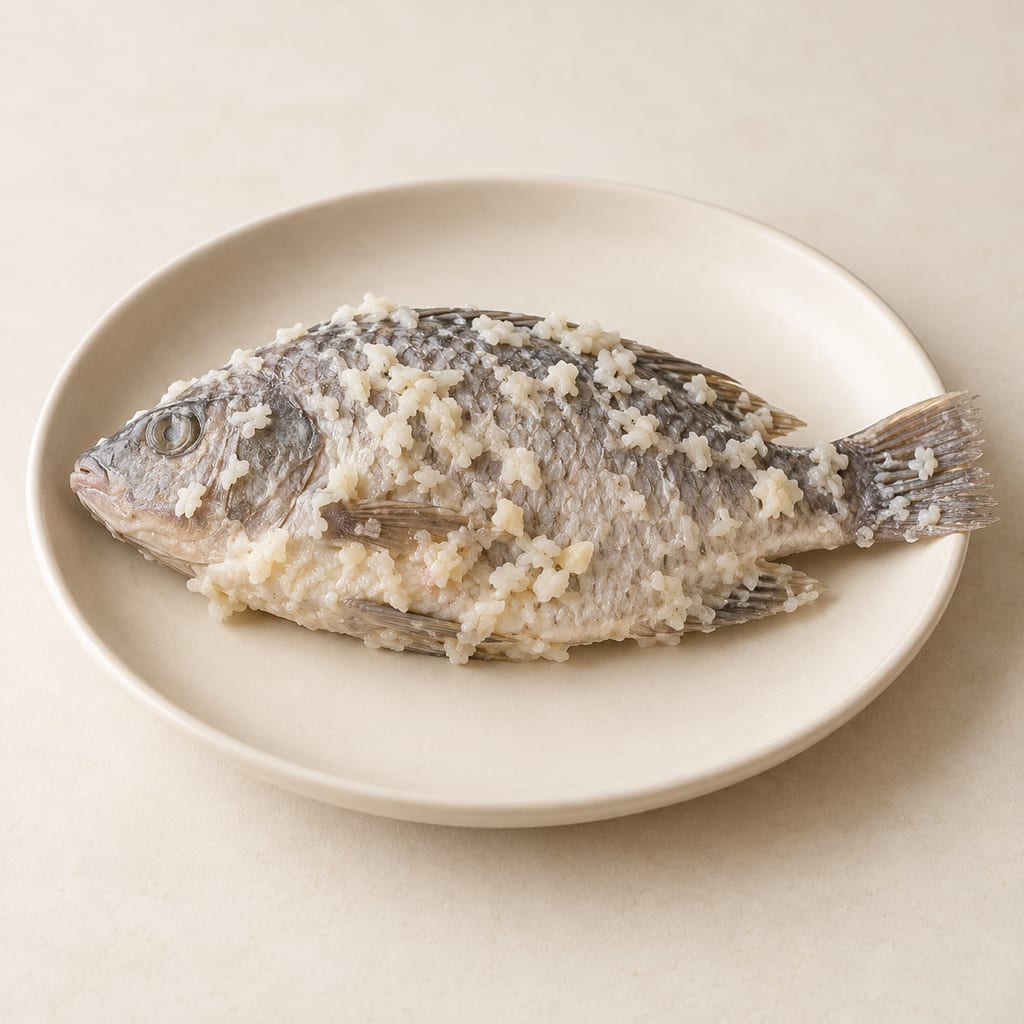
Plaa-som is a Thai fermented fish with a sour, salty taste and a firm texture. Freshwater fish are salted, mixed with cooked rice and garlic and left in a jar until they turn sour; the finished fish is greyish-white. It is made as a home industry in Thailand's Northeast, and it is a different product from the longer-fermented, more heavily salted fish sauces and pastes of mainland Southeast Asia.
The Thai name is ปลาส้ม. The Japanese agricultural research centre JIRCAS records the local names plaa-som, plaa-khao-suk and plaa-prieo for the fish form, and koong-som and koong-dorng for a shrimp form. The shrimp form is pink where the fish form is greyish-white. The two share a process family but remain different products, and these records do not show that every form shares one preparation or culture.
JIRCAS lists the fish normally used as Probarbus jullieni, Puntius gonionotus, Pangasius hypophthalmus, Labiobarbus leptocheilus and Cirrhinus microlepsis, and the shrimp Macrobrachium lanchesteri.
The JIRCAS method has two stages. The fish is cleaned and mixed with salt at 8 parts fish to 1 part salt by weight, then left overnight. Next morning cooked rice and minced garlic are added in a 20:4:1 weight ratio, the mixture is packed into a jar and kept at ambient temperature. Fermentation takes 5 to 7 days and the entry gives a storage life of about 3 weeks. The entry prints the ratio without saying which number belongs to which ingredient, and it gives no absolute quantities or temperatures, so the recipe above does not assign them.
A study of the Thai-Yor community of Tha Khon Yang village in Maha Sarakham describes the same family of ingredients in local terms: small freshwater fish mixed with steamed glutinous rice, garlic and salt. The community keeps its recipe ratio secret. A local news report describes a pla-som training project in Nakhon Phanom. These are specific community records, not a national standard or a claim about origin.
Plaa-som is a lactic-acid fermentation. The salt draws liquid from the fish and holds back many spoilage organisms, and the cooked rice adds starch and sugars for the bacteria to use. Lactic-acid bacteria then acidify the mixture, which is what makes the fish sour. A study of four batches made with different salt concentrations reported different acidification and microbial patterns at different salt levels, so the amount of salt shapes how quickly and how far the souring goes.
The microflora is not a single organism. JIRCAS lists many bacteria and yeasts reported from plaa-som, among them Lactobacillus plantarum, Pediococcus pentosaceus, Weissella cibaria and Zygosaccharomyces rouxii, and a separate study describes Kazachstania yeast in sampled products from northeastern Thailand. These observations concern the batches and samples studied. They do not make a species name a starter recommendation or create universal fermentation limits.
Traditional plaa-som is made without an added starter, and several laboratory studies have tested whether one helps. A 2010 study used a mixed culture of Lactobacillus plantarum IFRPD P15 and Lactobacillus reuteri IFRPD P17, both isolated from natural plaa-som fermentation. The culture was air-dried with sterilised rice grains as filler and stayed stored at 4 degrees C for more than 20 weeks. In the trial P15 was the main acid producer and P17 suppressed pathogens such as E. coli within 24 hours; a single-strain starter did not fully suppress pathogens. The authors suggest the mixed starter may shorten fermentation.
Other work selected lactic-acid bacteria from products made by producers in Phayao, and a 2023 paper tested an encapsulated bacterial powder in another batch. These are distinct experimental systems; none establishes a single culture for all plaa-som.
Plaa-som is usually cooked before it is eaten. JIRCAS records it fried, topped with chopped shallot and bird's eye chilli, and eaten with rice.
The sources reviewed do not establish a complete, independently reviewed household method, absolute quantities, a temperature range, seasonal patterns or many community-specific variations. The studies of starters and microflora describe the batches they analysed. Further work needs full experimental methods, Thai-language primary sources and qualified seafood-process review. Smell, taste or sourness alone do not establish that a fermented fish is safe to eat.
The consulted sources document plaa-som as a current home and community product of Thailand. They do not date its first preparation or establish its origin.
Scaling: source batch only
The JIRCAS entry describes production as a home industry in Thailand's Northeast; it is a regional association, not a claim of origin.
A community study documents the pla som of the Thai-Yor people of this village; it is one community's practice, not a national standard.
Thai pla som made from tilapia salted, filled with sticky rice and garlic, bagged and held at room temperature for about three to four days.
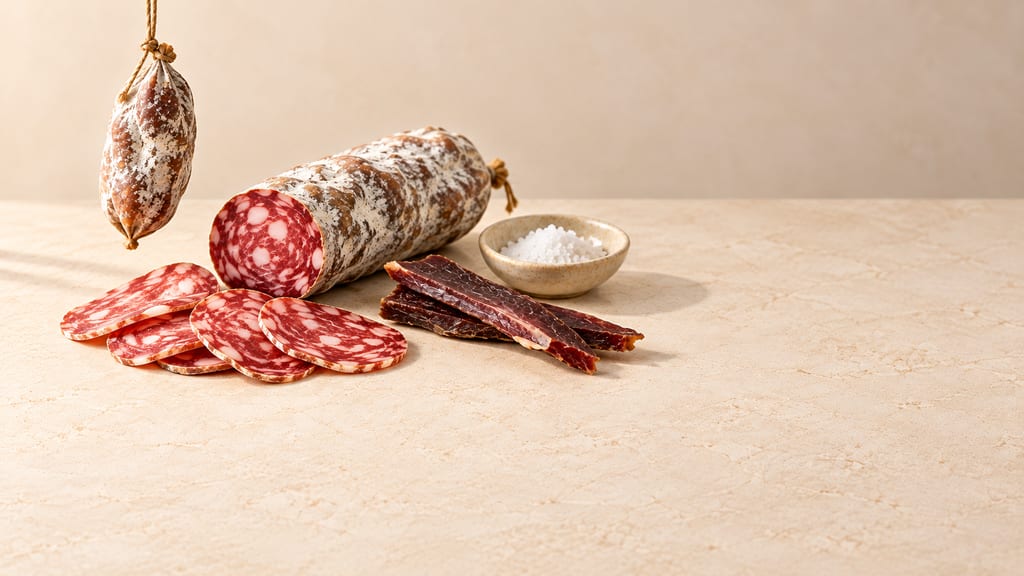
Dry salami, sour pork with rice, matured sheep and aged blubber follow different paths from animal to food. Their stories connect microbes with climate, slaughter, migration and the meals people share.
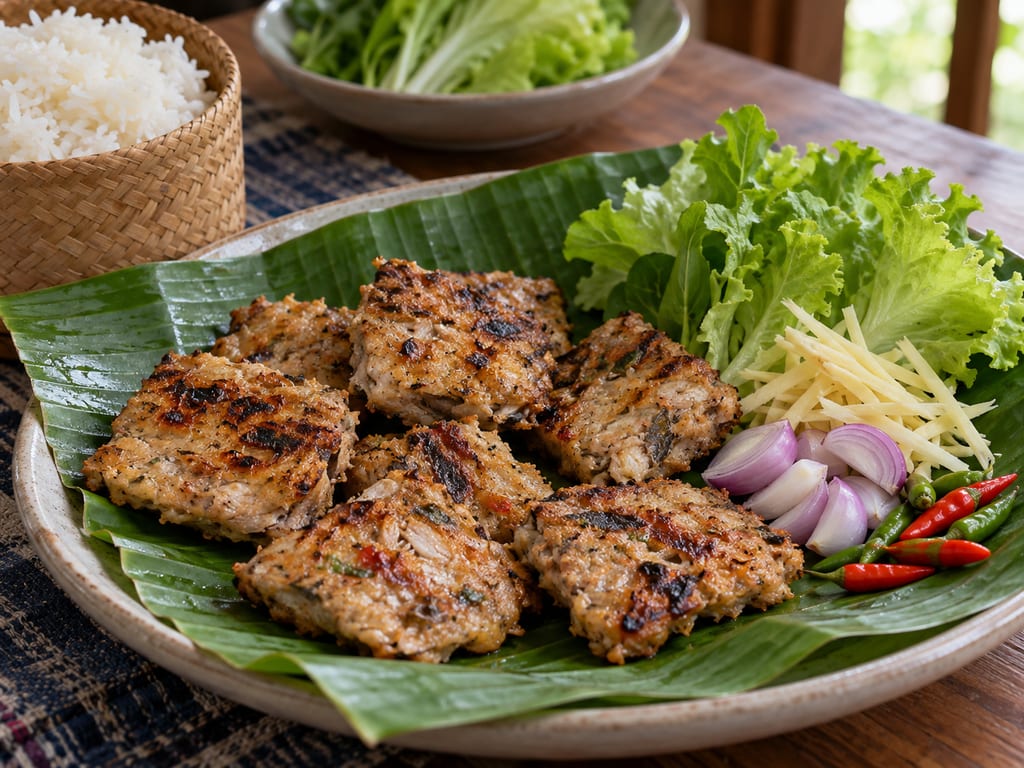
Som-fak is a Thai fermented freshwater-fish cake. JIRCAS records its ingredients, proportions, wrapping and 3–5-day fermentation, but does not validate a safe household process or endpoint.
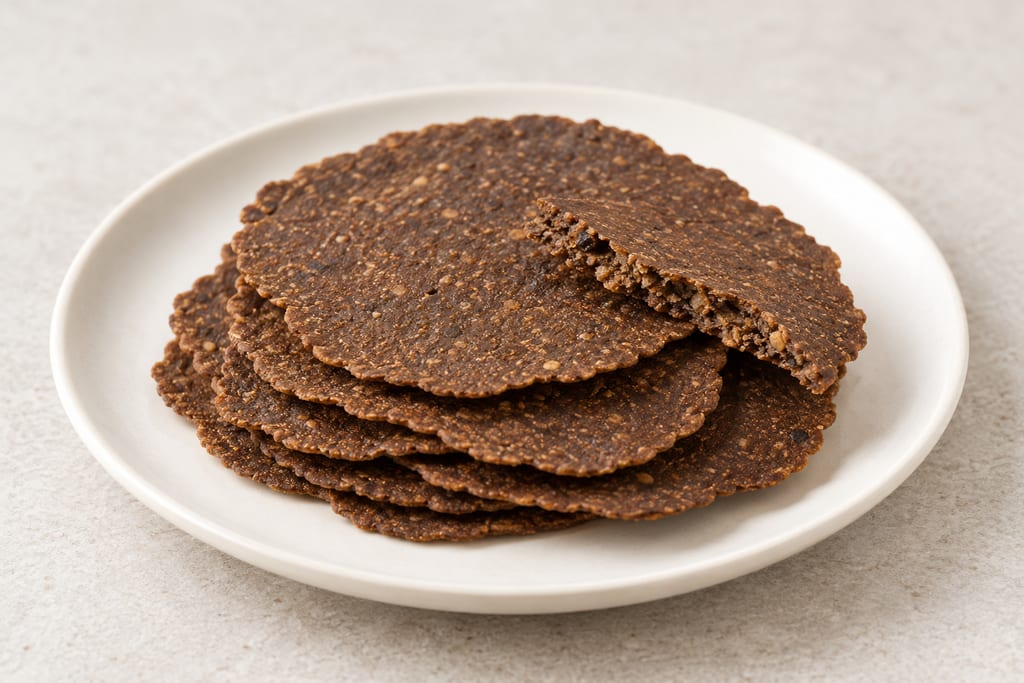
Black soybeans cooked, inoculated with a named Bacillus subtilis culture and fermented warm and humid into northern Thailand's thua nao, then optionally dried into thin discs.
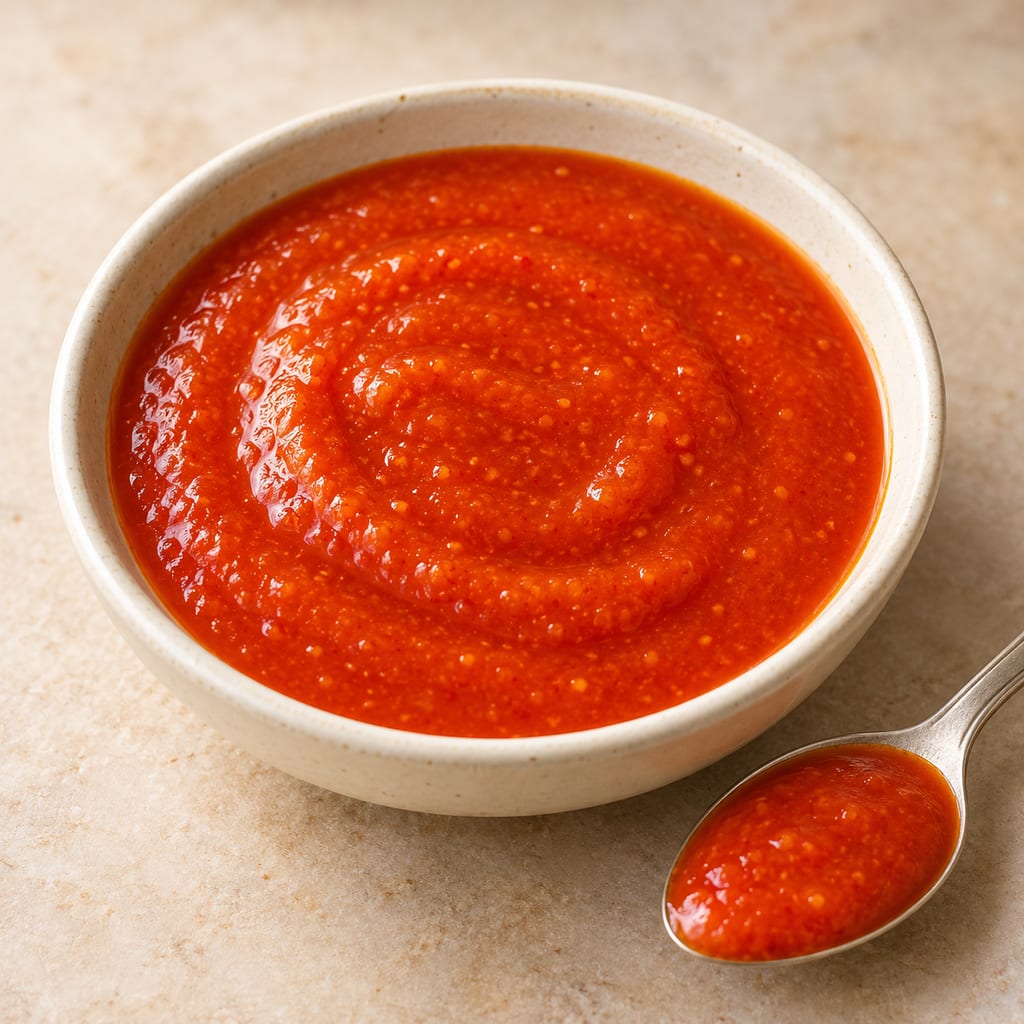
Ripe red chillies, garlic, labelled 5% vinegar, sugar, water and salt are blended, simmered and blended smooth into a cooked chilli sauce.
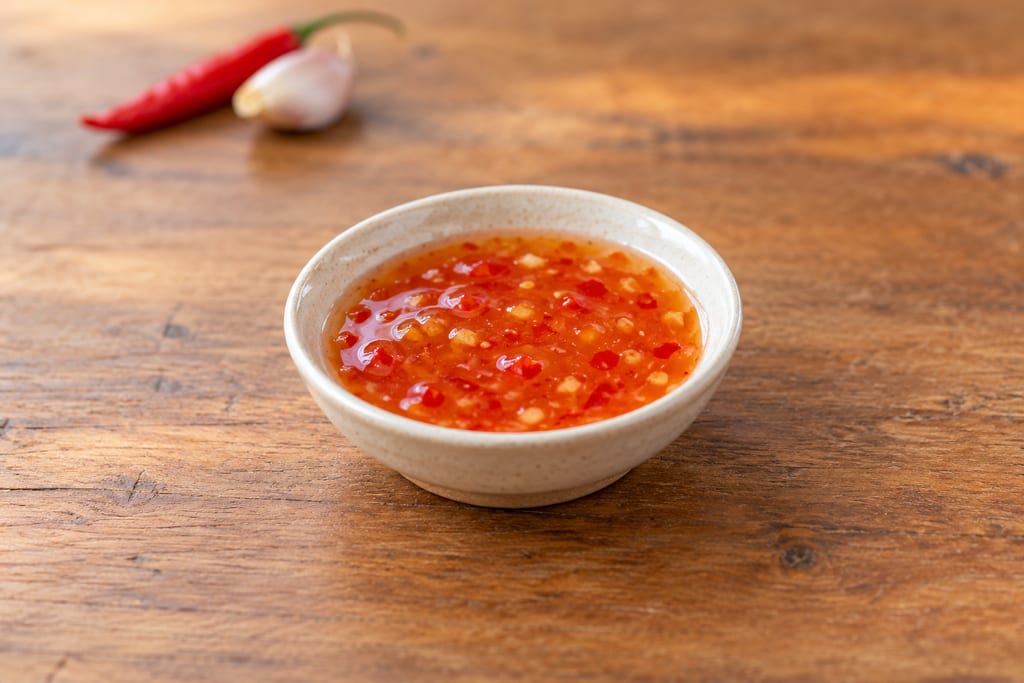
A cooked Thai-style sweet chilli dip combines red chillies, garlic, sugar and vinegar, then uses a small cornflour slurry to give this batch a glossy, spoonable body.
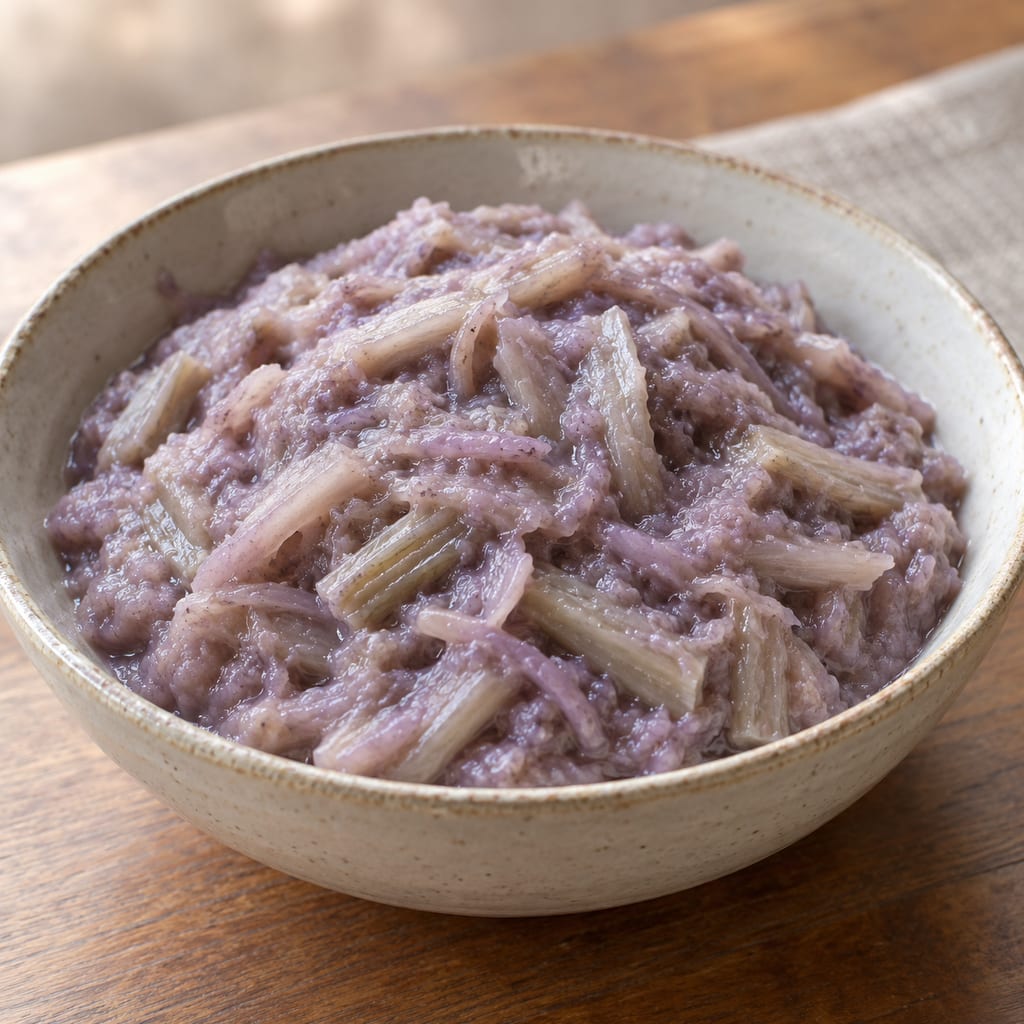
Thai pickle of young taro leaf stalks, salted, kneaded and held in rice-washing water in an earthen jar at room temperature. JIRCAS records it as a home-level product with no validated endpoint.

A cultural account of luk niang dong, a Thai djenkol-bean pickle associated with southern Thailand. Not a recipe or eating recommendation: sources do not establish that pickling controls djenkolism.
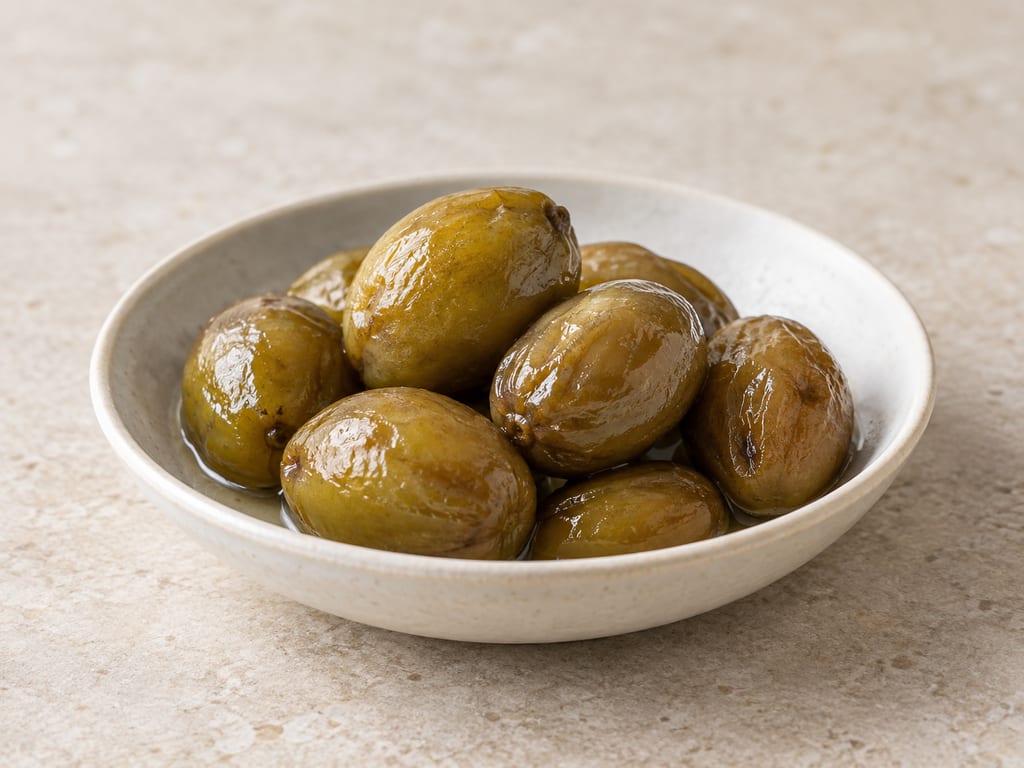
Mature Spanish plums are covered with a 20% volume salt solution and fermented under shade for ten days.

Northern Thai fermented tea leaf: Assam tea leaves tied in bundles, steamed, packed in a lined tank and held under weight for three to four months. Eaten after meals.
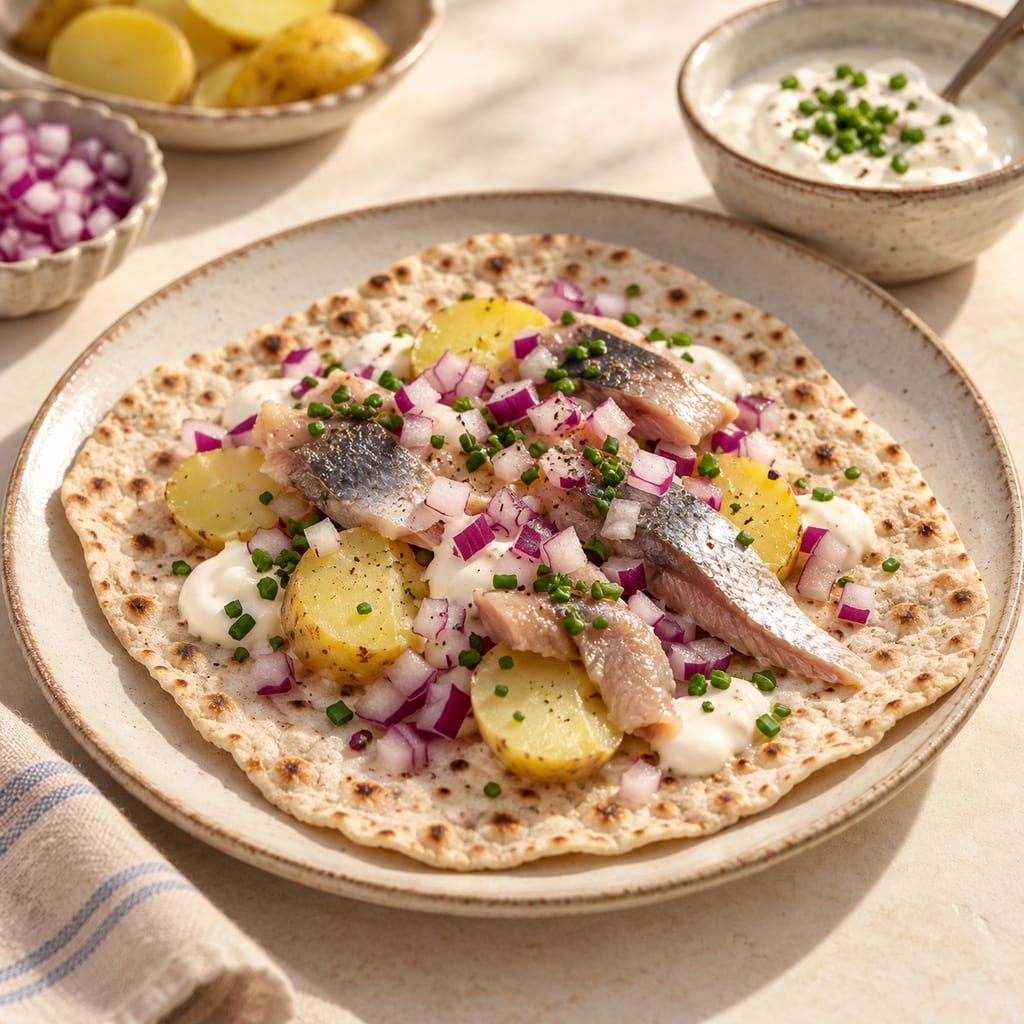
A Swedish late-summer meal of commercially prepared surströmming, tunnbröd, potatoes, onion and cultured cream. This is a serving preparation; the specialist fish fermentation is not made at home here.
A concrete fermentation tank installed below ground at a Senegalese fish-processing site was documented as an adaptation that emulated the older practice of burying fish during fermentation.

A documentary account of Icelandic hákarl, fermented and dried Greenland shark. It describes cultural context and one production study, not a home preparation method.
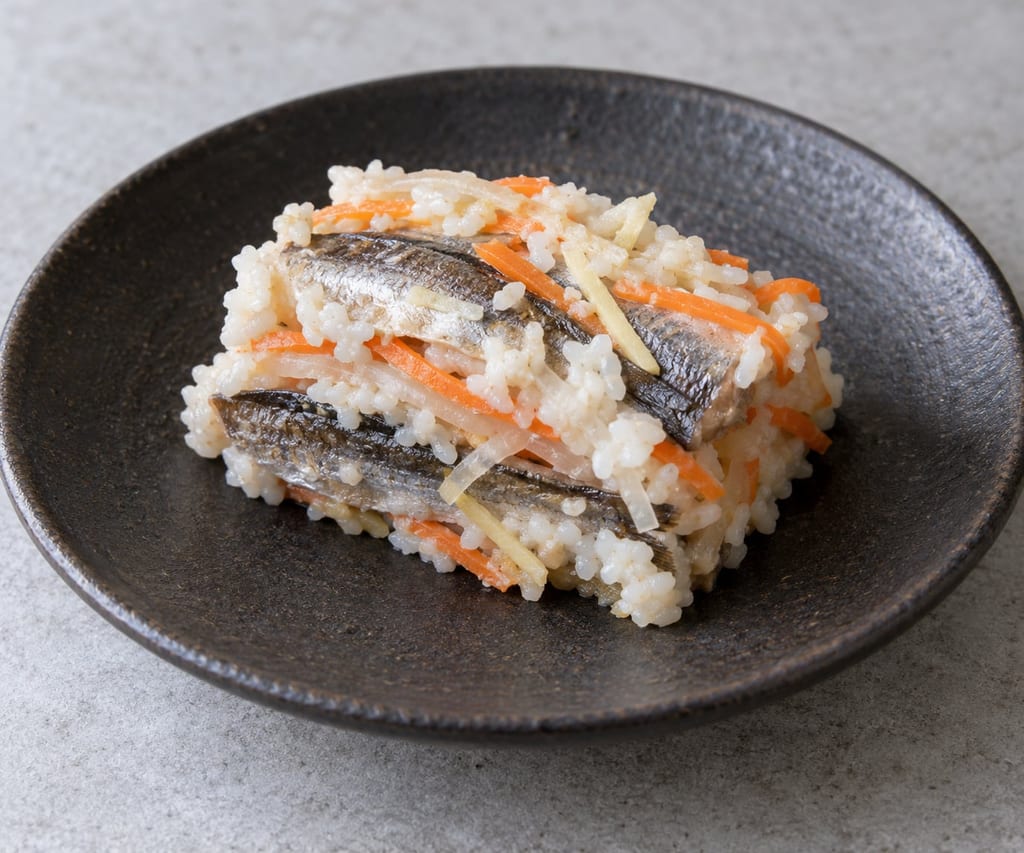
Hokkaido izushi layers fish, vegetables, rice and kōji for cold-season lactic fermentation. This MAFF recipe uses small hatahata with a vinegar pretreatment; it is one regional household formula, not a universal izushi method.
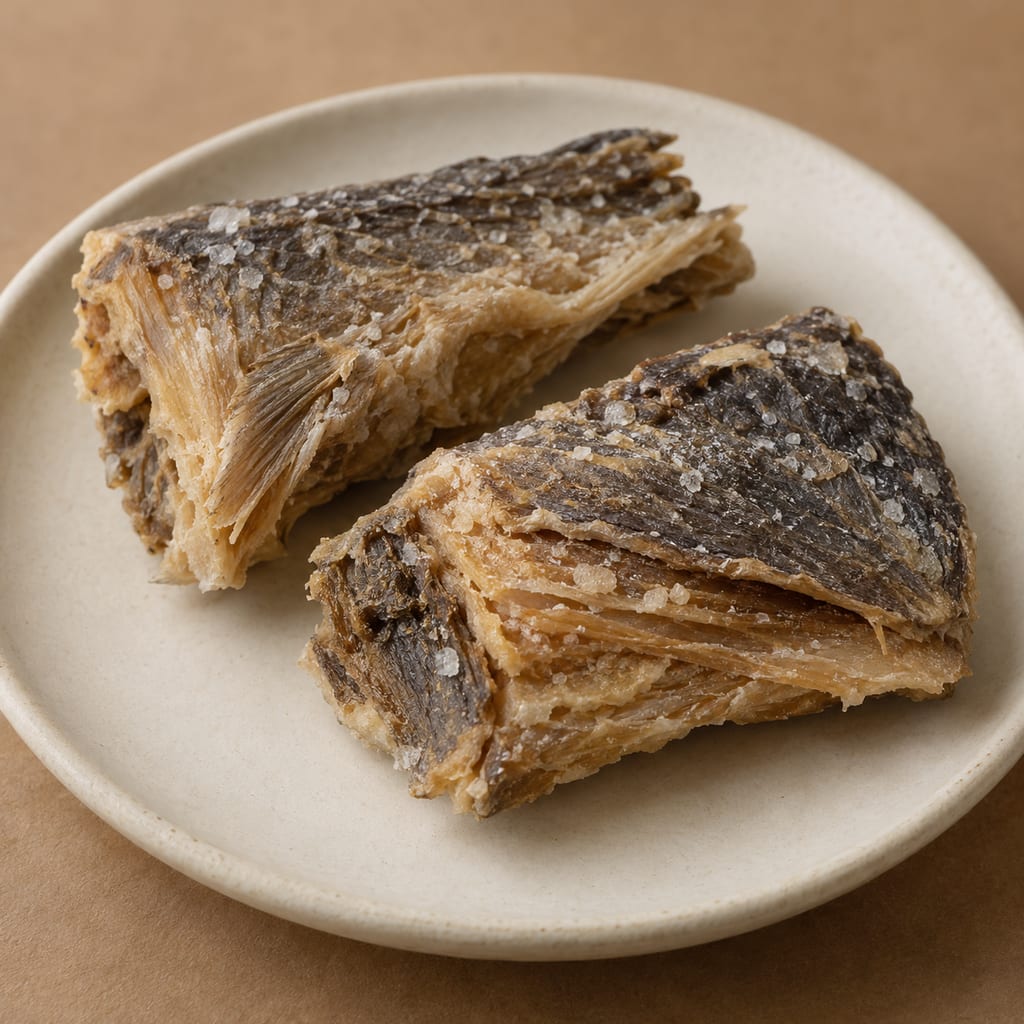
Lanhouin is a strongly flavoured fermented fish condiment documented in coastal West Africa, including southern Benin. This page records one published research reproduction as evidence, not as a validated home-preservation recipe.
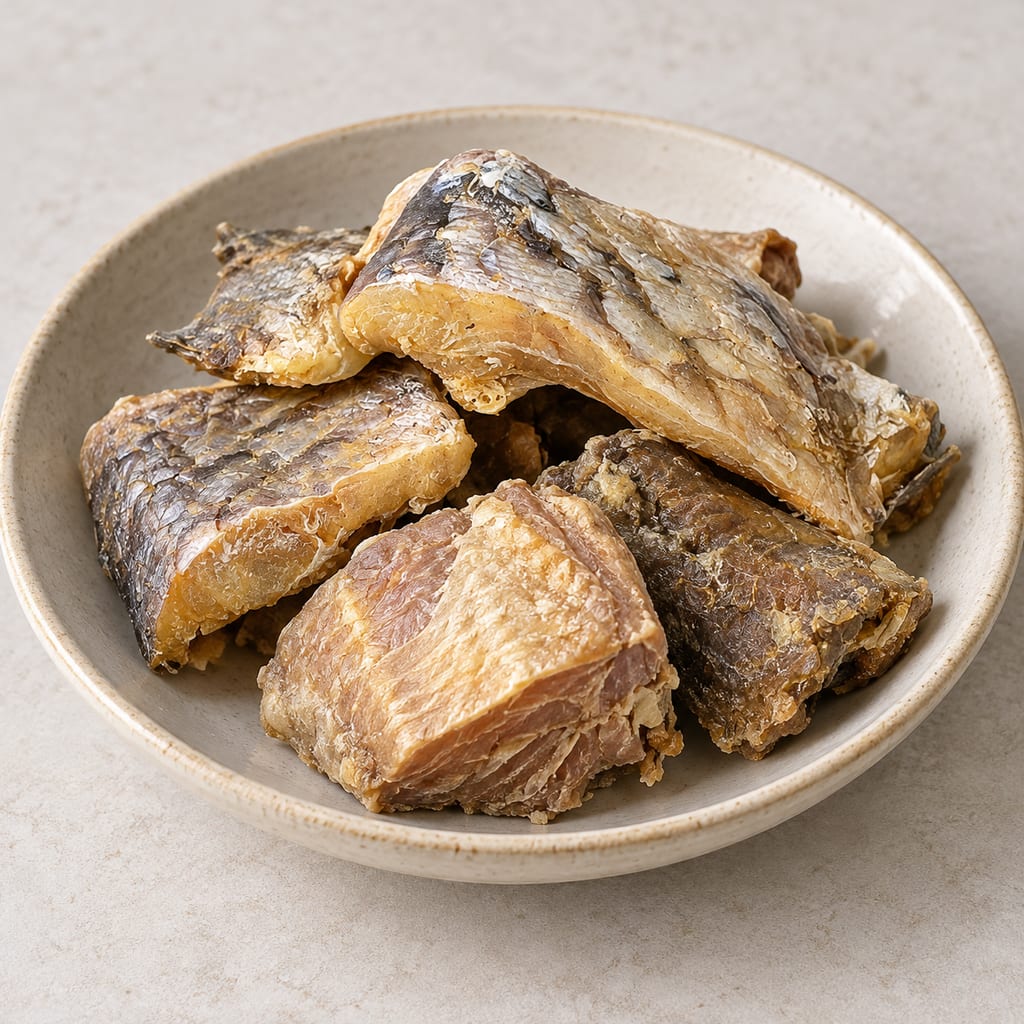
Momone is a Ghanaian salted and fermented fish condiment made from varied marine fish. Historical surveys describe both semi-dried and drier products, with salting and drying methods differing across coastal communities.
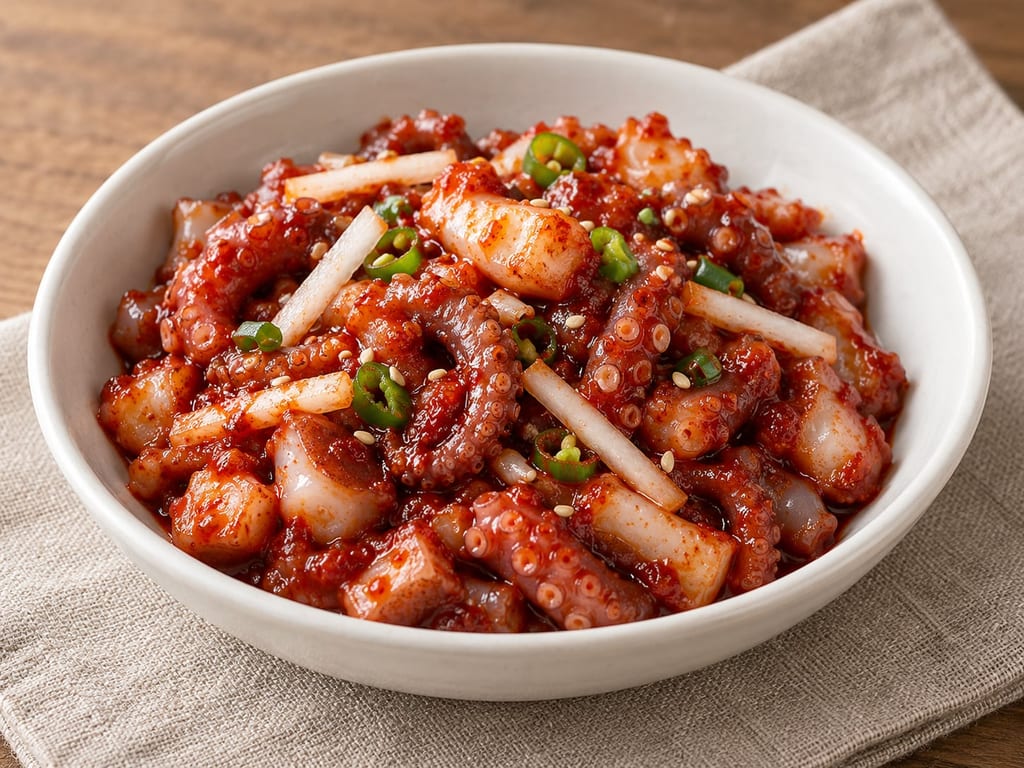
Nakji jeotgal is Korean salted octopus, served among jeotgal varieties with rice. This entry documents the dish and one creator’s quick-home version; it does not provide a household preparation method.
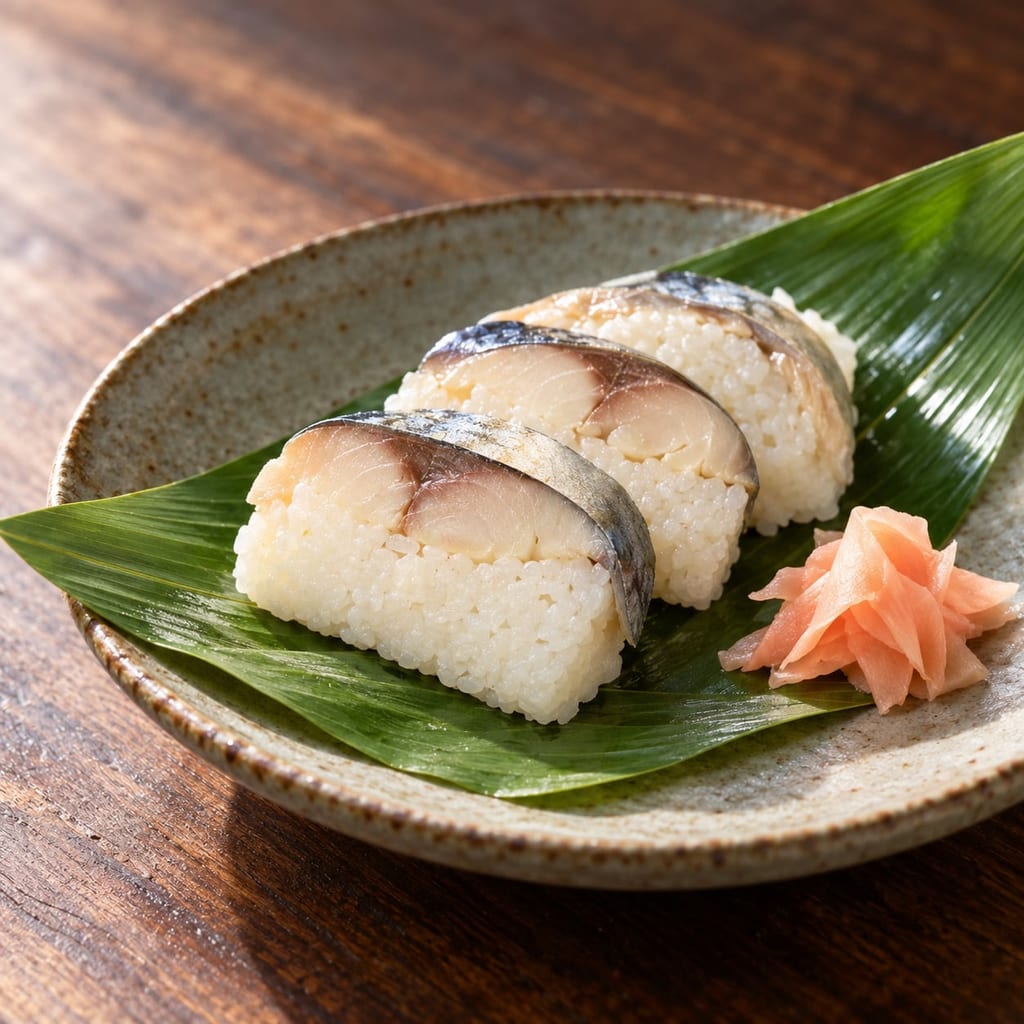
A documentary account of Japanese narezushi, a family of salted-fish and rice ferments. This entry preserves the East Kishu (Mie) source’s identity and regional context without providing a household preparation method.
No community contributions have been published for this entry yet.
Sign in to contribute. Published comments and photos are free to read.
Japan International Research Center for Agricultural SciencesMethod · Identity · Use
Plaa-som_Koong-somNames plaa-som, plaa-khao-suk, plaa-prieo, koong-som and koong-dorng; lists the freshwater fish and the shrimp normally used.
Method: clean fish, salt at 8:1 by weight, leave overnight, next morning add cooked rice and minced garlic at 20:4:1 by weight, pack in a jar at ambient temperature.
Fermentation 5 to 7 days, storage life about 3 weeks; solid, sour and salty texture; grey-white for plaa-som and pink for koong-som.
Eaten fried, topped with chopped shallot and bird's eye chilli, with rice; produced as a home industry in the Northeast.
Cited in: What plaa-som is; Names and forms; The method as recorded; What happens in the jar; Eating plaa-som; What remains open
Rajabhat Maha Sarakham University JournalMethod · Community context
A Community Wisdom Model: A Case Study of Pla Som (Fermented Fish) of Thai-Yor at Tha Khon Yang VillageSmall freshwater fish mixed with steamed glutinous rice, garlic and salt; the community recipe ratio is secret.
Cited in: The method as recorded
Nation TVCommunity context
Pla som production adds value for Thai river communitiesA local report describes a Nakhon Phanom training project for pla-som production.
Cited in: The method as recorded
Journal of Bioscience and Bioengineering / PubMedMicrobiology
Use of a starter culture of lactic acid bacteria in plaa-som, a Thai fermented fishA mixed starter of Lactobacillus plantarum IFRPD P15 and Lactobacillus reuteri IFRPD P17, isolated from natural plaa-som fermentation, was air-dried with sterilised rice grains as filler and stored at 4 C for more than 20 weeks.
P15 was the main acid producer and P17 suppressed pathogens such as E. coli within 24 hours; a single starter did not fully suppress pathogens; the authors suggest the mixed starter may shorten fermentation.
Cited in: Starter culture trials; What remains open
Journal of Food Health and Bioenvironmental ScienceMicrobiology
Lactic acid bacteria isolates from Pla-som, their antimicrobial activities and fermentation properties in Pla-somDescribes selected lactic-acid bacteria isolates from products made by Phayao producers.
Cited in: Starter culture trials
International Journal of Agricultural TechnologyMicrobiology
Effect of lactic acid bacteria powder on quality of fermented fish product (Pla-Som)A 2023 paper tests encapsulated lactic-acid bacteria powder in another product batch.
Cited in: Starter culture trials
International Journal of Food Microbiology / ElsevierMicrobiology · Method
Fermentation and microflora of plaa-som, a Thai fermented fish product prepared with different salt concentrationsA study comparing four plaa-som batches reported different acidification and microbial patterns at different salt levels.
Cited in: What happens in the jar
Journal of Fungi / PubMed CentralMicrobiology
Distribution of Kazachstania Yeast in Thai Traditional Fermented Fish (Plaa-Som) in Northeastern ThailandDescribes Kazachstania yeast in sampled plaa-som from northeastern Thailand; the observation concerns those samples.
Cited in: What happens in the jar