What it is
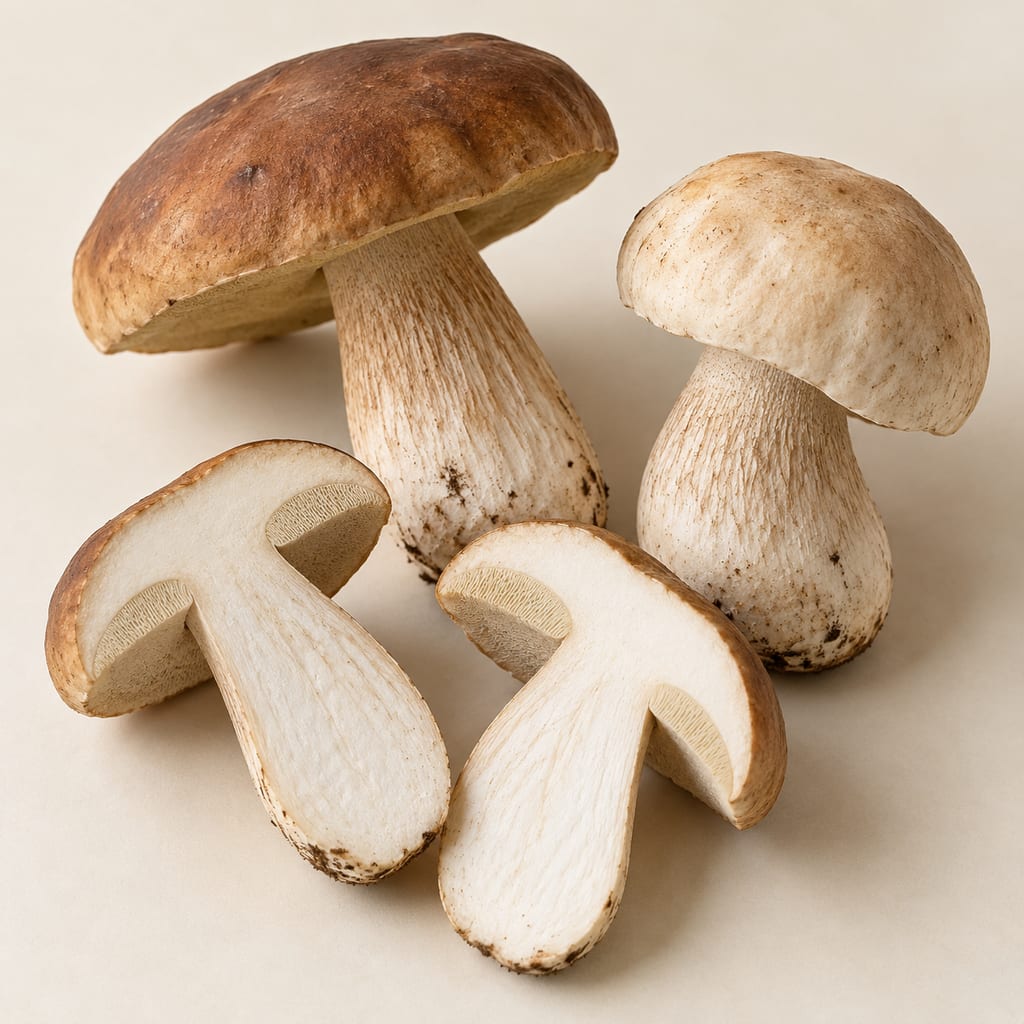
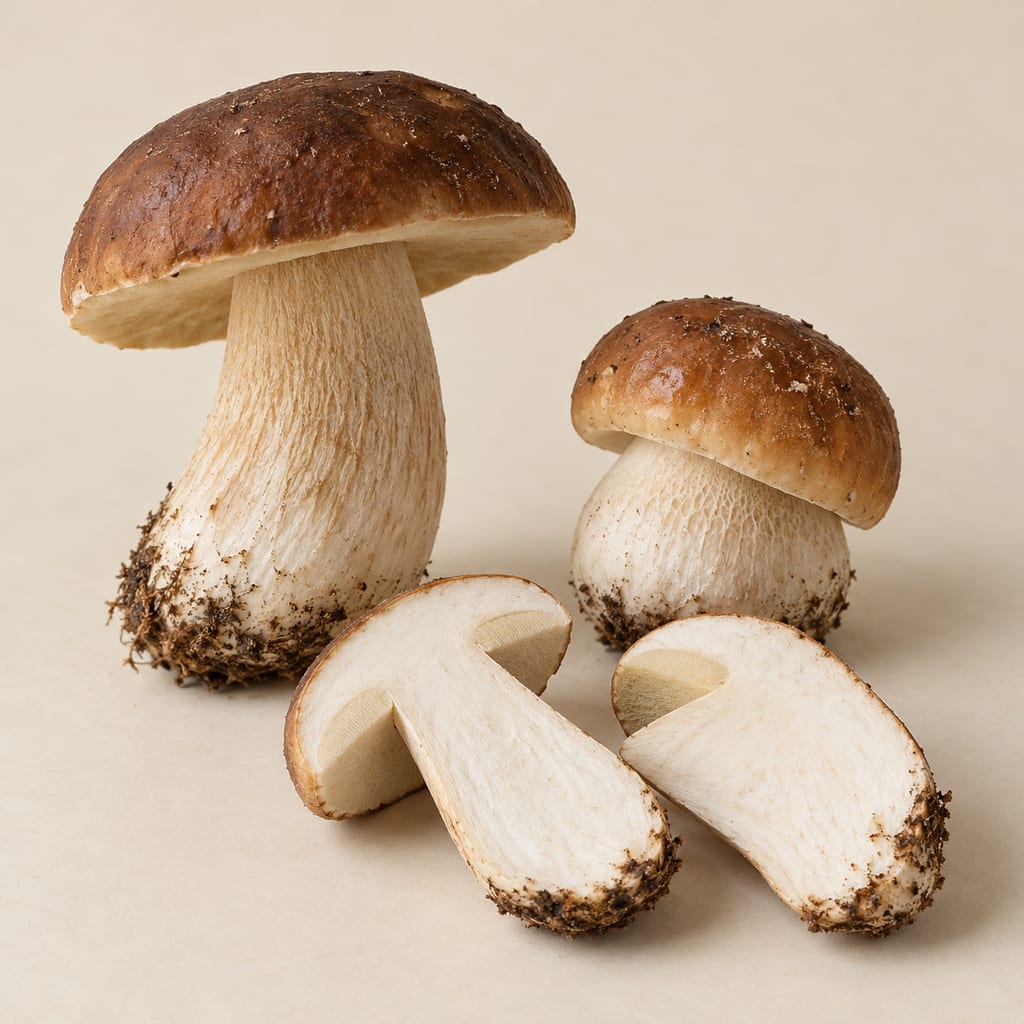
Boletus betulicola is a bolete of the penny bun group that grows with birch. In the Finnish description its cap is 10 to 20 cm across, occasionally 25 cm, pale brownish to dark brown and rarely café-au-lait, viscid or even glutinous when wet. The cap skin is thicker than in the other species of Boletus section Boletus and slightly overhangs the margin. Beneath the cap lies a layer of small tubes about 1.5 to 2.5 cm long, yellowish white at first and then yellowish with only a slight greenish tint.
The stem is 10 to 15 cm long, occasionally 20 cm, cylindrical or swollen at the base, and somewhat slender. It is whitish when young and later takes a brownish tint. Its net is faint and whitish and is not easily told from the background. The flesh is white and soft. The authors give the taste as mild and pleasant and the smell as pleasant. They name the slender habit, spores with a pointed apex, end cells of the cap skin with a swollen tip, and the birch habitat as the typical features.
Another account describes the cap as greyish, which differs from the Finnish range of browns. Cap colour in this group varies within a species, so the description here is the Finnish one and not a rule.
Sources for this section
A name that is still argued over
The birch form was named Boletus edulis var. betulicola by Vassilkov in 1948 and given species rank by Pilát and Dermek in 1974. A 2008 European DNA study found four clear lineages, B. aereus, B. reticulatus, B. pinophilus and a broad B. edulis group, and could not support the separate taxa inside the last. It concluded that B. edulis is one very variable species living with several trees.
Korhonen, Liimatainen and Niskanen reached the same molecular result on Finnish material, since ITS and IGS1 sequences did not separate the taxa inside the B. edulis group. They nevertheless treat B. betulicola as a species because its spores, cap-skin cells and ecology differ. One reference site records that some authors treat it as a form of B. edulis and others as a separate species, with no consensus among boletologists. Wikipedia lists it among the names now treated as part of a B. edulis species complex. A reader meeting the name in a field guide should expect either treatment.
Sources for this section
Where it grows
The Finnish study associates the fungus with birch, Betula, and found it in all kinds of birch woods, even in subalpine and alpine heaths with dwarf birch, Betula nana. Specimens came from the Helsinki region, from Finnish Lapland near Kilpisjärvi and from Troms in northern Norway, and were gathered between 19 August and 5 October. Those dates are collection dates in one study, not a fruiting calendar for the species.
The sources read for this page do not give a distribution map for the species outside these collections, and they do not say how common it is.
Sources for this section
Eating it
The Finnish description calls the flavour mild and pleasant, as it does for the other members of the group. The sources read for this page contain no record of the species being sold, no preparation method and no safety assessment, so nothing is claimed here about how it is cooked or whether it is traded apart from the other porcini. If a pale, slender bolete under birch is taken for this species, the identification still has to be made from the whole mushroom, as set out below.
Sources for this section
The European porcini compared
Boletus betulicola sits at the contested edge of the group. European DNA work separates B. aereus, B. reticulatus and B. pinophilus from a broad B. edulis lineage but not the forms inside it, birch form included. The Finnish authors keep it apart on microscopic and ecological grounds. Fechtner's bolete, once listed with the porcini, was moved to Butyriboletus after molecular data placed it far from the penny bun.
In short, from the sources: B. betulicola is slender and grows with birch, with a cap skin that slightly overhangs the margin and a faint net on the stem. B. edulis has a pale to dark brown cap, viscid when wet, and a fine white net clearest at the top of a whitish stem; it grows with spruce in the Finnish study. B. aereus has a dark bronze-brown, slightly velvety cap, a brown to reddish stem with a net of similar colour, and grows under oak, beech and chestnut. B. reticulatus has a velvety cap that cracks in dry weather to show white flesh, a strong net, and grows under oak and other broadleaf trees. B. pinophilus has a reddish-brown cap with a thicker, gelatinous skin, a coarse reddish net, and grows under Scots pine and other conifers. B. pinetorum has a greyish-brown cap with a wrinkled edge and grows with Scots pine in late summer.
The bitter bolete, Tylopilus felleus, is the classic confusion. Its pores are white when young and turn pink with age, and its stem carries a coarse dark brown net on a lighter ground, the reverse of a penny bun. Its flesh is intensely bitter, cooking makes this worse, and sensitivity to the bitterness varies between people, so tasting is not a safe test. Red- and orange-pored boletes are a different hazard. Satan's bolete, Rubroboletus satanas, has yellow to orange pores that turn red and blue at a touch and is described as moderately poisonous, especially raw. The bitter beech bolete, Caloboletus calopus, has a pink-red lower stem, pores that bruise blue and flesh that stays bitter after cooking.
This record is not a field guide. Identification has to be certain, from the whole mushroom and several features together, and checked by an experienced local identifier before anything is eaten. Smell, taste or colour change alone never establish safety.
Sources for this section
Places
Finland
Relationship not established · Region evidenceOccurrence records from the Finnish study, including birch woods near Helsinki and subalpine birch heath at Kilpisjärvi; no food practice is claimed for the species.
Troms
Relationship not established · Region evidenceOne specimen examined in the same study; occurrence only.