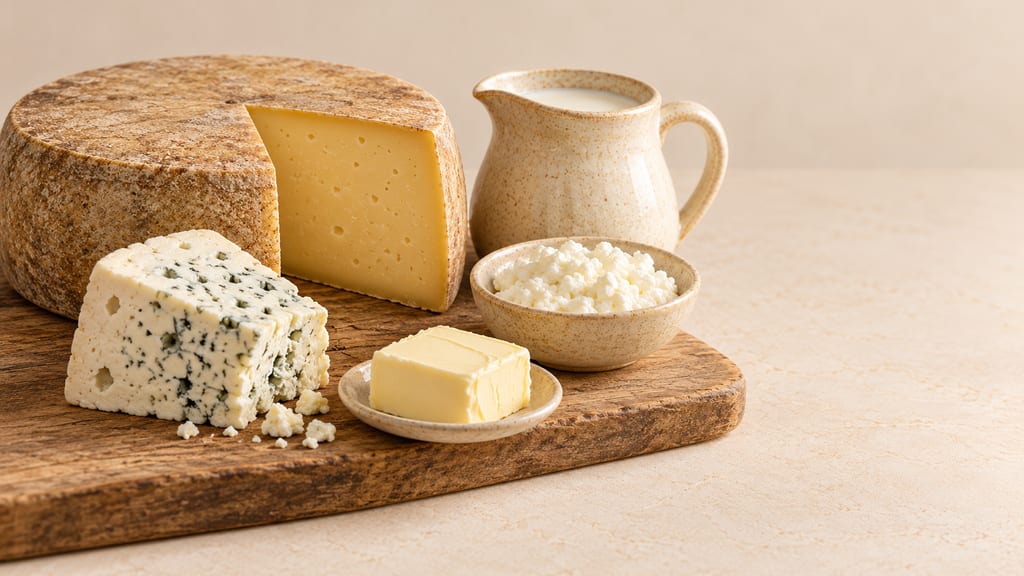
Milk, curd and the world's dairy stores
Follow milk into cheese, cultured drinks, butter, dried curds and sweets: a journey through the animals, seasons and household decisions behind the world's dairy foods.
 FermenteaWhere food goes to change
Substrates
Bovine colostrum is the changing first secretion around calving, concentrated in proteins and maternal immune components; it feeds newborn calves and appears in seasonal foods and processed products.
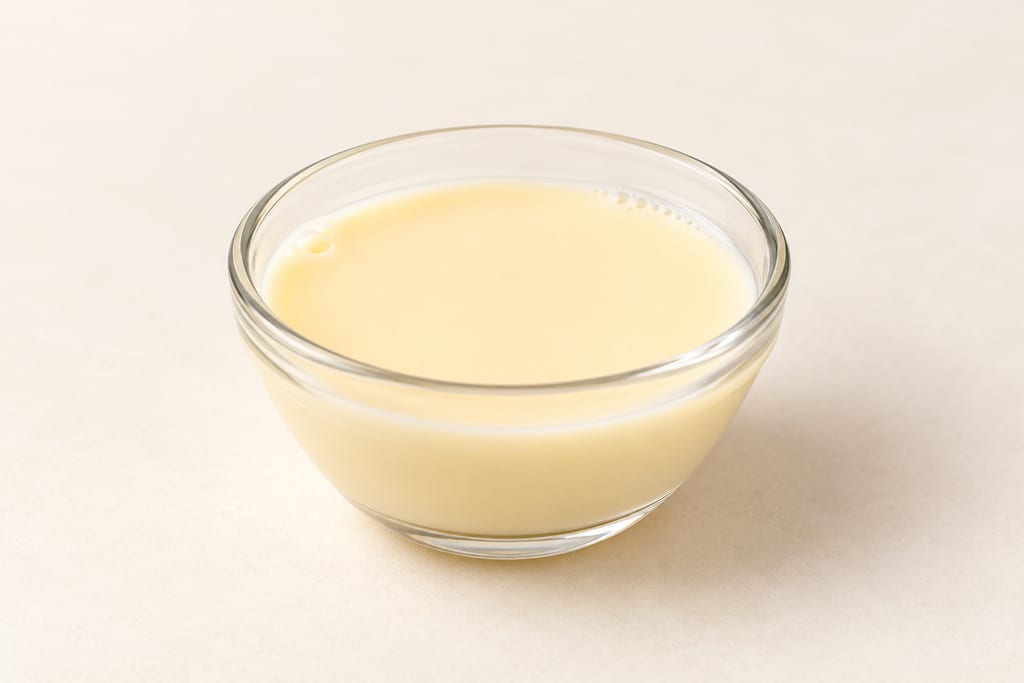
Bovine colostrum is the mammary secretion produced by a cow around calving, before ordinary milk has fully replaced it. In dairy management, the first milking after birth is usually called colostrum; the next milkings are often called transition milk. The labels do not describe a sharp universal boundary: timing, calving, and the cow’s own secretion vary, and studies define the transition period differently. A product called colostrum should therefore be read with its collection timing and handling information, not as a fixed recipe ingredient with one composition.
The secretion begins accumulating in the udder before birth. It carries concentrated nutrients and maternal immune components, especially immunoglobulins, that the newborn calf needs. Colostrum is not simply mature milk made thicker. As lactation advances over the first milkings and days, its protein and immunoglobulin content generally falls while lactose rises toward the pattern of ordinary milk. The speed and magnitude of that change vary among animals and studies.
Colostrum can refer to secretions from many mammals, including people. This page is specifically about cattle. It does not treat human colostrum, sheep colostrum, or goat colostrum as equivalent ingredients. Nor does the word alone say whether a bovine sample is raw, heat-treated, frozen, dried, or blended with later milk. Those distinctions matter to its composition, safety, and behavior in a recipe.
The collection stage also affects how dairies classify the material. USDA distinguishes colostrum from transition milk by successive milkings, while veterinary research emphasizes that a cow’s postpartum secretion changes continuously. A single clock-based cutoff cannot describe every herd or every product standard. For a reader comparing ingredients, the important questions are the cow’s timing after calving, the processing applied, and whether the product is fresh or shelf-stable—not an assumption that every item sold as colostrum represents the same first milking.
In dairy herds, the first job of colostrum is feeding the newborn calf. Cattle calves receive little maternal antibody through the placenta before birth; they depend on drinking colostrum soon after calving to absorb immunoglobulins while the newborn gut can still take them up. Veterinary and USDA guidance describes prompt, adequate colostrum feeding as central to calf health. This biological role explains why dairy farms manage the first secretion separately from ordinary saleable milk.
Household foods made from surplus colostrum sit alongside that priority, not in place of it. The supply is brief and tied to calving; how much remains after the calf’s needs depends on the cow, calf, farm practices and collection system. A dish’s history does not establish that withholding colostrum from a calf is appropriate. Farm guidance should govern calf care, and sources documenting foods are not animal-care protocols.
Commercial dairy systems also distinguish colostrum and transition milk from ordinary bulk milk. USDA describes the first few milkings after calving as not saleable as human milk in its U.S. industry context. That is not a universal legal statement: rules depend on jurisdiction and product. The separation reflects both unusual composition and the need to manage postpartum milk and calf nutrition.
Colostrum contains the familiar milk components—water, fat, lactose, casein, whey proteins and minerals—but their proportions differ from mature milk. It also contains high concentrations of immunoglobulins and other bioactive compounds. Published tables often report more total protein and solids and less lactose than mature cow’s milk, especially in the earliest secretion. Numbers differ between reports because collection time and the animals studied differ.
One review lists first-day examples around 14–16% protein, 6–7% fat and 2–3% lactose, compared with about 3% protein, 3.6–4% fat and roughly 5% lactose in mature milk. Other studies report different values. These figures describe selected study samples, not guaranteed values for every cow or batch. Breed, parity, nutrition, health, season, dry period and time after calving can all shape composition.
The proteins are especially important to the food’s physical behavior. Whey proteins and immunoglobulins are abundant in early colostrum; heat can make the secretion coagulate into a firm, custard-like or gelled mass. This property supports traditional baked or water-bath desserts. It is not a dependable setting formula: first secretion may set differently from later milk, and batches vary. A recipe for mature milk, cheese or custard cannot be assumed to work unchanged with colostrum.
These compositional differences also explain why colostrum powders and supplements are processed as separate products. Drying, heating, filtration and formulation can alter components, and commercial products are not interchangeable with fresh colostrum from a cow. Nutritional composition alone does not establish clinical benefit.
Across several food traditions, colostrum’s tendency to set under heat has made it a seasonal ingredient for puddings and baked milk dishes. In Sweden, kalvdans is a dessert made from cow colostrum, often flavored with sugar and spices and heated in a water bath or oven. The Swedish living-heritage registry describes the dish across the country and records a written mention in 1682. It also gives later archival descriptions of colostrum puddings, pancakes and curd-like preparations. The 1682 reference dates the named dish in the surviving record; it does not prove when people first ate colostrum.
The protected Kullings kalvdans specification documents a modern regional version from Västergötland. It describes colostrum from the first three or four milkings, sourced from local farms, recorded by farm and animal, then frozen to support year-round manufacture. The final dessert sets through baking and is made without requiring an added thickener when the milk’s protein content is suitable. This is a product specification for one named food, not a universal colostrum method or storage plan.
Estonian food-history research describes rural colostrum dishes in archives and cookbooks, and traces changing attitudes from the eighteenth century onward. It also notes modern freeze-dried colostrum products. The article traces a move from seasonal household cooking into contemporary wellness marketing. These are separate histories, and promotional claims are not evidence that a supplement treats illness.
In parts of Assam, India, a field study recorded household sweets made by boiling cow colostrum with sugar; participants called the ingredient and sweet phehu. The paper also reports that collecting milk for these sweets could reduce the calf’s access to colostrum in some households. Its evidence belongs to the sampled communities and does not stand for every Indian practice. Reviews also list Finnish leipäjuusto and southern Indian junnu among foods made with bovine colostrum, though product details and the use of other species vary by recipe.
Fresh colostrum is available only around calving and changes quickly as the cow moves into later lactation. This makes it harder to source consistently than mature milk. Historically, household cooks used what was left after feeding the calf, sometimes as a celebratory or seasonal dish. Modern dairies can pool, identify and freeze batches to make a regional specialty more steadily, as the Kullings specification describes.
Food researchers have studied adding colostrum to yoghurt, fermented milk, curd, ice cream, cheese, butter, beverages and baked products. Each application changes its proteins, fats and water differently. A heat-set sweet relies on coagulation, whereas a dried powder is a concentrated processed material. The term colostrum product may therefore refer to a fresh dairy secretion, a cooked dish, an ingredient powder, a capsule, or a formulated supplement; these are not one food stage.
Colostrum supplements are commonly advertised for general health, immunity, exercise recovery or digestive conditions. Such claims need evidence for the particular product and outcome. A review of potential human applications summarizes research but does not establish broad preventive or therapeutic effects. In one small crossover study involving adults with short bowel syndrome, eight participants completed the analysis; bovine colostrum was not superior to an energy- and protein-matched control for the measured outcomes. This limited trial cannot answer every question, but it illustrates why composition and biological activity should not be presented as proof that a supplement treats disease.
Batch traceability is useful because colostrum changes rapidly and varies by cow. The protected regional product specification records the farm, animal, milking date and protein content before freezing, then uses those records to blend for the desired consistency. That is a producer-specific quality system, not a recipe for freezing or thawing colostrum at home and not a guarantee that any anonymous frozen supply is equivalent. Outside such a documented chain, the source, collection time and cold history may be unknown.
Colostrum itself is an animal secretion and an ingredient category, not a single dish invented in one place. The sources reviewed do not identify the first human use of bovine colostrum or a universal point of origin. The earliest dated evidence here belongs to named foods and local records: the Swedish heritage registry reports a mention of kalvdans in 1682, and Estonian scholarship traces colostrum foodways from the eighteenth century onward. These attestations establish that particular practices were recorded by then; they do not mark the start of colostrum use.
Modern production histories are easier to date than the broader ingredient’s first use. The EU’s Kullings kalvdans specification links present manufacture in Västergötland to an older Swedish tradition and describes current farm sourcing, identification, freezing and production. The Estonian study separately follows the appearance of freeze-dried products and health-oriented marketing in recent decades. Neither history should be generalized into a single timeline for all bovine colostrum foods.
Animal husbandry and food history also meet in a practical tension: colostrum nourishes a newborn calf, while people have made foods from surplus. Sources from different settings describe this balance differently. It is more accurate to name the documented community, dish and time than to claim that one culture or country invented colostrum cookery.
Fresh colostrum that has not been pasteurized is a raw dairy secretion. CDC guidance warns that raw milk can carry Campylobacter, Cryptosporidium, E. coli, Listeria, Brucella and Salmonella, and that good farm practices cannot guarantee pathogen-free milk. That guidance addresses raw milk generally; the sources consulted do not establish a special safety exemption for colostrum. Choose pasteurized dairy products for human consumption where available and keep perishable dairy refrigerated at 40°F (4°C) or colder.
Historical recipes describe oven baking or heating a covered dish in a water bath. Those descriptions document food traditions; they are not validated time-and-temperature safety processes for a modern batch. The sources reviewed do not give a universal home method, processing limit, or shelf life for raw bovine colostrum. Smell, taste, color, thickness or a successful gel cannot show whether harmful microbes are present. Follow current local food-safety requirements and regulated product handling directions; do not infer that a traditional heating description guarantees safety.
Bovine colostrum is milk and contains milk proteins that can trigger allergy. Pasteurization does not remove those proteins. It also contains lactose, which affects people with lactose intolerance; heat treatment does not make it lactose-free. A dried supplement remains a milk-derived product unless a specific validated process states otherwise. People with milk allergy should avoid it and follow medical advice.
Claims that colostrum prevents infection, boosts immunity, heals the gut or treats a disease require evidence for that exact claim and product. The fact that immunoglobulins help a calf absorb maternal antibodies does not show that the same components produce a clinical benefit in an adult who eats a supplement. Keep the calf’s nutritional needs, traditional food uses and human supplement claims distinct.
milk proteins; lactose is present
Kalvdans made from cow colostrum is documented as a Swedish food tradition; the source describes it nationwide.
The Kullings kalvdans specification documents current production using colostrum from local farms; this is not a claim that bovine colostrum originated there.
Historical and ethnographic research documents colostrum foodways from the eighteenth century onward, without claiming this as an origin.
A field study in Kaziranga-area households documents cow-colostrum sweets called phehu; its findings are local to the study area.
A review records leipäjuusto made from bovine colostrum or reindeer milk; this association does not imply all versions use cattle milk.
Follow milk into cheese, cultured drinks, butter, dried curds and sweets: a journey through the animals, seasons and household decisions behind the world's dairy foods.
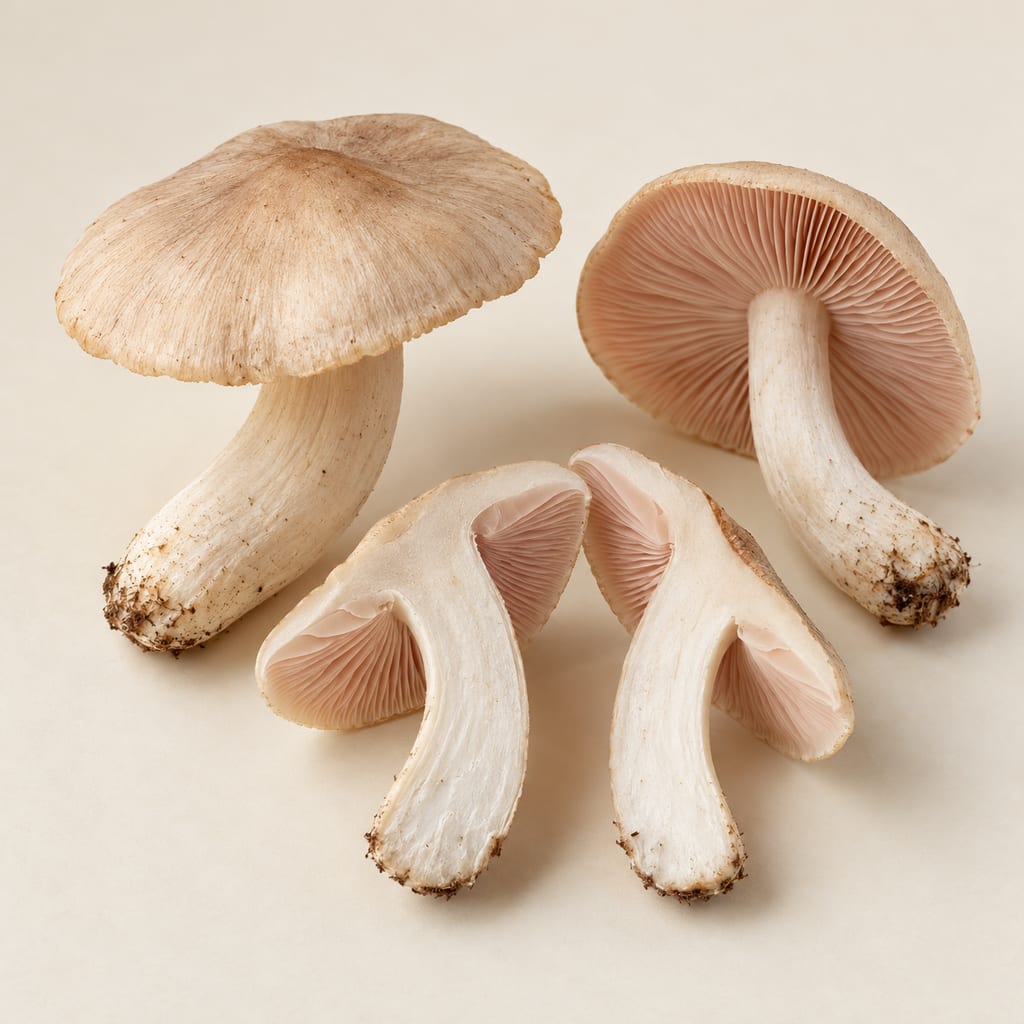
Entoloma sepium is a spring pinkgill associated with Rosaceae. Chinese and European sources list it as edible or conditionally edible, while taxonomic uncertainty and a poisonous lookalike warrant caution.
No community contributions have been published for this entry yet.
Sign in to contribute. Published comments and photos are free to read.
Animals (MDPI)Process · Ingredient context
Composition and Factors Affecting Quality of Bovine Colostrum: A ReviewBovine colostrum is the mammary secretion produced immediately before and after calving; its composition differs from mature milk and varies with timing, breed, parity and other factors.
Cited in: The first secretion after calving; A changing, concentrated composition; From household surplus to processed ingredient
Veterinary Clinics of North America: Food Animal PracticeProcess · Ingredient context
Colostrum Management for Dairy CalvesImmunoglobulins and serum proteins accumulate before calving, are most concentrated in the first secretion and decline during transition milk.
Colostrum is biologically important to calves and is their primary first food in dairy production.
Cited in: The first secretion after calving; A calf’s first food; A changing, concentrated composition; Safety, allergens, and claims
USDA Animal and Plant Health Inspection ServiceProcess · Ingredient context
Dairy 2007: Colostrum Management and Passive Transfer StatusUSDA describes the first milking after calving as colostrum and the second and third milkings as transition milk in its dairy context.
Calves rely on colostrum ingestion for passive transfer of maternal antibodies.
Cited in: The first secretion after calving; A calf’s first food
NutrientsIngredient context · Process
Bovine Colostrum and Its Potential for Human Health and NutritionReview describes food and supplement studies and processing constraints; it does not establish that marketed products prevent or treat disease.
Cited in: A changing, concentrated composition; Foods made from colostrum; From household surplus to processed ingredient
Levande kulturarv, Institutet för språk och folkminnenHistory · Ingredient context
KalvdansKalvdans is a Swedish cow-colostrum dessert traditionally set by heating in a water bath or oven.
The registry reports a 1682 mention of kalvdans; that dates this named dish, not the first human use of colostrum.
Cited in: Foods made from colostrum; What history can be dated
European Commission, Official Journal of the European UnionHistory · Process · Geography
Publication of an application for registration of the name Kullings kalvdans as a protected geographical indicationKullings kalvdans is made in Västergötland from colostrum from the first three to four milkings after calving, as described in the product specification.
The specification describes local farm sourcing, batch records and freezing to support year-round production.
Cited in: Foods made from colostrum; From household surplus to processed ingredient; What history can be dated
Journal of Ethnology and FolkloristicsHistory · Ingredient context
Delicious or Disgusting? The Winding Journey of Colostrum in Estonian Food CultureStudy of archives, historical sources, cookbooks and media traces colostrum foodways in Estonia from the eighteenth century onward and distinguishes food heritage from functional-food marketing.
Cited in: Foods made from colostrum; From household surplus to processed ingredient; What history can be dated
PLOS ONEHistory · Geography · Ingredient context
Colostrum provision and care of calves among smallholder farmers in the Kaziranga region of Assam, IndiaField study records Assam households boiling cow colostrum with sugar into sweets locally called phehu.
Collecting colostrum for household confectionery could reduce calf access in some households; findings describe sampled communities only.
Cited in: Foods made from colostrum; Safety, allergens, and claims
Centers for Disease Control and PreventionSafety
Raw MilkRaw milk can carry Campylobacter, Cryptosporidium, E. coli, Listeria, Brucella and Salmonella; farm practices cannot guarantee safety.
CDC recommends pasteurized dairy and refrigerating perishables at 40°F (4°C) or colder. Applying this general raw-milk advice to raw colostrum is a cautious extrapolation; CDC does not set a separate colostrum rule on this page.
Cited in: Safety, allergens, and claims
U.S. Food and Drug AdministrationSafety
Raw Milk Questions & AnswersMilk proteins that cause allergic reactions and lactose remain in raw and pasteurized milk.
Cited in: Safety, allergens, and claims
Clinical NutritionSafety · Ingredient context
Randomised controlled trial of colostrum to improve intestinal function in patients with short bowel syndromeSmall crossover trial analyzed eight adults with short bowel syndrome; bovine colostrum was not superior to an energy- and protein-matched control on measured outcomes.
Cited in: Safety, allergens, and claims
NutrientsGeography · Ingredient context
Production of Bovine Colostrum for Human Consumption to Improve HealthThe review lists Finnish leipäjuusto made from bovine colostrum or reindeer milk and southern Indian junnu among traditional products; the species and formula depend on the product.