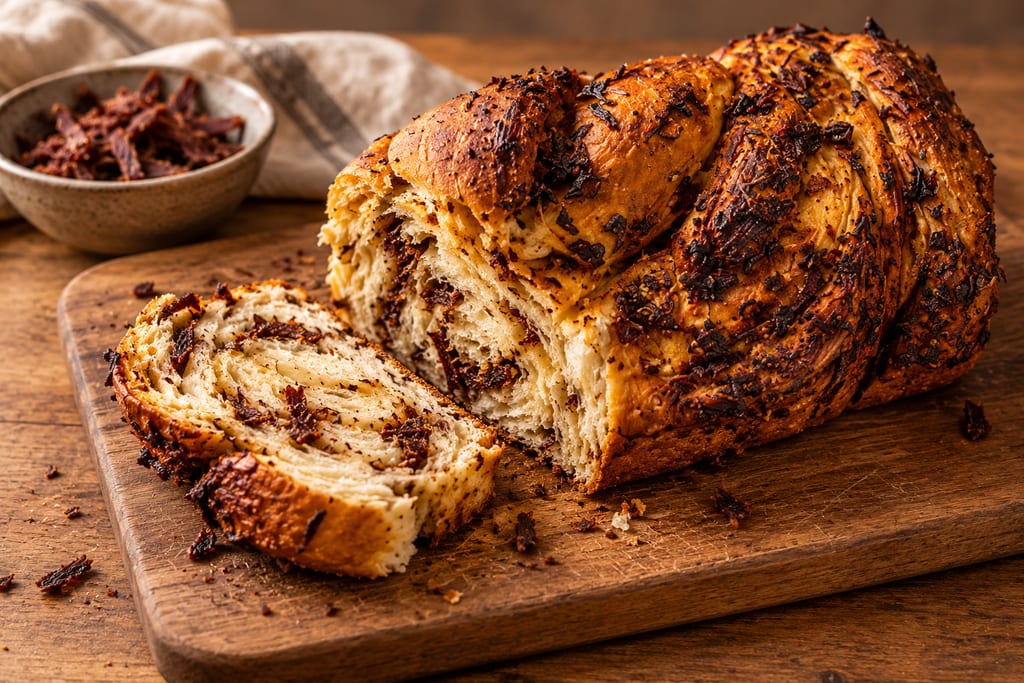
Braided biltong loaf
Yeasted bread wrapped around biltong, tomato pesto, Cheddar and feta, split lengthwise into a braid and baked; served with chilli-biltong butter.
 FermenteaWhere food goes to change
Traditional method
Pesto alla Genovese · Genoese pesto
Pesto Genovese is a Ligurian uncooked basil sauce pounded with garlic, pine nuts, salt, hard cheeses and olive oil, traditionally made in a mortar.
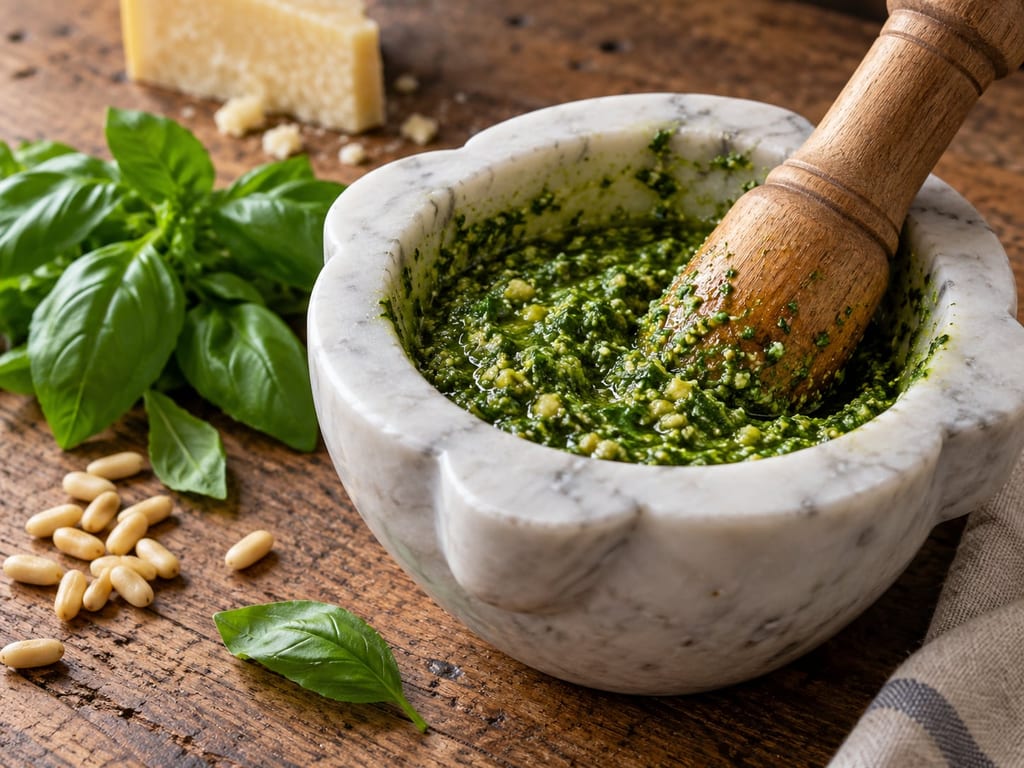
Pesto Genovese is a cold, uncooked sauce associated with Liguria. The Pesto Genovese Consortium describes a seven-ingredient version: Genoese basil, extra-virgin olive oil, two hard cheeses, garlic, pine nuts and salt. Its defining action is pestare—grinding or pounding—rather than cooking. The sauce is made with a mortar and pestle, then used to dress pasta.
The basil is not merely a green flavouring. The Consortium for the Protection of Genoese Basil DOP ties the plant to the Ligurian coast and describes the protected basil as aromatic, tender and free of mint notes. The Consortium's history places cultivation in Genoa in the nineteenth century and says it spread along the coast. Its account of basil's regional character is useful context, but it does not mean every home or commercial pesto uses protected-origin basil.
The name ties the sauce to Genoa, while its documented culinary association is broader: Liguria. The current regional sources name basil grown around Genoa and Pra', olive oil from the Ligurian Riviera, and garlic from Vessalico as prized choices. These are source-backed regional associations and preferences, not a claim that every ingredient must come from one locality in every household batch.
The exact recipe has a documented nineteenth-century written record. Italia.it reports that a recipe appeared in 1865 in the Ratto brothers' Cuciniera Genovese, described as chopped garlic and basil. That is a specific printed reference for the sauce's written history; it does not prove that no related preparations existed earlier.
Local accounts connect pesto with older crushed sauces. Italia.it mentions Roman moretum and medieval garlic sauces as possible antecedents, while the Genoese basil consortium discusses earlier pounded condiments and Ligurian agliata. These comparisons show how local writers frame a culinary lineage. They should not be collapsed into a claim that ancient or medieval cooks made this same seven-ingredient pesto.
The regional basil consortium also records a shift from a plant grown near the city to cultivation across the Ligurian coast, and it dates the Basilico Genovese DOP recognition to 2005. That designation protects a named agricultural product and production area; it is separate from the older written history of the sauce.
In the Consortium's recipe, garlic and coarse salt are ground first, then basil is added in portions and worked with a circular movement. Pine nuts soften and bind the paste; grated Parmigiano Reggiano and Fiore Sardo add savoury, aged-cheese notes; olive oil brings the ingredients together. The sequence produces a dense sauce whose texture depends on the grinding and the ingredient proportions.
The flavour is layered rather than simply basil-forward: the aromatic leaves sit beside garlic, salt, pine nuts, two cheeses and fruity olive oil. The consortium points to Vessalico garlic for a delicate flavour and Ligurian Riviera olive oil as a preferred match. These are regional preferences in the source, not required substitutions or guaranteed tasting results.
The official basil consortium also gives a mixer variation, using short pulses so the ingredients are chopped rather than continuously blended. It is a separate method description from the mortar tradition. This draft records the mortar sequence above and does not combine the two methods into a new timing or temperature rule.
Pesto is served with pasta, including Ligurian shapes such as trofie and trenette, and with potato gnocchi. Visit Genoa describes pasta dishes that combine pesto with potatoes and green beans. Those additions are part of a serving variation; they are not ingredients in the pesto sauce itself.
The regional tourism pages distinguish the Consortium's canonical seven ingredients from variations found in kitchens and serving dishes. Italia.it mentions potatoes and green beans in the pasta preparation; Visit Genoa notes that some local versions add other ingredients. This recipe keeps the sauce formula distinct from those dishes and does not label every variant as the same standardized composition.
This formula contains cheese made from milk and pine nuts. The U.S. FDA lists milk among the nine major food allergens and explains that many other foods can also cause allergic reactions. The ingredient list therefore names the cheeses and pine nuts directly. A person with a relevant allergy should avoid the corresponding ingredient; the FDA also notes that allergic reactions can be severe.
This is an uncooked sauce, but the cited culinary sources do not establish a storage duration for this batch. No refrigeration period, room-temperature hold, canning method or shelf-life claim is added here. Use the recipe sources for the named ingredients and mortar method, not as evidence for storage safety.
A Ligurian regional tourism account identifies an 1865 printed recipe in the Ratto brothers' Cuciniera Genovese as the first written version of the sauce known today. The same account presents ancient Roman moretum and medieval garlic sauces as possible antecedents, not as the same recipe.
Scaling: source batch only
The source formula contains two cheeses made from milk and pine nuts. FDA identifies milk among the major food allergens and notes that other foods can also cause allergic reactions.
Hazard sourceName both the dairy cheeses and pine nuts clearly; do not serve this formula to someone who avoids either ingredient for allergy reasons.
Control sourceGarlic mixed into oil is a botulism concern at room temperature. Keep leftover pesto refrigerated at 4 C or colder and use it within three days, or discard it; do not store it in oil at room temperature or in a jar for preservation.
Control sourceContains milk and pine nuts.
Raw garlic in oil is not a preservation method. Refrigerate leftovers and use within three days, per the Penn State Extension guidance cited in sources.
The Pesto Genovese Consortium and Ligurian tourism sources place this preparation in Liguria. Genoa is named in the food, but this row records the regional association rather than a precise birthplace.
Yeasted bread wrapped around biltong, tomato pesto, Cheddar and feta, split lengthwise into a braid and baked; served with chilli-biltong butter.
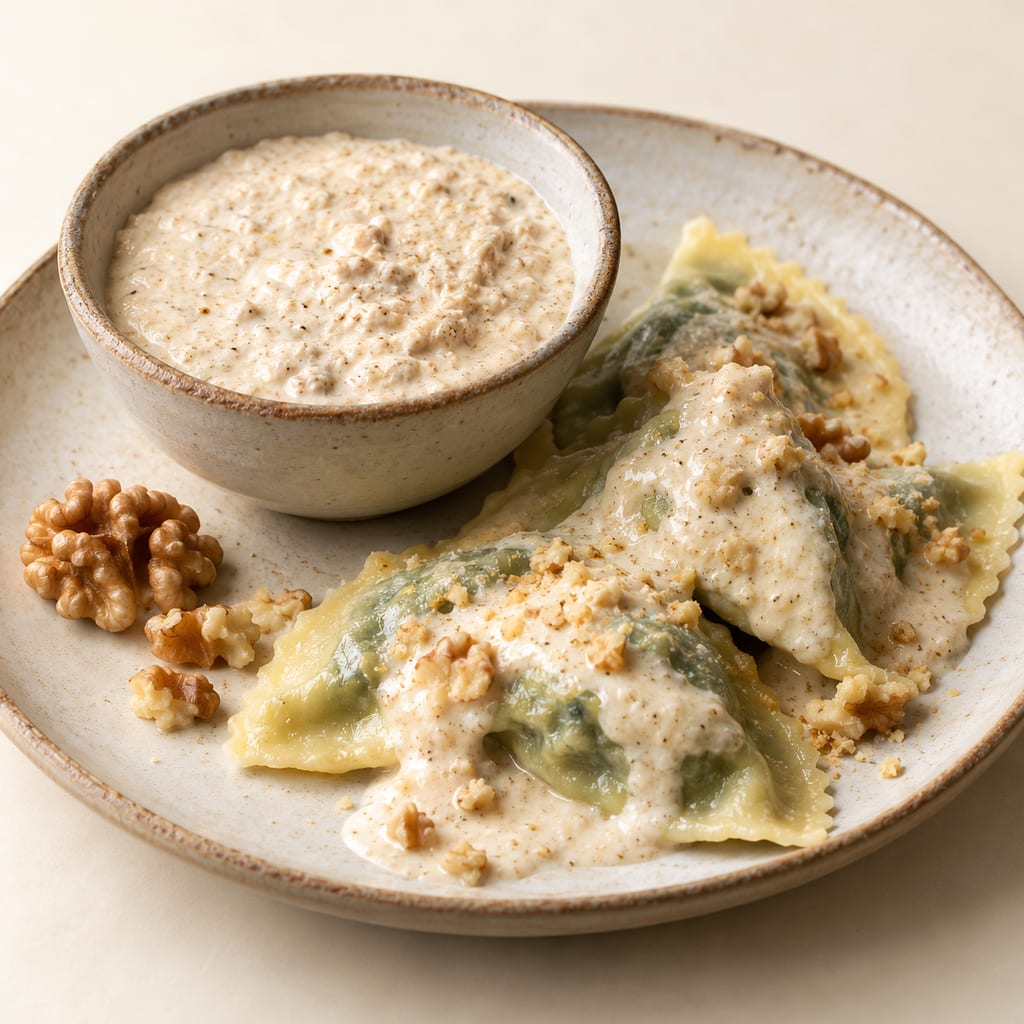
Salsa di noci is a cold Ligurian sauce of walnut kernels, garlic, marjoram, soaked bread, cheese and olive oil, served with pansoti.
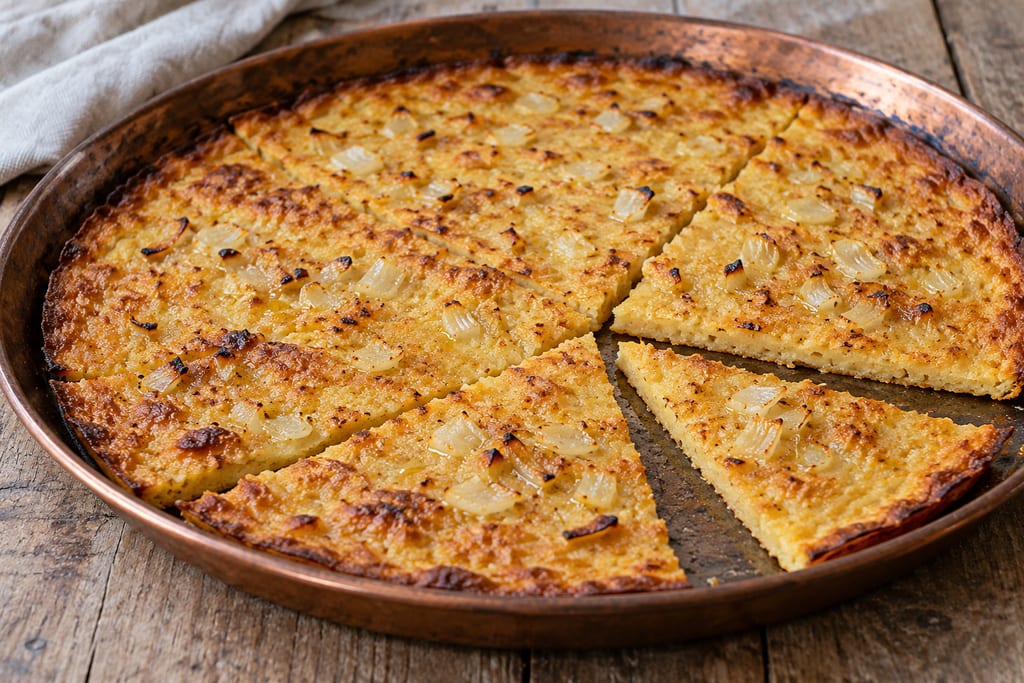
This farinata is a chickpea-flour batter baked with olive oil in a pan. The Riviera dei Fiori version makes six and uses a 200–250°C oven.

Ajvar is a cooked Balkan pepper preserve built around roasted red peppers, peeled, drained, ground and slowly fried with oil and seasoning. Leskovac’s protected version is a pepper specialty; regional versions vary.

Amlou is a nutty, lightly sweet Moroccan spread of roasted almonds, culinary argan oil and honey. The almonds are ground first, then loosened with oil and sweetened; the balance can range from a thick spread to a dip.

Apple sauce for goose and pork is a plain English accompaniment: cooked apples pulped with water, then sweetened with sugar and finished with a little butter.

A warm dip of garlic, anchovy and olive oil, often enriched with butter, that Piedmont serves over a flame with raw and cooked vegetables and bread.

A sweet-hot table sauce of ripe banana simmered with vinegar, sugar, onion, garlic and fresh chilli, in the manner of Philippine banana ketchup. An untested development batch of about 500 g.

A Georgian walnut sauce of ground walnuts, garlic, vinegar and spices, thinned with water or broth. It is served with poultry, vegetables and bread, and is the sauce of the dish satsivi.

A pourable dessert sauce of brown sugar, butter and cream, with a little corn syrup and salt. It is the sauce form of the butterscotch confection and is made without water, unlike caramel.

Byzantine murrī is a cooked imitation of murrī from the medieval Arabic repertoire, made from scorched honey, toasted bread, walnuts, quince, carob and spices rather than from a long grain fermentation.

A Cap-Pelé boucanière is an Acadian herring-smoking building. The documented Willie Niles example is a one-storey wood-frame structure with a ridge smoke vent and interior bays for hanging fish-bearing cannes.

Achcharu is a family of Sri Lankan vinegar pickles made with mixed vegetables or seasonal fruit and a piquant spice dressing. This version is a quick, refrigerated, non-fermented mixed-vegetable pickle.

The acocote is a long, hollowed and dried gourd used to draw aguamiel from a mature maguey. It is a harvesting tool: the sap is transferred to a separate vessel before it ferments into pulque.

Adrak murabba preserves young ginger in sugar syrup, a sweet South Asian preparation recorded in Indian cookery and food-processing sources.

Parkia biglobosa seeds are fermented into regional West African seasonings, including nététou, iru, dawadawa and soumbala. The yellow fruit pulp is a separate food, and names and methods vary by place.

Japanese reddish-brown vinegar from sake lees matured about three years, turned to vinegar by acetic bacteria; the vinegar of Handa and Edomae sushi rice.

A refined common-wheat flour blended for a broad range of baking; its protein and behavior vary with wheat, milling and market.

The almond mushroom, Agaricus subrufescens, was cultivated in eastern North America in the 1800s, lost its market, and returned as a cultivated mushroom from Brazil, where it is grown under several names.
No community contributions have been published for this entry yet.
Sign in to contribute. Published comments and photos are free to read.
Pesto Genovese Consortium, via Regione LiguriaRecipe · Ingredients · Method
Pesto Genovese, the authentic Basil Pesto sauce recipeSeven ingredients, measures for dressing 600 g pasta, traditional mortar and wooden pestle, method order and flavour notes.
Cited in: A Ligurian sauce built around basil; Grinding, texture and flavour
Consortium for the Protection of Genoese Basil DOPHistory · Geography · Flavour
The history of Genoese BasilGenoese basil's cultivation in Genoa and along Liguria's coast; its DOP recognition in 2005; the Consortium's description of its aroma and lack of mint notes.
Cited in: A Ligurian sauce built around basil; Written history and earlier sauces
Consortium for the Protection of Genoese Basil DOPRecipe · Method · Flavour
How to Make Genoese PestoA second current recipe variation and the Consortium's advice on rinsing and drying leaves and adding oil gradually.
Cited in: Grinding, texture and flavour
Visit GenoaGeography · Method · Uses
Pesto alla genoveseLiguria and Genoa setting, regional serving examples, and mortar method; reports variations without defining them as the Consortium formula.
Cited in: Serving and regional variation
Italia.it, Italian National Tourism BoardHistory · Geography · Uses
Pesto GenoveseLigurian context, 1865 first written version as reported by the page, possible predecessors qualified as likelihood, serving use and named regional variations.
Cited in: Written history and earlier sauces; Serving and regional variation
U.S. Food and Drug AdministrationSafety · Allergens
Food AllergiesMilk is one of the nine major U.S. food allergens; many other foods can also cause allergic reactions, and reactions can be severe.
Cited in: Allergens and limits
Penn State ExtensionSafety · Handling
Canning and Freezing Questions and AnswersThe extension guidance warns that fresh garlic or vegetables stored in oil may support Clostridium botulinum growth and advises making garlic-oil mixtures fresh, refrigerating leftovers for use within three days, freezing, or discarding.
The sauce recipe does not claim the guidance validates this allioli as a preserved product.