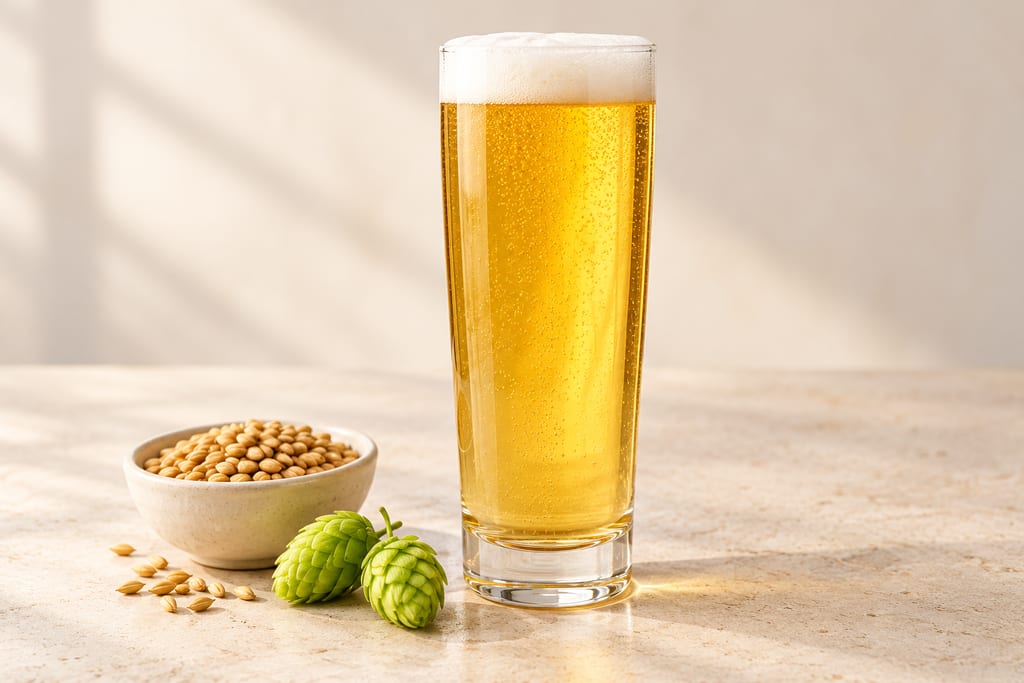
German pils, all-grain
A pale, dry lager with Pilsner malt, Magnum bittering hops and Hallertau Mittelfrüh and Tettnang additions, followed by cold maturation.
 FermenteaWhere food goes to change
Spices and aromatics
A brewing-hop name associated with the Tettnang district and the Tettnanger landrace. Regional designation, cultivar and historically confused US trade names need to be distinguished when identifying a lot.
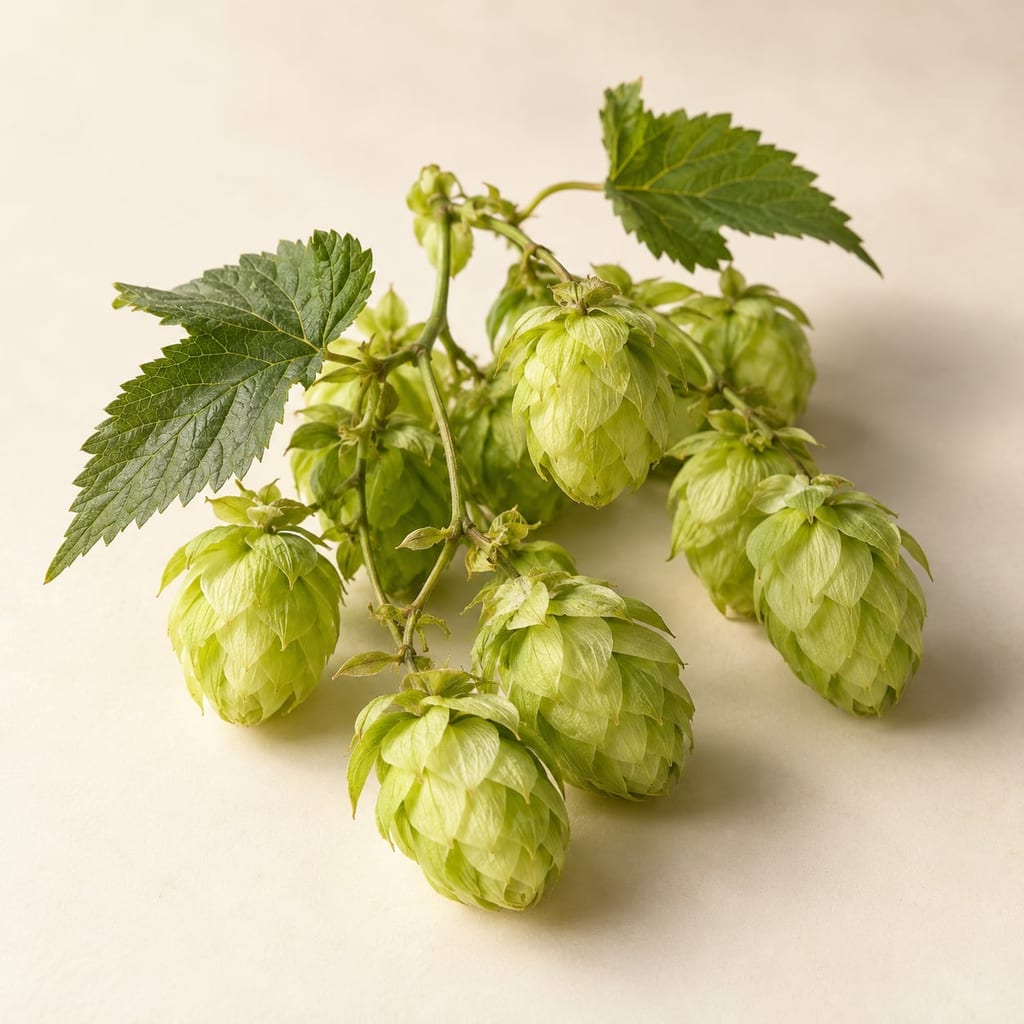
Tettnang hops take their name from a growing district near Lake Constance in southern Germany. Yet the name can carry several meanings. Tettnanger is a traditional hop land variety. Tettnanger Hopfen is also a regional designation covering aroma hops from the defined growing area. A recipe's shortened wording needs to be read without silently collapsing those meanings.
The distinction is visible in institutional records. The Hop Research Center Hüll lists Tettnanger as a land variety associated with the Saaz group, while the Bavarian food-heritage portal describes Tettnanger Hopfen in regional terms. European Commission Regulation 415/2010 registered Tettnanger Hopfen as a protected geographical indication. That registration concerns a product name tied to origin; it does not make every commercial bag called Tettnang the same cultivar or a verified regional product.
The Bräu Supply German Pils recipe names Tettnang without a supplier or origin record. This entry therefore explains the named landrace, the region and the trade's naming complications while preserving that uncertainty. A regional story helps a brewer understand an ingredient, but the package and its traceability establish what was actually bought.
Lake Constance moderates the climate around the hop-growing area, storing heat in winter and cooling the local environment in summer. The Tettnang growers' association connects the crop with this setting and with the lower-terrace gravel landscape left by glaciation. Soil and seasonal water supply belong to the ingredient's story as much as a recognisable variety name.
The association describes the importance of sufficient, well-distributed rainfall and soil that allows roots to penetrate while retaining an appropriate water supply. It discusses warm conditions during growth and cone formation, alongside the effects of hot, dry summers on performance. These are regional agricultural observations, not a claim that the same cultivar can grow only beside this lake.
Such conditions influence the plant's development before any brewer handles it. A crop reaches harvest through the interaction of rootstock, season, soil and management. The regional description gives context to reported aroma and quality without proving that climate alone determines every lot's character. It also explains why a growing-place record conveys information that the plant's name cannot supply by itself.
The Tettnang growers' association places the modern expansion of hop farming in the aftermath of agricultural crisis. Its history describes failed harvests, cattle disease and the disruption surrounding the Napoleonic wars, followed by encouragement to try another crop. Trial gardens planted in 1844 became a reference point for the district's later hop-growing identity.
Transport helped turn cultivation into a wider trade. The association describes railway connections that made it easier for harvest workers to arrive and for the crop to reach customers. A hop garden needed both people to pick its cones and a route to the breweries buying them. The regional economy grew through that connection between field labour and market access.
Mechanisation later changed the harvest. The association records the arrival of the first four picking machines in 1956 and describes the following decades as a period of mechanisation. These are milestones in the district's commercial history, not a dated origin for every Tettnanger plant. They show how the material in a small brewing packet belongs to a trade shaped by transport, labour and processing equipment.
Hüll's research profile places Tettnanger in the Saazer Formenkreis, or Saaz variety group, and calls it a land variety. This describes a traditional cultivated type and a relationship group. It does not identify a modern breeder's cross or establish Saaz as a direct parent. A family resemblance is different from a documented pedigree.
The regional growers' profile describes Tettnanger as an early-maturing aroma variety and associates it with a finely spicy hop character. It is presented as suitable for Pils and often used for a final hop addition. That is a recognised use, rather than a restriction confining the variety to one beer style or one kettle position.
Geography and the variety's name need the same care. The regional association presents it as a Tettnang speciality, while Hüll's worldwide cultivation list includes several countries. Those sources do not justify assigning the recipe lot to Germany. They show why a regional account of production and an institutional cultivar list answer related but different questions about the same name.
USDA accession 61021 records Tettnanger, sometimes called Swiss Tettnanger, as material developed from a German landrace. Its pedigree is given as unknown. The record describes rhizomes received in 1961 and preserves a history of the material's movement into the American collection.
The same record contains a warning about the US Tettnanger trade name. It says material under that name became mixed with Fuggle and that much of the later US crop was Fuggle. This is a historical naming problem recorded by a germplasm collection, rather than a judgment about every present-day supplier's bag.
The practical consequence is to retain the actual cultivar and origin information a supplier provides. A familiar geographic-looking name can survive in trade even when the underlying plant material has a complicated history. Swiss Tettnanger, German regional hops and a product labelled US Tettnanger should not be made automatic synonyms. The recipe's short name does not resolve which of those histories, if any, applies to its purchase.
Brewing hops are the female cones of Humulus lupulus. The plant maintains a perennial rootstock while producing climbing growth above ground. In commercial gardens, growers propagate new plants from vegetative material and train selected bines onto supports. This allows a named crop to be maintained without raising each year's harvest from seed.
The Tettnang cultivation guide describes work on rootstocks, supports, wires, training and soil management before harvest. Selected shoots are guided around the wires as they grow; the framework makes a tall crop accessible to a managed production system. Fertilisation and plant-health work depend on field observations and the season rather than following from the hop's aroma reputation.
The association places the district's harvest broadly from late August to late September, with varieties picked according to maturity. Picking, drying and packing follow the condition of the crop. This describes regional practice, not a fixed calendar for every Tettnanger garden. The material reaching a brewery has already passed through decisions about propagation, growth and ripeness that can affect its usefulness.
The hop cone carries different materials in different structures. The Tettnang growers' constituent guide places bittering substances and essential oils in the lupulin associated with the cone's resin glands. Coarser cone material also contributes polyphenols, traditionally discussed as tannins. A cone is therefore more than a carrier for one bitter chemical.
Alpha acids, also called humulones, and beta acids, called lupulones, are distinct groups within hop chemistry. Essential oils contain a range of aroma compounds, including myrcene, humulene and caryophyllene. The absolute amounts and the proportions depend on variety and growing conditions. An oil percentage and an alpha-acid percentage cannot be used as interchangeable measures of hop strength.
This separation helps make sense of a brewer's choices. The ingredient brings bittering potential, aromatic material and compounds that influence other aspects of the beer. A supplier's sensory vocabulary describes an impression, while a chemical analysis measures specified components. Both can be informative, but neither alone gives a complete prediction of what the hop will contribute to a particular drink.
The regional growers' Tettnanger profile lists alpha acids at 2.5–5.5%. BarthHaas gives a recent multi-year range of 1.9–5.5% for its Tettnang Tettnanger profile and explicitly warns that crop year can shift analytical values. These are descriptions of available material across samples and time, rather than a certificate for every package.
The same care applies to aroma. BarthHaas labels its descriptors as impressions of raw hops and uses woody, fruit and spice associations. The regional account emphasises a finely spicy character. Neither description means those foods have been added to the hop or that a finished beer must reproduce every note. Raw material and the beer made from it are different sensory settings.
For a particular brew, the cultivar name, growing area, crop year, product form and lot analysis work together. Retaining those details makes a later comparison useful: a brewer can distinguish a changed hop purchase from a changed schedule. The recipe's stated 4.5% alpha acids remains its formulation value, not proof that a new bag measures exactly that amount.
Tettnang's growers describe whole cones, pellets and extracts as distinct forms of brewing material. A whole cone retains its visible structure. Pellets begin with cone material that has been processed and compressed, making a compact ingredient that can be transported, stored and dosed differently.
The association explains type 90 and type 45 as processing designations. Type 90 involves cleaning, drying and grinding; type 45 includes further mechanical concentration to produce a more standardised bittering value. The numbers concern the approximate recovery of processed material from starting hops. They are not variety names or percentages to assign directly as alpha acids.
Extracts are a further category, produced by extracting selected hop material. They allow a brewery to work with a concentrated product whose intended use depends on its specification. Cones, pellets and extracts consequently should not be replaced gram for gram merely because they share a hop name. A recipe needs its stated form preserved, and a recipe that leaves the form unreported needs that limit retained.
BarthHaas's type 90 pellet sheet describes milled, compressed whole hops packed in barrier foil under inert gas or vacuum. That packaging protects material whose glands have been disrupted during processing. Oxygen, light, temperature, storage time and variety all influence how the product changes.
The sheet discusses both bitter acids and oils. An analysis recorded at processing can change during storage, and oil composition can change as well as its total quantity. This is a quality question about the material eventually used in brewing; it is not captured by the cultivar name or by keeping an old percentage in a notebook.
BarthHaas also discusses the Hop Storage Index as a trend indicator with different starting values among varieties and lots. It explicitly avoids one strict good-or-bad dividing line. Follow the actual supplier's storage and package instructions rather than turning that index into a universal freshness or safety threshold. The sheet's product-specific best-by advice does not establish the shelf life of the recipe's unidentified whole-hop or pellet purchase.
Bräu Supply's German Pils recipe adds one ounce of Tettnang, with a stated alpha-acid value of 4.5%, when five minutes remain in the boil. Earlier additions use Magnum and Hallertau Mittelfrüh. Tettnang therefore occupies the late position in a multi-hop schedule, rather than carrying the beer's entire hop character by itself.
The schedule is a concrete example of use. It does not establish a universal dose, identify the package as cones or pellets, or prove a protected German origin. The source's wording and quantity can remain intact while the broader ingredient account explains why the actual cultivar, form and lot records matter to a repeat brew.
Check the actual supplier label for ingredients and cross-contact information.
Regional growing and cultural association. This does not establish the origin or protected status of the recipe lot.
The recipe gives no supplier, growing place, crop year or package form.
A pale, dry lager with Pilsner malt, Magnum bittering hops and Hallertau Mittelfrüh and Tettnang additions, followed by cold maturation.
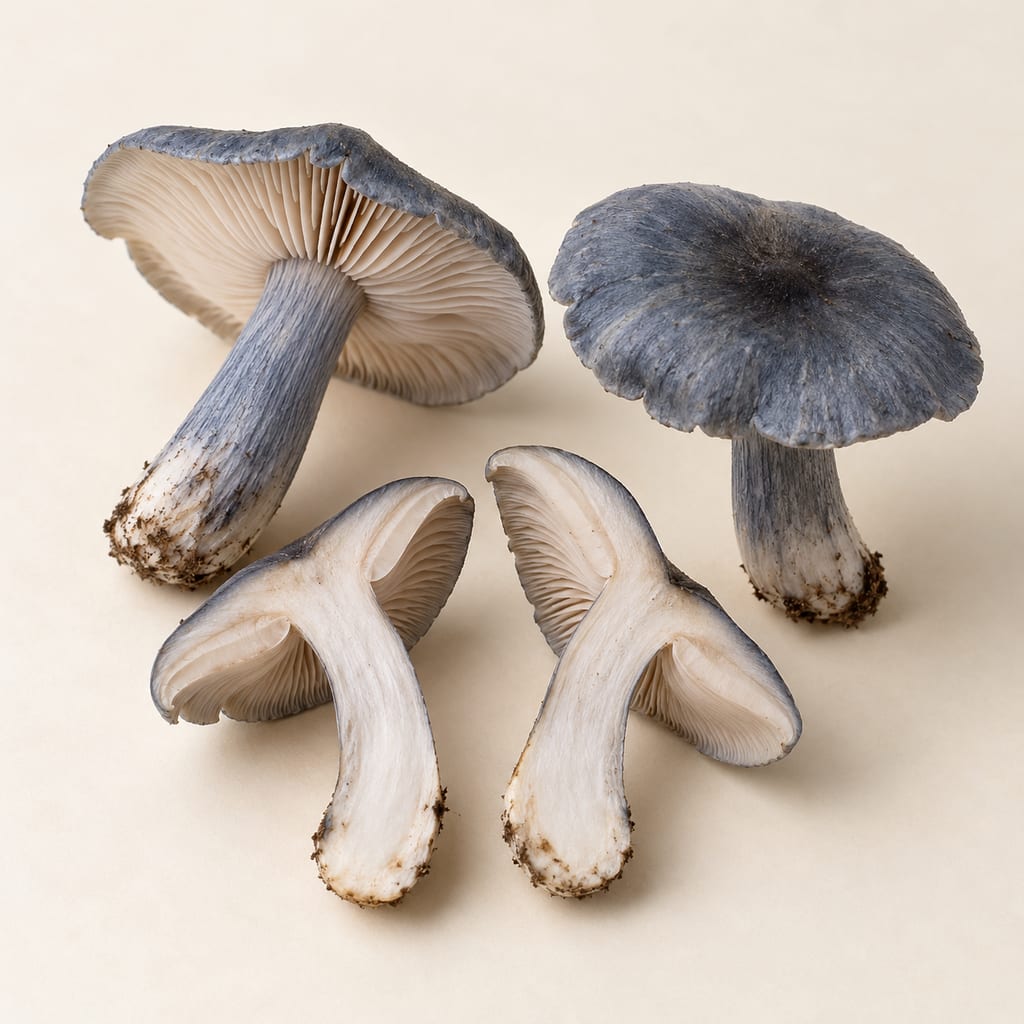
Bloxam's entoloma is a rare pink-gilled mushroom of old grasslands. Historical sources call it edible, but food-use evidence and older identifications remain uncertain; this does not recommend gathering or eating it.
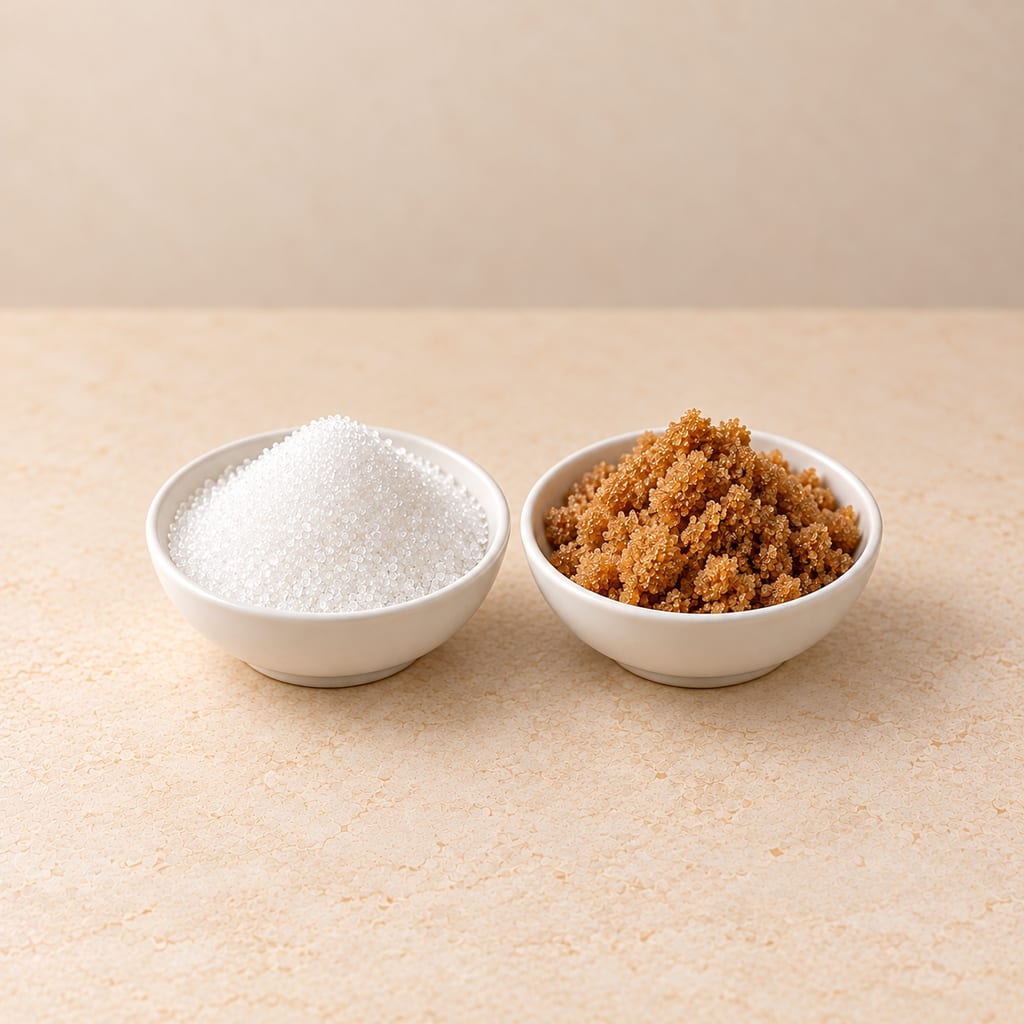
White sugar is refined sucrose, almost pure; brown sugar is sucrose with molasses, left in or added back. Molasses makes brown sugar moister, darker and more strongly flavoured.
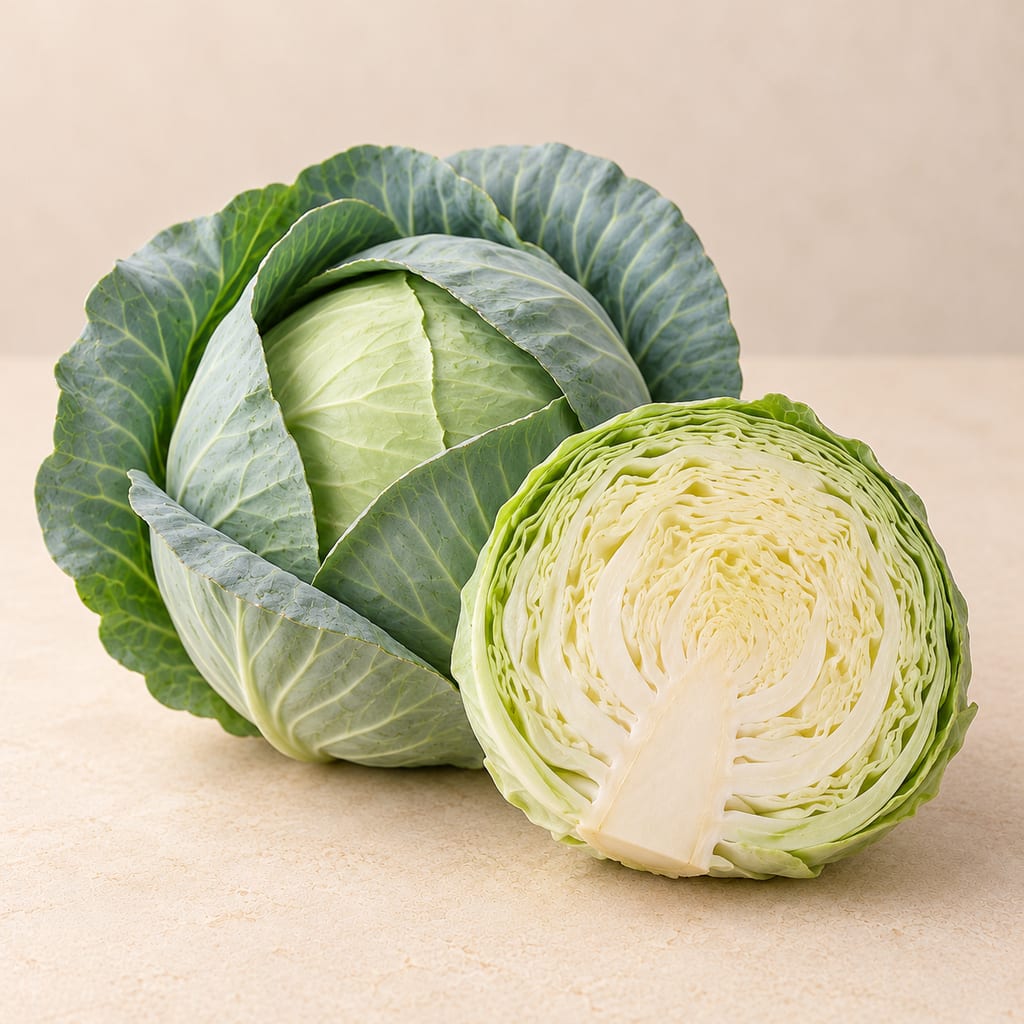
Cabbage is the dense leafy head of Brassica oleracea, a European vegetable that keeps for months and is the classic raw material for sauerkraut, with napa cabbage the base of kimchi.

Chicken eggs supply proteins and yolk fats that set and emulsify. Atlas breads use them in enriched doughs, surface washes and a sourdough pancake batter mixed after fermentation.
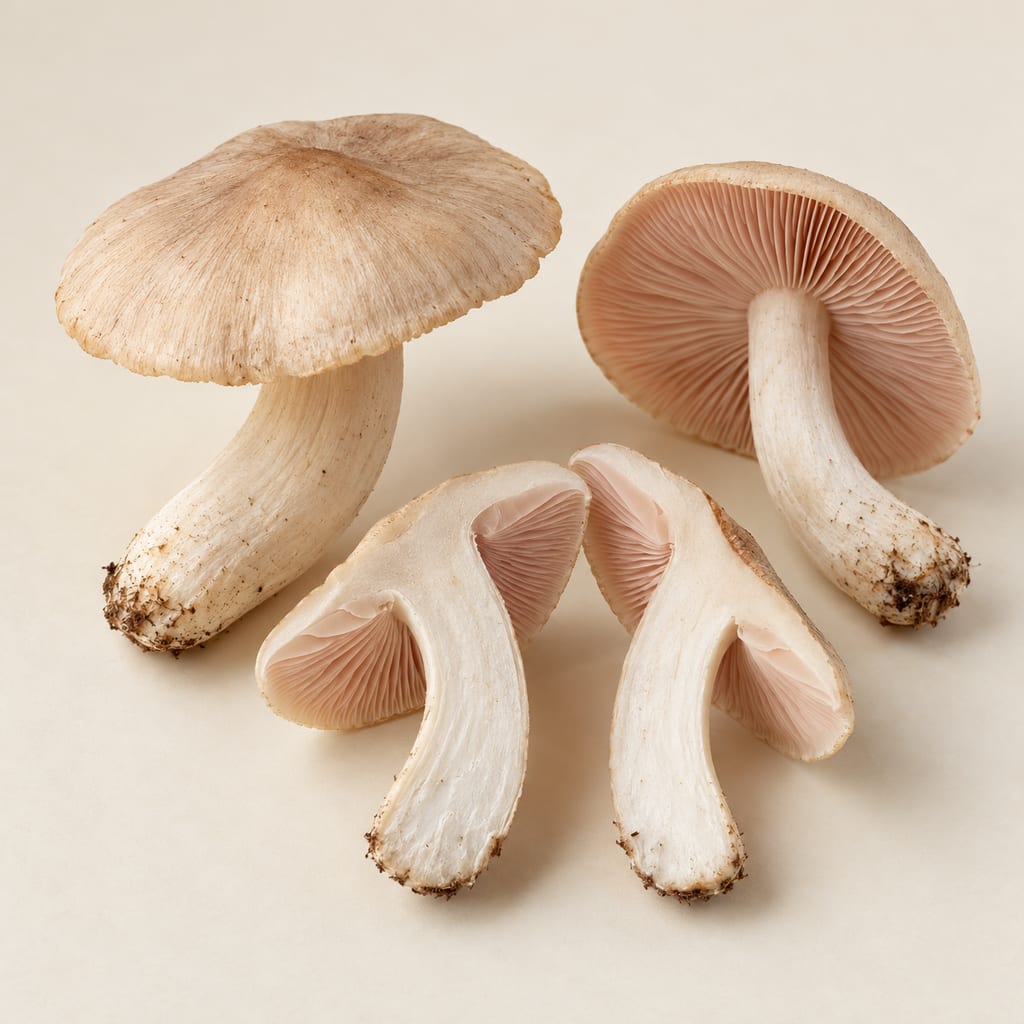
Entoloma sepium is a spring pinkgill associated with Rosaceae. Chinese and European sources list it as edible or conditionally edible, while taxonomic uncertainty and a poisonous lookalike warrant caution.
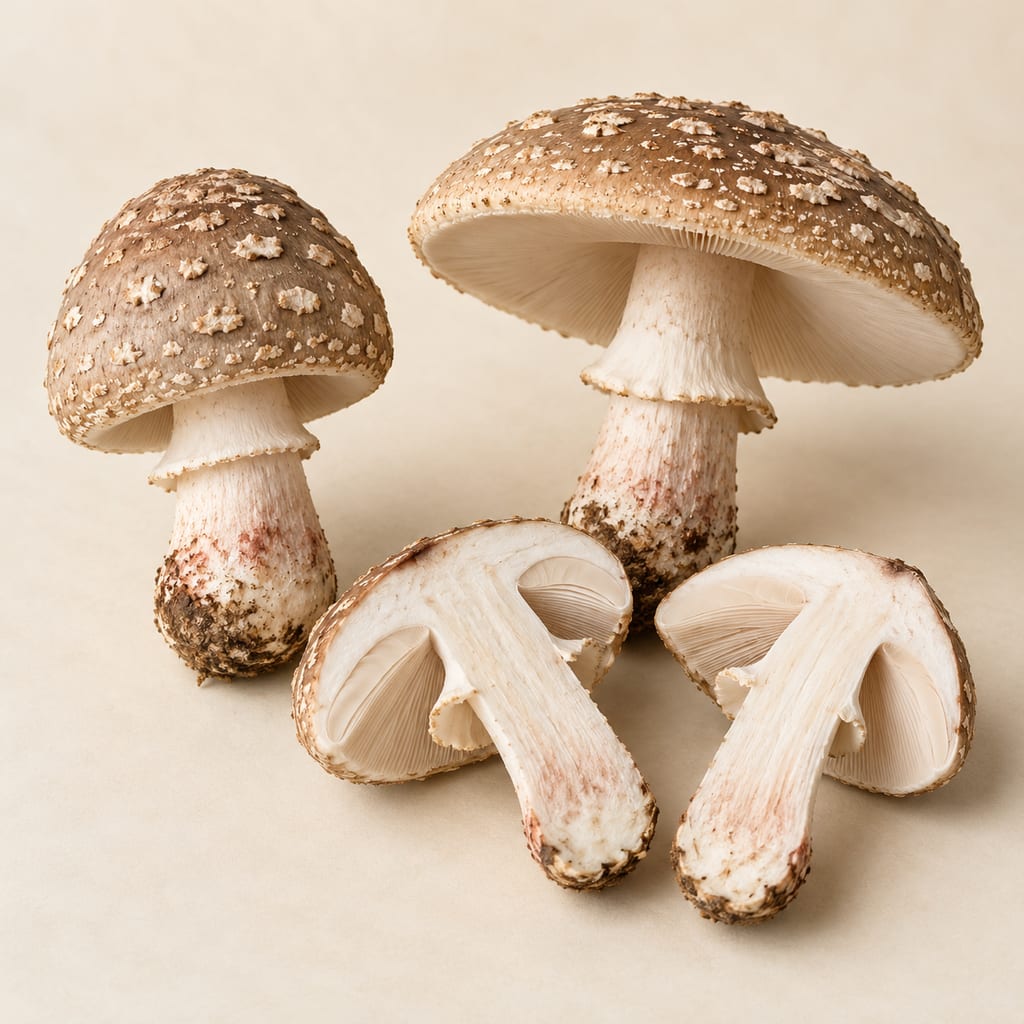
The European blusher, Amanita rubescens, is a woodland amanita whose flesh turns pink when cut. It is eaten only well cooked and is easily confused with the poisonous panthercap.
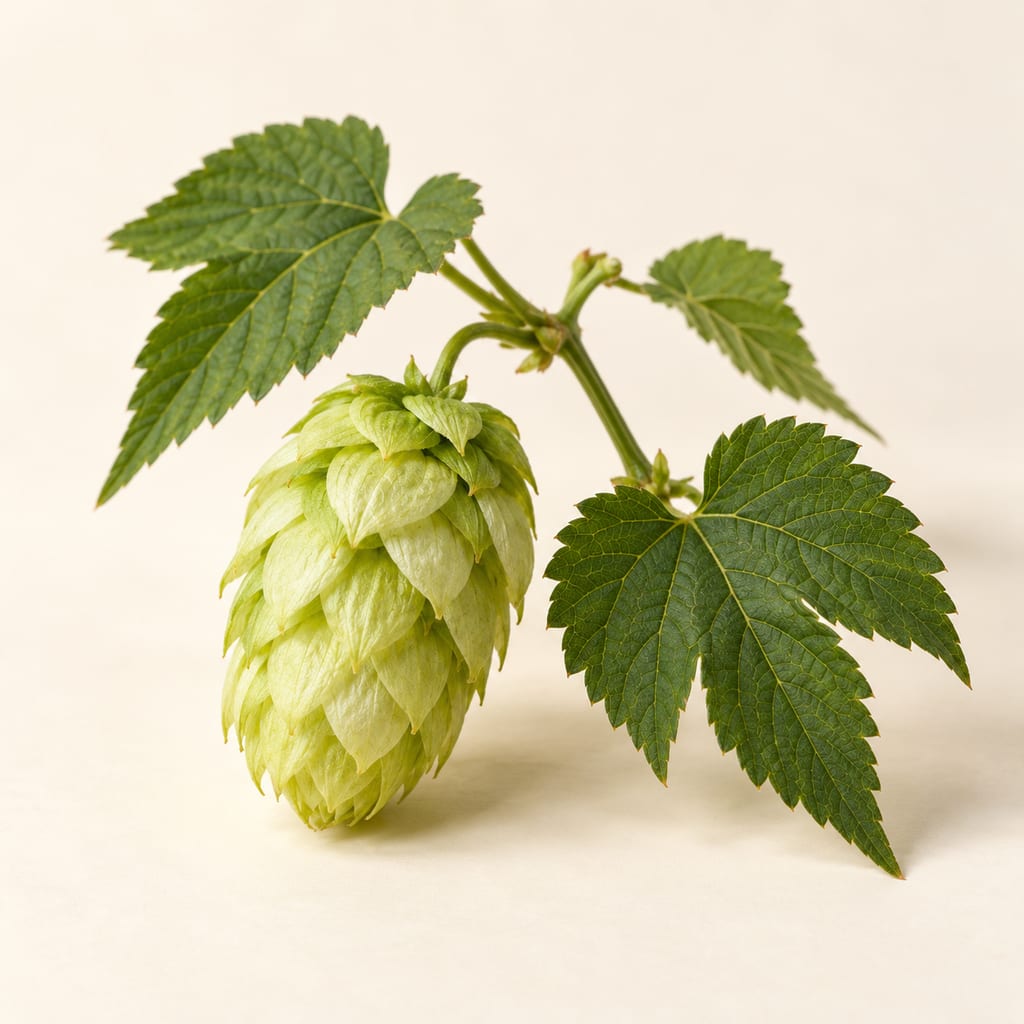
A traditional German aroma-hop land variety, associated with the Hallertau and described with herbal, spicy and floral notes. Cultivar identity, crop analysis and the growing place of a particular lot remain separate facts.
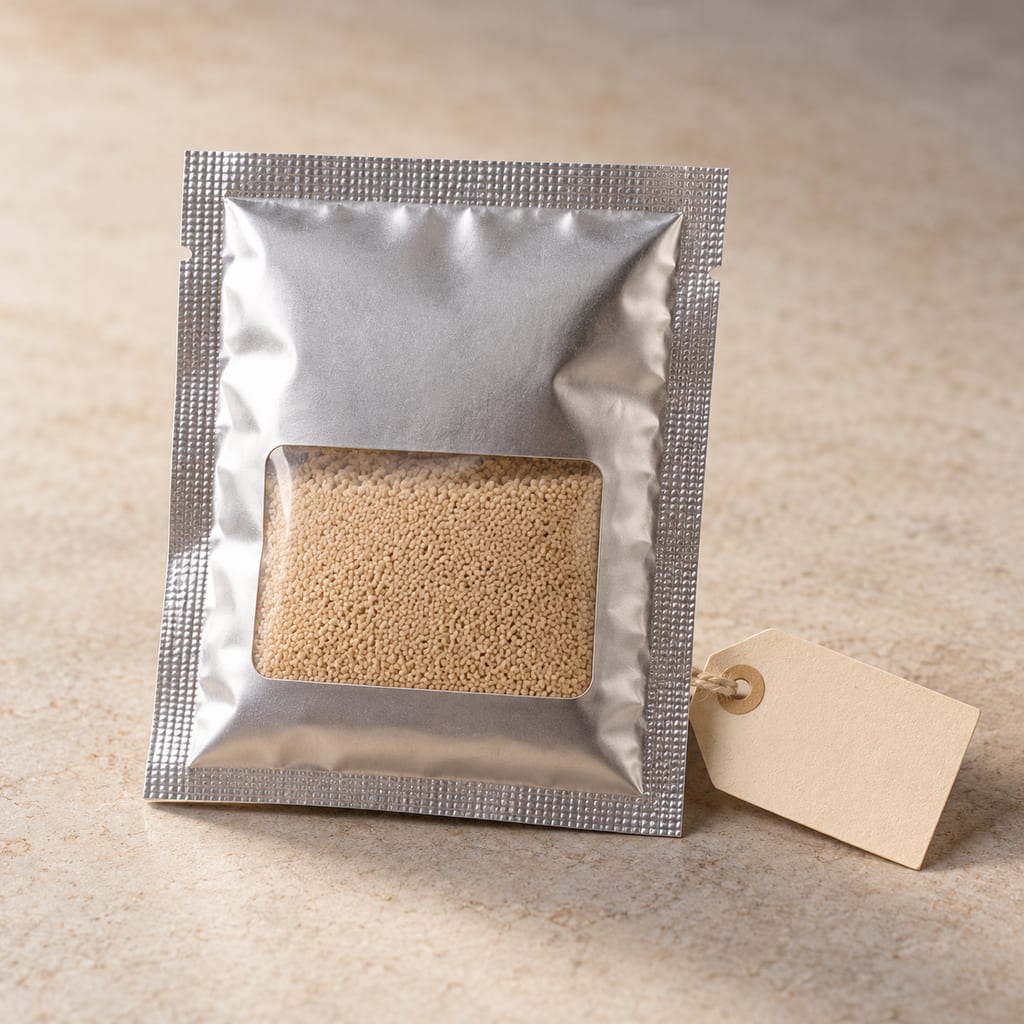
Lager yeast is the bottom-fermenting brewing yeast Saccharomyces pastorianus, a hybrid of S. cerevisiae and S. eubayanus, sold and kept as named strains that are not interchangeable.
No community contributions have been published for this entry yet.
Sign in to contribute. Published comments and photos are free to read.
Bräu SupplyIngredient identity · Ingredient use · Processing · Regional use
German Pils Recipe, All-GrainThe linked recipe amount, stated formulation alpha-acid value, and late kettle timing.
Cited in: The late Tettnang addition in German Pils
Bavarian Taste Heritage portalIngredient identity · Ingredient use · Processing · Regional use
Tettnanger HopfenInstitutional historical summary, geography and local production context.
Cited in: A place, a landrace and a brewing name
Tettnang Hop Growers AssociationIngredient identity · Ingredient use · Processing · Regional use
History: 175 Years of Hop Growing in TettnangThe growers’ association’s historical account and the 1844 planting context.
Cited in: An agricultural recovery became an export crop
Tettnang Hop Growers AssociationIngredient identity · Ingredient use · Processing · Regional use
Die Sorte TettnangerThe regional growers’ account of the named Tettnanger landrace and its published typical ranges.
Cited in: A traditional variety without a documented two-parent pedigree; Different analyses describe different material
Hop Research Center HüllIngredient identity · Ingredient use · Processing · Regional use
TettnangerInstitutional characterization and evidence that cultivar and cultivation place need not be identical concepts.
Cited in: A place, a landrace and a brewing name; A traditional variety without a documented two-parent pedigree
USDA-ARS World Hop Cultivar CollectionIngredient identity · Ingredient use · Processing · Regional use
Tettnanger (61021)A documented U.S. germplasm accession and historical naming caveats.
Cited in: Why US Tettnanger needs its own identity check
Tettnang Hop Growers AssociationIngredient identity · Ingredient use · Processing · Regional use
CultivationA regional account of cultivation and harvest practices.
Cited in: A perennial plant trained for a yearly harvest
Tettnang Hop Growers AssociationIngredient identity · Ingredient use · Processing · Regional use
Climate and SoilThe association’s explanation of regional growing conditions.
Cited in: Lake Constance shapes the growing district
Tettnang Hop Growers AssociationIngredient identity · Ingredient use · Processing · Regional use
The Botany of HopsGeneral hop botany in a regional cultivation context.
Cited in: A perennial plant trained for a yearly harvest
Tettnang Hop Growers AssociationIngredient identity · Ingredient use · Processing · Regional use
Processing and ProductsThe regional association’s description of cone, pellet and extract forms.
Cited in: From a dried cone to pellets or extract
Tettnang Hop Growers AssociationIngredient identity · Ingredient use · Processing · Regional use
ConstituentsGeneral cone chemistry and the association’s description of Tettnanger-group aroma.
Cited in: Resins, oils and the structure of a cone
BarthHaasIngredient identity · Ingredient use · Processing · Regional use
Tettnang TettnangerOne supplier’s variety characterization, aroma description and crop-varying analytical ranges.
Cited in: Different analyses describe different material
BarthHaasIngredient identity · Ingredient use · Processing · Regional use
Hop Pellets (Type 90 Pellets) Technical Data Sheet, Revision 7General T90 product form, brewing function and manufacturer storage guidance.
Cited in: Packaging protects material that changes during storage
Official Journal of the European Union; copy hosted by the growers associationIngredient identity · Regional use
Commission Regulation (EU) No 415/2010 of 12 May 2010: Tettnanger Hopfen PGIPrimary German Official Journal text registers Tettnanger Hopfen as PGI. Historical registration only; no claim about current specification details or eligibility of a recipe lot.
Cited in: A place, a landrace and a brewing name