The lemon-scented grass in an Ecuadorian kitchen
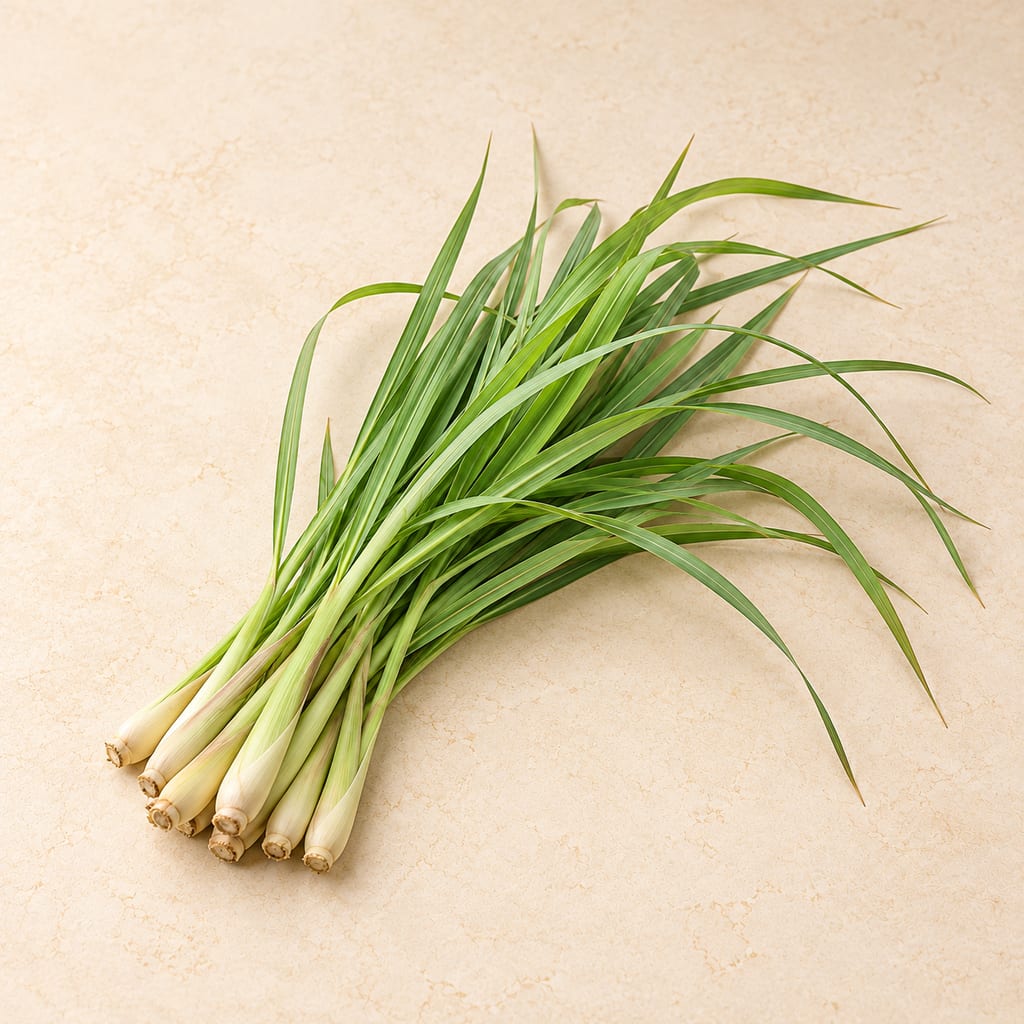
In Ecuador, hierba luisa most often names the aromatic grass Cymbopogon citratus, the plant usually called lemongrass in English. It grows in dense clumps, with long narrow leaves that arch out from a basal sheath. Rub or bruise a leaf and it releases a pronounced lemon scent, but the plant is not a citrus: it is a grass, in the family Poaceae. What makes it worth a page of its own is how quietly it works in Ecuadorian drinks. It is rarely the body of anything. It is one of a handful of leaves dropped into water with cinnamon and clove to make an aromatic liquid, and that liquid then carries a whole batch of chicha, avena or champús.
The name needs care, because Spanish common names do not map one-to-one onto botanical species, and the herb most often confused with this one shares the same kitchen. Regional studies from Imbabura treat hierba luisa and cedrón as two different leaves, sometimes used together and sometimes as alternatives, and those two recipe records give no botanical name for either. The species identification comes instead from a botanical survey carried out in the same province, which lists hierba luisa as Cymbopogon citratus, so the identification is documented but rests on a different kind of source than the recipes themselves.
The herb is used for its leaves, not for a fruit or a fermented starter. In the chicha accounts, cooks steep the leaves in the spiced water at the very start of cooking. That role is quite separate from jora, the germinated maize whose starch and subsequent fermentation define chicha de jora. The leaf scents the liquid; the maize supplies the sugar and the fermentation. No source checked here describes the herb as a culture, a preservative or a fermentable, and it should not be read as one.
A second grass, Cymbopogon flexuosus, is traded as East Indian lemongrass while C. citratus is called West Indian lemongrass, and the published trade figures rarely separate the two oils. For an Ecuadorian recipe the local names and the local usage matter more than the English trade label, but the chef's written formula that first put this herb into the record identifies no specimen at all.
Sources for this section
An Asian grass planted across the tropics
An Ecuadorian herb garden sits at the far end of a long cultivation history. Where the grass actually began is not settled. The standard regional crop account puts its birthplace as unknown with Malesia the likeliest candidate, and points out that the plant is known only in cultivation, which is itself a clue: nothing like it persists in the wild. It has been tended in South and Southeast Asia for centuries, and its earliest role was probably as something that flavours food and drink rather than as an oil crop, with distillation coming later. Large-scale growing spread into tropical America during the twentieth century, and Central and South American countries now appear among the producers. That is the history of the crop. It says nothing about when the grass reached an Ecuadorian kitchen, and no dated source checked here does either.
The older Asian uses are worth reading carefully, because they involve parts of the plant an Ecuadorian cook never sees. Javanese cooking works with the leaf sheaths, the tight overlapping base of the leaf, which goes into sambal goreng and sambal petis and into fish dishes and fish sauces. From the centre of the clump comes the pale, tender core of a young shoot, sliced and eaten alongside rice. The grass also turns up in curries and in warm Javanese drinks. Sheath, shoot and blade are three different textures, so a cookbook that tells you to slice lemongrass and a recipe that tells you to steep it are not describing the same act.
The accepted scientific name is Cymbopogon citratus (DC.) Stapf, a perennial that forms tufts in the grass family. Its leaf blade is long, narrow and strap-like, tapering at both ends, hanging outward, and greyish-green with a pale raised midrib; measurements run from about half a metre to a metre in length and from about half a centimetre to two across. In practice a cook recognises the plant by the shape of the clump and the smell of a bruised leaf rather than by its flower, which appears rarely enough that nobody grows the grass for seed.
Sources for this section
Growing, cutting and buying the leaves
Lemongrass is a warm, wet, full-sun plant, and its limits are unusually sharp. The regional crop account reports that short spells with a daily maximum above 30 °C do little harm to growth but severely reduce the oil content of the leaves, that hot dry winds can desiccate the crop and evaporate the oil, and that frost is normally fatal. Only young, expanding leaves synthesise and accumulate the oil, which is why a leafy clump and an aromatic clump are not the same thing. A widely consulted horticultural account puts the comfortable growing range at 25 to 30 °C, with prolonged exposure below 10 °C capable of killing the plant.
It is propagated by dividing a clump rather than by seed, because flowering and fruiting are uncommon enough that seed is unreliable. Rooted divisions are cut from the mother plant and the clump then throws new tillers from a short underground stem; commercial stands are usually replanted after four or five years, since the economic life of a planting rarely exceeds that. For a household garden this is the practical point: a single rooted division keeps giving leaves, and a cook can take them from the clump as needed. In the Otavalo area of Imbabura, a 2019 field study found the herb reaching most kitchens through the market, with some households also growing it in their own garden plot.
For commercial leaf production the crop account describes cutting the grass and distilling the oil, with average herbage yields of 30 to 50 tonnes a hectare giving 75 to 250 kilograms of oil, roughly a quarter to a half of one percent of the green weight. Where the cut is taken matters more than how much is cut: the upper growth carries about 0.6 percent oil against 0.15 percent in the lower parts. These are plantation figures for an oil crop, and they say nothing about how much leaf belongs in a kitchen batch or a chicha pot.
Ecuadorian food use is leaf-centred. The Otavalo inventory lists the leaves and the stem as the parts taken, and records the herb going into soups, infusions and garnishes; the Imbabura surveys find it in chicha, avena, champús and a plain leaf infusion, with the recipe tables entering the aromatics as needed rather than weighed. In other countries the species is also sold as dried cut leaf and in tea bags, so it reaches shoppers in more than one condition, but a dried or powdered product should not be swapped into an Ecuadorian recipe on the assumption that the recipe meant it.
Sources for this section
Why the leaves smell of lemon
What the nose picks up as lemon is mostly one substance under two names. Citral is the collective label for two stereoisomers, geranial and neral, and it is that pair that does most of the work in lemongrass oil. Analysis of the distilled oil puts geranial in the range of 40 to 62 percent and neral at 25 to 38 percent, with myrcene, limonene and geraniol making up much of what is left. Those are numbers for oil in a still. They tell you nothing about how a handful of leaves will behave in five litres of boiling water, and they should not be used as if they did.
For anyone cooking with the leaf, the more useful fact is that the aroma is unstable. It is made in the youngest leaves, it thins out when the weather turns too hot, and it blows off a cut plant in dry wind. It concentrates toward the top of the plant and is thin in the lower growth. Even the distilled oil does not sit still: the myrcene in it slowly links up into heavier molecules, and the crop account records that this makes freshly drawn oil less soluble in alcohol as it sits in storage. That ageing behaviour belongs to the West Indian grass, which carries the myrcene; the East Indian oil, holding little or no myrcene, is the more alcohol-soluble of the two from the start. The trade's habit of keeping the two oils apart rests on differences of this kind, and none of it describes what happens to a bunch of leaf in a kitchen.
None of this is a kitchen instruction, but it explains a familiar disappointment. A bunch that smelled sharp in the garden or the market can give a flat drink, because the compounds responsible are volatile and are lost to warmth, air and time rather than produced by them. A recipe that boils the herb with the spices is therefore doing two things at once: pulling the scent into the water and driving part of it off. That is why the point of the herb is the aromatic water it leaves behind, and why no source checked here offers a dose that could be fixed in advance.
Whether the leaf goes in fresh or dried, whole or crushed, plainly changes what reaches the cup, and the sources read for this page do not put numbers on that difference for culinary leaves. The safe conclusion is directional rather than quantitative: the more the leaf has been dried, ground and stored, the less of the volatile material is left to extract.
Sources for this section
In chicha, avena and the aromatic infusion
In the northern Ecuadorian province of Imbabura, hierba luisa belongs to a repertoire of drinks: chicha, avena, champús and agua de hierba luisa. Where the records describe how it is used, the plant part is the leaf and the technique is infusion, and its contribution is listed as flavouring and aroma. That makes sense of its placement in recipes that begin by boiling an aromatic water. Rather than going in as a grain or a sugar, the leaves steep among the spices and scent the liquid that later receives the jora.
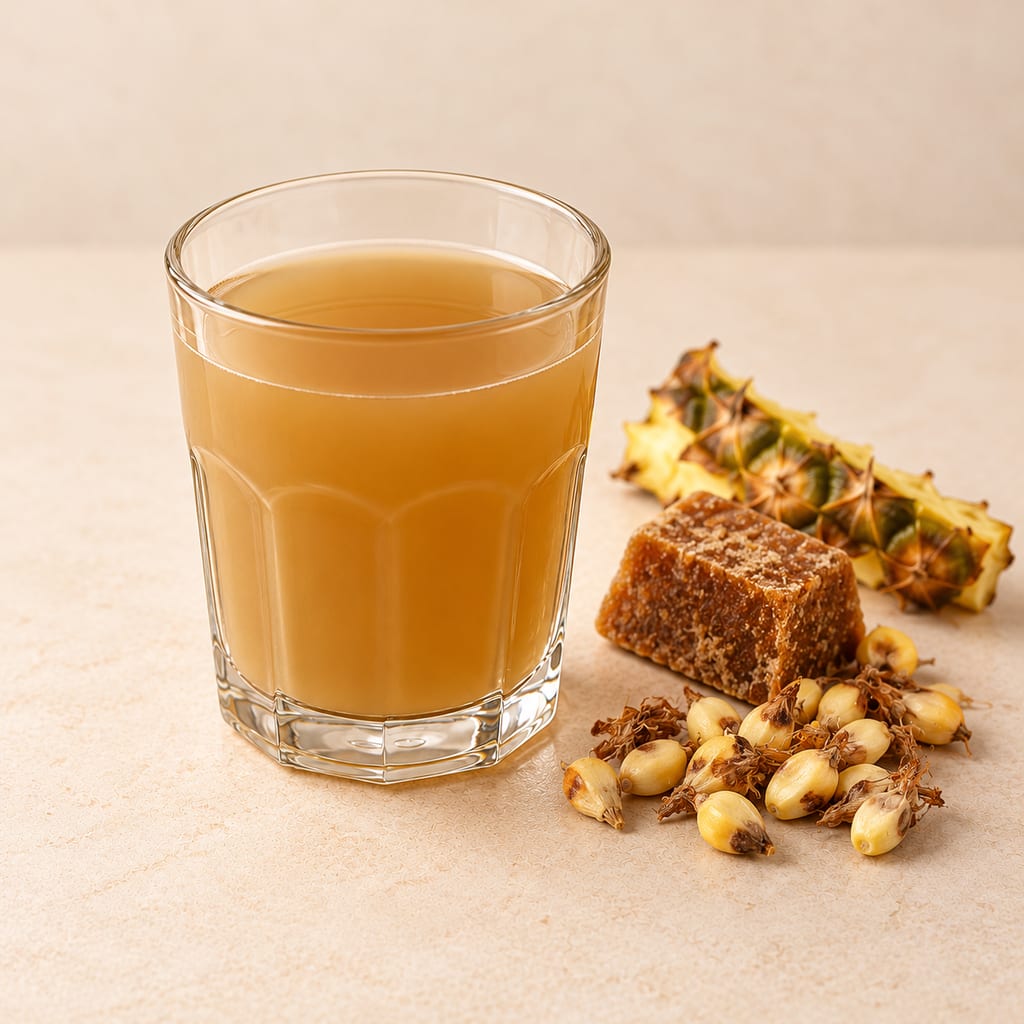
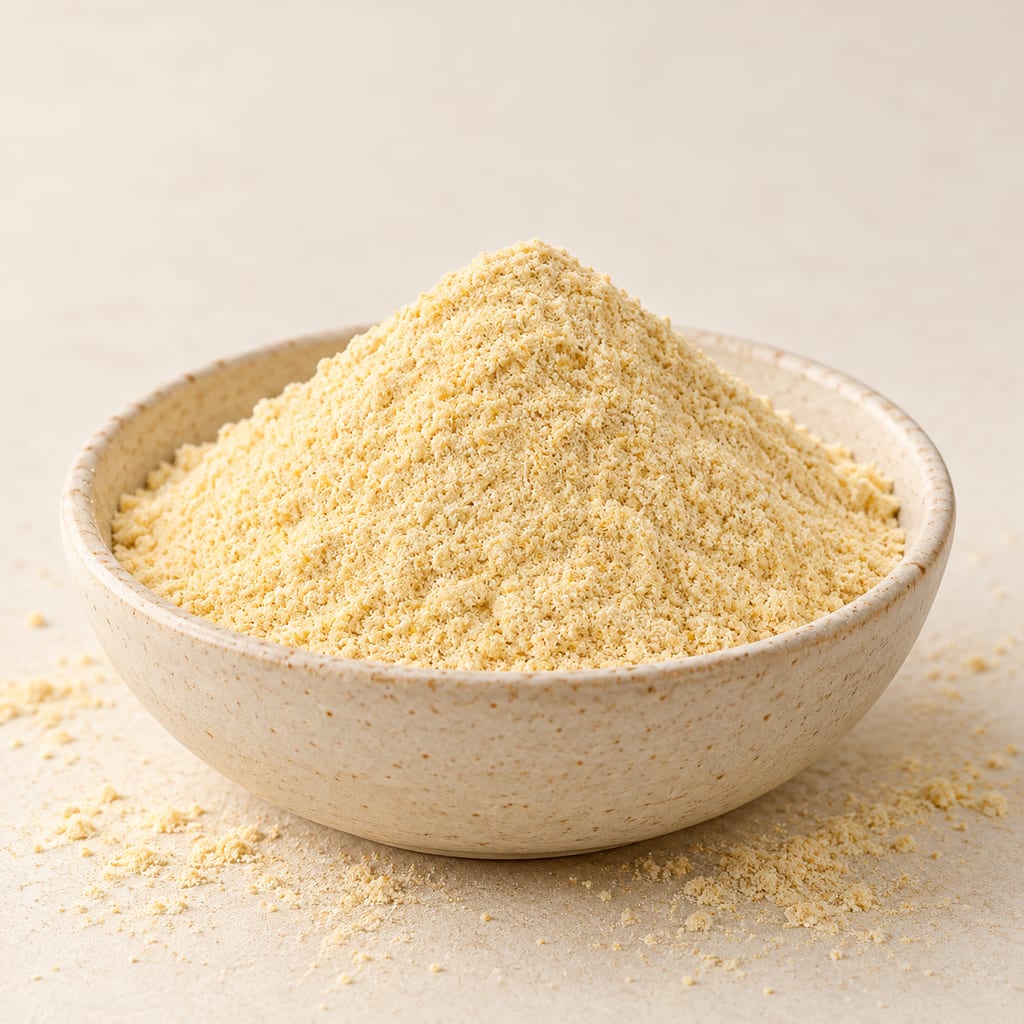
A 2018 Cañar recipe gives one version of that sequence. It boils water with sweet spices and hierba luisa, then stirs in jora flour diluted with cold water and cooks the mixture for two hours. After cooling, it is moved to a cántaro, combined with panela and pineapple peel, covered and left to ferment for two days before straining and sweetening. Hierba luisa appears in the procedure but not in the ingredient list, and no amount or fresh-or-dried form is supplied. The directions make its aromatic-water role clear without providing a dose.
A 2016 survey of Imbabura cooking records champús, a maize-and-mote drink, with the aromatics listed as orange leaves, hierba luisa or cedrón in the quantity needed, added with naranjilla juice and boiled with the mote and maize flour before panela is stirred in and the drink is strained. A 2018 heritage study from the same region records a chef describing champús as built on an aromatic water that may hold manzanilla, cedrón and hierba luisa with cinnamon, clove and sweet pepper. The 2016 account treats the herb as one of a small set of interchangeable aromatics and leaves it unweighed.
The 2018 study does fill in a figure for that chef's champús, though not in a form a household would copy. Its observation sheet for him lists 0.09 kg each of hierba luisa, cedrón and manzanilla against 5 litres of water, 0.453 kg of white maize and 1 kg of panela, with the same 0.09 kg entered for sweet pepper and cinnamon, and the method boils the water with the aromatic herbs before the maize flour is dissolved in and the drink cooks on a low heat for about twelve hours. That is one named professional's recorded formula, and it shows the herb weighed rather than guessed at, but it is a champús sheet rather than a chicha recipe and it says nothing about whether the weight was taken fresh.
A later Pichincha restaurant-feasibility project gets closer to a number, but not in the way a cook would want. Its proposed menu carries a chicha recipe table for a 20-litre batch that also works as a costing sheet: the hierba luisa line reads three ounces with a 0.25 cost figure beside it, in a column headed as the cost of the recipe, and the same three-ounce quantity is entered for cinnamon, green anise, star anise, allspice, cedrón, toronjil, thyme and chamomile. The sheet divides a subtotal of 9.40 by 20 to reach a per-litre figure, but it never says whether the herb quantities belong to the whole batch or to each litre, nor whether the herbs were weighed fresh or dried. Read as a costing exercise rather than a formula, it shows a modern designer treating hierba luisa as one of nine equally weighted aromatics in a 20-litre restaurant batch. It does not supply the household dose the older records leave out.
The method attached to that table cooks jora with the herbs and spices in 20 litres of water for about an hour, cools for about an hour, then adds blended naranjilla, pineapple and panela and rests the drink for about twelve hours before straining. No fermentation step is described, and no temperature, vessel or holding time is given.
Chicha carries social meanings that reach beyond any one recipe. The Otavalo study states plainly that the herb is closely tied to chicha de jora, which it calls one of the emblematic drinks of Imbabura, made for the Inti Raymi festivities and part of Otavaleño indigenous culture. A separate field account from Natabuela, also in Imbabura, records seven kinds of chicha and fourteen dishes made for San Juan, San Pedro and Inti Raymi and for weddings, baptisms and wakes. Those accounts place the grass inside a living drink culture; they do not establish that it belonged to an ancient recipe.
How prominent the herb is depends on where you stand. The same Otavalo inventory that links it to chicha ranks hierba luisa among the least-used plants of that particular community, behind other local aromatics. It is a real and named part of the northern drink repertoire rather than the default seasoning of every household batch.
Sources for this section
- Estudio etnogastronómico de hierbas y especias utilizadas por los habitantes de la comunidad Ángel Pamba, parroquia Ilumán, cantón Otavalo, provincia de Imbabura →
- Chicha de Jora →
- Gastronomía de la provincia de Imbabura como patrimonio cultural inmaterial del Ecuador, Parroquia Rural Imantag, Cantón Cotacachi →
- UDLA-EC-TLG-2018-24: cultural-heritage inventory of food and drink traditions, northern Ecuador →
- Propuesta de factibilidad para la creación de un restaurante de comida tradicional, en el barrio Guitig Alto, cantón Mejía, provincia de Pichincha →
- Etnobotánica del arte culinario ancestral, San Francisco de Natabuela, Imbabura-Ecuador →
A fragrant leaf beyond chicha
The same leaf turns up in drinks that have nothing to do with fermentation. In the Imbabura records it appears in avena, in champús, and in a plain leaf water drunk on its own, and the northern-zone heritage inventory lists agua de hierba luisa alongside agua de cedrón and agua de manzanilla as everyday herbal waters with their own uses and beliefs. In each case the preparation is the same: the leaves go into hot water and come out again.
The Otavalo inventory also records the herb in savoury cooking, listing soup and garnish among its applications, and its author suggests chopping the leaf fine and scattering it over red and white meats as it is served. That is one writer's recommendation rather than a documented local custom, but it points at something the drink recipes hide: the leaf is an aromatic that works in any liquid or fat hot enough to carry its oil, not only in a chicha pot. The same study's gastronomic table even sketches a dessert built on the infusion, which its author marks as a proposed new preparation rather than something the community already made.
Elsewhere the grass is cooked rather than steeped. Javanese practice puts the leaf sheaths into sambal goreng and sambal petis and into fish dishes and fish sauces, and eats the tender heart of a young shoot as a side dish with rice; the grass also goes into curries and into a sweet sherbet, called bandrek in West Java and serbat in East Java. That is a different part of the plant with a different texture, and it is worth knowing because it explains why an English recipe book can talk about slicing lemongrass while an Ecuadorian one only ever talks about leaves in water. The two traditions are uses of the same species, not interchangeable measures.
The distilled oil is a third thing again, and it goes places the leaf never does. In the perfume industry it is a starting material for alpha- and beta-ionones, compounds that smell of violets in low concentration, and it remains an important source of citral for low-cost perfumery; it is also used as a masking fragrance in deodorants, detergents and pesticides. Alongside that, the oil is approved as a food ingredient and goes into products including soft drinks and alcoholic drinks. None of this has any part in the Ecuadorian drink accounts, which describe leaves. A reader who confuses the oil with the bunch will over-season by an order of magnitude.
The heritage inventory also records informants attributing medicinal uses to the herb, hierba luisa among them for bringing down a fever; the Otavalo study notes the leaves being taken as an antispasmodic for stomach pain. That belongs on the page as a record of what people say they use the leaf for, collected in the same interviews that record the drinks. It is not evidence of an effect.
Sources for this section
Buying and handling
Choose bunches with intact, firm, strongly aromatic leaves and avoid anything yellowing or spotted. The scent is the quality test, and it fades: the compound behind it is volatile and is carried off by heat, wind and storage, so a bunch that smells flat will season a drink poorly however much of it is used. A widely used horticultural account notes that the plant is frost-tender, which is why Ecuadorian bunches come from warm valleys and from the lowlands rather than from the coldest gardens.
In the Otavalo community surveyed in 2019 the herb arrived mainly through the market, with some households cutting their own from a garden plot, so a shopper is usually choosing between bunches rather than a plant. Growing your own is the one form of handling the sources do support: a rooted division of a clump, planted in sun, keeps supplying leaves, and the cook simply cuts what is needed.
For drinks, infuse the leaves in the liquid and strain them out, as the Ecuadorian recipes do. The usual pattern is to boil the herb with the sweet spices first, then carry that aromatic water on into the rest of the drink, so the herb is added at the point where its scent will be carried by the whole batch rather than sitting in a single cup.
No source checked for this page gives a fresh-to-dried conversion, a storage life for cut Ecuadorian bunches, or a quantity for the Cañar chicha. The honest instruction for that recipe is simply to boil the herb with the sweet spices before the jora flour goes in, in whatever amount the cook wants in the aromatic water. A powdered tea product cannot be substituted for a bunch on the strength of the label, because the drying and grinding that made the powder are exactly the steps that drive the volatile oil off.
Sources for this section
Names and the plant behind them
The name on an Ecuadorian market stall is the useful starting point. The grass reaches Ecuadorian tables as hierba luisa, also spelled yerba luisa, and the closely joined form hierbaluisa appears in official product lists; limonaria is a second commercial name for the same crop. In the essential-oil trade C. citratus is usually called West Indian lemongrass, to separate it from the closely traded East Indian lemongrass, Cymbopogon flexuosus. In Malay and Indonesian markets the grass is called serai. None of these names is a guarantee of species on its own, which is why the botanical identifications in the Ecuadorian field studies matter more than the English trade label.
Even the trade label blurs the two grasses. The standard crop account states that trade statistics make hardly any distinction between the two major sources of lemongrass oil, West Indian lemongrass (C. citratus) and East Indian lemongrass (C. flexuosus), so published figures for "lemongrass oil" pool material from both. A third grass, Jammu lemongrass (C. pendulus), is named as another oil source. The consequence for a reader is narrow but real: a quantity quoted for lemongrass oil in world trade is not a quantity for this species, and the Ecuadorian herb has to be identified locally rather than inferred from a commodity heading.
One of those local studies settles the question the recipes leave open. A 2019 ethnogastronomic survey of Ángel Pamba, in the parish of Ilumán near Otavalo, lists hierba luisa in its species inventory as Cymbopogon citratus (DC.) Stapf, family Poaceae, and repeats that identification in its table of culinary uses, recording the leaves and stem as the parts taken and aroma and flavour as the roles. That determination was made by the survey's authors in the same communities whose drinks they recorded, not read off a market sign. It is the strongest evidence on this page that the culinary herb and the lemon-scented grass are the same plant.
The name that needs the most care in an Ecuadorian kitchen is cedrón, because the two herbs appear side by side and are not the same plant. A 2018 cultural-heritage study from the northern zone records a chef describing champús as a drink built on an aromatic water that may contain manzanilla, cedrón and hierba luisa together, which only makes sense if the three are distinct leaves. The same study lists agua de cedrón and agua de hierba luisa as separate herbal waters, and records an informant giving cedrón for stomach aches and hierba luisa for bringing down a fever. A 2016 Imbabura gastronomy survey goes the other way and lists the aromatics for champús as orange leaves, hierba luisa or cedrón, an either-or choice, in whatever quantity the cook judges necessary. Read together, the two accounts show the names used both alongside each other and as substitutes, and neither gives a botanical name.
The Otavalo survey supplies the names the recipes withhold. Its species inventory gives cedrón as Aloysia citrodora, family Verbenaceae, and classes it in its culinary matrix as a spice whose fruit is used to flavour infusions, while hierba luisa is entered as a herb of the grass family with leaves and stem used. Botanically the two are far apart, so a recipe naming cedrón is not asking for a lemongrass leaf and one naming hierba luisa is not asking for a verbena leaf. A cook following either Ecuadorian account is choosing between two different aromatics rather than weighing out a fixed dose.
The Cañar chicha recipe that first brought this herb into the record gives no botanical name, no fresh-or-dried form and no quantity, so its own specimen stays unspecified. The identification rests on the community-level botanical surveys rather than on that chef's formula, and it is a well-supported one.
Sources for this section
Food-use status and what is not established
The distilled oil has a documented standing as a food ingredient. The regional crop account records three separate endorsements for West Indian lemongrass oil: a US Food and Drug Administration clearance under paragraph 182.20, a GRAS listing in the United States numbered 2624, and registration with the Council of Europe under the number 38n. That account also notes the oil going into beverages of both kinds, with and without alcohol. These entries were reported in the 1999 edition and were not re-checked against the current listings. They describe the distilled oil, not a pot of leaf infusion.
No allergen, toxin or daily limit for culinary hierba luisa was found in the sources checked for this page, and none is stated here. That is a gap in the evidence rather than a finding of safety at any dose. Anyone using the distilled oil rather than the leaf is working with a concentrated material whose behaviour in the body is a different question from drinking an infused leaf, and the registrations above should not be read as covering that use at home.
The same caution applies to the traditional medicinal claims recorded in Ecuadorian interviews, where an informant gives hierba luisa for bringing down a fever. That is a record of what people say they use the herb for, collected as part of a culinary-heritage survey. It is not evidence of an effect, and this page does not treat it as one.
Sources for this section
Places
Cañar
Documented preparation · Region evidenceThe chef's chicha de jora formula is tagged to Cañar; the page names hierba luisa only in step 1 and gives no species or amount.
Imbabura
Documented preparation · Region evidenceTwo readable Imbabura studies record hierba luisa as an aromatic leaf in champús and other drinks: a 2016 Cotacachi/Imantag gastronomy survey and a 2018 northern-zone heritage inventory. Neither gives a botanical name or a quantity.
Otavalo
Documented preparation · Locality evidenceAn ethnogastronomic survey of the community of Ángel Pamba in the parish of San Juan de Ilumán, cantón Otavalo, identifies hierba luisa as Cymbopogon citratus and records it in chicha, avena and agua de hierba luisa, sourced mainly from markets. The locality is the community studied; no coordinates are given.
Mejía, Pichincha
Modern adaptation · Region evidenceA 2024 restaurant-feasibility project from Guitig Alto, cantón Mejía, carries a costed 20-litre chicha recipe table whose hierba luisa line reads 3 oz with a 0.25 cost figure. The table is a costing sheet for a proposed menu item, not a household record, and it never labels the quantities as per batch or per litre.