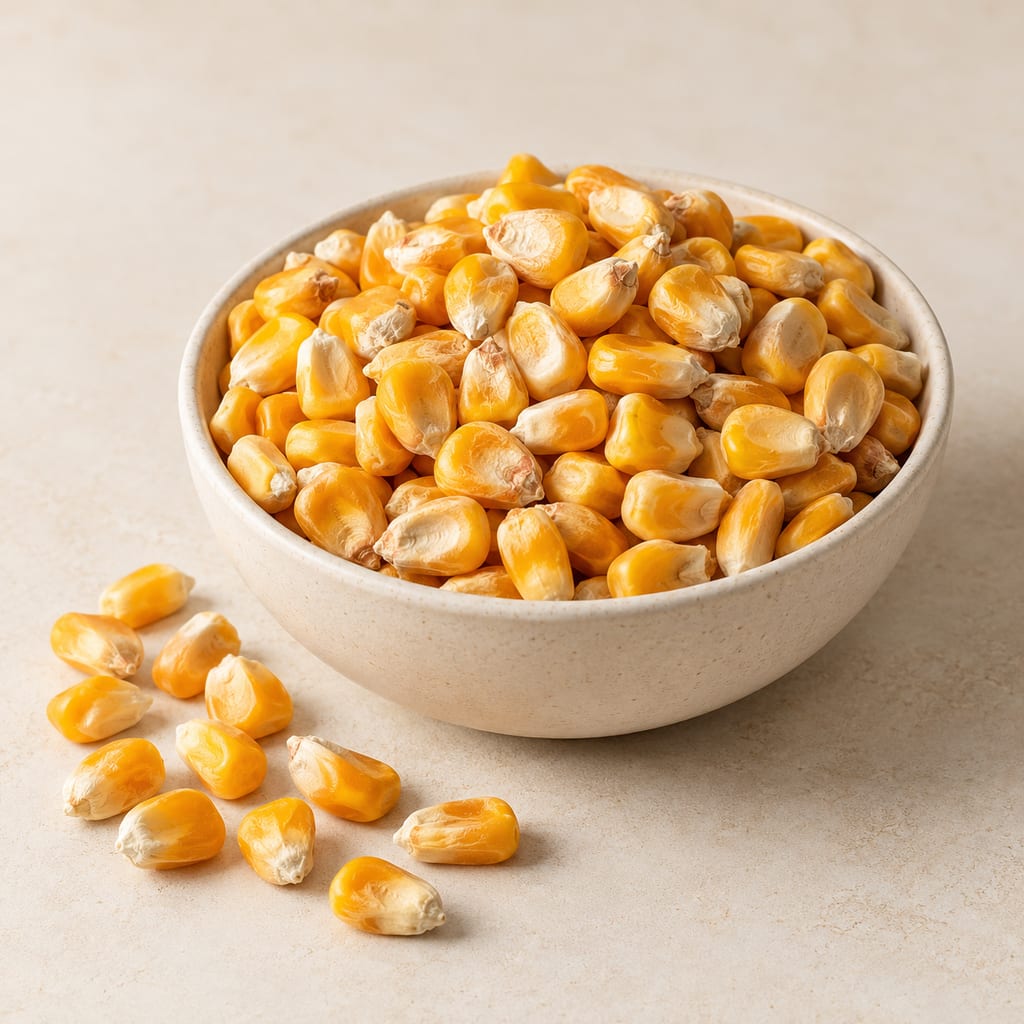
Maize
Maize is the foundational grain of Andean fermentation. Its role in brewing chicha de jora depends on germination into jora, a malted form generating enzymes and sugars necessary for alcoholic fermentation.
 FermenteaWhere food goes to change
Substrates
Jora flour is ground malted maize, produced by germinating, drying and milling corn kernels. It provides the enzymatic starch breakdown essential for chicha de jora.
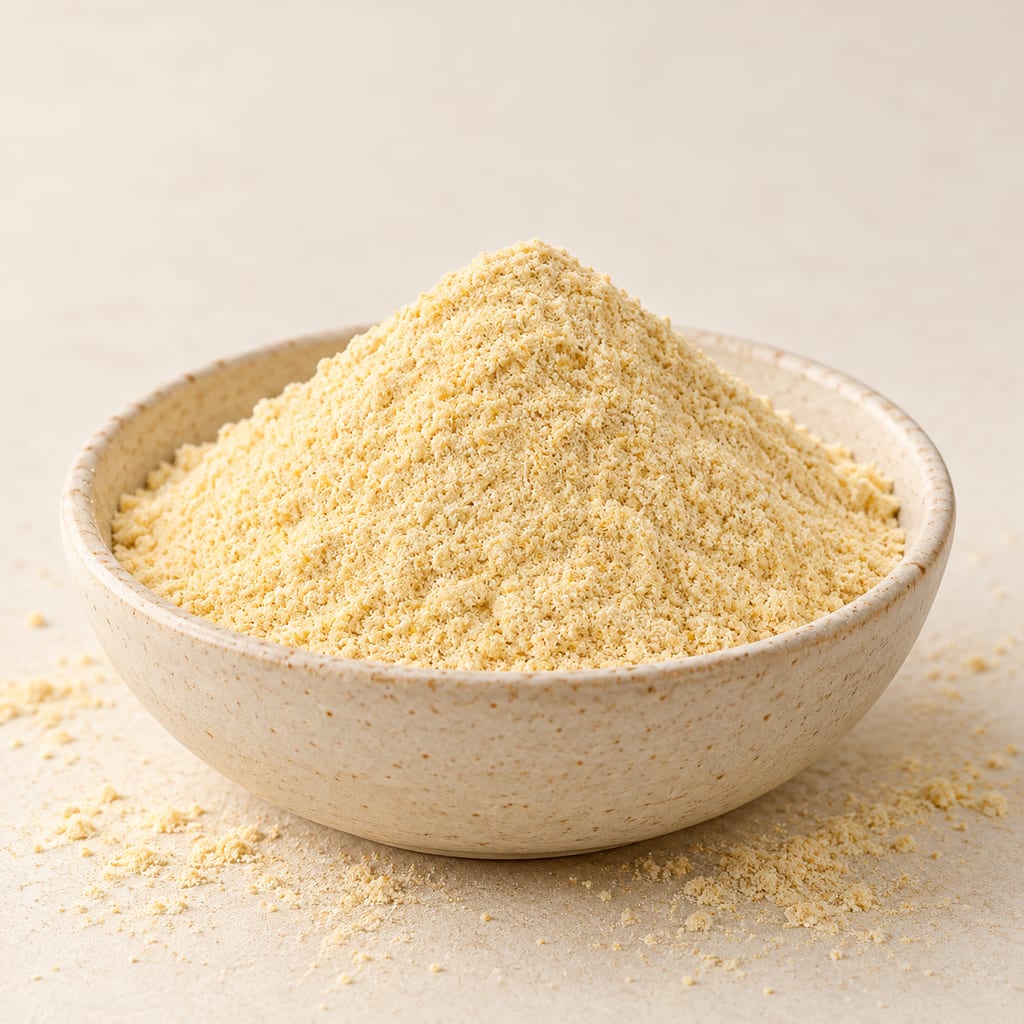
Jora flour is the ground form of germinated maize, a preparation that transforms the grain from a simple starch source into a functional malt. In Spanish, it is known as harina de jora, and in the context of Andean brewing, it is distinct from ordinary maize flour because it has undergone a biological process: the kernel has been soaked, allowed to sprout, dried and then milled. This sequence activates the seed's internal enzymes, which begin to break down the stored starch into simpler sugars. When this flour is cooked in water, those enzymes help create a wort that can be fermented into chicha de jora, a beverage that has sustained Andean communities for centuries.
The terminology surrounding this ingredient is precise and regional. While jora often refers to the whole germinated and dried kernels, pachucho is the specific name for the ground flour in many Peruvian highland villages. In northern Peru and Ecuador, jora is the common term for the sprouted grain itself. A Peruvian field guide also lists wiñapu as a synonym for germinated maize prepared for chicha, placing it alongside other traditional maize preparations like mote (alkaline-cooked maize) and tocosh (fermented maize). These names are not interchangeable with standard commercial cornmeal; they denote a specific state of biological activity and preparation. In Cusco, the Quechua language further distinguishes the stage of germination: sach'a describes jora where the roots have grown long and tangled, indicating readiness, while mut'u refers to grain that is still too young and has not yet developed sufficient root structure.
It is crucial to distinguish jora flour from other maize products. It is not colada morada, a thick purple drink made from black maize, fruit and aromatics, nor is it masa for tortillas or tamales. The defining characteristic of jora flour is the malting process. The Ecuadorian chefs' association defines harina de jora simply as maíz malteado, or malted maize. This malting is what allows the grain to contribute soluble carbohydrates to a liquid, making it the foundational ingredient for beer-like fermented beverages in the Andes. Without this germination step, the starch in maize remains largely inaccessible to the yeasts that drive fermentation, resulting in a drink that lacks the necessary sugar substrate.
The transformation of maize into jora flour begins with the selection of sound kernels. While yellow maize is common, regional preferences vary: a maker in Paccha, Ecuador, argues that black maize yields the best jora, and FAO records a purple-black variety called Maize Negro used in the Arequipa region. The process starts with hydration. Kernels are soaked in water, typically for twelve to eighteen hours, until they swell. This rehydration wakes the embryo within the seed, signaling the start of germination.
Once hydrated, the kernels are drained and kept in moist, dark conditions to encourage sprouting. The duration of this stage varies by local practice and environmental conditions. In the village sequences documented by FAO, the kernels are held for about three days until the first shoot, or plumule, reaches a length of 0.25 to 0.5 centimeters. In Cusco, traditional burial methods can take up to fifteen days, though modern adaptations using stacked plastic basins can reduce this to seven or eight days. In Paccha, a practice called sura pampay involves burying the maize wrapped in banana leaves for fifteen to twenty days. The goal is to allow the rootlets to emerge and begin the metabolic work of the seed.
After the initial sprouting, the grain is often heaped and covered, sometimes with burlap, for a day or two. During this time, the mass of kernels warms up, indicating active biological respiration. The next critical step is drying. The germinated kernels are spread out, often on blankets in the sun, to halt the growth process. In Paccha, this drying can last fifteen to twenty days. In Angochagua, Ecuador, the grain is dried for four days until completely dry. Drying is not merely a preservation step; it stops the plant from consuming all its stored energy and prepares the grain for milling. Once dried, the kernels are hard and brittle, ready to be ground.
Milling turns the dried jora into flour. Traditionally, this was done on stone mills, but today it is often done in mechanical mills. The fineness of the grind matters. In industrial contexts, particles smaller than 300 micrometers are considered properly milled. Some makers, like Rosa Carrasco in Paccha, prefer to toast the dried jora before milling, believing it yields a finer flour. The resulting powder is harina de jora or pachucho, a stable ingredient that can be stored in clay pots or bags until it is needed for the pot.
The primary purpose of germinating maize is enzymatic. A maize kernel stores its energy as starch, a complex carbohydrate made of long chains of glucose. In its raw state, this starch is difficult for yeasts to access. Germination triggers the production of amylases, enzymes that cut these starch chains into shorter, soluble molecules like maltose and dextrins. This process is known as saccharification. Laboratory studies on maize malt confirm that alpha- and beta-amylase activity increases significantly during germination, peaking around the fourth day in controlled conditions, though traditional makers judge readiness by the physical appearance of the roots rather than a clock.
These enzymes remain active in the dried flour until they are denatured by heat. When jora flour is mixed with water and heated, the enzymes continue to work in a specific temperature range, breaking down starch into sugars that can then be fermented. This is why chicha de jora is technically a beer: it relies on the grain's own enzymes to create the fermentable sugar, rather than added sugar or a separate fungal culture like koji. The efficiency of this conversion depends on the degree of germination. If the grain is under-germinated, there may not be enough enzyme activity to convert all the starch, leading to a less sweet or less alcoholic final product. If over-germinated, the plant may have consumed too much of its own starch reserves.
Beyond starch conversion, germination also affects flavor and texture. The breakdown of proteins and other compounds can contribute to the body and mouthfeel of the final drink. The color of the flour reflects the maize variety used, ranging from pale yellow to deep purple-black. The flavor of the flour itself is often described as slightly sweet or malty, distinct from the raw, starchy taste of ungerminated cornmeal. However, the final flavor of the chicha is determined by the fermentation, not just the flour. The flour provides the substrate; the yeast and bacteria provide the character.
It is important to note that the enzymatic activity in jora flour is not indefinite. While the flour is stable when dry, its enzymatic potency can degrade over time, especially if stored improperly. This is why makers often use jora relatively soon after milling, or report that it lasts only for a limited number of preparations unless it is made from particularly robust agroecological maize. The science of maize malt enzymes shows that they have optimal temperatures for activity—often between 50°C and 90°C depending on the specific amylase—but these are laboratory findings. In the kitchen, the maker controls the cooking temperature to balance starch gelatinization with enzyme activity, a delicate dance that shapes the final wort.
While the core process of germination and milling is consistent, regional variations in how jora flour is produced and used reveal the diversity of Andean food culture. In Cusco, the preparation of chicha often involves mixing jora flour with wheat flour. A chichera might combine one to one and a half kilograms of wheat flour with the jora. This addition is not a substitution but a functional choice: the wheat proteins help create a stable foam, which is highly valued as a visual sign of a well-made chicha. The mixture is boiled for fifteen minutes, stirred with a wooden qaywina, and then strained through a basket lined with straw. The resulting liquid, called upi, is sweet and unfermented, and it is then started with qoncho, the sediment from a previous batch, to begin fermentation.
In the coastal region of Lambayeque, specifically in Mórrope, the process is distinct. Here, women makers grind dried jora on a batán or hand mill. The flour is cooked in earthenware mulos over algarrobo wood fires. The foam that rises during the first boil is skimmed off and called chufla, a sweet treat for children. The solid residue left after straining, called ñuto, is not wasted; it is cooked again with jora and water to make clarito, a lighter chicha that is sold or used to stretch the main batch. This method emphasizes the use of every part of the grain and the specific flavor profile imparted by the algarrobo smoke and the clay pots.
In Ecuador, particularly in Imbabura and Azuay, the flour is often used for coladas, non-alcoholic maize drinks, as well as for chicha. In Angochagua, a community recipe details soaking maize for three days, watering it until roots appear, drying it for four days, and then milling it. This flour is then used to make thick, cooked drinks. In Cuenca, university studies of standardized chicha recipes show that jora flour is cooked with water and panela (unrefined cane sugar), sometimes mixing different maize varieties like morocho and zhima. The addition of panela provides extra fermentable sugar, which can boost alcohol content or sweetness, a practice less common in the pure maize-and-water traditions of Lambayeque.
Industrial adaptations also exist. A thesis from the University of Azuay describes a pilot plant where jora flour is produced by milling dried germinated grain, with particle sizes controlled to below 300 micrometers. This industrial flour can be bought ready-made, allowing producers to skip the malting stage and start directly with the flour. This commercial availability has changed the economics of chicha production, allowing for consistency and scale, though it may distance the final product from the specific terroir of home-malted grain.
Jora flour is not just an ingredient; it is a link in a social chain that connects agriculture, domestic labor, and community ritual. In many Andean regions, the production of jora and chicha is traditionally the domain of women. In Cusco, chicheras often learn the craft from their mothers and run chicherías, which are both homes and taverns. These establishments are marked by specific signs and serve as gathering places for agricultural workers and neighbors. The first cup of a new batch, called ñawi aqha or "eye of the chicha," is often set aside for ritual purposes, sometimes poured onto the earth as an offering to Pachamama (Mother Earth). This practice underscores the spiritual significance of the drink and the care taken in its preparation.
The production of jora flour is tied to the agricultural calendar. In Paccha, maize is selected during the May-to-July harvest. The flour is stored in clay pots and drawn upon for mingas (community work parties) and pampamesas (communal meals) during plantings and harvests. In this context, jora flour is a store of prepared energy, a way to preserve the harvest and ensure that the community has the resources to celebrate and work together. The time-intensive nature of malting—soaking, sprouting, drying, milling—means that the flour represents a significant investment of labor, making its use in communal feasts a gesture of hospitality and social cohesion.
In Lambayeque, the chichería and picantería were declared national cultural heritage in 2015. This recognition highlights the importance of these spaces and the traditional knowledge they embody. The women of Mórrope, who grind jora and cook chicha, are recognized as custodians of this heritage. Their methods, from the use of batán stones to the specific clay pots, are part of a cultural identity that is actively preserved and celebrated. The drink made from jora flour is not merely a commodity; it is a medium for social interaction, ritual, and the maintenance of community bonds.
While the deep history of maize in the Andes is ancient, with archaeological evidence dating back thousands of years, the specific practice of malting maize for chicha is documented in the modern and early modern periods. Written records catch jora already fully embedded in Andean life, long before industrialization. The continuity of these practices, despite political and economic changes, speaks to the resilience of the cultural systems that support them. Jora flour is the material basis of this continuity, a humble grain transformed by human hands and time into a beverage that carries memory and meaning.
Selecting jora flour requires attention to its state. The flour should be dry, free of clumps, and smell fresh. If it smells musty or sour, it may have been exposed to moisture during storage, which can lead to spoilage or mycotoxin growth. Unlike whole jora kernels, which can sometimes be inspected for root length, flour offers little visual cue about its germination stage. However, color can be an indicator of the maize variety used, though it does not guarantee quality. In markets, the flour may be labeled as harina de jora or pachucho. Buyers should look for products from trusted producers who control the drying and milling process.
Storage is critical. Jora flour, like all milled grains, is susceptible to moisture and pests. It should be kept in airtight containers, preferably in a cool, dry place. Makers' reports on shelf life vary: one maker in Paccha claims that jora made from agroecological maize can last up to a year in a clay pot, while other types may only last for two preparations. These are anecdotal observations, not scientific shelf-life tests. The general rule is to use jora flour while it is fresh to ensure maximum enzymatic activity. If the flour has been stored for a long time, it may have lost some of its ability to convert starch, resulting in a less efficient fermentation.
Safety concerns primarily revolve around mycotoxins. Maize is susceptible to aflatoxins and fumonisins, toxins produced by molds that can grow during crop production or storage. These toxins are not destroyed by cooking or fermentation, and they cannot be detected by sight or smell. Consumers cannot control the presence of mycotoxins in their food, so it is essential to source maize from reliable suppliers who practice good agricultural and storage habits. Discarding moldy or discolored grain before milling is a basic precaution, though it does not guarantee safety. For those with celiac disease, maize is naturally gluten-free, but cross-contact with gluten-containing grains during harvest and milling is a risk. Jora flour sold in bulk bins may carry this risk, so those requiring strict gluten-free diets should seek certified products.
In use, jora flour is typically mixed with water and cooked. The cooking process gelatinizes the starch and activates the enzymes, creating a wort. The temperature and duration of cooking are crucial. In Cusco, the mixture is boiled for fifteen minutes; in other regions, it may be cooked for several hours. After cooking, the liquid is strained to remove solids. The resulting wort is then cooled and inoculated with yeast, often from a previous batch (qoncho), to begin fermentation. The quality of the final chicha depends on the quality of the jora flour, the care taken in its preparation, and the conditions of fermentation.
Jora flour is produced and consumed across the Andean highlands and coastal valleys of Peru and Ecuador. In Ecuador, the community of Angochagua in Imbabura is known for its written recipe for harina de jora, which is used for both chicha and coladas. In Azuay, particularly around Cuenca and Paccha, makers bury maize to sprout it, dry it, and mill it for local festivals and daily consumption. The Ecuadorian chefs' association links harina de jora to the provinces of Cañar and the broader Andean region, noting its use in traditional recipes.
In Peru, the production of jora flour is widespread. In Lambayeque, the town of Mórrope is a hub for artisanal chicha production, where women grind jora flour at home and cook it in clay pots. The flour is sold in local markets and used as an ingredient in local dishes. In Cusco, jora flour is a staple in chicherías, where it is mixed with wheat flour and fermented into chicha. In the Arequipa region, the purple-black Maize Negro is used to produce a distinct type of jora flour. These regional hubs are not just production sites but cultural centers where the knowledge of malting and brewing is passed down and practiced.
The markets in these regions sell jora flour in various forms, from coarse pachucho to fine harina. The flour is often sold in small quantities, reflecting its use in household-scale production. In urban areas, industrial jora flour may be available in larger packages, catering to commercial chicha producers. The trade in jora flour supports local agriculture, as farmers grow specific maize varieties prized for their malting qualities. This economic link between field and pot is a vital part of the Andean food system.
Beyond the Andes, jora flour is known in diaspora communities, where it is imported or made at home to maintain culinary traditions. The flour's role in chicha de jora, a drink with deep cultural roots, ensures its continued relevance and demand. As interest in traditional and fermented beverages grows globally, jora flour is becoming more visible in specialty food markets, though it remains primarily an Andean ingredient, defined by its specific preparation and cultural context.
Gluten cross-contact possible: maize is naturally gluten-free but can pick up gluten during harvest or milling
The cited chef formula associates harina de jora chicha with Cañar; this is a documented use, not an origin claim for the flour.
Angochagua, in the canton of Ibarra, contributes a written community recipe that mills germinated maize into harina de jora for coladas; a documented preparation, not an origin claim.
Paccha, in the Cuenca area, is described in a press account of makers who bury maize to sprout it, sun-dry it and mill it; the flour is kept in clay pots for work parties and feasts.
In Mórrope, women makers grind dried germinated maize at home and cook the flour into chicha; documented household milling and use, not an origin claim.
An ethnography from Cusco follows jora from household soaking and burial to a sack of ground grain carried to the fire; documented regional practice.
FAO's survey of Andean village chicha documents germinated, dried and milled maize (jora, ground as pachucho) across Peruvian villages; a country-level documented practice, not an origin claim.
Maize is the foundational grain of Andean fermentation. Its role in brewing chicha de jora depends on germination into jora, a malted form generating enzymes and sugars necessary for alcoholic fermentation.
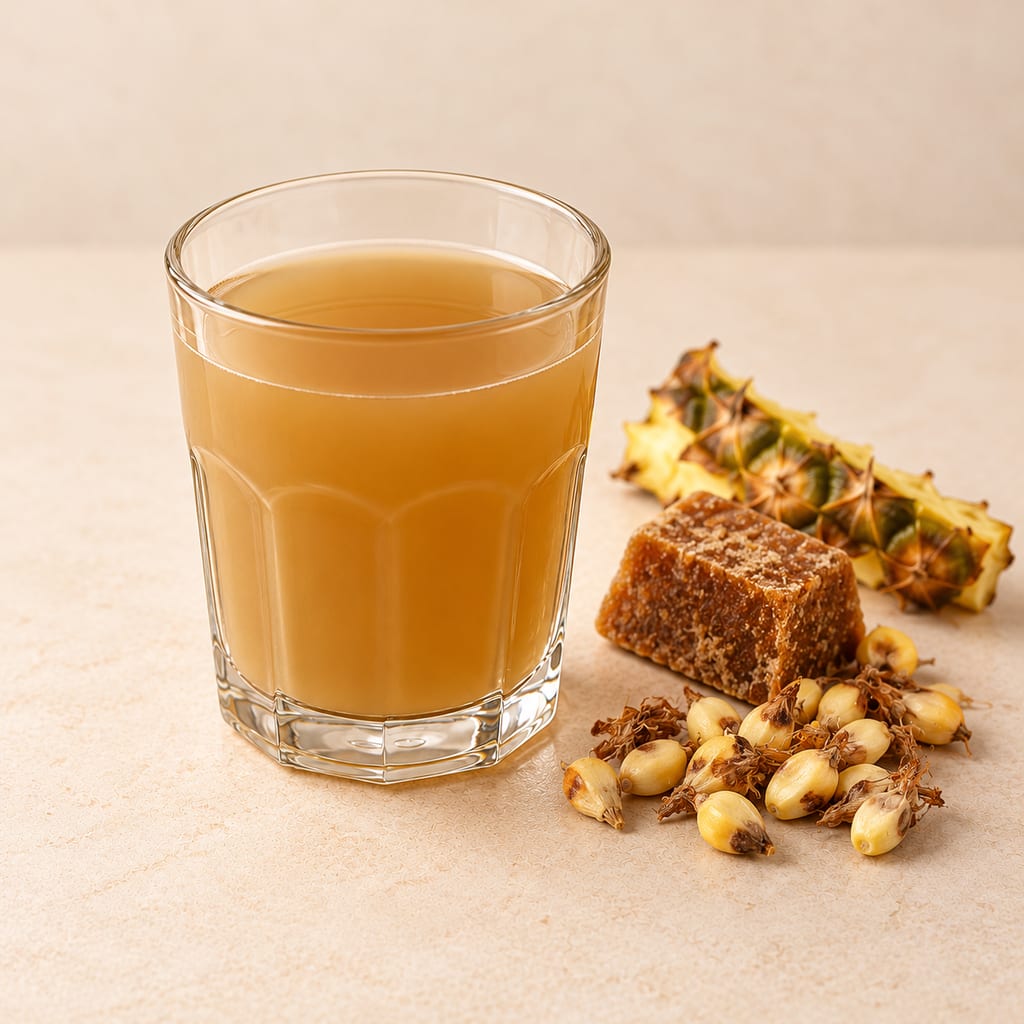
A contemporary Ecuadorian recipe simmers jora flour with spices, then adds panela and pineapple peel before a short spontaneous ferment. Its particular aromatics and measurements belong to this published adaptation.
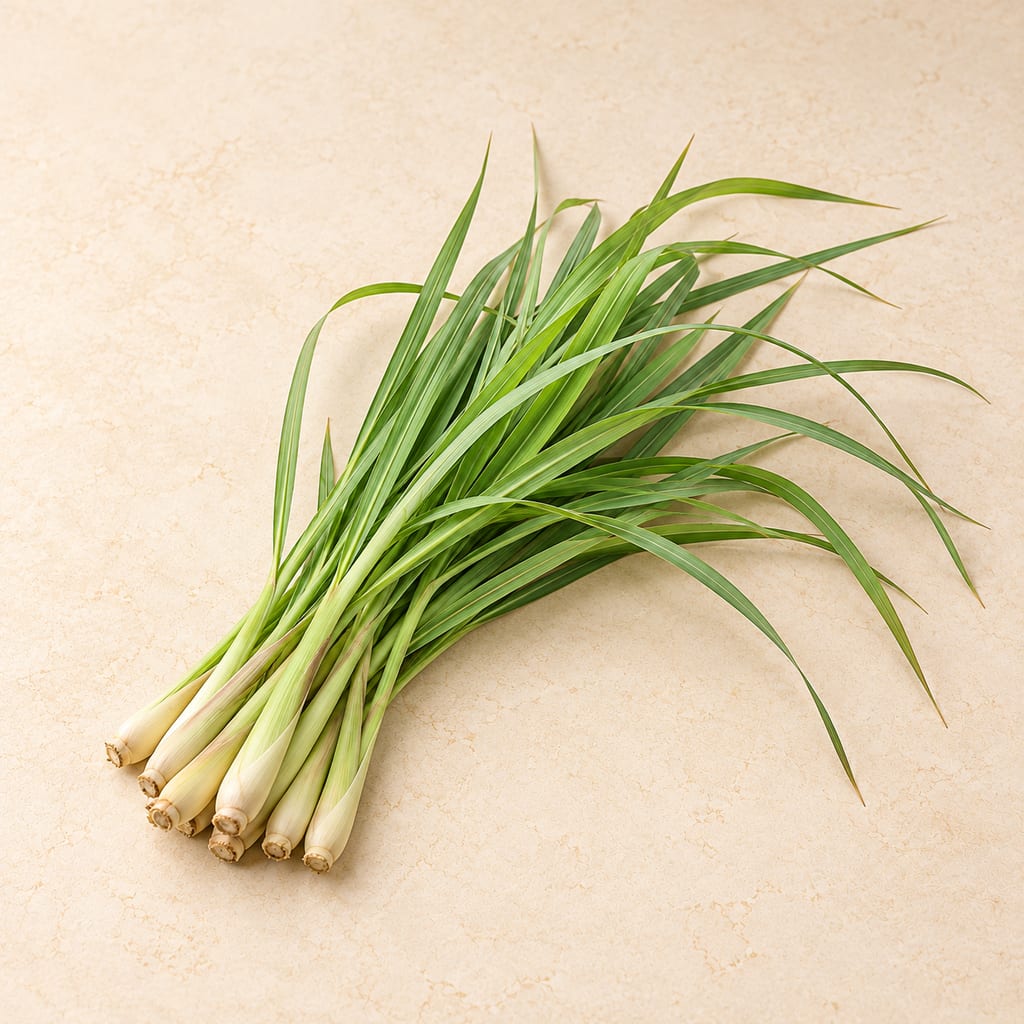
The lemon-scented grass Cymbopogon citratus, sold in Ecuador as hierba luisa or limonaria and steeped for its aroma in chicha de jora, avena and leaf water.
No community contributions have been published for this entry yet.
Sign in to contribute. Published comments and photos are free to read.
Asociación de Chefs del Ecuador
Chicha de JoraCited in: Jora flour: Andean maize malt, milled for the pot; Where the flour is made and used
FAO and ANPE
Guía de campo de los cultivos andinosCited in: Jora flour: Andean maize malt, milled for the pot; What germination changes; Where the flour is made and used
FAO / Woodhead Books
Fermented cereals a global perspective, Chapter 4: Chicha, a fermented maize beverage in the AndesCited in: Jora flour: Andean maize malt, milled for the pot; A grain becomes malt; What germination changes; Choosing, storing and using the flour; Where the flour is made and used
Equatorial (UFRN)
Chicha de jora: cauim de milho germinado nos Andes peruanosCited in: Jora flour: Andean maize malt, milled for the pot; A grain becomes malt; What germination changes; Different regions, different pots; Women, fields and chicherías; Where the flour is made and used
El Telégrafo; article credited to Diario El Tiempo
Dos meses toma tratar la jora para la chichaCited in: A grain becomes malt; Women, fields and chicherías; Choosing, storing and using the flour; Where the flour is made and used
Orígenes Ecuador / Diners Club Ecuador
Harina de joraCited in: A grain becomes malt; Different regions, different pots; Where the flour is made and used
Universidad del Azuay, Facultad de Ciencia y Tecnología
Perspectivas para la industrialización de la chicha de joraCited in: A grain becomes malt; Different regions, different pots
Ministerio de Comercio Exterior y Turismo del Perú; Lambayeque regional tourism office inventory
Chicha Morropana (tourism resource inventory, ficha 12144)Cited in: Different regions, different pots; Where the flour is made and used
University of Missouri Extension
Using and Storing CornmealMinisterio de Cultura del Perú
RVM Nº 156-2015-VMPCIC-MC: Declaran Patrimonio Cultural de la Nación la Picantería y la Chichería lambayecanasCited in: Different regions, different pots; Women, fields and chicherías
Brazilian Archives of Biology and Technology
Production and characterization of amylases from Zea mays maltCited in: What germination changes
Brazilian Journal of Microbiology
Saccharomyces cerevisiae populations and other yeasts associated with indigenous beers (chicha) of EcuadorCEBA Ecuador-hosted research article
Desarrollo de un proceso a escala piloto para la producción de chicha de jora a partir de maíz (Zea mays)Nature
Early maize agriculture and interzonal interaction in southern PeruCited in: Women, fields and chicherías
Universidad de Cuenca, Facultad de Ciencias de la Hospitalidad
Aplicación de la chicha de jora en 30 recetas estandarizadasParque Chalakuy and Asociación Andes, Cusco, 2018
Cocinando con la agrobiodiversidad de Lares: Libro de recetasRevista Chakiñan de Ciencias Sociales y Humanidades / SciELO Ecuador
Valor cultural del maíz y tecnologías ancestrales en la parroquia Cayambe de Ecuador