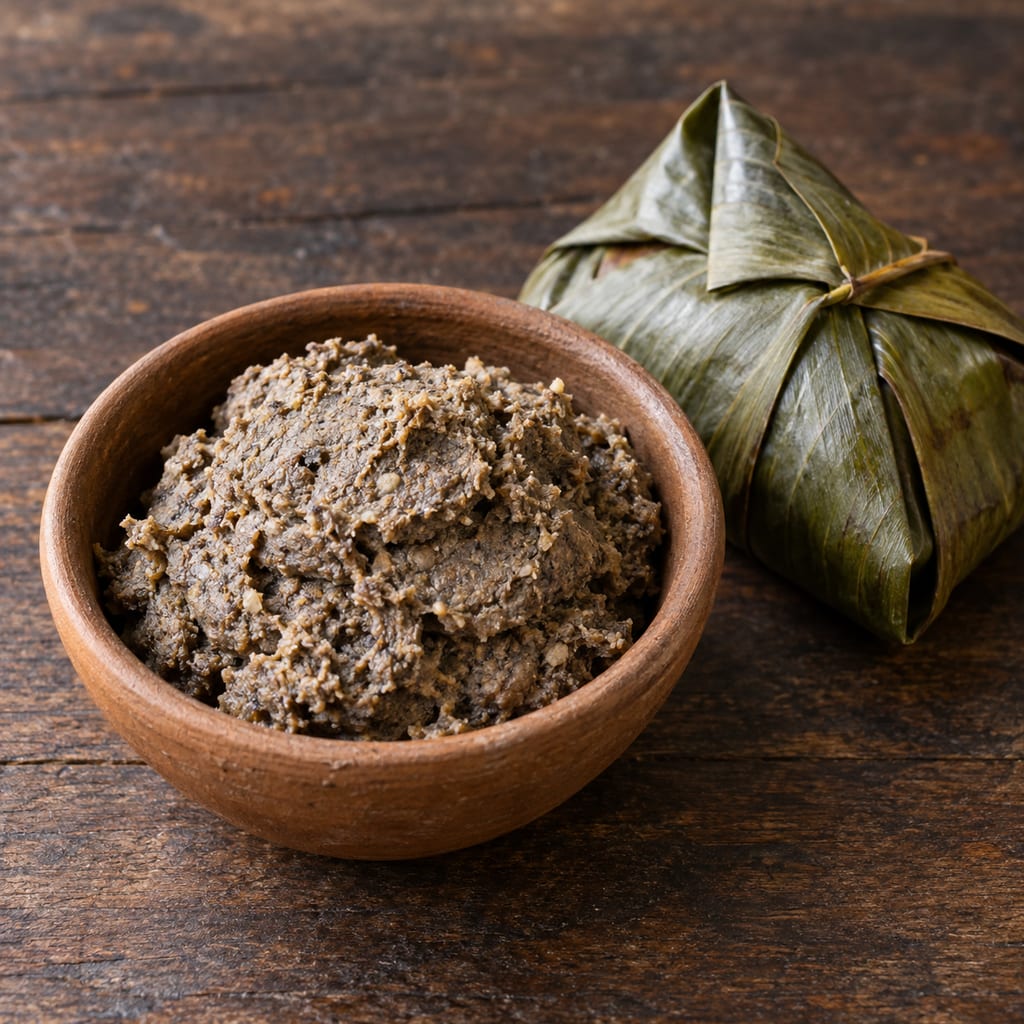
Ogiri-egusi (fermented melon-seed condiment)
A Nigerian condiment of cooked, fermented melon seeds, wrapped in leaves and held warm for several days, used to thicken and flavour soups and stews.
 FermenteaWhere food goes to change
ata dídín · Ata din-din · Obe ata dindin · Fried pepper sauce
Ata dindin is the Yoruba fried pepper sauce: chillies, red bell pepper and onion blended and cooked down in oil until the oil separates. The same name is also given to a finished stew built on it.
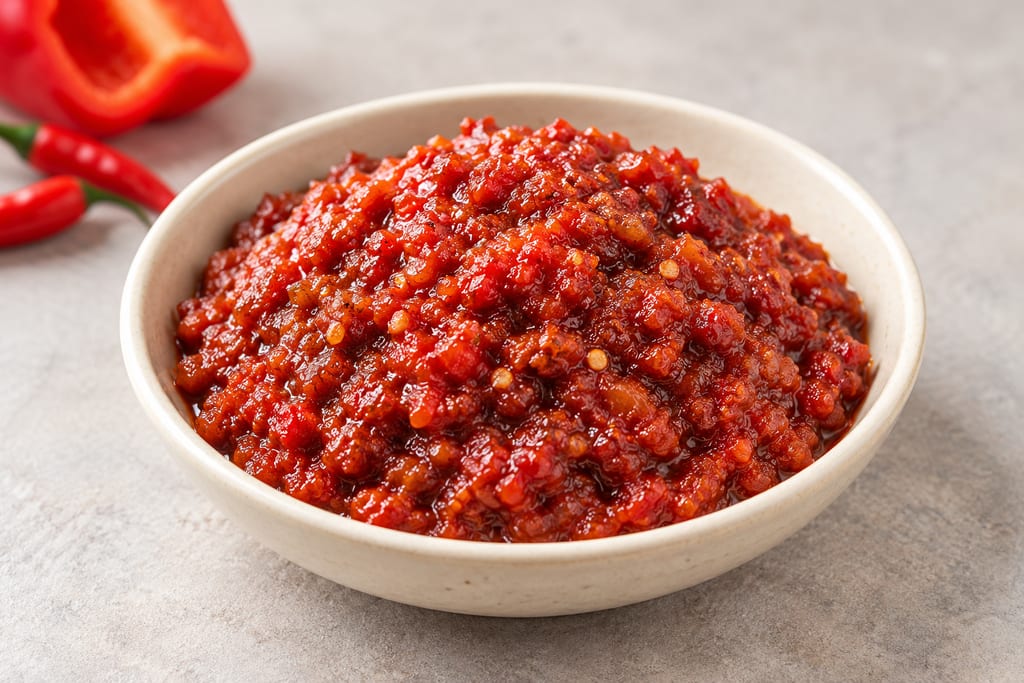
Ata dindin means fried pepper in Yoruba, and the name describes the method exactly: red peppers and onion are blended, then cooked in a lot of oil until the water is gone and the oil rises above the paste. What is left is a dark red sauce that carries heat, sweetness from the bell pepper and the flavour of the oil it was cooked in, either groundnut oil or palm oil. It is eaten with rice, with pasta and with grilled or fried meat, and it is the base that cooks use when they want a soup or stew with a pepper foundation.
The Yoruba word ata covers chillies and pepper in general. Tatashe is the large red bell pepper that gives body and colour, ata rodo is the scotch bonnet that gives fierce heat, and ata wewe is the small hot chilli used in the measured version above. Which hot pepper goes in, and how many, is the cook's choice, and the published versions differ. A sauce made with fewer hot peppers and more bell pepper is milder.
Peppers and onion are mostly water. Blending them and letting the juice drain in a strainer removes some of that water before the paste reaches the oil, so there is less to cook off. In the pot the water boils away slowly under a lid, and the paste is stirred now and then so it does not stick. As the water leaves, the paste darkens and shrinks, and the oil separates and rises. Rising oil is the sign the published method gives for a finished sauce, and skimming the surplus leaves the dark paste. The cook is judging a change in the pot, not a time on the clock: the same recipe gives 45 minutes to an hour as a range.
The name is not used for one thing only. On some pages ata dindin is the pepper base alone, a sauce to be used by the spoonful. On others, obe ata dindin, sometimes called buka stew, is a complete dish. One four-serving recipe prepares the meat separately, blends tomatoes, red bell pepper and scotch bonnet with onion, cooks that mixture in oil, then returns the meat and adds eggs, with crayfish as an option. Another cookbook lists ata dindin as a pepper sauce and gives a separate preparation of pepper with iru, the fermented locust-bean seasoning, with optional meat, ponmo (cow skin) or fish.
Iru and ogiri, another fermented seasoning, are named in Yoruba teaching material as seasonings of the broader obe ata family. They arrive as upstream fermented ingredients. The cooked pepper mixtures themselves are fried, and no cited page describes fermenting the finished sauce or stew. The published pages differ on what goes in beside the peppers, which is why this page gives one measured base and treats the stew as a variation on it, not as one canonical formula.
The base sauce goes over rice and pasta, and it is a starting point for soups such as egusi, efo and ewedu. With assorted meats added and a few changes it becomes an ofada-style sauce. The same cook used it to pepper boiled ponmo with blended dried prawns, and in an efo dish with dried catfish, snails, goat meat and spinach. The finished stew appears under the name buka stew in a commercial cookbook, and a UNESCO programme on food and voices includes obe ata didin in its account of current cultural context.
No dated Yoruba historical source or ethnography was found that fixes the origin of the name or the boundaries among ata dindin, obe ata and the buka stew. Only one version gives measures for the base, and the stew pages give no oil or pepper masses, no yield by weight and no cooling or storage instructions. A recipe page reports that the fried sauce keeps for up to five weeks when “properly stored,” but it gives no validated storage conditions; that period is not adopted here. The practical storage advice is conservative general USDA leftovers guidance, not an Ata dindin shelf-life study. Frying the paste and seeing oil rise do not establish shelf stability.
Yoruba teaching material lists ata dindin among traditional foods. No dated historical source or ethnography was found that settles its origin or the boundaries among ata dindin, obe ata and the buka stew.
Scaling: source batch only
The recipe's frying endpoint and a visible oil layer do not validate room-temperature storage or a multiweek refrigerator period. No product-specific preservation study or storage limit is available.
Hazard sourceRefrigerate cooked leftovers within 2 hours at 40 °F (4 °C) or below in clean, covered shallow containers; use within 3–4 days or freeze for longer storage. This is conservative general USDA leftovers guidance, not a tested storage period for Ata dindin.
Control sourceThe source's five-week refrigerator claim is not supported by a validated product-specific storage study and is not used here.
This is a cooked sauce, not a tested shelf-stable preserve. Do not rely on oil separation, appearance, smell or taste to determine storage safety.
The sauce can be very hot; handle chillies with care.
Yoruba-language teaching material lists ata dindin among traditional foods; no source found here dates its origin or places it in one town.
A Nigerian condiment of cooked, fermented melon seeds, wrapped in leaves and held warm for several days, used to thicken and flavour soups and stews.
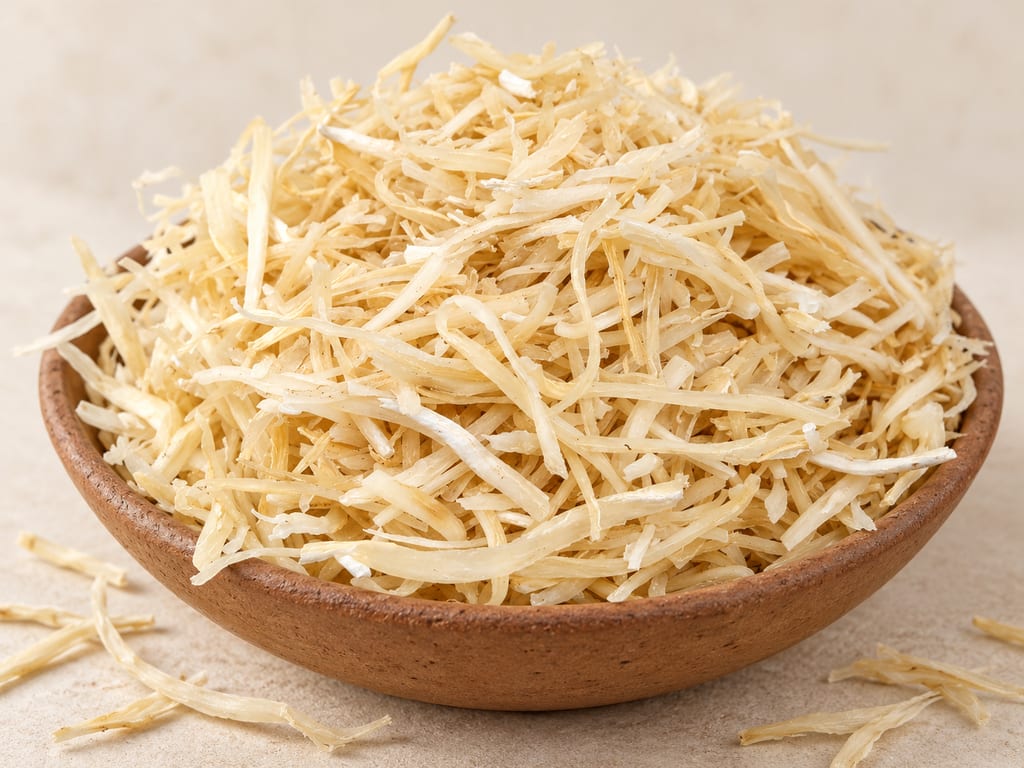
Abacha is a fermented cassava-strip preparation from southeastern Nigeria, sold wet or dried and later rehydrated for meals such as African salad.
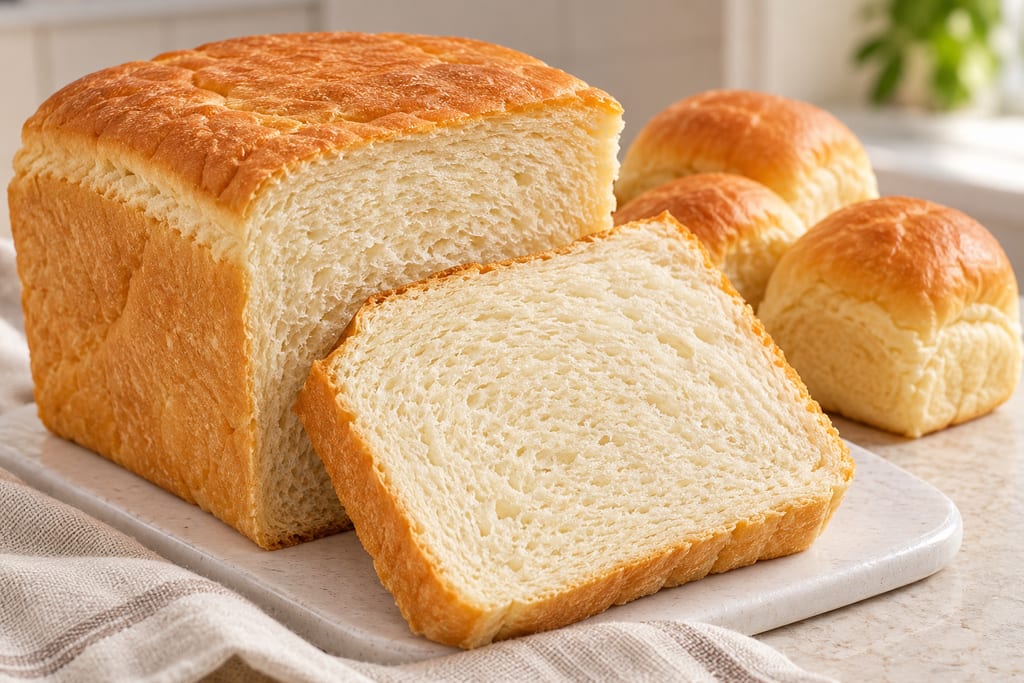
This softer home-style Agege bread uses a scalded flour paste, an enriched yeast dough and a 9×5-inch loaf pan, with rolls from the extra dough.

Eba is a West African dish of cooked gari, stirred into hot water until it forms a thick paste. It is a cooking stage with no new fermentation, served with soup.
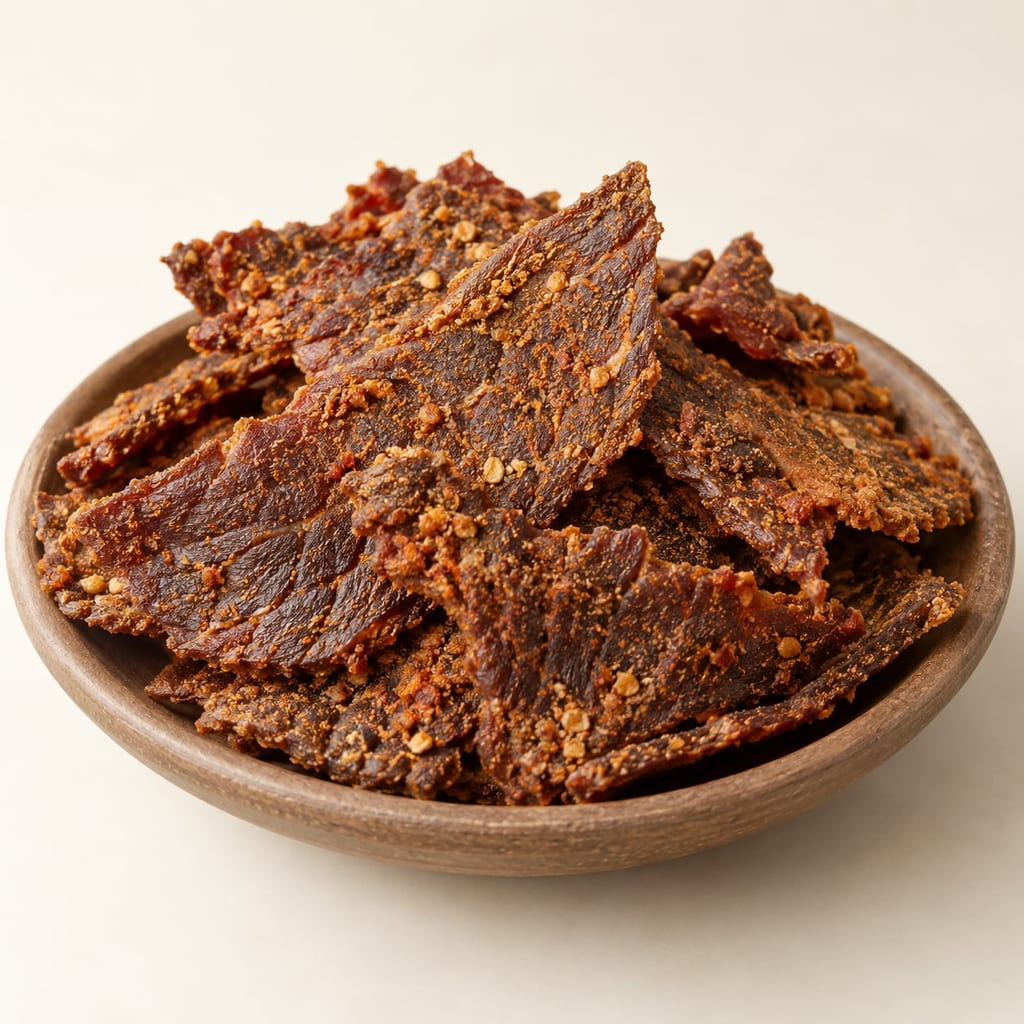
Kilishi is a Hausa-land dried meat from northern Nigeria and southern Niger: thin slices of beef or other meat, dried, coated in a spiced groundnut paste and dried again.
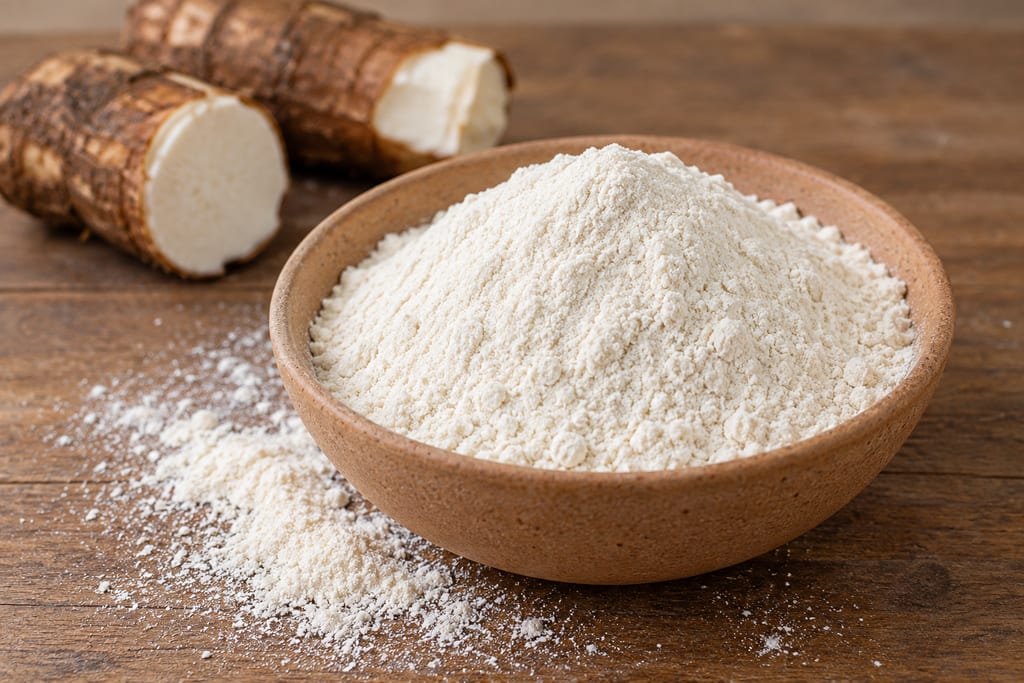
Lafun is a Nigerian fermented cassava flour described in historical accounts. This record documents reported processing stages, not a validated household method or a batch-specific cyanogen and moisture safety endpoint.

A thick, spiced northern Nigerian drink of pearl millet in which only part of the fermented slurry is cooked, so raw starch and gelatinised starch are recombined.
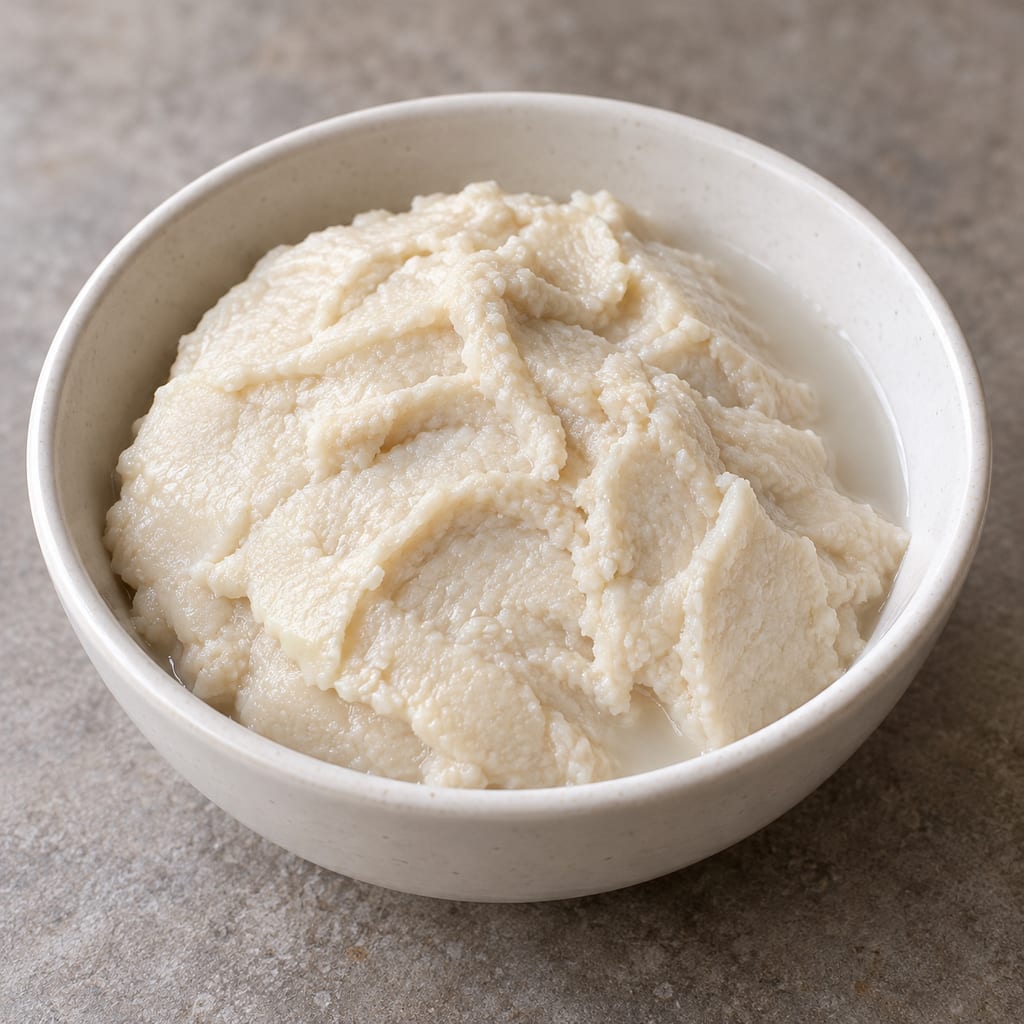
Ogi or akamu is a wet fermented cereal preparation documented in Nigeria and Benin. Grain or maize starch is steeped, milled or sieved, then fermented by process-specific routes; evidence supports no universal method or safety limit.
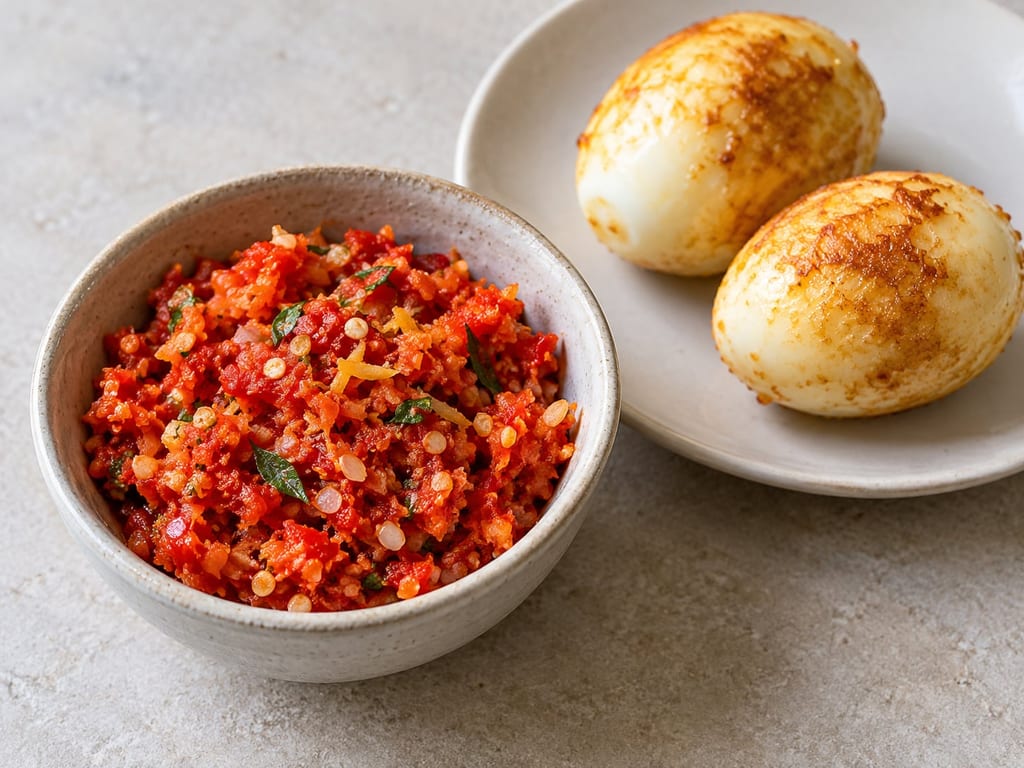
Ai-manas is described as a very hot chilli paste served with Timorese meals. One published version blends fresh chillies, shallots, garlic, Thai basil, ginger, lemon and salt, and serves it with eggs. Sources do not establish a standard formula, precise birthplace or earliest date.
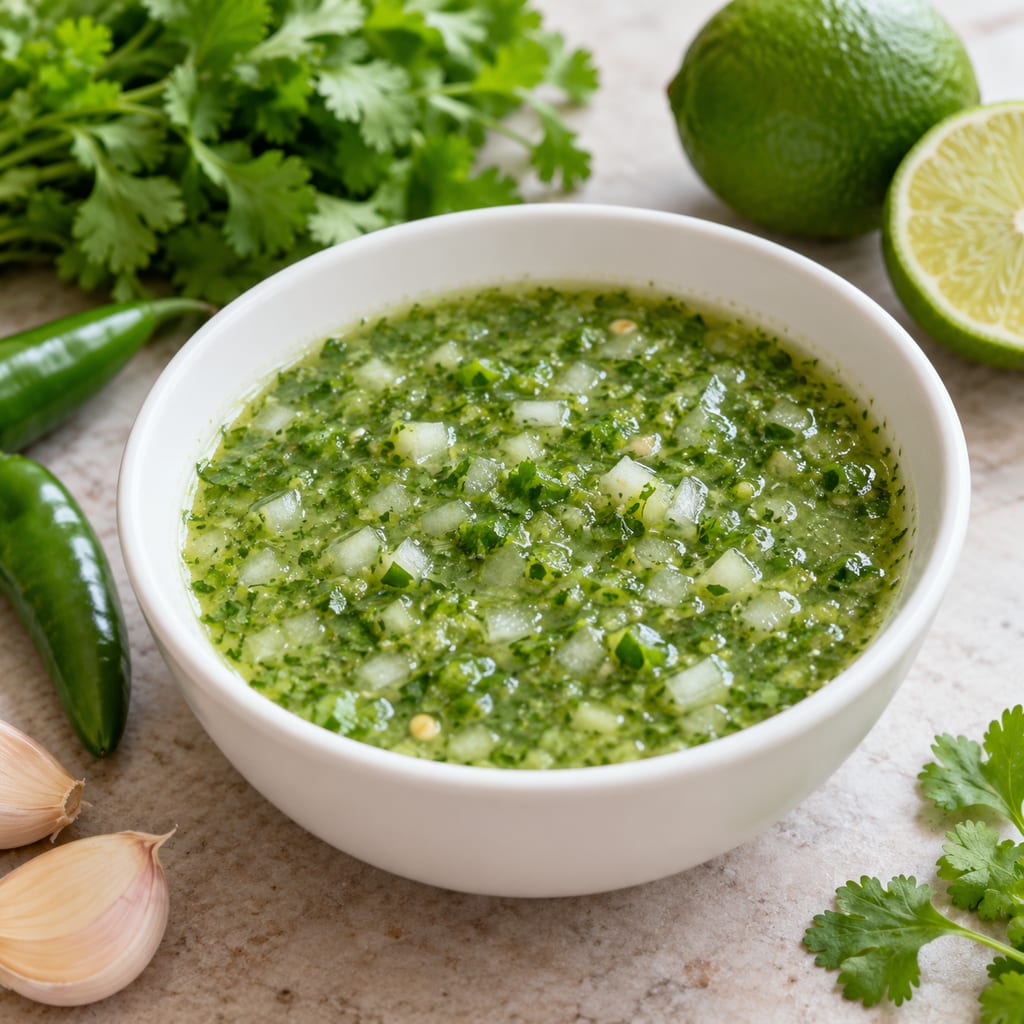
A fresh, uncooked Ecuadorian table sauce of hot pepper, cilantro, garlic and lime, served with most everyday dishes.
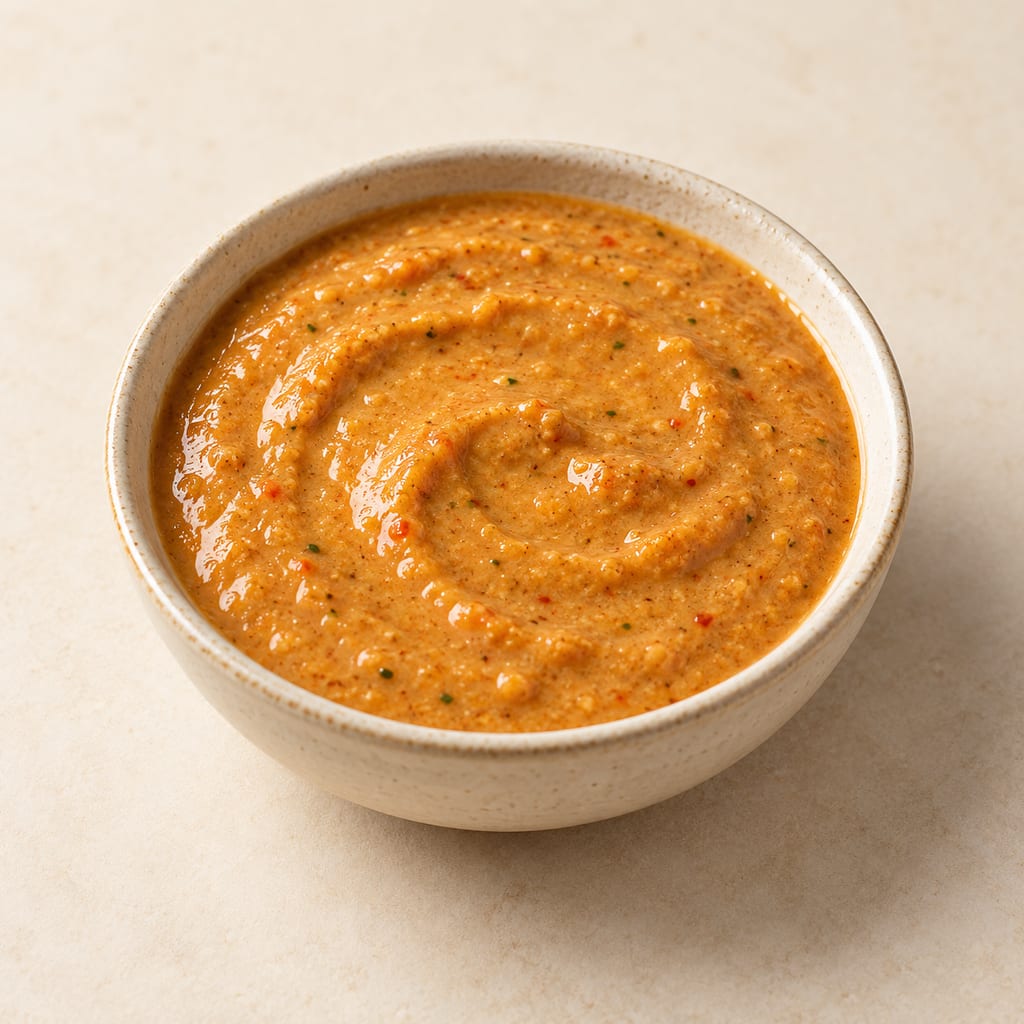
A spicy peanut hot sauce from the Popayán and Cauca region of Colombia, traditionally served with pipián empanadas and tamales.
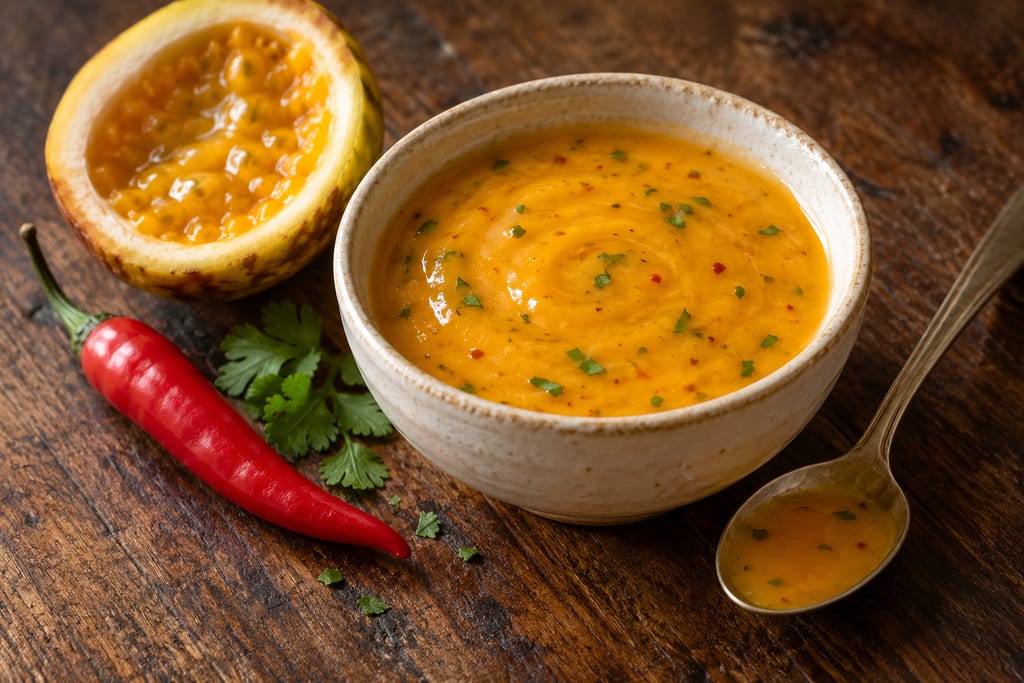
A contemporary Ecuadorian hot sauce that pairs passion fruit juice with boiled chile peppers, oil and lime.
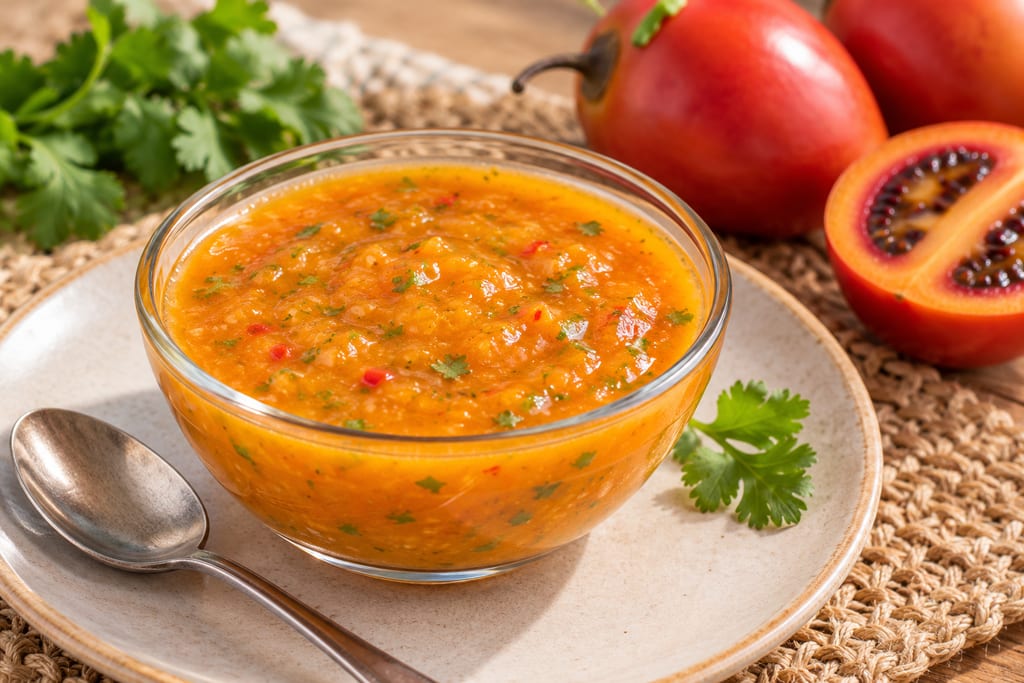
An Ecuadorian hot sauce built on tamarillo, a tart fruit that gives a sharper, fleshier base than ordinary tomato salsa.

A sweet, tart and spicy Colombian sauce of uchuva, the yellow physalis fruit, with hot pepper, scallion, cilantro and lime.
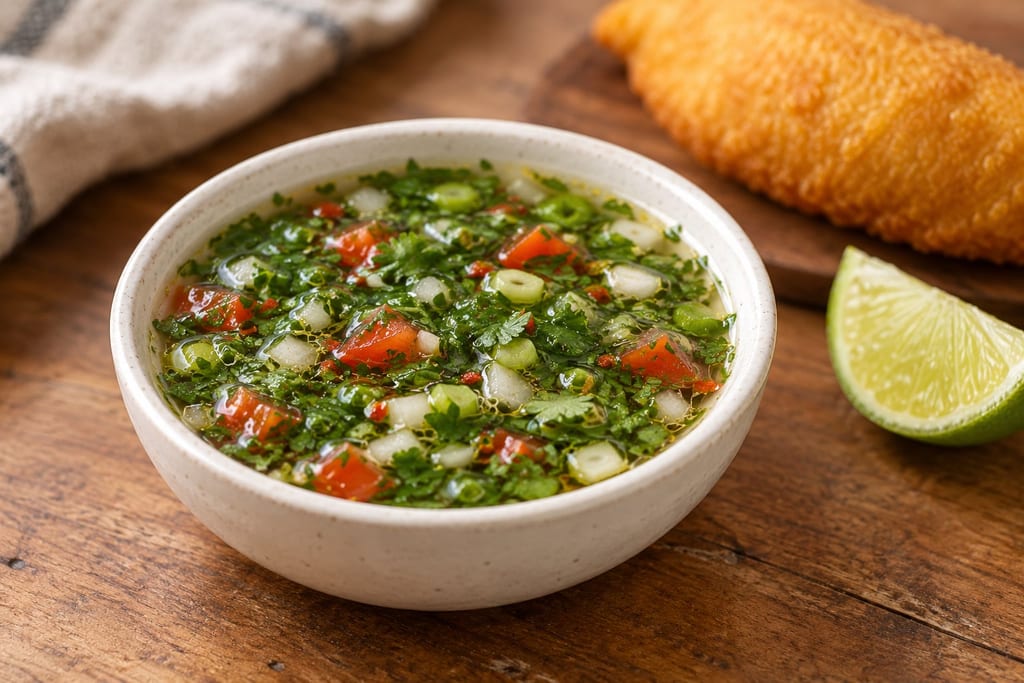
A fresh Colombian table condiment of chopped herbs, scallion and tomato in a vinegar and chile base, served beside fried and filled dishes.
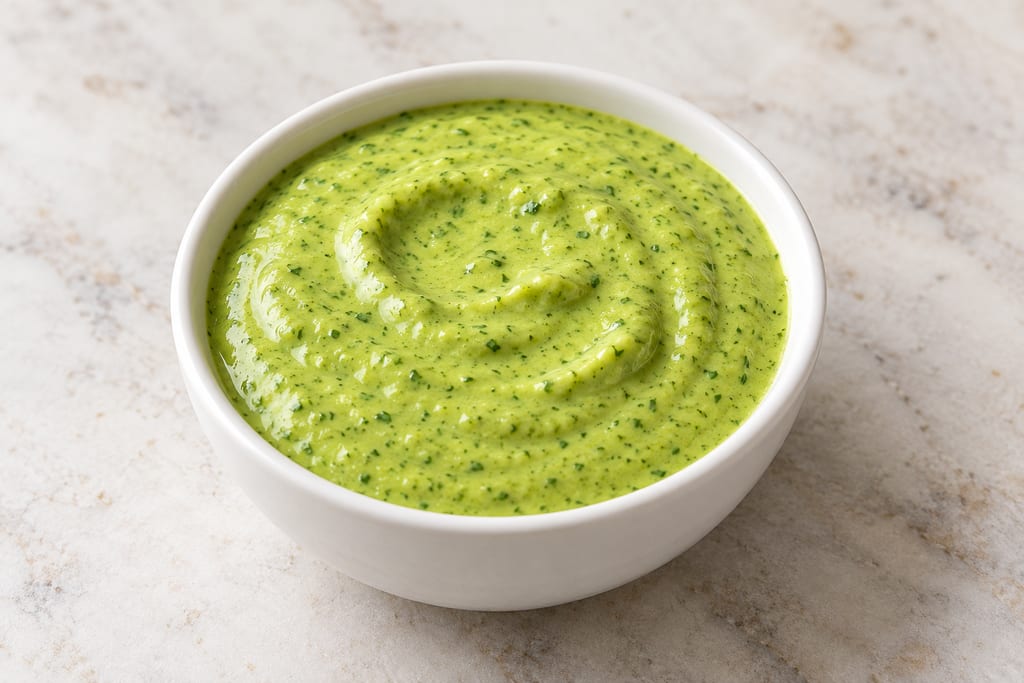
Ají verde is a Peruvian green sauce of coriander, chilli, onion and garlic in a mayonnaise or cheese base. It is best known through Peruvian restaurant cooking abroad.
No community contributions have been published for this entry yet.
Sign in to contribute. Published comments and photos are free to read.
National Open University of Nigeria PressHistory · Use
YOR 226 Yoruba Traditional Foods and Dietary PracticesAta dindin appears in Yoruba food and meal contexts
Obe ata is a broad pepper soup, stew or sauce category
Iru and ogiri are named as seasonings
No measured ata dindin recipe and no first use of the name
Cited in: A pepper sauce cooked in oil; From base sauce to stew
9jafoodieMethod
Ata dindin (fried pepper sauce)Ingredients and quantities of the base sauce
Blend, drain, cook for 45 minutes to 1 hour until the oil rises
The name means fried pepper in Yoruba
Uses in rice, pasta, soups and ofada-style sauce
Reported keeping time of up to five weeks when properly stored
Cited in: A pepper sauce cooked in oil; Why the pepper is drained and cooked down; How it is used; What is not settled
Mamador NigeriaMethod · Use
Obe Ata DinDin RecipeFour-serving finished stew called obe ata dindin or buka stew
Tomatoes, tatashe, ata rodo, oil, onion, assorted meat, optional crayfish and eggs
Protein prepared separately, pepper mixture blended and cooked, meat returned and eggs added
No oil or pepper masses and no storage time
Cited in: From base sauce to stew; How it is used
Deliciously Naija / VONI Multi-MediaMethod
The Nigerian Cooking GuidePage 49 lists Ata Dindin (pepper sauce)
A pepper-and-iru preparation with optional meat, ponmo or fish
Cited in: From base sauce to stew
UNESCO REFUse
Flavour and VoicesObe ata didin as part of current cultural context; it does not establish origin
Cited in: How it is used; What is not settled
USDA Food Safety and Inspection ServiceSafety · Storage
How do I handle leftovers safely?General guidance: refrigerate leftovers at or below 40 °F (4 °C) within two hours in shallow containers; use refrigerated leftovers within 3–4 days or freeze for longer storage. Applied as conservative general handling guidance, not as a product-specific Ata dindin study.
Cited in: What is not settled