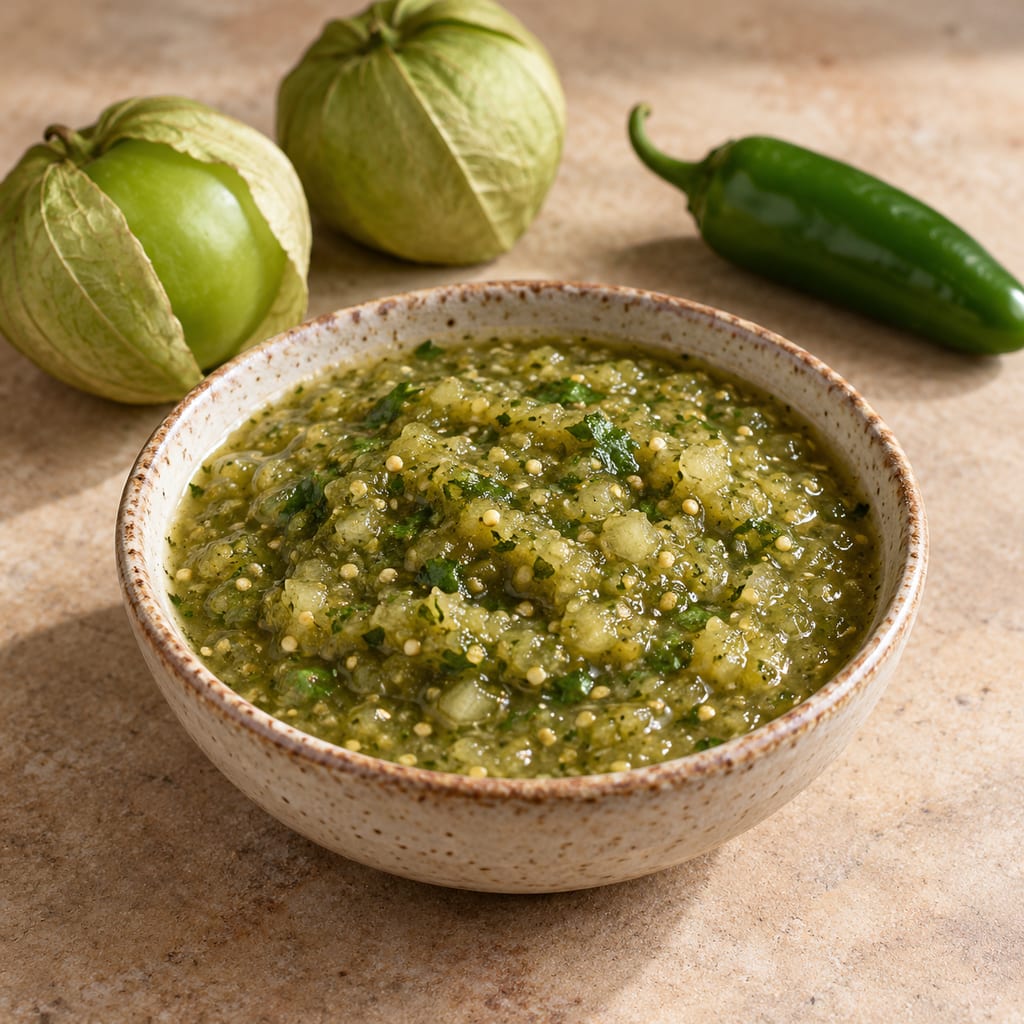
Fermented tomatillo salsa
Tomatillos, chiles, onion, lime and herbs are salted and fermented together as a mixed salsa.
 FermenteaWhere food goes to change
Spices and aromatics
Jalapeño is a named type of Capsicum annuum, usually sold green and also eaten red when ripe. It has a fresh green aroma and a reported heat range of about 2,000–8,000 Scoville units.
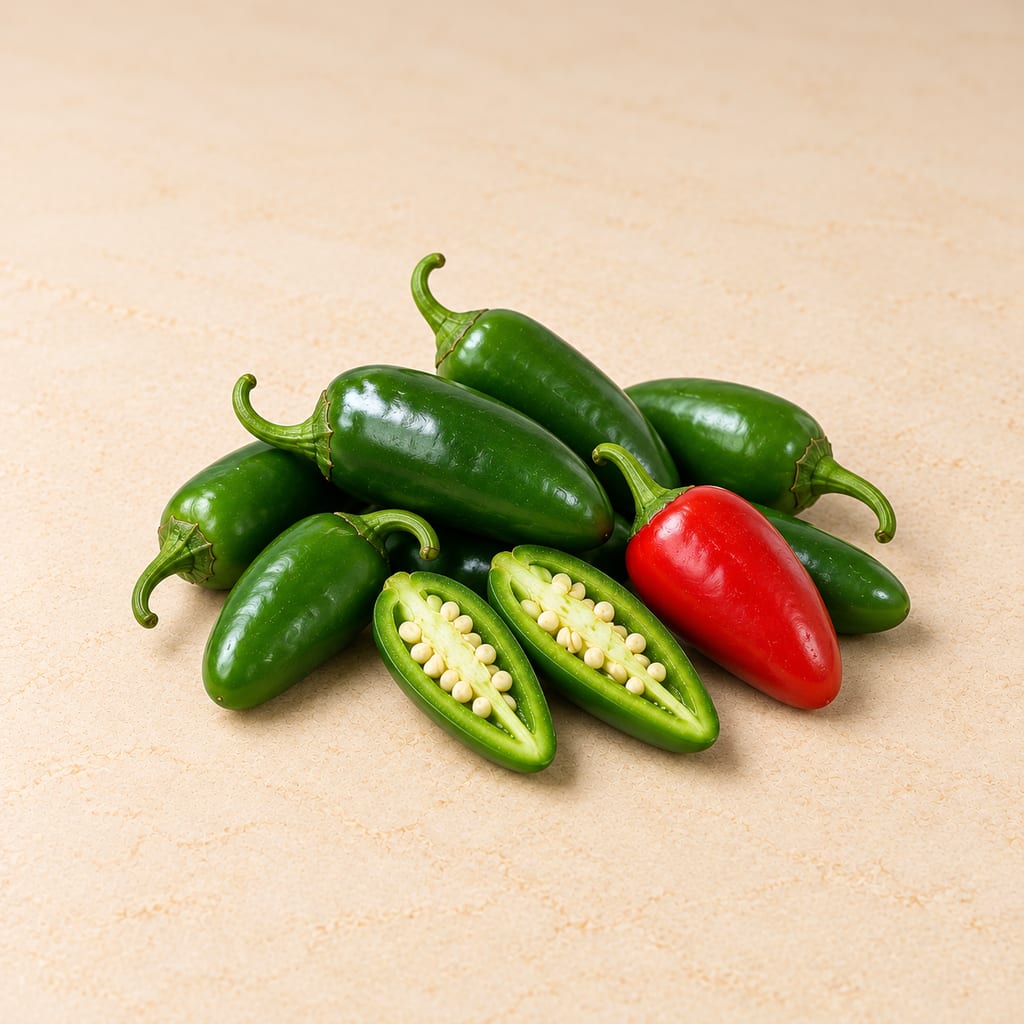
Jalapeño is a named type of Capsicum annuum. The name refers to Xalapa, Veracruz, where a history of the pepper records production and trade; that commercial link does not prove the named type began in one city.
Research on C. annuum domestication concerns the species as a whole. One study favoured central-east Mexico while also identifying northeastern Mexico as a possibility; a later interdisciplinary study argues for a geographically diffuse process with more than one event across Mexico. Neither study dates or locates the later jalapeño type.
Jalapeño is one named type within Capsicum annuum. Mexico’s seed authority lists it alongside types such as serrano and ancho. In the common fresh market form, jalapeños are picked green and can ripen red if left on the plant; UF/IFAS describes fruits about 2–3 inches long.
UF/IFAS gives a typical range of 2,000–8,000 Scoville heat units; Penn State gives 2,500–8,000. These published ranges describe a type, not the heat of any one pepper.
A sensory aroma study compared jalapeño with Anaheim and Fresno peppers. The panel described green, vegetable, floral and apple-like aromas across the samples and found a rose-like note more strongly associated with jalapeño in that comparison. These are study observations, not a fixed taste profile.
Fresh jalapeño contributes chile flavour and heat when used in a ferment; the cited recipes use it as an ingredient, not as a starter culture. It appears as an optional filling in fermented green tomatoes, in an Oregon State tepache formula and in fermented tomatillo salsa. Those recipes use different methods, so one recipe’s process or storage guidance does not transfer to another.
Choose firm, unbroken peppers. Rinse them under cool running water when ready to prepare. Capsaicin can irritate skin and eyes; Penn State advises gloves and washing hands before touching the face. Removing the inner ribs can reduce heat.
Utah State University advises keeping fresh jalapeños unwashed, wrapped in paper towels and refrigerated for up to three weeks. This is fresh-produce quality guidance, not a fermented-food storage life.
Jalapeño is not one of the nine major food allergens listed by the U.S. Food and Drug Administration. That list does not mean no individual can react to a pepper or to another ingredient in a prepared product.
The historical sources reviewed do not identify a precise first date or a unique birthplace for the jalapeño type. The domestication research cited here addresses C. annuum more broadly. Heat ranges are published guides, not a prediction for an individual fruit.
A history-book listing links jalapeño production and trade to Xalapa and explains the name. This is not evidence of a single birthplace for the named pepper.
UF/IFAS documents jalapeño as a common chilli type grown in Miami-Dade County. This is a cultivation association, not a recipe origin.
Tomatillos, chiles, onion, lime and herbs are salted and fermented together as a mixed salsa.
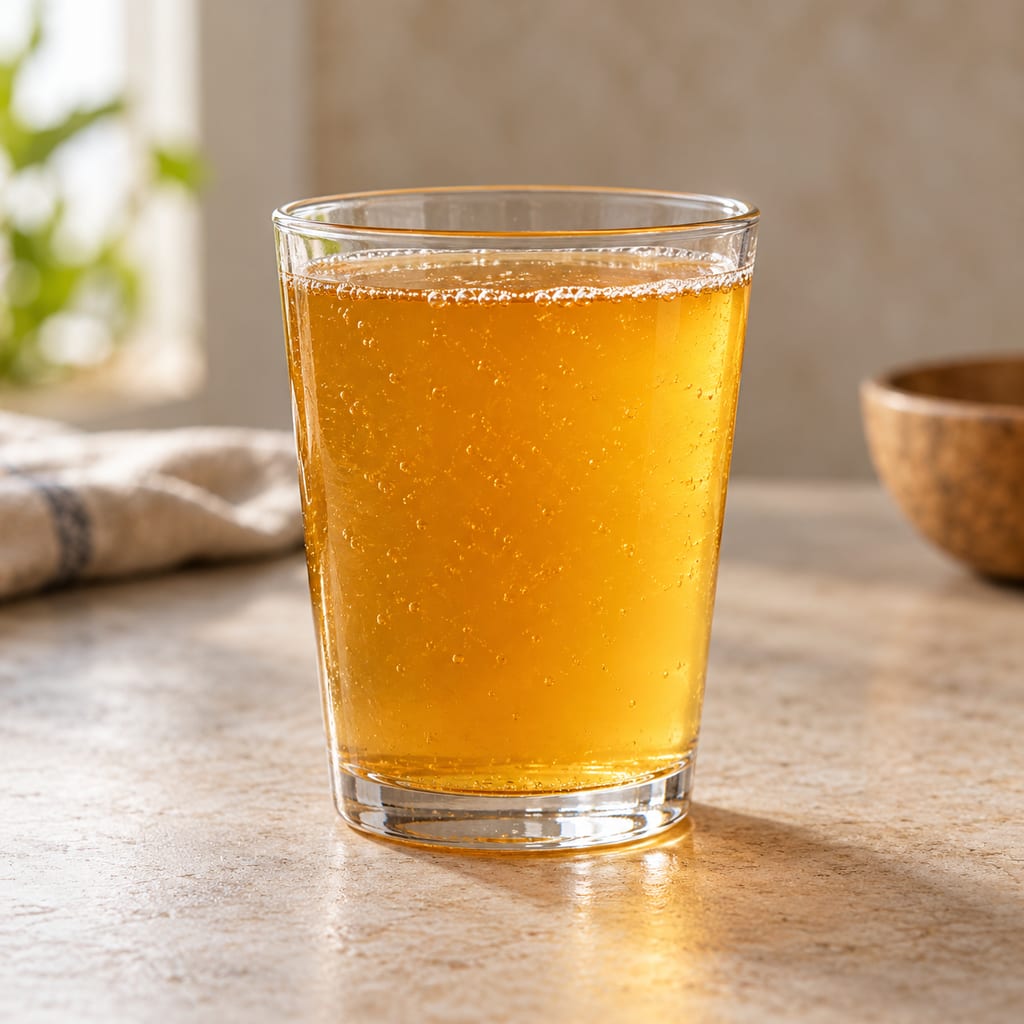
An Oregon State food-science lab formula ferments pineapple skin and piloncillo with jalapeño and warm spices for three to five days, then strains and refrigerates it. The handout reports wide alcohol variability.
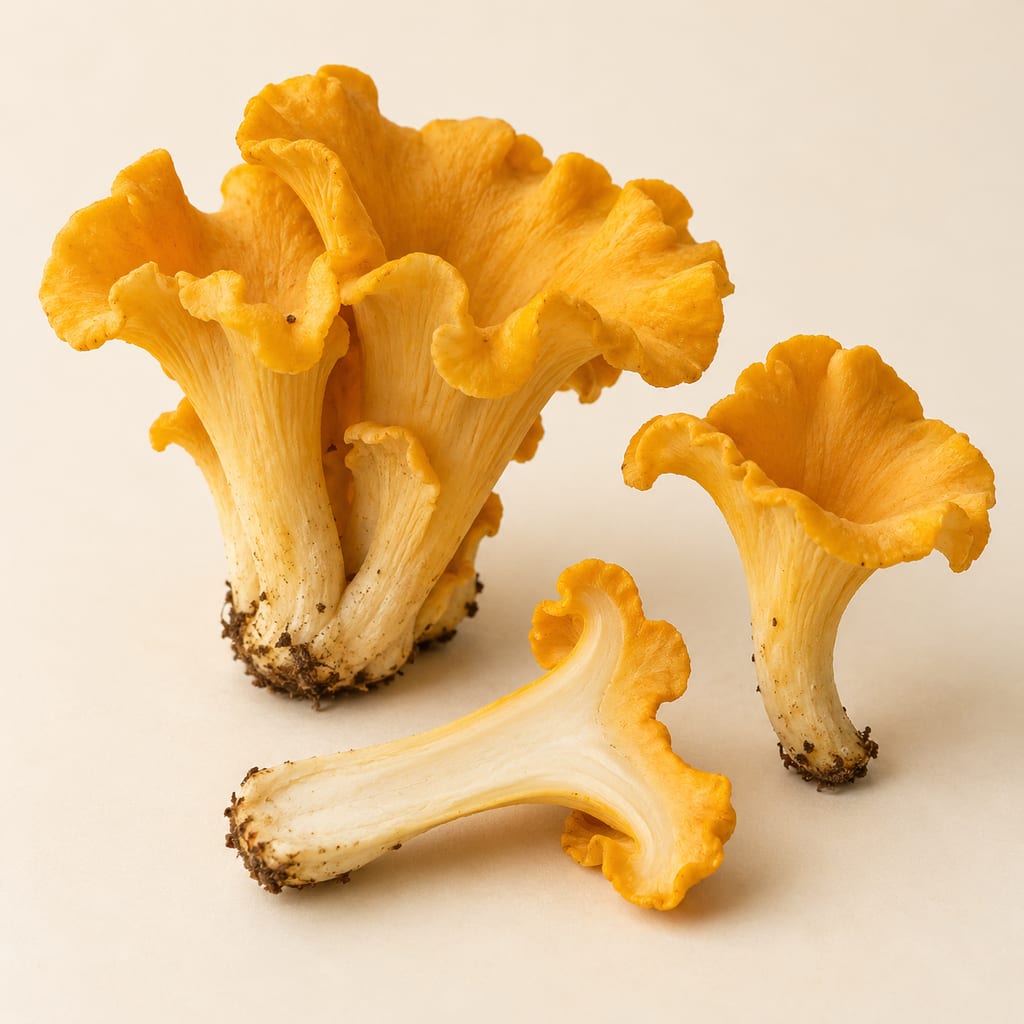
Cantharellus odoratus, the fragrant chanterelle, is a North American and Central American oak-woodland fungus. It was sold in a Veracruz market in the 1980s and in Guatemala in 2002, and its name is still disputed.
No community contributions have been published for this entry yet.
Sign in to contribute. Published comments and photos are free to read.
H-México; listing for a 2025 Universidad de Guadalajara book by Rosa María Spinoso ArcochaHistory · Geography
Jalapeños en conserva: historia, mitos e identidades | H-MéxicoThe book listing describes the jalapeño in Mesoamerican and colonial contexts and connects its name to production and trade in Xalapa; the listing does not establish a precise first-attested date or unique birthplace.
Cited in: Name and history; Evidence and limits
Servicio Nacional de Inspección y Certificación de Semillas, Government of MexicoIdentity · Cultivation
Chile (Capsicum spp.)Mexico’s seed authority lists jalapeño among named types of Capsicum annuum and describes Mexico as a centre of chile diversity.
Cited in: Identity and forms
University of Florida IFAS ExtensionIdentity · Heat · Cultivation
Pepper Production in Miami-Dade County, FloridaJalapeño is commonly grown in Miami-Dade County; the report describes fruit about 2–3 inches long, says green fruit turn red after ripening and gives an approximate 2,000–8,000 Scoville-unit range.
Cited in: Identity and forms; Heat and aroma; Choosing, preparing and storing; Evidence and limits
Penn State ExtensionHeat · Preparation
Hot Peppers: Preserving the Heat!Penn State gives a 2,500–8,000 Scoville-unit jalapeño range and advises gloves and handwashing when handling hot peppers.
Cited in: Heat and aroma; Choosing, preparing and storing; Evidence and limits
Food Chemistry, 11(3), 201–216Sensory
GC/MS and sensory analysis of volatiles from three cultivars of CapsicumA sensory panel compared jalapeño with Anaheim and Fresno and described green, green-vegetable, floral and apple-like aromas across the peppers; the report found rose-like notes more strongly associated with jalapeño in the comparison.
Cited in: Heat and aroma
Proceedings of the National Academy of SciencesHistory
Multiple lines of evidence for the origin of domesticated chili pepper, Capsicum annuum, in MexicoA species-level model finds evidence compatible with northeastern or central-east Mexico and favours central-east Mexico when the study’s evidence is combined; it does not identify jalapeño’s later cultivar history.
Cited in: Name and history; Evidence and limits
Proceedings of the National Academy of SciencesHistory
Interdisciplinary insights into the cultural and chronological context of chili pepper (Capsicum annuum var. annuum L.) domestication in MexicoA species-level study argues for a diffuse, protracted process with at least two asynchronous domestication events in Mexico; it does not date the named jalapeño type.
Cited in: Name and history; Evidence and limits
Utah State University ExtensionPreparation · Storage
Fruit and Vegetable Guide Series: JalapenoRinse peppers when ready to use; wear gloves and wash hands after handling; store fresh jalapeños unwashed, wrapped in paper towels in the refrigerator for up to three weeks.
Cited in: Choosing, preparing and storing
U.S. Food and Drug AdministrationAllergen
Food Allergies: What You Need to KnowThe FDA lists nine U.S. major food allergens; jalapeño is not among them, while the agency notes other foods can cause allergic reactions.
Cited in: Allergens and dietary context
Hachette Book Group / StoreyRecipe use
Georgian-style Fermented Green Tomatoes: A Tangy DelightThe recipe includes jalapeños as an optional ingredient in its green-tomato filling.
Cited in: Use in fermentation
Oregon State University Food Science / Curtin LabRecipe use
TepacheThe lab formula includes one jalapeño with pineapple peel, piloncillo and spices.
Cited in: Use in fermentation
Ask Extension; recipe submitted in Polk County, Oregon; answered by Oregon State Extension master food preserverRecipe use
Canning fermented salsaThe fermented tomatillo salsa ingredient list includes jalapeño peppers alongside other green chiles.
Cited in: Use in fermentation