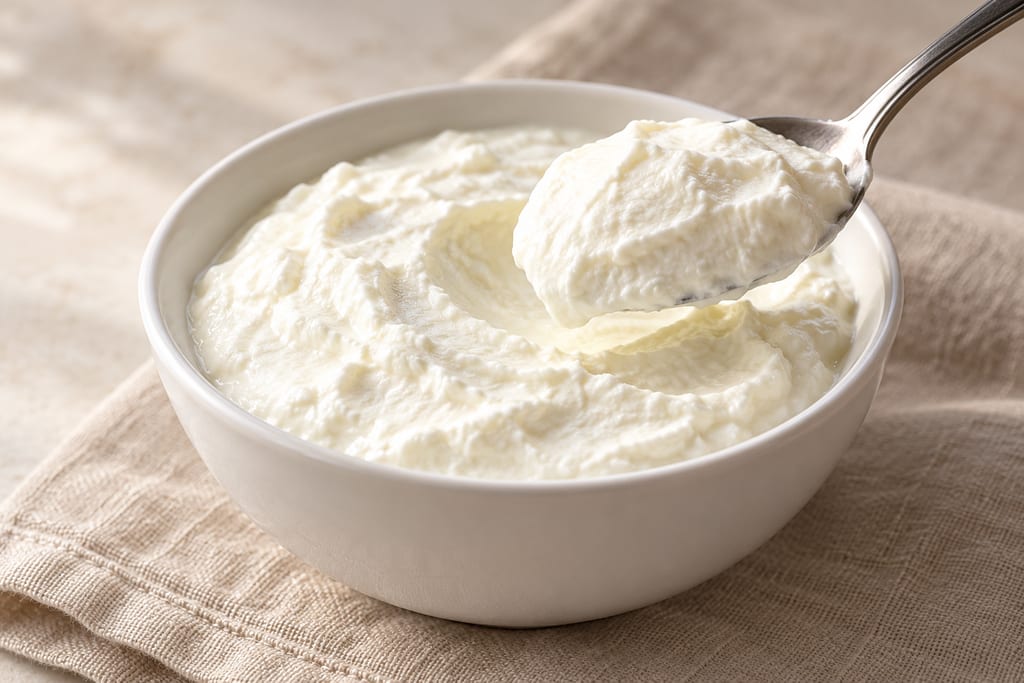
Greek-style strained yogurt
Greek-style strained yogurt is cultured whole milk drained through cloth to remove whey. This modern Utah home method makes a thick yogurt from a gallon batch.
 FermenteaWhere food goes to change
Substrates
Nonfat dry milk powder is dried skim milk that adds protein, lactose and minerals without much fat. It supplies milk solids for cultured dairy, baking and frozen desserts.
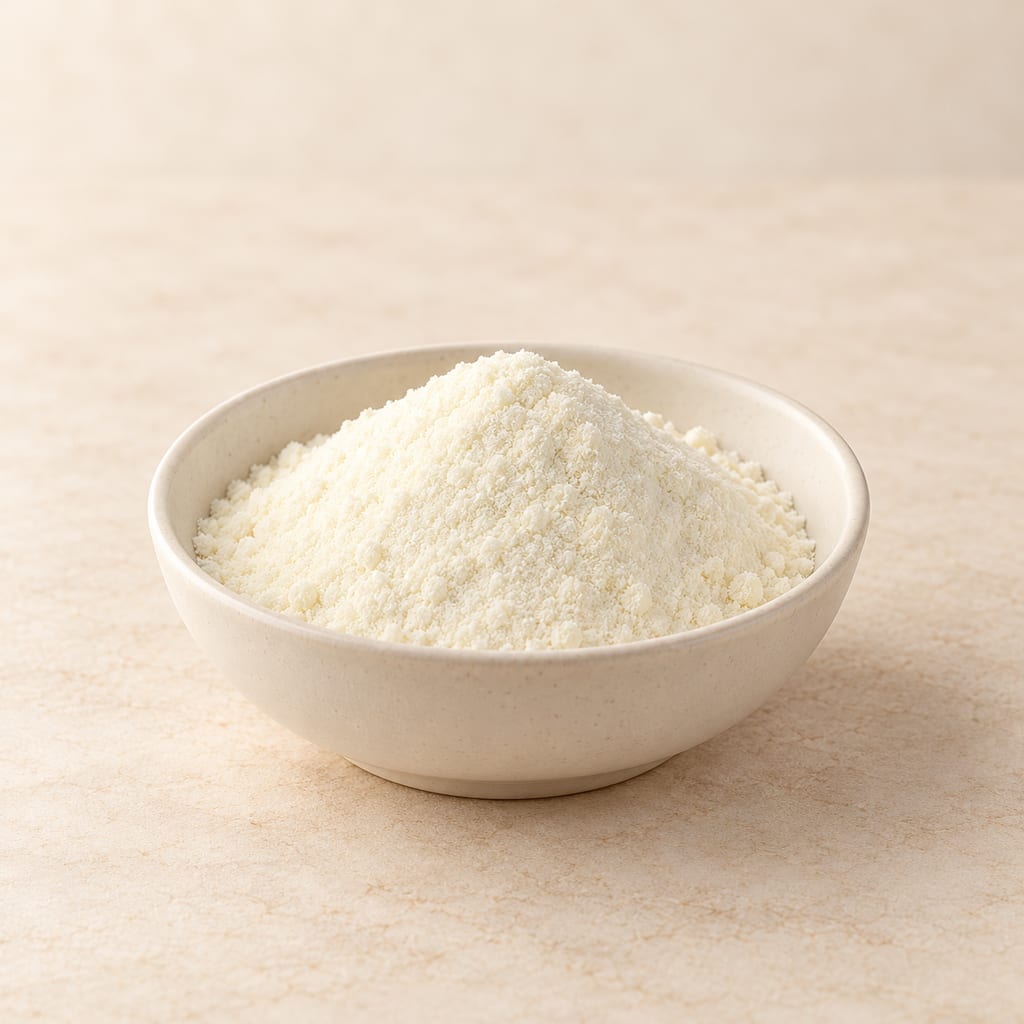
Nonfat dry milk powder is skimmed milk with most of its water removed. It is usually white to pale cream, with a mild dairy flavour, and comes as fine particles or larger instant granules. The powder brings milk protein, lactose and minerals to a preparation while adding little fat. That makes it useful when a cook wants more milk solids without pouring in more liquid.
In yogurt, this distinction is particularly useful. Milk powder supplies material from which the yogurt's structure can develop. The starter supplies the organisms that carry out fermentation. The two ingredients enter the same milk but do different jobs. A packet of ordinary nonfat dry milk is an ingredient for the culture to work in, rather than a packet of culture itself.
The names skim milk powder and skimmed milk powder are widely used alongside nonfat dry milk. They describe closely related dairy ingredients, but product standards can distinguish them, particularly over adjustments to protein content. The package's identity and specification remain useful when moving between countries or between a household product and a manufacturer's bulk ingredient. A familiar name does not make every white dairy powder the same product.
Removing water changed where milk could be used. A dry ingredient occupies less transport and storage space than the liquid milk from which it was made. It also gives a food manufacturer a way to add milk solids independently of the quantity of liquid already in a formula. These two advantages help explain why powder became useful both as a way to carry milk and as an ingredient in its own right.
Walter W. Fisk's The Book of Ice-Cream, published in 1919, describes powder as a means of increasing milk solids without adding more cream. It connects those solids with a firmer body and smoother ice cream. It also records the use of powder where fresh milk and cream supplies were difficult to obtain, and as a way to respond to sudden demand. Milk powder was already part of a discussion about supply, composition and texture, not merely an emergency drink.
The book includes competing drying processes and a manufacturer's account of commercial development. That history belongs to the industrial dairy trade of its period. It shows makers selling powder for what it could do in another food. Modern specifications, drying equipment and quality controls are different, but the underlying ingredient question remains familiar: which parts of milk does this preparation need, and how much extra water can it accommodate?
Separating cream leaves a skim-milk stream containing much of the original milk's protein, lactose and minerals. Producing nonfat powder continues the transformation of that stream. Pasteurization treats the milk microbiologically, while subsequent concentration and drying remove water. These are separate operations with separate purposes; drying is not the same event as separating milkfat.
Concentration normally precedes the final dryer. Vacuum evaporation allows water to be removed under reduced pressure, reducing the amount that must be evaporated in the drying chamber. The feed is therefore a concentrated liquid before it becomes a powder. Removing water in stages gives the manufacturer control over both energy use and the heat history experienced by the milk components.
Spray drying divides that concentrate into small droplets in moving hot air. Their large surface area allows water to leave rapidly. The resulting particles are collected and may undergo further drying and cooling before packaging. Roller drying takes a different route: milk forms a thin film on heated drums, and the dried material is scraped away and broken into smaller pieces. The two routes can leave different particle structures and thermal effects.
A powder's past consequently includes more than its final appearance. Starting milk, concentration, heating and drying all contribute to how it behaves when water is added again. A smooth-looking powder has undergone substantial processing even when its ingredient list is short. Its useful simplicity in the kitchen rests on a sequence of controlled operations at the dairy.
An instant powder has been processed to wet and disperse more readily. Fine particles can resist wetting or gather into lumps when they meet water. Agglomeration joins smaller particles into larger, porous clusters, creating routes through which water can penetrate. The larger granules can therefore be easier to reconstitute than a very fine powder, despite looking less finely ground.
Wetting, dispersion and dissolution describe related stages. Water first reaches the particle surfaces; particles then spread through the liquid; soluble components dissolve. A powder that floats in a dry-looking clump has not yet passed smoothly through those stages. Its difficulty is physical, rather than evidence that the milk has failed to ferment or needs a different starter.
Instant describes this handling property. It does not identify the animal that produced the milk, establish the powder's protein heat class or mean that sugar has been added. Those are separate pieces of product information. Read them separately, especially when a formula specifies a particular powder. The amount of air between particles and the way a measure is filled also make a volume measure different from a declared weight; use the units a recipe actually gives.
Nonfat dry milk can be described as low-, medium- or high-heat. These terms concern the cumulative effects of processing on the milk proteins. They are commonly assessed through a whey protein nitrogen index, which reflects how much whey protein remains undenatured. More extensive denaturation gives a different protein state from a treatment that leaves more of those proteins in their original form.
Denaturation means that a protein's folded structure changes. It does not mean that the powder has become protein-free. Changed whey proteins can interact differently with one another and with casein, the principal curd-forming milk protein. A manufacturer can use that difference when choosing an ingredient for a particular texture or processing operation.
Heat class is also different from grade. A grade concerns specified quality criteria, whereas heat classification helps describe functional suitability. A high-heat powder is not automatically better than a low-heat powder, or the reverse. Their usefulness depends on the food being made. Instant granules and heat class should likewise be treated as separate characteristics rather than as opposite ends of one scale.
In yogurt making, added nonfat dry milk increases the solids in the milk before fermentation. The culture then metabolizes lactose and produces lactic acid. As acidity changes, casein particles associate into a connected network that holds liquid. More material in the milk can change the character of that network and the body of the finished yogurt.
The whey proteins' condition also matters. Appropriate milk heating before inoculation can unfold them and encourage interactions with casein. Those interactions help the gel retain liquid. This explains why the powder's own manufacturing history and the yogurt milk's later heating history both deserve attention. They are successive parts of the ingredient's treatment, rather than interchangeable descriptions of one heat step.
Skim milk powder, whey powder and buttermilk powder bring different balances of dairy components to set yogurt. In tested formulations, substitutions between them changed viscosity and whey separation. That makes composition a practical issue: replacing a dairy powder changes the mixture in which the culture grows and the structure that forms. The comparison concerns the tested formulations, rather than supplying a general conversion between the powders.
In the linked Greek-style yogurt preparation, nonfat dry milk is optional and contributes to a thicker texture. Straining subsequently removes whey from the fermented gel. Adding solids first and removing liquid later are different ways of changing concentration. Keeping both operations visible helps the cook understand why an unstrained yogurt made with powder can differ from a drained yogurt made without it.
Whole-milk powder retains substantially more milkfat than nonfat dry milk. Replacing one with the other changes richness as well as the balance of solids. They may share an industrial drying method while bringing a different composition to the bowl. A recipe specifying nonfat powder is therefore giving more information than a request for a generic dairy flavour.
Whey powder begins from a different dairy stream. Whey is separated during cheese or casein manufacture, so drying it does not recreate all the components of skim milk in the same proportions. Milk-protein concentrates take another route, using separation processes to increase protein relative to other milk constituents. The names identify different starting materials and processing choices, which is why the powders can behave differently in cultured foods.
Evaporated milk and sweetened condensed milk are concentrated liquid products; the latter also contains added sugar. They bring water, and sometimes added sweetness, into a formula that may have been designed for a dry ingredient. Ordinary milk powder also has a different identity and purpose from infant formula, which has special compositional and manufacturing requirements. Powdered appearance alone is a poor guide to substitution.
Milk solids contribute more than thickness. In baking, lactose can react with amino groups in proteins during heating, contributing to browning. Ordinary baker's yeast does not ferment lactose, so this milk sugar can remain available for crust colour development. The yeast's fermentation and the later browning reaction are distinct parts of making the bread.
Milk proteins also influence the physical structure of foods, including foam and the way water is held. In a frozen dessert, increasing milk solids changes the mixture rather than simply adding a dairy aroma. Adding the solids carried in milk powder can change the body and smoothness of an ice-cream mixture. Modern formulations still distinguish the roles of fat, nonfat solids and water.
These different uses explain why an industrial specification can be more detailed than a household packet. A dairy drink, a cultured gel and a baked product place different demands on the same ingredient. The relevant choice is the powder's identity and functional properties in the intended preparation, rather than the assumption that one form is best for every kitchen task.
Milk powder takes up moisture from humid surroundings. That can change its flow, encourage caking and make it less convenient to disperse. A well-closed package and dry handling help protect the physical qualities for which the powder was made. Follow the manufacturer's storage and use instructions for the actual product rather than transferring a bulk-trade storage duration to an opened household packet.
Adding water changes the handling situation. The resulting liquid is no longer protected by the same dry conditions as the powder in its package. Use the product's reconstitution directions or a documented preparation that specifies the powder, and handle the resulting dairy mixture accordingly. A dry powder's keeping qualities do not establish how long a reconstituted milk or a fermented batch will keep.
Nonfat dry milk contains milk proteins and remains a milk allergen. Removing most of the fat does not remove the ingredient's identity as dairy. It also contains lactose. Milk allergy concerns an immune reaction to milk proteins; lactose intolerance concerns digestion of the milk sugar. These are different dietary considerations, and the word nonfat does not resolve either one.
For the cook, the most useful package information is consequently specific: what the powder is, whether it is instant, any declared heat class, its ingredients and the maker's directions. Those details connect the pale granules in the container with the milk, processing and functional properties behind them. They help explain what the powder contributes before it is mixed into a culture, a dough or a dessert.
milk
A 1919 New York dairy textbook documents milk-powder ingredient use. Not an assertion of a single birthplace or this powder’s milk source.
A named contemporary skim-milk-powder producer and regional milk-sourcing example; not the origin of powder used by linked recipes.
Greek-style strained yogurt is cultured whole milk drained through cloth to remove whey. This modern Utah home method makes a thick yogurt from a gallon batch.

A refined common-wheat flour blended for a broad range of baking; its protein and behavior vary with wheat, milling and market.

Toasted almonds are whole sweet almond kernels dry-roasted until golden to brown. Heat replaces their marzipan note with a roasted, nutty one; they thicken and flavour romesco.
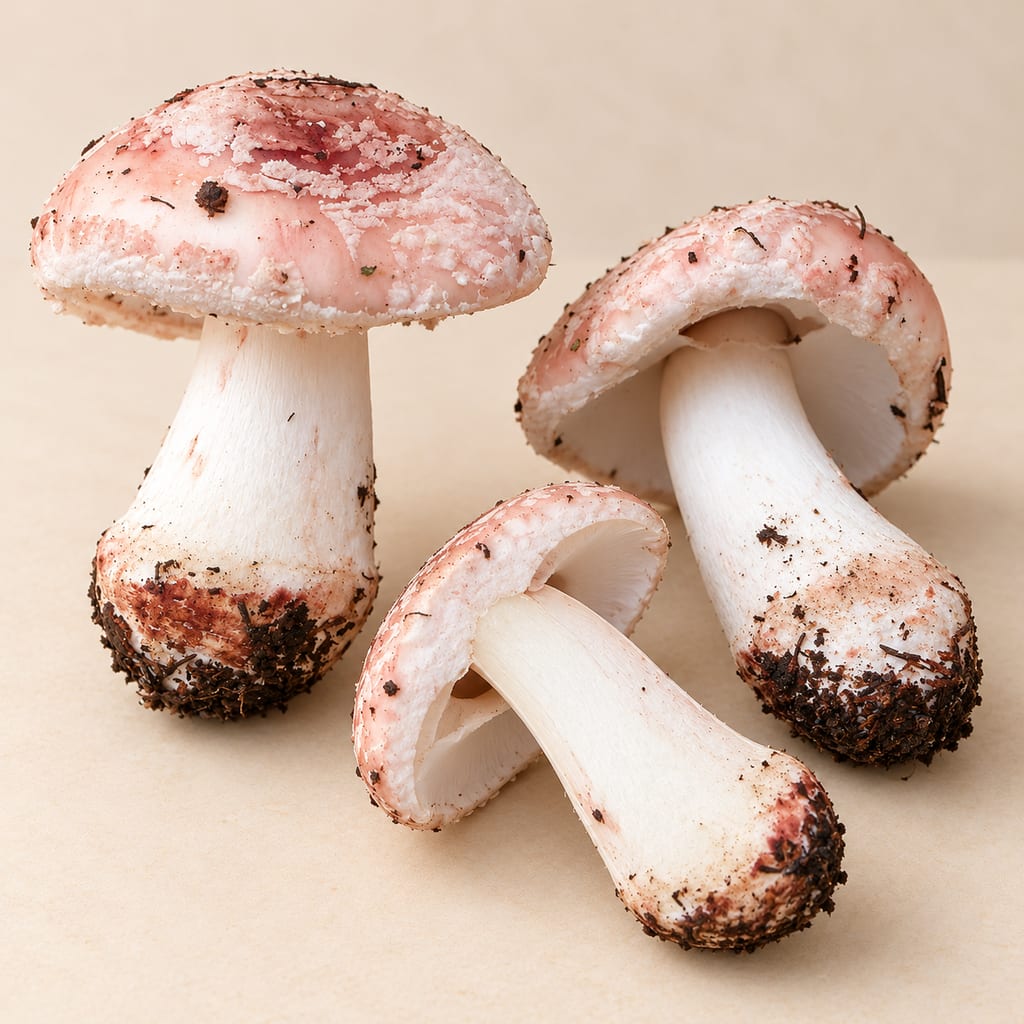
Amanita novinupta is a western North American blusher, a forest mushroom recorded as food in Mexico, and one that must be cooked because its raw flesh is toxic.

Sambucus canadensis is the accepted name used here for American elderberry. Missouri production guidance and named-cultivar studies give useful regional growing information, while food and analytical sources leave process questions open.
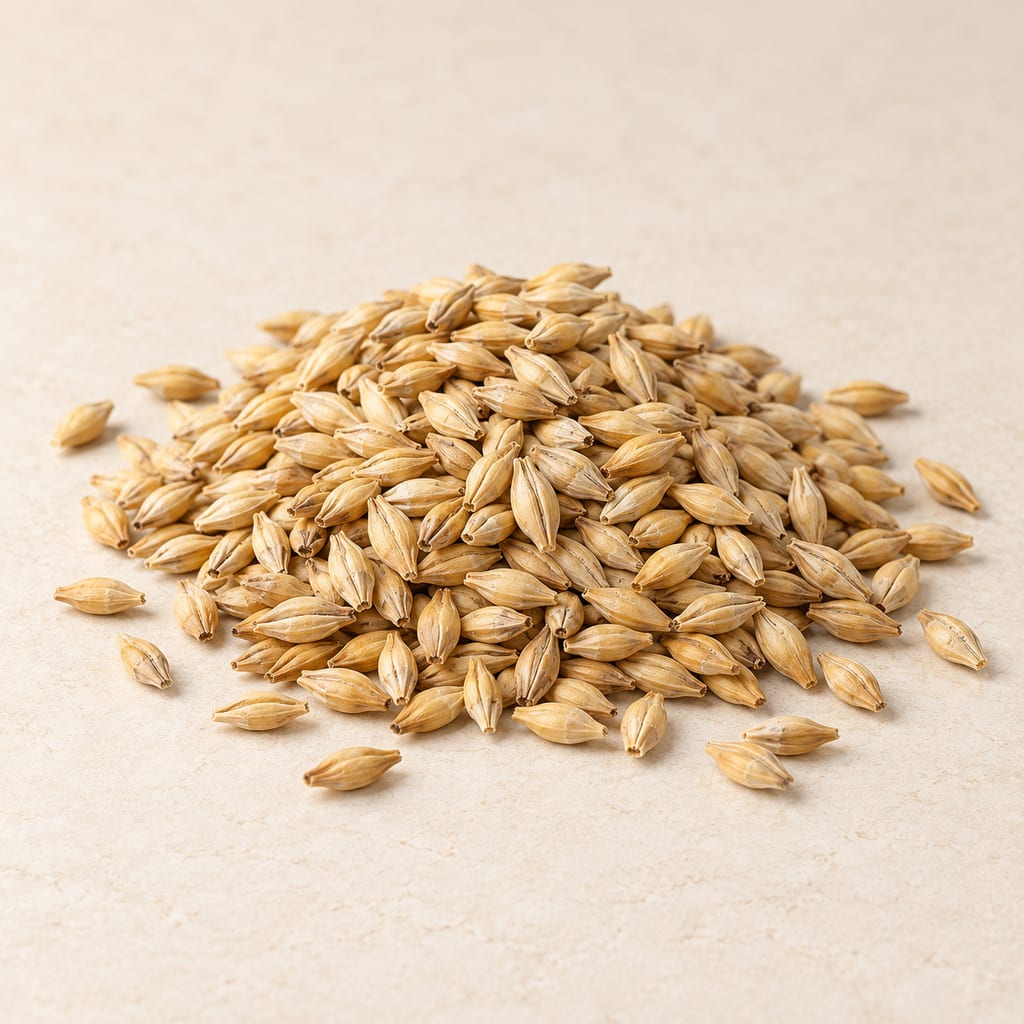
A lightly kilned brewing base made from two-row barley. It supplies starch and enzymes for the mash, with the maltster’s product and lot analysis defining its brewing properties.

Ripe avocado flesh is the soft, buttery, fat-rich pulp of Persea americana, eaten raw. It is low in acid, so it is a fresh ingredient that needs care in chilled dishes.
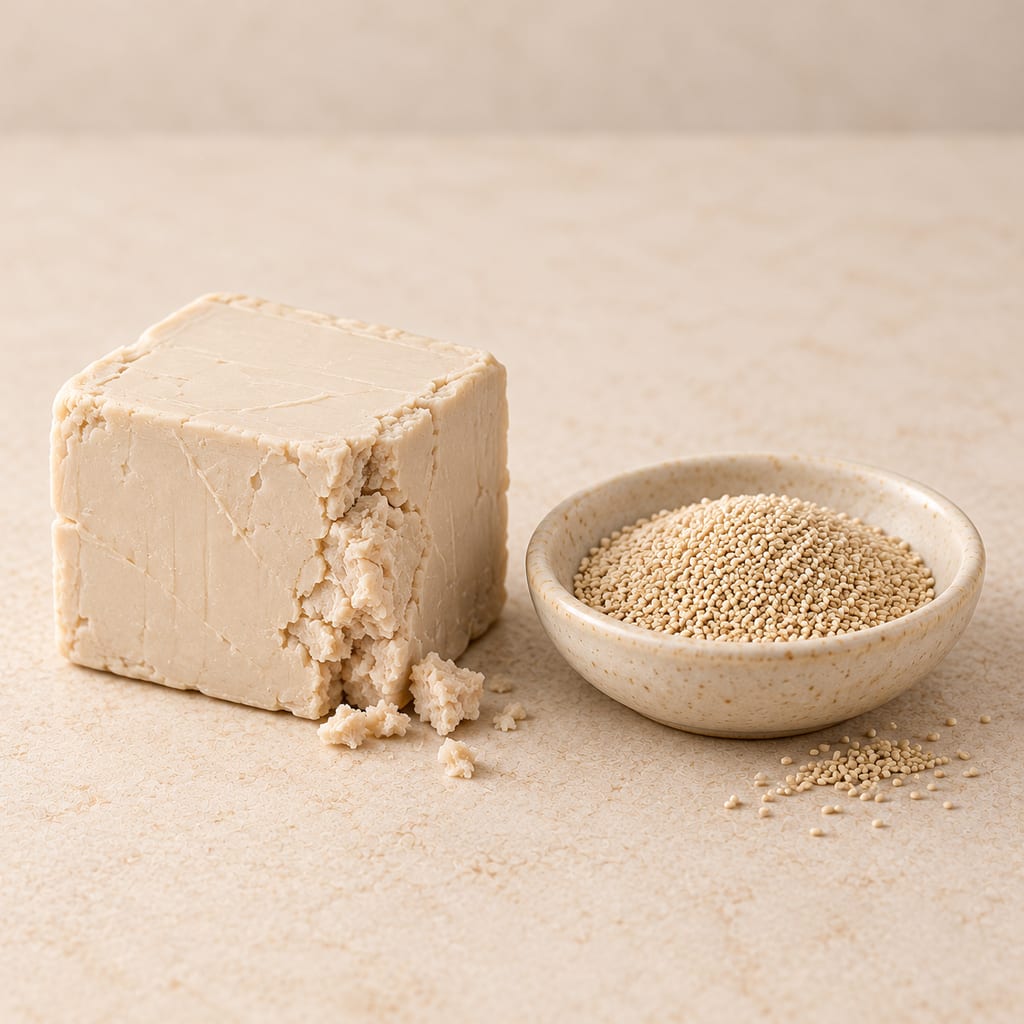
Baker's yeast is a cultivated living leavener, commonly sold fresh or dried. In dough, selected Saccharomyces cerevisiae cells make gas that can raise bread.
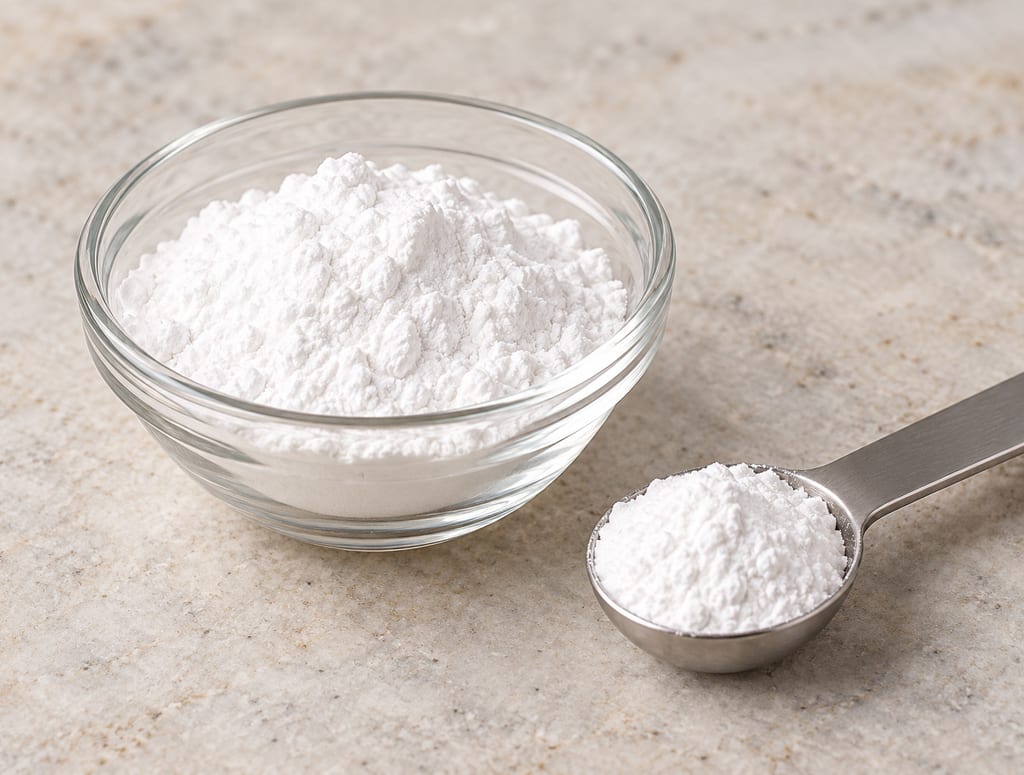
Baking powder is a dry chemical leavener that combines bicarbonate with acid-reacting ingredients and a carrier. Moisture and heat release carbon dioxide for quick breads, batters and griddle cakes.
No community contributions have been published for this entry yet.
Sign in to contribute. Published comments and photos are free to read.
American Dairy Products InstituteIngredient context
Nonfat Dry Milk (NDM) Standard v3.0Product from pasteurized skim milk; distinct instant form; heat classification differs from grade; manufacturer-specific dry storage/handling; milk ingredient applications.
Cited in: Milk solids without the liquid bulk; What instant means in a spoon and a bowl; Heat class is a separate choice; Similar powders with different jobs; Keeping the powder dry and handling it as milk
U.S. Dairy Export CouncilIngredient context
Reference Manual for U.S. Milk Powders and Microfiltered IngredientsWater removal and powder functionality; vacuum concentration, drying and instantizing; composition and separate heat/grade choices; lactose/protein browning, ordinary baker’s yeast does not ferment lactose; composition/product distinctions and handling.
Cited in: An ingredient that travelled beyond the dairy; From skim milk to dry particles; What instant means in a spoon and a bowl; Heat class is a separate choice; Similar powders with different jobs; From yogurt to bread and ice cream; Keeping the powder dry and handling it as milk
Tetra PakIngredient context
Milk and whey powdered ingredients, Dairy Processing HandbookSpray/roller drying, particle structure and agglomeration; wetting/dispersing/dissolution and bulk-density differences; milk versus whey/protein powder forms.
Cited in: From skim milk to dry particles; What instant means in a spoon and a bowl
The Macmillan Company; Project Gutenberg transcriptionIngredient context
The Book of Ice-CreamHistorical U.S. milk-powder use for supply and milk solids/body/smoothness in ice cream; industrial product development discussed in a contemporary dairy textbook.
Cited in: An ingredient that travelled beyond the dairy; From yogurt to bread and ice cream
University of Wisconsin–Madison Center for Dairy ResearchIngredient context
Yogurt Monograph Series: ProductionLactose fermentation/acid gel, casein versus soluble whey phase; heat-denatured whey proteins and water retention; concentration before versus after fermentation.
Cited in: Milk solids without the liquid bulk; Adding body before fermentation
Journal of Food Science and Technology56(10):4429–4436Ingredient context
Investigation of the use of whey powder and buttermilk powder instead of skim milk powder in yogurt productionQualitative formulation-specific differences in viscosity and whey separation when dairy powders were substituted in set yogurt. No experimental quantity, organism count or shelf life transferred.
Cited in: Adding body before fermentation
Utah State University ExtensionIngredient context
Homemade Fermented YogurtOptional nonfat dry milk for thicker yogurt in the linked source recipe; separate heating/culture/straining roles.
Cited in: Adding body before fermentation
FAO/WHO Codex AlimentariusIngredient context
Codex Standard for Milk Powders and Cream Powder, CODEX STAN207-1999Skimmed/whole/cream powder names and compositional distinctions; permitted adjustment of milk constituents without changing whey-protein-to-casein ratio in the supplied edition.
Cited in: Milk solids without the liquid bulk; Similar powders with different jobs
U.S. Food and Drug AdministrationIngredient context
Food AllergiesMilk is a major food allergen; food allergy involves immune responses to food proteins.
Cited in: Keeping the powder dry and handling it as milk
National Institute of Diabetes and Digestive and Kidney DiseasesIngredient context
Symptoms & Causes of Lactose IntoleranceLactose intolerance concerns lactose digestion/lactase, distinct from milk-protein allergy.
Cited in: Keeping the powder dry and handling it as milk
U.S. Food and Drug AdministrationIngredient context
Guidance for Industry: Frequently Asked Questions about FDA’s Regulation of Infant FormulaInfant formula is a distinct product with special compositional/manufacturing requirements; ordinary milk powder is not equivalent.
Cited in: Similar powders with different jobs
MTW Milchtrockenwerk NorddeutschlandIngredient context
Milchtrocknung in Neumünster mit modernster TechnologieProducer example: skim-milk-powder manufacture in Neumünster with milk sourced from surrounding Schleswig-Holstein; visible bowl of finished powder as a linked reference.