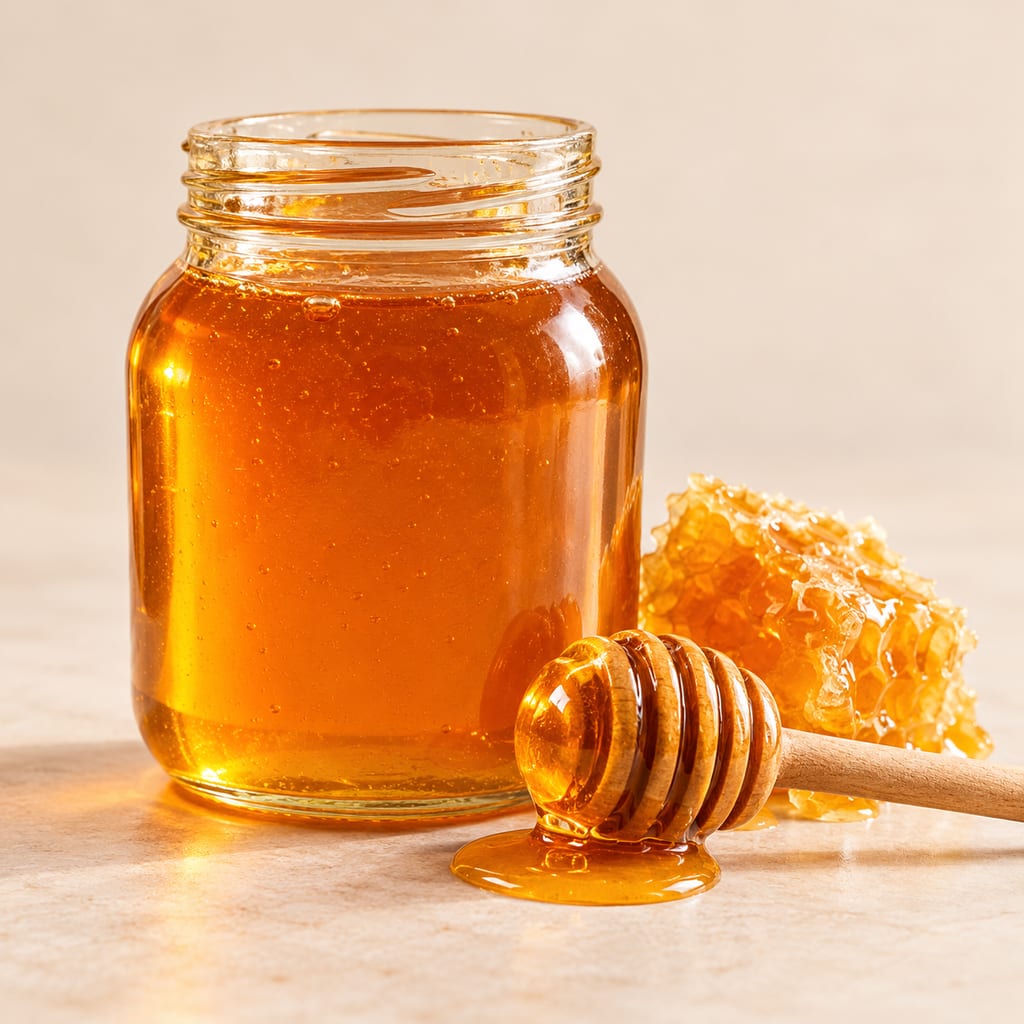
Honey
Honey is a bee-made food from floral nectar or honeydew; breads use it in dough or as a syrup served with cooked griddle breads.
 FermenteaWhere food goes to change
Modern method
Tej · T'ej
An Ethiopian honey wine made here as a controlled laboratory formulation with honey, water, a mixed bacterial-and-yeast starter, and gesho.
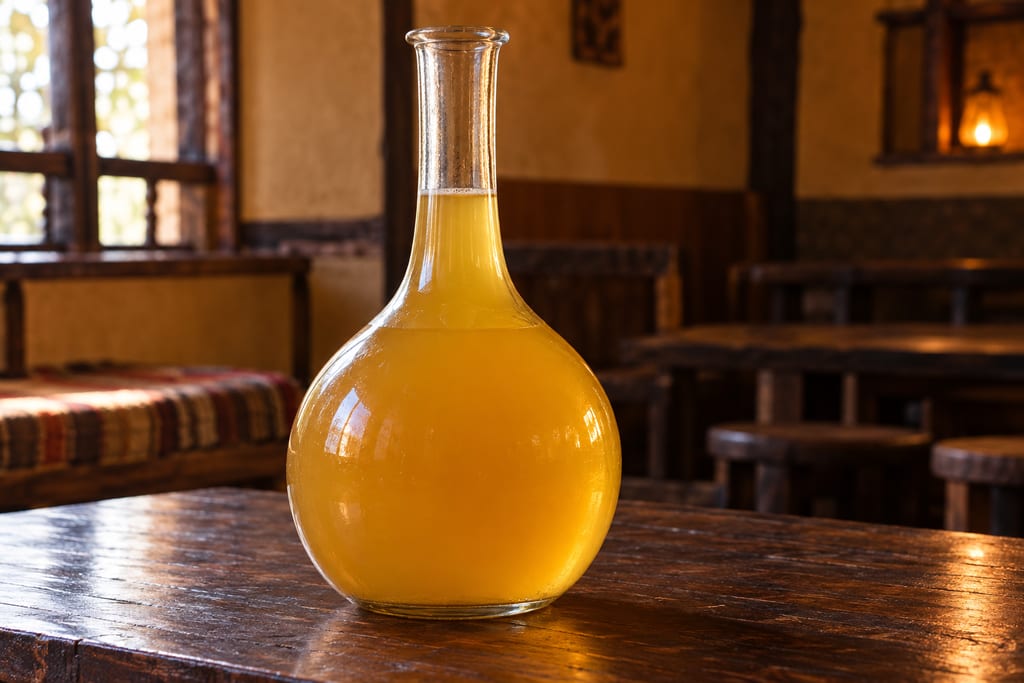
Tej is an Ethiopian honey wine. A 2025 study describes traditional batches as variable and commonly made with honey, water and gesho; it also notes that vat-conditioning plants and producer practices differ.
The preparation on this page records one controlled research formulation using selected lactic acid bacteria and yeast. The study's protocol is distinguishable from spontaneous household preparations, and it should not be read as a universal Tej method.
The researchers collected traditional Tej from established producers in Debre Markos, Finote Selam and Bure, in Amhara Region. Those places document the sample sources. The paper does not claim the experimental starter recipe was invented or traditionally prepared in any one of them.
For its T5 flask batch, the study used 250 g honey, 500 mL sterile distilled water and a 5% mixed starter of Lacticaseibacillus paracasei L6 with Saccharomyces cerevisiae Y6. T5 received the highest overall acceptability score in the study's panel; that result is a sensory observation, not evidence of safety.
The mixture fermented for three days before researchers added 10 g sterile gesho. They then fermented it for 15 more days at ambient temperature and filtered through sterile muslin.
The article reports a 1 L flask and aluminum-sheet cover. It does not supply a numerical ambient temperature for the later stage or a numerical temperature for the first stage. It also does not report finished yield, an alcohol result for this batch or a consumer endpoint.
The paper identifies Tej as alcoholic but gives no alcohol concentration for this particular formulation. Do not infer strength from its 18-day schedule.
The protocol is a laboratory experiment using selected cultures and sterile materials. The paper does not validate it as a household preservation process and gives no finished-product storage period.
The honey treatment in the article is part of the experimental method; it is not presented here as proof that every hazard is controlled. The study's use of sterile water, gesho and muslin also does not establish a complete home safety procedure.
The 2025 paper describes Tej as an Ethiopian household alcoholic beverage whose traditional production varies by producer, and studies samples from established producers in three Amhara towns. Its mixed-starter flask protocol is a recent controlled research formulation; no earliest historical attestation is established here.
Scaling: source batch only
The paper identifies Tej as an alcoholic beverage but does not report an alcohol concentration for this 18-day laboratory batch; strength cannot be inferred from elapsed time.
Hazard sourceThis is a controlled research formulation using selected mixed cultures and sterile inputs, not a validated household preservation process; the paper gives no consumer endpoint or storage duration.
Hazard sourceThe researchers used pasteurized honey, sterile distilled water, a sterile gesho addition and sterile muslin in the laboratory protocol. These details describe the experiment; they do not establish a complete safety control for household production.
Control sourceThis is an alcoholic drink; its strength is not given for this batch.
Do not treat the study's honey pasteurization step or the 18-day schedule as a validated safety endpoint or shelf-life instruction.
One of three Amhara towns where researchers sampled Tej from established producers; the paper does not say its laboratory formulation originated here.
One of three Amhara towns where researchers sampled Tej from established producers; the paper does not say its laboratory formulation originated here.
One of three Amhara towns where researchers sampled Tej from established producers; the paper does not say its laboratory formulation originated here.
Honey is a bee-made food from floral nectar or honeydew; breads use it in dough or as a syrup served with cooked griddle breads.

From sour breads and milk to savoury seeds, cassava staples and living beers, African fermentation follows the crop, the community and the work of transformation.
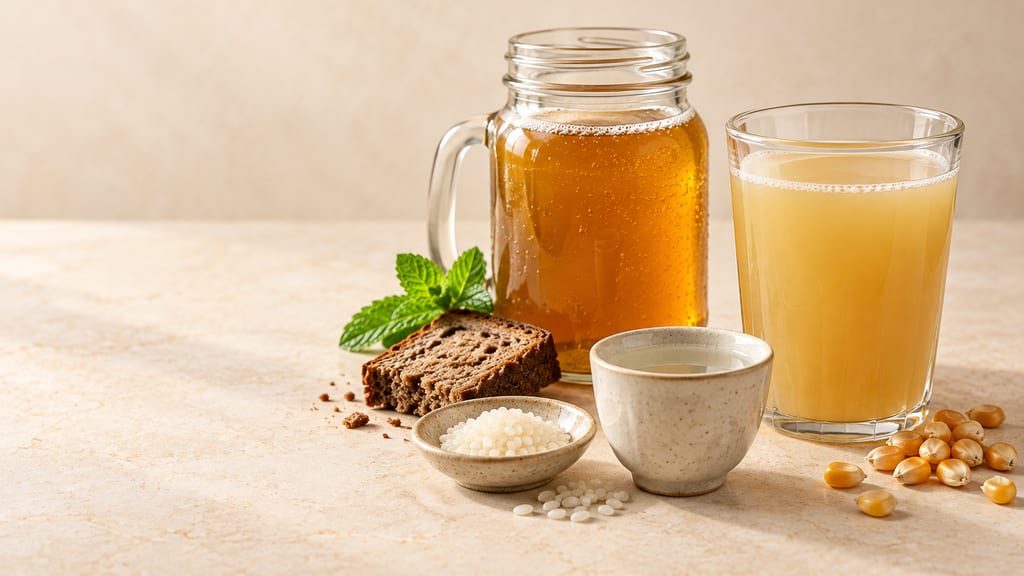
People kept, traded and steered living ferments for thousands of years before anyone saw a yeast cell. This is that history, region by region, and a guide to what a yeast strain is today.
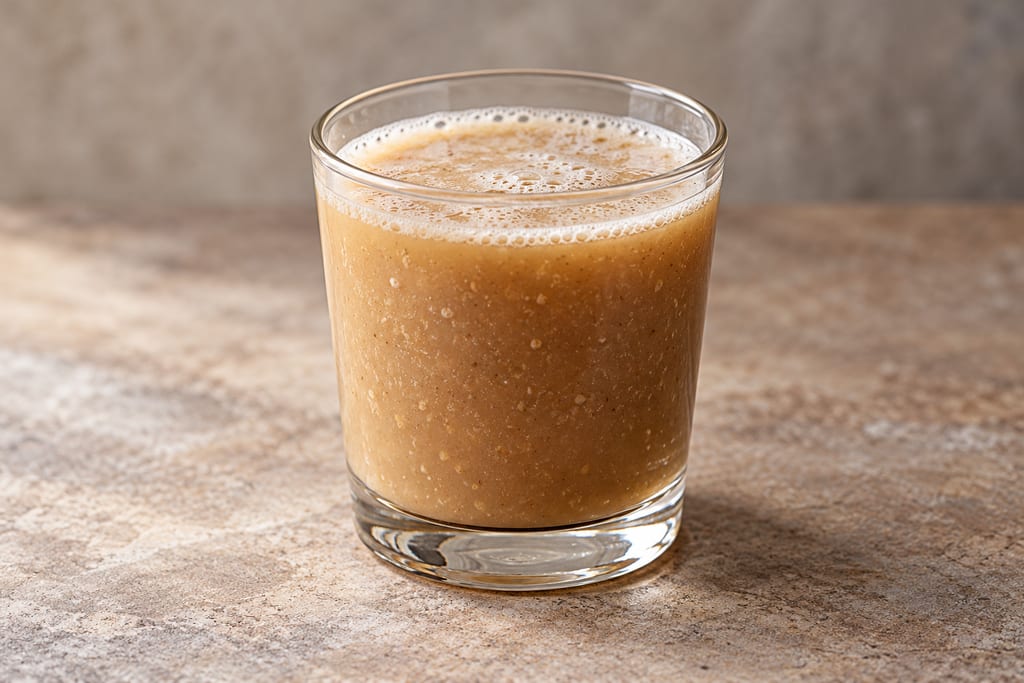
A thick, faintly fizzy Ethiopian cereal drink in which a wheat dough is fermented, roasted dark, then fermented a second time with barley malt into a drinkable slurry.
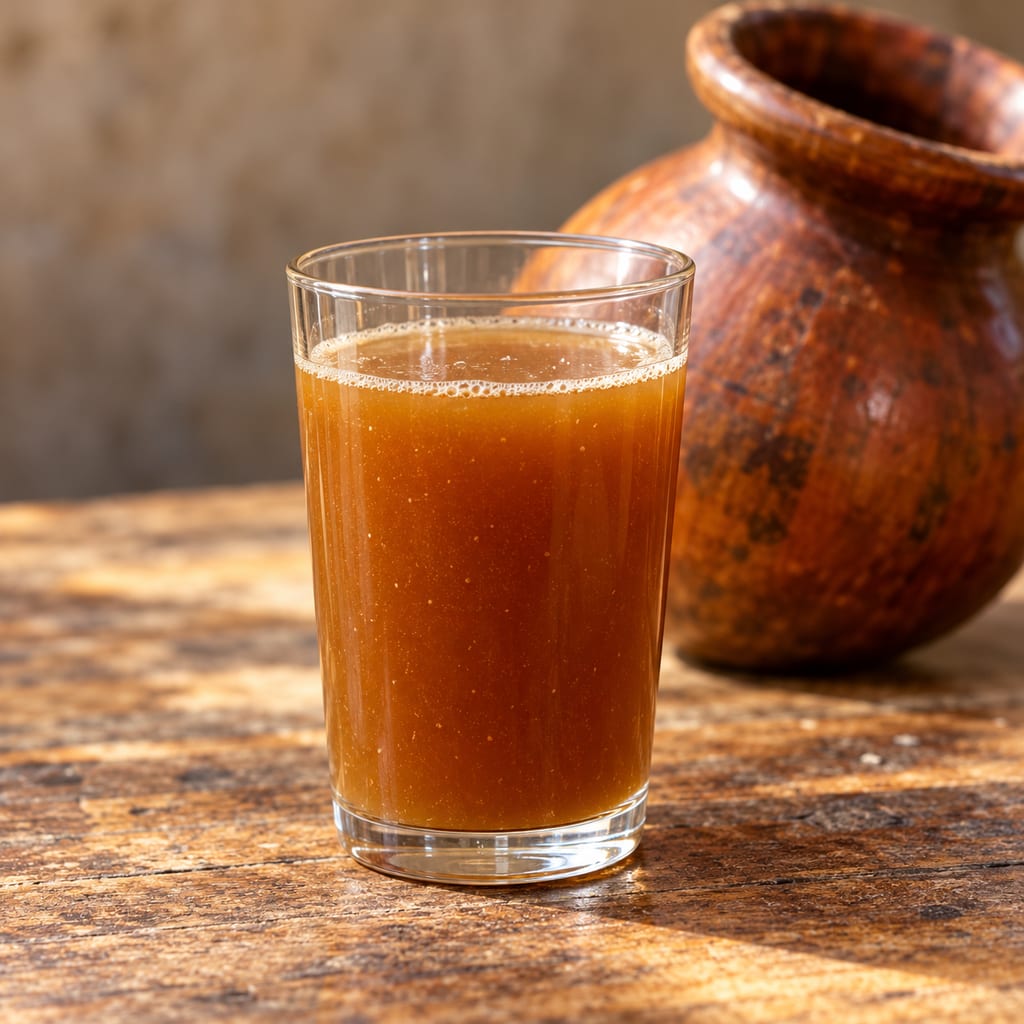
A darker Ethiopian maize tella, brewed from maize baked into a hot, dry kita pancake and then fermented in three stages with barley malt, gesho and water.
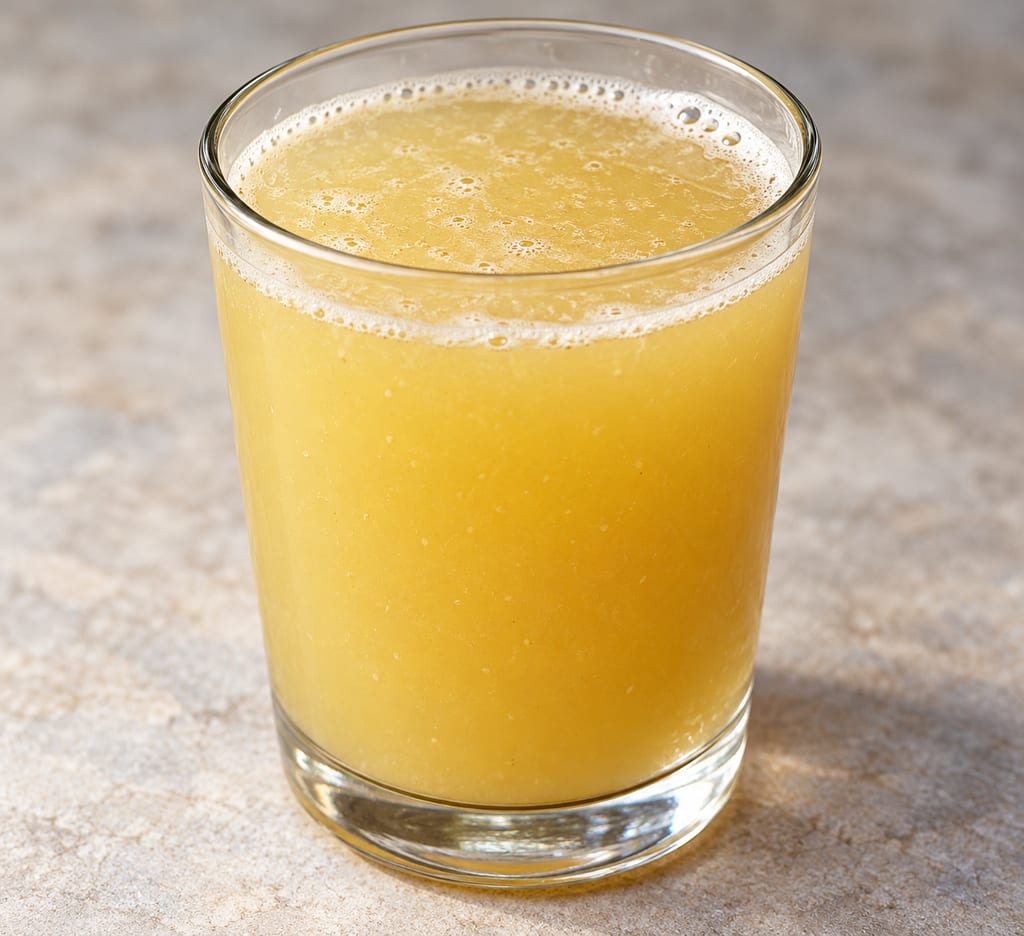
A pale Ethiopian maize tella, brewed from maize baked into a kita pancake at a gentler heat and then fermented in three stages with barley malt, gesho and water.
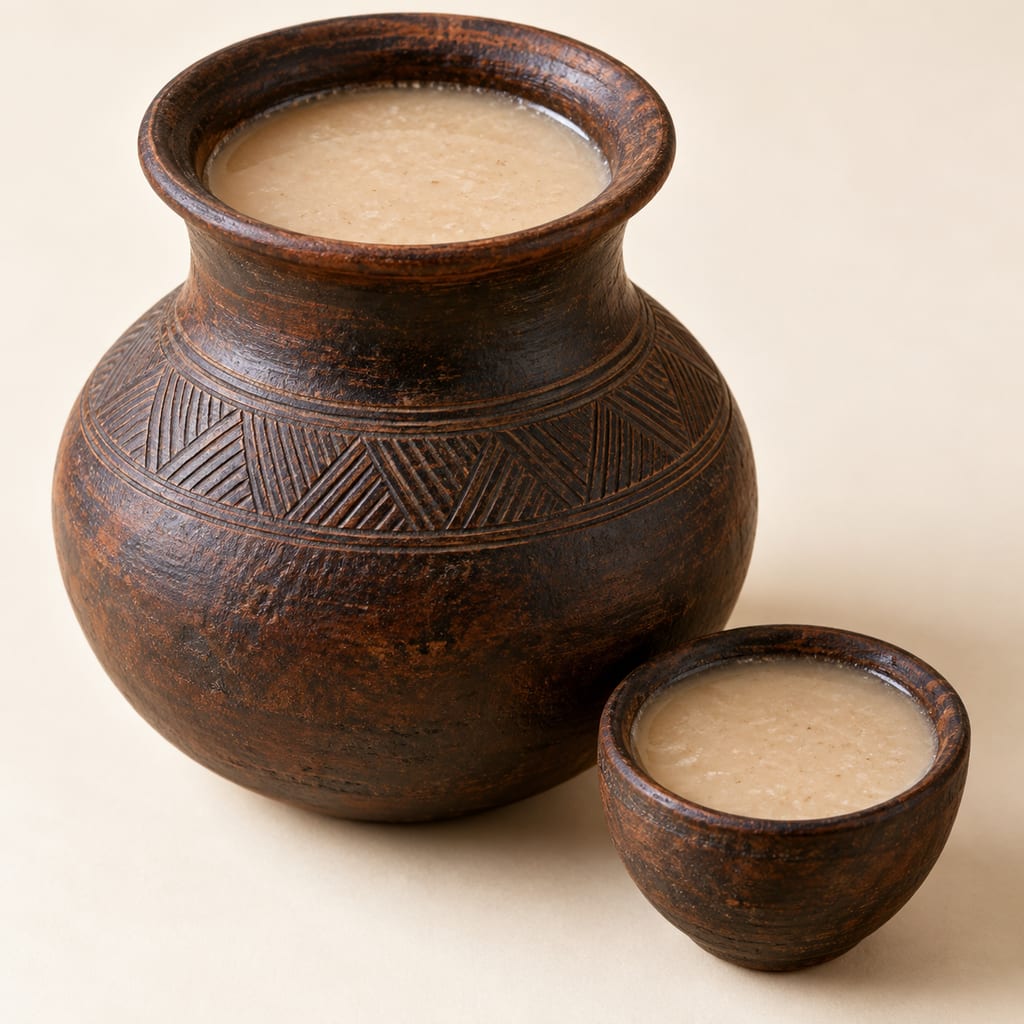
A 2025 study formula combines wheat dough and sorghum porridge with sorghum malt and gesho in staged fermentation. Konso and Dirashe fieldwork records distinct cereal-and-leaf Cheka variants; the study formula is not universal.
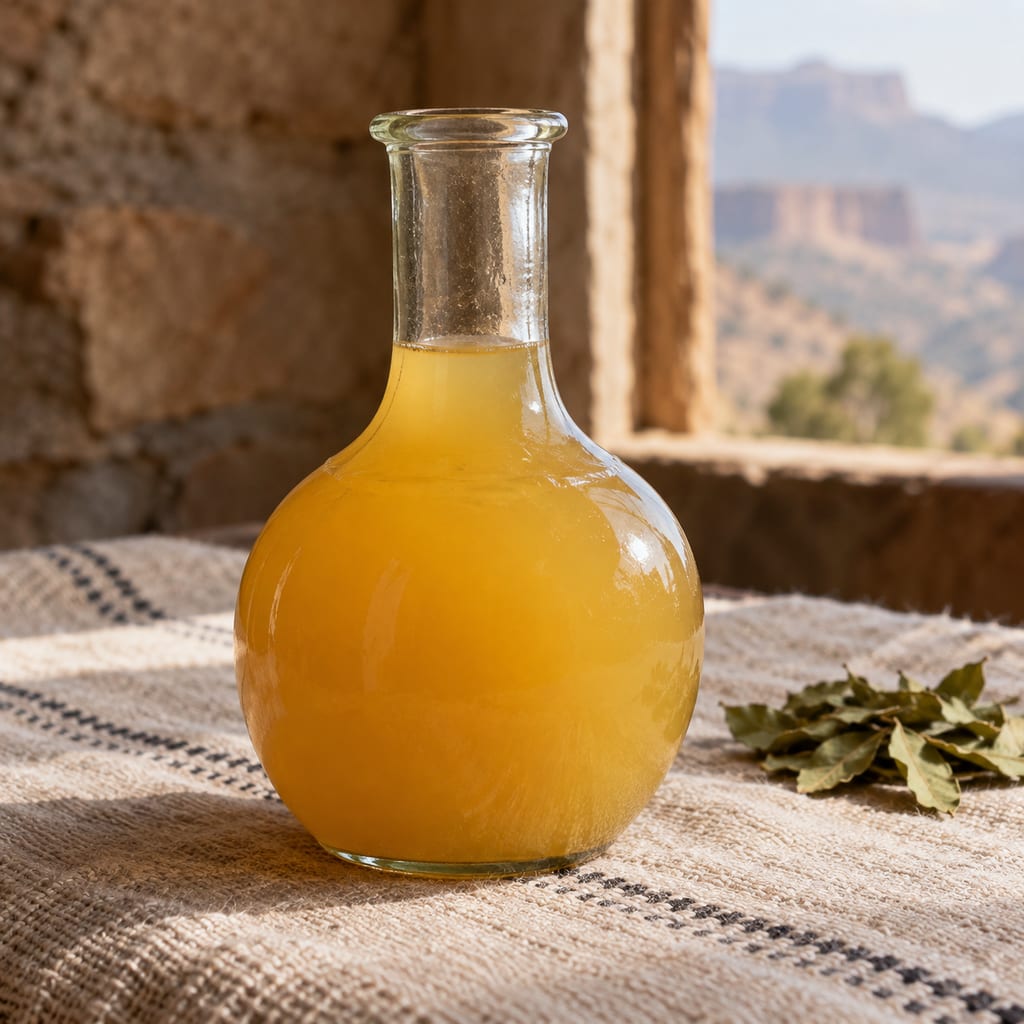
An Ethiopian honey wine of the Tigray highlands, fermented with the leaves and stems of gesho, which supply both bitterness and the microorganisms that carry the ferment.
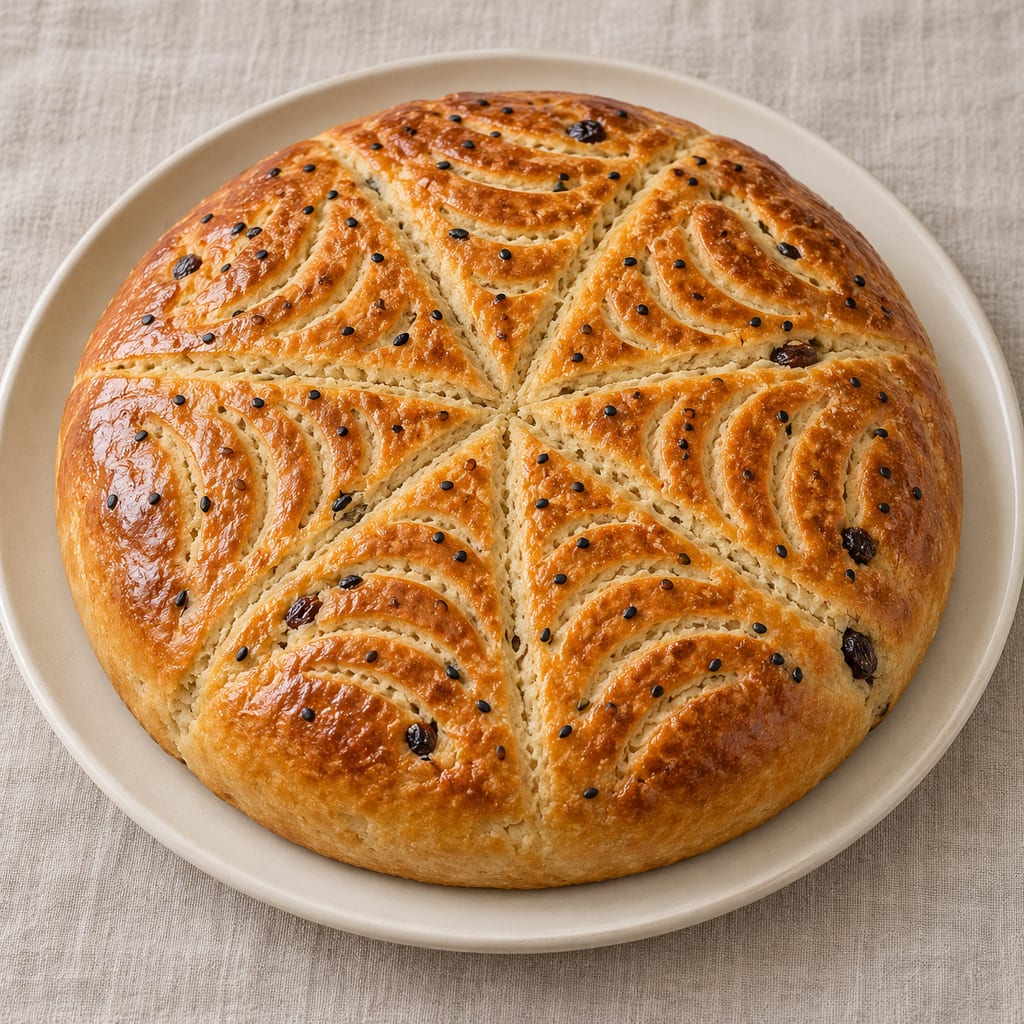
A round, mildly sweet wheat bread leavened with baker’s yeast and marked with a wheel pattern. This source batch uses raisins, black sesame and cardamom.
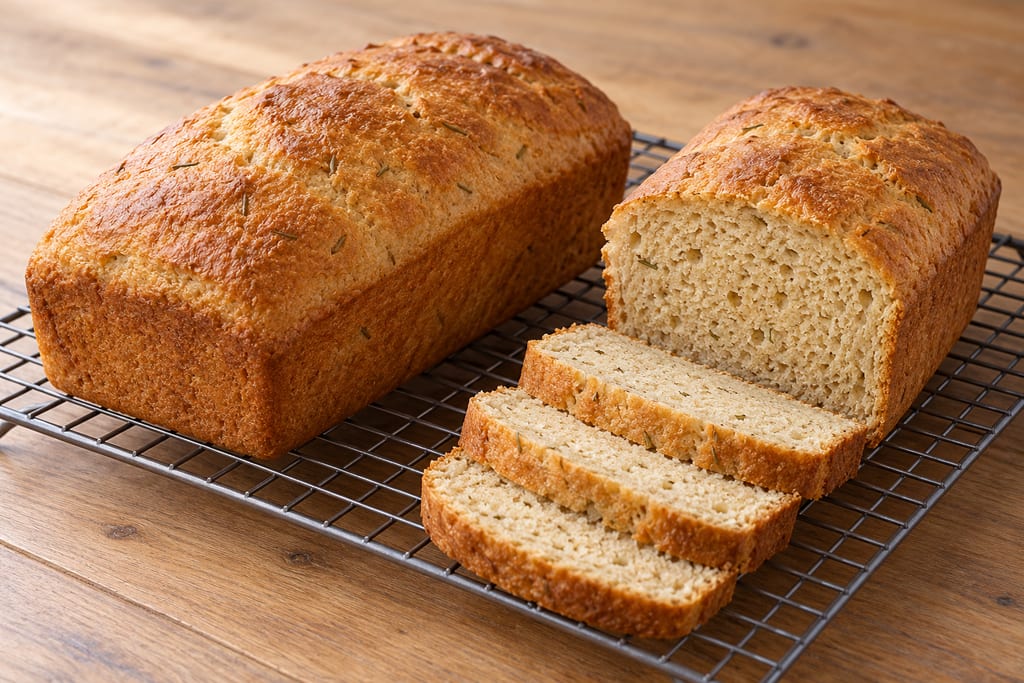
Ethiopian breakfast honey bread: two rosemary-scented yeast loaves shaped in pans and baked at 400°F.
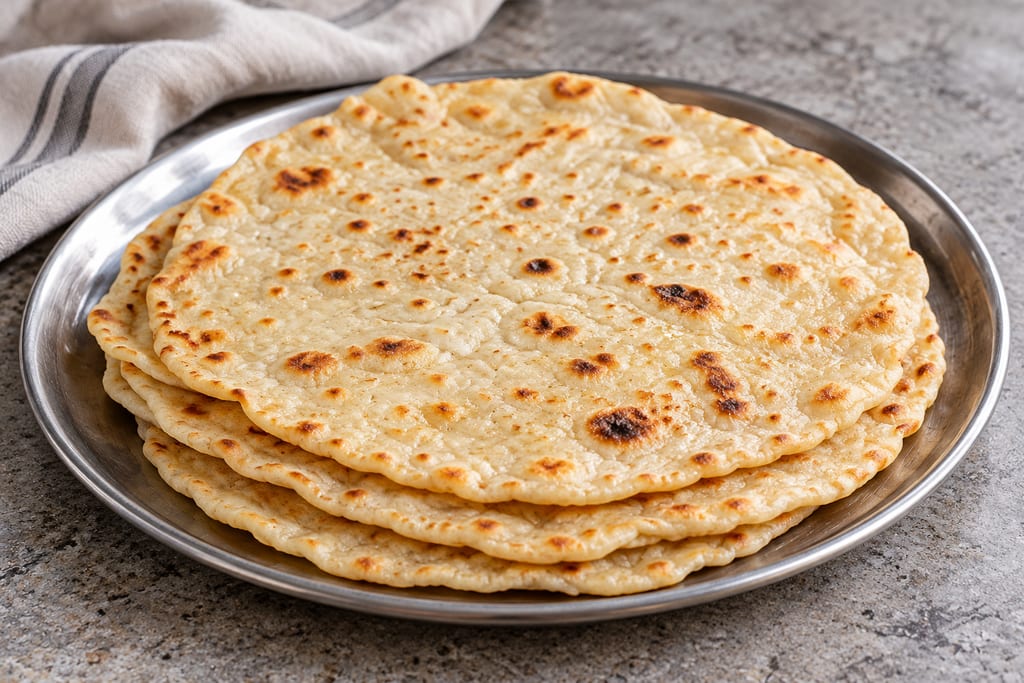
An unleavened Ethiopian and Eritrean wheat flatbread, rolled thin and cooked in clarified butter.
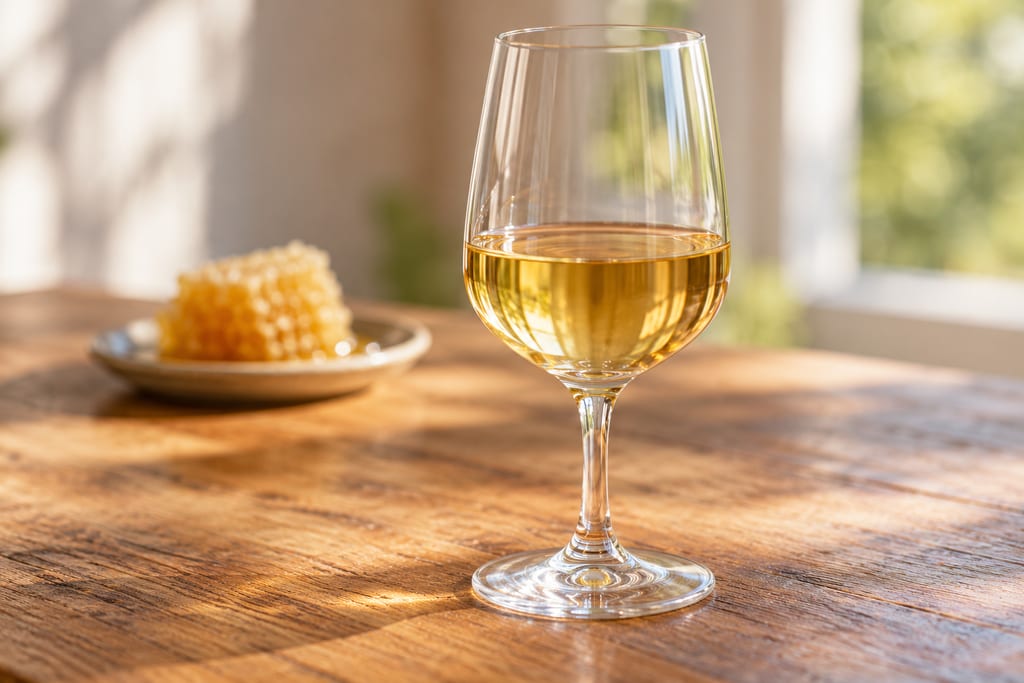
Mead is an alcoholic drink made by fermenting diluted honey with yeast, then racking and ageing it. The honey, not refined sugar, is what makes it mead.

A still, dry honey wine fermented from varietal honey and water with a single wine yeast, carrying no residual sweetness and no added carbonation.
No community contributions have been published for this entry yet.
Sign in to contribute. Published comments and photos are free to read.
Scientific Reports / PubMed CentralMethod · Ingredients · Geography · History · Safety
Production of improved Ethiopian Tej using mixed lactic acid bacteria and yeast starter culturesTraditional Tej is described as an Ethiopian alcoholic beverage commonly made at household level from honey, water and gesho, with production variation among producers.
Researchers collected 30 traditional Tej samples from producer and vending houses in Debre Markos, Finote Selam and Bure in Amhara Region; these are sampling locations, not a claimed origin for the laboratory formulation.
Laboratory formulation: 250 g honey pasteurized at 62.5°C for 15 minutes plus 500 mL sterile distilled water in a 1 L flask, inoculated with 5% LAB and yeast suspension.
After three days, 10 g sterile gesho was added; the flask fermented 15 more days at ambient temperature, then was filtered through sterile muslin.
The article does not provide a numerical ambient temperature, alcohol strength for this batch, validated consumer endpoint or storage duration.
T5, the mixed starter formulation receiving the highest overall acceptability score, used Lacticaseibacillus paracasei L6 and Saccharomyces cerevisiae Y6.
Cited in: A laboratory formulation, not one household standard; What the experiment specifies; Safety and evidence limits