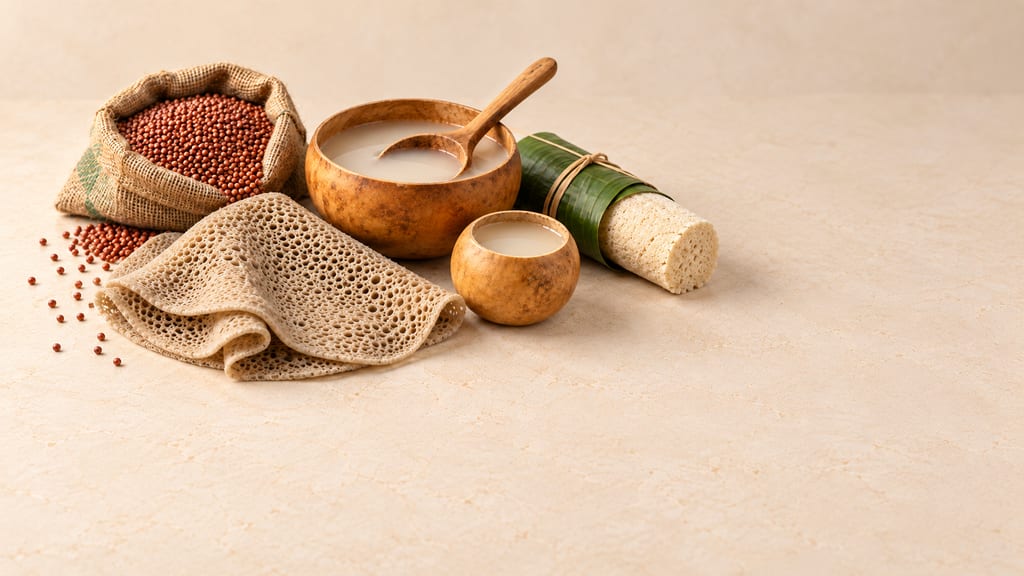
African fermented foods, drinks and preservation
From sour breads and milk to savoury seeds, cassava staples and living beers, African fermentation follows the crop, the community and the work of transformation.
 FermenteaWhere food goes to change
Cultures
Saccharomyces cerevisiae is the budding yeast that raises bread, ferments most wine and ale, and is sold as named strains whose behaviour in dough or wort differs.
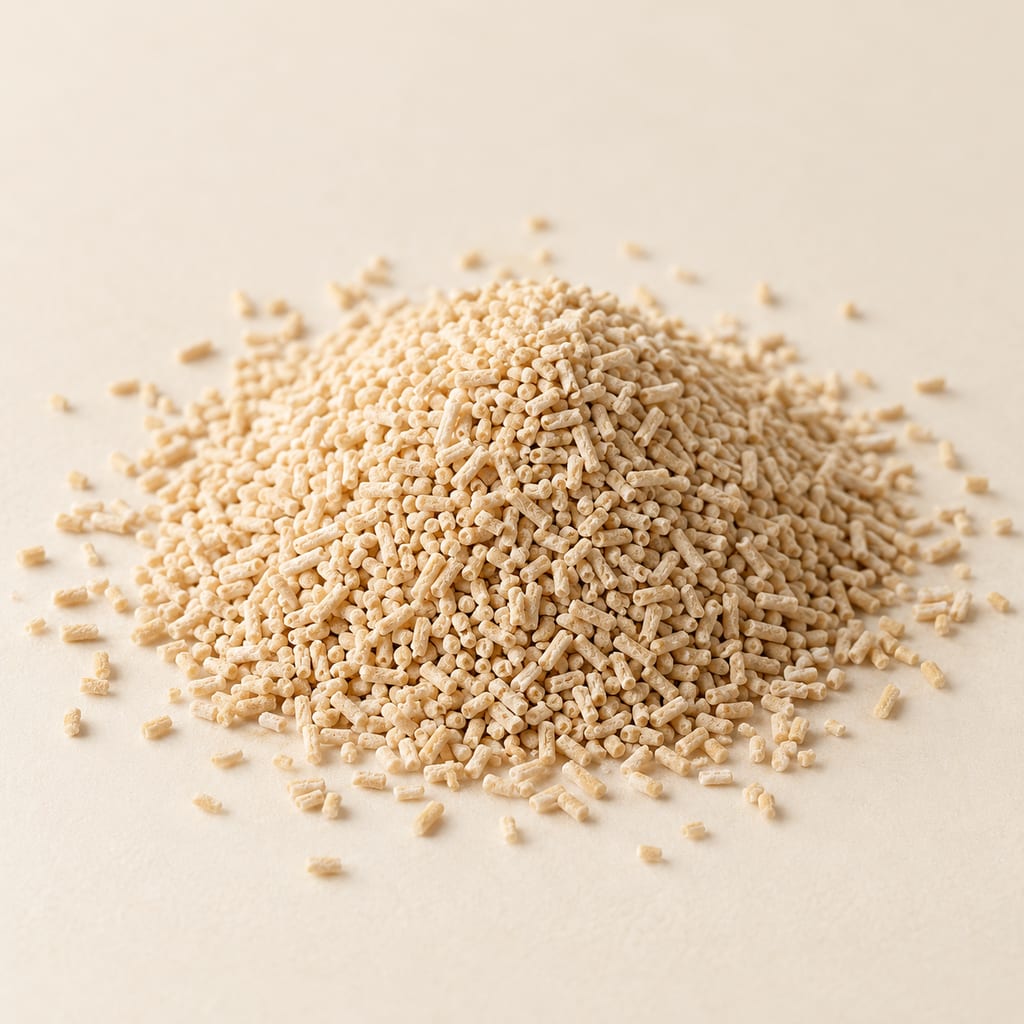
Saccharomyces cerevisiae is a single-celled budding yeast. It grows as small round cells that reproduce by budding and convert sugars into ethanol and carbon dioxide. In a dough or a wort it is the organism that does most of this conversion, which is why it is the yeast of bread, most wine and ale.
The name refers to a species, not to a strain. Bakers' yeast, wine yeast and ale yeast are all S. cerevisiae, yet they differ in the sugars they use, their tolerance of salt, sugar and cold, and the aromas they leave in the product. A bakery strain is therefore described by its use and its strain code, not by the species name.
Maltose is the main sugar in bread dough. Amylases in the flour release it from starch, and glucose and fructose are scarce in most doughs. Baking strains are therefore adapted to use maltose through the MAL gene loci, and commercial baking strains often carry several copies of them.
Dough is a hard environment for yeast: its semi-solid structure and high salt or sugar content create osmotic stress. Glycerol production helps cells survive, and some glycerol leakage softens the dough and improves gas retention, while too much harms aroma. Trehalose and proline protect cells during freezing and drying, which is why cryotolerant strains are sought for frozen dough.
Dough rises because yeast turns sugar into carbon dioxide and ethanol. When glucose is present, glucose repression can push metabolism toward ethanol rather than gas, which delays the rise. Attempts to raise CO2 output by changing single metabolic enzymes have generally failed, because the gains cost other traits such as growth yield.
A 2020 survey cited in the review found that sourdough and commercial baking strains produced more CO2 and had shorter lag times than non-bakery strains. This is one reason baker's yeast is a distinct product from a wine or ale strain.
The review describes baking strains as polyphyletic, which its authors link to at least two domestication events, and most surveyed bakery isolates are European. Tetraploidisation appears to have happened at least once in commercial baking strains. Brewing and wine strains come from separate lineages, and the species has been moved into beer and wine work for many centuries; the sources do not establish one date for when it was first used in either.
Brewers have also worked with the related lager yeast, Saccharomyces pastorianus, which is a hybrid rather than this species alone; it has its own page.
The bread-yeast review focuses mainly on Western bread and European baking strains and does not cover every baking tradition. Strain names and their performance in a given recipe come from the producer or culture collection and are not established by the species name.
Genomic evidence suggests China as the origin of the lineage, which the review says moved west about 16,000 to 14,000 years ago. The review presents this as a suggestion, not a settled location.
Earliest yeast-risen bread records named by the review; the authors suspect yeast use in grain fermentation is much older.
From sour breads and milk to savoury seeds, cassava staples and living beers, African fermentation follows the crop, the community and the work of transformation.
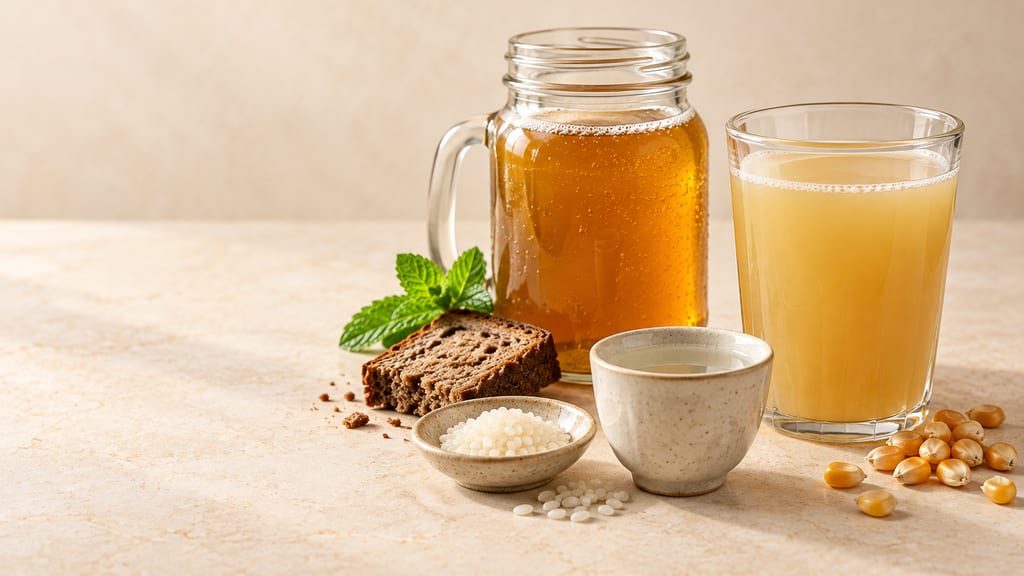
People kept, traded and steered living ferments for thousands of years before anyone saw a yeast cell. This is that history, region by region, and a guide to what a yeast strain is today.
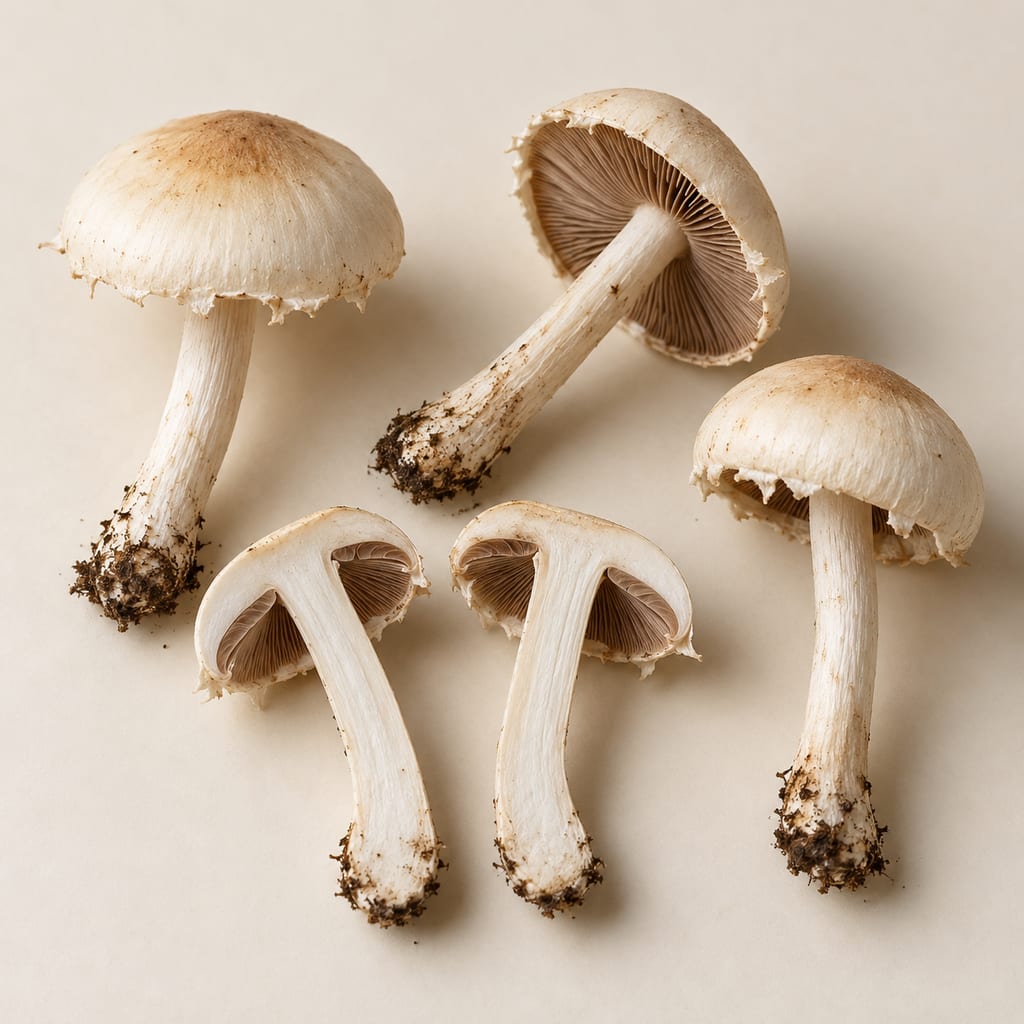
A grassland agaric listed as edible in historical and scientific catalogues for Hong Kong and China. Taxonomic concepts and practical food value vary; the listings do not establish safe identification or culinary practice.

Akahatsu, Lactarius akahatsu, is a wild milkcap of East Asian pine and mixed forests that is sold in Yunnan markets, with its edibility and identity still needing species-level review.
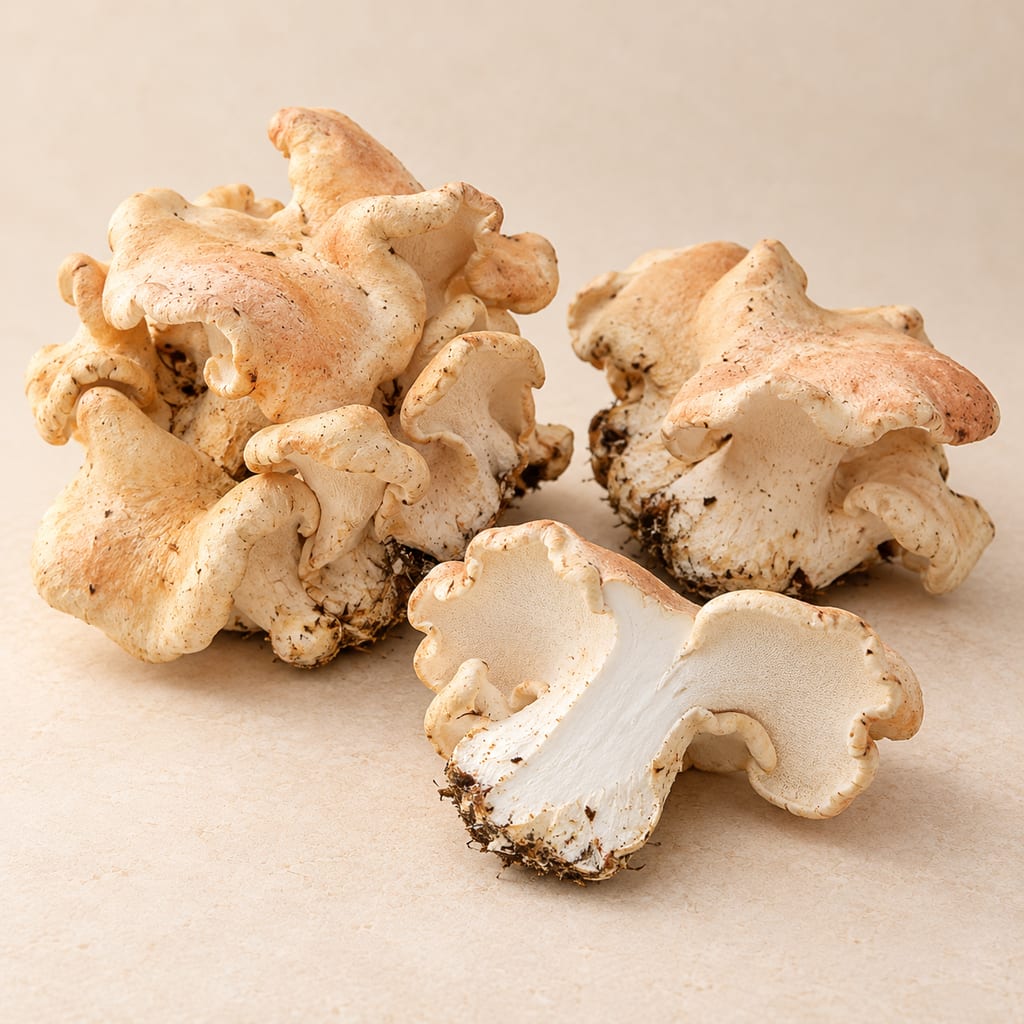
Albatrellus confluens is a ground-growing polypore with fused buff-orange caps. Sources document Chinese market use and regional edibility, but others reject it as too bitter; taxonomy also varies between Albatrellus and Albatrellopsis.
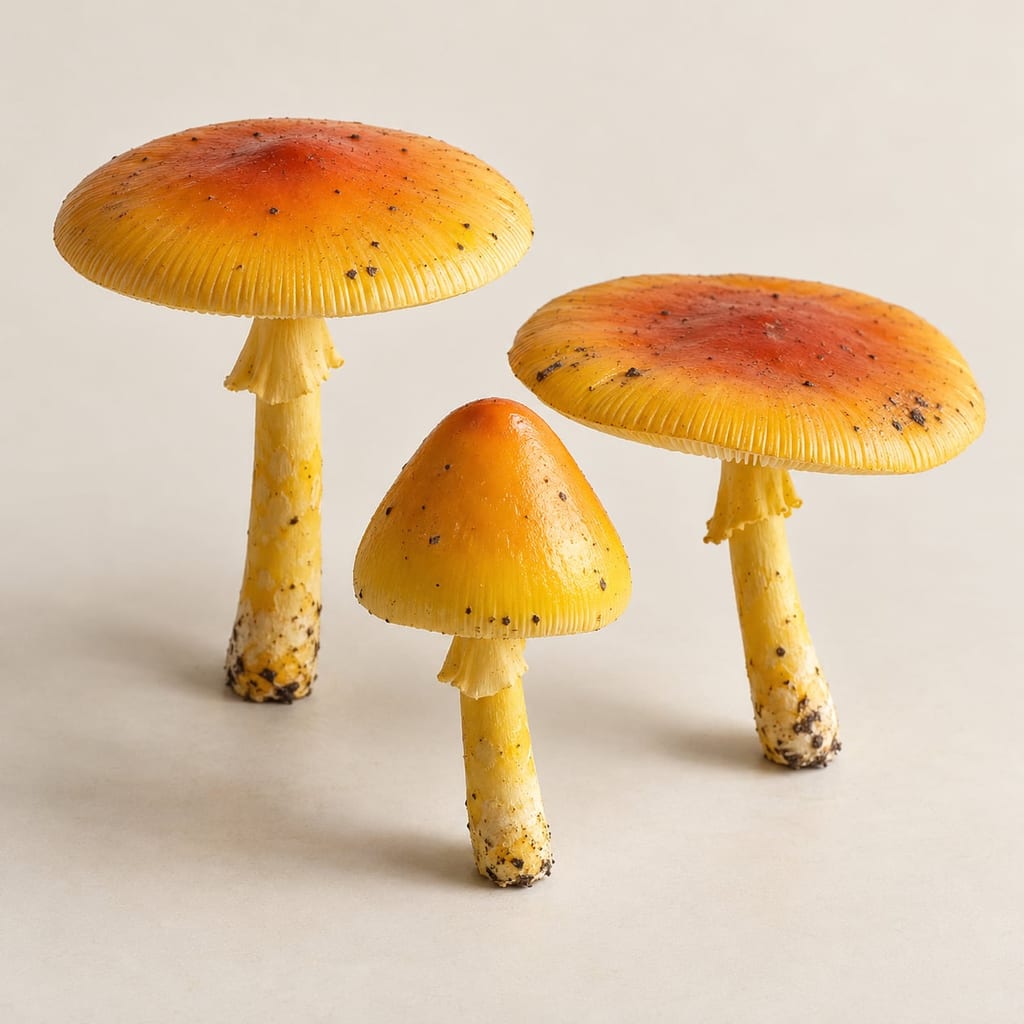
A wild Amanita recorded from China in a 2026 checklist of edible and medicinal fungi. The genus holds deadly species, so this page gives no identification or edibility verdict.
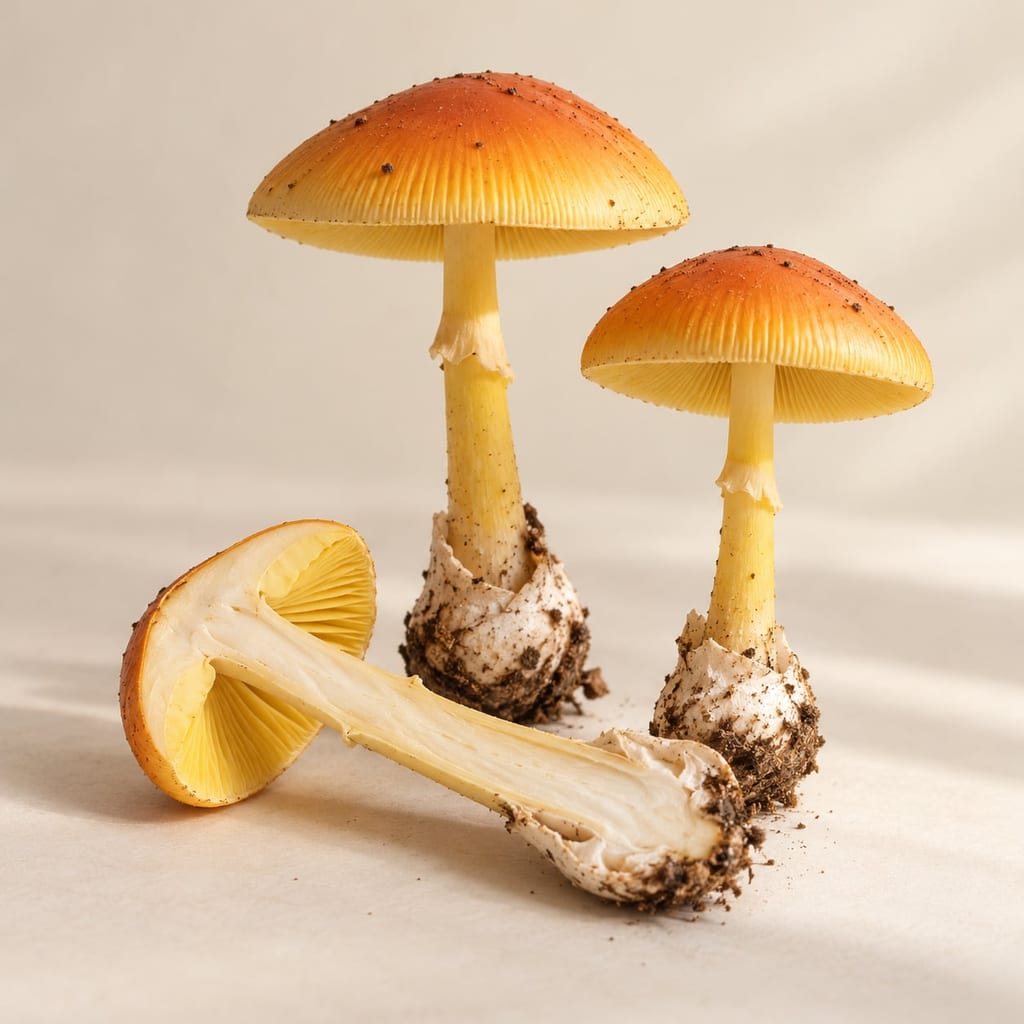
A wild Amanita of China, first reported there and listed as edible in a Yunnan ethnomycology study. The genus contains deadly species, so this page does not support identifying or eating it.
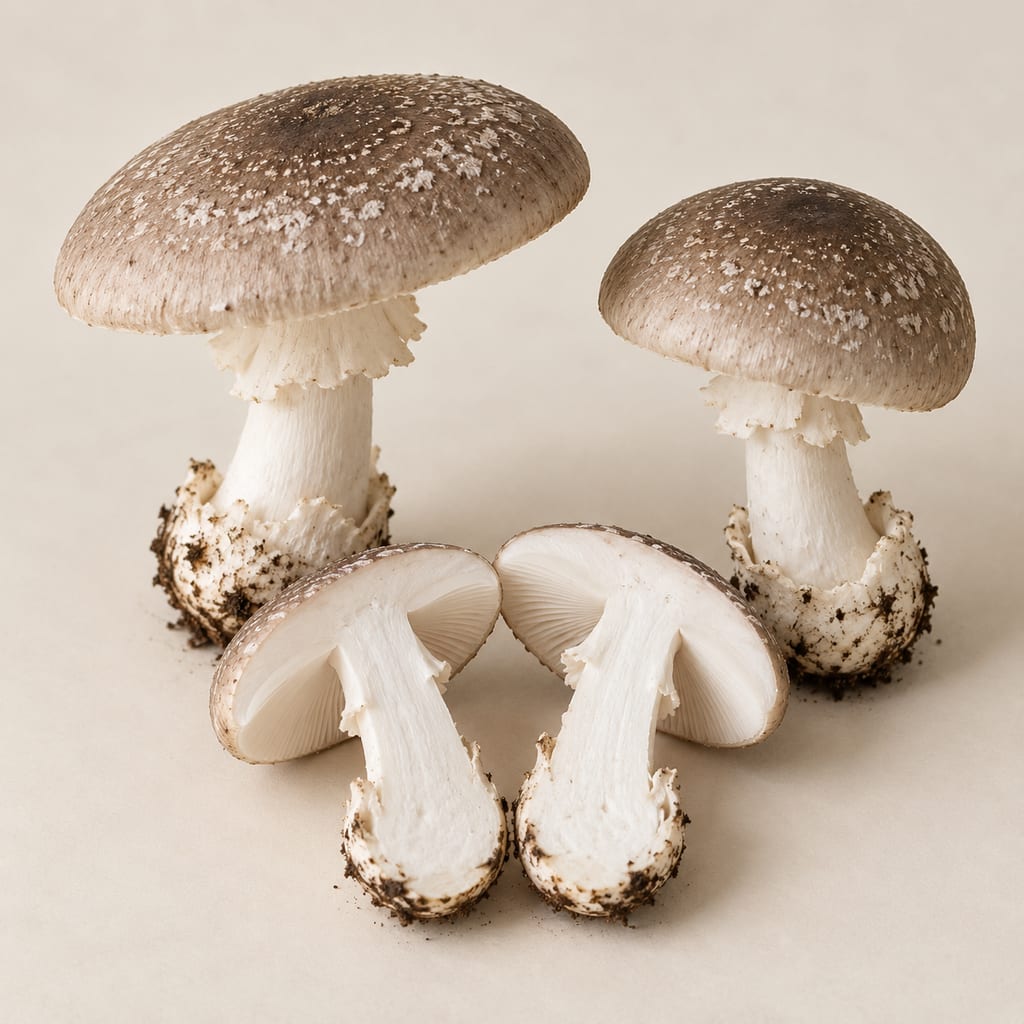
Amanita yuaniana is a Chinese Amanita that a 2023 Yanshan survey and a Yunnan ethnomycology survey list among edible species. No source tests it for safety, and the genus holds the most lethal mushrooms.
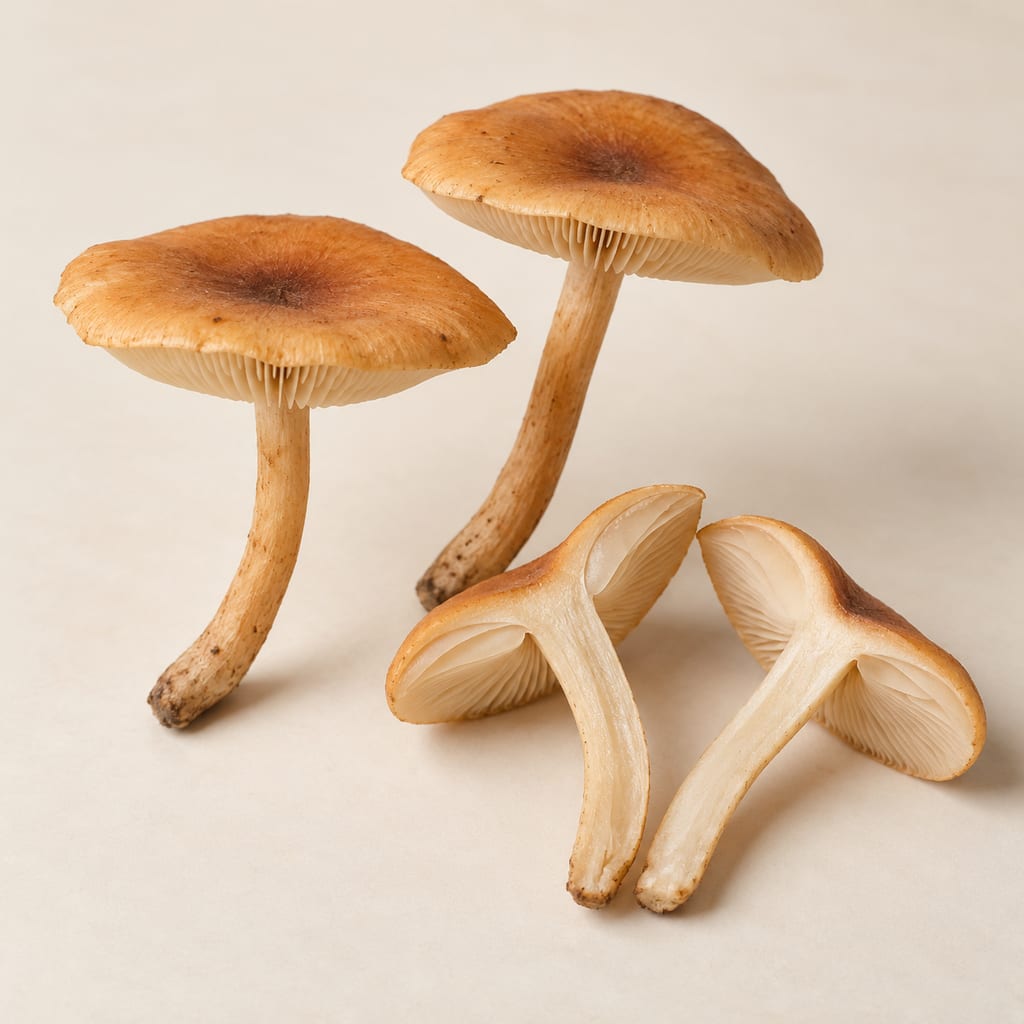
A wood-associated Armillaria recorded in Yunnan and Sichuan, China, and listed as edible in a 2026 Chinese catalogue.
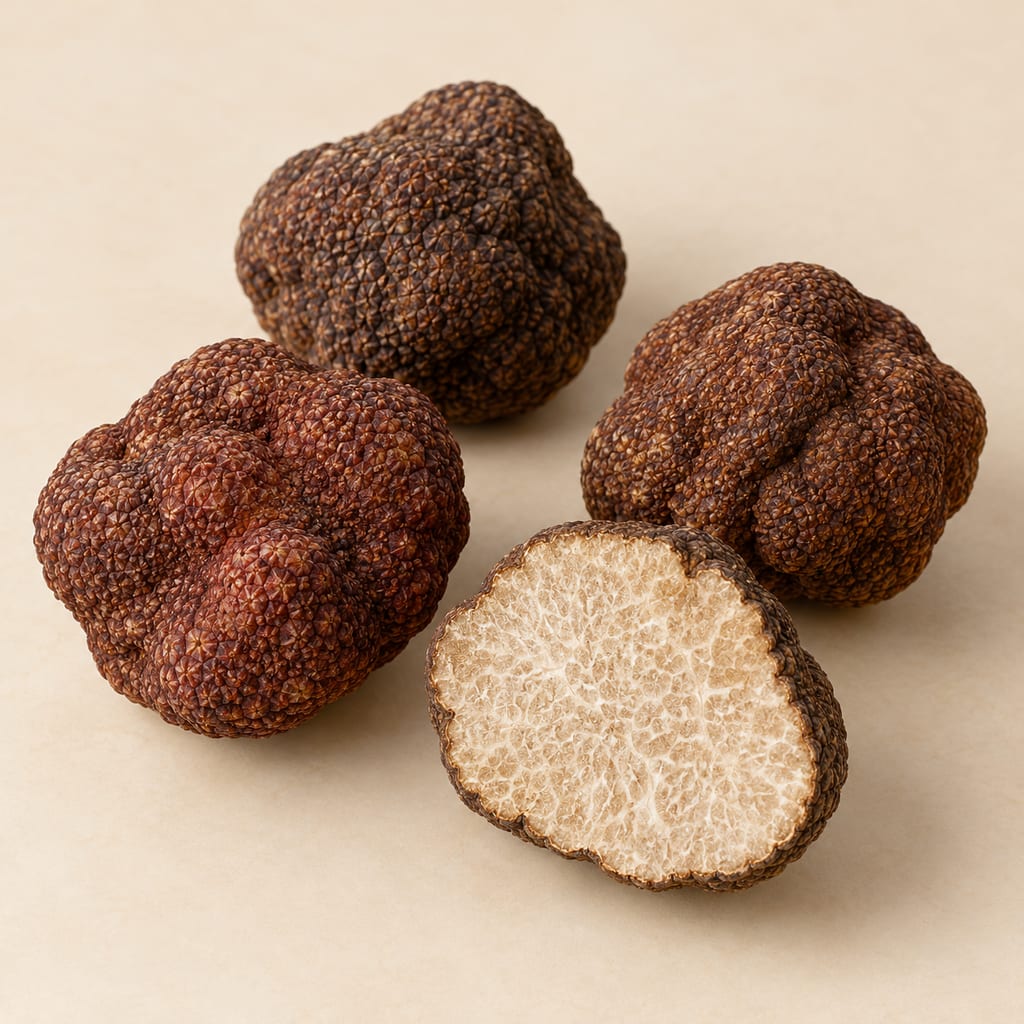
Tuber pseudohimalayense is a wild black truffle from Yunnan, China, listed as edible in a Chinese species catalogue. No independent assessment of its culinary use or safety is available.
No community contributions have been published for this entry yet.
Sign in to contribute. Published comments and photos are free to read.
Frontiers in GeneticsHistory · Science · Method
History and Domestication of Saccharomyces cerevisiae in Bread BakingRecent genomic evidence suggests origin in China with westward spread 16,000 to 14,000 years ago
Earliest yeast-risen bread records: Egypt 1300-1500 BCE; China 500-300 BCE
Maltose is the main sugar in bread dough and must be used by the yeast
Glycerol, trehalose and proline protect cells from osmotic, freezing and drying stress
Dough rises from ethanol and CO2; glucose repression can shift metabolism toward ethanol and delay rising
Cited in: What the species is; Bread, dough and the sugar it needs; Leavening, sugar and timing; Domestication and strains; Notes
Taylor and Francis OnlineIdentity
Supplied catalogue source (Saccharomyces cerevisiae)Supplied catalogue source; not independently revalidated