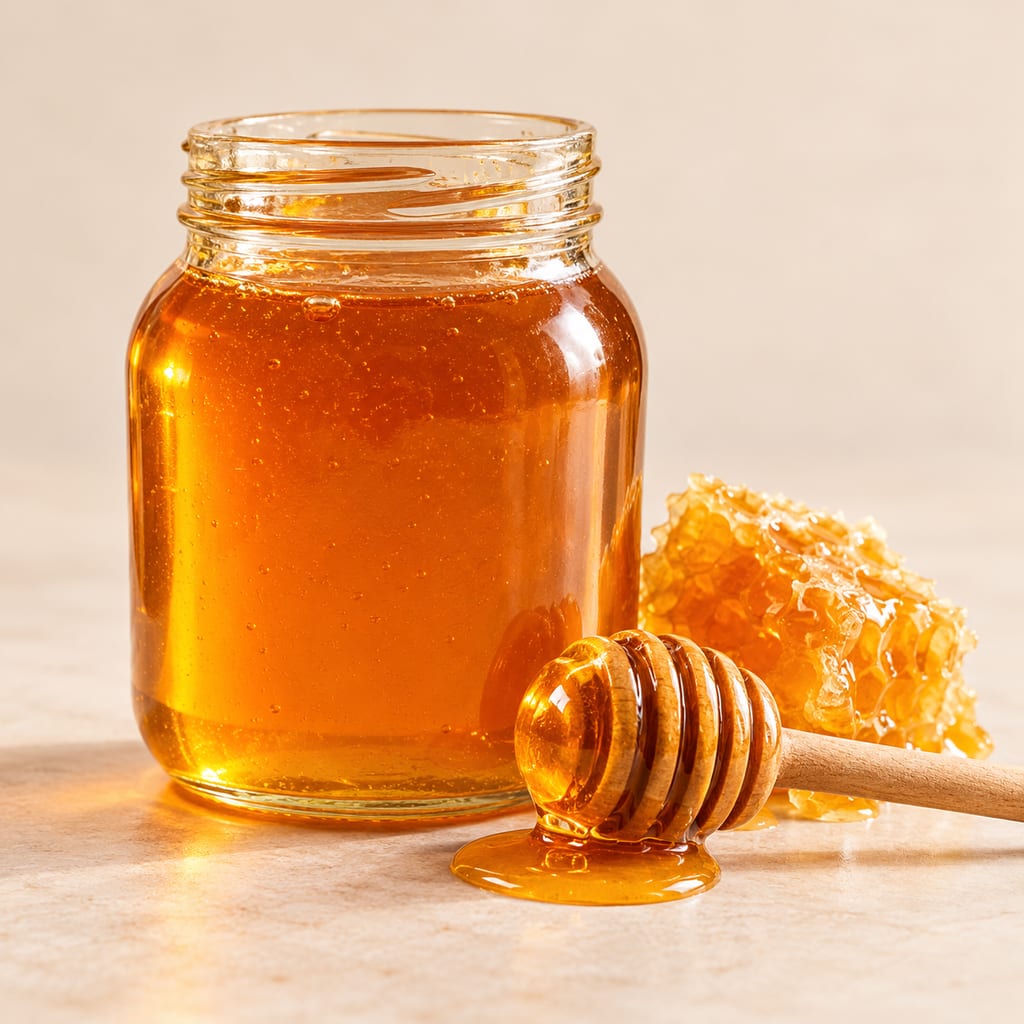
Honey
Honey is a bee-made food from floral nectar or honeydew; breads use it in dough or as a syrup served with cooked griddle breads.
 FermenteaWhere food goes to change
Modern method
Traditional dry mead
A still, dry honey wine fermented from varietal honey and water with a single wine yeast, carrying no residual sweetness and no added carbonation.
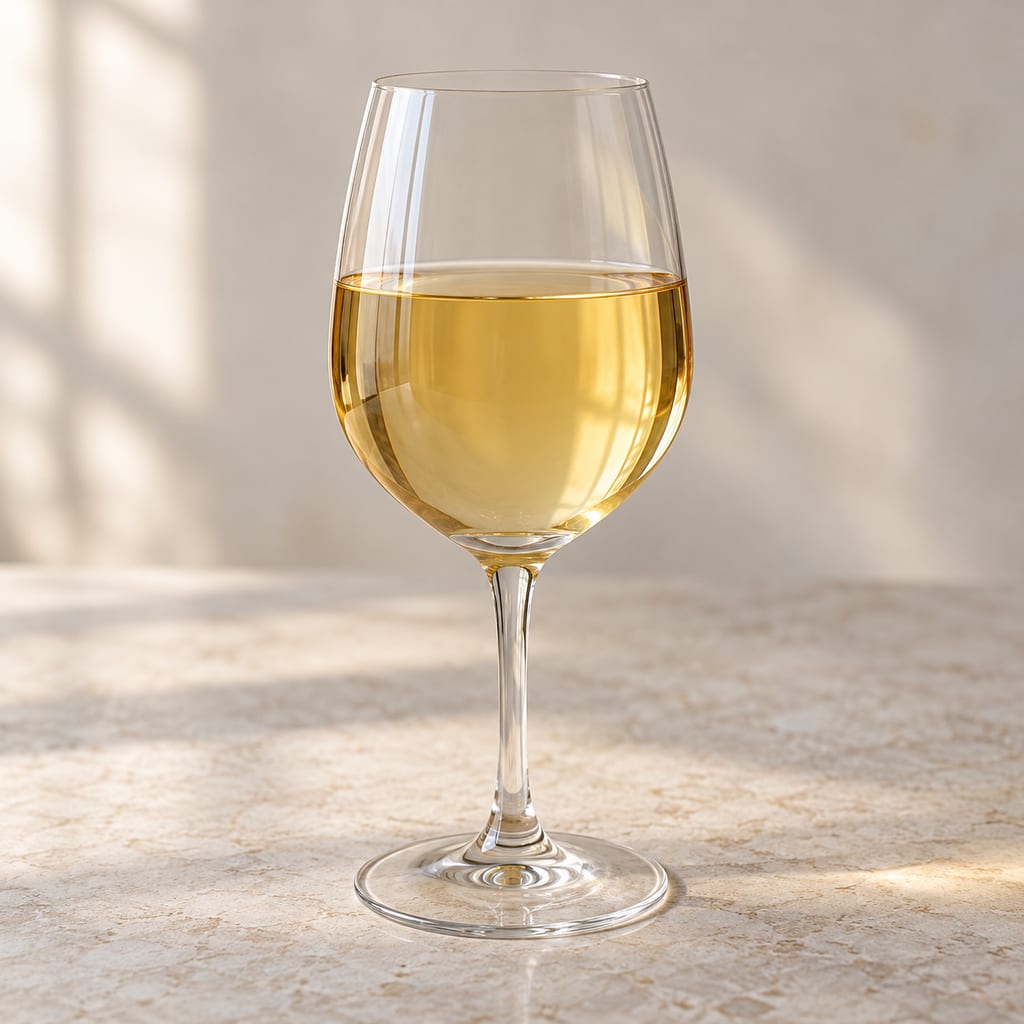
Traditional mead is an alcoholic beverage made principally by fermenting honey diluted with water.
In its simplest modern form, the ingredients are honey, water and yeast. Nutrients are often added to support a reliable fermentation.
A dry mead is one in which fermentation consumes most of the available sugars, leaving relatively little residual sweetness.
This is an important distinction: a dry mead can still smell strongly of honey even when it does not taste particularly sweet.
The word varietal indicates an interest in the character of honey from a particular floral source.
However, the formulation reproduced here specifies only local honey. It does not name a particular blossom source or require a verified monofloral honey.
Its title therefore identifies an intended style rather than proving the botanical origin of the honey.
This preparation is a modern American homebrewing recipe, not a transcription of an ancient mead formula.
The names describe related honey-wine traditions, not necessarily identical recipes.
Polish miód pitny, for example, includes named styles associated with different honey-to-water proportions.
Those classifications should not automatically be applied to a modern American five-gallon recipe.
English — Mead
English — Dry traditional mead
Czech — Medovina
Polish — Miód pitny
German — Met
Swedish — Mjöd
Honeybee — Apis mellifera
Brewing yeast — Saccharomyces cerevisiae
Must — The honey-water mixture before fermentation
Still — Not deliberately carbonated
Honey fermentation has been known across many parts of the world.
Historical evidence includes written references to honey-based alcoholic beverages and archaeological research into fermented drinks containing honey.
The historical use of honey in alcohol production does not establish a single universal origin of mead.
Different societies developed their own preparations, sometimes including fruit, cereals, herbs or spices.
European medieval mead, Ethiopian honey wine and contemporary American traditional mead can share a basic ingredient while differing substantially in process.
The present formulation was published by the American Homebrewers Association.
Its use of a named commercial yeast, a manufactured nutrient supplement, hydrometer measurements and modern airlock equipment identifies it as a contemporary brewing recipe.
The word traditional refers to the honey-water-yeast style, not to an ancient measured formula.
Five US gallons, approximately 19 L, finished target batch volume
The published alternative nutrient combination is 2 teaspoons yeast nutrient plus 1 teaspoon yeast energizer.
This alternative is not necessarily compositionally identical to Fermaid-K.
The recipe's final volume is 5 US gallons, not five gallons of water plus the honey.
Honey itself occupies volume, so water is added until the combined mixture reaches the final target.
Honey — 15 lb / approximately 6.8 kg
Water — Approximately 4–5 US gallons, adjusted to final batch volume
Lalvin 71B-1122 yeast — 2 packets
Fermaid-K yeast nutrient — 0.18 oz / approximately 5 g
The original gravity and alcohol values are estimates for the formulation, not measurements of a batch made by the reader.
Batch volume — 5 US gal / approximately 19 L
Estimated original gravity — Approximately 1.108
Estimated alcohol — Approximately 12–15% ABV
Recipe fermentation temperature — 60–70°F / approximately 15.5–21°C
Primary fermentation — Approximately 2–3 weeks
Bulk aging — A few weeks to a few months
Carbonation — Still; no priming sugar
Honey is not a chemically uniform commodity.
Its sugar profile, acidity, aroma, colour and other characteristics vary with nectar source, environment, processing and storage.
A honey dominated by one floral source can have a distinctive aromatic profile.
However, commercial floral descriptions do not guarantee that every jar contains honey exclusively from one plant.
To evaluate honey's contribution, a brewer can compare meads made using different honeys while keeping the rest of the process consistent.
The recipe does not require a specific honey variety.
It should therefore be catalogued as a dry traditional-style mead with optional varietal emphasis.
Honey consists largely of sugars, especially fructose and glucose, with smaller quantities of water and other compounds.
Its concentrated form has relatively low water activity.
This contributes to its ability to remain stable when properly stored.
Once diluted, the protective effect of high sugar concentration is reduced.
The sugars become accessible to fermenting organisms.
Yeast can then convert fermentable carbohydrates into ethanol and carbon dioxide.
Honey also contains acids and aromatic compounds that influence the final beverage.
Some volatile aromas may be altered or lost during fermentation.
That is why this recipe uses a no-boil method.
Traditional and modern mead recipes differ in their approach to heating.
Boiling or prolonged heating can change honey aroma and colour.
It may drive off volatile compounds and alter flavour.
The published method instead warms the honey container in a water bath only enough to improve pouring.
The honey is then diluted in the fermenter.
This preserves more of the original honey's sensory character.
However, not boiling the must makes sanitation and appropriate ingredient handling especially important.
Lalvin 71B-1122 is a commercial wine yeast strain of Saccharomyces cerevisiae.
It is used in wine and mead production.
The manufacturer describes a broad fermentation-temperature range of 15–30°C and an alcohol tolerance of approximately 14%, subject to fermentation conditions.
Its published brewing material also describes the ability to metabolize a portion of malic acid in suitable fruit-based fermentations.
That characteristic is more directly relevant to fruit wines and ciders than to a honey-only mead containing relatively little malic acid.
The American Homebrewers Association recipe specifies the narrower 15.5–21°C range.
For this particular formulation, use the recipe's temperature range rather than treating the manufacturer's broader tolerance as the intended operating schedule.
Honey provides abundant fermentable sugar but comparatively little of some nutrients needed for robust yeast growth.
Yeast requires nitrogen, vitamins, minerals and other growth factors.
A nutrient supplement helps reduce the risk of a sluggish or stressed fermentation.
Stressed yeast may produce undesirable sulphur compounds or fail to reach the expected attenuation.
The recipe includes approximately 5 g Fermaid-K.
Modern meadmaking sometimes uses staggered nutrient additions.
That is a distinct process choice.
The present recipe adds its stated nutrient quantity at pitching and does not provide a full staggered-feeding schedule.
Use a food-safe primary fermenter with sufficient headspace, a correctly sized airlock, a thermometer, a hydrometer, a siphon or transfer device, a secondary vessel, bottles or a keg, and suitable cleaning and sanitizing materials.
Fermentation releases carbon dioxide.
The vessel must be able to vent gas safely through the airlock.
A hydrometer is important because bubbling alone cannot establish when fermentation has finished.
Clean all vessels and implements to remove deposits.
Then sanitize surfaces that will contact the honey must or mead.
Cleaning and sanitation are different tasks.
Sanitizer is less reliable on surfaces still covered with debris.
Place the honey containers in a warm water bath.
Do not allow bath water to enter the honey.
Warm only enough to make the honey easier to pour.
The source does not specify a numerical water-bath temperature.
Fill the primary fermenter approximately halfway with water.
The brewing tutorial describes an initial 2–3 US gallons at this stage.
Pour in the 15 lb honey.
Stir or shake using properly sanitized equipment until it begins dissolving.
Add water until the combined must reaches 5 US gallons, approximately 19 L.
Mix thoroughly.
If the honey settles into a denser lower layer, continue mixing until the must becomes uniform.
The recipe's estimated original gravity is 1.108.
A hydrometer reading provides the actual starting value for the batch.
Do not return the sampled liquid to the fermenter.
Rehydrate the two packets of Lalvin 71B-1122 following the yeast manufacturer's current instructions.
The recipe does not replace those instructions with an invented hydration temperature.
Allow the must to reach 15.5–21°C.
The brewing tutorial also gives an earlier broader cooling stage of 18–24°C, followed by the narrower pitching range.
Use the final pitching range stated in the recipe.
Add the prepared yeast and approximately 5 g Fermaid-K.
Mix appropriately.
Close the fermentation vessel using a suitable bung or lid with an airlock.
The airlock permits carbon dioxide to escape while reducing exposure to contamination.
Maintain 15.5–21°C.
The recipe expects primary fermentation to be nearly complete after approximately three weeks.
A slower or faster fermentation is possible.
Do not rely on a calendar alone.
Transfer the mead using sanitized equipment.
Leave sediment behind.
Minimize splashing and excessive oxygen exposure.
Allow the mead to mature for a few weeks to a few months.
The published method gives no mandatory endpoint within that range.
Take hydrometer readings.
The brewing tutorial recommends confirming that readings remain consistent over one to two weeks before packaging.
This helps identify whether fermentation has ceased.
Bottle or keg without priming sugar.
The formulation is intended to be uncarbonated.
Do not add bottle-conditioning sugar unless deliberately changing to a separately controlled carbonated-mead process.
Yeast consumes available fermentable sugars.
It produces ethanol and carbon dioxide.
Other compounds, including organic acids, esters and higher alcohols, contribute to flavour.
The actual fermentation profile depends on temperature, yeast health and nutrient availability.
At the recipe's estimated original gravity, there is enough sugar to produce substantial alcohol.
However, actual ABV cannot be calculated accurately without measured fermentation data.
A final hydrometer reading, combined with the starting gravity, provides an estimate.
Dryness describes the amount of residual sugar and the resulting sweetness.
It does not mean that the mead contains no honey aroma.
Floral compounds can remain perceptible even when fermentable sugars have been consumed.
The sensory impression of sweetness also depends upon acidity, alcohol and aroma.
Two meads with similar measured residual sugar can taste different if their acidity or alcohol levels differ.
This is why honey selection remains important even for dry mead.
Temperature affects yeast metabolism.
Within the recommended range, yeast may produce different proportions of aromatic compounds.
Lower temperatures can produce a more restrained fermentation.
Higher temperatures may increase fermentation speed but also change flavour.
The recipe favours the lower end of its range.
The manufacturer allows a broader range, but that does not mean every temperature gives the same sensory result.
Young mead may taste sharp, yeasty or poorly integrated.
During maturation, sediment settles and flavours can become more coherent.
Some volatile compounds may diminish.
Oxidation can also occur if the mead is exposed to excessive air.
That is why the secondary vessel should have limited headspace.
Aging is not a guaranteed cure for fermentation defects.
Severe microbial contamination or strong oxidation cannot always be corrected by waiting.
Traditional mead styles may be dry, semisweet or sweet.
Melomel includes fruit.
Metheglin includes herbs or spices.
Cyser uses apple juice or cider together with honey.
Pyment combines honey and grapes.
These should not be collapsed into the dry traditional formula because their ingredient composition changes substantially.
Different honeys, however, can be presented as varietal options within this recipe.
A successful dry mead should have completed fermentation, maintain stable gravity readings and show no obvious spoilage.
It may clear during aging.
Honey-derived aroma can remain.
Its acidity and alcohol should be in balance.
A strong burning or solvent-like aroma can indicate fermentation stress.
Sulphur notes may reflect yeast problems.
Cloudiness alone does not prove contamination, particularly during the early fermentation and aging stages.
No fermentation signs: Check yeast viability, pitching procedure and temperature.
Fermentation stops early: Nutrient limitations, temperature or yeast stress may be involved.
Sulphur aroma: Yeast stress is one possible cause.
Solvent-like character: Fermentation conditions may have produced undesirable higher alcohols or related compounds.
Unexpected sweetness: Fermentation may be incomplete.
Oxidized character: Excessive air exposure during transfers or aging may be responsible.
Bottle pressure: Packaging before fermentation is finished may allow additional gas production, even without priming sugar.
Mead is alcoholic.
The source estimates 12–15% ABV, not a guaranteed value.
Use clean, sanitized equipment.
Vent carbon dioxide through an appropriate airlock.
Verify fermentation completion before bottling.
Do not bottle a still mead under pressure or add priming sugar using this formula.
Avoid excessive oxygen exposure after fermentation.
No fixed packaged shelf life is supplied.
This is a contemporary American homebrewing formulation presented as a traditional dry varietal mead. Its style description does not establish an ancient date or a particular honey-producing region.
Yield 5 US gal (19 L) · Scaling: source batch only
The source estimates 12–15% ABV for this formulation; actual strength depends on fermentation and measurements.
Hazard sourceThe tutorial says debris can harbor spoilage microorganisms and recommends cleaning followed by sanitizing.
Hazard sourceClean equipment, sanitize all tools and vessels that contact the must or mead, and use an airlock during fermentation.
Control sourceUse hydrometer readings stable over one to two weeks before packaging; this recipe is still and does not call for bottle priming.
Control sourceThis is an alcoholic beverage; the source's 12–15% ABV is an estimate for the recipe, not a measurement of your batch.
The source describes still packaging only. Do not add priming sugar or carbonate based on this method.
The recipe is published by the American Homebrewers Association and uses the label traditional-style; this association records its modern US publication context, not mead's origin.
Honey is a bee-made food from floral nectar or honeydew; breads use it in dough or as a syrup served with cooked griddle breads.
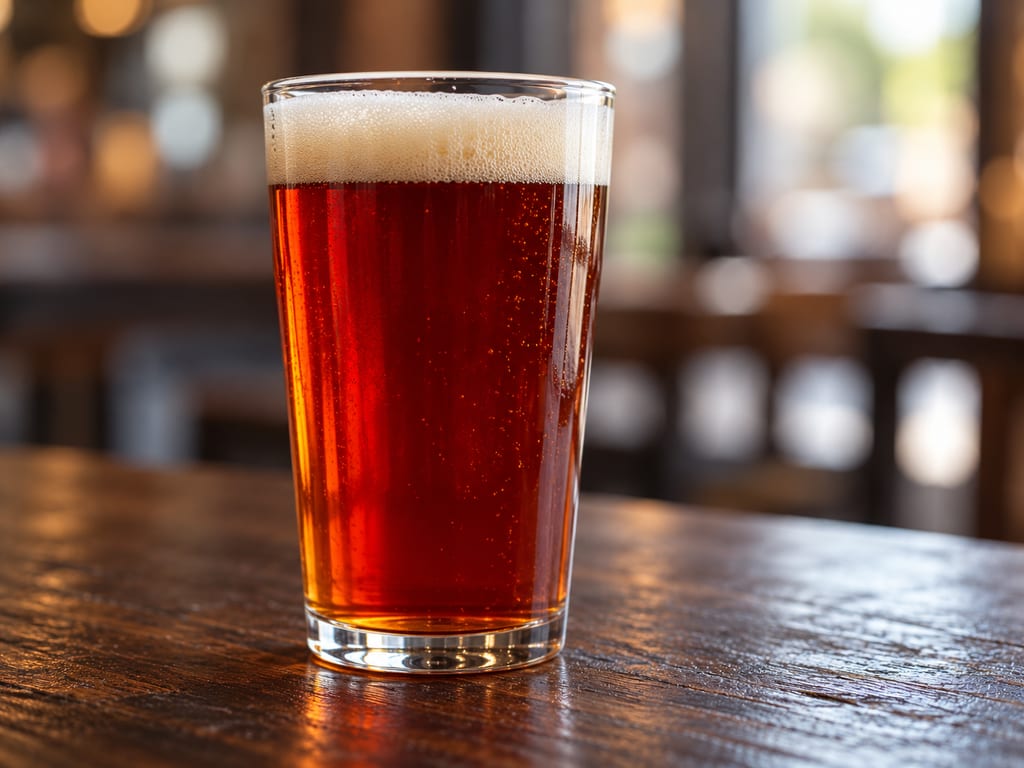
A deep amber-red American ale brewed from pale, Munich, CaraVienne and chocolate malts, bittered with Columbus hops and finished with Amarillo.
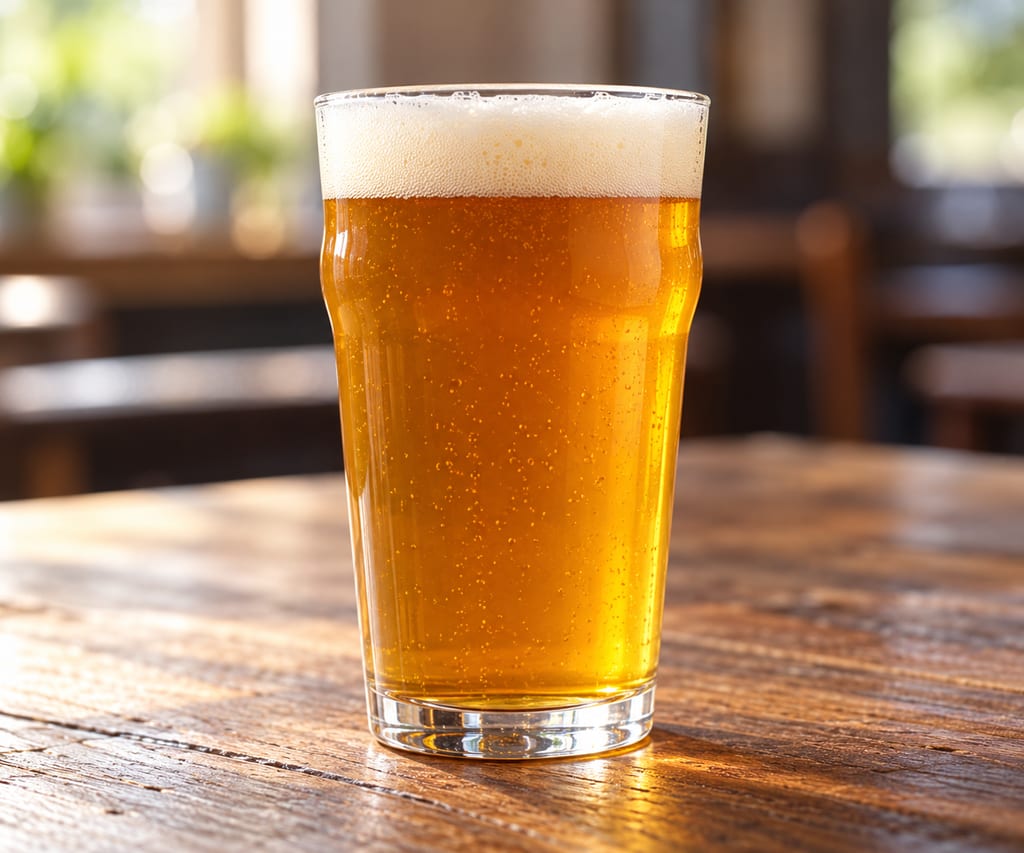
This is a process overview, not a complete batch recipe: key quantities, yield and packaging directions are absent. The AHA tutorial uses Hop Hammer Imperial IPA as an example; this page is not that full formulation.
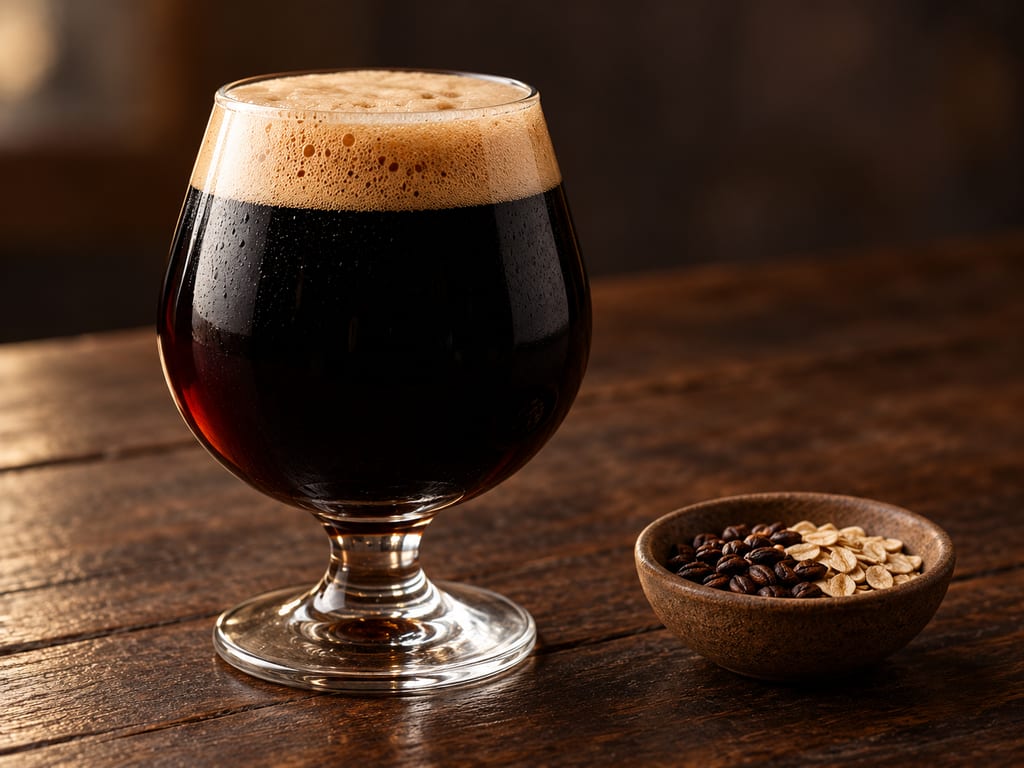
An all-grain imperial stout with pale malt, roasted barley, dark malts and oats, fermented with an American ale-yeast starter.
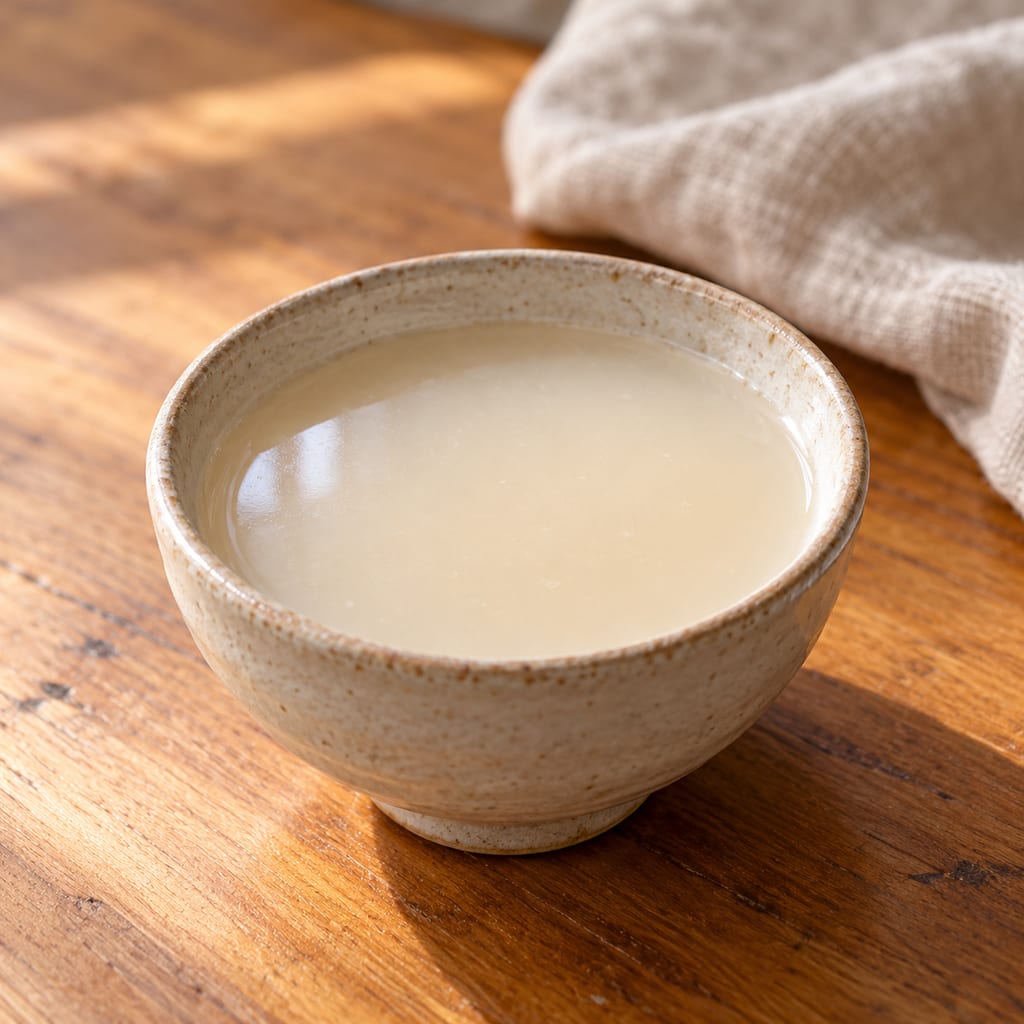
An alcoholic Korean rice drink of steamed glutinous rice and nuruk, mashed in a single stage and fermented for 7 to 14 days.
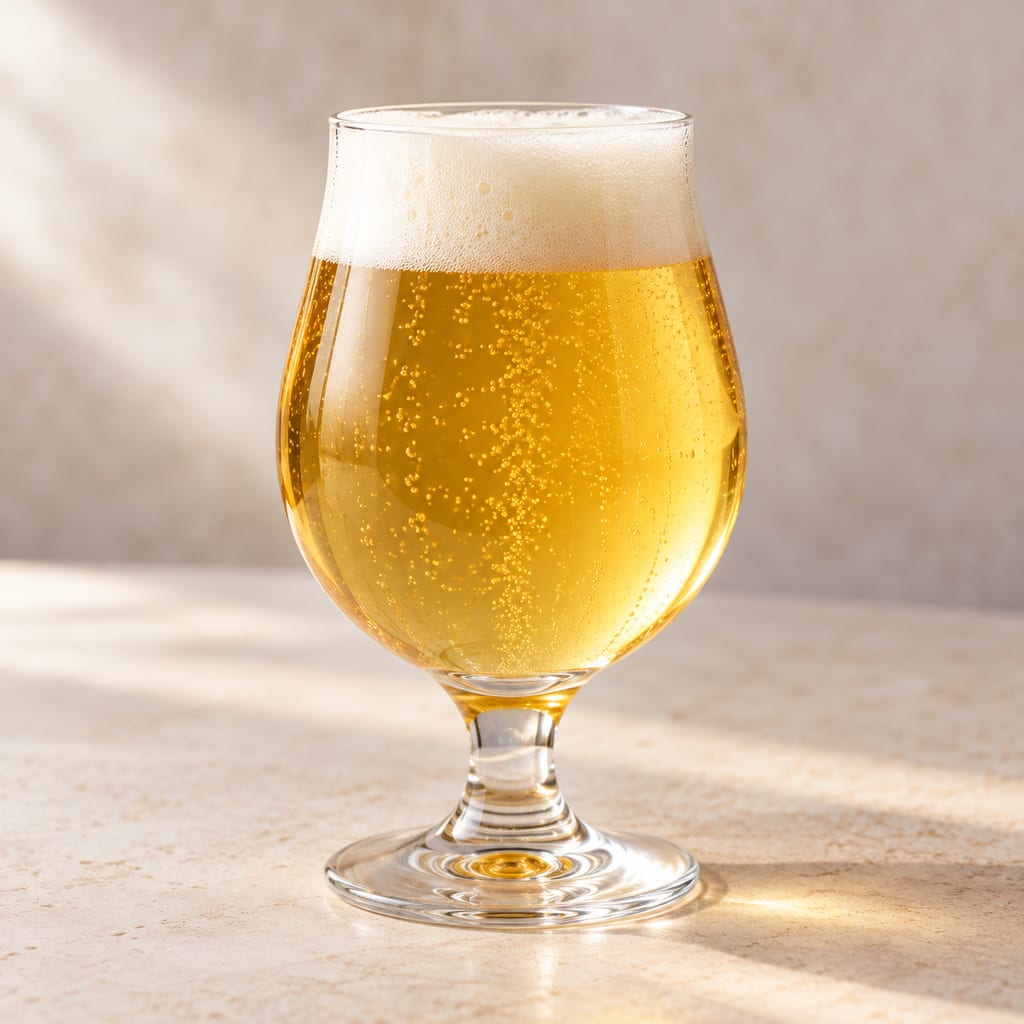
A pale Belgian-style ale with Pilsner and aromatic malts, cane sugar and Saaz hops, fermented under loose foil before an airlock is fitted.
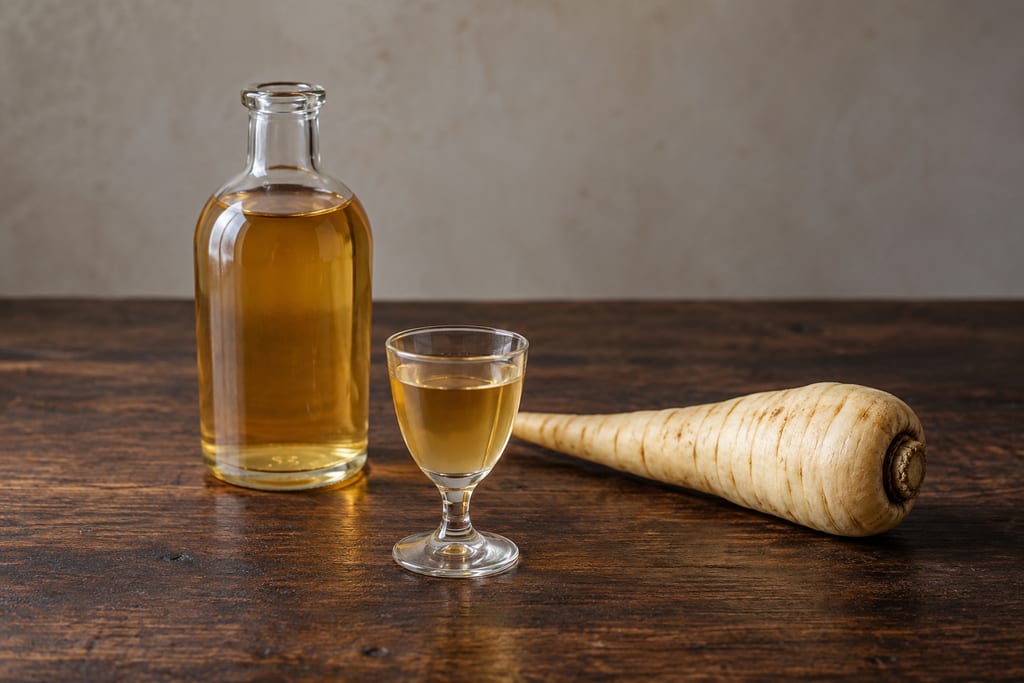
Wright's 1909 compilation records a parsnip wine made from boiled roots, sugar and a little yeast. The liquor spends ten days in a tub, then twelve months in a cask topped up daily only while the wine works over.
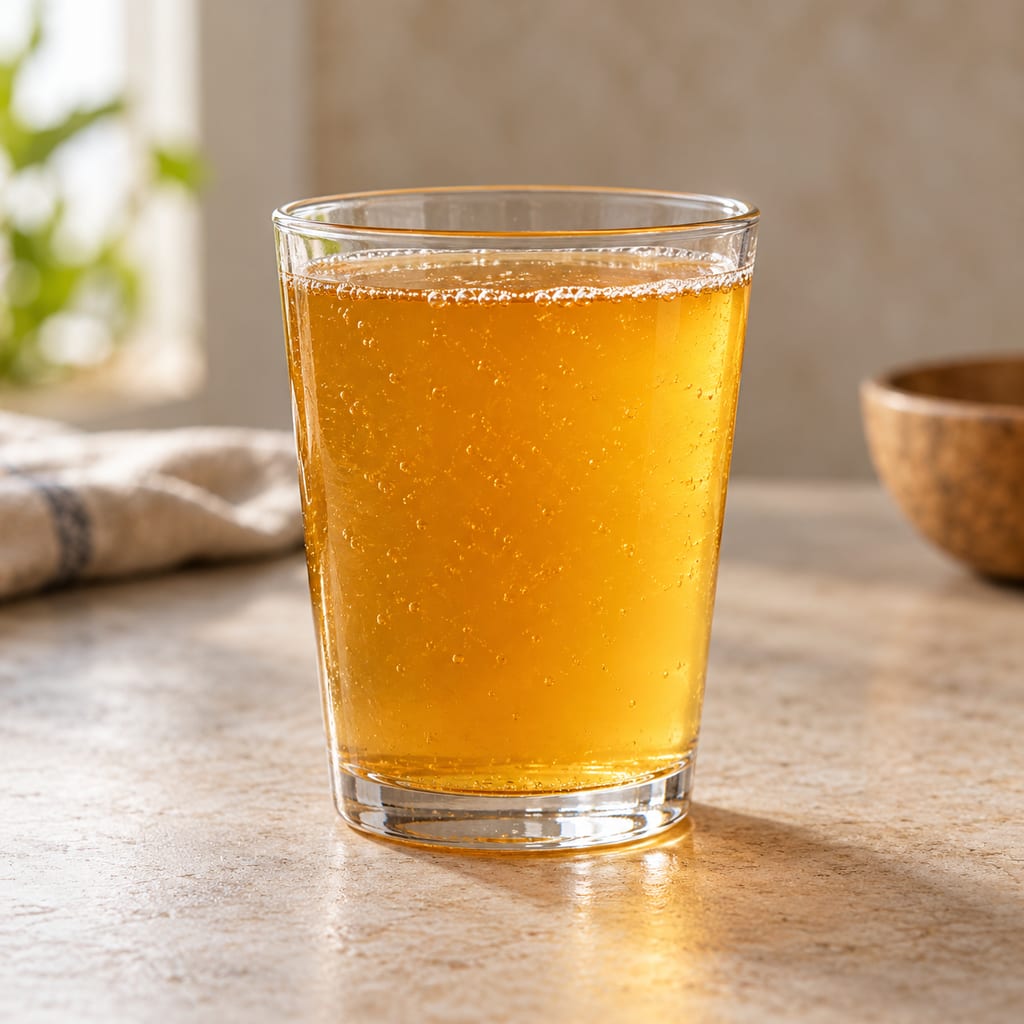
An Oregon State food-science lab formula ferments pineapple skin and piloncillo with jalapeño and warm spices for three to five days, then strains and refrigerates it. The handout reports wide alcohol variability.
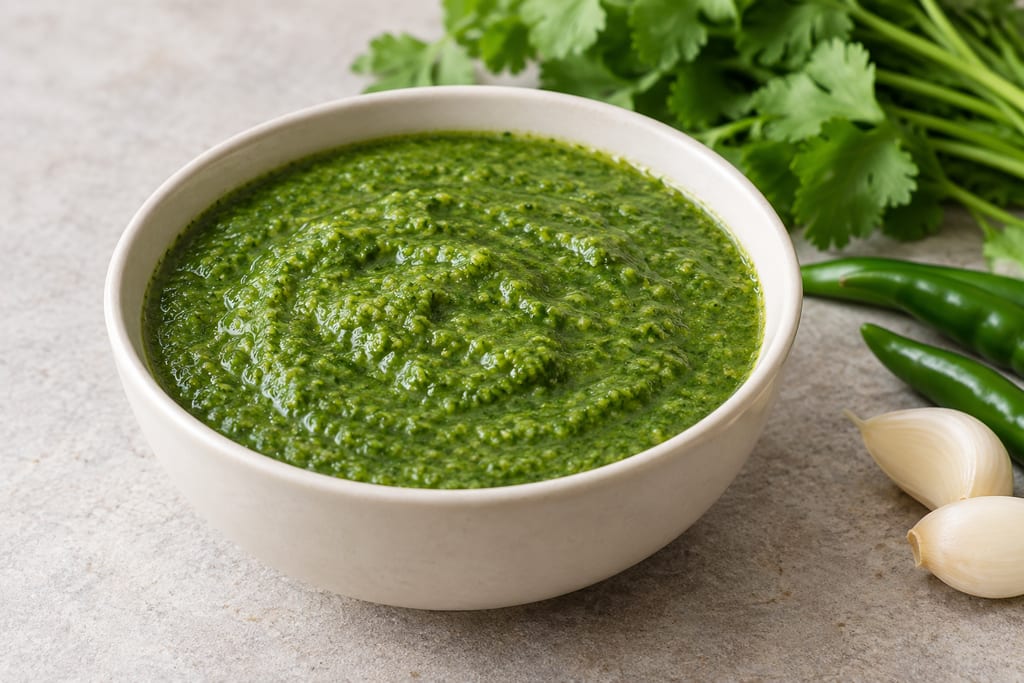
Afghan coriander chatni is a sharp, hot herb sauce with garlic and vinegar. A 2008 Afghanistan manual records green or red pepper and optional walnut; heat and household versions vary.
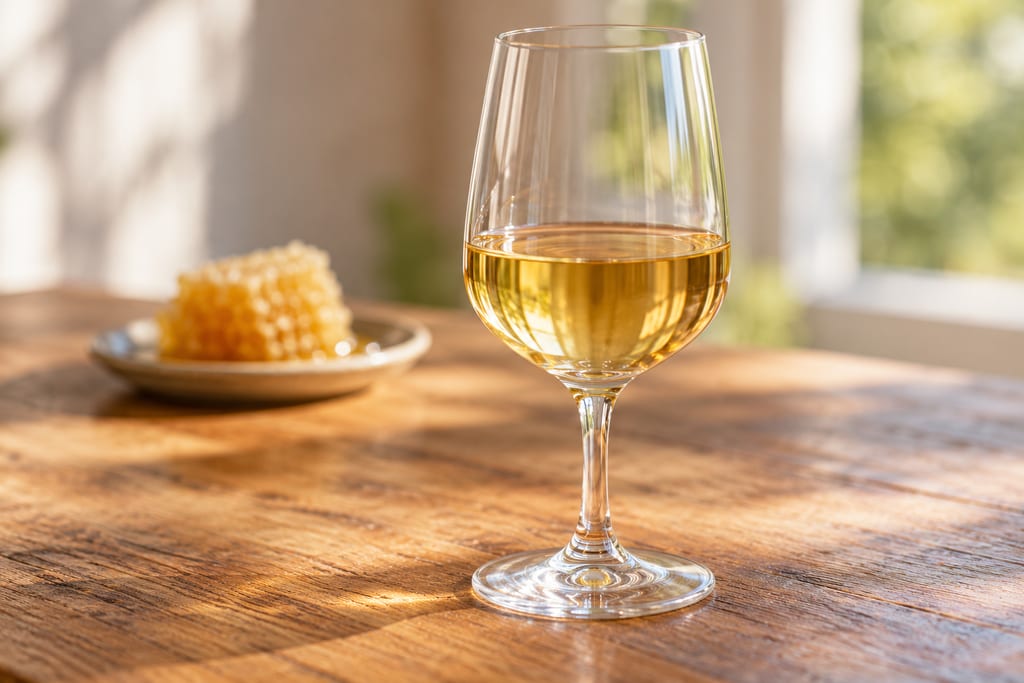
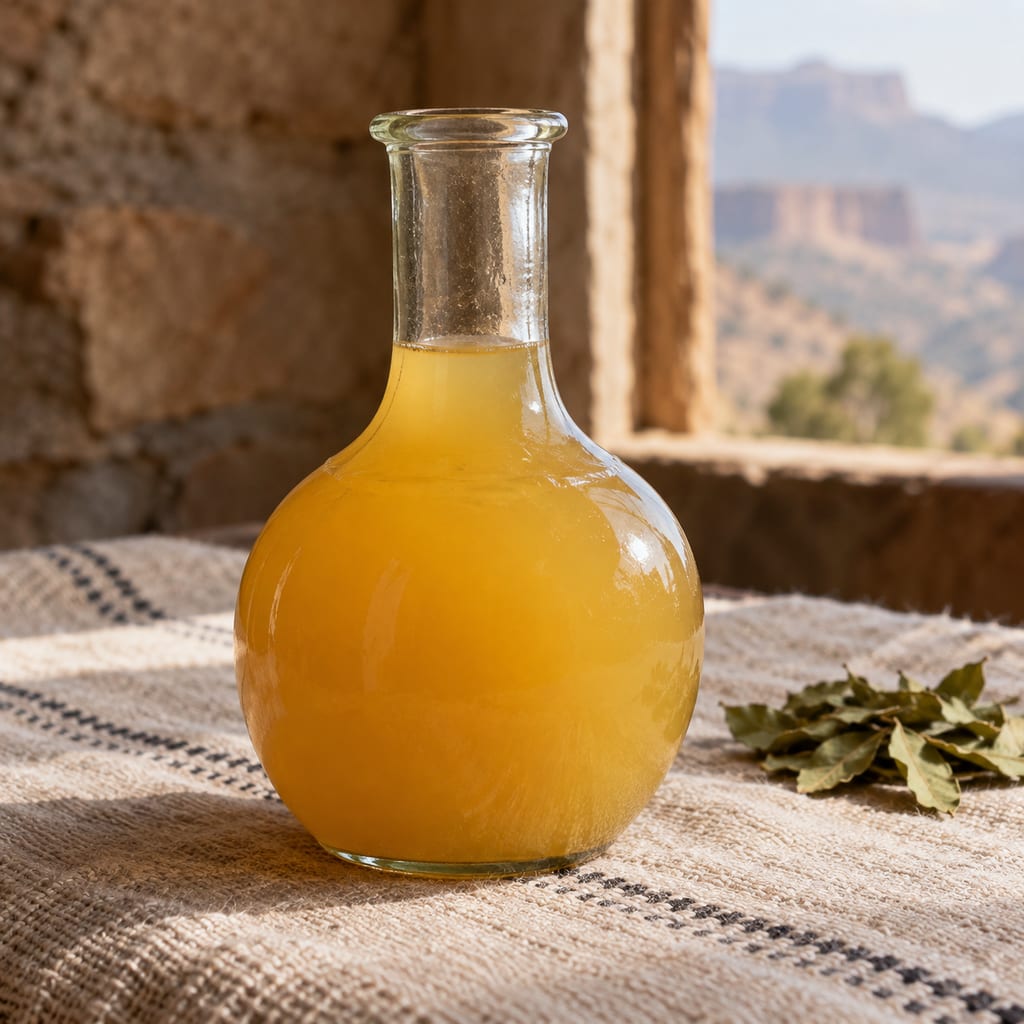
Mead is an alcoholic drink made by fermenting diluted honey with yeast, then racking and ageing it. The honey, not refined sugar, is what makes it mead.
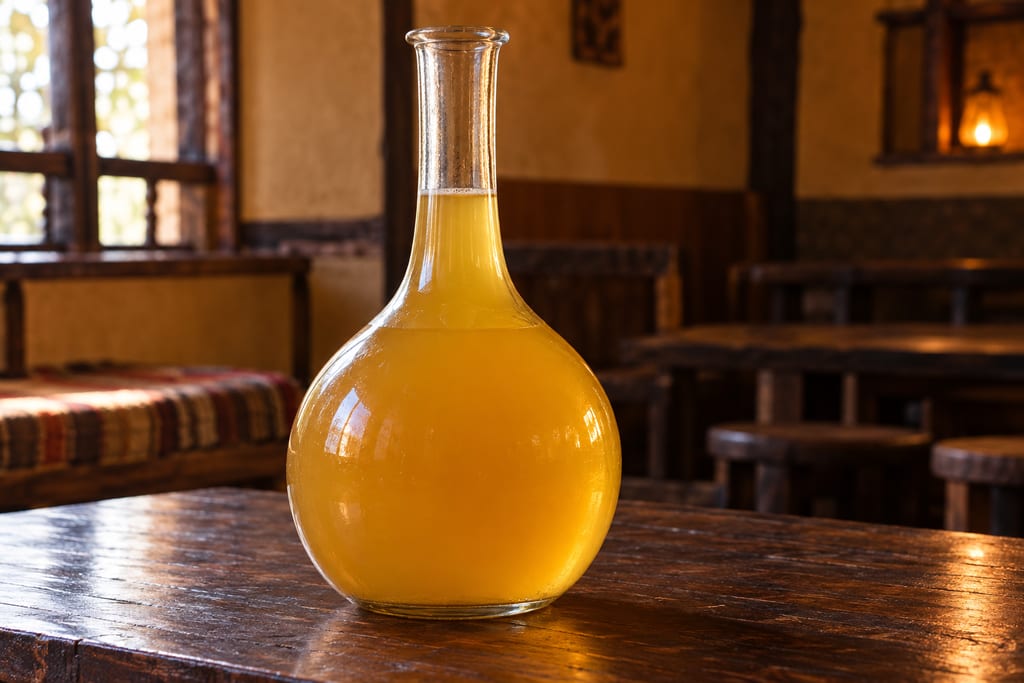
An Ethiopian honey wine made here as a controlled laboratory formulation with honey, water, a mixed bacterial-and-yeast starter, and gesho.
An Ethiopian honey wine of the Tigray highlands, fermented with the leaves and stems of gesho, which supply both bitterness and the microorganisms that carry the ferment.
No community contributions have been published for this entry yet.
Sign in to contribute. Published comments and photos are free to read.
American Homebrewers AssociationInspiration · Process · Location
Tradition Dry Varietal Mead15 lb honey, 4–5 gal water, two Lalvin 71B-1122 packets, 5 g Fermaid-K; five-gallon yield
60–70°F (16–21°C) fermentation, primary nearly complete after about three weeks, secondary aging and still packaging
The source's estimated ABV is 12–15%.
Cited in: Names and terminology; A long history, but a modern formulation; Ingredients; Recipe specifications; What makes varietal honey interesting?; Why the recipe does not boil the honey; The role of Lalvin 71B-1122; Equipment; Stage 1 — Clean and sanitize; Stage 2 — Warm the honey containers; Stage 3 — Add initial water; Stage 4 — Add honey; Stage 5 — Adjust final volume; Stage 6 — Measure initial gravity; Stage 7 — Prepare the yeast; Stage 8 — Check must temperature; Stage 9 — Pitch yeast and nutrient; Stage 10 — Fit the airlock; Stage 11 — Primary fermentation; Stage 12 — Transfer to secondary; Stage 13 — Bulk age; Stage 14 — Confirm fermentation completion; Stage 15 — Package still; Understanding dryness; Fermentation temperature and aroma; What aging changes; Regional and stylistic variants; Quality checks; Troubleshooting
American Homebrewers AssociationProcess · Safety
How to Make MeadClean and sanitize equipment, warm honey, make a five-gallon must, use an airlock, transfer with sanitized equipment
Hydrometer readings consistent over one to two weeks are the source's check before packaging; its demonstrated mead is still.
Cited in: Ingredients; Recipe specifications; What makes varietal honey interesting?; Why the recipe does not boil the honey; The role of Lalvin 71B-1122; Equipment; Stage 1 — Clean and sanitize; Stage 2 — Warm the honey containers; Stage 3 — Add initial water; Stage 4 — Add honey; Stage 5 — Adjust final volume; Stage 6 — Measure initial gravity; Stage 7 — Prepare the yeast; Stage 8 — Check must temperature; Stage 9 — Pitch yeast and nutrient; Stage 10 — Fit the airlock; Stage 11 — Primary fermentation; Stage 12 — Transfer to secondary; Stage 13 — Bulk age; Stage 14 — Confirm fermentation completion; Stage 15 — Package still; Understanding dryness; Fermentation temperature and aroma; What aging changes; Regional and stylistic variants; Quality checks; Troubleshooting; Safety
LallemandMethod
Lallemand — Lalvin 71B product specificationsLalvin 71B product specifications
Cited in: Ingredients; Recipe specifications; What makes varietal honey interesting?; Why the recipe does not boil the honey; The role of Lalvin 71B-1122; Equipment; Stage 1 — Clean and sanitize; Stage 2 — Warm the honey containers; Stage 3 — Add initial water; Stage 4 — Add honey; Stage 5 — Adjust final volume; Stage 6 — Measure initial gravity; Stage 7 — Prepare the yeast; Stage 8 — Check must temperature; Stage 9 — Pitch yeast and nutrient; Stage 10 — Fit the airlock; Stage 11 — Primary fermentation; Stage 12 — Transfer to secondary; Stage 13 — Bulk age; Stage 14 — Confirm fermentation completion; Stage 15 — Package still; Understanding dryness; Fermentation temperature and aroma; What aging changes; Regional and stylistic variants; Quality checks; Troubleshooting
Lallemand WineMethod
Lallemand Wine — Lalvin 71B technical informationLalvin 71B technical information
Cited in: Honey, water and yeast; The chemistry of honey; Why yeast nutrients are used; What happens during fermentation
Clemson Cooperative ExtensionSafety
Clemson Cooperative Extension — Basics of home winemakingBasics of home winemaking
Cited in: Safety