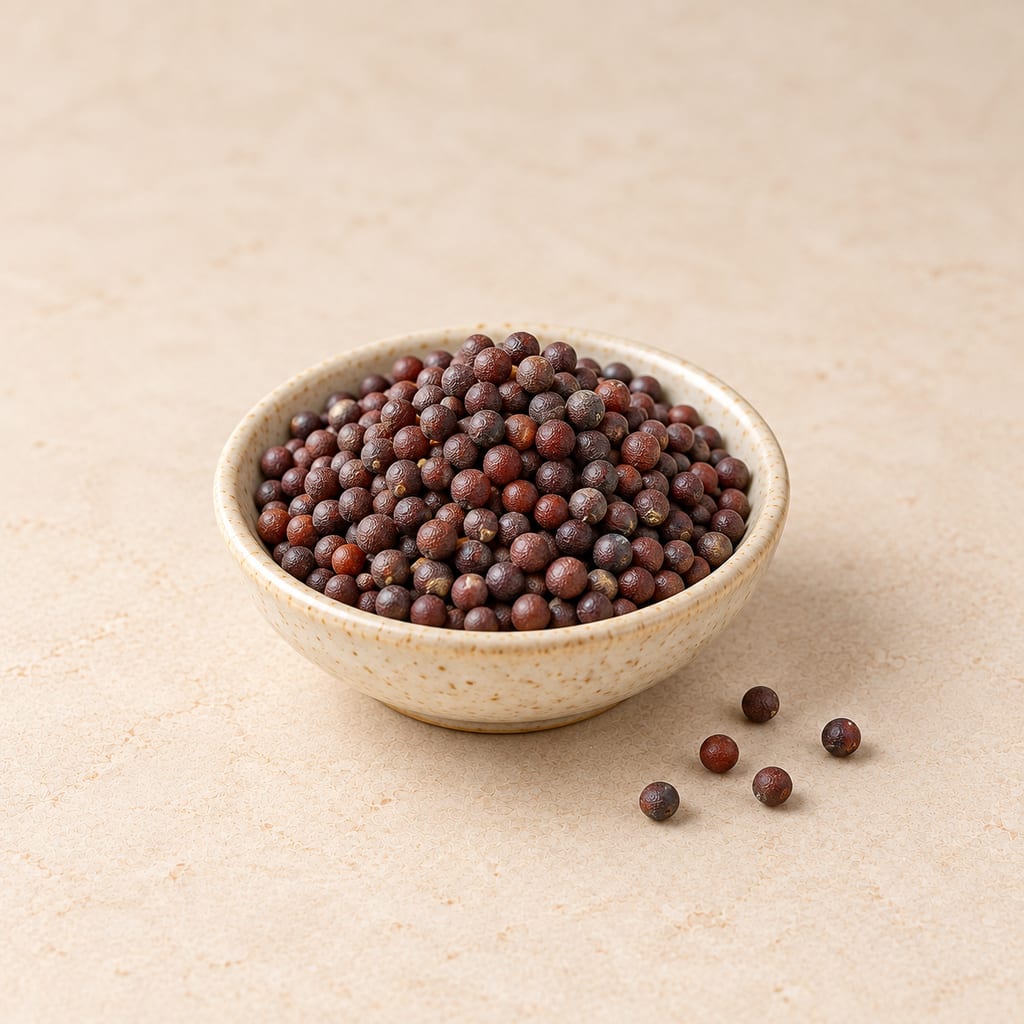
Black mustard seed
Black mustard seed is the small, dark, very pungent seed of Brassica nigra, the hottest of the three mustards. It gives its bite through sinigrin, which turns into allyl isothiocyanate when the crushed seed meets water.
 FermenteaWhere food goes to change
Cultures
An active dry wine yeast selected in Narbonne, France, with documented partial malic-acid consumption and producer-described fruity ester production. Its effects depend on the must and fermentation.
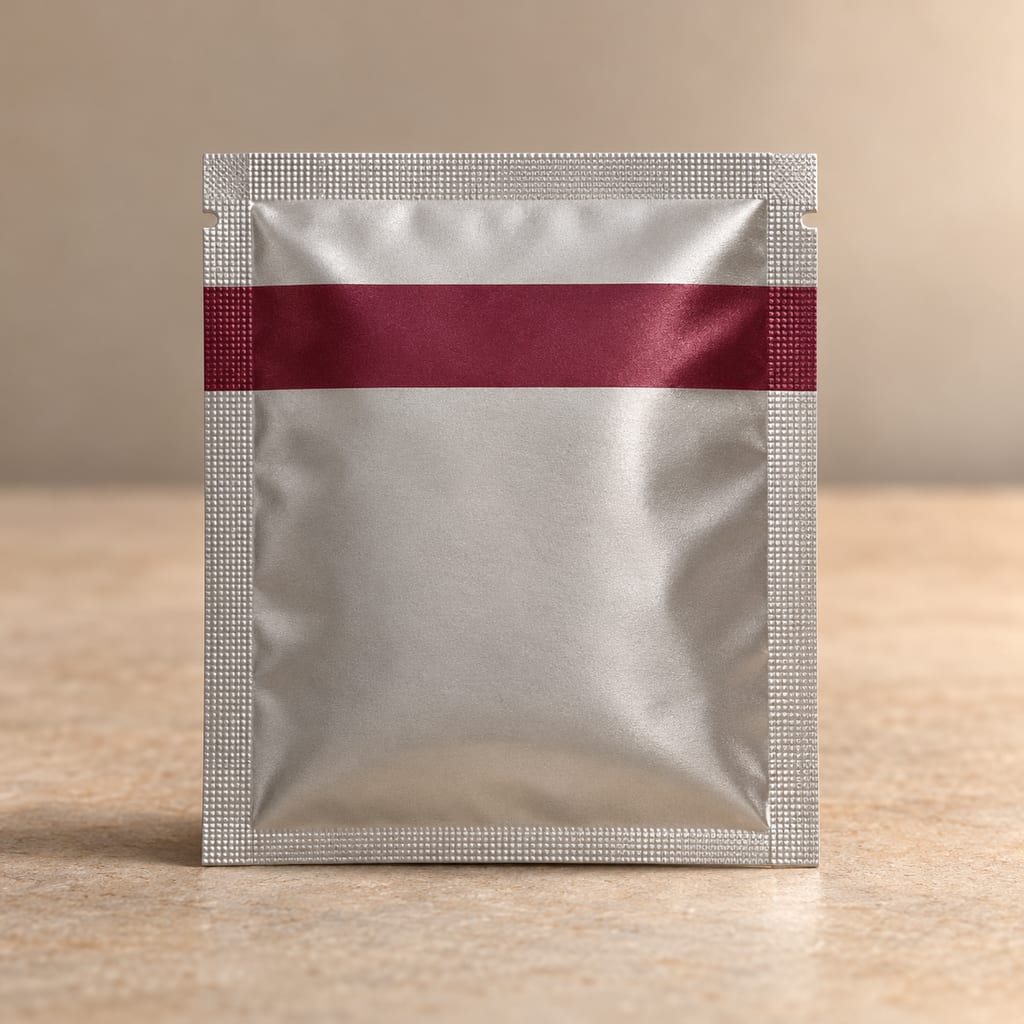
Lalvin 71B-1122 is a commercial wine yeast, sold as an active dry culture. Lallemand also presents the product under the shorter name Lalvin 71B and identifies it as Saccharomyces cerevisiae var. cerevisiae. The longer name appears on the company's small-sachet listing and in the Concord grape wine recipe linked here. These names connect the purchased culture to a particular commercial selection, rather than to every yeast belonging to the same species.
The culture is added to grape must to carry out alcoholic fermentation. It also has a documented capacity to consume some malic acid during that fermentation, a trait that has attracted attention in acidic juices. Lallemand markets it for young red, rosé and white wines, with an emphasis on fruity aroma and a softer impression in young wines. Those are intended applications and producer descriptions; the grapes and the fermentation still shape the finished drink.
In the Concord recipe, the ingredient line names one packet of 71B-1122. The culture is a bought input to that preparation. It is not the wine itself, a liquid starter grown from the grapes, or a mixture of all the microorganisms that might already inhabit the fruit.
Lallemand attributes the isolation and selection of 71B to INRA in Narbonne, France. That places a documented selection activity in a research institution. It does not locate the original donor vineyard or establish where an individual retail packet was manufactured. Neither the producer's current description nor the technical sheet supplies a complete account of the donor material, the original isolation date or the successive steps of selection.
The Institut Français de la Vigne et du Vin gives a useful view of the early commercial record. Its yeast profile separates information supplied by the manufacturer or distributor from laboratory observations. In the commercial information, it records availability before 1984. Its laboratory section describes a sample of active dry yeast isolated in 1983. These entries support use of the commercial selection by the early 1980s; they are not an exact launch date.
This distinction helps explain the geography of a modern culture. A research selection site, a commercial distribution network, the place a sachet is made and the vineyard where it is used can all differ. Narbonne is supported as the selection association. The origin of the source recipe's actual packet remains unreported.
The producer's specification describes small round or vermiculated particles, beige to light brown. Vermiculated describes their short, wormlike shape. The dry material is supplied under vacuum in laminated foil. Its appearance belongs to the concentrated culture preparation, before it has been dispersed into a liquid; a photograph of fermenting wine would show a different stage and subject.
The specification lists yeast and E491, sorbitan monostearate. Lallemand's general declaration for active dry oenological yeasts explains that production uses microorganisms and plant-derived media, and identifies the additive separately. A commercial yeast preparation therefore has a declared composition beyond its species name. That composition should be read from the particular product's documentation rather than inferred from the appearance of the granules.
The company's US shop lists 5 g sachets under the 71B-1122 name, while the specification describes a larger commercial presentation. These establish examples of marketed formats. The Concord recipe says one packet without stating its mass, so the existence of a 5 g sachet does not supply an omitted measurement for that recipe.
Malic acid is one of the acids whose concentration can change during winemaking. The interest in 71B is its ability to consume part of that acid while alcoholic fermentation proceeds. Frances Alison Ryan's 1996 thesis describes this as maloethanolic deacidification: yeast metabolism links malic-acid consumption with alcoholic fermentation. It is a different process from bacterial malolactic fermentation.
Lallemand's technical sheet gives a malic-acid degradation range of 20–40% for the product. This is a producer characterization, useful for explaining why a winemaker might select the culture, rather than a promise about the must in a particular vessel. A percentage of malic acid consumed is also not a percentage reduction in all acidity. The must contains other acids, and the resulting pH cannot be calculated from that percentage alone.
The primary research abstract by Redzepovic and colleagues offers a more specific observation. Their comparative Chardonnay experiment reported 18% malic-acid degradation by Lalvin 71B. They also found increased expression of the malic-enzyme gene toward the end of fermentation, after glucose depletion. That observation describes the study's organisms and conditions; it does not provide a new timing instruction for a home batch.
Ryan's thesis abstract reports 36% malic-acid degradation with 71B in its Chardonnay experiment and 47% in its Sauvignon Blanc experiment. It also discusses effects of the juice's initial pH, nitrogen and malic-acid concentration. The two juices and the experimental setup matter to the interpretation. These figures are results from named experiments, rather than alternative product specifications to choose between.
IFV's profile reports a further laboratory observation in synthetic medium, separately from its compiled wine trials. A synthetic medium is a deliberately constructed test environment, whereas grape juice brings its own nutrients, acids and other constituents. The distinction explains why laboratory observations and winery outcomes should not be collapsed into one expected percentage.
Taken together, the studies show a real trait with a conditional expression. They provide a stronger account than calling the yeast simply acid-reducing or expecting every must to change by the maker's advertised range. For an actual wine, the question is what happened in that must. The commercial name supplies a reason for selecting the yeast, while measurements of the wine describe the outcome.
Malolactic fermentation converts malic acid to lactic acid and carbon dioxide through bacterial activity. It is often discussed alongside yeast fermentation because both can alter a wine's acid composition. Ryan's abstract explicitly distinguishes the bacterial conversion from yeast maloethanolic deacidification. Selecting 71B does not mean that a malolactic bacterial culture has been added.
The producer describes 71B as compatible with malolactic fermentation and connects its partial malic-acid consumption with the conditions for that later process. Compatibility is a relationship between processes, rather than proof that both have occurred. A wine fermented with 71B may have undergone alcoholic fermentation without completing a bacterial conversion of the remaining malic acid.
This matters when reading the word soft in a wine description. A softer impression may be associated with acidity, aroma, tannin or other features of the wine. It is a sensory description, not a laboratory result establishing that malic acid is absent. Neither a pleasant taste nor the yeast's name establishes microbiological stability.
Lallemand links 71B's aromatic profile to ester production, particularly isoamyl acetate, which it associates with banana and pear notes. Esters are among the compounds that give fermented drinks fruity aromas. The producer emphasizes this trait for relatively neutral grape varieties, where fermentation-derived aroma can be conspicuous. The description concerns an influence on the aromatic mixture, not a guarantee that every wine will smell distinctly of banana or pear.
The technical sheet also links glycerol production to mouthfeel and describes adsorption of polyphenols onto yeast cell walls as a way the culture can limit the tannic structure of a young red wine. These are different phenomena: glycerol is a fermentation metabolite, while adsorption concerns compounds associating with cell material. Both sit alongside the grape's own composition and the rest of the winemaking process.
Ooi and colleagues' 2008 comparison of selected wine and non-wine Saccharomyces strains found different chemical profiles despite close genetic relatedness. The study reinforces why a species name alone is a poor sensory description. It also leaves a useful distinction between measured chemical composition and the experience of drinking the resulting wine; a single metabolite does not describe the whole glass.
The technical sheet identifies a production approach called YSEO and presents it as improving the physiological condition of active dry yeast. This is Lallemand's account of its own production process. The public sheet does not disclose a complete manufacturing recipe or establish a new strain identity. Its presence on the document is not evidence that a winemaker can reproduce the industrial process at home.
Drying and packaging make a living culture convenient to distribute, but the product still has storage conditions. A sealed packet's identity and date therefore matter alongside the name of the yeast. The specification sets analytical criteria for the commercial preparation; those criteria describe the product specification, rather than a measured result for an opened sachet that has been stored in an unknown way.
The general declaration also makes statements about the active dry yeast product class, including production materials and listed allergens. It should be read within that scope. The current package and its accompanying documentation provide the relevant declaration for a particular purchase, especially where a dietary restriction requires more than identification of the microorganism.
The specification and technical sheet give instructions for rehydration and for bringing the yeast suspension toward the temperature of the must. The technical sheet also describes a procedure involving a separate yeast-protection product. Those procedures have their own sequence and quantities. They should be read as complete instructions for the named products, rather than assembled from isolated numbers across different sheets.
The 2023 specification gives a four-year shelf life in the original sealed packaging and says not to use a package that has lost its vacuum. The technical sheet recommends dry, cool storage. These are statements about the manufacturer's intact packaged product, not a four-year allowance after opening or a prediction for a sachet exposed to unsuitable conditions.
Powder handling is a separate practical matter. Lallemand's active dry yeast safety data sheet advises avoiding dust and eye contact and describes possible irritation or sensitisation. That is handling information for the dry preparation. It does not assess a finished wine or establish that fermentation has controlled hazards in the ingredients.
Adventures in Homebrewing's Concord grape wine formula names 71B-1122 in a five-gallon batch built around 40 lb of Concord grapes. Sugar, nutrient, pectic enzyme, acid blend, wine tannin and Campden tablets appear as separate additions. The recipe therefore provides a concrete example of this culture in a fruit wine with several other deliberate inputs, rather than an isolated trial of yeast choice.
Its directions add the yeast after an initial rest, then continue with fermentation on the grape material, removal of the pulp and later transfers from sediment. That sequence belongs to the linked preparation. The ingredient page identifies the yeast and explains its documented traits; it does not replace that preparation with a second set of instructions or supply a new dose from a different commercial format.
The example also shows why a named culture cannot explain every feature of a finished wine. The grapes supply their own flavour and acids, and the other additions have their own purposes. Lalvin 71B-1122 is the selected fermentation organism in this formula. Its commercial history and experimental traits make that choice understandable without predicting the final wine's acidity, aroma or stability.
Check the actual package and current producer declaration; the species name does not identify all preparation ingredients or cross-contact conditions.
Producer attributes isolation and selection to INRA Narbonne. Not a claim for donor vineyard or packet manufacture.
Black mustard seed is the small, dark, very pungent seed of Brassica nigra, the hottest of the three mustards. It gives its bite through sinigrin, which turns into allyl isothiocyanate when the crushed seed meets water.
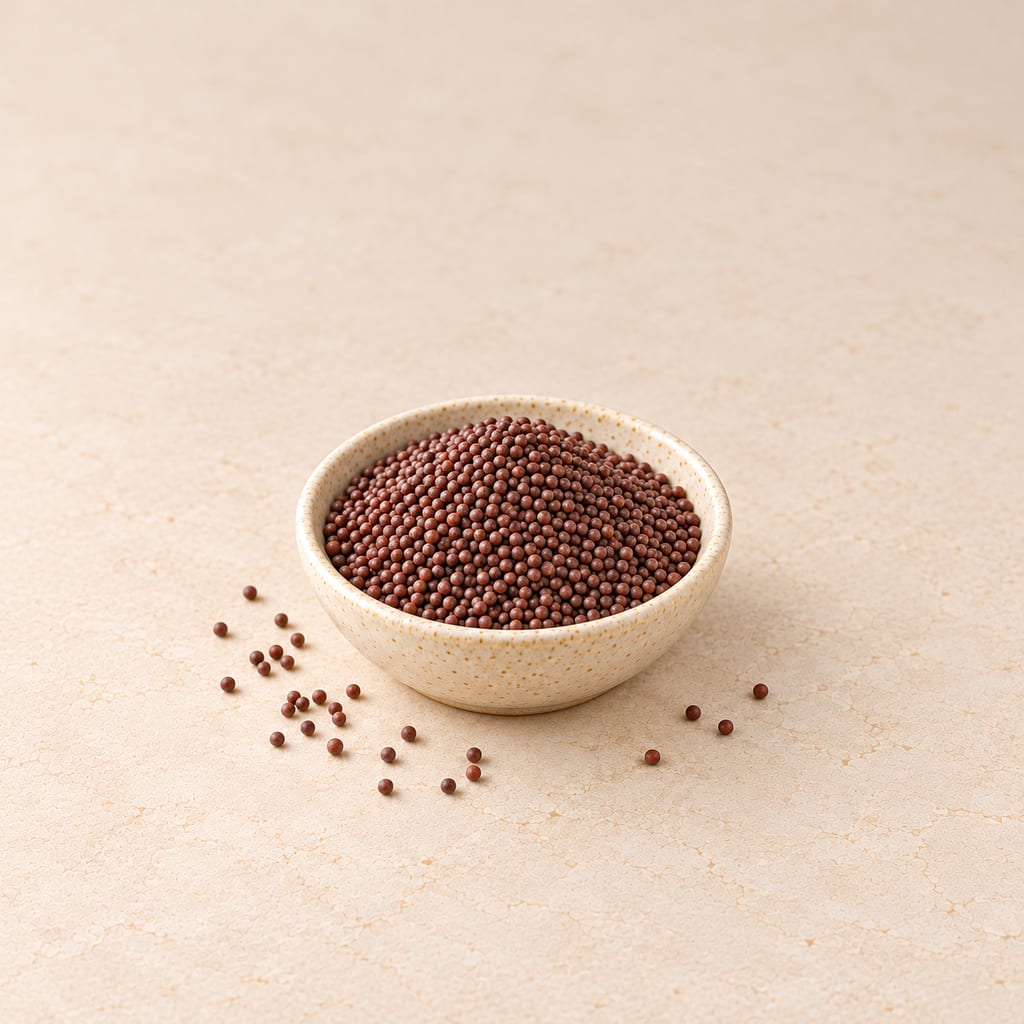
Brown or oriental mustard seed comes from Brassica juncea, a hybrid of black mustard and turnip rape. It is the hot, easily harvested seed behind Dijon, spicy brown mustards and much of the mustard oil of the Indian subcontinent.
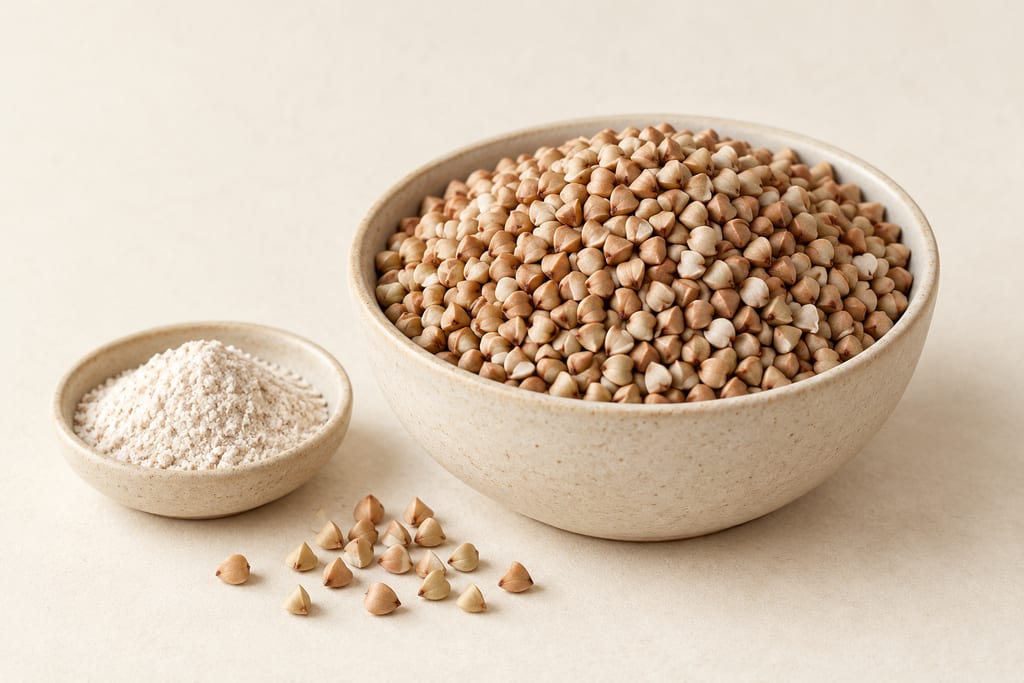
Buckwheat is a triangular-seeded flowering plant whose whole groats and flour cross regional food traditions, from porridge and pancakes to modern sourdough and gluten-free bread.
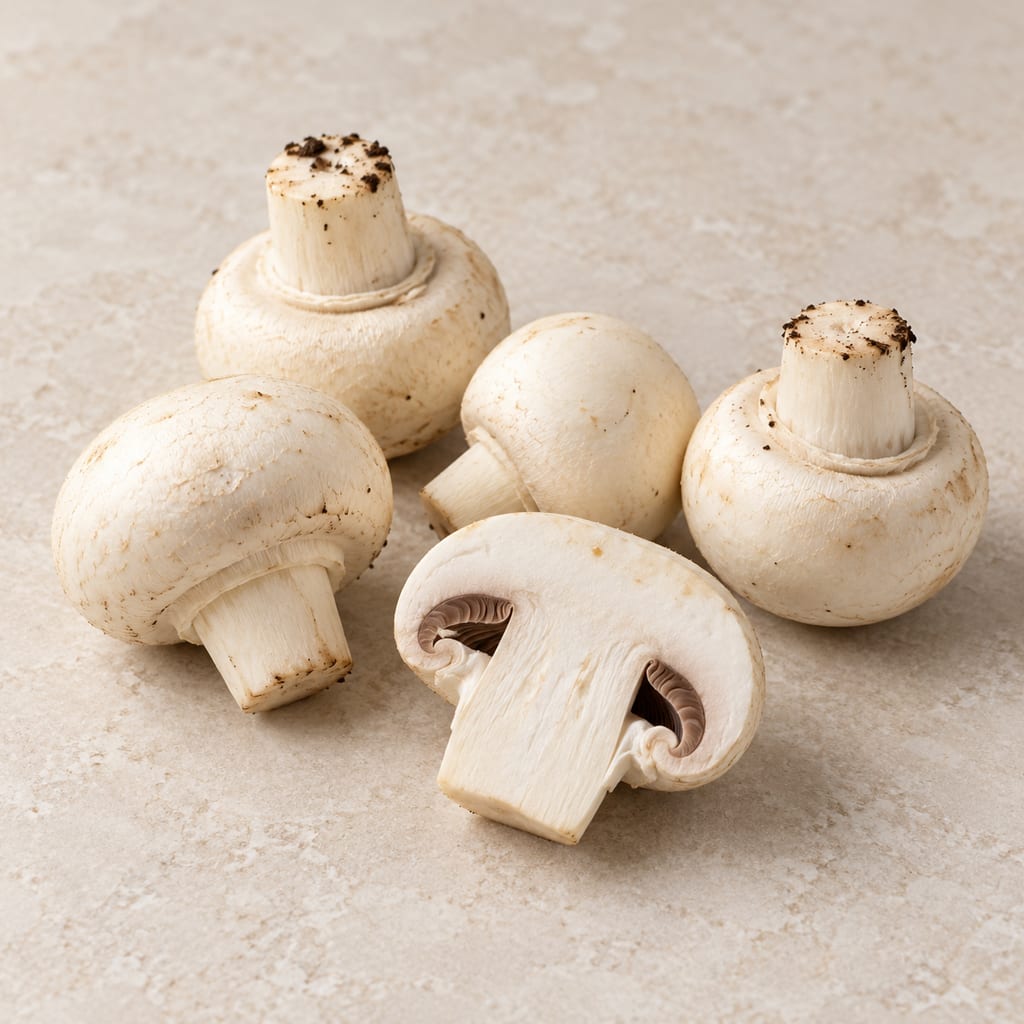
A cultivated form of Agaricus bisporus sold young as a button and at more mature stages as cremini or portobello, used fresh or preserved in everyday cooking.
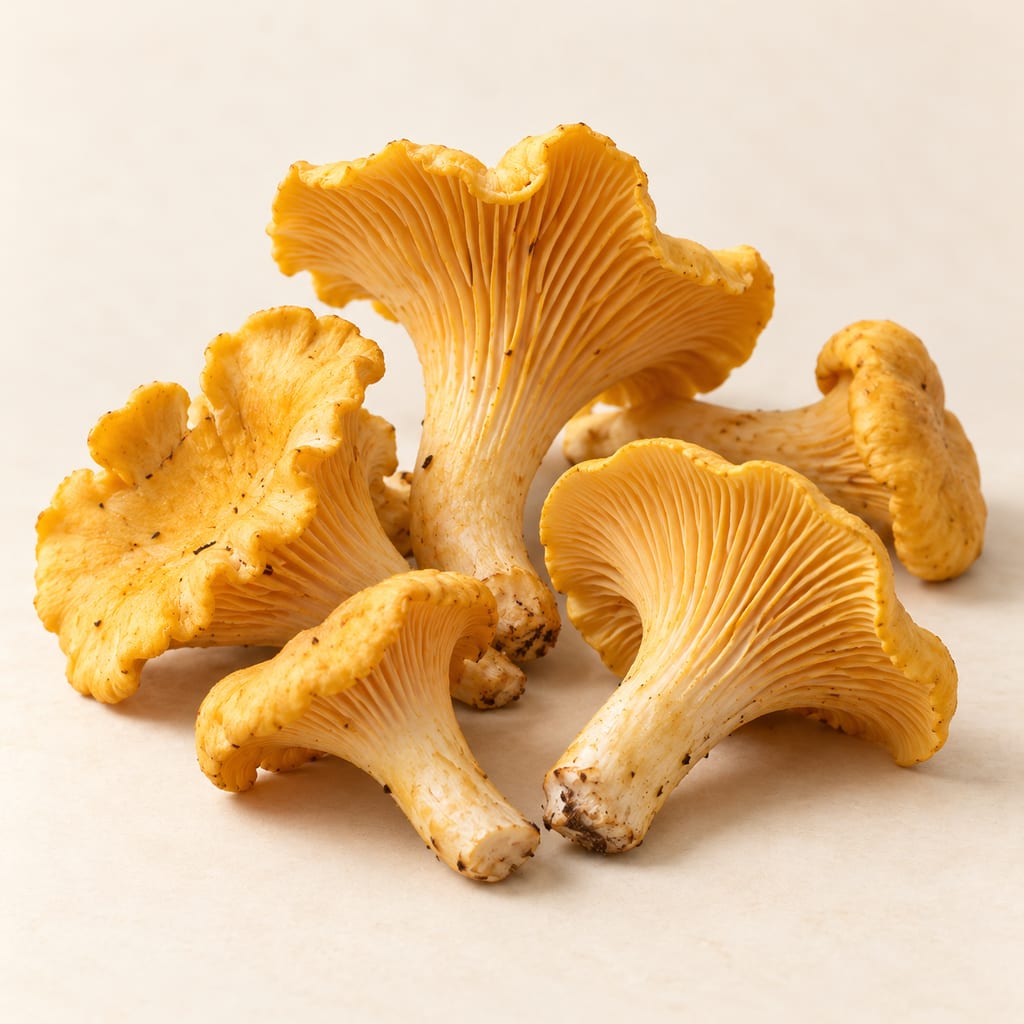
Chanterelles are wild, tree-associated edible mushrooms, particularly the European golden chanterelle Cantharellus cibarius, prized for their firm flesh, fruity aroma and use fresh, frozen, dried or pickled.

Chicken eggs supply proteins and yolk fats that set and emulsify. Atlas breads use them in enriched doughs, surface washes and a sourdough pancake batter mixed after fermentation.
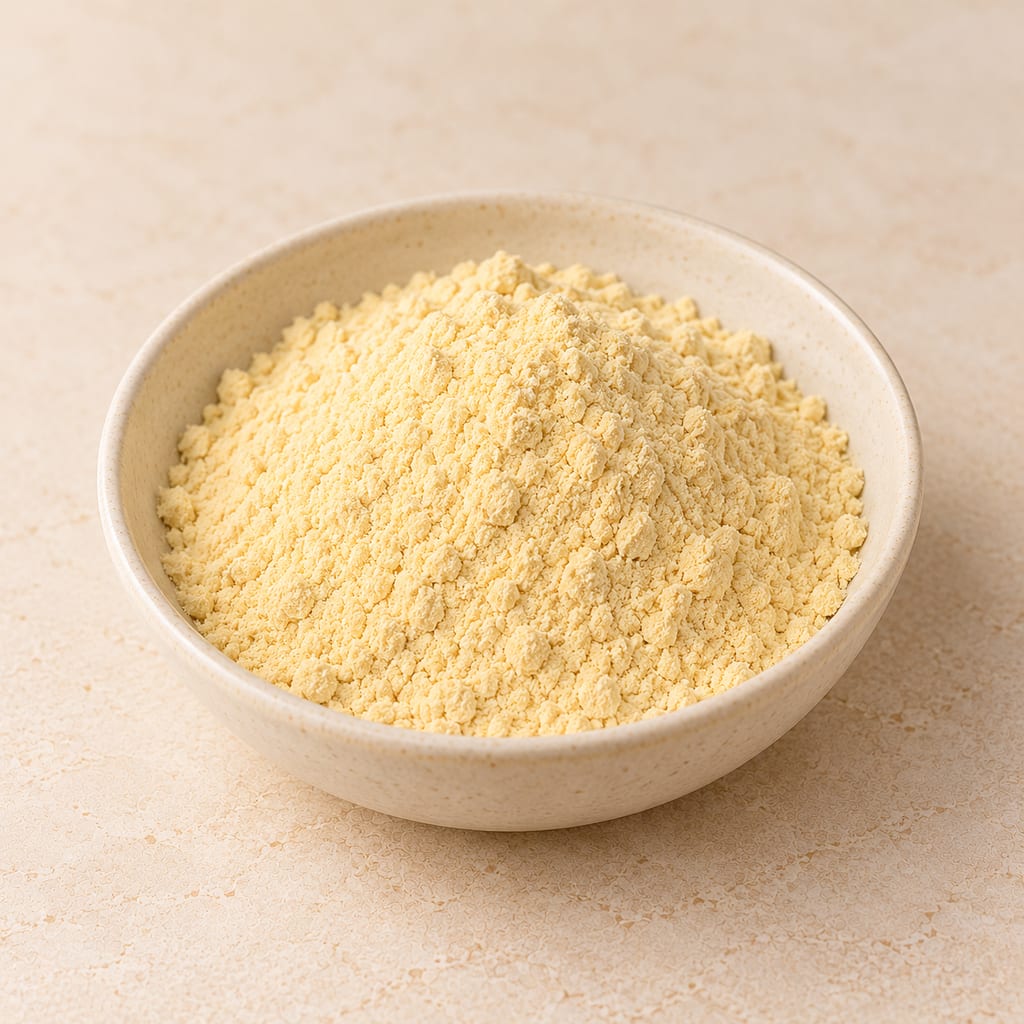
Chickpea flour is milled Cicer arietinum, used as besan in many Indian dishes and as the base of breads such as socca and farinata.
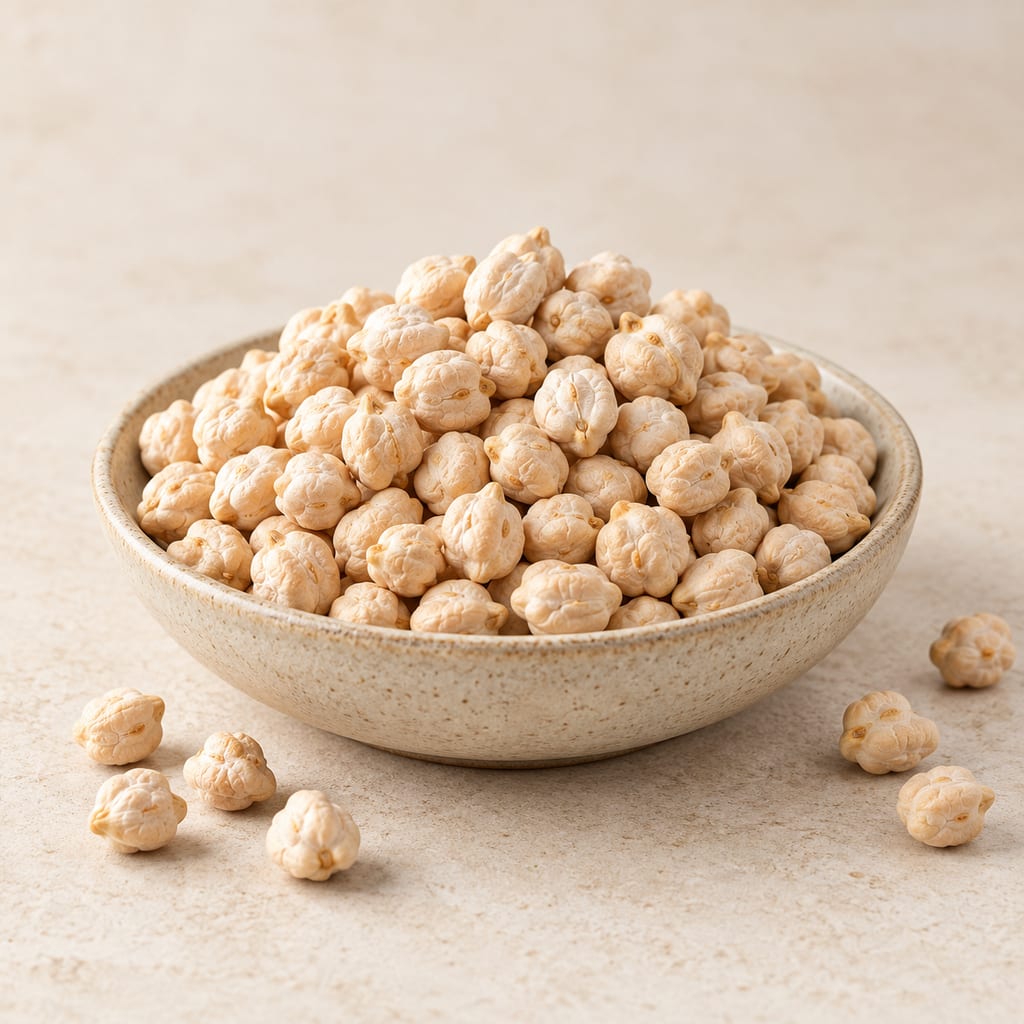
Chickpeas (Cicer arietinum) are dry pulses eaten whole or milled into flour, which gives socca, farinata and other breads a dense, nutty batter or dough.

Soft, spreadable Calabrian pork sausage made with a great deal of red chilli and fatty pork, stuffed into natural casings, sometimes smoked and matured while staying soft.

A way to add independent temperature logging to an existing food dehydrator without changing its built-in controls or protections. It is a monitoring method, not a rewiring plan.

Pleurotus cystidiosus is the abalone mushroom, a cultivated oyster-type fungus with dark brown caps that grows more slowly and is more demanding than other Pleurotus species.

A dark, balanced vinegar from Emilia-Romagna made by combining cooked or concentrated grape must with wine vinegar, then acetifying and refining it in wood under a protected specification.

A living dairy inoculum that starts controlled cream fermentation, developing acidity and aroma before sour cream or cultured butter is finished.

A small electric incubator holds jars at a selected temperature for yogurt and other documented warm food preparations. Controls, capacity and vessel arrangement vary by model.

Adygean salt is a seasoned table salt associated with Adygea and the wider North Caucasian culinary tradition. Salt is blended with garlic and a variable selection of herbs and spices; the exact mix depends on the named style and maker.

The African Caesar-group mushroom, Amanita masasiensis, is a wild ectomycorrhizal species of central and southern African woodlands, eaten locally. The genus contains deadly poisonous species, so identification needs care.
No community contributions have been published for this entry yet.
Sign in to contribute. Published comments and photos are free to read.
Lallemand Inc.Ingredient identity · Ingredient use
LALVIN 71B™Current brand identity, maker’s stated selection location, applications and product-level summary.
Original donor grape/vineyard, precise isolation date, lot genotype or guaranteed sensory outcome.
Cited in: A wine yeast with a particular identity; Selection in Narbonne and the commercial record; Why this is separate from malolactic fermentation
LallemandIngredient identity · Ingredient use
Lalvin 71B™Product-specific manufacturer data and directions.
Independent validation or guaranteed performance across musts and process conditions.
Cited in: Selection in Narbonne and the commercial record; Malic acid during alcoholic fermentation; Why this is separate from malolactic fermentation; Fruity aroma and the rest of the wine; The dried product and its production claims; Rehydration and storage belong to a product version
LallemandIngredient identity · Ingredient use
Specification Sheet: LALVIN 71B™Product form and description; ingredient declaration; current official specification sheet directions.
A particular lot’s lab results or current exact packaging availability in every market.
Cited in: What active dry yeast looks like; The dried product and its production claims; Rehydration and storage belong to a product version
Lallemand Denmark A/SIngredient identity · Ingredient use
Safety Data Sheet: Active Dry YeastHandling considerations for powdered active dry yeast.
A product-specific dietary allergen conclusion or a wine-fermentation safety control.
Cited in: Rehydration and storage belong to a product version
LallemandIngredient identity · Ingredient use
General Declaration: Active Dry Yeast for Oenological UseManufacturer’s declaration for the active dry oenological yeast product class.
Independent testing of a specific lot or allergen cross-contact outside the declaration’s scope.
Cited in: What active dry yeast looks like; The dried product and its production claims
Lallemand Inc.Ingredient identity · Ingredient use
Lalvin 71B-1122 Yeast 5g Sachet (Box of 100)Commercially sold 5 g sachet under the exact 71B-1122 name.
A complete global list of formats or guaranteed product availability.
Cited in: A wine yeast with a particular identity; What active dry yeast looks like; One use in Concord grape wine
International Journal of Food Microbiology / PubMed record, National Library of MedicineIngredient identity · Ingredient use
Differential malic acid degradation by selected strains of Saccharomyces during alcoholic fermentationThe abstract reports 18% malic-acid degradation by 71B in the comparative Chardonnay experiment and increased malic-enzyme gene expression late in fermentation after glucose depletion. These are experimental observations, not a guaranteed product range.
Cited in: Malic acid during alcoholic fermentation; Experiments explain the variable result
Massey UniversityIngredient identity · Ingredient use
Maloethanolic deacidification of high acid juices during wine yeast alcoholic fermentationThe thesis abstract reports 36% and 47% malic-acid degradation by 71B in its Chardonnay and Sauvignon Blanc experiments. It distinguishes yeast maloethanolic deacidification from bacterial malolactic fermentation and discusses effects of juice composition and initial conditions.
Cited in: Malic acid during alcoholic fermentation; Experiments explain the variable result; Why this is separate from malolactic fermentation
IFVIngredient identity · Ingredient use
Lalvin 71BInstitutional compilation distinguishing manufacturer/distributor-supplied claims from IFV lab properties and cited trials.
Original source documents or an archival commercial launch date; its “Germany” entry is labeled grape variety + region, not yeast origin.
Cited in: Selection in Narbonne and the commercial record; Experiments explain the variable result
International Journal of Food Science & Technology, Oxford University PressIngredient identity · Ingredient use
Genetic and enological analysis of selected Saccharomyces cerevisiae strains for wine productionThe article summary reports different wine chemical profiles from closely related Saccharomyces strains. The comparison supports strain-dependent metabolite production; it does not predict the sensory result of the Concord recipe.
Cited in: Fruity aroma and the rest of the wine
Adventures in HomebrewingIngredient identity · Ingredient use
Concord Grape Medium Bodied Wine RecipeA linked application of the exact named ingredient in a Concord grape wine recipe.
A manufacturer-validated recipe or universal dose for different musts.
Cited in: A wine yeast with a particular identity; What active dry yeast looks like; One use in Concord grape wine