
Cultures
LHP-Dry starter culture
A purchased meat starter named in a contemporary Sai Krok Issan recipe. Chr. Hansen documents Bactoferm LHP-DRY US as a dried Pediococcus blend for rapid acidification; the recipe does not identify a lot or strain.
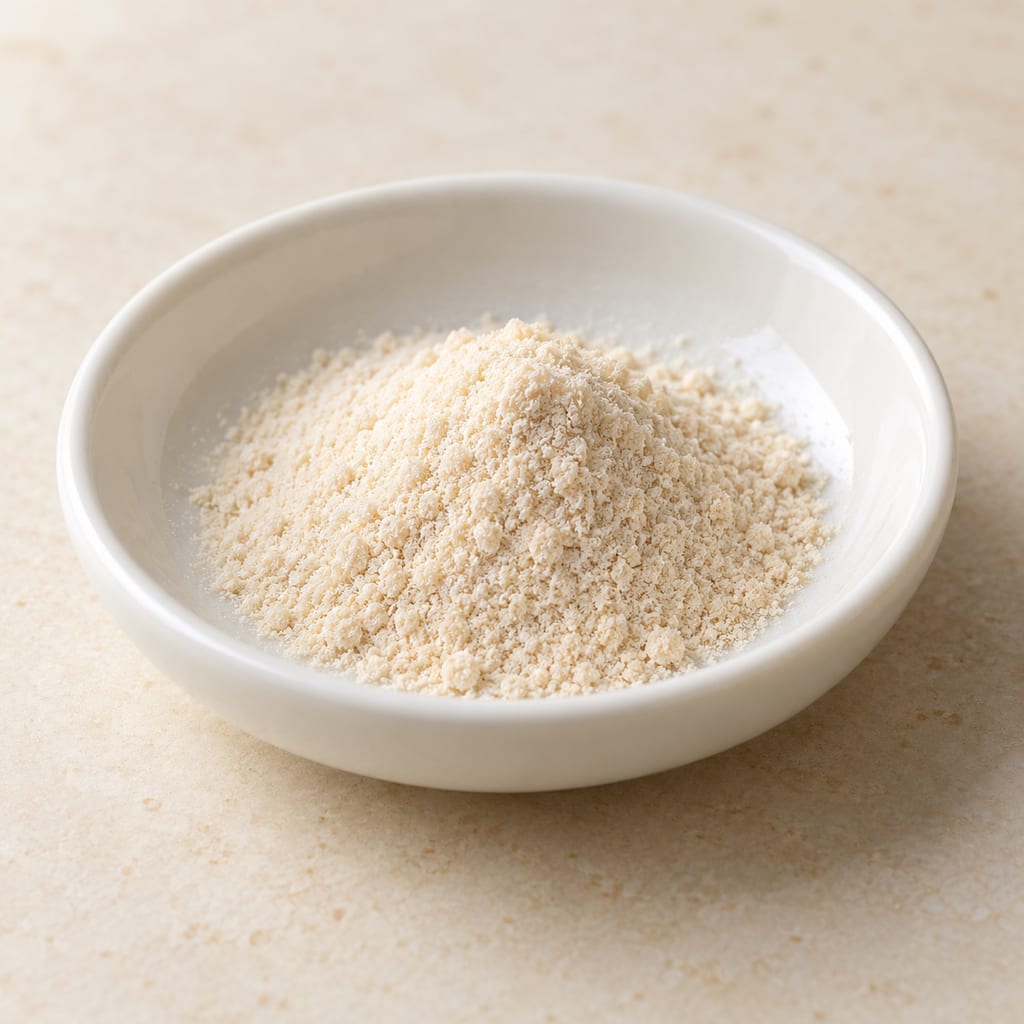
A commercial culture for fast meat fermentation
LHP-Dry is a purchased dried culture used to start fermentation in meat. The Sai Krok Issan recipe linked here names it as an optional addition and links to a seller's Bactoferm LHP Dry listing. Chr. Hansen's product information documents Bactoferm LHP-DRY US, a preparation containing Pediococcus acidilactici and Pediococcus pentosaceus. That is the strongest manufacturer evidence in the recipe's commercial source trail.
The manufacturer's full name includes US, while the recipe uses the shorter LHP-Dry. Chr. Hansen positions the culture for very fast fermentation at relatively high temperature, recommending American-style pepperoni and summer sausage. Its place in the kitchen is as a concentrated microbial ingredient mixed into meat, before fermentation changes the sausage.
This identity separates the culture from the food made with it. A sachet of dried culture is neither a sausage nor a portion of previously fermented meat saved for another batch. Its declared organisms and application profile make the name informative, although the recipe supplies no lot number, strain designations or current package label.
The powder and its declared ingredients
The 2020 product sheet describes a ground powder ranging from off-white to brownish. When dispersed in water, it forms a suspension. This is a description of the purchased material's physical form, not a description of its microscopic cells or of the fermented meat's appearance. Powder colour alone cannot identify the species or establish whether an old packet remains viable.
The sheet lists sucrose, culture and manganese sulfate. It identifies manganese sulfate as a processing aid under the European rules cited in that document. These details show why the name of a microorganism does not describe every component of a commercial preparation. The powder brings together the organisms and other declared material used to supply them in a usable form.
For that version, the document gives material number 715847 and a commercial box of 25 pouches, each containing 42 g. Those details identify the documented presentation. They do not establish the pack used by the recipe author, and they should not be treated as the only format in which a seller might offer the named culture. A particular purchase needs its own label and date.
Sources for this section
Two species do not disclose the whole blend
Pediococcus acidilactici and Pediococcus pentosaceus are the two species declared by the maker. The sheet does not name individual strains or state their proportions. Species-level identification is useful, but it is less specific than the identity of the selected organisms within a commercial blend. The distinction matters when comparing scientific papers with a product description.
In a 2021 sausage experiment, Seleshe, Ameer and Kang tested separate Pediococcus isolates called PE1 and PE2 against an Almi commercial starter. Their cultures were obtained and prepared for that particular study. Neither isolate is established as an organism in LHP-Dry. The paper consequently offers a comparison of selected cultures, rather than a laboratory analysis of this sachet.
The study reported differences in several quality measures, while aroma and sourness scores did not differ significantly among its treatments. That combination is instructive: changing a culture can alter measured characteristics without producing a corresponding change in every sensory attribute. A statement that two products contain the same species would still leave their strains, proportions and performance unresolved.
Acidification changes the meat mixture
Lactic-acid bacteria use fermentable carbohydrates and produce organic acids. In meat fermentation, lactic acid is a major contributor to falling pH. The changing acidity affects the environment in which other microorganisms grow and contributes to the tang associated with fermented sausage. These are general process effects; they do not supply a measured acidification curve for LHP-Dry in every meat mixture.
Chr. Hansen characterizes LHP-DRY US as salt-tolerant and quick to initiate acidification, with firm texture and flavour as intended product outcomes. The description explains its appeal where the maker of a sausage wants a relatively rapid process. It does not give a strain-by-strain sugar-utilization table, a universal final pH or a sensory result independent of the recipe.
The meat, added carbohydrate, salt, temperature and distribution of the culture all belong to the fermentation system. Calling a culture fast describes an intended application profile. It cannot remove the need to understand the rest of the formulation, nor does a larger spoonful establish that fermentation will proceed as intended.
An early record of dried meat starters
A primary publication from 1961 records research on a lyophilized Pediococcus cerevisiae starter for fermented sausage. R. H. Deibel, G. D. Wilson and C. F. Niven Jr. published it in Applied Microbiology as part of their Microbiology of Meat Curing series. Lyophilized means freeze-dried, the form named in the title. The publication documents investigation of a dried sausage starter decades before the 2020 LHP-Dry information sheet.
The old organism name is retained as it appears in that historical title. It should not be silently rewritten as one of LHP-Dry's declared species or treated as a strain code. The record supports the existence of this research, while leaving the experimental results and any connection to the later commercial product unestablished here.
LHP-Dry's own development history remains undocumented in the checked sources. A history of the technology can explain the idea of a packaged microbial input without assigning the product an inventor, an isolation site or a launch year. Those are separate historical questions from the age of fermented sausage itself.
Sai Krok Isan is the food, not the culture
The linked recipe places LHP-Dry in a contemporary preparation of a northeastern Thai sausage. Its title uses Sai Krok Issan. JIRCAS's Database of Fermented Foods of Thailand records related local names, Sai-krork-prieo and Sai-krork-ee-saan, for sour fermented sausage. These spellings point to the regional food family; they do not name a proprietary starter.
The institutional entry describes pork, fat and rind with cooked rice, salt, sugar, pepper and spices. Its account of serving includes roasting and eating the sausage with cooked rice or glutinous rice, fresh ginger, green shallots and cabbage. This places the sour sausage in a meal, rather than treating fermentation solely as a laboratory operation. The database's process and storage fields are descriptive records, not present-day safety instructions for the linked batch.
The recipe's commercial starter is a modern adaptation within that setting. LHP-Dry's manufacturer recommends American-style applications, while this author uses it in a Thai sausage preparation. The cross-application is documented by the recipe; it does not establish that the culture has a traditional Thai origin or that it forms part of every regional method.
Sources for this section
Thai sausage research asks several different questions
Research on Thai sour sausage shows that microbial activity, texture and eating quality need to be considered separately. A 2004 Chiang Mai University paper by Phromraksa and colleagues studied sugar, salt, proportions of pork, fat and cooked sticky rice, starter concentration and fermentation time. The experimental starter contained three named species, rather than the LHP-Dry blend.
The researchers evaluated acidity and pH alongside colour, shear force and sensory assessments. Their design makes clear that a sausage's texture and sourness arise within a formulation. The study's preferred combination was an experimental outcome for those materials and organisms. Its quantities and time are not a replacement formula for the Sai Krok Issan recipe linked here.
In the 2004 work, the researchers purchased the pork, fat, rice, garlic and pepper in Chiang Mai and prepared their cultures in laboratory broth. That is a deliberately constructed experimental system. Its local raw materials support the study’s Thai sausage setting, while its cultured inoculum distinguishes it from an examination of the microbial community in an untouched household batch. The two forms of evidence answer different questions.
Pisanu Vichiensanth's 1982 Massey University thesis abstract provides an earlier example of such work. In that separate experiment, the starter did not reduce pH faster than chance fermentation, although it suppressed other microorganisms. The abstract also reports different sensory effects from direct acid additions. Acidification speed, microbial competition and acceptable flavour were distinct outcomes. None of those findings identifies or validates LHP-Dry.
The thesis also treated the composition of the meat mixture as an experimental question, reporting that pork, fat and rice affected texture in different ways. The author considered sensory acceptability as well as the aim of extending shelf life. That breadth is a useful reminder that a successful fermentation culture does not by itself choose the proportions or texture of a sausage.
The recipe and the maker measure use differently
The Sai Krok Issan ingredient note measures LHP-Dry by volume: one-quarter teaspoon per kilogram of meat, rehydrated in one-quarter cup of distilled water for 30 minutes. This is the recipe author's instruction. The page presents the addition as optional and attributes a shorter fermentation to it. Its comparison is an author claim about that adaptation, rather than a manufacturer trial of the formula.
The 2020 manufacturer sheet gives a different kind of instruction: 42 g for 225 kg, incorporated early during grinding, cutting or blending with other dry ingredients to obtain an even distribution. It directs users seeking other applications to the maker's representative. These are weight-based product directions, not a conversion table for a household spoon measure.
The sources do not establish that the recipe's volume dose equals the documented weight rate, or that its rehydration method was approved for the identified product version. Keeping those instructions attributed helps a reader see the actual difference. Reconstructing a new universal dose from them would conceal it.
Storage concerns the living preparation
Chr. Hansen's 2020 sheet calls for dry storage below −17°C and describes ambient-temperature transport. For freeze-dried cultures kept as recommended, it states a shelf life of at least 18 months; at +5°C, it states a maximum of six weeks. These figures belong to that document and its specified product. The date and instructions on an actual packet remain necessary for interpreting a purchase.
The distinction between transport and storage is practical. Permission for ambient shipment is not a direction to keep a packet indefinitely on a kitchen shelf. The sheet does not provide a post-opening shelf life or an allowance for repeated temperature changes, so those details cannot be supplied from its sealed-product figures.
The manufacturer's dietary table and proposed labelling also have a defined scope. The table records ingredients covered by its listed allergen categories, while the labelling note refers readers to applicable local rules. It is not a general assurance about cross-contact or every later package. A current ingredient declaration matters when the carrier or other formulation material affects a dietary requirement.
Sources for this section
Fermentation still needs a complete process
USDA FSIS's 2023 guidance for regulated ready-to-eat meat establishments explains that pathogens can survive fermentation despite acid production and reduced pH. Fermentation is one part of a wider process, with the culture, formulation and operating conditions relevant to its validation. That guidance establishes a limit on what a starter can prove; it is not a home-production protocol for this Thai sausage.
Chr. Hansen likewise assigns responsibility for the finished food to its manufacturer and recommends food-safety studies for the specific use. A culture's food-use documentation does not certify the sausage in which it is added. Sourness, smell and the appearance of the powder cannot demonstrate control of pathogens. LHP-Dry provides a selected microbial input whose documented role is rapid acidification; the preparation still needs evidence for its complete process.
Allergens
Use the actual package declaration; the2020 manufacturer sheet does not establish every later formulation or cross-contact condition.
Places
Unknown
origin · Place not establishedRecipe gives no isolation site or manufacture location; its Thai sausage use and the maker’s American-style applications are not product origin evidence.
Community
No community contributions have been published for this entry yet.
Share what you made
Sign in to contribute. Published comments and photos are free to read.
Sources
Chr. Hansen A/S; PDF hosted by The Sausage MakerIngredient identity · Ingredient use
Bactoferm® LHP-DRY US Product Information, Version 4, PI GLOB EN 11-19-2020Exact named commercial product evidence, species-level identity, intended use and manufacturer dosage/insertion guidance.
Physical form and product details in this version.
Version-specific storage and explicit safety boundary.
Manufacturer’s stated labeling and dietary information for this document version.
Cited in: A commercial culture for fast meat fermentation; The powder and its declared ingredients; Two species do not disclose the whole blend; Acidification changes the meat mixture; The recipe and the maker measure use differently; Storage concerns the living preparation; Fermentation still needs a complete process
2 Guys & A CoolerIngredient identity · Ingredient use
Thailand’s – Sai Krok IssanContemporary recipe context and the recipe author’s stated rationale/time claim.
Recipe-specific culture use and exact author instruction.
Cited in: A commercial culture for fast meat fermentation; Sai Krok Isan is the food, not the culture; The recipe and the maker measure use differently
The Sausage MakerIngredient identity · Ingredient use
Bactoferm LHP DryIdentifies the recipe-linked seller listing and the retail name/species presentation.
Retail listing’s link to maker documentation.
Cited in: A commercial culture for fast meat fermentation; Storage concerns the living preparation
JIRCASIngredient identity · Ingredient use
Sai-krork-prieo, Database of Fermented Foods of ThailandRegional naming and cultural context for sour fermented sausage.
Institutional account of a traditional sausage-family style and use.
Cited in: Sai Krok Isan is the food, not the culture
Korean Society for Food Science of Animal Resources; *Food Science of Animal Resources* 41(6), 1078–1094Ingredient identity · Ingredient use
Incorporation of Selected Strains of Pediococcus spp. on Quality Characteristics of Dry Fermented Sausage during Fermentation and RipeningSeparate Pediococcus isolates PE1 and PE2 were compared with an Almi commercial control in a defined dry-sausage experiment. Quality measures differed, while aroma and sourness did not differ significantly. The isolates are not identified as LHP-Dry strains.
Cited in: Two species do not disclose the whole blend
American Society for Microbiology; *Applied Microbiology* 9(3), 239–243Ingredient identity · Ingredient use
Microbiology of Meat Curing: IV. A Lyophilized Pediococcus cerevisiae Starter Culture for Fermented SausageThe 1961 publication documents research on a lyophilized Pediococcus cerevisiae starter for fermented sausage. Its title and bibliographic record do not establish a lineage to modern LHP-Dry.
Cited in: An early record of dried meat starters
Chiang Mai University JournalIngredient identity · Ingredient use
Optimizing Formulation and Fermentation Time of Thai Fermented Pork Sausage (Sai Krok Prew) Using Starter CulturesThe 2004 study investigated sugar, salt, pork, fat, cooked sticky rice, culture concentration and fermentation time in Sai Krok Prew. Its three-species laboratory starter differs from LHP-Dry; its sensory formulation results are not a transferable safety process.
Cited in: Thai sausage research asks several different questions
Massey UniversityIngredient identity · Ingredient use
The design of a shelf-stable sausage for ThailandThe 1982 thesis abstract describes a separate Thai sausage experiment in which the starter suppressed other microorganisms without reducing pH faster than chance fermentation. It also reports formulation-dependent texture and sensory differences from direct acidification.
Cited in: Thai sausage research asks several different questions
USDA FSISIngredient use
FSIS Ready-to-Eat Fermented, Salt-Cured, and Dried Products GuidelineUS guidance for regulated ready-to-eat meat establishments explains lactic-acid fermentation, culture and formulation effects, distribution of the starter and pathogen survival despite acidification. It does not validate LHP-Dry in the linked home recipe.
Cited in: Acidification changes the meat mixture; Fermentation still needs a complete process