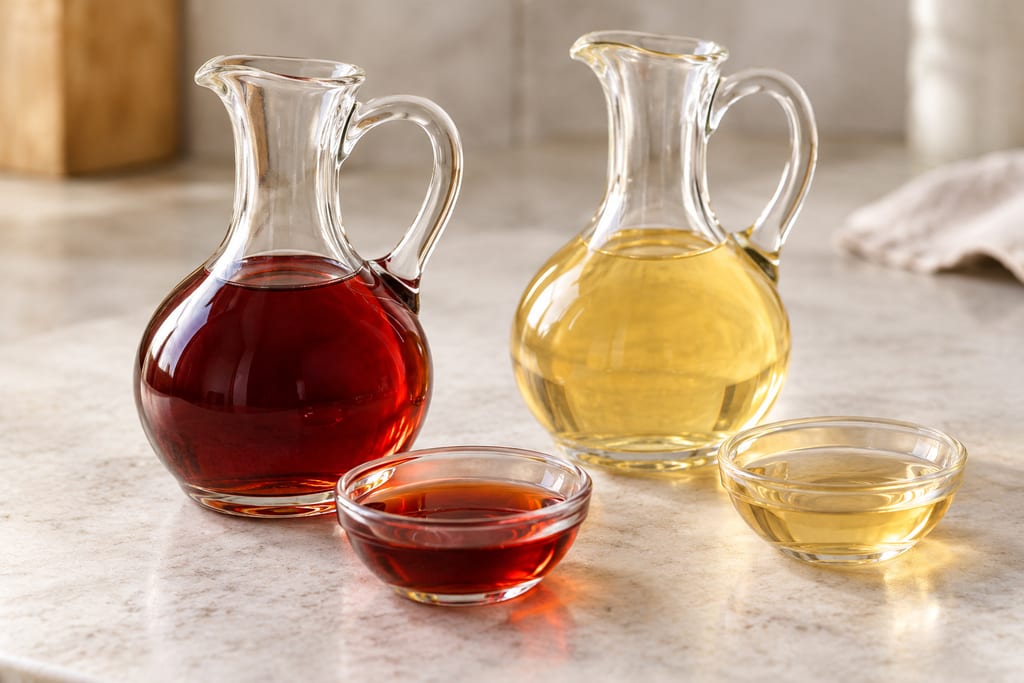
Wine Vinegar
Wine vinegar is made by the aerobic oxidation of wine's alcohol into acetic acid by bacteria, producing a sour, wine-derived condiment used in dressings, sauces, marinades and preserved foods.
 FermenteaWhere food goes to change
Equipment · Industrial and laboratory plant
Spanbildner · Schützenbach Essigbildner · Schützenbach generator
An upright packed bed speeds vinegar acetification by wetting a bacteria-bearing carrier with alcoholic liquid as air rises through it.
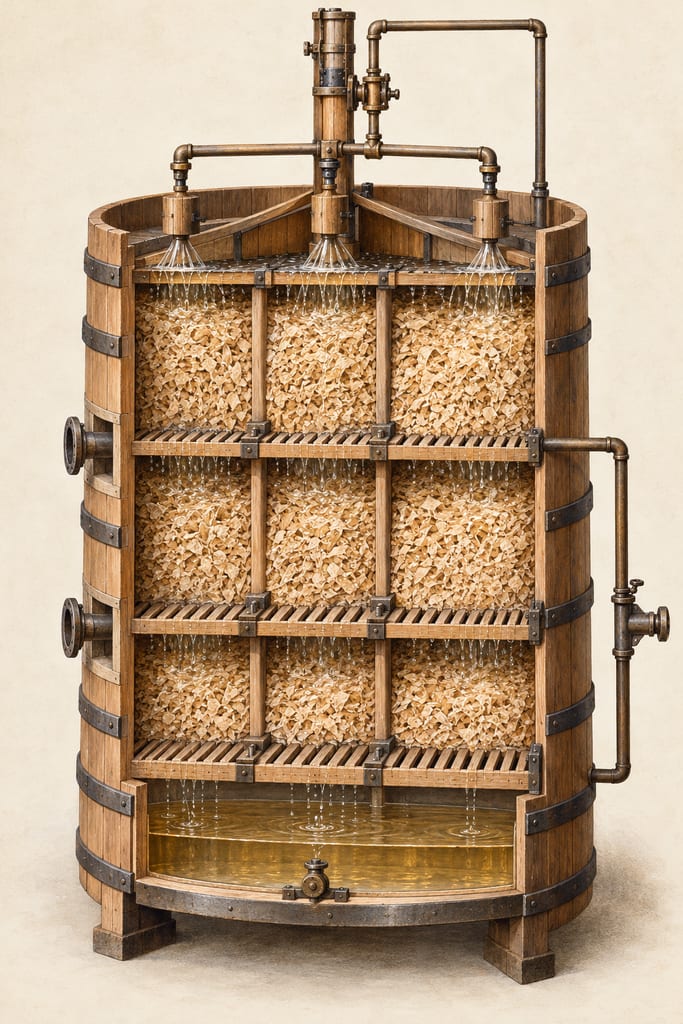
A packed vinegar generator is a tall vat or tower that increases contact between alcoholic liquid, air and acetic acid bacteria. Instead of leaving the culture on the open surface of a partly filled barrel, the maker distributes liquid across a bed of loose material. The liquid trickles through the packing while air travels upward through it. The bacteria grow on the wetted carrier, so a large working surface can fit inside a compact upright vessel.
The method is commonly called the Schützenbach or rapid-generator process. A 1916 account dates its introduction into Germany to 1823, while describing it as a development of earlier French acetification practice. This date marks the named quick method, not the beginning of vinegar-making. The historical change was to use a vat and repeatedly spread alcoholic liquid over an acetifying surface instead of relying only on a slow surface culture in a barrel.
A modern North Carolina State University Extension description presents a two-chamber arrangement: the upper chamber is filled with packing and separated from the lower chamber by a screen. Liquid is distributed over the bed and percolates down; air is introduced below and rises through the packing. The liquid collects, is pumped back to the top, and circulates again until the process reaches its stated endpoint.
A 1918 United States patent shows a more elaborate Schützenbach-type generator. Its drawing divides the tall vessel into three communicating packed sections, with slatted false floors, separate air passages, distributors, pumps and cooling equipment. This patent documents one engineer's design, not a universal blueprint. Other traditional generators are described as cylindrical wooden towers, with the lower section collecting liquid for return to the top or transfer to a second generator.
Acetic acid bacteria oxidize ethanol using oxygen. The loose bed supplies many wet surfaces on which the bacteria can remain while alcoholic liquid passes over them, and the counter-moving air continually brings oxygen through the vessel. Historical and technical descriptions name beechwood shavings, corn cobs, rattan shavings, charcoal and other porous carriers. A particular machine uses one supported packing choice; those materials are alternatives, not a mixture required in every generator.
The reaction releases heat. The 1918 patent therefore includes provisions for cooling the feed, air or generator, and later technical descriptions likewise warn that heat can accumulate in a large packed vessel. Liquid distribution, air supply and temperature are operational variables rather than decorative details. The generator's purpose is acetification; it is not simply a sealed aging cask filled with vinegar.
The packed generator occupies a useful middle ground between a household or Orléans-style surface barrel and a submerged acetator. A barrel exposes a relatively broad liquid surface to air. A packed generator spreads liquid over a support while air moves through spaces in the bed. A submerged acetator instead disperses air into the liquid, without a wood-shaving carrier. These are distinct apparatus and process arrangements even though all can support vinegar production.
FRINGS' company history places its packed generator on a timeline at 1925. The same timeline later records automation of vinegar production and the 1953 market launch of the FRINGS Acetator. A 2023 review continues to discuss Schützenbach-type wood-shaving supports among traditional acetification systems, while identifying submerged culture as a major industrial method. The technologies therefore belong to a history of changing process choices, not a simple sequence in which every packed bed vanished at one known date.
The method is associated historically with Germany, but its equipment has varied across makers, plants and periods. The inspected technical literature reports traditional wooden generators as large as 60 cubic metres; that is an upper example rather than a standard size. The 1918 patent's multi-section arrangement also shows how air distribution and cooling could be adapted to a particular design.
No single height, diameter, power source or current purchase route applies to every packed generator. Some documented systems recirculate liquid and force air mechanically, but the evidence does not establish one drive arrangement for the whole equipment type. The available history also does not date when the packed generator ceased to be made, and current industrial vinegar production includes both traditional support-based methods and submerged systems. The safest way to read a generator is through its documented packing, liquid path and airflow, not by assuming that every tall vinegar tank uses the same internals.
The quick process is described as a vat-based development of earlier acetification practice: repeated distribution of alcoholic liquid over a high-area carrier. A later 1918 patent calls its apparatus the Schützenbach type and documents one complex, multi-section design. FRINGS places a packed generator on its company timeline in 1925. A 2023 review still discusses the Schützenbach wood-shaving support among traditional acetification systems, while describing submerged culture as a major industrial system.
This is a country-level historical association, not a claim that vinegar or all packed-bed generators originated in Germany.
Wine vinegar is made by the aerobic oxidation of wine's alcohol into acetic acid by bacteria, producing a sour, wine-derived condiment used in dressings, sauces, marinades and preserved foods.
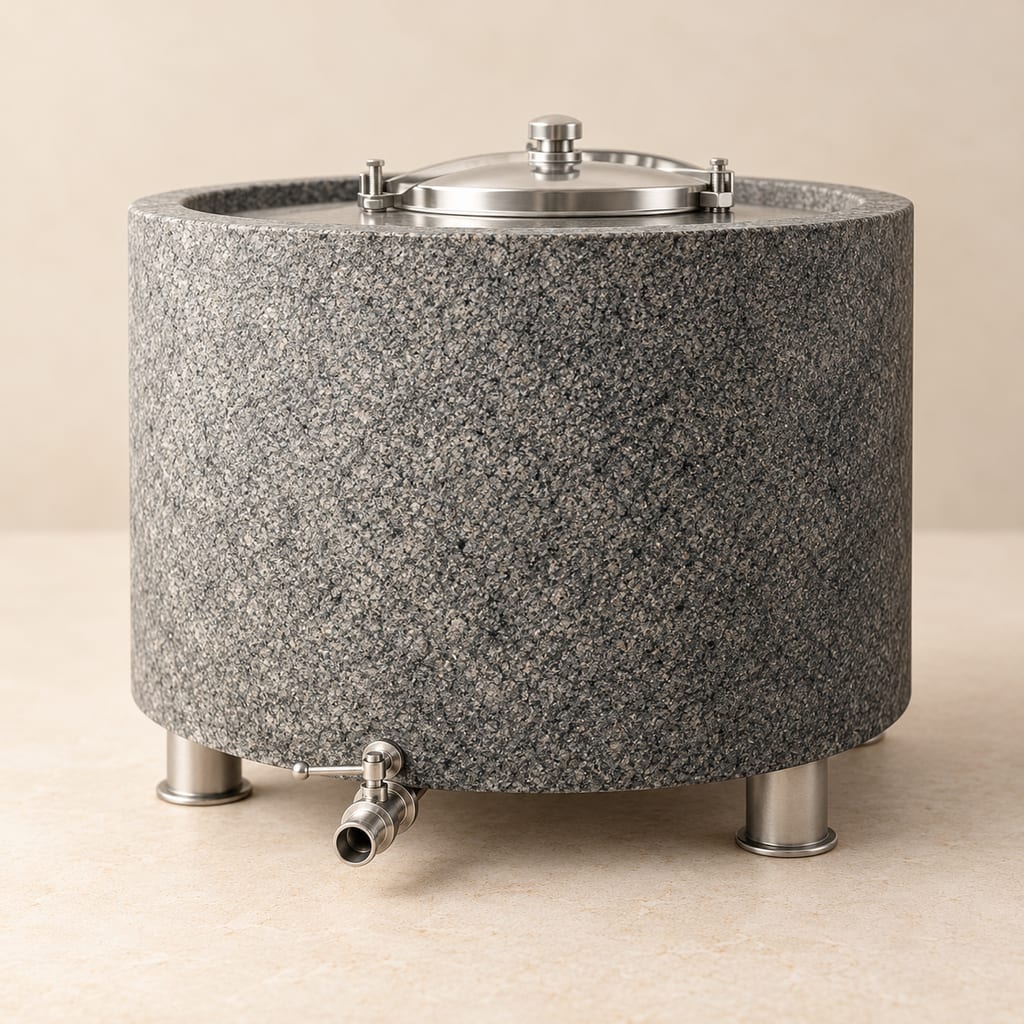
A wine fermentation and maturation tank carved from a single granite block, with a thick mineral shell and fitted metal closures and taps.
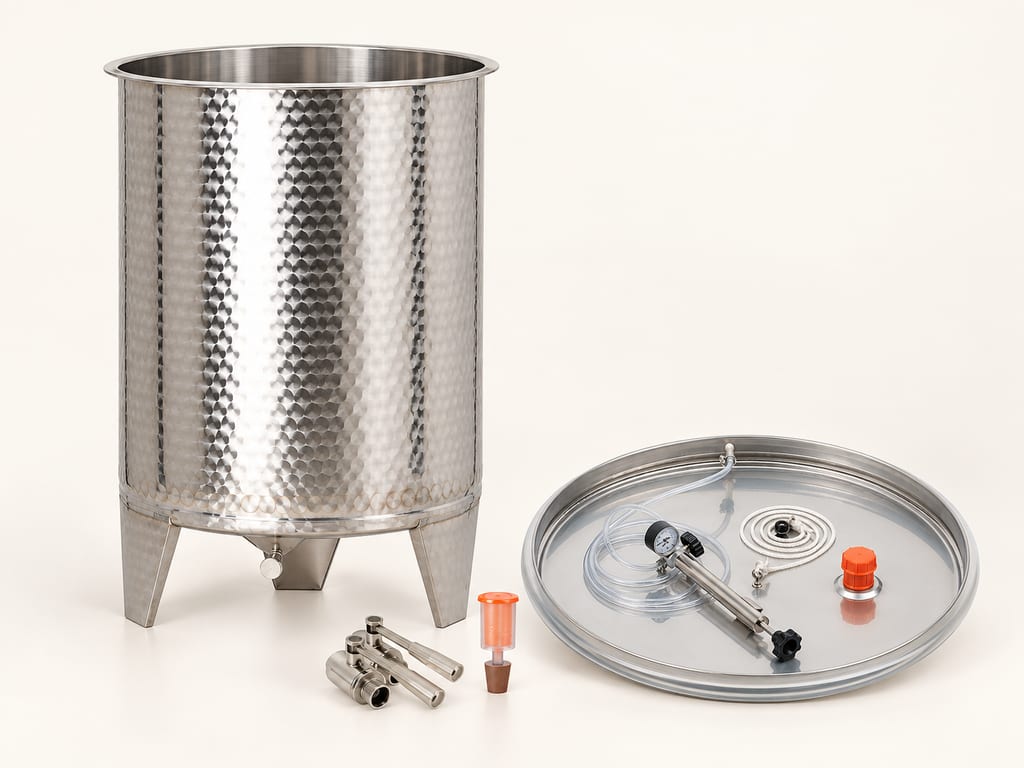
A floating-lid tank is an open-top vessel whose separate lid rests at the liquid level. In contemporary stainless-steel models, an inflatable perimeter seal reduces the air space above a variable volume of wine, cider or juice.
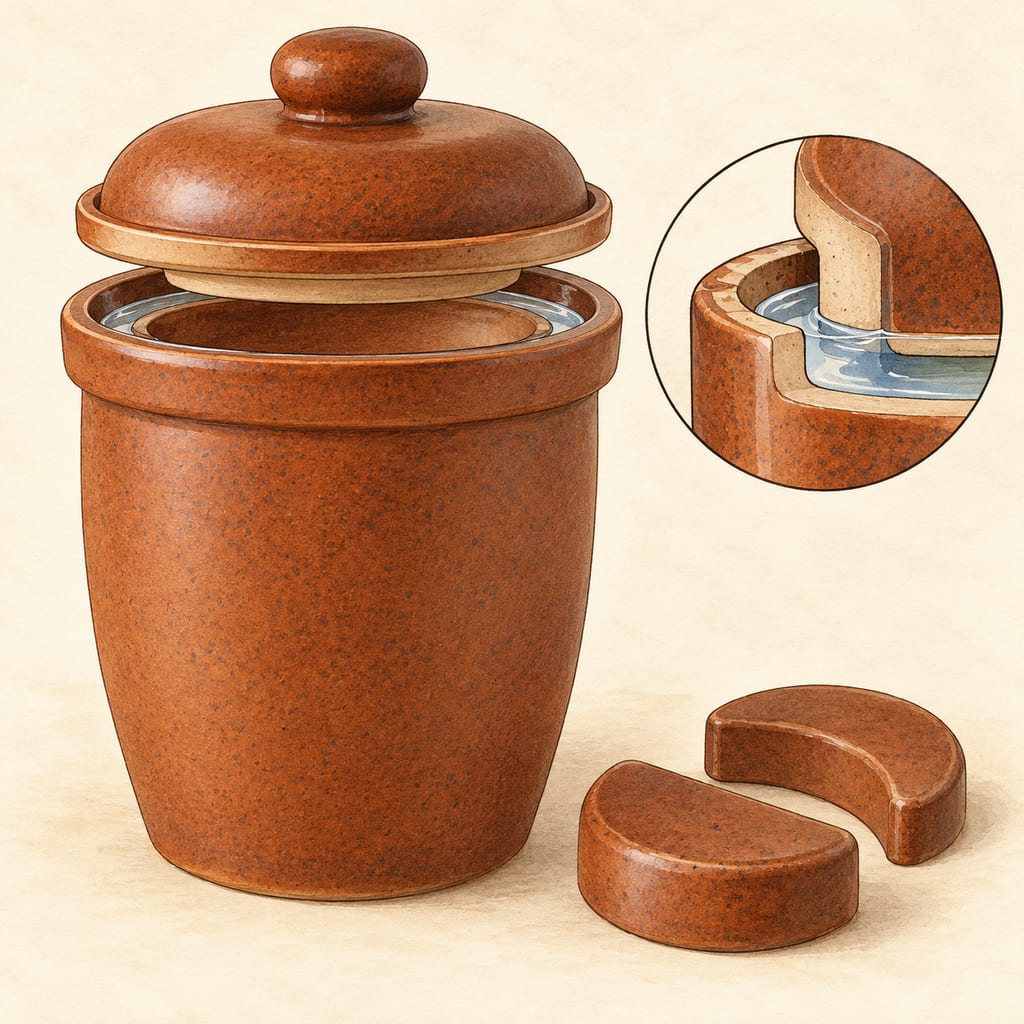
A movable stoneware sauerkraut crock with a fitted lid, ceramic weights and a water-filled rim channel. German sources call it a Gärtopf; Czech sources document the related zelňák or nádoba na kvašení zelí.
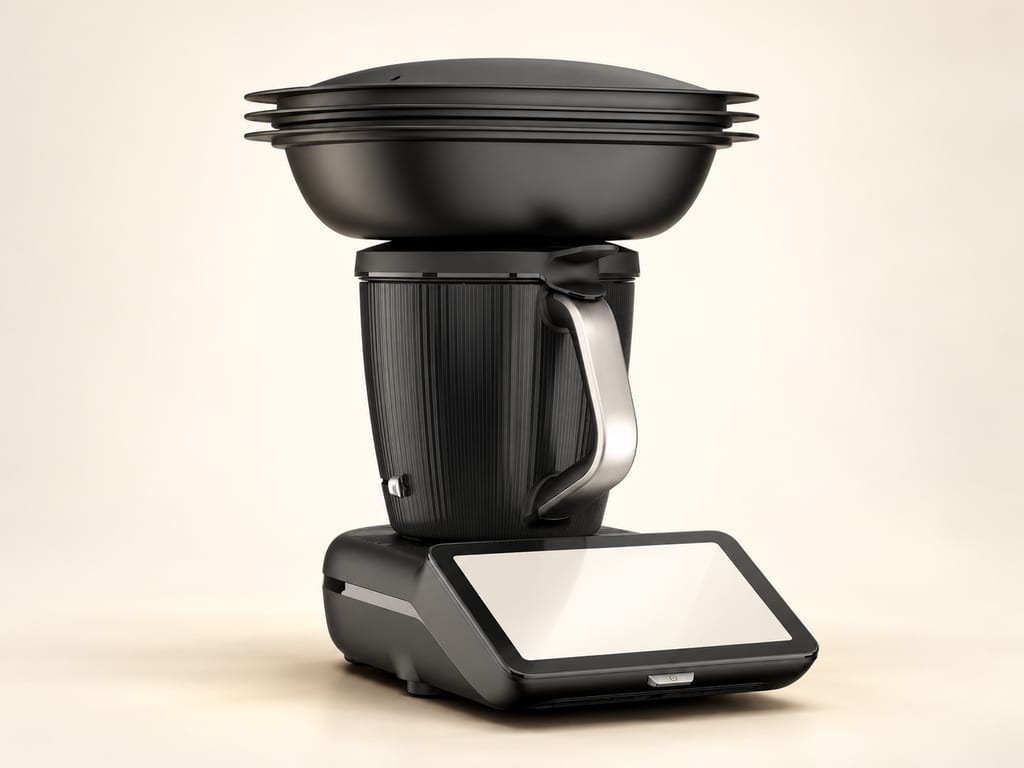
A modern electric countertop machine that heats, chops and stirs food in one mixing bowl. Cookidoo lists Thermomix models for making powidl and quince membrillo, although the full methods are not public on the pages reviewed.
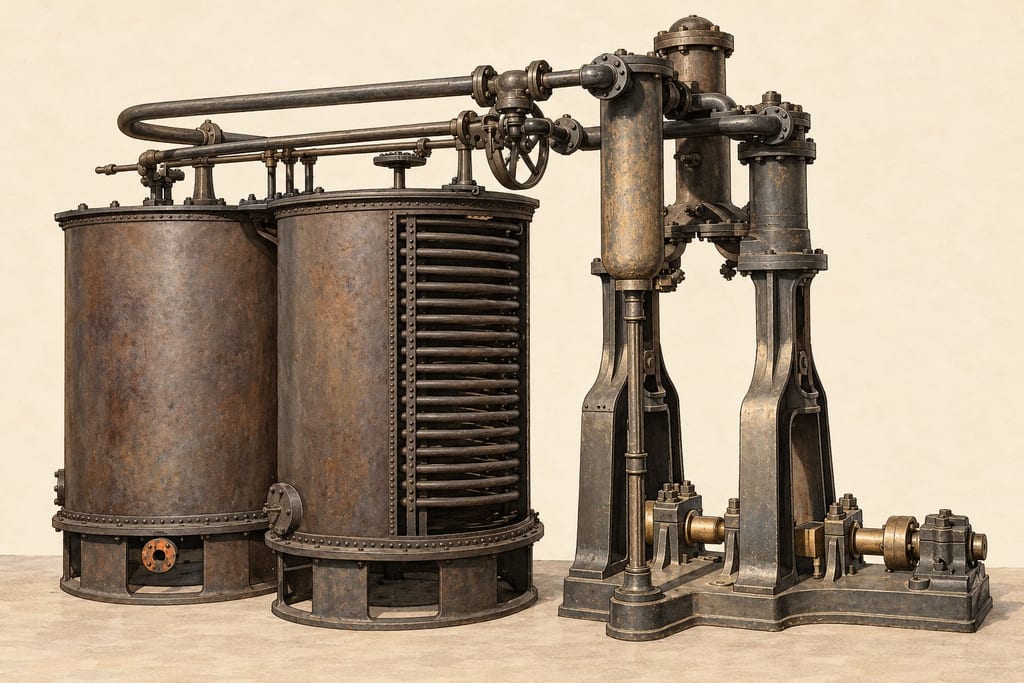
Linde’s 1876 ammonia-compression machine entered service at the Dreher brewery in Trieste in January 1877. Its cylinders and pipework mark the move from seasonal ice toward machine-made cold for brewing.
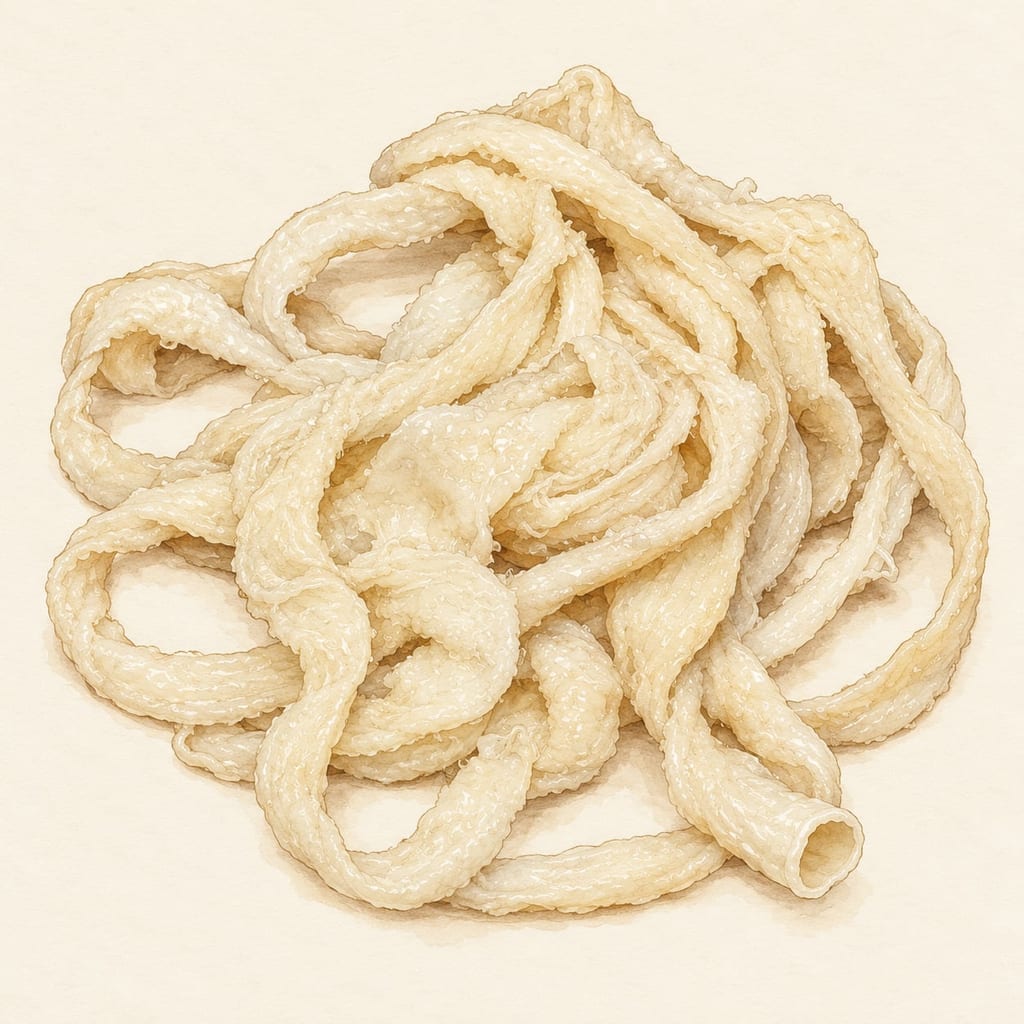
A natural sausage casing is a cleaned animal intestine or, for some products, another prepared organ used as an edible envelope. Its anatomy shapes the sausage, while diameter and material affect stuffing and drying.
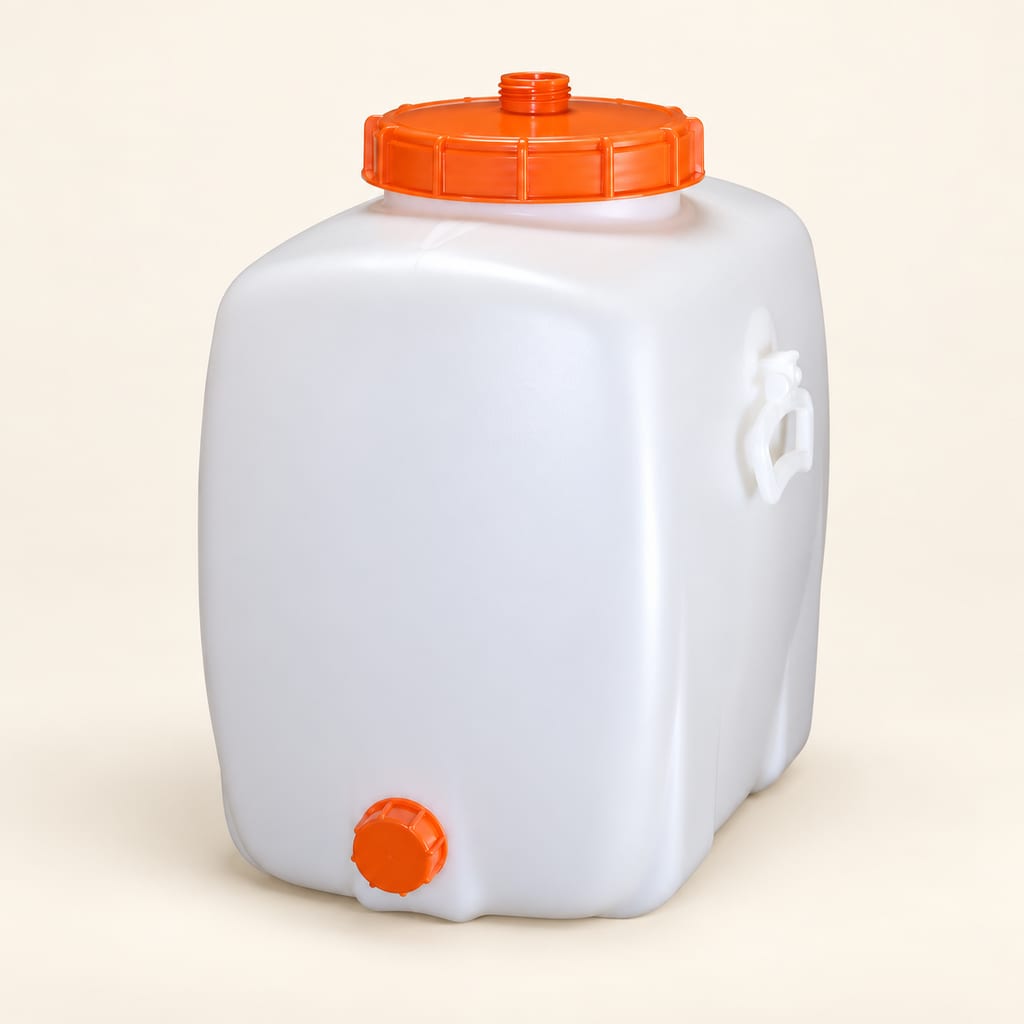
An oval, broad-shouldered polyethylene vessel sold by Speidel as a beverage barrel. Its 60-litre example has a large closure, molded side grips and a lower outlet cap; it is distinct from an open homebrew pail and a coopered wooden cask.
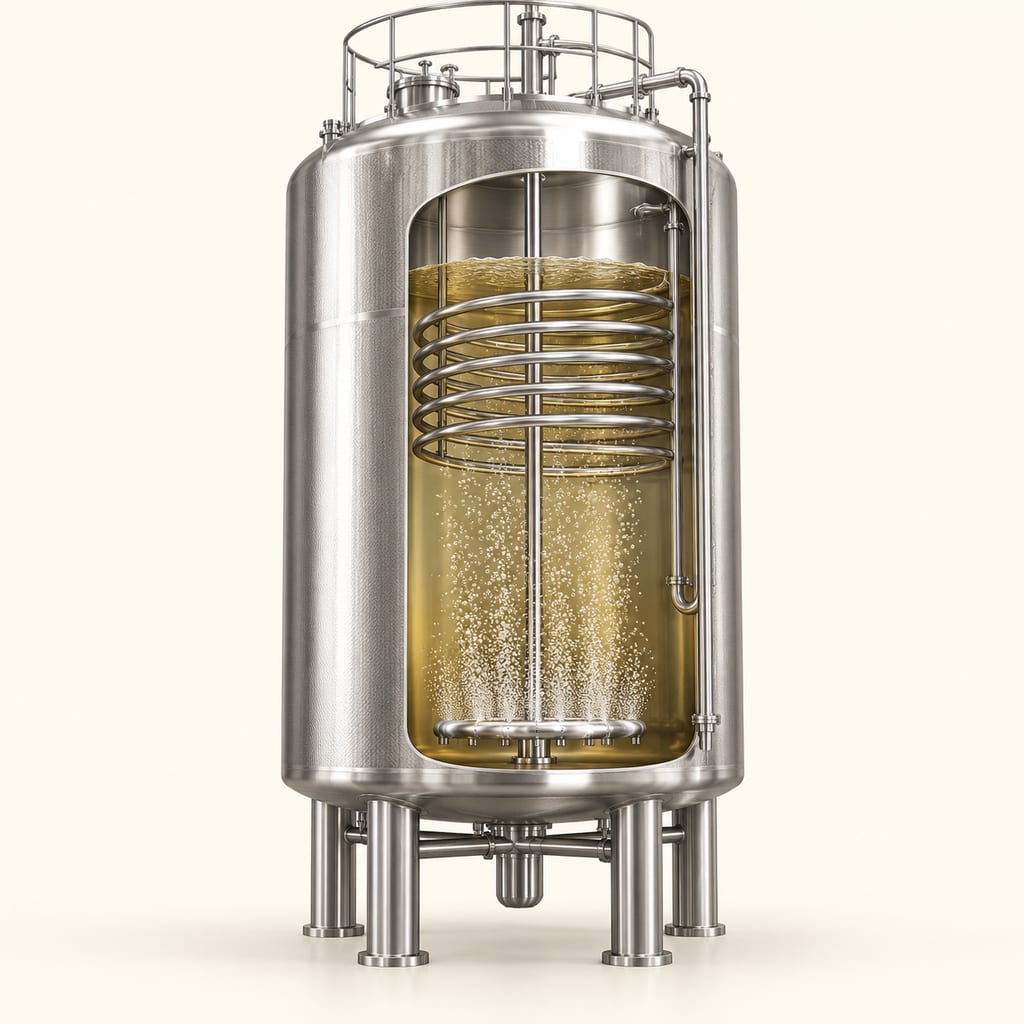
An industrial vinegar fermenter disperses air below the liquid surface, combining submerged acetification with cooling, foam control and process monitoring.

A Cap-Pelé boucanière is an Acadian herring-smoking building. The documented Willie Niles example is a one-storey wood-frame structure with a ridge smoke vent and interior bays for hanging fish-bearing cannes.

Achcharu is a family of Sri Lankan vinegar pickles made with mixed vegetables or seasonal fruit and a piquant spice dressing. This version is a quick, refrigerated, non-fermented mixed-vegetable pickle.

The acocote is a long, hollowed and dried gourd used to draw aguamiel from a mature maguey. It is a harvesting tool: the sap is transferred to a separate vessel before it ferments into pulque.

Adrak murabba preserves young ginger in sugar syrup, a sweet South Asian preparation recorded in Indian cookery and food-processing sources.

Parkia biglobosa seeds are fermented into regional West African seasonings, including nététou, iru, dawadawa and soumbala. The yellow fruit pulp is a separate food, and names and methods vary by place.

Japanese reddish-brown vinegar from sake lees matured about three years, turned to vinegar by acetic bacteria; the vinegar of Handa and Edomae sushi rice.

A refined common-wheat flour blended for a broad range of baking; its protein and behavior vary with wheat, milling and market.

The almond mushroom, Agaricus subrufescens, was cultivated in eastern North America in the 1800s, lost its market, and returned as a cultivated mushroom from Brazil, where it is grown under several names.
No community contributions have been published for this entry yet.
Sign in to contribute. Published comments and photos are free to read.
North Carolina State University ExtensionMethod · Apparatus · Process
Vinegar MakingThe rapid-generator (Schutzenbach) process uses an upper packed chamber over a lower chamber, a screen, upward air flow, liquid distributed across the packing, and recirculation.
Wood shavings and corncobs are examples of packing material.
The page distinguishes rapid-generator acetification from Orléans and submerged methods.
Cited in: Two documented layouts, not one standard machine; From packed beds to submerged acetators
C. Griffin & Company, LimitedHistory · Method · Geography
Vinegar: Its Manufacture and ExaminationThe quick process is attributed to Schützenbach and reported as introduced into Germany in 1823.
Mitchell describes the process as a vat with mechanical repeated distribution over the acetifying medium and notes antecedent French practice.
English acetifiers used perforated false floors and loose beech shavings or raisin stalks.
Cited in: A faster way to bring liquid, bacteria and air together; Scale, place and what the sources leave open
United States Patent Office; hosted by Google PatentsHistorical apparatus · Construction · Airflow · Temperature
Apparatus for vinegar-making, US Patent 1,272,277The 1918 patent describes a Schutzenbach-type generator with wood shavings, liquid introduced near the top, and air entering near the bottom.
Its illustrated variant has vertically stacked packed compartments, slatted false bottoms, separate air feeds, liquid distributors, pumps and cooling provisions.
The patent is a particular design and does not define every packed generator.
Cited in: Two documented layouts, not one standard machine; Why the carrier and airflow matter; Scale, place and what the sources leave open
FRINGSManufacturer history · Historical image · Industry
FRINGS since 1878: Company HistoryFRINGS says it was founded in Aachen in 1878 as a vinegar-products producer.
Its company timeline labels a FRINGS packed generator in 1925, followed by vinegar automation in 1935 and the Acetator market launch in 1953.
This is a manufacturer's chronology, not independent evidence of the invention or a current packed-generator product line.
Cited in: From packed beds to submerged acetators
FoodsMicrobiology · Current context · Method
Latest Trends in Industrial Vinegar Production and the Role of Acetic Acid Bacteria: Classification, Metabolism, and Applications—A Comprehensive ReviewThe review describes acetic acid bacteria immobilized on wood-shaving supports in Schützenbach-type methods, increasing contact surface and oxygenation.
It identifies submerged culture as a major industrial production system and discusses traditional methods separately.
Cited in: A faster way to bring liquid, bacteria and air together; Why the carrier and airflow matter; From packed beds to submerged acetators; Scale, place and what the sources leave open
Blackwell ScienceForm · Materials · Capacity · Heat management
Industrial Microbiology: An IntroductionTraditional vinegar generators are described as cylindrical wooden vessels, with shavings, corn cobs, rattan or charcoal as packing options and forced air passing through the bed.
The textbook reports traditional generators up to 60 m³ and notes that ethanol oxidation generates heat, so cooling may be needed.
It describes a lower collection section with possible recirculation to the top or to another generator in series.
Cited in: Two documented layouts, not one standard machine; Why the carrier and airflow matter; Scale, place and what the sources leave open