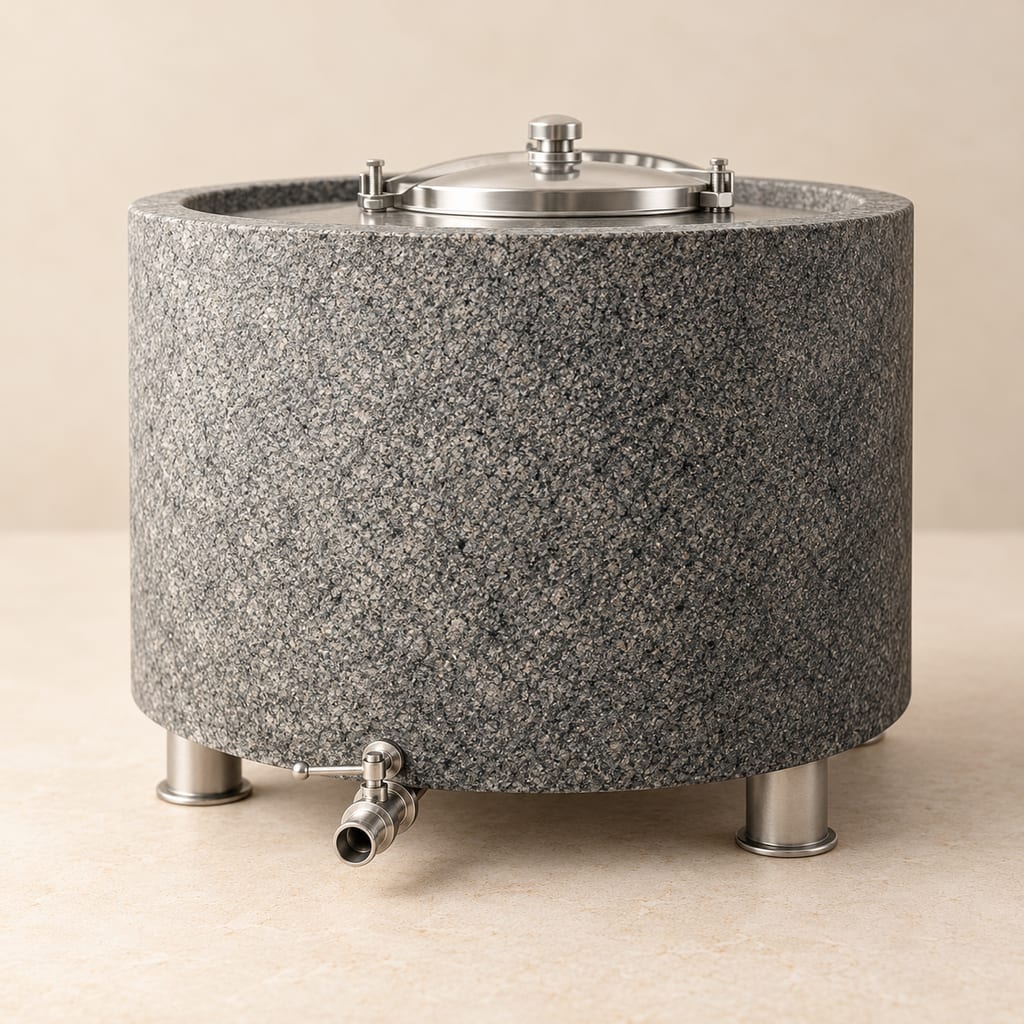
Carved natural-stone wine vessel
A wine fermentation and maturation tank carved from a single granite block, with a thick mineral shell and fitted metal closures and taps.
 FermenteaWhere food goes to change
Equipment · Industrial and laboratory plant
Frings Acetator
An industrial vinegar fermenter disperses air below the liquid surface, combining submerged acetification with cooling, foam control and process monitoring.
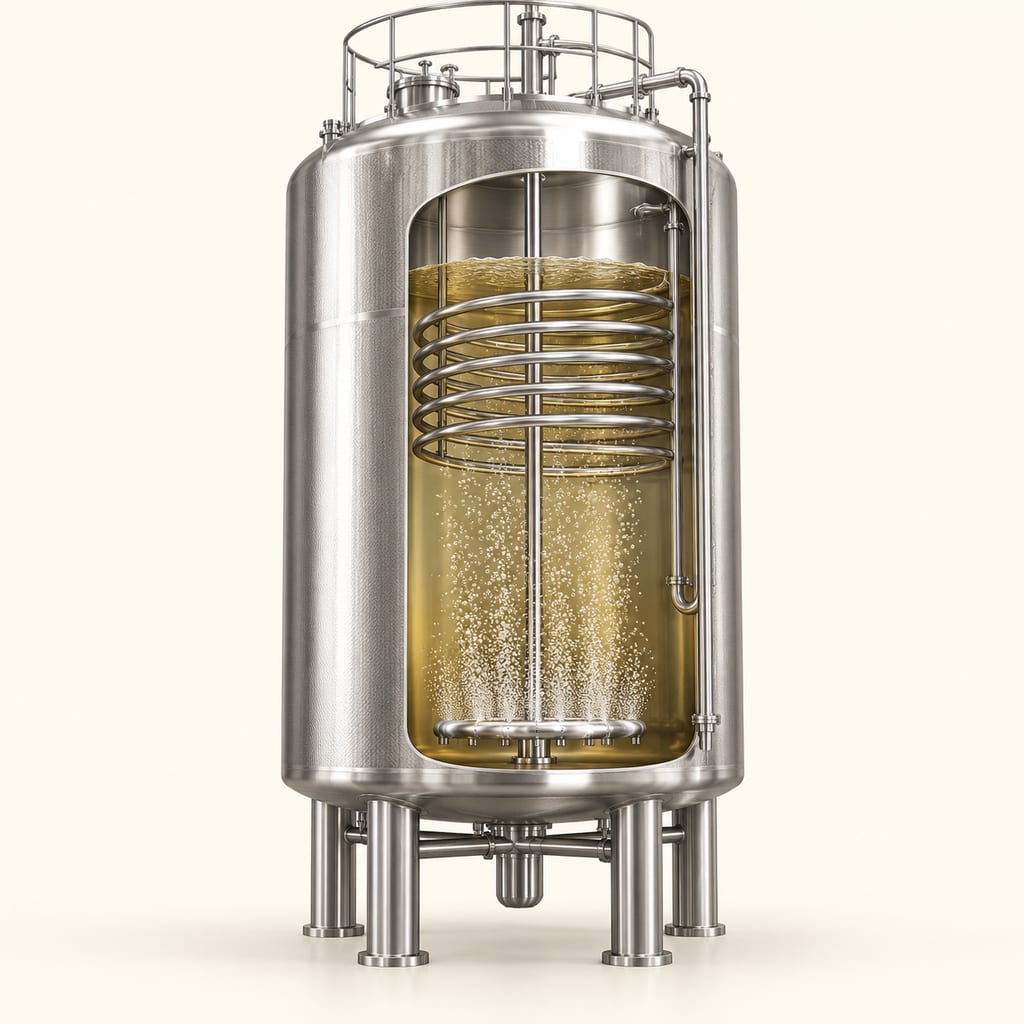
A submerged vinegar acetator is an industrial fermenter for converting an alcoholic liquid into vinegar by acetic acid bacteria. Its distinguishing feature is how it supplies oxygen: a high-performance aerator disperses air into the liquid rather than depending on exchange only at an open surface. The working liquid is therefore the main fermentation space, while the gas is introduced within it and then leaves through an exhaust route.
FRINGS identifies the aerator as the centrepiece of its Acetator. The company's product name is a trademark, though FRINGS notes that “Acetator” has also become a common synonym for vinegar fermenters. This page uses the name for the submerged industrial apparatus and distinguishes it from surface barrels and packed generators.
FRINGS says its industrial systems usually combine a stainless-steel tank and internal cooling coil with the aerator, control unit, alcohol-measuring probe, fresh- and return-air piping, filtered inlet air, charging and discharge lines, pumps, a vertical defoamer, exhaust condenser or scrubber, cooling-water pump and sensors. These are typical components rather than a fixed checklist: the supplier describes modular plant sizes and adaptations to site requirements.
Cooling and foam handling matter because active acetification generates heat and aeration can produce foam. Instrumentation lets the plant monitor process conditions; it does not make every installation identical. A photograph of one FRINGS installation shows a large upright V1500-labelled tank, but that is one documented unit, not a universal size or silhouette.
FRINGS's company history places the commercial launch of its Acetator in 1953. The timeline separately records the company's foundation in Aachen in 1878 and a later move to a new plant in Rheinbach in 2017. It does not name the location where the Acetator was launched, so Germany is recorded here only as a country-level association with the manufacturer's history—not as a proven birthplace for every submerged-vinegar process.
The submerged method represents a different engineering arrangement from a surface-vinegar barrel, where a culture works at the liquid-air boundary, and a packed vinegar generator, where liquid is spread across a carrier bed as air rises through it. In an acetator, the air is dispersed into the liquid. These methods can all serve vinegar production, but their internal contact surfaces and gas paths differ.
The available manufacturer description does not establish one standard tank capacity, height, power rating or production rate for this equipment type. FRINGS sells several standard sizes and configures total plant capacity from selected fermenters. A V1500 unit visible in the linked photograph should therefore not be treated as a specification for all Acetators.
Modern installations may include automated monitoring and exhaust treatment, but those details belong to the cited FRINGS equipment family and should not be projected onto every historical or non-FRINGS submerged fermenter. The central identifying feature remains submerged aeration within a vessel designed for industrial vinegar fermentation.
FRINGS dates the market launch of its Acetator to 1953. The name is a FRINGS trademark; the company also says it is used as a synonym for vinegar fermenters. This company timeline dates its product launch, not the invention of submerged acetification as a whole.
This is a country-level association with the manufacturer's history, not a claim that all submerged vinegar fermenters originated in Germany.
A wine fermentation and maturation tank carved from a single granite block, with a thick mineral shell and fitted metal closures and taps.
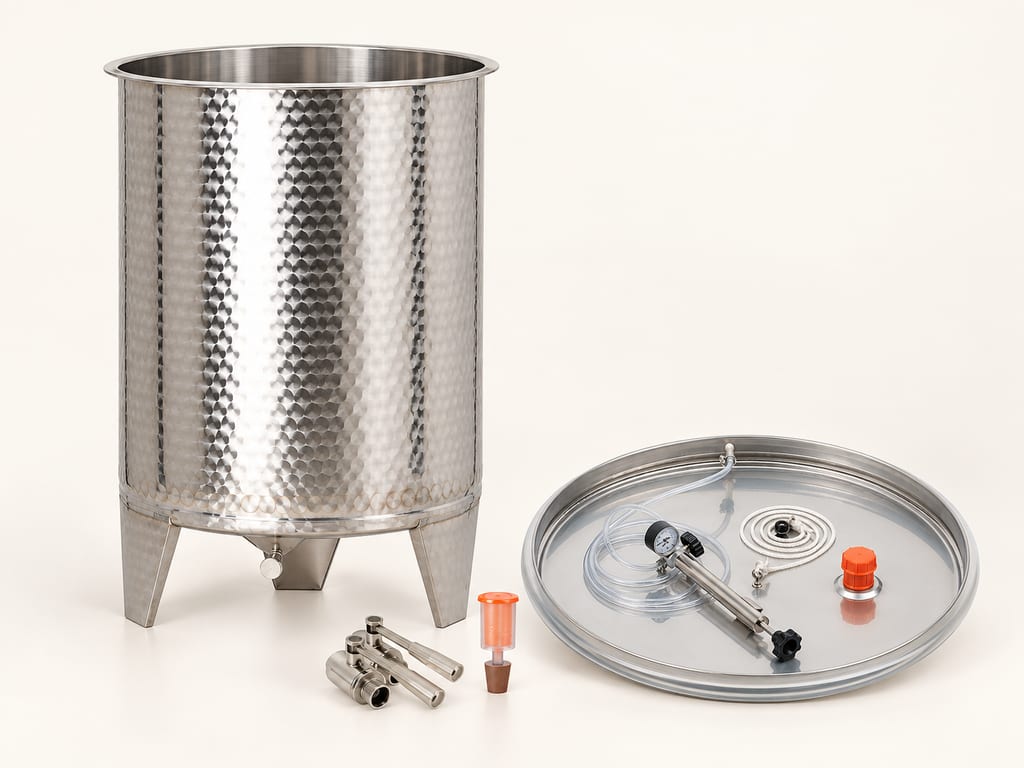
A floating-lid tank is an open-top vessel whose separate lid rests at the liquid level. In contemporary stainless-steel models, an inflatable perimeter seal reduces the air space above a variable volume of wine, cider or juice.
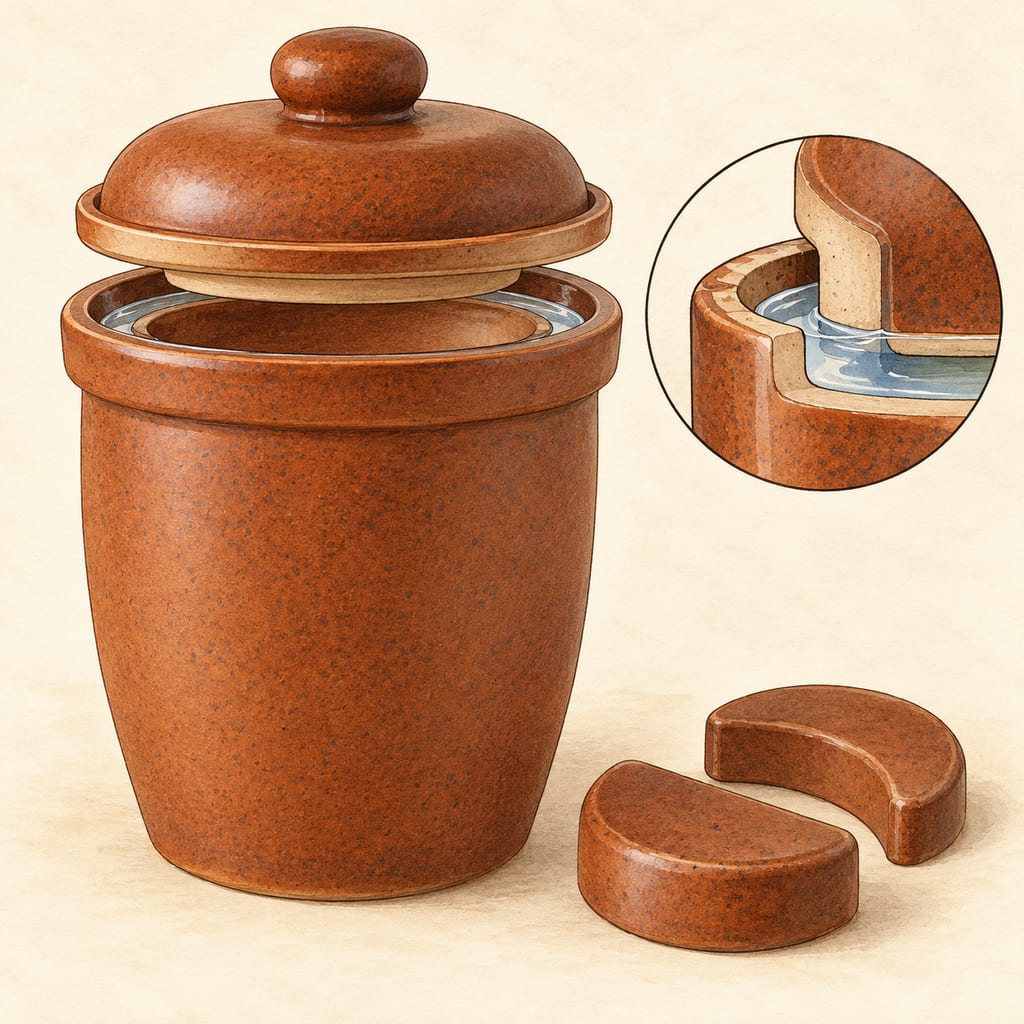
A movable stoneware sauerkraut crock with a fitted lid, ceramic weights and a water-filled rim channel. German sources call it a Gärtopf; Czech sources document the related zelňák or nádoba na kvašení zelí.
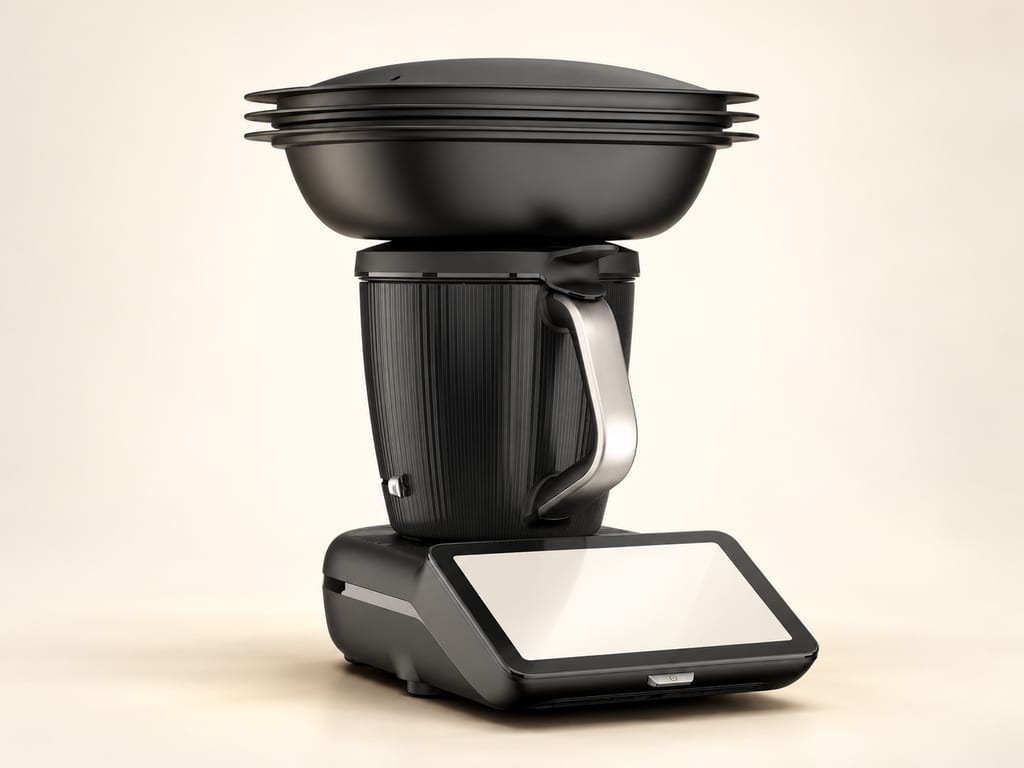
A modern electric countertop machine that heats, chops and stirs food in one mixing bowl. Cookidoo lists Thermomix models for making powidl and quince membrillo, although the full methods are not public on the pages reviewed.
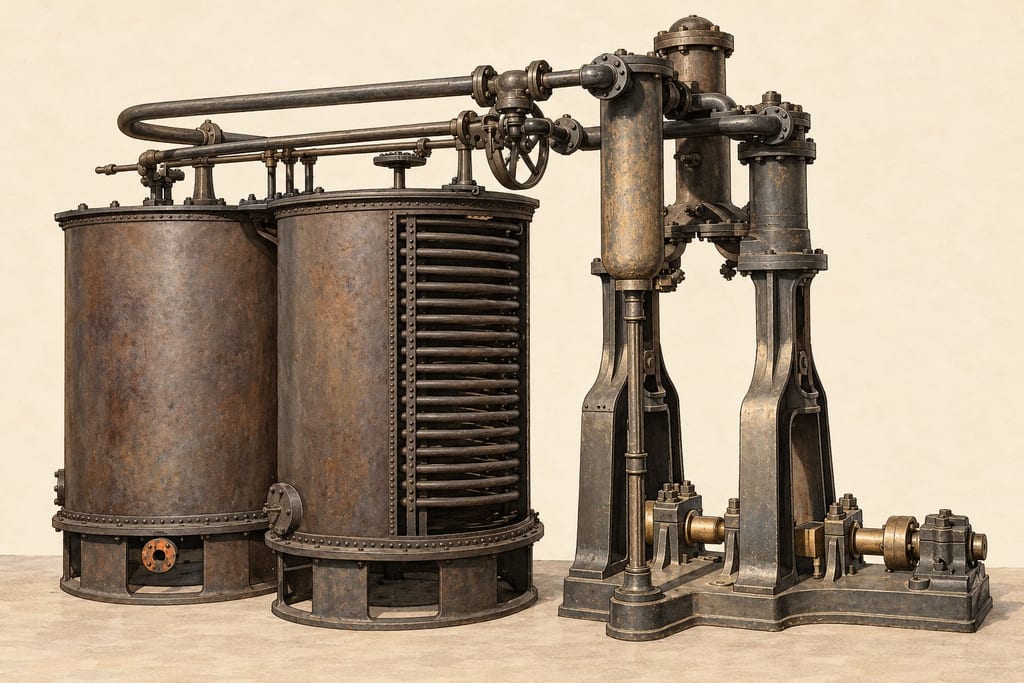
Linde’s 1876 ammonia-compression machine entered service at the Dreher brewery in Trieste in January 1877. Its cylinders and pipework mark the move from seasonal ice toward machine-made cold for brewing.
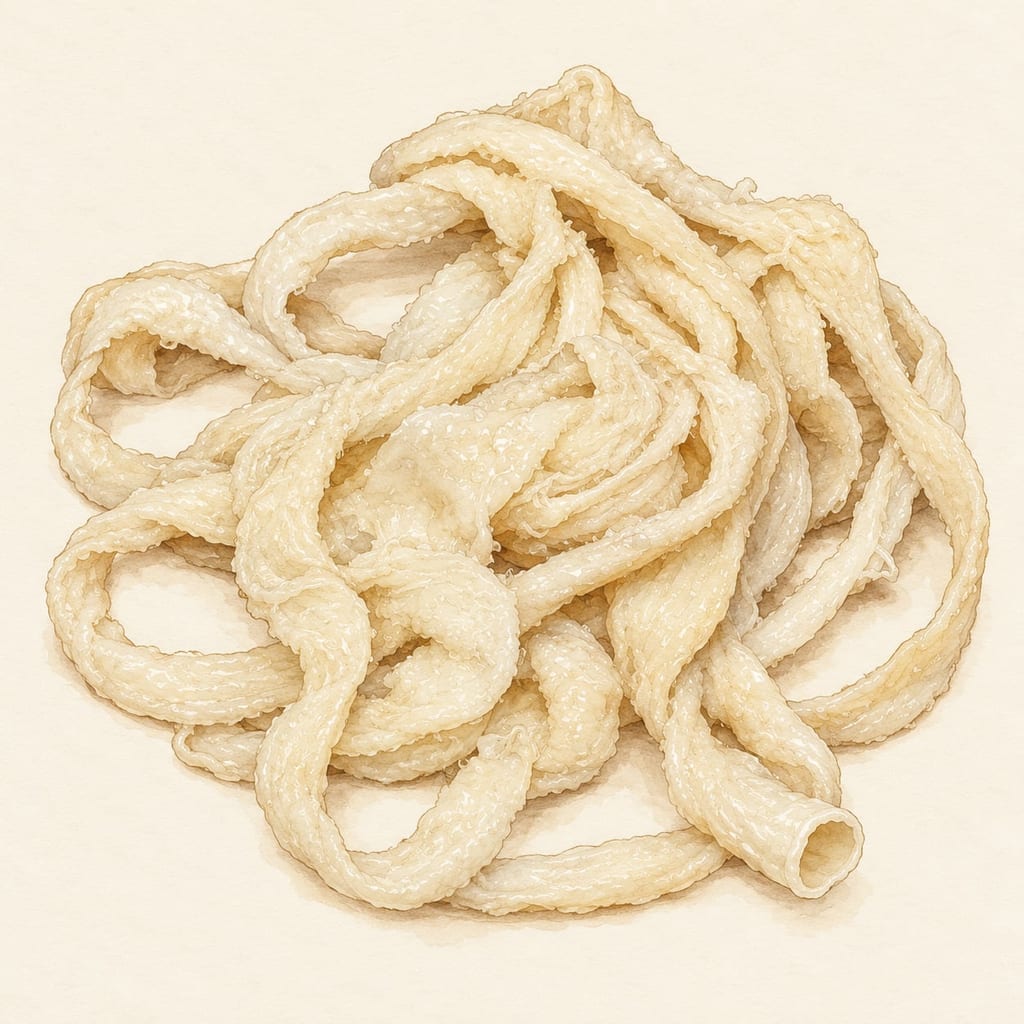
A natural sausage casing is a cleaned animal intestine or, for some products, another prepared organ used as an edible envelope. Its anatomy shapes the sausage, while diameter and material affect stuffing and drying.
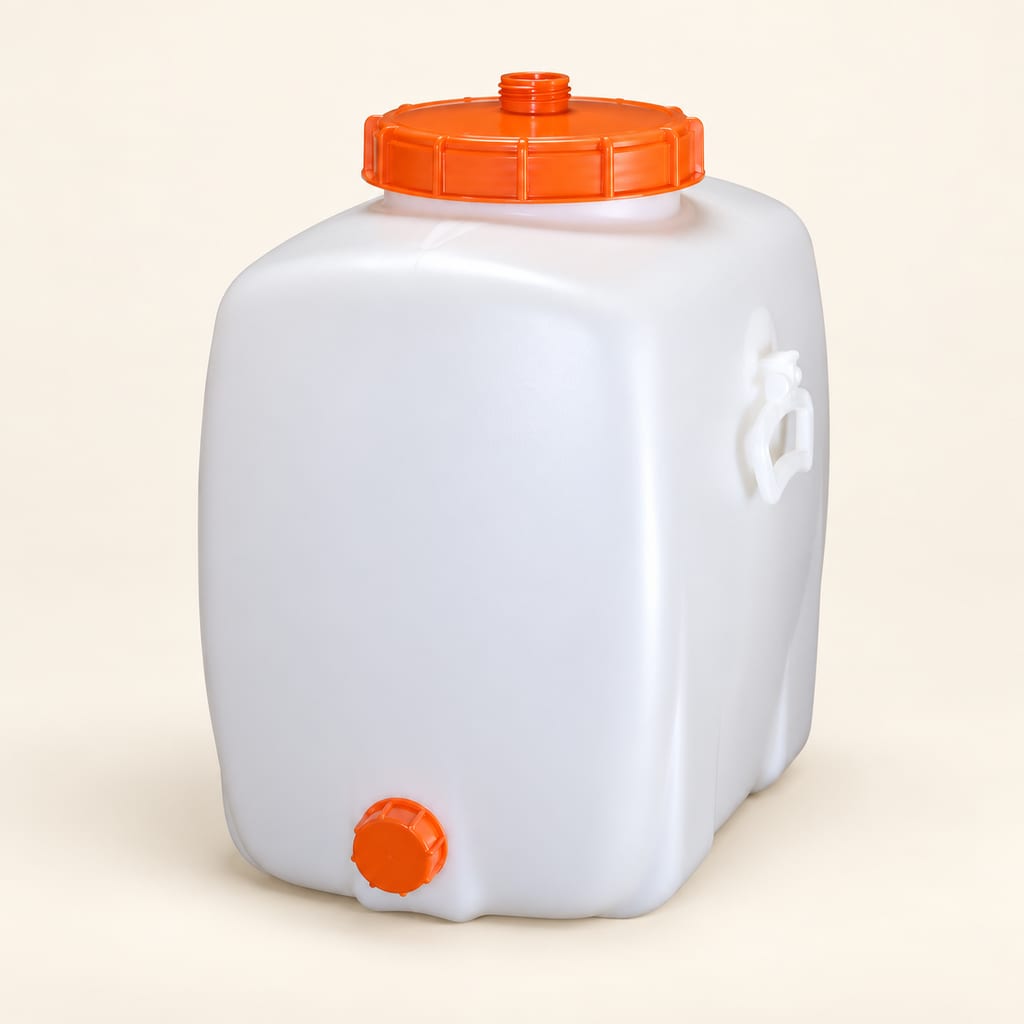
An oval, broad-shouldered polyethylene vessel sold by Speidel as a beverage barrel. Its 60-litre example has a large closure, molded side grips and a lower outlet cap; it is distinct from an open homebrew pail and a coopered wooden cask.
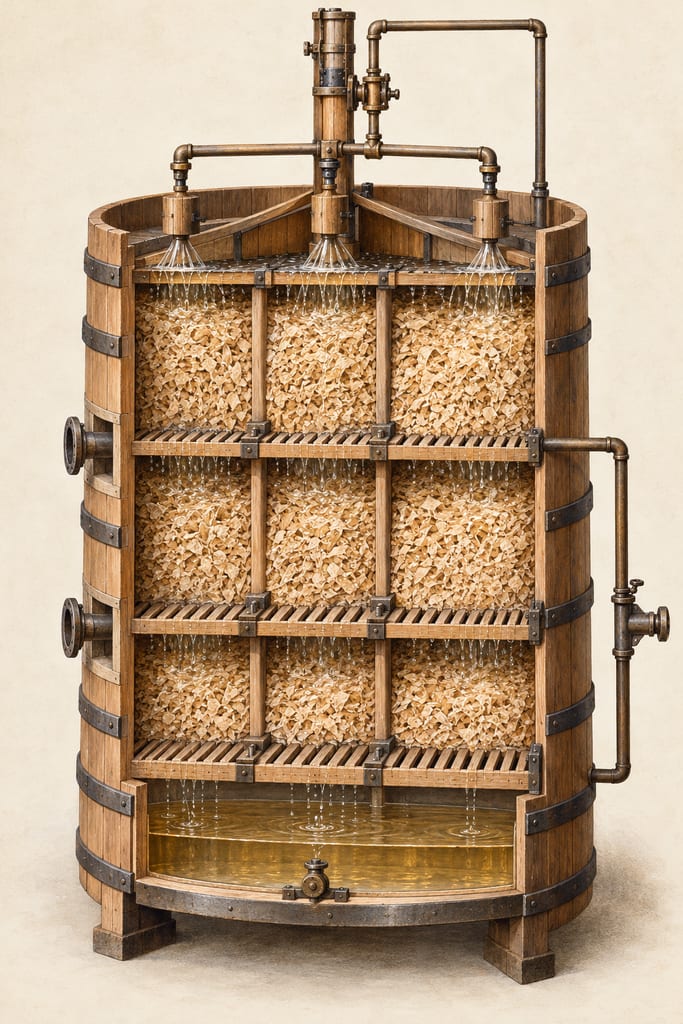
An upright packed bed speeds vinegar acetification by wetting a bacteria-bearing carrier with alcoholic liquid as air rises through it.

Soft, spreadable Calabrian pork sausage made with a great deal of red chilli and fatty pork, stuffed into natural casings, sometimes smoked and matured while staying soft.

A way to add independent temperature logging to an existing food dehydrator without changing its built-in controls or protections. It is a monitoring method, not a rewiring plan.

Pleurotus cystidiosus is the abalone mushroom, a cultivated oyster-type fungus with dark brown caps that grows more slowly and is more demanding than other Pleurotus species.

A dark, balanced vinegar from Emilia-Romagna made by combining cooked or concentrated grape must with wine vinegar, then acetifying and refining it in wood under a protected specification.

A living dairy inoculum that starts controlled cream fermentation, developing acidity and aroma before sour cream or cultured butter is finished.

A small electric incubator holds jars at a selected temperature for yogurt and other documented warm food preparations. Controls, capacity and vessel arrangement vary by model.

Adygean salt is a seasoned table salt associated with Adygea and the wider North Caucasian culinary tradition. Salt is blended with garlic and a variable selection of herbs and spices; the exact mix depends on the named style and maker.

The African Caesar-group mushroom, Amanita masasiensis, is a wild ectomycorrhizal species of central and southern African woodlands, eaten locally. The genus contains deadly poisonous species, so identification needs care.
No community contributions have been published for this entry yet.
Sign in to contribute. Published comments and photos are free to read.
FRINGSManufacturer history · Historical attestation
FRINGS since 1878: Company HistoryFRINGS records its Acetator market launch in 1953 and gives a separate 1878 company founding in Aachen.
Cited in: A mid-century commercial system; What varies between models
FRINGSEquipment form · Materials · Components
Acetators for your industrial productionFRINGS describes its industrial Acetators as typically including a stainless tank with an internal cooling coil, high-performance aerator, controls, alcohol probe, air filtration, charge and discharge lines and pumps, defoamer, exhaust treatment and sensors.
The manufacturer offers modular standard sizes and adaptations; the page gives no single capacity or dimensions applying to all models.
Cited in: Air enters below the surface; A tank within a monitored plant; A mid-century commercial system; What varies between models
FRINGSProcess · Aerator
High performance aerators for acetic acid fermentationFRINGS identifies the high-performance aerator as the centrepiece of its Acetator range and describes its role in submerged aeration for acetic acid fermentation.
Cited in: Air enters below the surface; A tank within a monitored plant; A mid-century commercial system