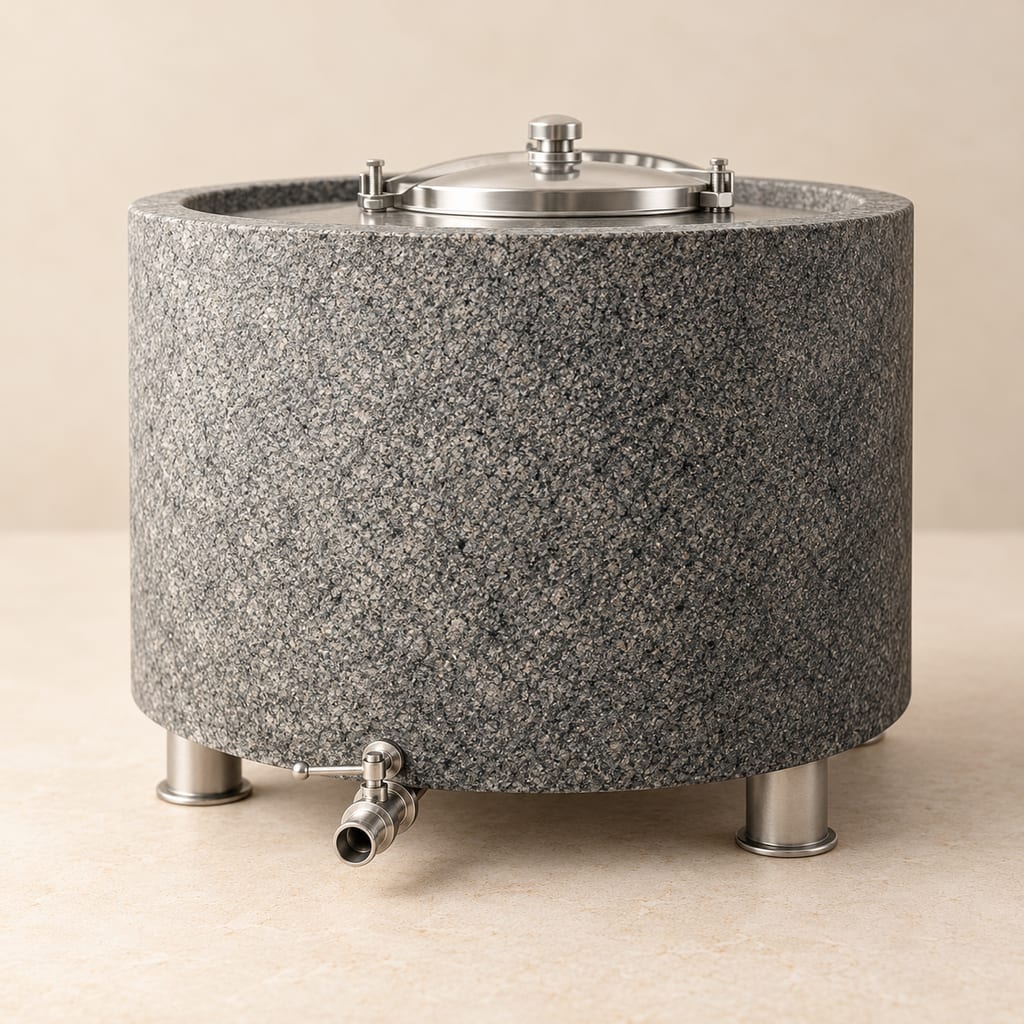
Carved natural-stone wine vessel
A wine fermentation and maturation tank carved from a single granite block, with a thick mineral shell and fitted metal closures and taps.
 FermenteaWhere food goes to change
Equipment · Tanks and vats
variable-capacity tank
A floating-lid tank is an open-top vessel whose separate lid rests at the liquid level. In contemporary stainless-steel models, an inflatable perimeter seal reduces the air space above a variable volume of wine, cider or juice.
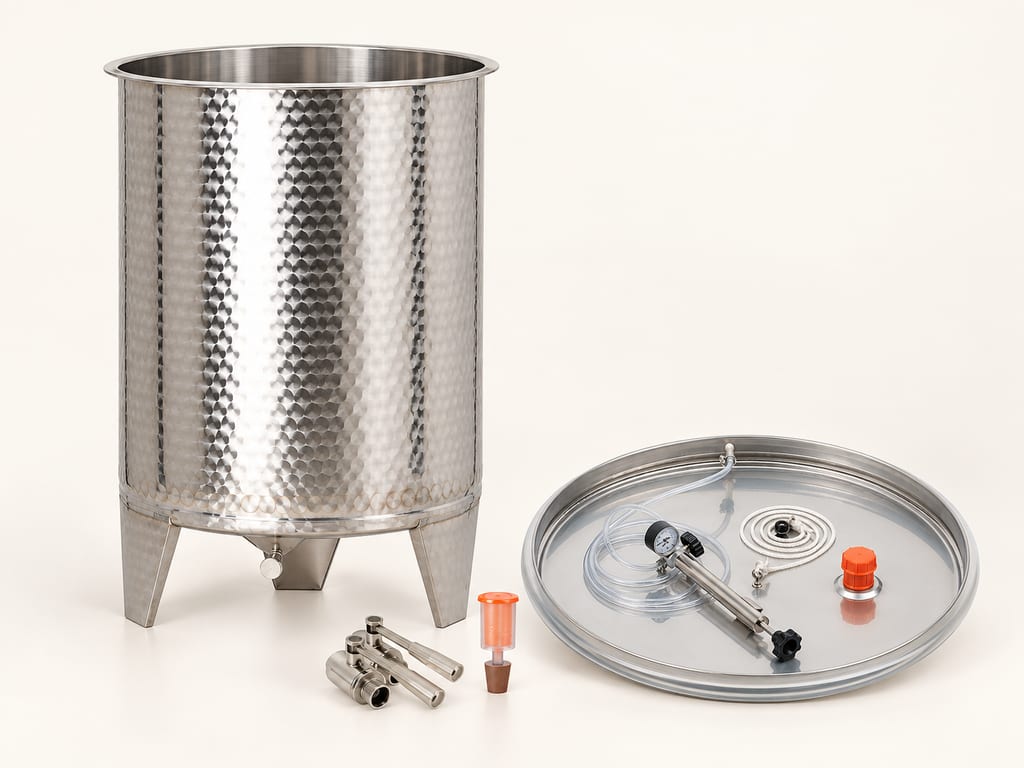
A floating-lid tank is a portable, open-top vessel designed for batches that do not always fill the same volume. Its circular lid rests on the liquid surface and can be lowered as the level falls. Many variable-capacity designs add an inflatable gasket around the lid, pressing it against the inner tank wall and limiting air exchange through the headspace. That lets a cellar keep a partly filled lot in one tank instead of moving it into a smaller fixed-volume vessel.
Speidel's FO1/FO2 line is a contemporary example. Its product specification describes an open top with a strengthening rim, a vaulted bottom, an external litre scale and three legs. The listed construction is AISI 304 stainless steel with a marbled exterior. This is a modern manufactured design, not a traditional vessel with a documented historical origin.
When a tank is only partly full, the gap above the product can be much larger than it is at capacity. The floating lid follows the changing surface and reduces that headspace. The gasket is central to the arrangement: it must meet the tank wall evenly to separate the liquid surface from the open space above. Models that use an inflatable gasket may include a hand pump; the precise kit and fittings depend on the tank version.
Speidel describes the lid as keeping air out. That is the intended function of a correctly fitted seal, not a guarantee that oxidation cannot occur. The fermentation-vessels atlas notes that performance depends on the actual seal and how it is operated. A worn, poorly fitted or incorrectly inflated gasket can weaken the intended barrier. A tank's construction does not replace appropriate cellar hygiene or process controls.
Speidel lists FO1/FO2 capacities from 220 to 910 litres and names storage, maturation and fermentation among the uses. The same page lists wine, juice, cider and industrial applications. The equipment is therefore not limited to wine, although the atlas entry places floating-lid tanks in contemporary small-winery and beverage work. Its open top and moving lid distinguish it from a fixed-head fermenter, a coopered barrel or a closed storage tank.
The manufacturer specifies outlet options separately for FO1 and FO2, and points buyers to product specification sheets for details. A Norwegian retailer's 300-litre FO1 listing gives a model-specific example: 139 cm high by 63 cm diameter, with a floating-lid kit and pump. Those measurements and accessories should not be generalized to the full 220–910-litre range or to other manufacturers.
Select a tank by batch volume and intended use, then check the specific version's dimensions, lid assembly, outlets and included accessories. The manufacturer provides distinct outlet configurations and downloadable specifications for wine, mixed drinks, juice and cider. A pump or fittings shown in one retailer package are not necessarily standard across the design family.
The inspected sources do not provide a universal cleaning protocol, gasket replacement interval or pressure rating for this open-top tank. Use the instructions supplied for the exact model, keep the lid and seal in sound condition, and do not infer pressure capability from stainless-steel construction. The manufacturer locates its main plant in Ofterdingen, Baden-Württemberg, and states that its products are manufactured there. A Norwegian retailer listing shows one route to the same model outside Germany, but not universal distribution or use.
The current Speidel FO1/FO2 product page documents this design, but the sources do not establish when floating-lid tanks were first invented.
The manufacturer says products are made at its Ofterdingen main plant. The Norwegian retailer is not treated as a manufacture location.
A wine fermentation and maturation tank carved from a single granite block, with a thick mineral shell and fitted metal closures and taps.
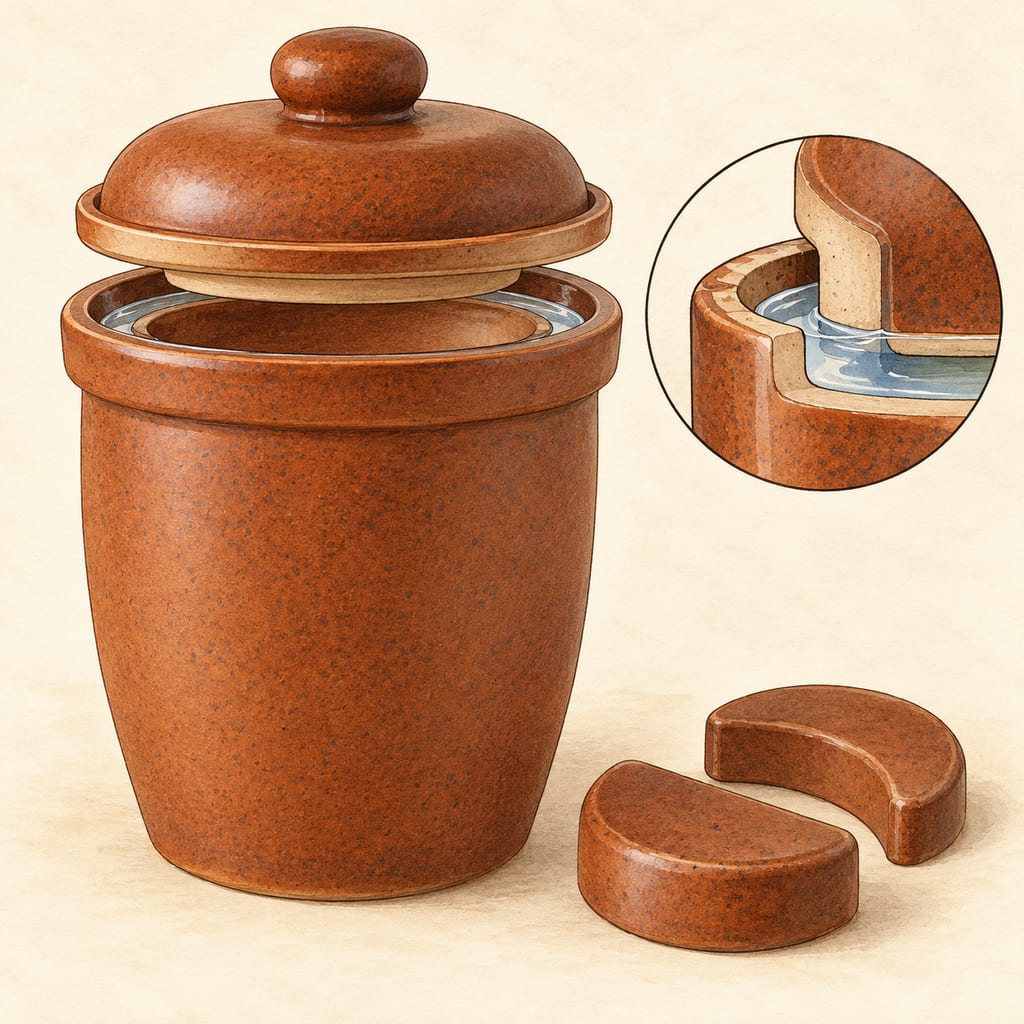
A movable stoneware sauerkraut crock with a fitted lid, ceramic weights and a water-filled rim channel. German sources call it a Gärtopf; Czech sources document the related zelňák or nádoba na kvašení zelí.
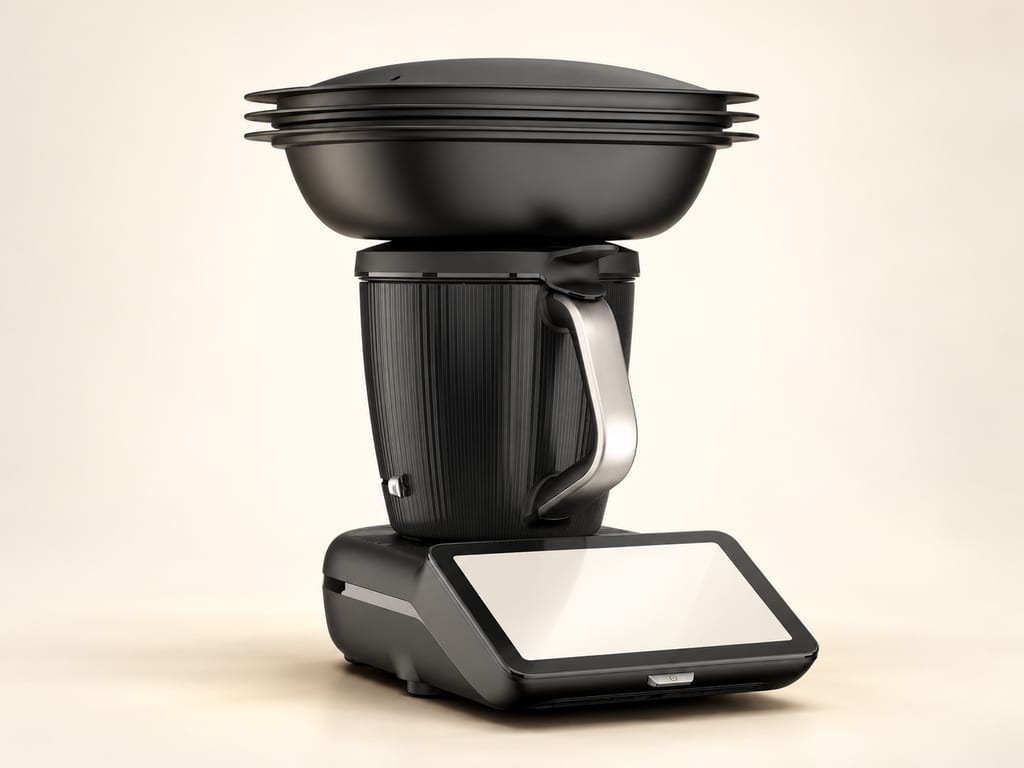
A modern electric countertop machine that heats, chops and stirs food in one mixing bowl. Cookidoo lists Thermomix models for making powidl and quince membrillo, although the full methods are not public on the pages reviewed.
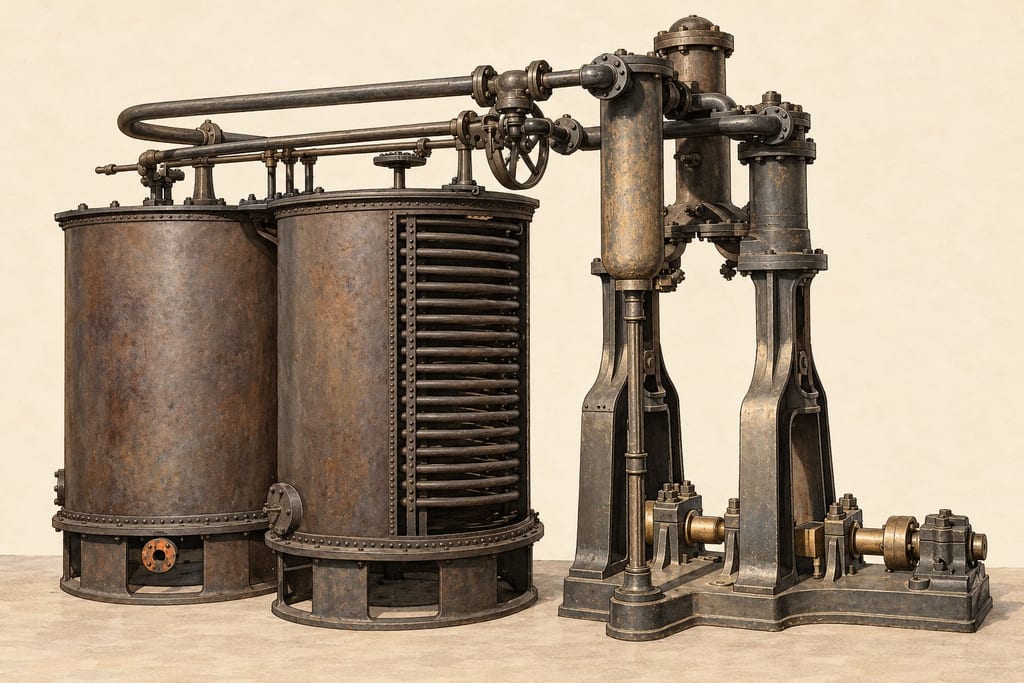
Linde’s 1876 ammonia-compression machine entered service at the Dreher brewery in Trieste in January 1877. Its cylinders and pipework mark the move from seasonal ice toward machine-made cold for brewing.
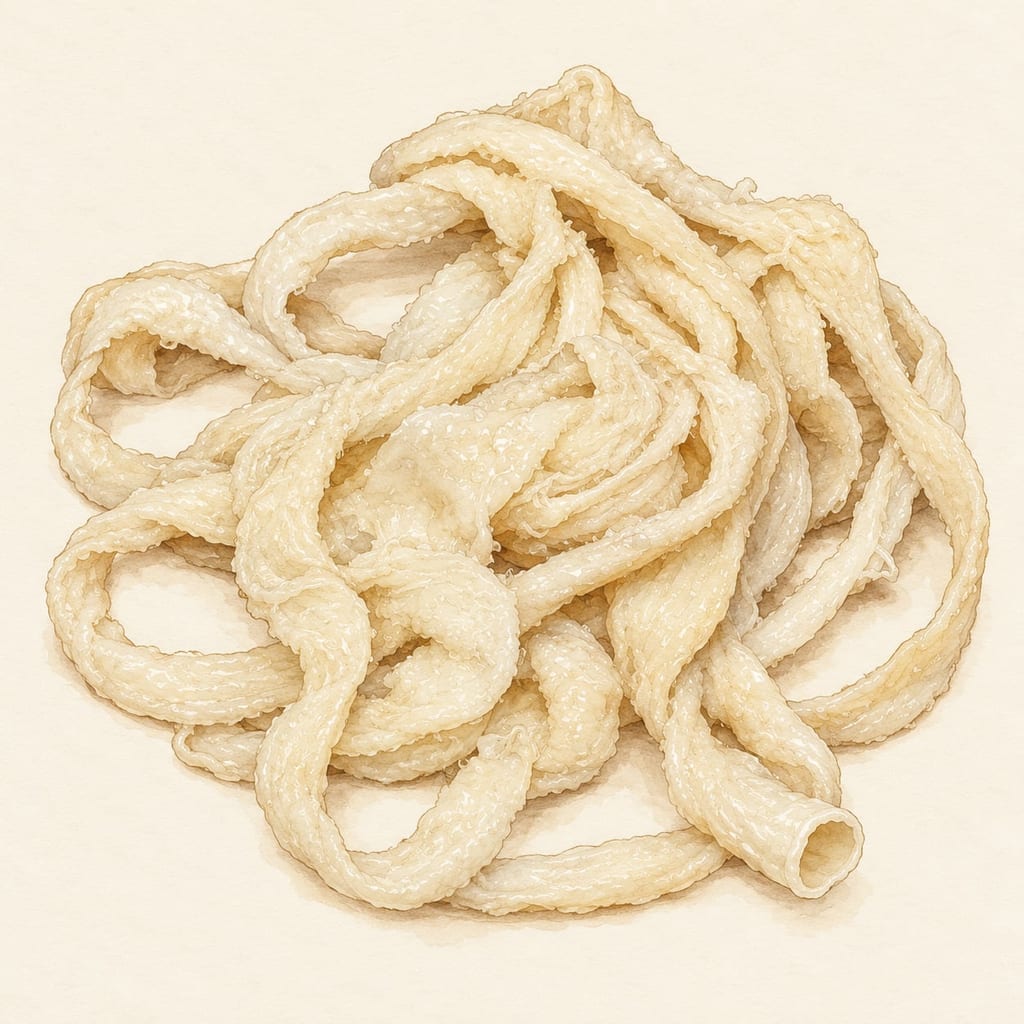
A natural sausage casing is a cleaned animal intestine or, for some products, another prepared organ used as an edible envelope. Its anatomy shapes the sausage, while diameter and material affect stuffing and drying.
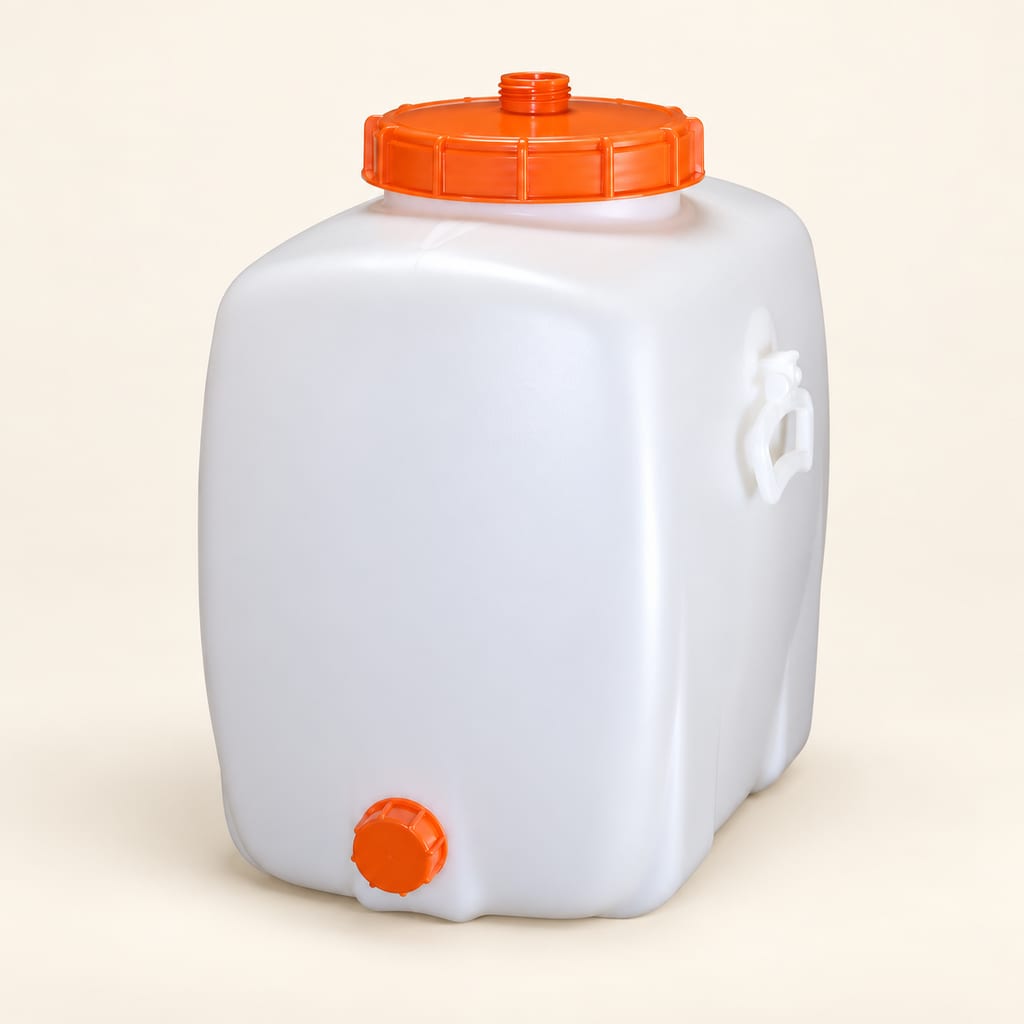
An oval, broad-shouldered polyethylene vessel sold by Speidel as a beverage barrel. Its 60-litre example has a large closure, molded side grips and a lower outlet cap; it is distinct from an open homebrew pail and a coopered wooden cask.
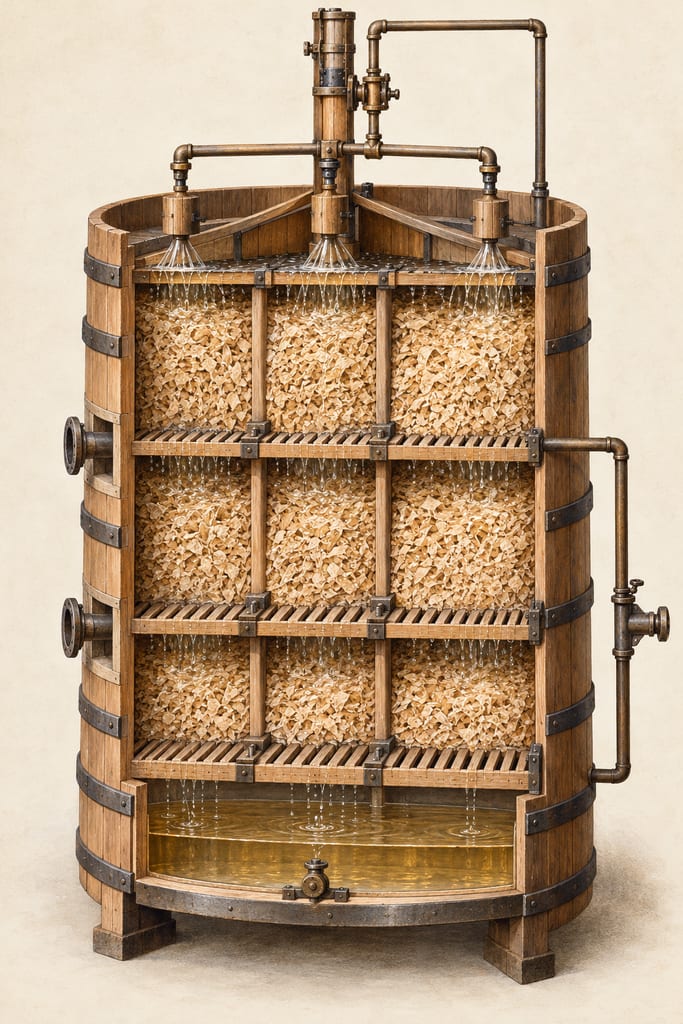
An upright packed bed speeds vinegar acetification by wetting a bacteria-bearing carrier with alcoholic liquid as air rises through it.
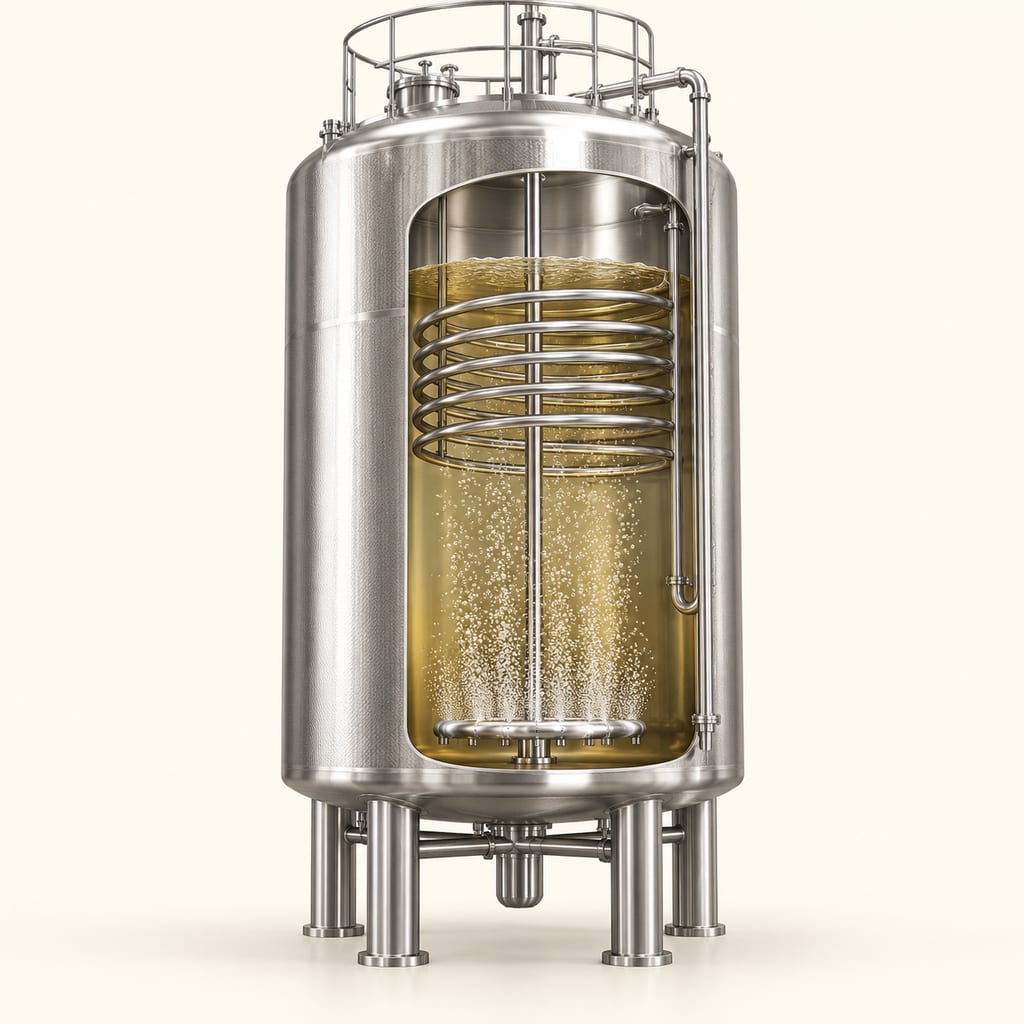
An industrial vinegar fermenter disperses air below the liquid surface, combining submerged acetification with cooling, foam control and process monitoring.

Soft, spreadable Calabrian pork sausage made with a great deal of red chilli and fatty pork, stuffed into natural casings, sometimes smoked and matured while staying soft.

A way to add independent temperature logging to an existing food dehydrator without changing its built-in controls or protections. It is a monitoring method, not a rewiring plan.

Pleurotus cystidiosus is the abalone mushroom, a cultivated oyster-type fungus with dark brown caps that grows more slowly and is more demanding than other Pleurotus species.

A dark, balanced vinegar from Emilia-Romagna made by combining cooked or concentrated grape must with wine vinegar, then acetifying and refining it in wood under a protected specification.

A living dairy inoculum that starts controlled cream fermentation, developing acidity and aroma before sour cream or cultured butter is finished.

A small electric incubator holds jars at a selected temperature for yogurt and other documented warm food preparations. Controls, capacity and vessel arrangement vary by model.

Adygean salt is a seasoned table salt associated with Adygea and the wider North Caucasian culinary tradition. Salt is blended with garlic and a variable selection of herbs and spices; the exact mix depends on the named style and maker.

The African Caesar-group mushroom, Amanita masasiensis, is a wild ectomycorrhizal species of central and southern African woodlands, eaten locally. The genus contains deadly poisonous species, so identification needs care.
No community contributions have been published for this entry yet.
Sign in to contribute. Published comments and photos are free to read.
Speidel Tank- und BehälterbauForm · Materials · Capacity · Function · Use
Variable capacity tank FO1 / FO2Open-top tank with strengthening rim, vaulted bottom, external litre scale and three legs.
AISI 304 stainless steel, marbled exterior; capacity range 220–910 litres.
Used for storage, maturation and fermentation; listed for wine, juice, cider and industrial applications.
Cited in: A lid that follows the liquid; Variable volume and the seal; A contemporary wine and beverage tank; Selecting and caring for a model
Brewshop NorwayModel example · Dimensions · Accessories · Linked image
Speidel FO1 300L Fermentation Tank with Floating Lid – Complete (Made to Order)Lists a 300 L FO1 with AISI 304 steel, floating lid, pump and accessories.
Model dimensions are listed as 139 cm high by 63 cm diameter.
Product photographs show the tank and lid kit separately.
Cited in: A contemporary wine and beverage tank; Selecting and caring for a model
Speidel Tank- und BehälterbauManufacture · Geography
LocationManufacturer states its products are manufactured at its main plant in Ofterdingen, Germany.
Cited in: Selecting and caring for a model