
Yeast and the world's fermented drinks
People kept, traded and steered living ferments for thousands of years before anyone saw a yeast cell. This is that history, region by region, and a guide to what a yeast strain is today.
 FermenteaWhere food goes to change
Historical object · Industrial and laboratory plant
Linde’s 1876 ammonia-compression machine entered service at the Dreher brewery in Trieste in January 1877. Its cylinders and pipework mark the move from seasonal ice toward machine-made cold for brewing.
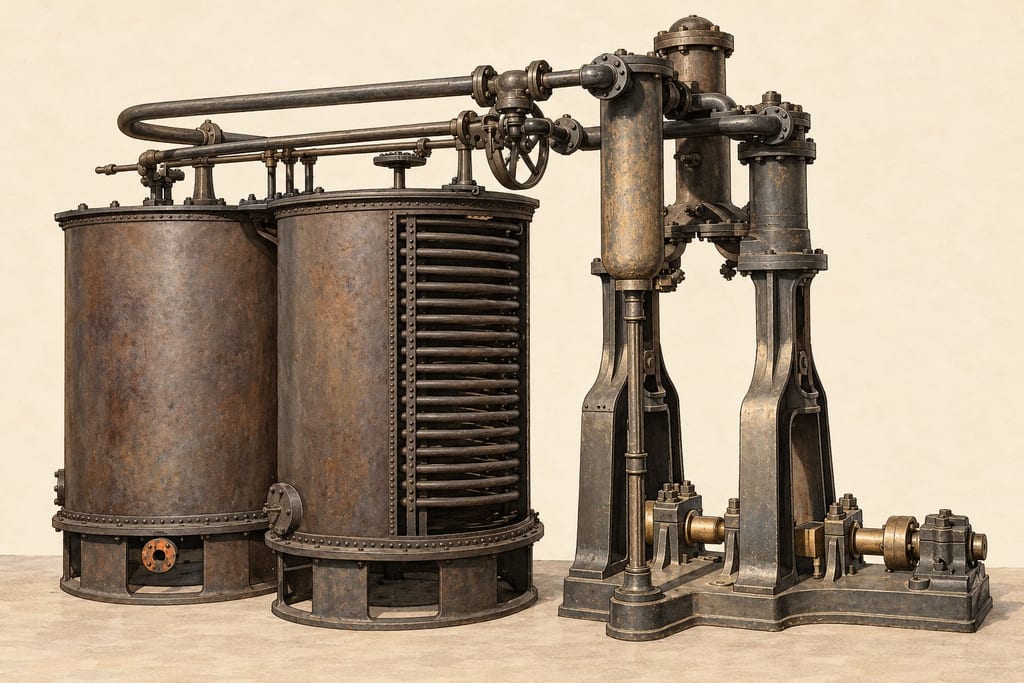
This is one particular Linde refrigeration machine, not a generic brewery chiller. Carl Linde’s prototype was completed at Maschinenfabrik Augsburg in 1876. In January 1877 it went into service at the Dreher brewery in Trieste, where the technical-history association says it worked for 31 years. The museum account places the machine within a six-year period of Linde’s experiments, but the date attached to this object is its build in Augsburg—not the beginning of mechanical refrigeration as a whole.
The surviving object is enormous: Haus der Bayerischen Geschichte reports almost six tonnes, a height of 2.40 metres, a width of 5.30 metres and a depth of 2.10 metres. A museum photograph shows its tall metal cylinders, pipework and connected machinery. These are assembled exhibit dimensions, not the capacity of a cold room or an output rating. The sources do not give a refrigerating capacity, operating pressure or a detailed service manual for this prototype.
The machine later travelled from Vienna to Regensburg for museum display in 2019. The museum described it as part of its permanent exhibition; a technical-history association described the display as a five-year loan from Vienna. Because those accounts leave its post-2019 location uncertain, the record identifies the documented 2019 display and does not claim a current location.
Haus der Bayerischen Geschichte identifies ammonia as the refrigerant in the compression machine. The technical-history association describes the Linde system as a cold-vapour machine. In practical terms, refrigerant circulated through machinery so heat could be removed from the brewery’s cold spaces; the sources here do not reconstruct this particular machine’s valves, circuit or power plant, so those details should not be inferred from a photograph of its exterior.
That distinction matters because the machine was an industrial installation, not a self-contained household refrigerator. Its cylinders and pipes belonged to the refrigeration system serving brewery work. The specific plant is linked with the Lager preparation page because the museum documents its use at a brewery and describes ammonia compression as making year-round production of bottom-fermented beers possible. The link is about equipment context; it does not say that this single prototype was the only way lager was made.
Mechanical refrigeration changed the calendar as well as the cellar. Before it, brewers relied on cool seasons, naturally cold storage and ice gathered from lakes or ponds and kept in icehouses. The University of Chicago Library’s brewing-technology exhibition also connects refrigeration with longer storage and refrigerated railway transport. Those broader changes explain why the Dreher machine mattered, while remaining distinct from the object's own documented 31-year service record.
A machine nearly six tonnes in mass could only be part of a brewery’s capital works, rather than a vessel bought by an individual household. The museum records the prototype's manufacture in Augsburg and its installation in Trieste; it also says that the machine reached Regensburg in five large sections. The 2019 photograph places the intact assembly among brewing-history displays. A record of this object therefore follows its documented geography: manufacture in Bavaria, work in Trieste, and later museum transfers through Vienna and Regensburg.
The sources do not state what drove the original compressor, how much cold it could produce, how its brewery cooling rooms were arranged, or what maintenance schedule it required. Those are not small omissions to fill with modern compressor specifications: the photo shows a historical machine, and later Linde designs changed. Its present accessibility and exact location are also not established by the older museum and association notices. The useful comparison is therefore historical rather than operational: a brewery-specific prototype helped replace uncertain seasonal ice supply with engineered cold, but it is not a plan for building or running a modern refrigeration system.
Haus der Bayerischen Geschichte dates the prototype's completion in Augsburg to 1876 and its installation at Dreher's brewery in Trieste to January 1877. The technical-history association reports that it served there for 31 years. Those sources describe this particular machine; they do not make it the sole source of mechanical refrigeration or the origin of lager brewing.
The sources give no refrigeration capacity, operating pressure, prime-mover specification or maintenance instructions. The object is historical industrial machinery, not an operating or domestic refrigerator specification.
Source →Its museum location after the 2019 Regensburg exhibition is unclear: the museum described it as a permanent exhibit while a contemporary technical-history association described a five-year loan from Vienna. This page records both statements without asserting where it is now.
Source →The machine was built at Maschinenfabrik Augsburg. The location records its documented manufacture, not an assertion that every later machine came from this factory.
It entered service at the Dreher brewery when Trieste was part of Austria-Hungary; the country code identifies the modern location, not its 1877 political status.
Haus der Bayerischen Geschichte documented delivery and display plans in 2019; Wikimedia Commons records the photograph at the Regensburg museum on 6 October 2019. Its current location is not established here.
The 2019 museum account says it was delivered from Vienna; the technical-history association describes the Vienna museum depot and a temporary Regensburg loan. This row records the documented transfer history, not the present location.
People kept, traded and steered living ferments for thousands of years before anyone saw a yeast cell. This is that history, region by region, and a guide to what a yeast strain is today.
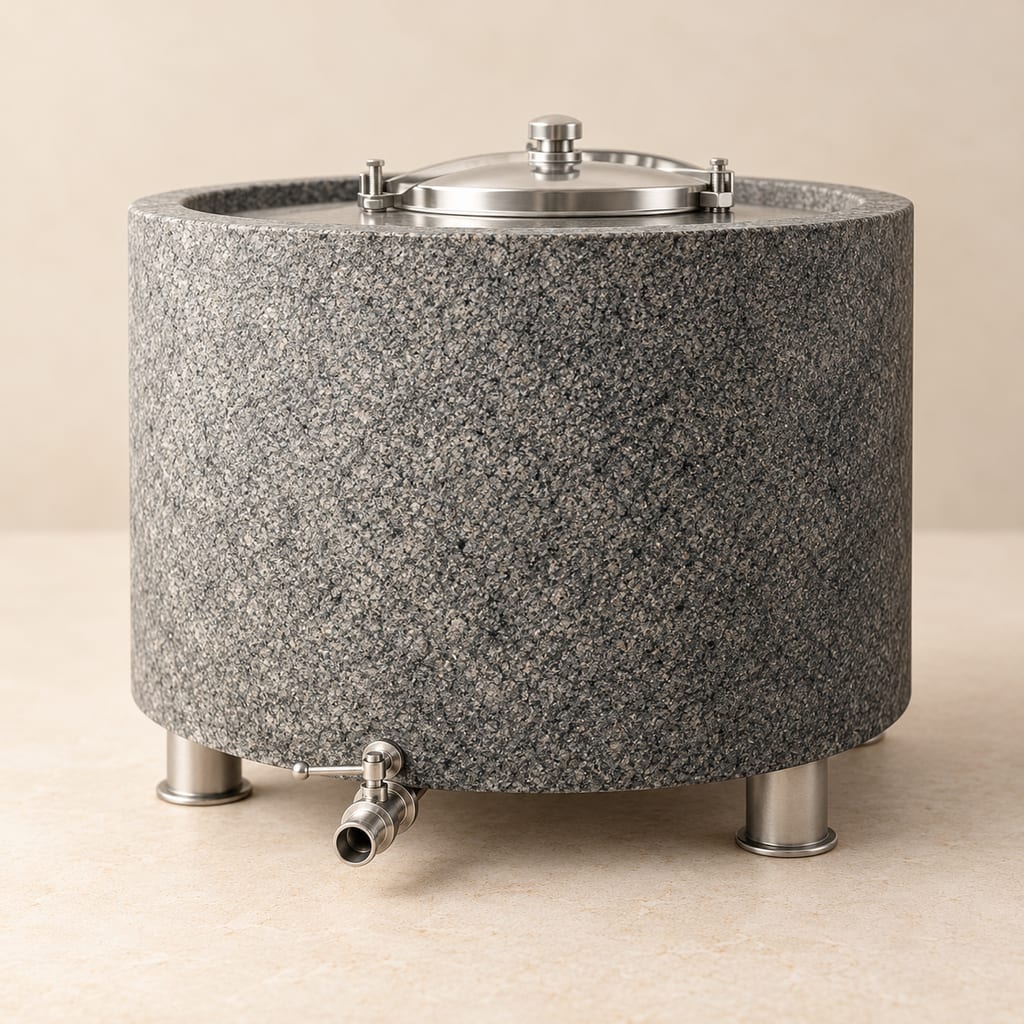
A wine fermentation and maturation tank carved from a single granite block, with a thick mineral shell and fitted metal closures and taps.
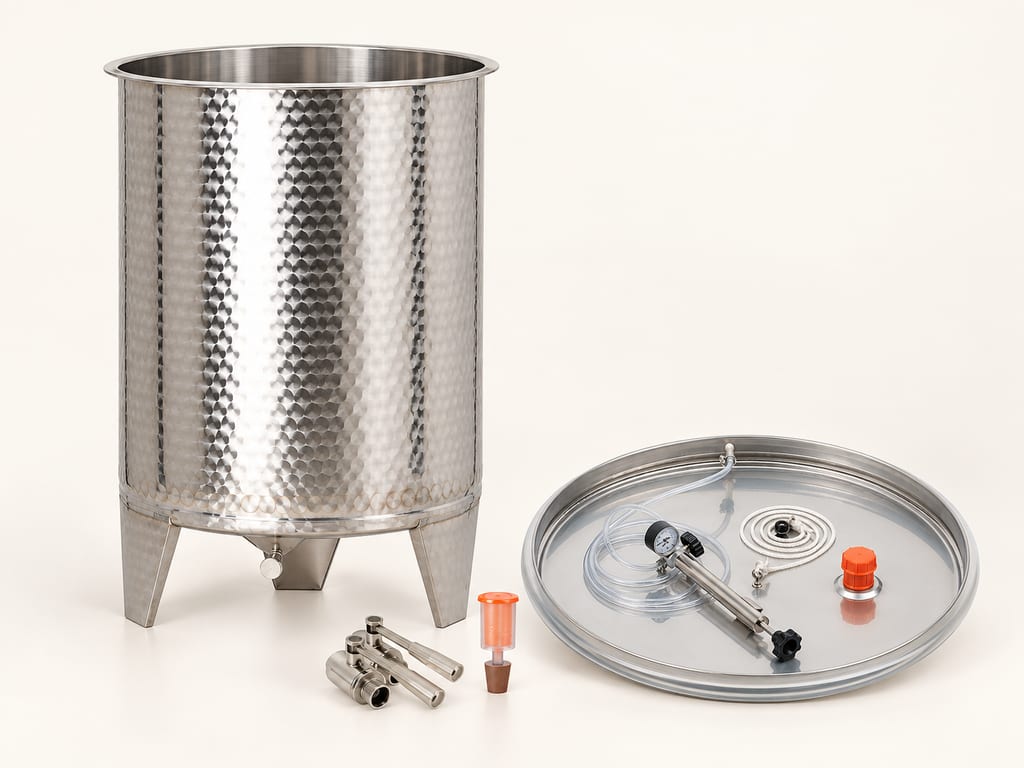
A floating-lid tank is an open-top vessel whose separate lid rests at the liquid level. In contemporary stainless-steel models, an inflatable perimeter seal reduces the air space above a variable volume of wine, cider or juice.
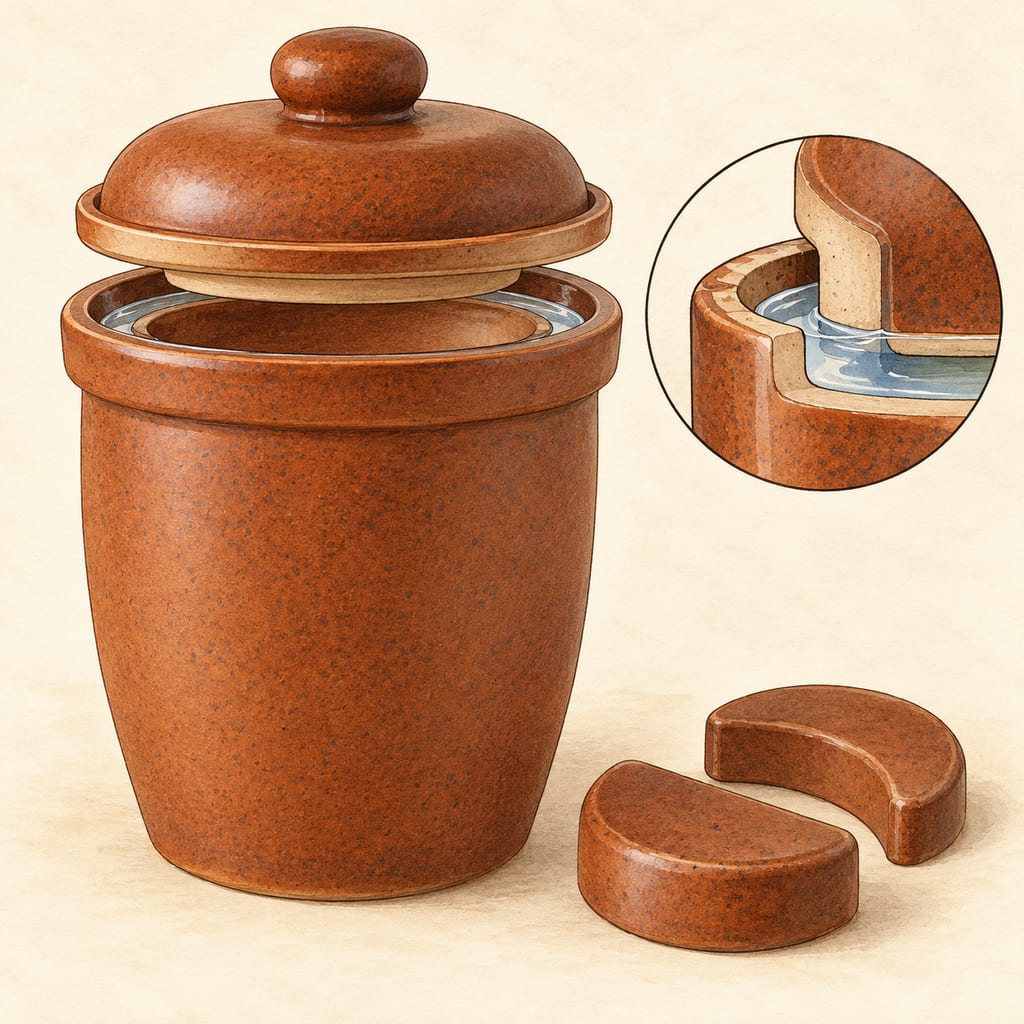
A movable stoneware sauerkraut crock with a fitted lid, ceramic weights and a water-filled rim channel. German sources call it a Gärtopf; Czech sources document the related zelňák or nádoba na kvašení zelí.
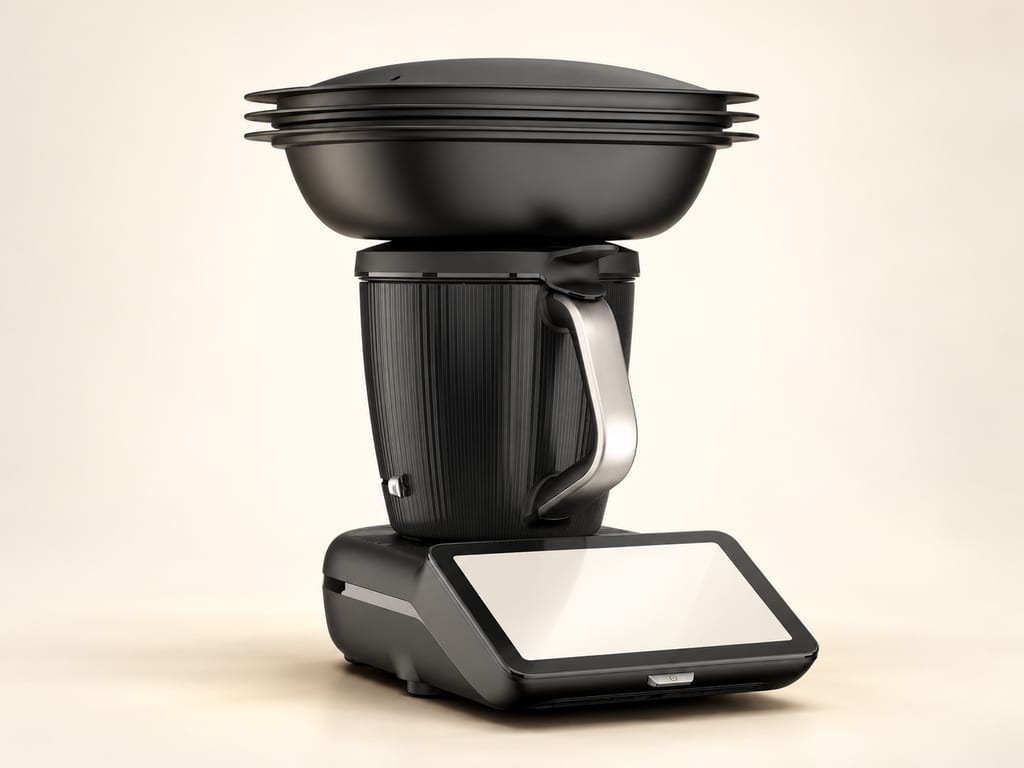
A modern electric countertop machine that heats, chops and stirs food in one mixing bowl. Cookidoo lists Thermomix models for making powidl and quince membrillo, although the full methods are not public on the pages reviewed.
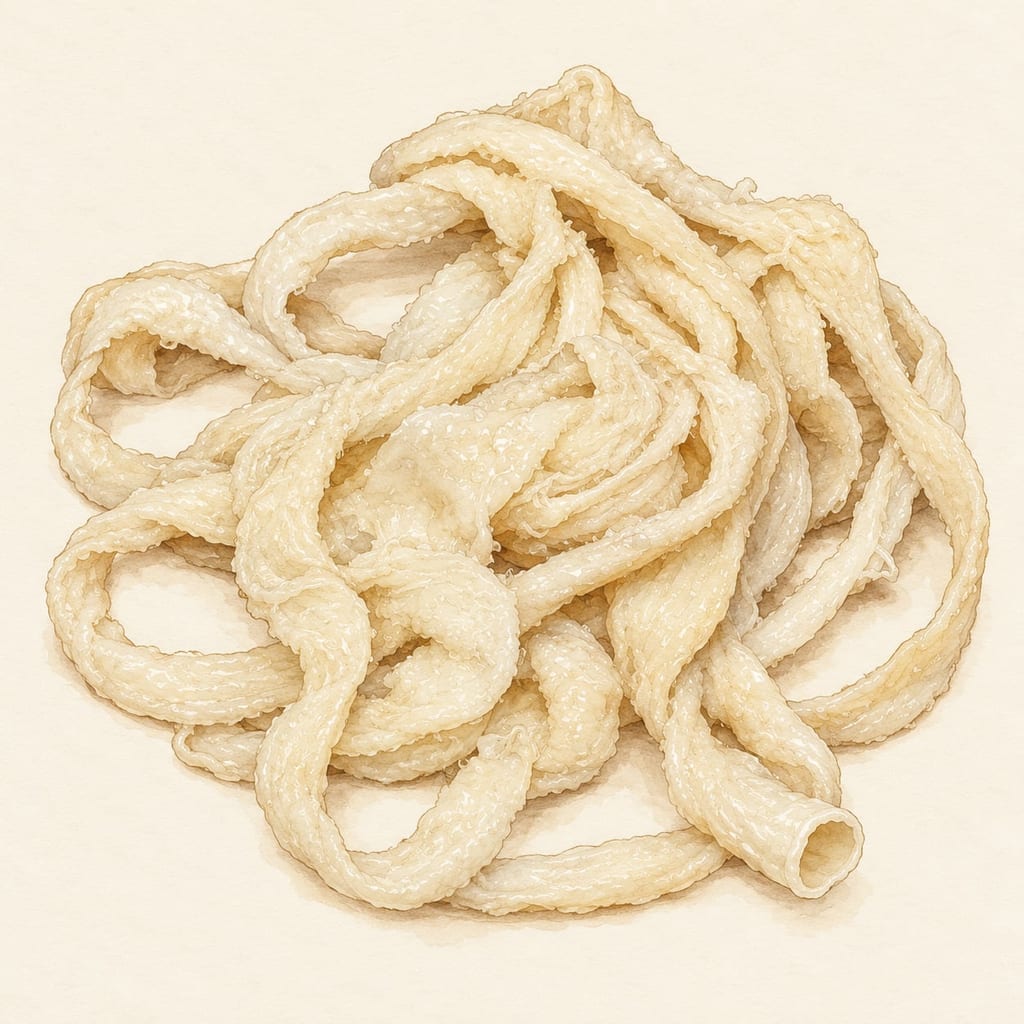
A natural sausage casing is a cleaned animal intestine or, for some products, another prepared organ used as an edible envelope. Its anatomy shapes the sausage, while diameter and material affect stuffing and drying.
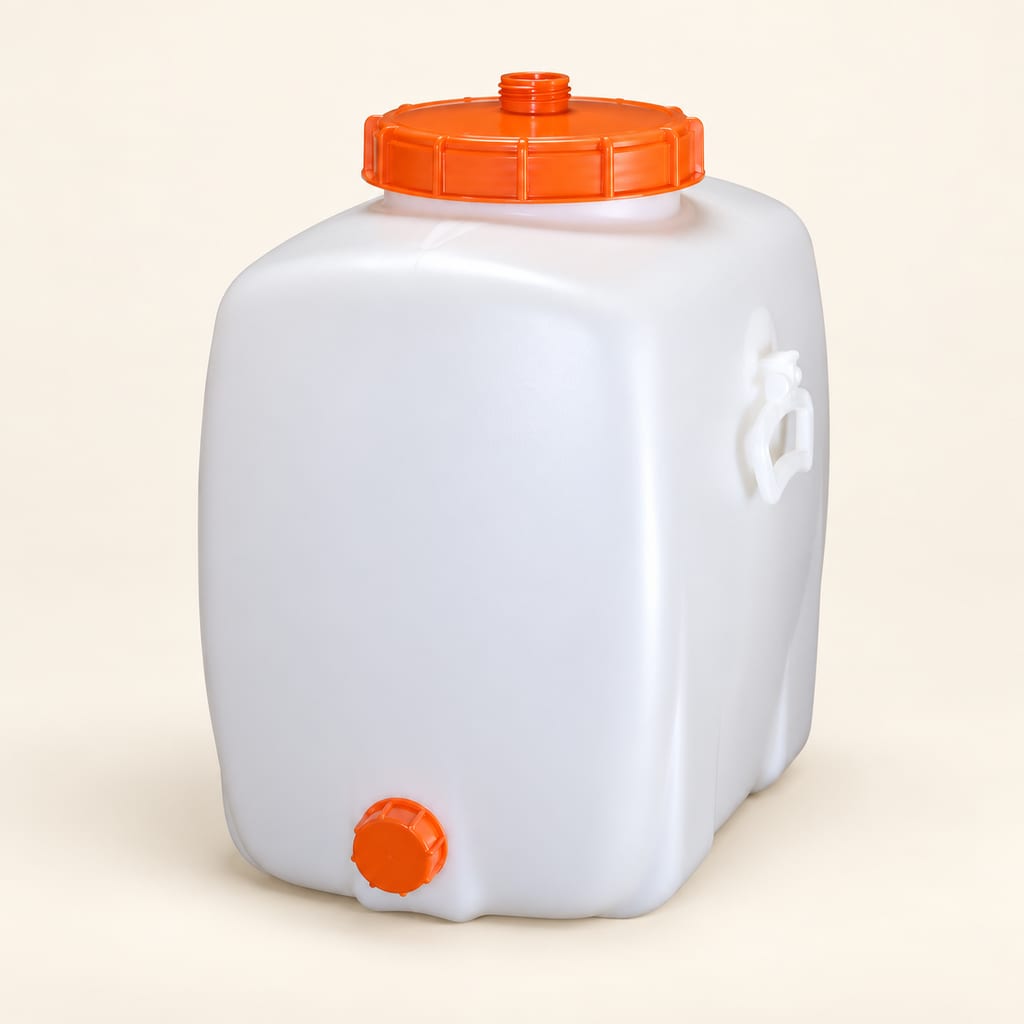
An oval, broad-shouldered polyethylene vessel sold by Speidel as a beverage barrel. Its 60-litre example has a large closure, molded side grips and a lower outlet cap; it is distinct from an open homebrew pail and a coopered wooden cask.
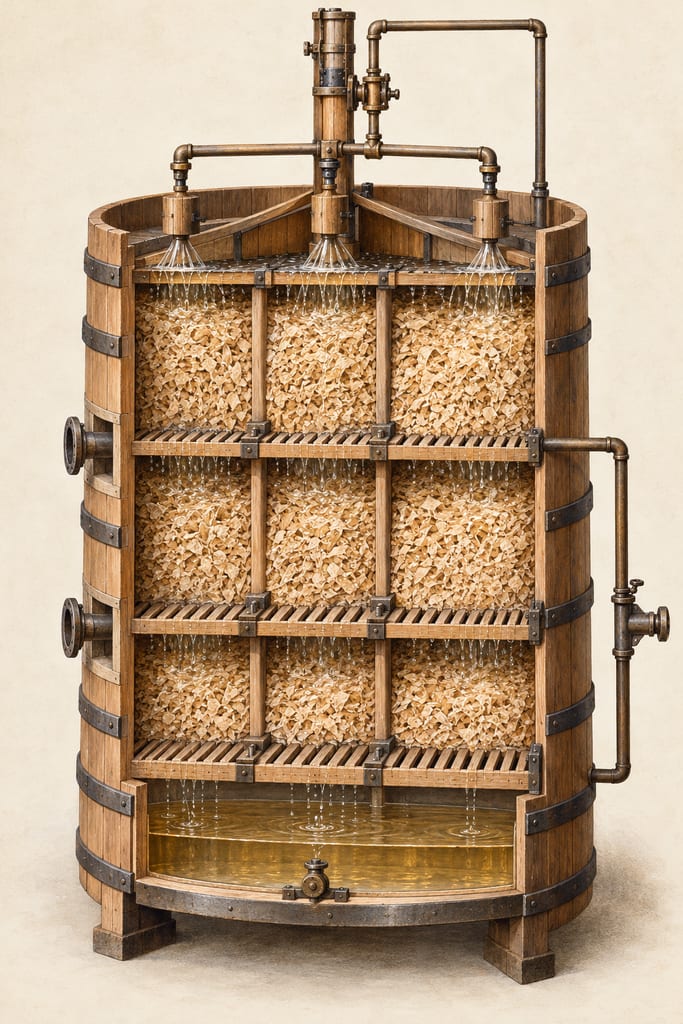
An upright packed bed speeds vinegar acetification by wetting a bacteria-bearing carrier with alcoholic liquid as air rises through it.
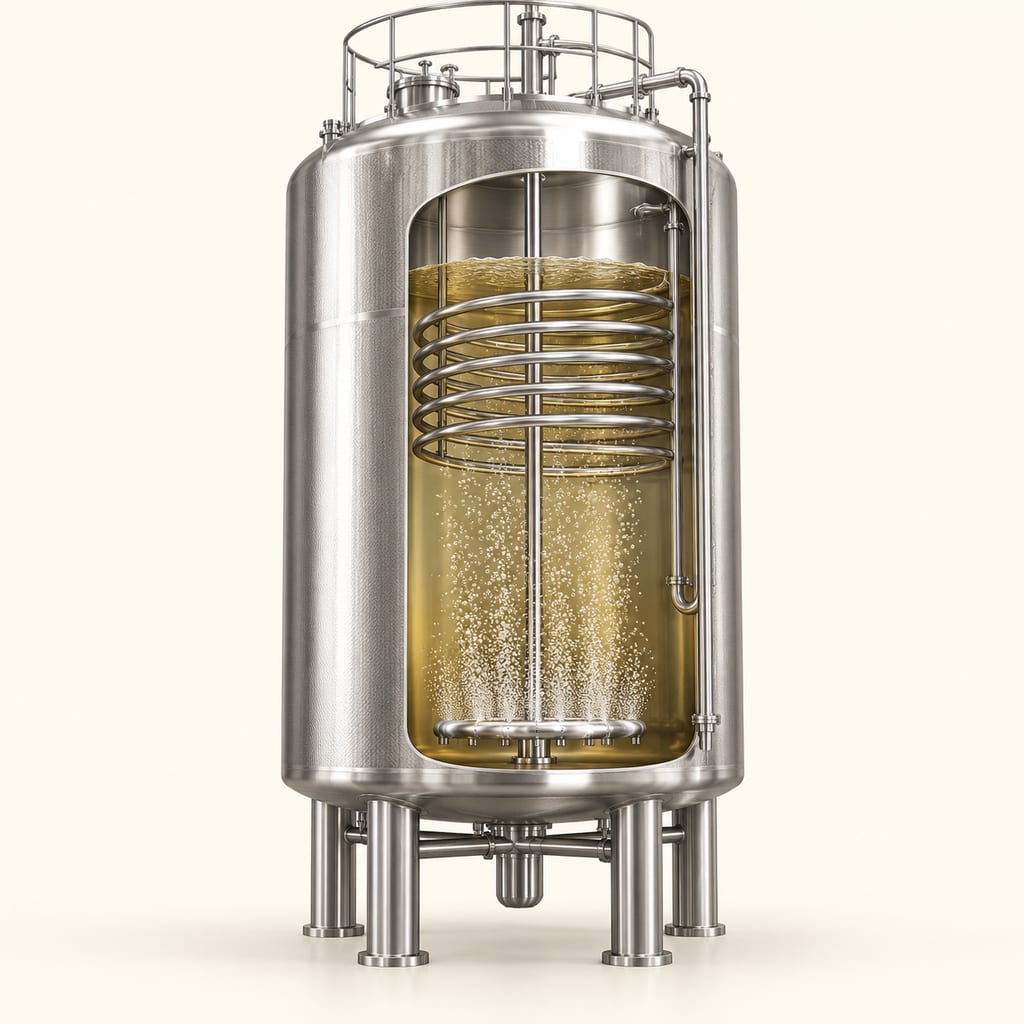
An industrial vinegar fermenter disperses air below the liquid surface, combining submerged acetification with cooling, foam control and process monitoring.

A Cap-Pelé boucanière is an Acadian herring-smoking building. The documented Willie Niles example is a one-storey wood-frame structure with a ridge smoke vent and interior bays for hanging fish-bearing cannes.

Achcharu is a family of Sri Lankan vinegar pickles made with mixed vegetables or seasonal fruit and a piquant spice dressing. This version is a quick, refrigerated, non-fermented mixed-vegetable pickle.

The acocote is a long, hollowed and dried gourd used to draw aguamiel from a mature maguey. It is a harvesting tool: the sap is transferred to a separate vessel before it ferments into pulque.

Adrak murabba preserves young ginger in sugar syrup, a sweet South Asian preparation recorded in Indian cookery and food-processing sources.

Parkia biglobosa seeds are fermented into regional West African seasonings, including nététou, iru, dawadawa and soumbala. The yellow fruit pulp is a separate food, and names and methods vary by place.

Japanese reddish-brown vinegar from sake lees matured about three years, turned to vinegar by acetic bacteria; the vinegar of Handa and Edomae sushi rice.

A refined common-wheat flour blended for a broad range of baking; its protein and behavior vary with wheat, milling and market.

The almond mushroom, Agaricus subrufescens, was cultivated in eastern North America in the 1800s, lost its market, and returned as a cultivated mushroom from Brazil, where it is grown under several names.
No community contributions have been published for this entry yet.
Sign in to contribute. Published comments and photos are free to read.
Haus der Bayerischen GeschichteObject history · Dimensions and mass · Brewery refrigeration context
Erfolgsgeschichte für bayerisches Bier / Original Linde-Kältemaschine zieht ins Museum einThe museum dates this prototype's completion at Maschinenfabrik Augsburg to 1876 and its use at the Dreher brewery in Trieste from January 1877.
The 2019 museum release gives the assembled object as almost six tonnes and 2.40 m high, 5.30 m wide and 2.10 m deep; it records delivery from Vienna to Regensburg in five large sections.
The museum describes the machine as ammonia-based compression refrigeration and explains the earlier dependence on natural ice for cool fermentation and storage; its under-nine-degree statement describes bottom-fermented beers in its regional account.
Cited in: A prototype with a working life; Ammonia and machine-made cold; Scale, place and what remains unknown
Verein Historische Kälte- und Klimatechnik e.V., archive of the history of refrigeration and air conditioningMachine service history · Technical context · Museum location uncertainty
Original Linde-Kältemaschine zieht ins Museum einThe association reports 31 years of service in the Dreher brewery, starting in January 1877, and the machine's transfer history via Vienna.
It describes the prototype within the development of Linde's ammonia cold-vapour refrigeration; its commentary on later compressor designs is not applied to this individual machine.
Cited in: A prototype with a working life; Ammonia and machine-made cold; Scale, place and what remains unknown
Something's Brewing, University of Chicago LibraryBrewing and refrigeration context · Linde patent drawing
RefrigerationThe exhibition explains that before mechanical refrigeration, brewers used lake and pond ice stored in icehouses, and that refrigeration helped beer storage and longer-distance transport.
It reproduces a drawing from Linde's January 1873 refrigeration patent application; that earlier design context is kept distinct from the 1876 ammonia prototype.
Cited in: Ammonia and machine-made cold; Scale, place and what remains unknown
Wikimedia CommonsIdentified museum photograph · Image author and CC BY 2.0 DE license
File: GER — BY — Regensburg - Donaumarkt 1 (Museum der Bayerischen Geschichte erste industrielle Kältemaschine 1876.JPGThe Commons file page identifies the photographed 1876 Linde machine at the Museum der Bayerischen Geschichte in Regensburg and gives the photograph date as 6 October 2019.
The uploader is User:Mattes (Mateus2019); the file is offered under Creative Commons Attribution 2.0 Germany (CC BY 2.0 DE).
Cited in: A prototype with a working life; Scale, place and what remains unknown